


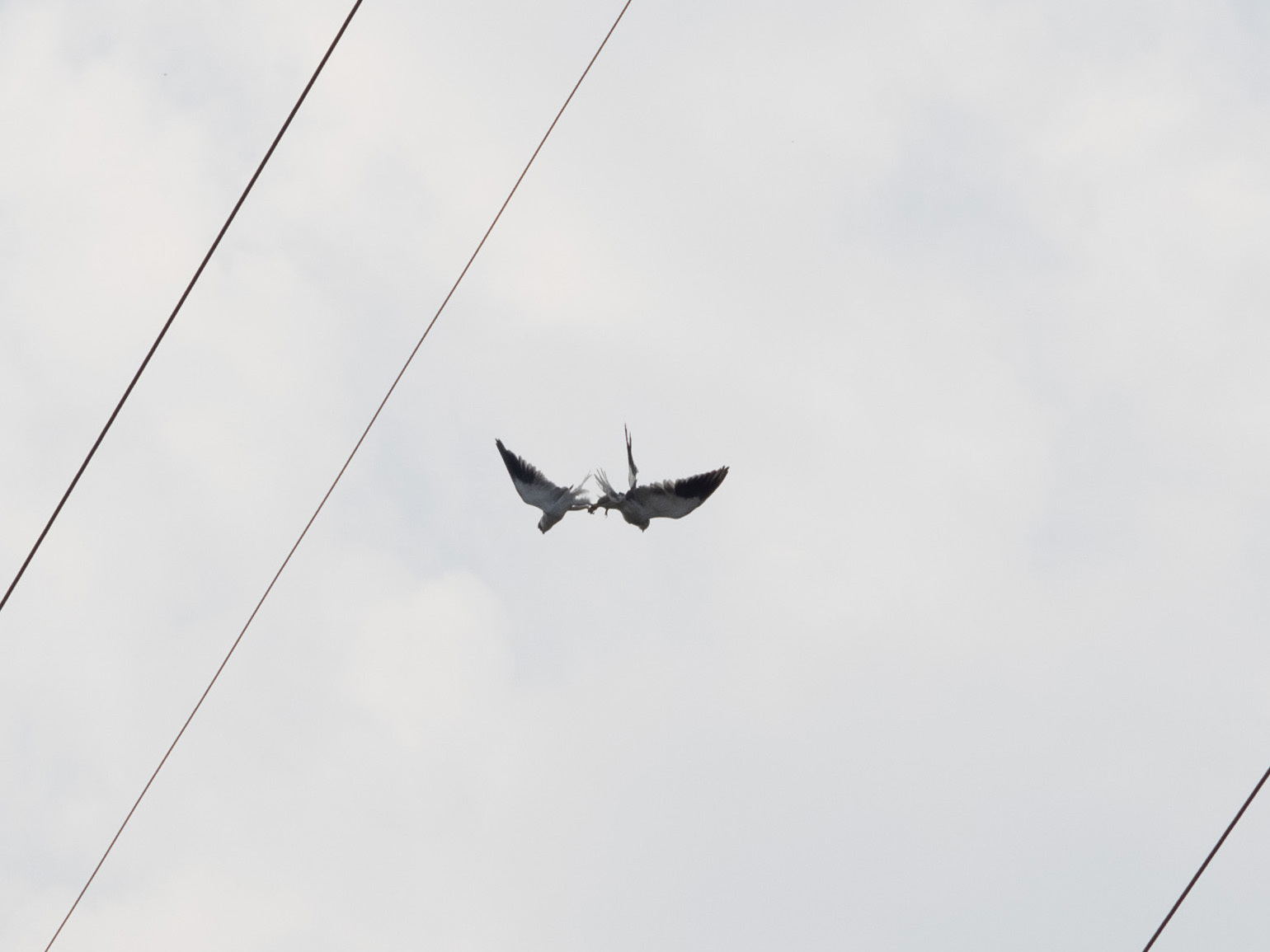
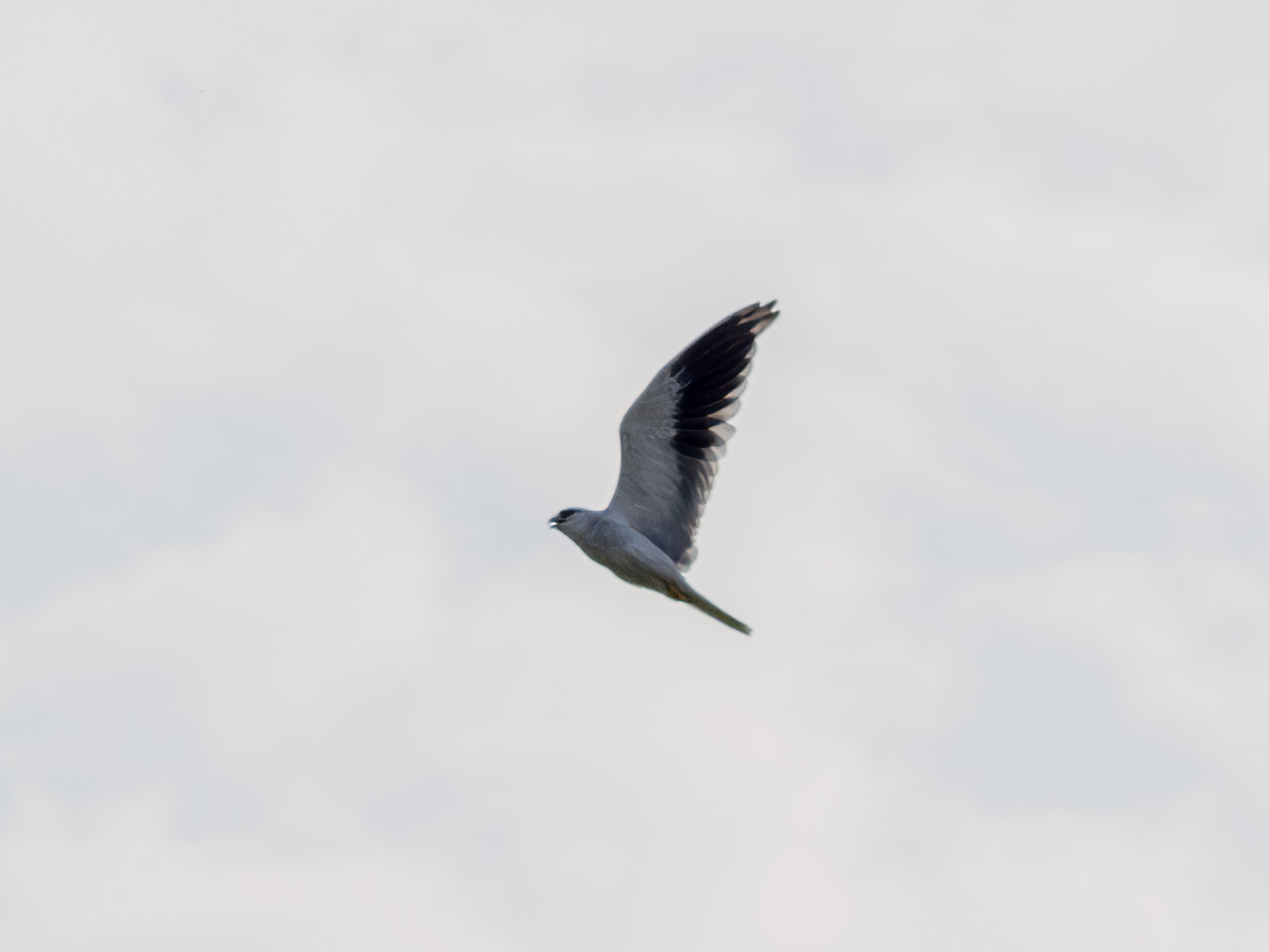
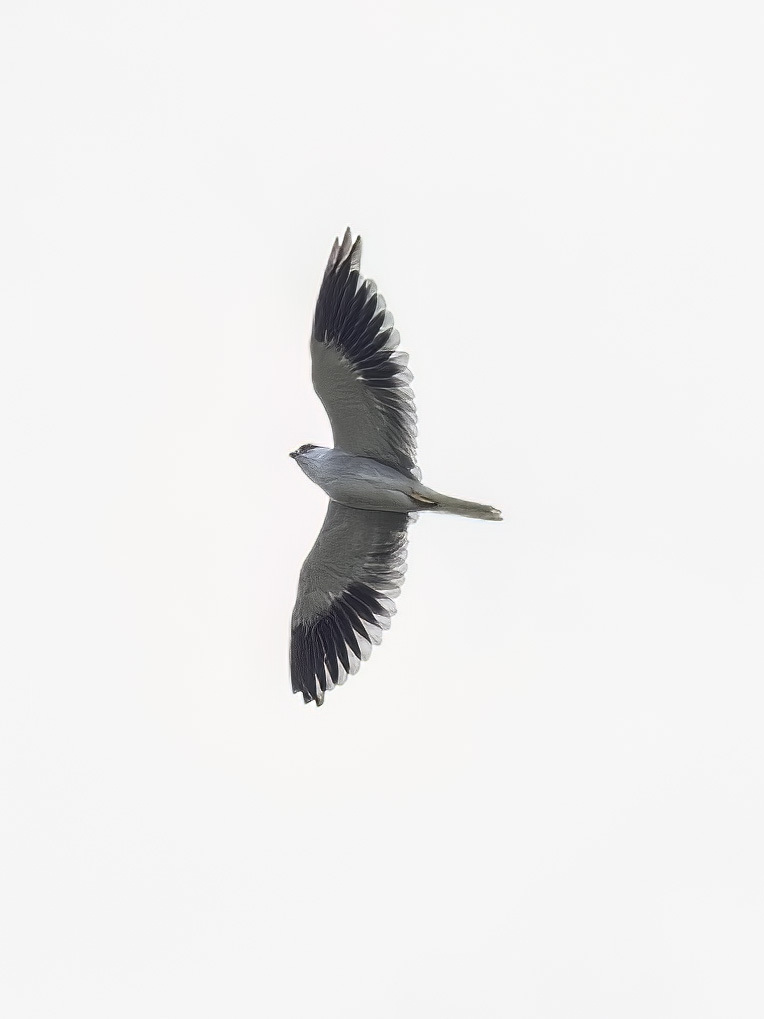

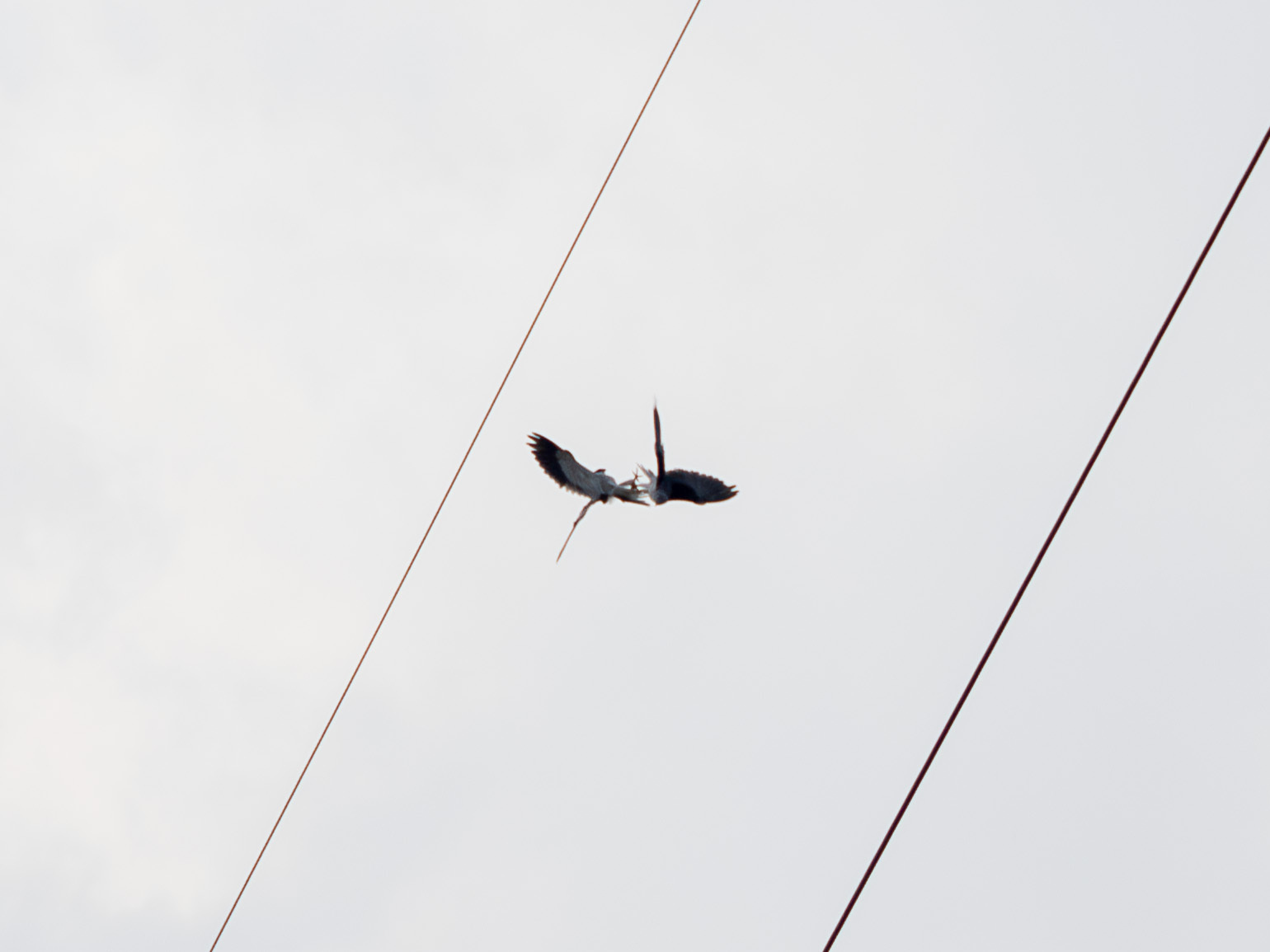

Black-winged Kite
Elanus caeruleus
黑翅鸢
Introduction
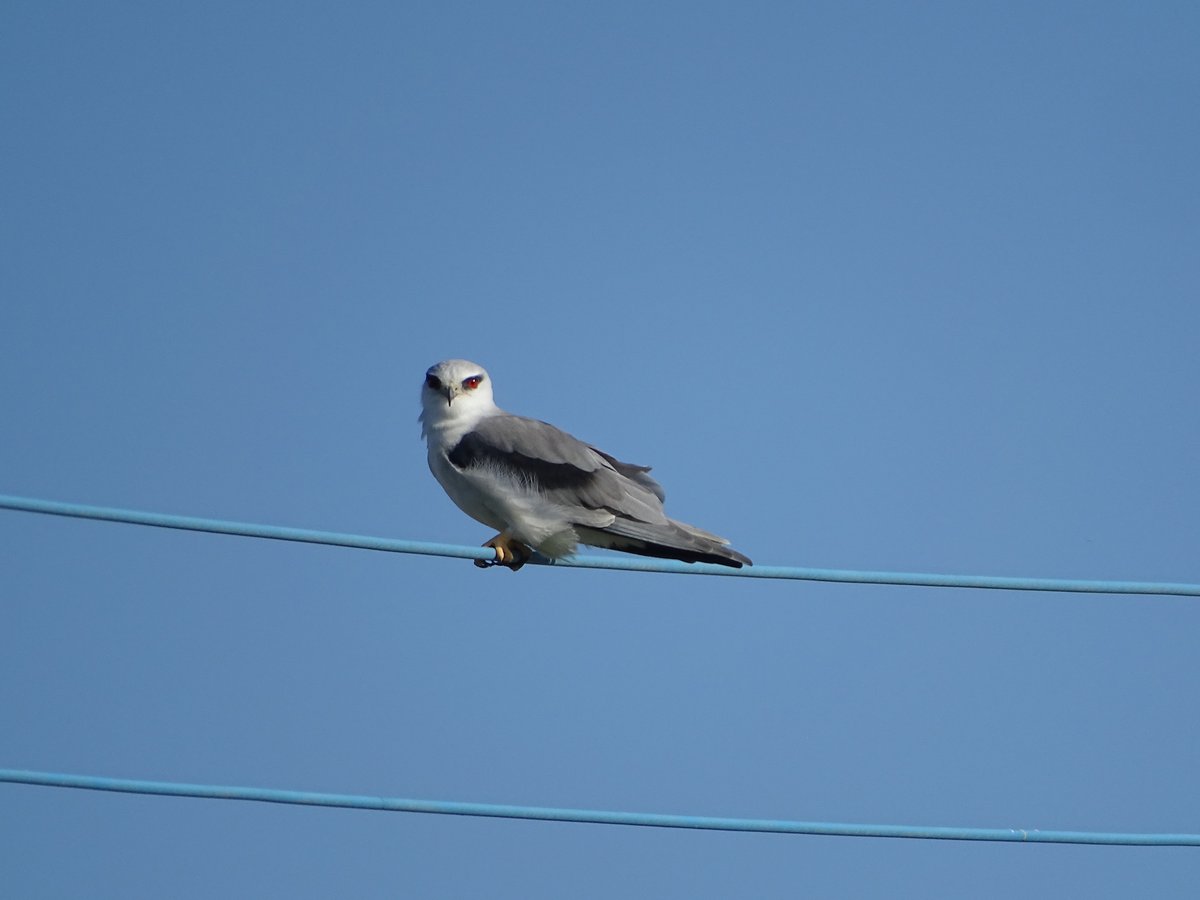
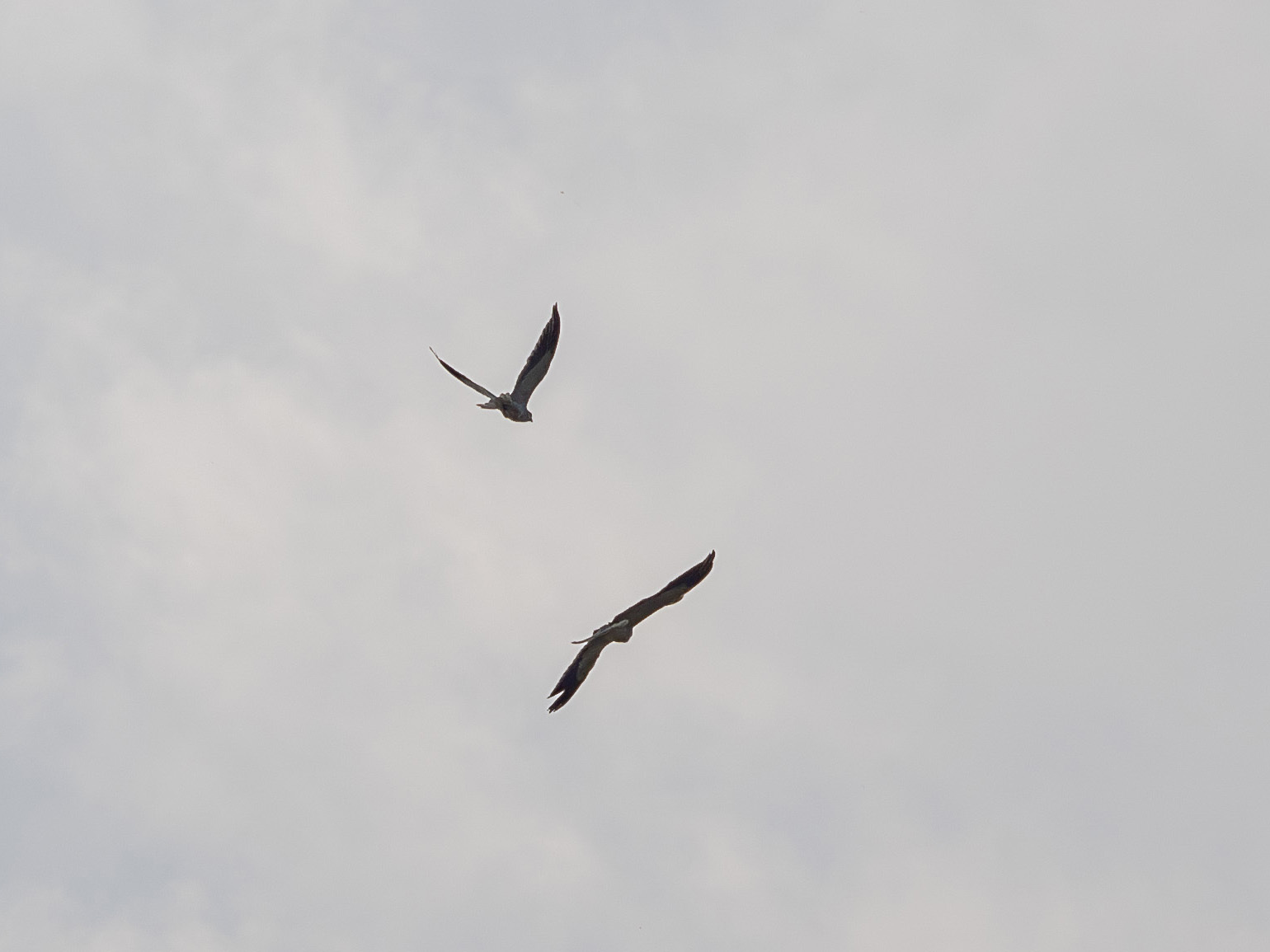
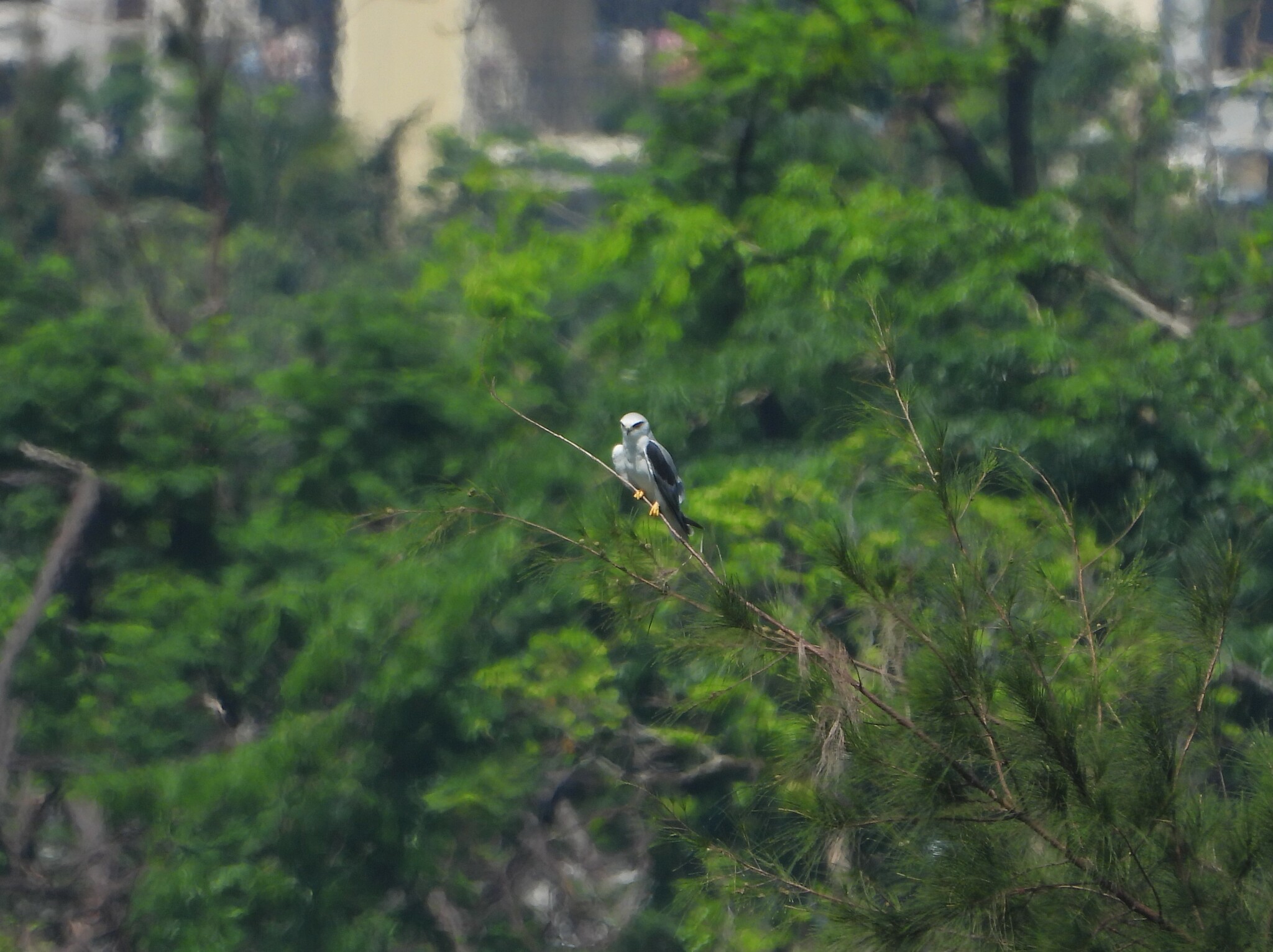
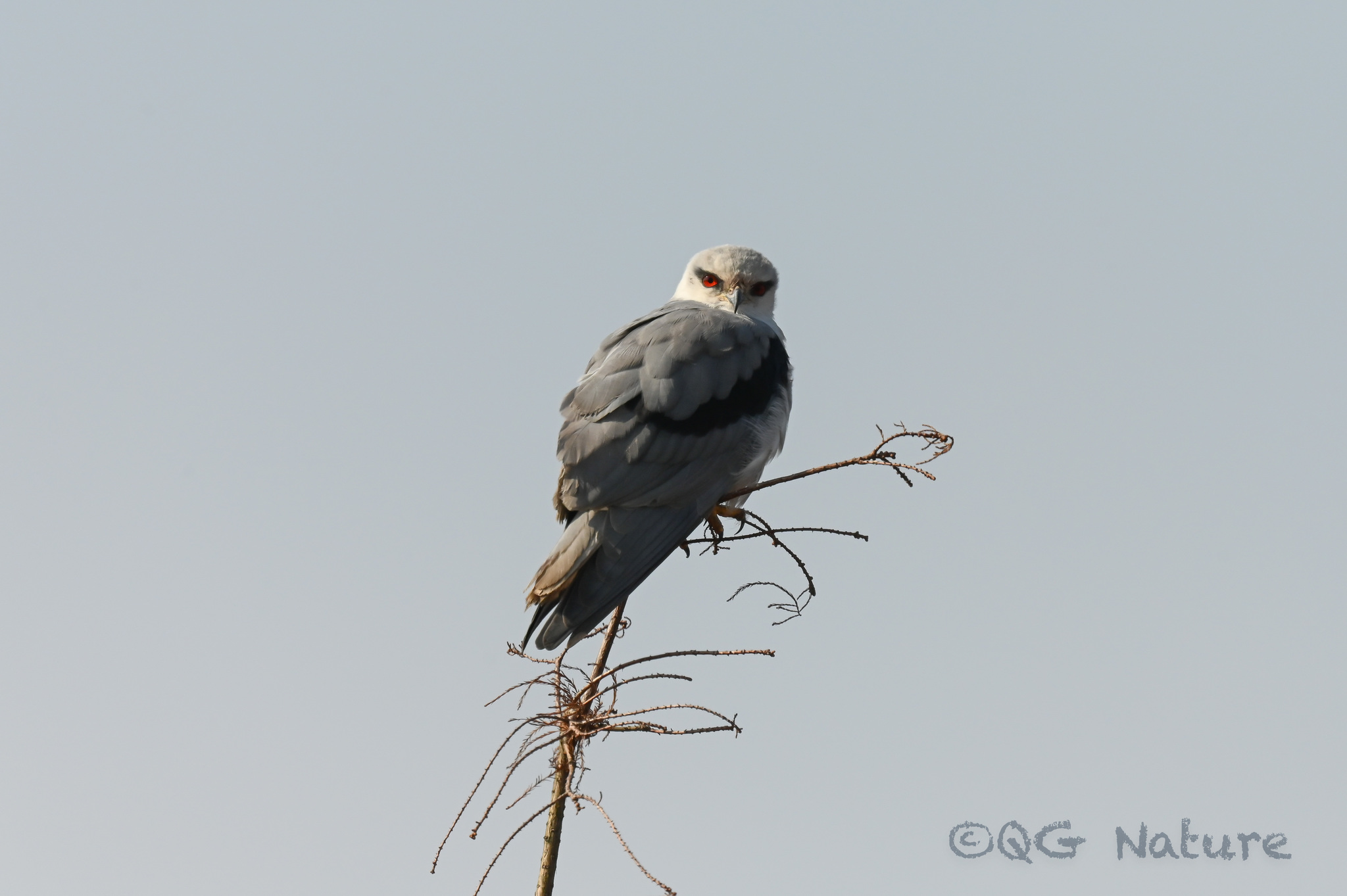
A small raptor species exhibiting hovering behavior over open grasslands. Coloration is primarily grey or white with contrasting black shoulder patches, wing tips, and dark eye stripe. Forward-facing eyes have red irises. Habitat consists of open grasslands and lowland plains. Recorded at elevations up to approximately 3,650 meters in Asian highlands, including Sikkim. Not truly migratory but displays nomadic movements influenced by weather patterns and prey availability. Exhibits reproductive flexibility, being capable of raising multiple broods within a single year. European populations, particularly in Spain, Portugal, and southwestern France, have expanded in recent decades, associated with agricultural practices and livestock rearing.
Description
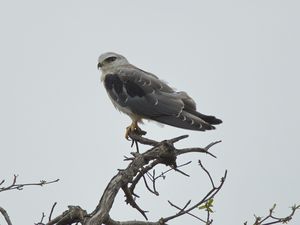
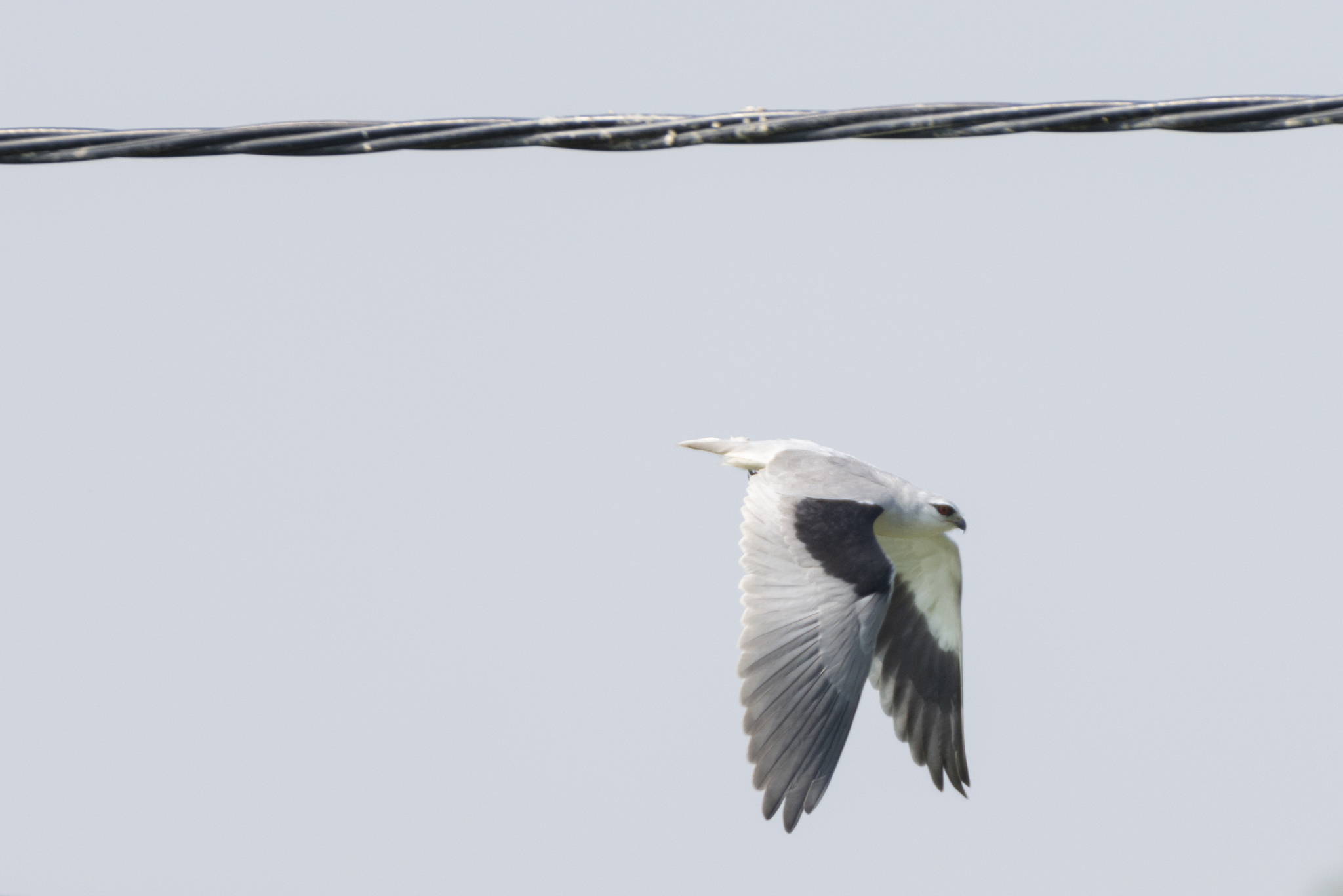
A slender, long-winged raptor with a compact body structure. The plumage is predominantly grey or white, featuring distinctive black shoulder patches, wing tips, and a dark eye stripe running through the facial area. The species possesses exceptionally long, falcon-like wings that extend well beyond the square, unforked tail when perched. Both sexes share identical plumage characteristics. The species' most diagnostic feature is its large, forward-facing eyes set beneath a protective bony shelf, an adaptation shared with owls. Additional owl-like features include velvety-textured plumage and zygodactyl feet. The inner vanes of the feathers possess specialized velvety barbules.
Identification
The combination of grey and white plumage with black shoulder patches and wing tips is distinctive within its range. The long wings extending beyond the tail and the short, square tail distinguish it from typical kites of the genus Milvus, which possess forked tails. The prominent forward-facing eyes with red irises and dark eye stripe set this species apart from similar raptors. In flight, the shallow, slow wingbeats and hovering hunting technique resemble harriers, while the kestrel-like hovering is unique among similarly sized raptors in open habitats.
Distribution & Habitat
This species inhabits open land and semi-desert regions across sub-Saharan Africa and tropical Asia, with an expanding foothold in southern Europe. European populations have increased significantly since the first breeding records in the 1860s, spreading through Spain and Portugal into southwestern France. The range continues to expand northward, with vagrants recorded in Switzerland and England. Although primarily a lowland species, it has been recorded at substantial elevations in the Himalayas and other Asian highlands. Some populations, particularly in regions like the Western Ghats, appear to be winter visitors, though the species is generally non-migratory with nomadic tendencies.
Behavior & Ecology
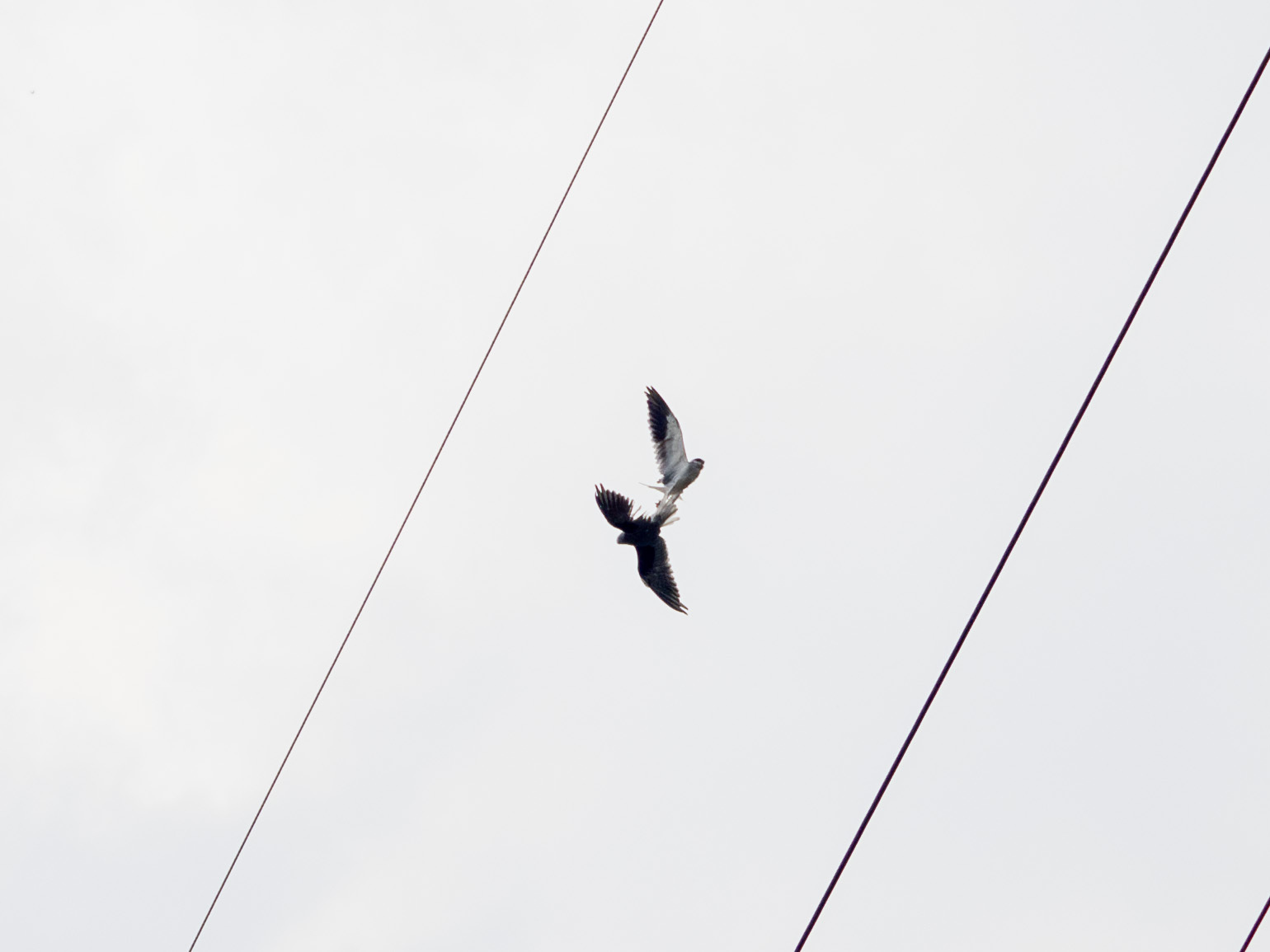
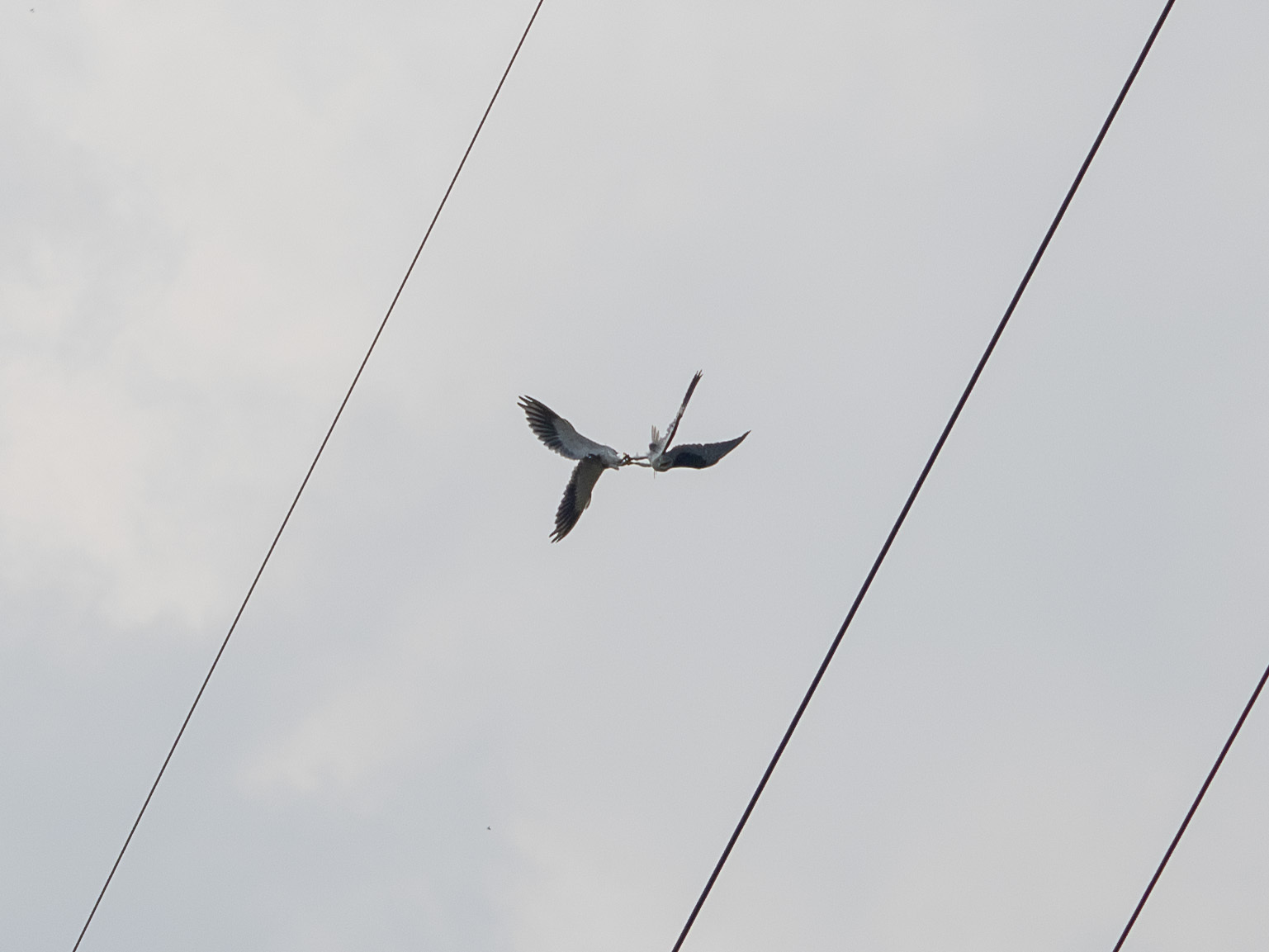
Breeding occurs at various times throughout the year across its range, though notably absent during April and May in India. Males establish and defend territories, with females moving into male territories. Courtship involves noisy chases and frequent copulation. The nest is a loose platform of twigs where three to four spotted eggs are laid. Both parents share incubation duties, though males assume primary foraging responsibilities after hatching. Young remain dependent on the male parent for approximately 80 days after fledging. Uniquely among raptors, this species raises multiple broods annually and demonstrates considerable nomadism. Hunting techniques include slow flight like a harrier and kestrel-like hovering. The diet consists primarily of insects, lizards, and rodents. These birds roost communally in groups of 15 to 35 individuals. Vocalizations are limited to a high-pitched squeal or soft whistle, primarily during breeding season.
Conservation
The species appears to be thriving, particularly in southern Europe where populations are expanding. Land-use changes, especially agricultural development and pasture creation, have benefited the species by creating favorable hunting habitats. The European range continues to expand, indicating a healthy population trend in this region. No significant conservation concerns are indicated in the available literature.
Culture
No cultural significance, folklore, or mythology is documented for this species in the available sources.
Source: Wikipedia · CC BY-SA 3.0
Taxonomy
- Order
- Accipitriformes
- Family
- Accipitridae
- Genus
- Elanus
- eBird Code
- bkskit1
Vocalizations
Subspecies (3)
-
Elanus caeruleus caeruleus
southwestern France, Iberian Peninsula, Africa (except Sahara), and southwestern Arabia
-
Elanus caeruleus hypoleucus
Greater and Lesser Sundas, Philippines (where extirpated from many islands), Sulawesi, and New Guinea
-
Elanus caeruleus vociferus
Pakistan through southern and southeastern Asia to eastern China and Thai-Malay Peninsula
Data Sources
Species description from Wikipedia, licensed under CC BY-SA 3.0.
Bird images and sounds sourced from GBIF, contributed by citizen scientists worldwide under Creative Commons licenses.
Taxonomy data from AviList 2025.