

Pelecaniformes / Ardeidae / Egretta
Pacific Reef Heron
Egretta sacra · 岩鹭
Introduction
A medium-sized heron species found throughout southern Asia and Oceania. It exhibits two distinct color morphs, either slaty grey or pure white, and inhabits coastal environments including reefs, mangroves, and offshore islands.
Description
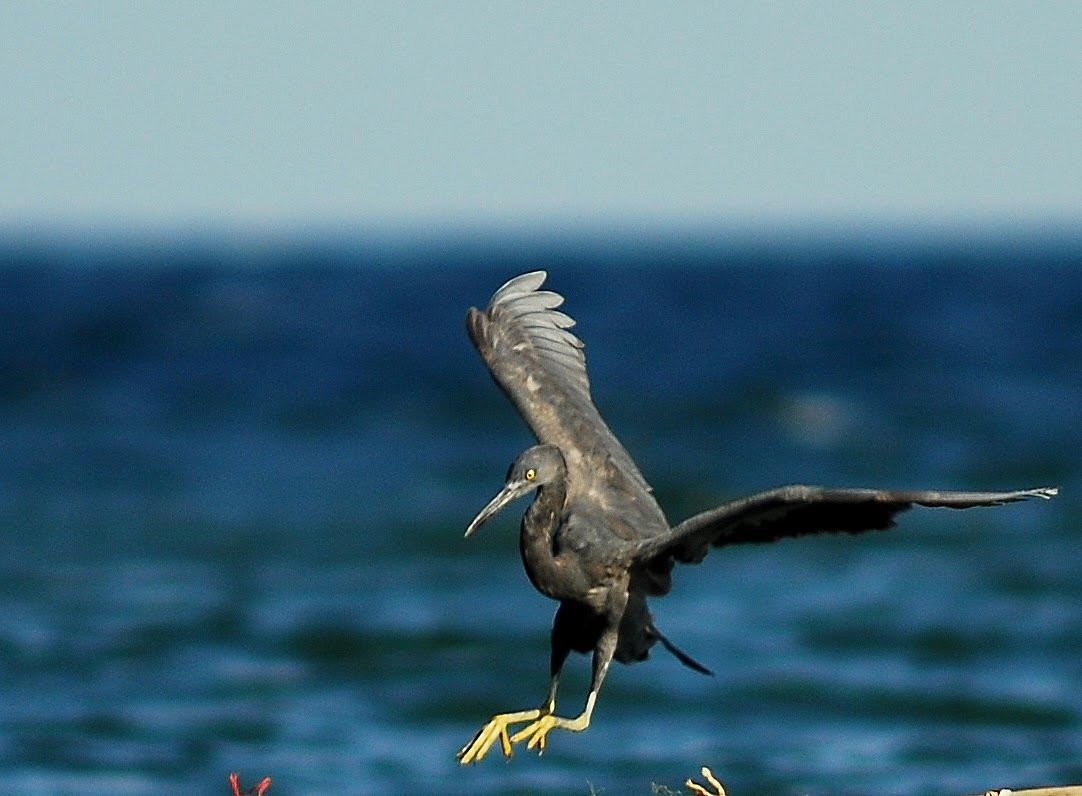
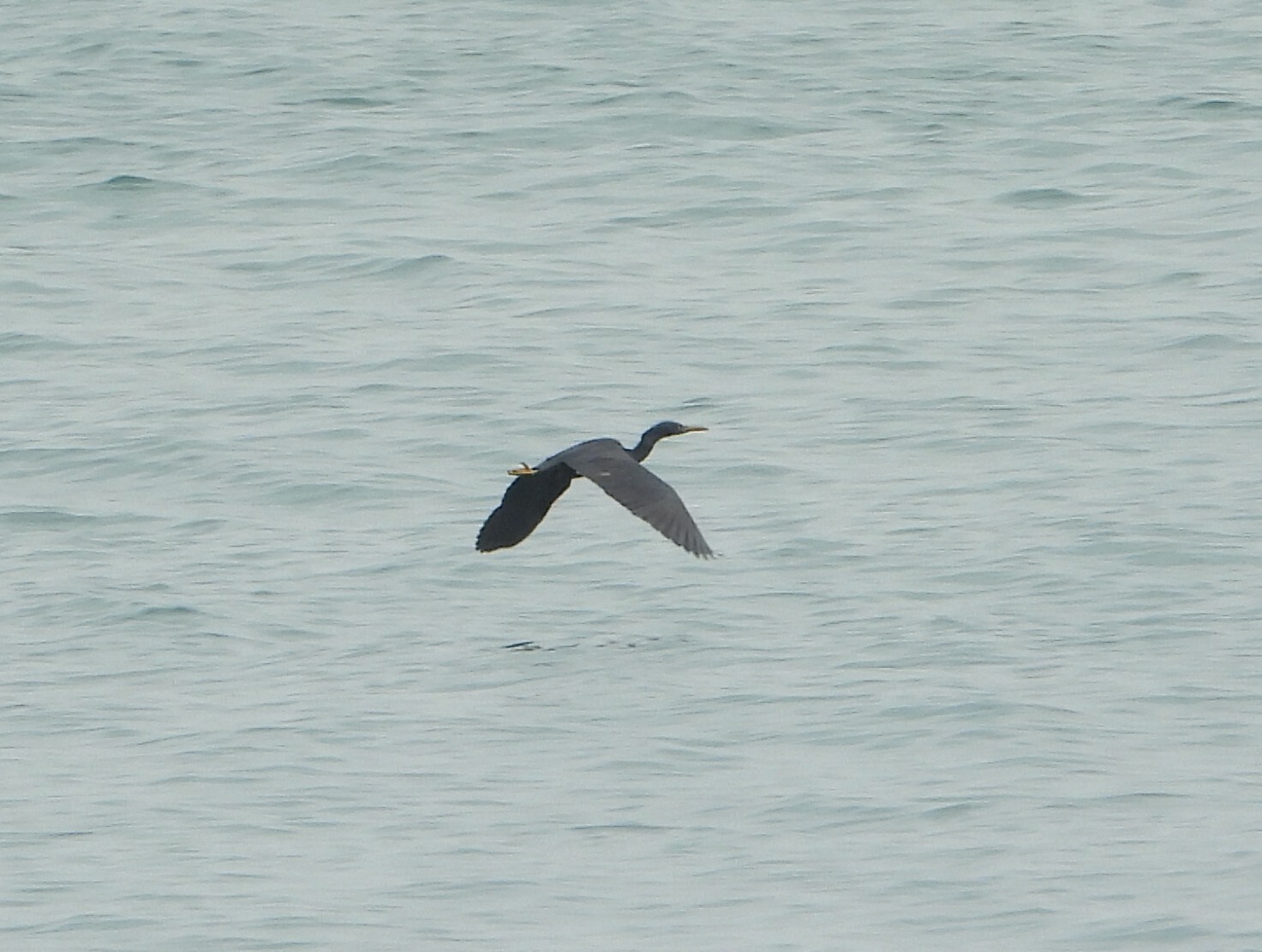
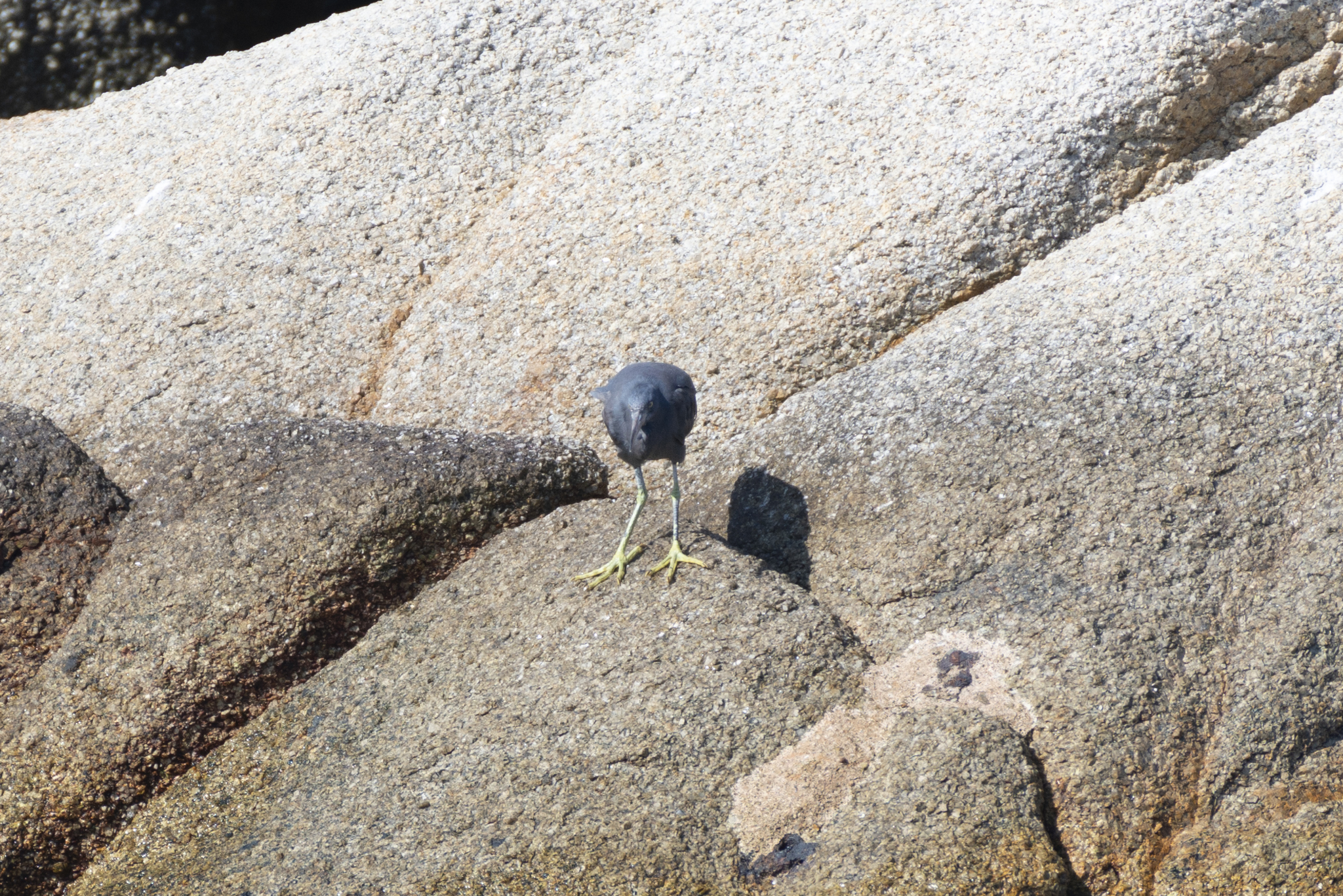
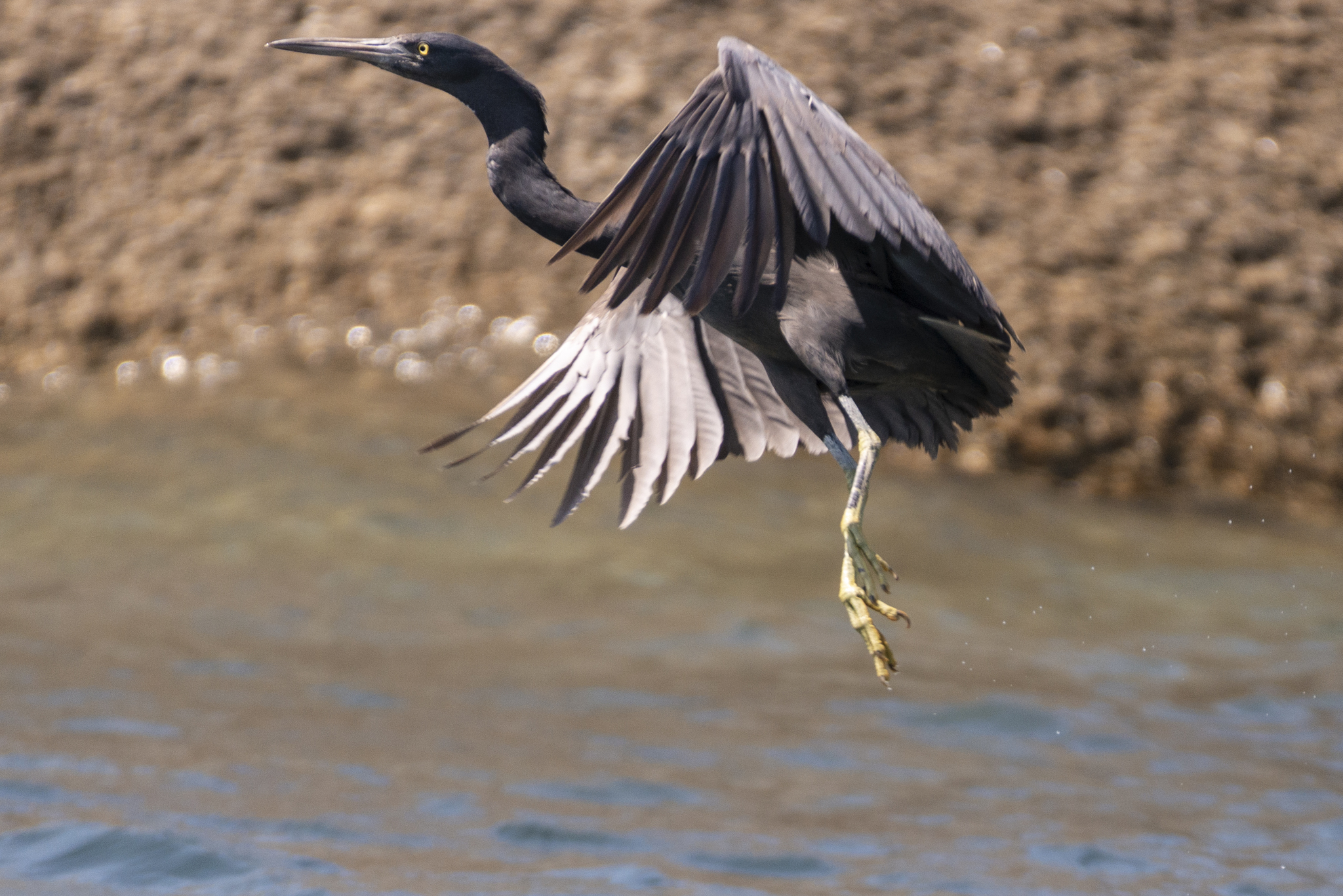
Reaches 57 to 66 cm (22 to 26 in) in length with a wingspan of 90 to 110 cm (35 to 43 in) and an average weight of 400 g (14 oz). Displays non-sexual dimorphism with either entirely white ('light' morph) or charcoal-grey ('dark' morph) plumage; the dark morph is more common. Immature birds have browner, duller plumage. Features yellow-grey legs, brown beaks, gold-yellow eyes, and greenish to yellow facial skin. The grey variety has a narrow white stripe on the throat and chin.
Identification
Distinguished by two color morphs: pure white or charcoal-grey. The dark morph shows a narrow white stripe on the throat and chin. Key field marks include yellow-grey legs, brown beak, and gold-yellow eyes. Hunts with wings open like an umbrella to create shade.
Distribution & Habitat
Range extends from coastal south Bangladesh and Andaman Islands to Ryukyu Islands (south Japan), Australasia, Melanesia, and east Polynesia (Tuamotu Archipelago). Widespread in Micronesia (Guam, Marshall Islands, Northern Mariana Islands, Palau) and western Polynesia (Fiji, French Polynesia, Tonga), but does not breed in Niue. Recently colonized Rotuma. New Zealand marks the southern limit, with highest abundance in Northland. Two subspecies: E. s. sacra (most of range) and E. s. albolineata (New Caledonia and Loyalty Islands).
Behavior & Ecology
Breeds year-round in colonies within jungle, palms, mangroves, or old building cavities. Nests are constructed from branches and blossoms. Clutches contain two to three paled greenish-blue eggs. Males and females share brooding duties over a 28-day period, followed by approximately five weeks of parental support for chicks. Diet consists predominantly of ocean-based fish, crustaceans, molluscs, and worms. Hunts day and night depending on tides, often standing motionless in shallow water with wings spread to reduce reflections and attract fish.
Conservation
In New Zealand, the species has a conservation status of 'Nationally endangered'. It is classified as 'Regionally Critical' in the Wellington Region.
Source: Wikipedia · CC BY-SA 3.0
Taxonomy
- Order
- Pelecaniformes
- Family
- Ardeidae
- Genus
- Egretta
Subspecies (2)
-
Egretta sacra albolineata
New Caledonia including Loyalty Islands
Data Sources
Species description from Wikipedia, licensed under CC BY-SA 3.0.
Bird images and sounds sourced from GBIF, contributed by citizen scientists worldwide under Creative Commons licenses.
Taxonomy data from AviList 2025.