
Pacific Reef Heron
Egretta sacra
岩鹭
Introduction
A medium-sized heron (Egretta sacra) found throughout southern Asia and Oceania. This species exhibits a distinctive non-sexual dimorphism with two colour morphs: slaty grey and pure white plumage. Inhabits coastal areas, offshore islands, mangroves, and rocky shores. In New Zealand, classified as 'Nationally endangered' and 'Regionally Critical' in the Wellington Region. Also known as eastern reef heron or eastern reef egret.
Description
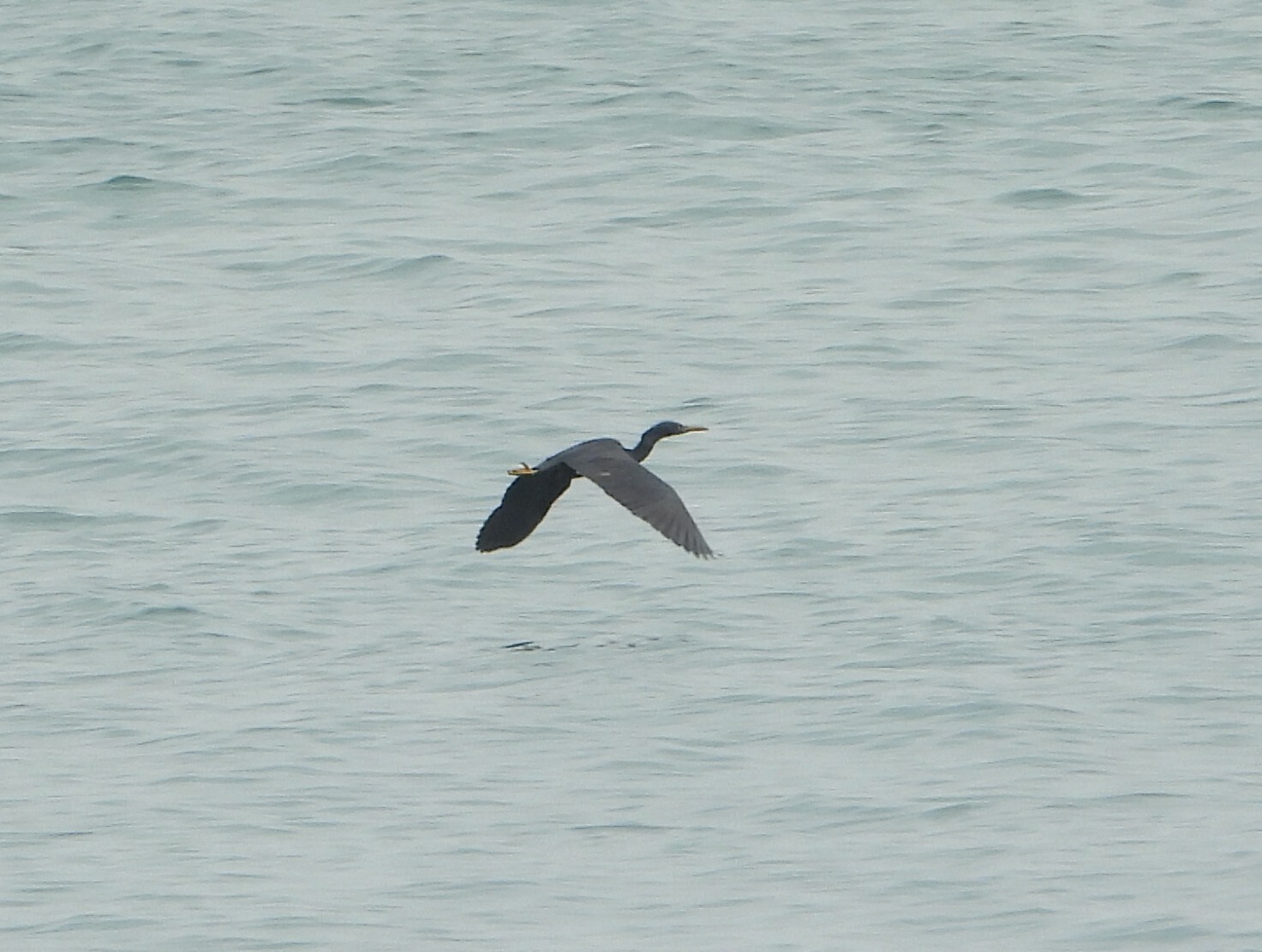
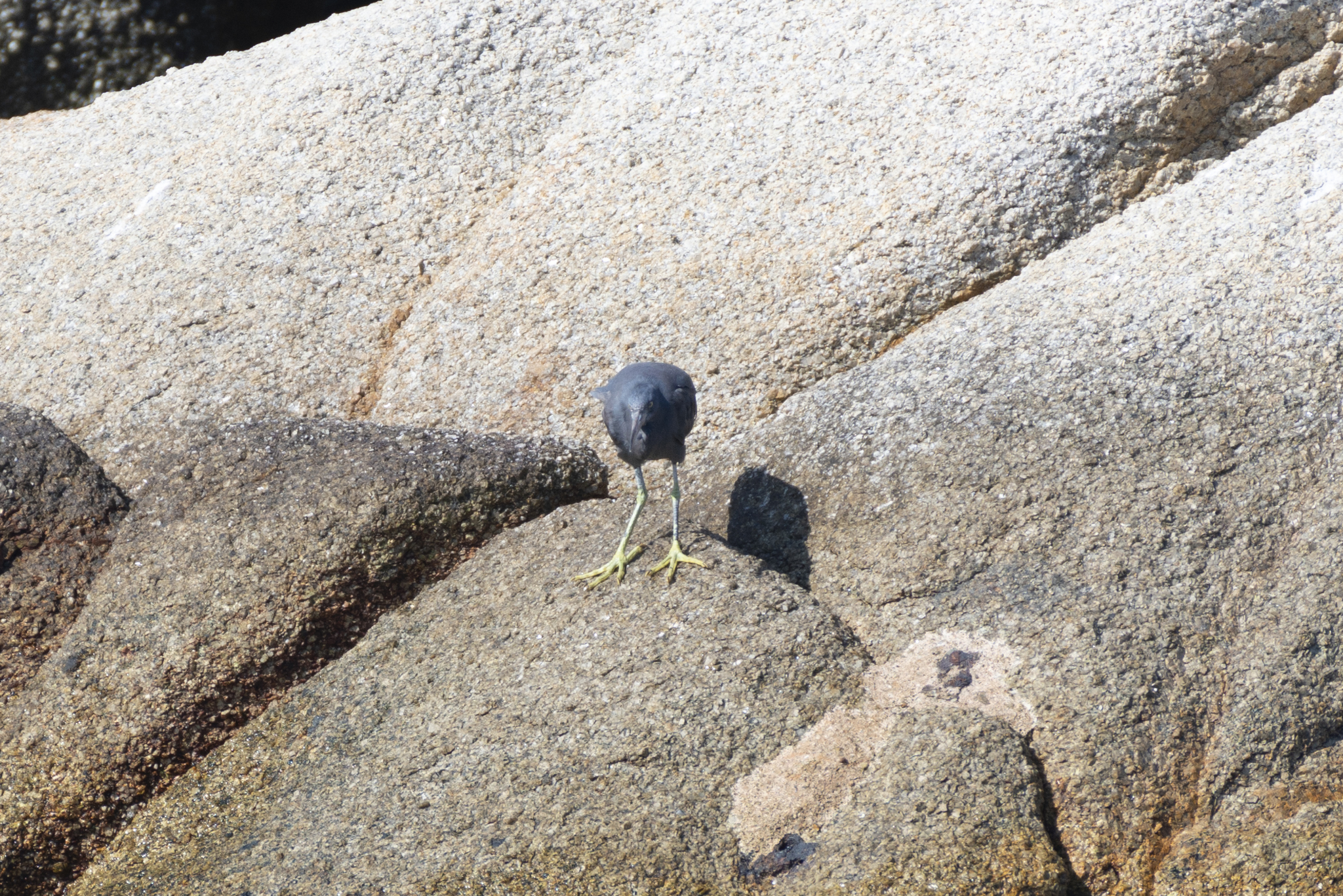
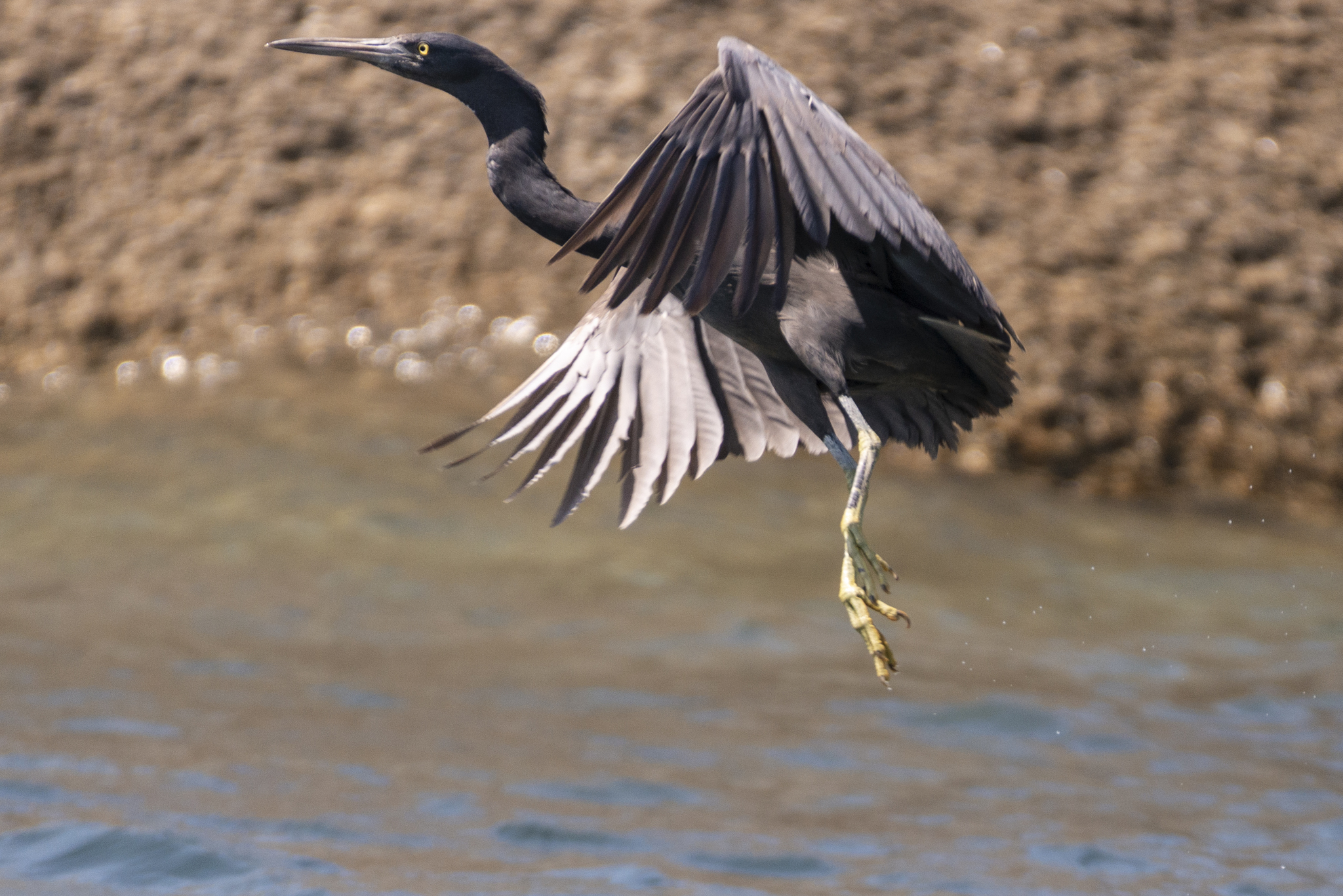
Reaches 57-66 cm in length with a wingspan of 90-110 cm and average weight of 400 g. The species shows polymorphic plumage: the dark morph (charcoal-grey) is more common, while the light morph is pure white. Both morphs have yellow-grey legs, brown beaks, and gold-yellow eyes with greenish-yellow facial skin. Dark morph individuals display a narrow white stripe on the throat and chin. Immature birds have browner and duller plumage. Sexes are similar in appearance.
Identification
Key identification features include the two colour morphs (grey and white) and the habitat preference for coastal and reef environments. The dark morph is distinguished from other grey herons by its smaller size and the characteristic white throat stripe. The white morph can be distinguished from other white egrets by its darker legs and bulkier build. The combination of brown beak and gold-yellow eyes helps separate it from similar species.
Distribution & Habitat
Widely distributed across southern Asia and Oceania. In Australia, occurs along most of the coastline and offshore islands including the Torres Strait Islands. Breeds throughout Micronesia (Guam, Marshall Islands, Northern Mariana Islands, Palau) and western Polynesia (Fiji, French Polynesia, Tonga), though not in Niue. New Zealand represents the southern limit of the range, where it is uncommon but most frequent in Northland. Two subspecies recognized, with E. s. albolineata endemic to New Caledonia.
Behavior & Ecology
Breeds year-round in colonies located in jungles, between palms and mangroves, or in cavities of old buildings. Clutches consist of 2-3 pale greenish-blue eggs built in nests of branches and blossoms. Both parents share 28-day incubation duties and provide approximately five weeks of post-hatching care. Diet consists primarily of fish, crustaceans, molluscs, and worms. Hunts both day and night, adjusting to tidal patterns. During daytime, stands motionless in shallow waters with wings partially spread to reduce reflections and create shade that attracts prey.
Conservation
In New Zealand, classified as 'Nationally endangered' with a 'Regionally Critical' status in the Wellington Region. Population numbers are not provided, but the species is considered relatively uncommon throughout its New Zealand range. No global IUCN status is mentioned in the source material. Conservation concerns likely relate to coastal habitat disturbance and limited distribution at the southern extent of its range.
Culture
Known by multiple indigenous names throughout the Pacific region. In New Zealand, Māori names include kākatai, matuku moana, and matuku tai. Other Pacific names: belō (Fiji), matu'u (Samoan Islands), motuku (Niue, Tonga, Wallis Island). The type specimen of the white morph was collected on Tahiti and provided by Joseph Banks to John Latham for description in 1785.
Source: Wikipedia · CC BY-SA 3.0
Taxonomy
- Order
- Pelecaniformes
- Family
- Ardeidae
- Genus
- Egretta
- eBird Code
- pacreh1
Subspecies (2)
-
Egretta sacra albolineata
New Caledonia including Loyalty Islands
-
Egretta sacra sacra
coastal southeastern Asia from coastal Myanmar and the Andaman Islands eastward to south-central Japan, Australia (excluding Coorong to Lakes Entrance and Tasmania), New Zealand, and the tropical Pacific eastward to Gambier Islands
Data Sources
Species description from Wikipedia, licensed under CC BY-SA 3.0.
Bird images and sounds sourced from GBIF, contributed by citizen scientists worldwide under Creative Commons licenses.
Taxonomy data from AviList 2025.