











Pelecaniformes / Ardeidae / Egretta
Little Egret
Egretta garzetta · 白鹭
Introduction
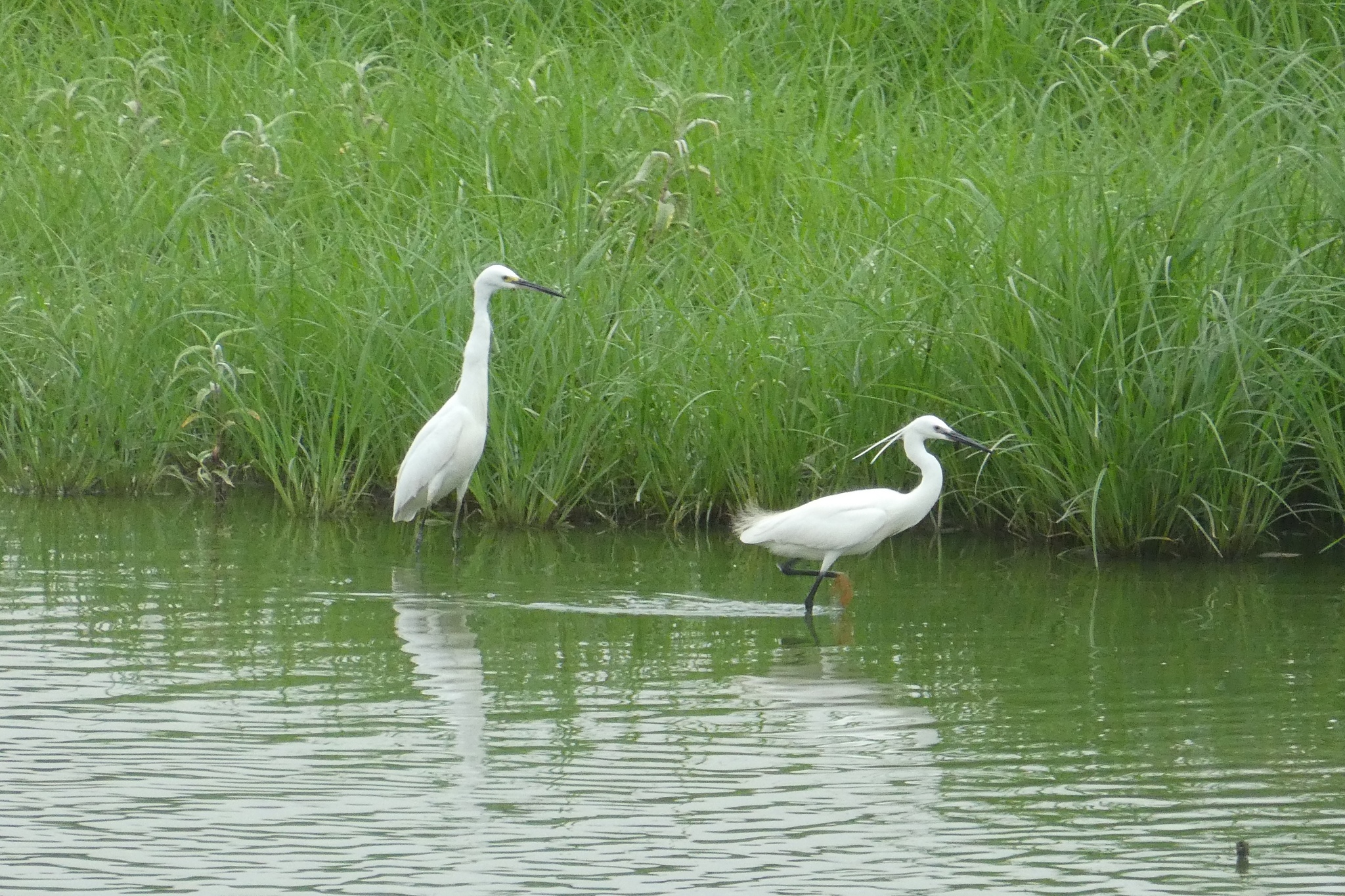
A small heron in the family Ardeidae, this species is a white aquatic bird with a slender black beak, long black legs, and yellow feet in the western race. It inhabits wetlands across warm temperate to tropical regions of Asia, Africa, Australia, and Europe. Distinctive traits include colonial breeding and active foraging techniques such as foot-shuffling. The IUCN assesses its global conservation status as Least Concern.
Description
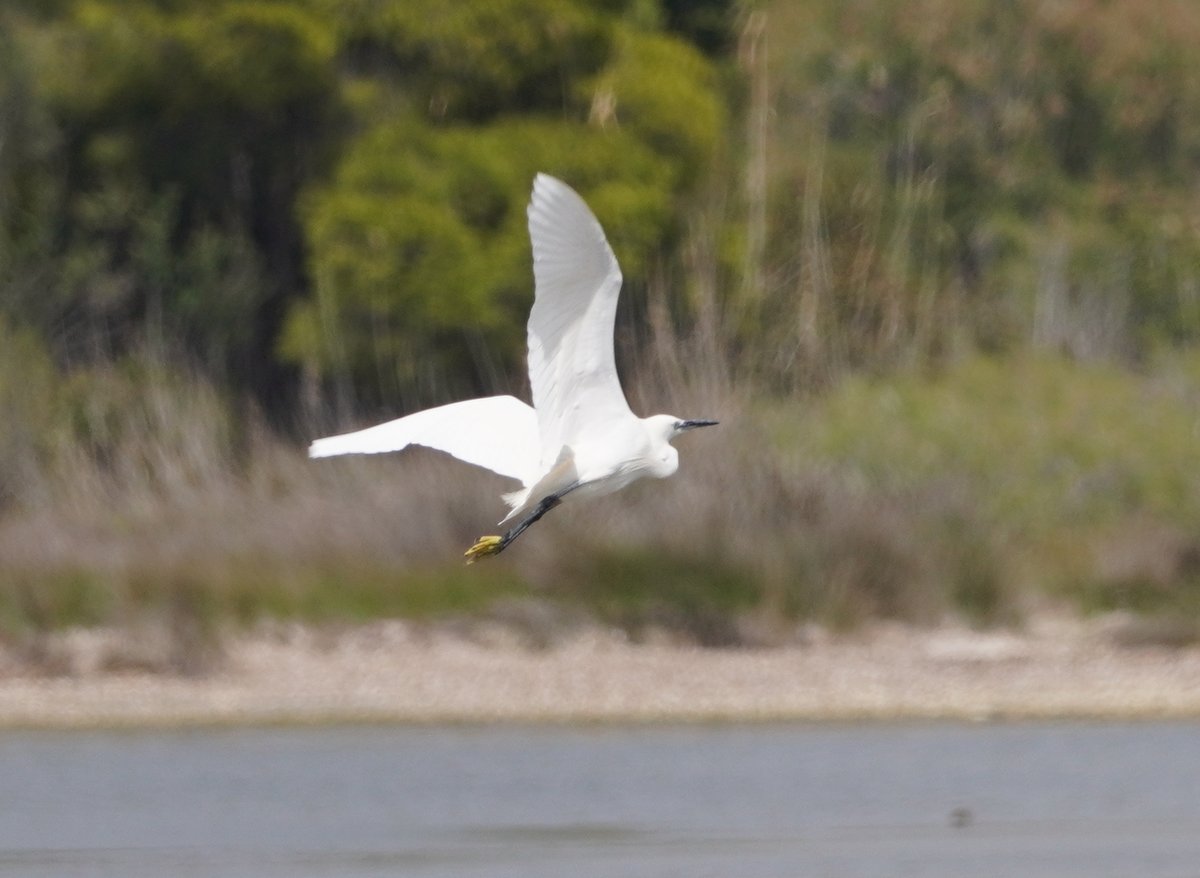
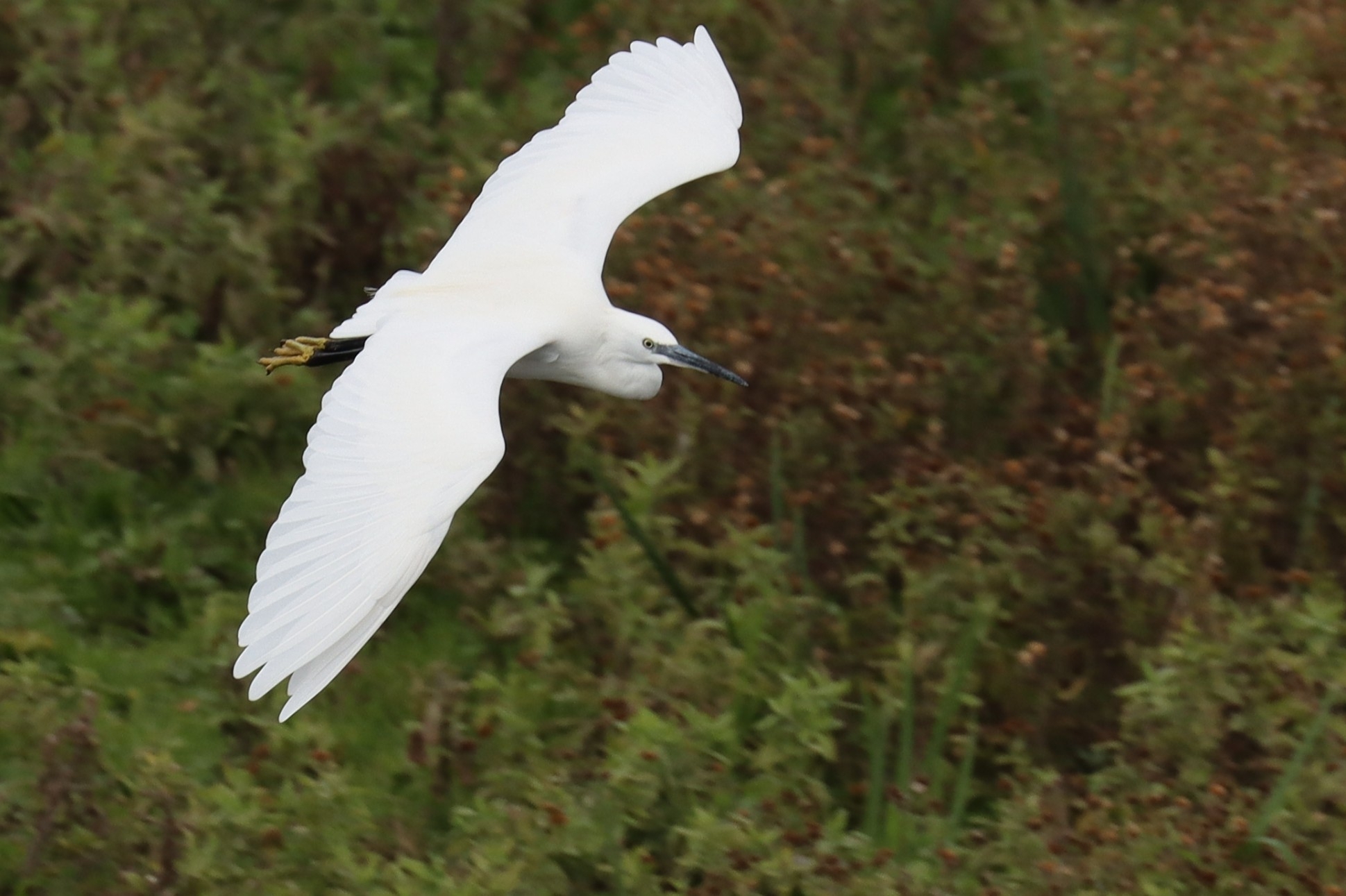
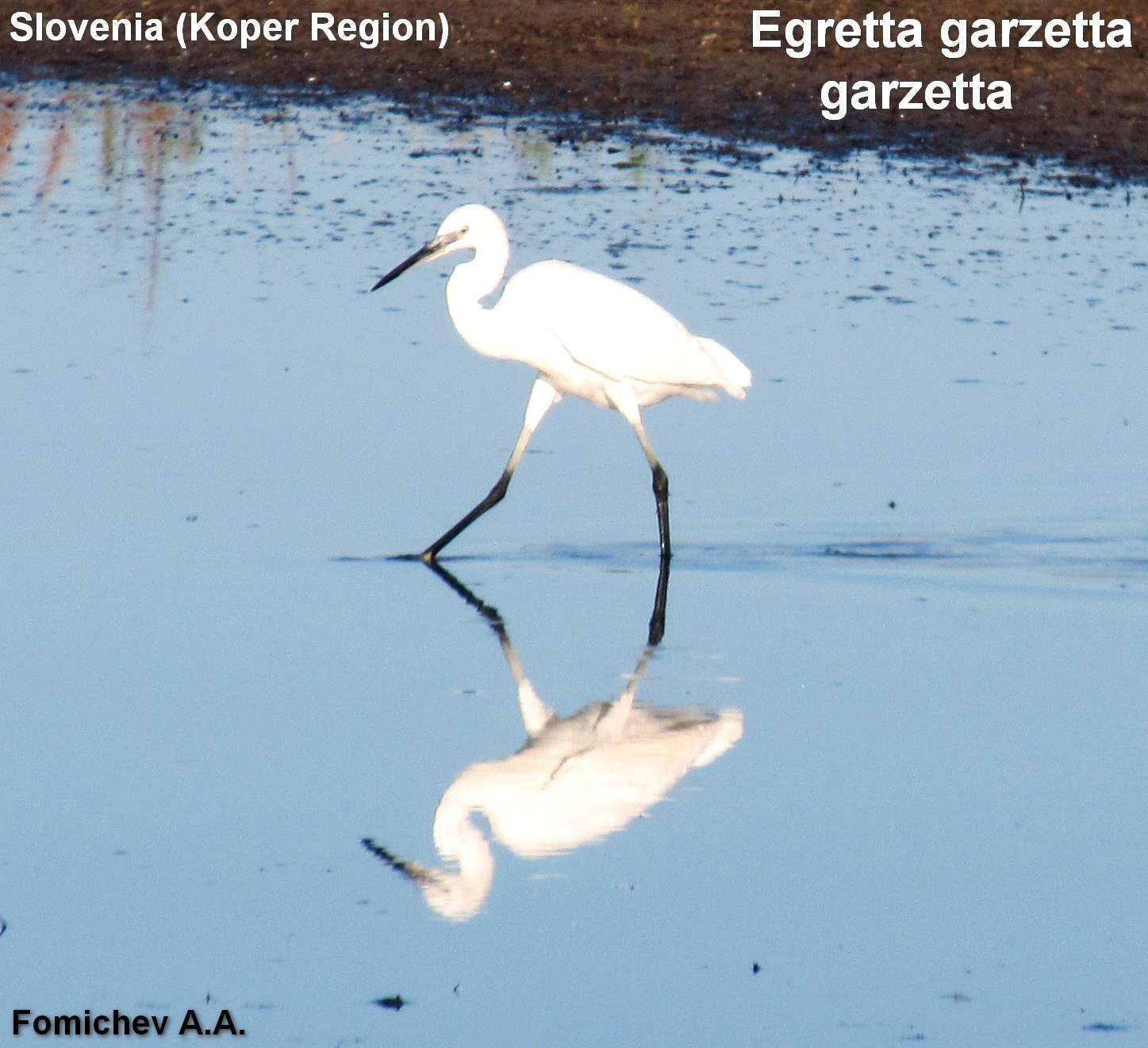
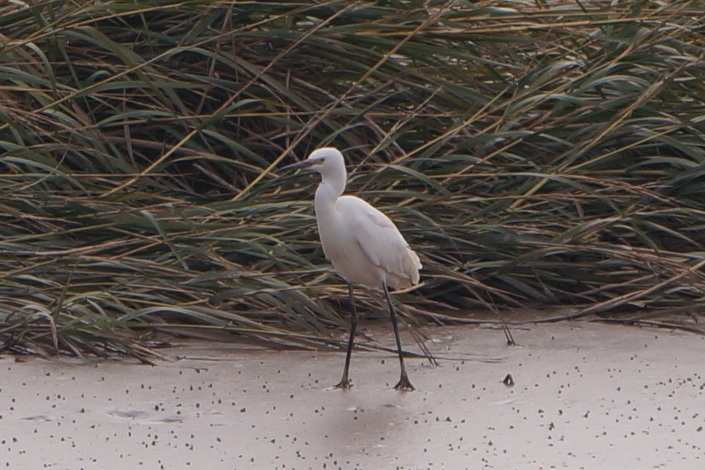
Adults measure 55–65 cm in length with an 88–106 cm wingspan and weigh 350–550 g. Plumage is normally entirely white, though dark bluish-grey forms exist. During the breeding season, adults develop two long, narrow nape plumes forming a crest (approx. 150 mm) and elongated scapular feathers with loose barbs up to 200 mm. The bill and lores are black, with greenish-grey bare skin at the lower mandible base and around the eye, which has a yellow iris. Legs are black, and feet are yellow. In the subspecies nigripes, the skin between the bill and eye is yellow, and feet are blackish. During courtship, lores and feet of yellow-footed races turn red. Juveniles resemble non-breeding adults but have greenish-black legs, duller yellow feet, and may show greyish or brownish feathers.
Identification
Identify by all-white plumage, slender black bill, black legs, and yellow feet. Distinguish from the similar Snowy Egret, which shares colonial nesting sites in the Caribbean; this species is larger and exhibits more varied foraging strategies. Vocalizations are mostly silent except for croaking or bubbling calls at colonies, which are indistinguishable from the Black-crowned Night Heron and Western Cattle Egret. Flight silhouette is typical of egrets, with neck retracted. Dark morphs exist but are less common. The red coloration of lores and feet during peak courtship is a key seasonal identifier.
Distribution & Habitat
Breeding range includes southern Europe, the Middle East, much of Africa, southern Asia, Indonesia, New Guinea, Australia, and New Zealand. Northern European populations migrate to Africa or southern Europe; some Asian populations migrate to the Philippines. Two subspecies are recognized: E. g. garzetta in Europe, Africa, and most of Asia, and E. g. nigripes in the Sunda Islands, Australia, and New Zealand. The range has expanded north into the UK and west into the New World, with established breeding populations in Barbados since 1994, spreading to the Bahamas, US Atlantic coast, and records in South America.
Behavior & Ecology
Sociable birds often seen in small flocks, though individuals defend feeding sites. Diet consists mainly of fish, plus amphibians, reptiles, mammals, birds, crustaceans, molluscs, insects, spiders, and worms. Foraging methods include stalking, running with raised wings, shuffling feet to disturb prey, ambushing, and scavenging. They often associate with livestock or cormorants. Breeds colonially in trees, shrubs, reed beds, or on cliffs. Nests are stick platforms. Clutch size is three to five pale blue-green eggs, incubated by both parents for 21–25 days. Chicks fledge after 40–45 days. Maximum recorded lifespan is 22.3 years.
Conservation
Assessed as Least Concern by the IUCN due to wide distribution and large population. Historically hunted extensively in the 19th century for plumes, leading to local extinction in northwestern Europe. Conservation laws introduced in the 1950s allowed populations to rebound. Breeding resumed in France, the Netherlands, Ireland, and Britain by the late 20th/early 21st century. In Victoria, Australia, it is listed as Threatened/Endangered. Populations are stable or increasing in Spain, France, and Italy, but decreasing in Greece. Range expansion continues into the New World.
Source: Wikipedia · CC BY-SA 3.0
Taxonomy
- Order
- Pelecaniformes
- Family
- Ardeidae
- Genus
- Egretta
Vocalizations
Subspecies (3)
-
Egretta garzetta dimorpha
East African coast and locally inland; Europa Island (southern Mozambique Channel), Aldabra (southwestern Seychelles), and Madagascar
Data Sources
Species description from Wikipedia, licensed under CC BY-SA 3.0.
Bird images and sounds sourced from GBIF, contributed by citizen scientists worldwide under Creative Commons licenses.
Taxonomy data from AviList 2025.