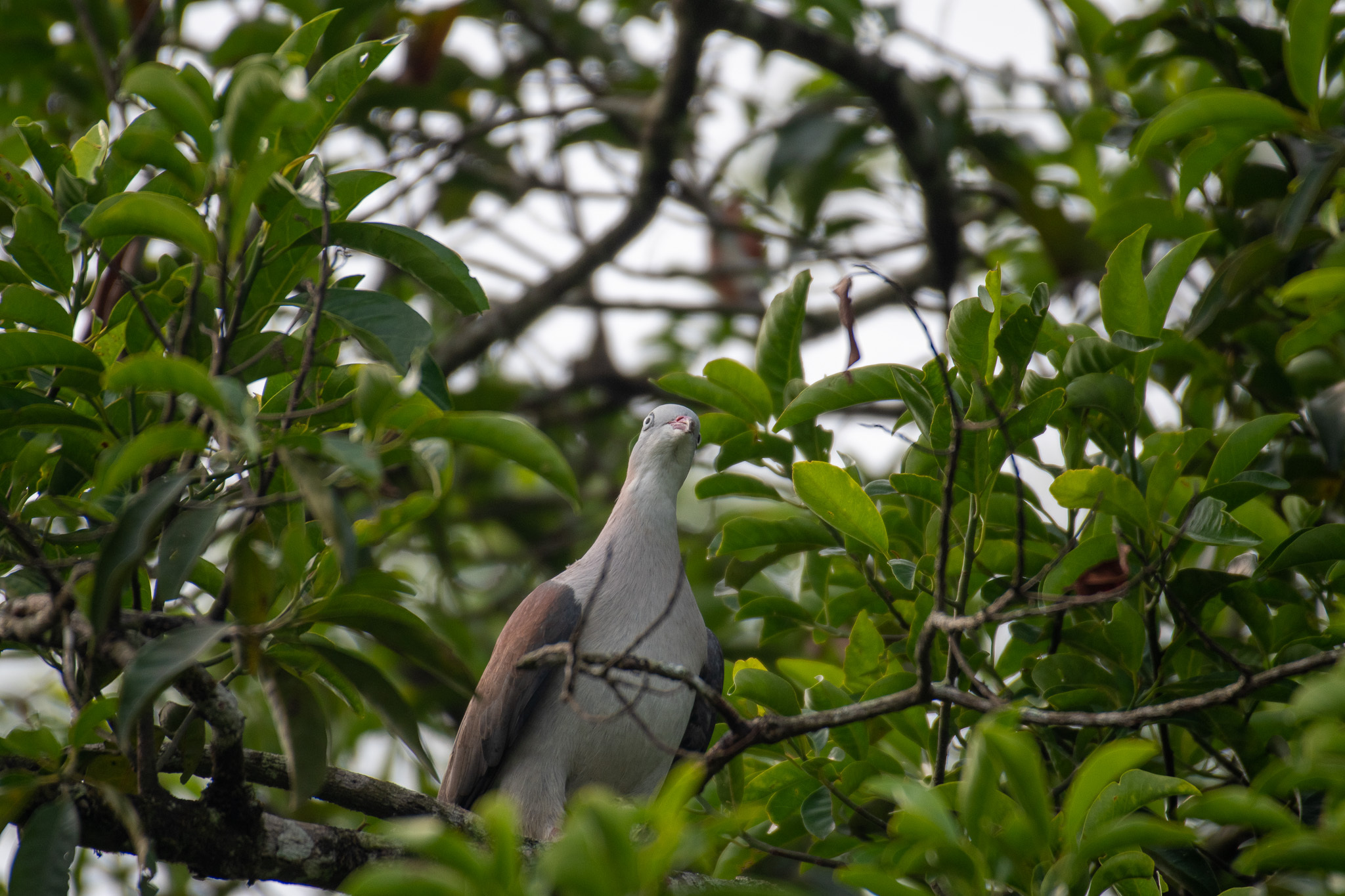
Columbiformes / Columbidae / Ducula
Mountain Imperial Pigeon
Ducula badia · 山皇鸠
Introduction
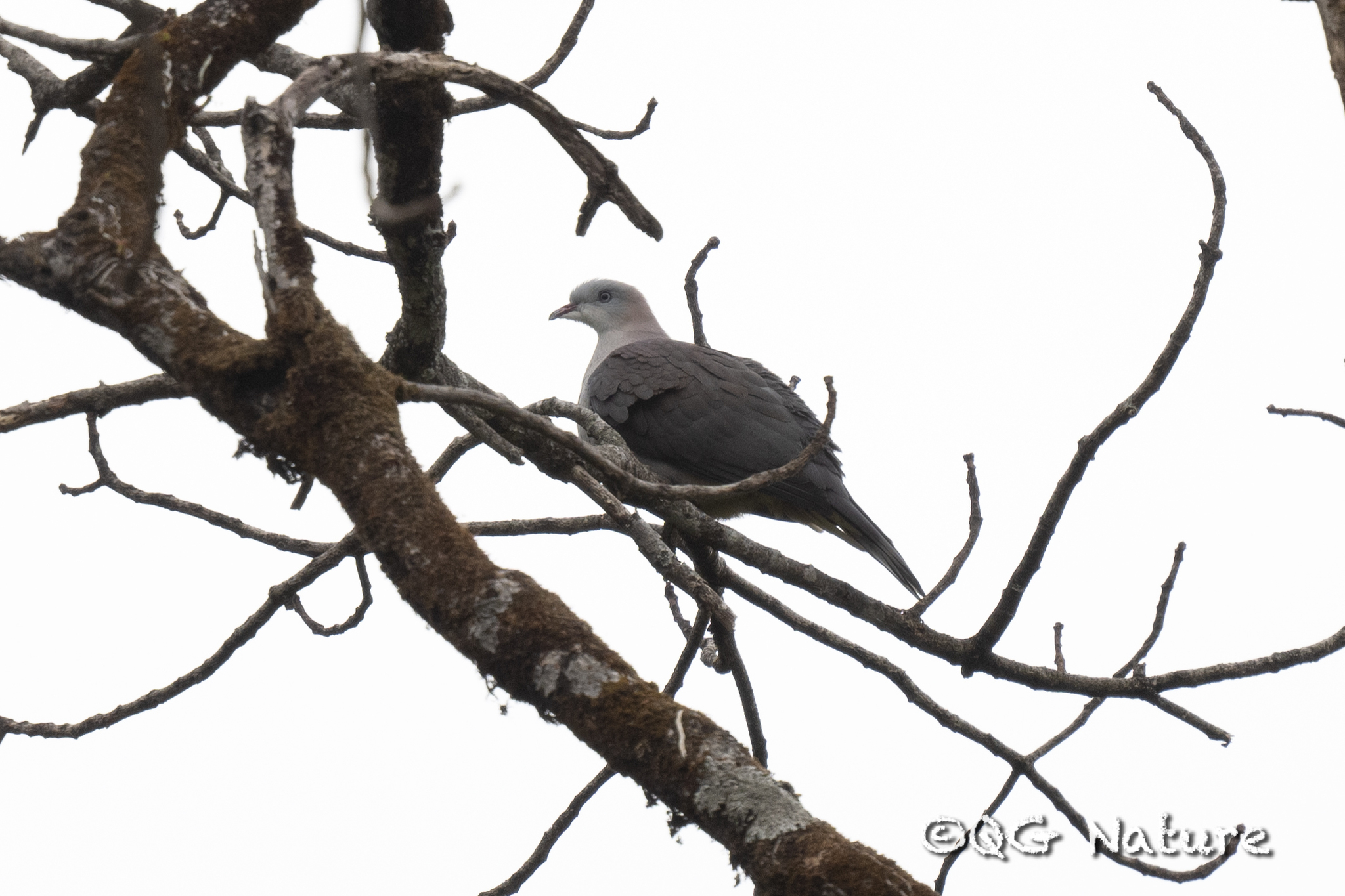
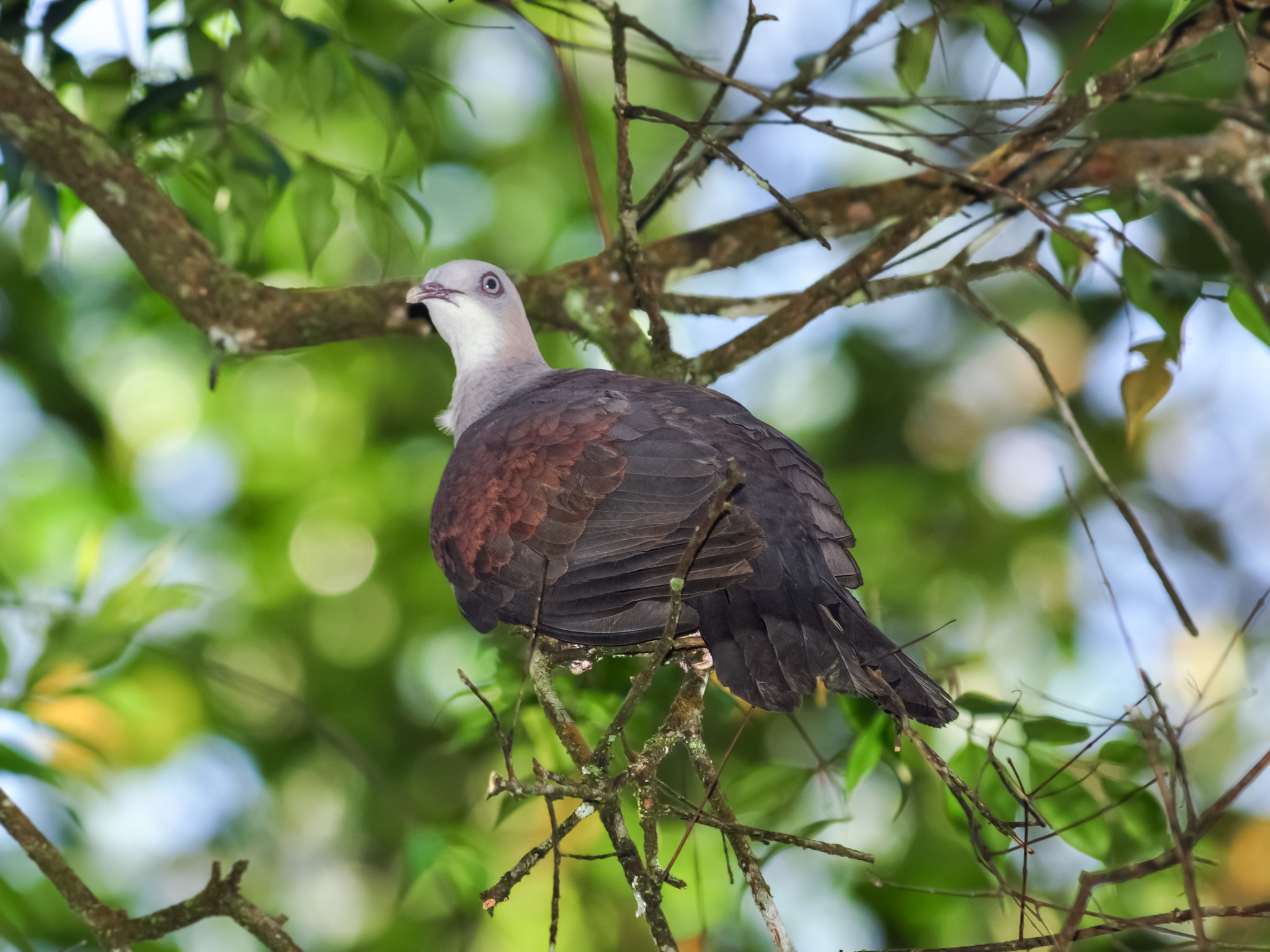
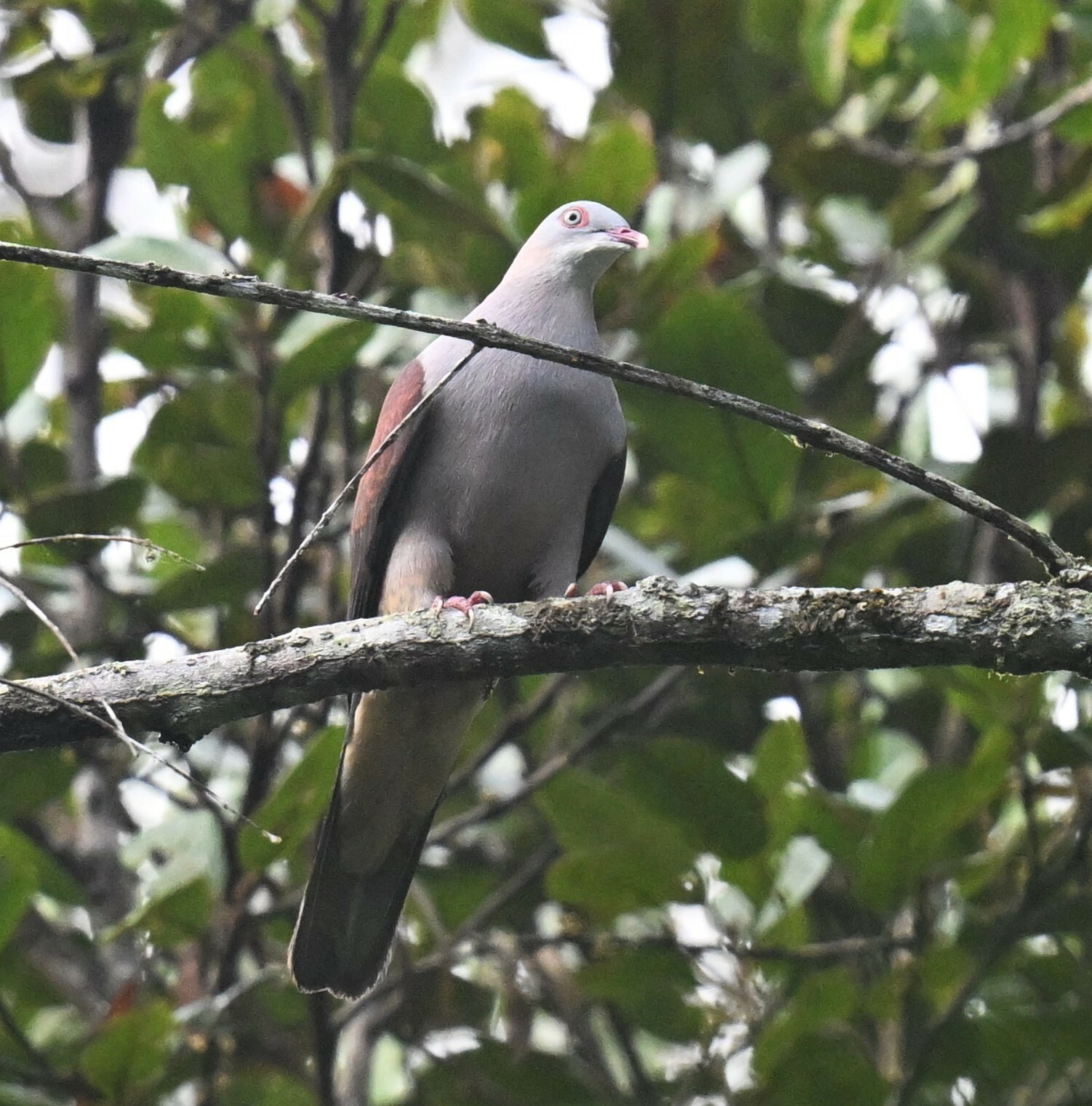
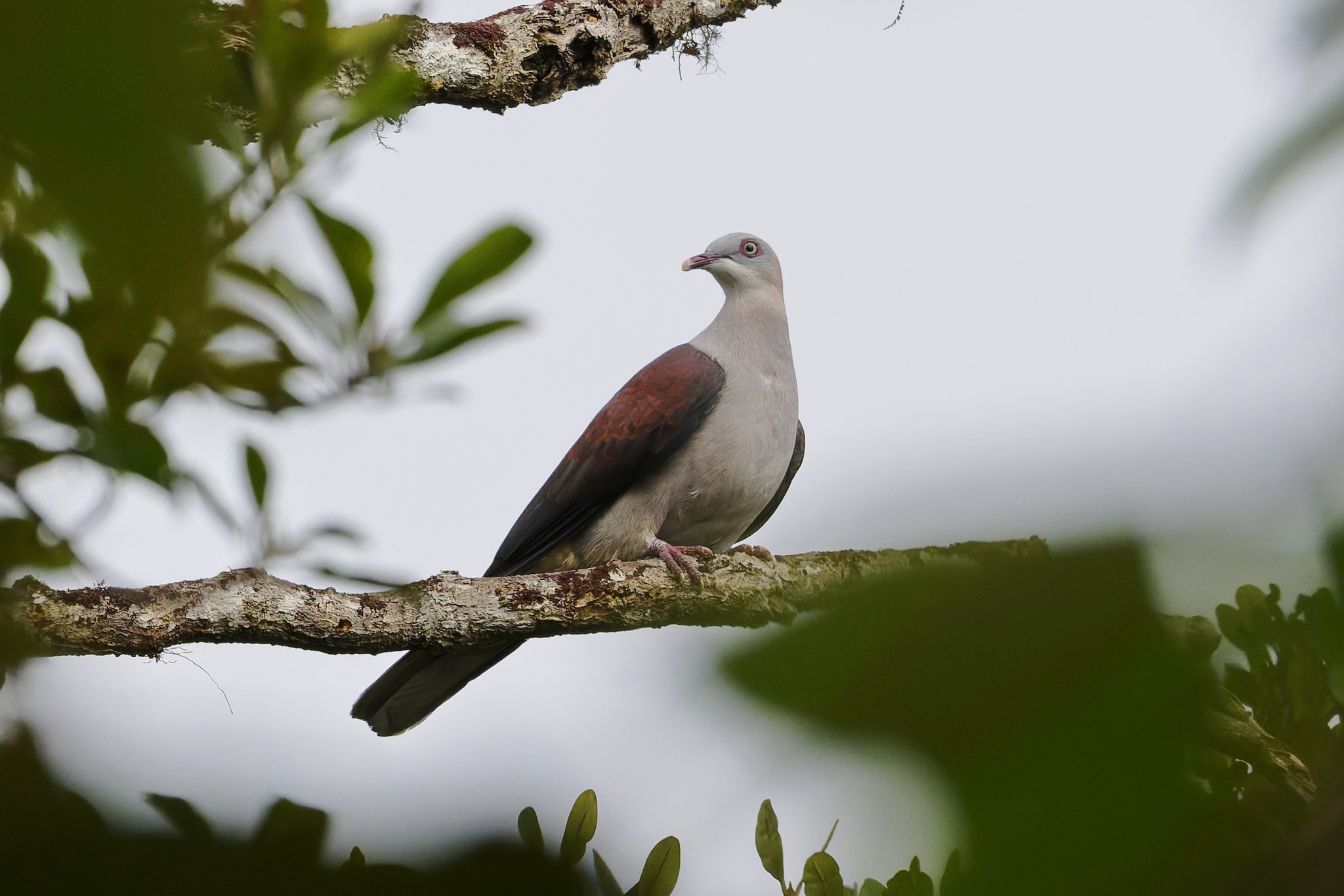
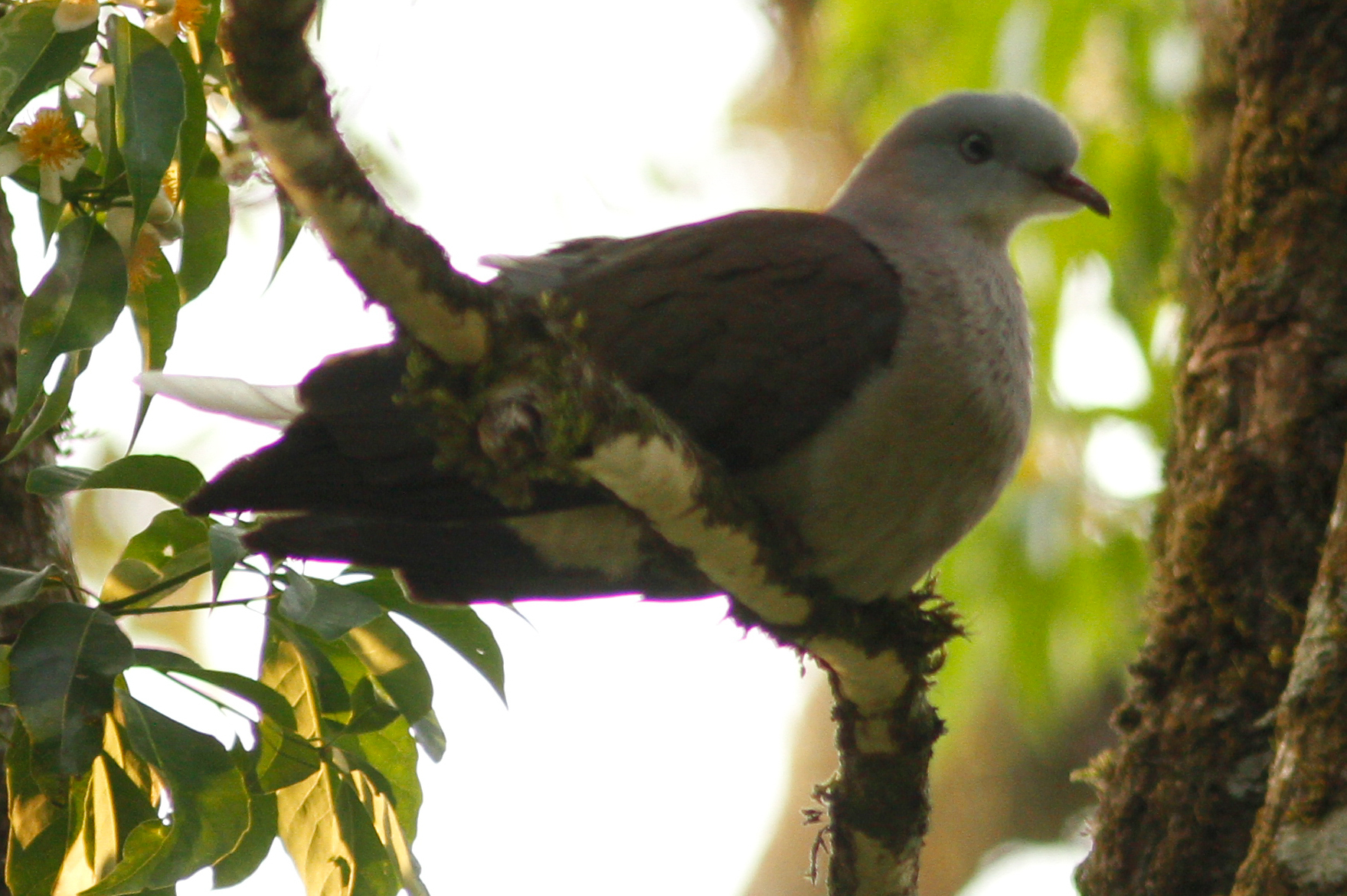
A species in the pigeon and dove family with a wide range in southeastern Asia. It is the largest pigeon species in its range, inhabiting subtropical or tropical moist lowland forests, mangrove forests, and moist montane forests. Distinctive traits include its large size, maroon back, and deep resonant call. It is generally fairly common where extensive stands of forest remain.
Description
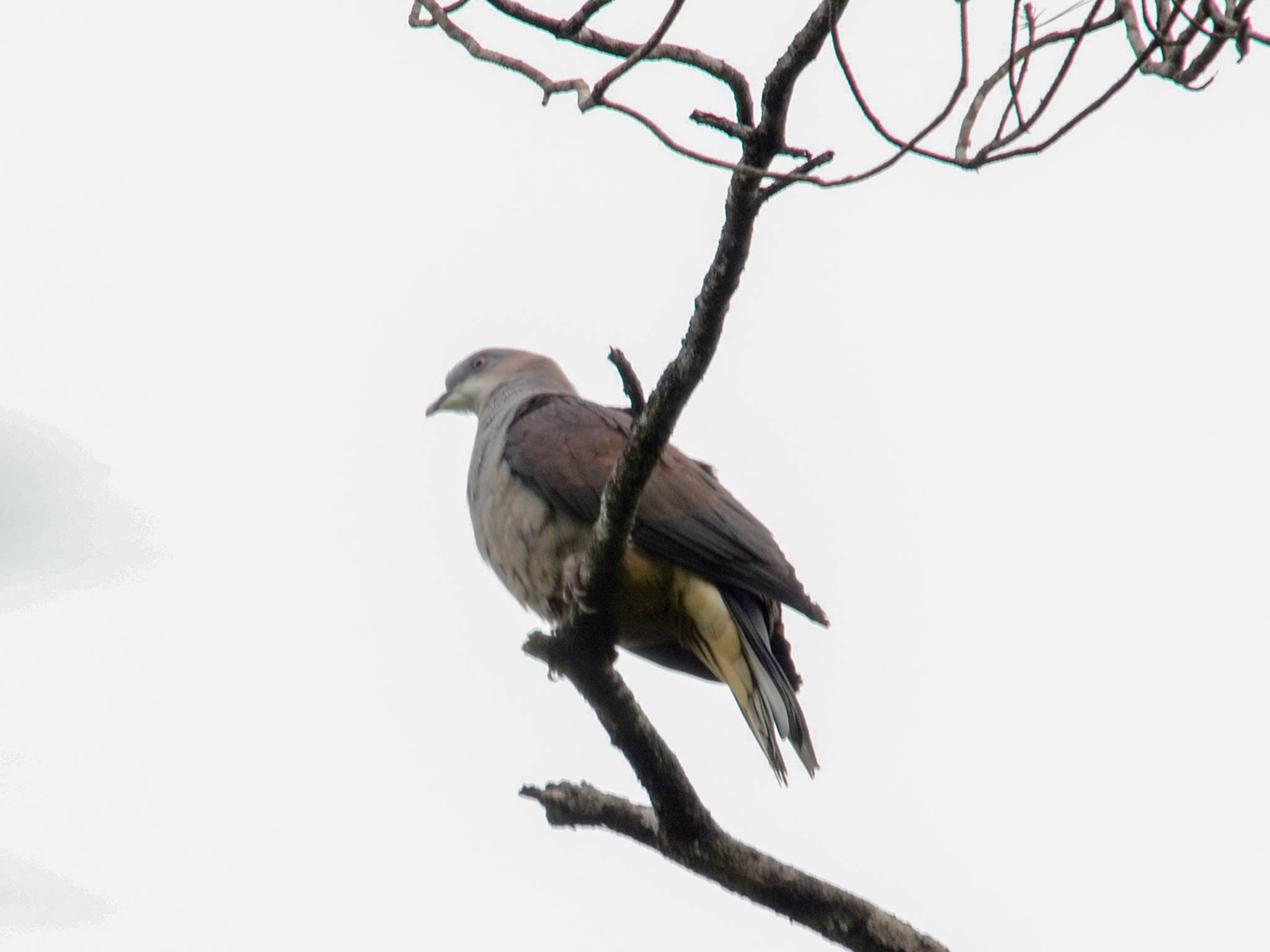
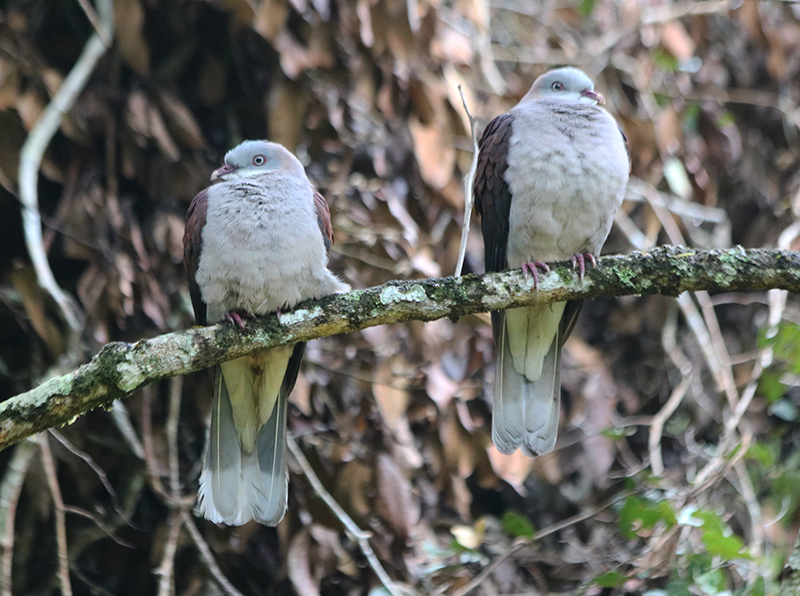
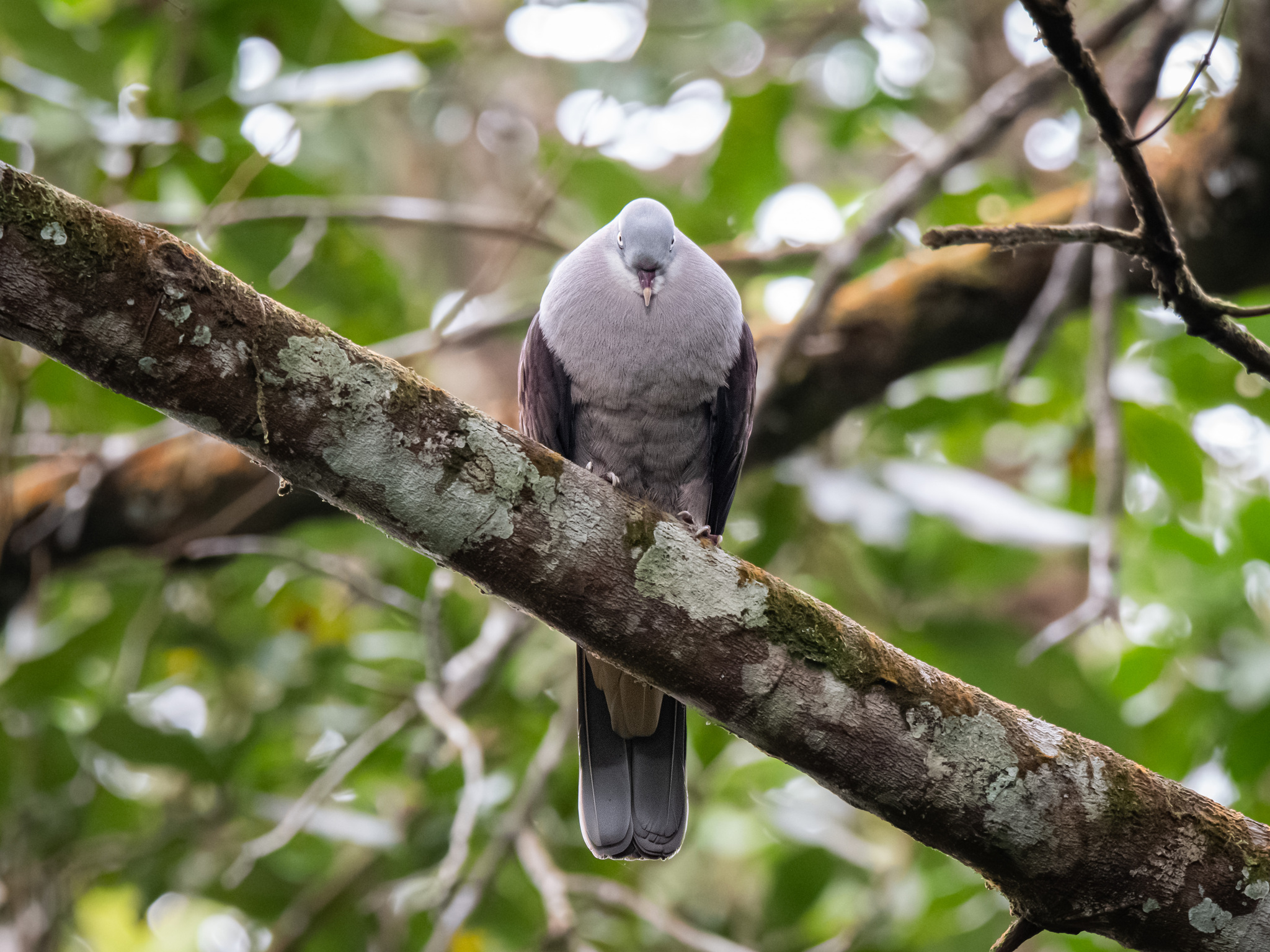
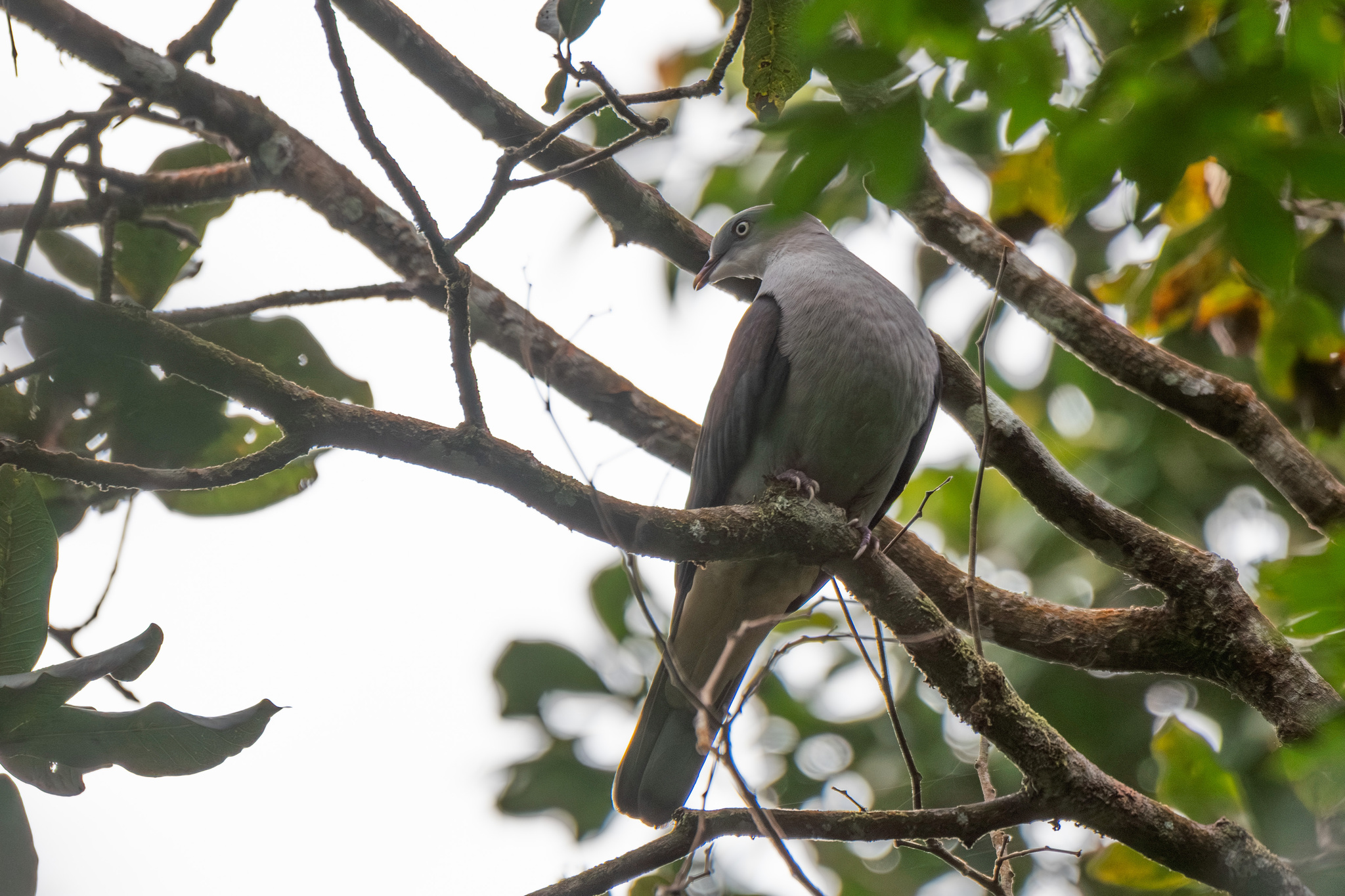
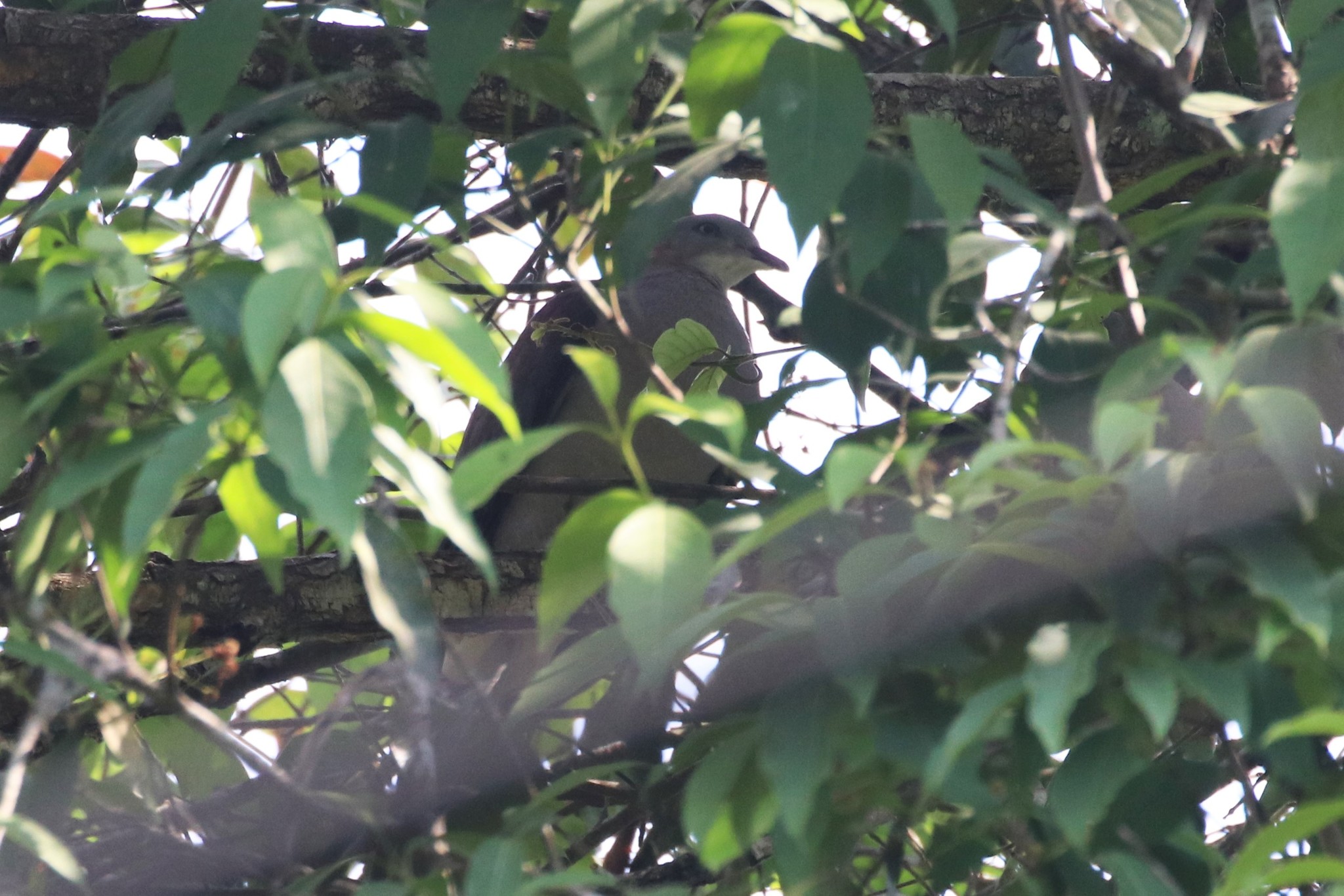
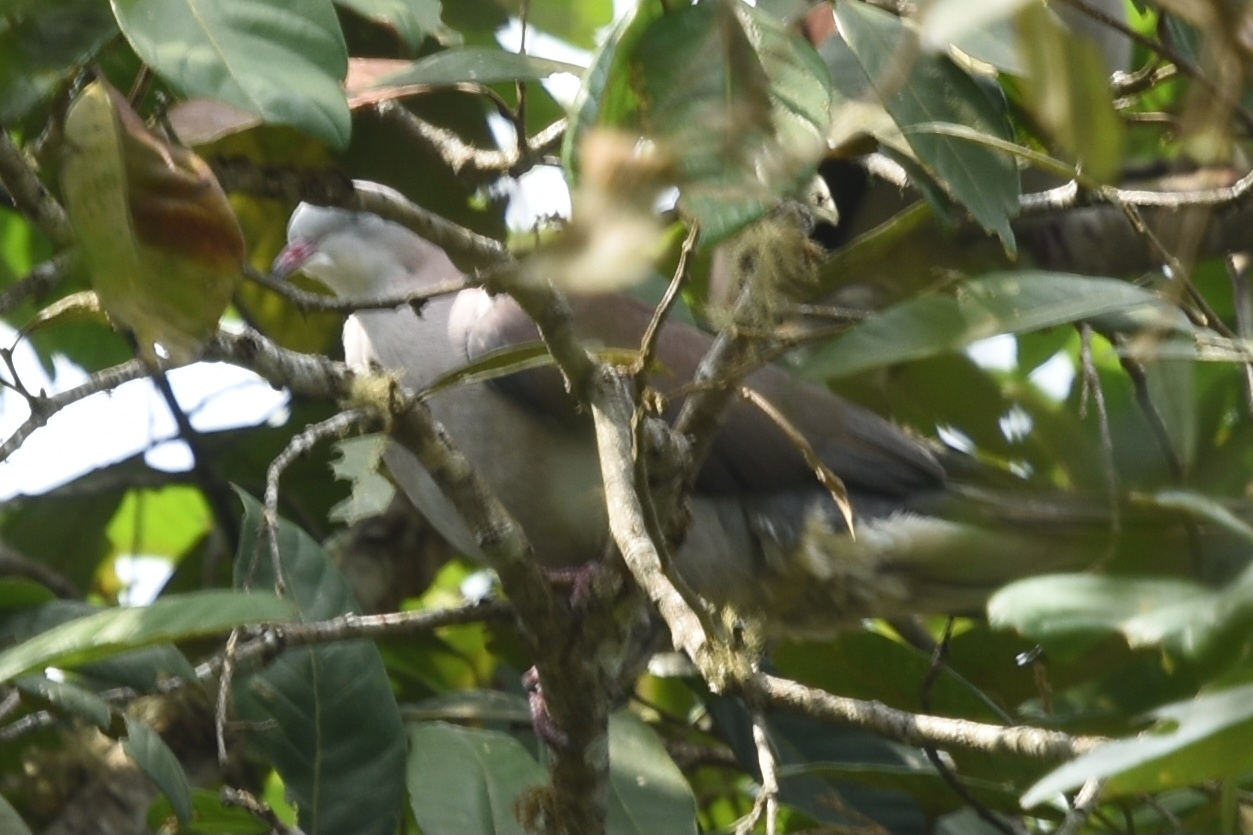
The largest pigeon species in its range at 43–51 cm (17–20 in) long. It has a fairly long tail, broad, rounded wings, and slow wing-beats. The head, neck, and underparts are vinous-grey with a contrasting white throat. Upperparts and wings are brownish-maroon, though the upper body can be duller. The underwing is slate-grey, and the tail is blackish with a grey horizontal line.
Identification
Distinguished by the combination of maroon back and large size. Key marks include vinous-grey head and underparts, white throat, and blackish tail with a grey horizontal line. Flight features broad, rounded wings and slow wing-beats. The call is a deep, resonant boom detectable only at close range.
Distribution & Habitat
Range includes Bangladesh, Bhutan, Brunei, Cambodia, China, India, Indonesia, Laos, Malaysia, Myanmar, Nepal, Thailand, and Vietnam. Habitats are subtropical or tropical moist lowland forests, mangrove forests, and moist montane forests. Found from sea level to 2,550 m (8,370 ft) in the Himalayas and 2,200 m (7,200 ft) on Sumatra. Mainly a foothill bird, probably breeding above 500 m (1,600 ft), usually in old-growth forests.
Behavior & Ecology
Usually solitary but seen in groups up to 20, especially when roosting or moving in mountains. Spends time in high canopy and flies high over it. Breeding display involves puffing up the throat, bowing, and vertical flight up 6 to 8 m (20 to 26 ft) before gliding down with wings and tail spread. Breeds March to August in northern ranges and January to May in southern India and Southeast Asia. Nest is a flimsy platform in a small tree 5 to 8 m (16 to 26 ft) off the ground. One, rarely two, eggs are laid; both parents incubate. Feeds on fruits and berries, especially figs and nutmeg, swallowed whole. Occasionally drinks on the ground. Partial altitudinal movement may occur in pursuit of feeding conditions.
Source: Wikipedia · CC BY-SA 3.0
Taxonomy
- Order
- Columbiformes
- Family
- Columbidae
- Genus
- Ducula
Subspecies (3)
-
Ducula badia badia
Malay Peninsula and Mergui Archipelago to Sumatra, Borneo, and western Java
Data Sources
Species description from Wikipedia, licensed under CC BY-SA 3.0.
Bird images and sounds sourced from GBIF, contributed by citizen scientists worldwide under Creative Commons licenses.
Taxonomy data from AviList 2025.