Passeriformes / Dicruridae / Dicrurus
Greater Racket-tailed Drongo
Dicrurus paradiseus · 大盘尾
Introduction
A medium-sized Asian bird in the family Dicruridae, distinctive for elongated outer tail feathers with webbing restricted to the tips. It inhabits forest habitats, often perching in the open. Notable for a wide range of loud calls including perfect imitations of other birds, potentially aiding in mixed-species foraging flock formation or kleptoparasitism. Diurnal but active before dawn and late at dusk.
Description
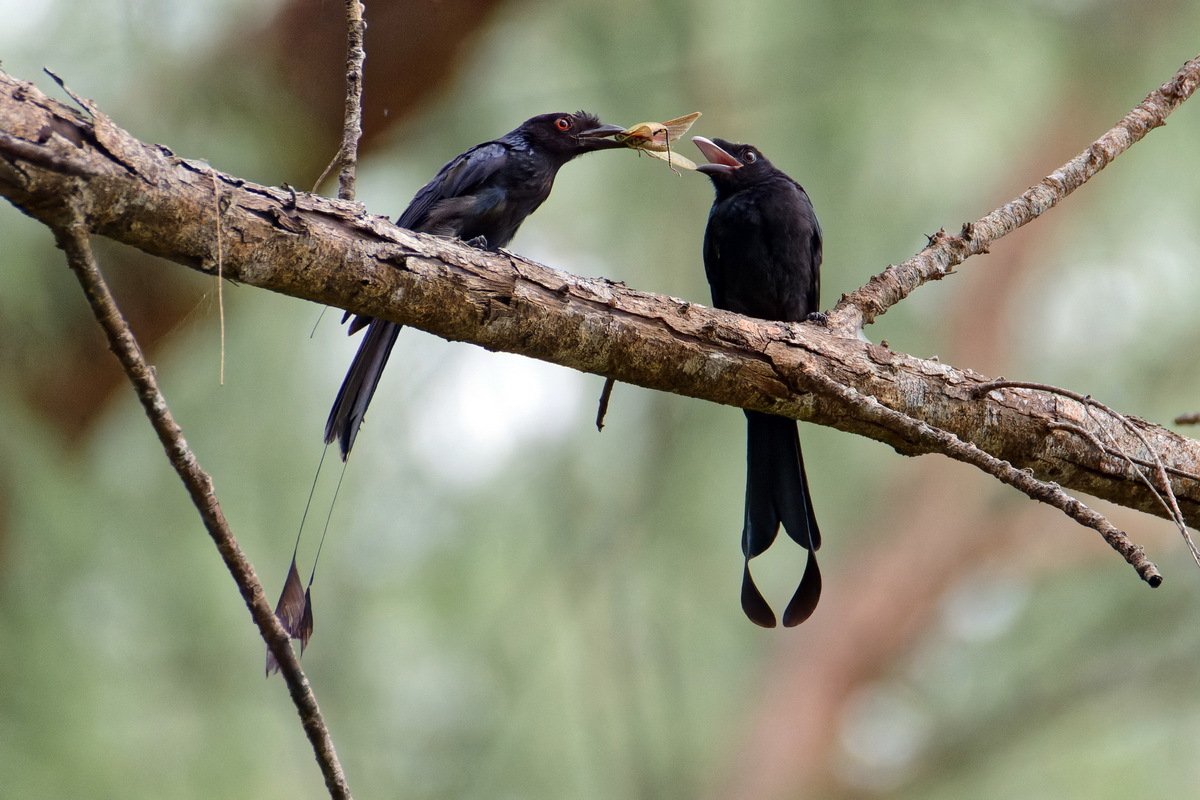
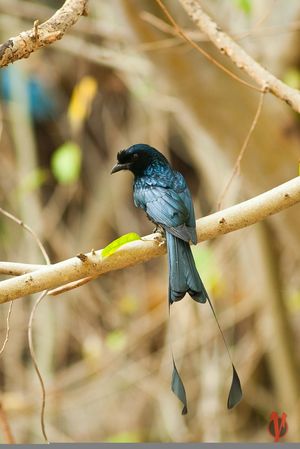
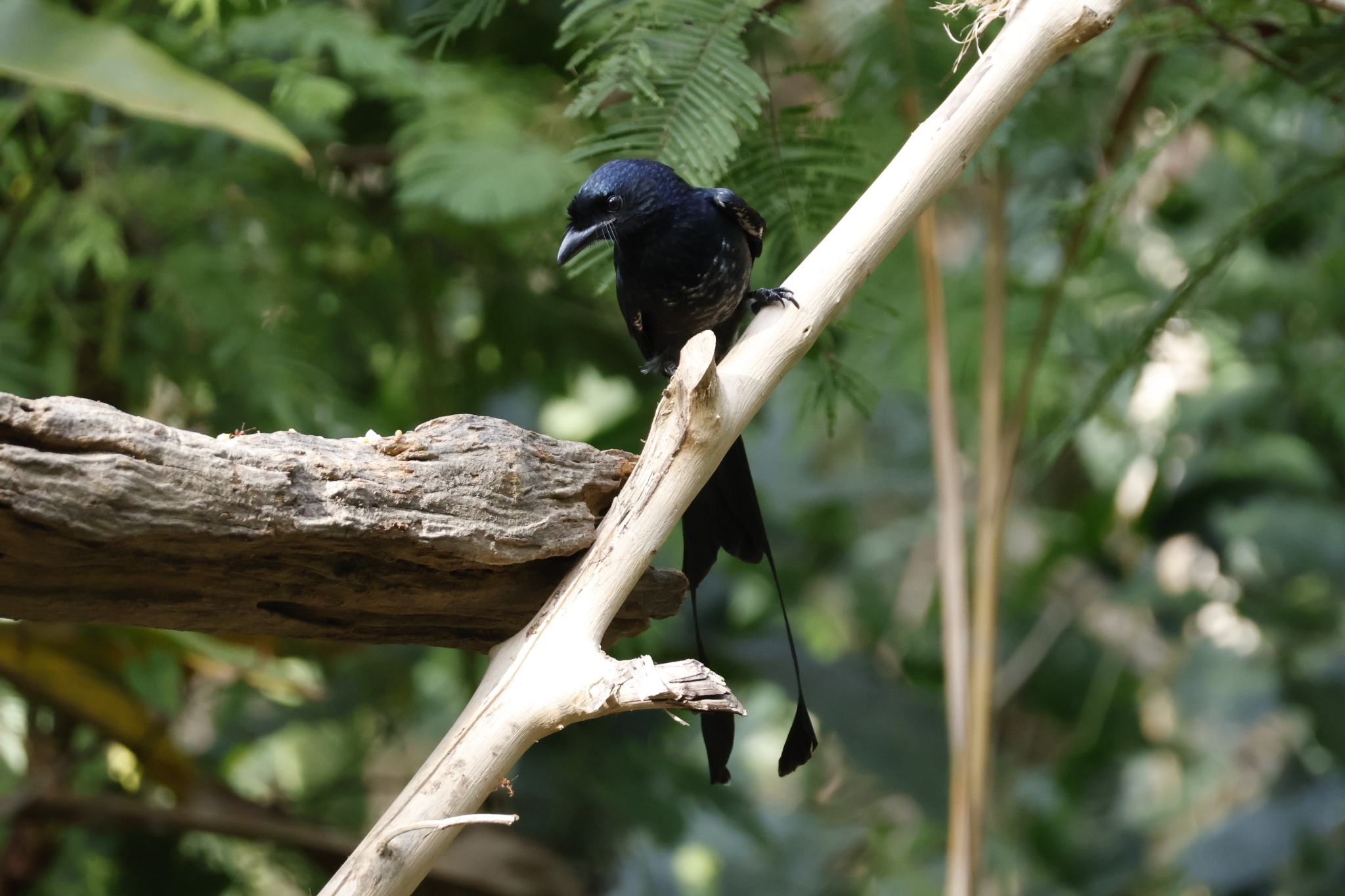
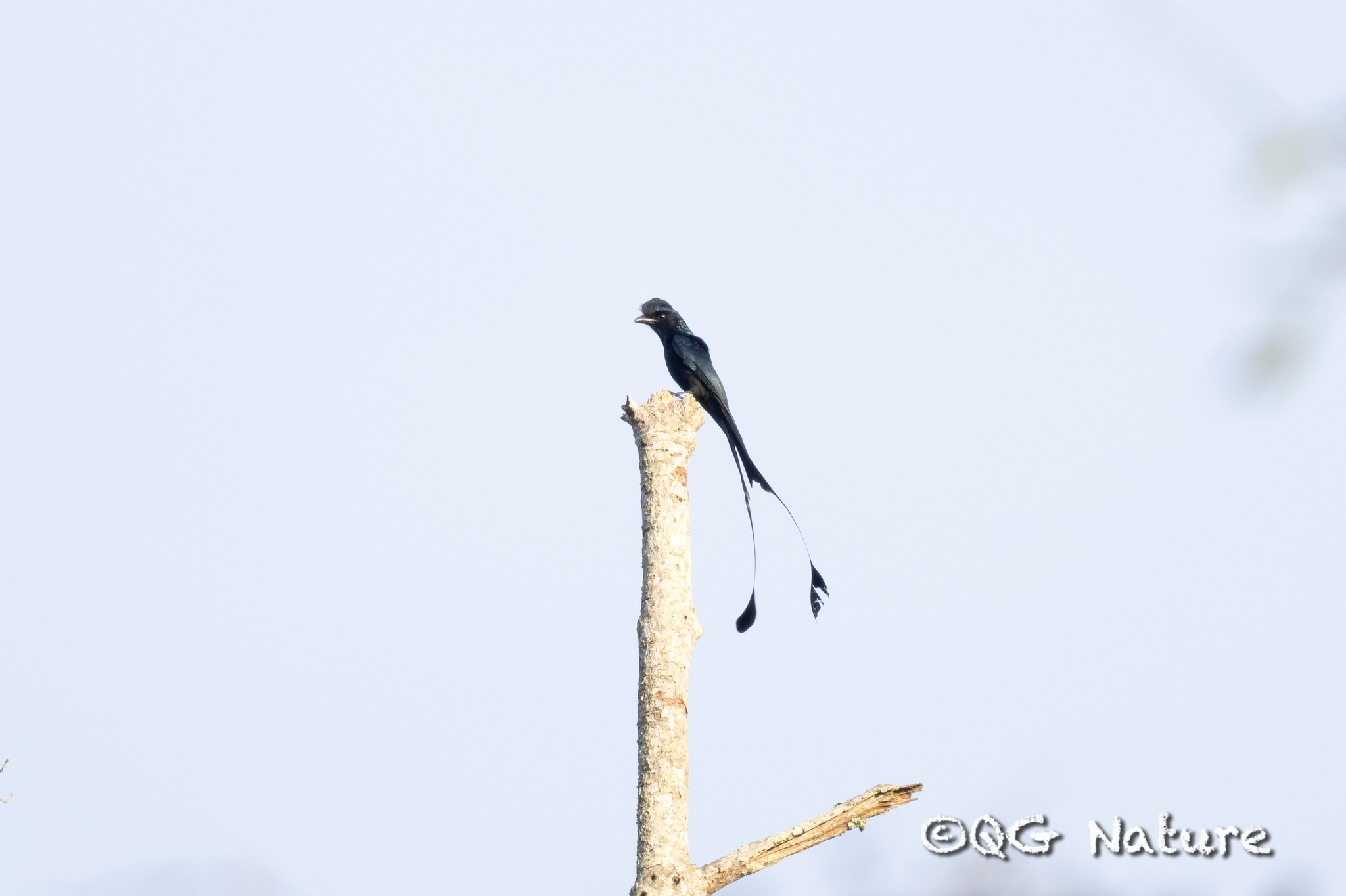
Largest drongo species in most of its Asian range. Identifiable by distinctive tail rackets and a crest of curled feathers starting in front of the face above the beak and extending along the crown. In flight, the tail can resemble two large bees chasing a black bird. Subspecies vary: grandis (Himalayas) is largest with long glossy neck hackles; otiosus (Andaman Islands) has shorter hackles and reduced crest; nicobariensis (Nicobar Islands) has a longer frontal crest. Island populations in Southeast Asia show considerable variation in bill shape, crest extent, and tail rackets; brachyphorus and banguey lack crests. Young birds are duller and may lack a crest; moulting birds may lack elongate tail streamers.
Identification
Readily identified by distinctive tail rackets and crest. In the eastern Himalayas, can be confused with the lesser racket-tailed drongo, which has flat rackets and nearly absent crest. Flight appearance resembles two large bees chasing a black bird.
Distribution & Habitat
Range extends from western to eastern Himalayas and Mishmi Hills in foothills below 1,200 m (3,900 ft). Found in hills of peninsular India, Western Ghats, mainland Southeast Asia, and islands including Borneo, Java, Sumatra, Hainan, Sri Lanka, Andaman, and Nicobar Islands. Thirteen recognized subspecies occupy specific regions including north India, Myanmar, China, Indochina, Malay Peninsula, and various islands.
Behavior & Ecology
Feeds mainly on insects, also eats fruit and nectar. Sits upright on high, exposed branches due to short legs. Aggressive, mobs larger birds when nesting. Active at dusk. Calls include whistles, metallic sounds, and complex imitations of other birds, starting as early as 4 am. Accurately mimics alarm calls of other birds in context, such as a special note for shikras. May imitate raptor calls to steal prey (kleptoparasitism), particularly from laughingthrushes. Associates with foraging woodpeckers and sometimes macaques. Resident breeder; breeding season in India is April to August. Courtship involves hops, turns, and dropping/picking up objects. Builds cup nest in tree forks, often smoothing bark. Clutch size is three to four creamy white eggs with reddish-brown blotches.
Culture
Known as kothwal (policeman/guard) in parts of India due to whistle-like call. Called Bhimraj or Bhringaraj in other places. In Mizo language, called Vakul; tail feathers used in ceremonies. Kept in captivity in India prior to the 1950s. Considered by Edward H. Schafer as the basis for divine kalaviṅka birds in Chinese and Japanese Buddhist texts.
Source: Wikipedia · CC BY-SA 3.0
Taxonomy
- Order
- Passeriformes
- Family
- Dicruridae
- Genus
- Dicrurus
Vocalizations
Subspecies (13)
-
Dicrurus paradiseus banguey
islands off north Borneo
Data Sources
Species description from Wikipedia, licensed under CC BY-SA 3.0.
Bird images and sounds sourced from GBIF, contributed by citizen scientists worldwide under Creative Commons licenses.
Taxonomy data from AviList 2025.