Passeriformes / Dicruridae / Dicrurus
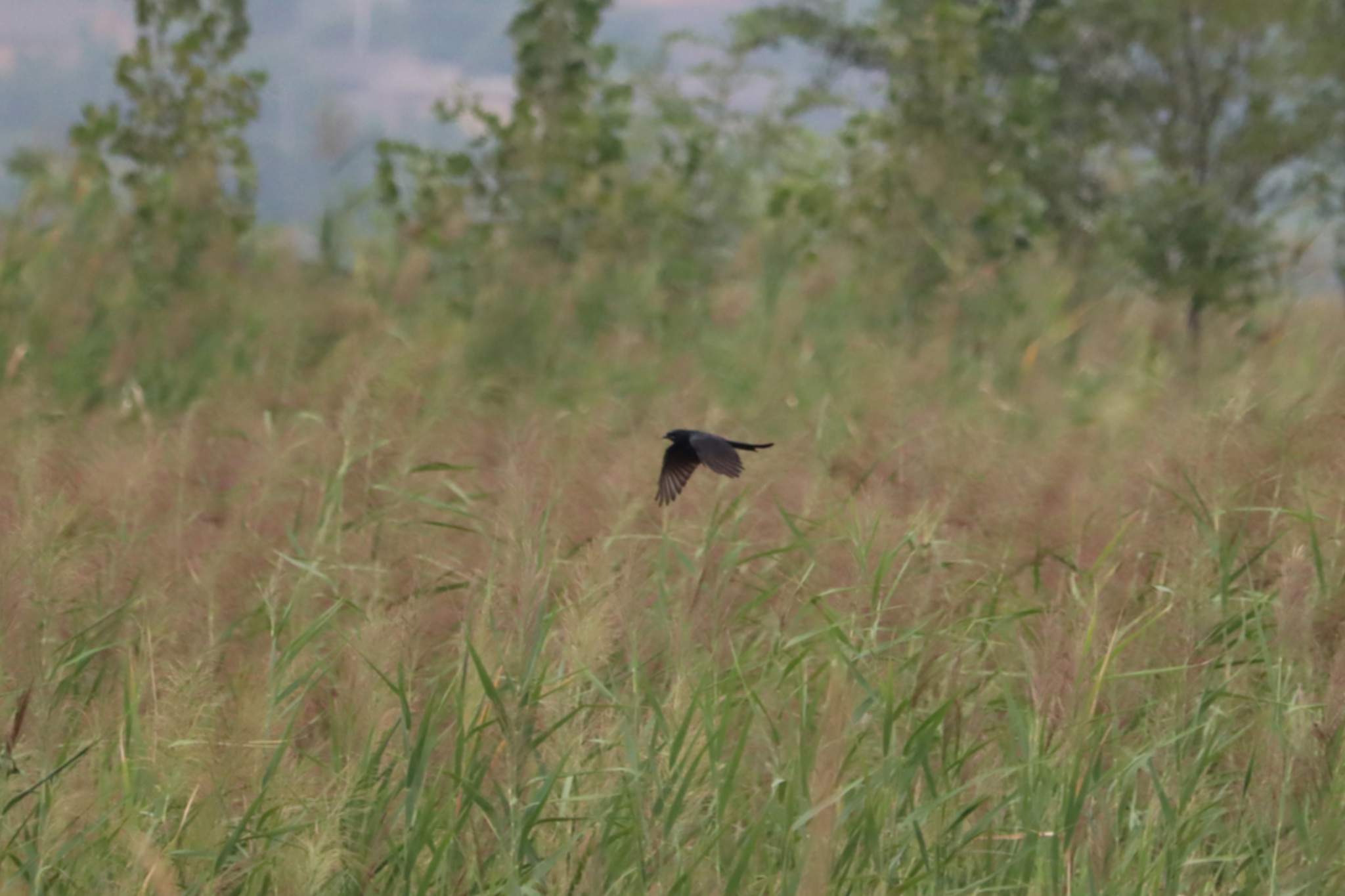
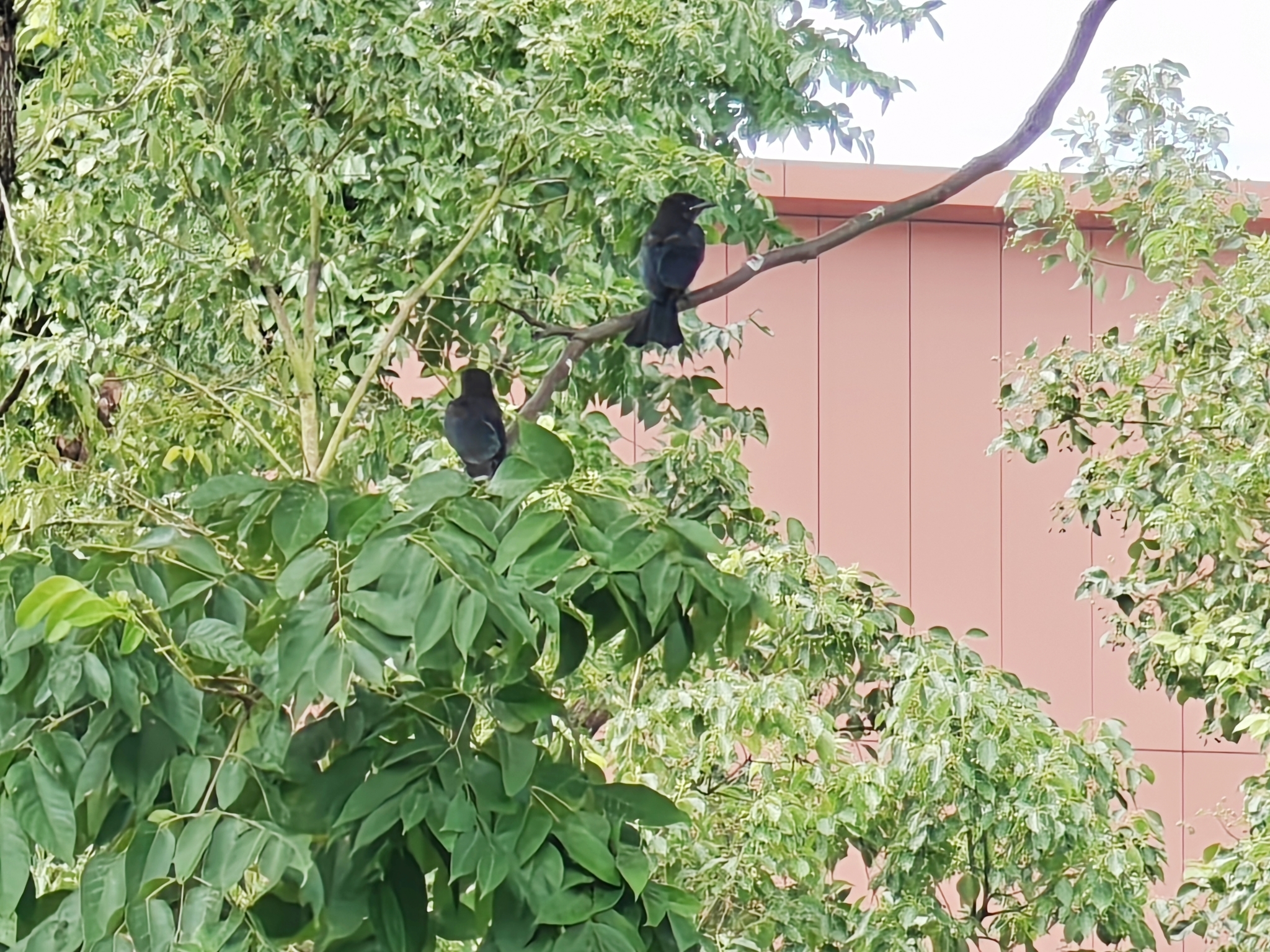
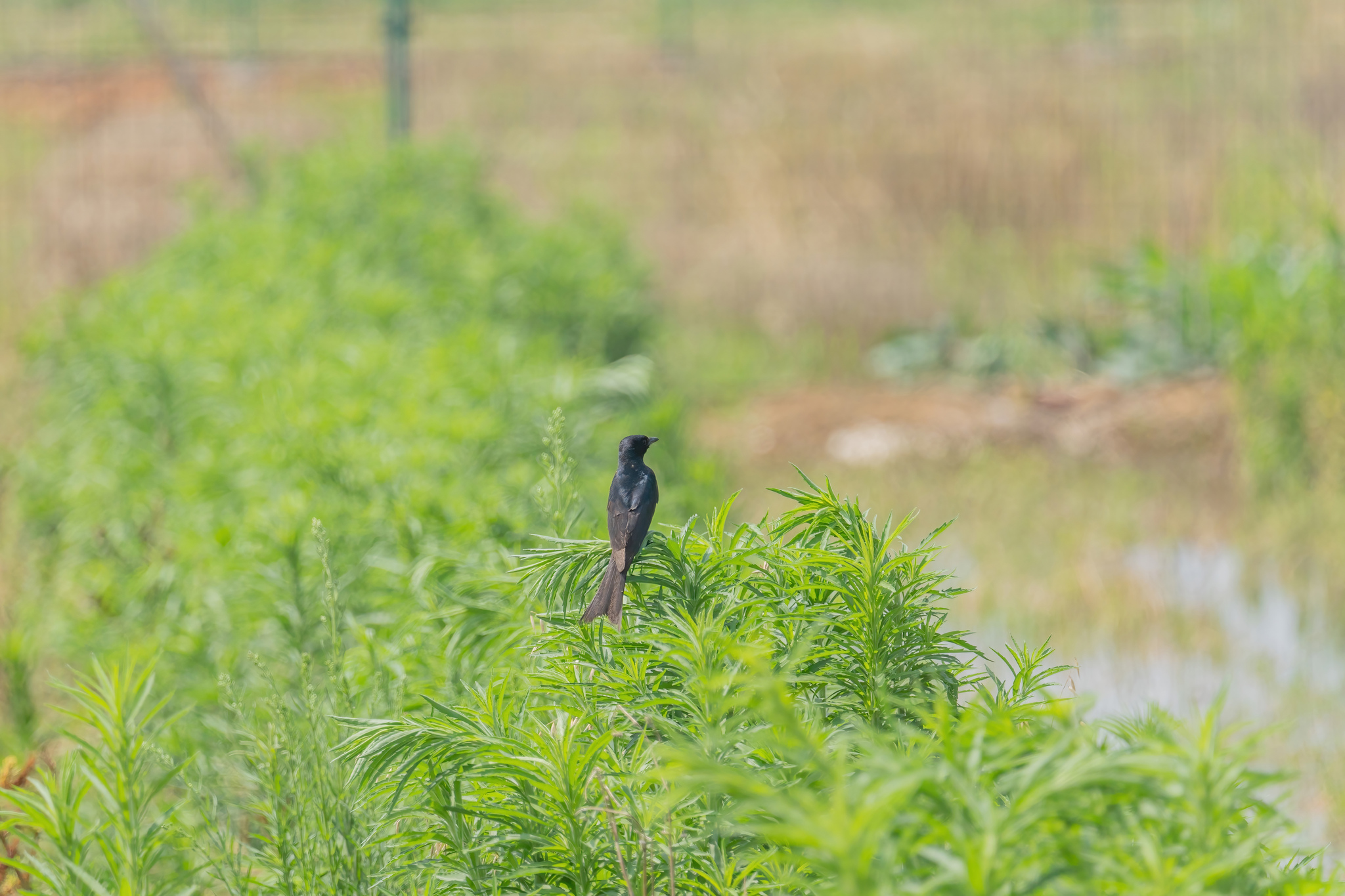
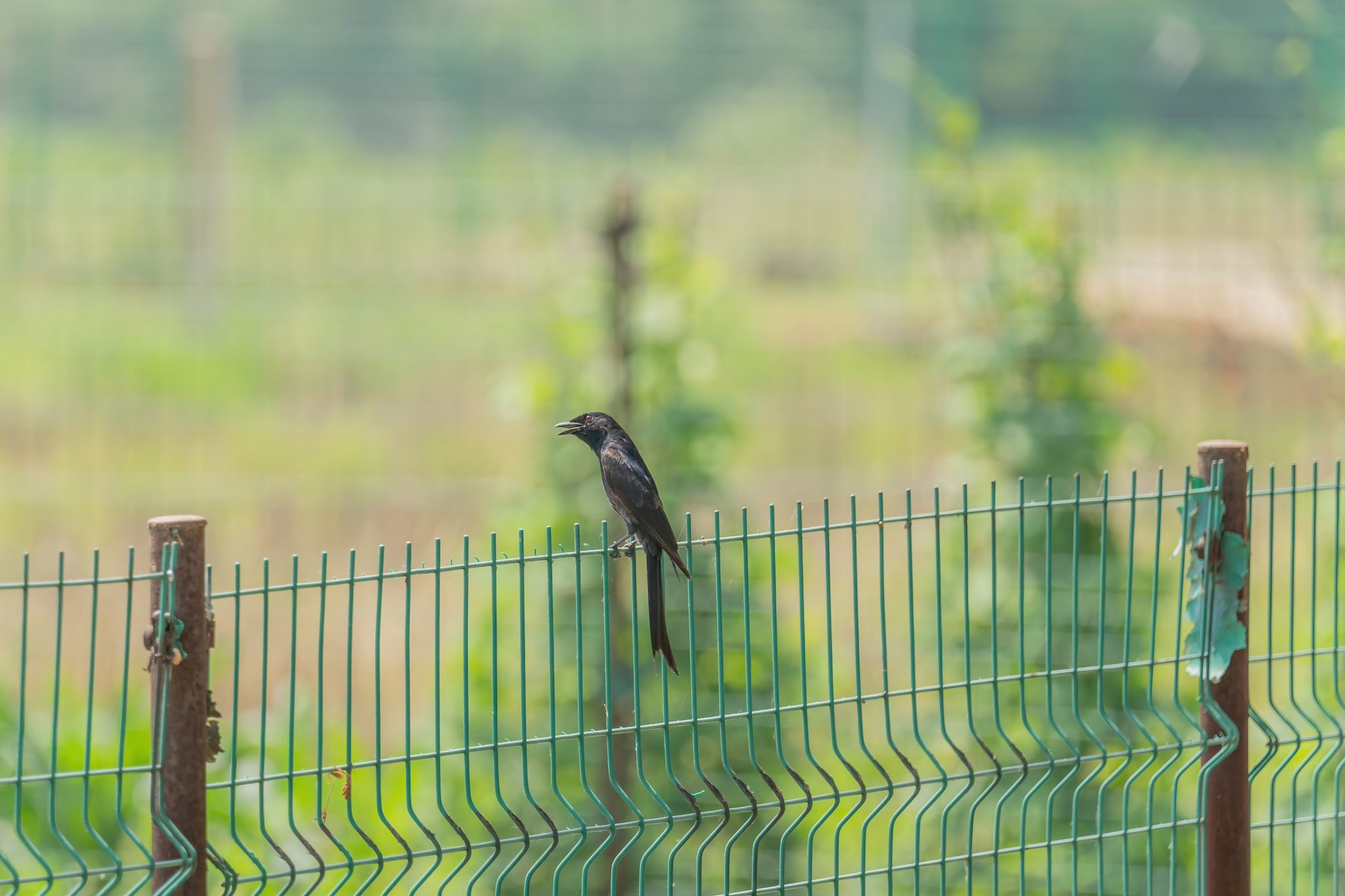
Black Drongo
Dicrurus macrocercus · 黑卷尾
Introduction
Small Asian passerine of the drongo family Dicruridae. Common resident breeder in tropical southern Asia from southwest Iran through Pakistan, India, Bangladesh, and Sri Lanka east to southern China and Indonesia; accidental visitor to Japan. Inhabits open agricultural areas, light forest, savanna, fields, and urban habitats. Distinctive for aggressive territorial defense against larger birds and proximity nesting associations with other species. Listed as Least Concern by the IUCN.
Description
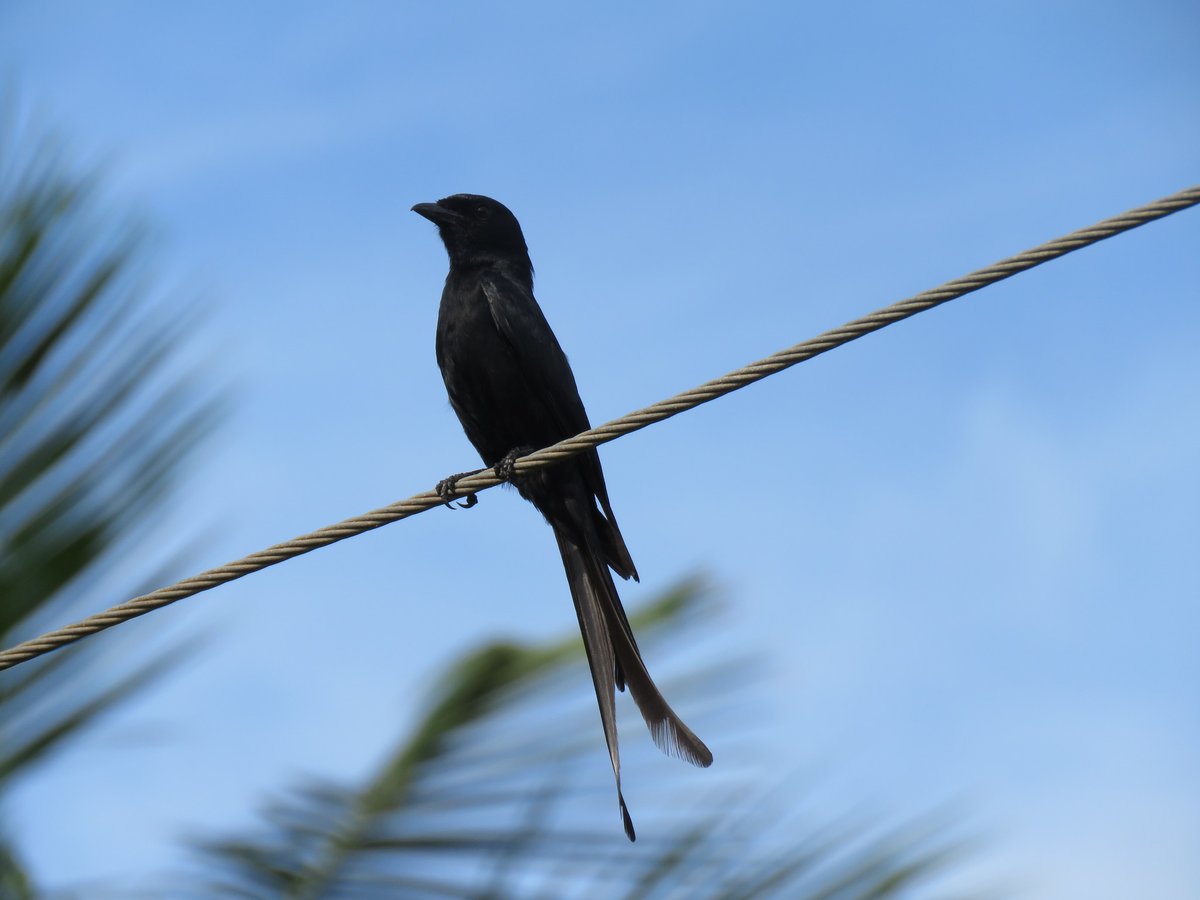
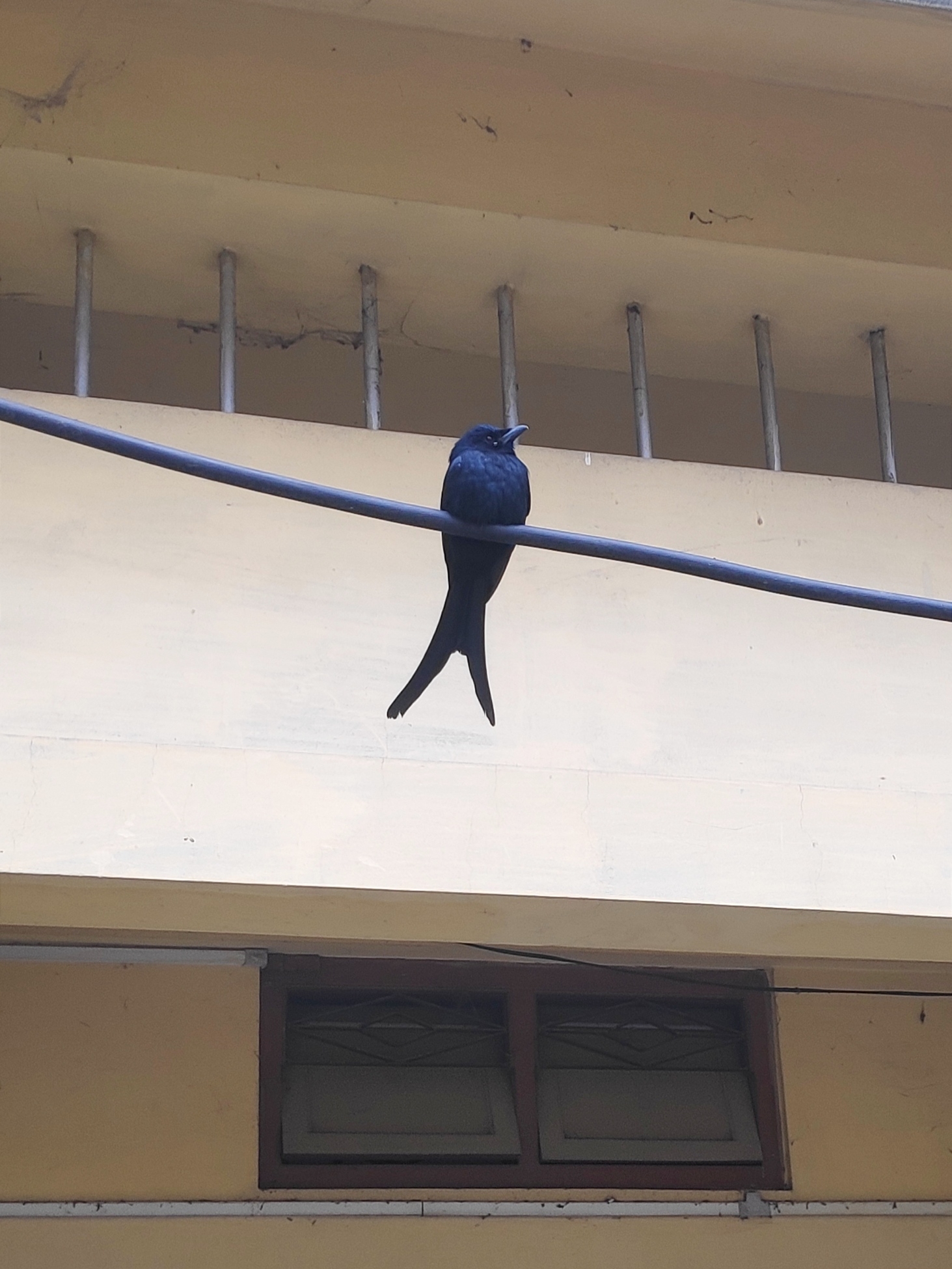
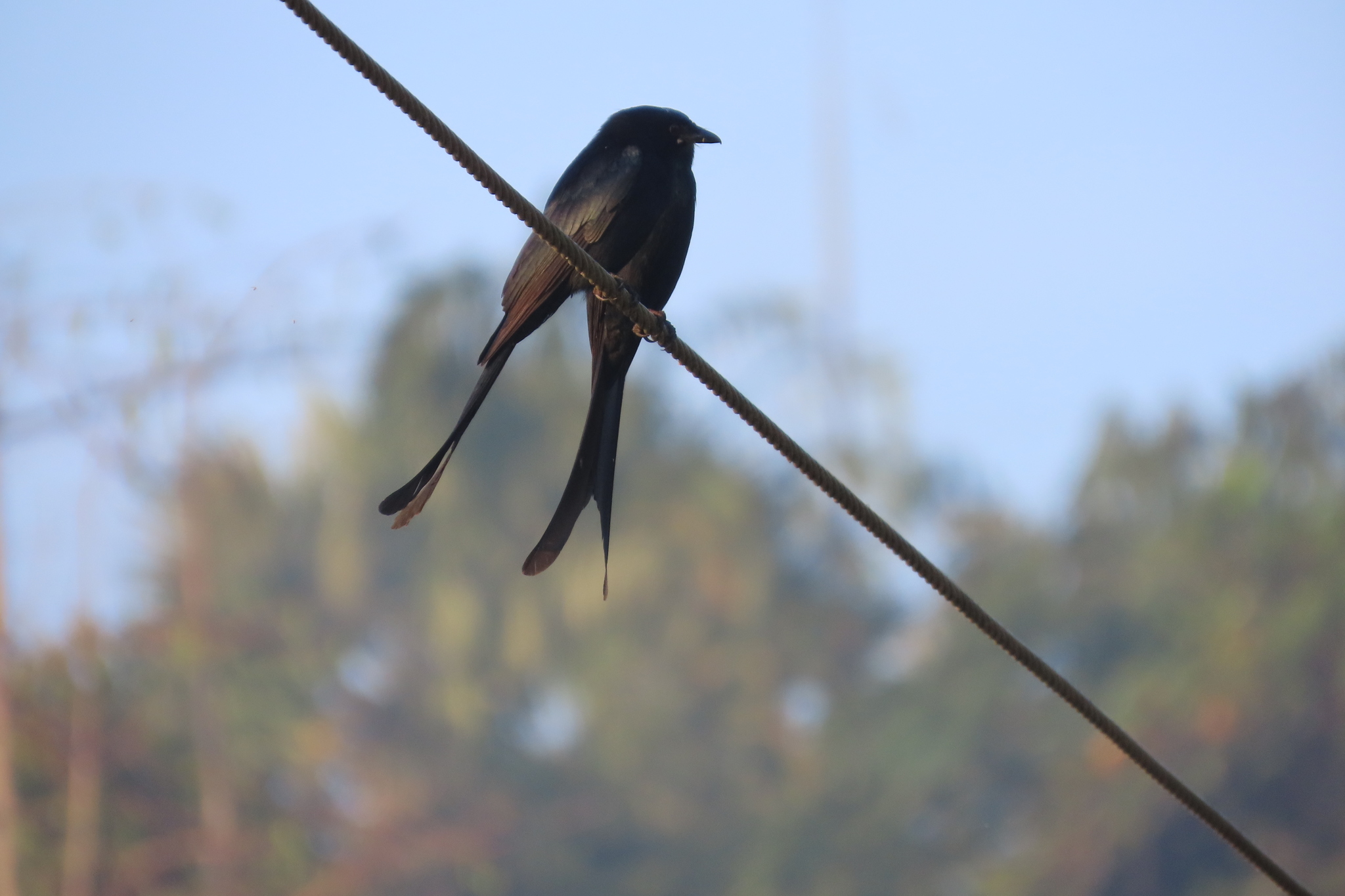
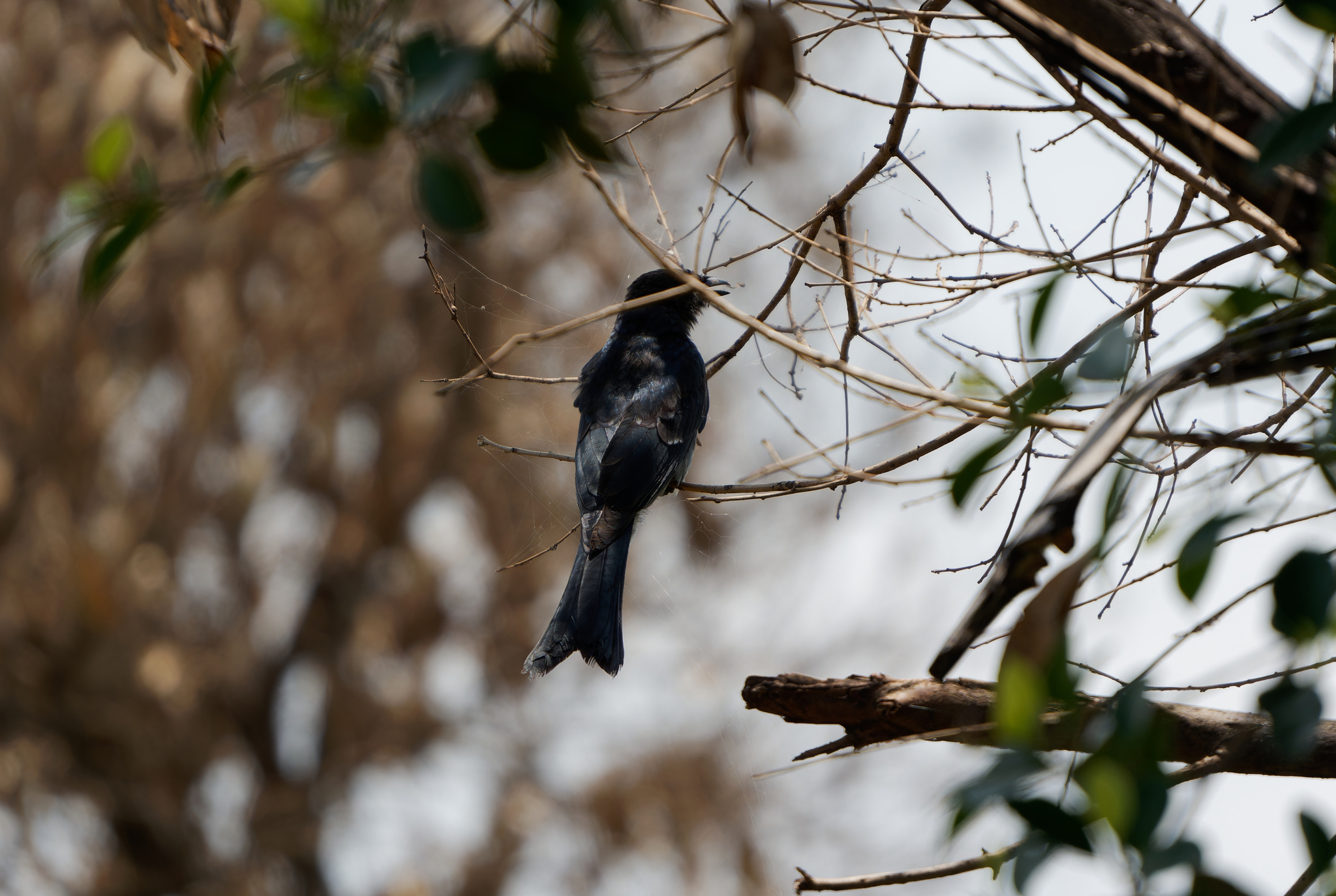
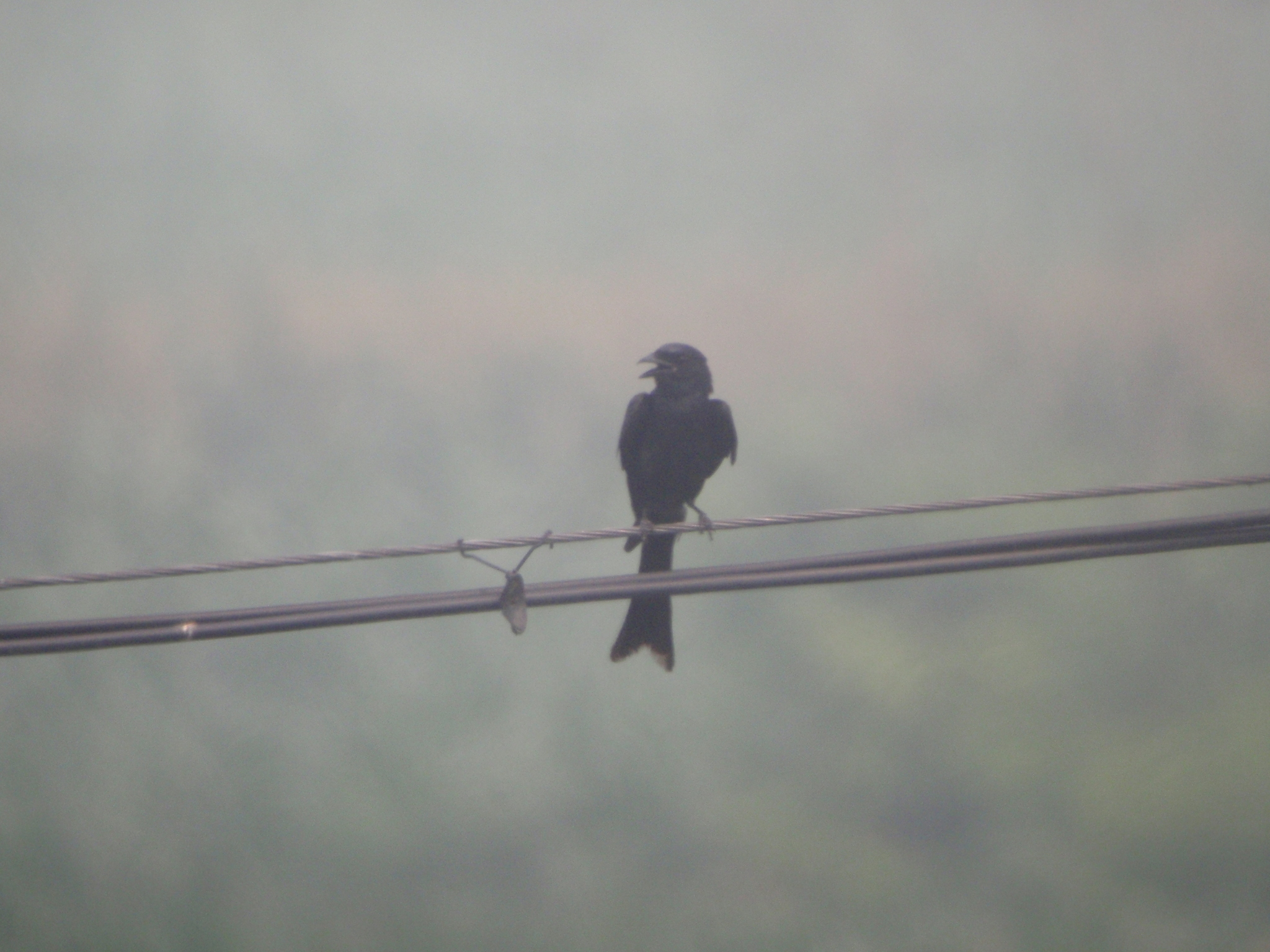
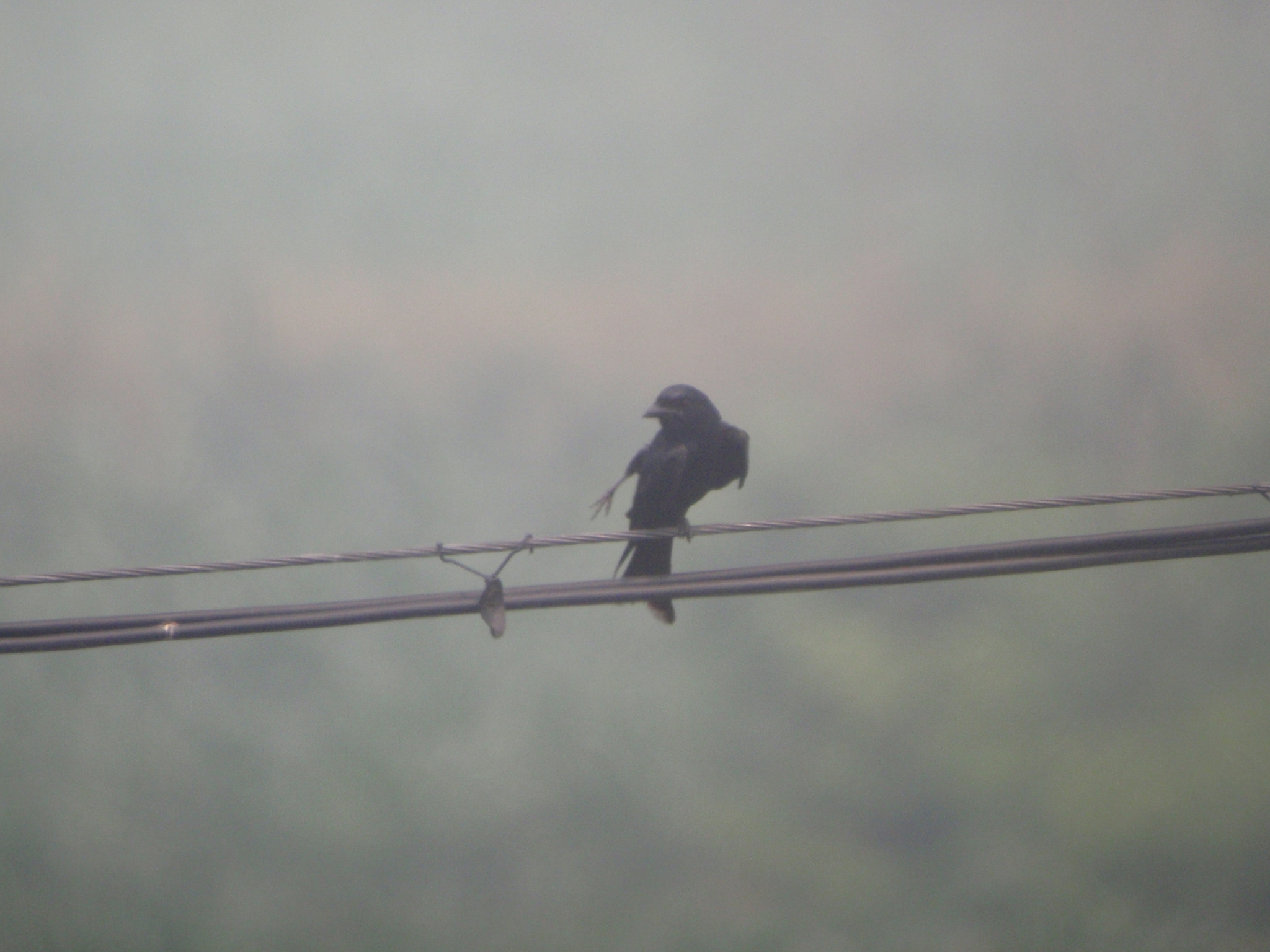
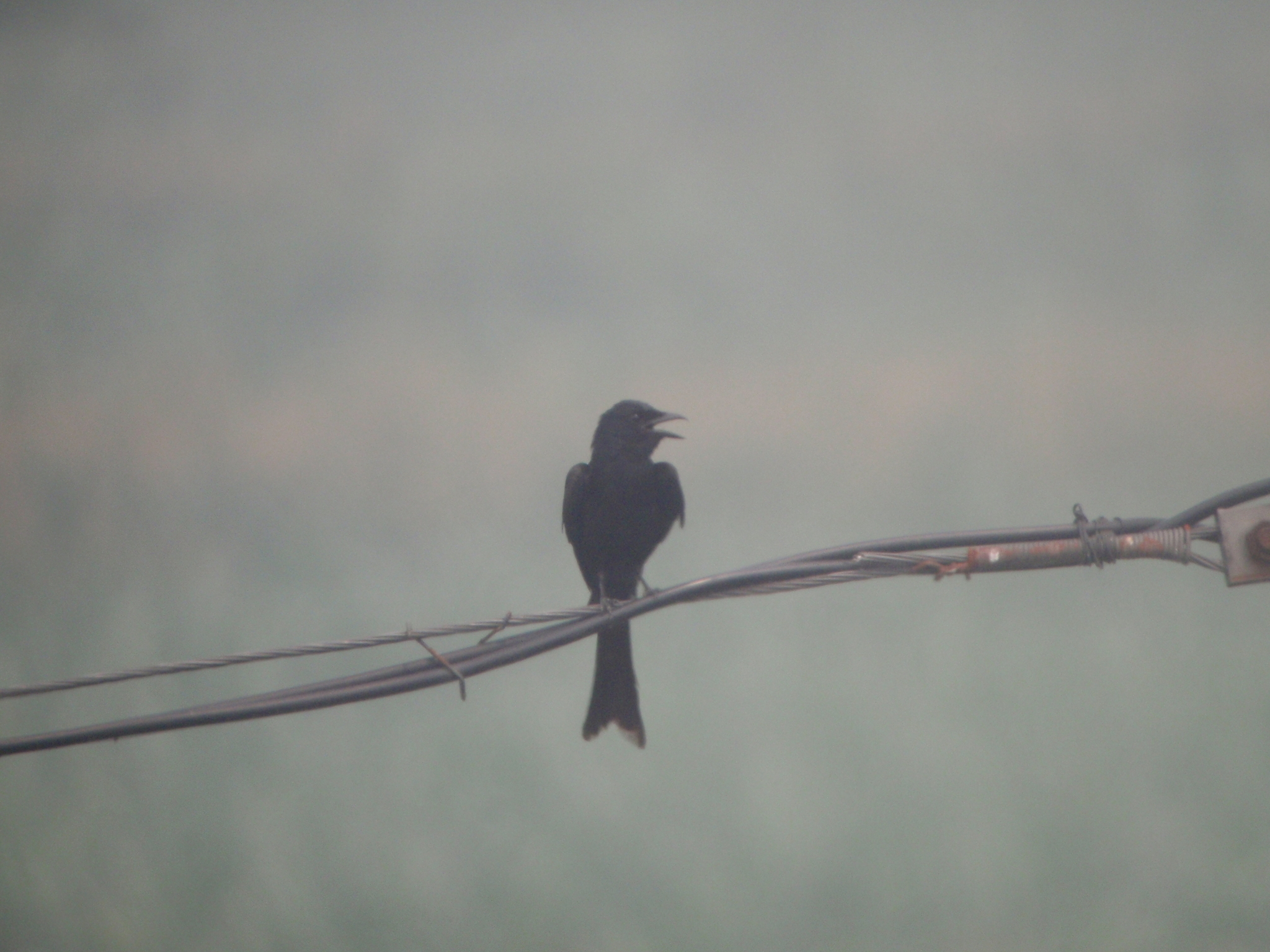
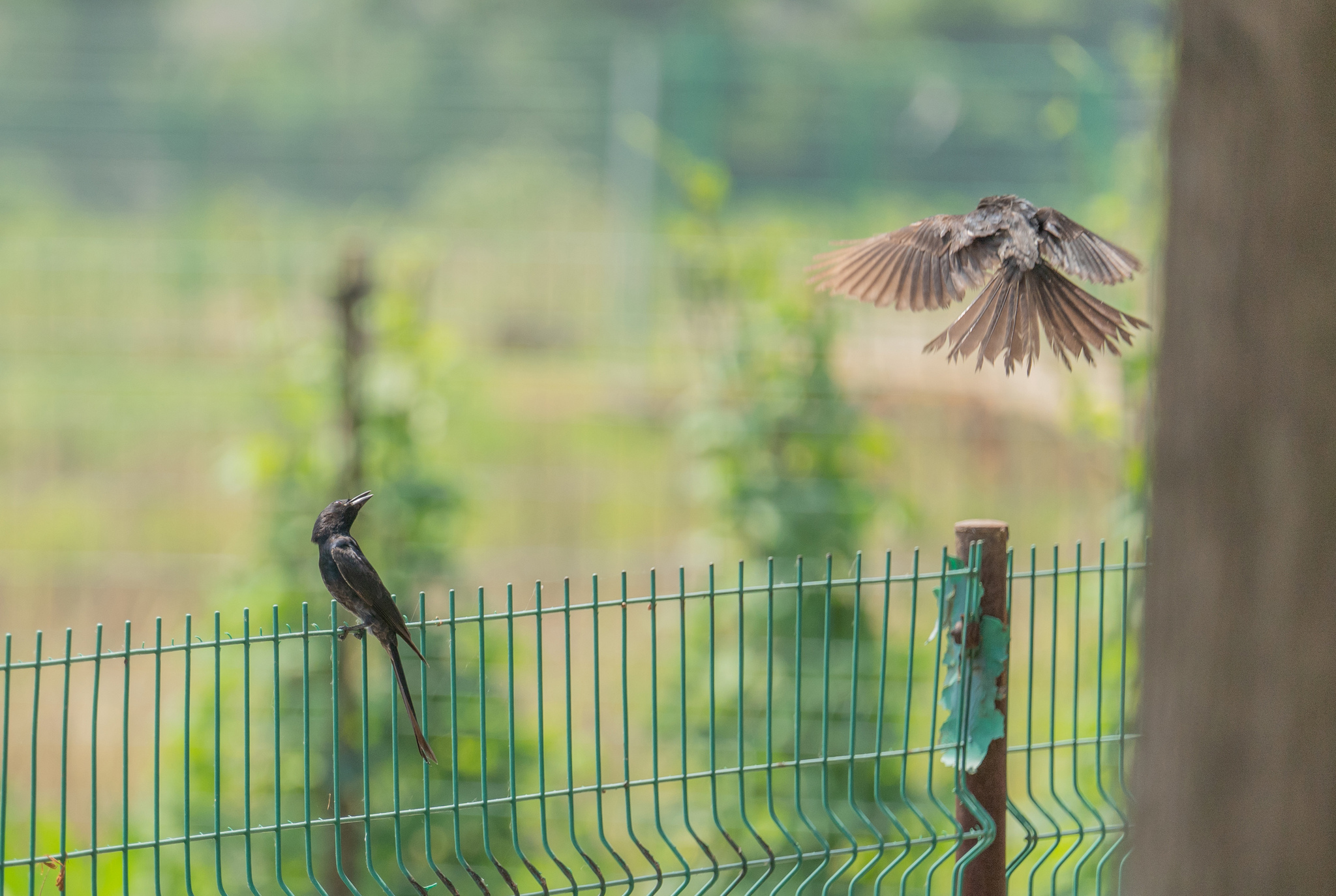
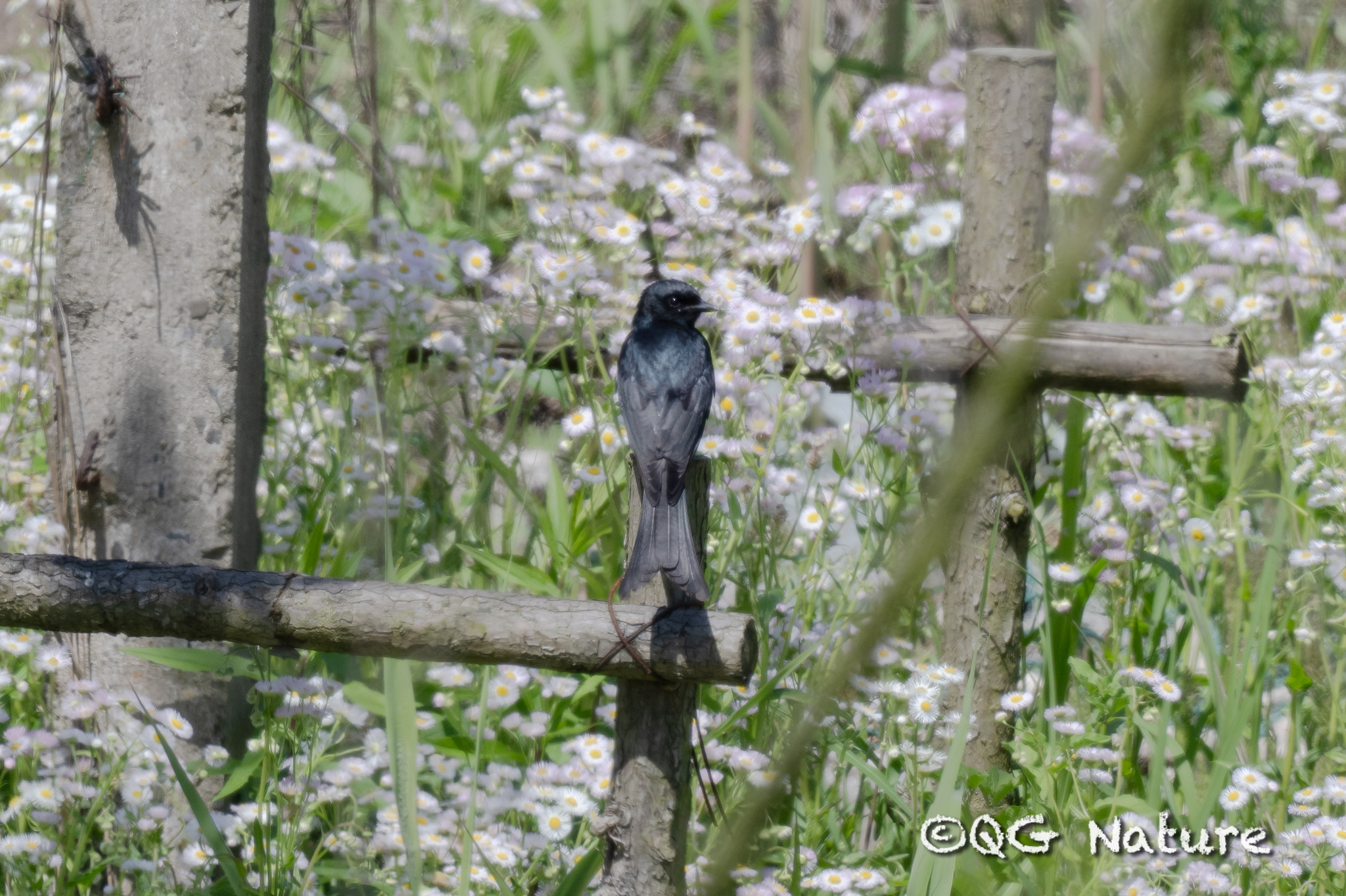
Glossy black plumage with a wide forked tail. Adults usually have a small white spot at the base of the gape. Iris is dark brown. Sexes are indistinguishable in the field. Juveniles are brownish with white barring or speckling on the belly and vent. First-year birds have white-tipped belly feathers; second-years have white tips restricted to the vent. Length is 28 cm (11 in). Subspecies vary in size and gloss; northern Indian individuals are larger than Sri Lankan ones.
Identification
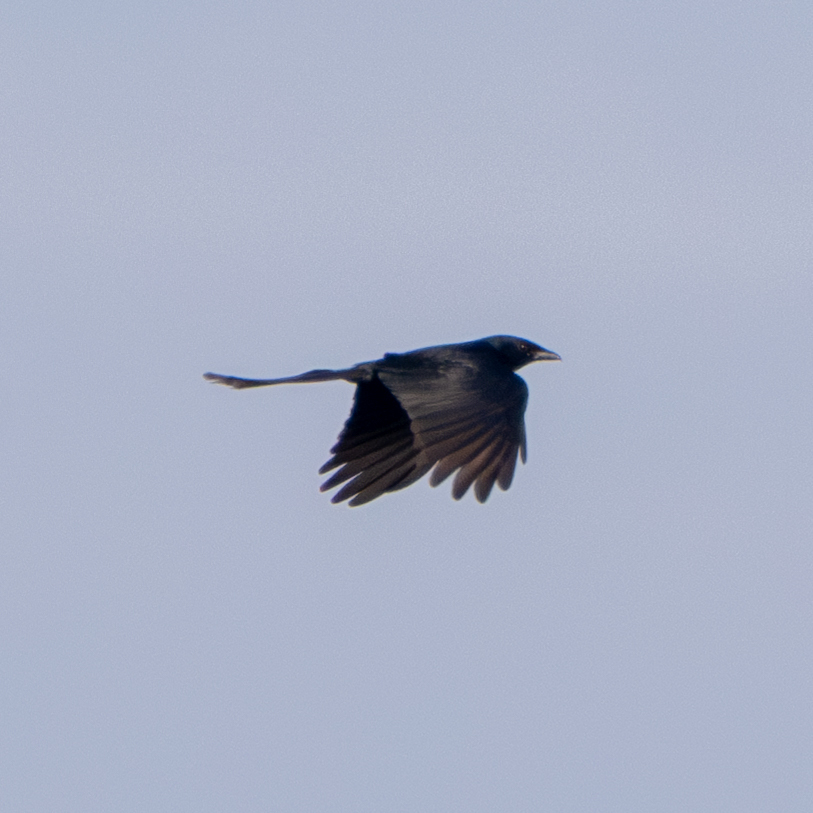
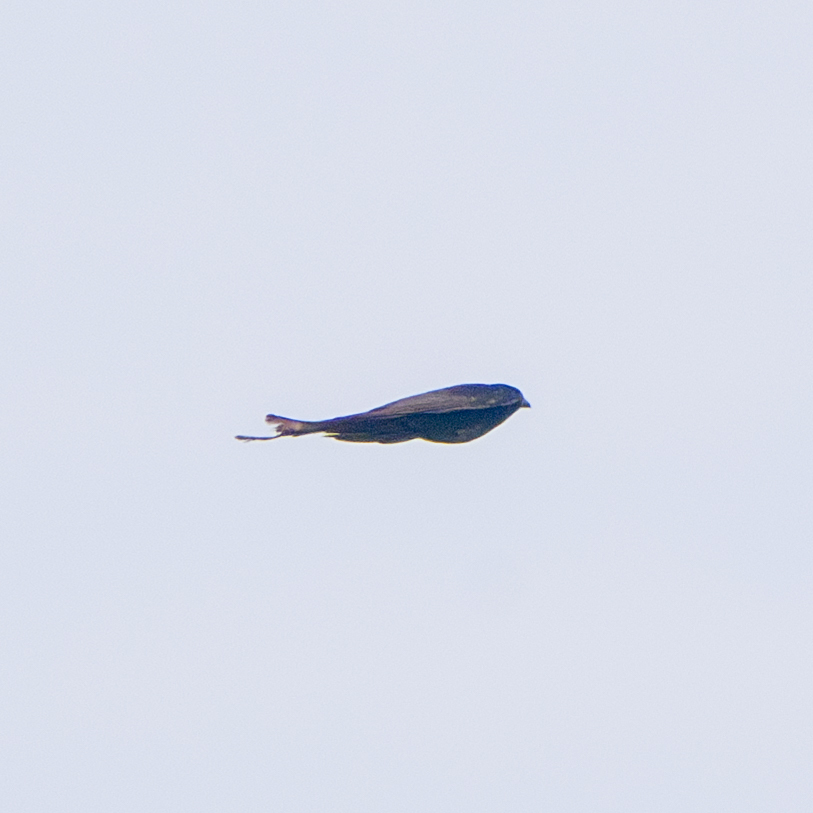
All-black appearance with a deeply forked tail distinguishes it from similar species. Dark brown iris differentiates it from the ashy drongo, which has crimson irises. Juveniles may be mistaken for the white-bellied drongo due to brownish plumage and white vent markings. Flight involves strong wing flaps and fast maneuvers. Common vocalization is a two-note 'tee-hee' call resembling that of the shikra.
Distribution & Habitat
Range extends from southwest Iran through Pakistan, India, Bangladesh, and Sri Lanka to southern China and Indonesia. Accidental in Japan. Summer visitor to northeastern Afghanistan and northern Pakistan; resident from the Indus Valley eastward. Populations in Korea are migratory. Introduced to Pacific islands including Rota and Guam, where it is now abundant. Seven subspecies recognized with clinal variation: albirictus (northern India), minor (Sri Lanka), nominate (peninsular India), cathoecus (Thailand, Hong Kong, China), thai (southern Siam), javanus (Java, Bali), and harterti (Formosa).
Behavior & Ecology
Aggressive aerial predator of insects, including grasshoppers, cicadas, termites, wasps, bees, ants, moths, beetles, and dragonflies. Also gleans from ground or vegetation, congregates at ploughed fields, and feeds near fires. Occasionally preys on small birds, reptiles, bats, fish, scorpions, and centipedes; visits flowers for nectar and water. Known for dive-bombing larger birds like crows and raptors. Nests in cup-shaped structures of sticks in tree forks or on telephone poles. Clutch size is three to four pale cream to red spotted eggs. Incubation lasts 14–15 days; fledging occurs after 16–20 days. Pair bonds last one breeding season. Helpers from previous broods may assist. Subject to brood parasitism by the Asian koel. Other birds often nest nearby for protection.
Conservation
Listed as Least Concern by the IUCN due to large range and commonness. However, introduced populations in Pacific islands such as Guam threaten native and endemic bird species through predation and competition, contributing to declines in species like the Rota bridled white-eye and Guam flycatcher.
Culture
Known by numerous local names including 'Kotwal' (policeman) in Hindi and 'srigunting hitam' in Indonesia. Superstition in central India holds that cattle lose horns if a fledgling perches on them. Revered in parts of Punjab for bringing water to Husayn ibn Ali. Considered a nuisance by bee-keepers but valued by farmers for pest control.
Source: Wikipedia · CC BY-SA 3.0
Taxonomy
- Order
- Passeriformes
- Family
- Dicruridae
- Genus
- Dicrurus
Vocalizations
Subspecies (7)
-
Dicrurus macrocercus albirictus
southeastern Iran to Afghanistan and northern India
Data Sources
Species description from Wikipedia, licensed under CC BY-SA 3.0.
Bird images and sounds sourced from GBIF, contributed by citizen scientists worldwide under Creative Commons licenses.
Taxonomy data from AviList 2025.