Black Drongo
Dicrurus macrocercus
黑卷尾
Introduction
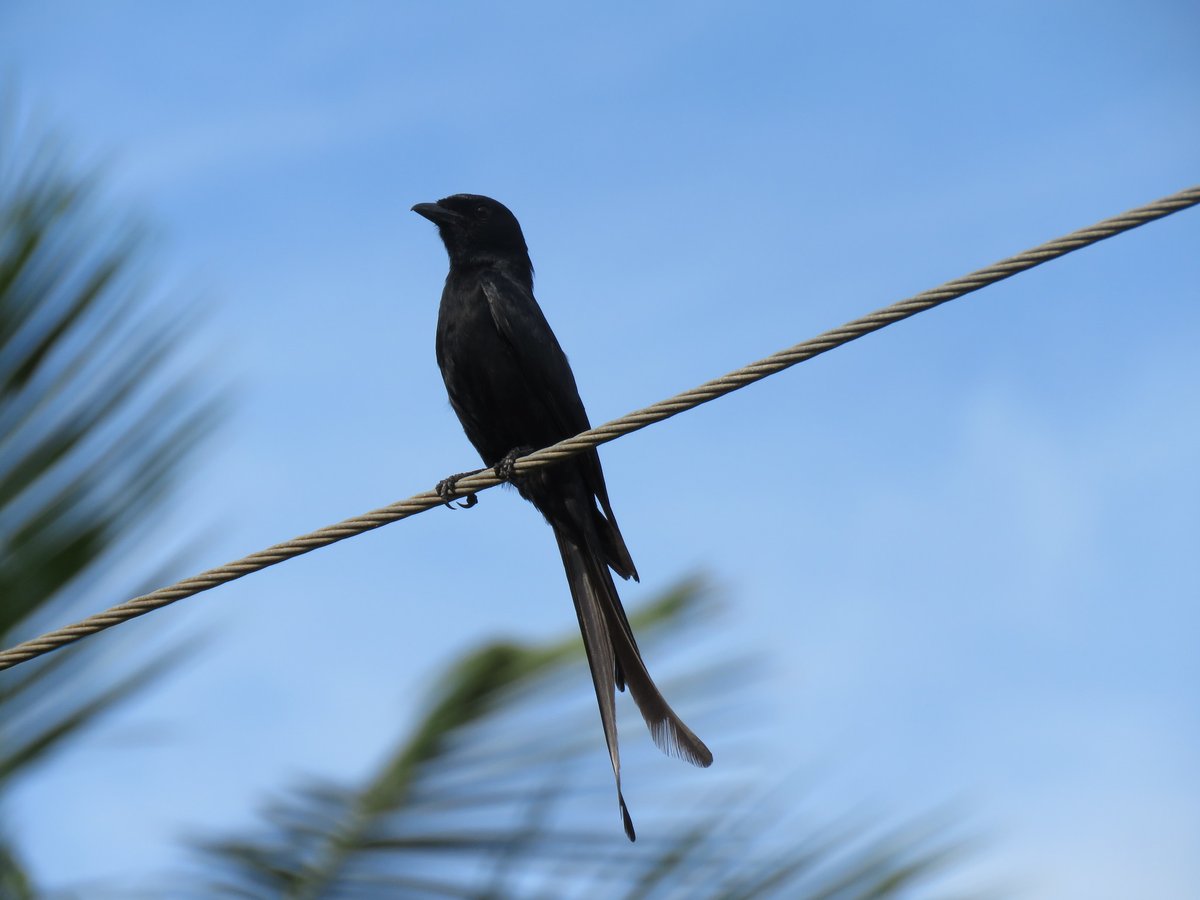
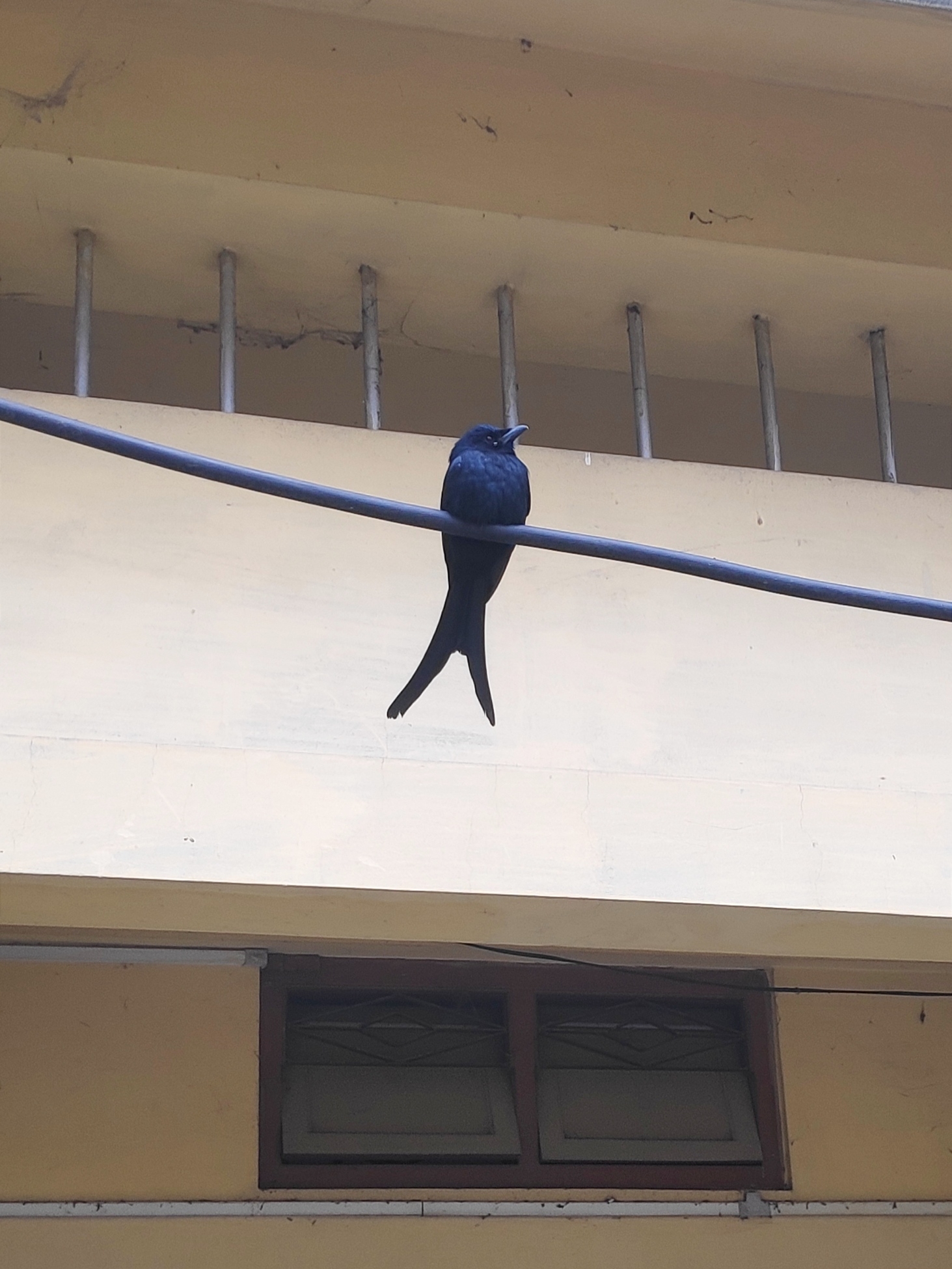
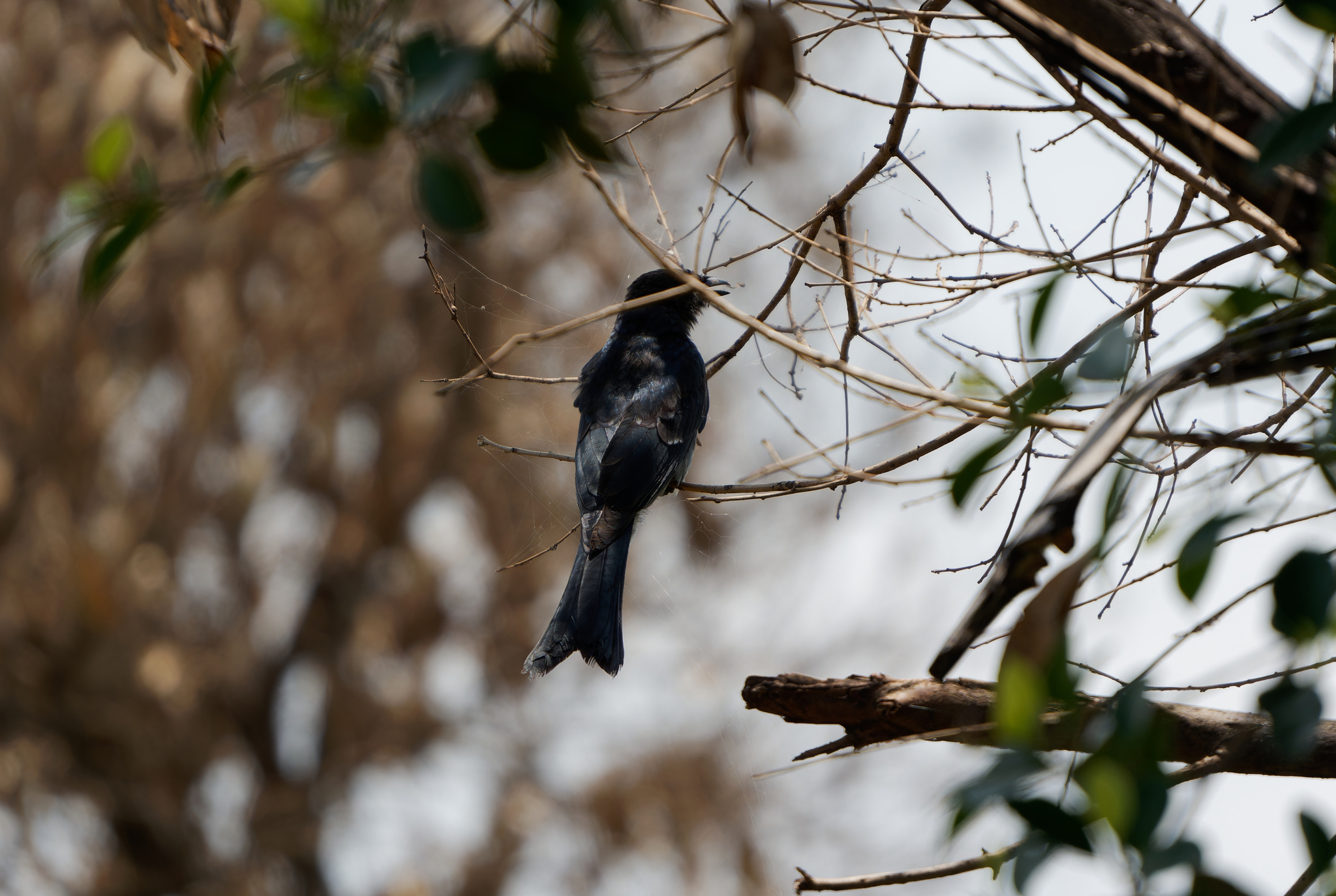
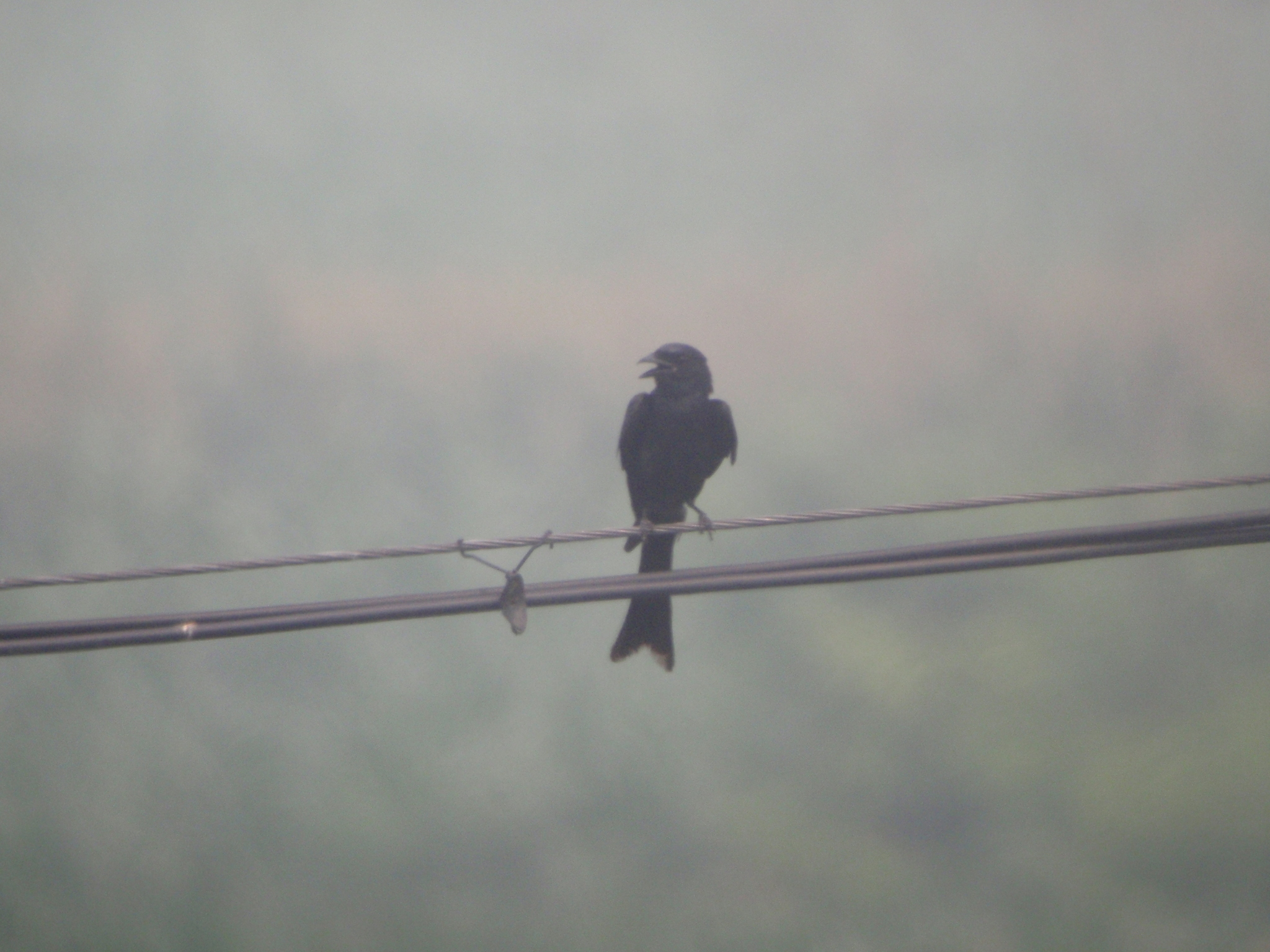
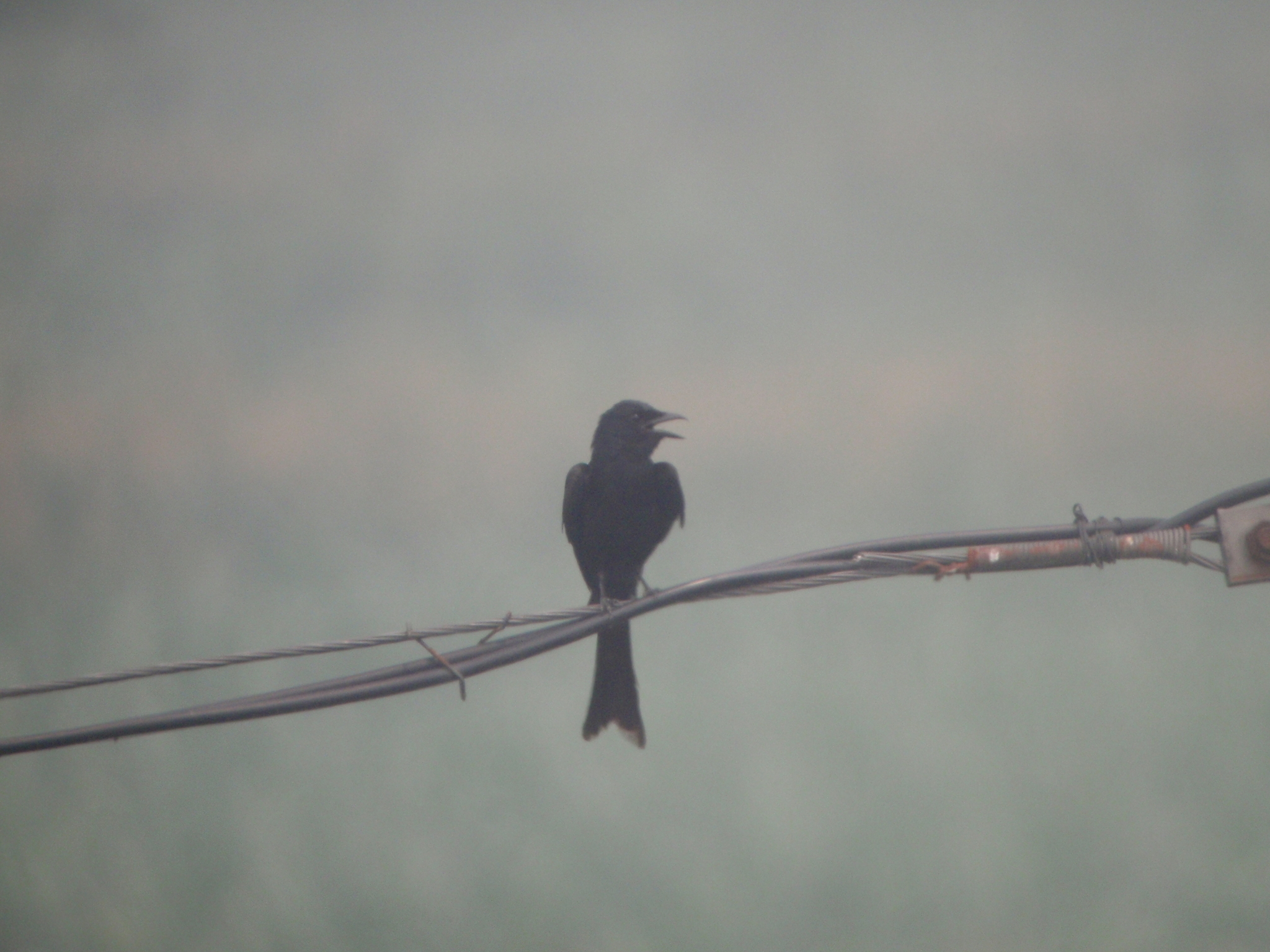
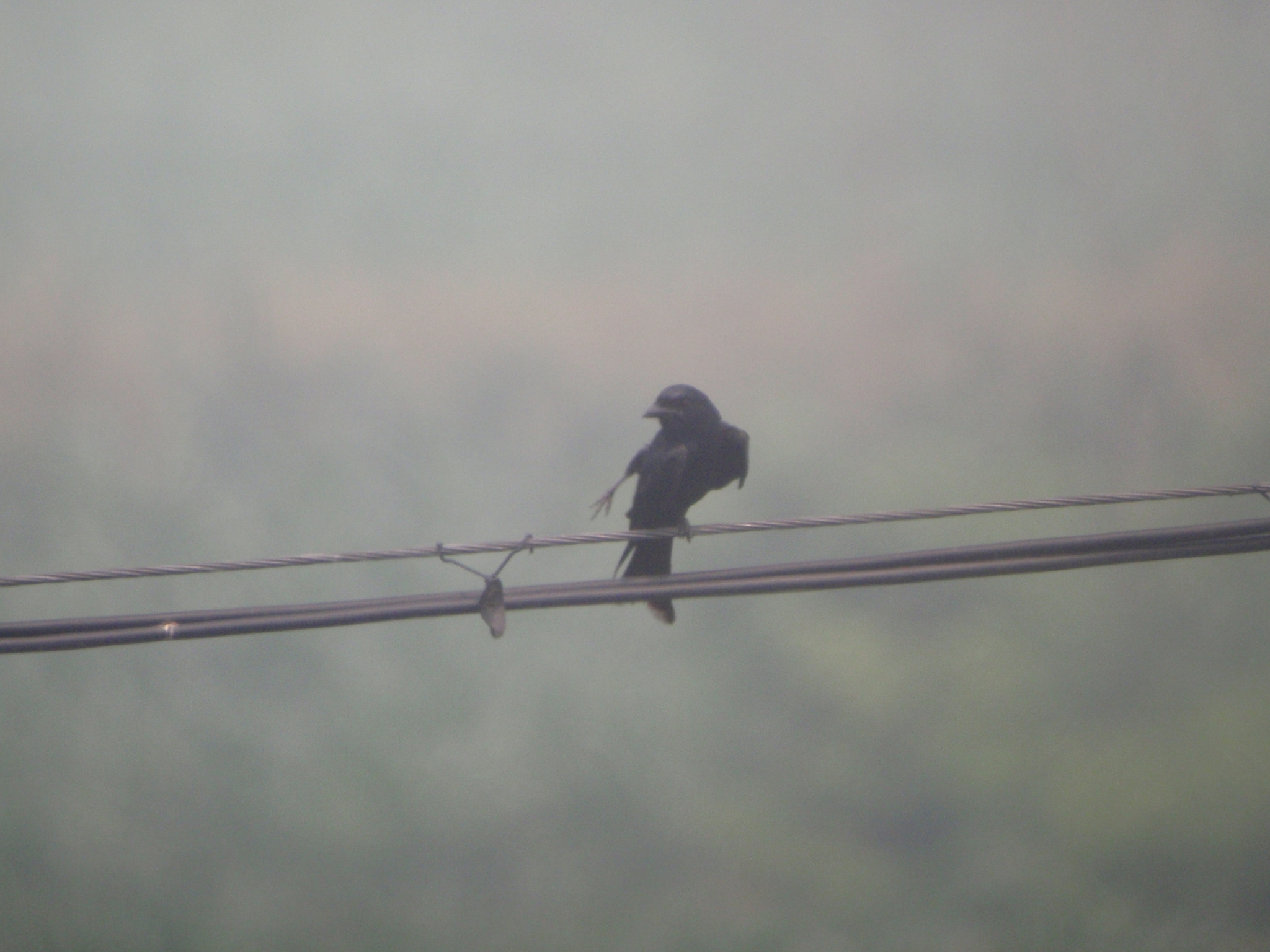
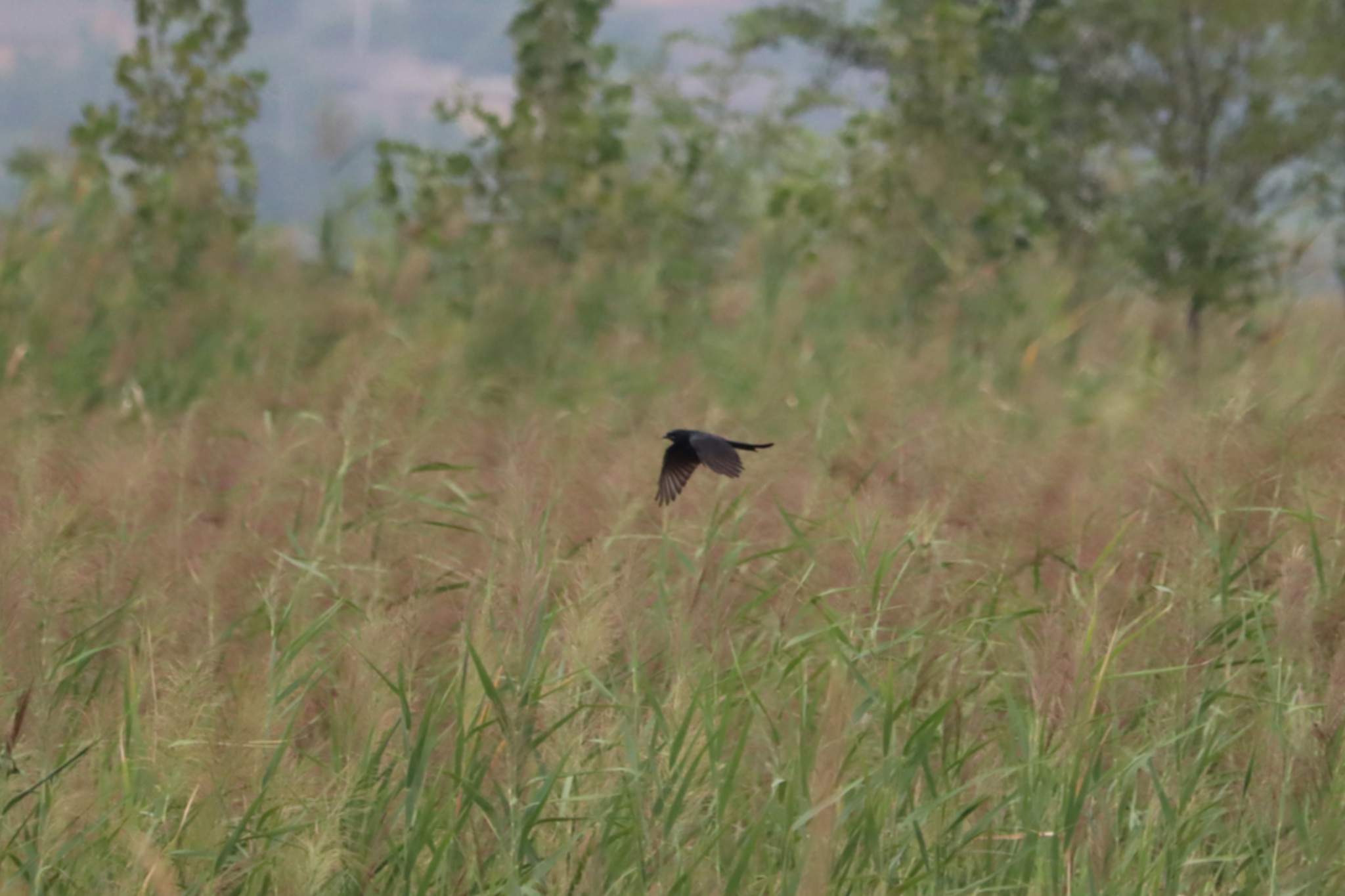
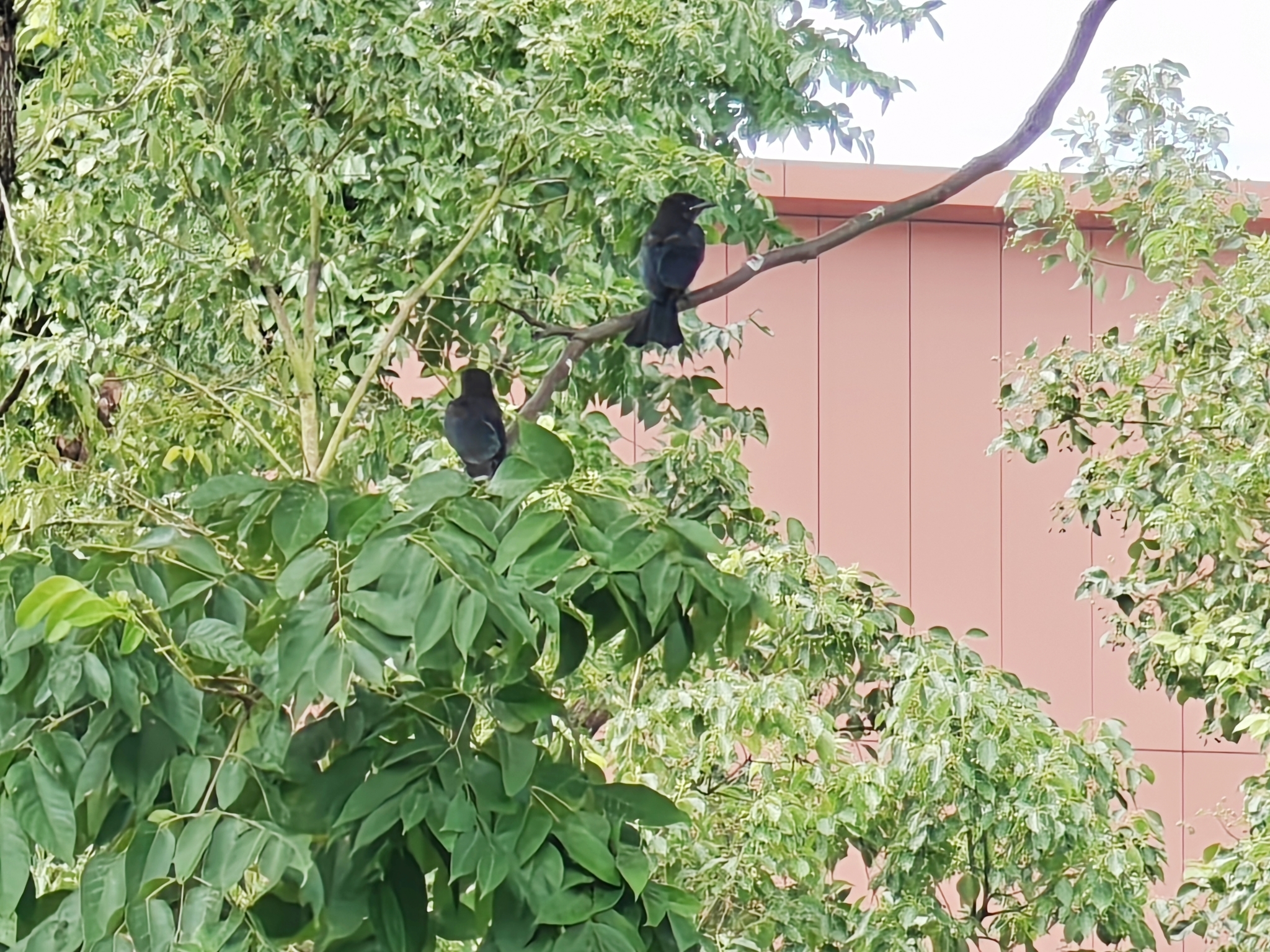
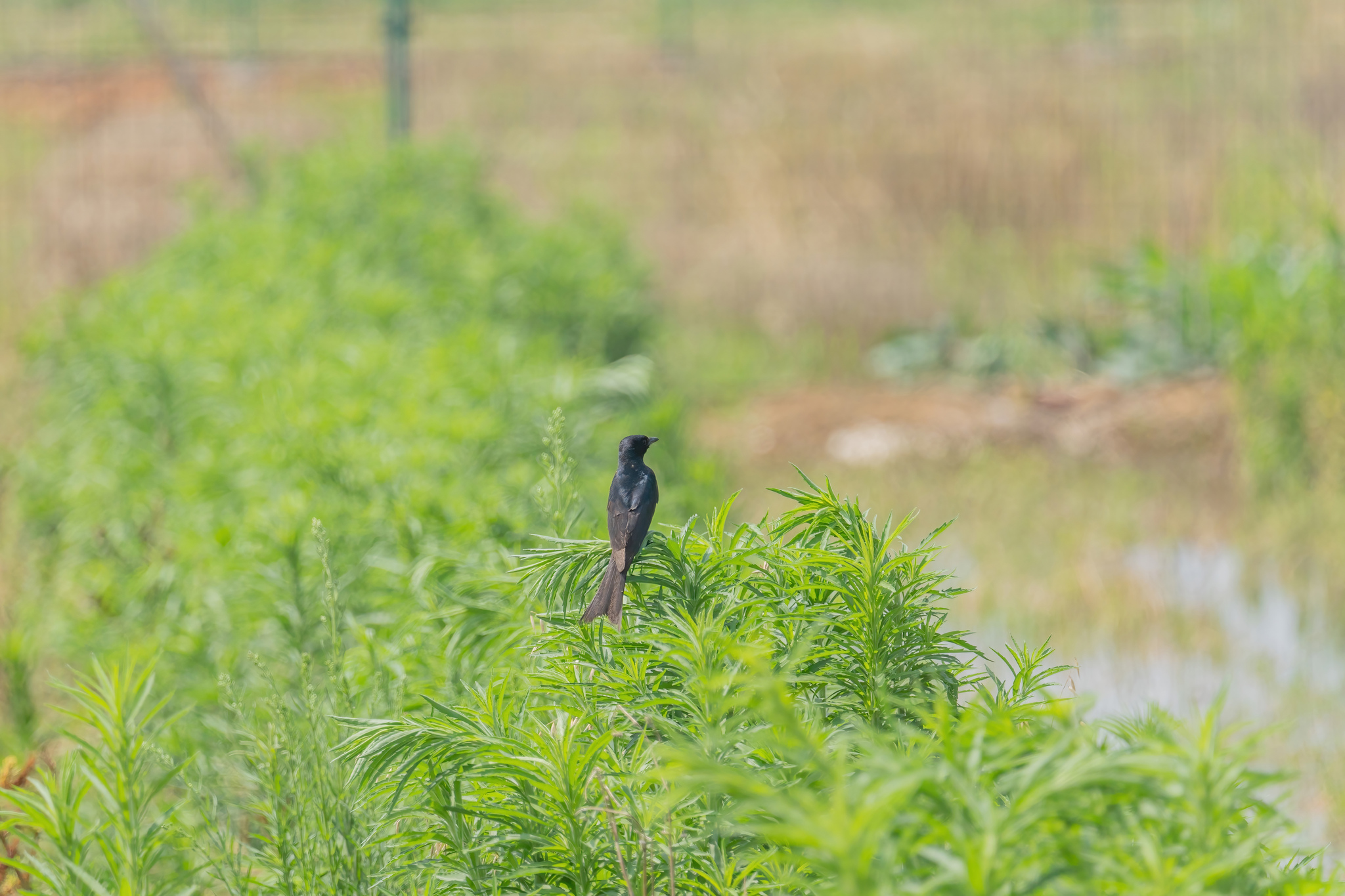
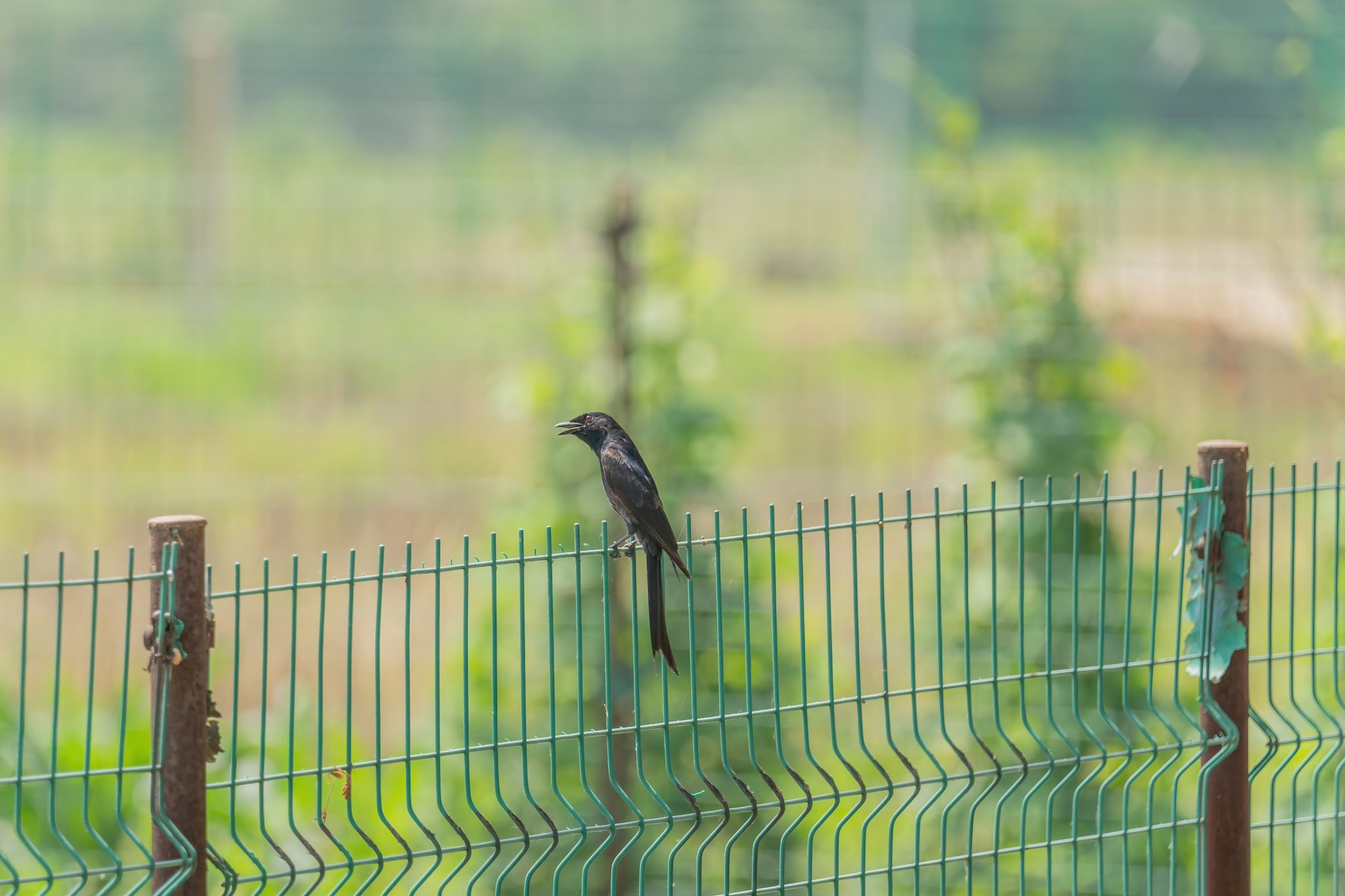
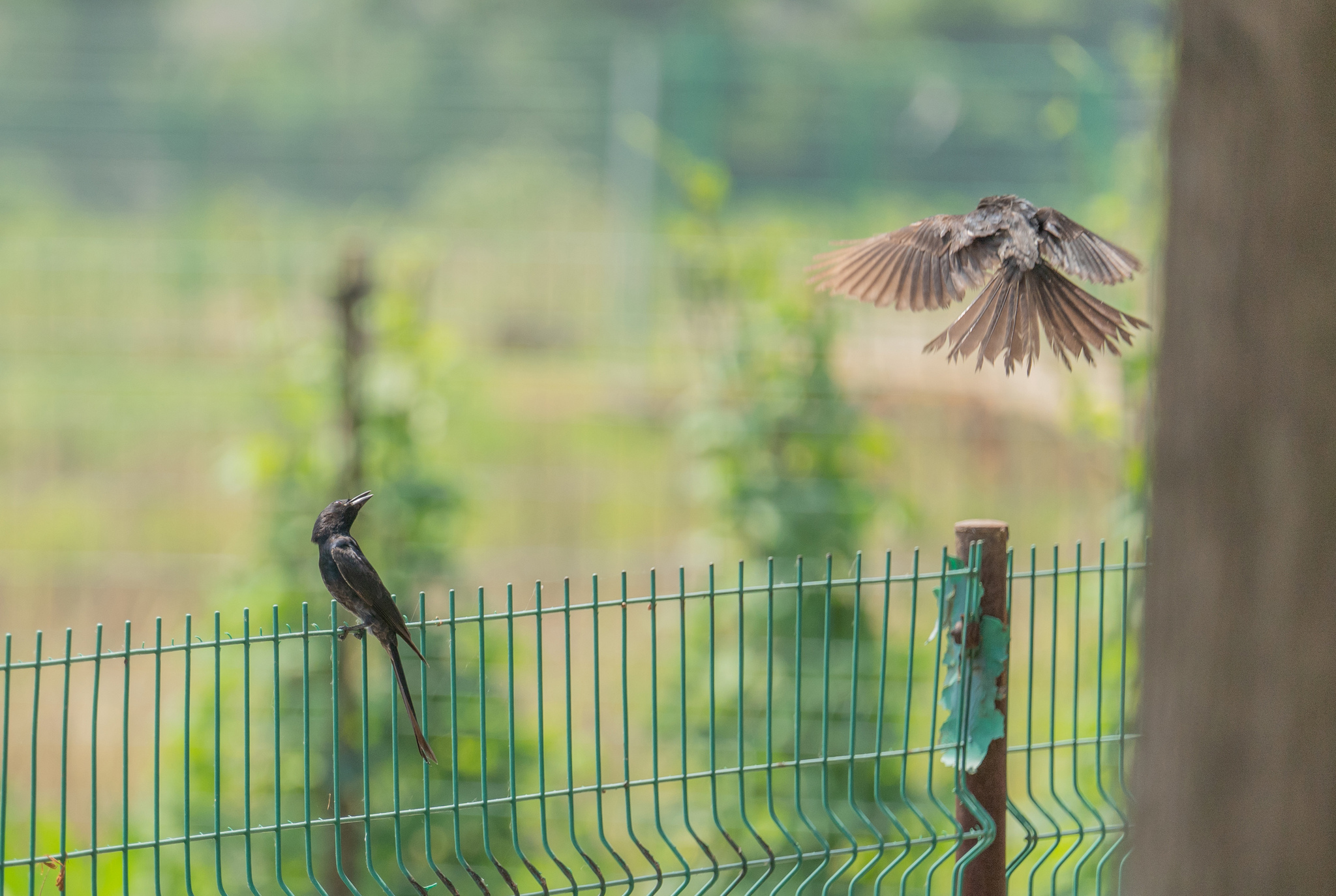
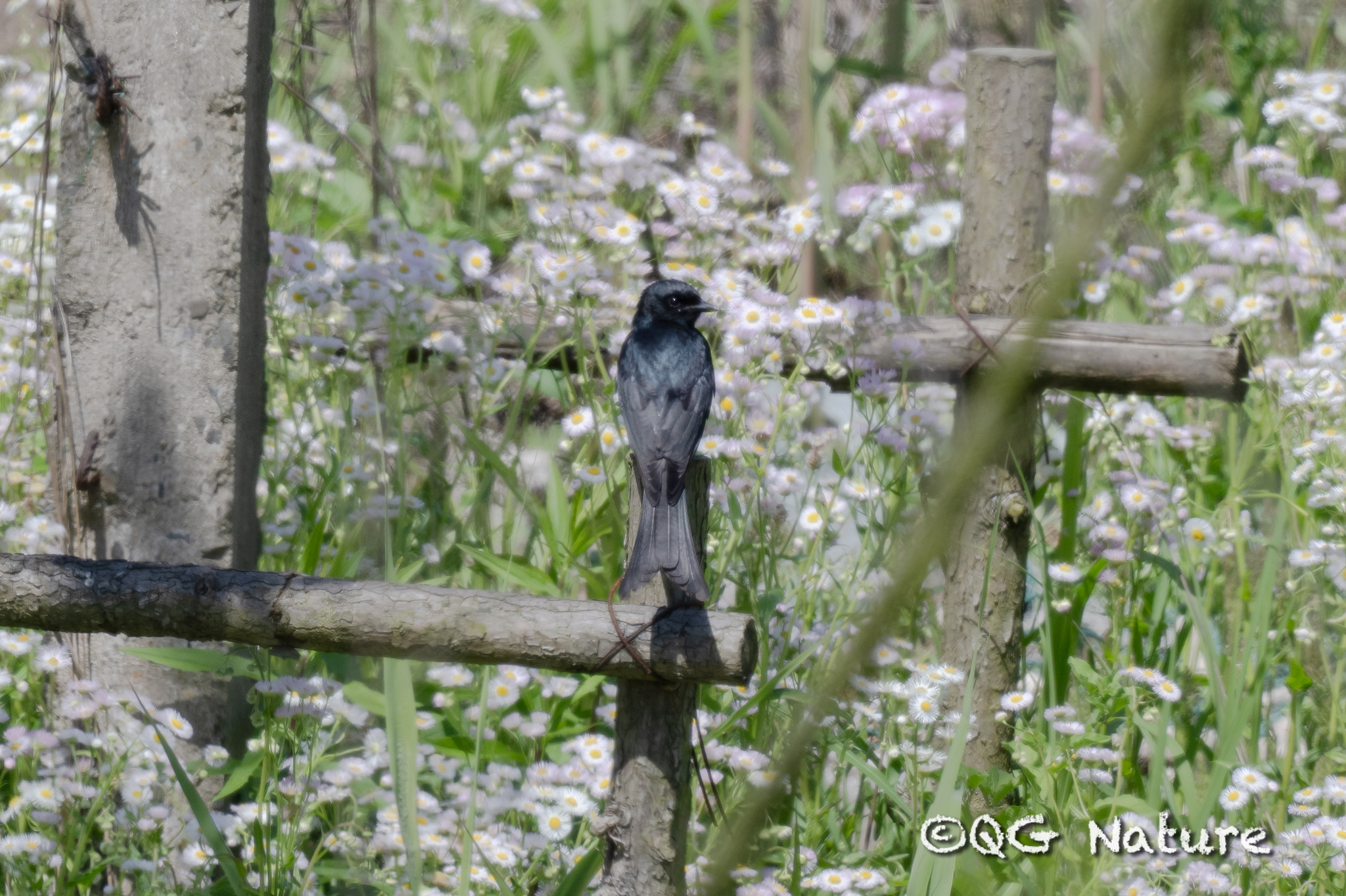
The Black Drongo (Dicrurus macrocercus) is a common flycatcher species across the Indian subcontinent and Southeast Asia. It measures 28 centimeters in length and is entirely glossy black with a deeply forked tail. The species inhabits open country including agricultural fields, grasslands, and urban areas, where it perches on bare branches, power lines, and telephone wires. It forages by sallying forth to capture flying insects. The species exhibits aggressive territorial behavior, regularly attacking crows, hawks, and other raptors that enter its territory. This defensive strategy provides benefits to smaller bird species, which often nest in proximity to Black Drongo territories for predator protection. The species has been introduced to several Pacific islands where it has become established.
Description
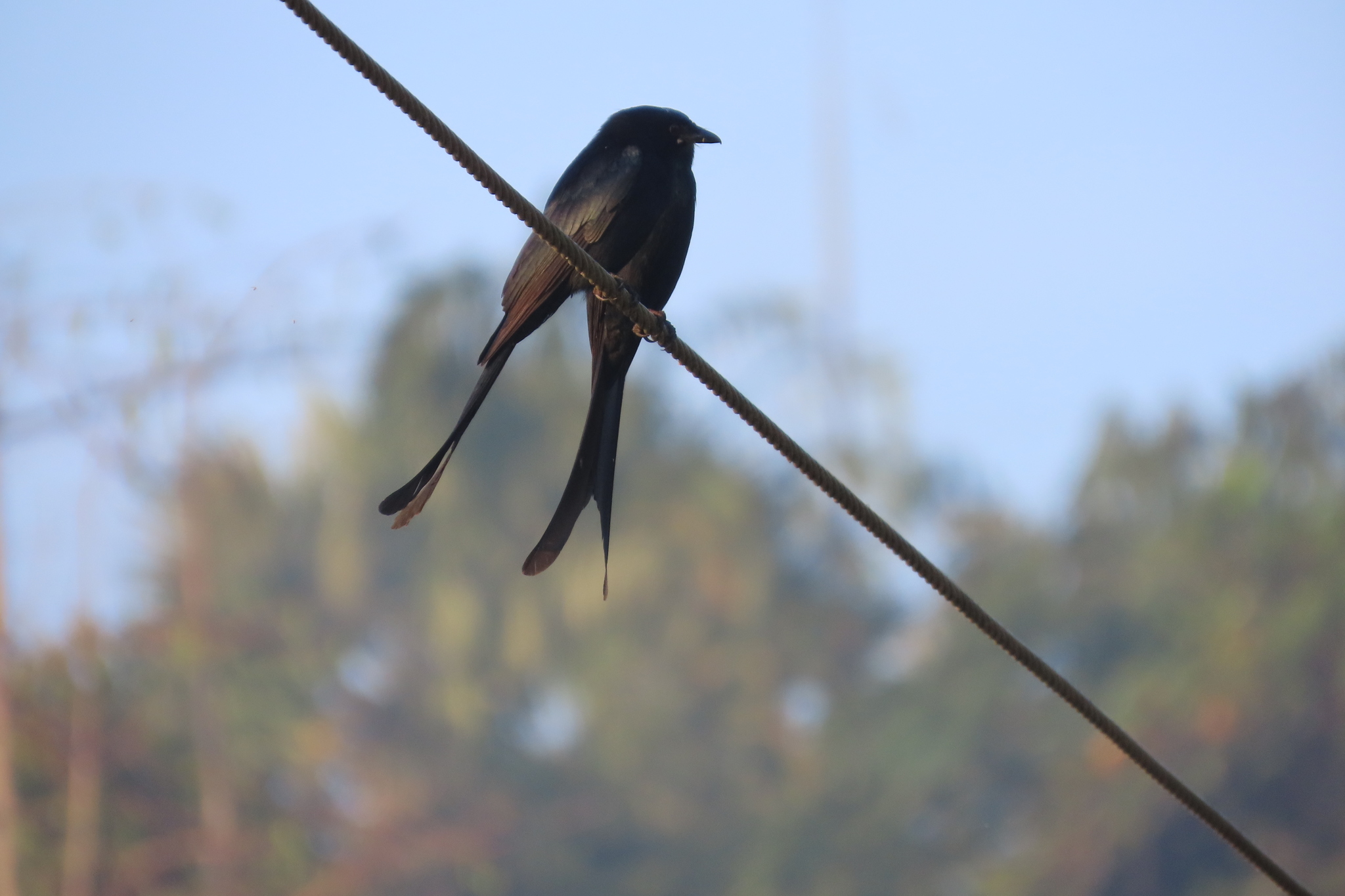
This small passerine is uniformly glossy black throughout its plumage, with a distinctive wide fork in its tail that becomes more pronounced with age. Adults typically display a small white spot at the base of the gape, though this can be difficult to observe in the field. The iris is dark brown, a key distinguishing feature from the similar ashy drongo, which has crimson irises. The sexes appear identical in the field and cannot be reliably separated by plumage alone. Juveniles are notably different, showing brownish tones with white barring or speckling concentrated on the belly and vent region. First-year birds retain white-tipped feathers on the belly, while second-year individuals show these white tips restricted only to the vent area. The species measures 28 centimeters in length and has short legs adapted for perching rather than ground movement.
Identification
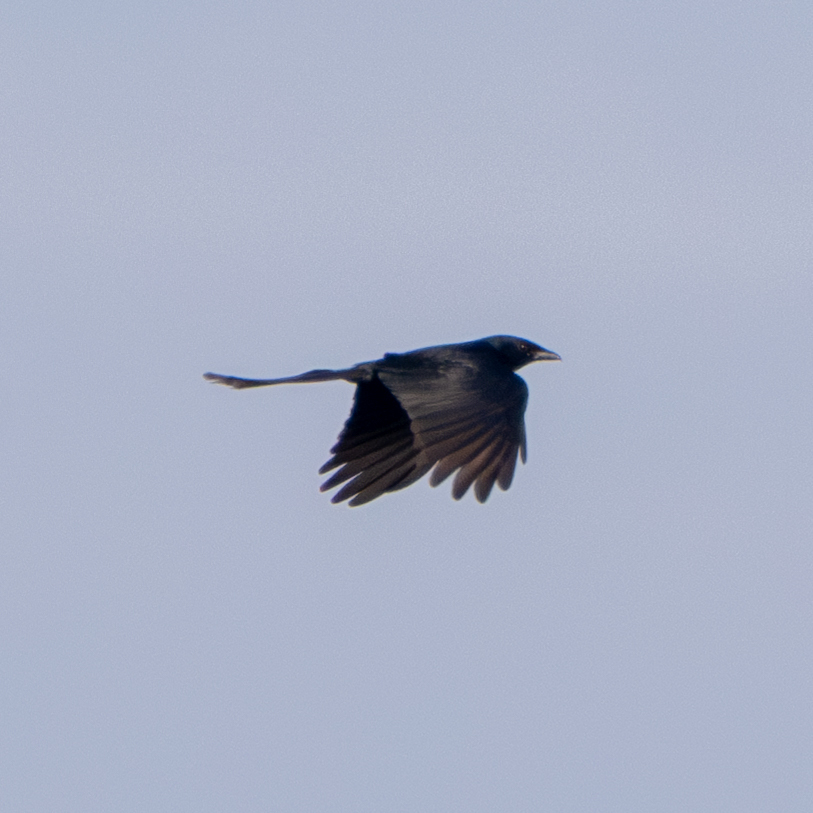
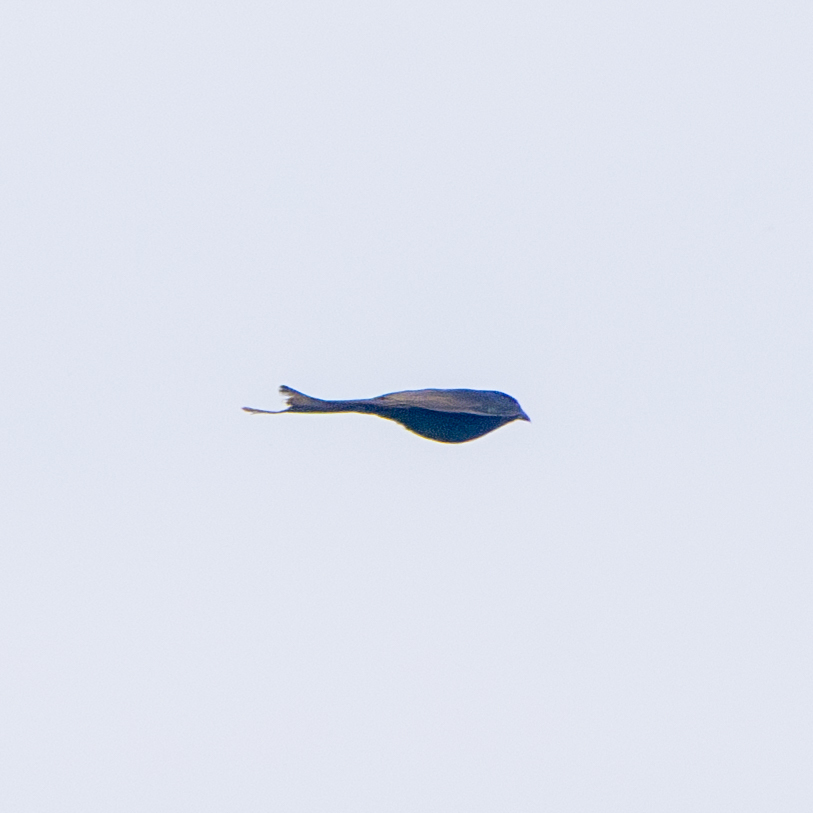
The combination of all-black plumage and deeply forked tail is diagnostic across most of its range. The dark brown iris separates it from the ashy drongo, which has crimson irises. Juvenile plumage can cause confusion with the white-bellied drongo, though the latter typically shows more extensive white on the underparts. The fork-tailed drongo of Africa is very similar but is now treated as a separate species with no range overlap in Asia. In flight, the species shows strong, purposeful wingbeats and is capable of agile aerial maneuvers when pursuing insects. The species' aggressive, vocal behavior when defending its territory also serves as a useful identification cue, as it will readily mob much larger birds including crows and birds of prey.
Distribution & Habitat
This species has an extensive range across tropical and subtropical Asia, breeding from southwest Iran and Pakistan east through India, Bangladesh, and Sri Lanka to southern China and Indonesia. It is an accidental visitor to Japan. Northern populations in northeastern Afghanistan and northern Pakistan are summer visitors, while resident populations occupy the Indus Valley region through Bangladesh, India, and Sri Lanka. Some populations show seasonal movements that are not fully understood, while Korean populations are known to be migratory. The species favors open country including savanna, agricultural fields, and urban habitats, typically staying close to the ground and perching on bare branches or wires. It has been introduced to several Pacific islands including Rota and Guam, where it has become abundant.
Behavior & Ecology
The species is an early riser, becoming active at dawn and roosting later than many co-occurring birds. Its diet consists almost entirely of insects including grasshoppers, cicadas, termites, wasps, bees, ants, moths, beetles, and dragonflies. It employs multiple foraging strategies: hawking insects in aerial pursuits, gleaning from vegetation, and attending plowed fields where it picks up exposed grubs. It is highly social, with up to 35 birds gathering at rich food sources. The species produces a wide range of calls, most commonly a two-note tee-hee that resembles the shikra's call. During breeding season, males perform aerial courtship displays including chases and locked-wing falls. The cup-shaped nest is built in the fork of an outer tree branch, with three to four eggs incubated by both parents for 14-15 days. Offspring from previous broods sometimes assist at the nest.
Conservation
The species is classified as Least Concern by the IUCN due to its extremely large range and apparently stable population numbers. It remains common throughout much of its extensive distribution and has even benefited from agricultural expansion in some areas. However, on Pacific islands where it has been introduced, it has become abundant to the point of threatening native bird species. On Guam, it is now the most common bird and has been implicated in declines of endemic species including the Rota bridled white-eye and Guam flycatcher through predation and competition. Farmers sometimes erect artificial perches in fields to attract these birds, recognizing their value in controlling pest insects, though they can be nuisance to beekeepers due to their predation on bees.
Culture
Being a common and conspicuous bird, the species has accumulated numerous local names across its range, including 'Thampal' in Pakistan, 'Kotwal' meaning policeman in Hindi, and 'Kari kuruvi' meaning charcoal bird in Tamil. In some parts of central India, a superstition holds that cattle would lose their horns if a newly fledged drongo alighted on them. The bird is held in reverence in parts of Punjab among Shia Muslims, who believe it brought water to Husayn ibn Ali. The older genus name 'Buchanga' was derived from the Hindi Bhujanga. In some regions, it is not distinguished from the bronzed drongo, both being known by the same name, while the greater racket-tailed drongo is considered a separate species with a distinct local name indicating its larger size.
Source: Wikipedia · CC BY-SA 3.0
Taxonomy
- Order
- Passeriformes
- Family
- Dicruridae
- Genus
- Dicrurus
- eBird Code
- bladro1
Vocalizations
Subspecies (7)
-
Dicrurus macrocercus albirictus
southeastern Iran to Afghanistan and northern India
-
Dicrurus macrocercus cathoecus
breeds central and eastern China, Myanmar, northern Thailand, and northern Indochina; northern populations migrate southward to southeastern China, Indochina, the Thai-Malay Peninsula, northwestern Borneo, and Sumatra
-
Dicrurus macrocercus harterti
Taiwan
-
Dicrurus macrocercus javanus
Java and Bali
-
Dicrurus macrocercus macrocercus
peninsular India
-
Dicrurus macrocercus minor
Sri Lanka
-
Dicrurus macrocercus thai
southern Myanmar, southern Thailand, and southern Vietnam
Data Sources
Species description from Wikipedia, licensed under CC BY-SA 3.0.
Bird images and sounds sourced from GBIF, contributed by citizen scientists worldwide under Creative Commons licenses.
Taxonomy data from AviList 2025.