Passeriformes / Dicruridae / Dicrurus
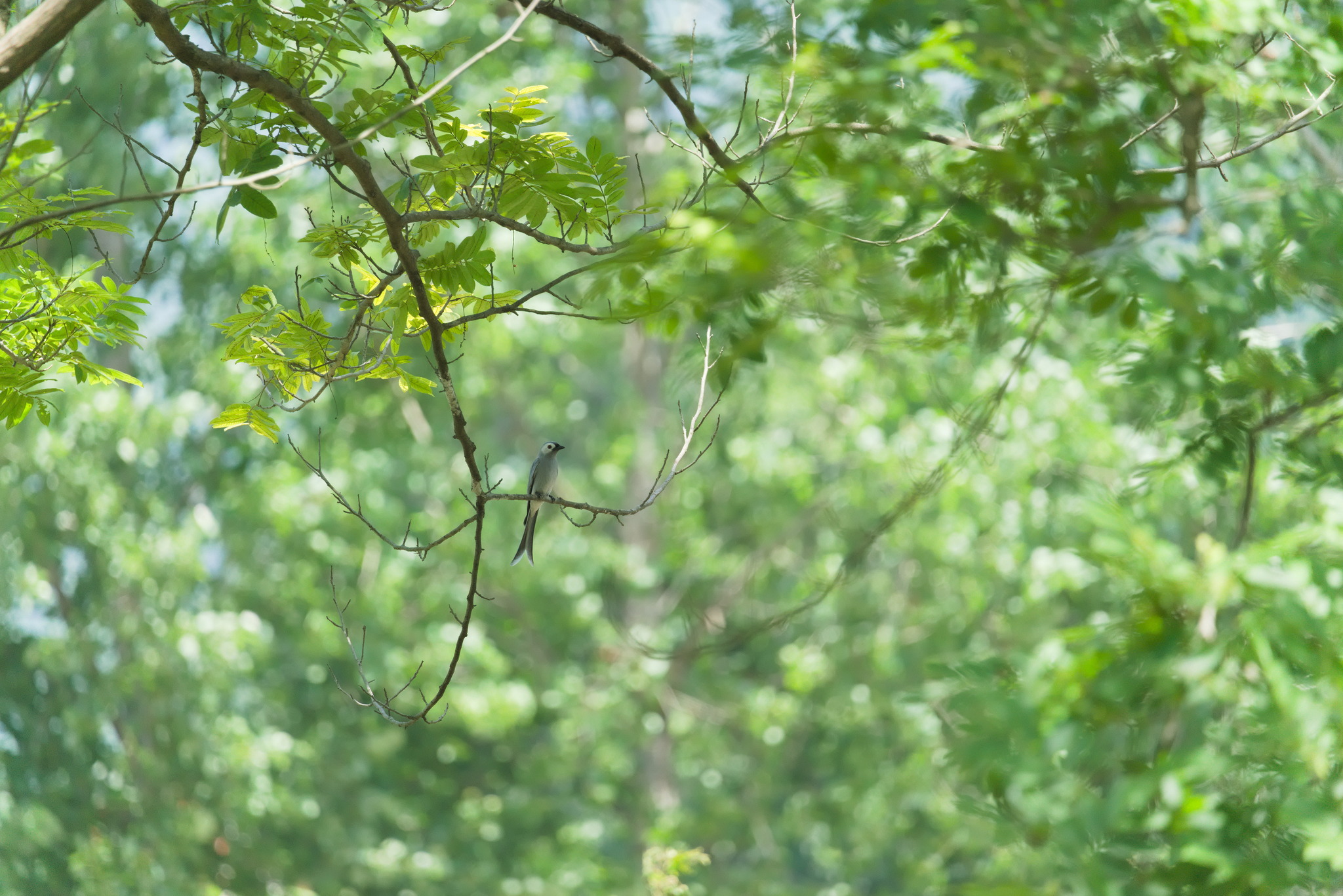
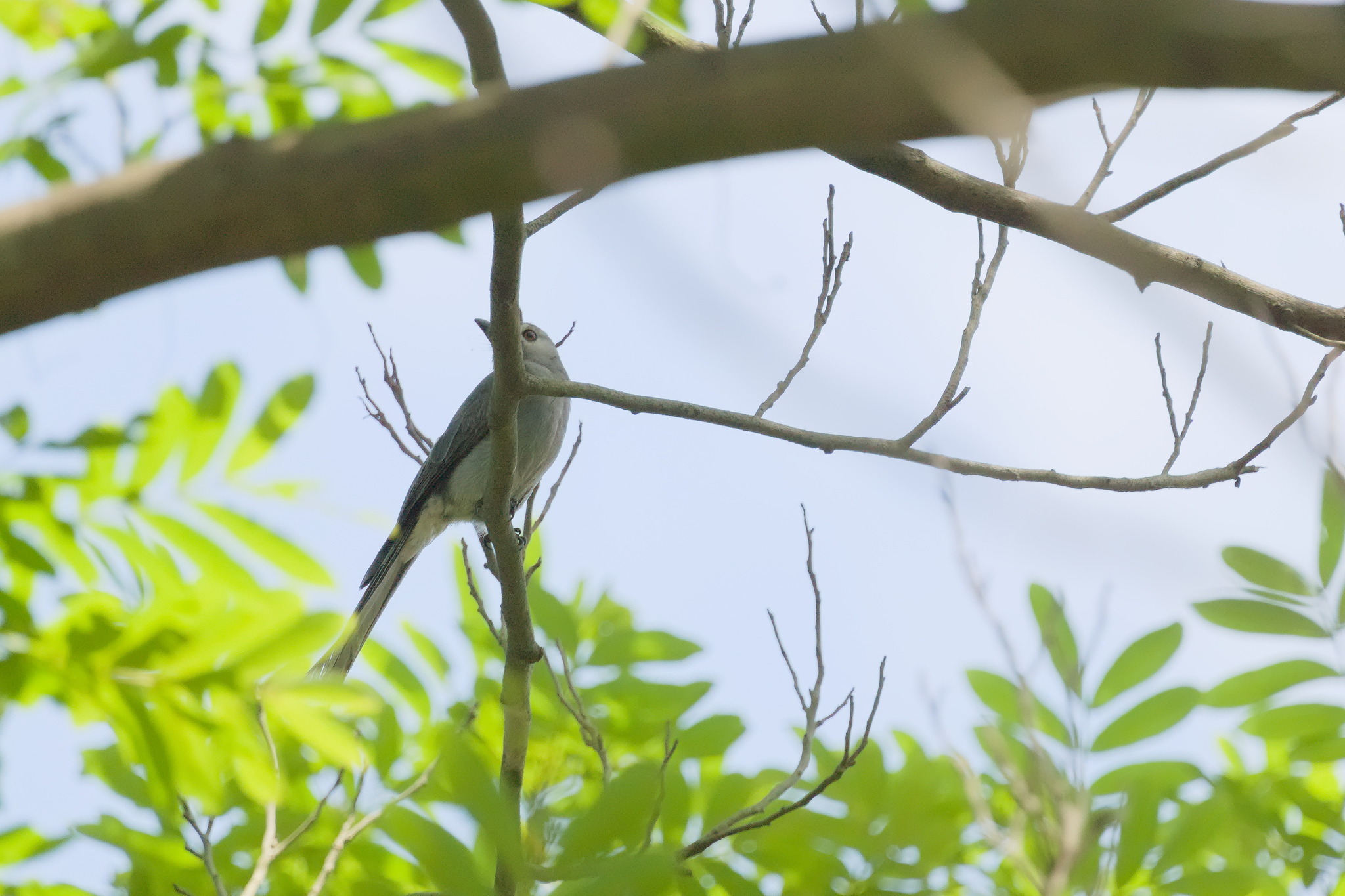
Ashy Drongo
Dicrurus leucophaeus · 灰卷尾
Introduction
A species in the drongo family Dicruridae, widely distributed across eastern and Southeast Asia. Populations vary in grey shade, migration patterns, and white eye-patch presence. It is insectivorous, foraging via aerial sallies, and exhibits vocal mimicry.
Description
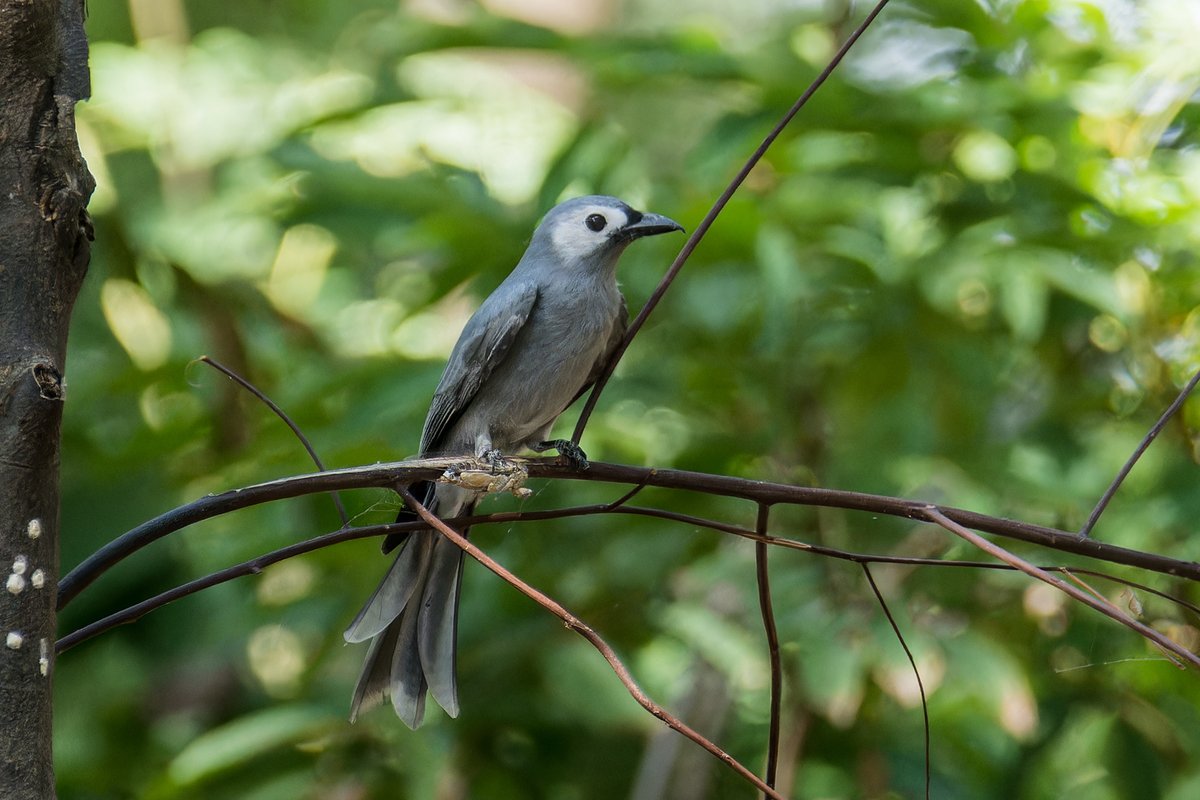
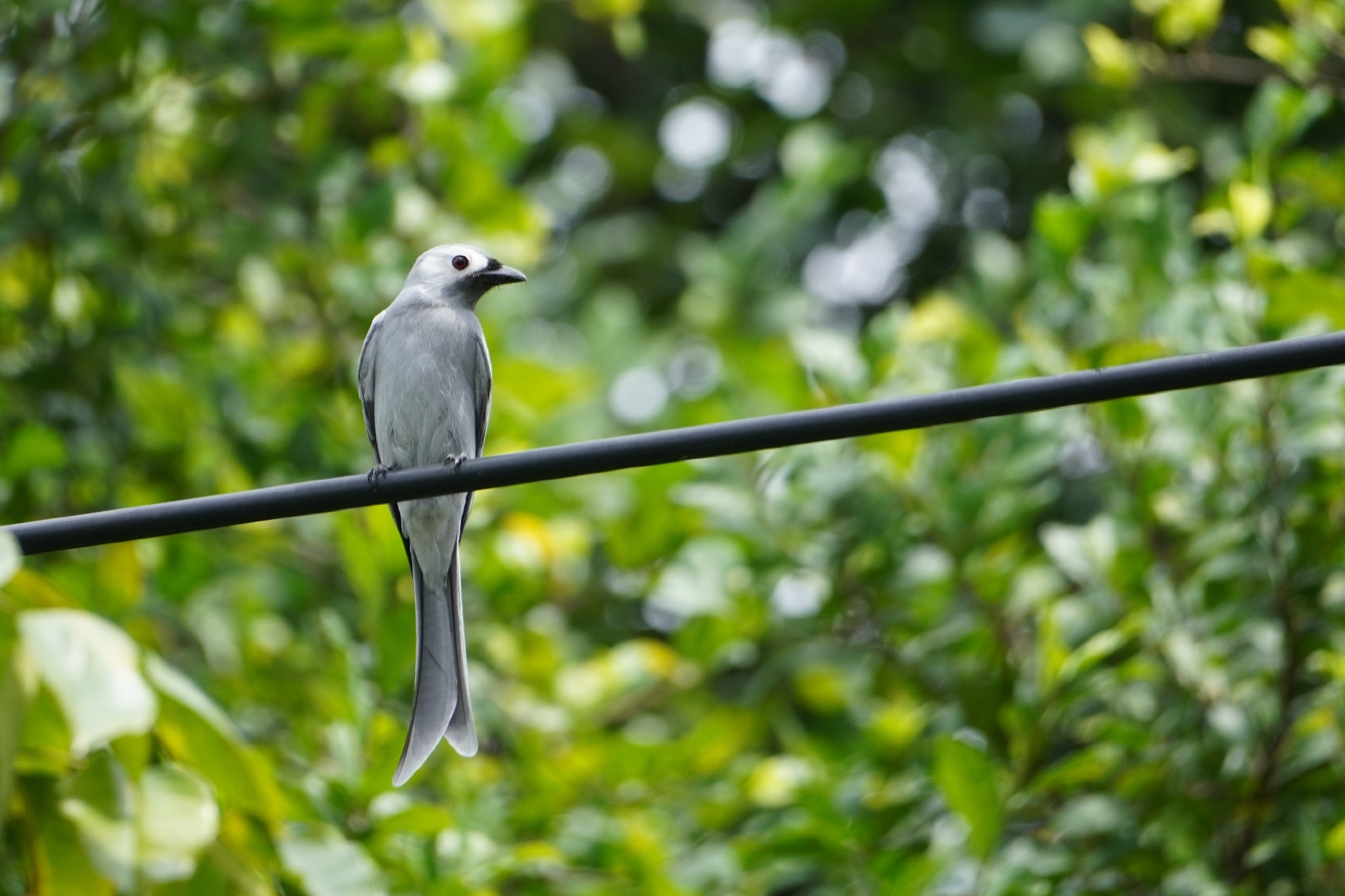
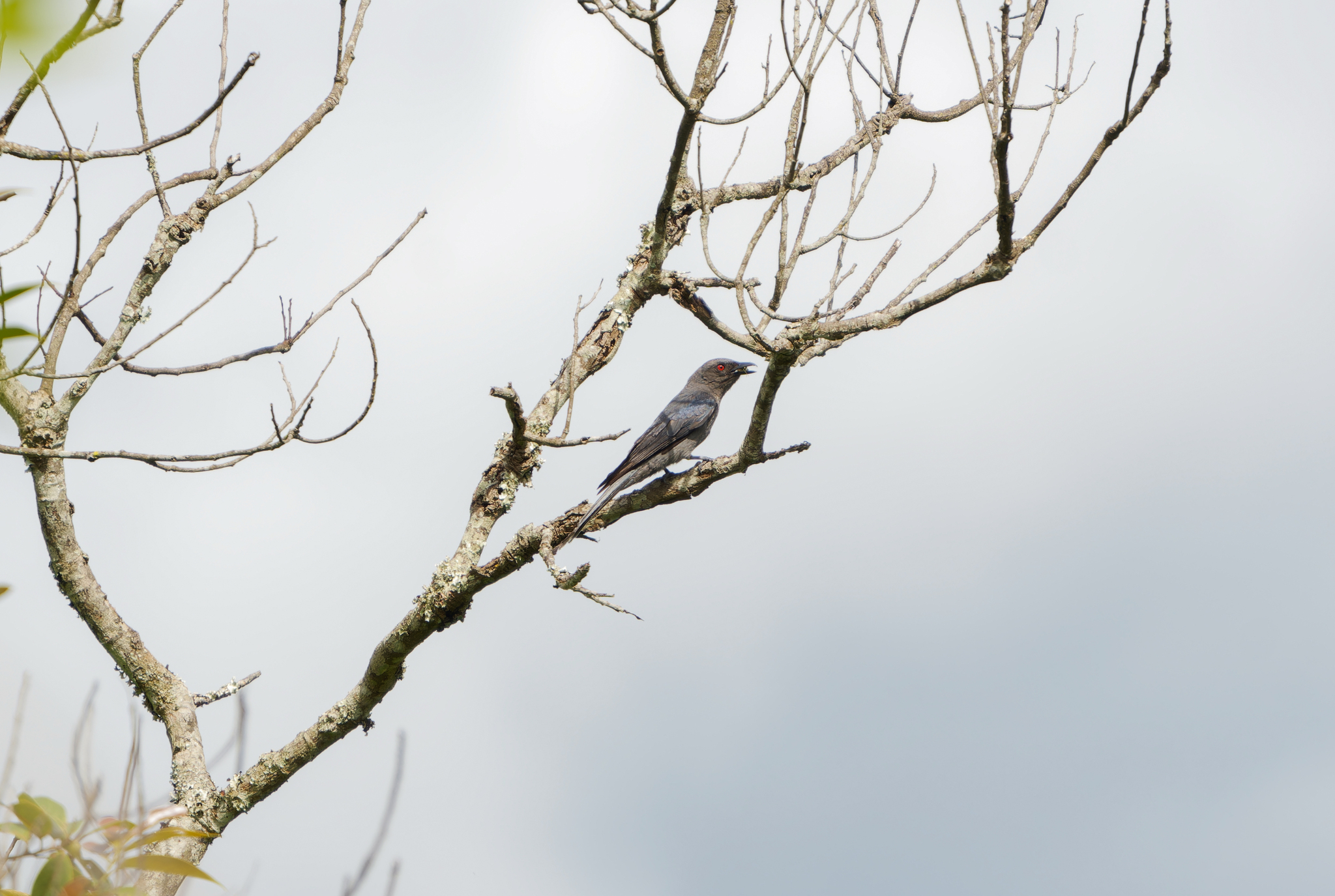
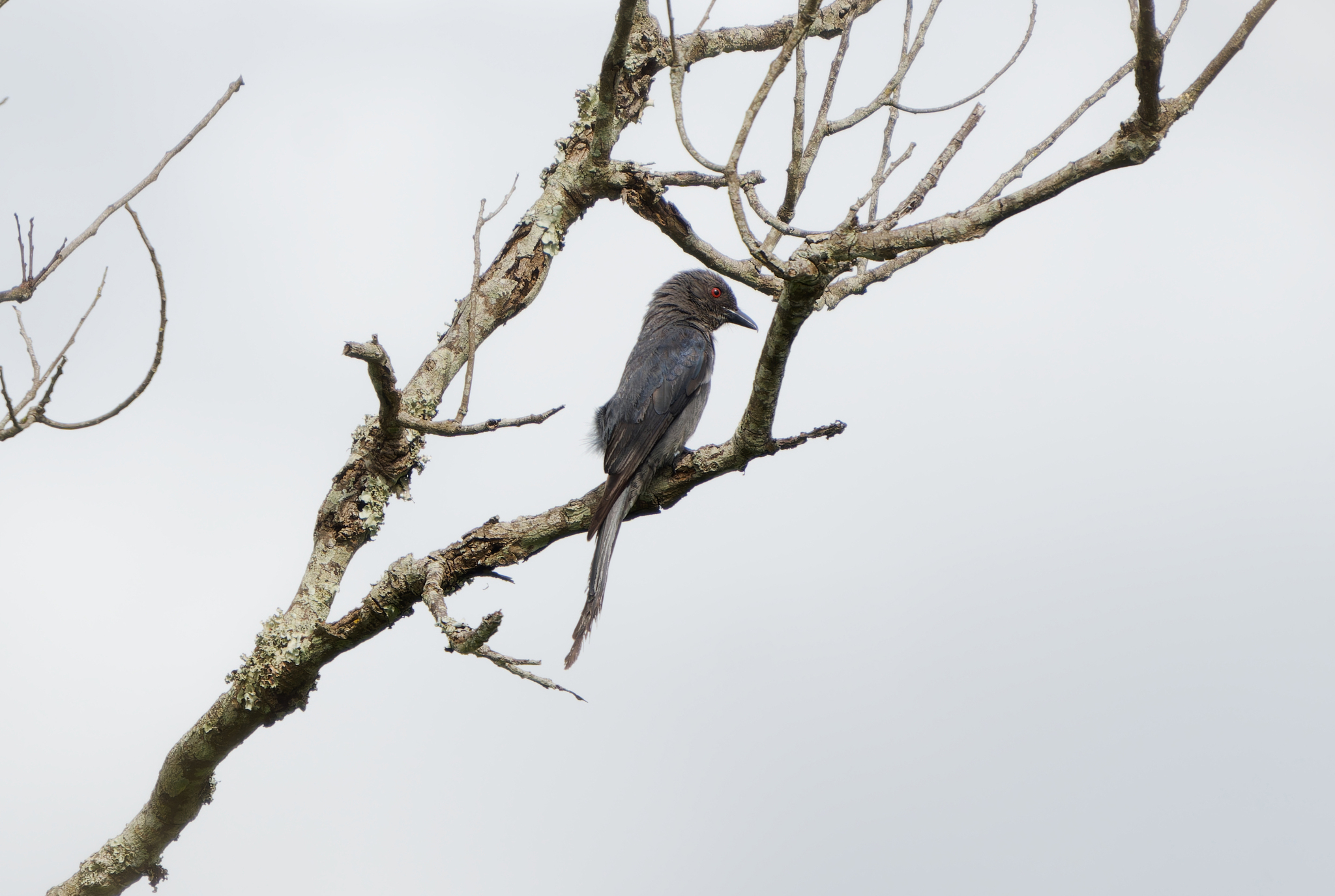
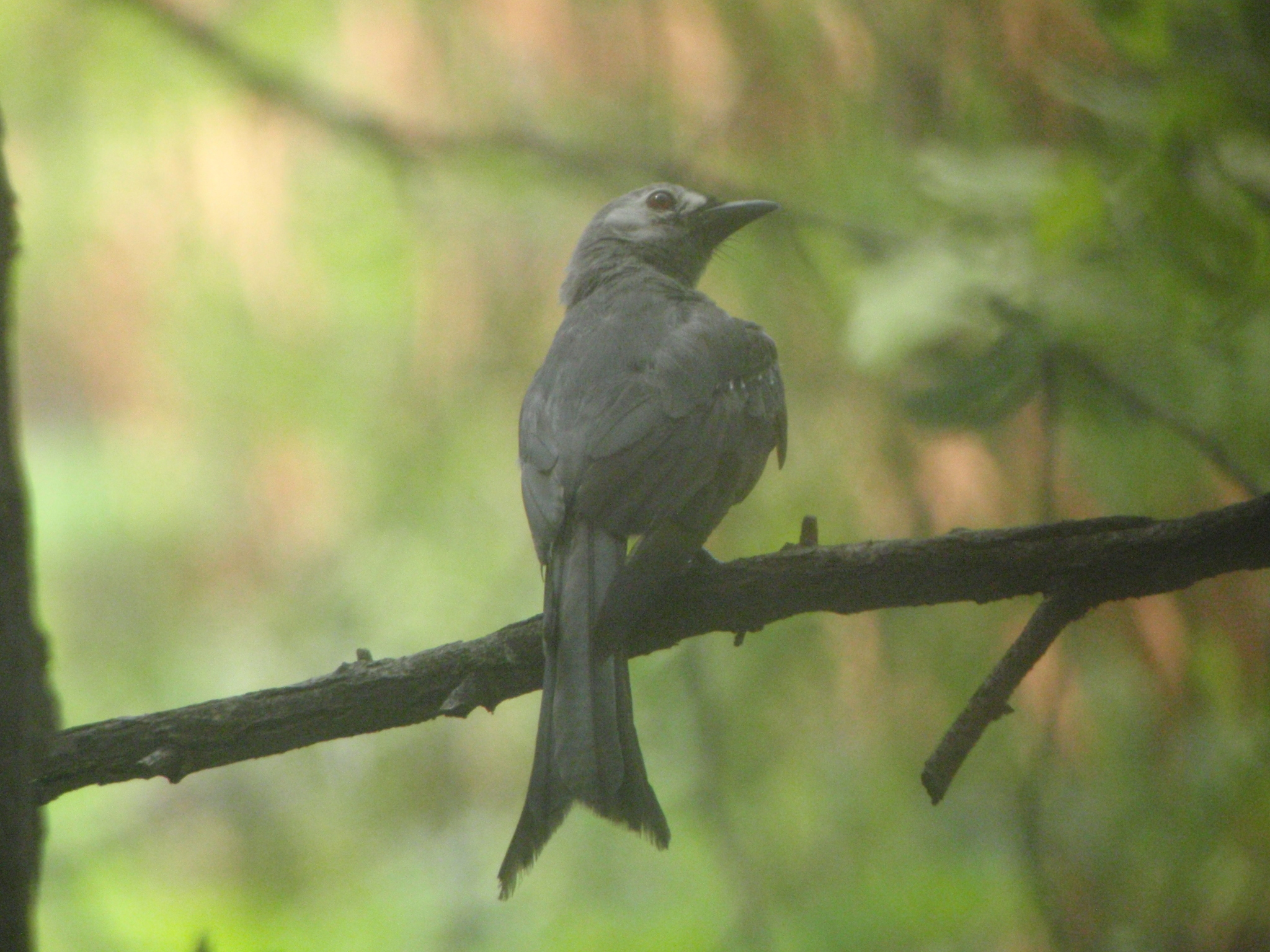
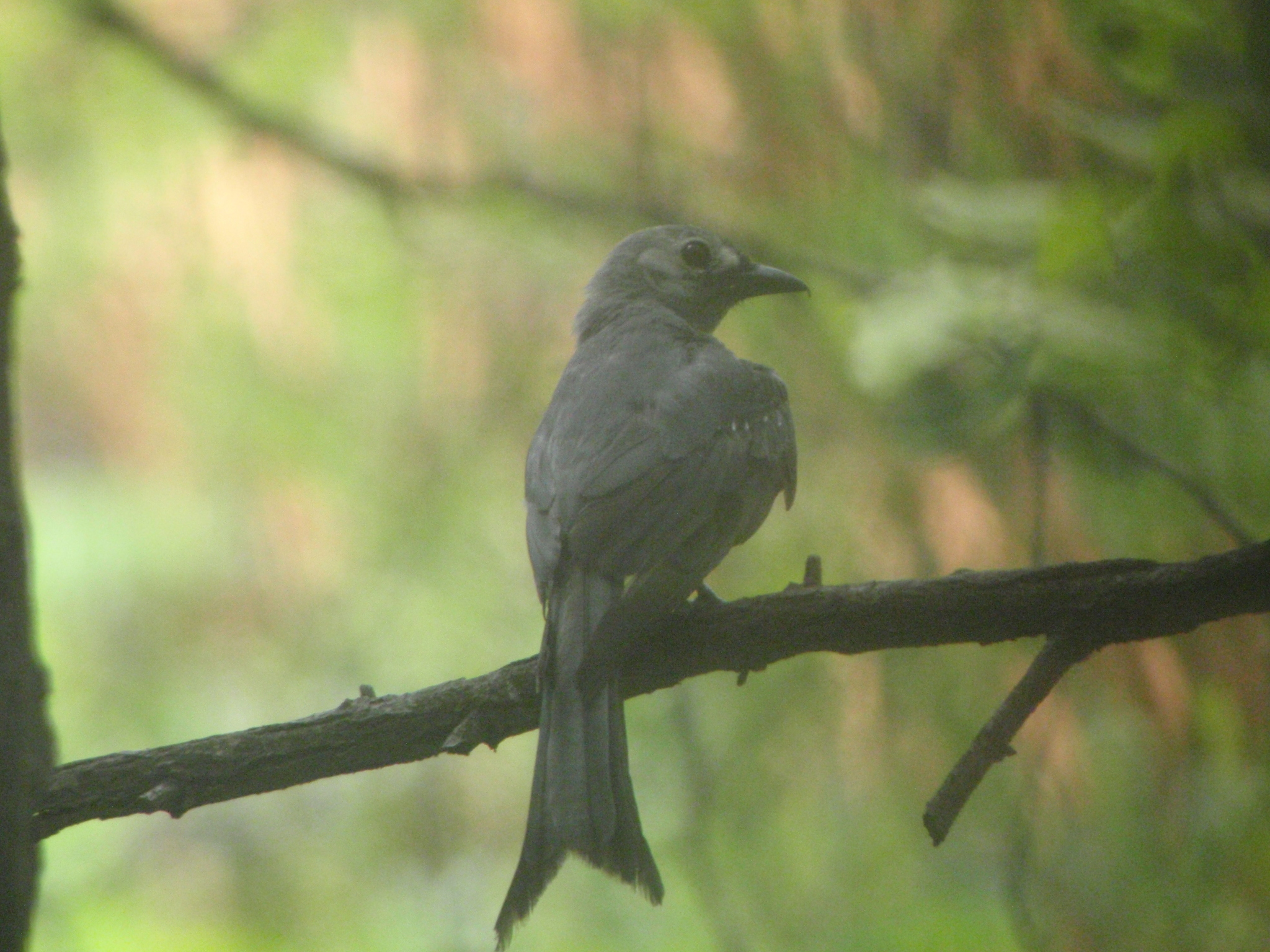
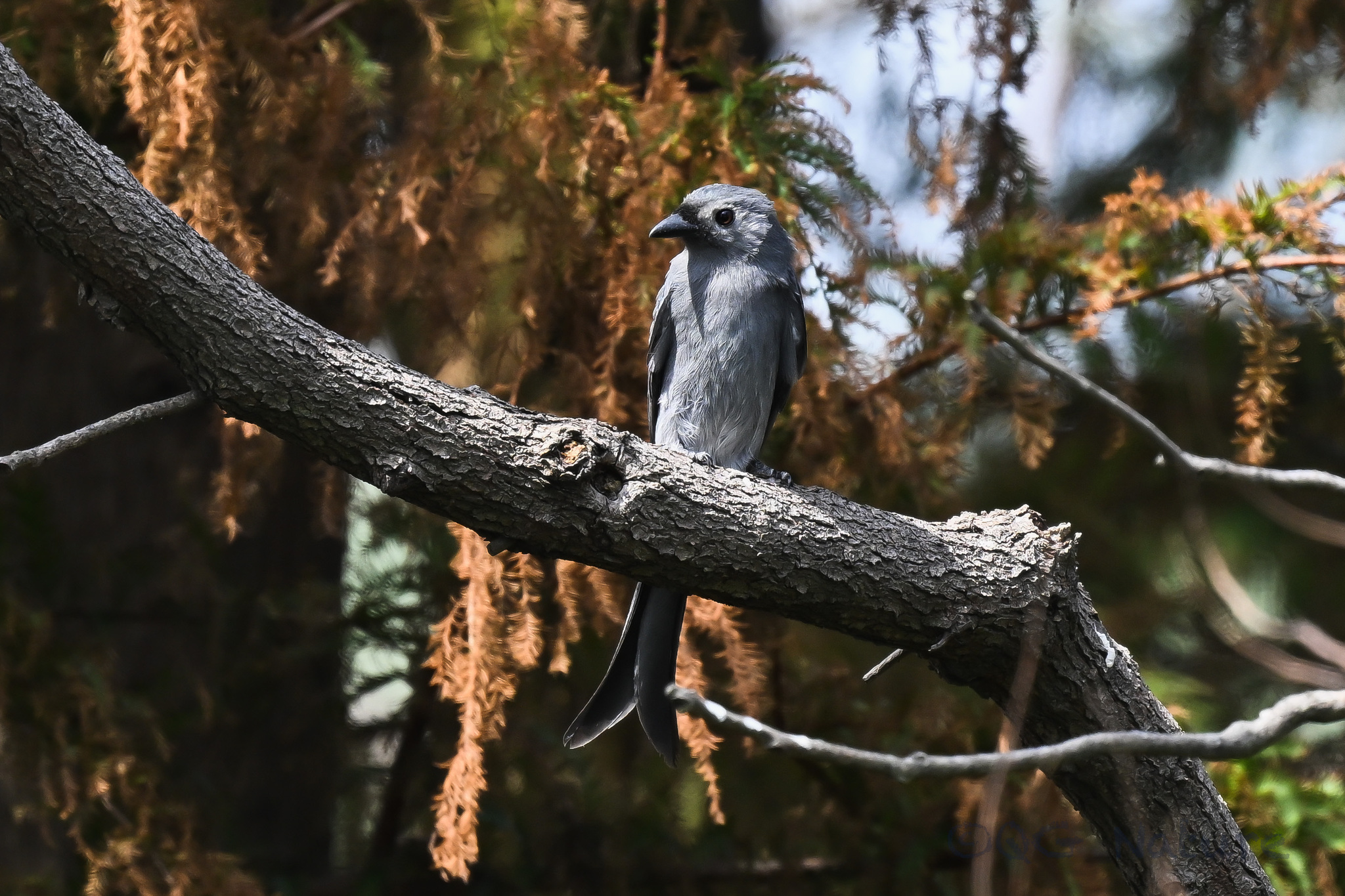
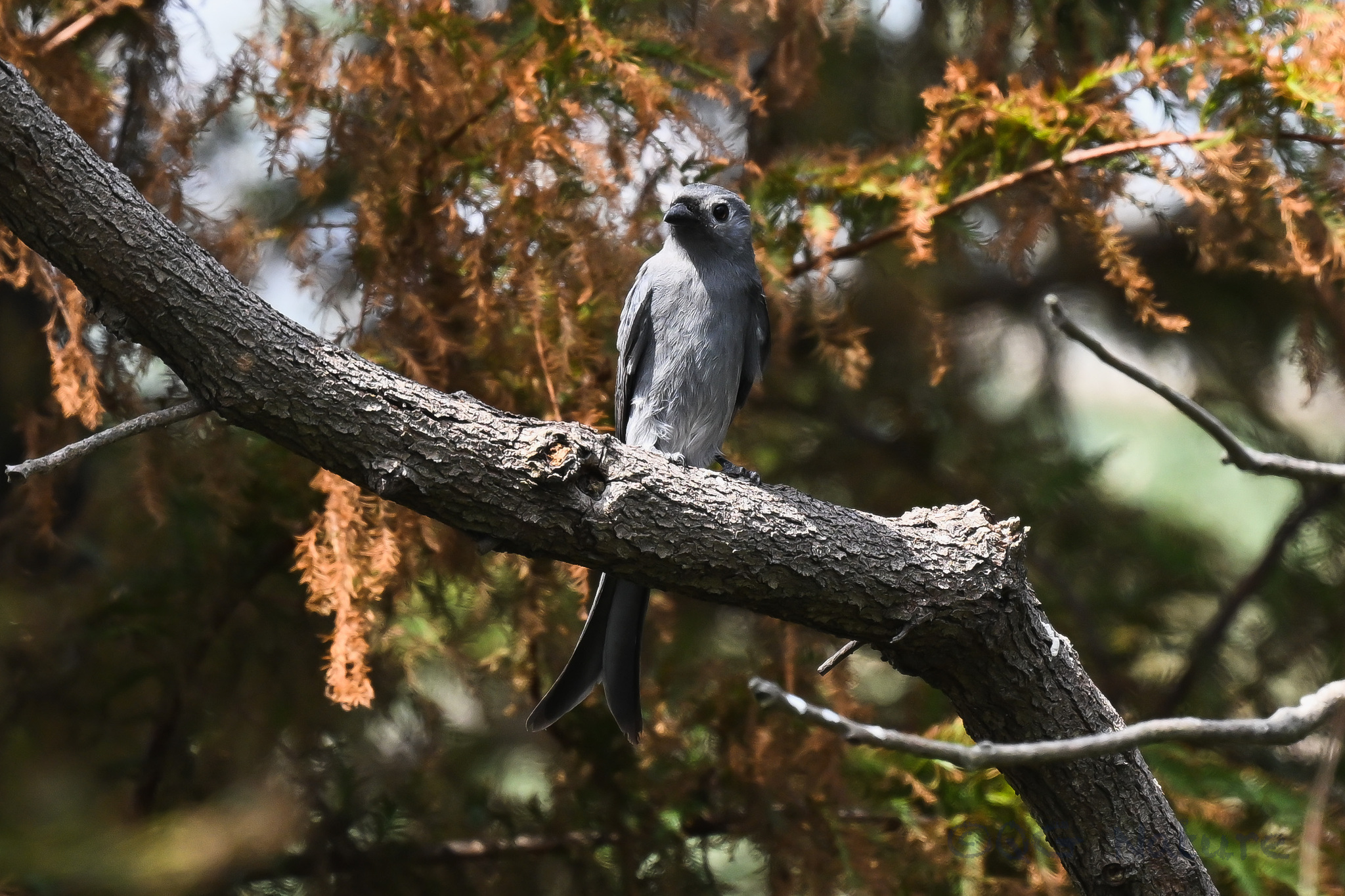
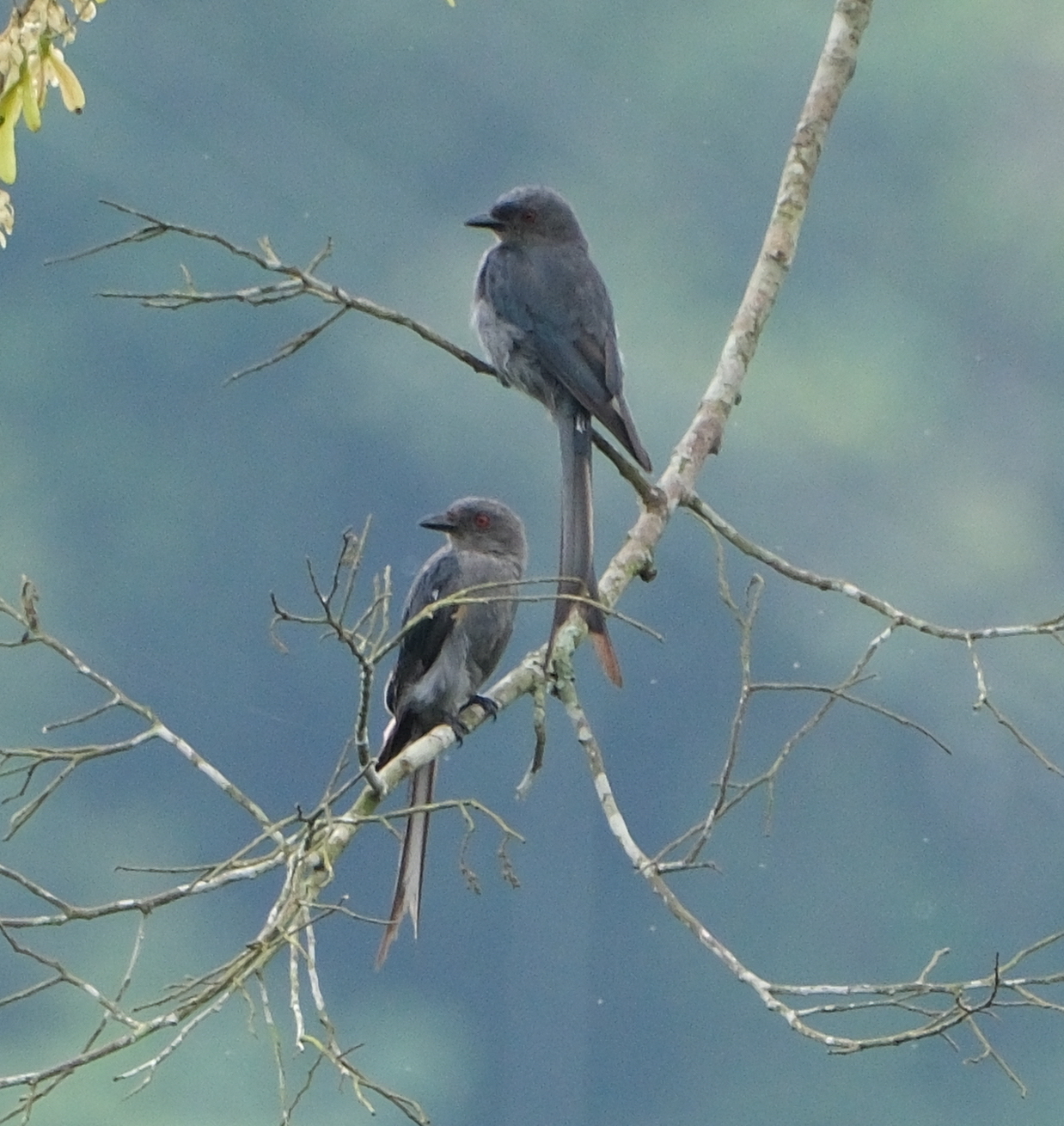
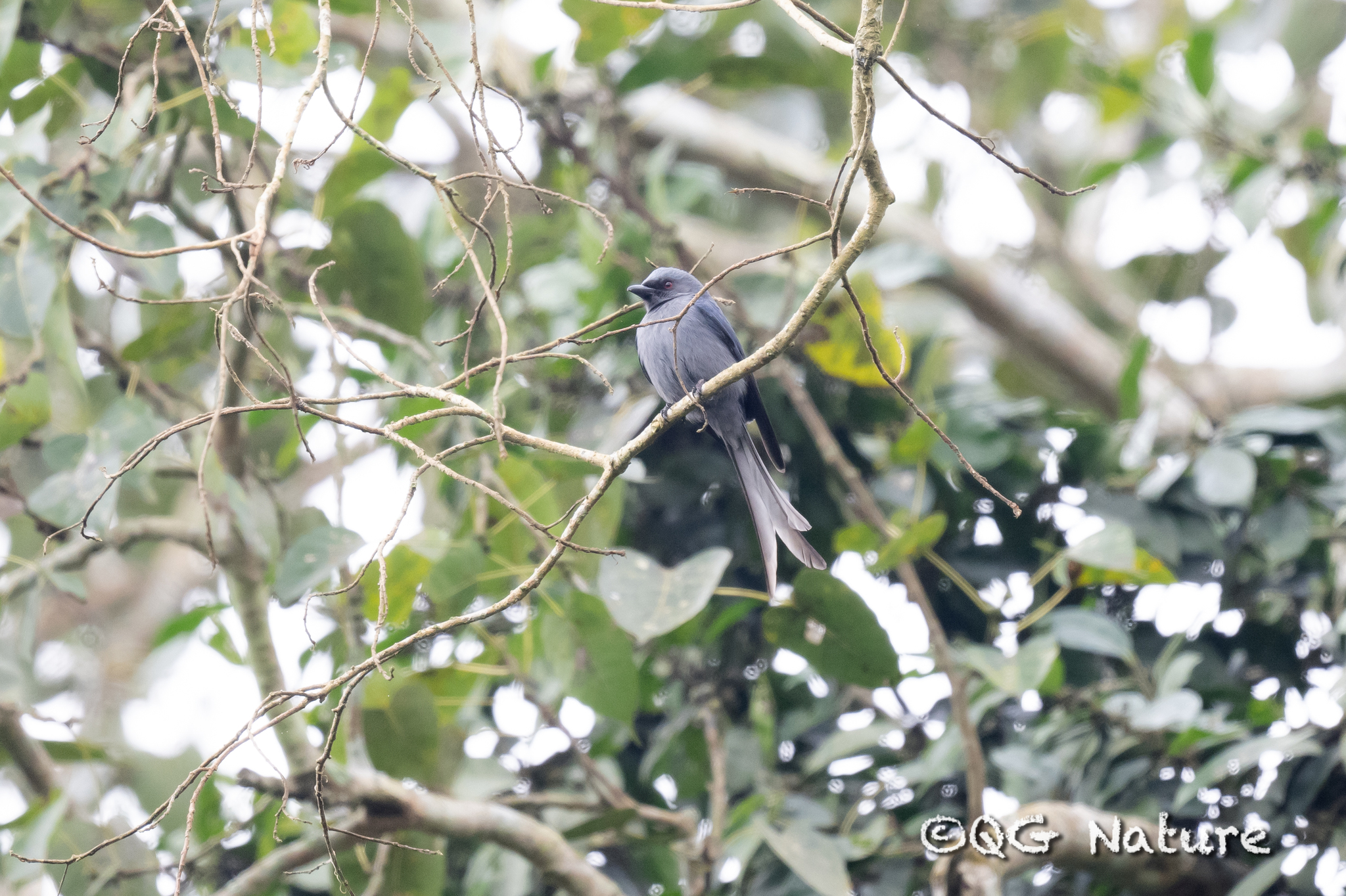
Adults are mainly dark grey with a long, deeply forked tail. Subspecies vary in plumage shade; some have white head markings. Young birds are dull brownish grey. The subspecies longicaudatus is very dark, slimmer than the black drongo, with a longer, less-splayed tail, dark grey underside lacking sheen, crimson iris, and no white rictal spot. Subspecies leucogenis and salangensis possess a white eye-patch.
Identification
Distinguished from the black drongo by a slimmer build, longer and less-splayed tail, and lack of sheen on the dark grey underside (in subspecies longicaudatus). Calls are more nasal and twangy than those of the black drongo, often described as 'drangh gip' or 'gip-gip-drangh'. Capable of imitating other birds, such as the common iora.
Distribution & Habitat
Breeds in hills of tropical southern Asia from eastern Afghanistan east to southern China, Ryukyu Islands (particularly Okinawa), and Indonesia. Many northern populations are migratory. Subspecies beavani breeds in the Himalayas and winters in peninsular India. Other subspecies include mouhouti in Thailand and Myanmar, and various insular forms like ryukyuensis and nigrescens. In winter, it favors hill forests.
Behavior & Ecology
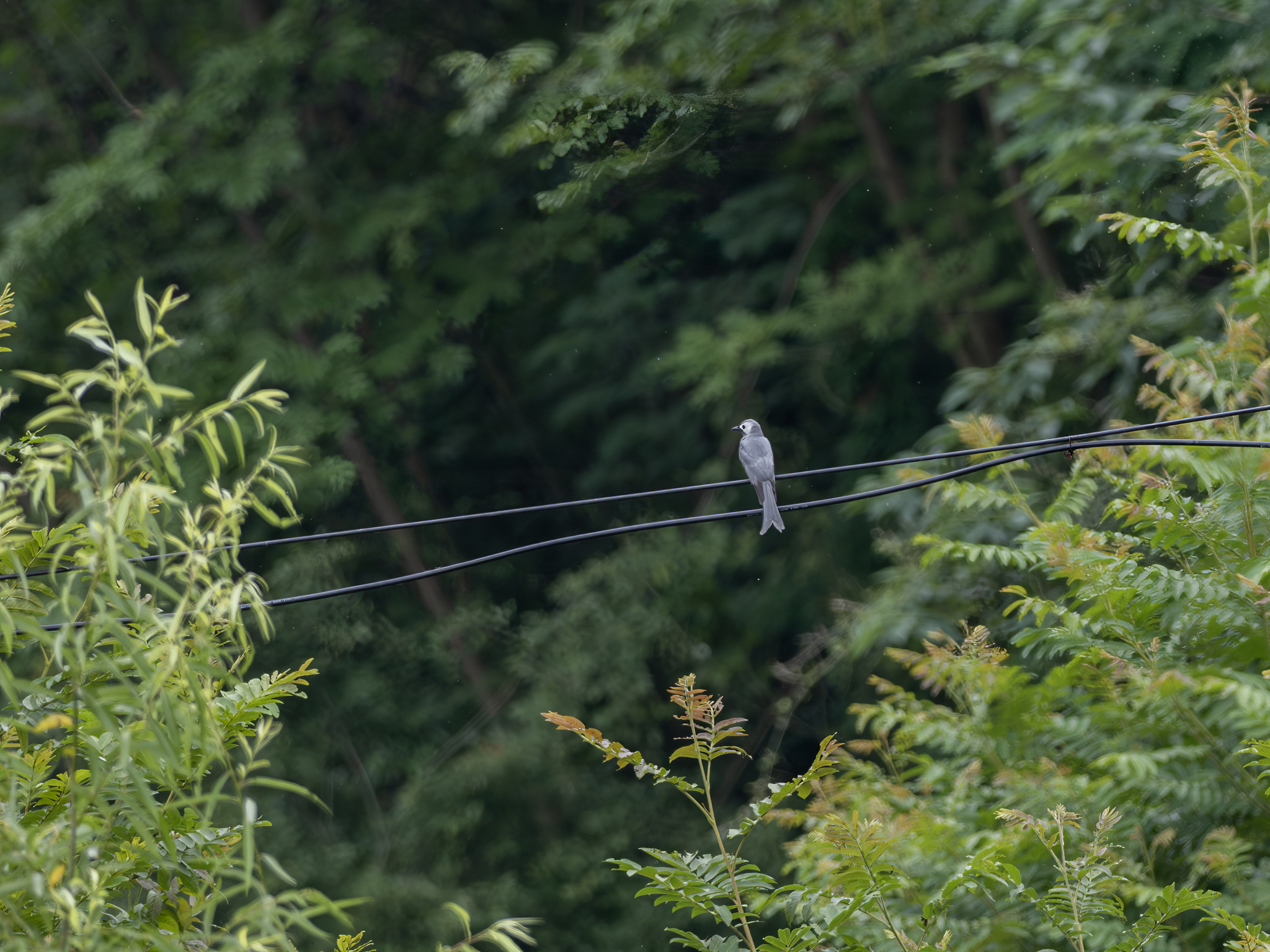
Sits upright on prominent perches, often high in trees. Insectivorous, foraging by aerial sallies or gleaning from tree trunks. Found singly, in pairs, or small groups; migrates in small flocks. Breeding season is May to June, laying a clutch of three or four reddish or brown eggs in a loose cup nest in a tree.
Source: Wikipedia · CC BY-SA 3.0
Taxonomy
- Order
- Passeriformes
- Family
- Dicruridae
- Genus
- Dicrurus
Vocalizations
Subspecies (15)
-
Dicrurus leucophaeus batakensis
northern Sumatra
Data Sources
Species description from Wikipedia, licensed under CC BY-SA 3.0.
Bird images and sounds sourced from GBIF, contributed by citizen scientists worldwide under Creative Commons licenses.
Taxonomy data from AviList 2025.