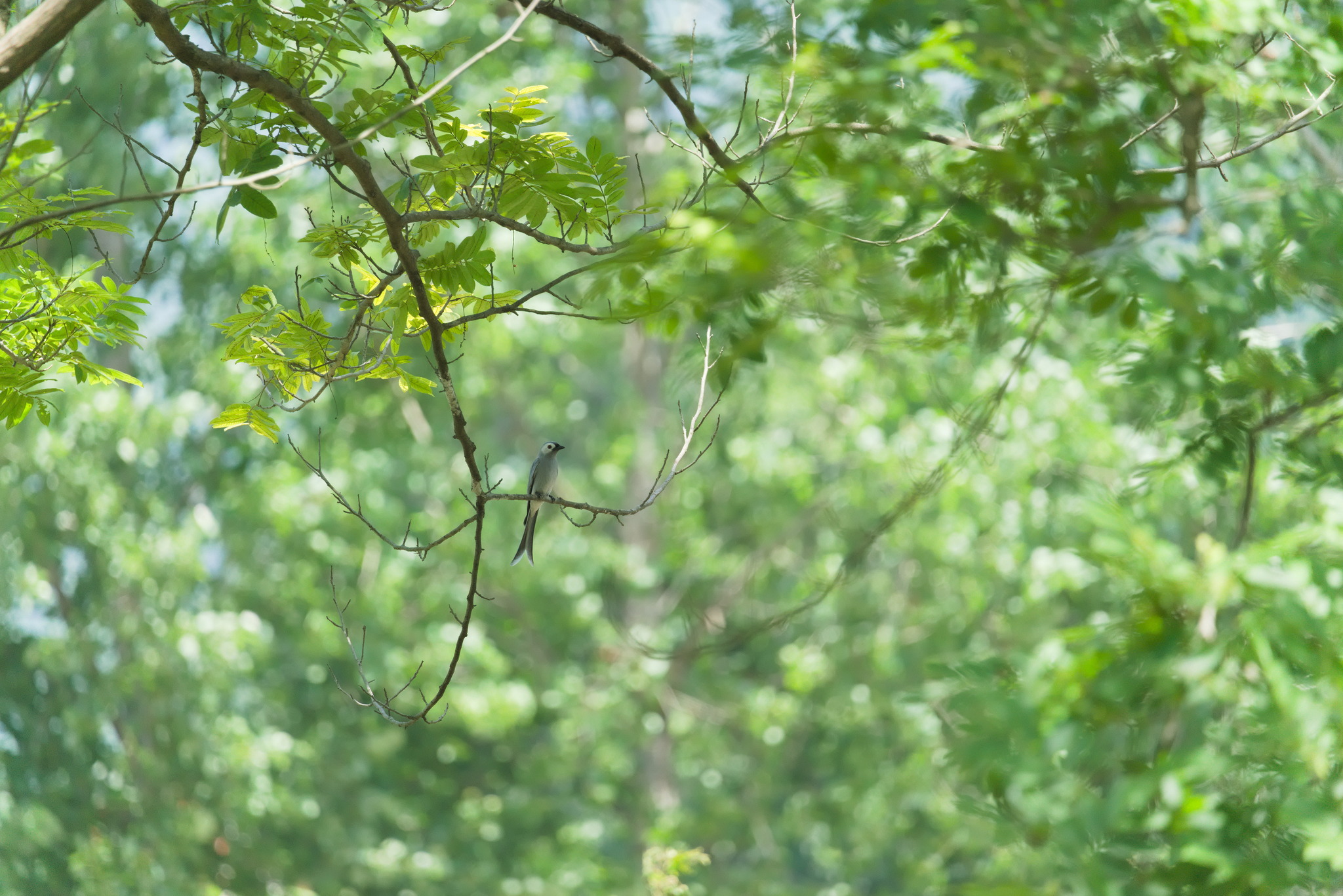
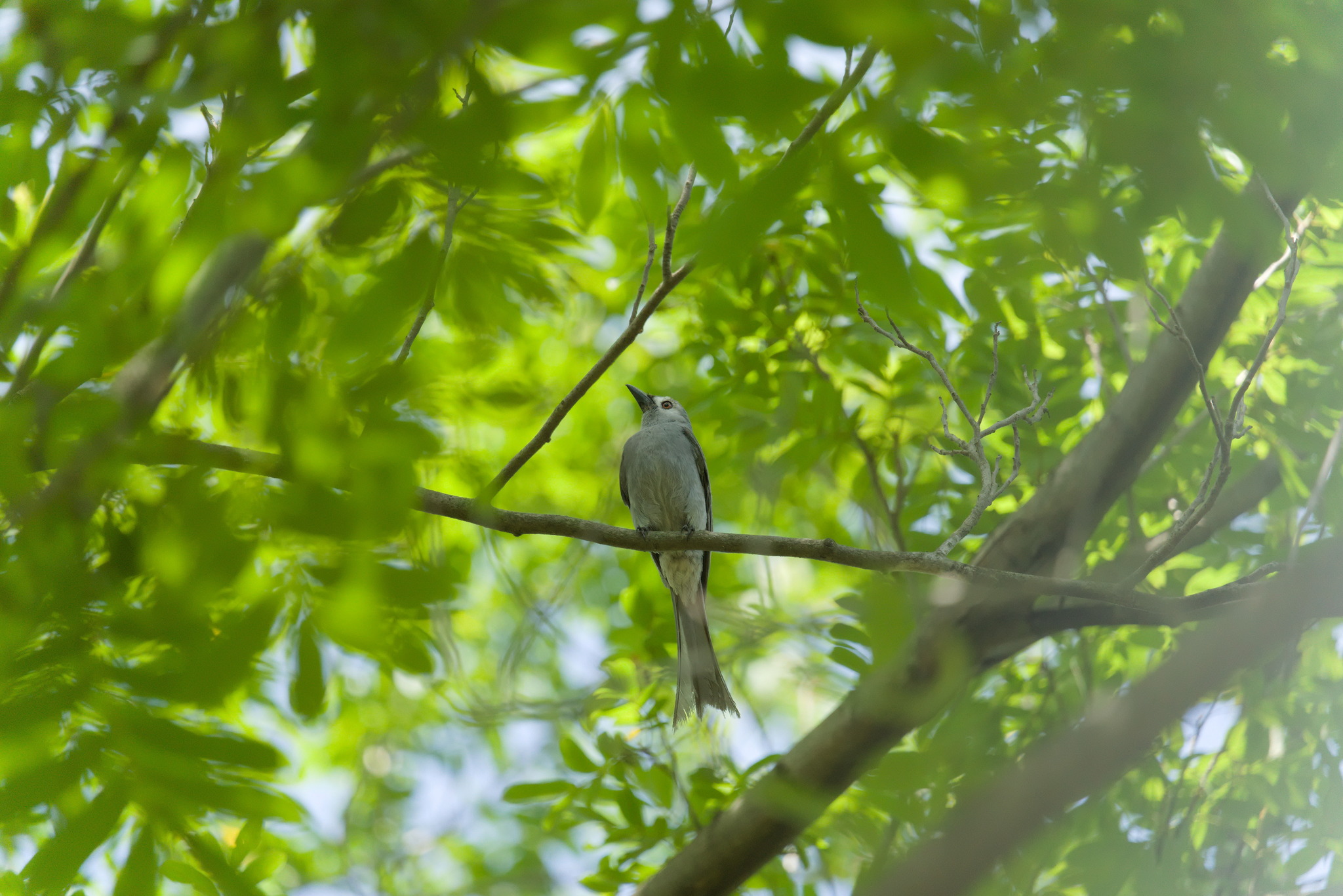
Ashy Drongo
Dicrurus leucophaeus
灰卷尾
Introduction
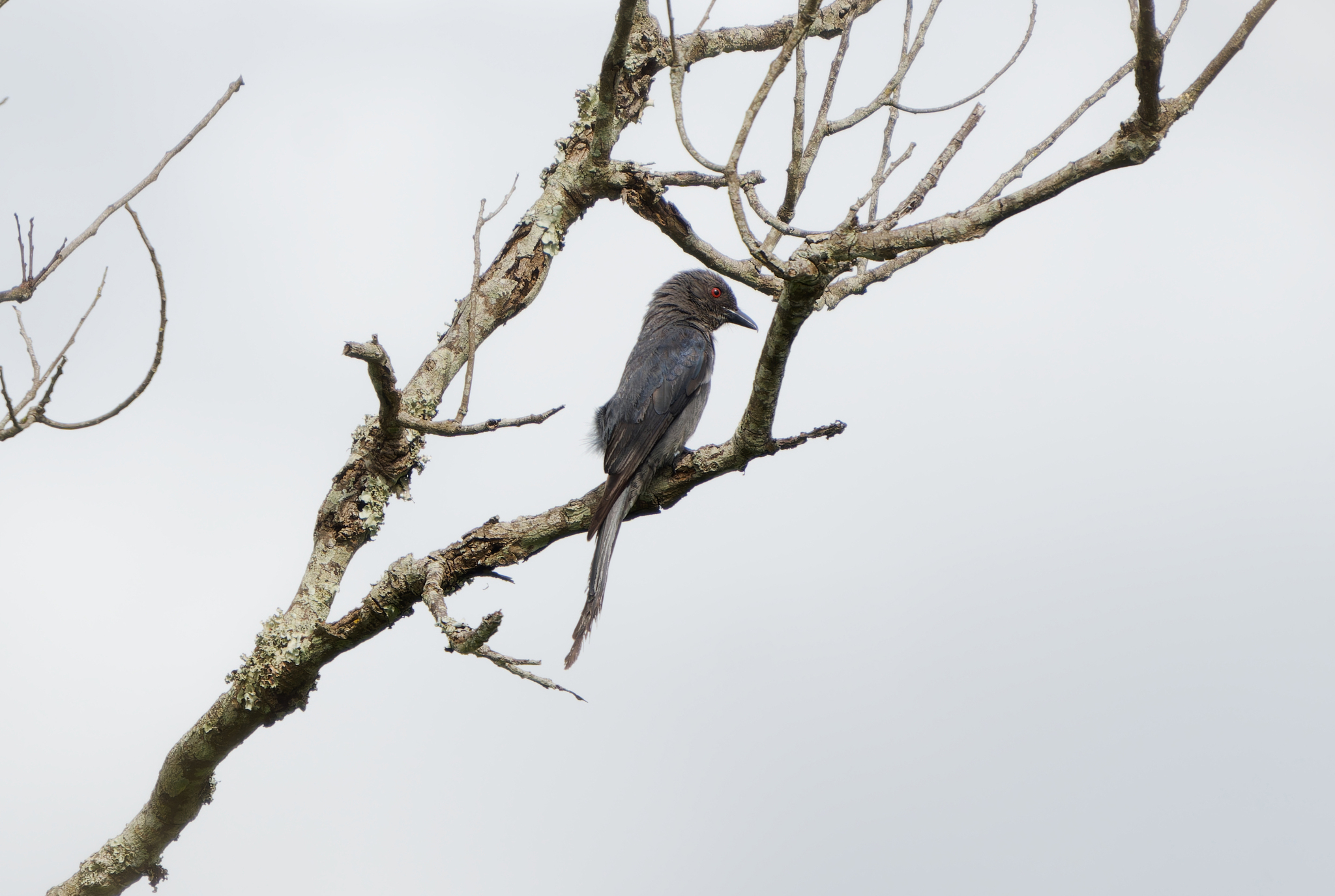
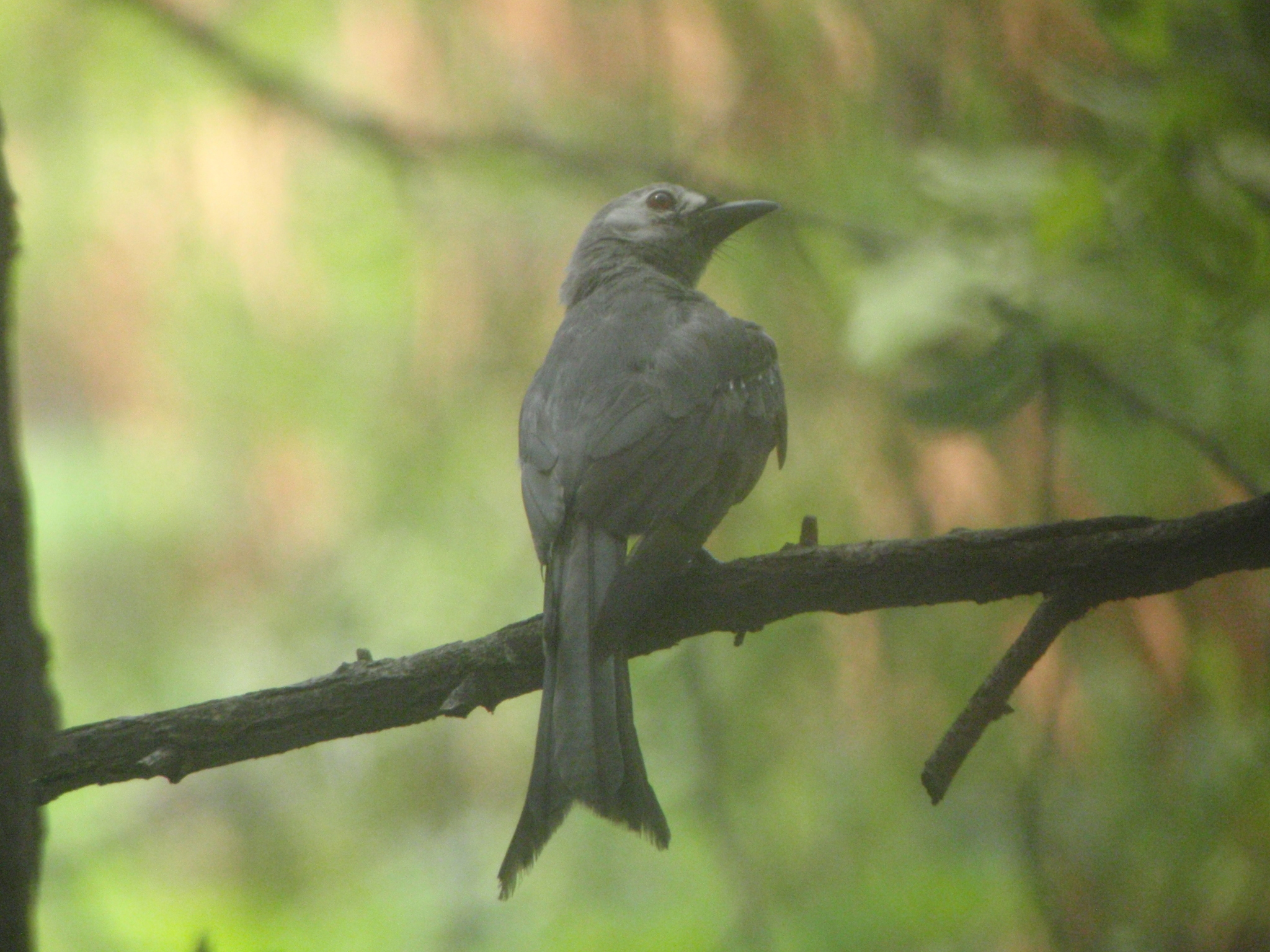
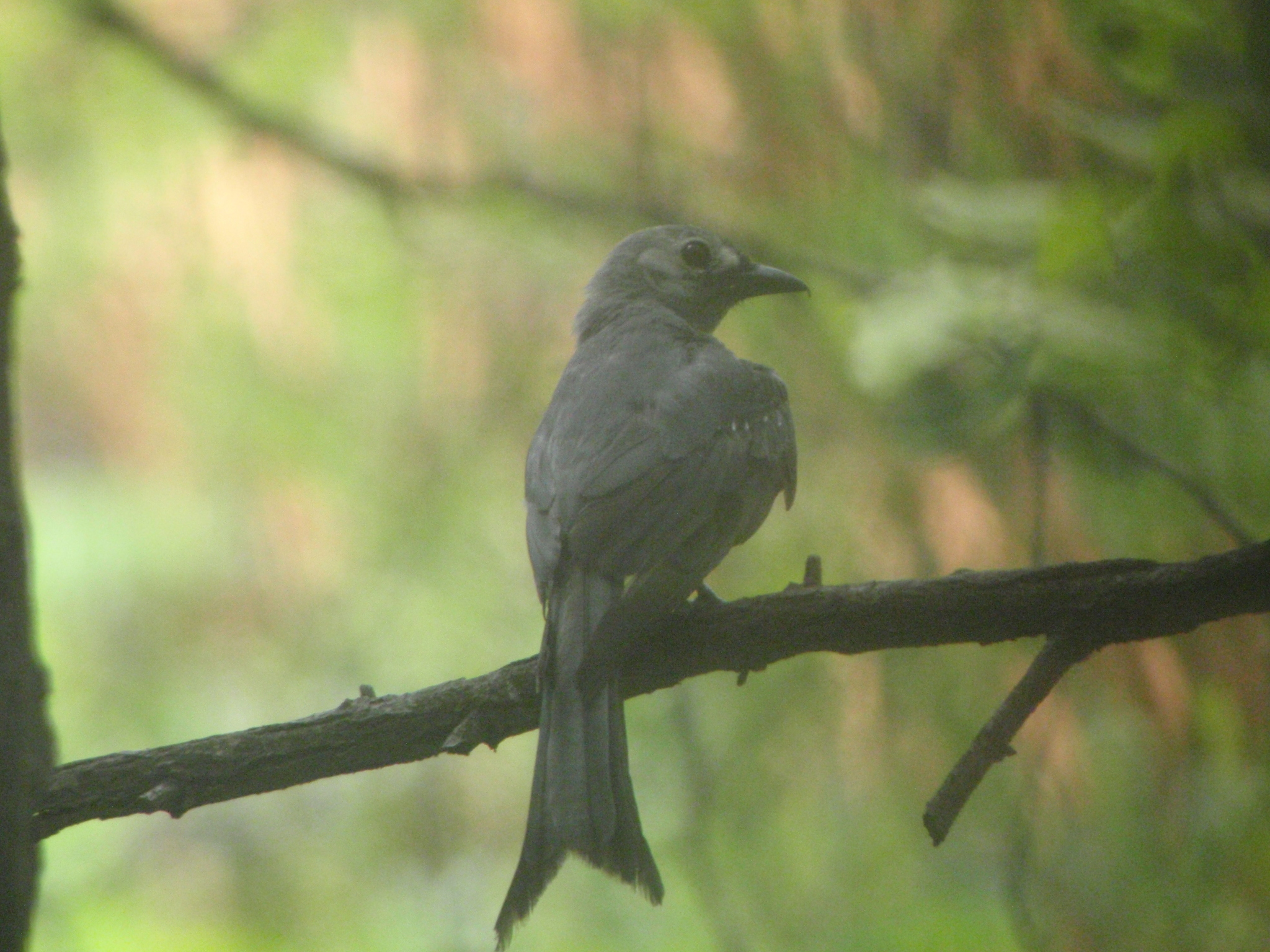
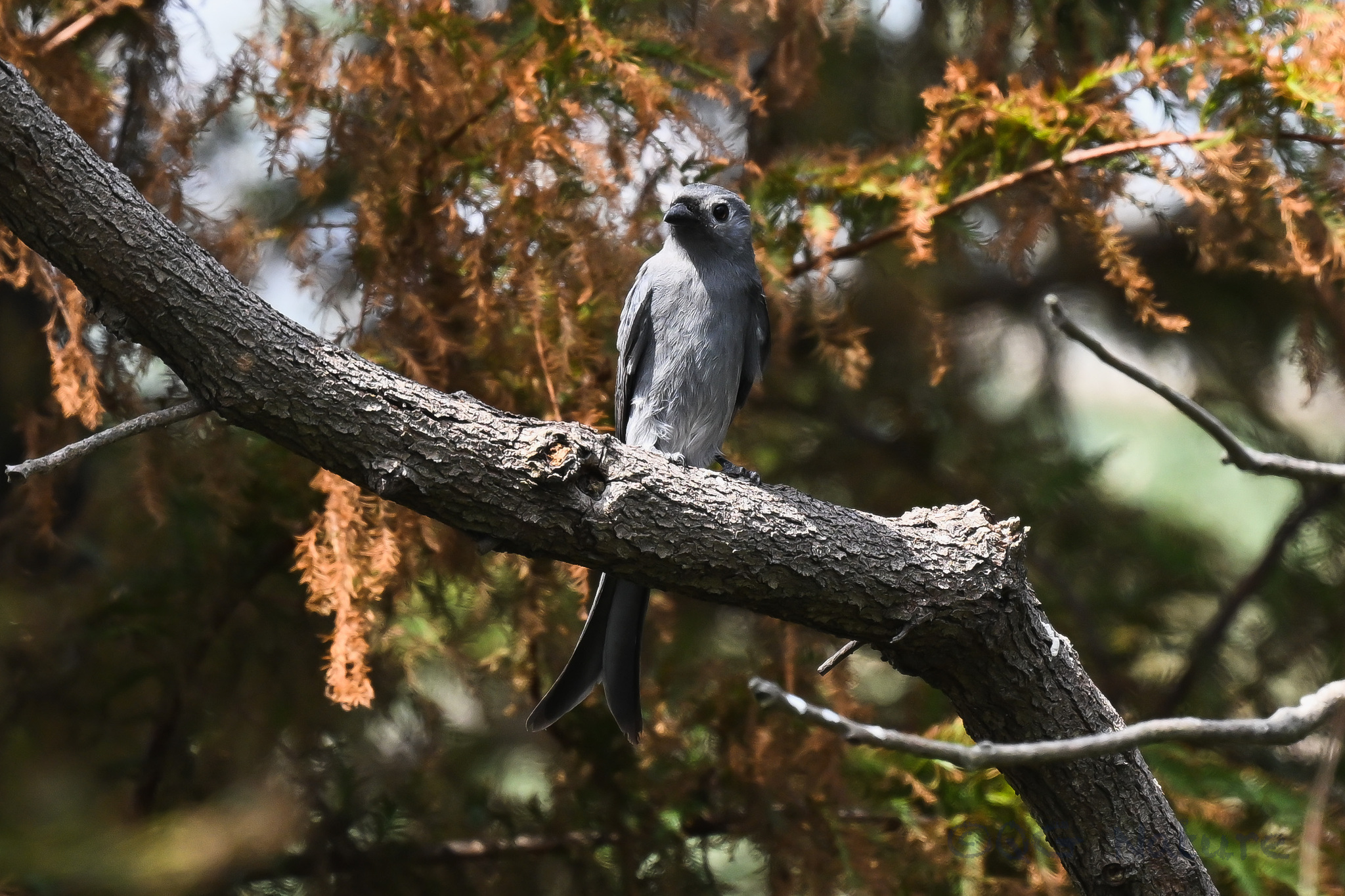
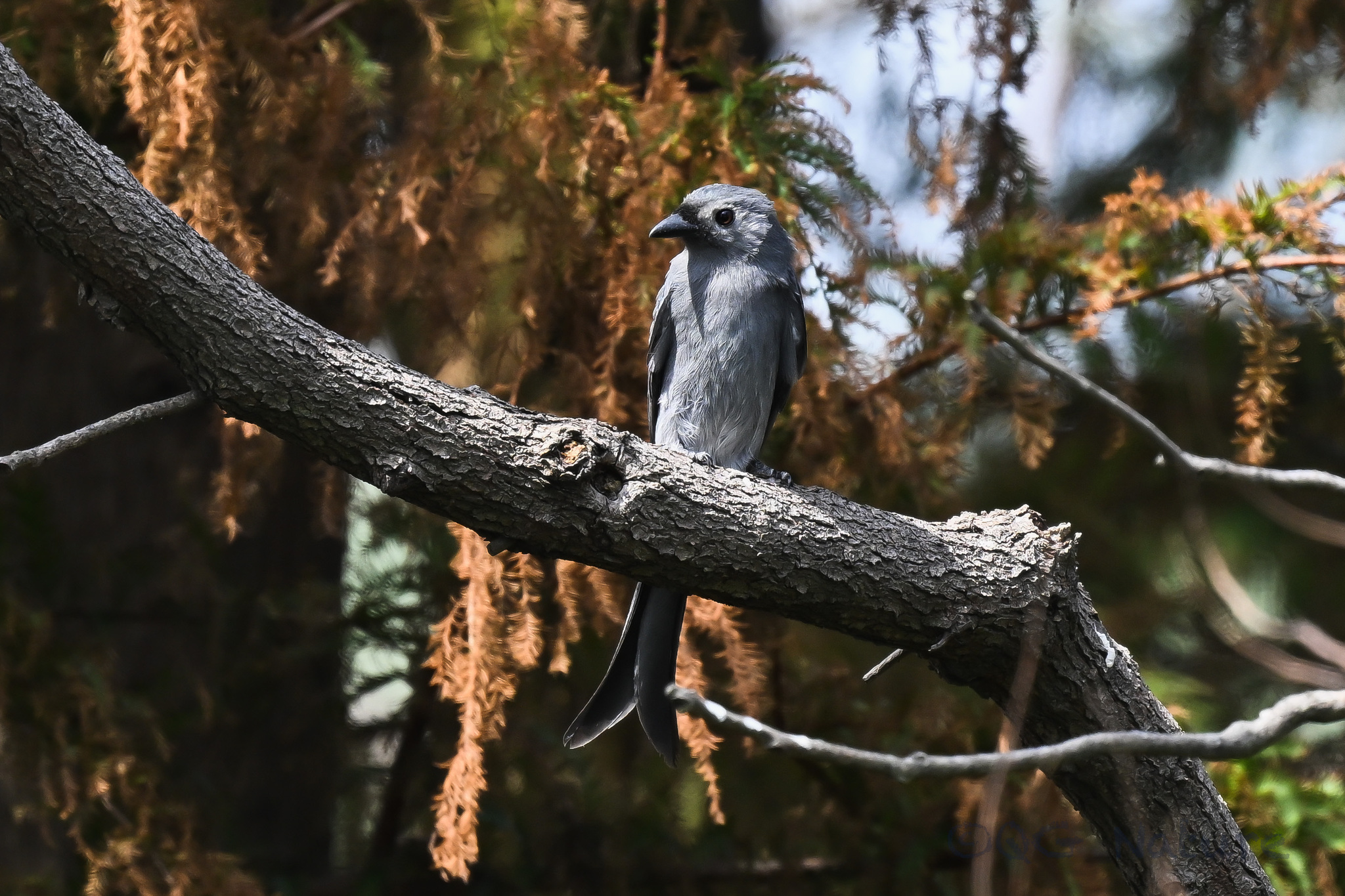
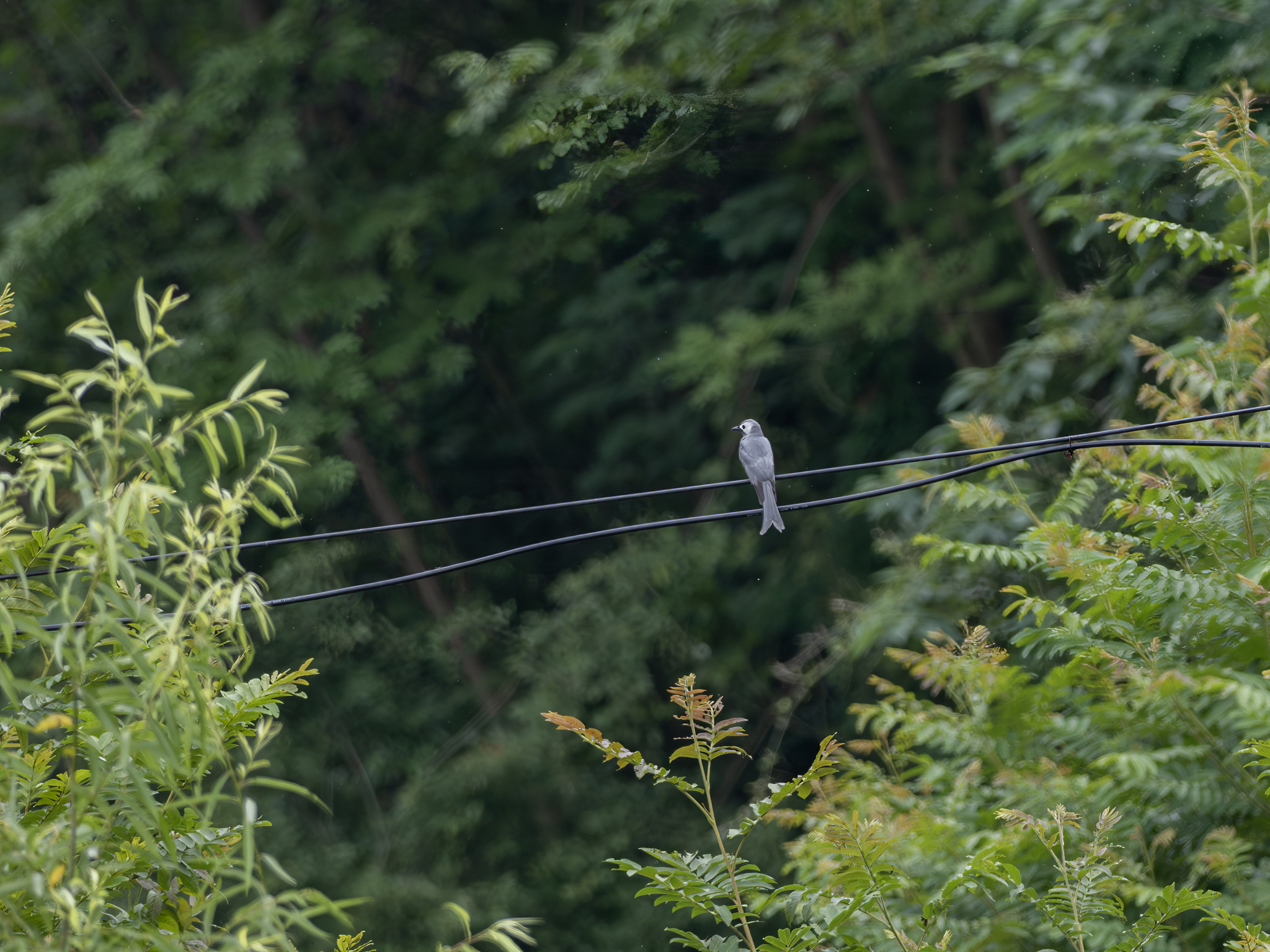
This medium-sized forest-dwelling bird occurs across southern and eastern Asia. It inhabits various forest types including evergreen, mixed deciduous, and secondary woodlands, as well as parks and gardens at lower elevations. During winter months, it frequents hill forests. The species perches upright in tall trees and launches aerial attacks on passing insects. It has a long, deeply forked tail and dark grey plumage. Individuals are vocal mimics capable of reproducing the calls of other bird species.
Description
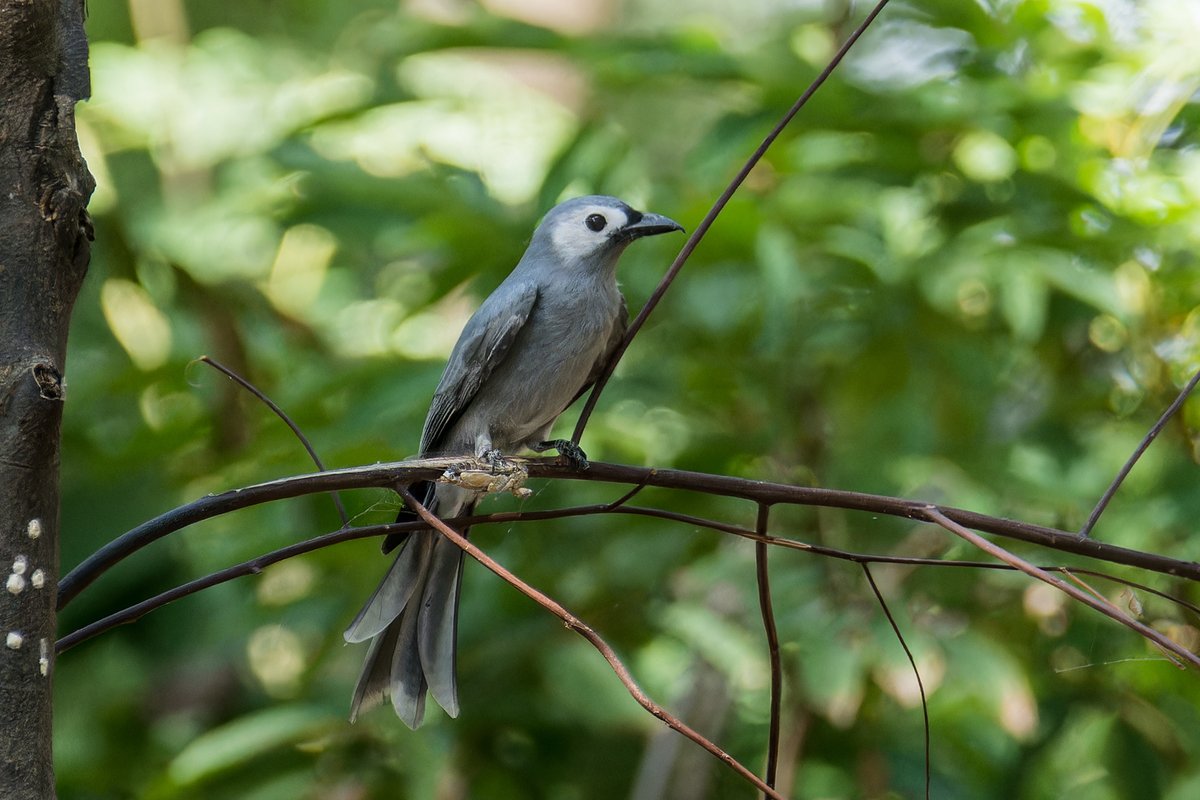
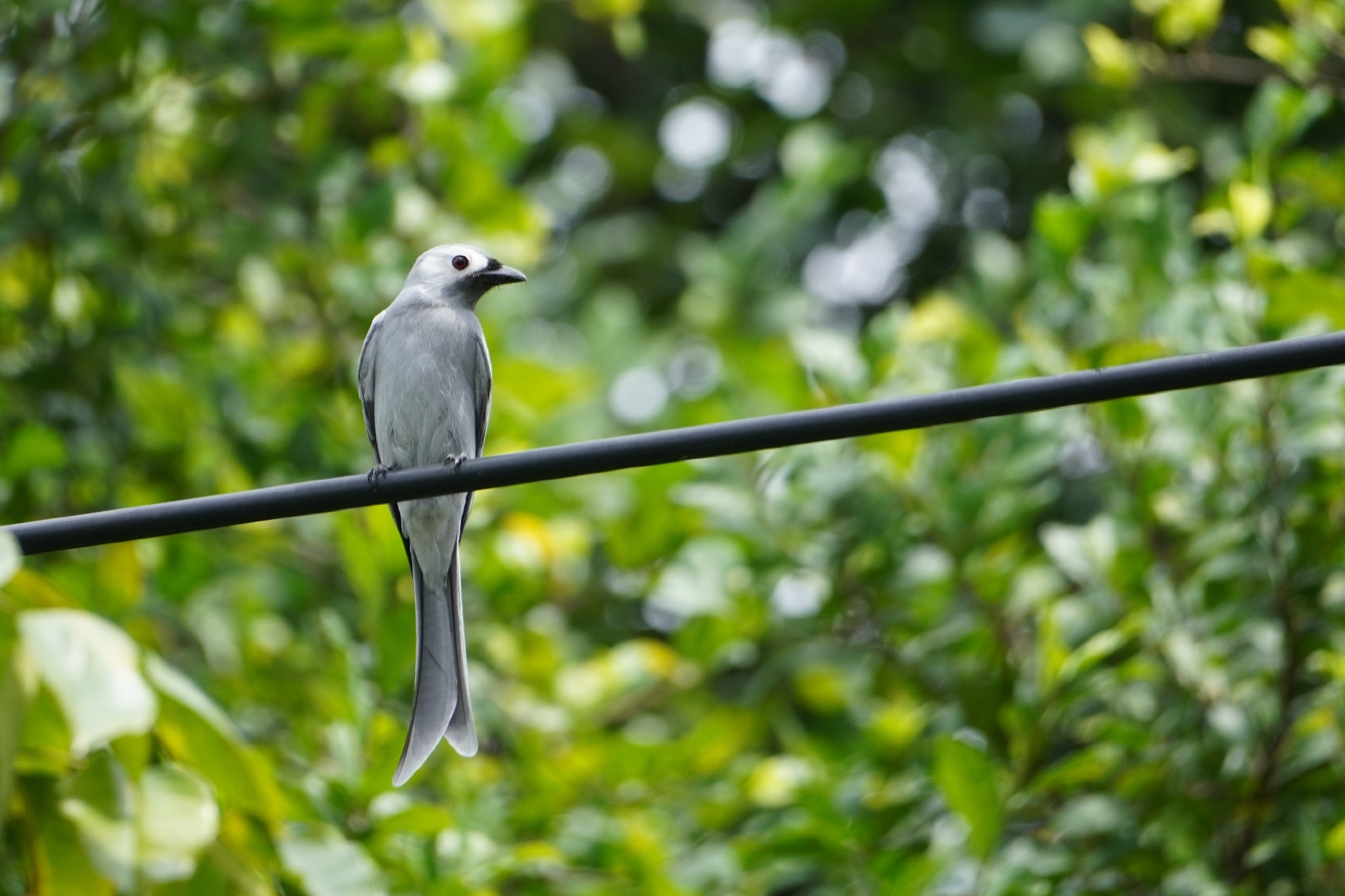
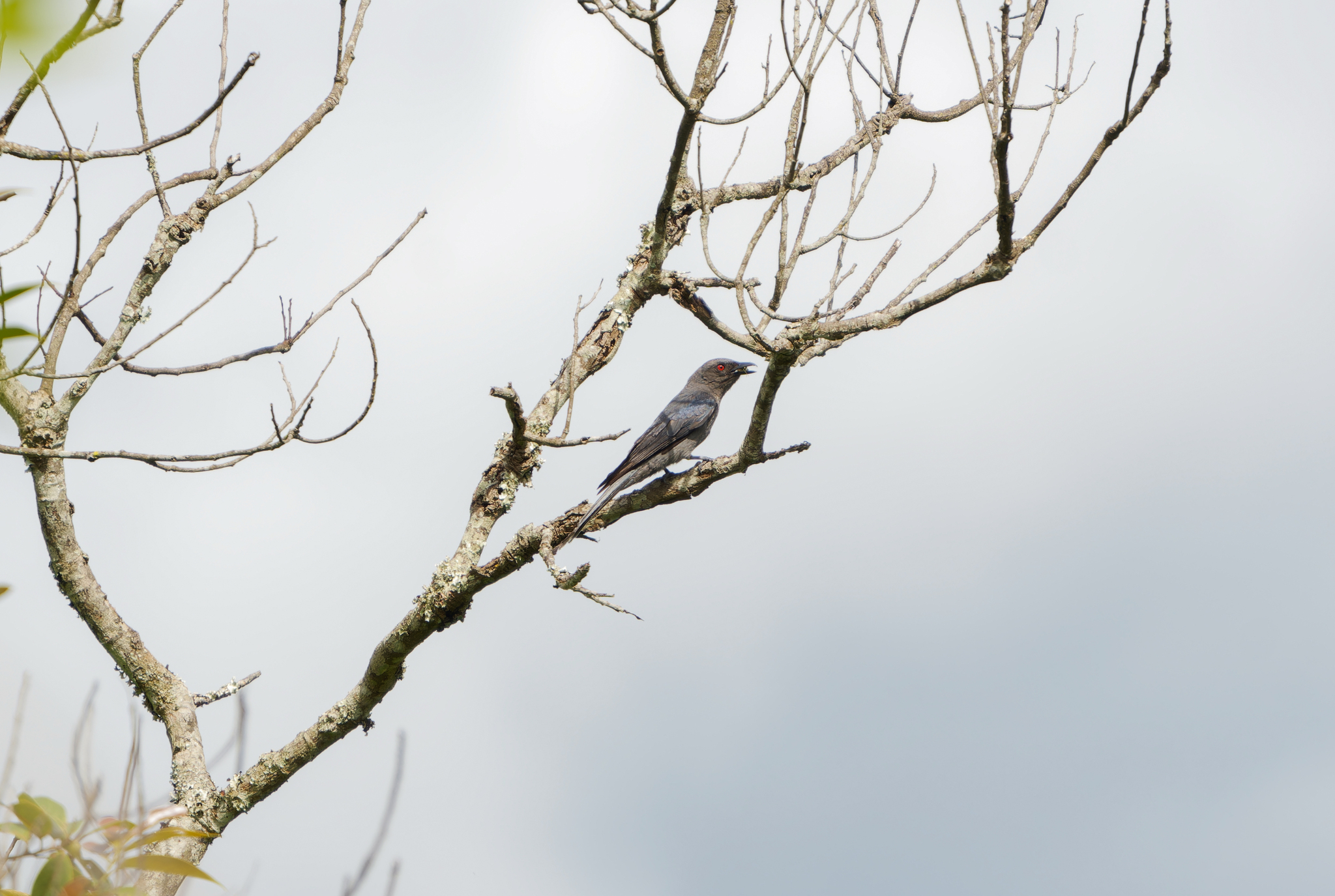
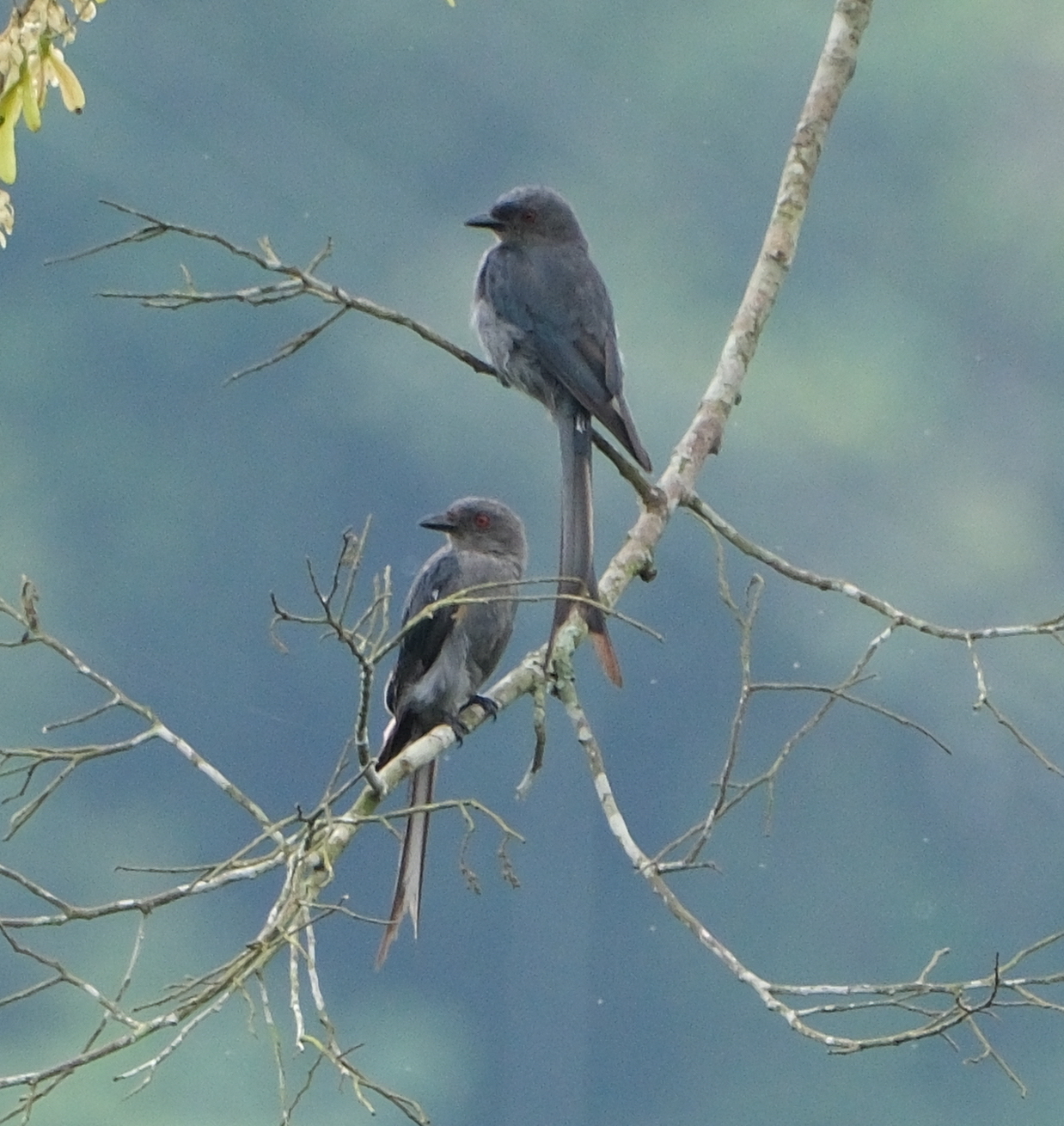
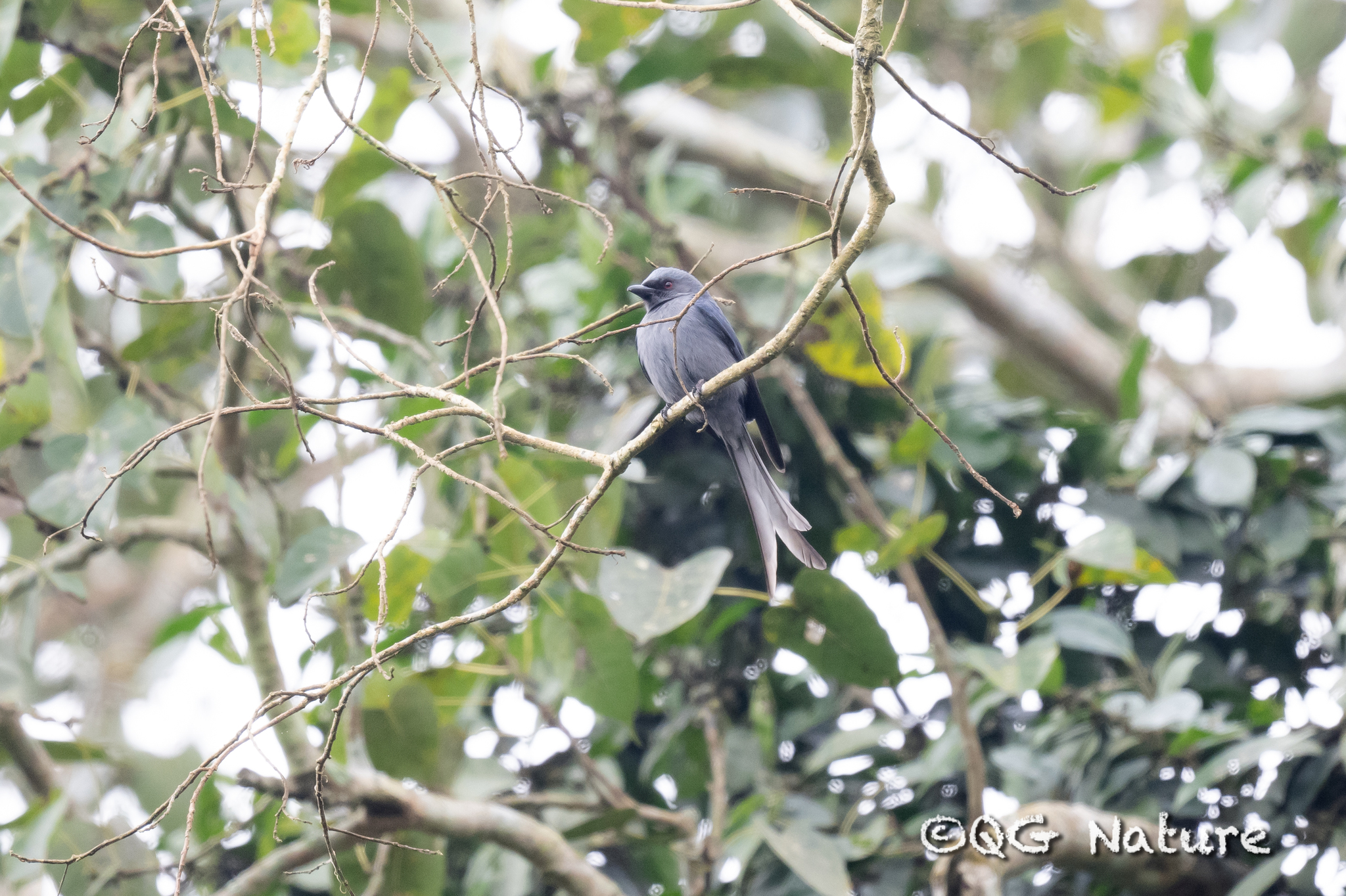
This medium-sized bird presents predominantly dark grey plumage as an adult, with a striking long tail that features a deep fork. The species exhibits considerable variation among subspecies in the shade of grey, ranging from very dark almost black tones to lighter grey. Some populations display distinctive white markings around the eye or on the head. The iris is crimson in color, and unlike some related species, this bird lacks a white rictal spot at the base of the beak. The tail is notably long and deeply forked, appearing more slender and less splayed than similar species. Juveniles differ from adults in having duller, brownish-grey plumage overall.
Identification
The most reliable distinguishing feature from the similar black drongo is the more slender build and longer, less-spread tail. Unlike the black drongo, this species has a dark grey underside lacking the characteristic sheen. The crimson iris and absence of white around the rictal area further aid identification. Subspecies with white eye-patches provide an additional identifying feature, though some very dark subspecies can closely resemble the black drongo and require careful observation. Voice can also assist identification, as the calls are described as more nasal and twangy compared to the black drongo's vocalizations.
Distribution & Habitat
The species breeds across the hills of tropical southern Asia, with its range extending from eastern Afghanistan eastward through the Himalayas to southern China, the Ryukyu Islands including Okinawa in southern Japan, and southward to Indonesia. Northern populations are migratory, moving to lower latitudes during the winter months. The wintering grounds particularly favor hill forests, and the species occurs across multiple distinct populations that vary in their migratory behavior. Various subspecies occupy different portions of this extensive range, with island populations existing throughout the Southeast Asian archipelago.
Behavior & Ecology
This insectivorous species employs two primary foraging strategies: making aerial sallies from perches to catch flying insects and gleaning prey from tree trunks. It possesses short legs and maintains a characteristic upright posture when perched, typically choosing high vantage points in trees. The species occurs singly, in pairs, or small groups, though during migration it travels in larger flocks. Its vocal repertoire is varied and includes a common call described as 'drangh gip' or 'gip-gip-drangh'. Notably, individuals demonstrate the ability to imitate the calls of other birds, including the whistling notes of the common iora. The breeding season spans from May to June, with three or four reddish or brown eggs laid in a loose cup nest constructed in a tree.
Source: Wikipedia · CC BY-SA 3.0
Taxonomy
- Order
- Passeriformes
- Family
- Dicruridae
- Genus
- Dicrurus
- eBird Code
- ashdro1
Vocalizations
Subspecies (15)
-
Dicrurus leucophaeus batakensis
northern Sumatra
-
Dicrurus leucophaeus bondi
western and eastern Thailand, southern Laos, Cambodia, and southern Vietnam
-
Dicrurus leucophaeus celaenus
Simeulue Island (off northwestern Sumatra)
-
Dicrurus leucophaeus hopwoodi
breeds eastern Himalayas to Myanmar and southern China; winters to Indochina
-
Dicrurus leucophaeus innexus
Hainan (southern China)
-
Dicrurus leucophaeus leucogenis
breeds Manchuria and eastern China; winters to Indochina
-
Dicrurus leucophaeus leucophaeus
Java, Bali, Lombok, Palawan, Calamian, and Balabac islands
-
Dicrurus leucophaeus longicaudatus
breeds eastern Afghanistan to Sikkim; winters to southern India and Sri Lanka
-
Dicrurus leucophaeus mouhoti
breeds southern Myanmar and northern Thailand; winters to Indochina
-
Dicrurus leucophaeus nigrescens
mangrove forest of far southern Myanmar, southern Thailand, and peninsular Malaysia
-
Dicrurus leucophaeus periophthalmicus
Mentawai Islands (off west-central Sumatra)
-
Dicrurus leucophaeus phaedrus
southern Sumatra
-
Dicrurus leucophaeus salangensis
breeds southeastern China; winters Indochina
-
Dicrurus leucophaeus siberu
Siberut Island (off west-central Sumatra)
-
Dicrurus leucophaeus stigmatops
mountains of northern Borneo
Data Sources
Species description from Wikipedia, licensed under CC BY-SA 3.0.
Bird images and sounds sourced from GBIF, contributed by citizen scientists worldwide under Creative Commons licenses.
Taxonomy data from AviList 2025.