Passeriformes / Dicaeidae / Dicaeum
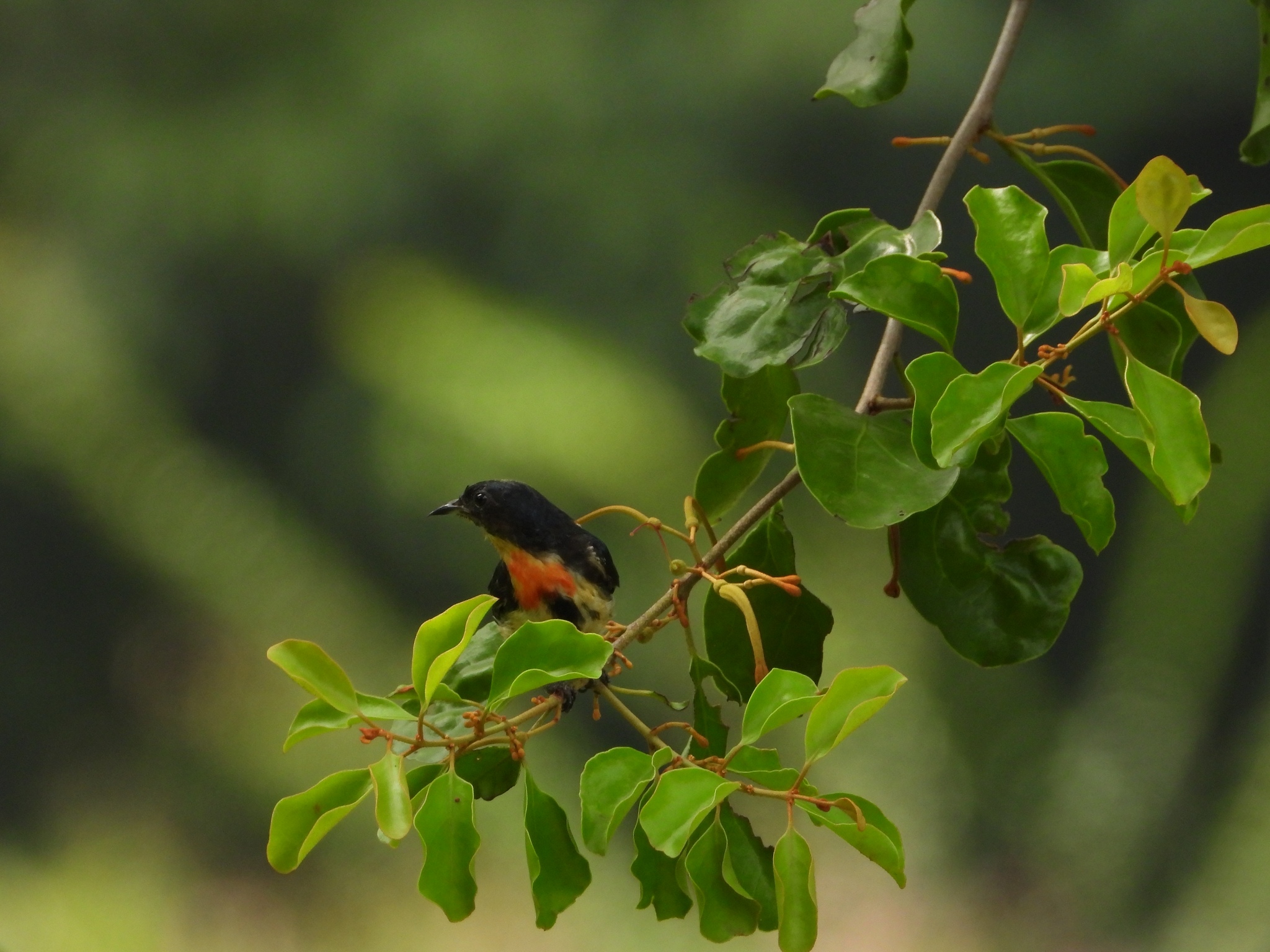
Fire-breasted Flowerpecker
Dicaeum ignipectus · 红胸啄花鸟
Introduction
A species in the family Dicaeidae found in the Indian subcontinent and Southeast Asia. It feeds on fruits and plays an important role in the dispersal of fruiting plants, particularly mistletoes. The species exhibits marked sexual dimorphism.
Description
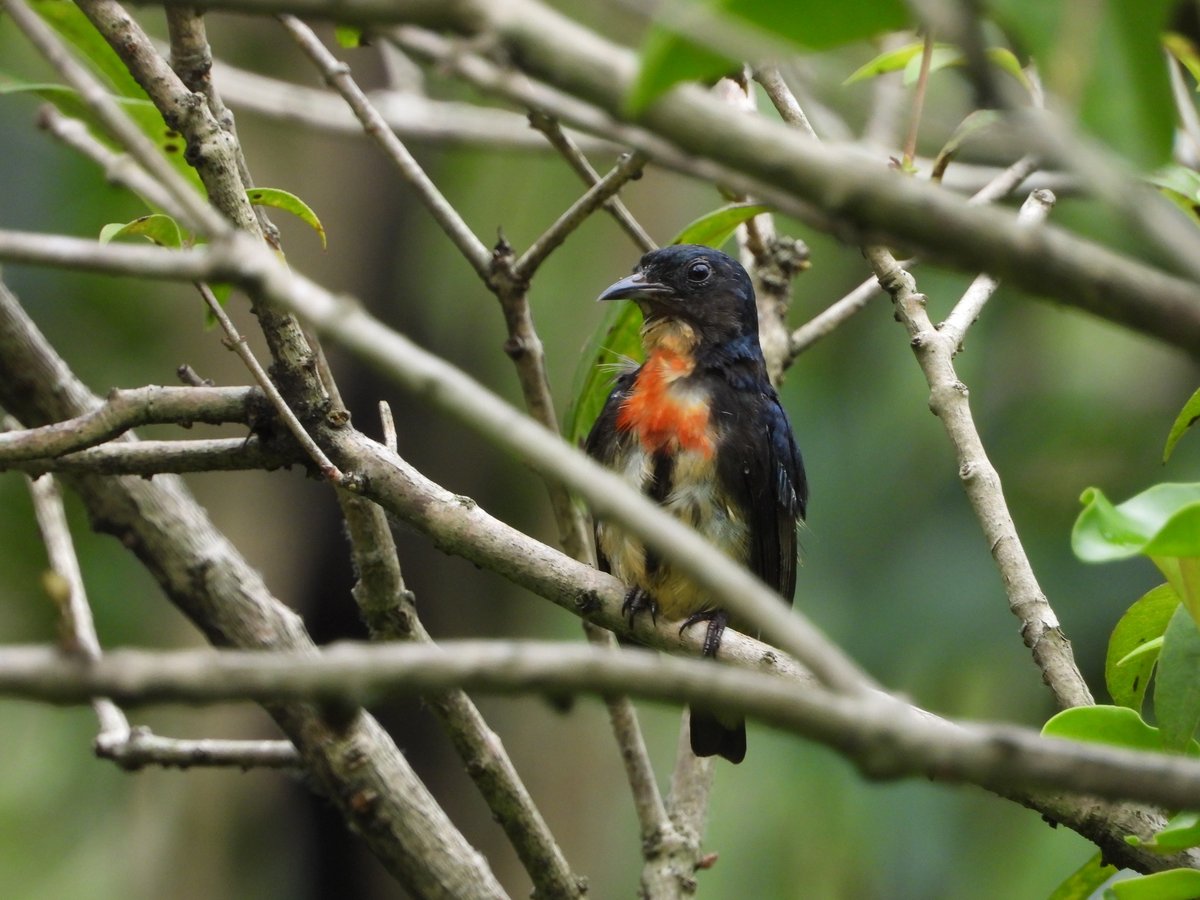
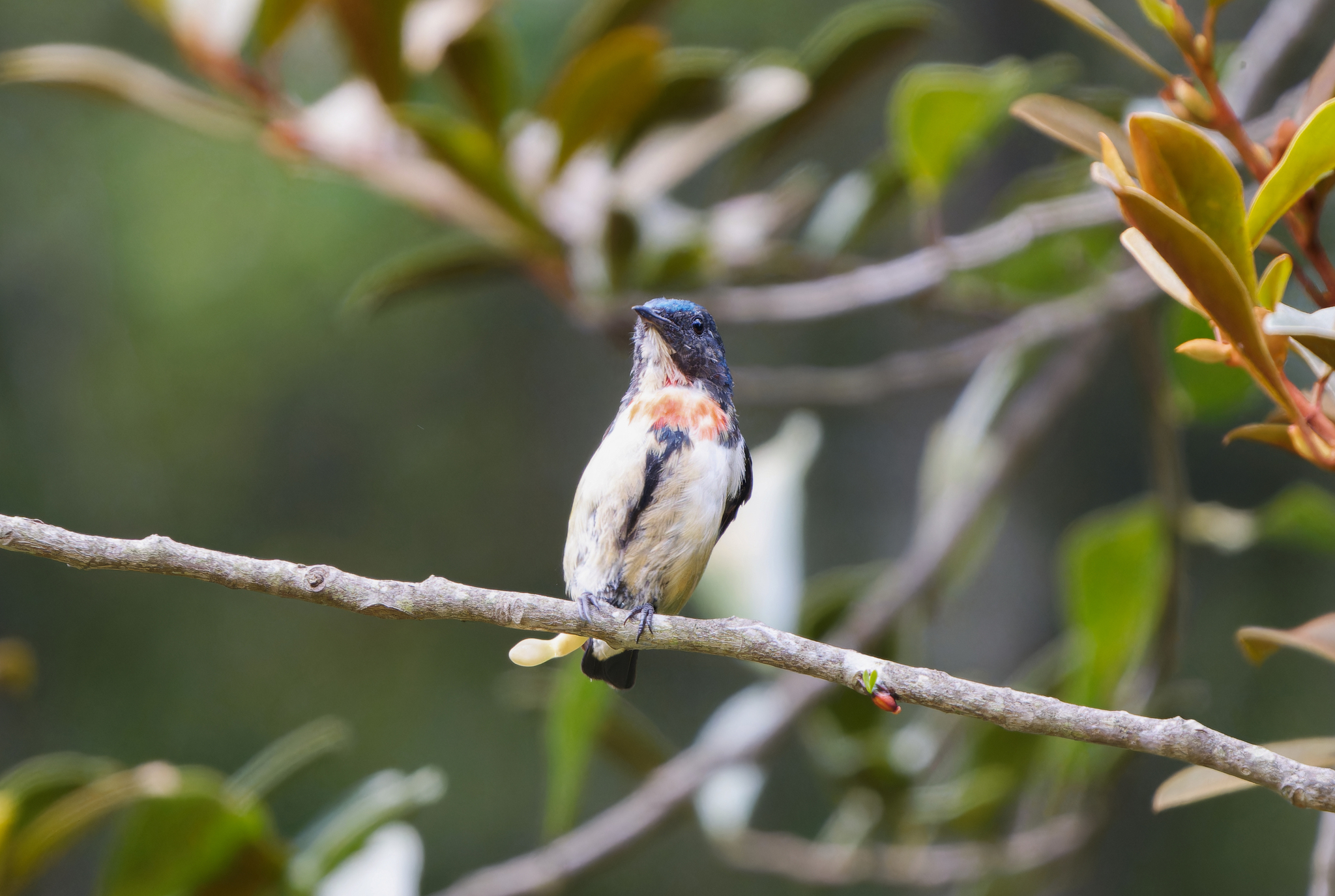
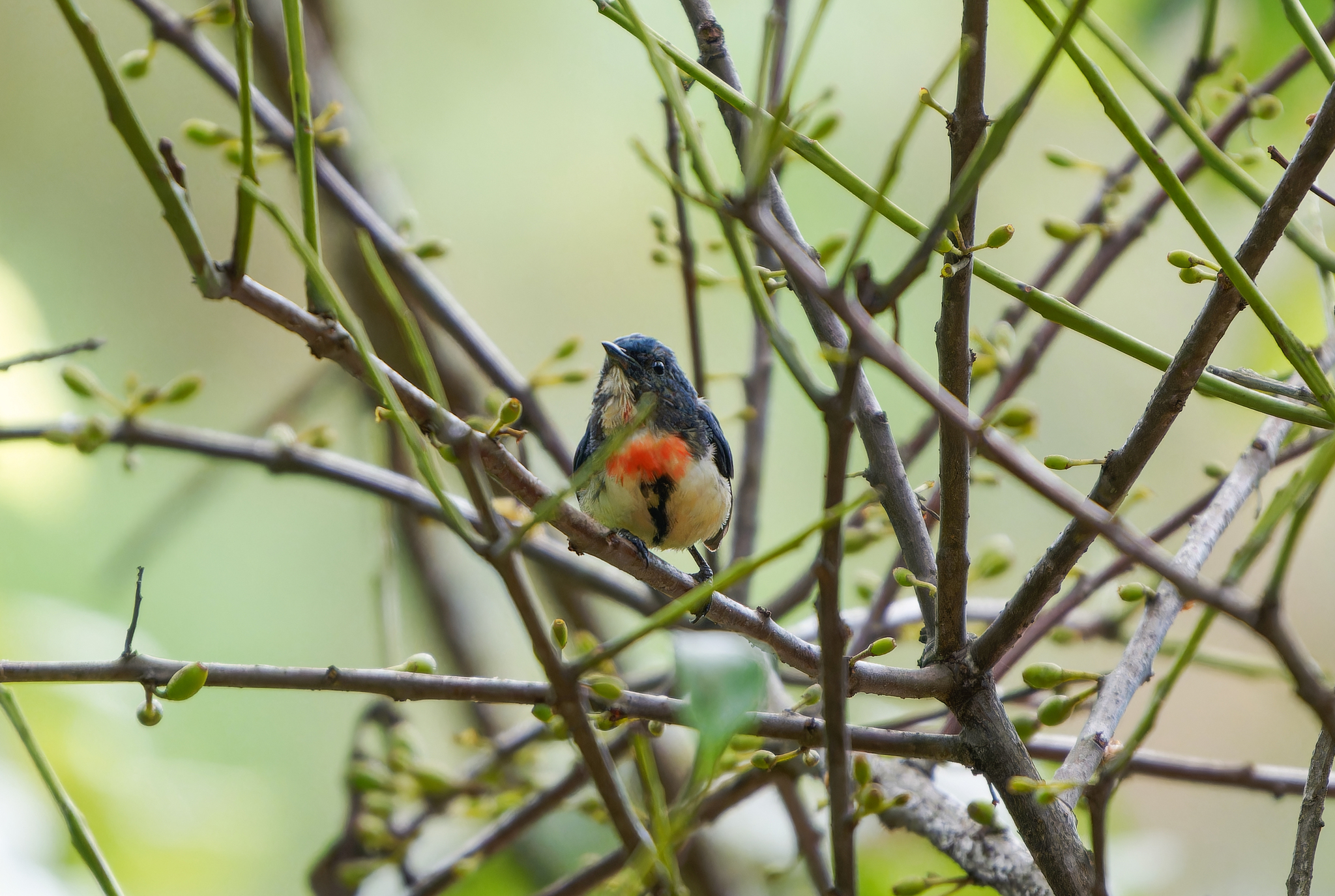
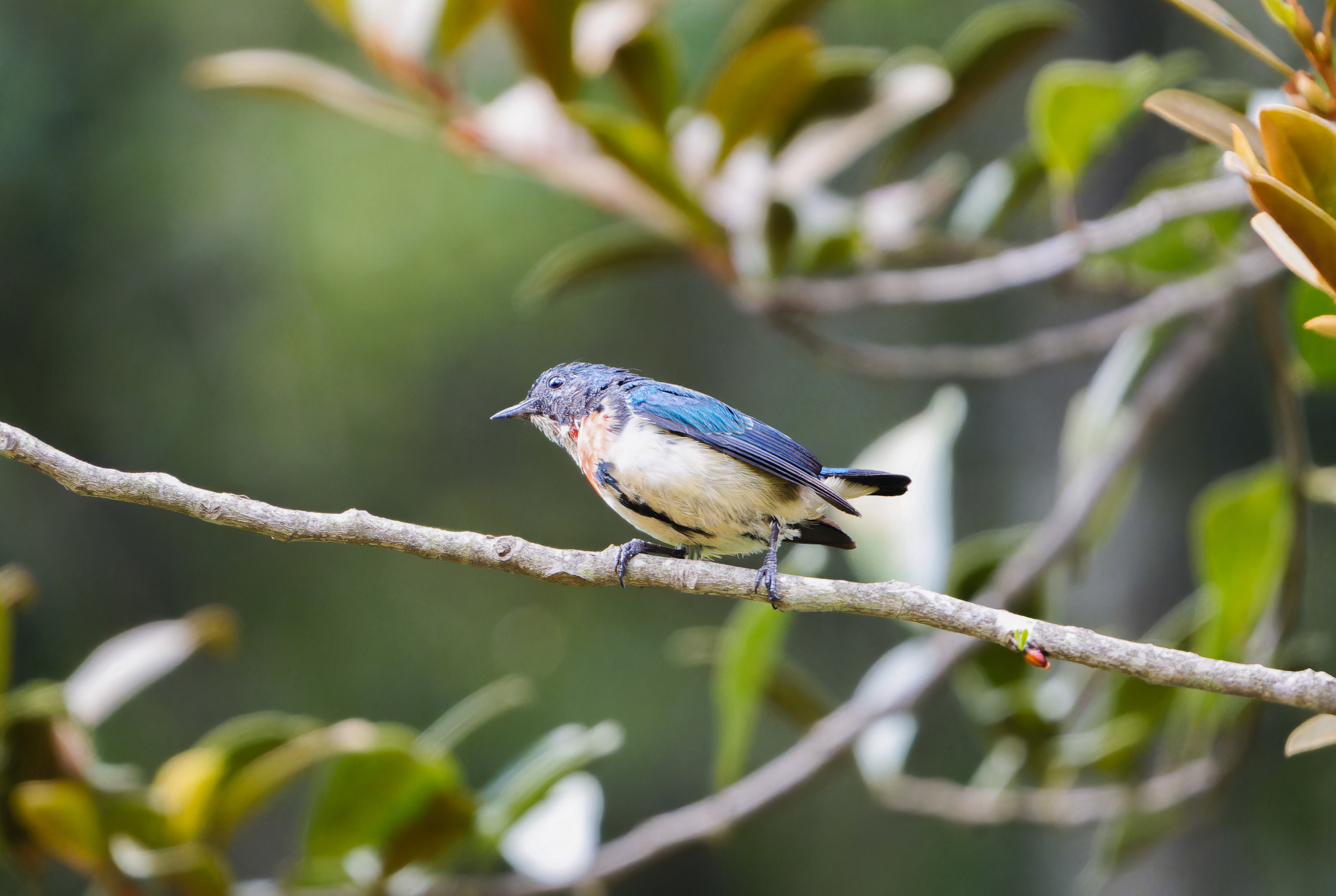
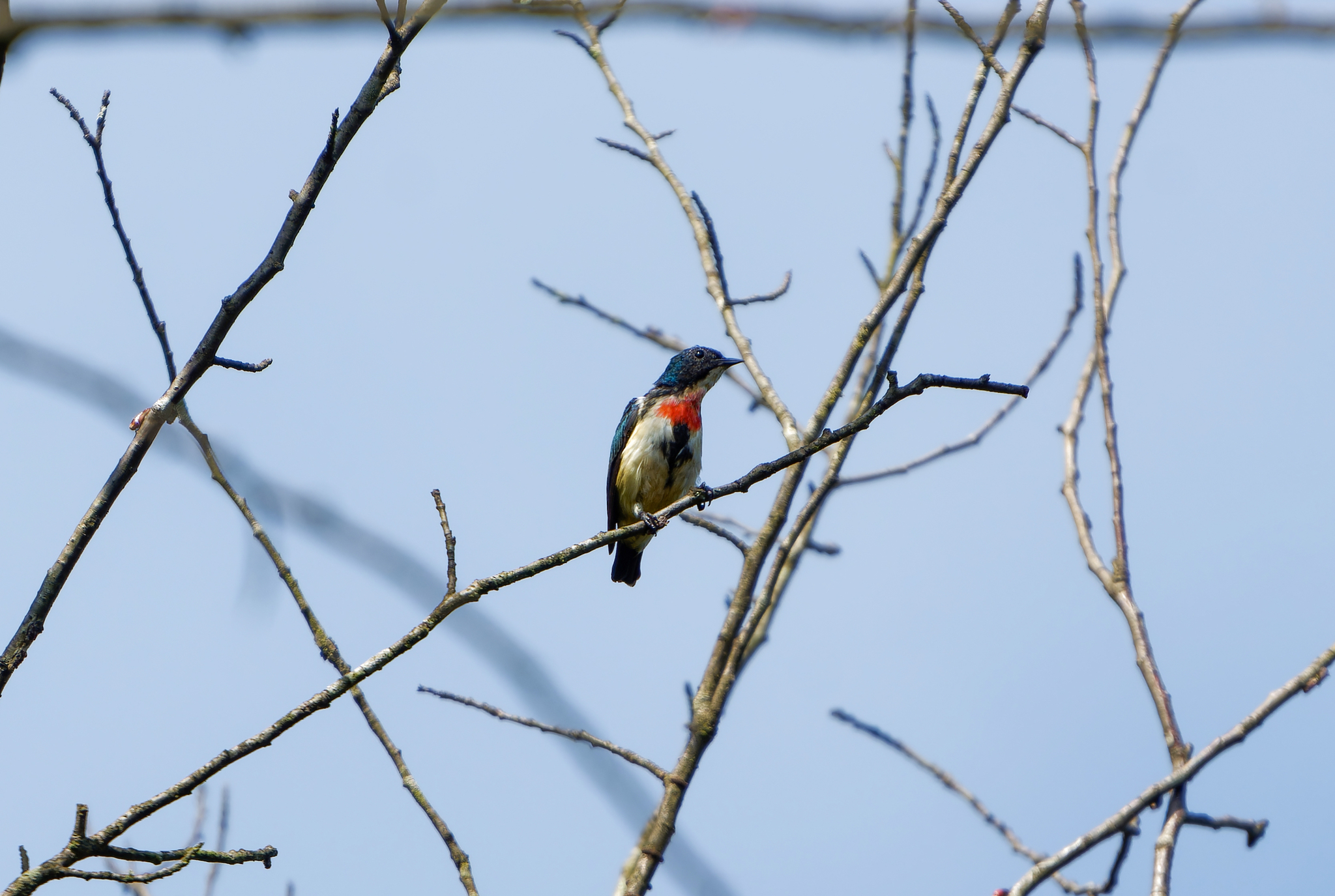
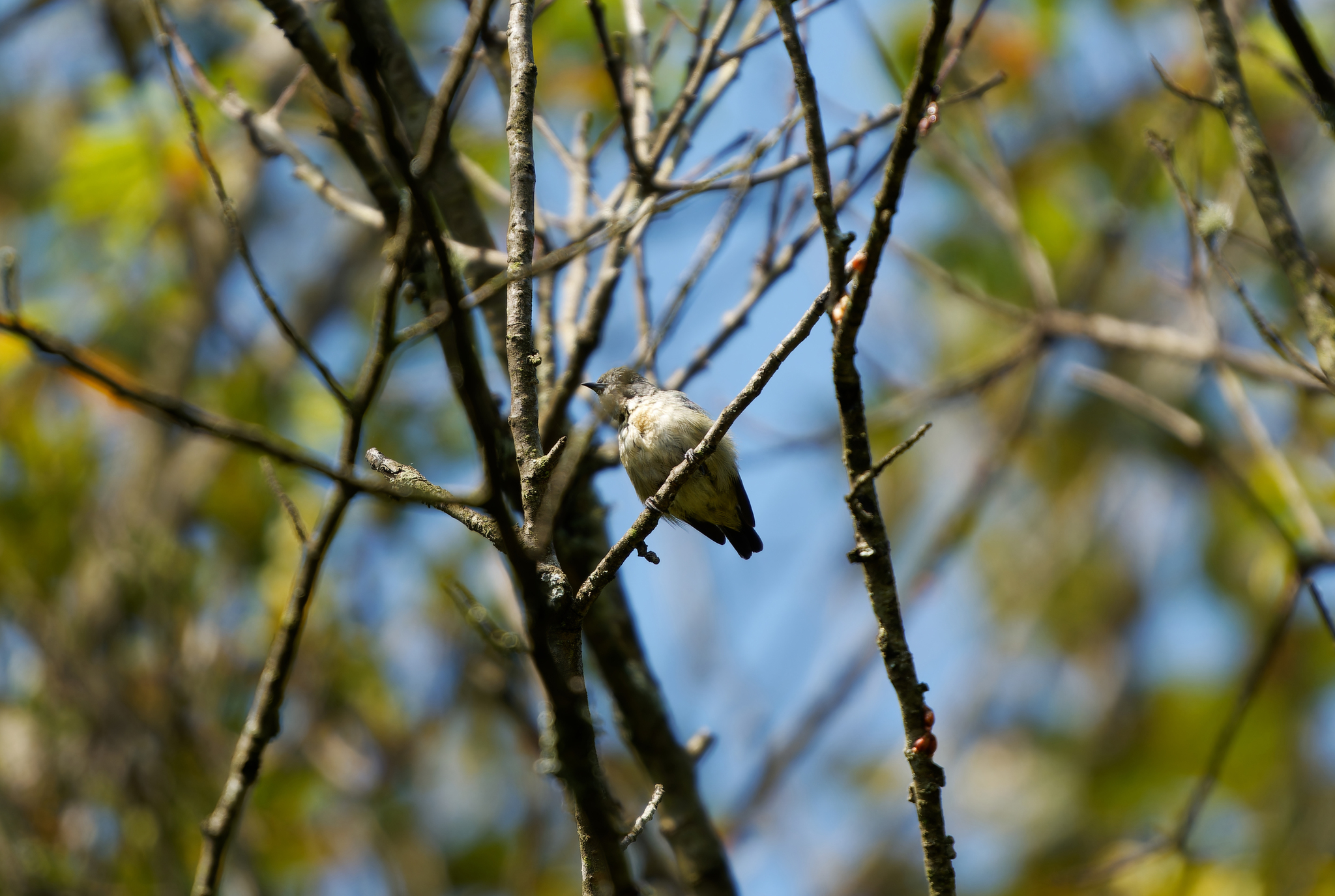
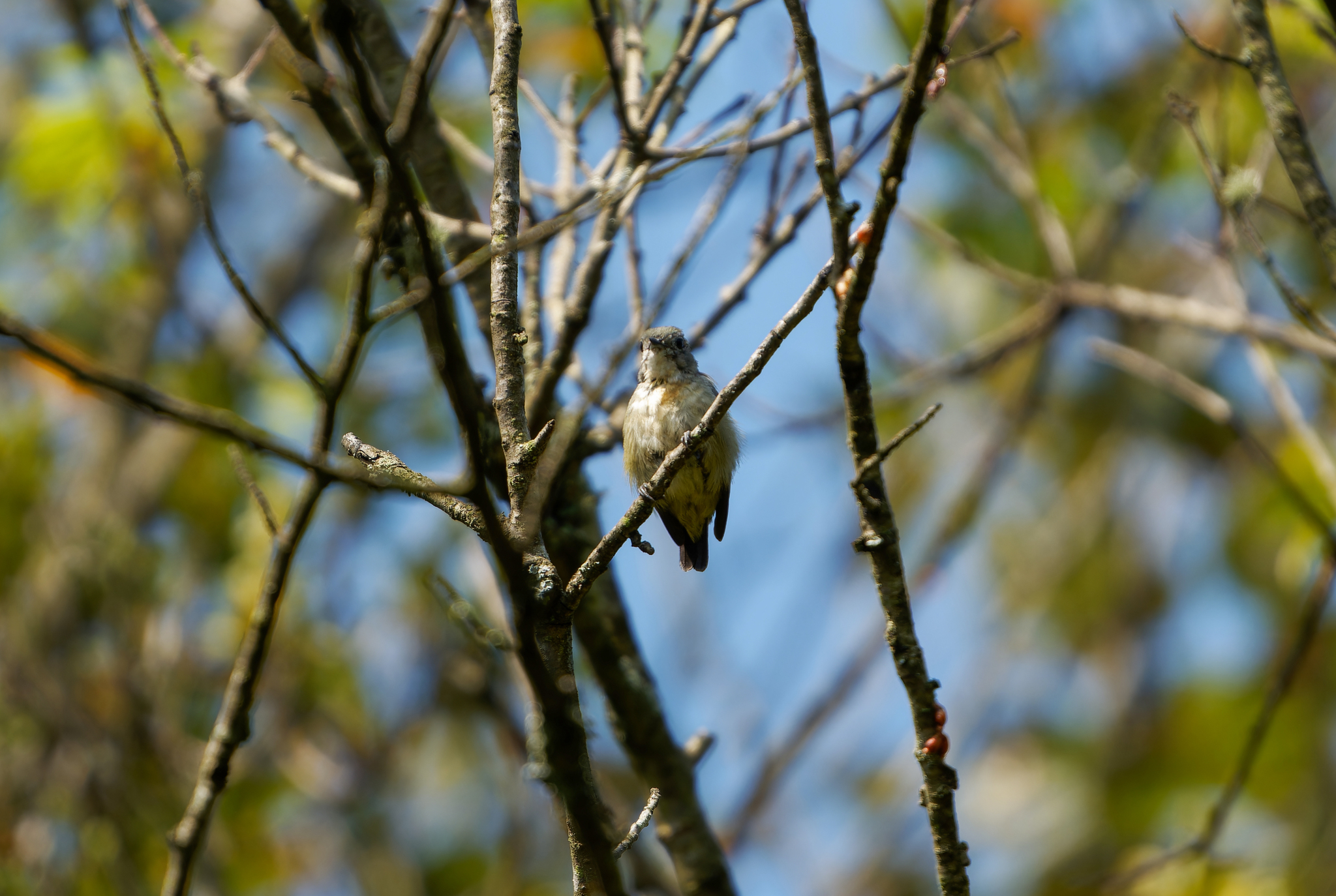
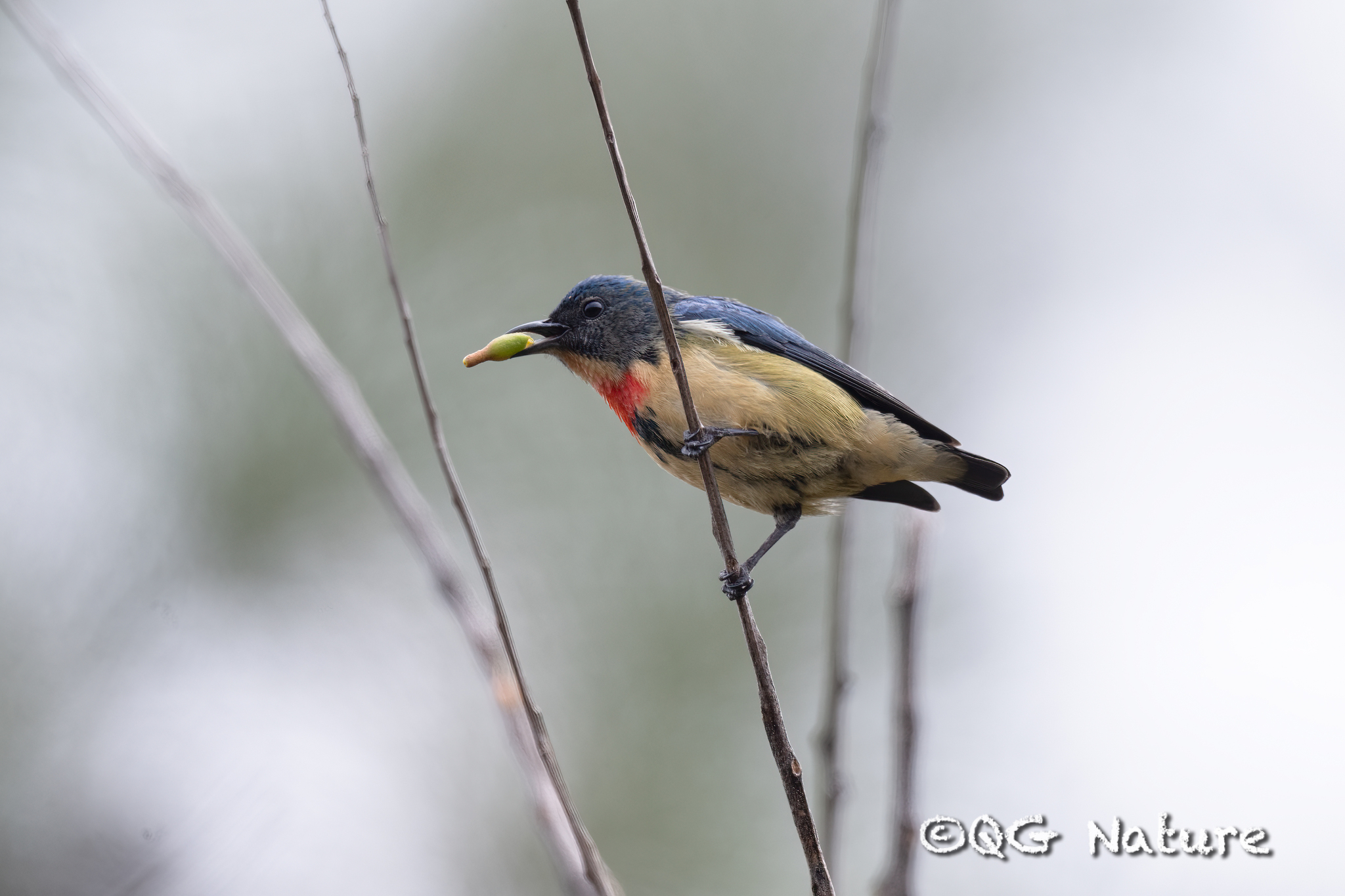
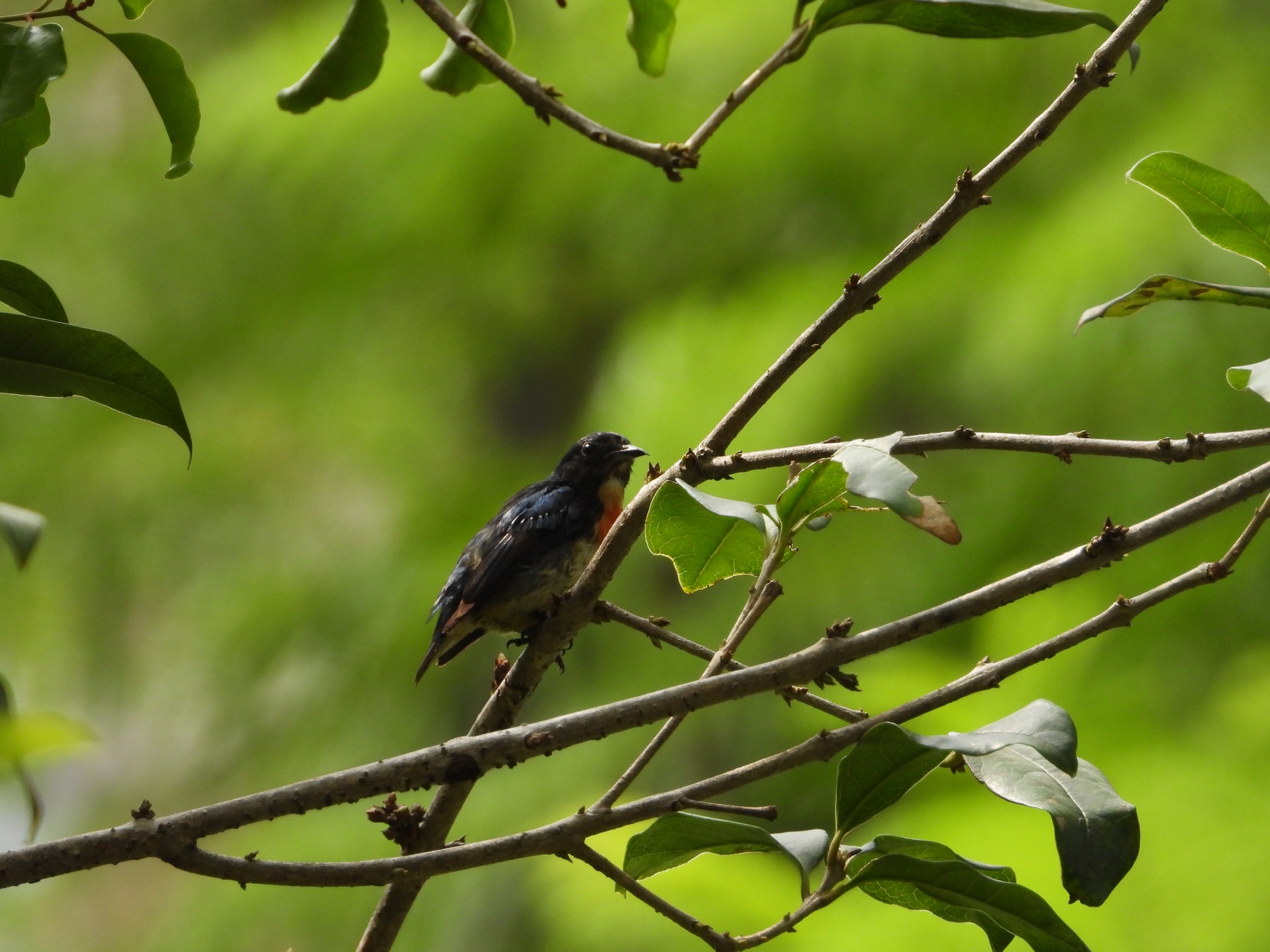
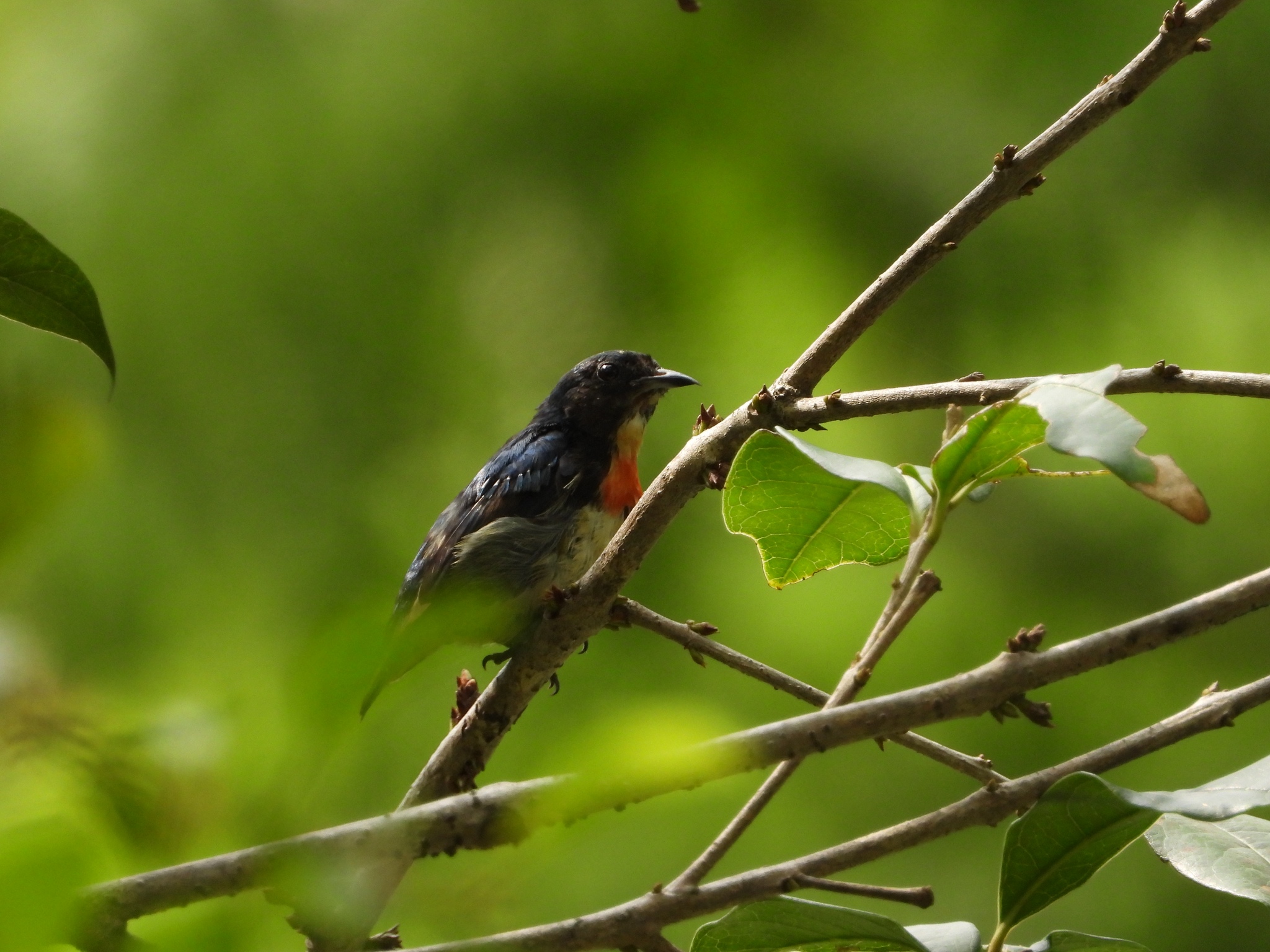
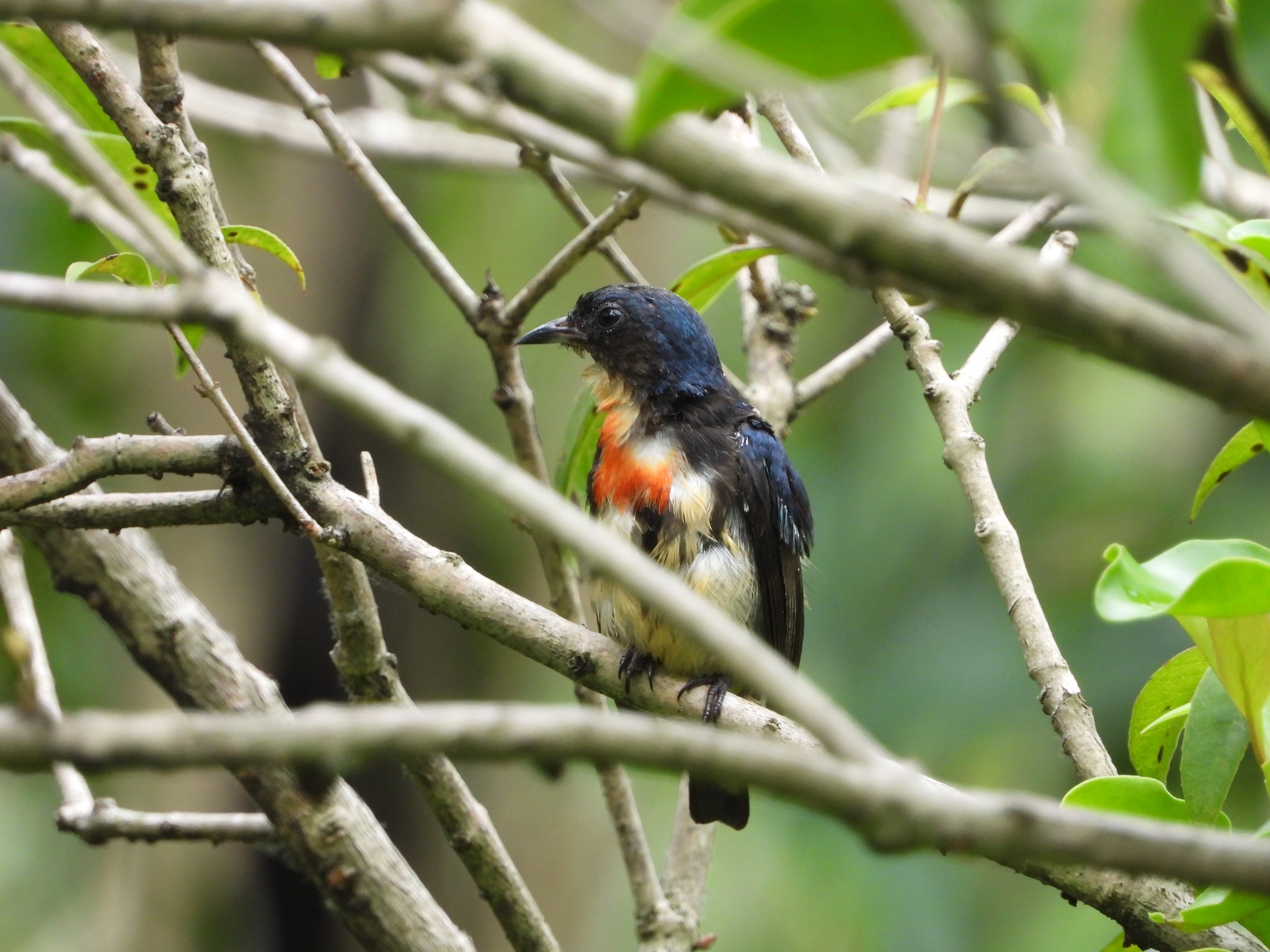
Weighs 7–9 g (0.25–0.32 oz) and measures under 7 cm (2.8 in) long. It has a small, dark bill. The male has glossy blue-black upperparts, buffy underside, a bright red breast patch, and a short black stripe running from below the patch down the middle of the belly. The female is dark olive above and buff below, with olive sides and a bill with a pale base.
Identification
Males are identified by contrasting upper and lower parts with a distinctive bright orange-red breast patch and a central black belly stripe. Females are duller, lacking the bright patch. Vocalizations include a shrill call likened to snipping scissors and a staccato tsit.
Distribution & Habitat
Found in the sub-Himalayan region (India, Nepal, Bhutan, Bangladesh) and Southeast Asia (Indonesia, Laos, Thailand, Vietnam, Taiwan, Malaysia, Philippines). Habitats include temperate forest, subtropical or tropical moist lowland forest, and montane forest. Typically found above 1000 metres, but may occur at lower altitudes in China during winter. Subspecies include ignipectus (mainland), formosum (Taiwan), luzoniense (Luzon), bonga (Samar), apo (Negros and Mindanao), and beccarii (Sumatra).
Behavior & Ecology
Disperses seeds of mistletoes, including Scurrula species in the Nepal Himalayas. Breeds in June and July in Nainital. The nest is pendant, purse-like, thin, and felt-like, constructed from hairy coverings of mistletoe stems, lined with moss and soft grass, with a side opening near the top. Two or three eggs are laid; both sexes incubate and care for young.
Source: Wikipedia · CC BY-SA 3.0
Taxonomy
- Order
- Passeriformes
- Family
- Dicaeidae
- Genus
- Dicaeum
Vocalizations
Subspecies (3)
-
Dicaeum ignipectus dolichorhynchum
mountains of southern peninsular Thailand and Malay Peninsula
Data Sources
Species description from Wikipedia, licensed under CC BY-SA 3.0.
Bird images and sounds sourced from GBIF, contributed by citizen scientists worldwide under Creative Commons licenses.
Taxonomy data from AviList 2025.