Fire-breasted Flowerpecker
Dicaeum ignipectus
红胸啄花鸟
Introduction
This flowerpecker inhabits forested mountains across the Indian subcontinent and Southeast Asia. It is a member of the Dicaeidae family. The species functions as a seed disperser, particularly for mistletoes.
Description
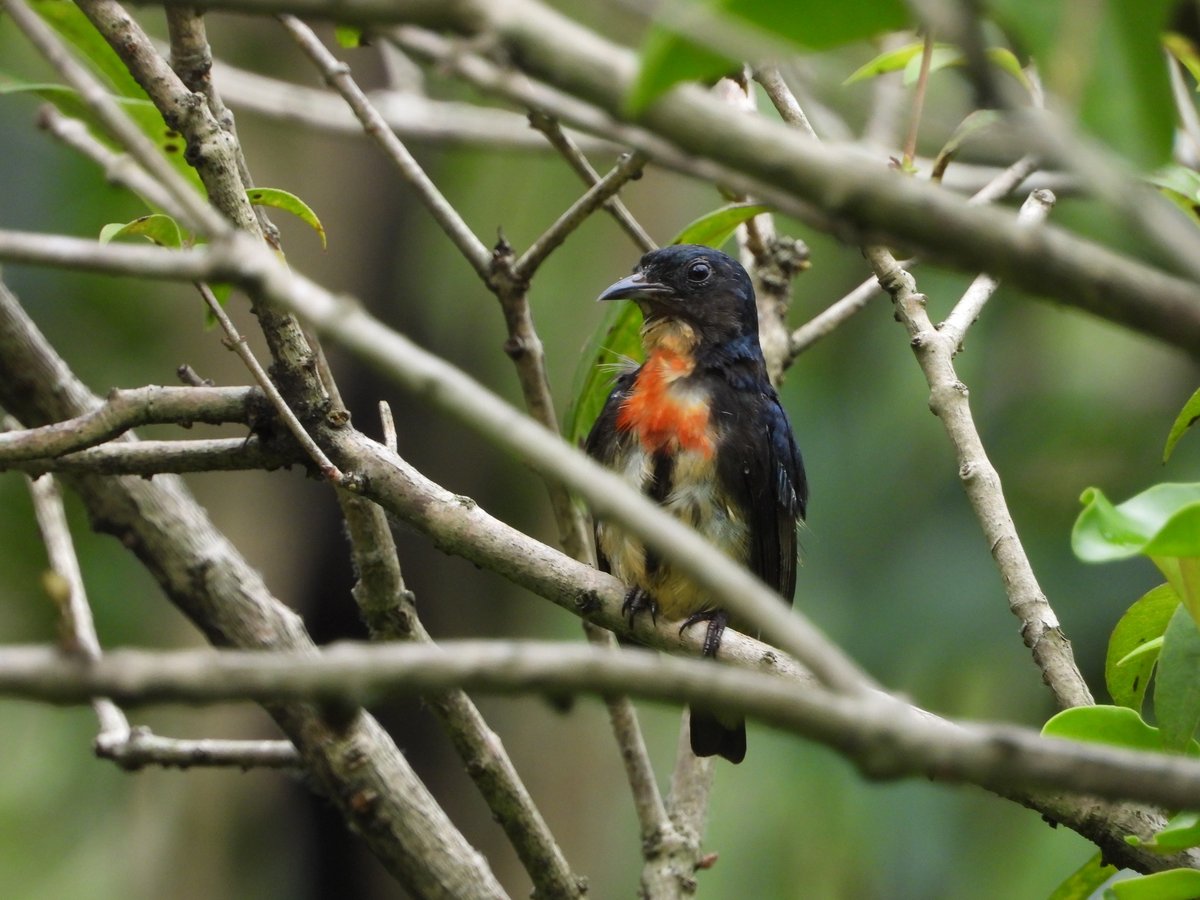
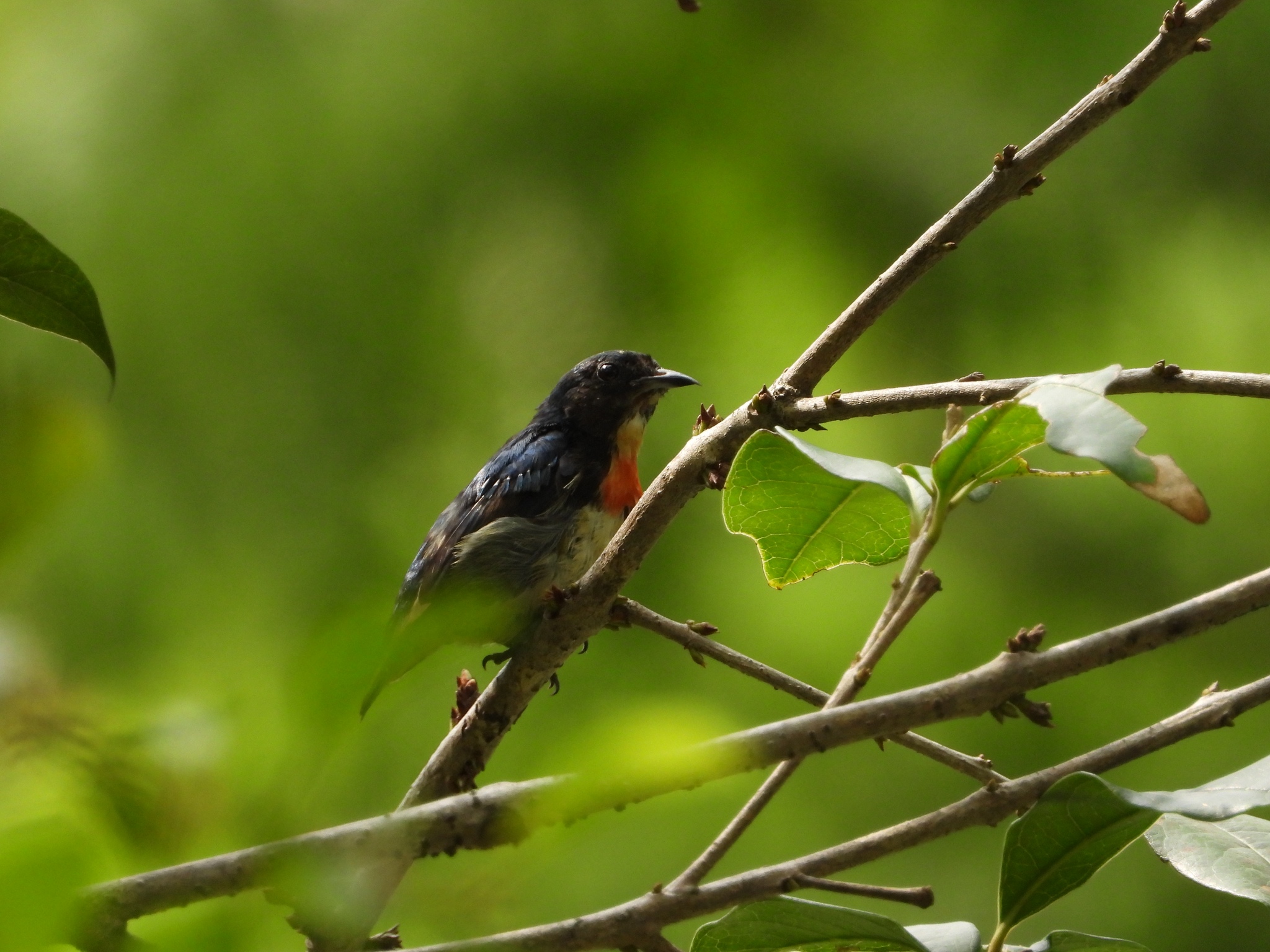
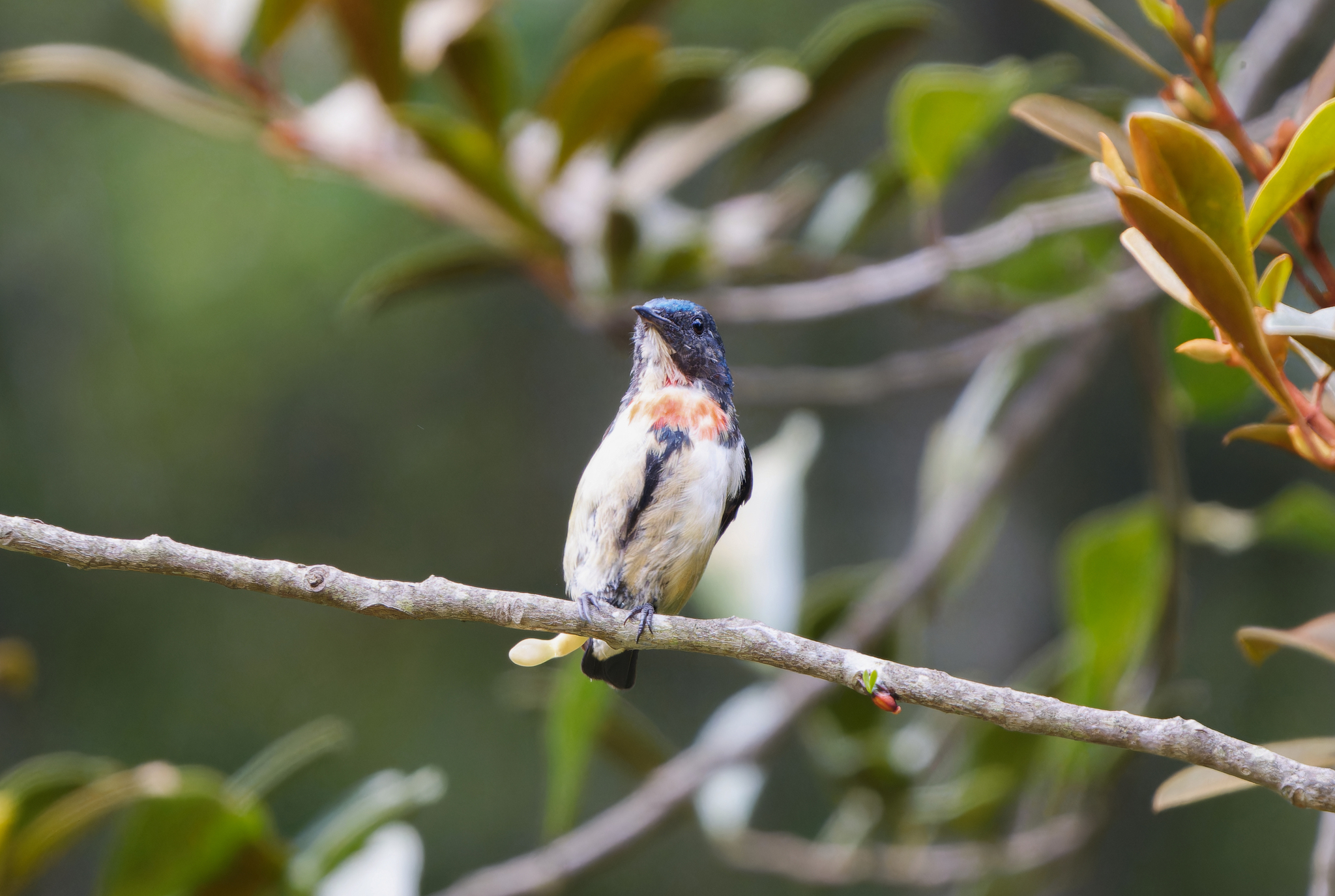
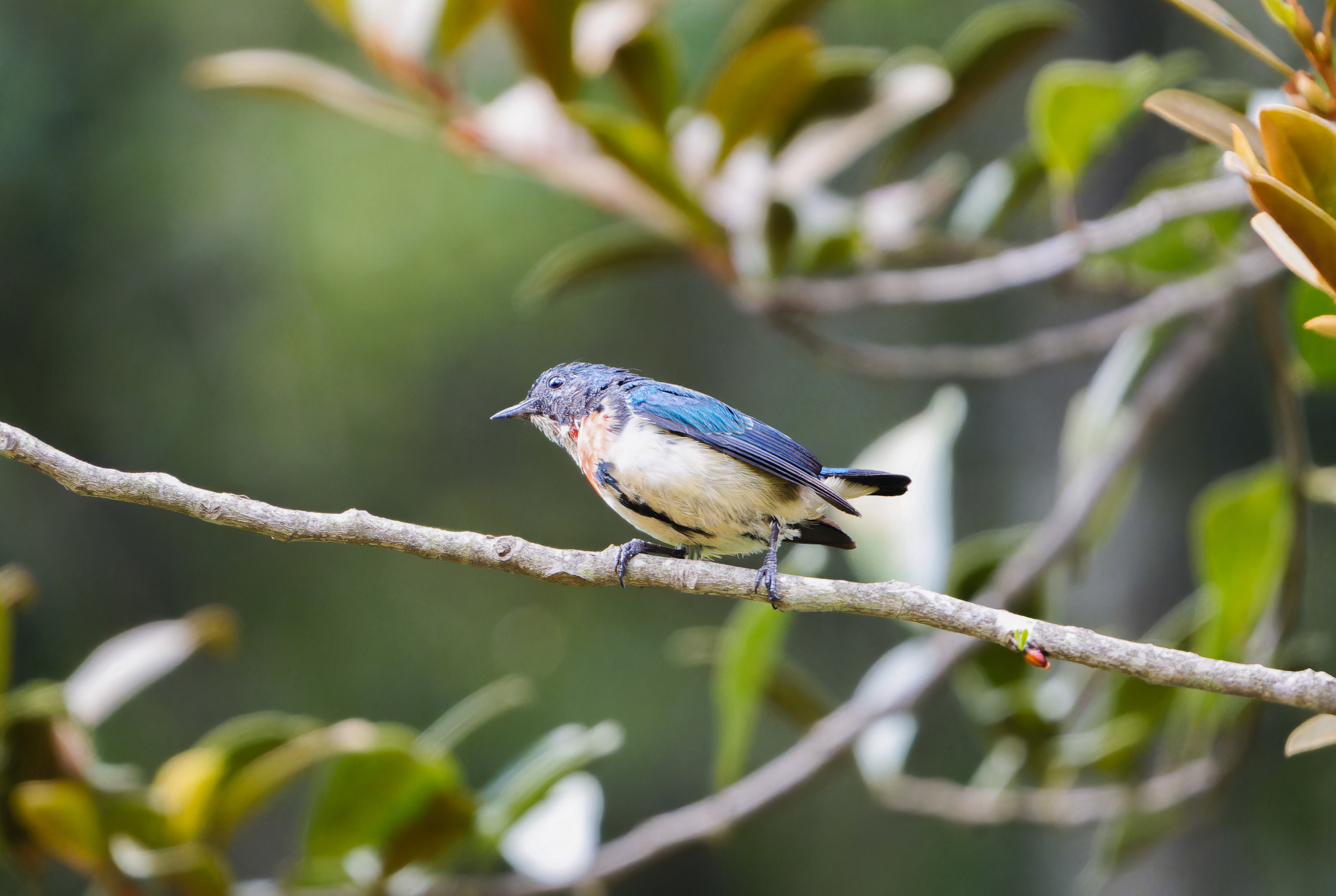
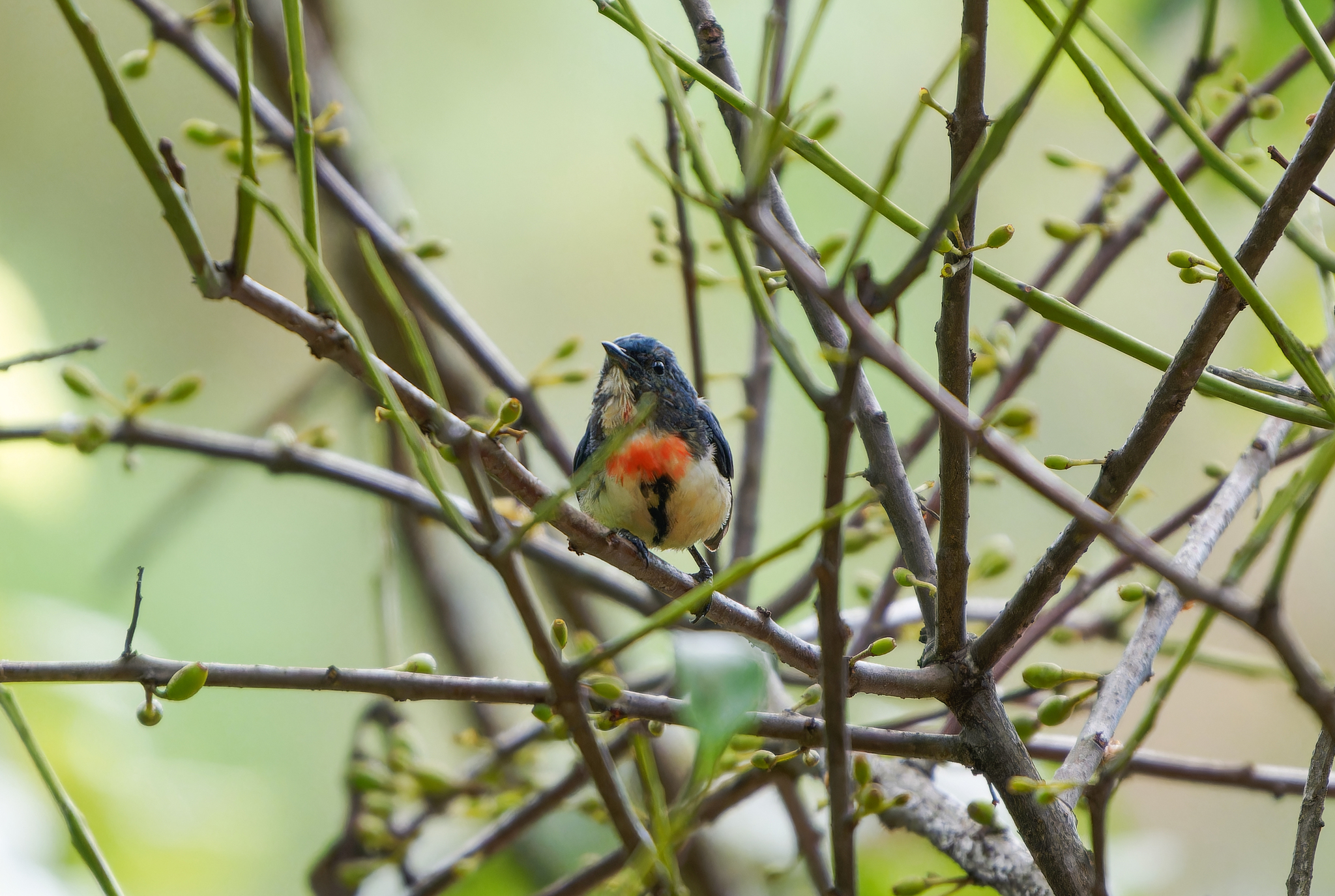
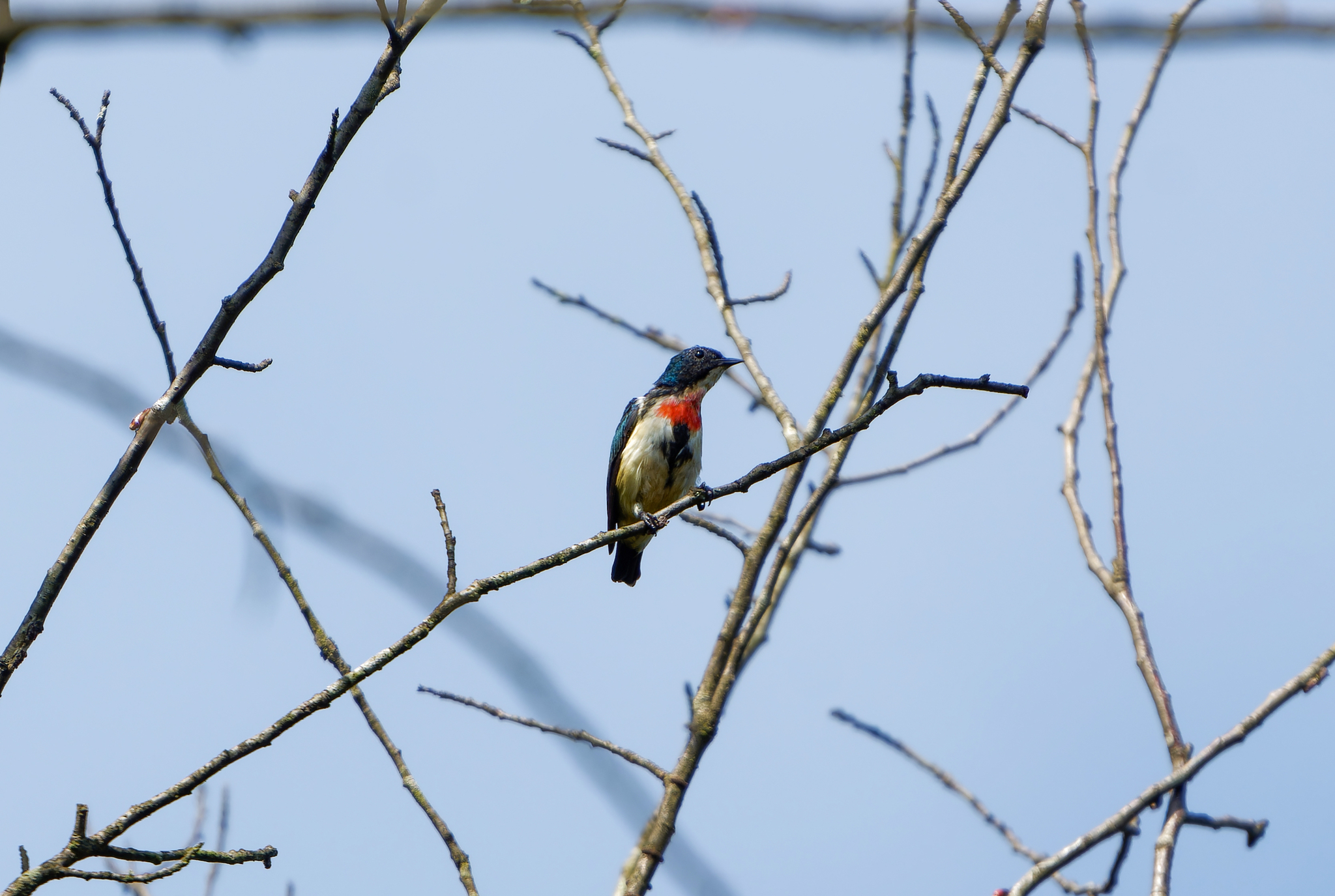
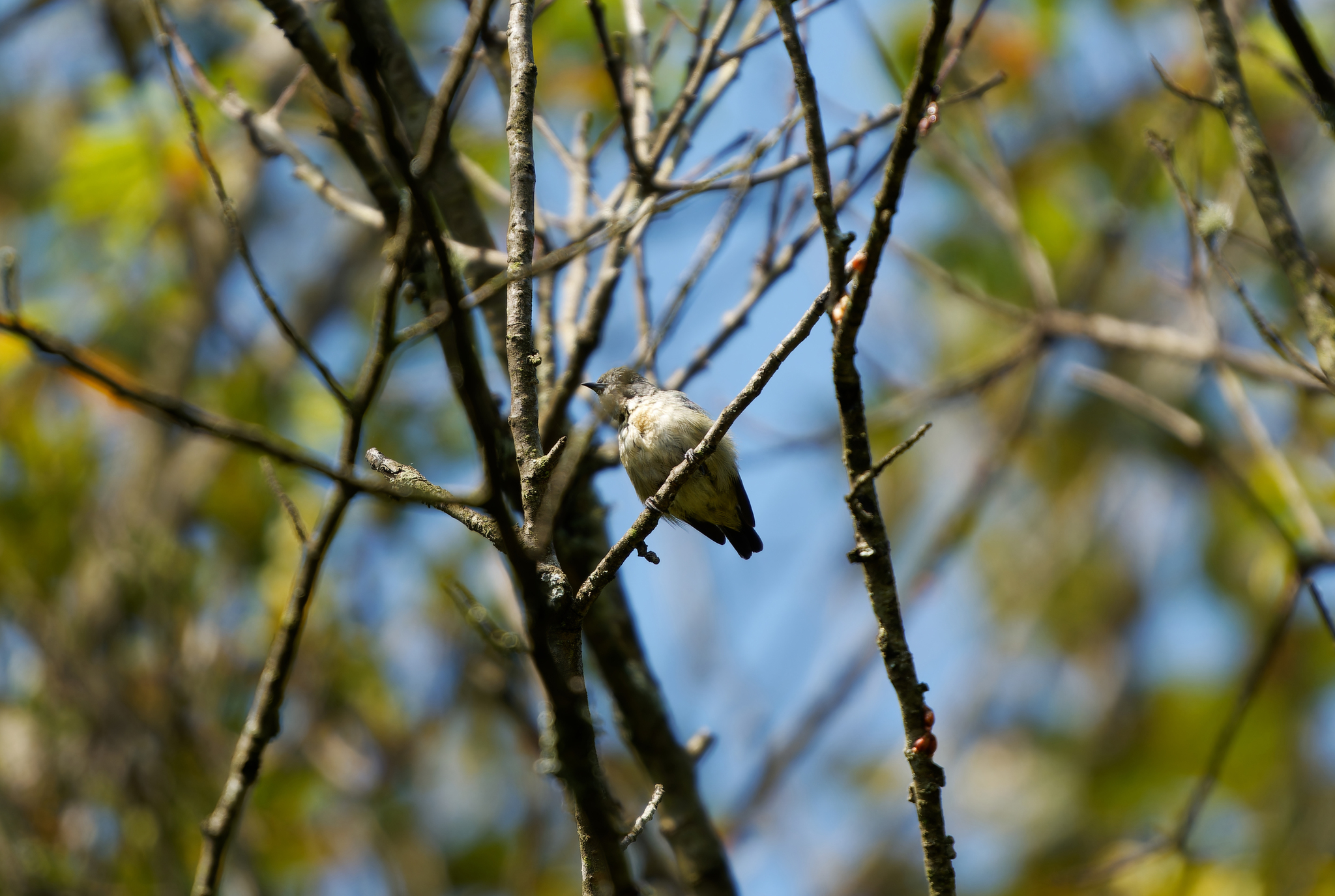
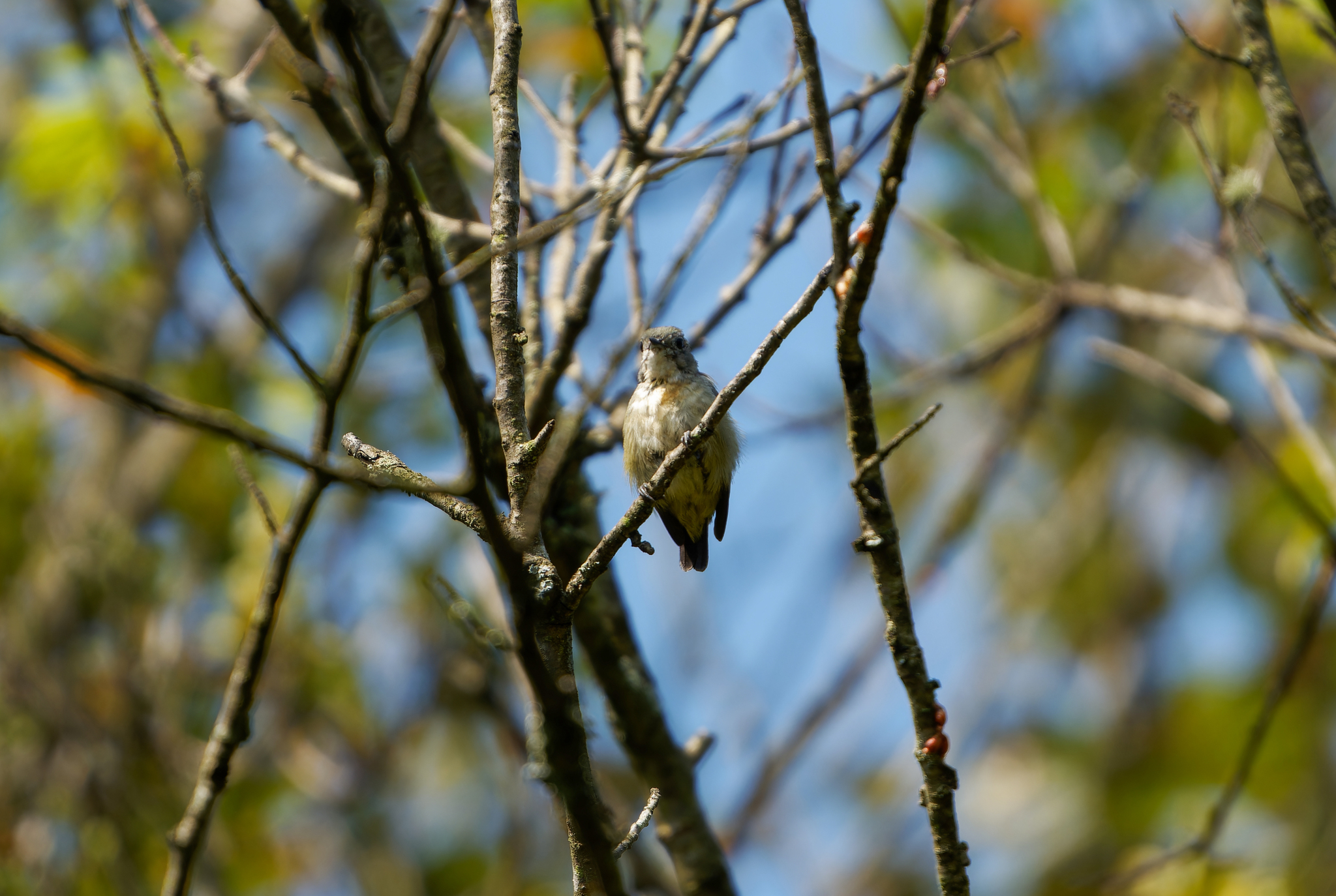
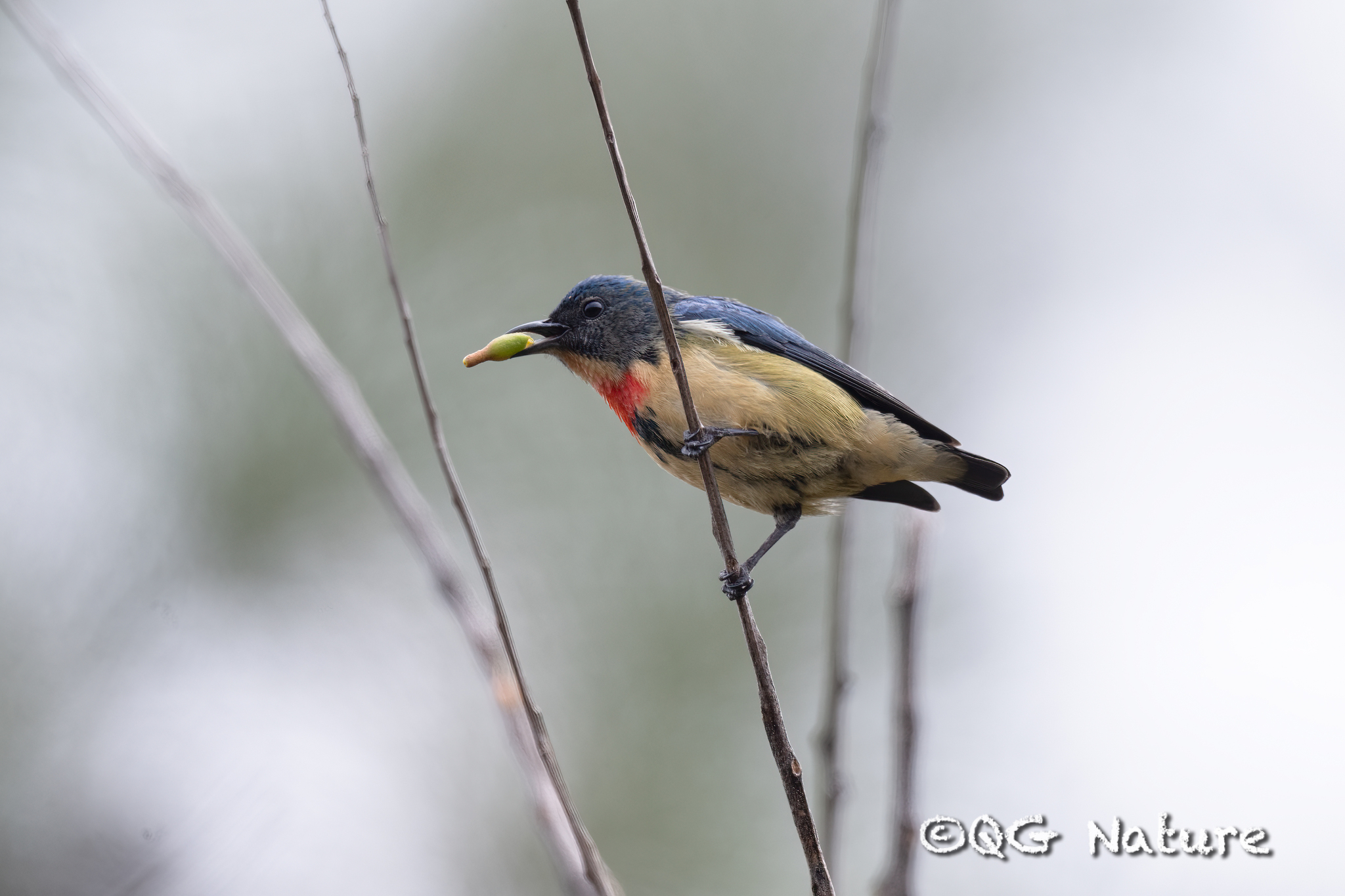
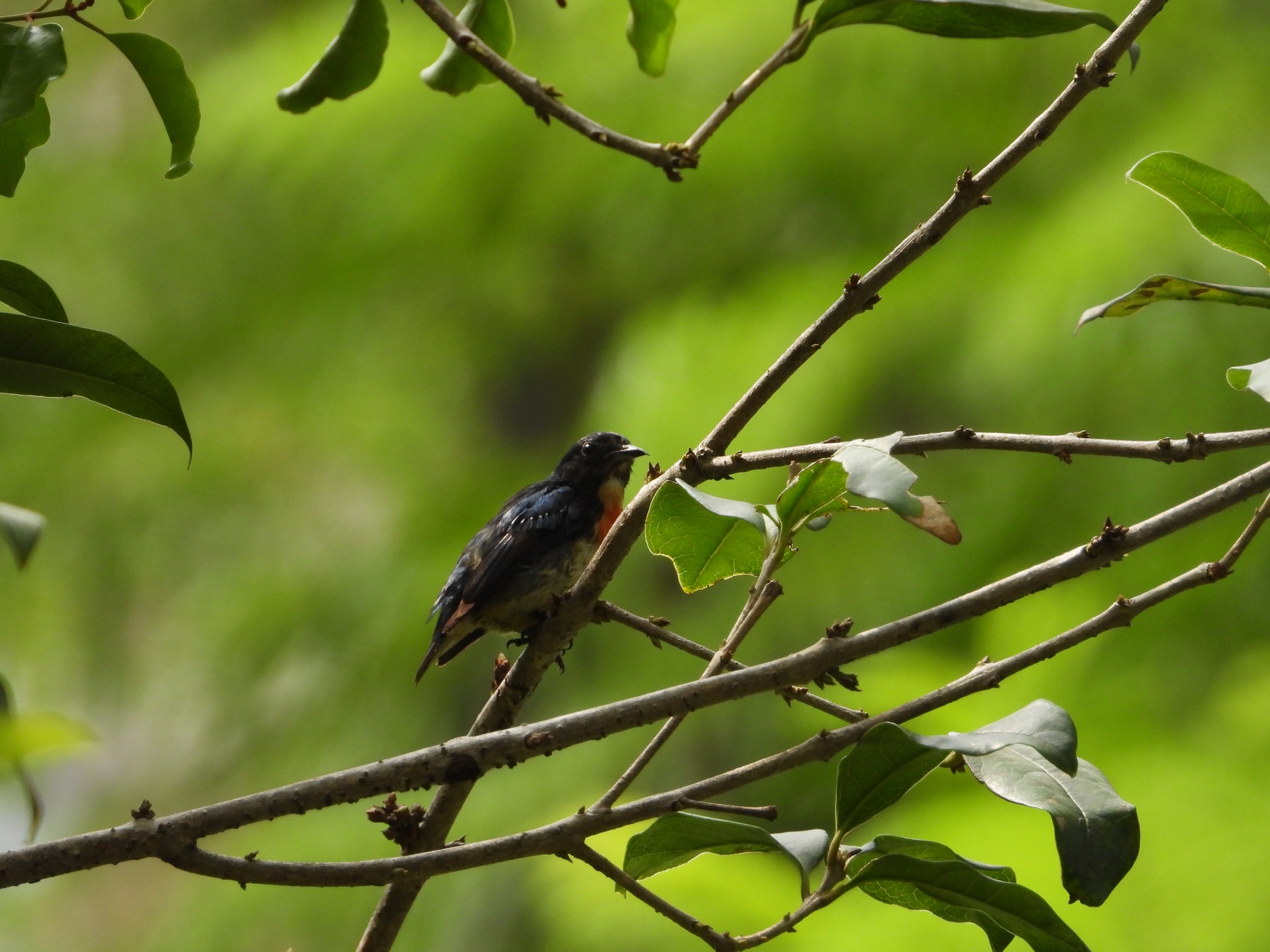
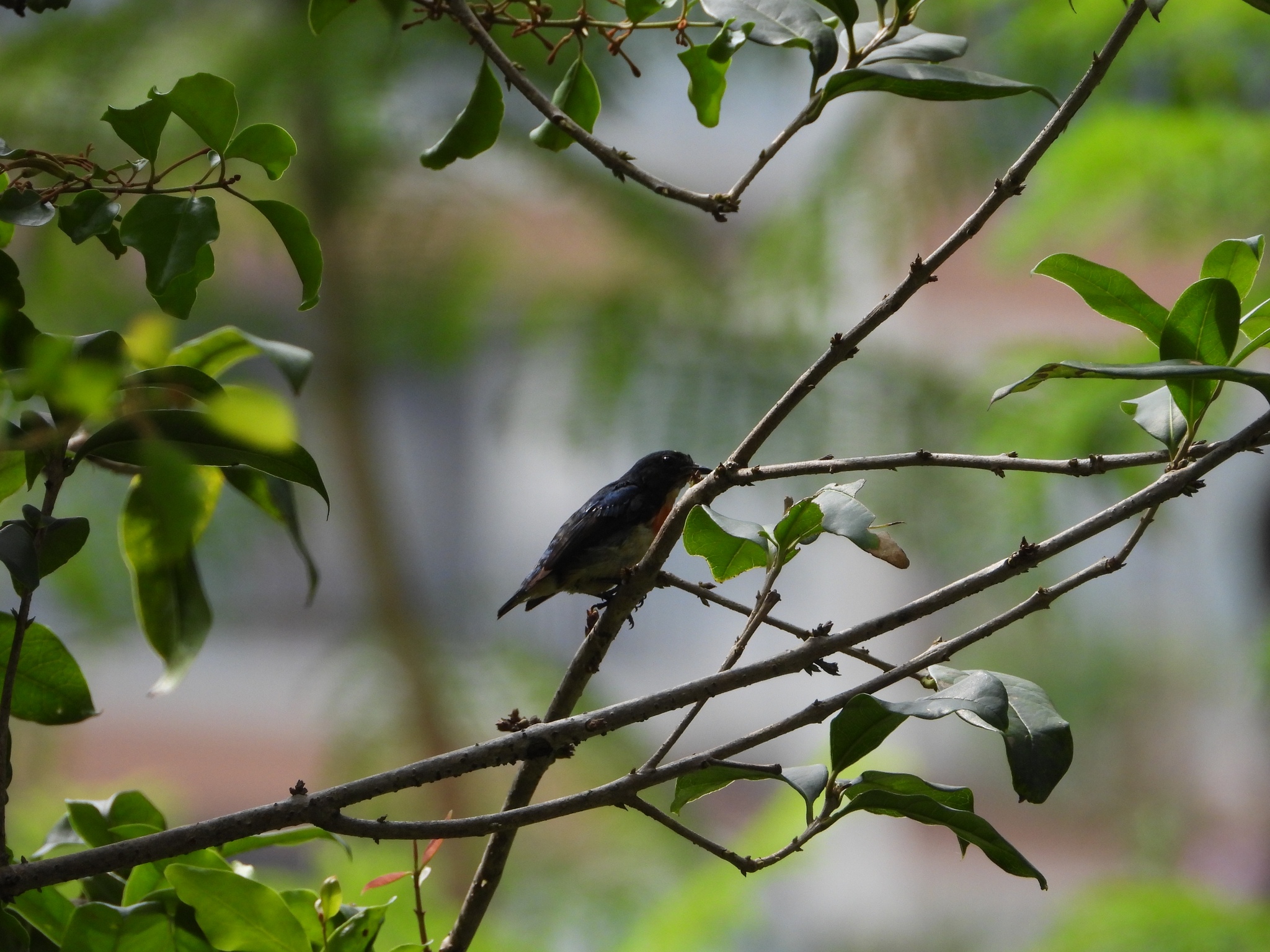
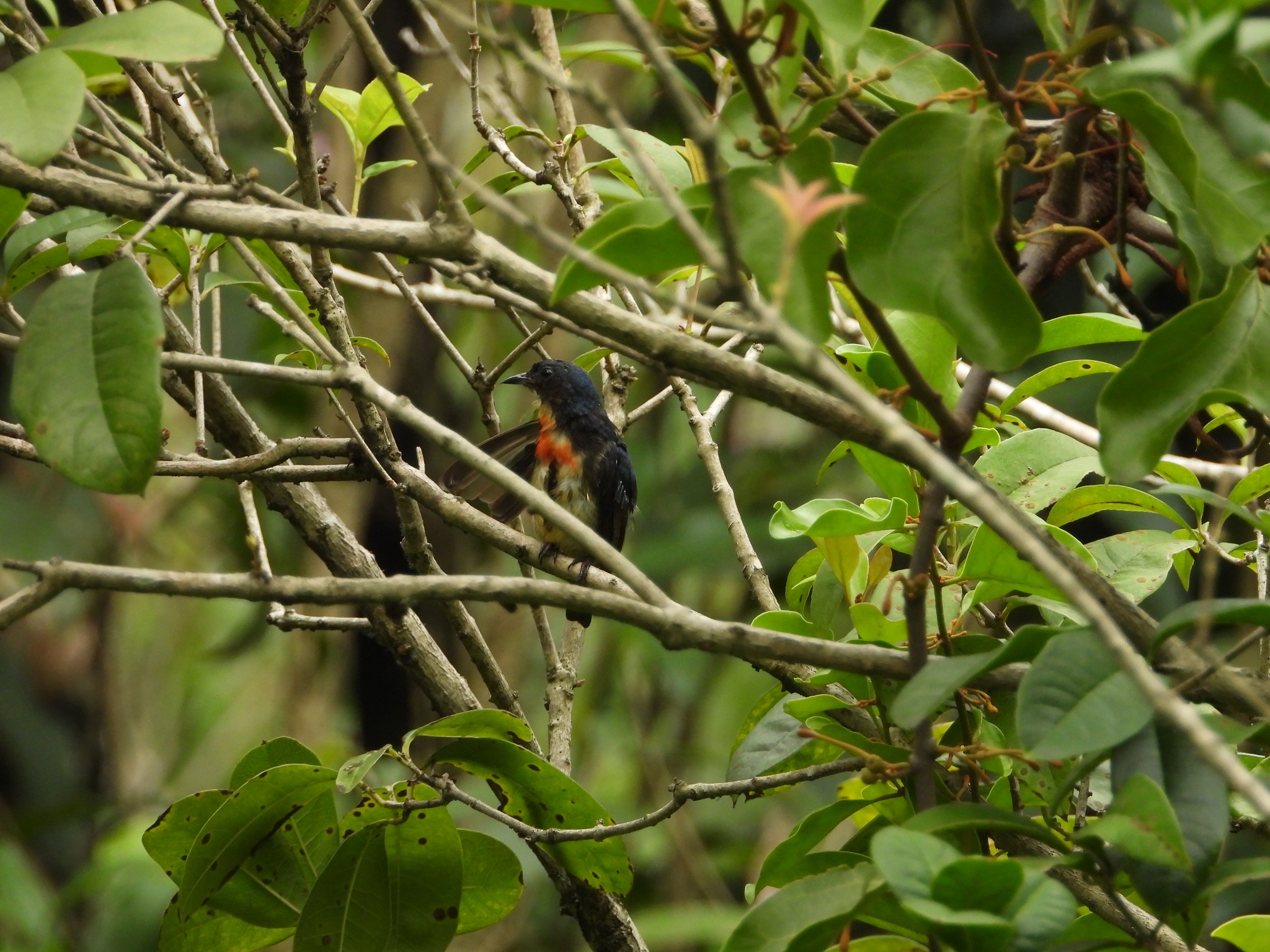
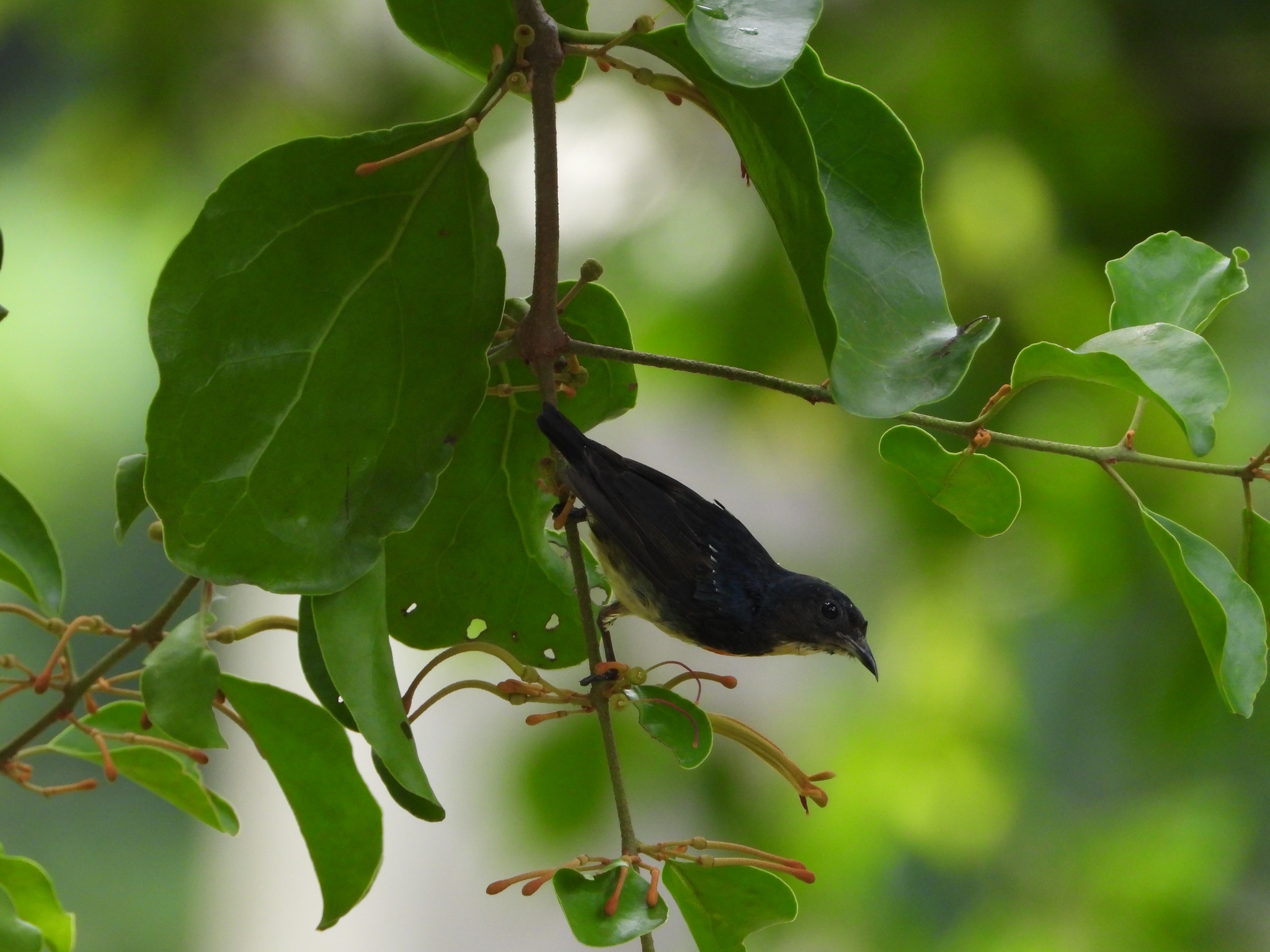
This is one of the smallest flowerpeckers, measuring under 7 centimeters in length and weighing just 7-9 grams. The male has glossy blue-black upperparts with a distinctive bright red breast patch. A short black stripe runs from below the breast patch down the center of the buff-colored belly. The female is dark olive above with buff underparts and olive-colored sides. Both sexes have a small, dark bill, though the female's bill has a pale base. These birds are typically found in the upper canopy, particularly around mistletoes.
Identification
The strong sexual dimorphism makes this species relatively straightforward to identify when males are present. The male's combination of glossy blue-black upperparts, bright orange-red breast patch, and central black belly stripe is distinctive among flowerpeckers in its range. Females can be more challenging but are distinguished by their olive upperparts and buff underparts. The species is part of a superspecies complex with several other Dicaeum species including D. monticolum and D. sanguinolentum, which may cause identification confusion, particularly with Philippine populations that show different coloration patterns.
Distribution & Habitat
This species is widely distributed along the sub-Himalayan region from India, Nepal, Bhutan, and Bangladesh, extending through Southeast Asia to Indonesia, Laos, Thailand, Vietnam, Taiwan, Malaysia, and the Philippines. It inhabits temperate, subtropical, and tropical moist forests, typically found at elevations above 1,000 meters, though Chinese populations may move to lower altitudes during winter. Several subspecies are recognized, with insular populations in Taiwan (formosum), Luzon (luzoniense), Samar (bonga), and the Negros and Mindanao islands (apo).
Behavior & Ecology
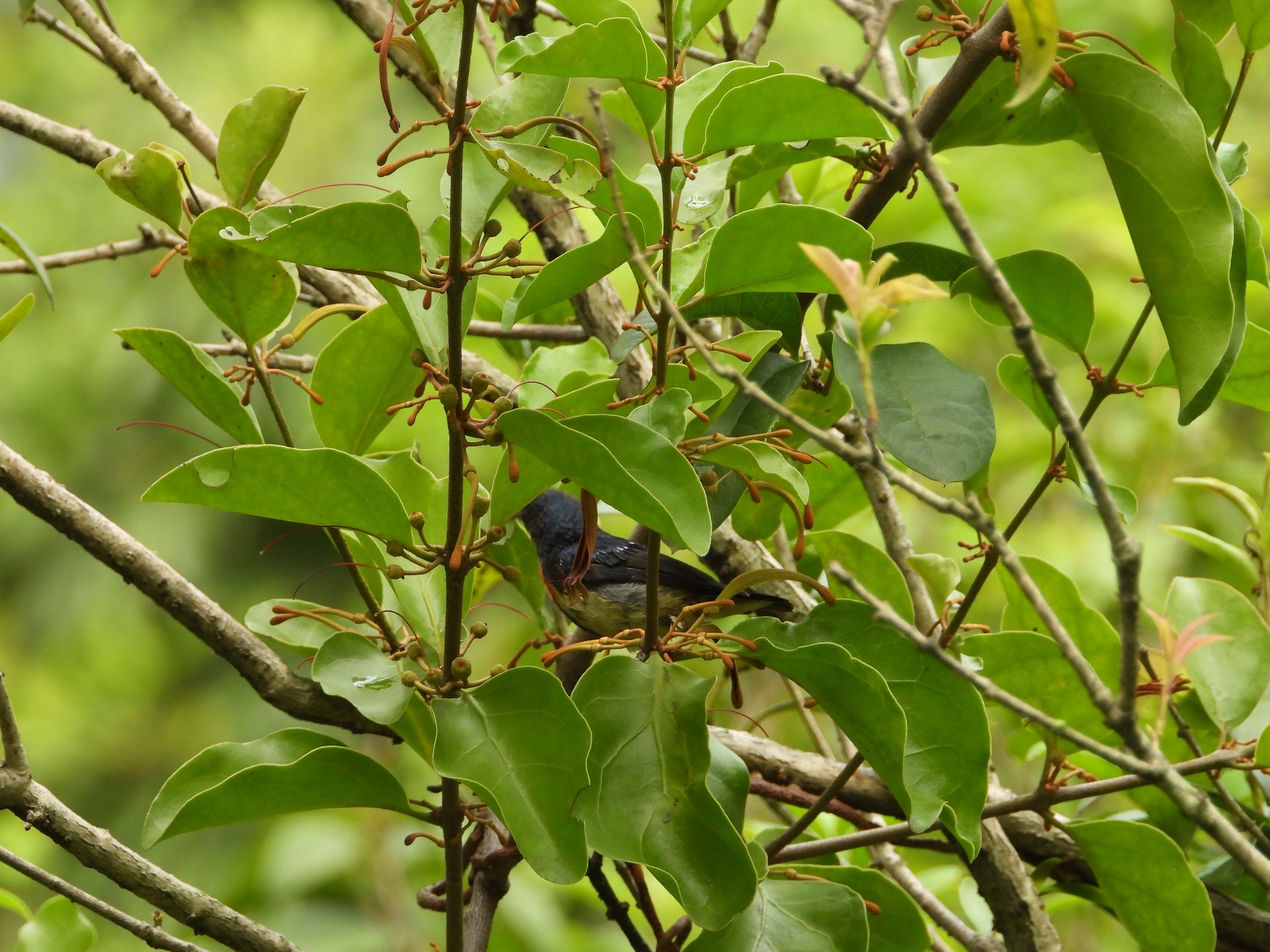
Like other flowerpeckers, this species is an important seed disperser, particularly for mistletoes of the genus Scurrula in the Nepal Himalayas. Its diet consists primarily of fruits. Breeding occurs from June to July in the Nainital region. The nest is pendant and purse-shaped, constructed from the hairy coverings of mistletoe stems, lined with moss and grass. Two or three eggs are laid, with both parents sharing incubation and chick-rearing duties. The call is a shrill, regularly given note likened to snipping scissors or a staccato tsit.
Conservation
While no specific IUCN assessment is provided in the source material, the species appears to be secure in many parts of its range, with Hong Kong populations increasing as restored forests mature. However, several island subspecies with very restricted ranges may require careful conservation attention. The species was first recorded in Hong Kong in 1954 and has bred regularly there since 1975, demonstrating some adaptability to habitat changes.
Culture
This species has historically attracted attention for its diminutive size. John George Wood (1862) described it as 'the smallest bird of India,' noting that an adult specimen measured barely two and a half inches in length and weighed only three and a half drachms. The species was first scientifically described by Edward Blyth in 1843 based on a specimen obtained from Nepal by B.H. Hodgson. John Gould included a lithograph of this species in his monumental work Birds of Asia (1850-1883).
Source: Wikipedia · CC BY-SA 3.0
Taxonomy
- Order
- Passeriformes
- Family
- Dicaeidae
- Genus
- Dicaeum
- eBird Code
- fibflo1
Vocalizations
Subspecies (3)
-
Dicaeum ignipectus dolichorhynchum
mountains of southern peninsular Thailand and Malay Peninsula
-
Dicaeum ignipectus formosum
montane forest of Taiwan
-
Dicaeum ignipectus ignipectus
western Himalayas (Kashmir) to south-central China, Myanmar, and Indochina
Data Sources
Species description from Wikipedia, licensed under CC BY-SA 3.0.
Bird images and sounds sourced from GBIF, contributed by citizen scientists worldwide under Creative Commons licenses.
Taxonomy data from AviList 2025.