Passeriformes / Dicaeidae / Dicaeum
Scarlet-backed Flowerpecker
Dicaeum cruentatum · 朱背啄花鸟
Introduction
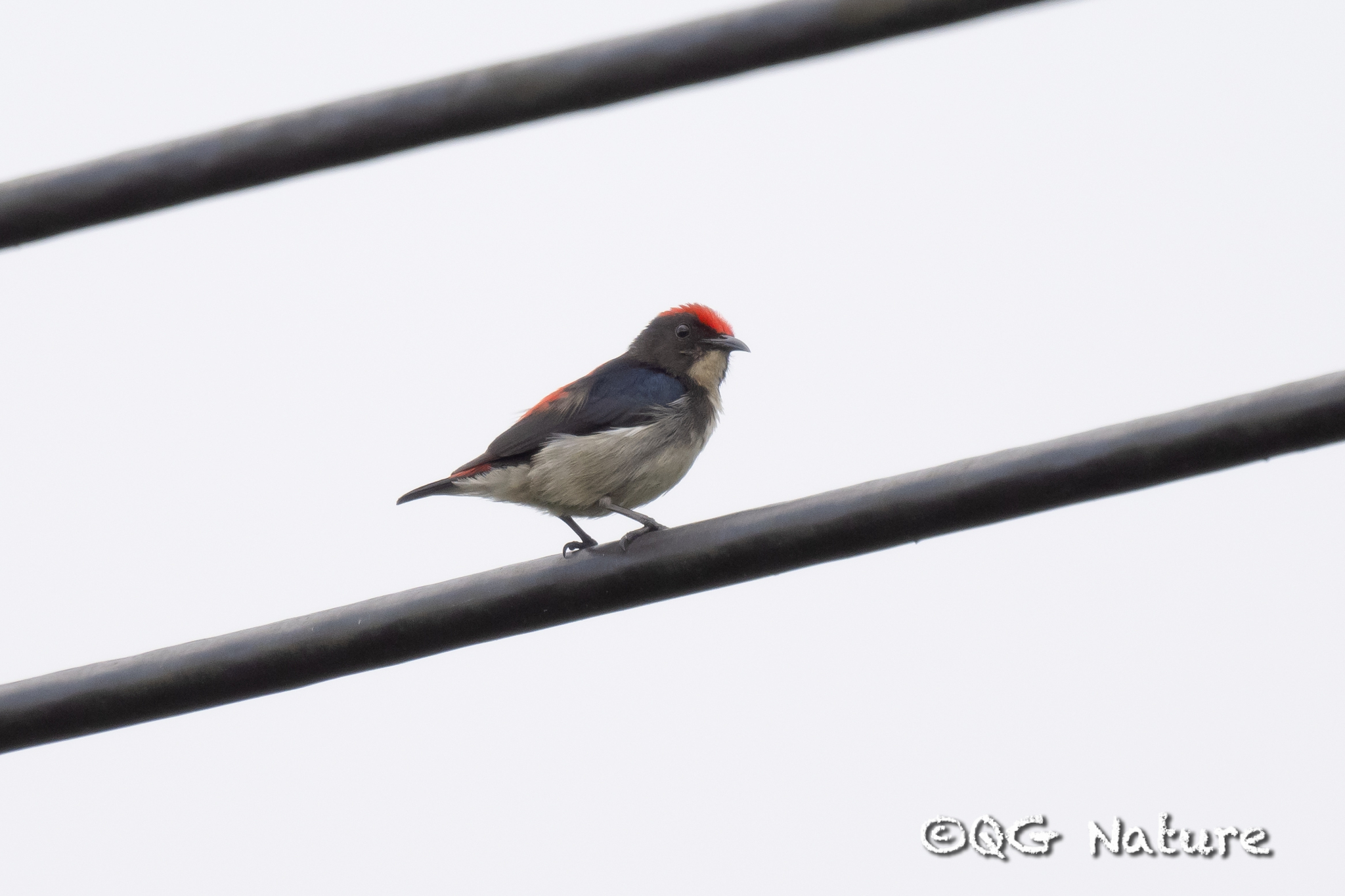
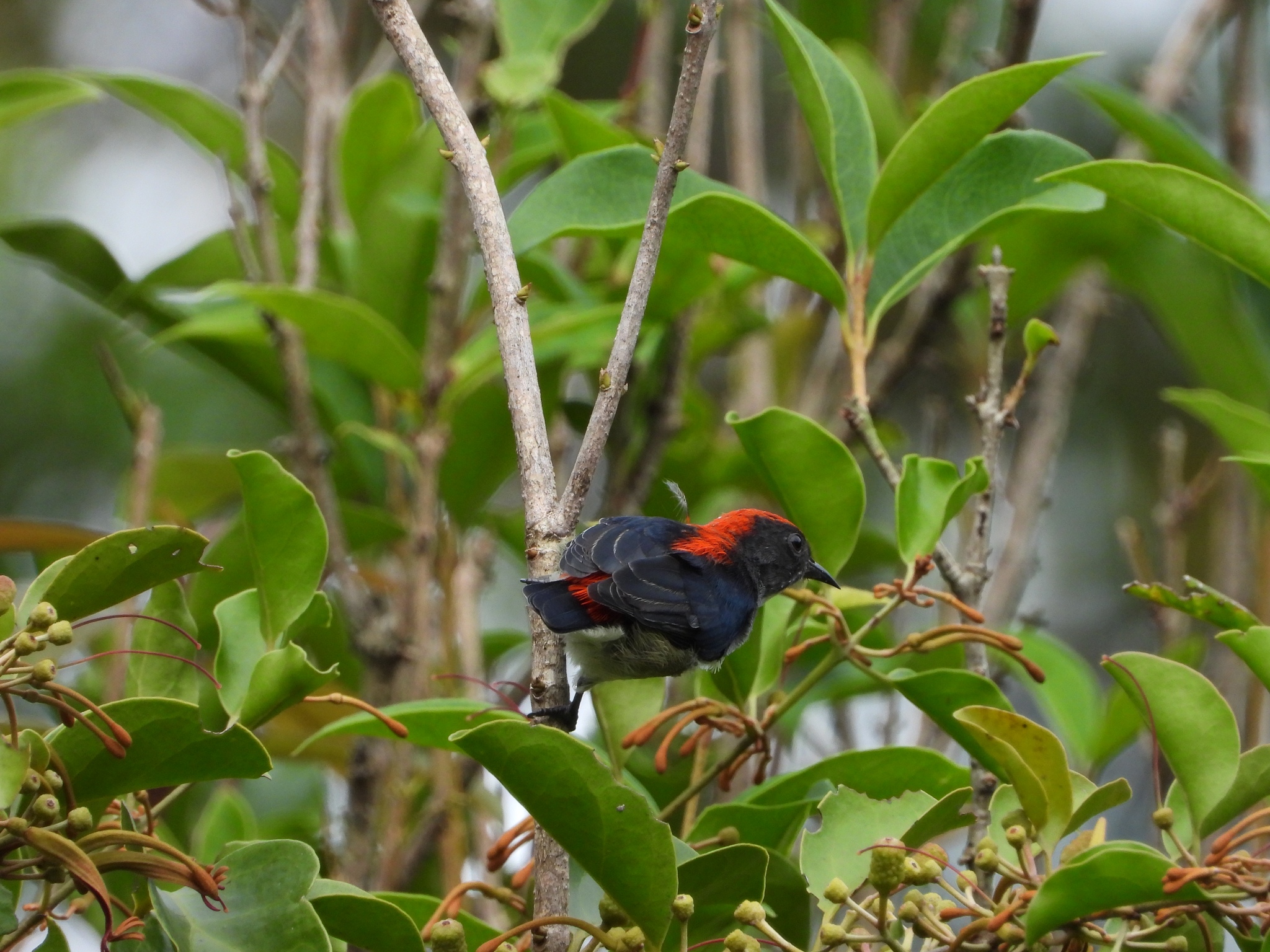
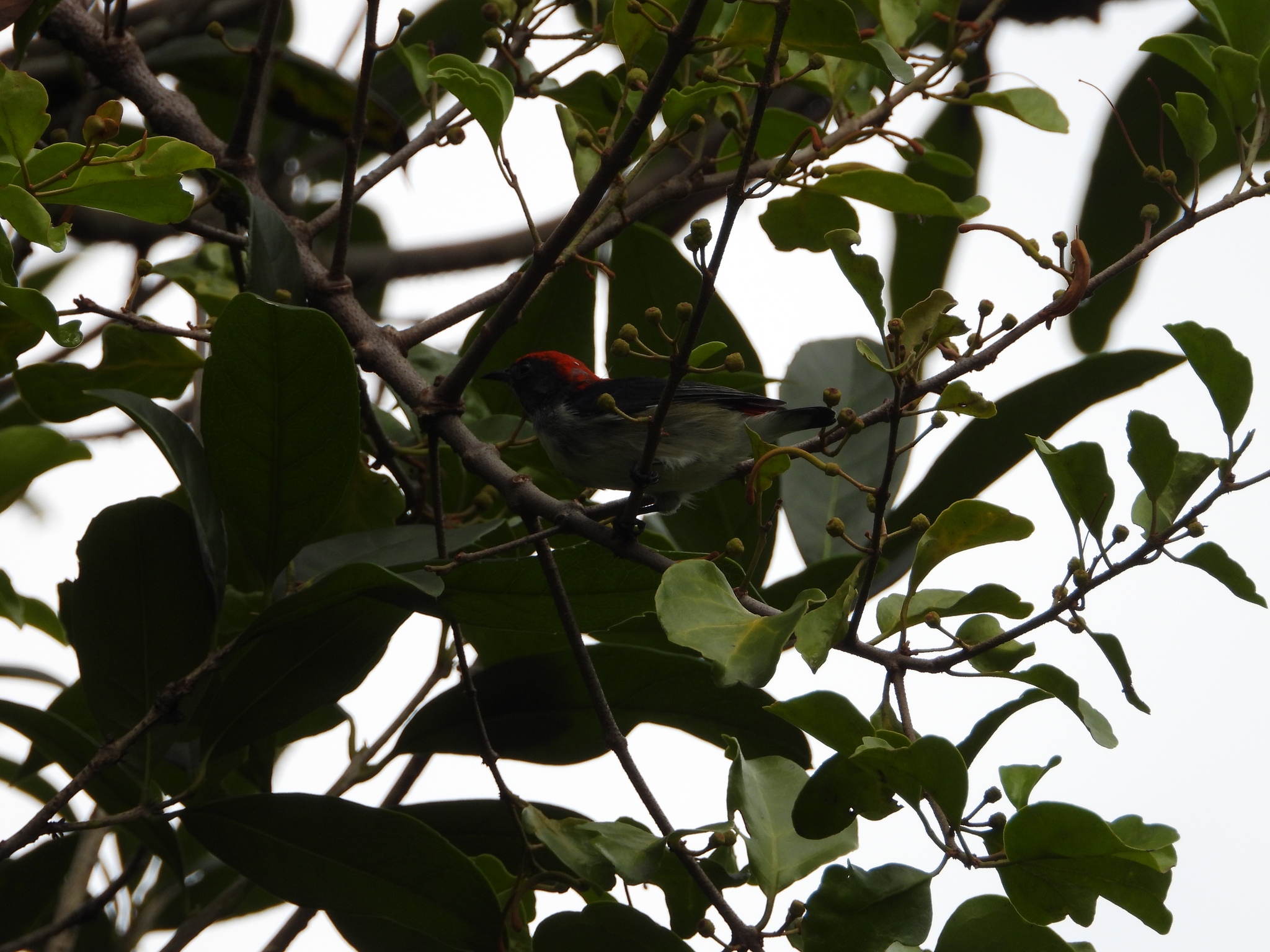
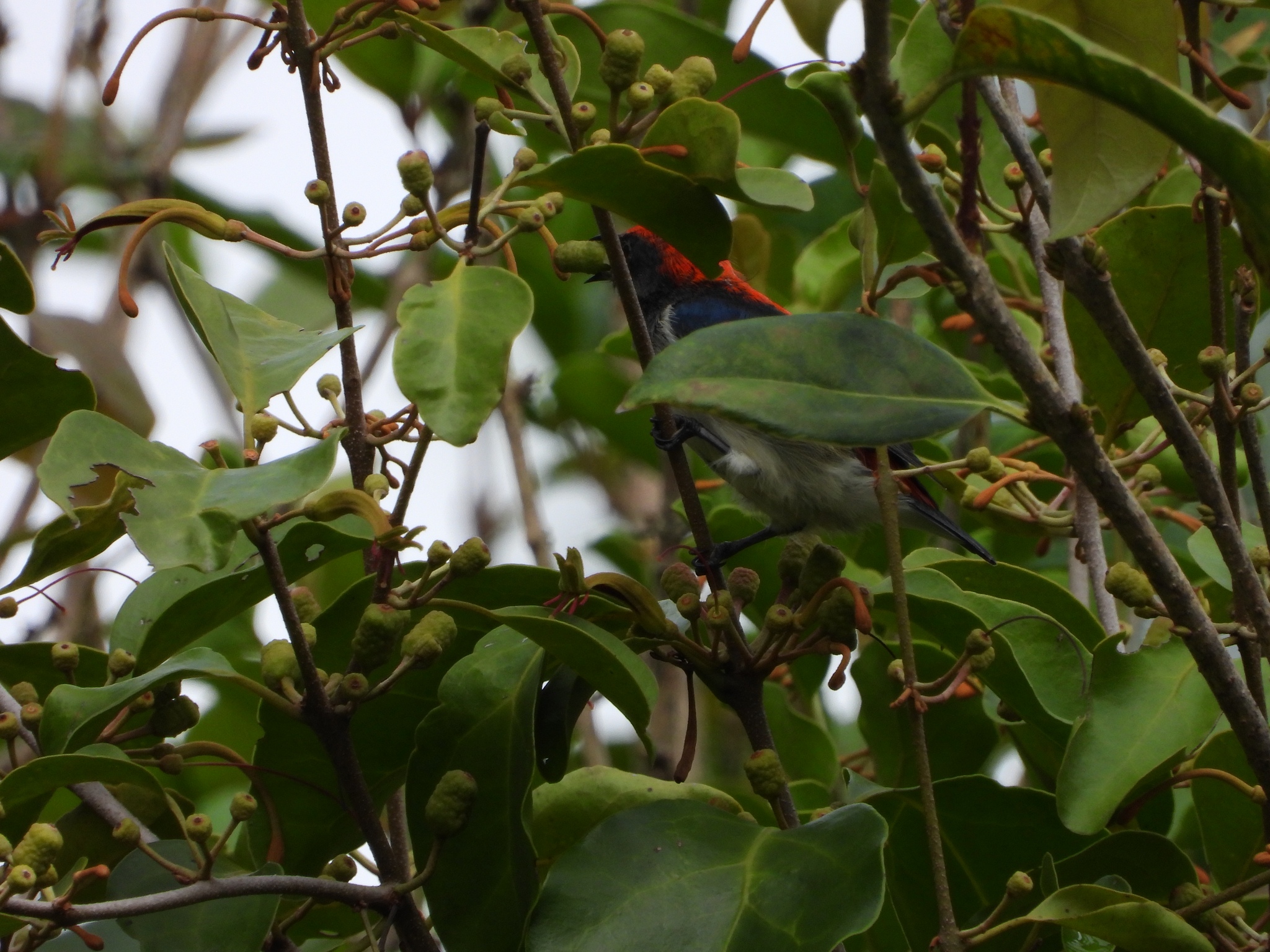
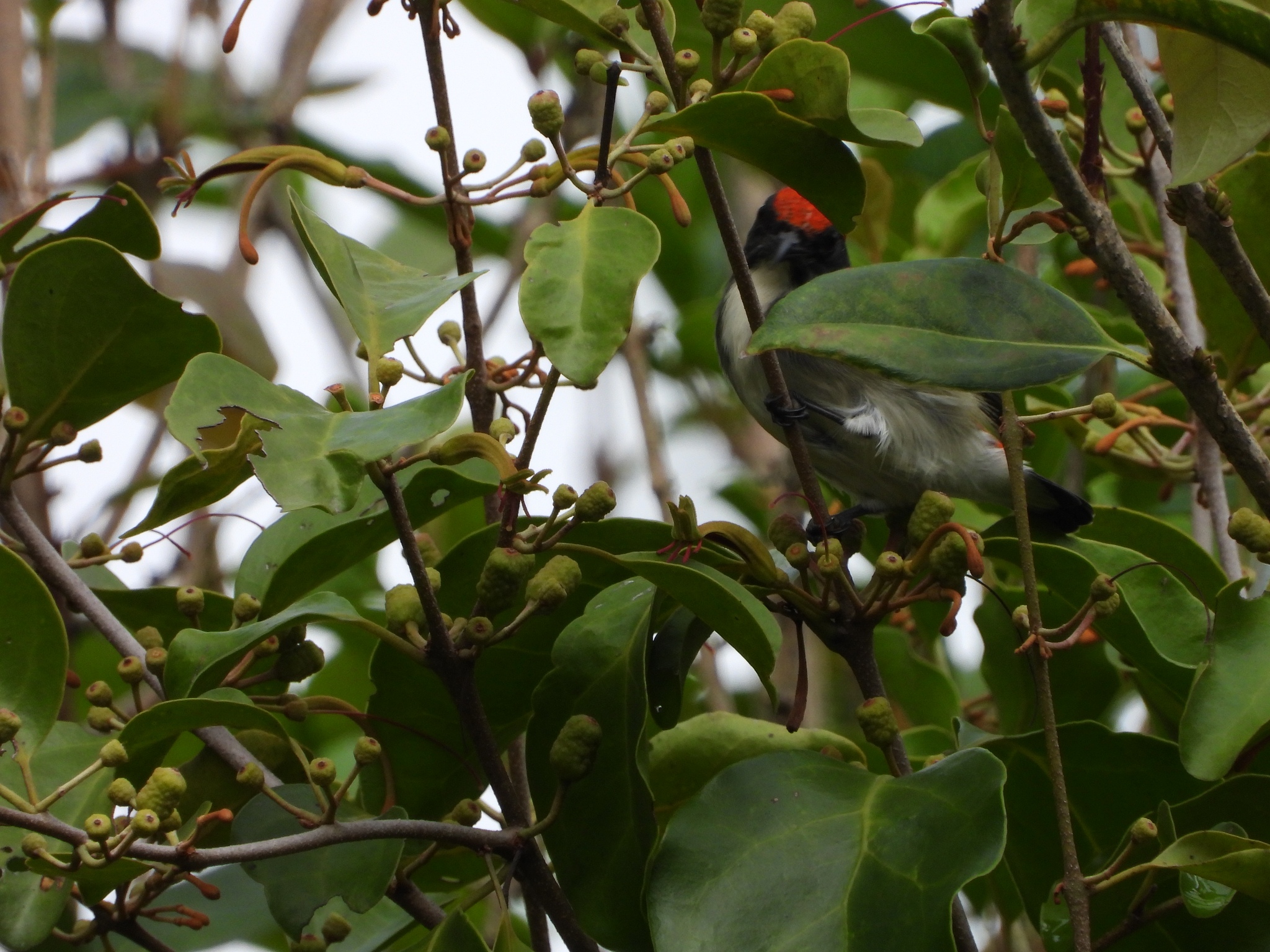
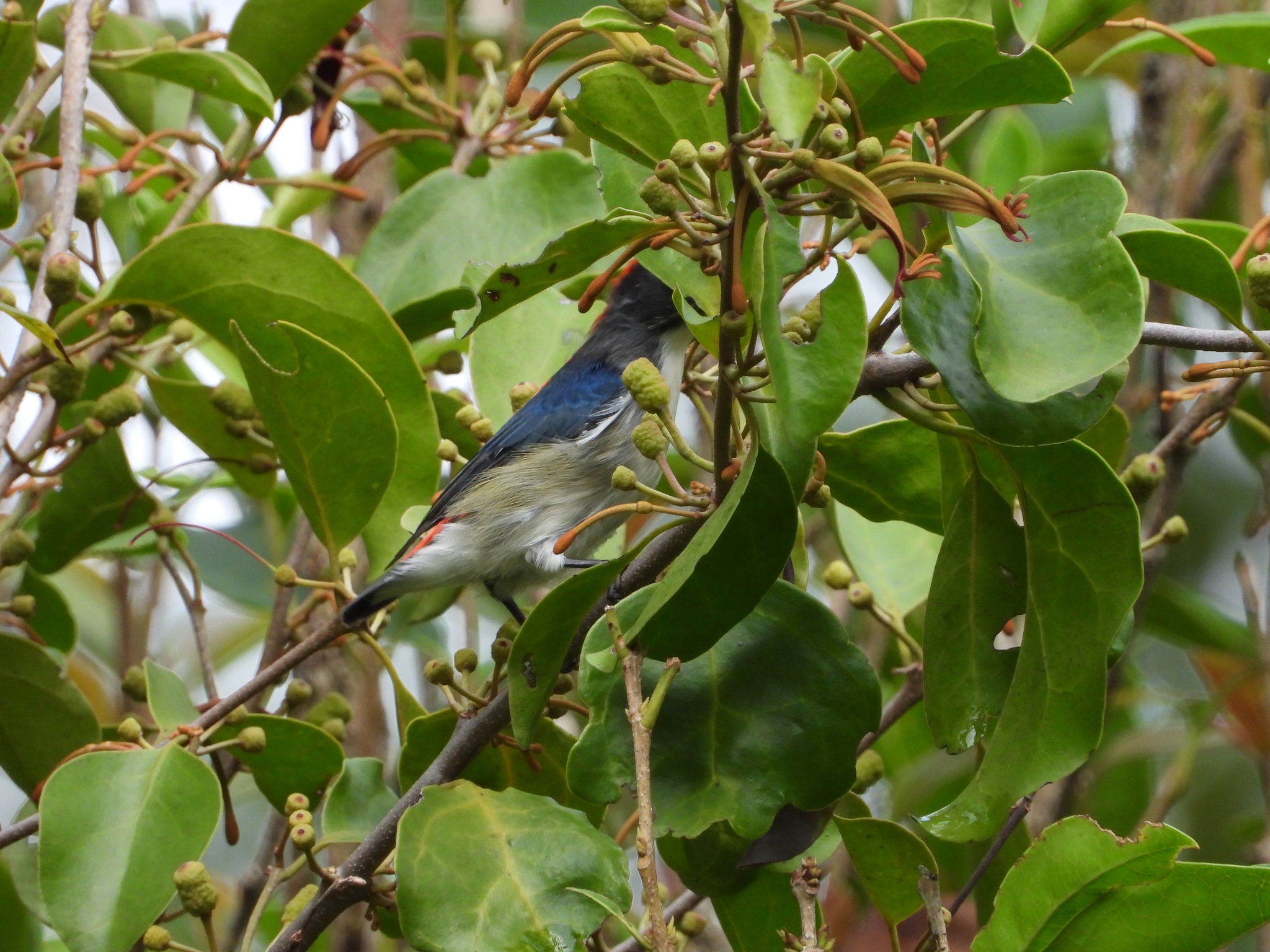
A passerine species in the family Dicaeidae, found in subtropical or tropical moist lowland forests and gardens across South and East Asia. It exhibits sexual dimorphism, with males displaying a bright red dorsal streak and females appearing predominantly olive green.
Description
Measures 9 cm (3.5 in) in length and weighs 7 to 8 grams (0.25 to 0.28 oz). The male has navy blue upperparts, face, wings, and tail, with a broad bright red stripe extending from the crown to the upper tail coverts. The female is predominantly olive green with a black tail, scarlet upper tail coverts and rump, and creamy white underparts. Both sexes have black eyes and legs, and a dark grey arched bill. Juveniles resemble females but possess an orange bill and lack the bright red rump.
Distribution & Habitat
Found in Bangladesh, Bhutan, Brunei, Cambodia, China, India, Indonesia, Laos, Malaysia, Myanmar, Nepal, Singapore, Thailand, and Vietnam. Occurs up to 1000 m (3500 ft) in subtropical or tropical moist lowland forests, wooded areas, and gardens. Six subspecies are recognized: D. c. cruentatum (east Himalayas, Bangladesh, south China, Indochina, Malay Peninsula, Myanmar), D. c. sumatranum (Sumatra), D. c. niasense (Nias), D. c. batuense (Batu and Mentawai Islands), D. c. simalurense (Simeulue), and D. c. nigrimentum (Borneo). Common in most of its range, particularly Thailand, but rare in Bhutan and Nepal.
Behavior & Ecology
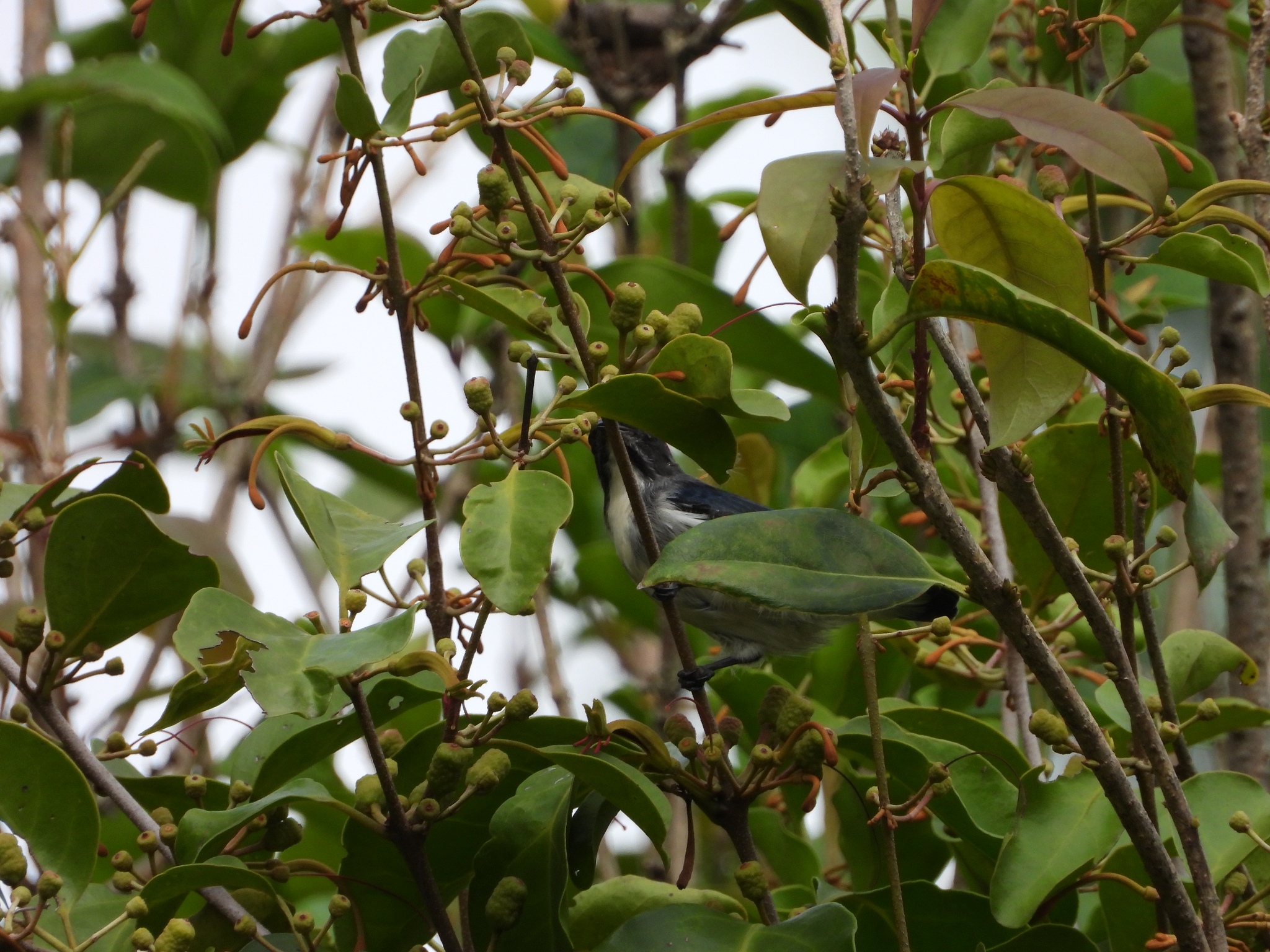
Feeds on figs of Ficus fistulosa and F. grossularoides, as well as Syzygium jambos. Breeding involves weaving a pouch-shaped nest with a side entrance, which hangs from a branch high in a tree.
Source: Wikipedia · CC BY-SA 3.0
Taxonomy
- Order
- Passeriformes
- Family
- Dicaeidae
- Genus
- Dicaeum
Vocalizations
Subspecies (6)
-
Dicaeum cruentatum batuense
Mentawai Archipelago (off Sumatra)
Data Sources
Species description from Wikipedia, licensed under CC BY-SA 3.0.
Bird images and sounds sourced from GBIF, contributed by citizen scientists worldwide under Creative Commons licenses.
Taxonomy data from AviList 2025.