Scarlet-backed Flowerpecker
Dicaeum cruentatum
朱背啄花鸟
Introduction
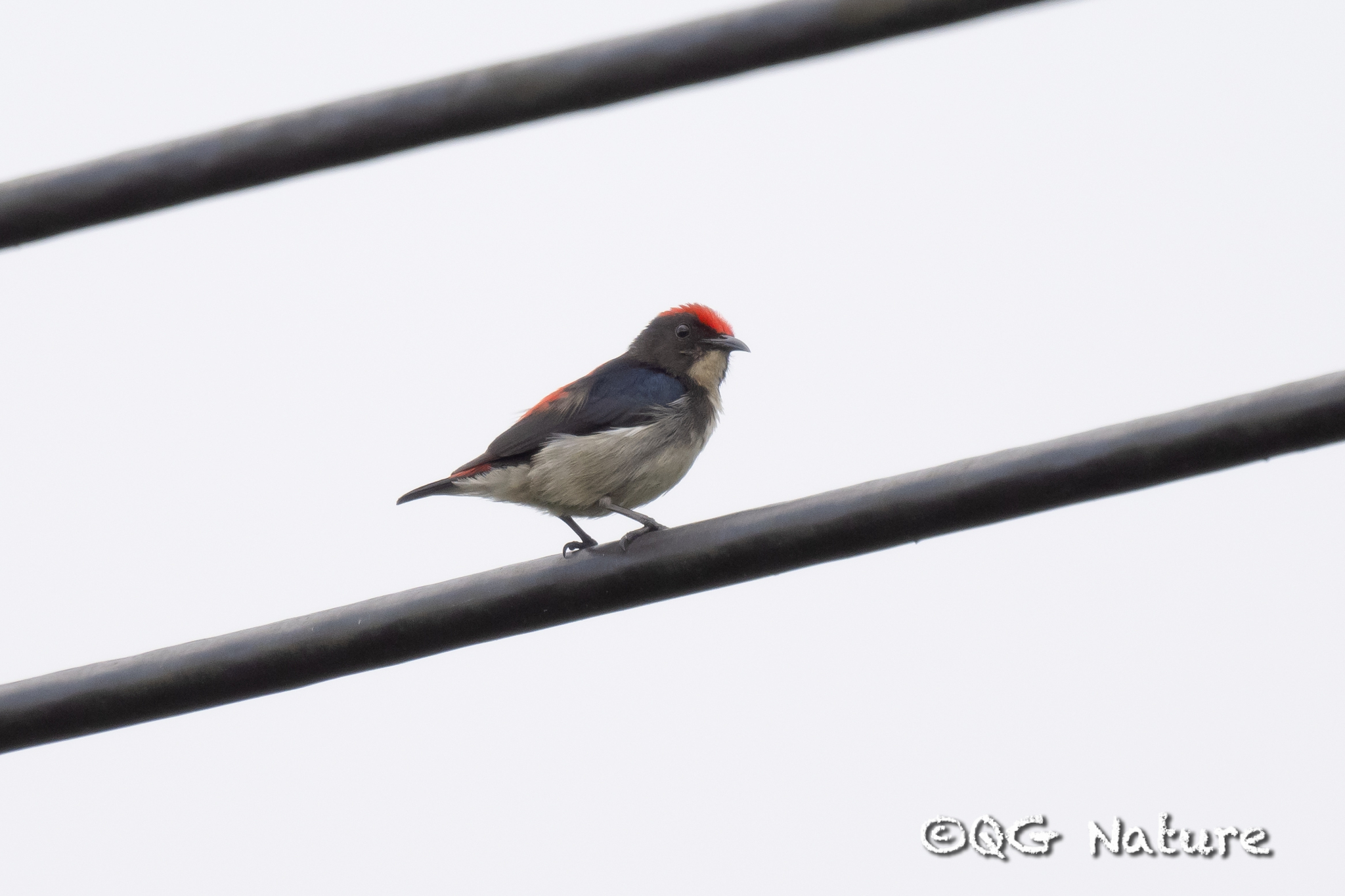
The fire-breasted flowerpecker is a species of flowerpecker found in South and Southeast Asia. It belongs to the family Dicaeidae and measures 9 centimeters in length. The species exhibits pronounced sexual dimorphism: males have navy blue upperparts with a crimson stripe from the crown down the back to the tail coverts, while females and juveniles are olive green with a scarlet rump. It inhabits forests, gardens, parks, and wooded areas across its range. The species is active and moves through the canopy while foraging.
Description
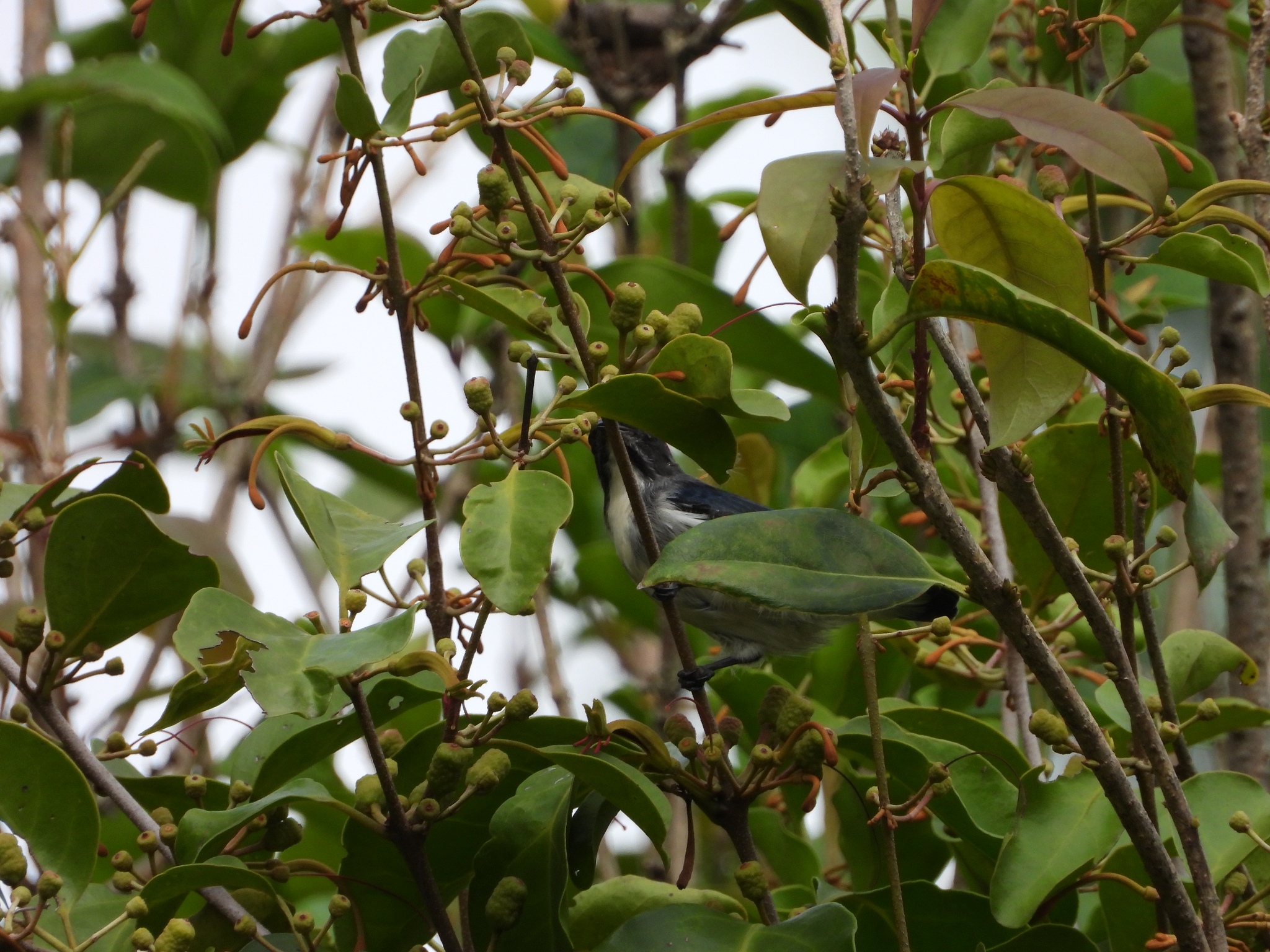
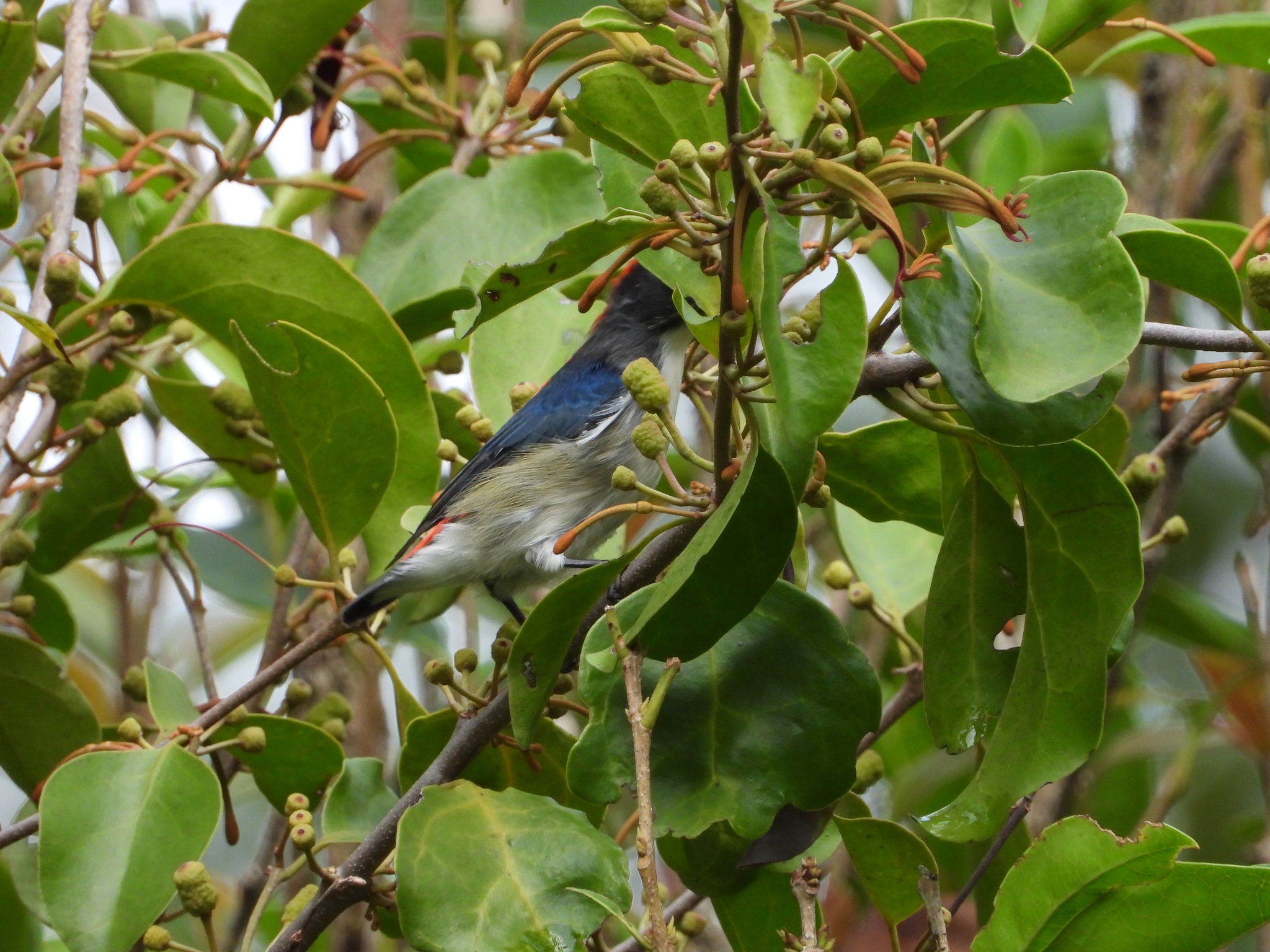
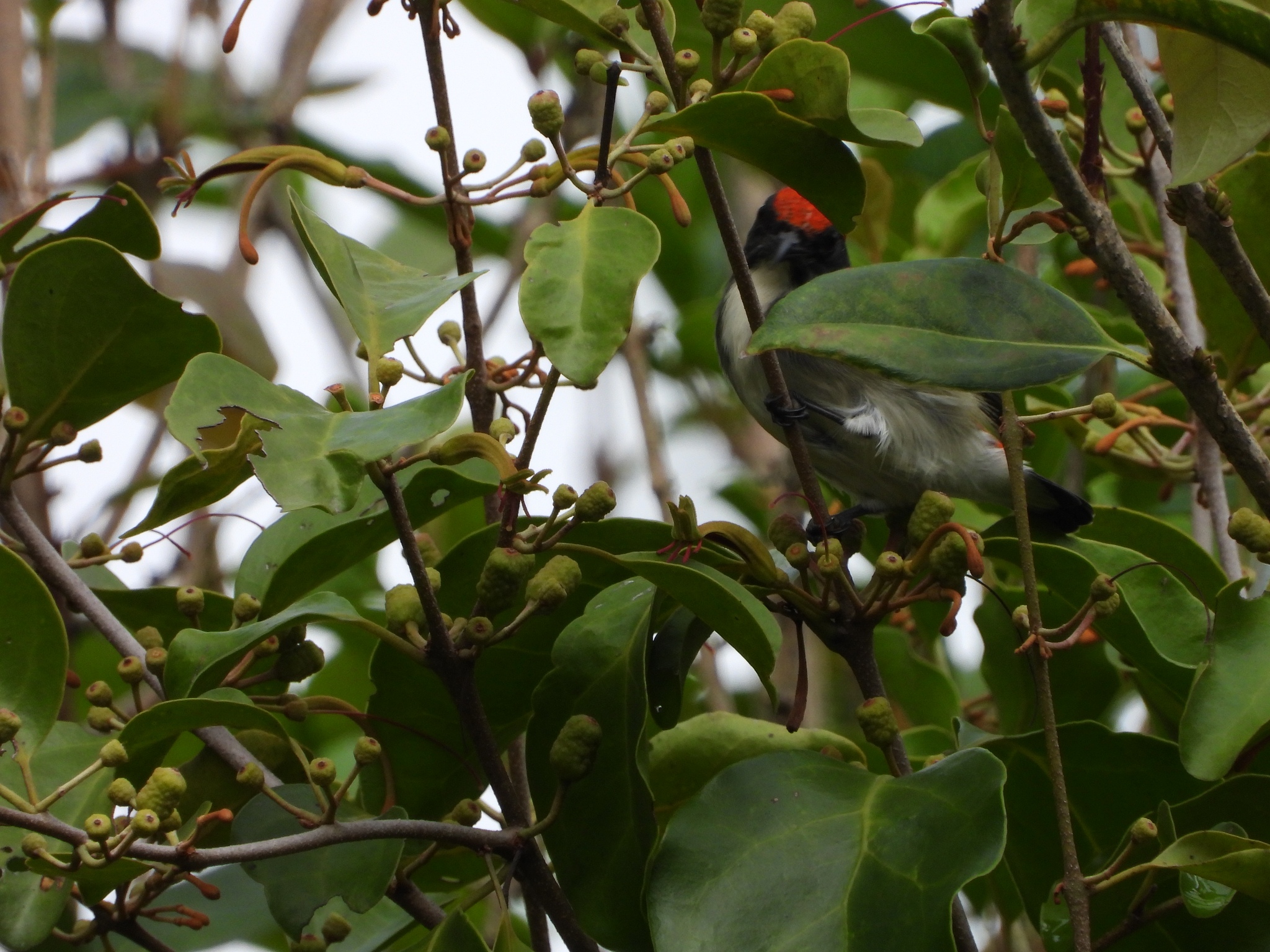
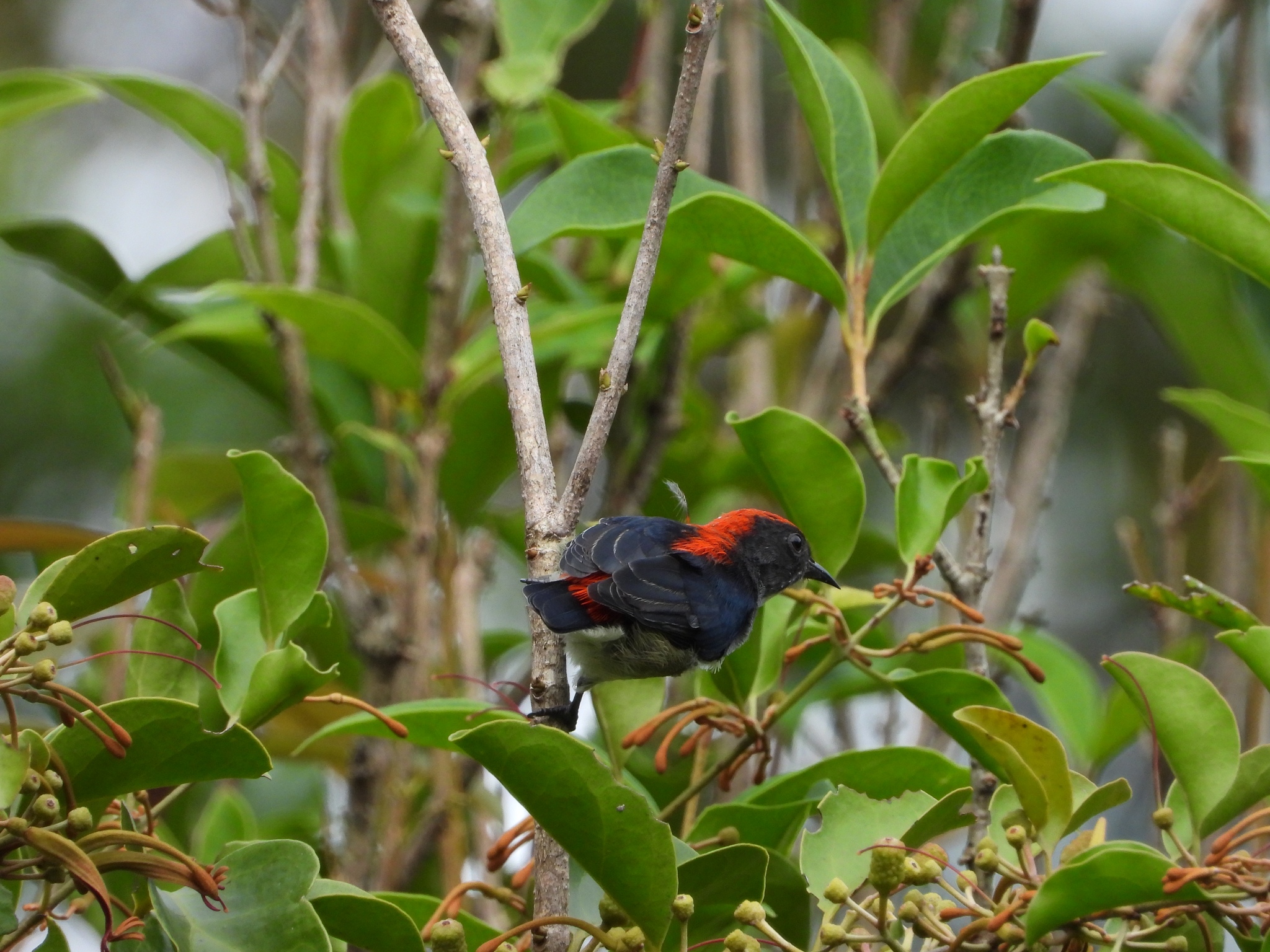
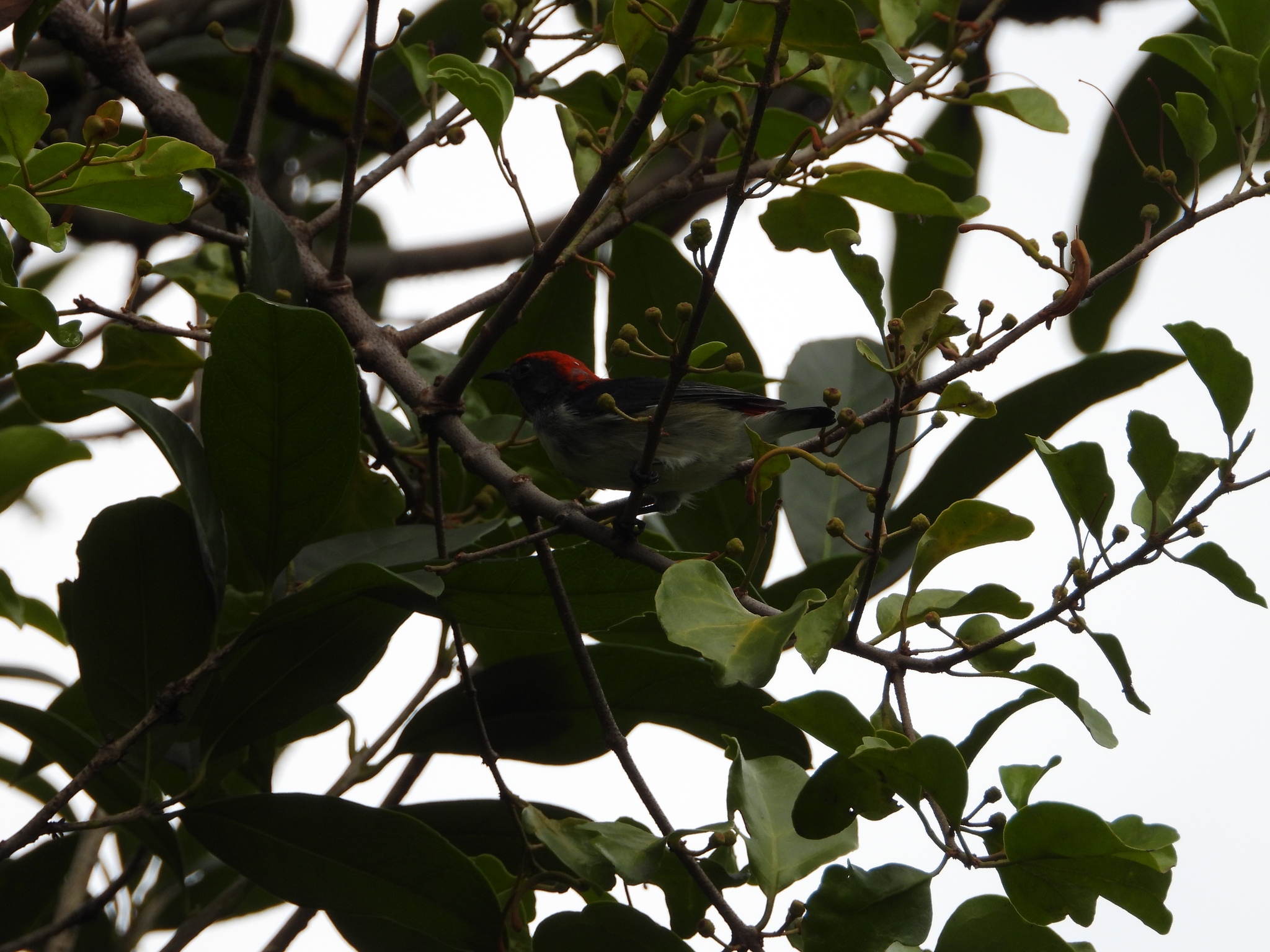
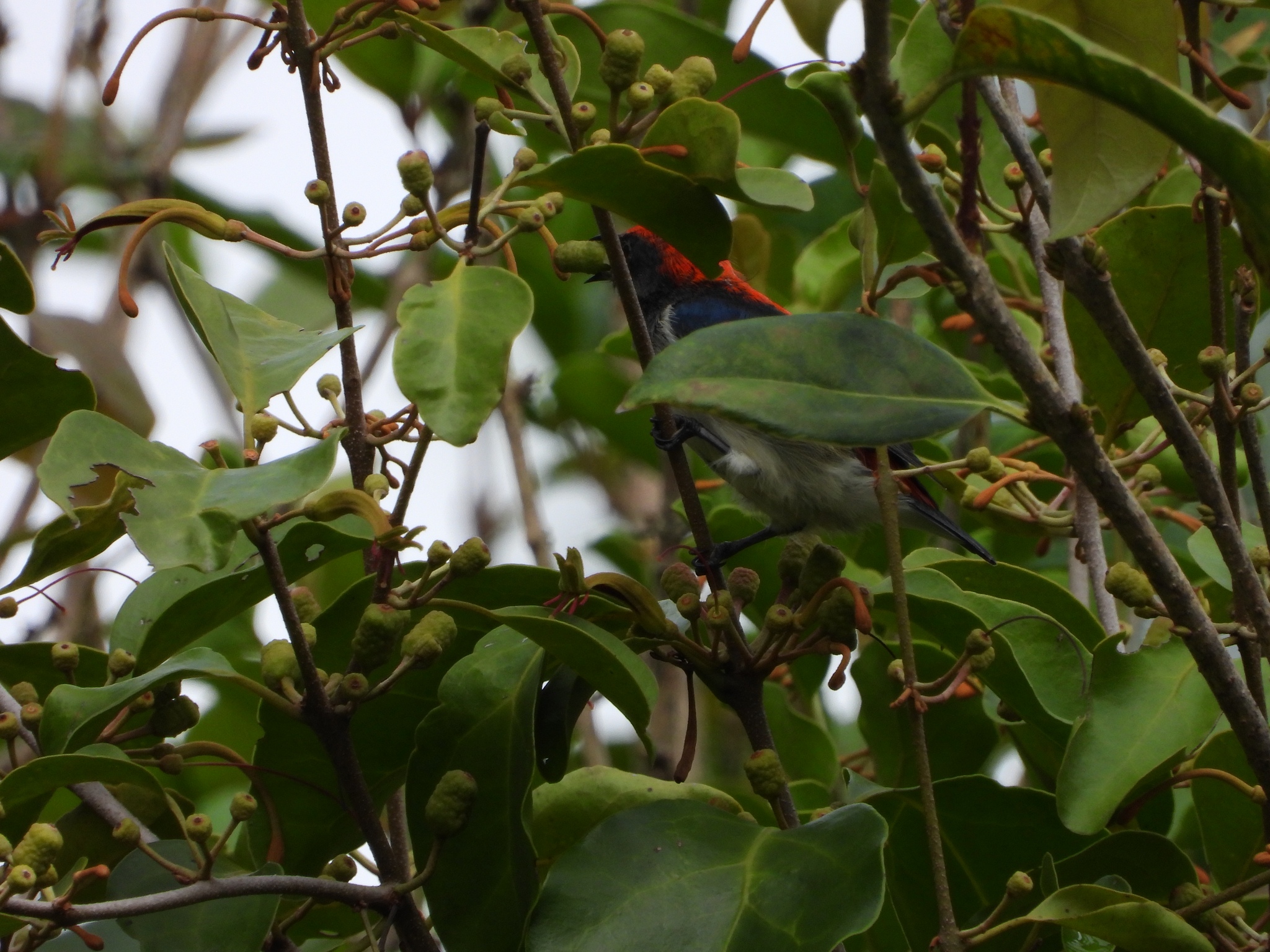
One of the smallest passerines in Asia, this species measures exactly 9 centimeters in length and weighs a mere 7 to 8 grams. It possesses a compact body with notably short tail feathers and a dark grey, slightly arched bill adapted for its specialized diet. The male is unmistakable with its deep navy blue face, wings, and tail contrasted against a brilliant crimson stripe extending from the crown down the back to the upper tail coverts. Females present a completely different appearance, being predominantly olive green above with a black tail and striking scarlet upper tail coverts and rump. Both sexes share creamy white underparts, dark eyes, and black legs and feet. Juveniles resemble females but can be distinguished by their orange-colored bill and the absence of the bright red rump that characterizes adults of both sexes.
Identification
This species' tiny size—roughly equivalent to a sunbird or warbler—combined with its distinctive color patterns makes it relatively straightforward to identify in the field. The male's navy blue plumage set against the bright red dorsal stripe is unique among Asian passerines within its range. Female and juvenile birds, while less colorful, can be recognized by their small olive-green bodies, black tails, and the characteristic scarlet rump patch. They are often detected by their high-pitched, continuous calls while moving actively through the mid to upper canopy levels. The combination of size, the female's olive and scarlet coloration, and its preference for fruiting trees helps distinguish it from similar small birds like white-eyes or warblers.
Distribution & Habitat
This species occupies an extensive range across South and Southeast Asia, being recorded in Bangladesh, Bhutan, Brunei, Cambodia, China, India, Indonesia, Laos, Malaysia, Myanmar, Nepal, Singapore, Thailand, and Vietnam. It occurs primarily in subtropical and tropical moist lowland forests up to 1,000 meters elevation, though it also frequents wooded areas, plantations, and gardens, showing considerable adaptability to modified landscapes. In the northern parts of its range, it extends through the eastern Himalayas and Bangladesh to south China, Indochina, and the Malay Peninsula. Island populations occur across Sumatra and its offshore islands, as well as Borneo. While considered common throughout much of Thailand, it appears to be rarer at the edges of its range in Bhutan and Nepal, though no comprehensive global population studies have been conducted.
Behavior & Ecology
Birdwatchers often observe this species actively feeding in the canopy, where it specializes in consuming small fruits and figs. In Singapore's Bukit Timah Nature Reserve, it has been documented feeding on the figs of Ficus fistulosa and Ficus grossularoides, while in urban Hong Kong it frequently visits Syzygium jambos trees. Its breeding behavior includes constructing a distinctive pouch-shaped nest woven from plant fibers and spider webs, which hangs from a high tree branch. The nest features a side entrance, a characteristic shared by other flowerpecker species. During the breeding season, pairs become more territorial, though otherwise they may join mixed-species foraging flocks moving through the forest canopy.
Conservation
The IUCN Red List currently classifies this species as Least Concern, reflecting its extensive range and apparently stable population numbers. While no comprehensive global population studies have been conducted, it is considered common throughout most of its range, particularly in Thailand. However, localized populations at the edges of its distribution, such as those in Bhutan and Nepal, appear to be rarer. The species faces ongoing habitat pressures from deforestation and forest degradation across parts of its range, though its ability to utilize gardens and secondary woodland provides some resilience. Continued monitoring of populations in smaller island ranges and the northern limits of its distribution would help ensure early detection of any significant declines.
Culture
This species holds limited cultural significance compared to some other Asian birds. The earliest documented Western description dates to 1747 when English naturalist George Edwards included an illustration and description in his work 'A Natural History of Uncommon Birds,' using the descriptive name 'The little Black, White, and Red Indian Creeper.' The scientific name cruentata, derived from the Latin meaning 'blood-stained,' references the male's vivid red plumage. No significant folklore or traditional cultural associations are documented for this species, and it is primarily appreciated by birdwatchers and nature enthusiasts for its beauty and accessibility rather than any cultural symbolism.
Source: Wikipedia · CC BY-SA 3.0
Taxonomy
- Order
- Passeriformes
- Family
- Dicaeidae
- Genus
- Dicaeum
- eBird Code
- scbflo1
Vocalizations
Subspecies (6)
-
Dicaeum cruentatum batuense
Mentawai Archipelago (off Sumatra)
-
Dicaeum cruentatum cruentatum
eastern Himalayas and Bangladesh to southern China, Indochina, and Malayan Peninsula
-
Dicaeum cruentatum niasense
Nias Island (off western Sumatra)
-
Dicaeum cruentatum nigrimentum
Borneo and Karimata Islands
-
Dicaeum cruentatum simalurense
Simeulue Island (off western Sumatra)
-
Dicaeum cruentatum sumatranum
Sumatra and satellite islands
Data Sources
Species description from Wikipedia, licensed under CC BY-SA 3.0.
Bird images and sounds sourced from GBIF, contributed by citizen scientists worldwide under Creative Commons licenses.
Taxonomy data from AviList 2025.