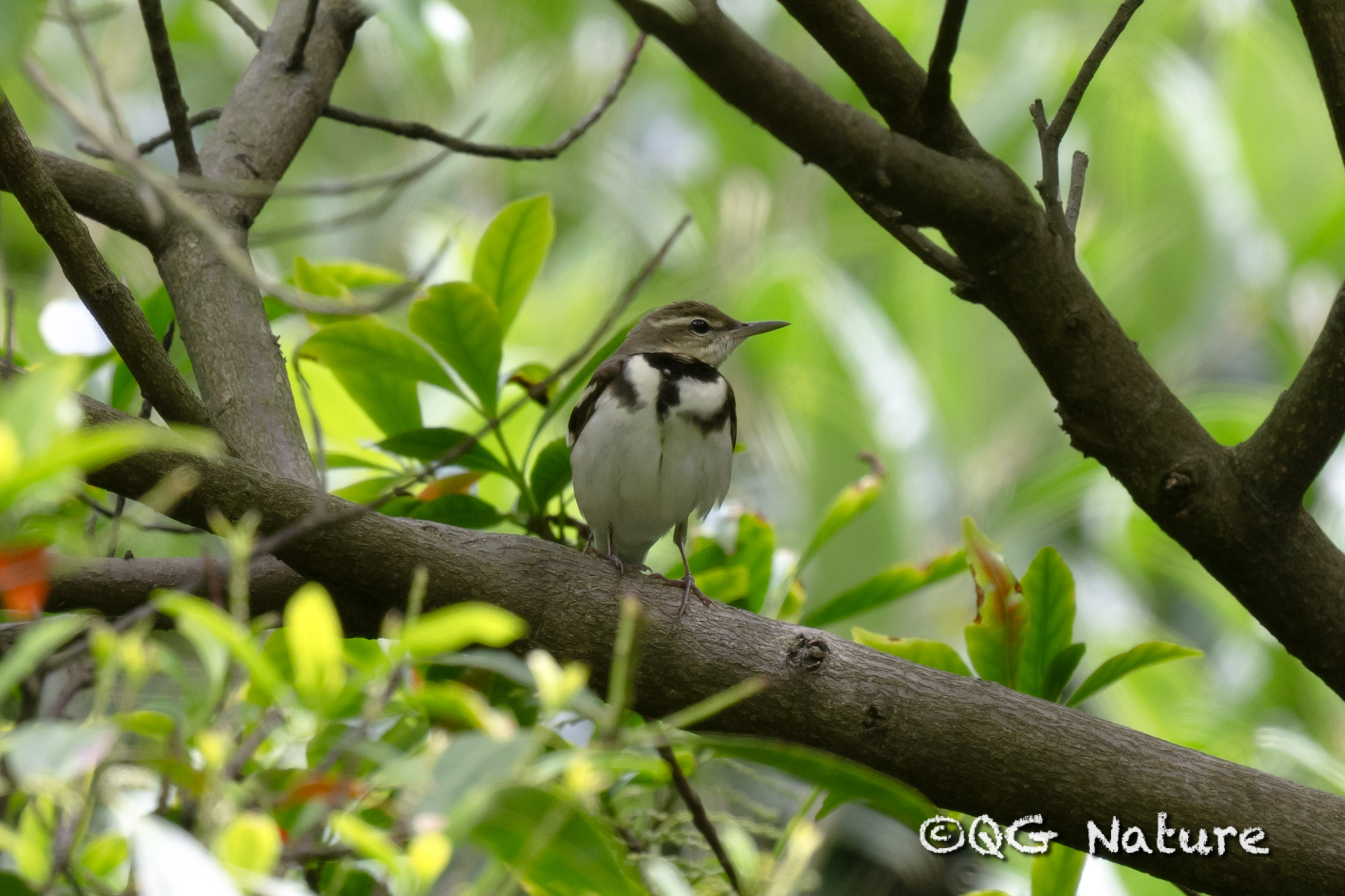
Passeriformes / Motacillidae / Dendronanthus
Forest Wagtail
Dendronanthus indicus · 山鹡鸰
Introduction
A medium-sized passerine in the wagtail family Motacillidae, this species is the only member of the genus Dendronanthus. It inhabits forested habitats, breeding in temperate East Asia and wintering across tropical Asia from India to Indonesia. Distinctive traits include a unique sideways tail-wagging motion and being the only wagtail species that nests in trees.
Description
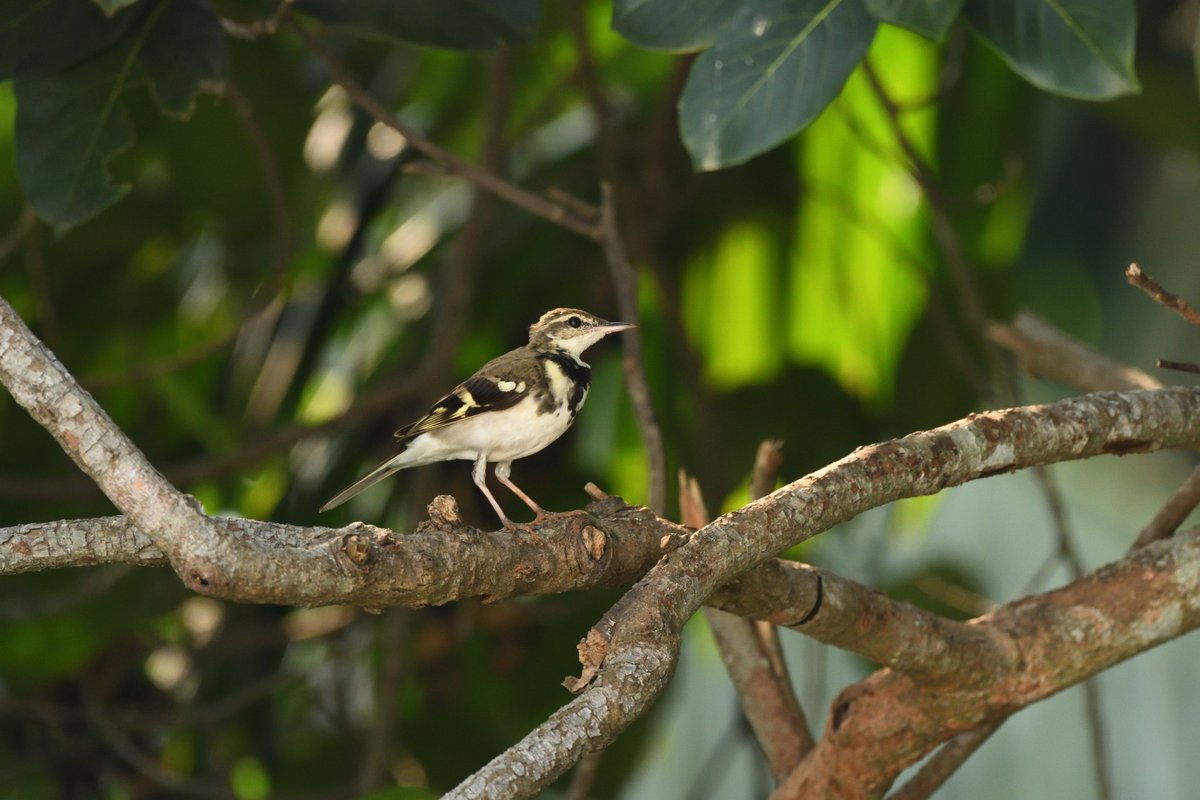
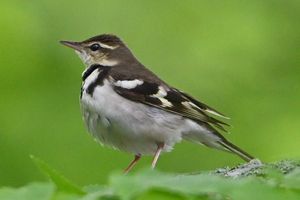
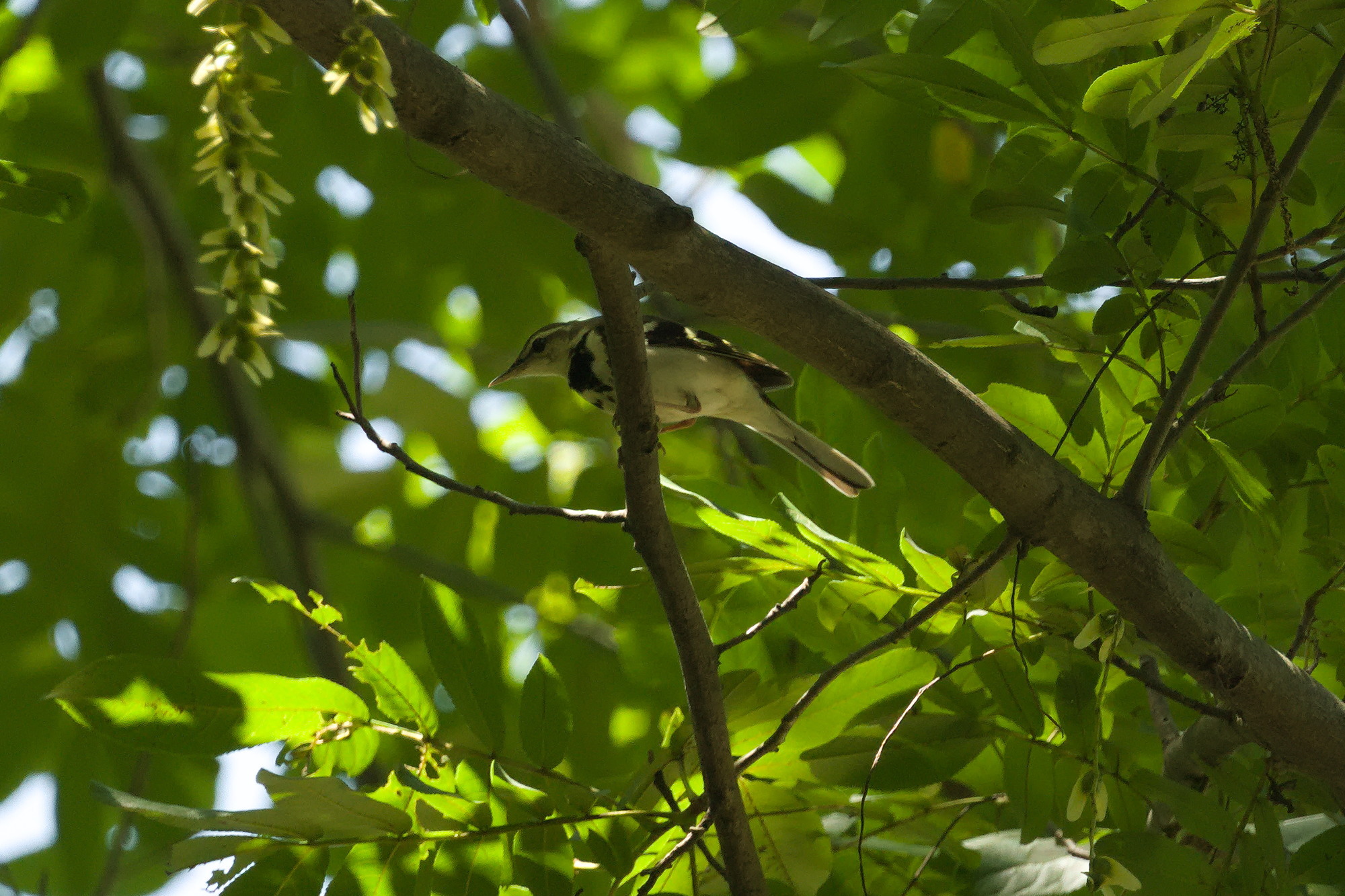
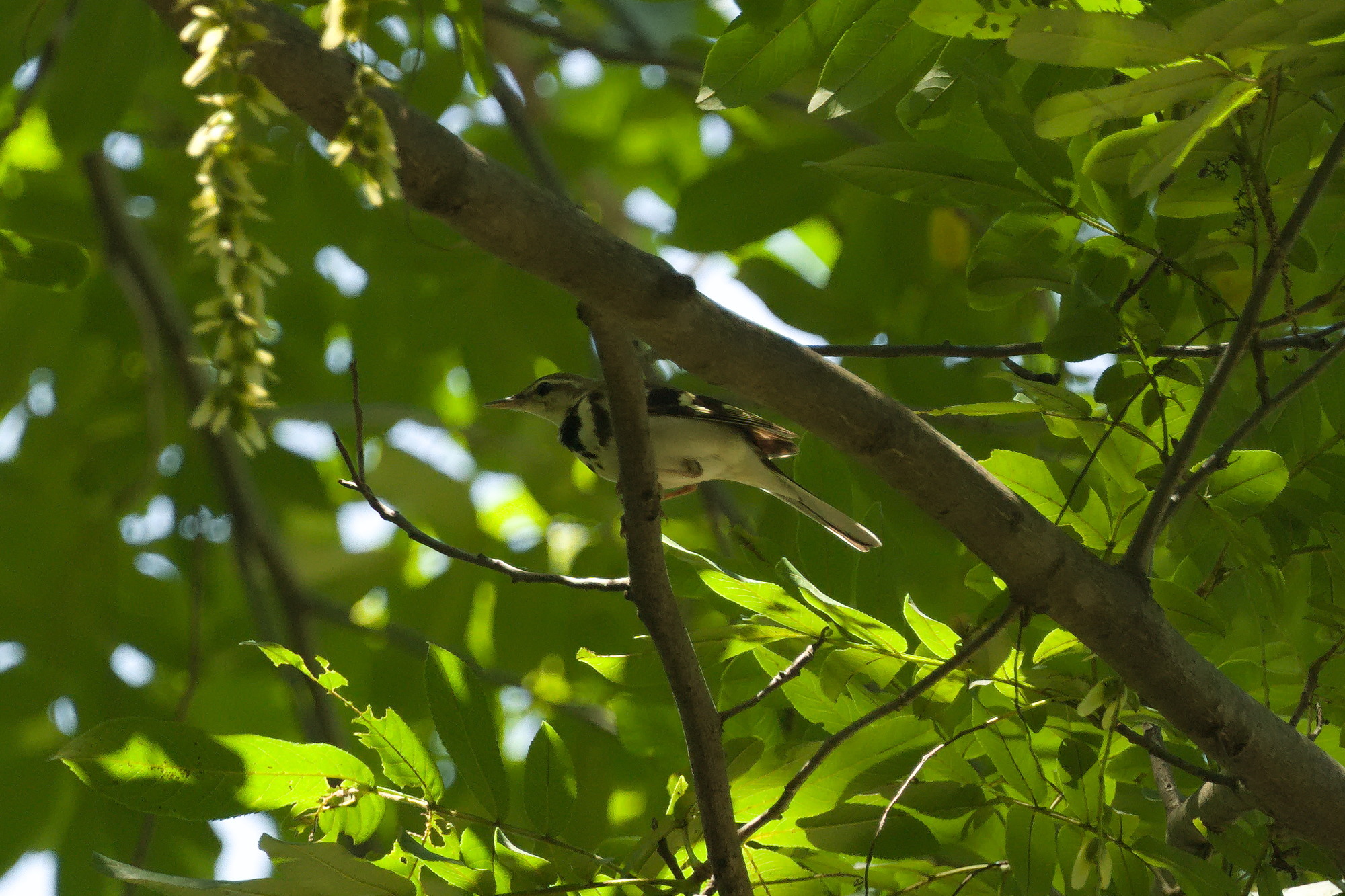
Length is 18 cm (7.1 in). The bird is slender with a long tail. The back and crown are olive brown. Wings are black with two yellow wing bars and white tertial edges. A white supercilium sits above a dark eye stripe. Underparts are white, featuring a black double breast band; the upper band is bib-like, while the lower is often broken. Sexes are similar. Young birds have more yellowish underparts.
Identification
Distinguished from other wagtails by olive-brown upperparts, black wings with two yellow bars, and a double black breast band on white underparts. Key behavioral identifier is the habit of swaying the tail sideways rather than up and down. Vocalizations include a single-note 'pink pink' call and a soft lilting song.
Distribution & Habitat
Breeds in eastern Asia, including parts of Korea, China (Gansu, Anhui, Hunan), and Siberia. Migrates to winter in tropical Asia, ranging from India and Sri Lanka to Indonesia. Wintering grounds include well-shaded forests, coffee plantations, and forest clearings across southern India and the Malay Peninsula. Recorded as a vagrant in the Maldives and Australia.
Behavior & Ecology
Found singly or in small groups. Forages for insects on tree branches, climbing steep branches and running along horizontal ones, but also forages on the ground like a pipit. Roosts among reeds with other wagtails. Breeding occurs in May (northeastern India) to June (Amur region). The female alone builds a cup-shaped nest of grass, rootlets, moss, and cobwebs in trees, often oaks. Clutch size is usually five eggs, incubated by the female for 13–15 days. Young fledge after 10–12 days, fed by both parents. In Sri Lanka, it searches for maggots in cattle dung.
Source: Wikipedia · CC BY-SA 3.0
Taxonomy
- Order
- Passeriformes
- Family
- Motacillidae
- Genus
- Dendronanthus
Distribution
breeds Russian Far East to southeastern China and southern Japan; winters to southern and southeastern Asia
Vocalizations
Data Sources
Species description from Wikipedia, licensed under CC BY-SA 3.0.
Bird images and sounds sourced from GBIF, contributed by citizen scientists worldwide under Creative Commons licenses.
Taxonomy data from AviList 2025.