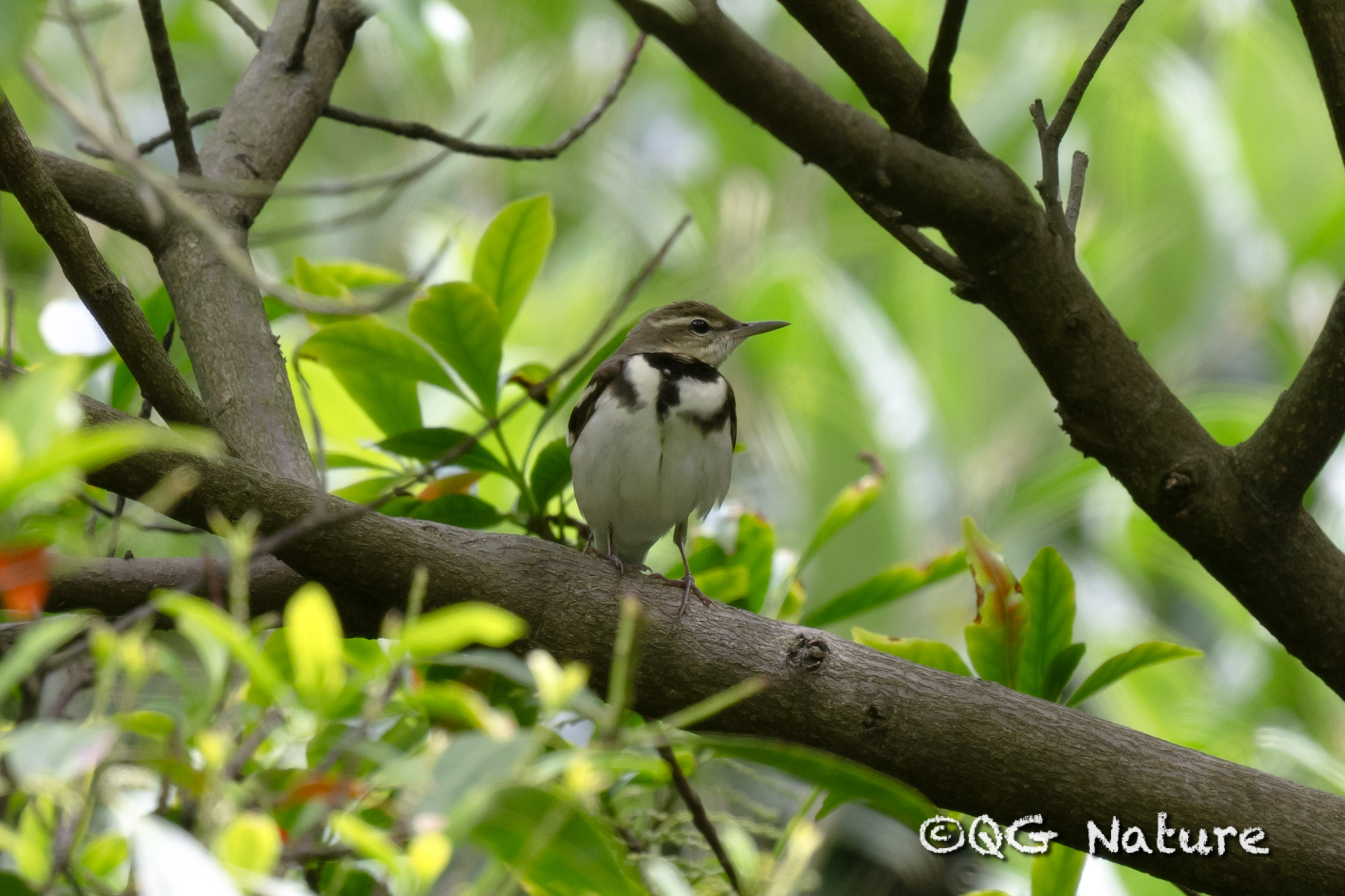
Forest Wagtail
Dendronanthus indicus
山鹡鸰
Introduction
This medium-sized wagtail (family Motacillidae) is the only member of its genus inhabiting forested woodlands rather than open wetlands. It breeds across temperate eastern Asia, including Korea, China, and Siberia, wintering in tropical regions from India through Indonesia. Its most distinctive feature is lateral tail-wagging, unlike the up-and-down motion of other wagtail species. It is unique among wagtails for building cup-shaped nests in trees rather than on the ground. Found along forest paths, clearings, and coffee plantations, it forages both in trees and on the ground.
Description
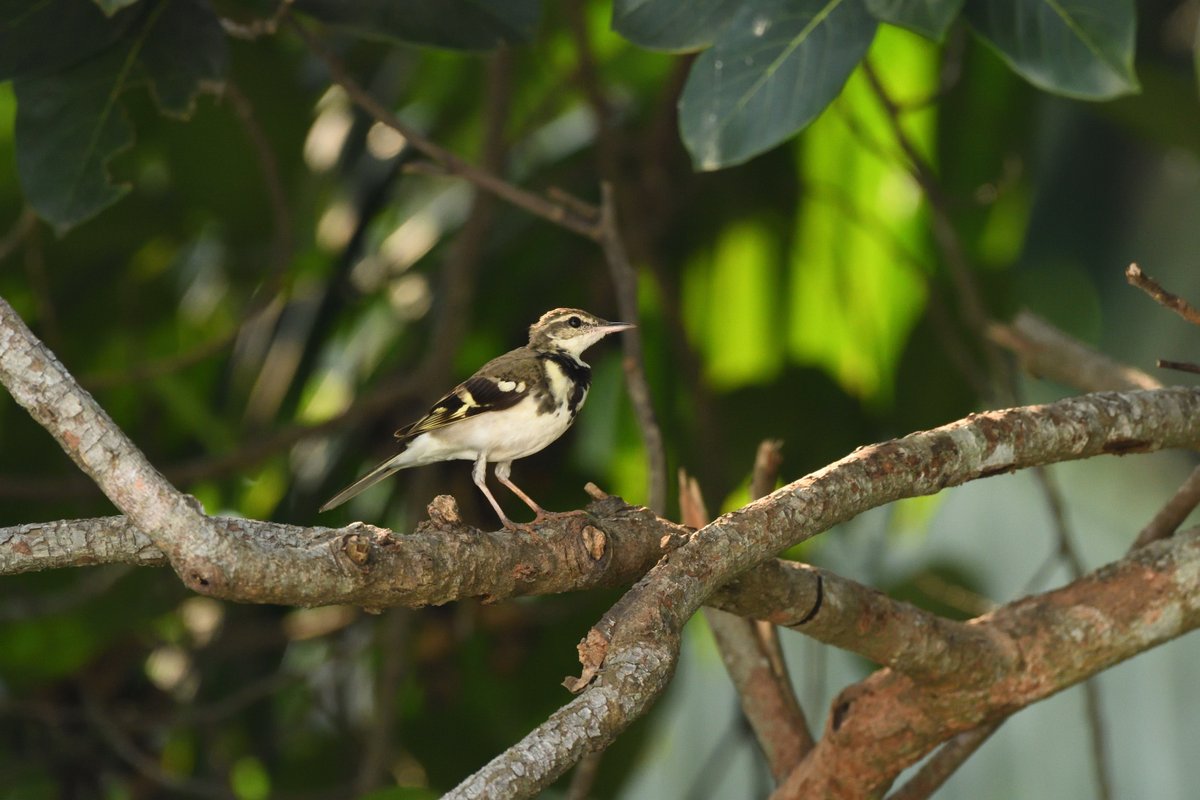
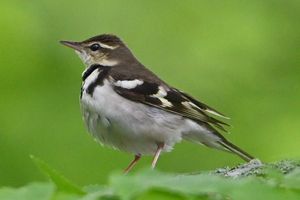
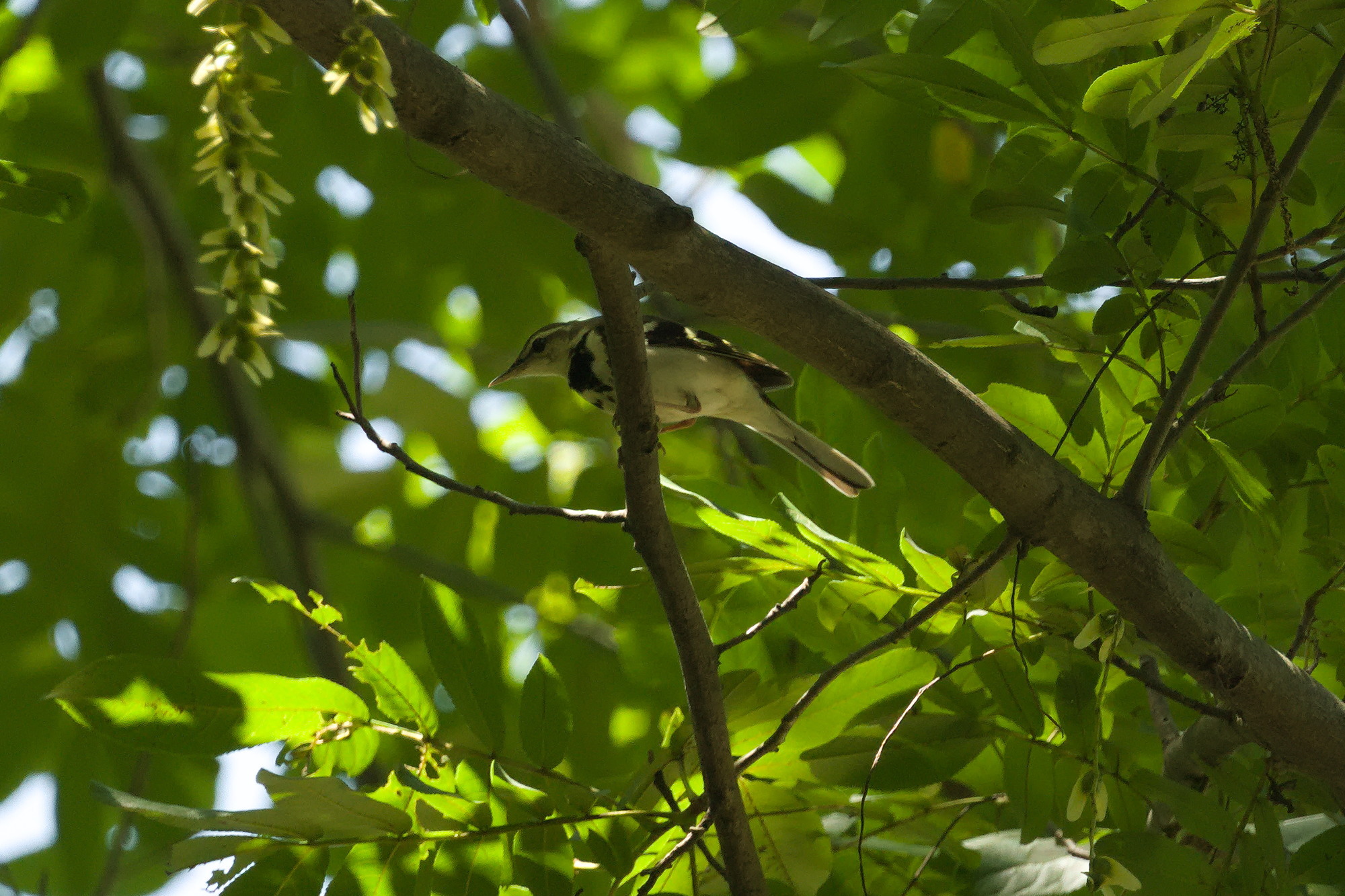
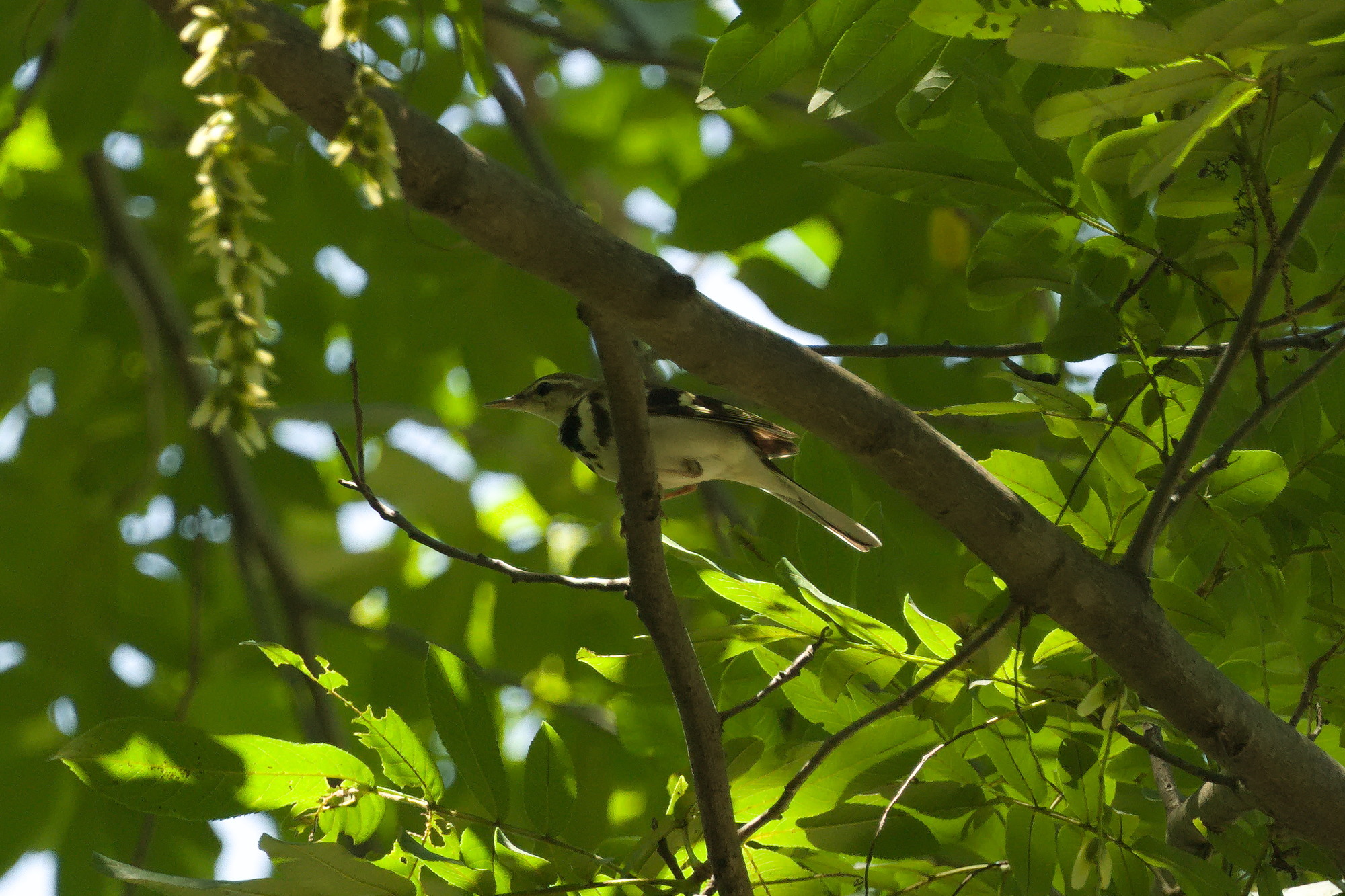
A slender, long-tailed bird measuring 18 centimeters in length, this species displays olive-brown coloring on the back and crown. The wings are black with two prominent yellow wing bars and white edges on the tertials. A distinctive white supercilium arches above a dark eye stripe, while the underparts are white except for a black double breast band—the upper band is bib-like and the lower is often broken. The sexes appear identical, though juveniles show more yellowish coloring underneath. The wings display a black base with two yellow wing bars and white tertial edges.
Identification
This species' unusual plumage pattern immediately sets it apart from other wagtails. The combination of olive-brown upperparts, double breast band, and wing pattern with yellow bars is unique among its relatives. The most distinctive identification feature, however, is the tail-wagging behavior—unlike other wagtails that pump their tails vertically, this bird sways its tail from side to side. This behavior is so characteristic that it forms the basis of its alternative name in Japanese, meaning 'sideways-swinging wagtail.' It also differs from other wagtails by preferring forested habitats and nesting in trees rather than ground locations.
Distribution & Habitat
This forest-dwelling species breeds across eastern Asia, with populations in Korea, China (including Gansu, Anhui, and Hunan provinces), and parts of Siberia. For the winter months, it migrates to tropical Asia, now known to winter throughout the southern Indian peninsula in addition to southwestern India, Sri Lanka, and Indonesia. Migration routes may pass through the Andaman Islands. It inhabits clearings and open areas within deciduous and evergreen forests, also being found along paths in coffee plantations. Vagrant populations have been recorded in the Maldives and Australia.
Behavior & Ecology
Solitary or found in small groups, these birds forage both in trees and on the ground, climbing steep branches and running rapidly along horizontal limbs while hunting insects. They also capture prey by walking on the ground like pipits, flying up into trees when disturbed with a sharp 'pink' note. The call is a single-note 'pink pink' given frequently, and they also produce a soft lilting song. Roosting occurs among reeds alongside other wagtails. Breeding season runs from May in northeastern India to June in the Amur region. The female alone constructs a cup-shaped nest of grass and rootlets matted with moss and cobwebs, typically in tree crotches, particularly oaks. She incubates a clutch of five eggs for 13-15 days, with both parents feeding the young. The young leave the nest after 10-12 days. Males sing from May to July, swaying at each syllable.
Conservation
Population trends and conservation status for this species are not detailed in available sources.
Culture
In Sri Lanka, this bird is locally known as 'gomarita,' meaning 'dung-spreader,' due to its habit of searching for maggots in cattle dung. The species has also been depicted in John Gould's illustrated work 'Birds of Asia,' contributing to its cultural and scientific documentation.
Source: Wikipedia · CC BY-SA 3.0
Taxonomy
- Order
- Passeriformes
- Family
- Motacillidae
- Genus
- Dendronanthus
- eBird Code
- forwag1
Distribution
breeds Russian Far East to southeastern China and southern Japan; winters to southern and southeastern Asia
Vocalizations
Data Sources
Species description from Wikipedia, licensed under CC BY-SA 3.0.
Bird images and sounds sourced from GBIF, contributed by citizen scientists worldwide under Creative Commons licenses.
Taxonomy data from AviList 2025.