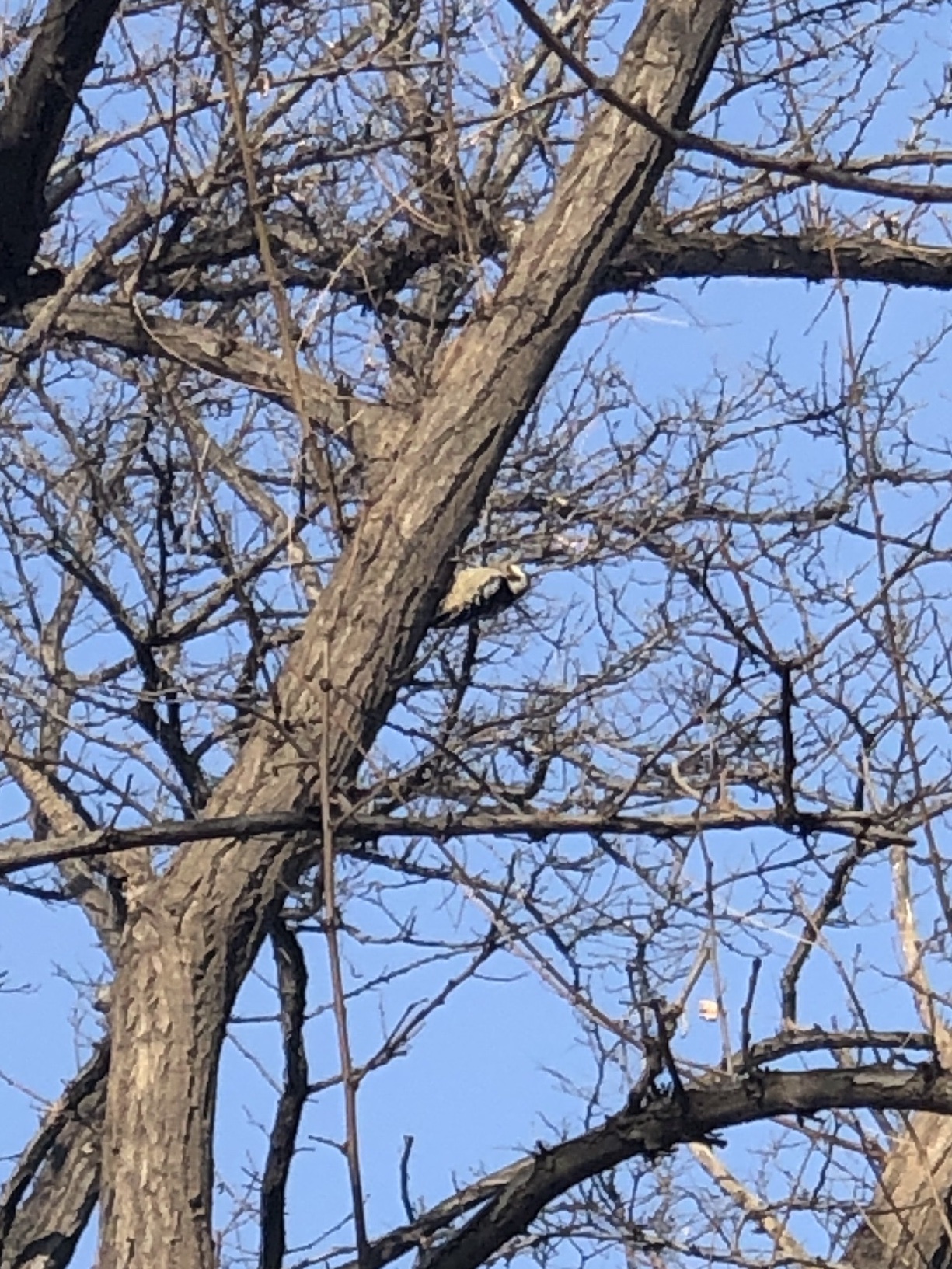
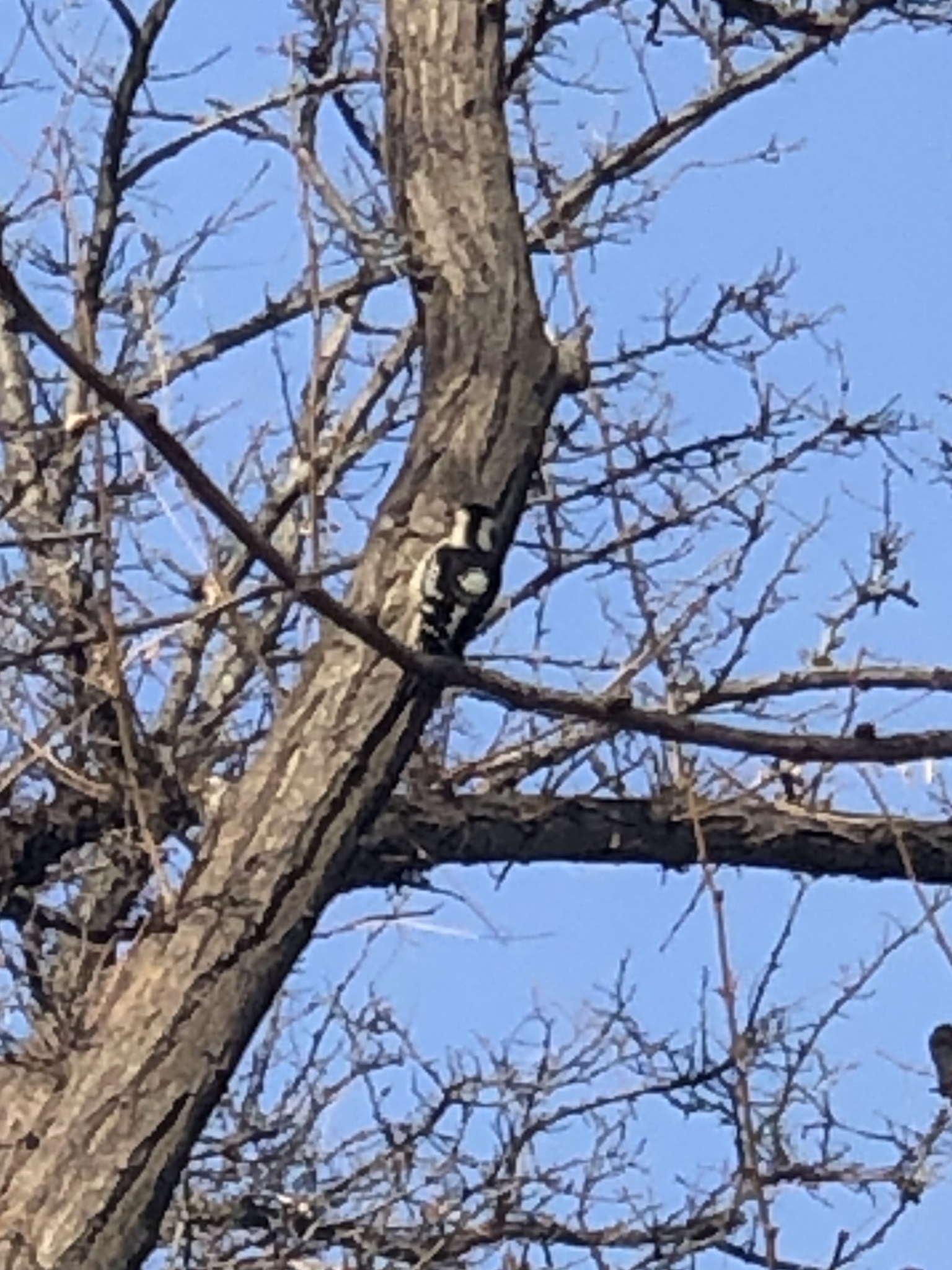
Piciformes / Picidae / Dendrocopos
Great Spotted Woodpecker
Dendrocopos major · 大斑啄木鸟
Introduction
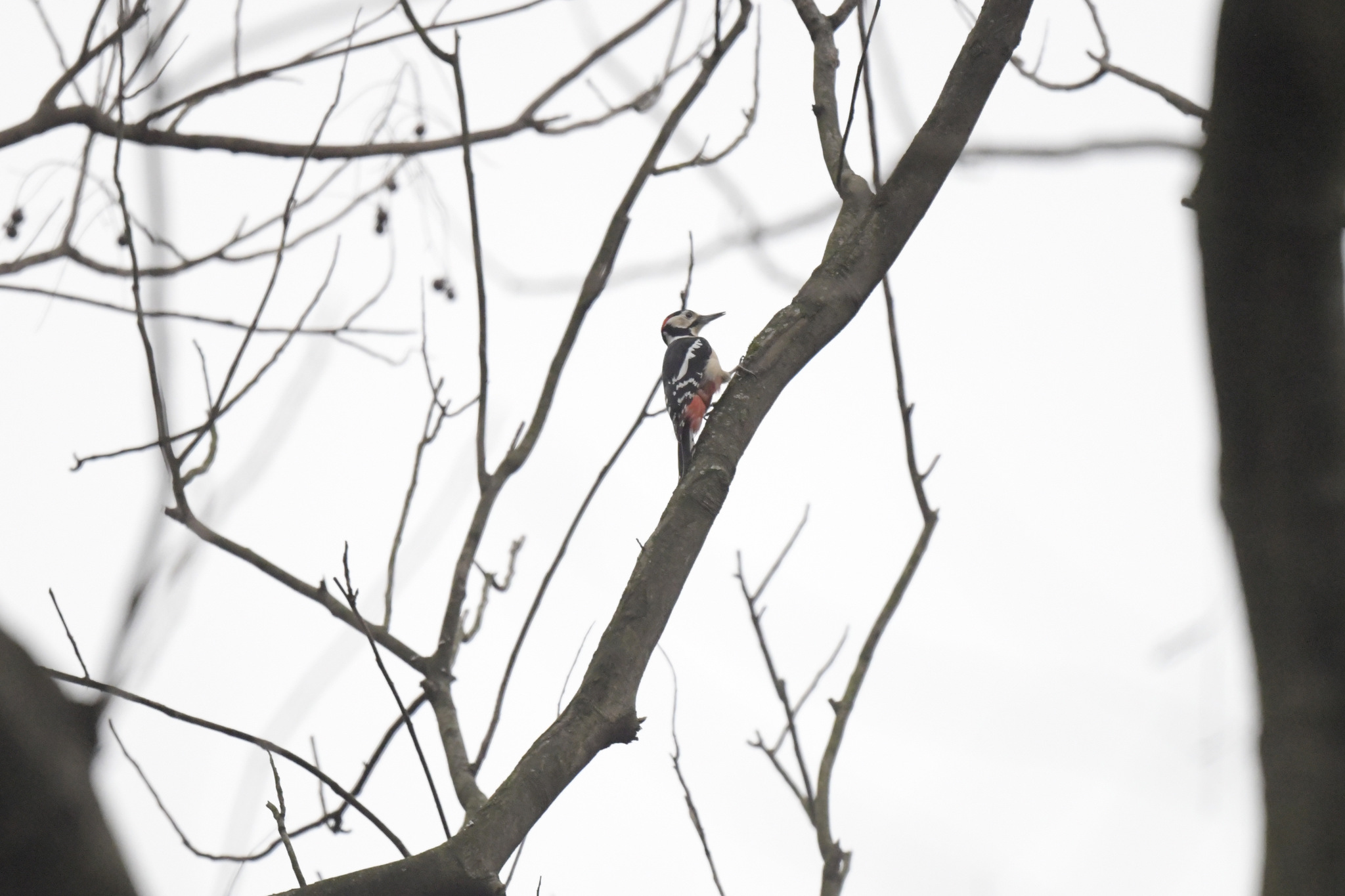
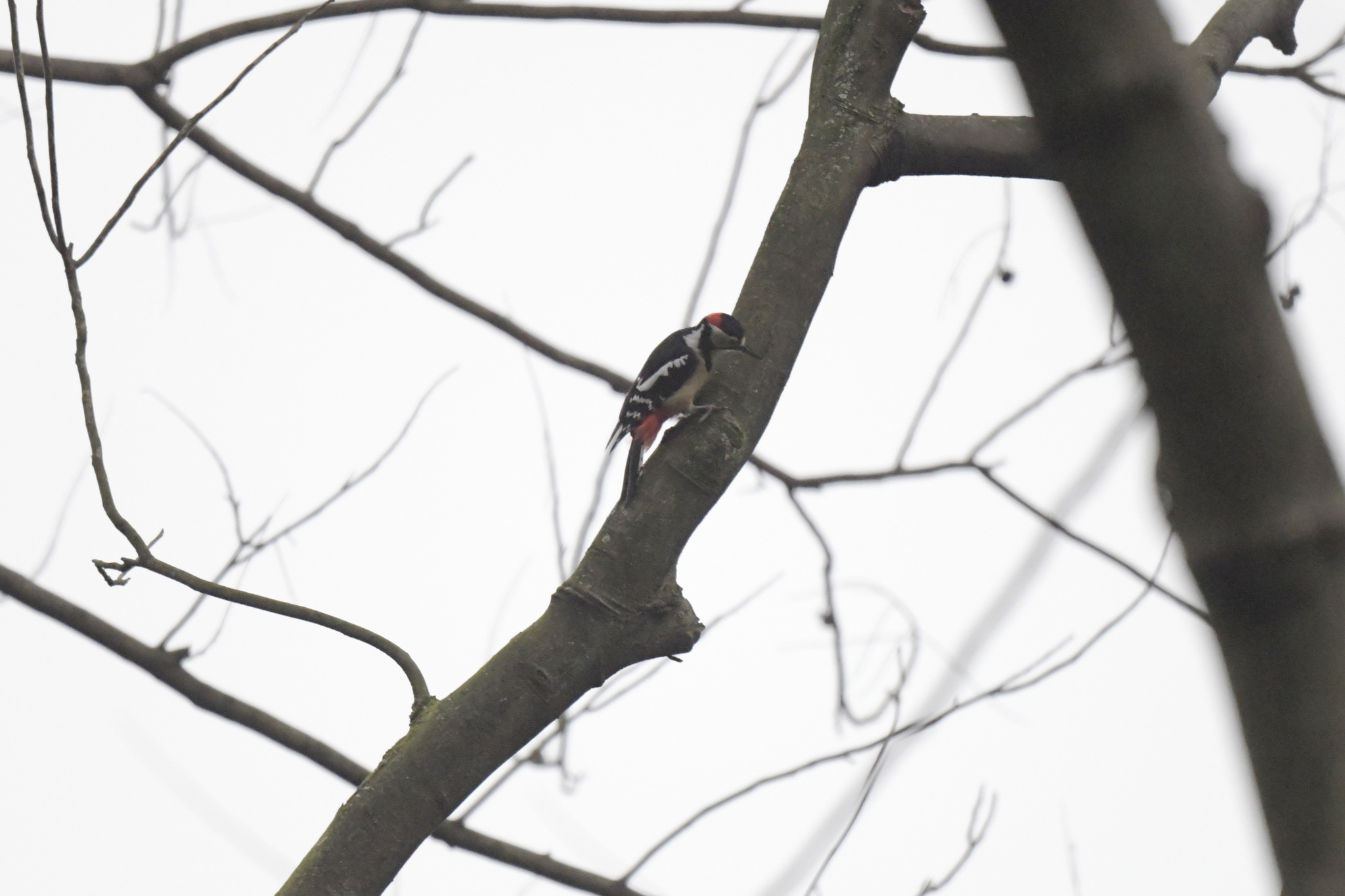
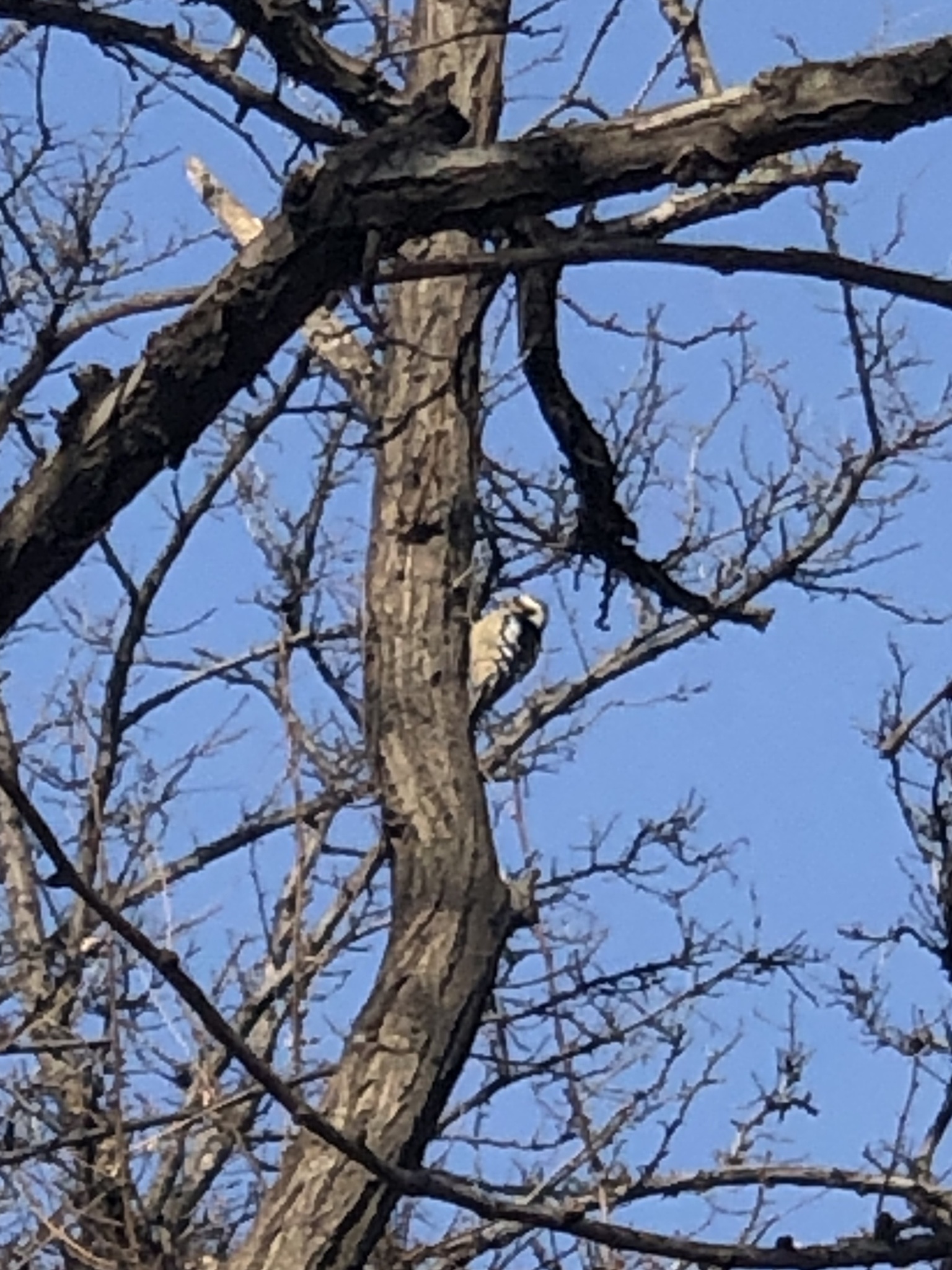
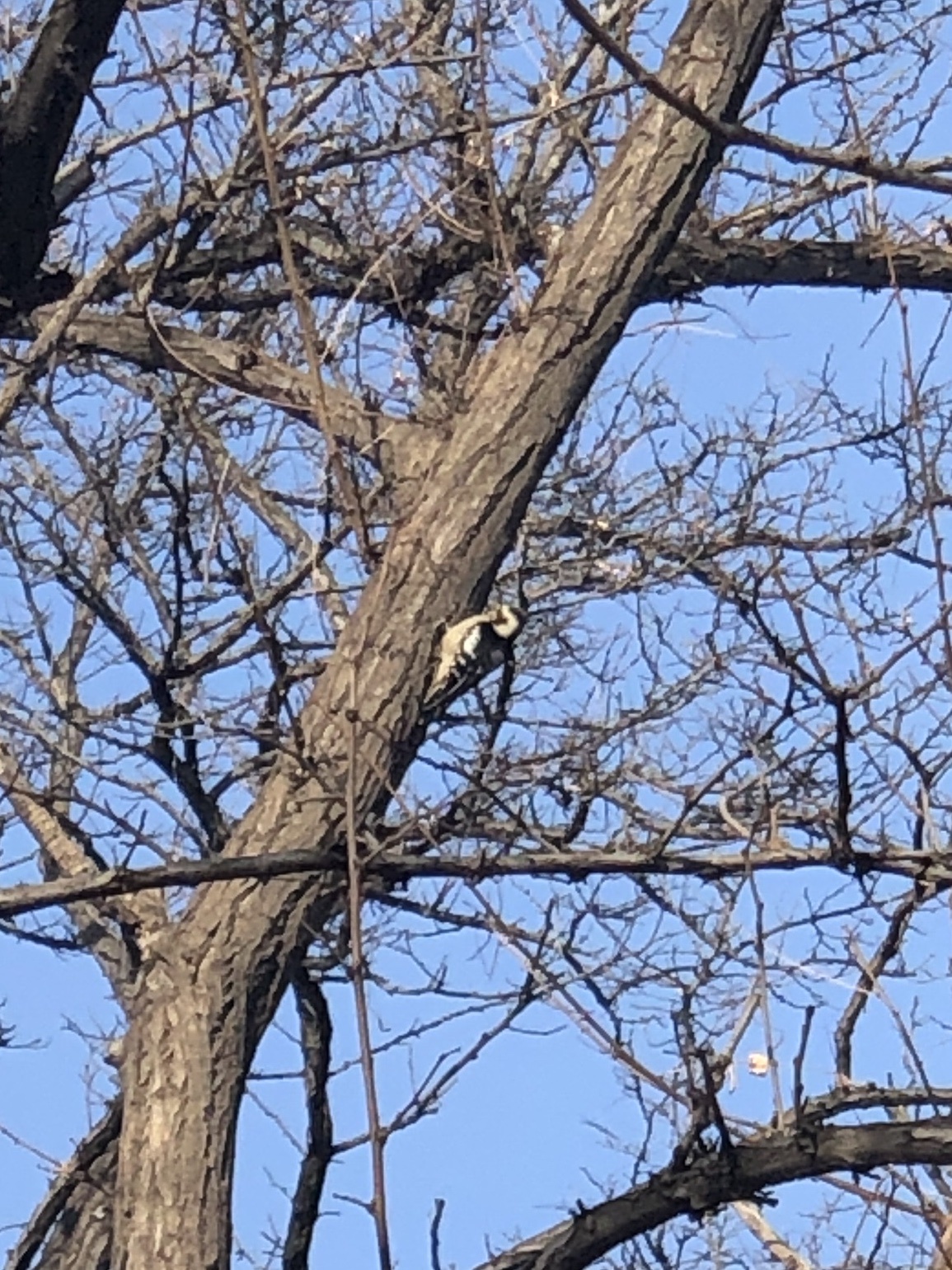
A medium-sized woodpecker in the genus Dendrocopos, found across the Palearctic and parts of North Africa. It inhabits various woodland types, including broadleaf, coniferous, and mixed forests, as well as parks and gardens. Distinctive traits include chiseling trees for food and nest excavation, and rapid mechanical drumming for communication. The species is classified as Least Concern by the IUCN.
Description
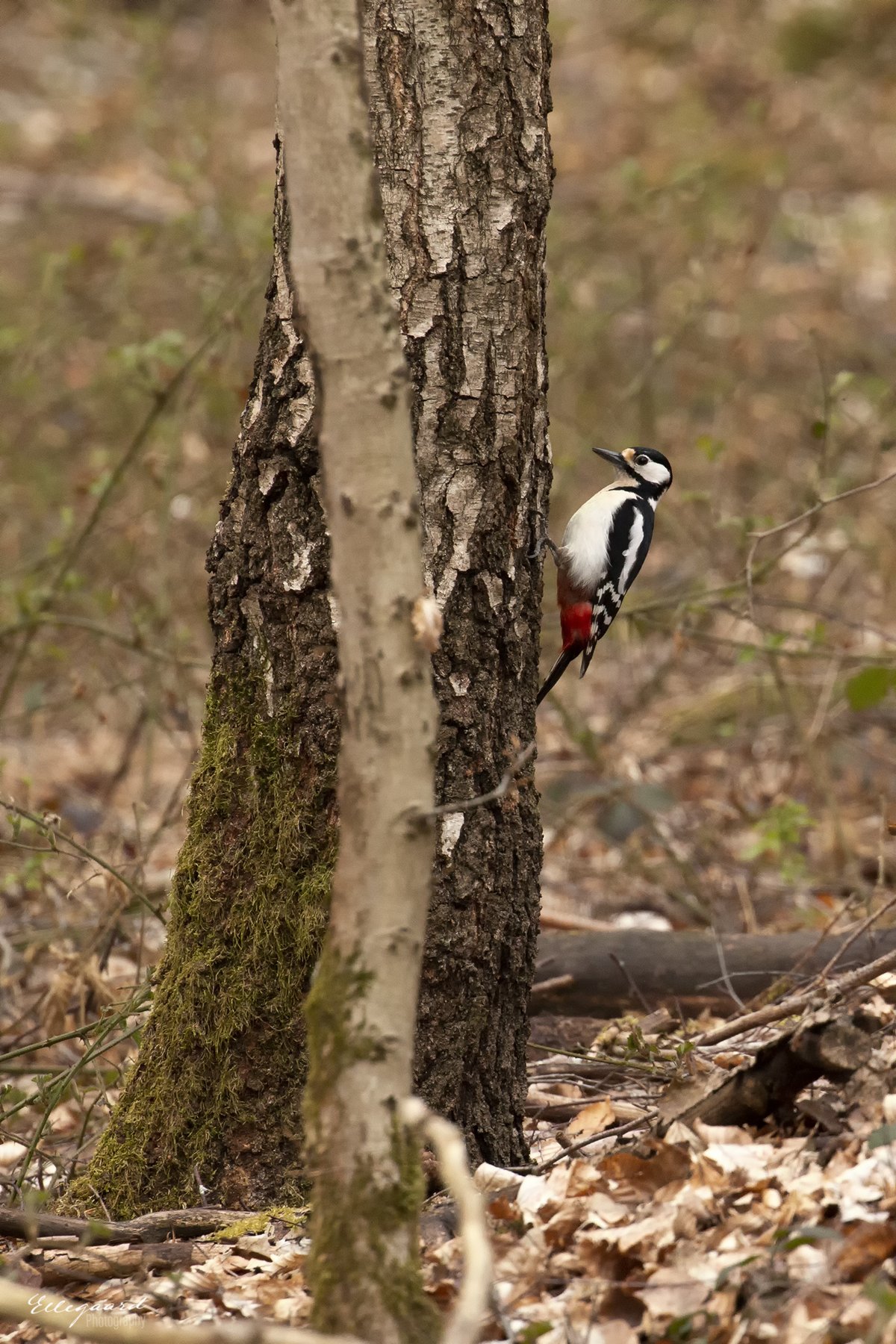
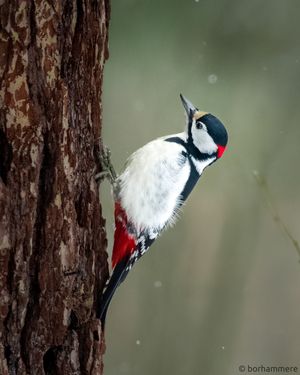
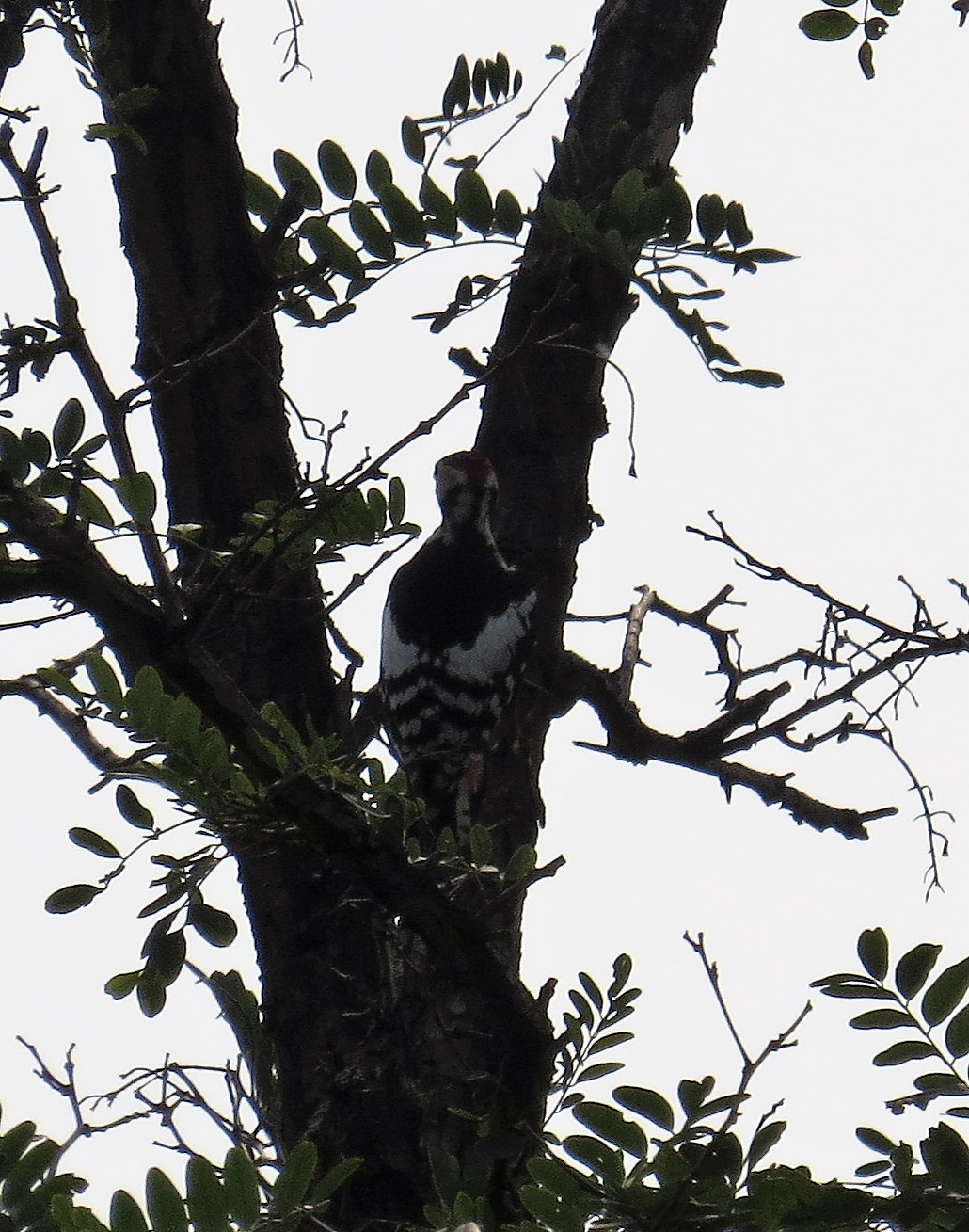
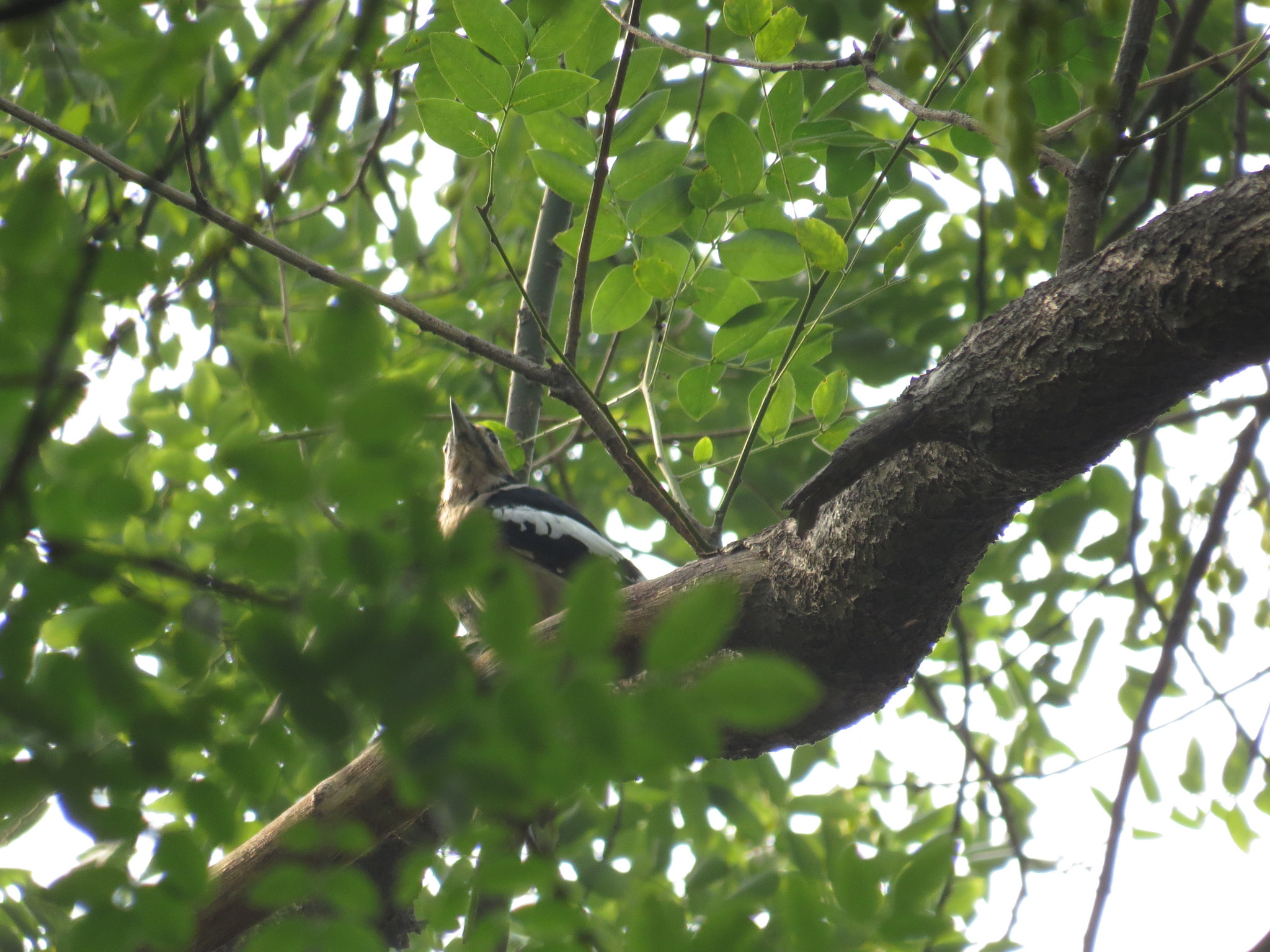
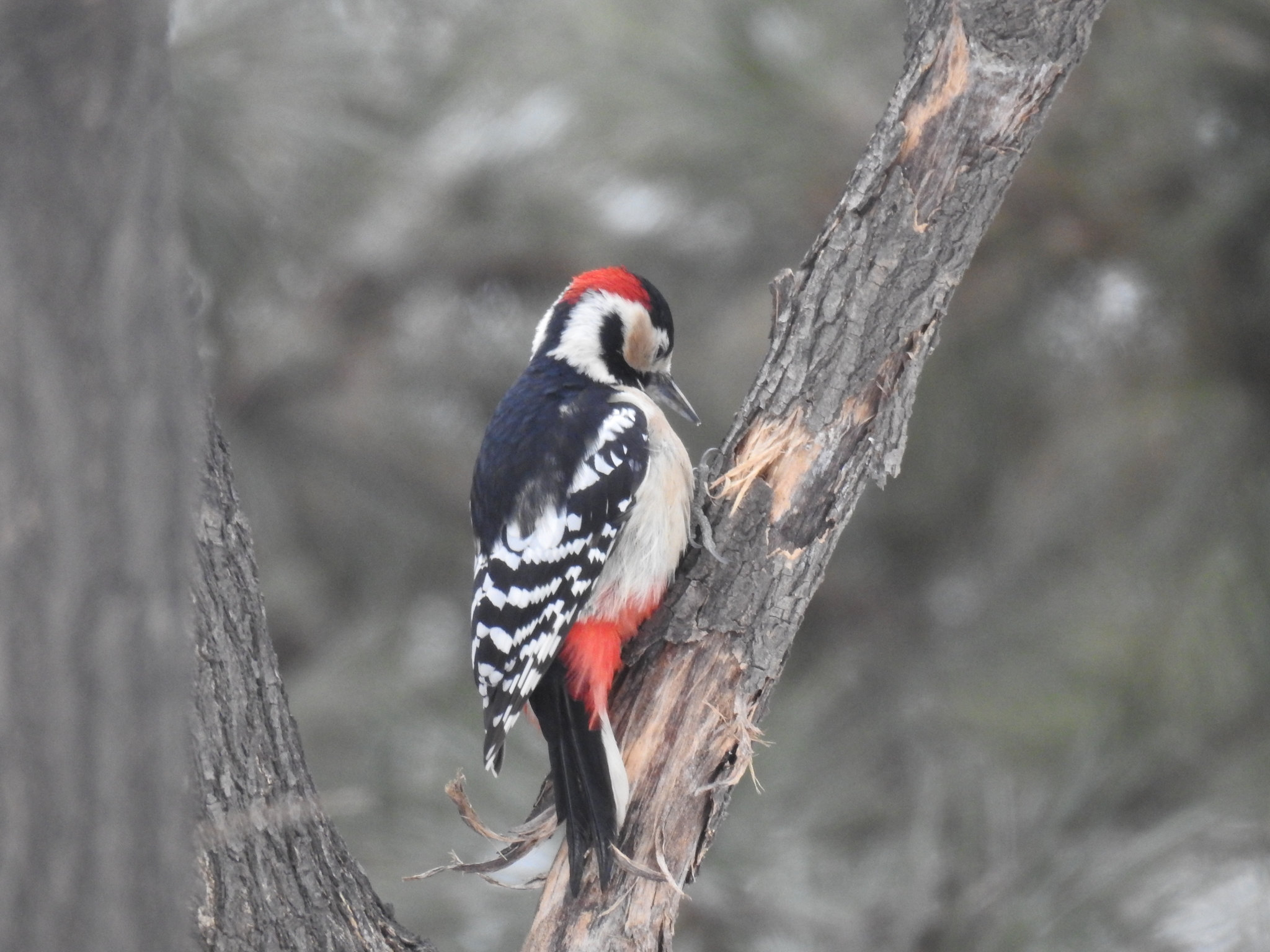
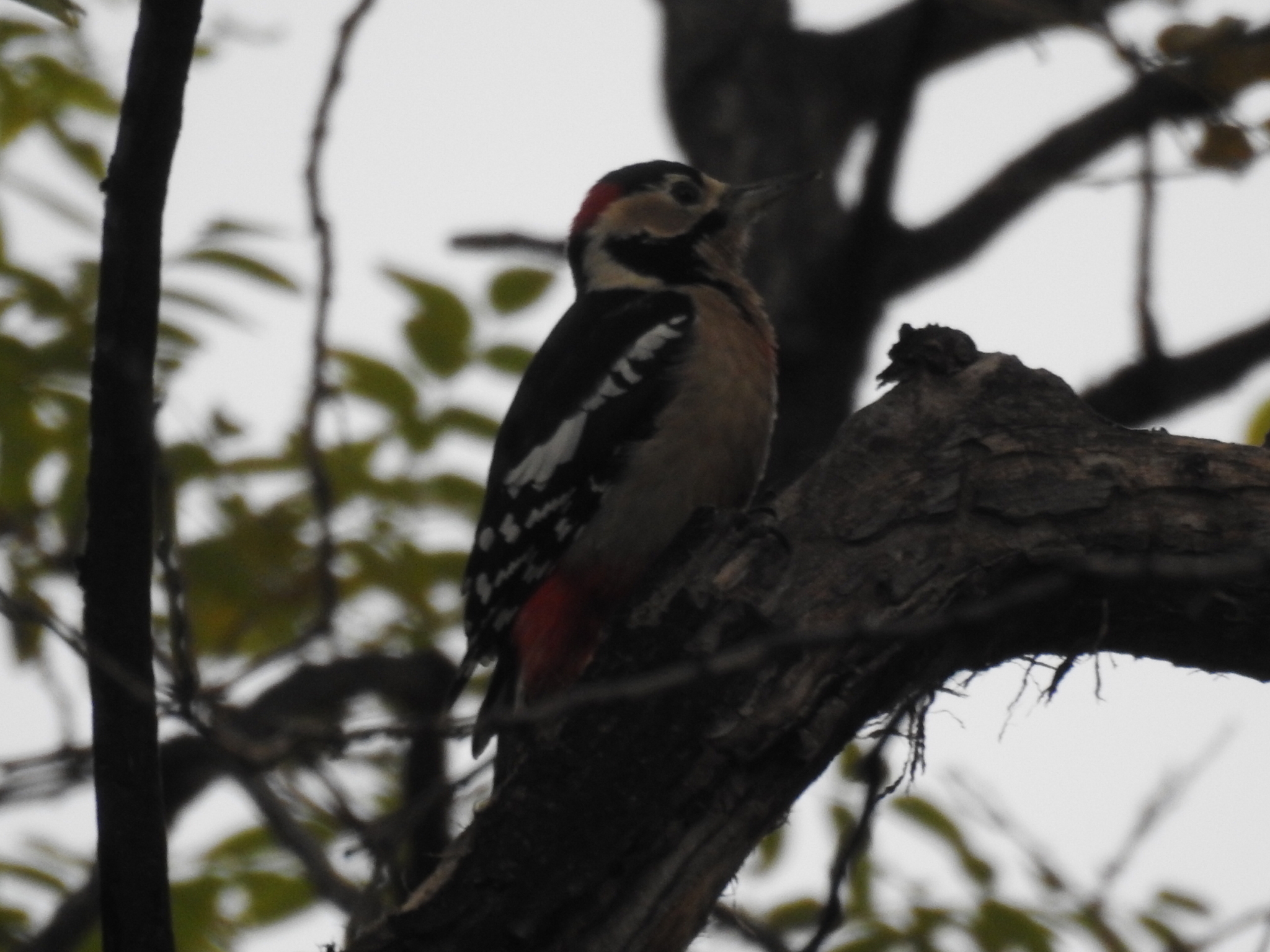
Adults are 20–24 cm long with a 34–39 cm wingspan and weigh 70–98 g. Upperparts are glossy blue-black with white face and neck sides; underparts are white except for a scarlet lower belly and undertail. A large white shoulder patch and black-and-white barred flight feathers and tail are present. The bill is slate-black, legs greenish-grey, and eyes deep red. Males have a crimson nape patch absent in females. Juveniles are less glossy with brown-tinged upperparts, dirty white underparts, a pink lower belly, and a red crown. Subspecies vary in size and plumage intensity, with northern forms being larger and whiter.
Identification
Key marks include pied black-and-white plumage, a red vent, and a white shoulder patch. Males show a red nape. Distinguished from the Syrian woodpecker by the presence of a black cheek bar (though incomplete in juveniles) and darker red underparts. The white-winged woodpecker has a more extensive white wing patch. Flight is undulating. Vocalizations include a sharp 'kik' call and a wooden rattling 'krrarraarr' when disturbed. Drumming is very fast, at 10–16 strikes per second in one-second bursts, faster than other woodpeckers in its range.
Distribution & Habitat
Ranges across Eurasia from Ireland to Japan and North Africa from Morocco to Tunisia. Absent from areas lacking suitable woodland. Found from sea level to tree lines up to 2,500 m in Central Asia. Mainly resident, but northern populations may migrate or wander if conifer cone crops fail. Juveniles may disperse 100–600 km. Recolonized Ireland in the early 21st century and breeds on the Isle of Man. Vagrants recorded in the Faroe Islands, Iceland, Hong Kong, and North America (Alaska, Aleutian and Pribilof Islands).
Behavior & Ecology
Omnivorous diet includes insect larvae extracted by chiseling, adult beetles, ants, spiders, and caterpillars. Also consumes conifer seeds, nuts, berries, buds, and tree sap. Uses anvils to hammer open cones. Raids nests of other cavity-nesting birds for eggs and chicks. Excavates nest holes in living or dead trees, typically 0.3–8 m above ground. Clutch size is four to six glossy white eggs. Both parents incubate for 10–12 days and feed altricial chicks, which fledge in 20–23 days. Adults feed young for about ten days post-fledging. Strongly territorial, with males defending areas of about 5 ha. Monogamous per breeding season. Anatomical adaptations include a zygodactyl foot, stiff tail feathers for support, and shock-absorbing skull structures.
Conservation
Classified as Least Concern by the IUCN. Total population estimated at 73.7–110.3 million individuals, with 35% in Europe. The population is large and considered stable or slightly increasing. Numbers in Europe have risen due to forest planting and availability of dead wood. Threats include harsh winters and woodland fragmentation. Canary Islands subspecies face potential threats from pine forest exploitation.
Source: Wikipedia · CC BY-SA 3.0
Taxonomy
- Order
- Piciformes
- Family
- Picidae
- Genus
- Dendrocopos
Subspecies (24)
-
Dendrocopos major anglicus
Great Britain
Data Sources
Species description from Wikipedia, licensed under CC BY-SA 3.0.
Bird images and sounds sourced from GBIF, contributed by citizen scientists worldwide under Creative Commons licenses.
Taxonomy data from AviList 2025.