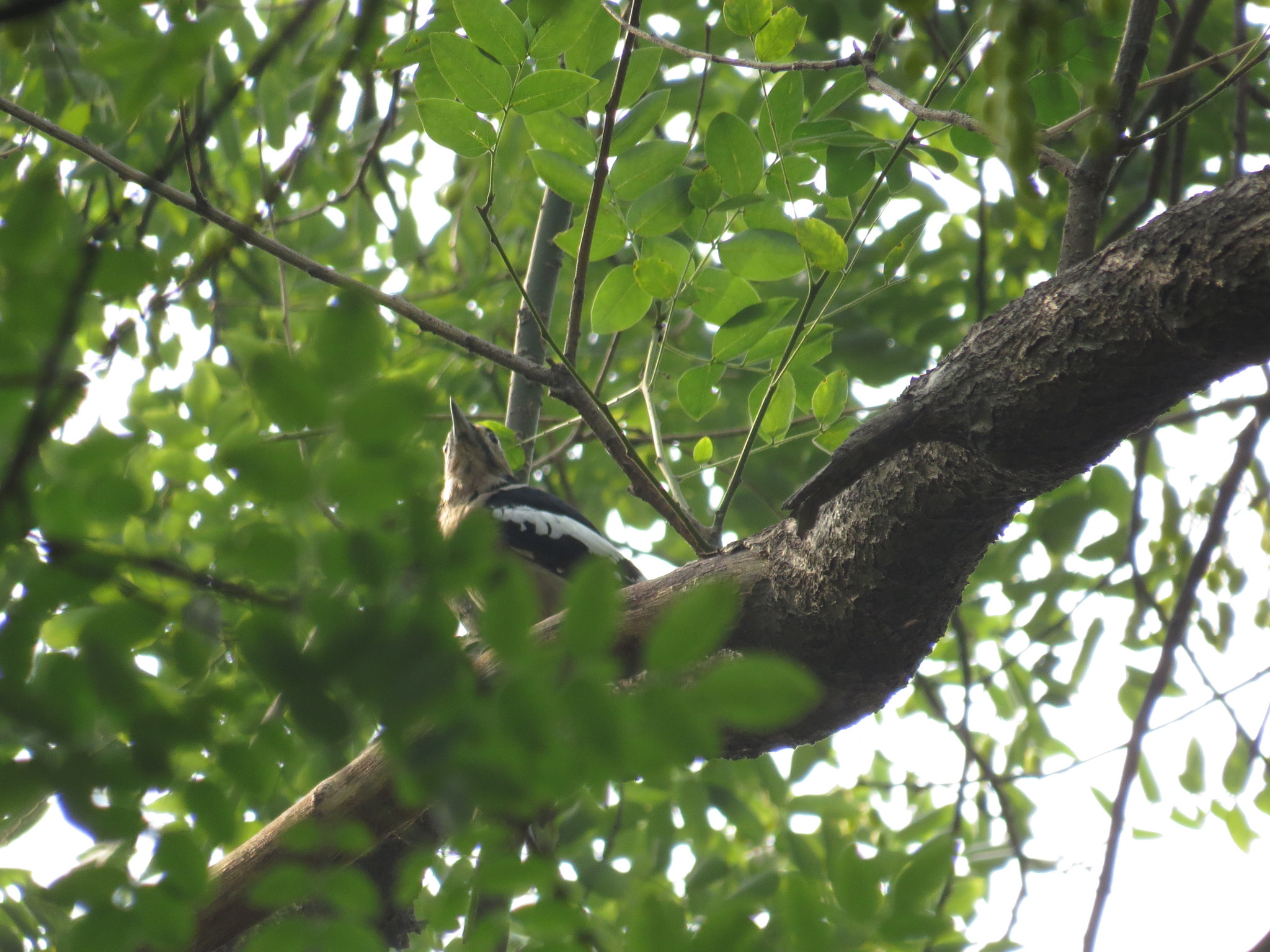
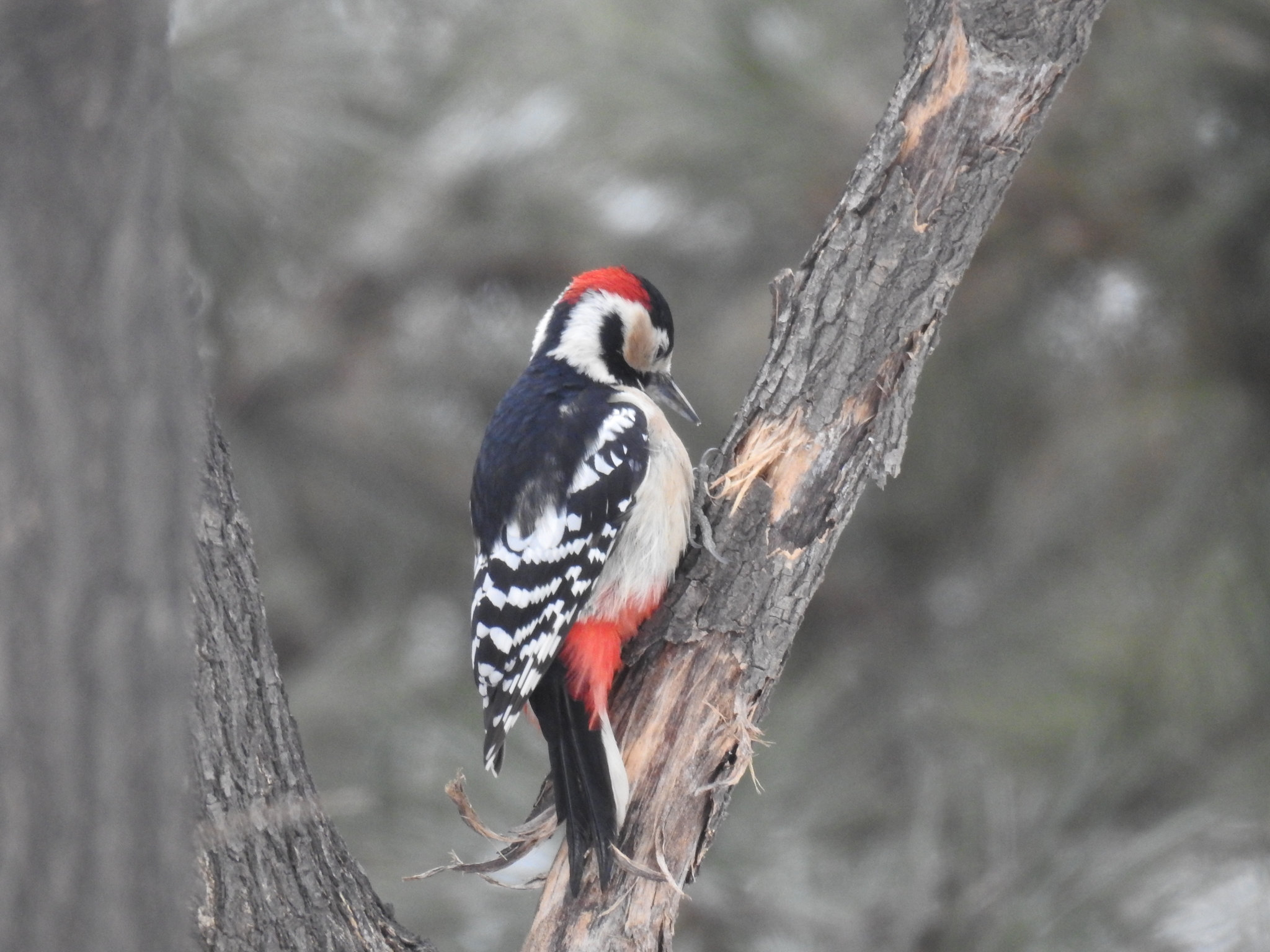
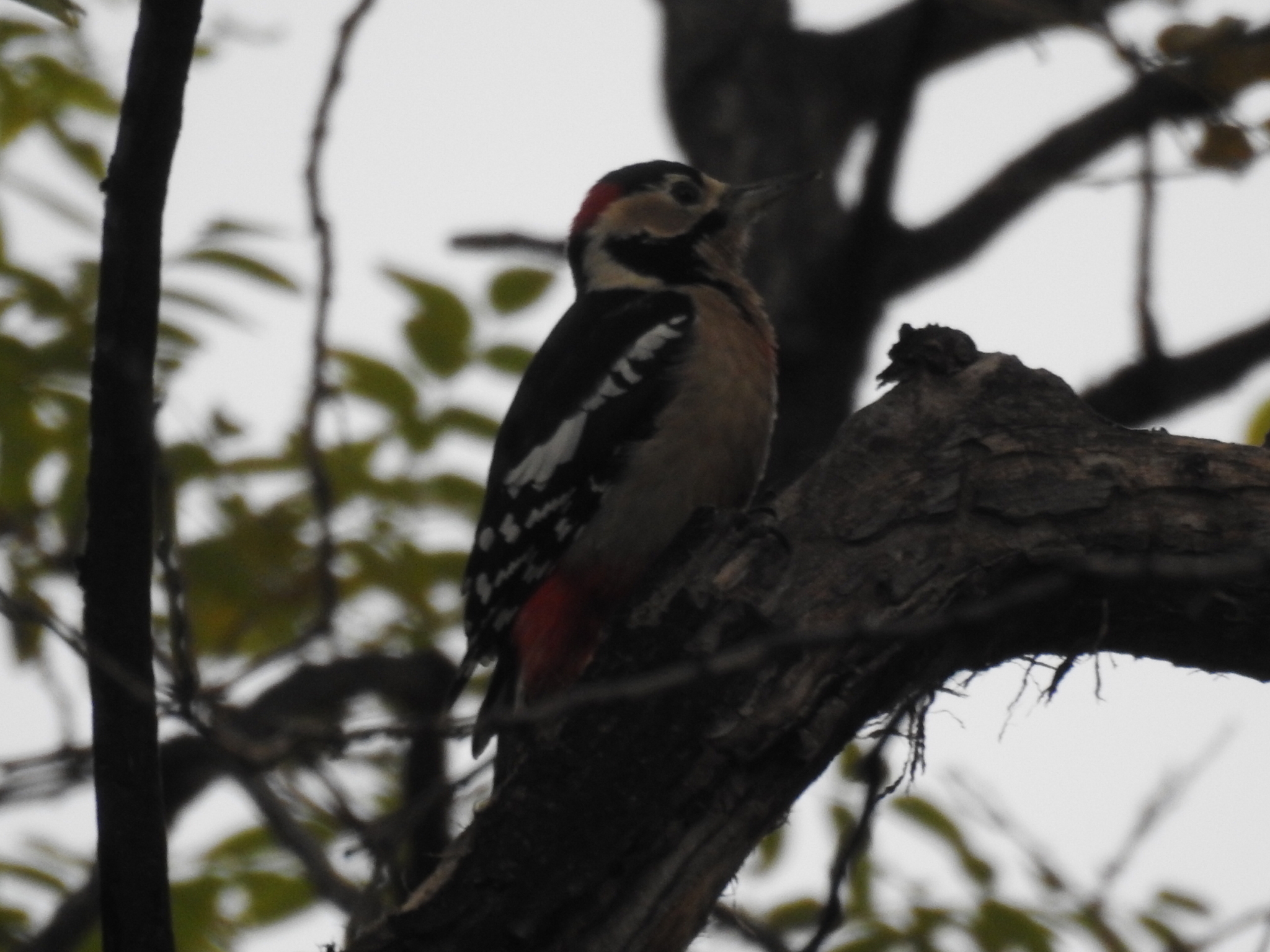
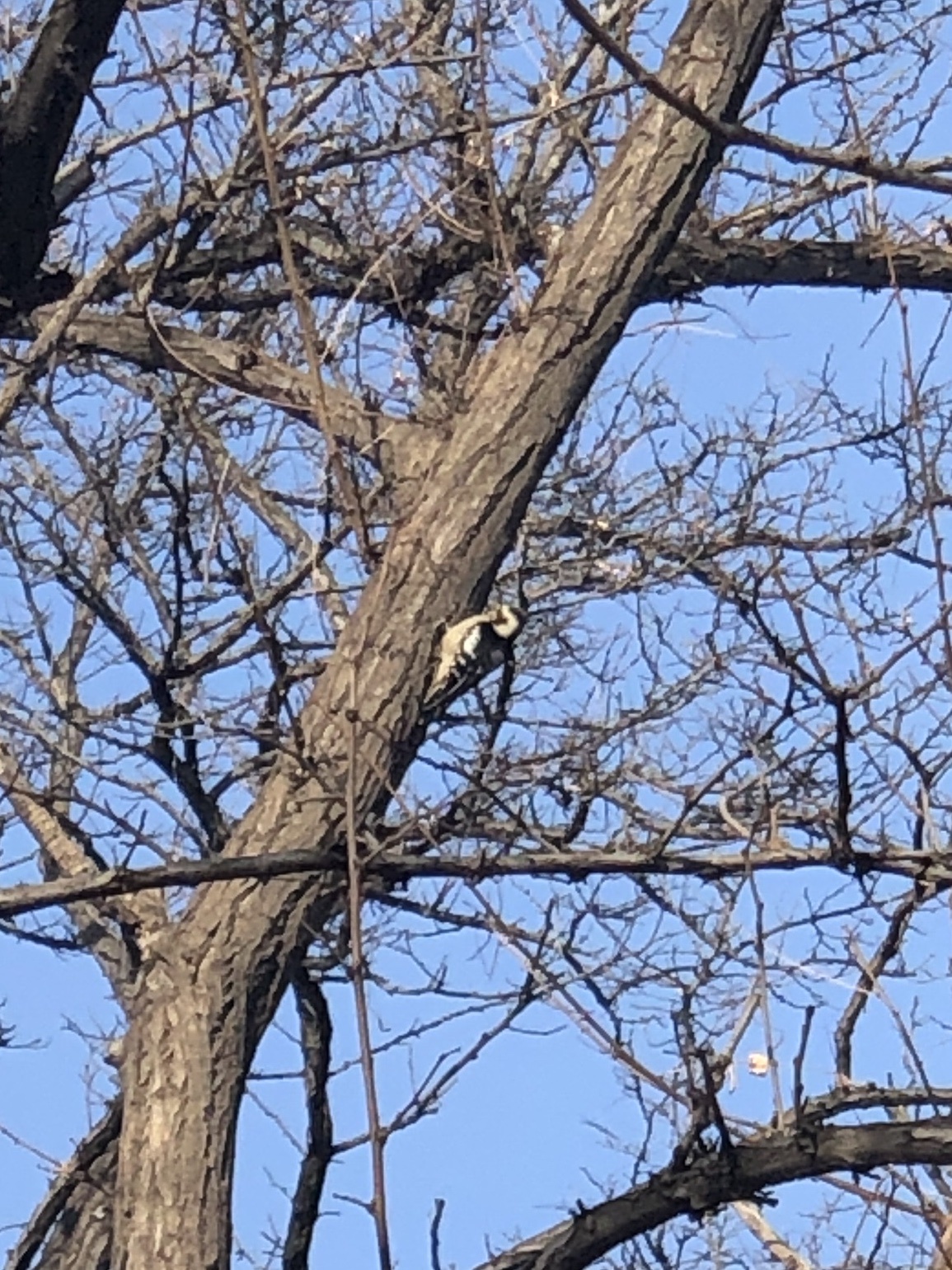
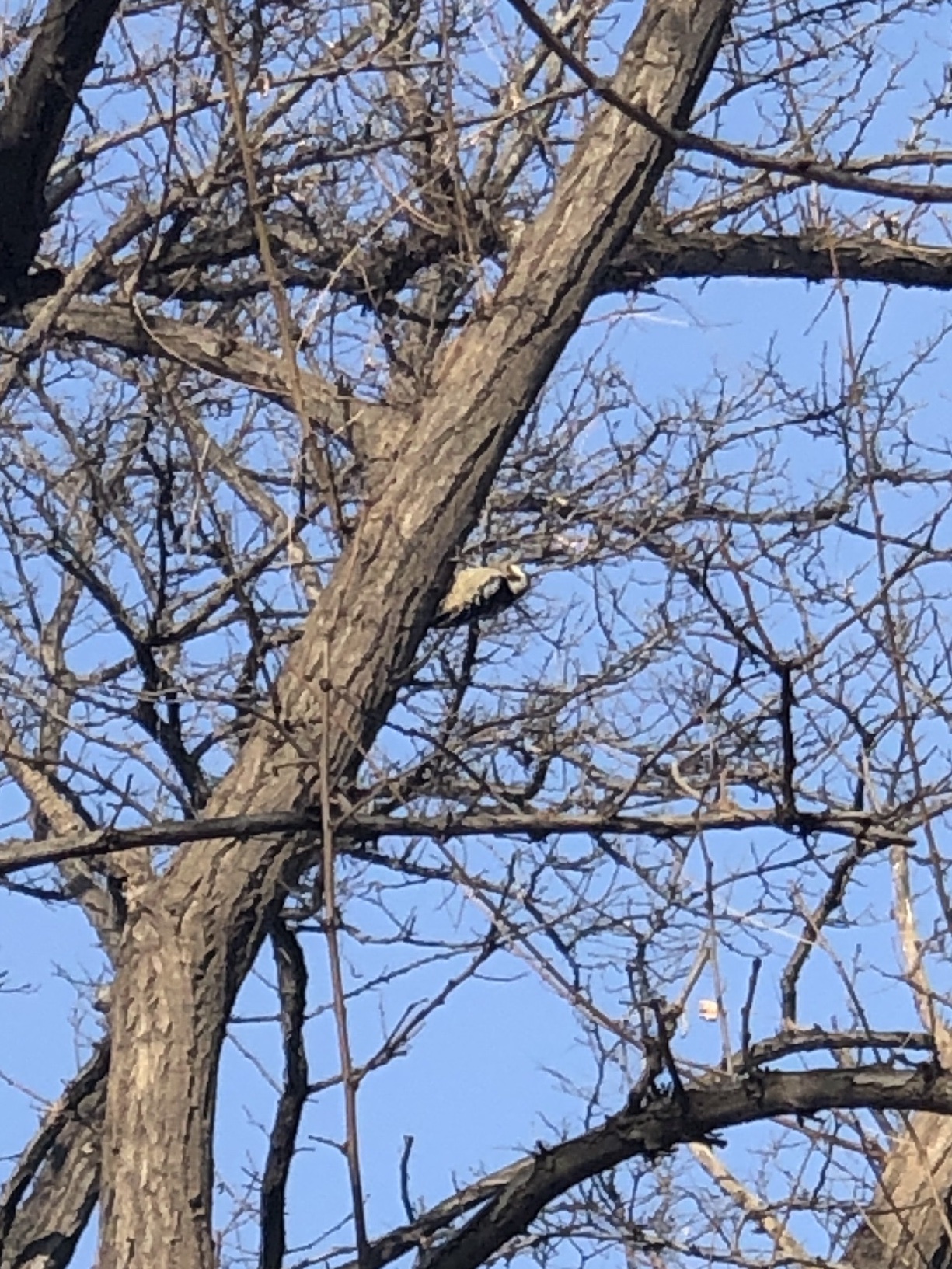
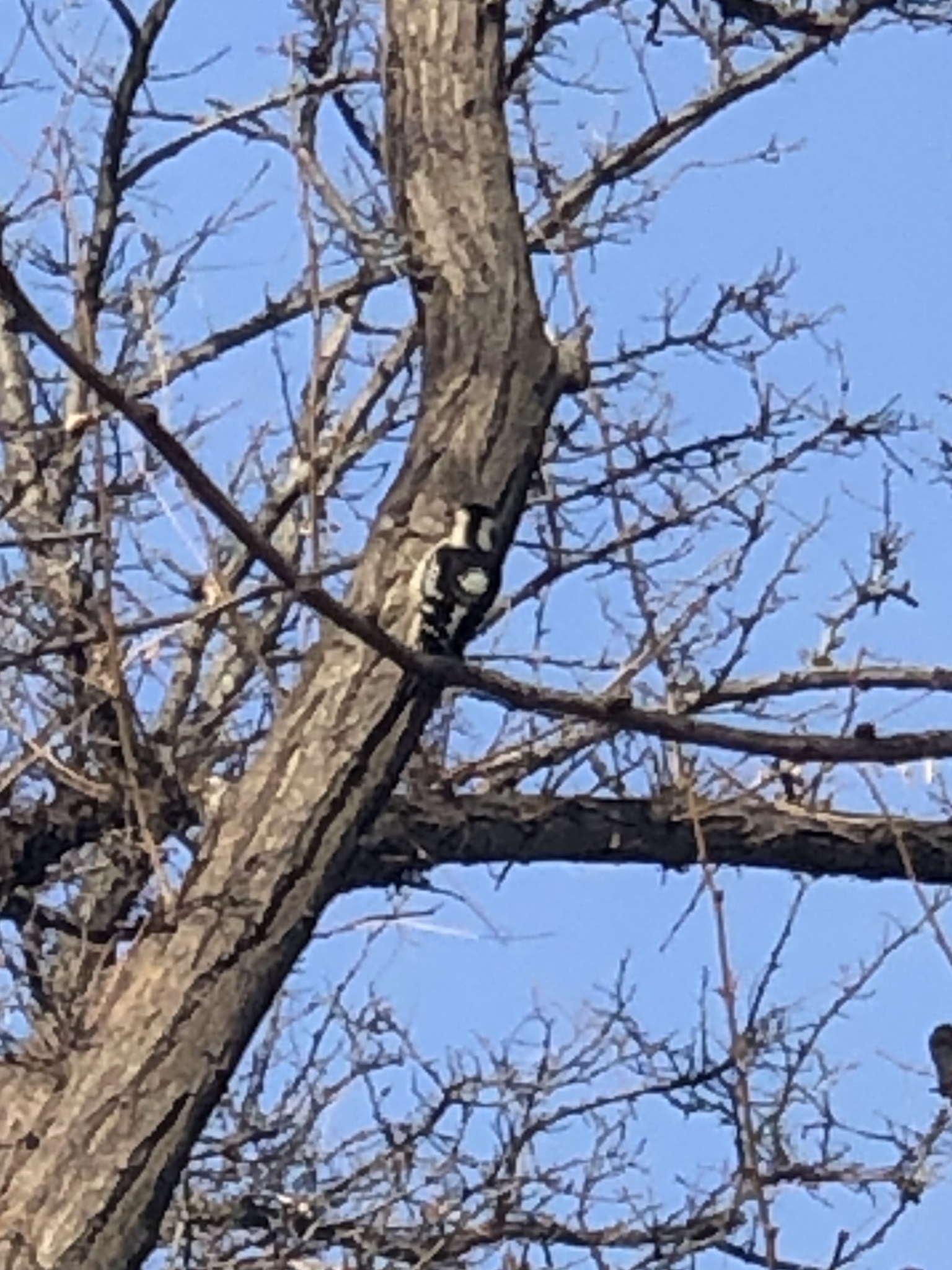
Great Spotted Woodpecker
Dendrocopos major
大斑啄木鸟
Introduction
Medium-sized woodpecker (family Picidae) with a widespread distribution across the Palearctic region. Plumage pattern is pied with black and white coloration and red underparts. Predominantly resident throughout most of its range, though northern populations exhibit irruptive movements linked to cone crop failures. Juveniles disperse widely from natal sites, which has facilitated natural recolonization of Ireland in recent decades. Inhabits various wooded habitats including mature forest, parks, and gardens. Diet is omnivorous, including insects, seeds, and occasionally the eggs and chicks of smaller cavity-nesting birds. Characteristic drumming and calls serve as primary vocalizations. Readily visits bird feeders.
Description
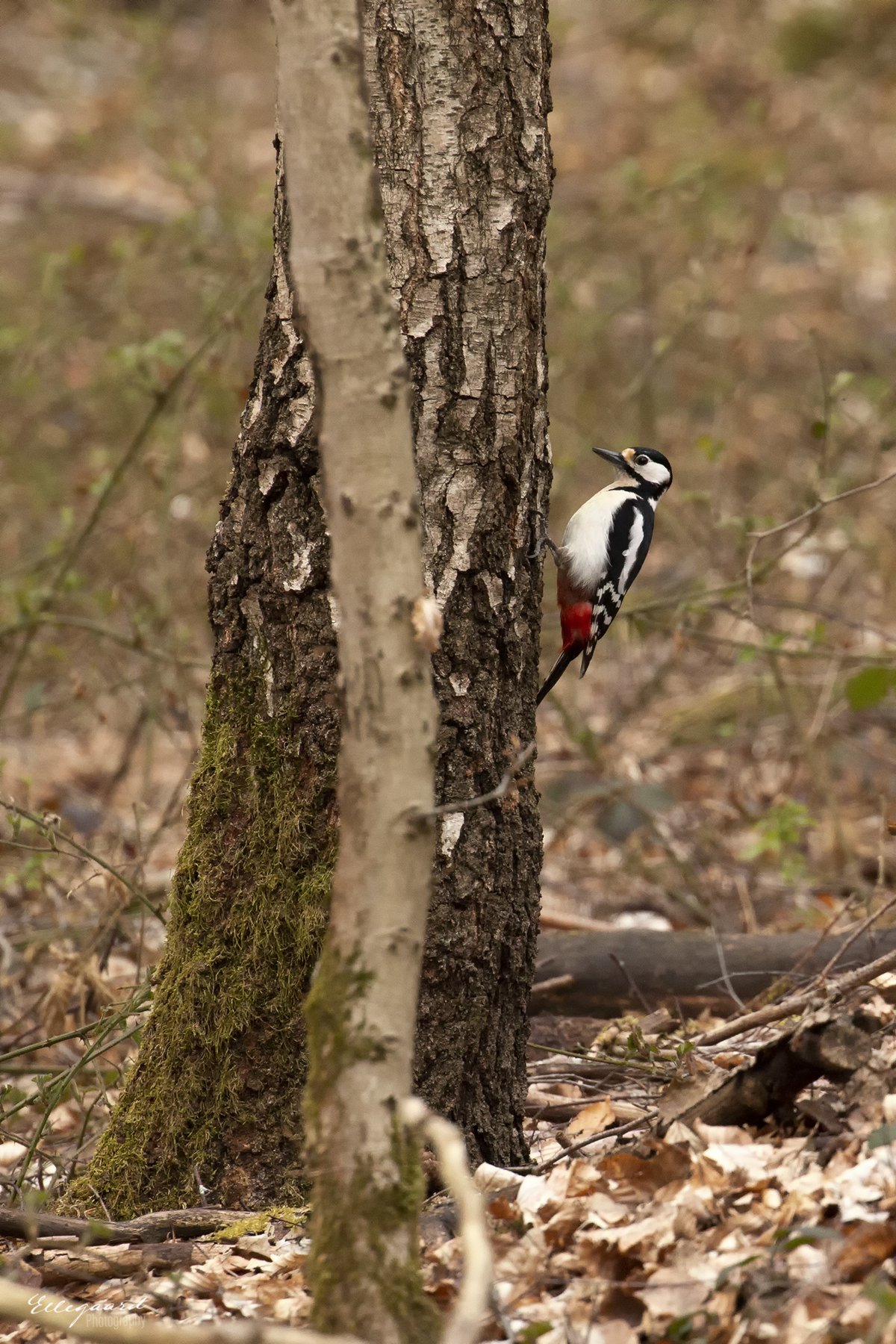
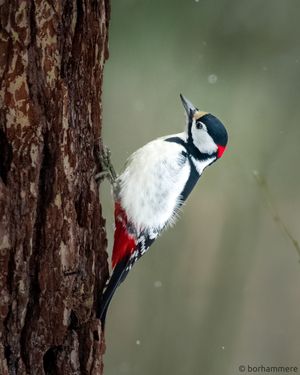
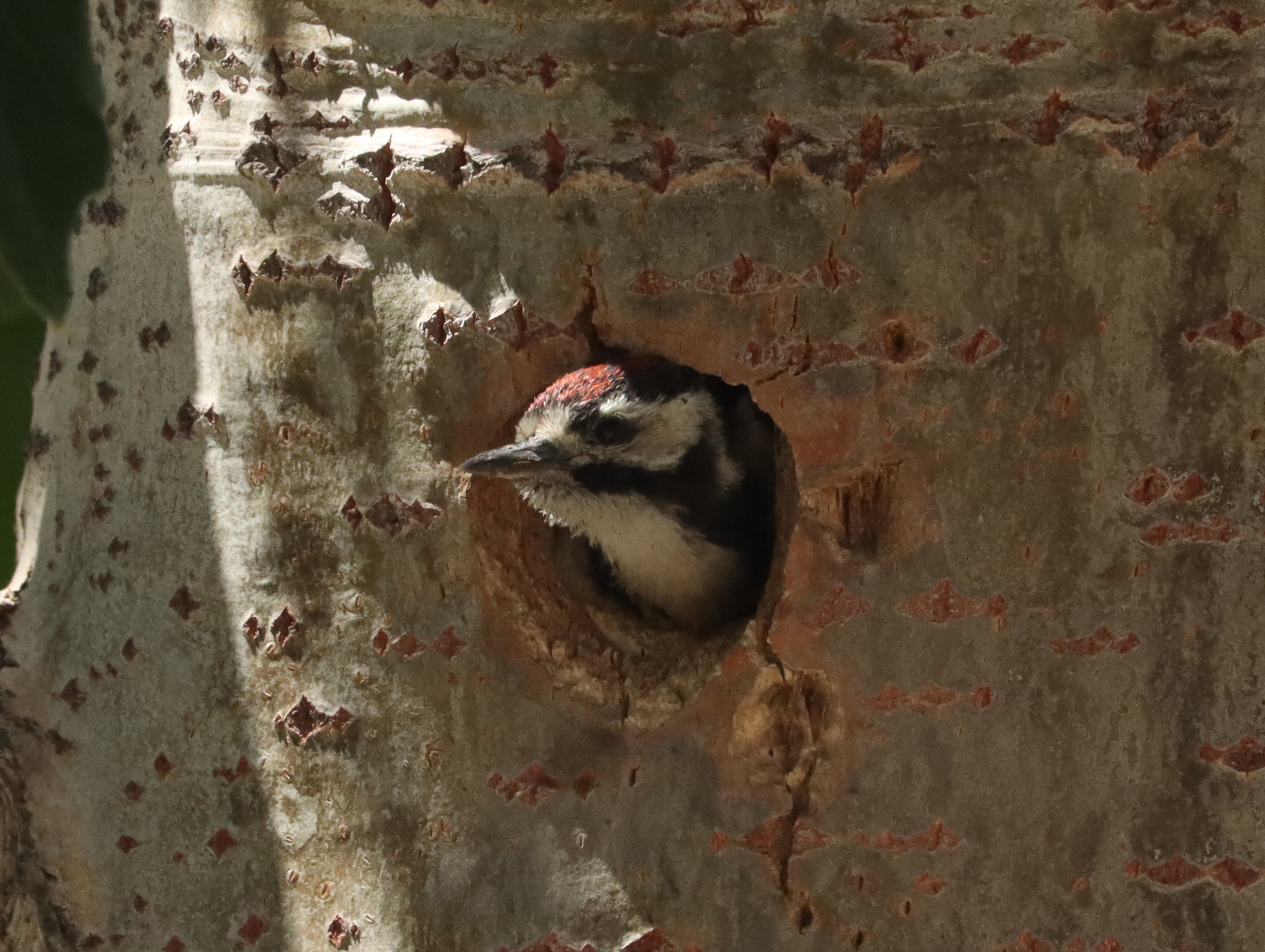
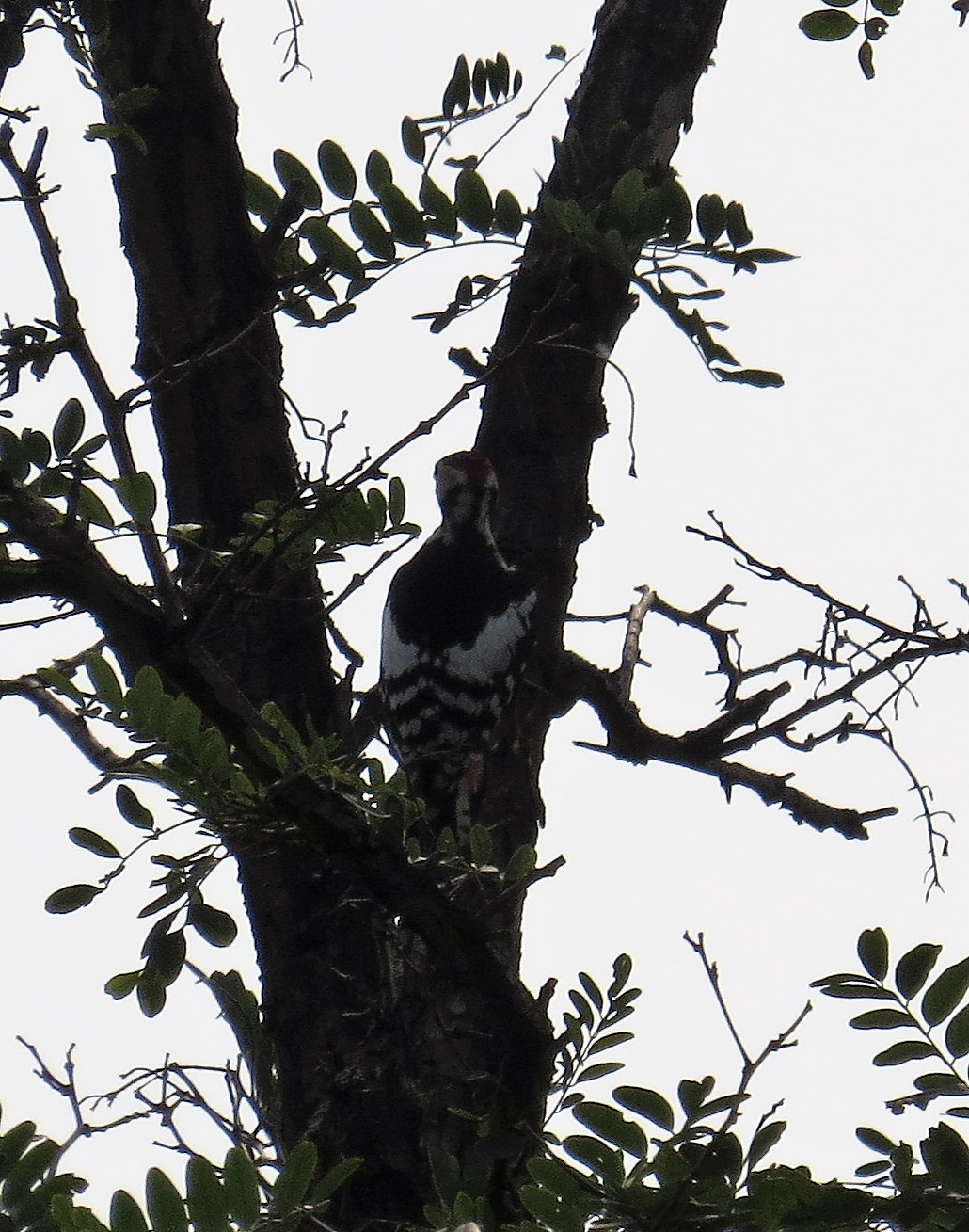
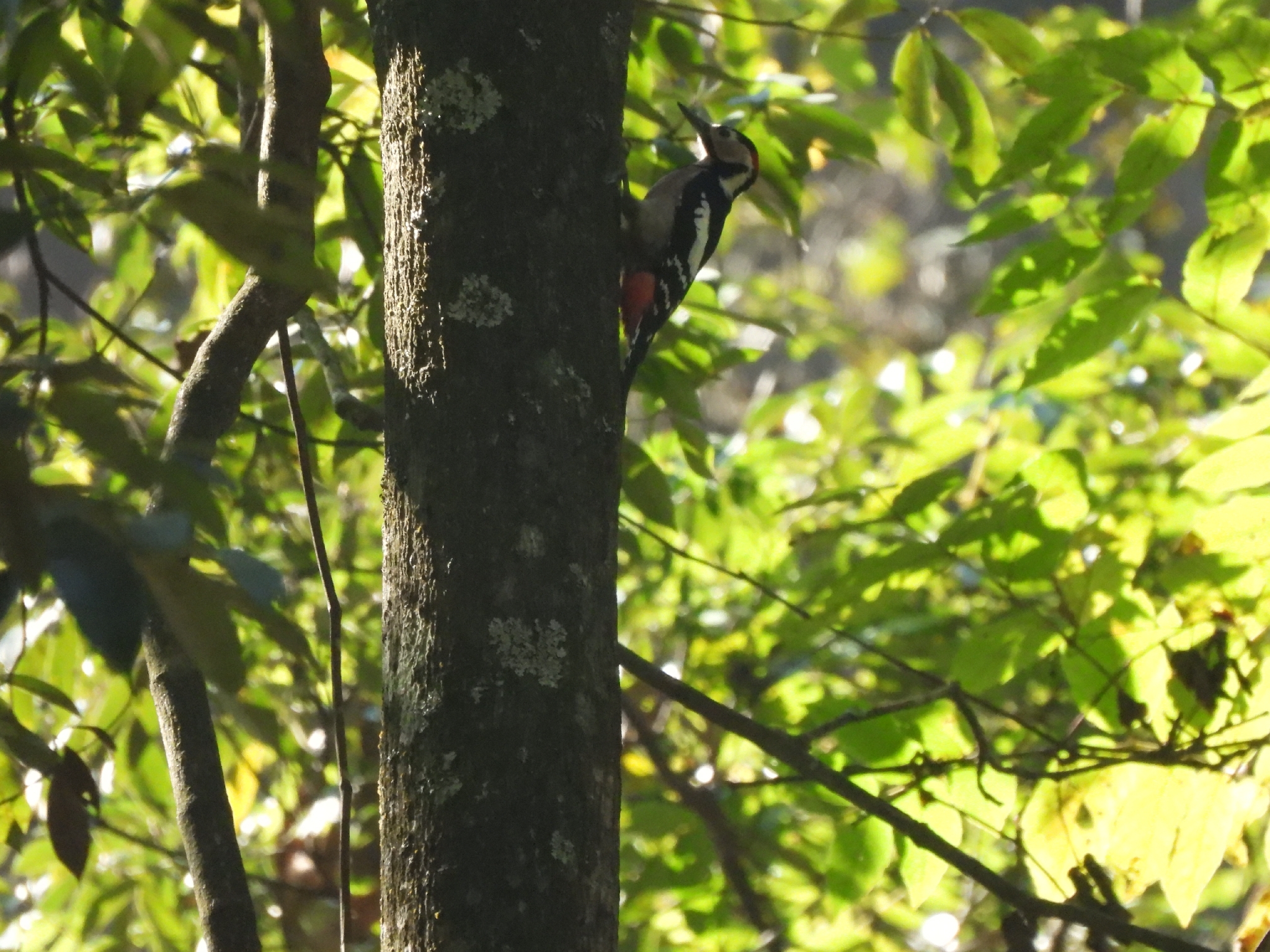
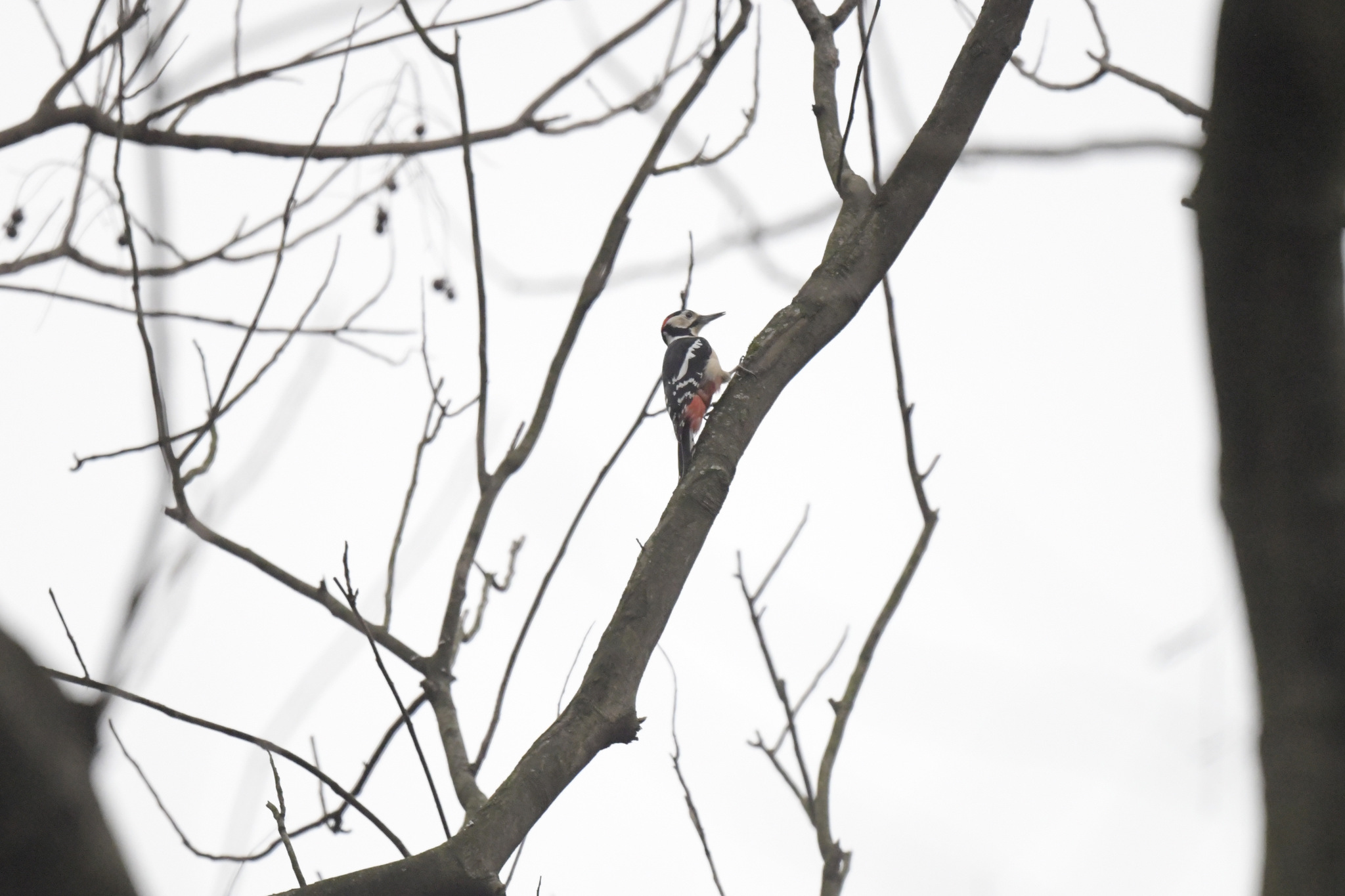
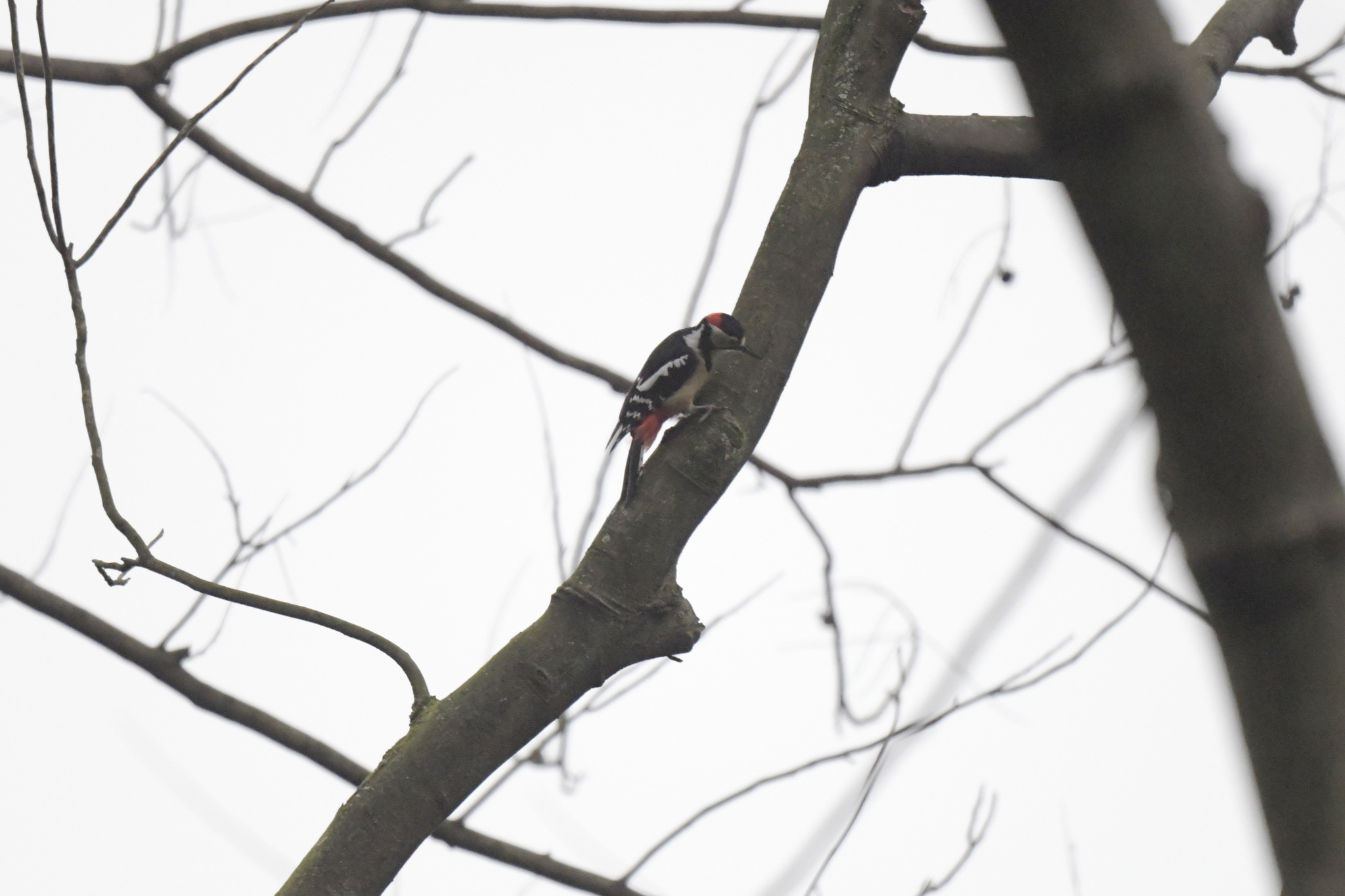
This species measures 20-24 cm in length with a wingspan of 34-39 cm and weighs 70-98 g. The upperparts are glossy blue-black, contrasting with extensive white markings on the face, neck sides, and a prominent white shoulder patch. The flight feathers and tail are boldly barred black and white. The underparts are white apart from a scarlet lower belly and undertail coverts. The bill is slate-black, legs are greenish-grey, and the eye is deep red. Males are distinguished by a crimson patch on the nape, which females lack. Juveniles appear less glossy with brown-tinged upperparts, dirtier white underparts, less well-defined markings, and pink rather than red on the lower belly. The crown of juveniles' heads is red, though less extensive in young females.
Identification
The combination of black and white plumage with red on the lower belly and undertail is distinctive across most of the range. Males are easily separated from females by the red nape patch. The Syrian woodpecker is similar but lacks the black cheek bar and has whiter underparts with paler red underparts; however, juvenile great spotted woodpeckers often show incomplete cheek bars and can be confused with Syrian woodpeckers. The white-winged woodpecker has a much more extensive white wing patch. The Sind woodpecker closely resembles the Syrian species and can be distinguished from this species in the same way. The characteristic rapid drumming on trees is a useful identification aid in the field.
Distribution & Habitat
This species ranges across Eurasia from Ireland to Japan and throughout North Africa from Morocco to Tunisia, being absent only from areas too cold or dry to support suitable woodland. It occupies all woodland types including broadleaf, coniferous, and mixed forest, as well as modified habitats such as parks, gardens, and olive groves. It occurs from sea level to the tree line, reaching 2,000 m in Europe and up to 2,500 m in Central Asia. While predominantly resident, northern populations may migrate when conifer cone crops fail, and juveniles often wander 100-600 km, occasionally up to 3,000 km. Vagrants have reached the Faroe Islands, Hong Kong, Iceland, and North America. The species was extirpated from Ireland in the 17th century but has naturally recolonized since the 1990s.
Behavior & Ecology
This species is strongly territorial, with pairs occupying territories of about 5 hectares defended mainly by the male. It is monogamous during the breeding season but often changes partners between years. Courtship begins in December with fluttering flight displays. Both sexes excavate the nest cavity in a living or dead tree, typically 0.3-8 m above ground. The typical clutch is four to six glossy white eggs, incubated by both parents for 10-12 days. Both adults feed the altricial chicks and keep the nest clean. The young fledge in 20-23 days and receive supplemental feeding for about ten more days. The diet is omnivorous, including beetle larvae, other invertebrates, pine and spruce seeds, nuts, berries, and the eggs and chicks of other cavity-nesting birds. The characteristic call is a sharp 'kik', while drumming on trees serves for territorial advertisement at 10-16 strikes per second.
Conservation
The IUCN assesses this species as Least Concern due to its huge range and very large population estimated at 73.7-110.3 million individuals, with 35% of the population in Europe. The breeding range covers approximately 57.8 million square kilometers, and numbers appear stable or slightly increasing across most of the range. European population increases are attributed to forest planting providing additional habitat and increased dead wood availability. The species benefits from its flexibility regarding woodland types and ability to thrive near humans. However, harsh winters can cause local mortality, and woodland fragmentation poses difficulties in some areas. The Canary Islands subspecies face potential threats from pine forest exploitation. Breeding densities range from 0.1 to 6.6 pairs per 10 hectares.
Culture
Woodpeckers hold significant cultural meaning across many societies. In Celtic tradition, the woodpecker was considered a sacred bird associated with the Otherworld and hidden knowledge. In ancient Greece, woodpeckers were linked to the god Ares and later to the sun god Apollo, with the bird's appearance heralding spring. Roman tradition held that seeing a woodpecker was auspicious, and the bird was sacred to Mars, believed to bring agricultural prosperity. In some European folk traditions, woodpeckers were seen as messengers between the human world and spirits, while others regarded them as protectors against lightning or evil spirits. Their persistence and distinctive drumming have made them symbols of determination and persistence in various cultural contexts.
Source: Wikipedia · CC BY-SA 3.0
Taxonomy
- Order
- Piciformes
- Family
- Picidae
- Genus
- Dendrocopos
- eBird Code
- grswoo
Subspecies (24)
-
Dendrocopos major anglicus
Great Britain
-
Dendrocopos major beicki
central China
-
Dendrocopos major brevirostris
western Siberia to eastern Siberia, northern Mongolia, and northeastern China
-
Dendrocopos major cabanisi
eastern China
-
Dendrocopos major canariensis
Tenerife (Canary Islands)
-
Dendrocopos major candidus
Romania and southern Ukraine to Greece
-
Dendrocopos major hainanus
Hainan
-
Dendrocopos major harterti
Sardinia
-
Dendrocopos major hispanus
Iberian Peninsula
-
Dendrocopos major italiae
Italy, Sicily, and western Slovenia
-
Dendrocopos major japonicus
eastern Manchuria, Sakhalin, Kuril Islands, Korea, and northern Japan
-
Dendrocopos major kamtschaticus
Kamchatka Peninsula and northern coast of Sea of Okhotsk
-
Dendrocopos major major
Scandinavia and western Siberia to Ural Mountains, northern Poland, and northern Ukraine
-
Dendrocopos major mandarinus
southern China and eastern Myanmar to northern Laos and northern Vietnam
-
Dendrocopos major mauritanus
Morocco
-
Dendrocopos major numidus
northern Algeria and Tunisia
-
Dendrocopos major paphlagoniae
northern Türkiye
-
Dendrocopos major parroti
Corsica
-
Dendrocopos major pinetorum
central Europe
-
Dendrocopos major poelzami
Transcaucasia and southern Caspian region
-
Dendrocopos major stresemanni
northeastern India, northeastern Myanmar to southeastern Tibet and southwestern China (western Sichuan and Yunnan)
-
Dendrocopos major tenuirostris
Caucasus and Transcaucasia (southwestern Asia)
-
Dendrocopos major thanneri
Gran Canaria Island (Canary Islands)
-
Dendrocopos major wulashanicus
Inner Mongolia (northern China)
Data Sources
Species description from Wikipedia, licensed under CC BY-SA 3.0.
Bird images and sounds sourced from GBIF, contributed by citizen scientists worldwide under Creative Commons licenses.
Taxonomy data from AviList 2025.