Piciformes / Picidae / Dendrocopos
Rufous-bellied Woodpecker
Dendrocopos hyperythrus · 棕腹啄木鸟
Introduction
A species in the family Picidae, found along the Himalayas in the Indian subcontinent and Southeast Asia. It inhabits subtropical or tropical moist lowland and montane forests. Distinctively, it creates series of small pits on tree bark to feed on sap, a behavior that historically classified it as an Asiatic sapsucker. The IUCN assesses its conservation status as Least Concern.
Description
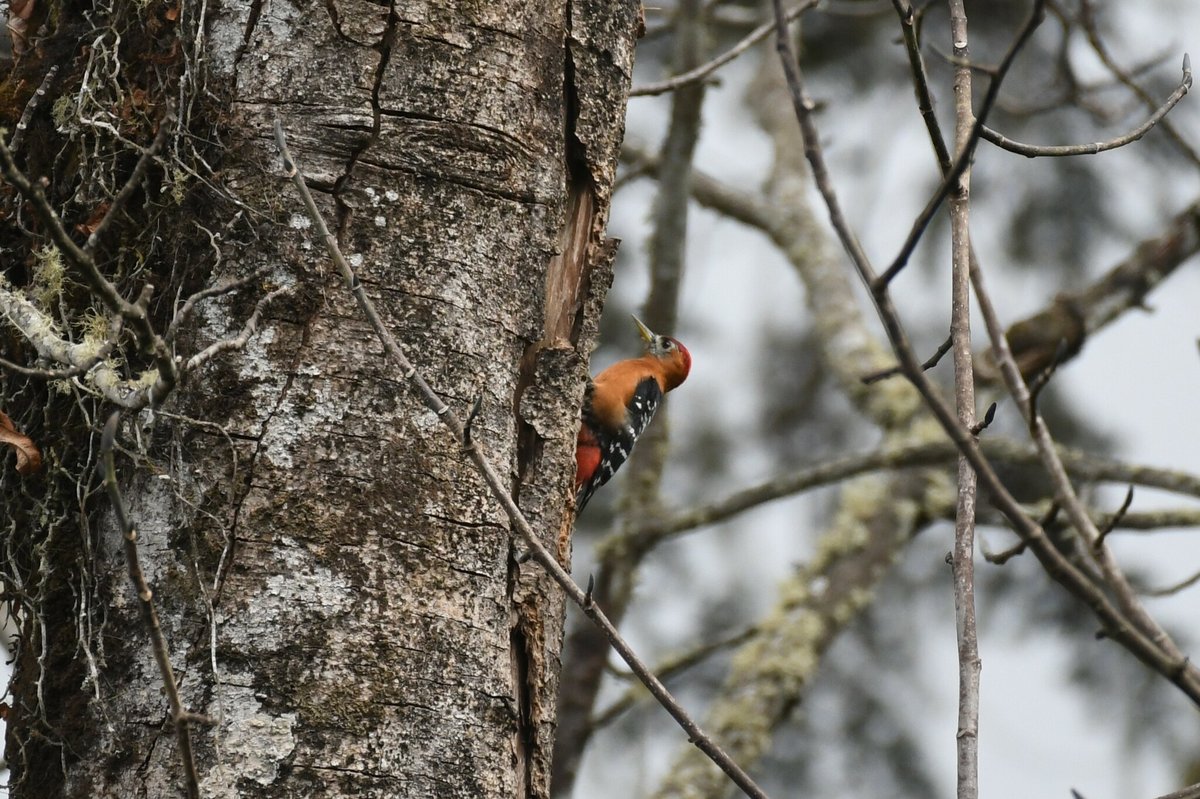
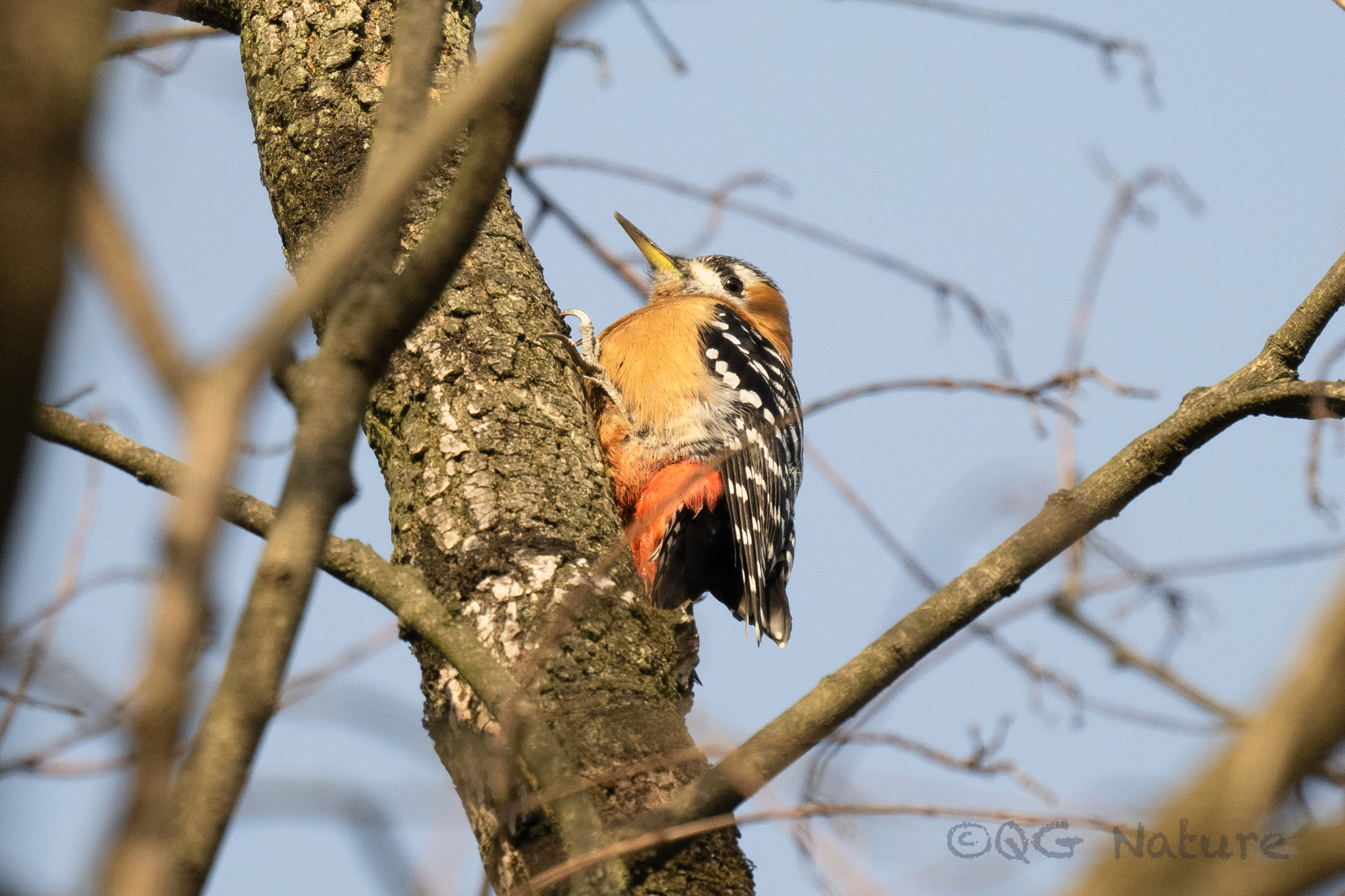
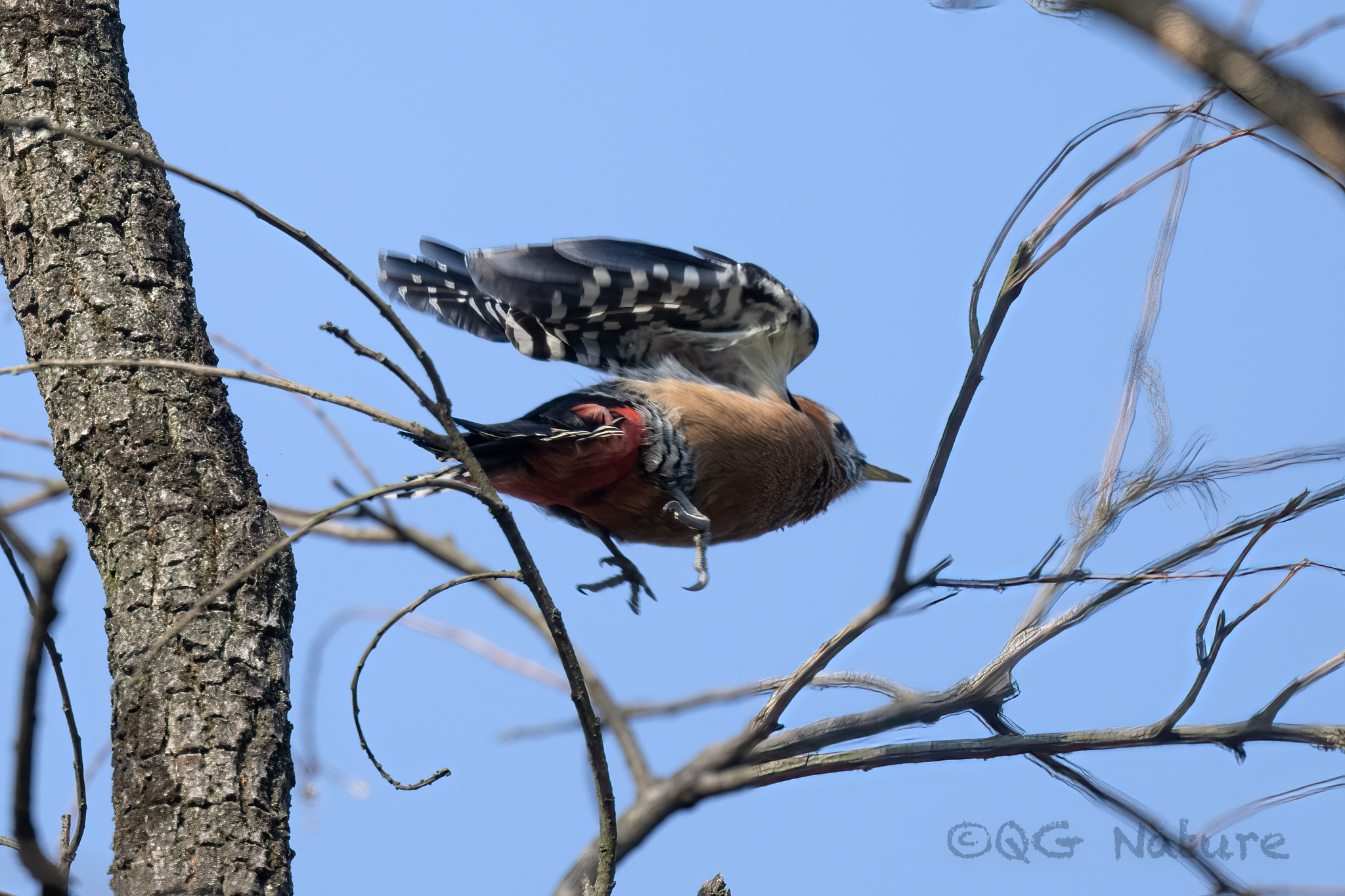
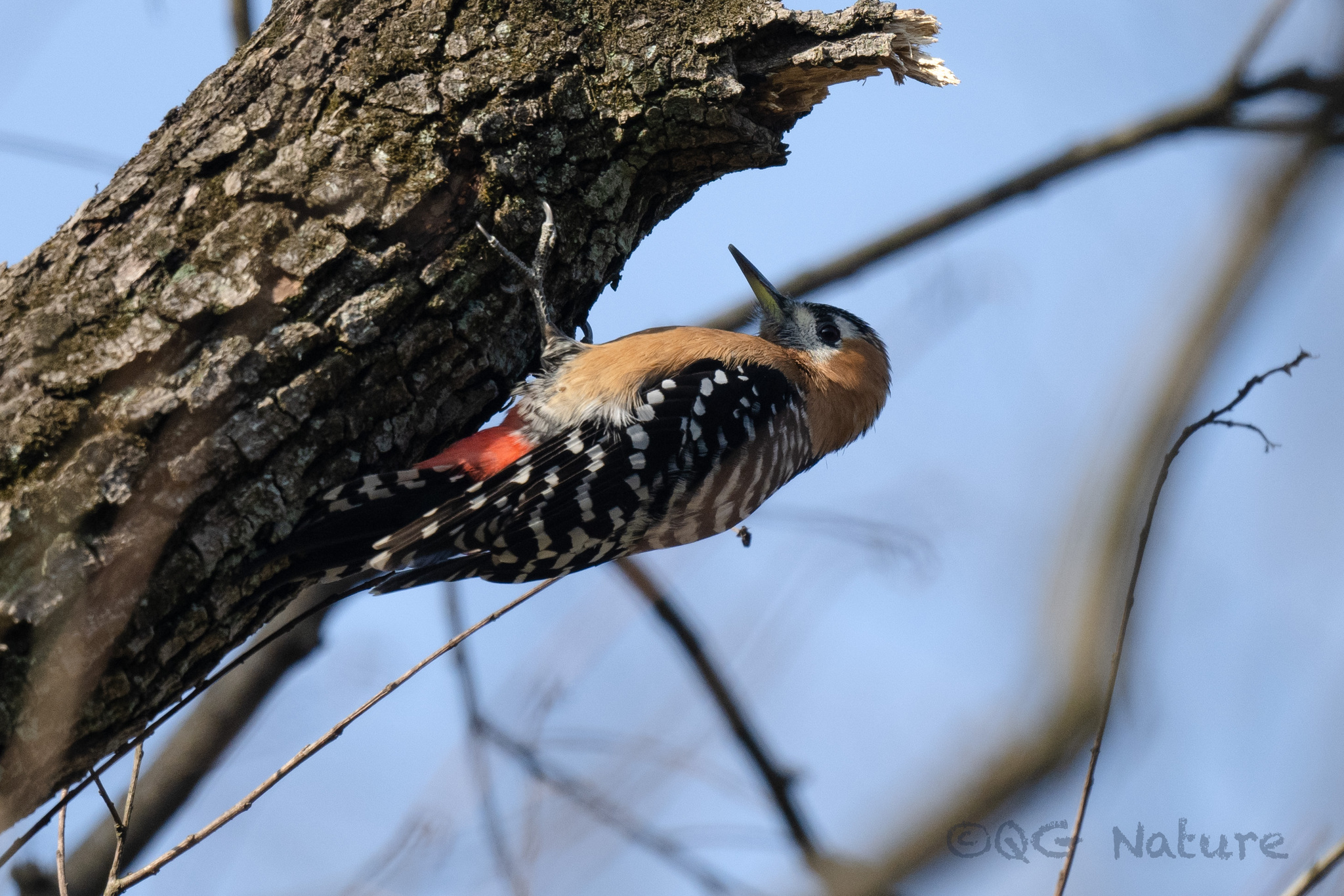
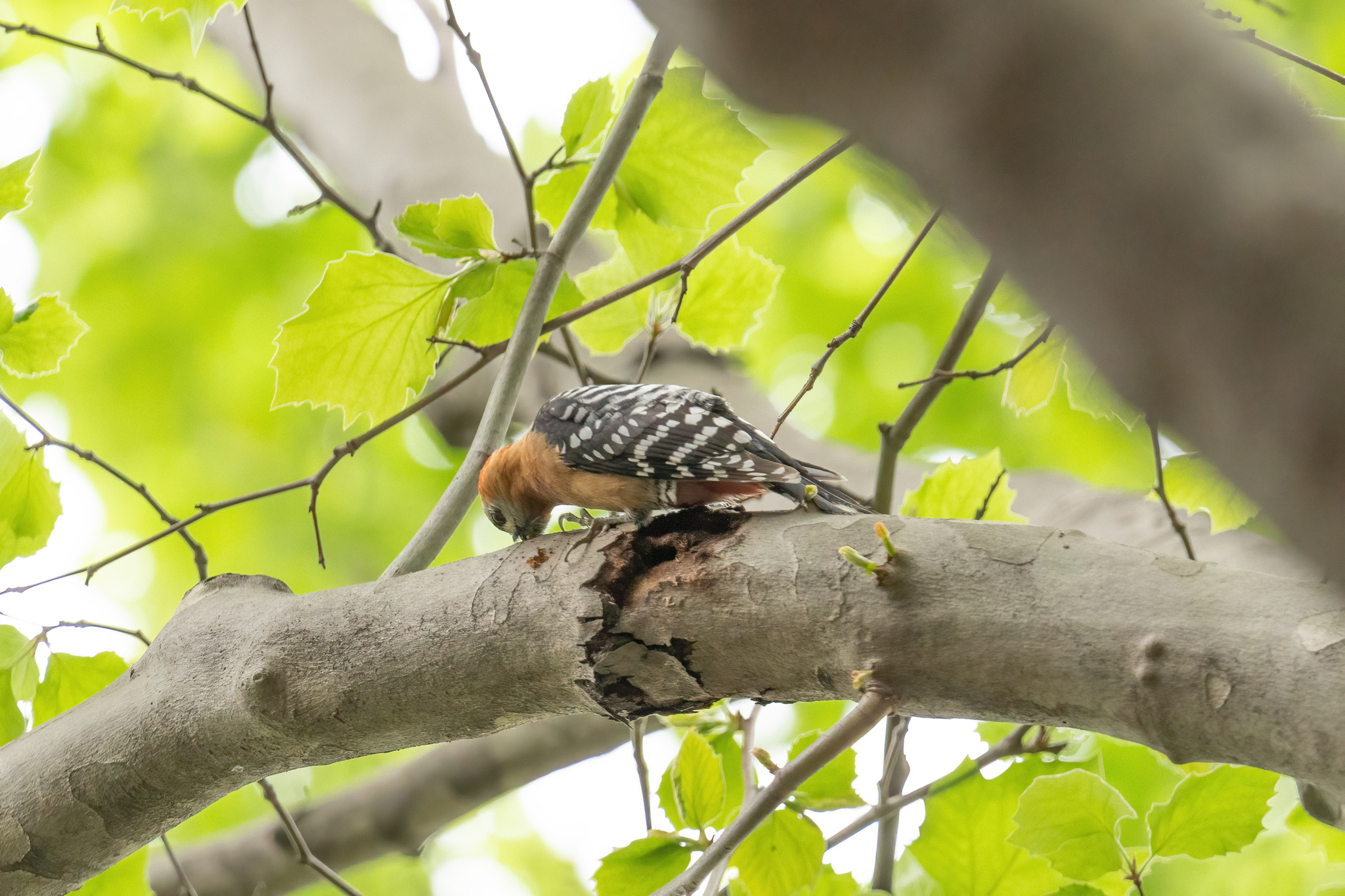
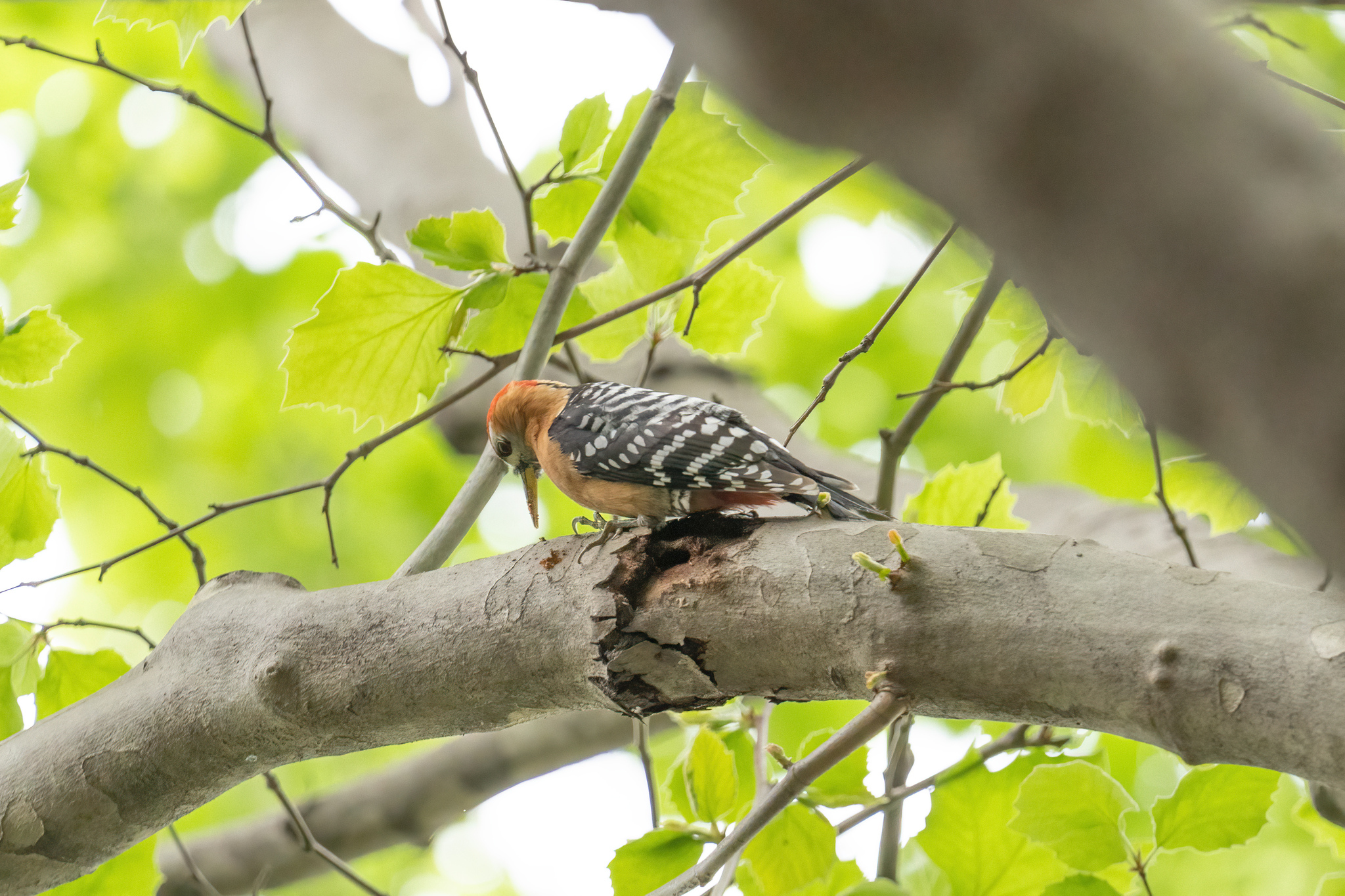
Length ranges from 19 to 23 cm (7.5 to 9.1 in). Males have a red crown, while females have a black crown speckled with white. Both sexes feature a black mantle and back, with wings black barred with white. The upper tail is black, showing white barring on the outer two pairs of feathers. The face is white; the throat and underparts are uniform cinnamon or rufous. The lower belly is black barred with white, and undertail coverts are red or pink. The iris is chestnut, the upper mandible is black, the lower mandible is grey, and legs are grey or olive.
Distribution & Habitat
Range extends across the Himalayas, Indian subcontinent, and Southeast Asia, including Bangladesh, Bhutan, Cambodia, Hong Kong, India, Korea, Myanmar, Nepal, Thailand, Manchuria, Ussuriland, and Vietnam. Natural habitats are subtropical or tropical moist lowland forests and subtropical or tropical moist montane forests.
Behavior & Ecology
Possesses a brushy-tipped tongue adapted for feeding on sap, predominantly sought in spring. At other times, it consumes wood-boring and bark insects. Preferred trees include Quercus semecarpifolia, Quercus glauca, Betula utilis, Ilex dipyrena, and Rhododendrons, often used year after year, altering tree shape. Sap wells are visited by other species such as rufous sibia, white-browed fulvetta, rufous-winged fulvetta, hoary-throated barwing, chestnut-tailed minla, blue-winged minla, several warblers, green-backed tit, yellow-browed tit, white-tailed nuthatch, and green-tailed sunbird.
Conservation
Assessed as Least Concern by the IUCN. Although it has a wide range, it is generally uncommon. The population trend is thought to be downwards due to the clearing of deciduous forests necessary for its survival, leading to disappearance from parts of its former range.
Source: Wikipedia · CC BY-SA 3.0
Taxonomy
- Order
- Piciformes
- Family
- Picidae
- Genus
- Dendrocopos
Subspecies (4)
-
Dendrocopos hyperythrus annamensis
eastern Thailand, Cambodia, and southern Vietnam
Data Sources
Species description from Wikipedia, licensed under CC BY-SA 3.0.
Bird images and sounds sourced from GBIF, contributed by citizen scientists worldwide under Creative Commons licenses.
Taxonomy data from AviList 2025.