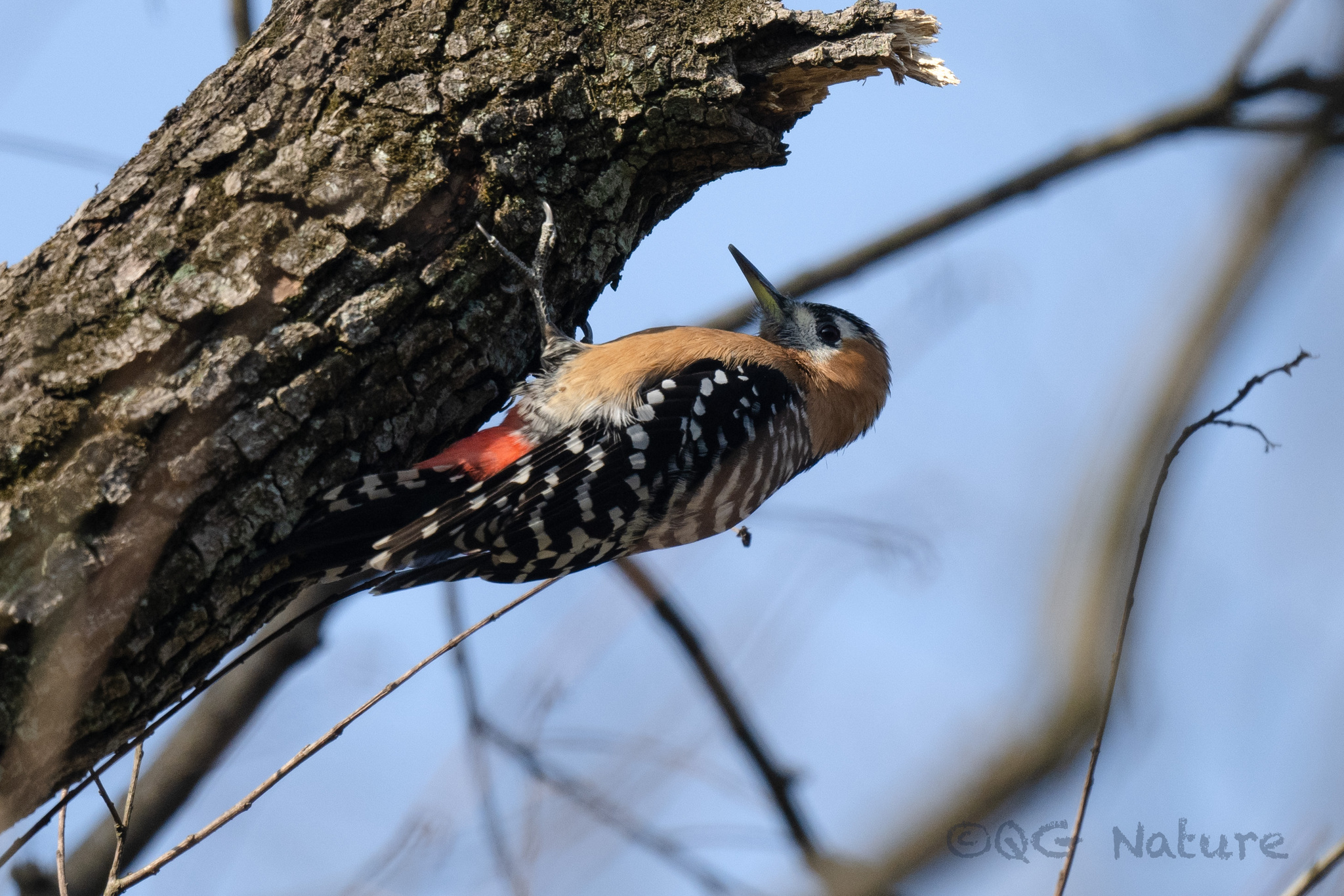
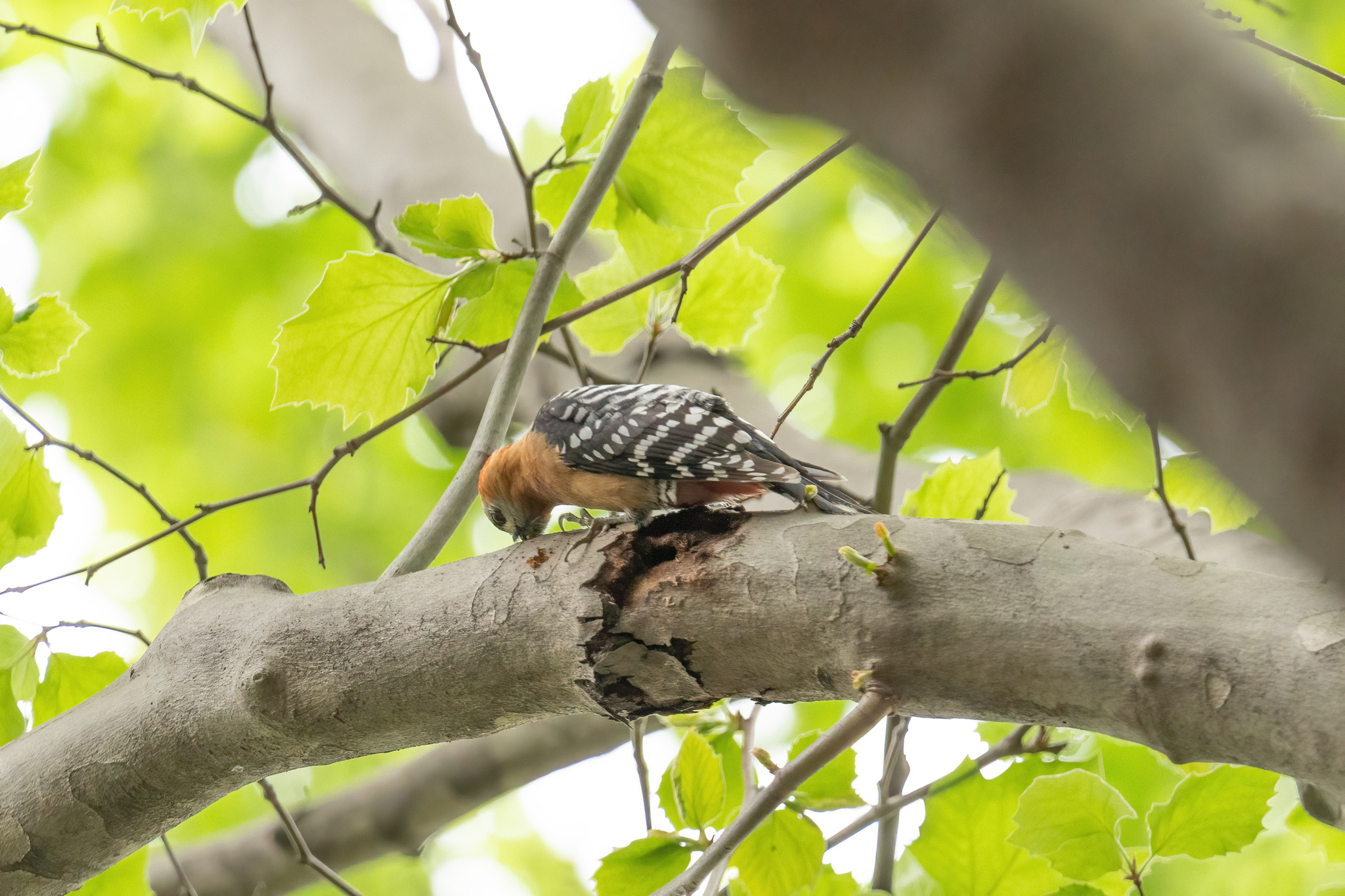
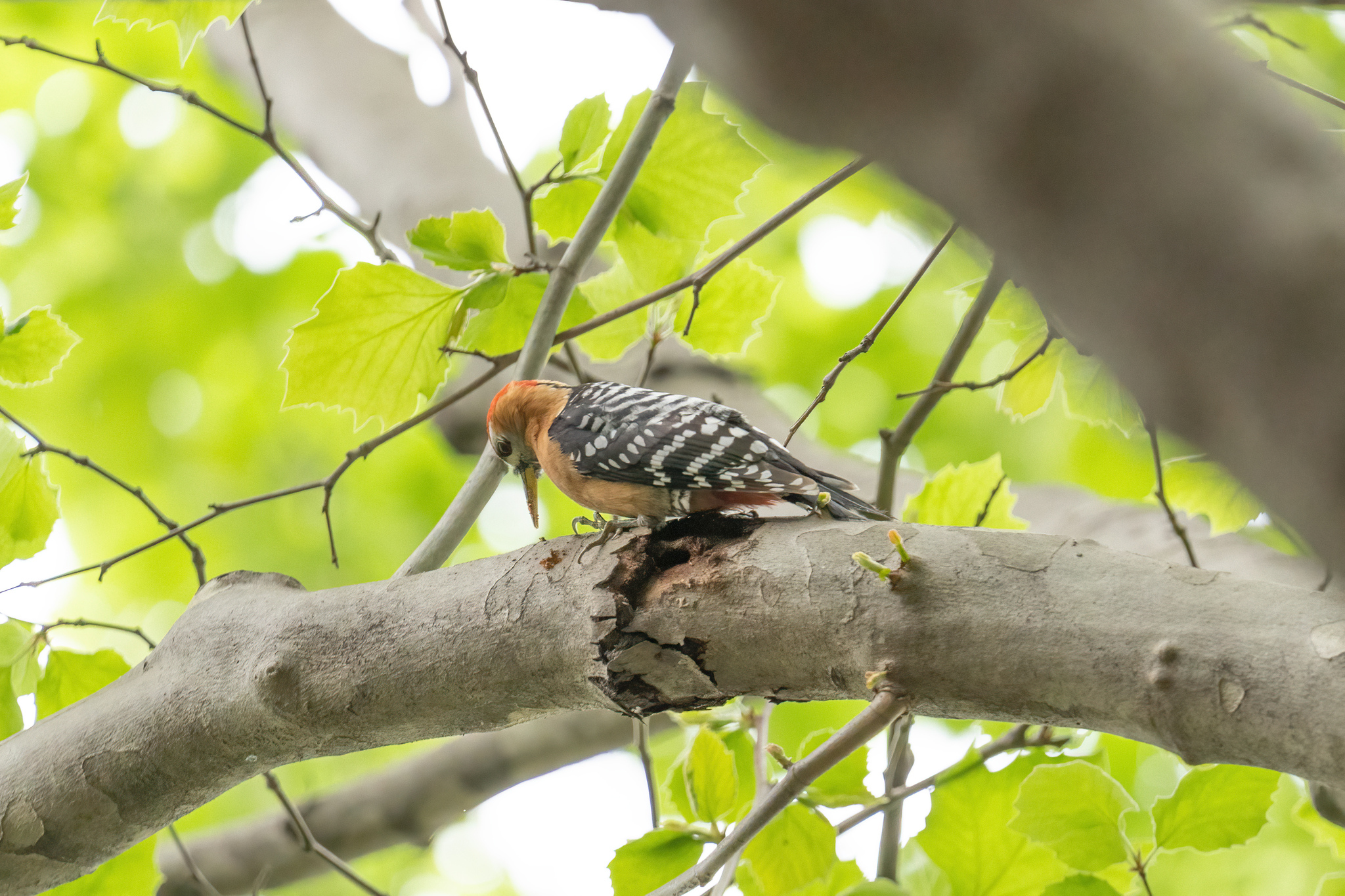
Rufous-bellied Woodpecker
Dendrocopos hyperythrus
棕腹啄木鸟
Introduction
This woodpecker species inhabits forested slopes along the Himalayas and extends across Southeast Asia. It was formerly classified within the genus Sphyrapicus but is now placed elsewhere. The species creates distinctive rows of small pits in tree bark to extract sap and inhabits moist lowland and montane tropical forests throughout its range. It has disappeared from portions of its former range where deciduous forests have been cleared.
Description
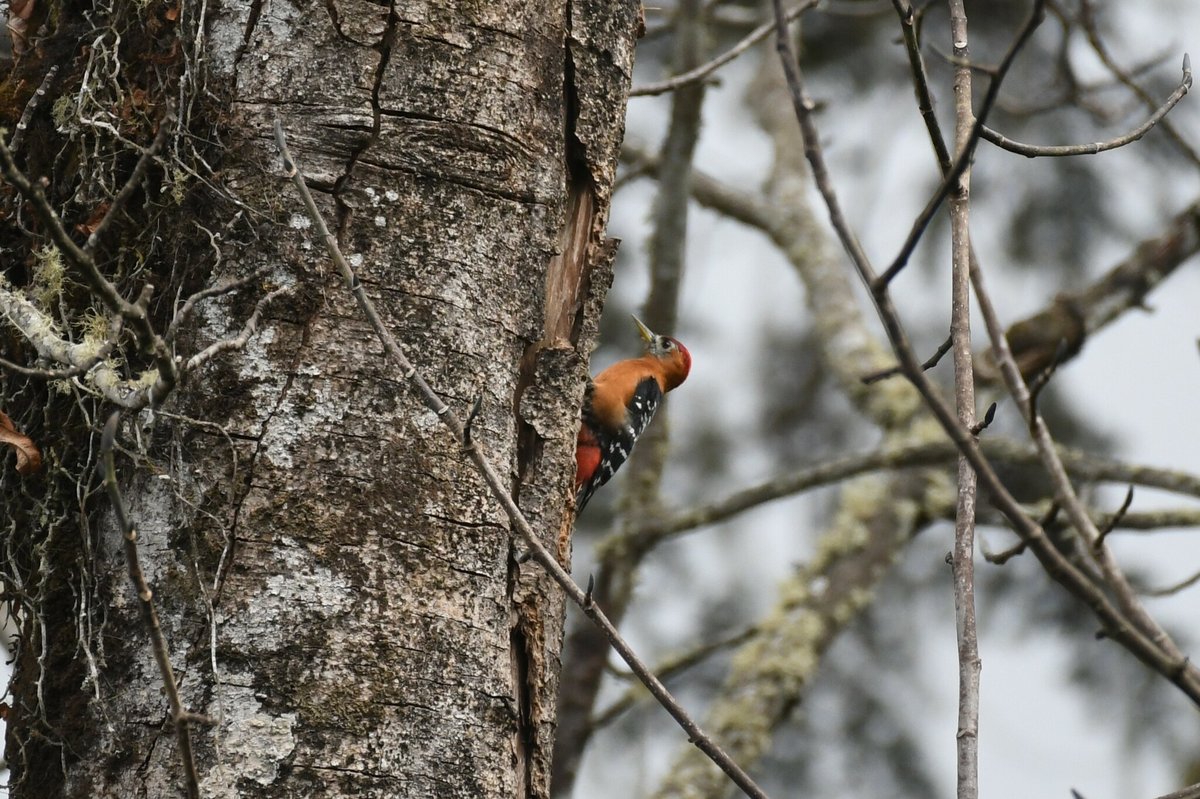
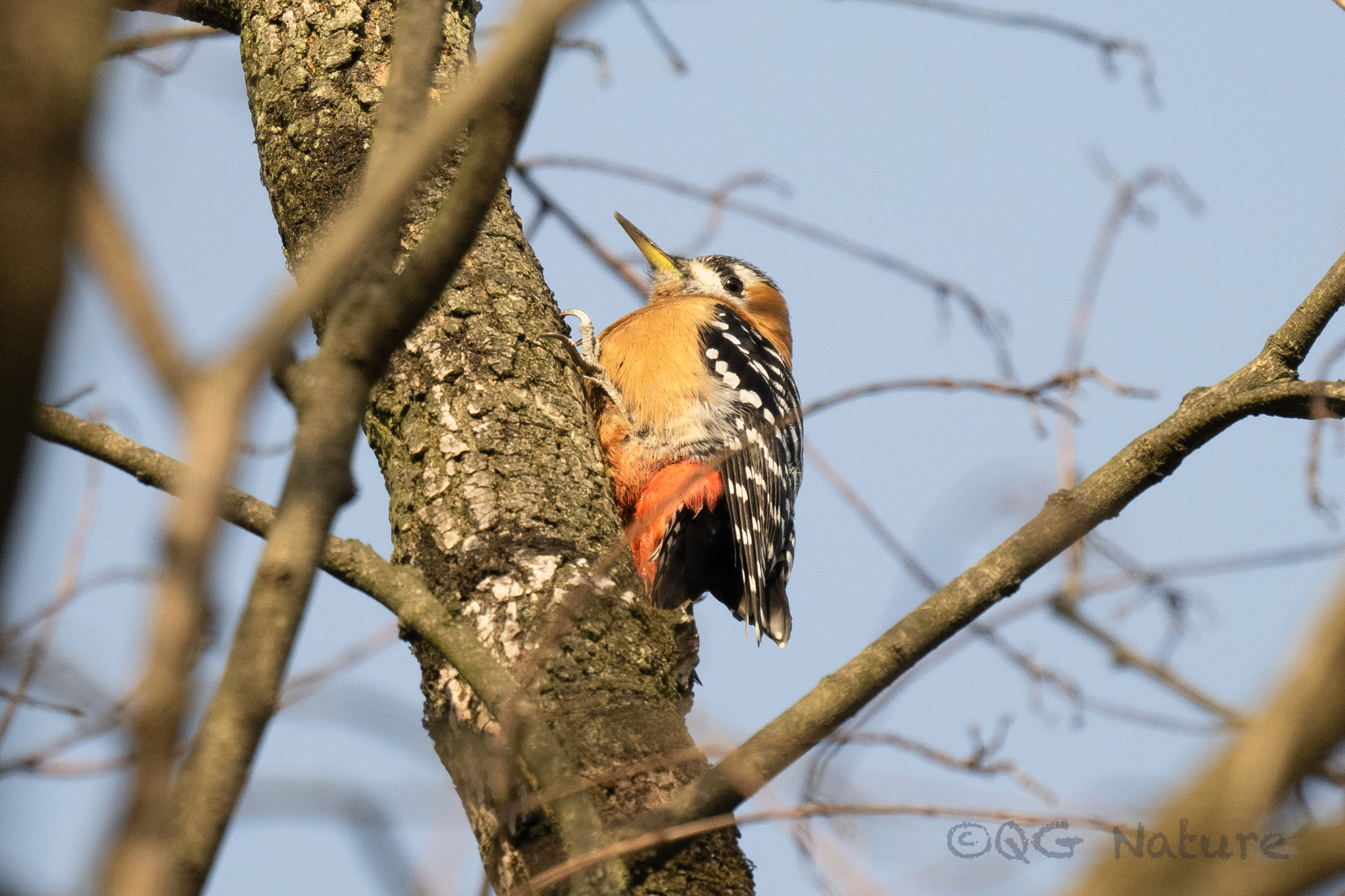
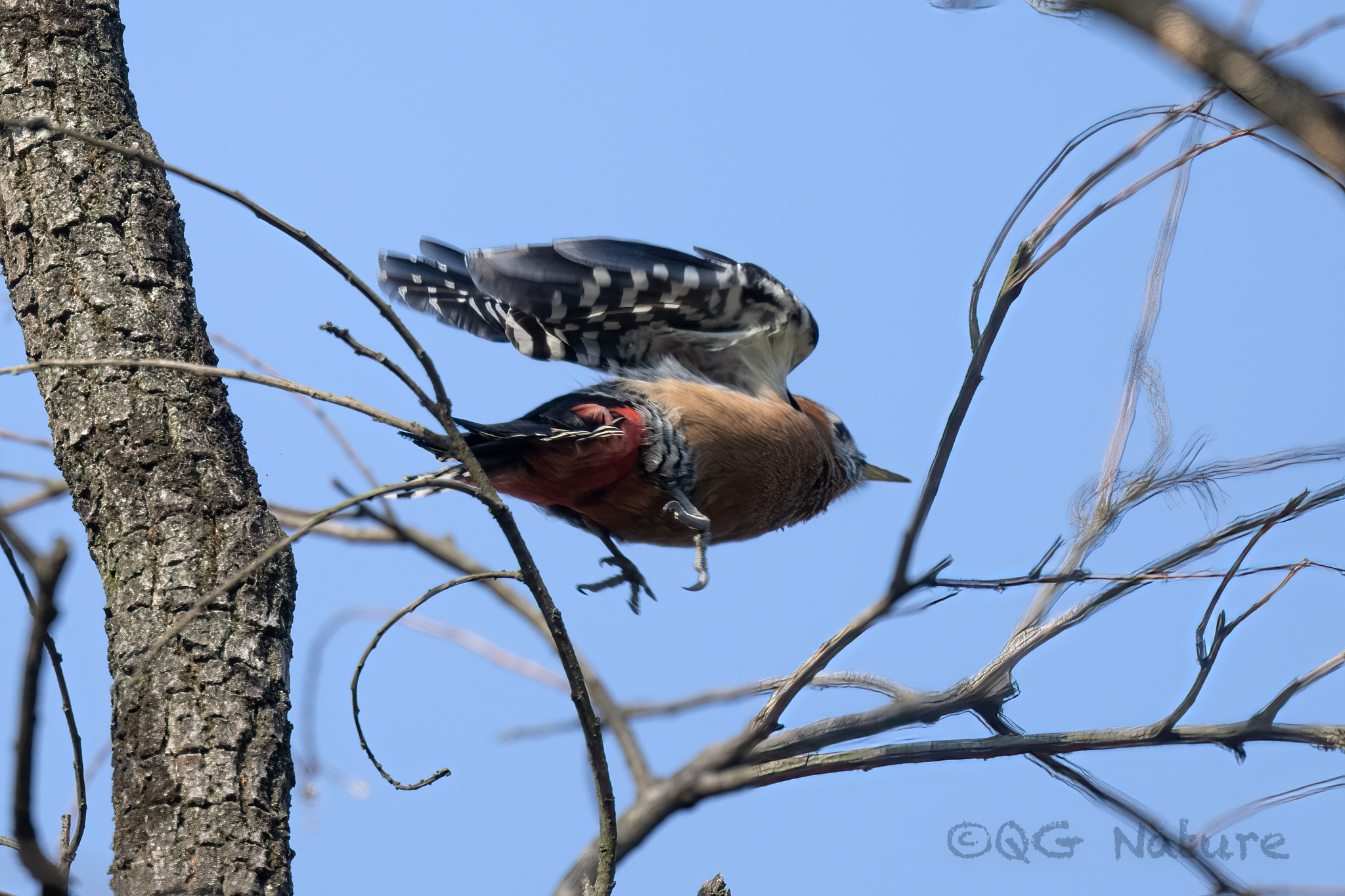
This compact woodpecker measures between 19 and 23 centimeters in length. The sexes display striking dimorphism in head coloration—males possess a vivid red crown while females show a black crown speckled with white. The mantle and back are black, with wings featuring black plumage barred with white. The face appears white, while the throat and underparts showcase a uniform cinnamon to rufous coloration. The lower belly exhibits black barring on white feathers, and the under-tail coverts are pink to red. The chestnut iris, black upper mandible, grey lower mandible, and grey to olive legs complete the distinctive appearance.
Distribution & Habitat
The species ranges widely across the Himalayan region and Southeast Asia, including Bangladesh, Bhutan, India, Nepal, Myanmar, Thailand, Cambodia, Vietnam, Hong Kong, Korea, Manchuria, and Ussuriland. It occupies subtropical and tropical moist lowland forests as well as subtropical and tropical moist montane forests throughout this extensive geographic area.
Behavior & Ecology
This woodpecker possesses a specialized tongue with a brushy tip adapted for extracting sap. It primarily seeks sap during spring months, while wood-boring and bark insects form the bulk of its diet at other times. Key tree species utilized include Quercus semecarpifolia, Quercus glauca, Betula utilis, Ilex dipyrena, and Rhododendrons. The same trees are often revisited annually for sap extraction, gradually altering the tree's form. The sap wells created by this woodpecker attract numerous other bird species including rufous sibias, fulvetta species, barwings, minlas, warblers, tits, nuthatches, and sunbirds.
Conservation
Although the species possesses a broad geographic range, it remains generally uncommon throughout its territory. Deforestation of deciduous forests has caused local disappearances in parts of its former range, and the population trend is assessed as decreasing. The International Union for Conservation of Nature has classified this species as being of least concern.
Source: Wikipedia · CC BY-SA 3.0
Taxonomy
- Order
- Piciformes
- Family
- Picidae
- Genus
- Dendrocopos
- eBird Code
- rubwoo1
Subspecies (4)
-
Dendrocopos hyperythrus annamensis
eastern Thailand, Cambodia, and southern Vietnam
-
Dendrocopos hyperythrus hyperythrus
Nepal to southeastern Tibet, southwestern China, Myanmar, and northwestern Thailand
-
Dendrocopos hyperythrus marshalli
northeastern Pakistan to Kashmir and northern India
-
Dendrocopos hyperythrus subrufinus
Manchuria and Ussuriland; winters to southern China
Data Sources
Species description from Wikipedia, licensed under CC BY-SA 3.0.
Bird images and sounds sourced from GBIF, contributed by citizen scientists worldwide under Creative Commons licenses.
Taxonomy data from AviList 2025.