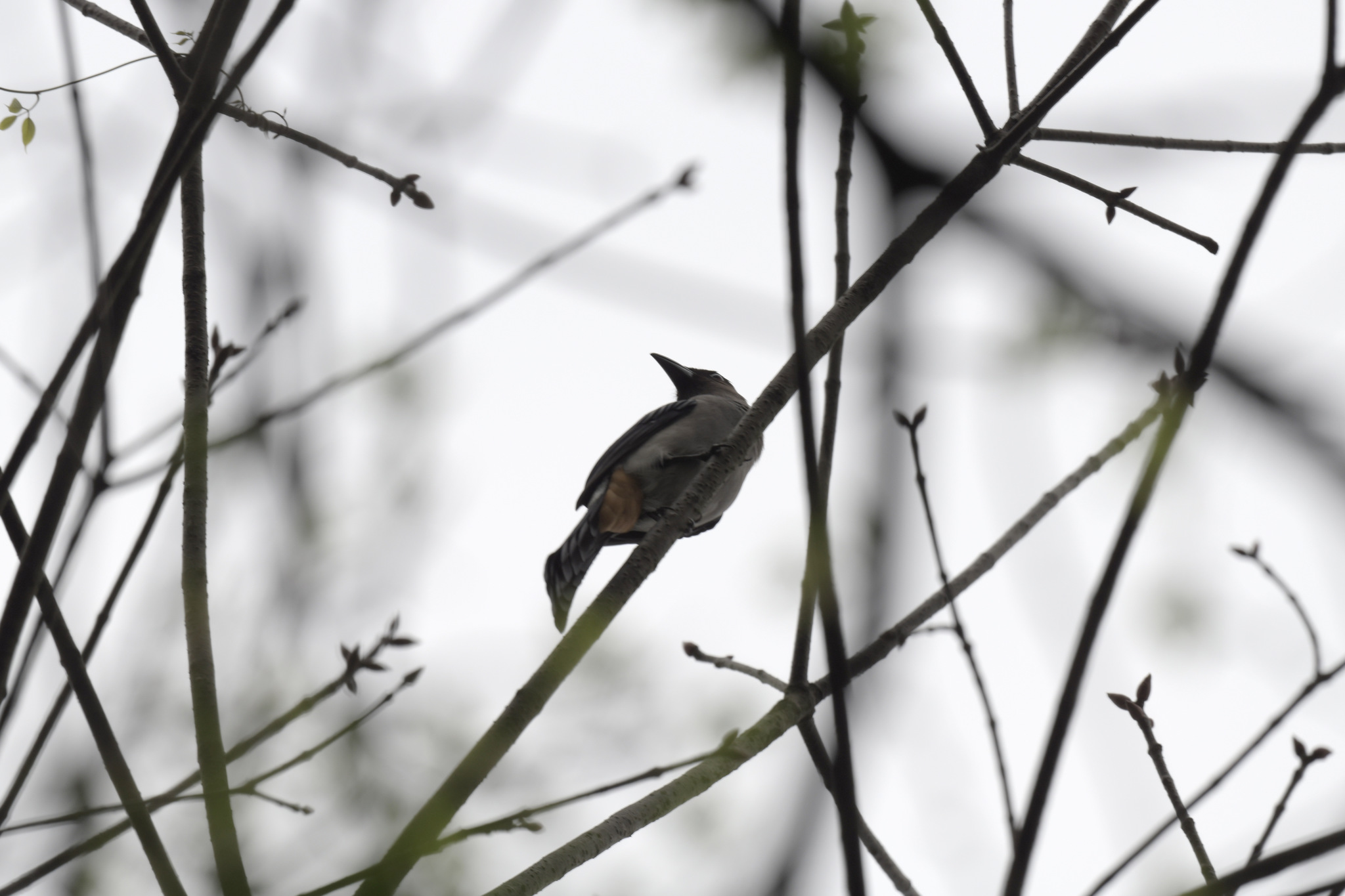
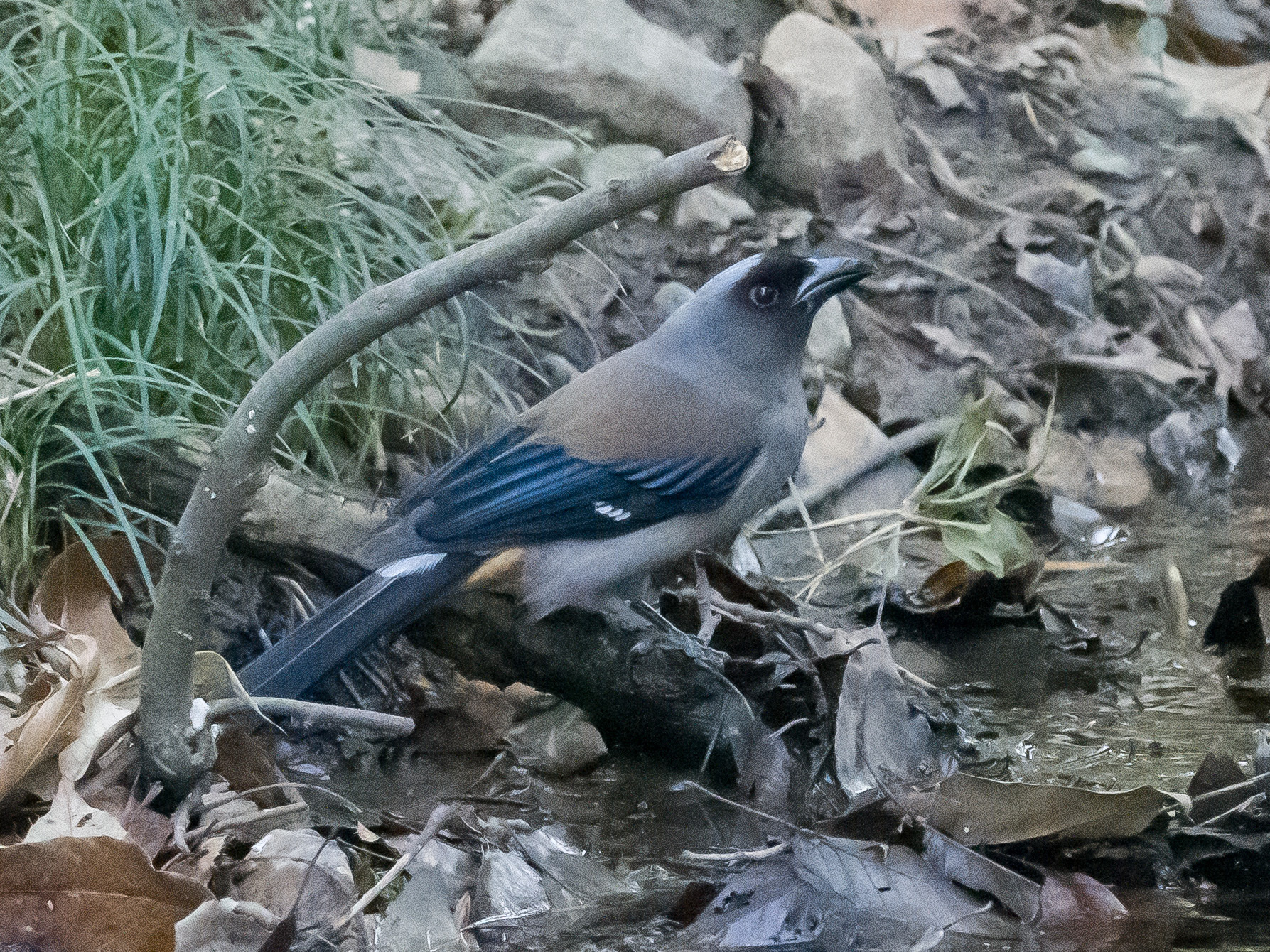
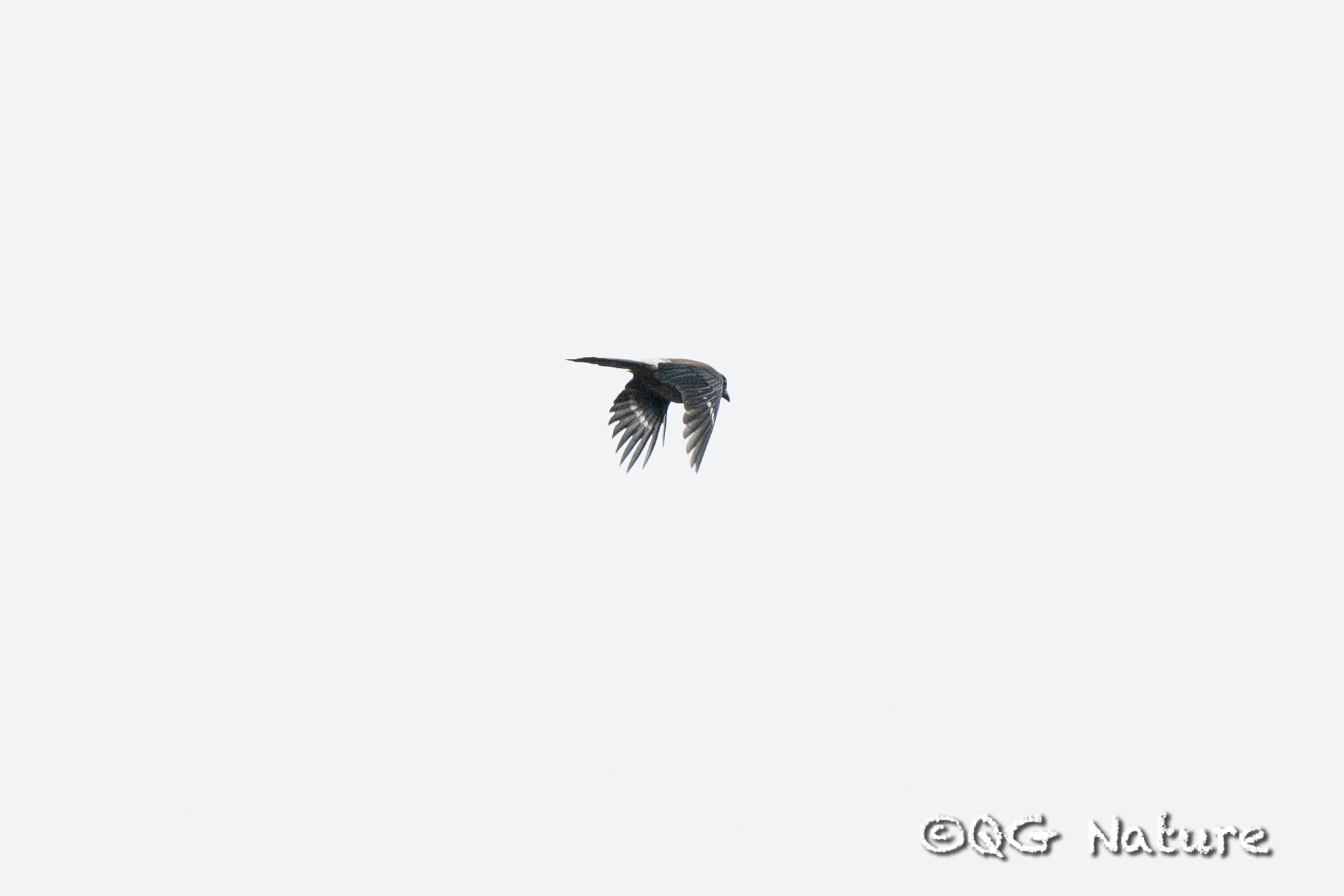
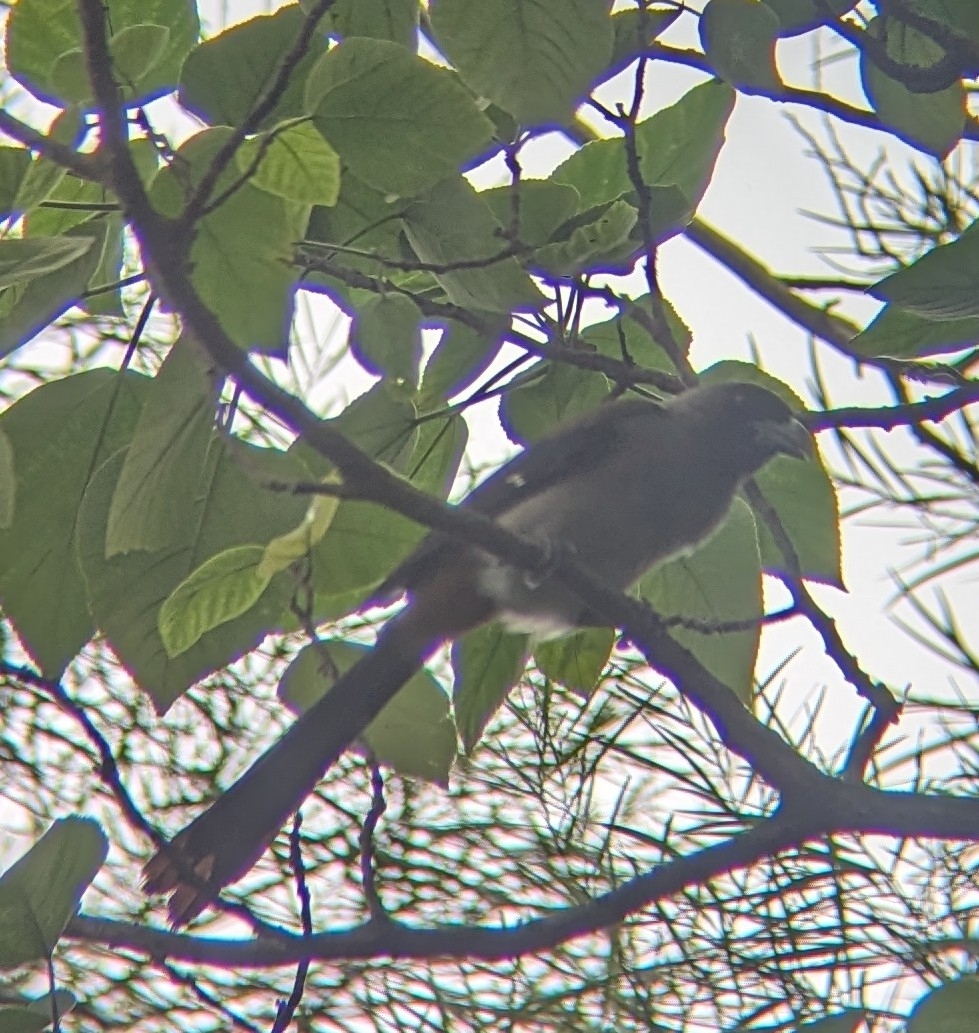
Grey Treepie
Dendrocitta formosae
灰树鹊
Introduction
A medium-sized, long-tailed member of the crow family (Corvidae). Scientific name: Dendrocitta formosae. Widely distributed along the foothills of the Himalayas in the Indian subcontinent, extending into Indochina, Nepal, southern mainland China, and Taiwan. Inhabits dense foliage in forests, hill forests, rhododendrons, oaks, and broad-leaved trees. Omnivorous diet. Notable for participating in mixed-species foraging flocks with laughingthrushes, especially white-throated laughingthrushes. IUCN Red List assessment: Least Concern due to large range and population decline not appearing rapid, though global population size is unknown.
Description
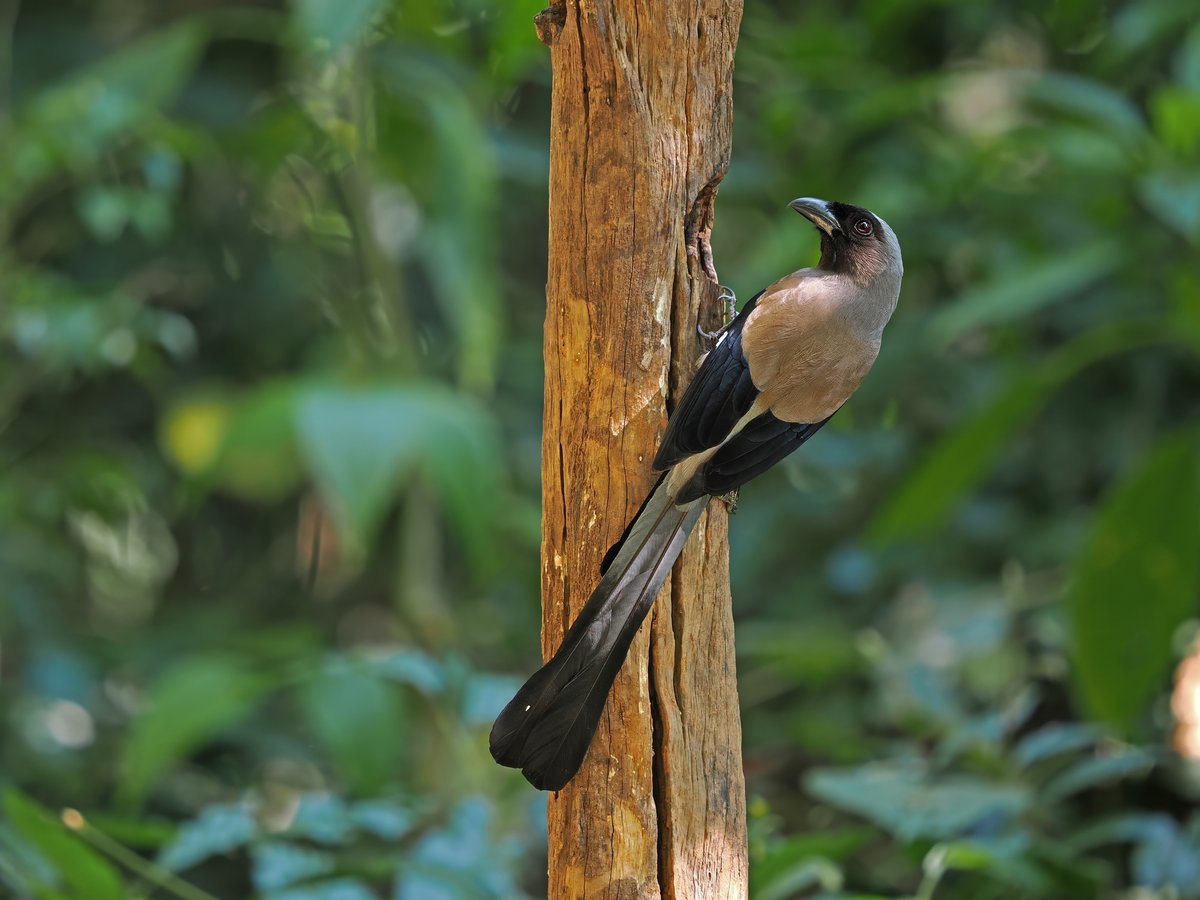
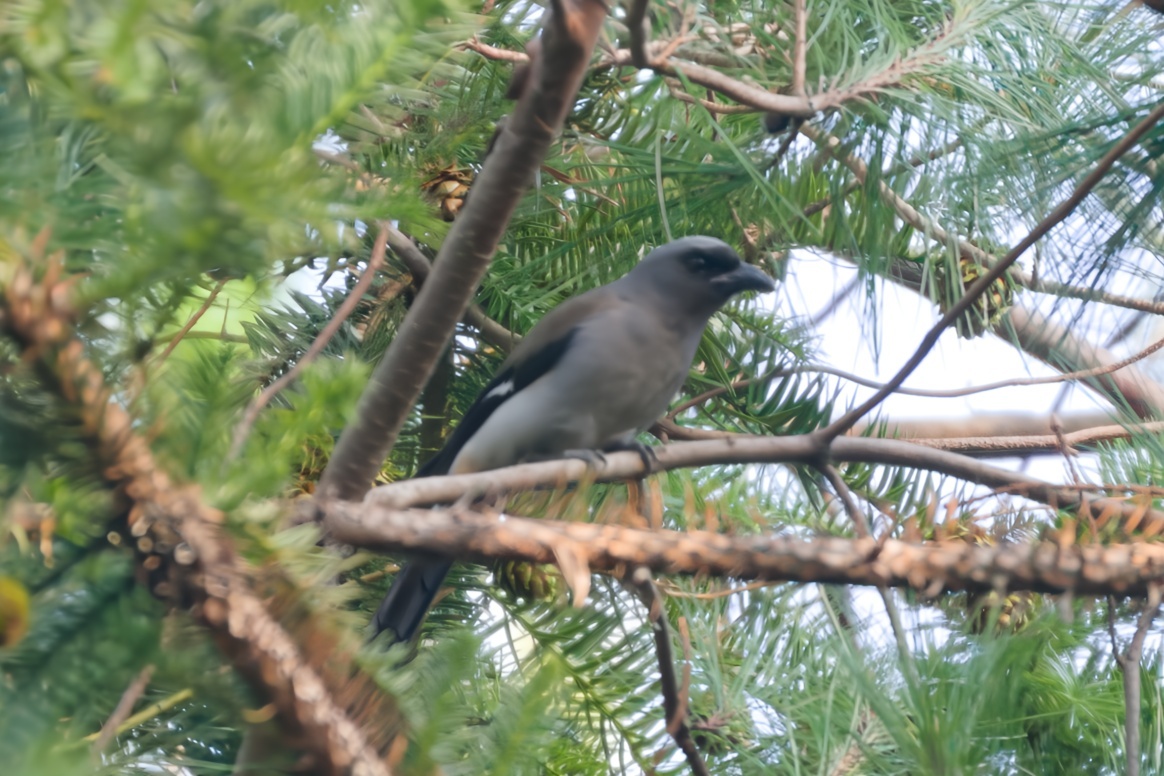
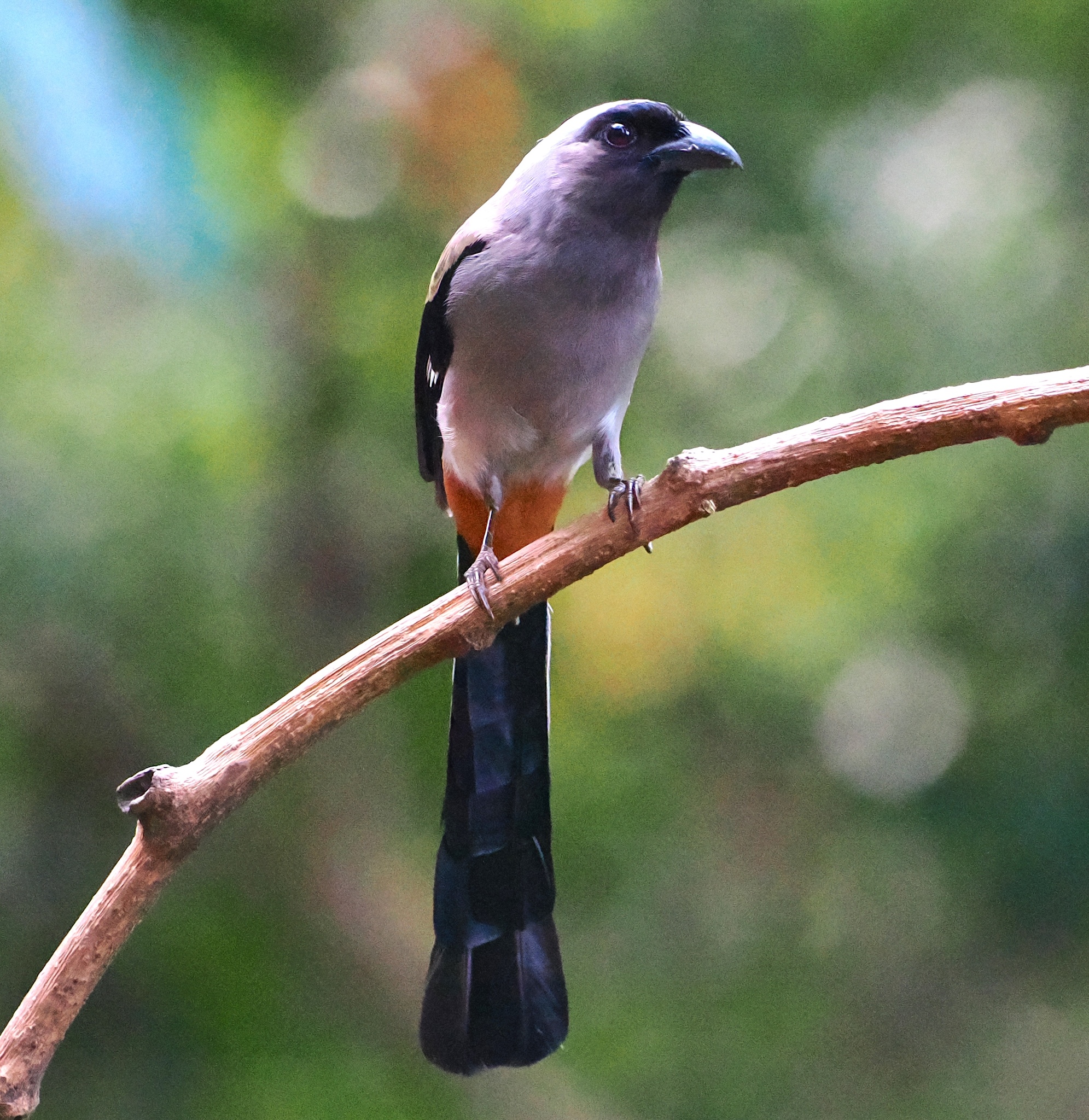
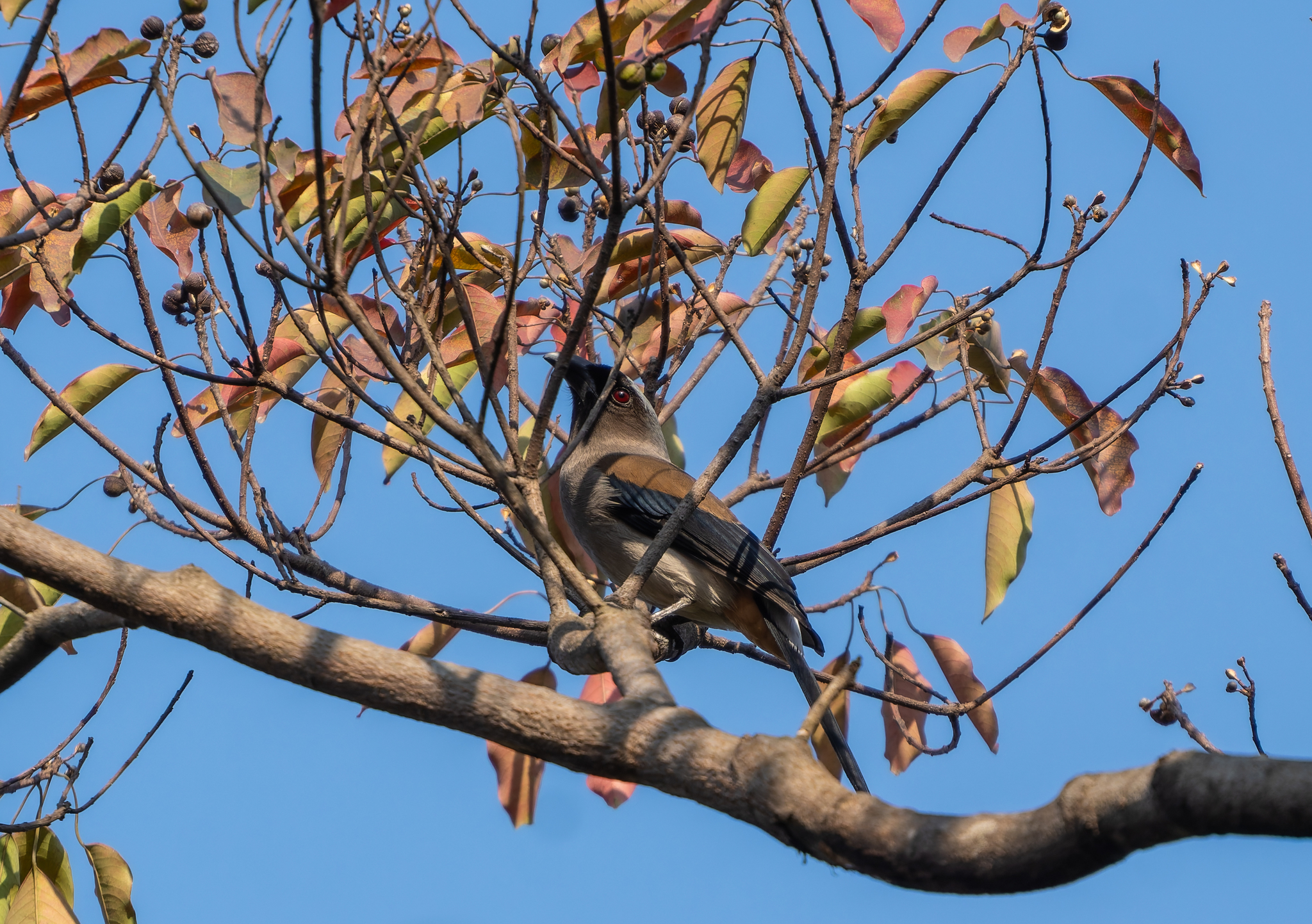
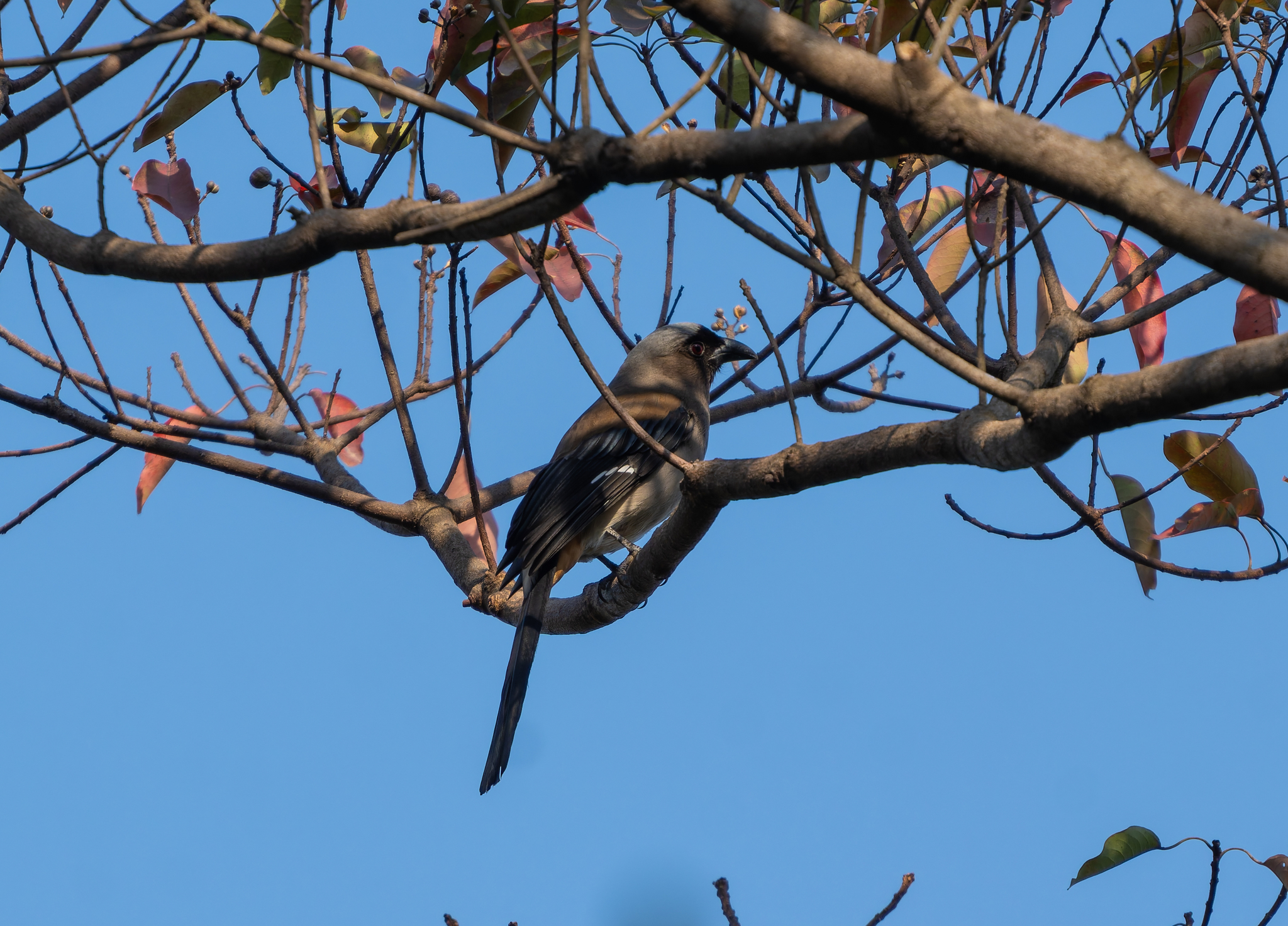
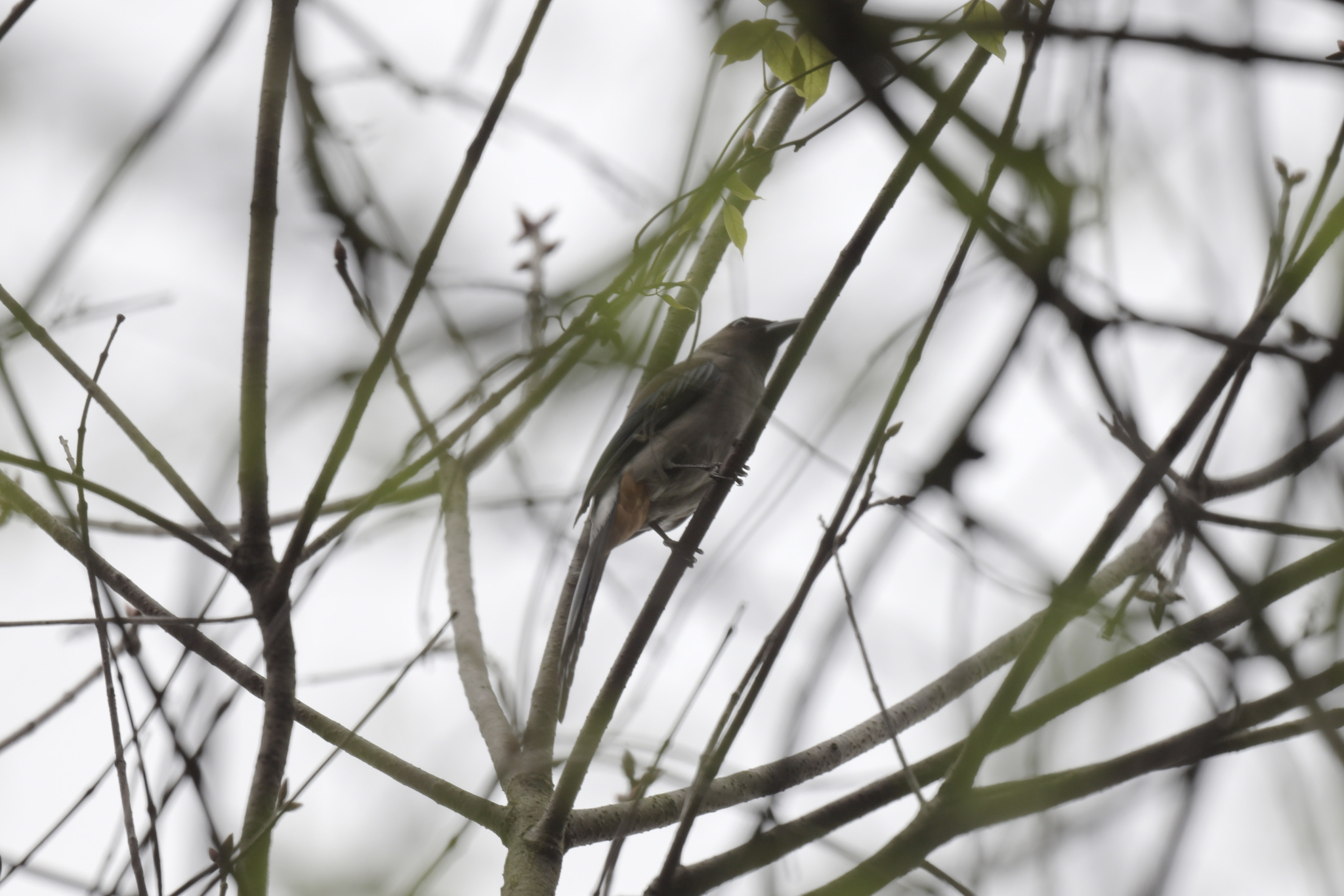
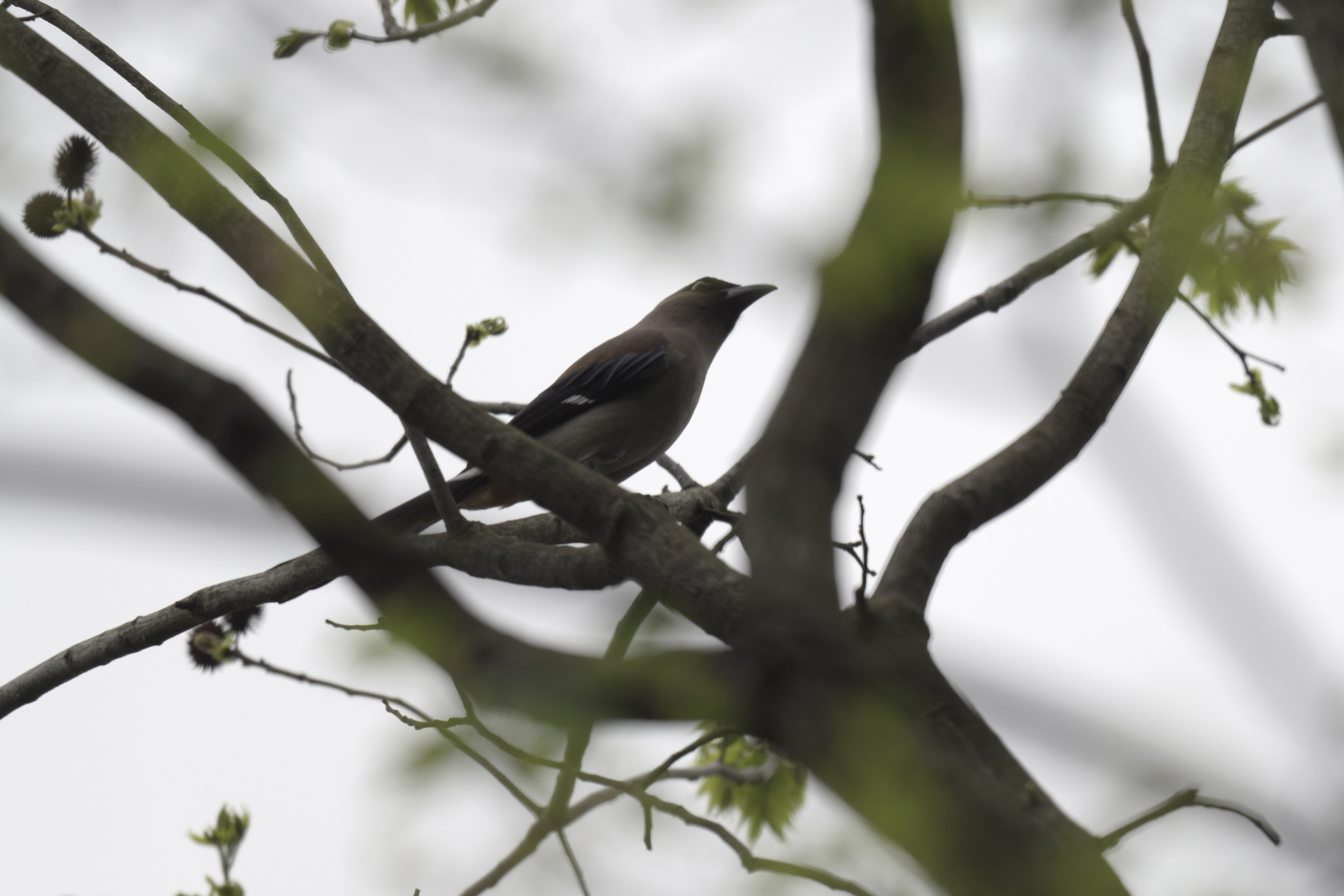
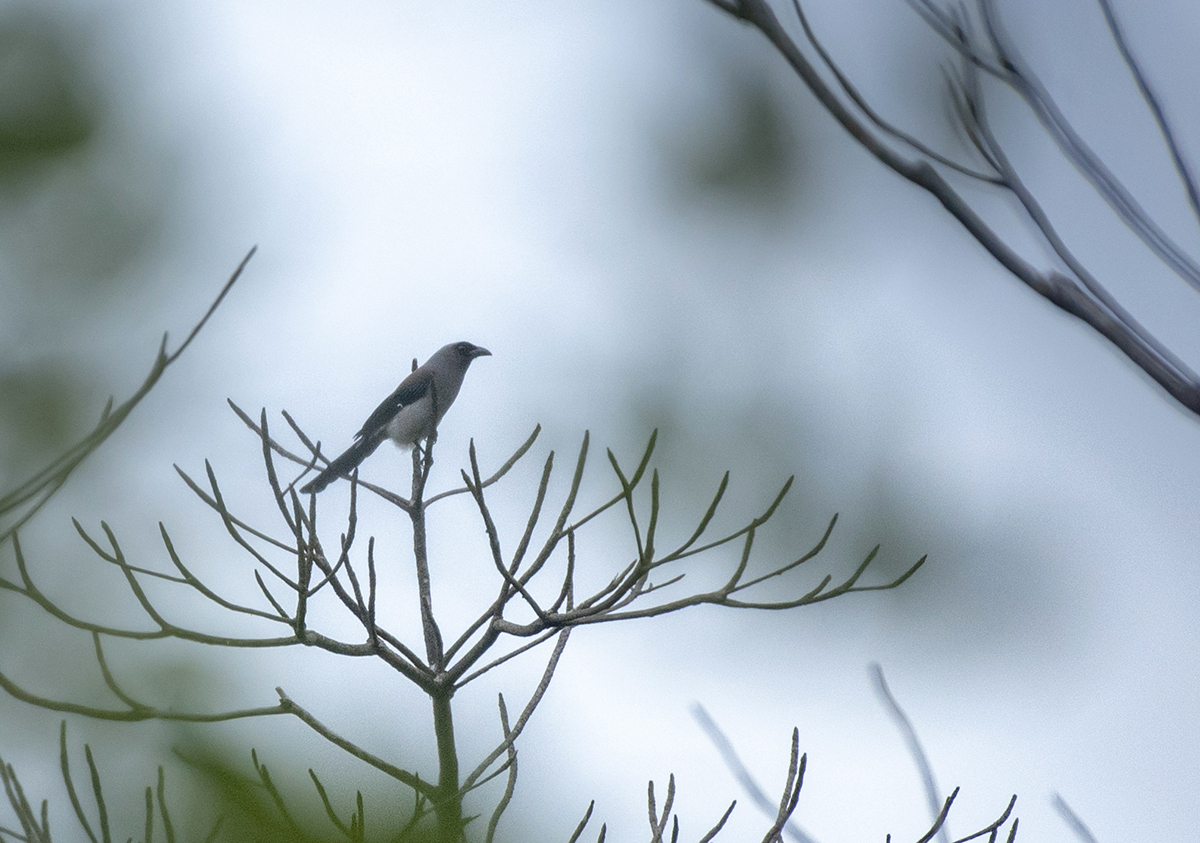
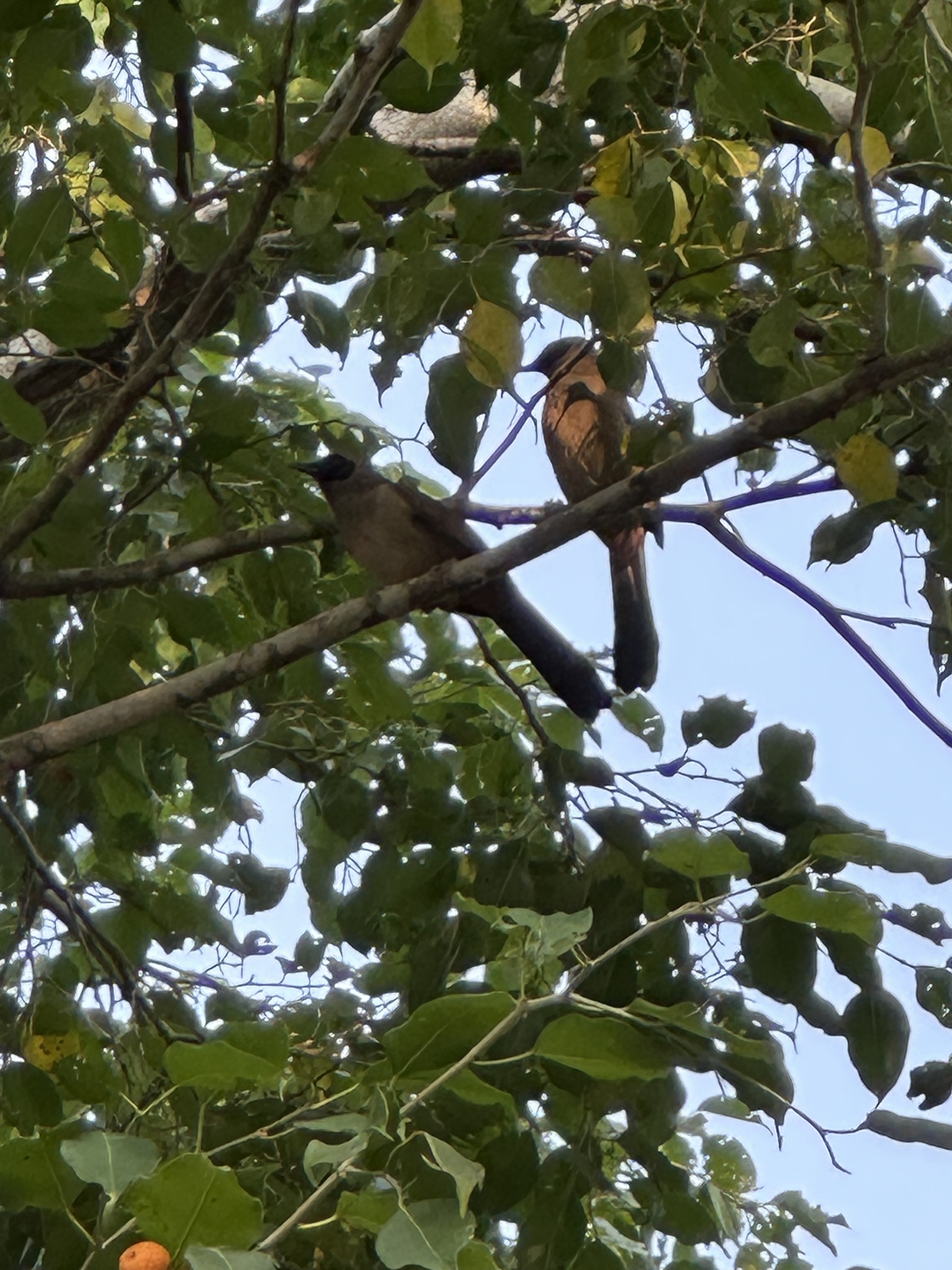
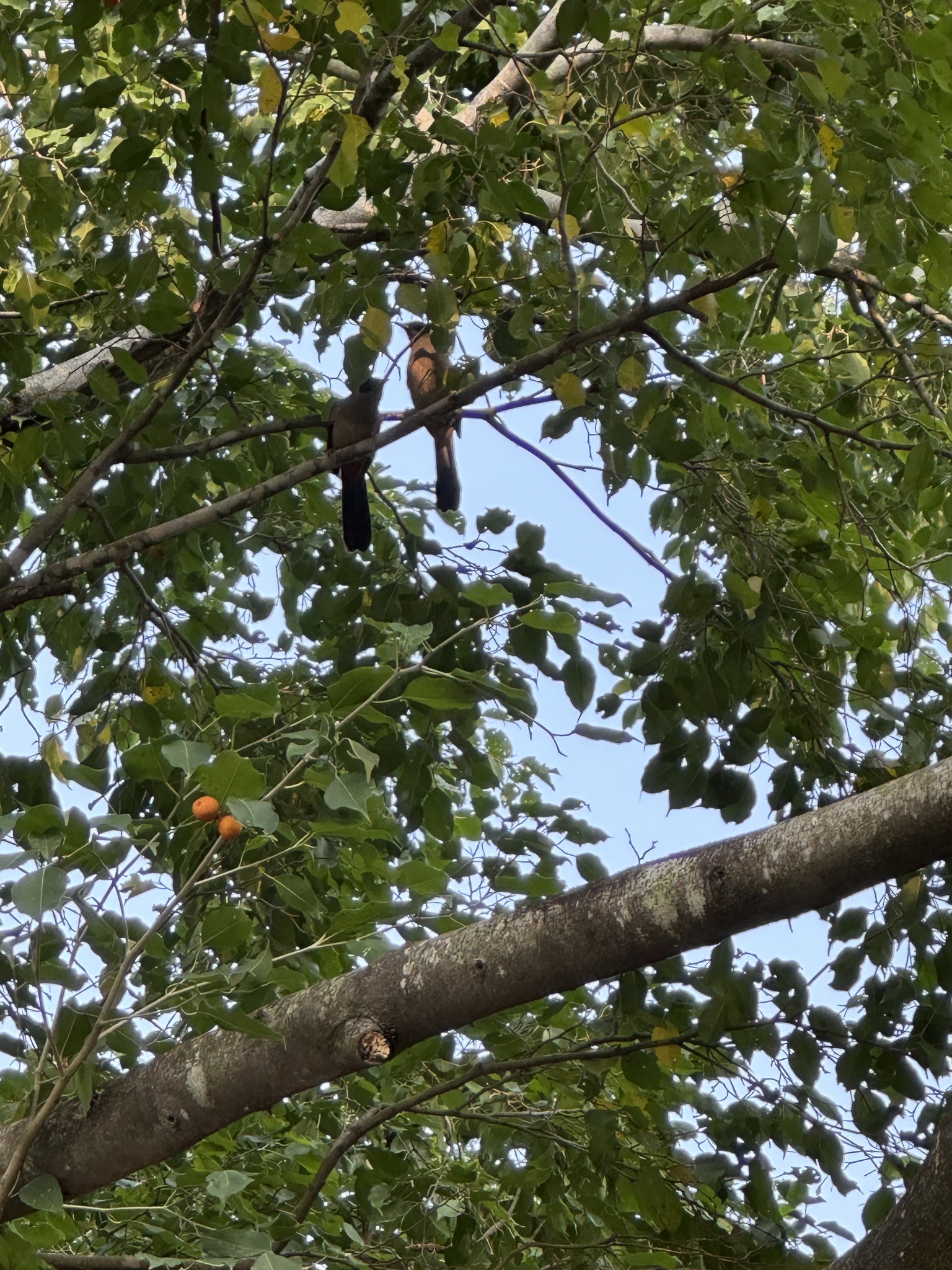
Length 36–40 cm (14–16 in), weight 89–121 g (3.1–4.3 oz). Medium-sized corvid with overall grey body coloration. Face and throat dark black with diffuse mask pattern. Underside grey, becoming whiter toward vent. Back and scapulars brownish; crown and nape greyish. Black wings feature prominent white carpal patch. Vent rufous. Tail pattern varies geographically: western populations have greyish rump with grey in tail, while eastern forms show white rump with black tail. Outer tail feathers and tips of central feathers black. Black beak, blackish-brown legs, red or reddish-brown eyes. Sexes similar; juveniles duller with browner nape and rufous-tipped feathers.
Identification
Distinguished from other Dendrocitta treepies by overall grey body coloration. Within range, note tail pattern variation: western populations have grey in tail with greyish rump, while eastern birds show black tail with white rump. Size similar to related treepie species. The prominent white carpal patch on dark wings and rufous vent are distinctive field marks. Black face mask contrasts with grey body. Juveniles show rufous tips on all feathers and duller overall coloration.
Distribution & Habitat
Occurs across foothills of Himalayas, Eastern Ghats of India, Bangladesh, Myanmar, Thailand, China, Hainan Island, Taiwan, and northern Indochina. Found up to 2,400 m (7,900 ft) elevation in Himalayas. In southeastern China, occurs between 400–1,200 m (1,300–3,900 ft). Habitats include forest, cultivation, and human habitation. Largely arboreal species occupying wide range of forested and wooded areas throughout its range.
Behavior & Ecology
Omnivorous diet includes insects, other invertebrates, berries, nectar, grain, seeds, small reptiles, eggs, and nestlings. Primarily arboreal feeder but will take food from ground, especially in cultivated areas. Joins mixed-species foraging flocks. In Nepal Himalayas, breeds at 2,000–6,000 ft elevation during May to July. Nest is shallow cup lined with hair, built in trees, bushes, or bamboo clumps. Clutch size 3-4 eggs; eggs whitish, buffish, or pale green with brown or grey spots. Both parents build nest and feed young. Voice harsh and grating with varied calls including k-r-r-r-r, tiddly-aye-kok, ko-ku-la, and barking braap...braap...braap notes.
Conservation
IUCN Red List: Least Concern. Global population size not precisely known. China population estimated at 10,000–100,000 breeding pairs. Taiwan population estimated at 10,000–100,000 breeding pairs. Population decline not appearing very rapid due to large range. Hainan Island population may be endangered by habitat destruction. Main threat appears to be habitat loss in specific localized areas.
Source: Wikipedia · CC BY-SA 3.0
Taxonomy
- Order
- Passeriformes
- Family
- Corvidae
- Genus
- Dendrocitta
- eBird Code
- grytre1
Vocalizations
Subspecies (8)
-
Dendrocitta formosae assimilis
southern Myanmar to Thailand
-
Dendrocitta formosae formosae
Taiwan
-
Dendrocitta formosae himalayana
eastern Himalayas to Myanmar and northern Laos
-
Dendrocitta formosae insulae
Hainan (southern China)
-
Dendrocitta formosae occidentalis
western Himalayas (northern Pakistan to Garhwal)
-
Dendrocitta formosae sapiens
southern China on Mount Omei (western Sichuan)
-
Dendrocitta formosae sarkari
eastern India (southern Jaipur and northern Madras)
-
Dendrocitta formosae sinica
eastern and southeastern China to northern Vietnam
Data Sources
Species description from Wikipedia, licensed under CC BY-SA 3.0.
Bird images and sounds sourced from GBIF, contributed by citizen scientists worldwide under Creative Commons licenses.
Taxonomy data from AviList 2025.