Western House Martin
Delichon urbicum
毛脚燕
Introduction
This migratory swallow-family bird breeds across temperate Europe, north Africa, and through the Palearctic to central Mongolia and the Yenisei River, spending winters in sub-Saharan Africa and tropical Asia. It nests in human settlements, where it catches insects in flight and builds closed cup nests beneath building eaves. The species has steel-blue upperparts, white rump, and underparts. Unlike the barn swallow, which favors rural barns and agricultural buildings, this species readily colonizes urban centers. Colonies typically comprise fewer than ten nests, though massive colonies with thousands of nests have been recorded. The species arrives in breeding areas shortly after the first barn swallows and departs European territories by late October. On its African wintering grounds, it flies higher than wintering barn swallows and is less vocal.
Description
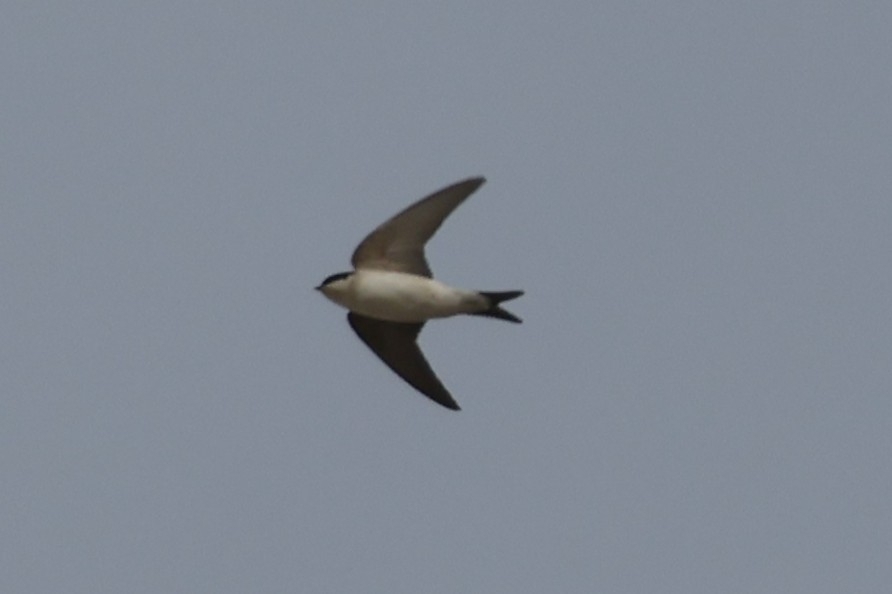
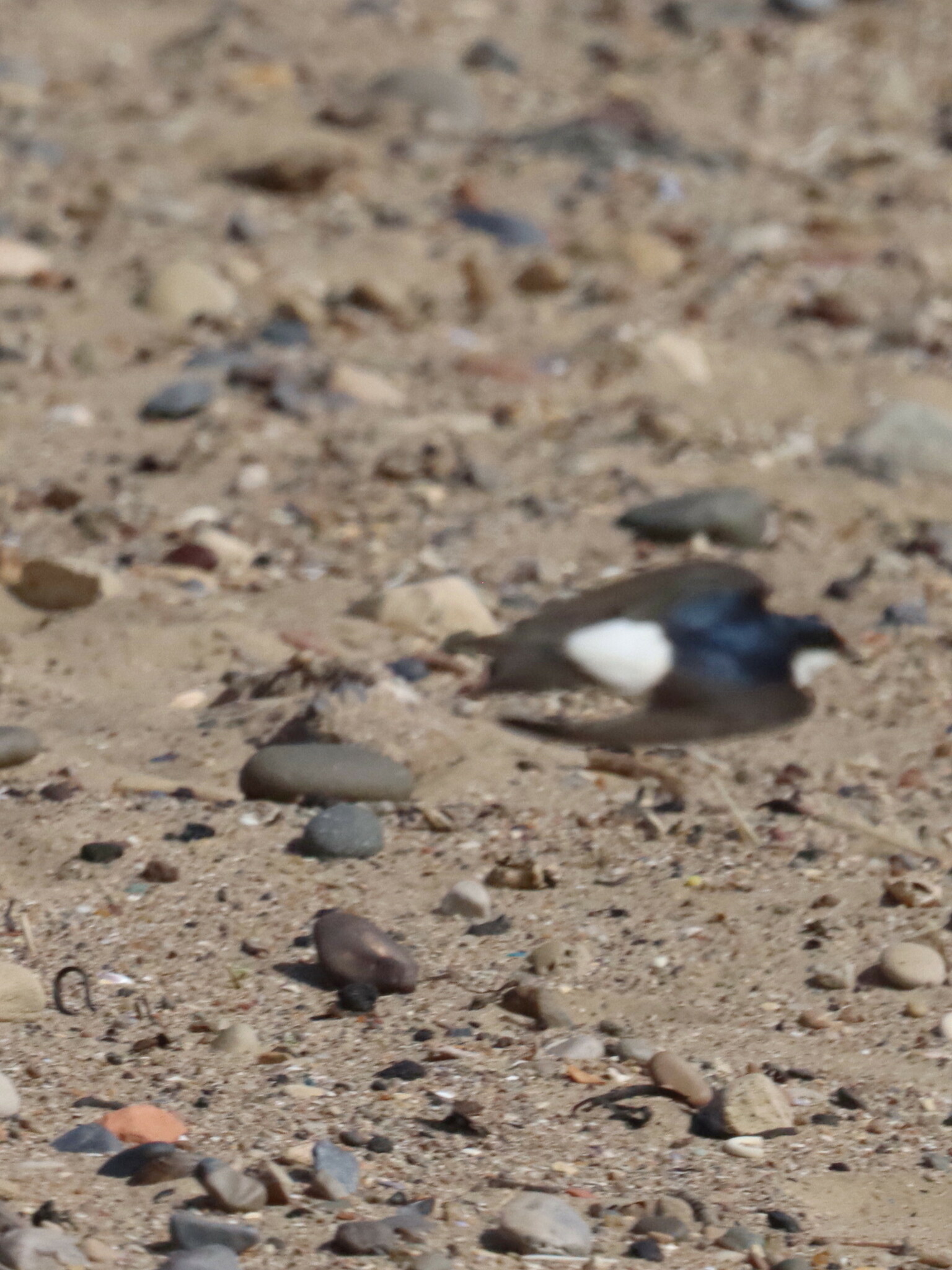
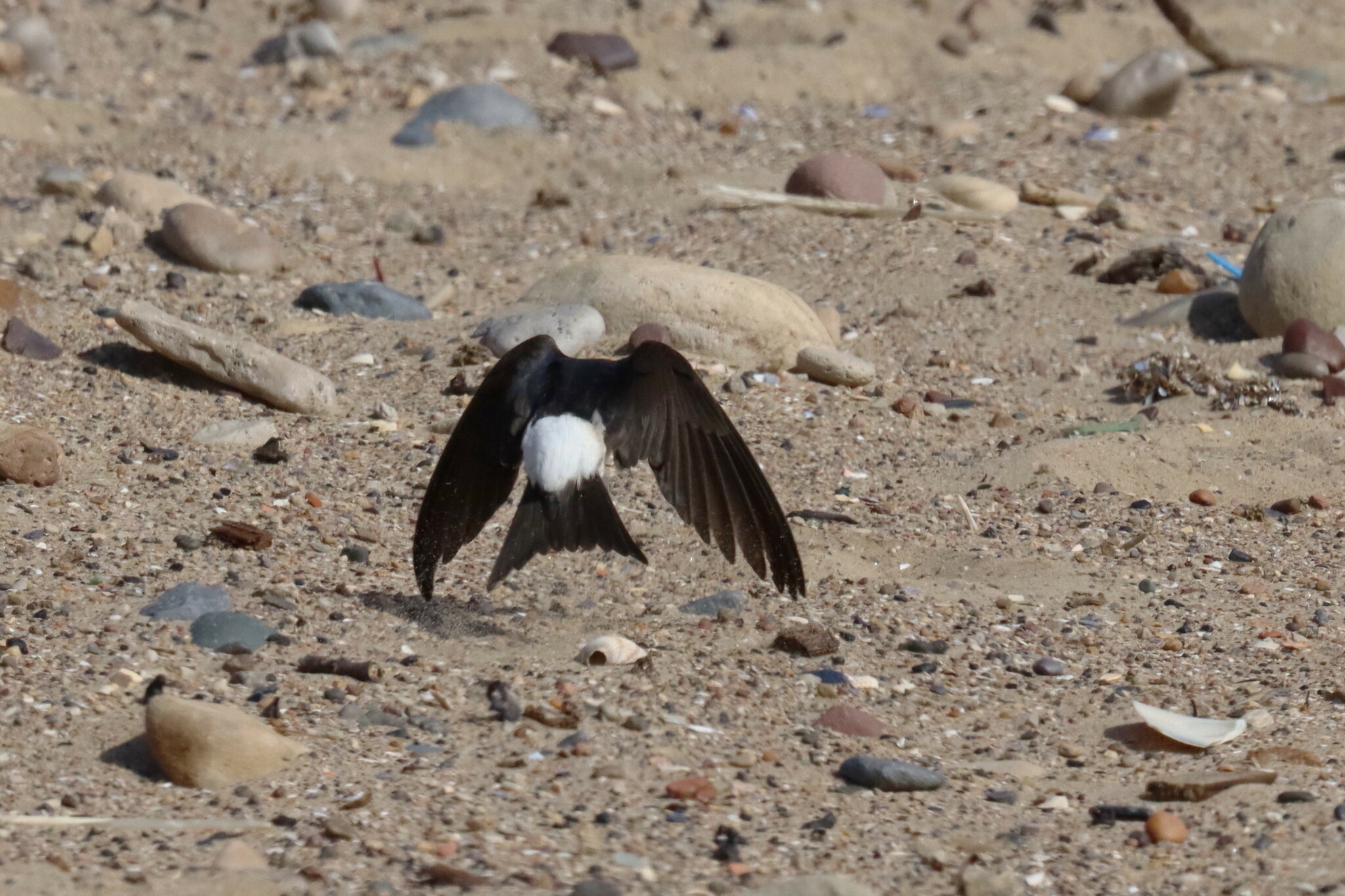
A compact swallow-family bird measuring 13 centimeters in length with a wingspan of 26 to 29 centimeters and weighing approximately 18.3 grams. The adult has striking steel-blue upperparts and head, a conspicuous pure white rump, and entirely white underparts including the underwings. The short legs are covered in white downy feathering, while the bill is small and black, eyes are brown, and the toes and exposed leg portions are pink. Both sexes appear identical in plumage. Juveniles are noticeably darker, appearing sooty black with white tips and edgings on some wing coverts and flight feathers. The subspecies D. u. lagopodum shows a more extensive white rump that extends further onto the tail and has a tail fork intermediate between the nominate race and the Asian house martin.
Identification
The pure white rump and underparts are diagnostic and prevent confusion with other widespread Palearctic swallows such as the barn swallow (which has a dark throat and rusty belly), sand martin (brown above with a brown chest band), and red-rumped swallow (which has a dark rump and rusty collar). In Africa, potential confusion exists with the grey-rumped swallow, but that species shows a grey rather than white rump, off-white underparts, and a long deeply forked tail. The species flies with a noticeably faster wing beat of 5.3 beats per second compared to the barn swallow's 4.4 beats per second, though flight speed of about 11 meters per second is typical for hirundines. The call is a hard chirrrp, and the alarm note is a shrill tseep.
Distribution & Habitat
Breeds across temperate Eurosiberia from Ireland and Portugal east to central Mongolia and the Yenisei River, and in Morocco, Tunisia, and northern Algeria. Migrates on a broad front across the Mediterranean and Sahara to winter throughout sub-Saharan Africa. Prefers open country with low vegetation such as pastures, meadows, and farmland, especially near water, and occurs up to 2,200 meters elevation. Much more urban than the barn swallow, readily breeding in city centers and often found near trees for roosting and foraging. On wintering grounds uses similar open habitats but typically flies higher and is more nomadic; in East Africa it occurs mainly in higher areas. Has occurred as a vagrant to Alaska, Newfoundland, Bermuda, the Azores, and Colombia.
Behavior & Ecology
Feeds on aerial insects, particularly flies and aphids in breeding areas, and hymenopterans including flying ants on wintering grounds. Hunts at an average height of 21 meters during breeding season, typically within 450 meters of the nest, though lower in wet weather and higher (over 50 meters) on wintering grounds. Originally nested on cliffs and in caves but now primarily uses human structures, building closed cup nests under eaves or bridges. Breeds colonially, with four or five white eggs incubated mainly by the female for 14 to 16 days. Fledglings leave the nest after 22 to 32 days and remain with parents for another week. Typically raises two broods annually, though third broods occur. Annual adult mortality is 40 to 60 percent. Males give a soft melodic twittering song throughout the year, and the contact call is a hard chirrrp.
Conservation
Classified as Least Concern on the IUCN Red List due to its extremely large range of approximately 30.8 million square kilometers and population estimated at 22 to 47 million individuals in Europe alone. Global population trends are not well quantified, though European numbers show a declining trend, prompting British conservation groups to upgrade the status to Amber. Has historically benefited from forest clearance creating open habitats and from human buildings providing nest sites, with clean-air legislation enabling breeding in city centers like London. Threats include poor weather during migration (several hundred thousand birds died in Swiss Alpine snowfall in 1974), agricultural pesticide poisoning, shortage of mud for nest building, and competition with house sparrows. Widespread declines have been reported across central and northern Europe since 1970.
Culture
Appears in Shakespeare's Macbeth, where Banquo describes the temple-haunting martlet nesting at Macbeth's castle in Inverness, using the species' nest-building as a metaphor for the castle's wholesome air. The martlet, traditionally associated with this species (or possibly a swallow), is a heraldic bird depicted with short feather tufts instead of legs and serves as the cadency mark of the fourth son of a noble family. It features prominently in many coats of arms including those of the Plantagenets, symbolizing swiftness and representing the landlessness of younger sons through its legendary inability to land. Old European folklore contains unfounded legends about house martins walling up house sparrows that attempt to take over their nests, or gathering en masse to kill intruding sparrows. The accumulation of droppings beneath colonies has sometimes led to nest destruction, though generally the species has been tolerated by humans.
Source: Wikipedia · CC BY-SA 3.0
Taxonomy
- Order
- Passeriformes
- Family
- Hirundinidae
- Genus
- Delichon
- eBird Code
- comhom1
Subspecies (2)
-
Delichon urbicum meridionale
Mediterranean basin to North Africa, Iran, and northern India
-
Delichon urbicum urbicum
breeds Europe to central Asia, western, and southeastern Africa
Data Sources
Species description from Wikipedia, licensed under CC BY-SA 3.0.
Bird images and sounds sourced from GBIF, contributed by citizen scientists worldwide under Creative Commons licenses.
Taxonomy data from AviList 2025.