Anseriformes / Anatidae / Cygnus
Mute Swan
Cygnus olor · 疣鼻天鹅
Introduction
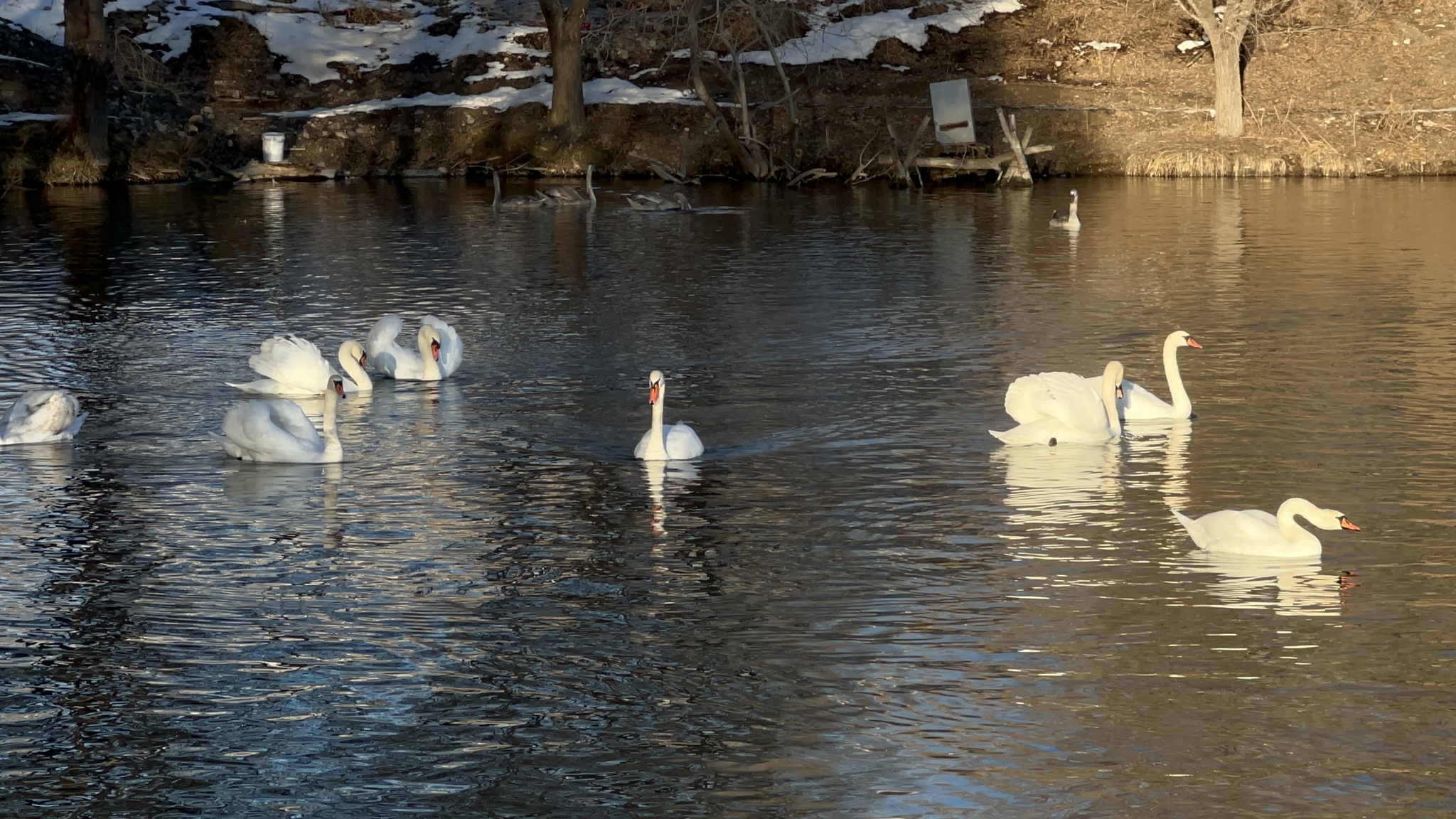
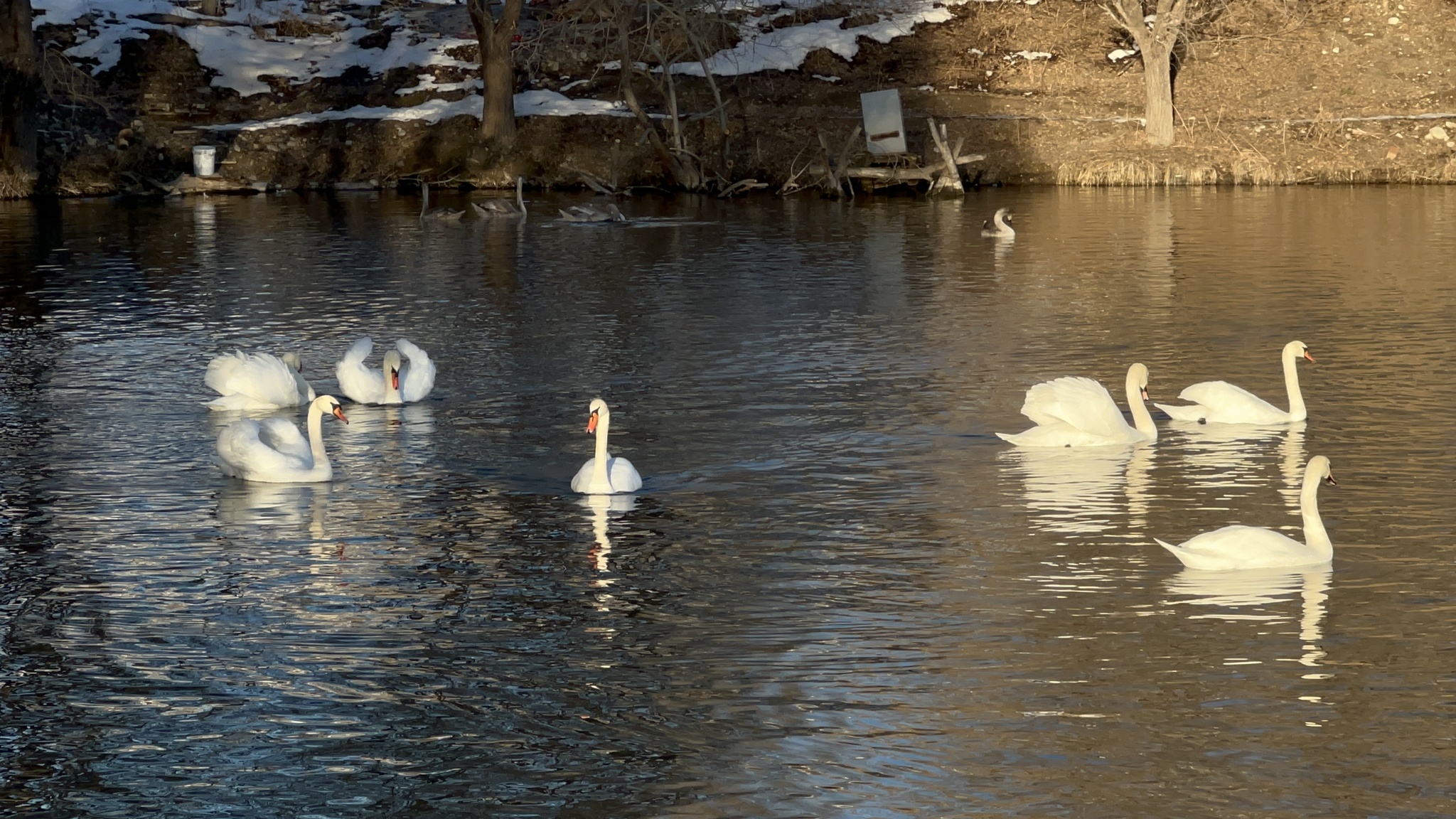
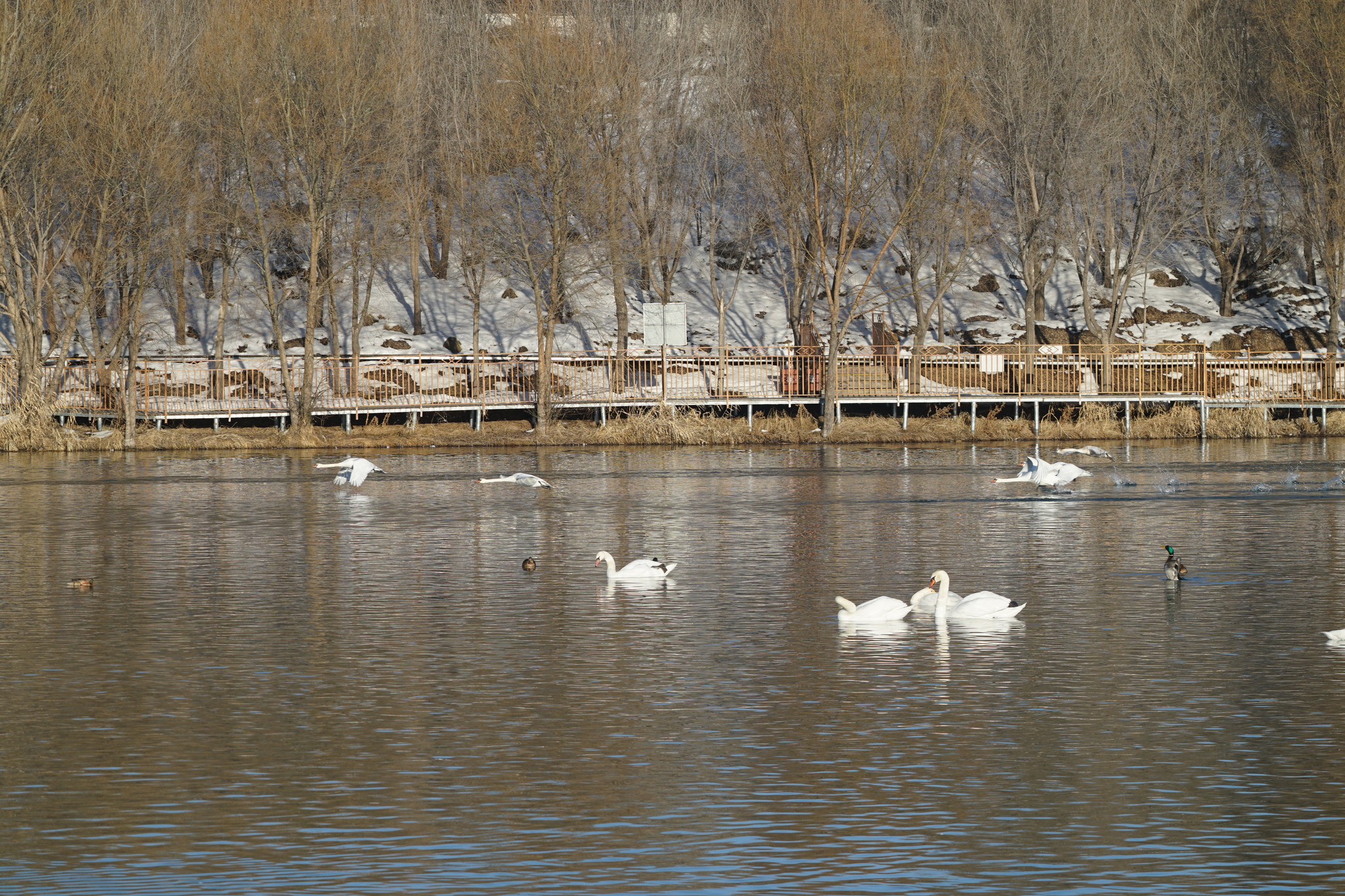
A species of swan in the family Anatidae, native to much of Europe and parts of Asia, with rare winter visits to far north Africa. It is an introduced species in North America, Australasia, and Southern Africa. Distinctive traits include being less vocal than other swans and possessing a pronounced knob on the beak. The species is monotypic with no living subspecies.
Description
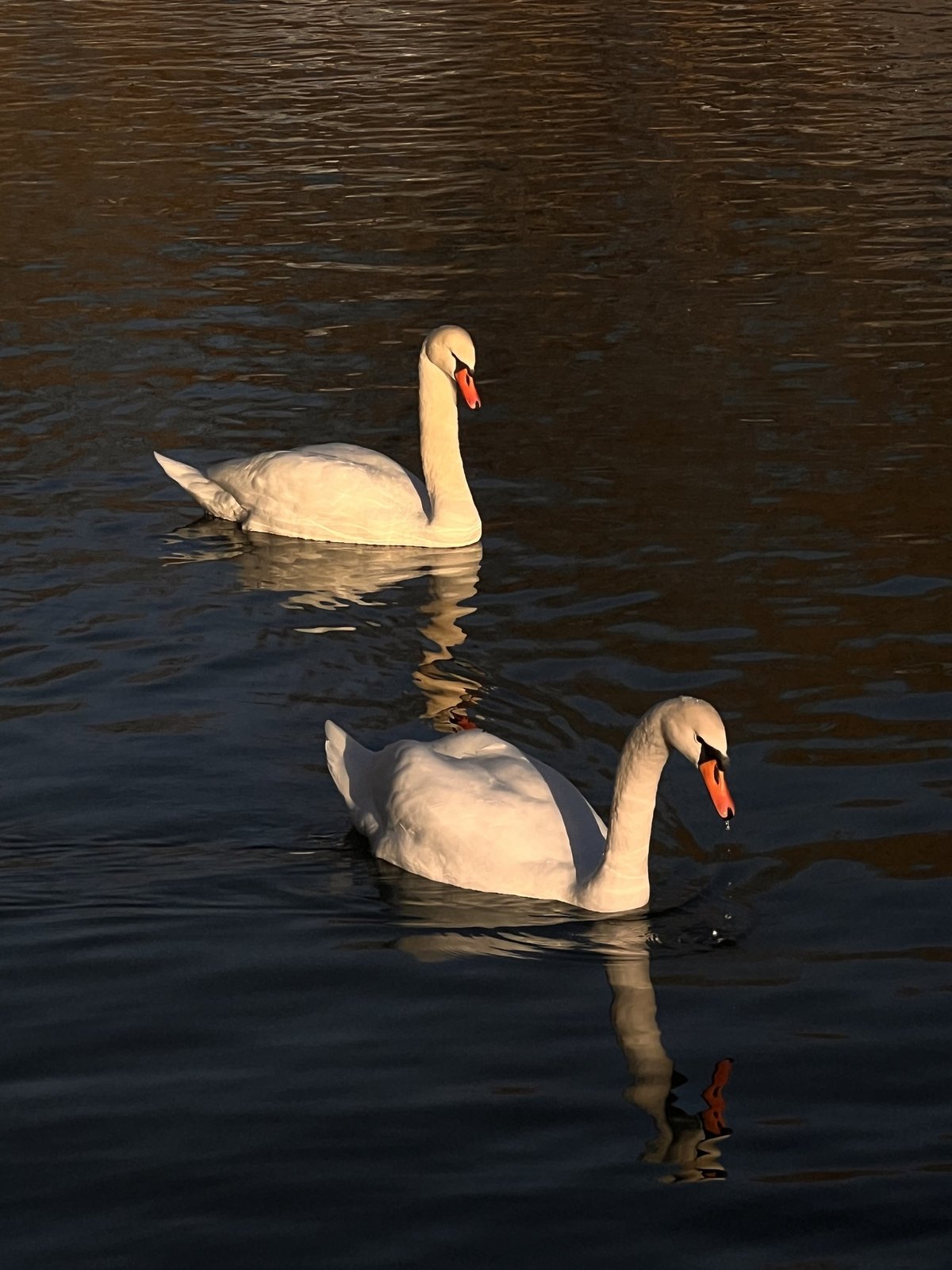
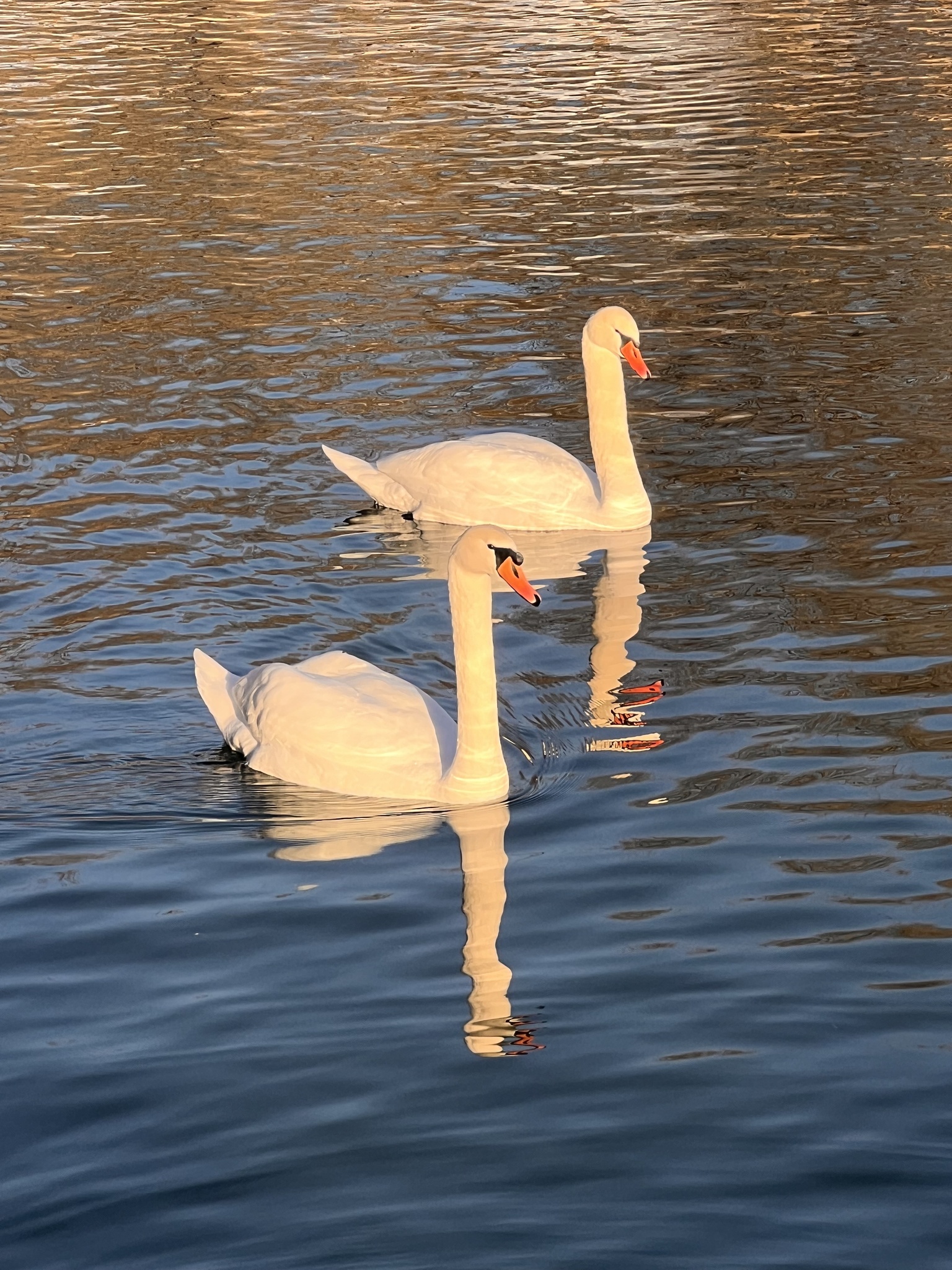
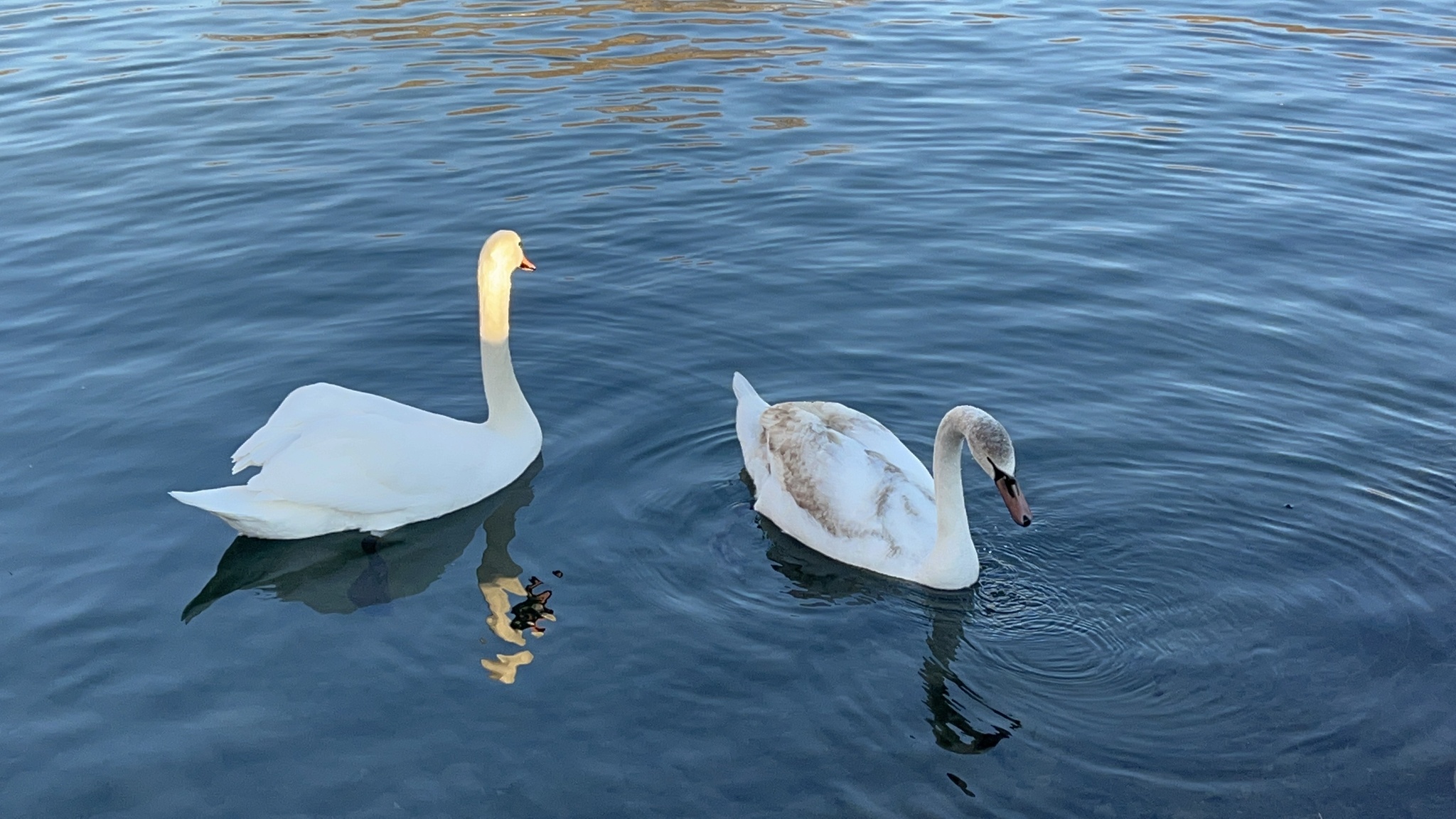
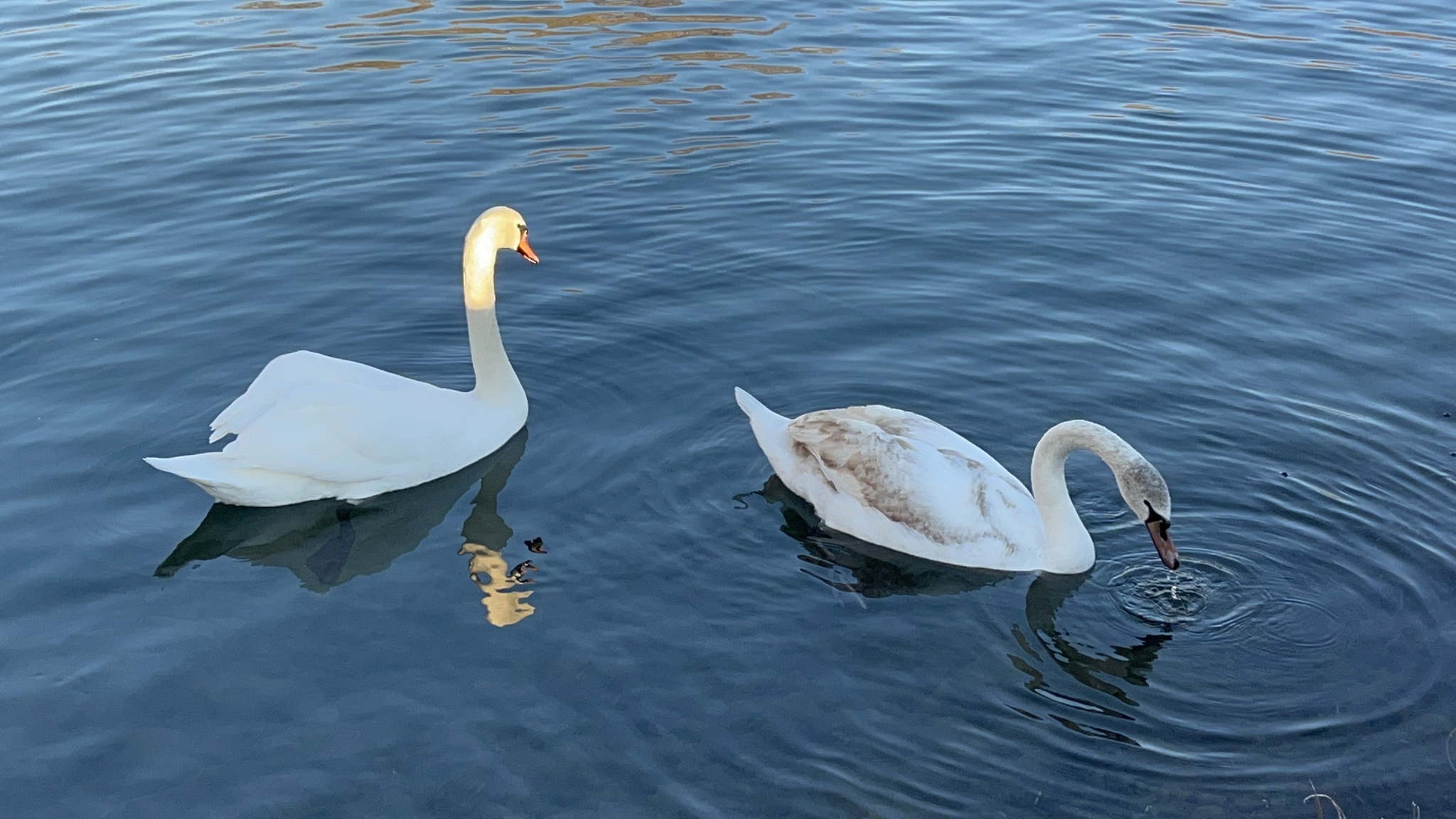
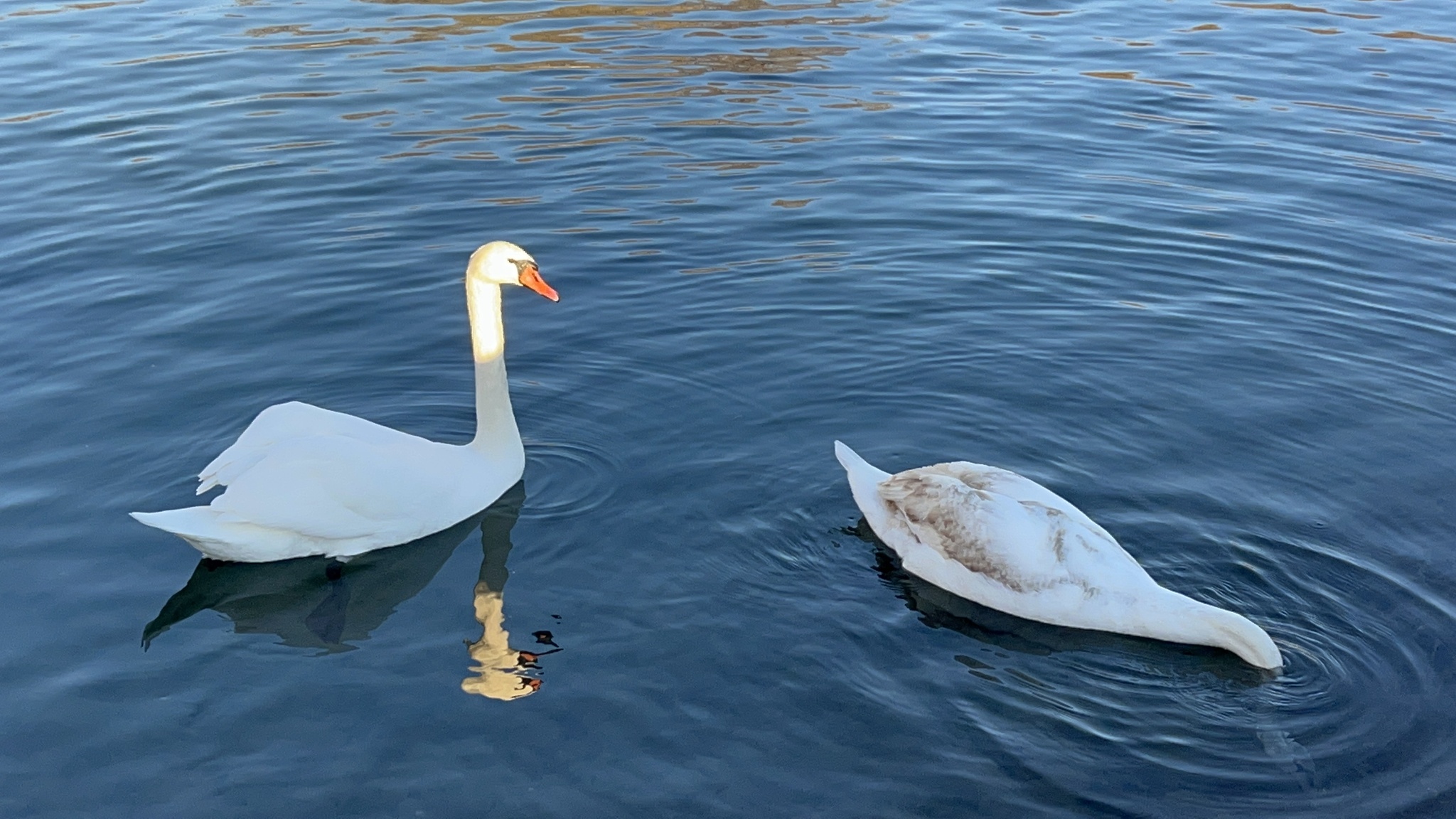
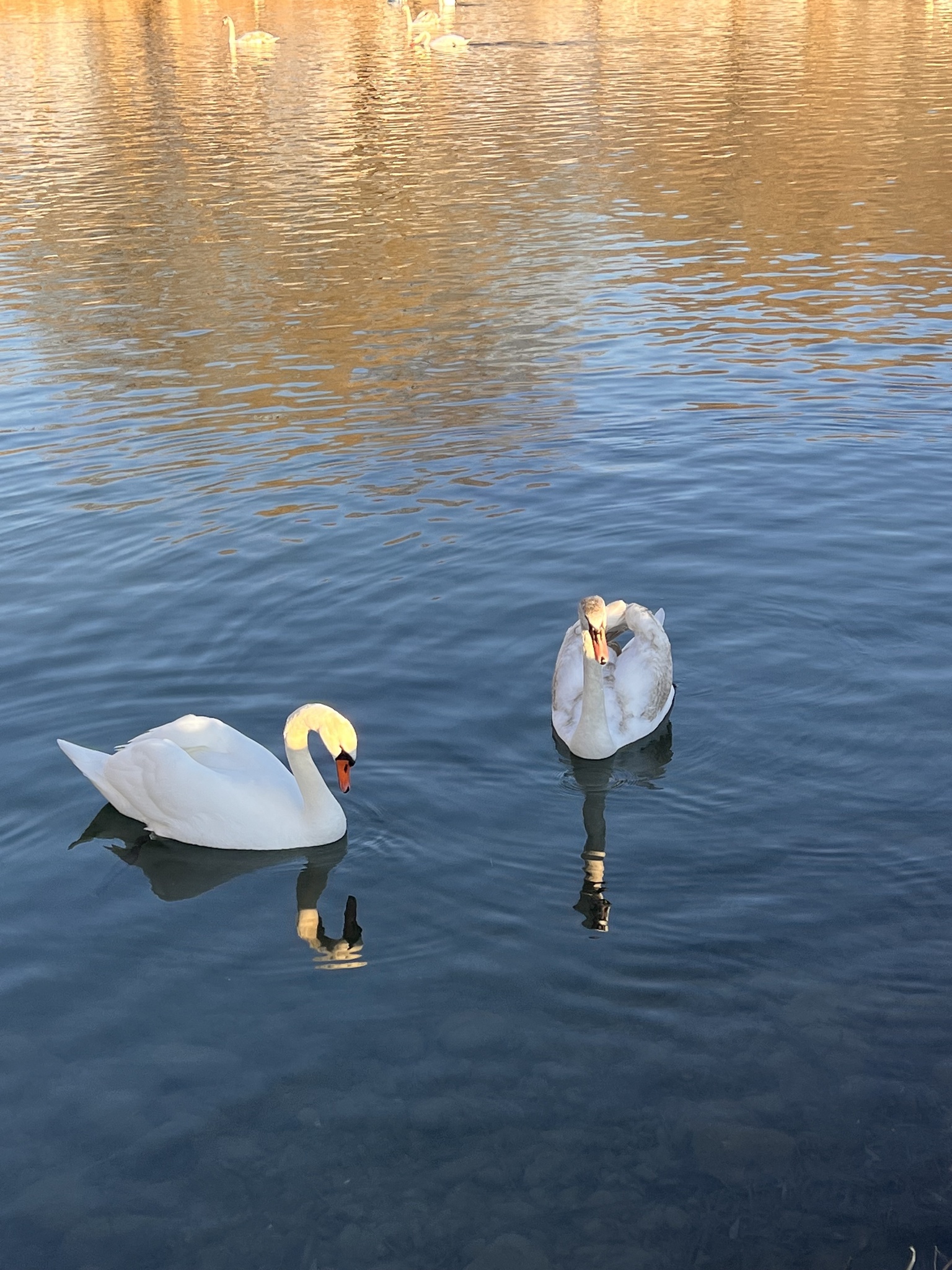
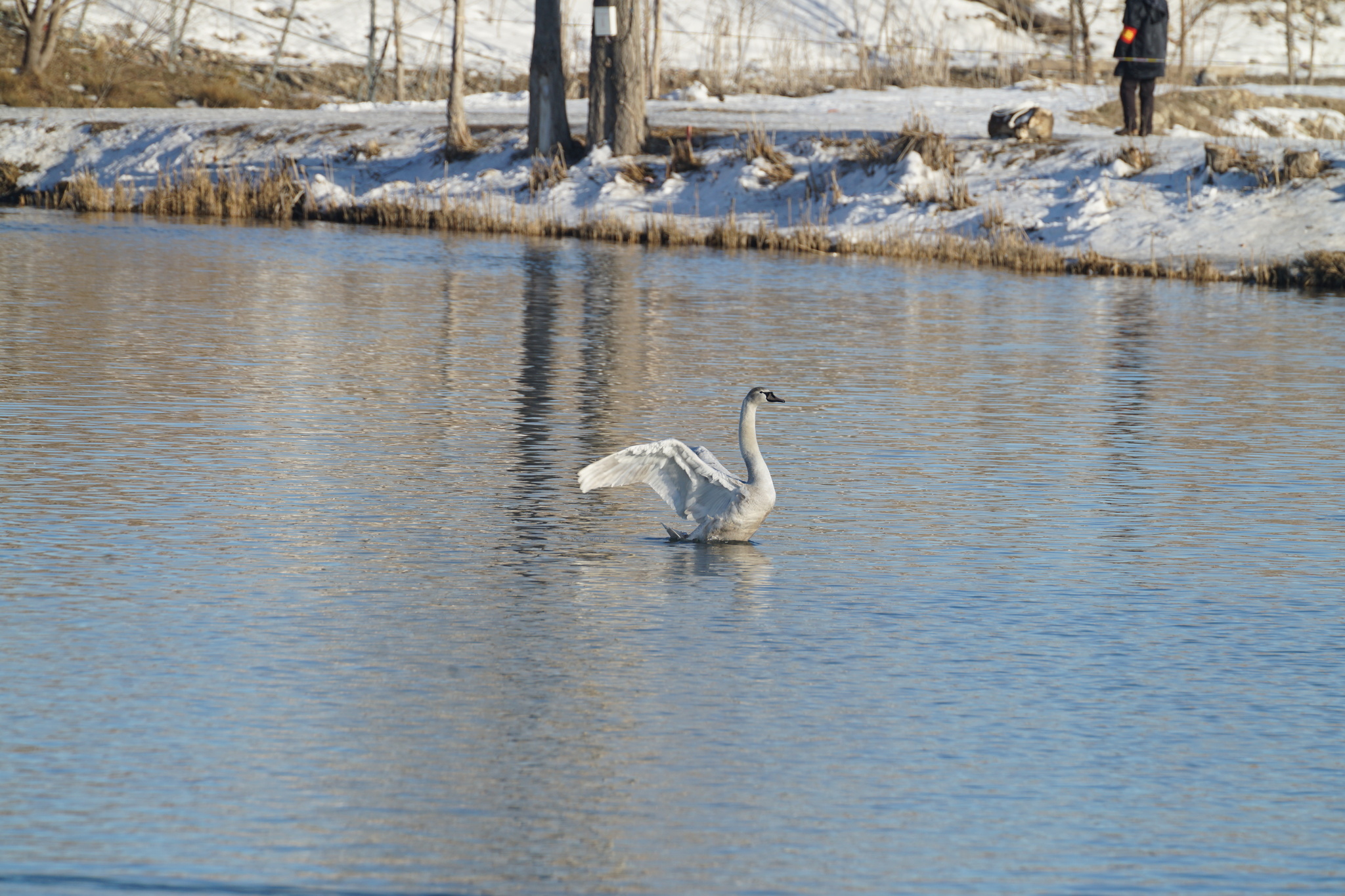
Adults typically range from 140 to 160 cm (55 to 63 in) in length, with extreme cases from 125 to 170 cm (49 to 67 in), and a wingspan of 200 to 240 cm (79 to 94 in). Males are larger than females. Plumage is wholly white, though often stained orange-brown by iron and tannins; legs are dark grey. The beak is bright orange with black around the nostrils and a black nail, featuring a pronounced knob that is larger in males. Males average 10.6–11.87 kg (23.4–26.2 lb), while females average 8.5–9.67 kg (18.7–21.3 lb). Cygnets have dull greyish-black bills and down ranging from pure white to grey or buff, retaining grey feathers until at least one year old. A colour morph known as the 'Polish swan' has pinkish legs and dull-white cygnets due to a leucism gene.
Identification
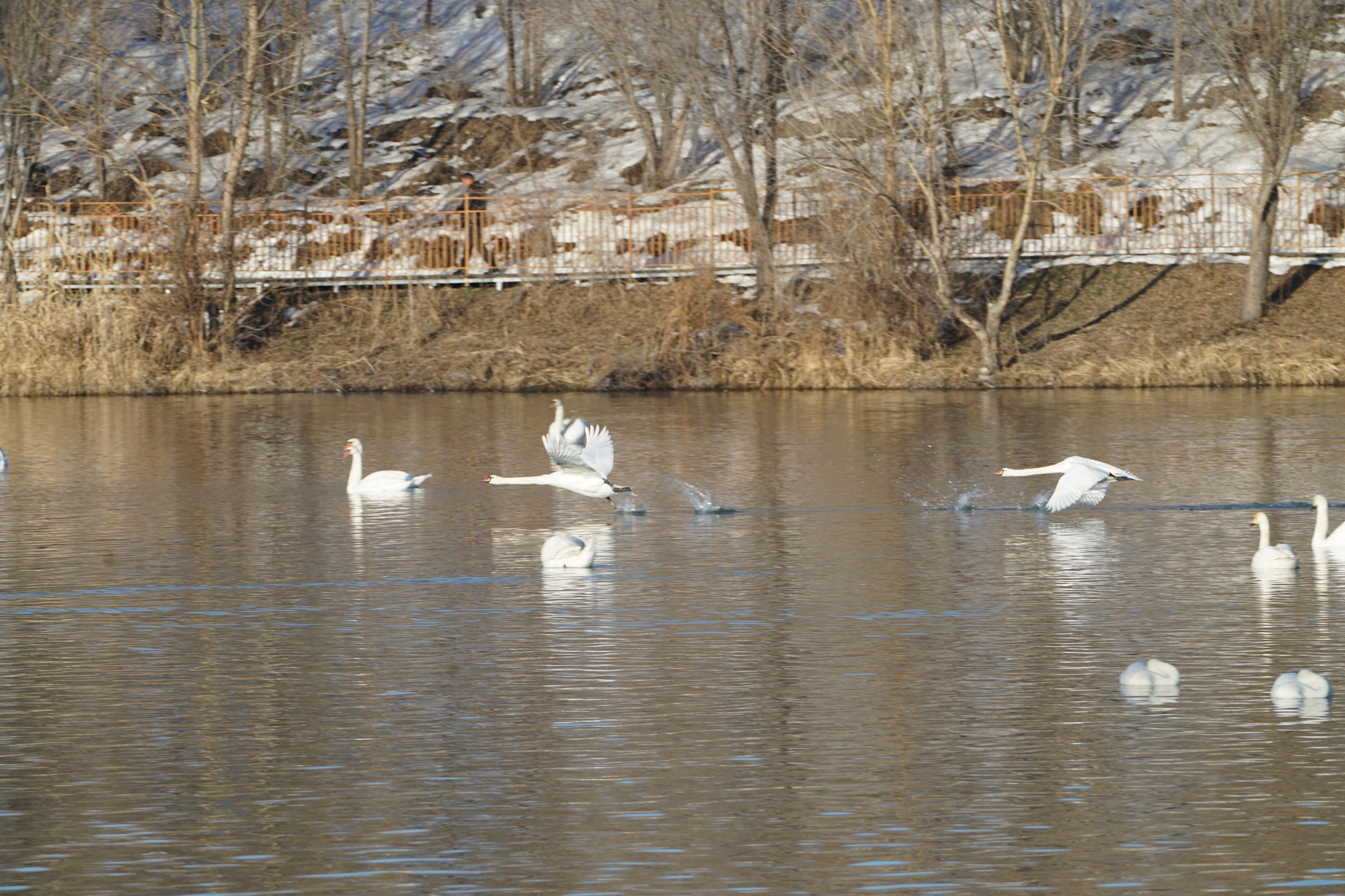
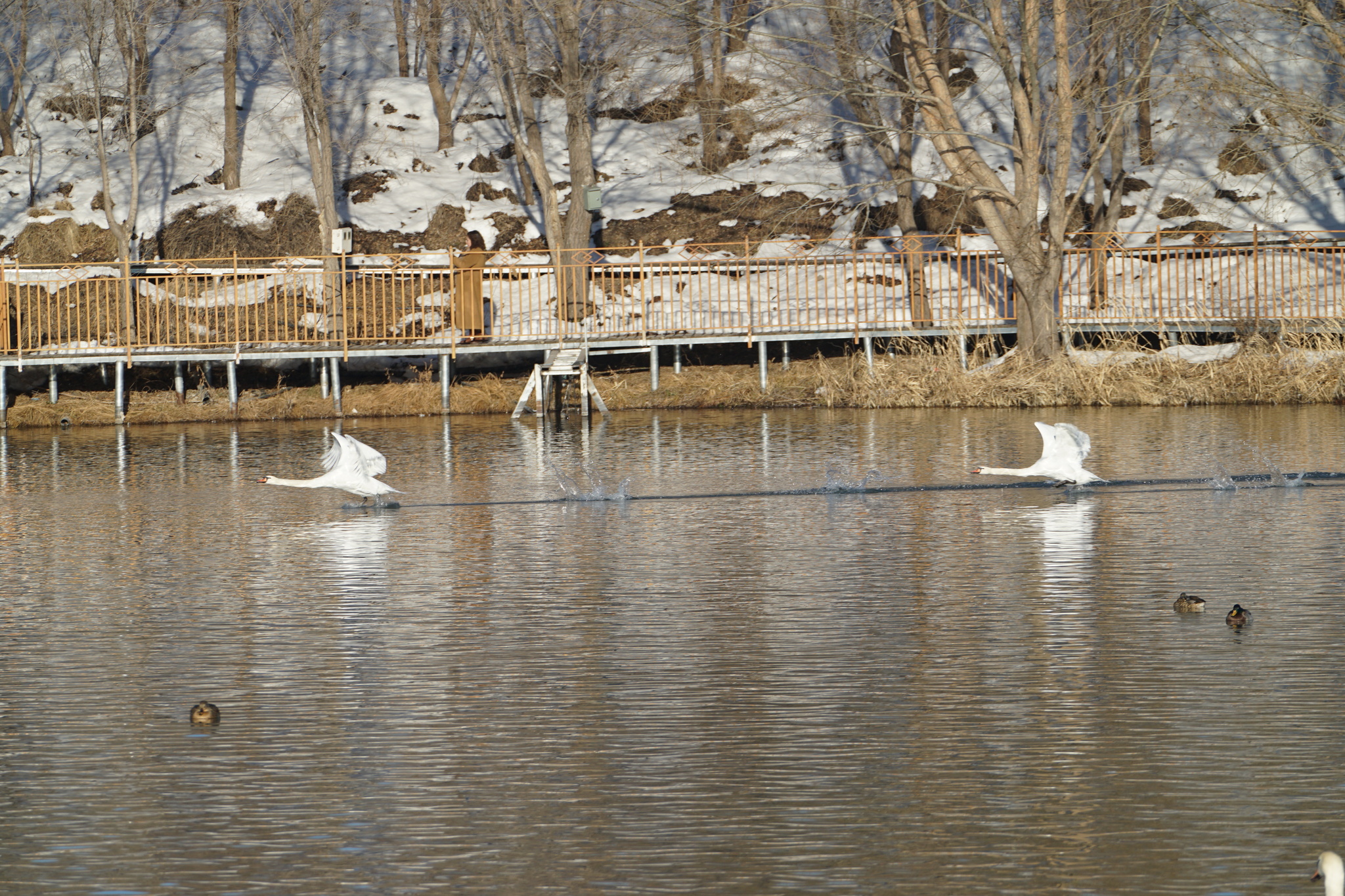
Recognisable by wholly white plumage, orange beak with black borders, and a prominent basal knob. Distinguished from other swans by being less vocal. Key field mark is the vibrant throbbing sound of wings in flight, audible from 1–2 km (0.6–1 mi).
Distribution & Habitat
Native to temperate Europe and across the Palearctic to Primorsky Krai. Partially migratory in northern latitudes, wintering as far south as North Africa and the Mediterranean. Introduced populations exist in North America (largest outside native range), Japan, New Zealand, Australia, and Southern Africa. Vagrant in Iceland and Bermuda. Breeds in 49 countries.
Behavior & Ecology
Feeds on submerged aquatic plants, agricultural crops like oilseed rape and wheat, and small proportions of aquatic insects, fish, and frogs. Usually strongly territorial with single pairs on smaller lakes, but can form colonies of over 100 pairs in suitable habitats. Non-mated juveniles form flocks of several hundred. Vocalizations include grunting, hoarse whistling, snorting, and rhythmic courtship songs. Cygnets communicate via whistling and chirping. Threat displays include 'busking' (neck curved back, wings half-raised). Monogamous; nests on large mounds of waterside vegetation. Female broods 4–10 eggs for around 36 days. Highly protective of nest and offspring, attacking intruders with wing spurs and bill. Known to grieve for lost mates or cygnets.
Conservation
Native population estimated at about 500,000 birds at the end of the breeding season. Populations in Western Europe recovered from historical hunting pressure after late 19th-century protection, though numbers declined in England from 1960 to the early 1980s due to lead poisoning before recovering again. Considered an invasive species in North America due to adverse effects on native ecosystems and waterfowl; U.S. Department of the Interior declared it a non-native, unprotected species in 2005. In New Zealand, protection was lowered in 2010, allowing culling at the Minister of Conservation's discretion. Threats include lead poisoning, collisions with power lines, and predation by wild boars, corvids, foxes, and minks.
Culture
National bird of Denmark since 1984. Featured in Hans Christian Andersen's fairy tale 'The Ugly Duckling'. In Great Britain, unmarked mute swans in open water are technically owned by the British Monarch, a right shared with the Vintners' and Dyers' Companies. Swans at the Bishop's Palace in Wells, England, are trained to ring bells for food.
Source: Wikipedia · CC BY-SA 3.0
Taxonomy
- Order
- Anseriformes
- Family
- Anatidae
- Genus
- Cygnus
Distribution
west-central to east-central Palearctic region from central Europe to southeastern China; partially migratory southward; introduced widely including to western and southwestern Europe, Japan, southwestern Australia, and eastern North America
Data Sources
Species description from Wikipedia, licensed under CC BY-SA 3.0.
Bird images and sounds sourced from GBIF, contributed by citizen scientists worldwide under Creative Commons licenses.
Taxonomy data from AviList 2025.