Mute Swan
Cygnus olor
疣鼻天鹅
Introduction
Mute Swan (Cygnus olor) Geographic range: Native to temperate regions of Eurasia; introduced to North America, where the largest feral populations now occur. Physical measurements: Adults weigh over 15 kg; largest recorded specimen weighed nearly 23 kg. Vocalizations: Less vocal than other swan species; communicates through grunts, whistles, and distinctive wing sounds during flight. Behavior: Characteristic S-curve neck posture when swimming; performs elaborate courtship displays. Legal status: In Britain, the Crown claims ownership of unmarked birds on open waters.
Description
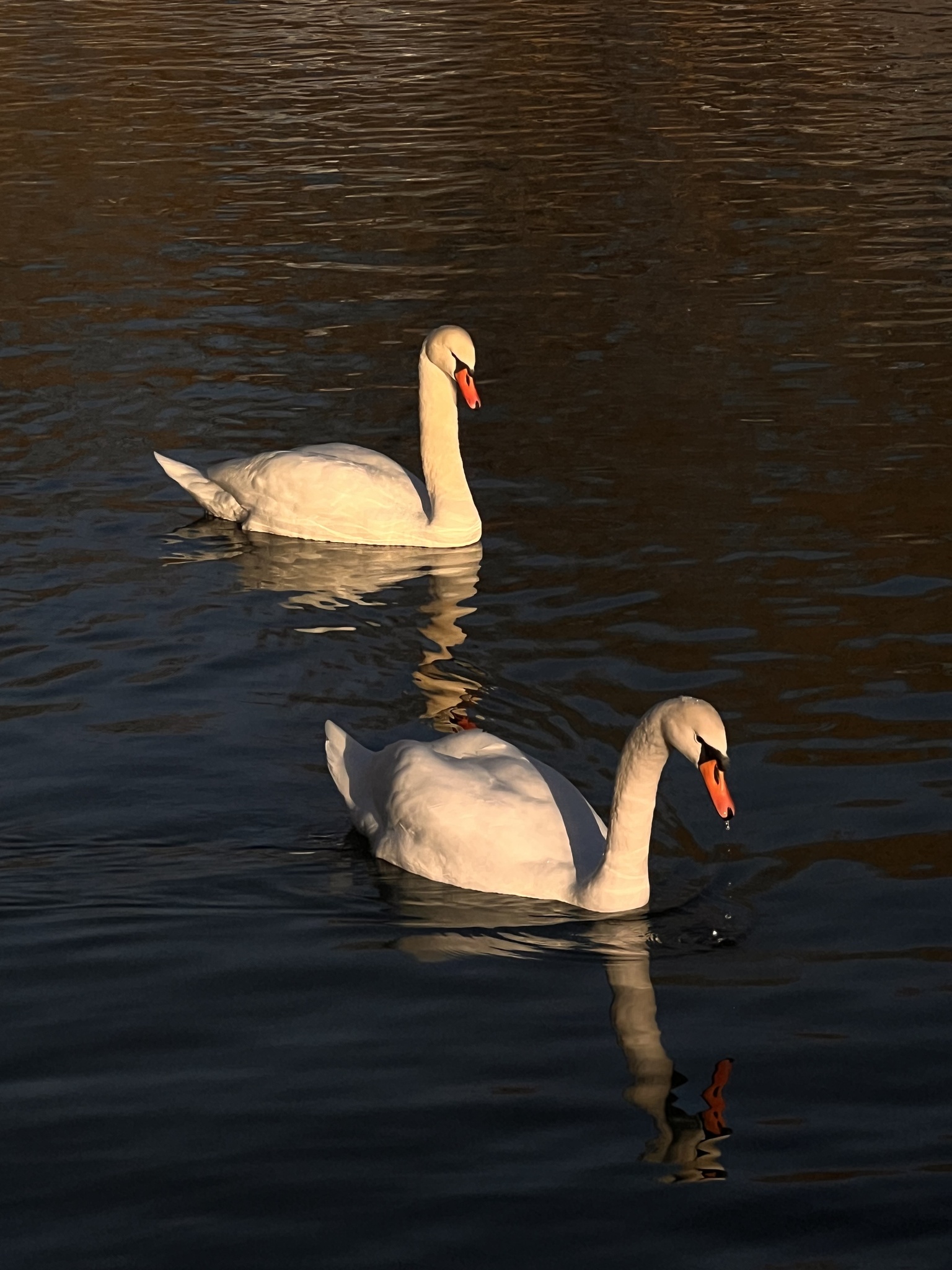
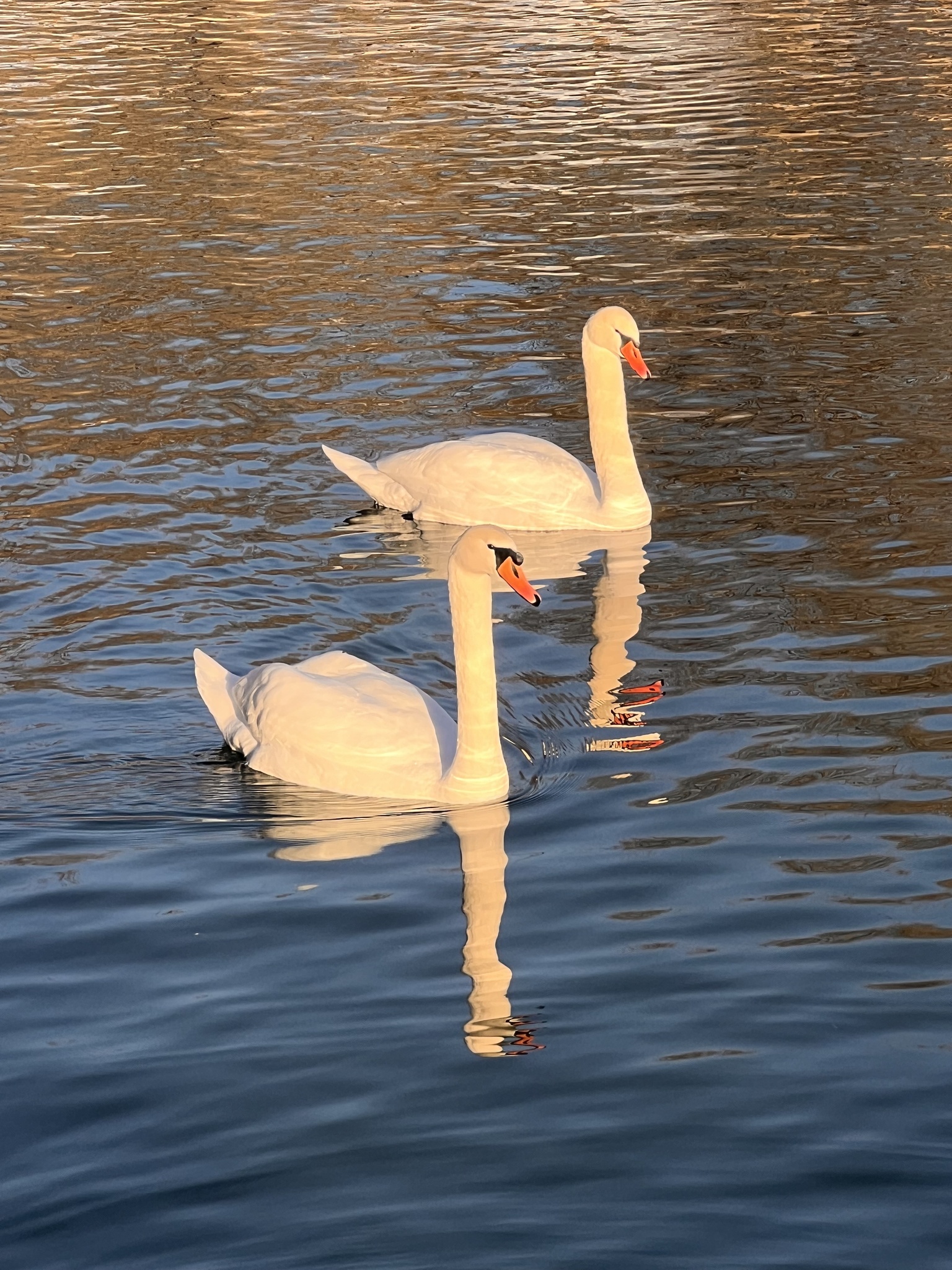
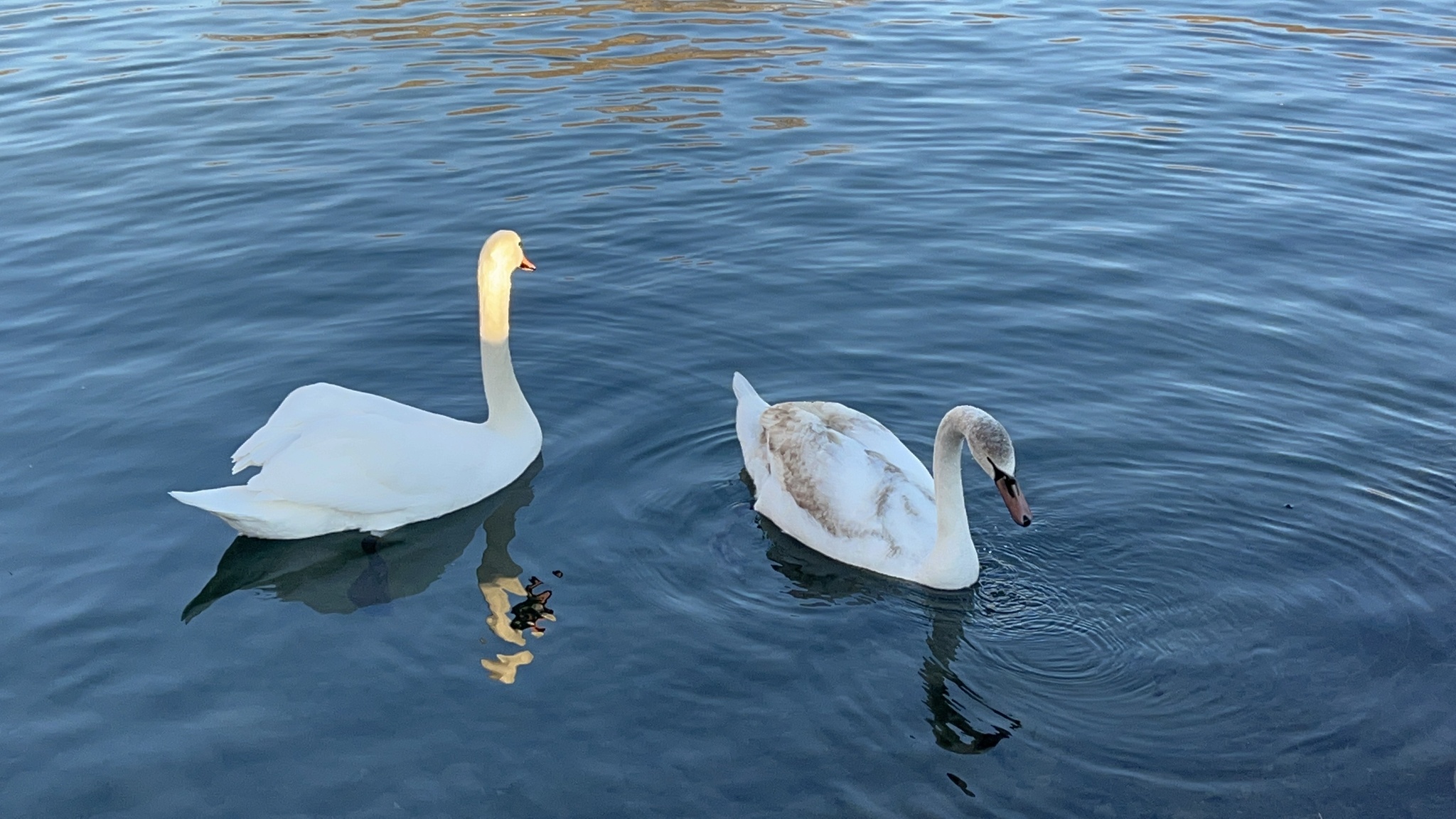
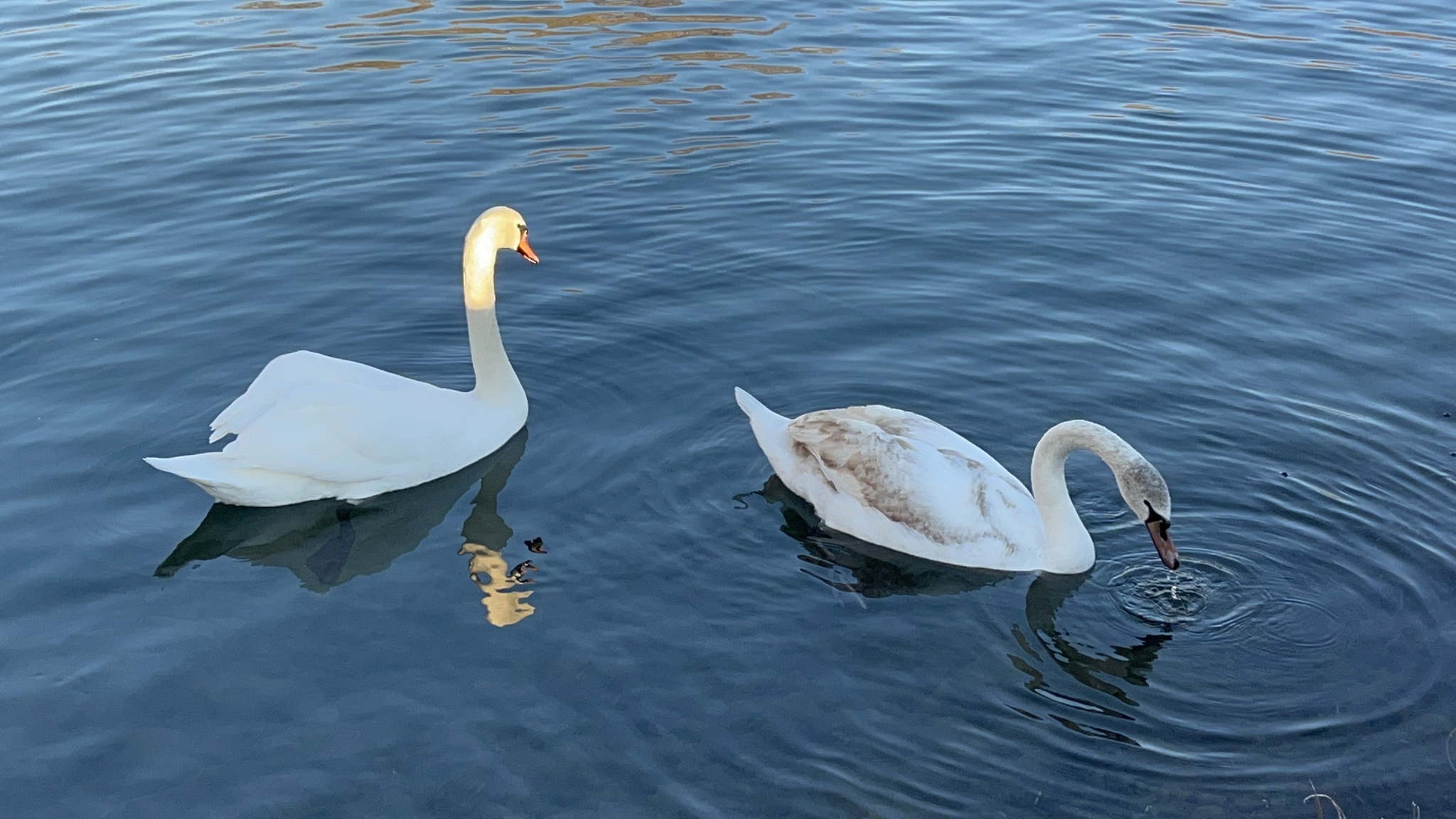
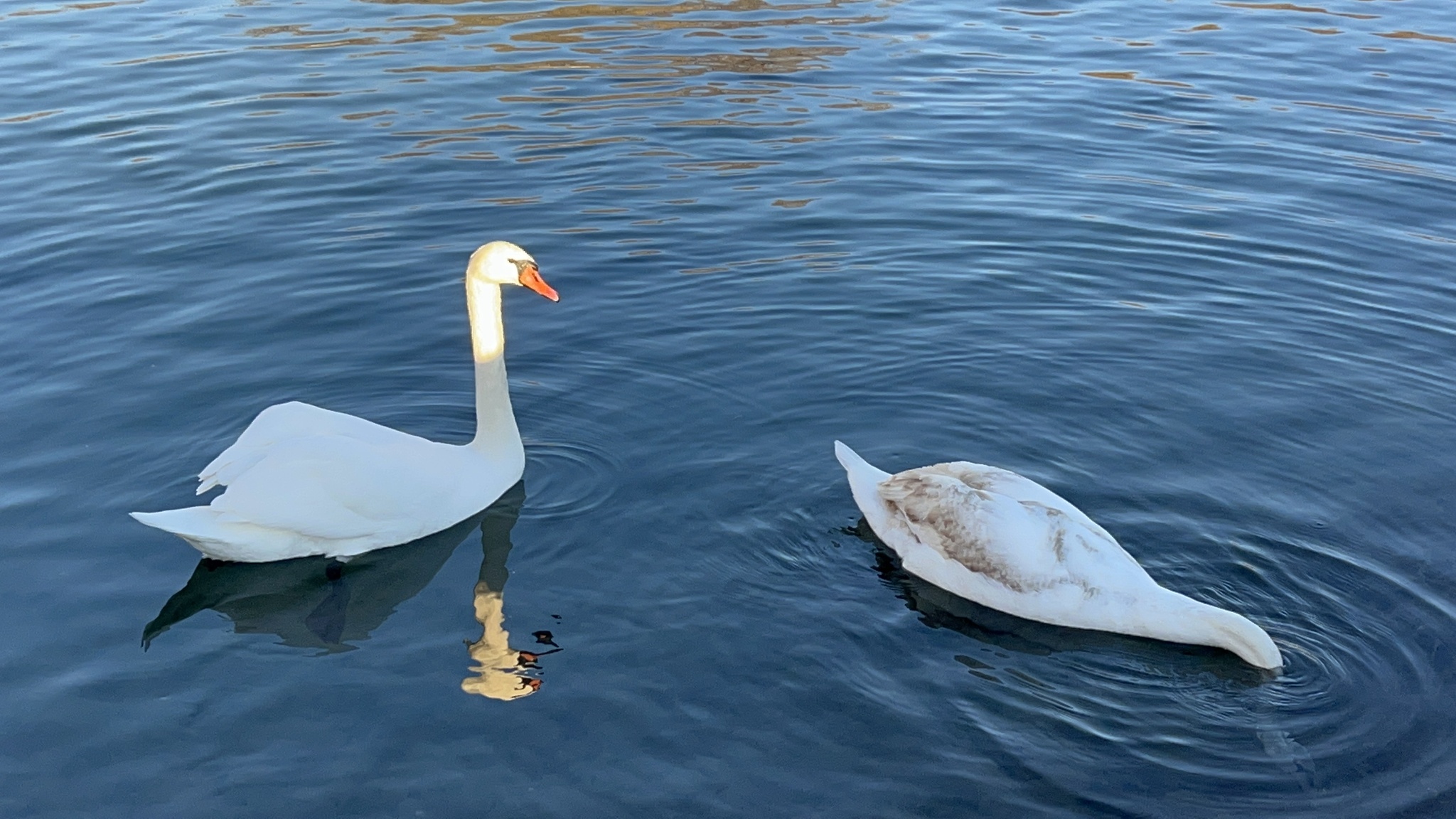
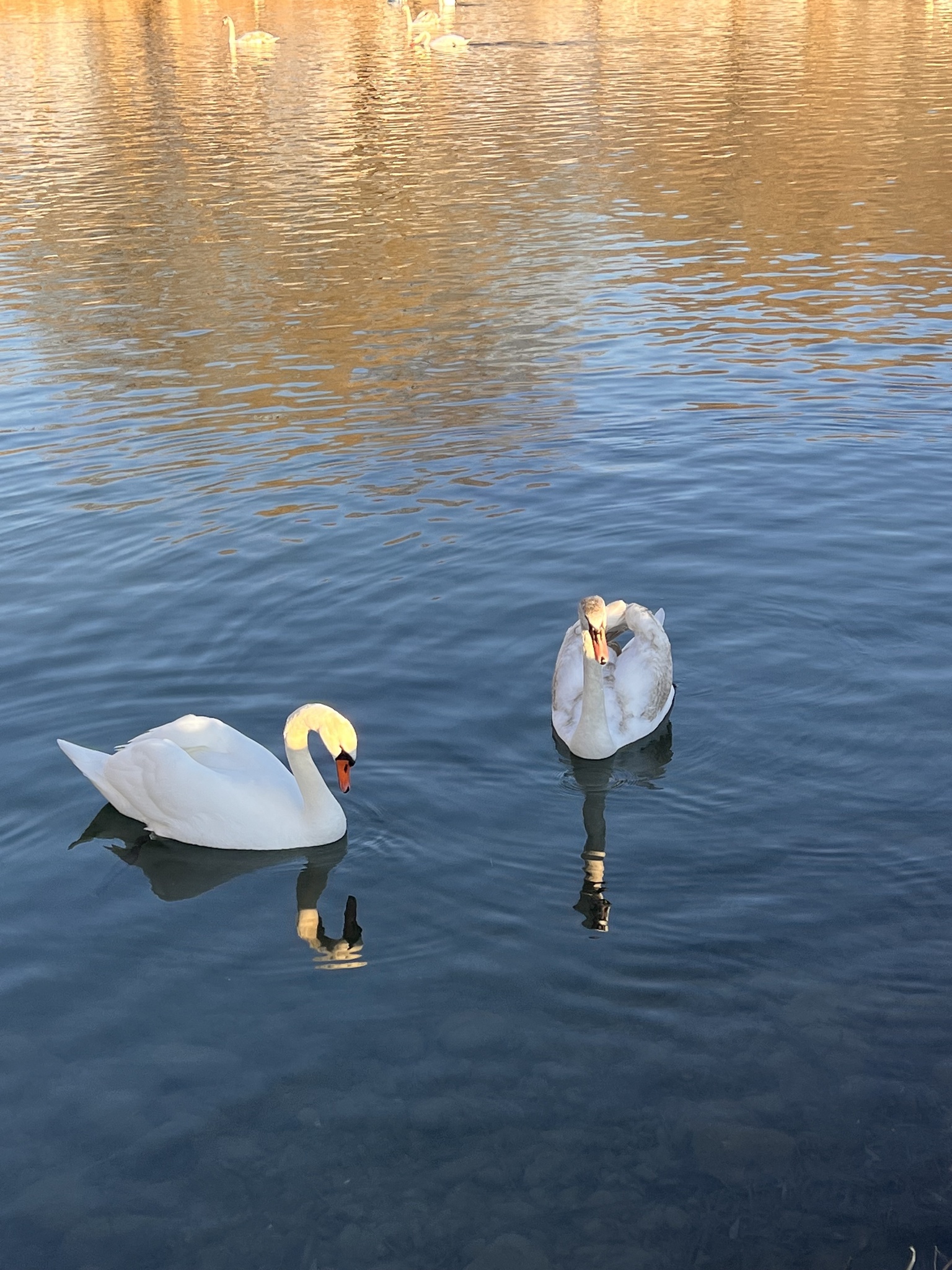
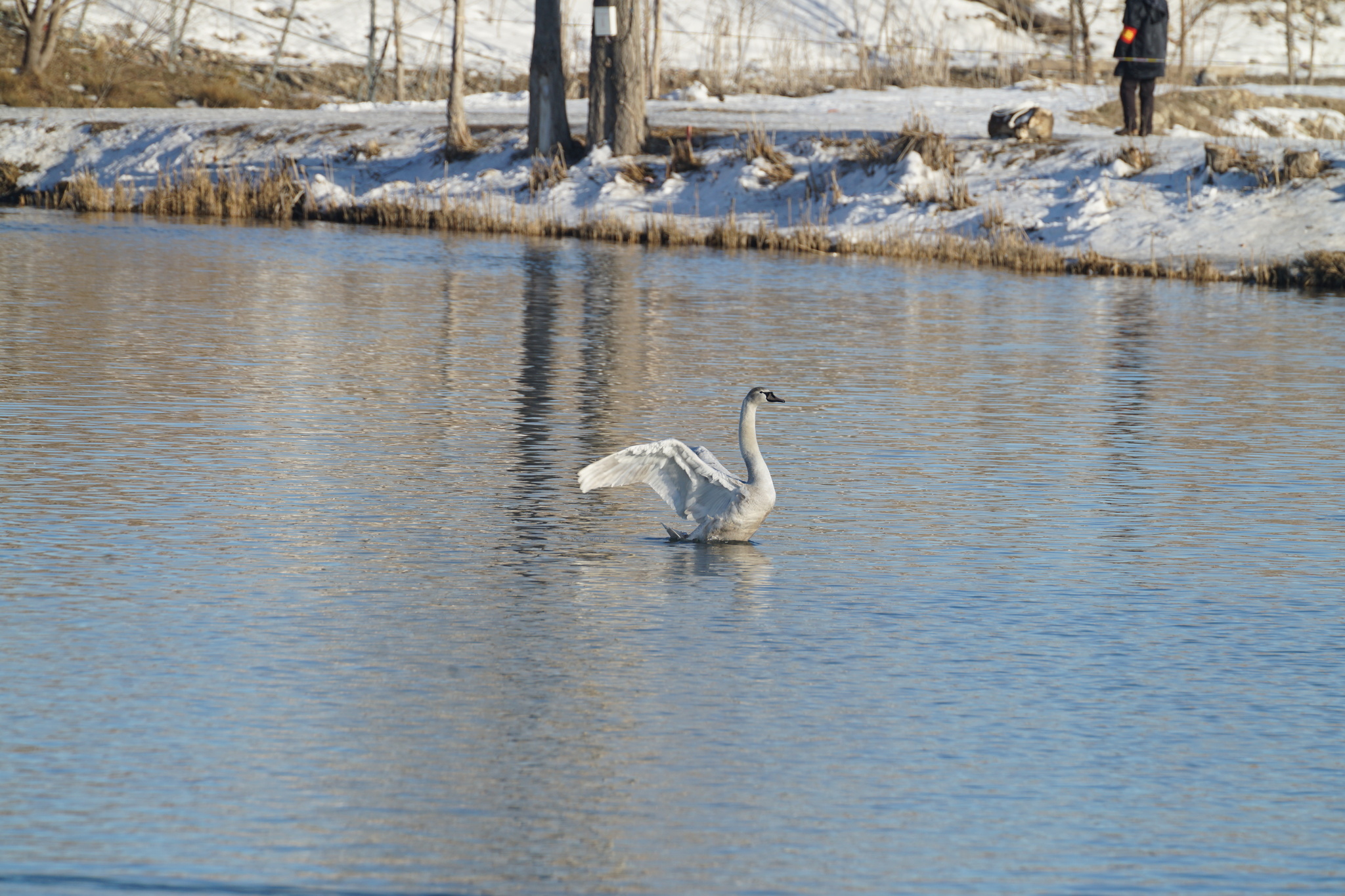
This is a substantially large waterfowl, with adults typically measuring 140 to 160 centimeters in length, though extreme specimens may reach 170 centimeters. The wingspan ranges from 200 to 240 centimeters. Males, known as cobs, are larger than females (pens) and possess a more pronounced knob at the base of the orange bill. The plumage is entirely white, though the feathers on the head and neck frequently become stained orange-brown from iron and tannins in the water. Legs are dark grey. The bright orange bill features black coloration around the nostrils and a black nail at the tip. Males average 10.6 to 11.9 kilograms, while females average 8.5 to 9.7 kilograms. Cygnets hatch with dull greyish-black bills and grey or buff down, gradually acquiring white plumage over their first year. A leucistic color morph, called the Polish swan, has pinkish legs and dull-white cygnets.
Identification
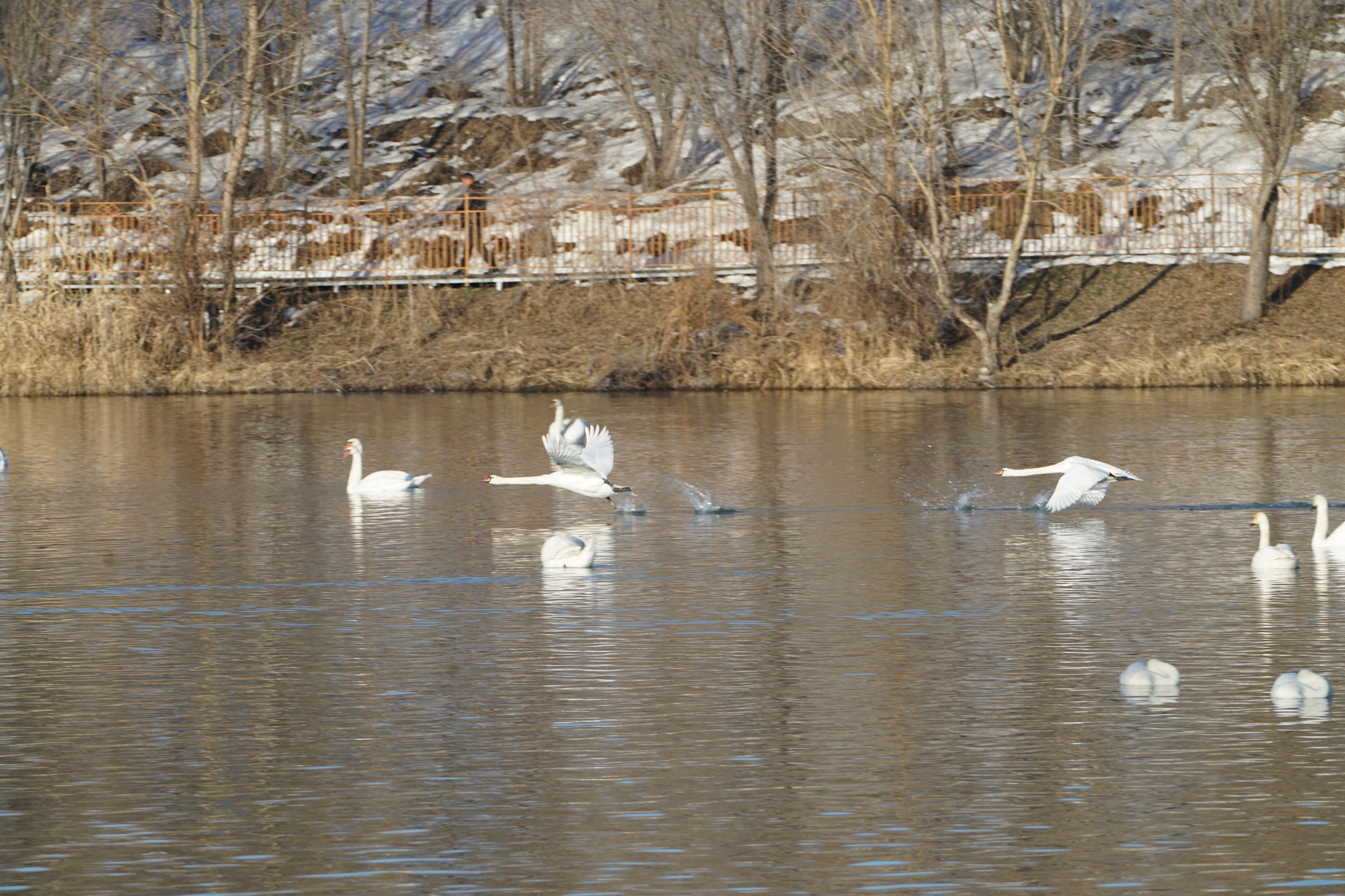
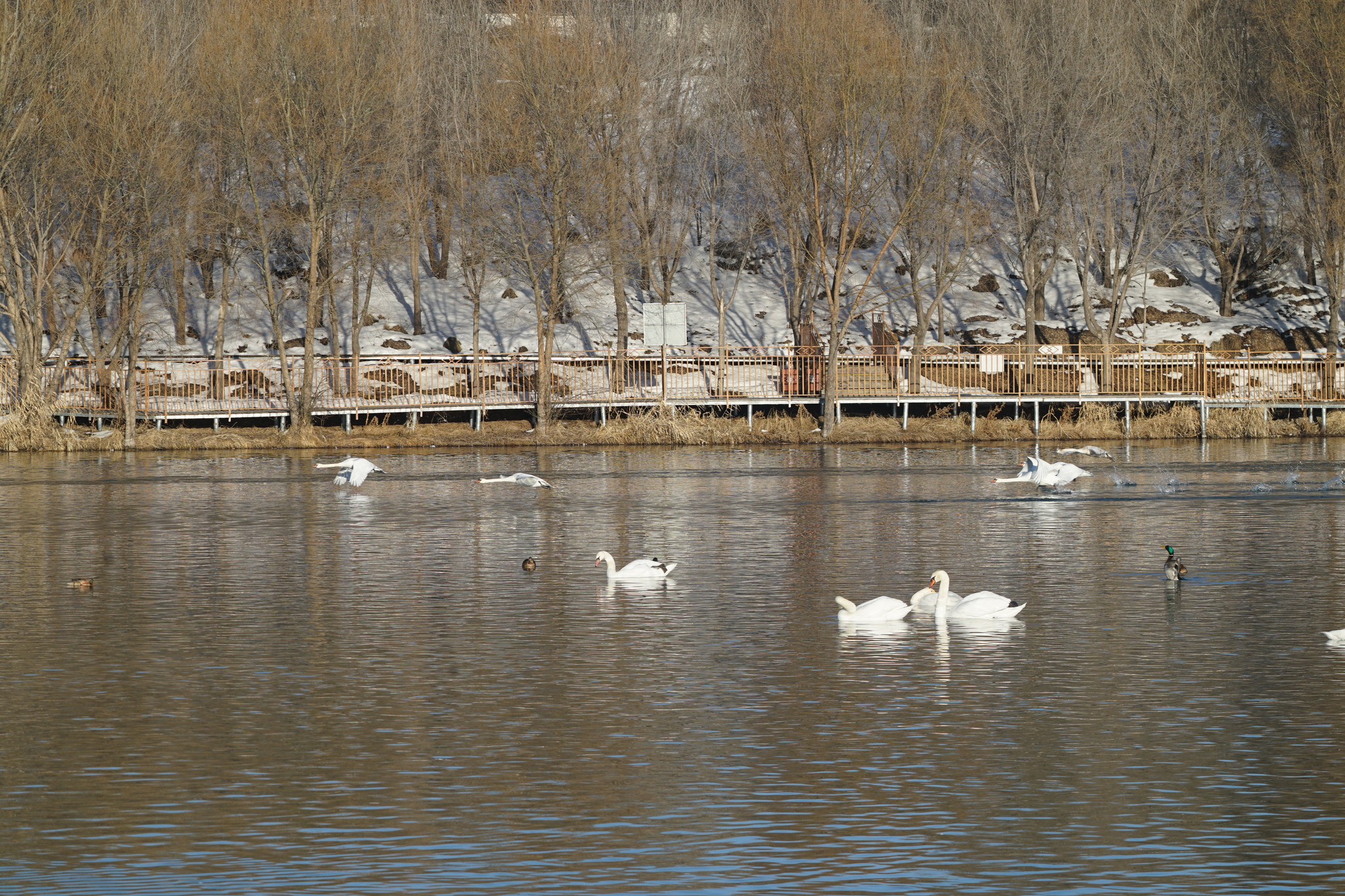
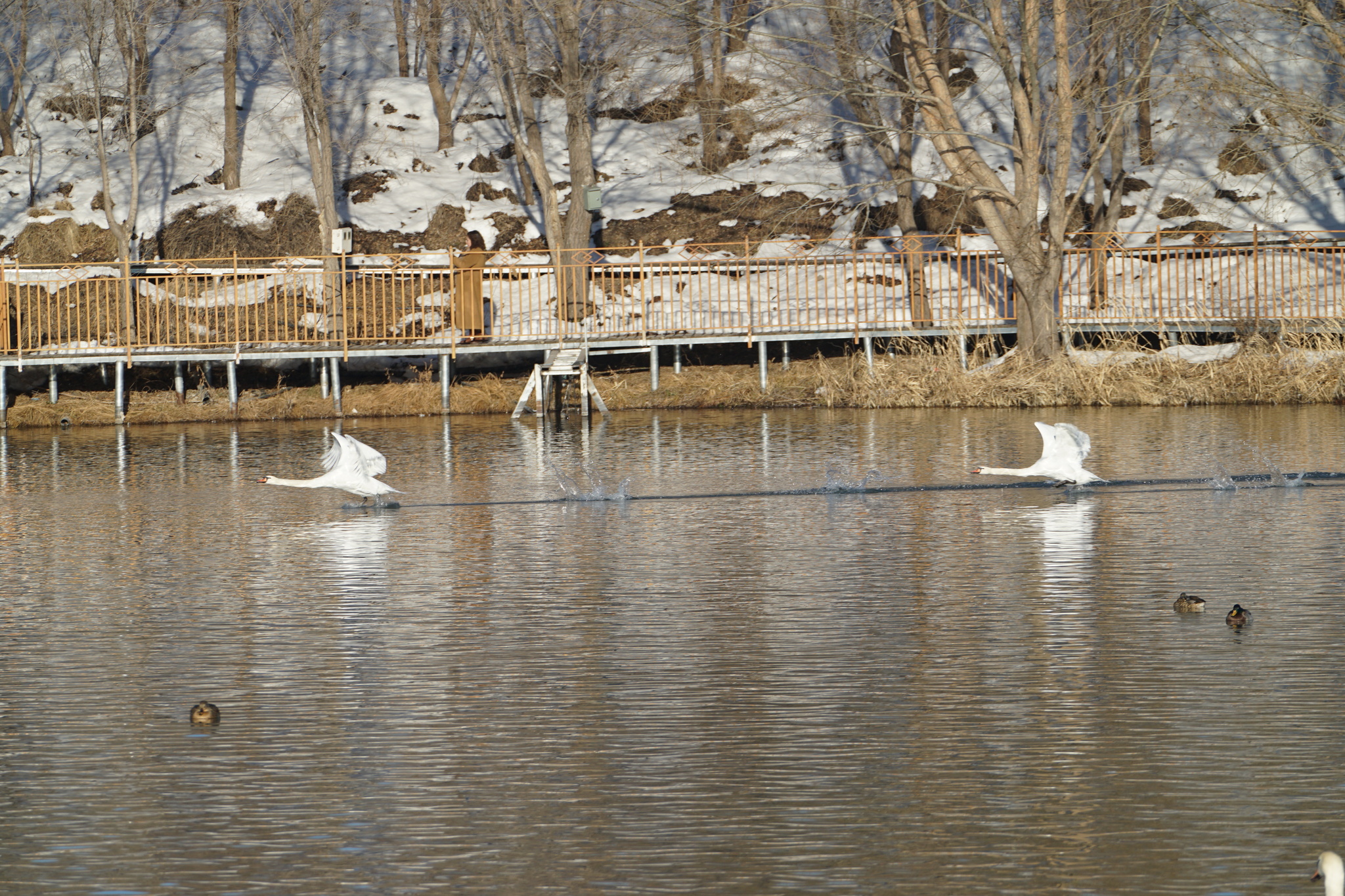
The most distinguishing feature is the prominent black-knobbed orange bill, which immediately separates this species from other Northern Hemisphere swans. The whooper swan and tundra swan both have entirely black bills lacking the distinctive knob. This species is also notably less vocal than its relatives, rarely producing the bugling calls characteristic of whooper and tundra swans. The wingbeat sound is unique, producing a distinctive throbbing that can be heard from over a kilometer away. In flight, the long neck is held straight, not S-curved as often depicted. Adults are entirely white, while juveniles retain grey plumage through their first year. The species is strongly territorial, a behavior less commonly observed in other swan species.
Distribution & Habitat
The species occurs naturally across temperate regions of Europe through the Palearctic to Primorsky Krai in eastern Asia. Native populations total approximately 500,000 birds, with up to 350,000 in Russia alone and 11,000 breeding pairs in the Volga Delta. Partial migration occurs in northern latitudes, with birds moving south to North Africa and the Mediterranean for winter. The United Kingdom holds about 22,000 birds. Introduced populations are now established in North America, where the species has become invasive, with smaller populations in Japan (around 200), New Zealand, Australia, and South Africa (approximately 120). The species is a vagrant in Iceland and Bermuda.
Behavior & Ecology
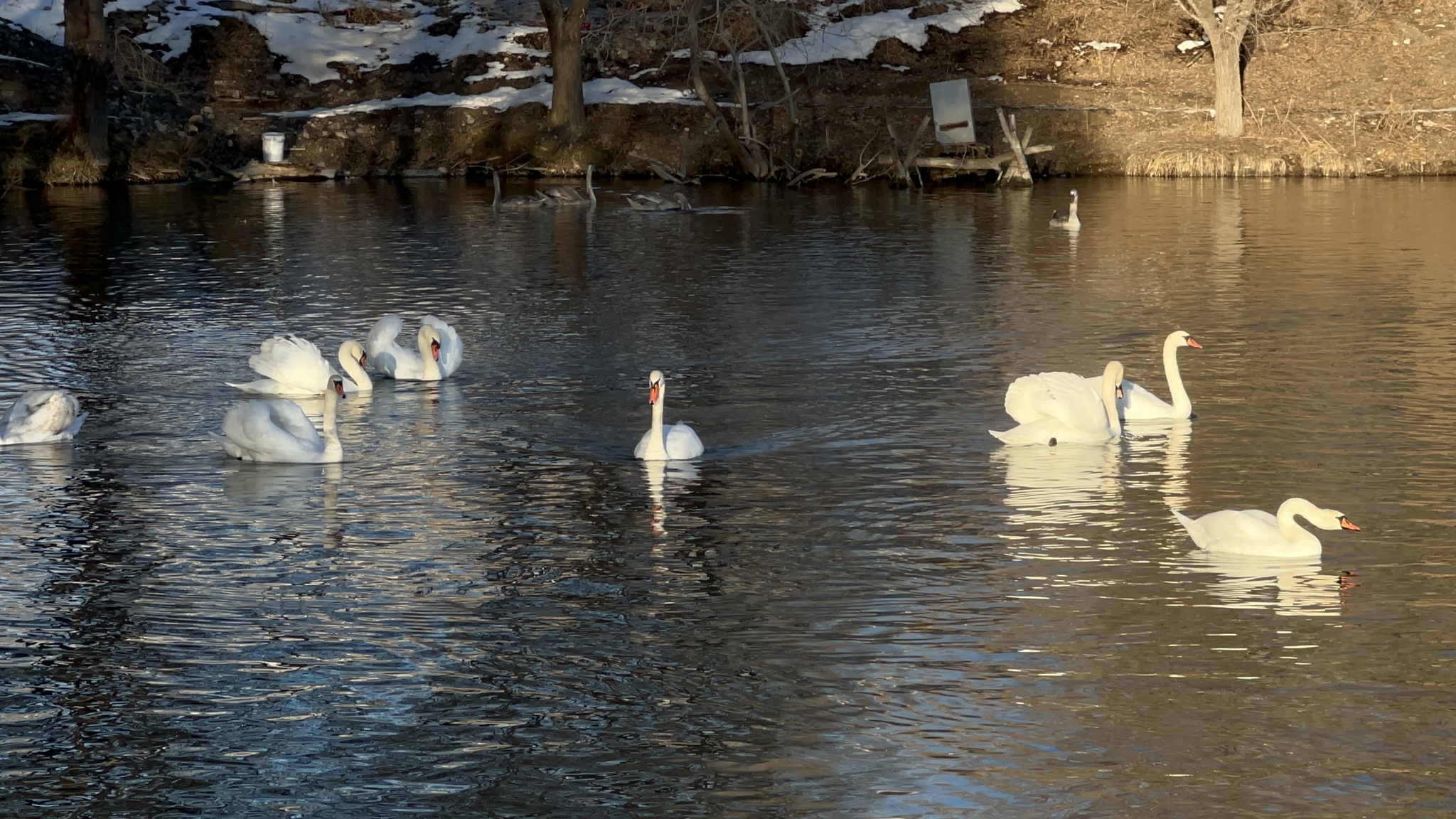
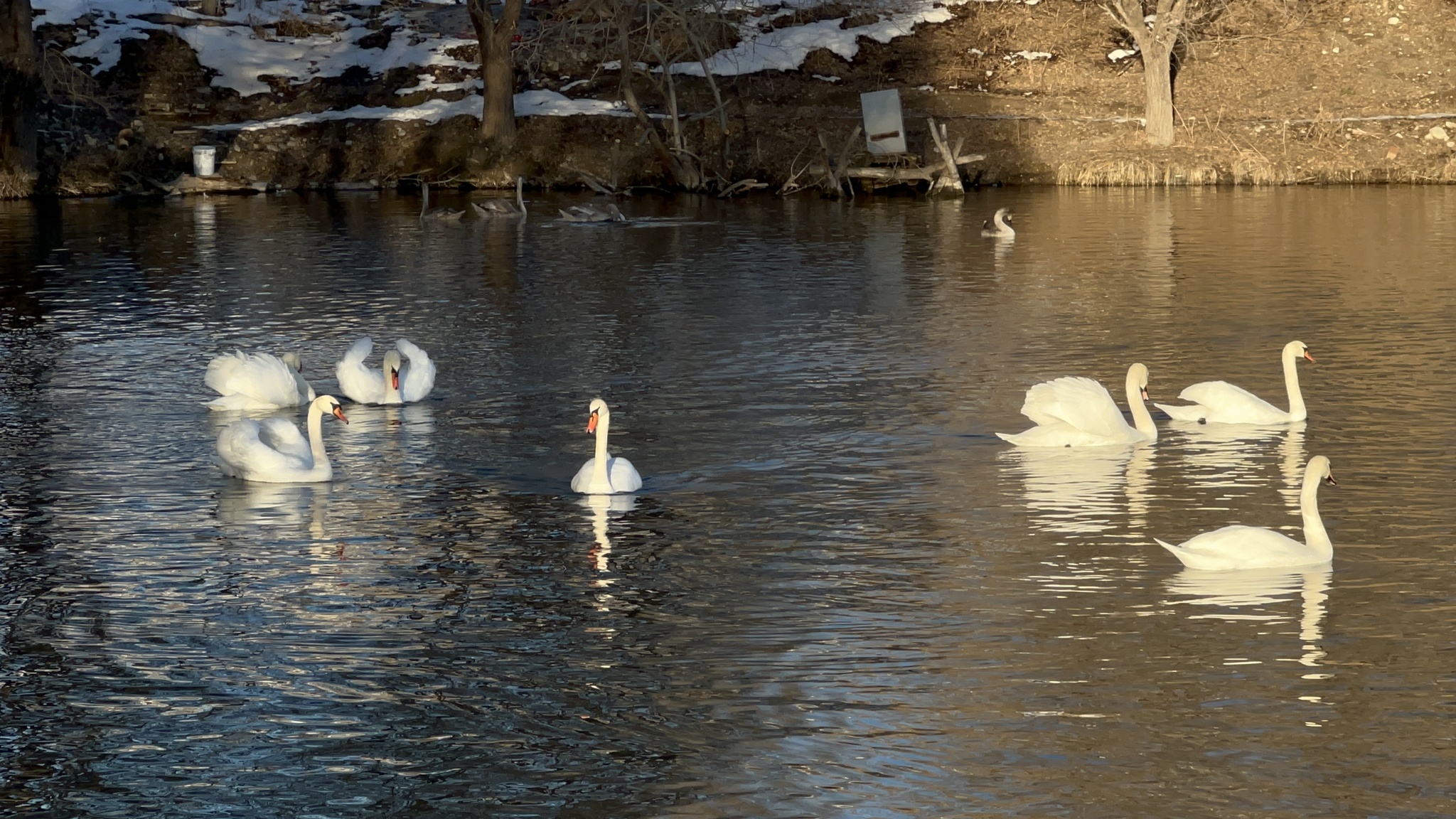
Feeding occurs both by reaching submerged aquatic plants with the long neck and by grazing on land, including agricultural crops such as oilseed rape and wheat, which can cause significant crop damage. The diet also includes small amounts of aquatic insects, fish, and frogs. The species is strongly territorial on smaller lakes, though colonial breeding occurs where feeding habitat is abundant, with colonies at Abbotsbury Swanery exceeding 100 pairs. Non-breeding juveniles form large flocks, sometimes numbering several hundred birds. Vocalizations include grunting, hoarse whistling, and snorting, with a rhythmic courtship song that synchronizes head movements. The most characteristic sound is the wingbeat, audible from 1 to 2 kilometers away. The threat display called busking involves arching the neck with wings half-raised. Breeding occurs on large mounds built from waterside vegetation, with 4 to 10 eggs incubated for about 36 days. Both parents aggressively defend the nest and offspring.
Conservation
The species holds a status of Least Concern globally with a population of about 500,000 birds. In Britain, centuries of domestication saved the species from extirpation through overhunting, with the Crown maintaining ownership of unmarked birds. Western European populations were largely exterminated by hunting between the 13th and 19th centuries but recovered with protection in the late 19th and early 20th centuries. In North America, the species is classified as invasive, with the U.S. Department of the Interior declaring it non-native and unprotected in 2005. Major threats include collisions with power lines, lead poisoning from ingested shot and fishing weights, and attacks by dogs. Numbers declined significantly in England between 1960 and early 1980s due to lead poisoning but recovered after toxic alternatives were mandated.
Culture
The species has served as Denmark's national bird since 1984. Hans Christian Andersen's fairy tale 'The Ugly Duckling' features a cygnet maturing into this elegant bird, becoming a story of transformation recognized worldwide. In British tradition, the monarch retains ownership of all unmarked mute swans in open water, a right dating back centuries; King Charles III exercises this only on certain Thames stretches. Two London livery companies—the Vintners' and Dyers'—share swan ownership rights granted in the 15th century. At the Bishop's Palace moat near Wells Cathedral, swans have been trained for centuries to ring bells using attached strings to beg for food. The Sydney Swans Football Club adopted the bird as their symbol, matching the team's red and white colors while evoking the sails of the Sydney Opera House. The species appears on Danish currency and stamps.
Source: Wikipedia · CC BY-SA 3.0
Taxonomy
- Order
- Anseriformes
- Family
- Anatidae
- Genus
- Cygnus
- eBird Code
- mutswa
Distribution
west-central to east-central Palearctic region from central Europe to southeastern China; partially migratory southward; introduced widely including to western and southwestern Europe, Japan, southwestern Australia, and eastern North America
Data Sources
Species description from Wikipedia, licensed under CC BY-SA 3.0.
Bird images and sounds sourced from GBIF, contributed by citizen scientists worldwide under Creative Commons licenses.
Taxonomy data from AviList 2025.