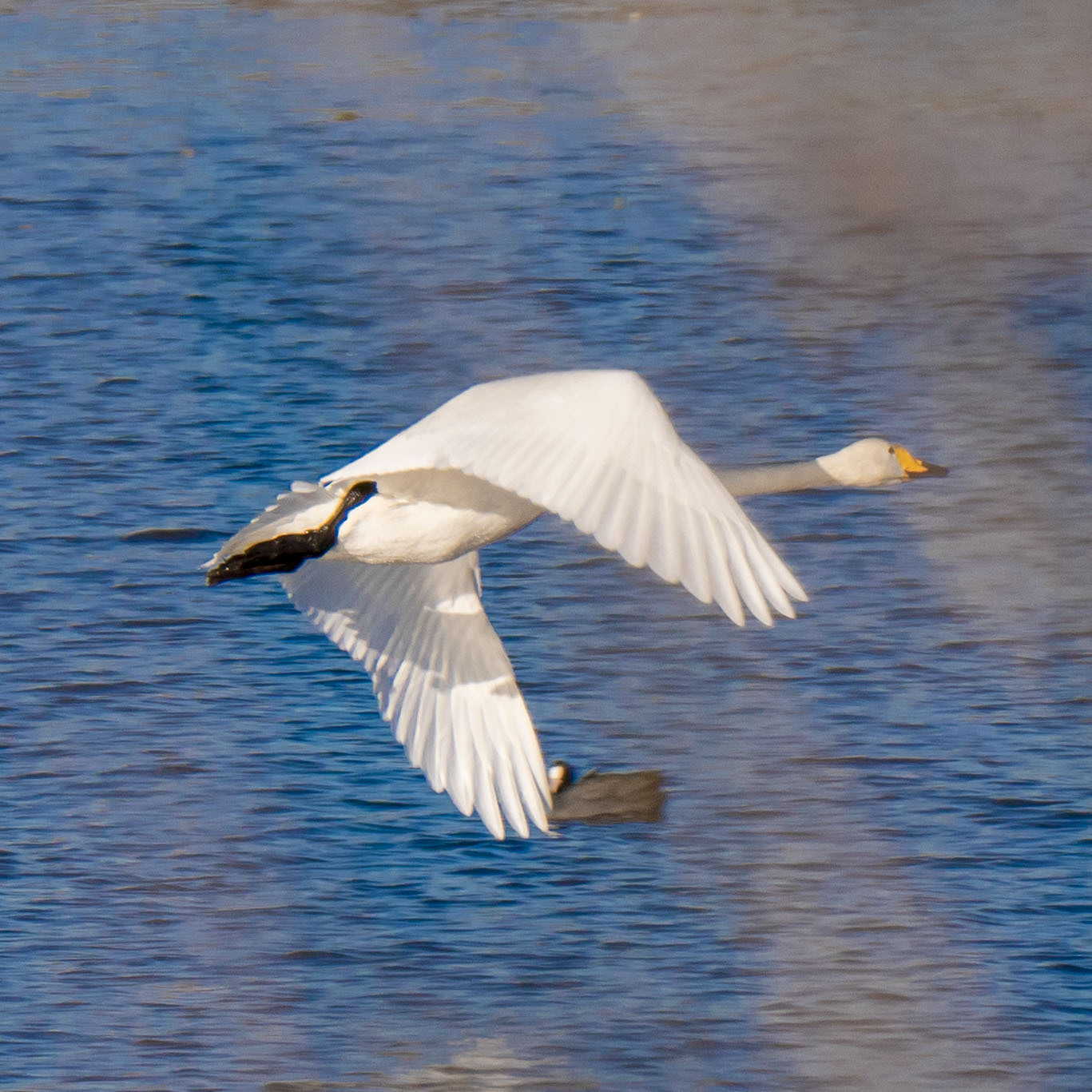
Anseriformes / Anatidae / Cygnus
Whooper Swan
Cygnus cygnus · 大天鹅
Introduction
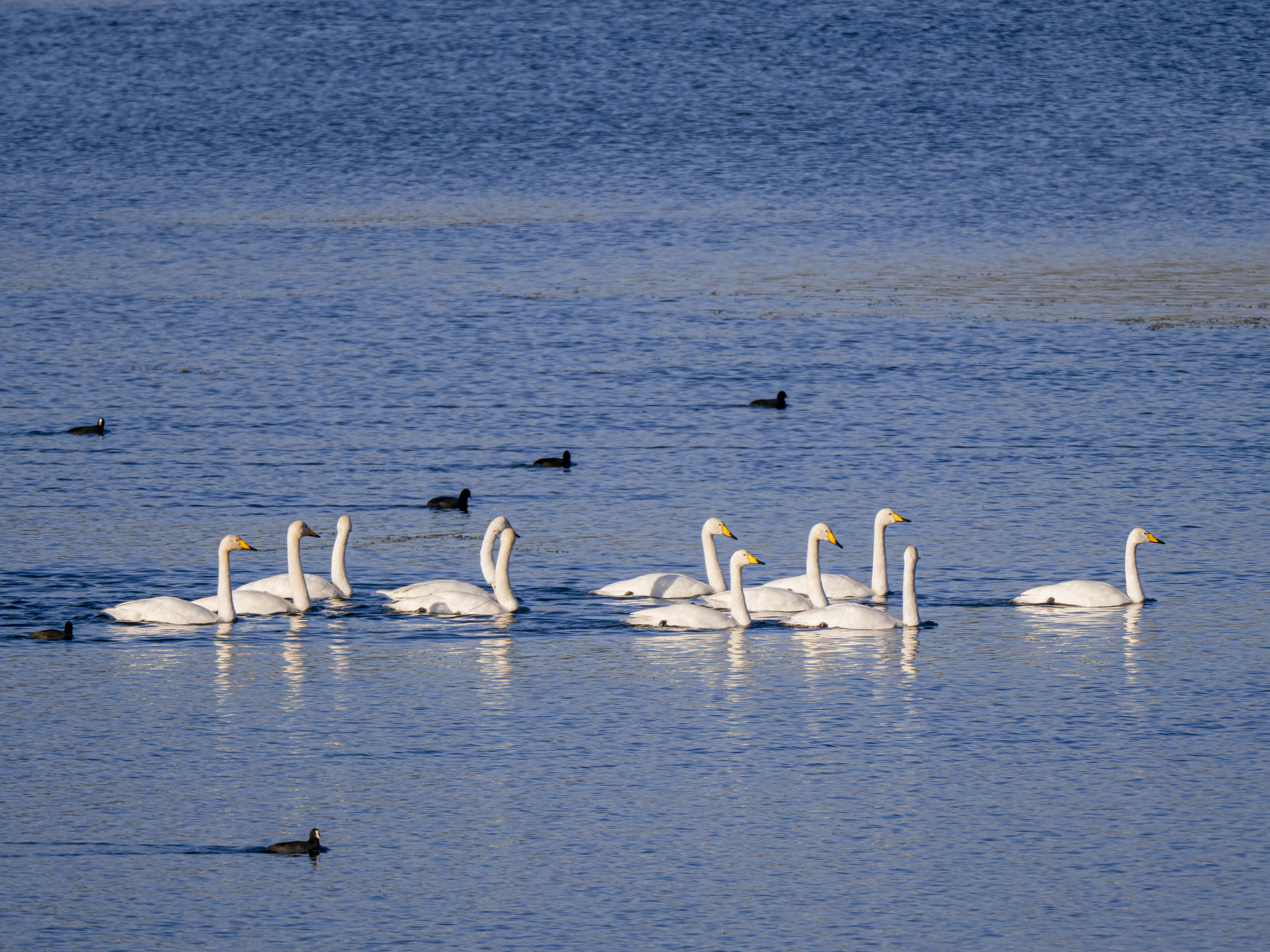
A large swan species native to the northern hemisphere, serving as the Eurasian counterpart to the North American trumpeter swan. It breeds in subarctic Eurosiberia and migrates to wintering sites in southern Europe and eastern Asia. The species forms lifelong pair bonds and exhibits complex social signaling behaviors during flock movement.
Description
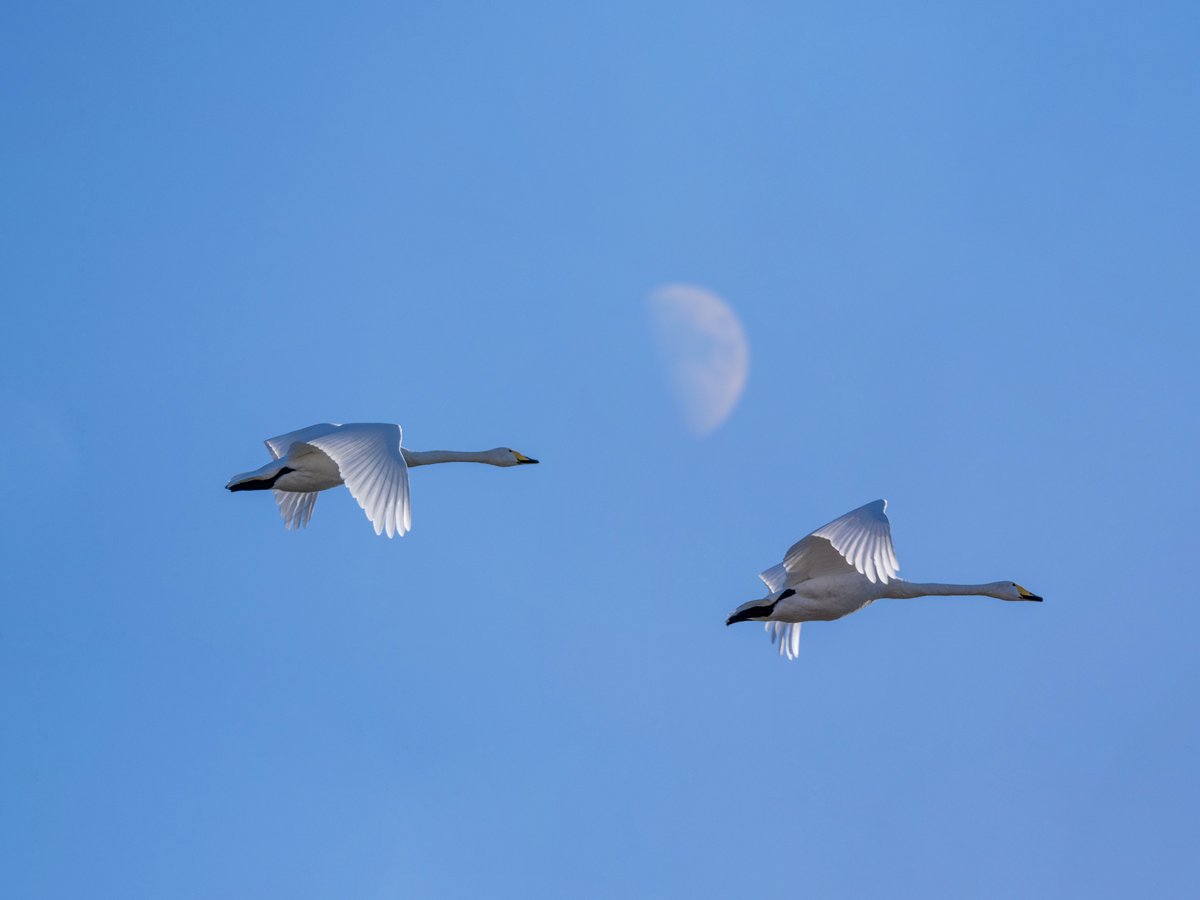
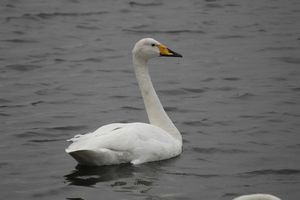
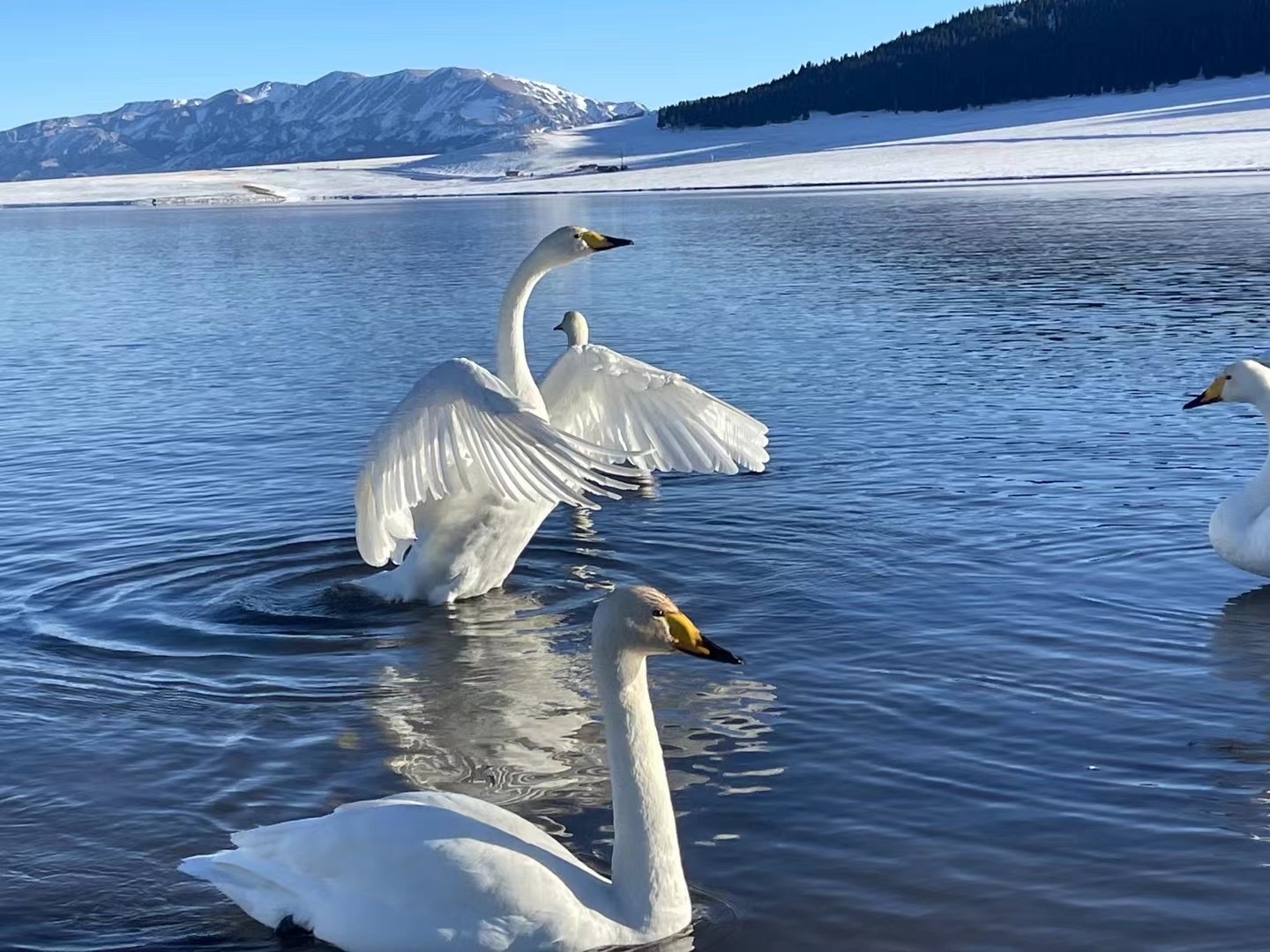
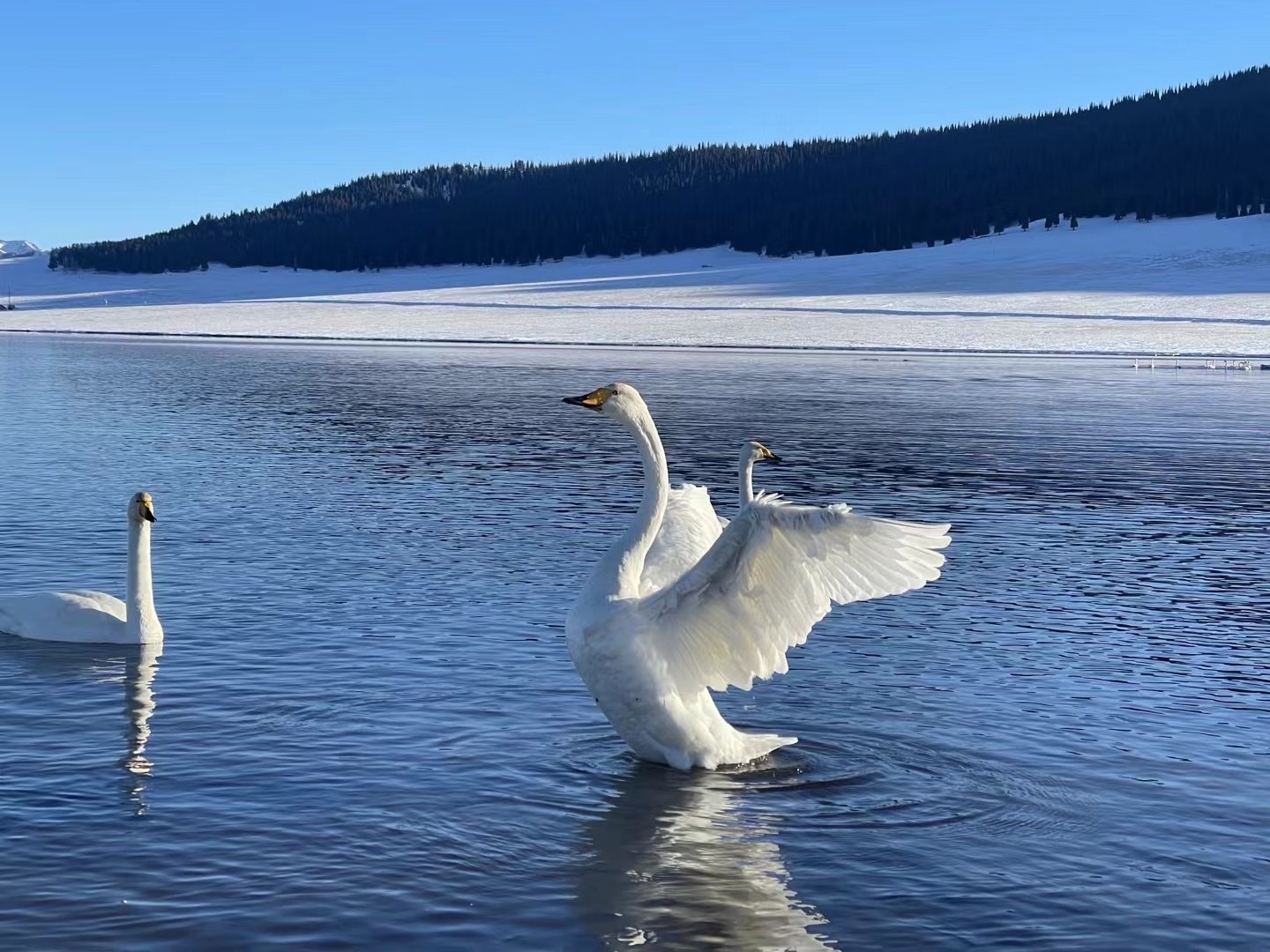
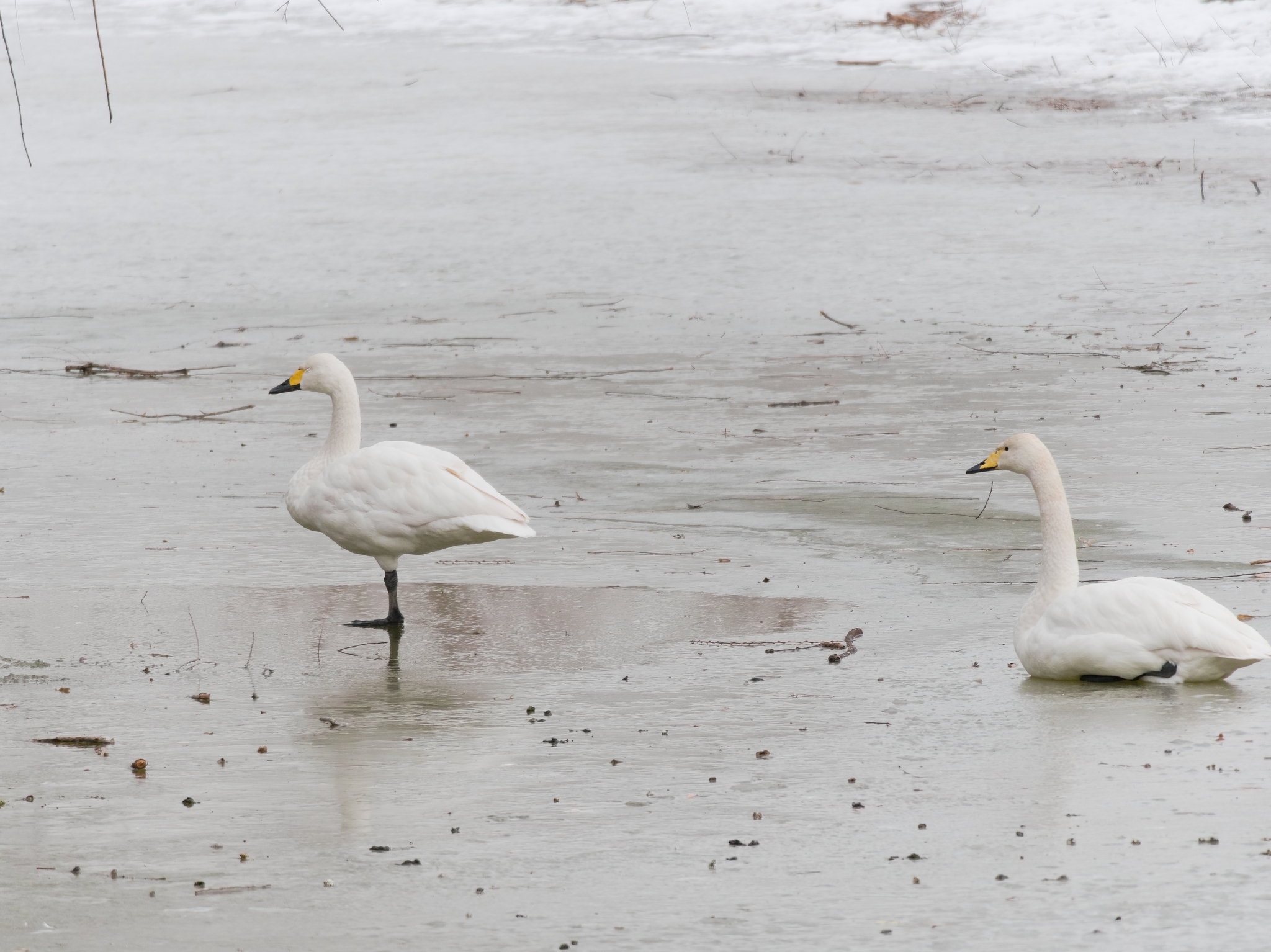
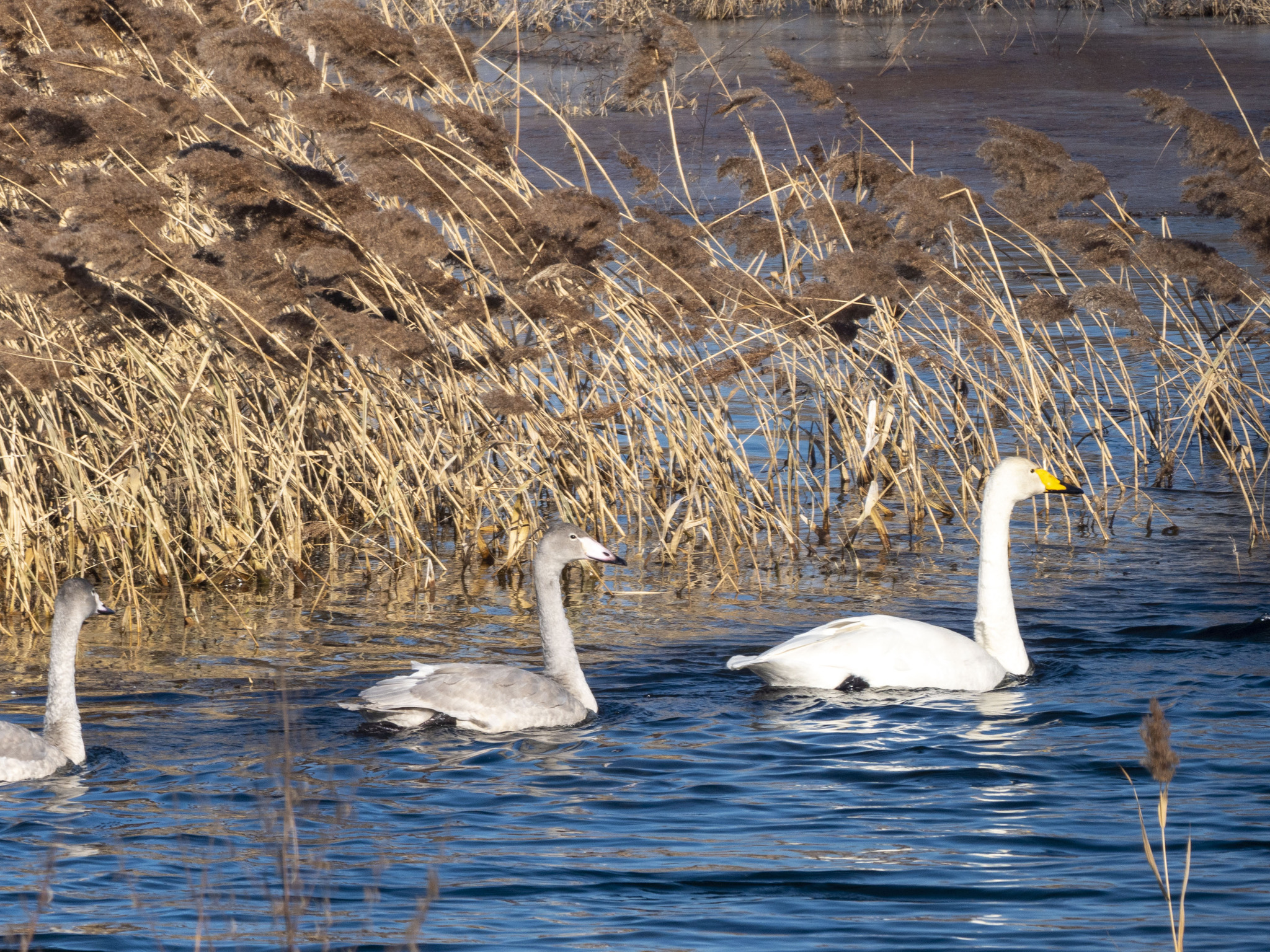
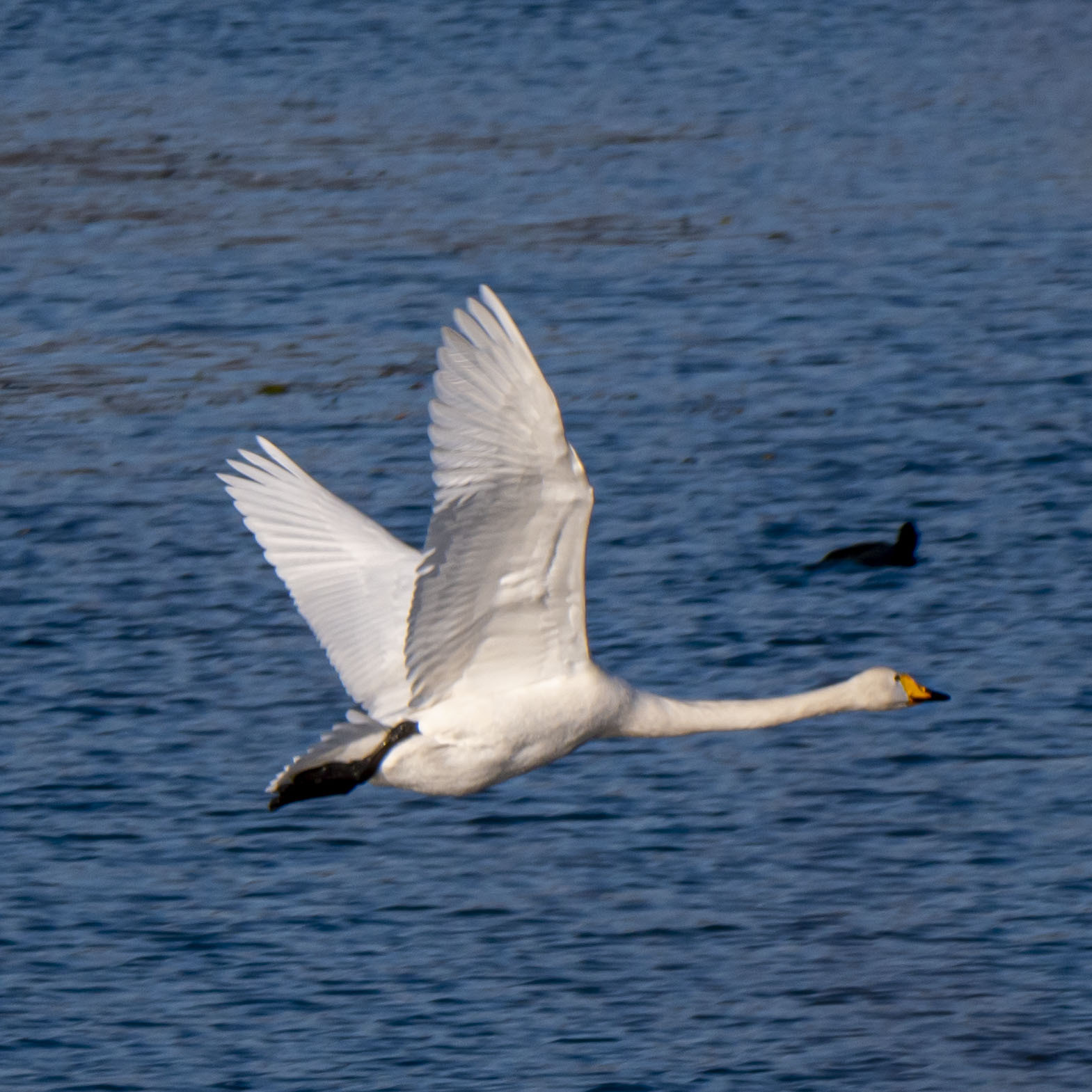
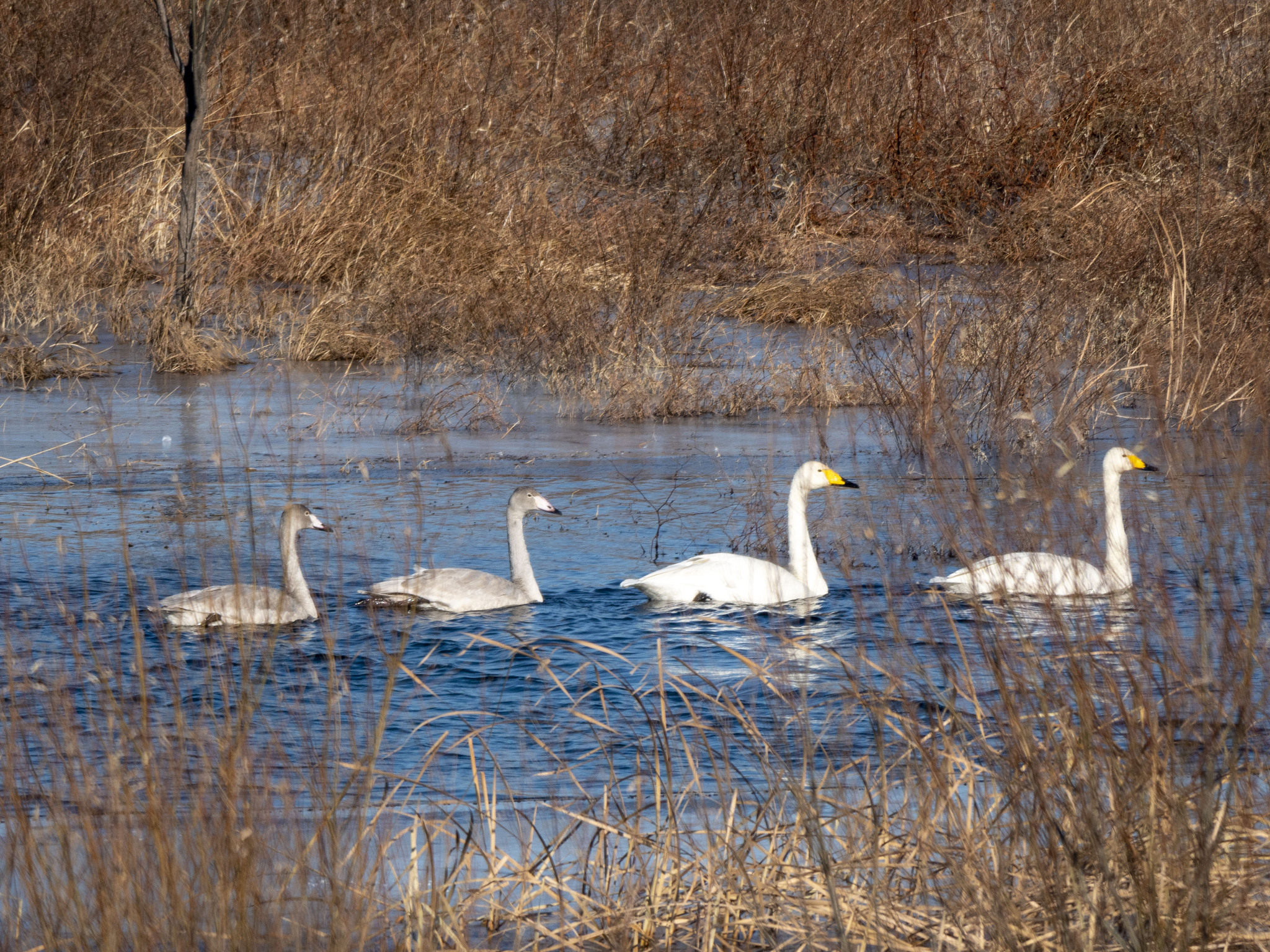
Length ranges from 140–165 cm (55–65 inches) with a wingspan of 205–275 cm (81–108 inches). Weight typically falls between 7.4–14.0 kg, with males averaging 9.8–11.4 kg and females 8.2–9.2 kg; a verified record mass is 15.5 kg. Standard measurements include a wing chord of 56.2–63.5 cm, tarsus of 10.4–13.0 cm, and bill of 9.2–11.6 cm. The head shape is angular, and the bill pattern is variable but always displays more yellow than black. Cygnets possess grey or brown plumage.
Identification
Distinguished from the similar Bewick's swan by larger size, a more angular head shape, and a bill pattern showing more yellow than black. Vocalizations are deep, strident honks, often described as 'kloo-kloo-kloo' in groups of three or four, which are more resonant and lower-pitched than those of Bewick's swan.
Distribution & Habitat
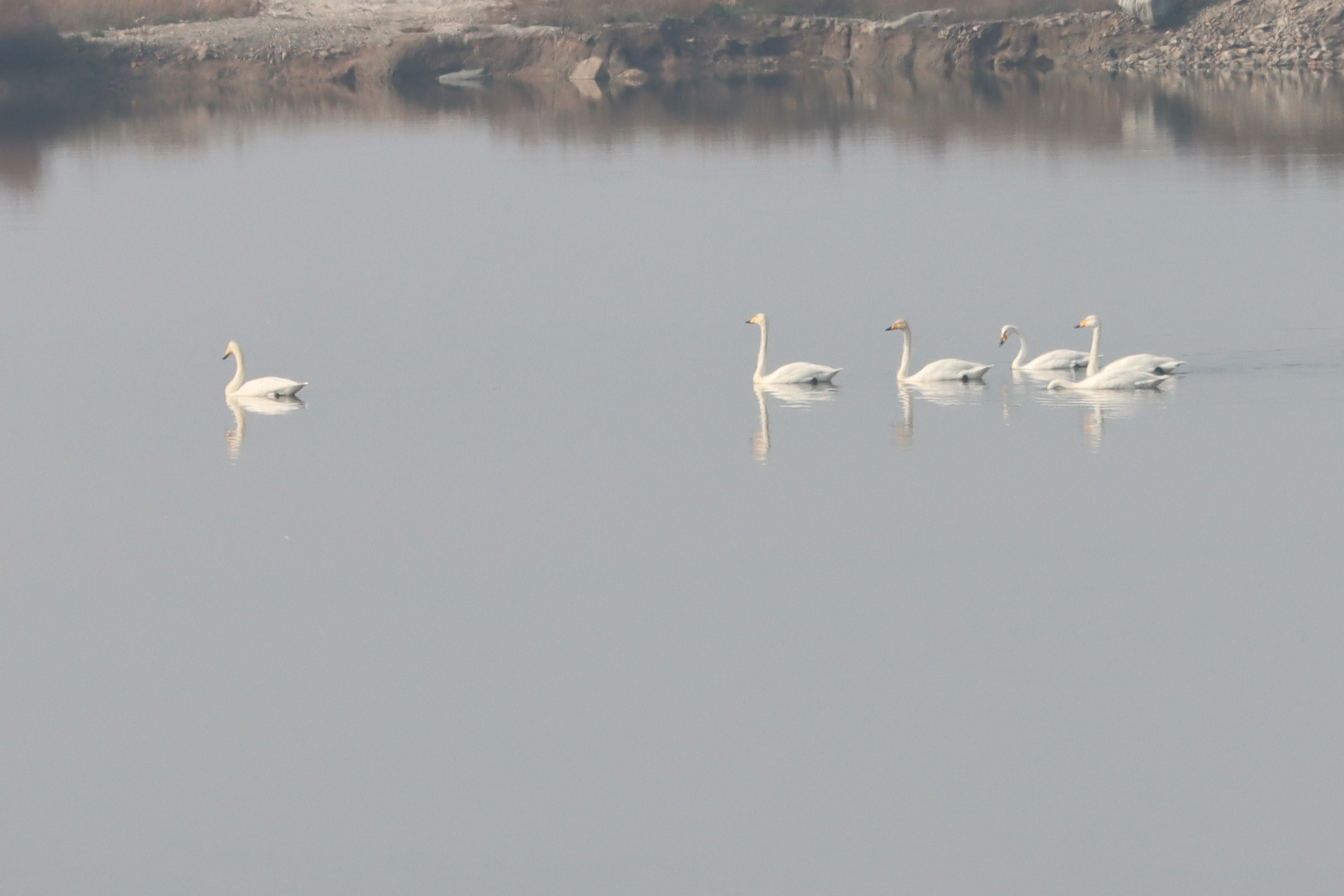
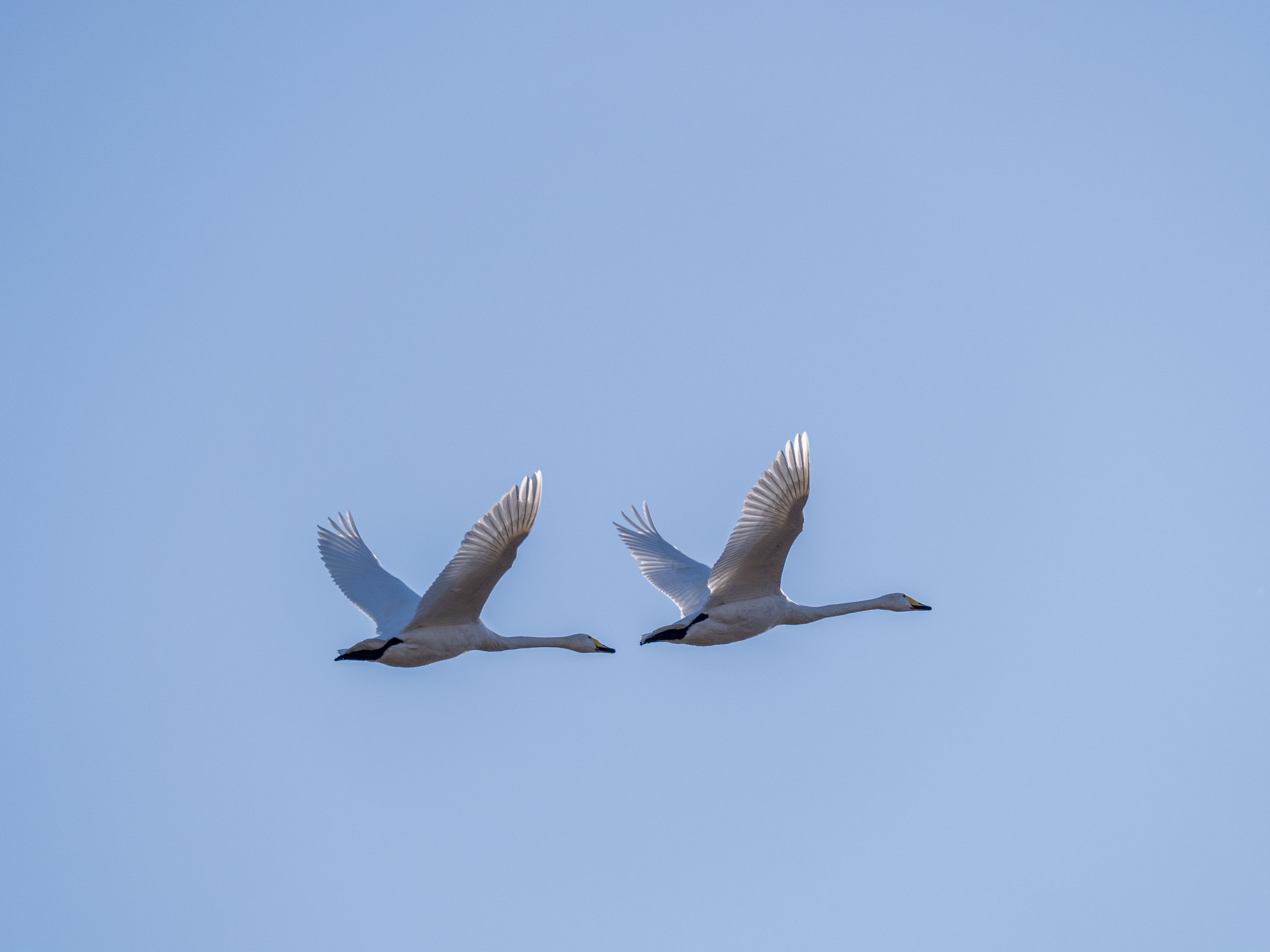
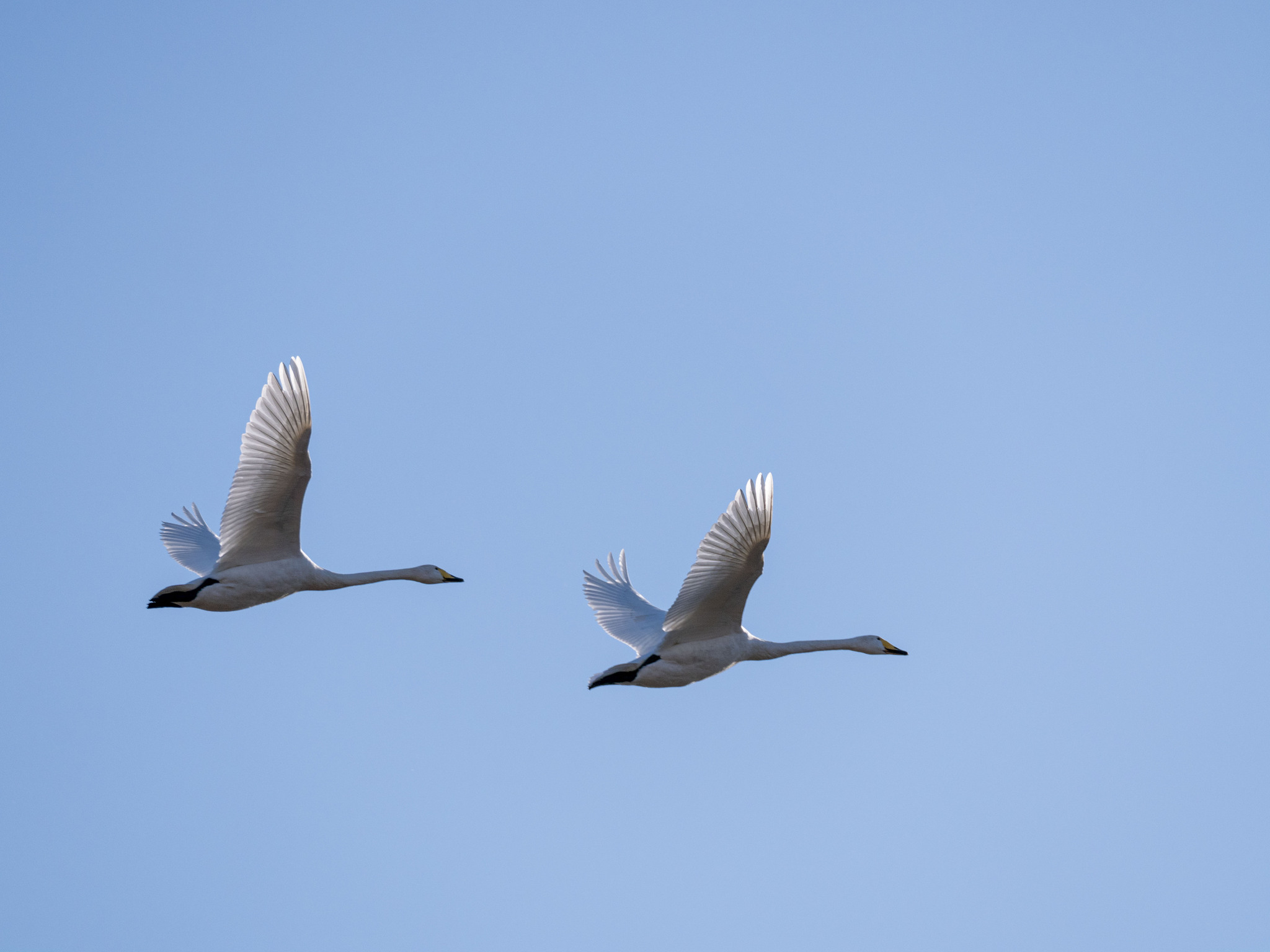
Breeds in subarctic Eurosiberia, specifically in the taiga zone, and is a rare breeder in northern Scotland (particularly Orkney) and Ireland. Migrates hundreds to thousands of miles to winter in southern Europe and eastern Asia. Icelandic populations overwinter in the United Kingdom and Ireland. Occasional vagrants reach the Indian subcontinent and western North America. Requires large areas of water for living and feeding.
Behavior & Ecology
Feeds by swimming and straining water or eating submerged plants. Forms lifelong pair bonds; cygnets remain with parents through winter, sometimes joined by previous offspring. Both sexes build nests, with the male guarding while the female incubates 4–7 eggs (exceptionally 12). Hatching occurs after approximately 36 days, and cygnets fledge at 120–150 days. Flocks use signaling movements such as head bobs, head shakes, and wing flaps to coordinate flight initiation; individuals making the most movements often lead the flock. Signaling success rates are higher when mates participate.
Culture
Serves as the national bird of Finland since 1981 and appears on the Finnish 1 euro coin. Musical utterances at the moment of death are suggested as the origin of the 'swan song' legend. The species is much admired in Europe.
Source: Wikipedia · CC BY-SA 3.0
Taxonomy
- Order
- Anseriformes
- Family
- Anatidae
- Genus
- Cygnus
Distribution
breeds Palearctic; winters to central Asia and southeastern China
Data Sources
Species description from Wikipedia, licensed under CC BY-SA 3.0.
Bird images and sounds sourced from GBIF, contributed by citizen scientists worldwide under Creative Commons licenses.
Taxonomy data from AviList 2025.