Whooper Swan
Cygnus cygnus
大天鹅
Introduction
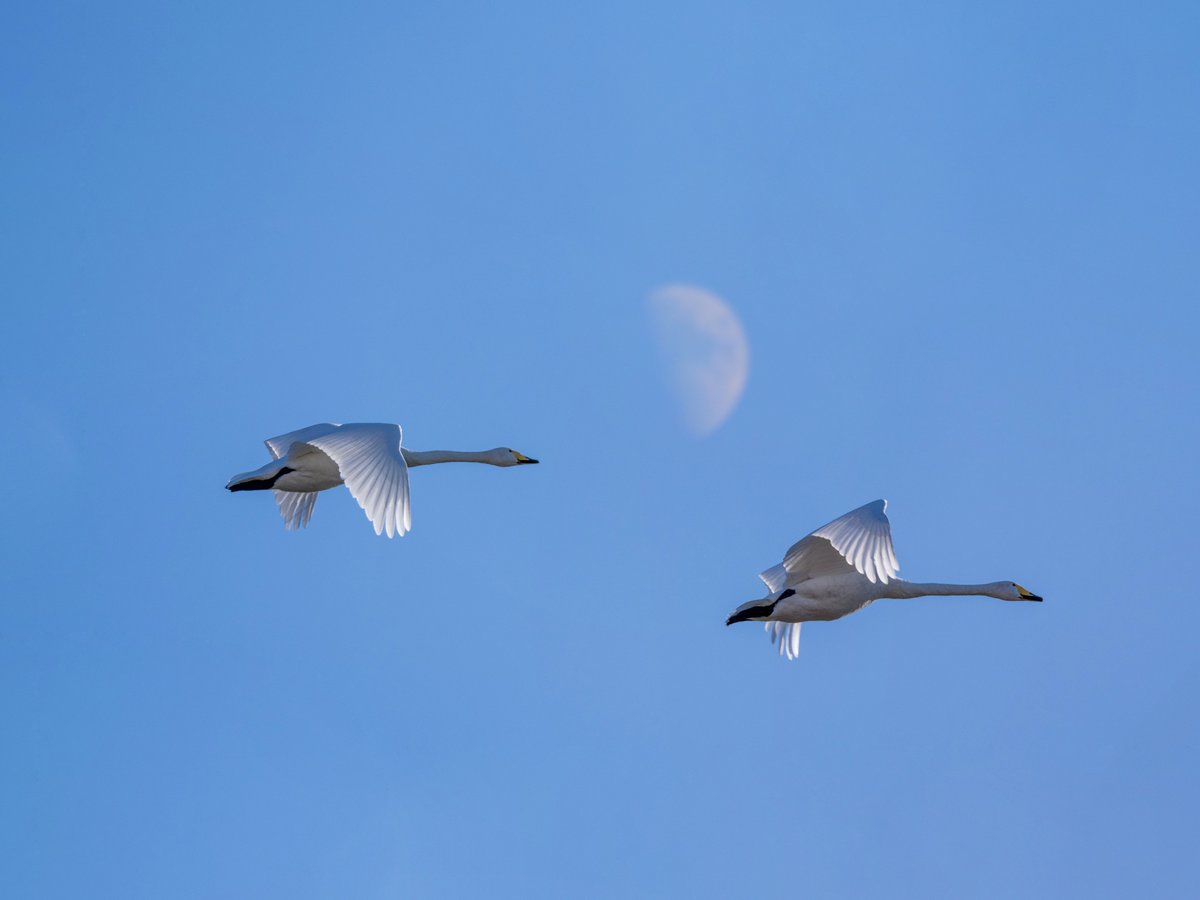
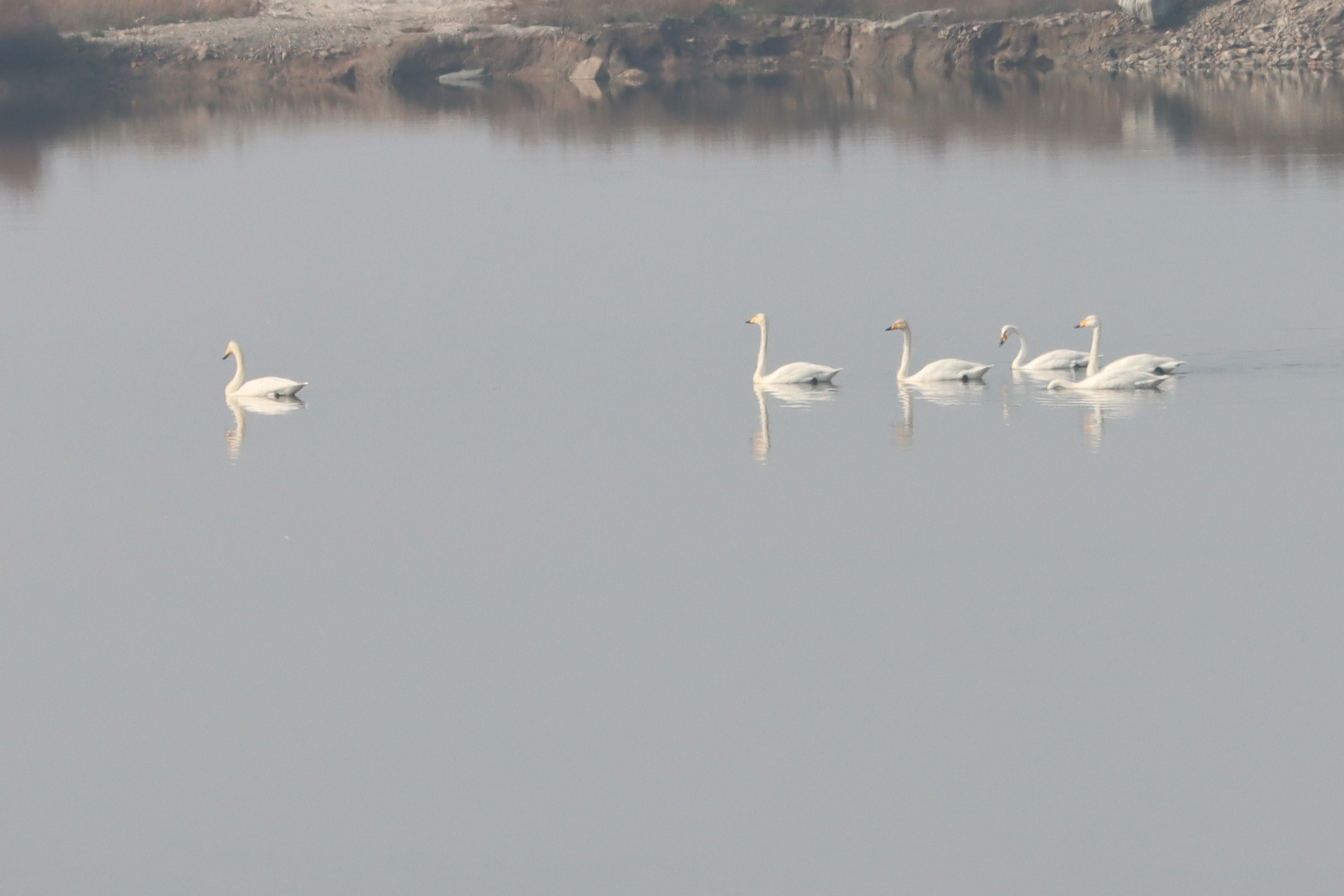
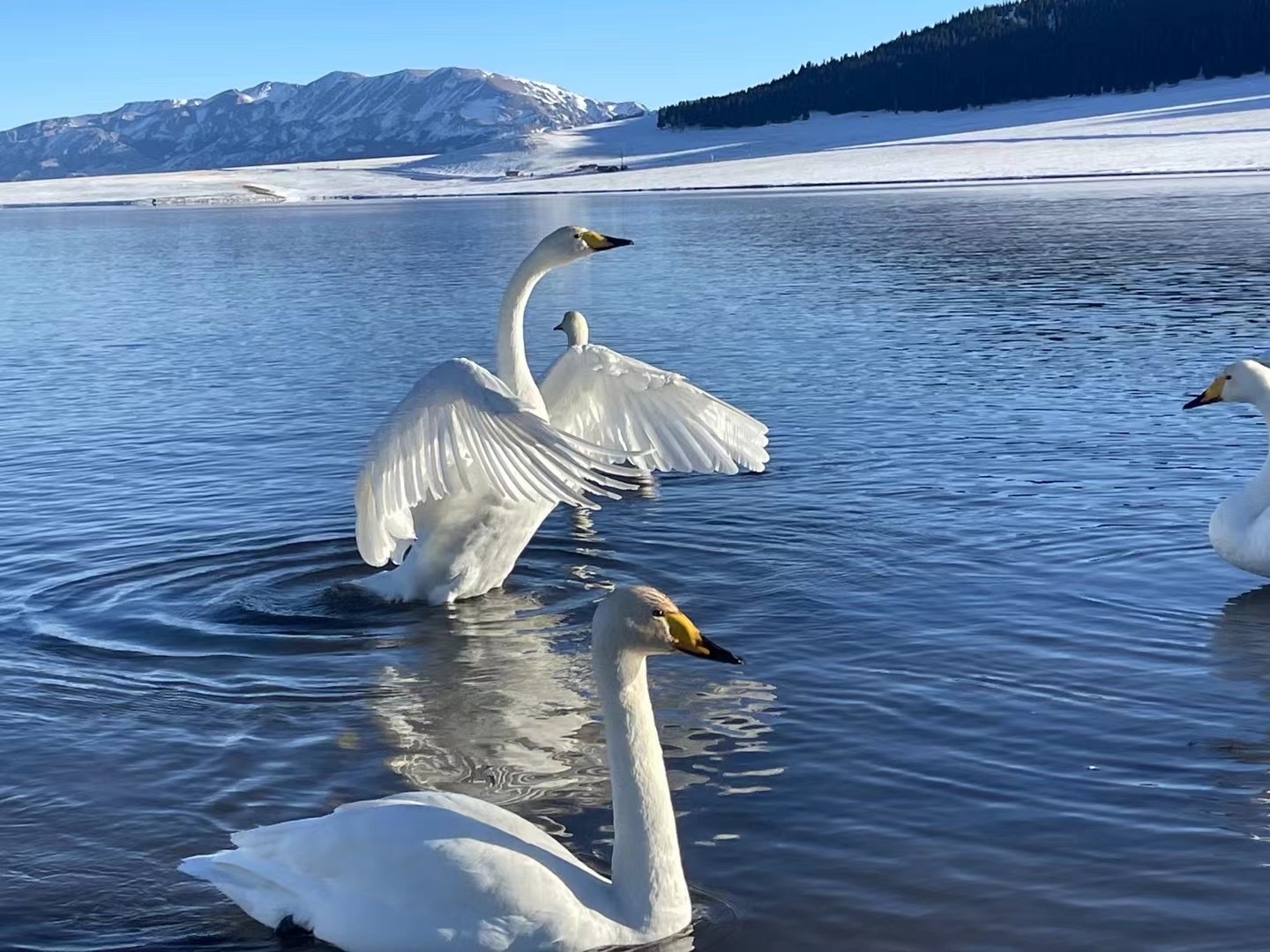
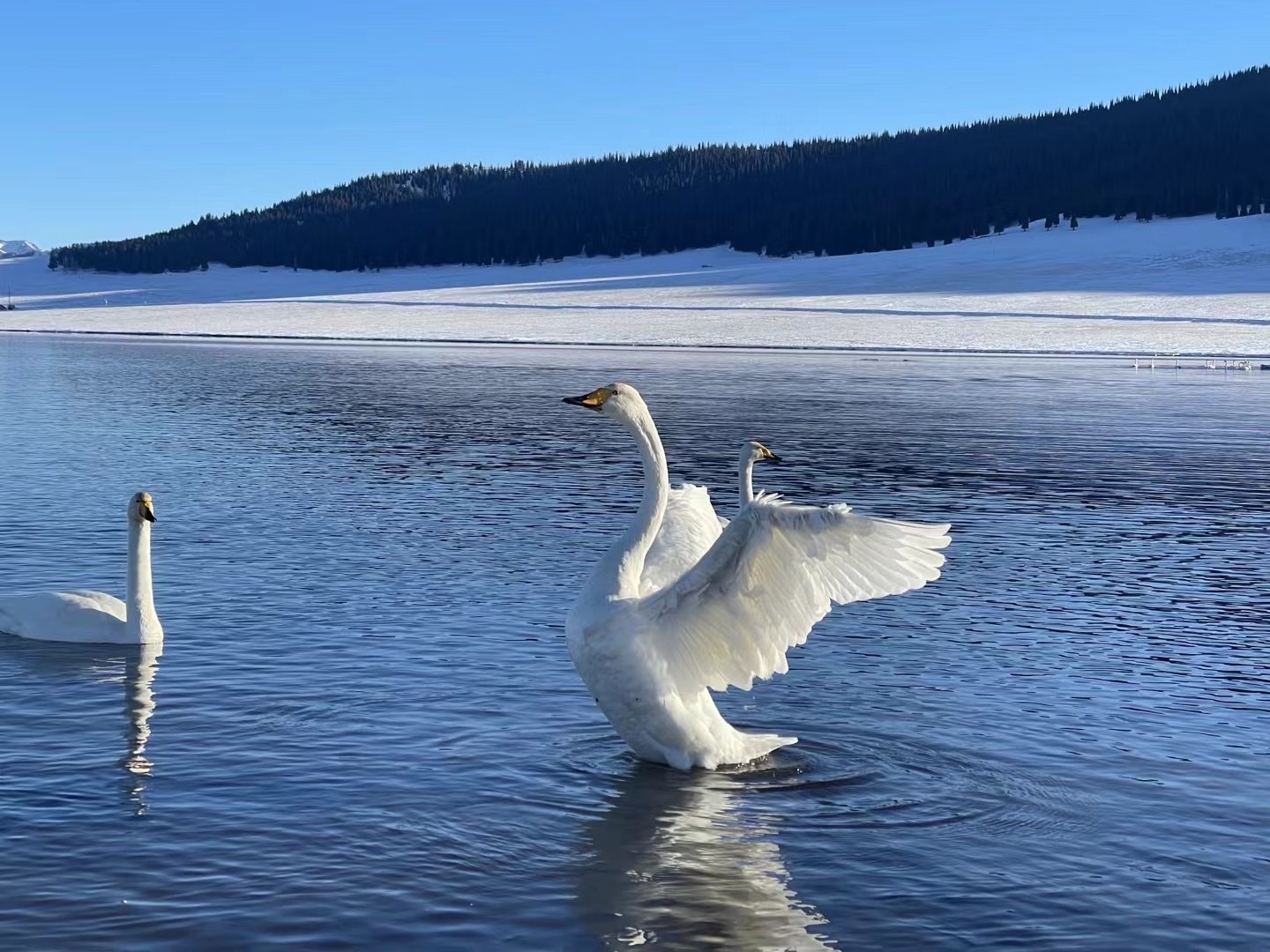
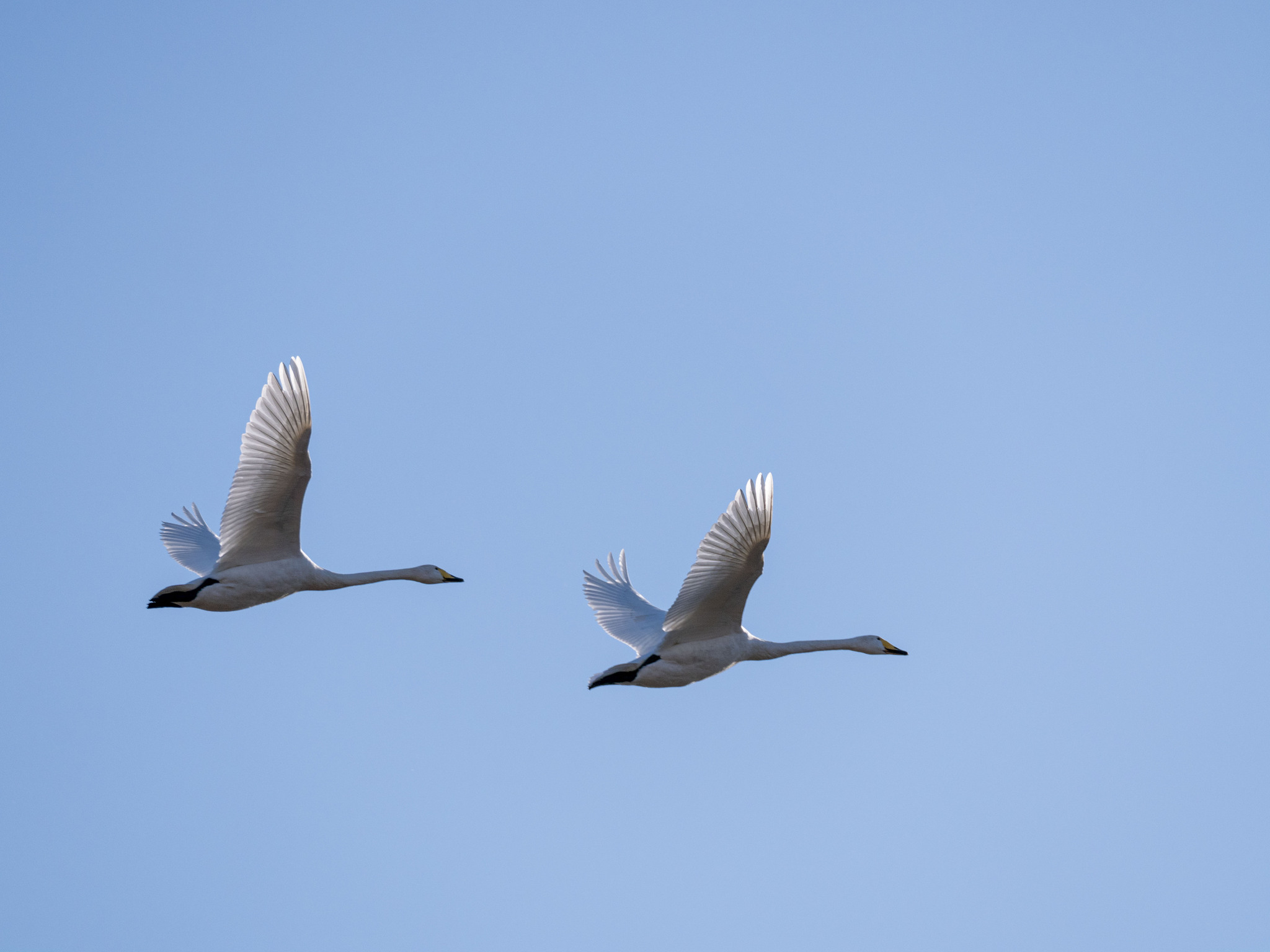
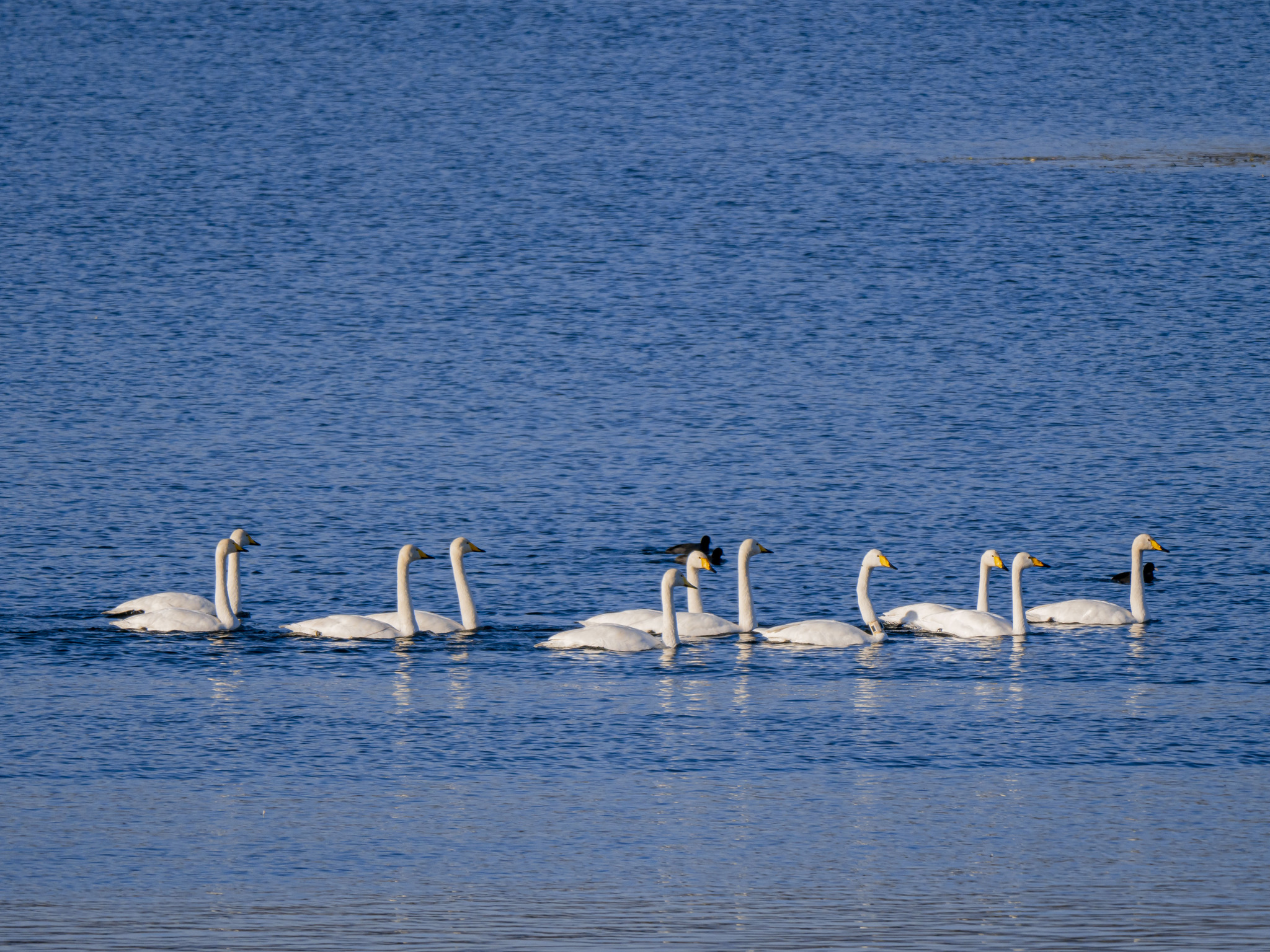
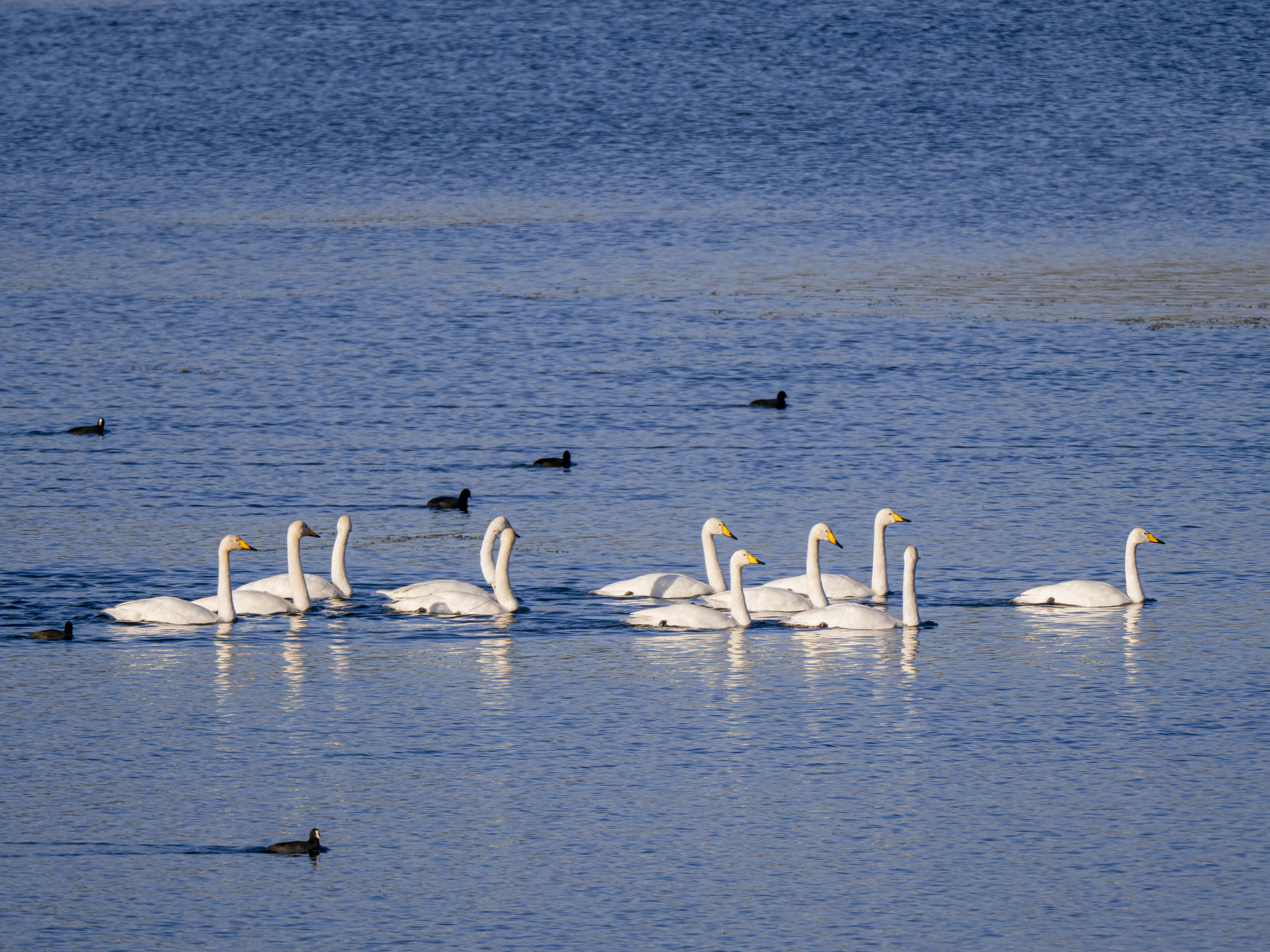
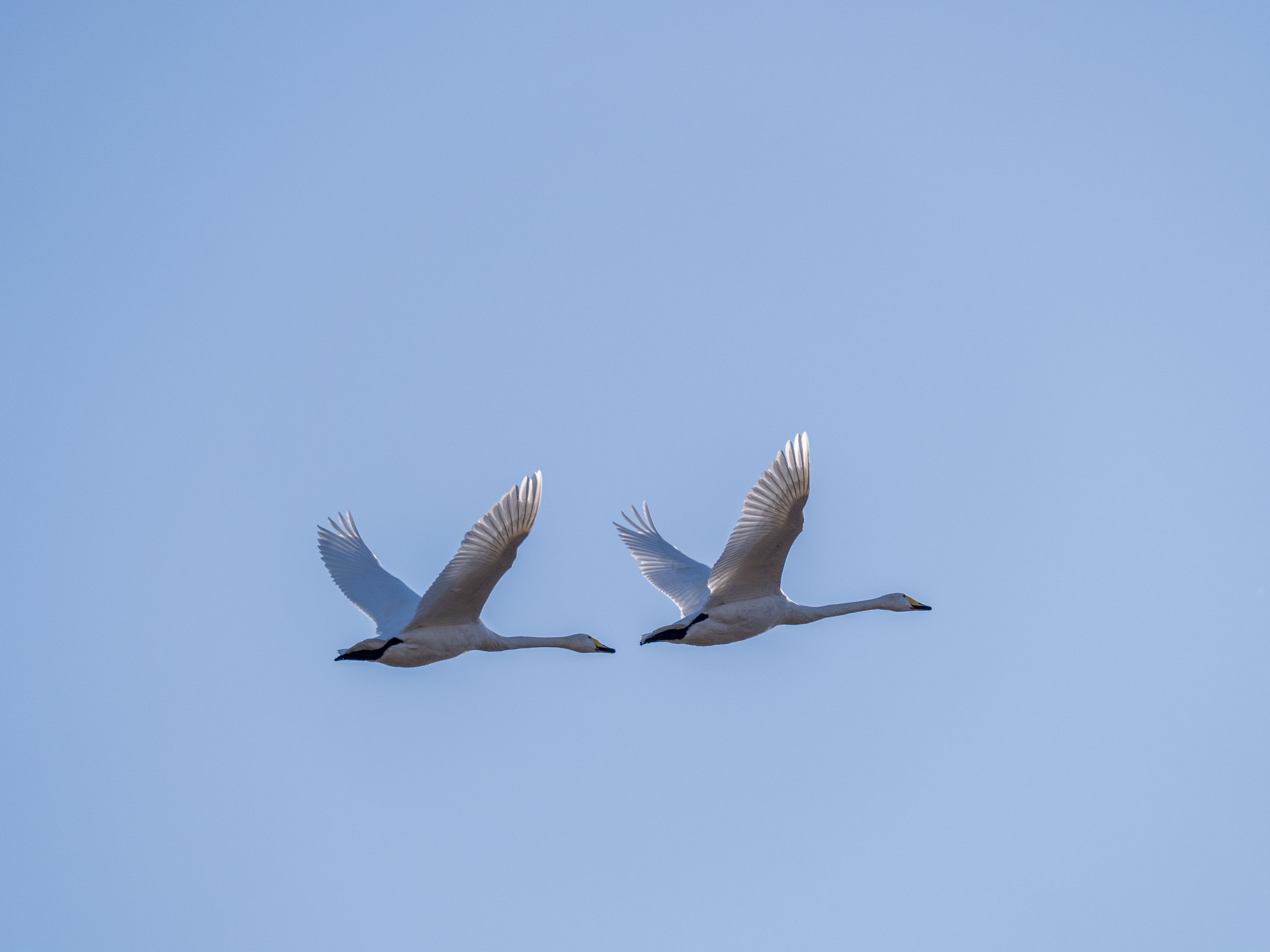
The whooper swan (Cygnus cygnus) is a large waterbird inhabiting the northern hemisphere. It occupies wetlands with extensive open water, where it feeds by swimming and straining bottom vegetation. Adults maintain an upright posture with long necks held high. The species is among the heaviest flying birds. It undertakes long-distance migrations across Eurasia and produces deep honking calls resembling those of geese. Wintering range extends across Europe and Asia.
Description
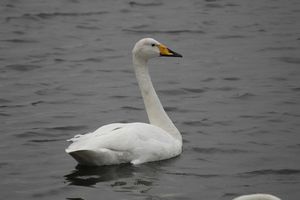
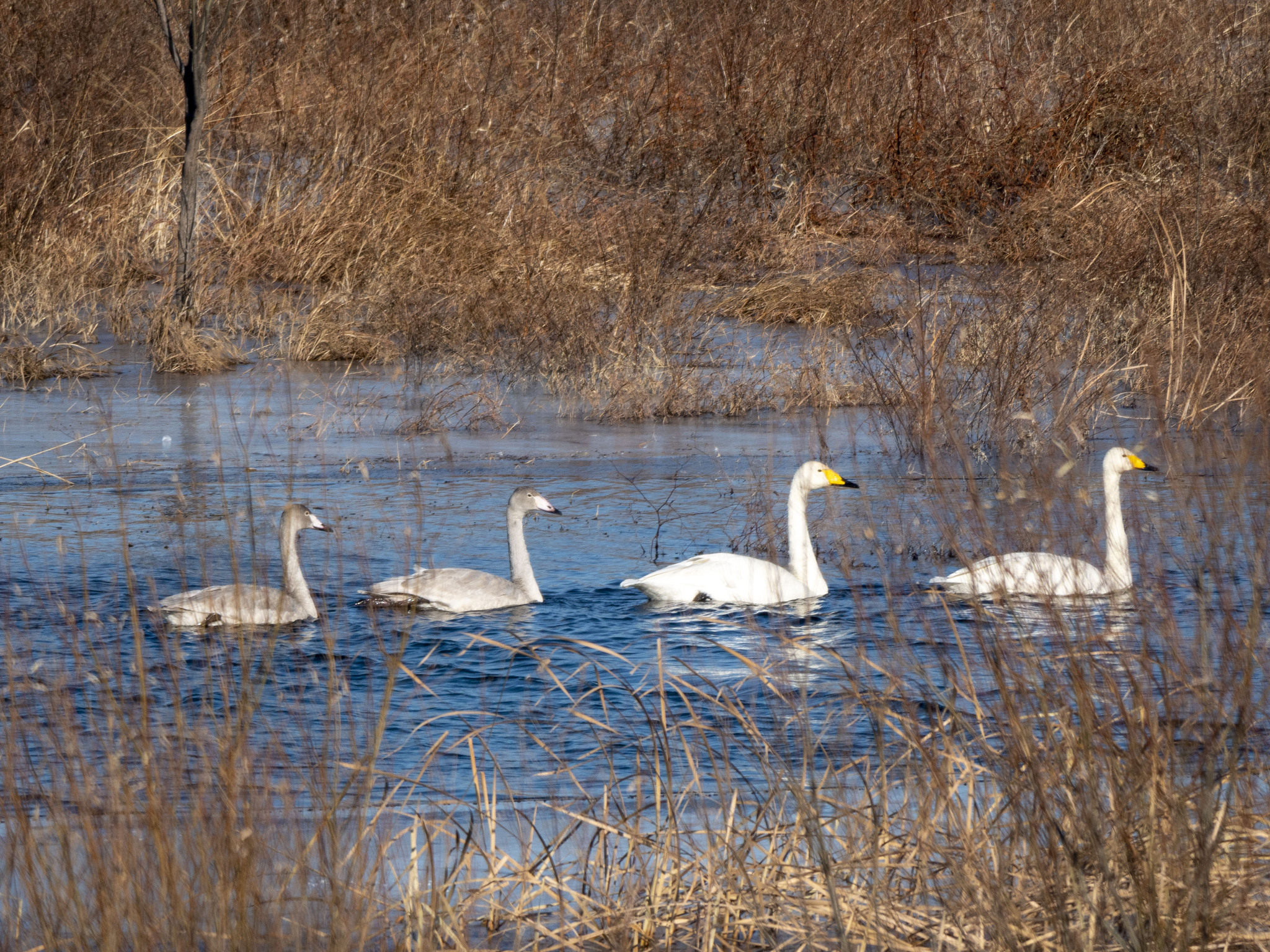
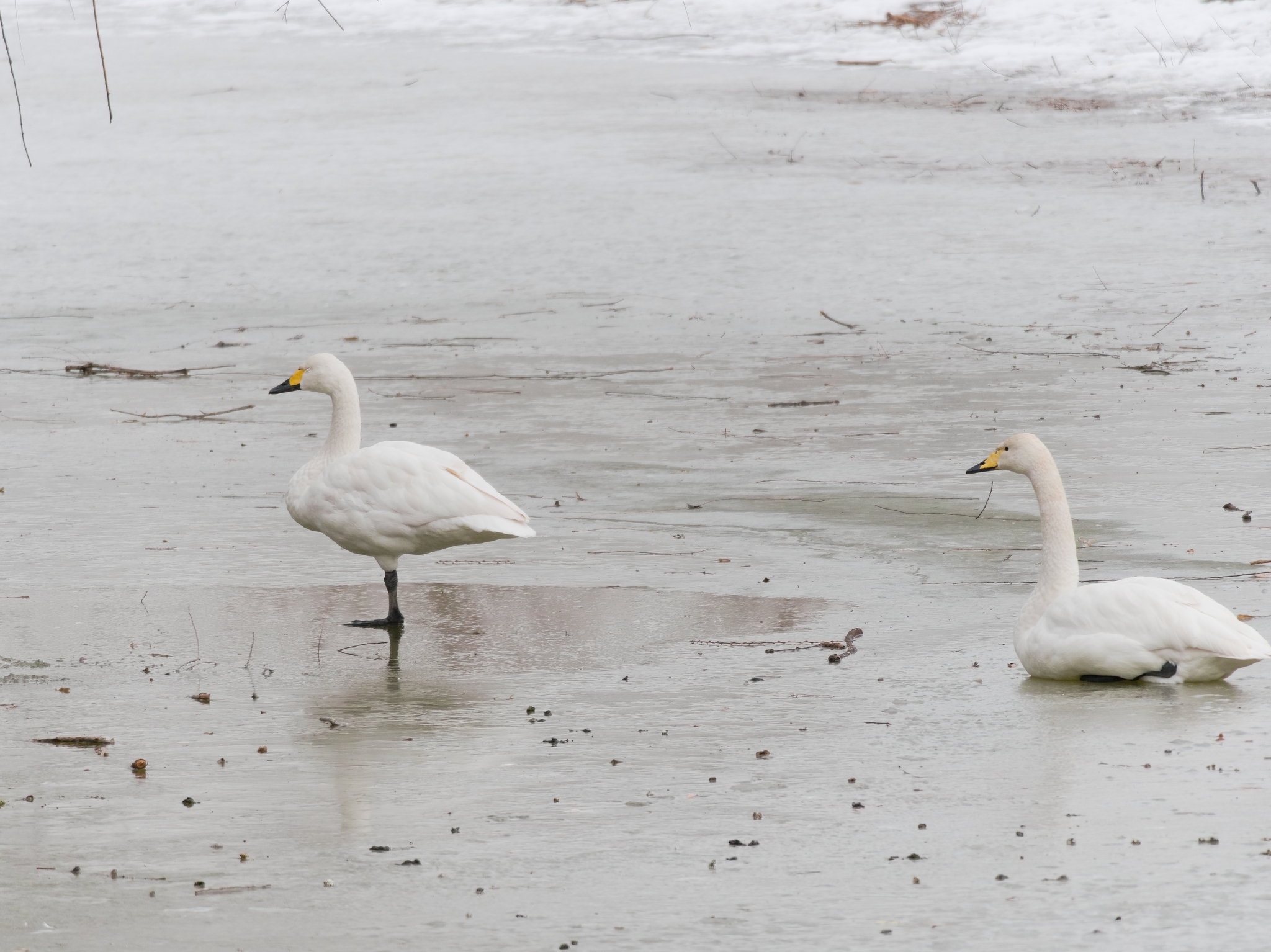
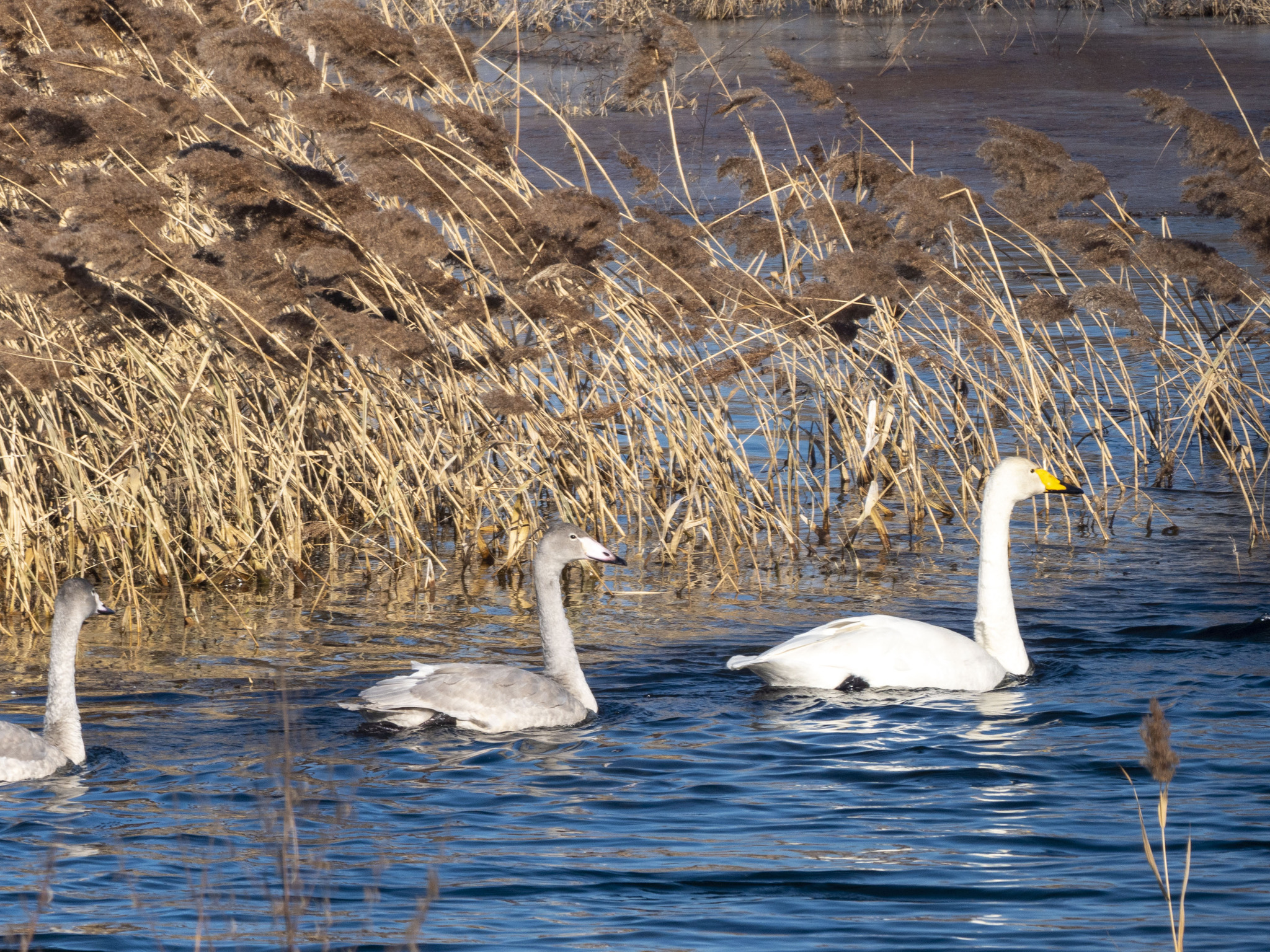
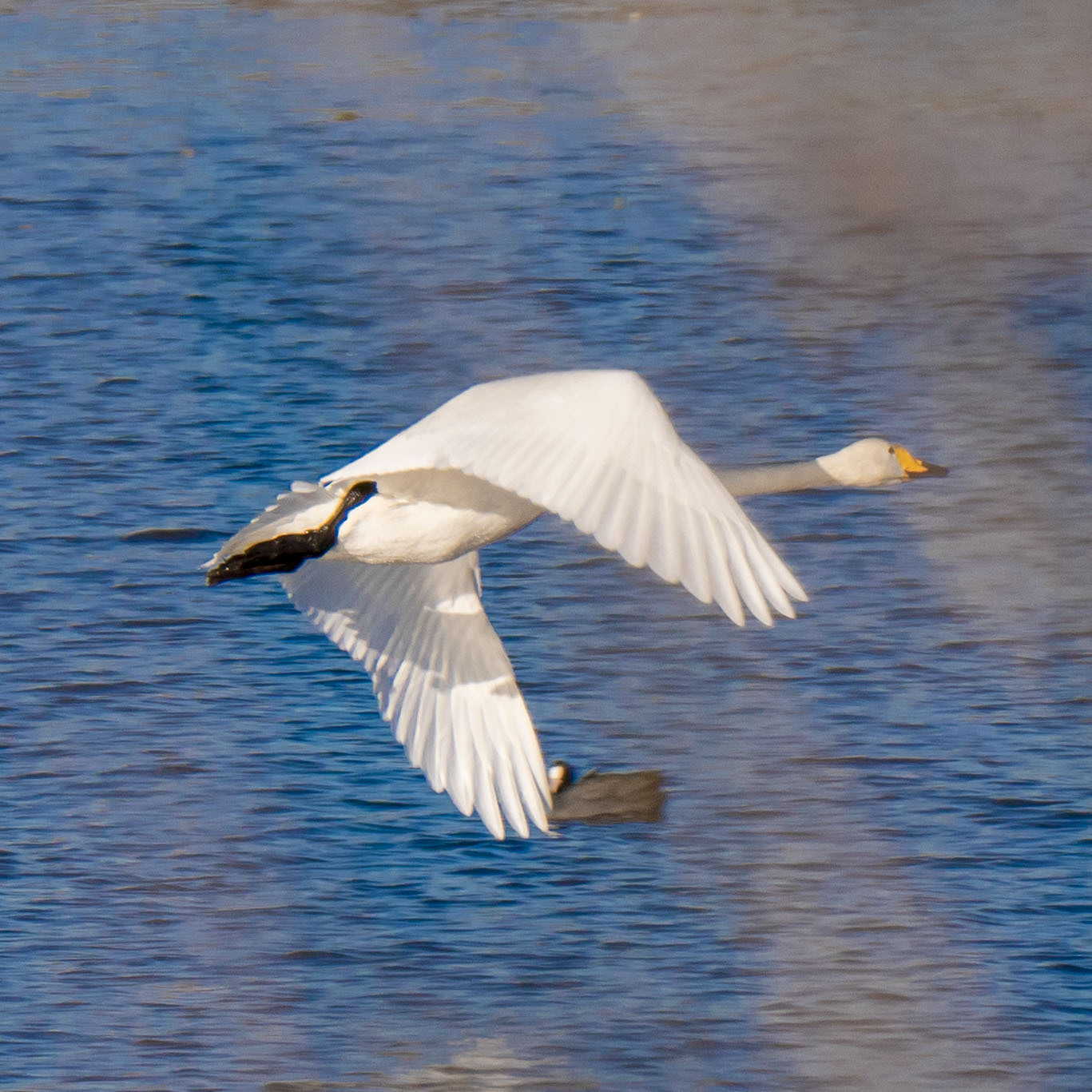
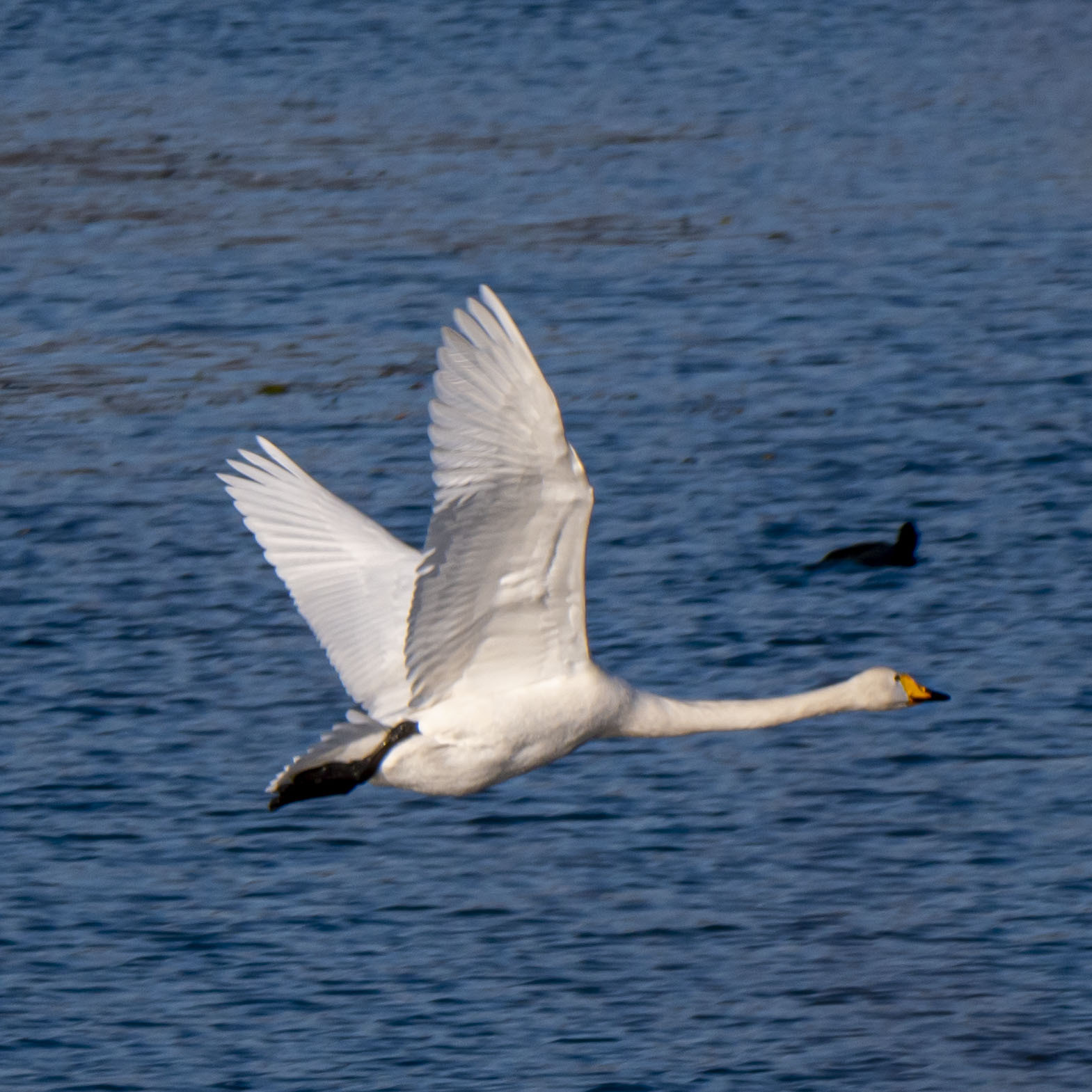
This is a substantially sized swan, measuring 140-165 cm in length with an impressive wingspan of 205-275 cm. Adults typically weigh between 7.4-14.0 kg, with males averaging 9.8-11.4 kg and females 8.2-9.2 kg; the heaviest recorded individual weighed 15.5 kg. Standard measurements include a wing chord of 56.2-63.5 cm, tarsus of 10.4-13.0 cm, and bill length of 9.2-11.6 cm. The plumage is entirely white in adults, and the species has a more angular head shape compared to its Bewick's swan cousin. The bill pattern is variable but consistently shows more yellow than black extending onto the basal area.
Identification
Field identification hinges on comparing this species with the smaller Bewick's swan. The whooper swan is significantly larger with a more angular head profile. The bill diagnostic is key: this species always shows more yellow than black at the base, whereas Bewick's swans display the opposite pattern with black dominating. The call provides additional confirmation—the whooper produces resonant, trumpeter-like honks that are lower-pitched and more resonant than Bewick's, typically delivered as kloo-kloo-kloo in groups of three or four. Mute swans, which may overlap in range, have entirely orange bills without the distinctive yellow base.
Distribution & Habitat
Breeding occurs across the subarctic Eurosiberia, primarily in the taiga zone and further south than Bewick's swan populations. Small and sporadic breeding populations exist in northern Scotland, particularly Orkney with no more than five pairs in recent years, and a handful of pairs in Ireland. The species migrates to wintering sites in southern Europe and eastern Asia, with Icelandic breeders overwintering prominently in the United Kingdom and Ireland, concentrating at wildfowl reserves managed by the RSPB and WWT. Vagrant individuals occasionally reach the Indian subcontinent and western North America. Wetlands are the preferred breeding habitat, though semi-domesticated birds will nest near any suitable water body.
Behavior & Ecology
Whooper swans form monogamous pairs that typically remain together for life, demonstrating strong site fidelity and cooperative breeding behavior. Both parents participate in nest construction, with the male standing guard while the female incubates her clutch of 4-7 eggs (occasionally up to 12). Incubation lasts approximately 36 days, and cygnets hatch with grey or brown plumage. Cygnets remain with their parents through their first winter and may be joined by offspring from previous years. They achieve flight capability at 120-150 days. The species is highly vocal with strident calls. Flock departure involves complex communication through head bobs, head shakes, and wing flaps; individuals that signal frequently lead flocks 61% of the time compared to 35% for non-signalers. Paired mates may use these signals to maintain contact during flight.
Conservation
The whooper swan is protected under the Agreement on the Conservation of African-Eurasian Migratory Waterbirds (AEWA). In 2006, the species made headlines when H5N1 avian influenza reached the UK, confirmed through a dead whooper swan found in Scotland in April. While specific population figures and current IUCN status are not provided, the species appears to maintain stable populations across its extensive range, though its reliance on specific wetland habitats and migration corridors leaves it vulnerable to habitat loss and disease outbreaks.
Culture
The whooper swan holds significant cultural importance, particularly in Finland where it was designated the national bird in 1981. Its image appears prominently on the Finnish 1 euro coin, making it one of the most recognizable avian symbols in European currency. The species has captured human imagination beyond mere symbolism—musical utterances produced by whooper swans at the moment of death have been suggested as the origin of the enduring swan song legend. Throughout Europe, the species is much admired, and birdwatchers flock to nature reserves to observe wintering flocks. The species' presence at protected wetlands managed by conservation organizations has helped raise public awareness about waterbird conservation across the continent.
Source: Wikipedia · CC BY-SA 3.0
Taxonomy
- Order
- Anseriformes
- Family
- Anatidae
- Genus
- Cygnus
- eBird Code
- whoswa
Distribution
breeds Palearctic; winters to central Asia and southeastern China
Data Sources
Species description from Wikipedia, licensed under CC BY-SA 3.0.
Bird images and sounds sourced from GBIF, contributed by citizen scientists worldwide under Creative Commons licenses.
Taxonomy data from AviList 2025.