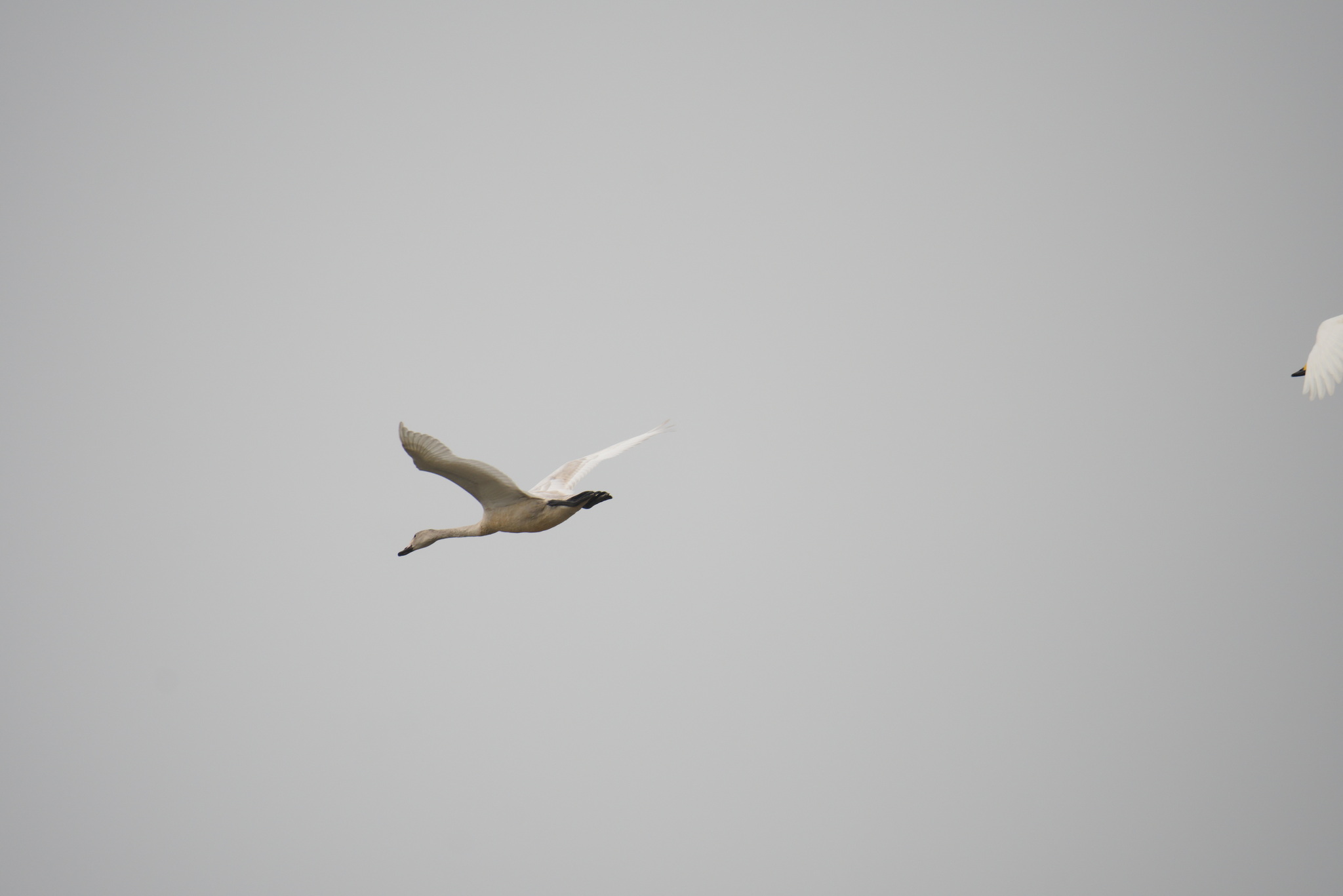
Anseriformes / Anatidae / Cygnus
Tundra Swan
Cygnus columbianus · 小天鹅
Introduction
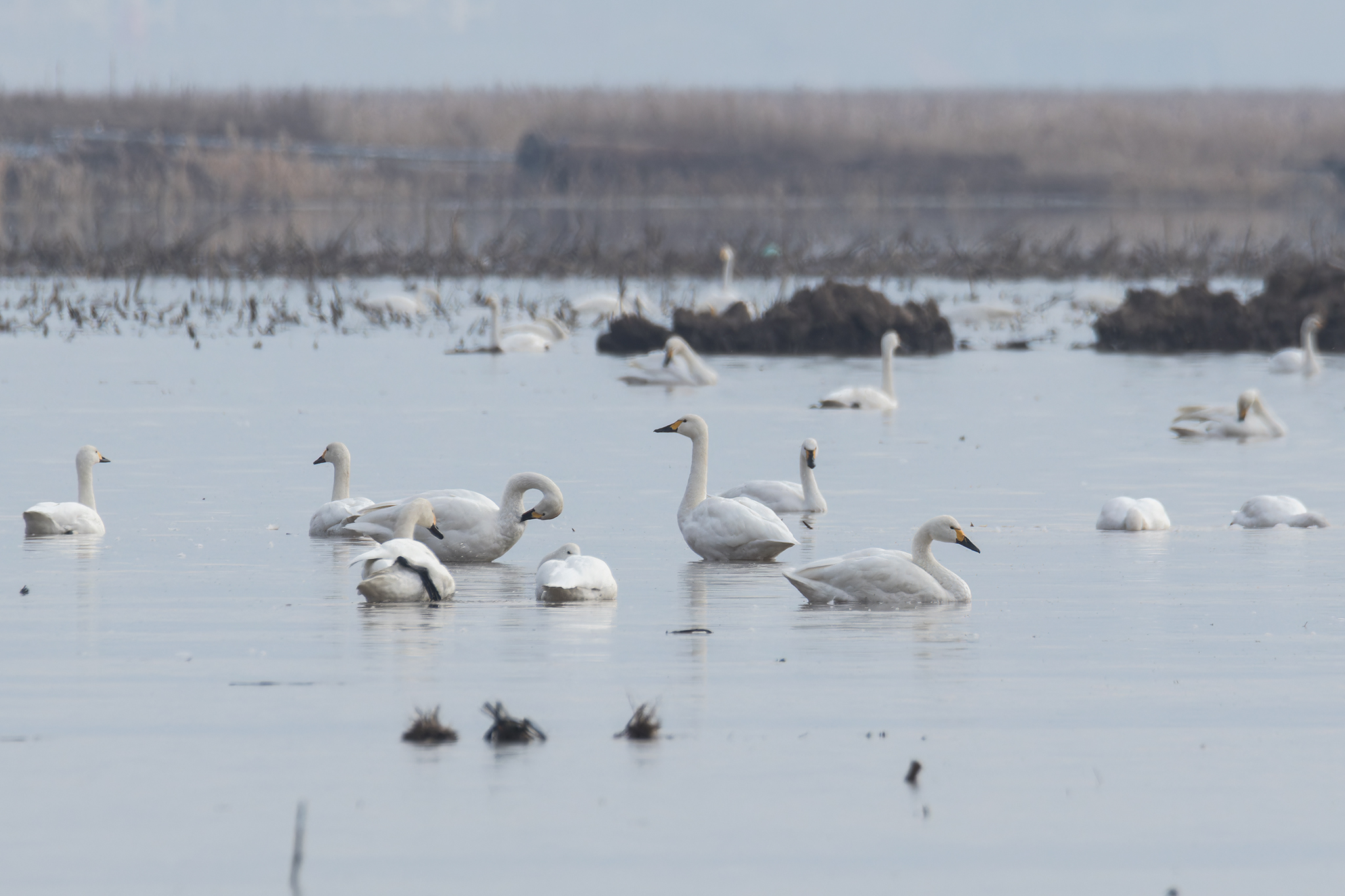
A small swan of the Holarctic, comprising two taxa often treated as conspecific: Bewick's swan (Palaearctic) and the whistling swan (Nearctic). It breeds in Arctic and subarctic tundra habitats including shallow pools, lakes, and rivers, and migrates to grassland and marshland wintering grounds. Distinctive traits include high-pitched honking calls, a shorter neck giving a goose-like appearance, and quicker wingbeats than related swans. The species is not considered threatened by the IUCN.
Description
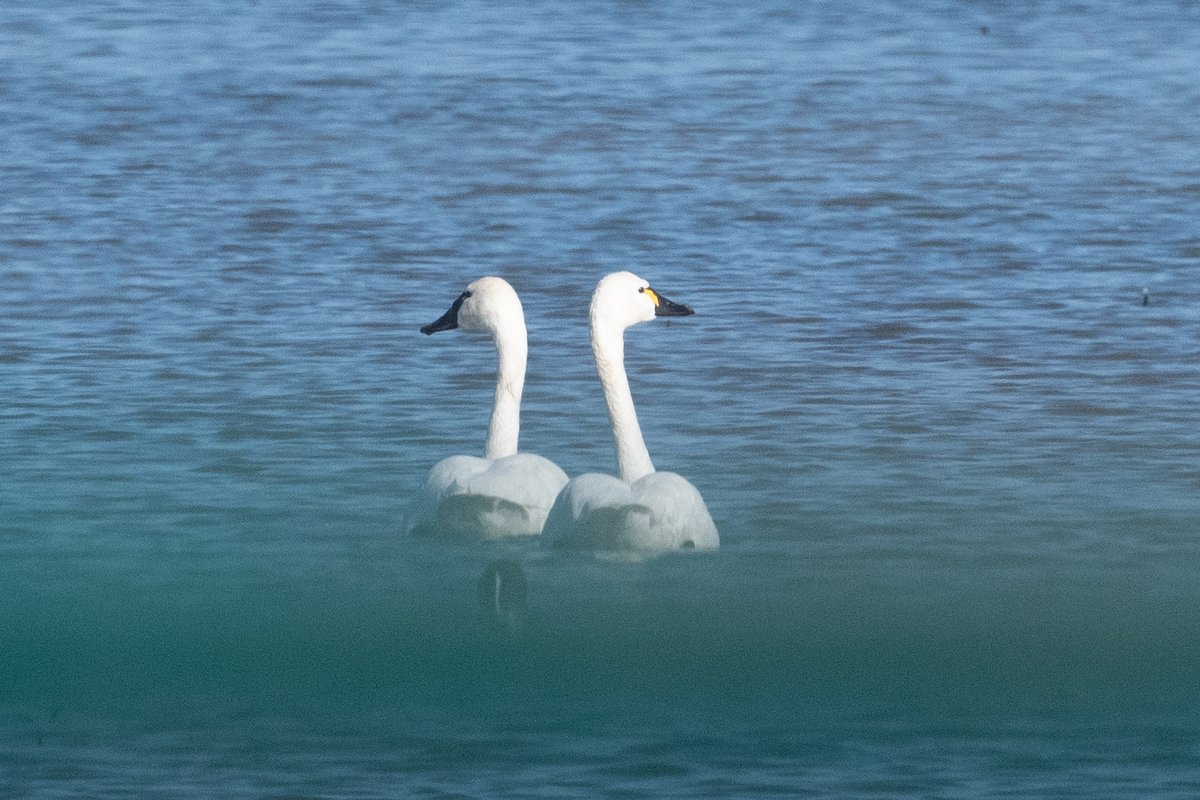
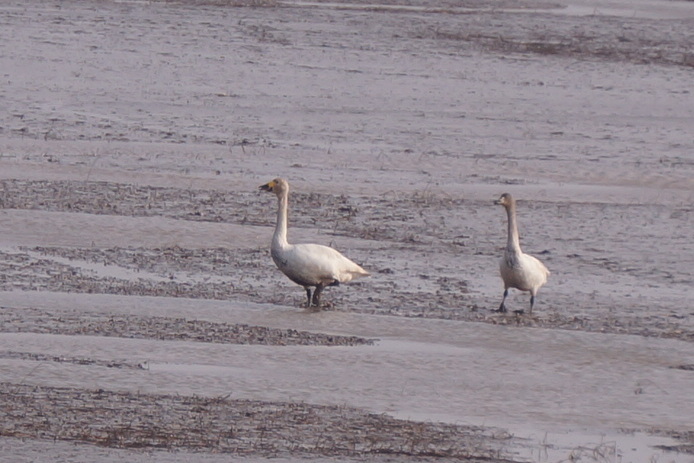
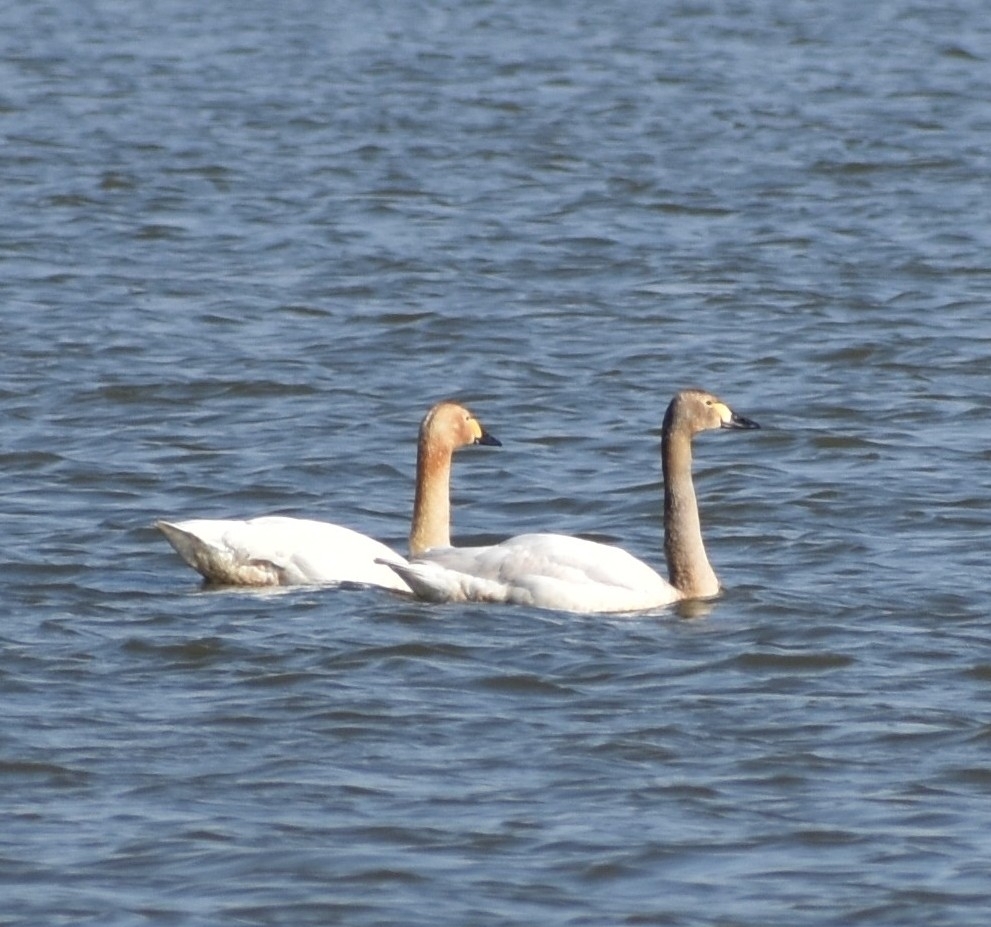
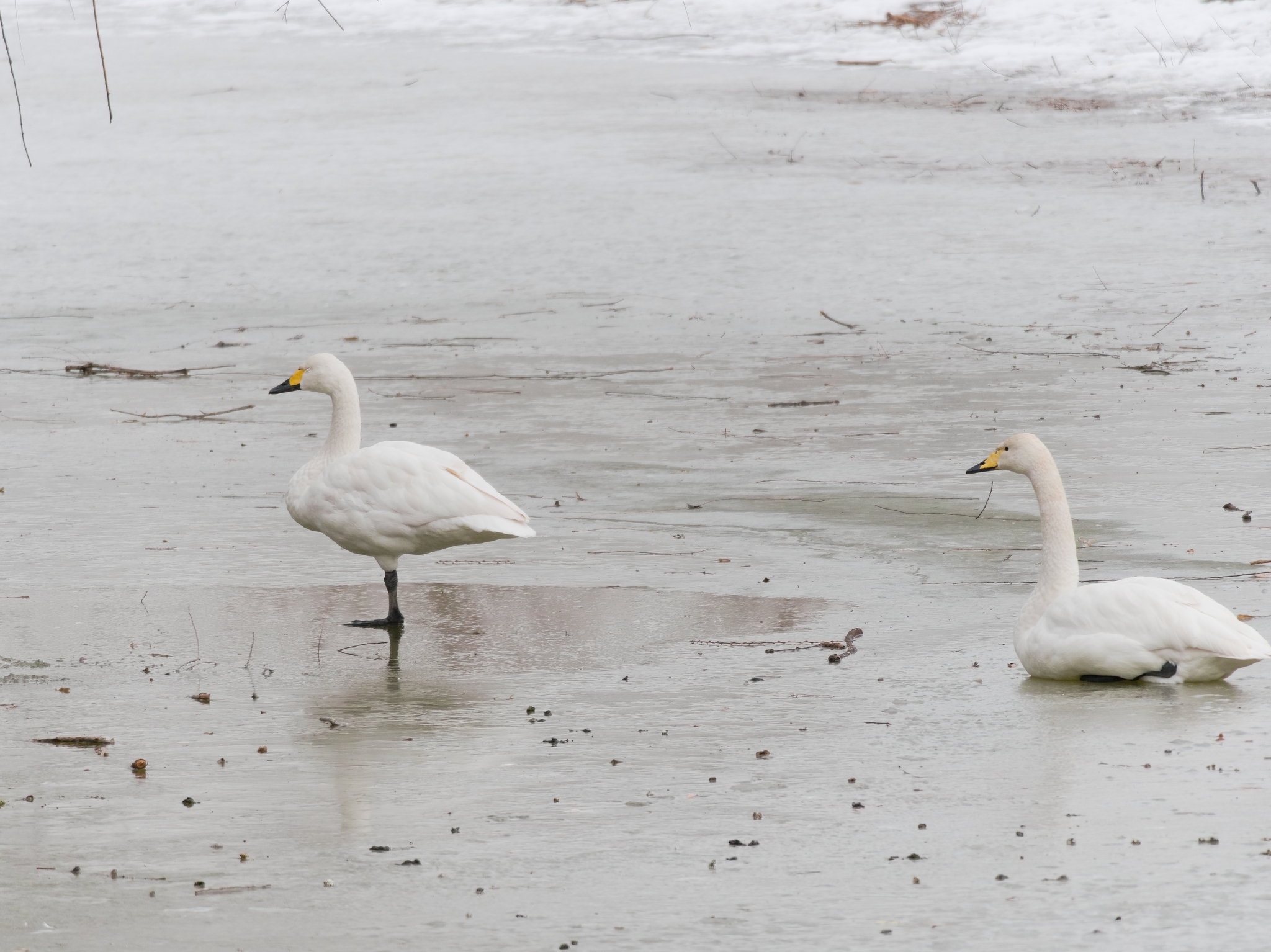
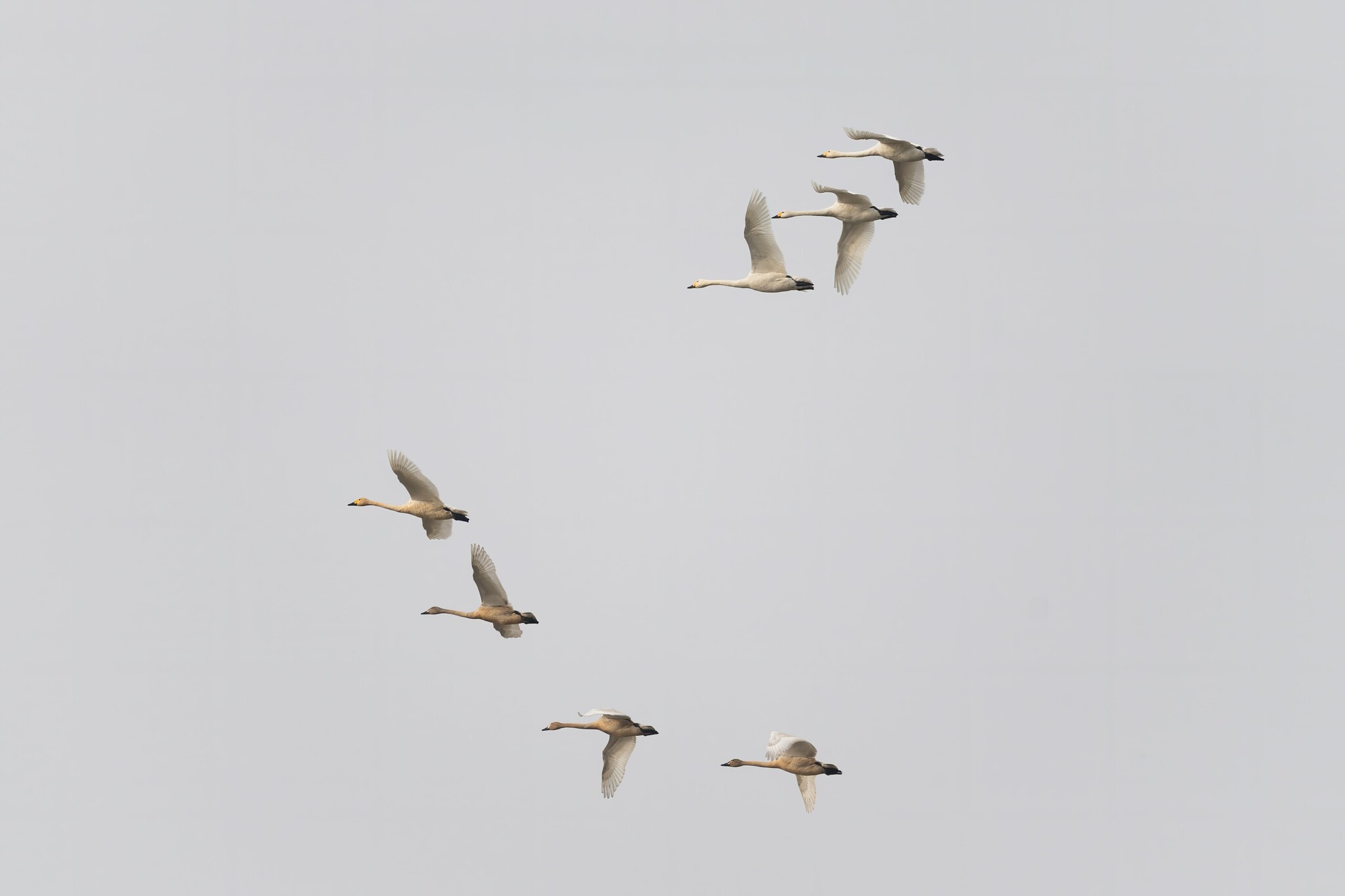
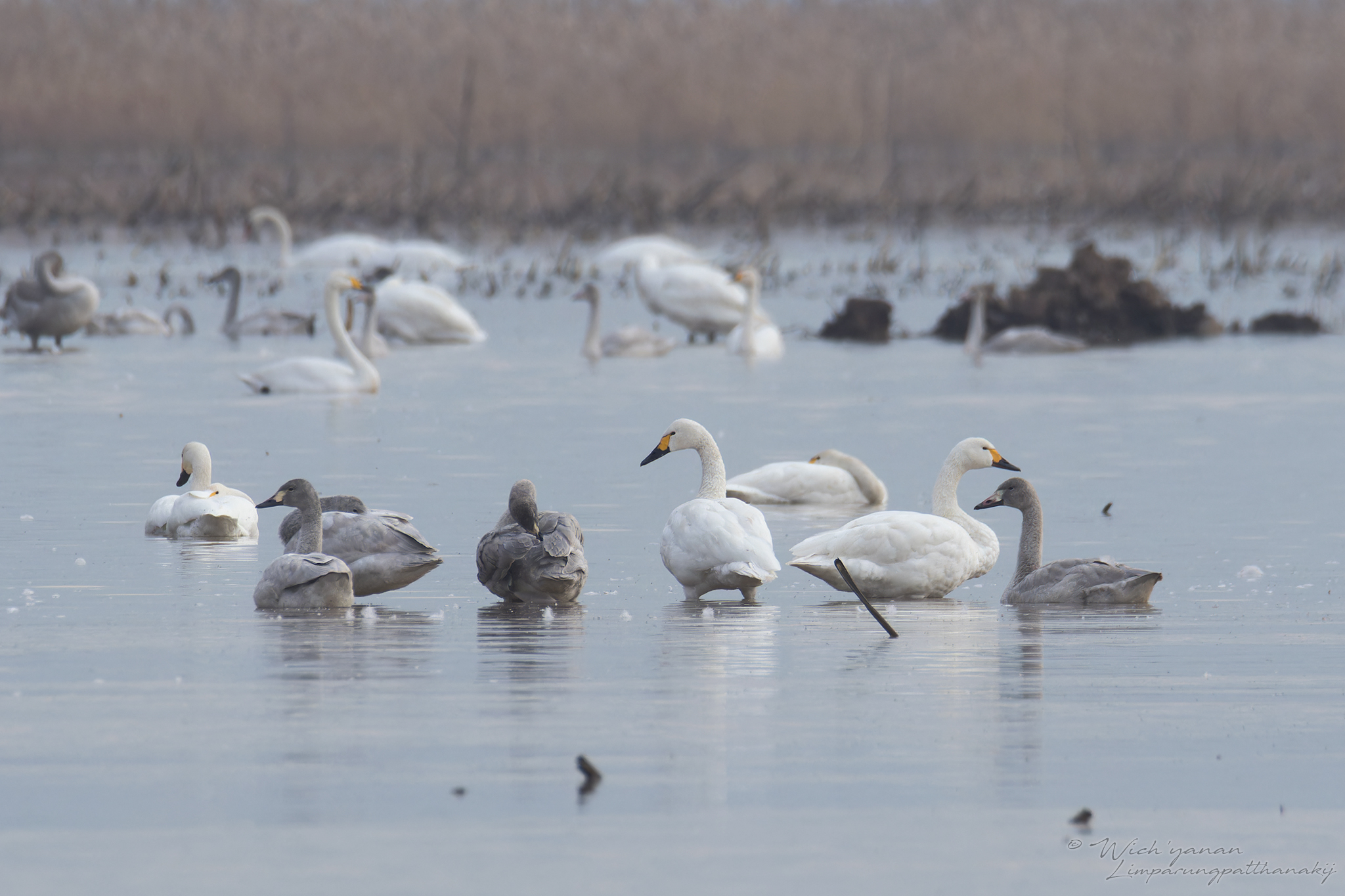
The smallest of the Holarctic swans, measuring 115–150 cm in length, with a wingspan of 168–211 cm and weight of 3.4–9.6 kg. Adults have entirely white plumage, black feet, and a mostly black bill with a thin salmon-pink mouthline. The proximal bill part varies by subspecies: Bewick's swans show variable yellow patches (always more black than yellow), while whistling swans have a mostly black bill with a small, hard-to-see yellow spot. Immatures are white mixed with dull grey on the head and neck, with black bills featuring a large dirty-pink patch. Downy young are silvery grey above and white below. Females are slightly smaller than males but similar in appearance.
Identification
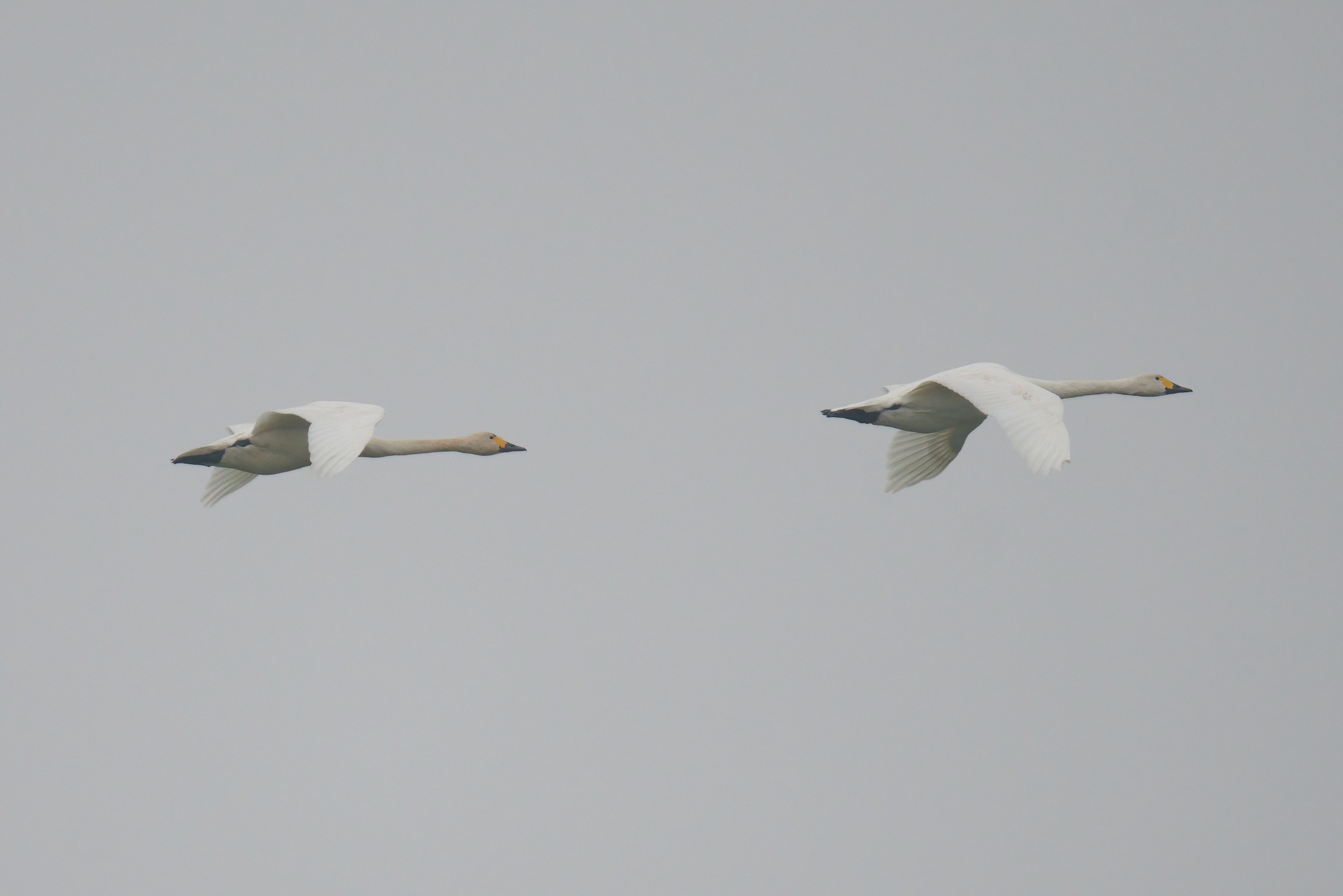
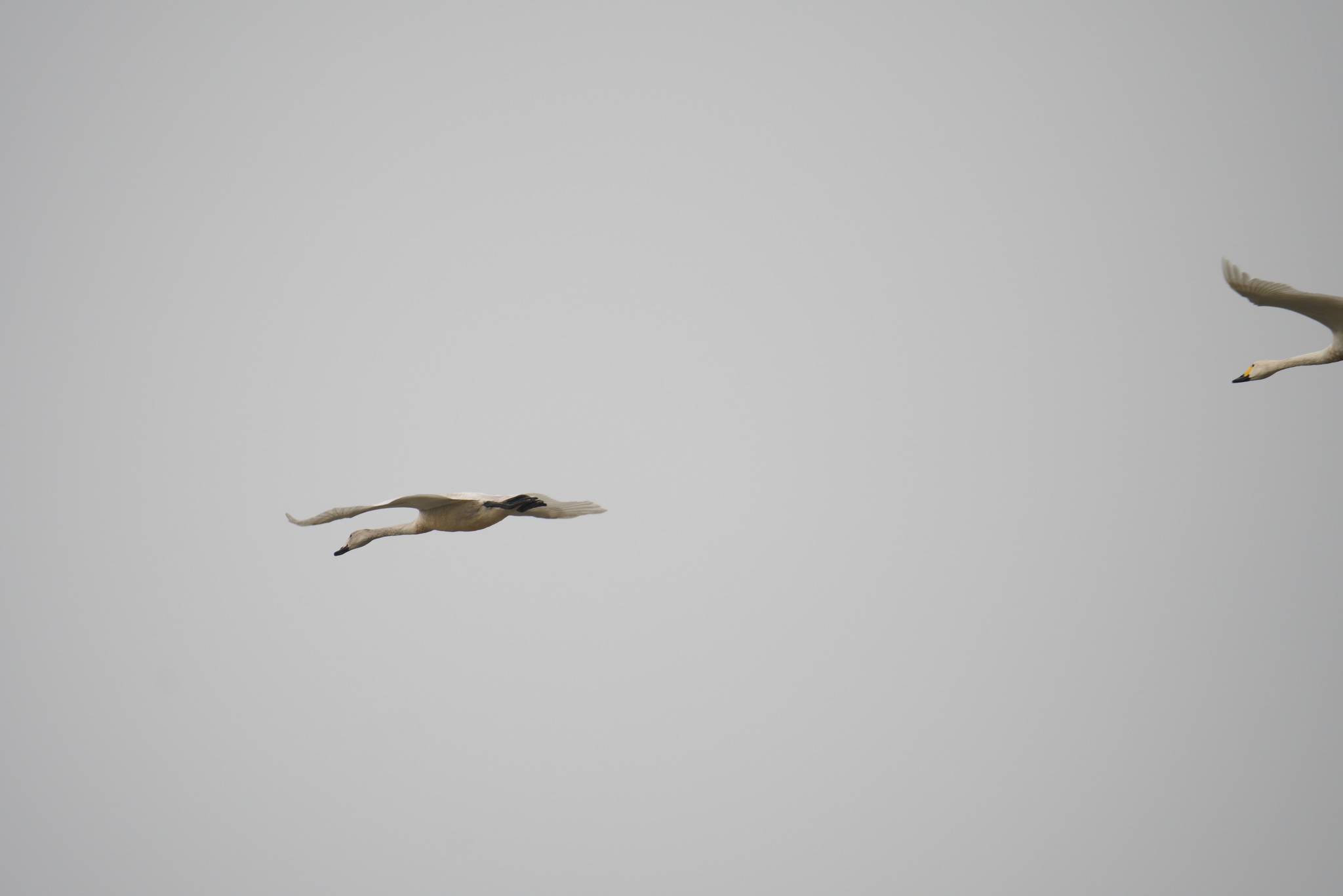
Distinguished from the whooper swan by smaller size, shorter neck, rounded head, and bill pattern showing more black than yellow with a blunt forward edge on the yellow patch. Distinguished from the trumpeter swan by smaller size and shorter bill. Flight style features a quicker wingbeat and shorter neck than relatives. Vocalizations include high-pitched honking; Bewick's swan gives a low, soft ringing bark ('bow-wow...') in flight, while the whistling swan gives a high-pitched trisyllabic bark ('wow-wow-wow').
Distribution & Habitat
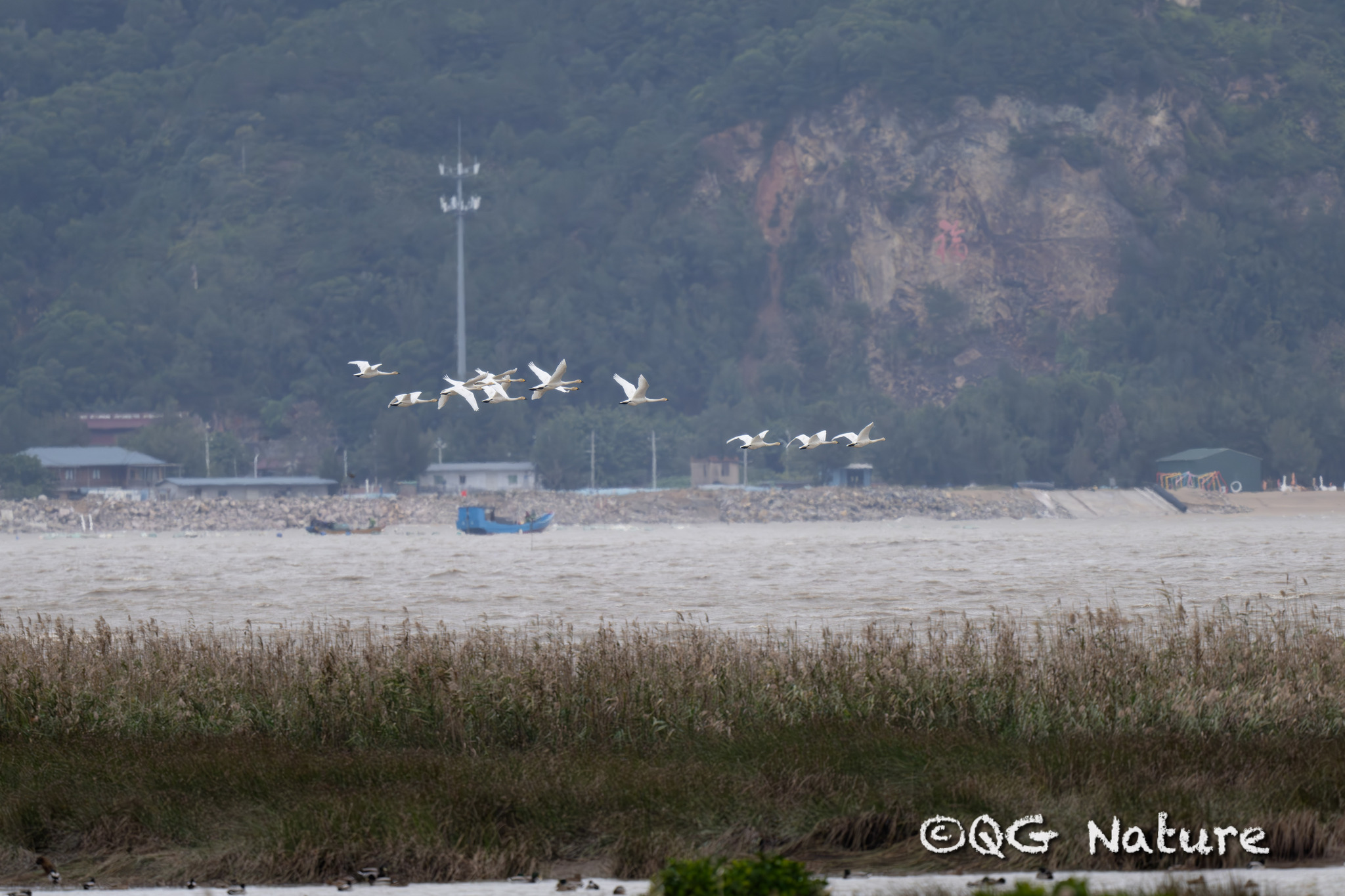
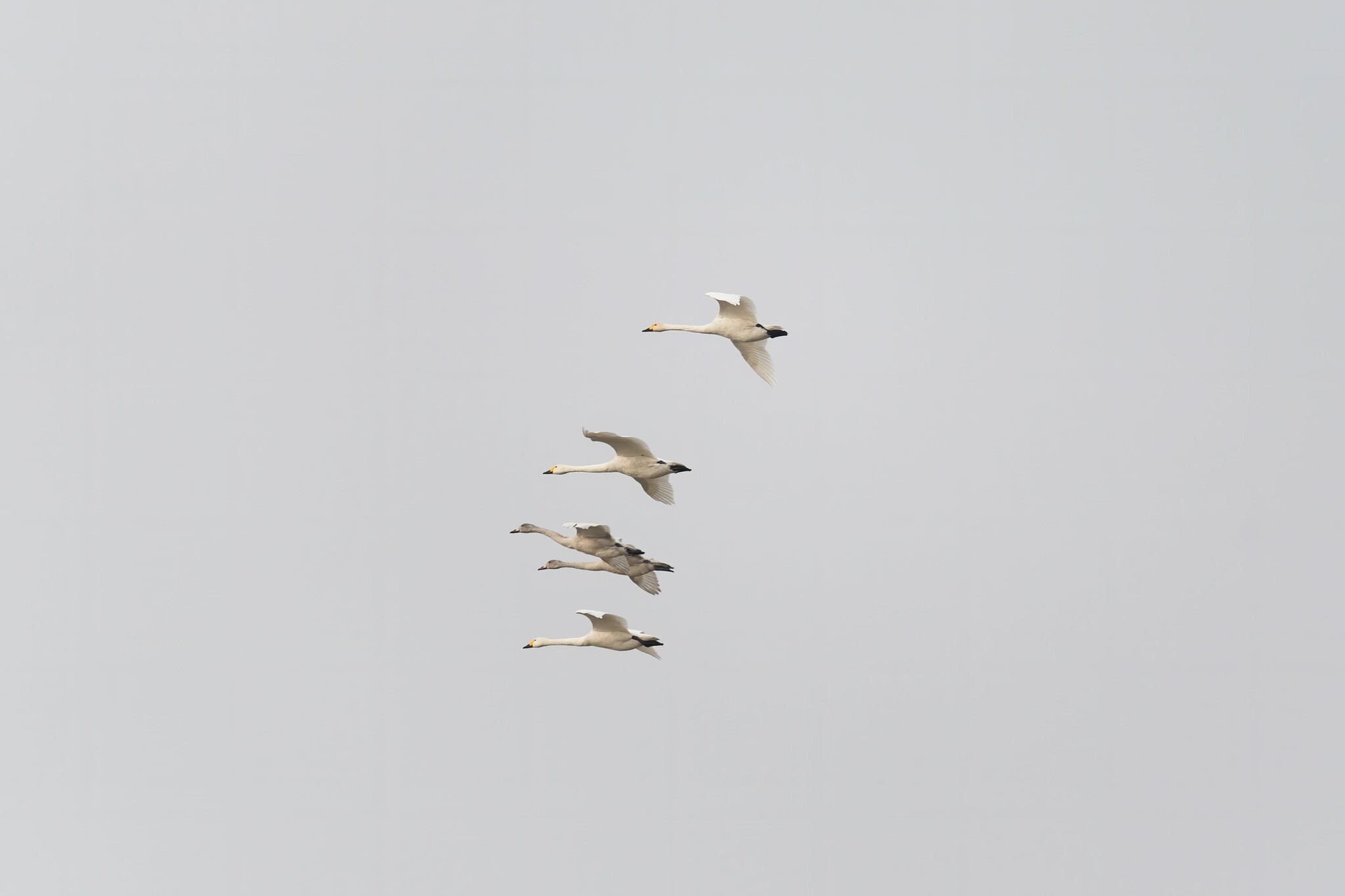
Breeds in Arctic and subarctic tundra. Bewick's swan breeds across Siberian coastal lowlands from the Kola Peninsula to the Pacific, wintering in Europe (Denmark, Netherlands, British Isles), East Asia (Korea, Japan, China), and occasionally Iran. Whistling swan breeds in Alaska and Canada, wintering along the Pacific coast (Alaska to California), inland US (Utah, Texas), and the Atlantic coast (Maryland to North Carolina, occasionally Florida). Migratory, flying at altitudes up to 8 km in V formations.
Behavior & Ecology
Diet consists mainly of aquatic vegetation (mannagrass, pondweeds, eelgrass) in summer, and leftover grains or crops (potatoes) in winter. Forages by day, sticking head underwater or upending. Territorial and aggressive during breeding season; gregarious otherwise. Monogamous pairs build mound-shaped nests near water. Clutch size is 2–7 eggs. Incubation lasts 29–32 days. Cygnets fledge in 40–75 days. Sexual maturity reached at 3–4 years. Predators include Arctic foxes, brown bears, golden eagles, and gulls.
Conservation
Not considered threatened by the IUCN due to large range and population. Whistling swan numbers estimated at nearly 170,000 around 1990; European Bewick's population estimated at 16,000–17,000. Main threats include habitat destruction, water pollution, hunting (4,000 legally bagged annually plus poaching), and lead poisoning from ingested shot. Toxic mining wastes in Idaho have caused mortality. Bewick's swan is covered by the Agreement on the Conservation of African-Eurasian Migratory Waterbirds (AEWA).
Source: Wikipedia · CC BY-SA 3.0
Taxonomy
- Order
- Anseriformes
- Family
- Anatidae
- Genus
- Cygnus
Subspecies (2)
-
Cygnus columbianus bewickii
breeds Kola Peninsula to arctic northern Siberia; winters western Europe to southern Asia
Data Sources
Species description from Wikipedia, licensed under CC BY-SA 3.0.
Bird images and sounds sourced from GBIF, contributed by citizen scientists worldwide under Creative Commons licenses.
Taxonomy data from AviList 2025.