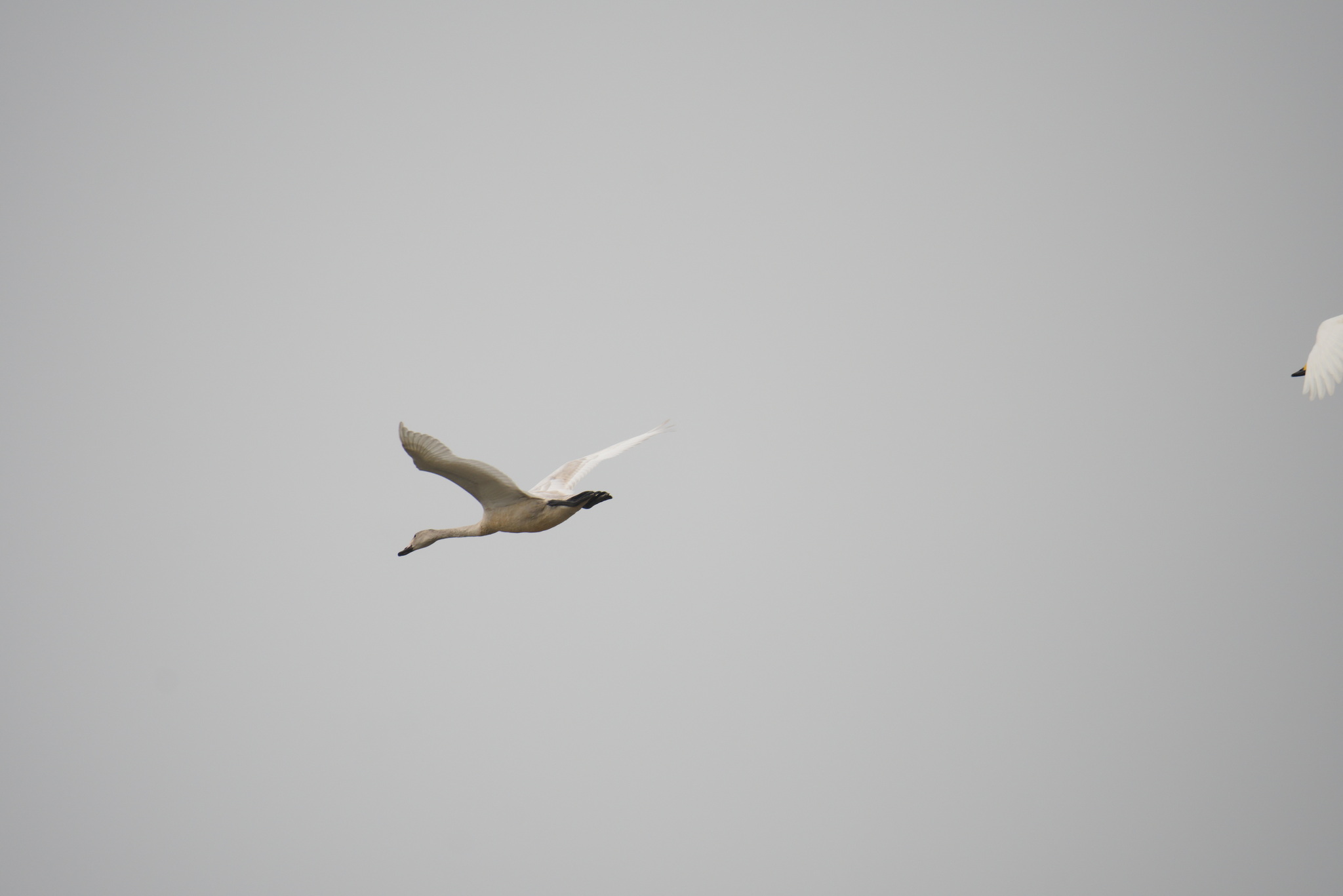
Tundra Swan
Cygnus columbianus
小天鹅
Introduction
The tundra swan (Cygnus columbianus) is the smallest of the Holarctic swan species. It comprises two distinct populations: the western population (Bewick's swan, C. c. bewickii) breeds in Siberia and winters in Europe and East Asia, while the eastern population (whistling swan, C. c. columbianus) breeds across Alaska and Canada and winters along both coasts of the United States. It inhabits marshes, coastal grasslands, and agricultural fields during winter. Unlike the mute swan (Cygnus olor), this species is fully migratory. It feeds on leftover grains in agricultural fields and produces high-pitched honking calls. The species is hunted and faces habitat loss across its range.
Description
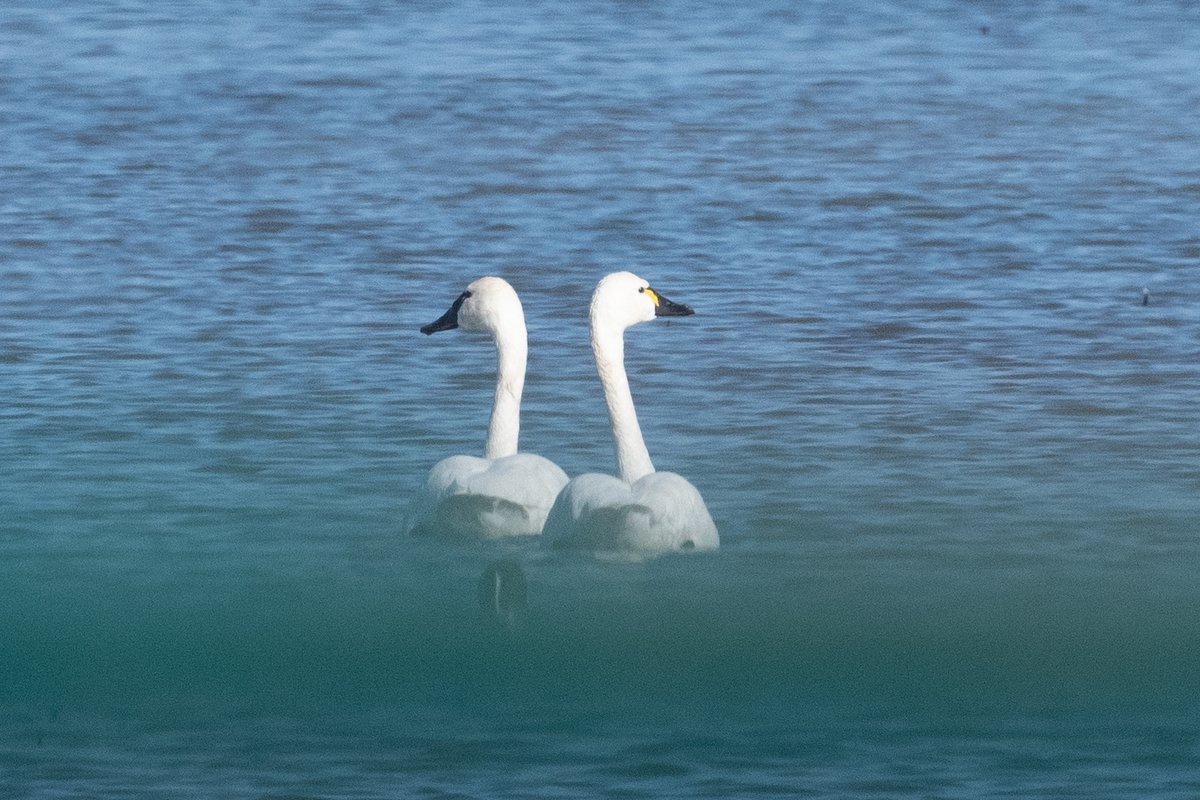
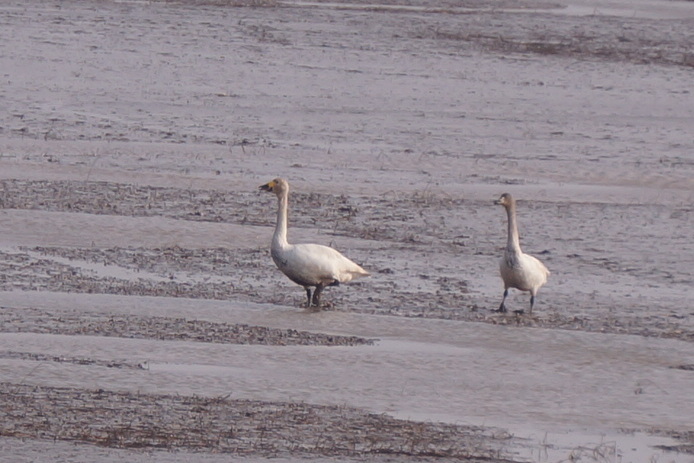
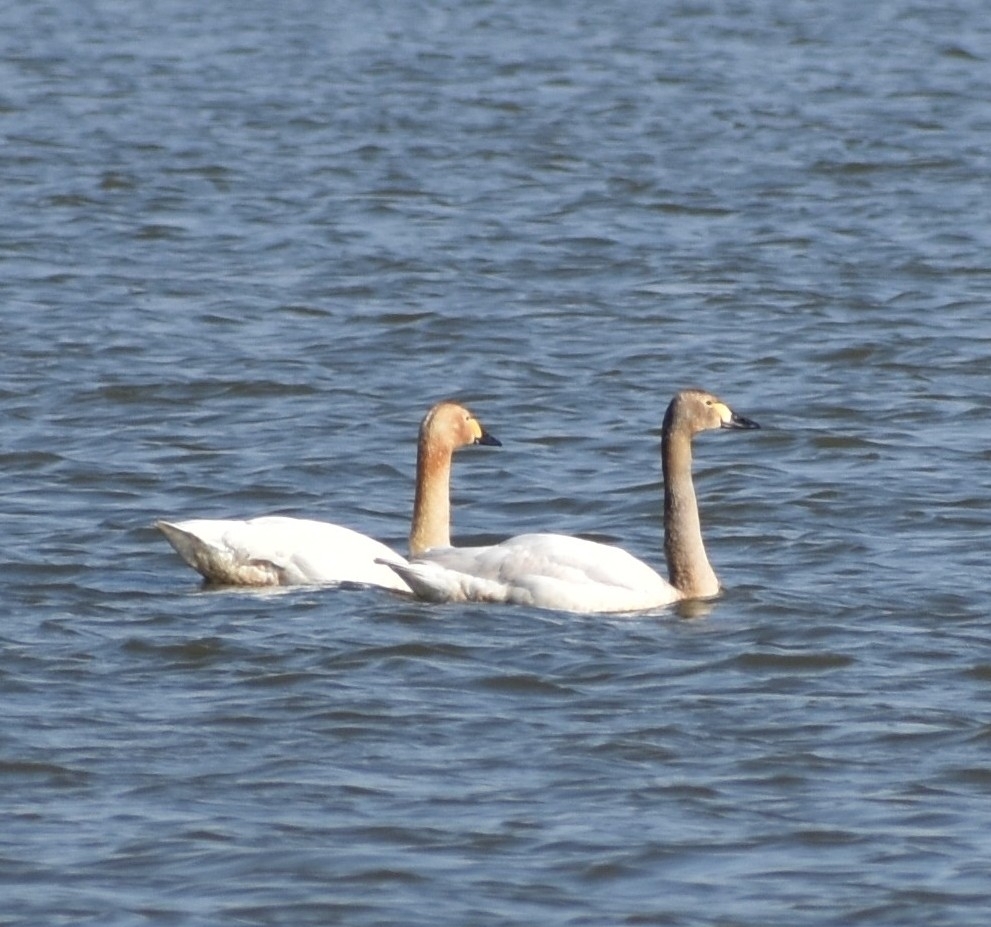
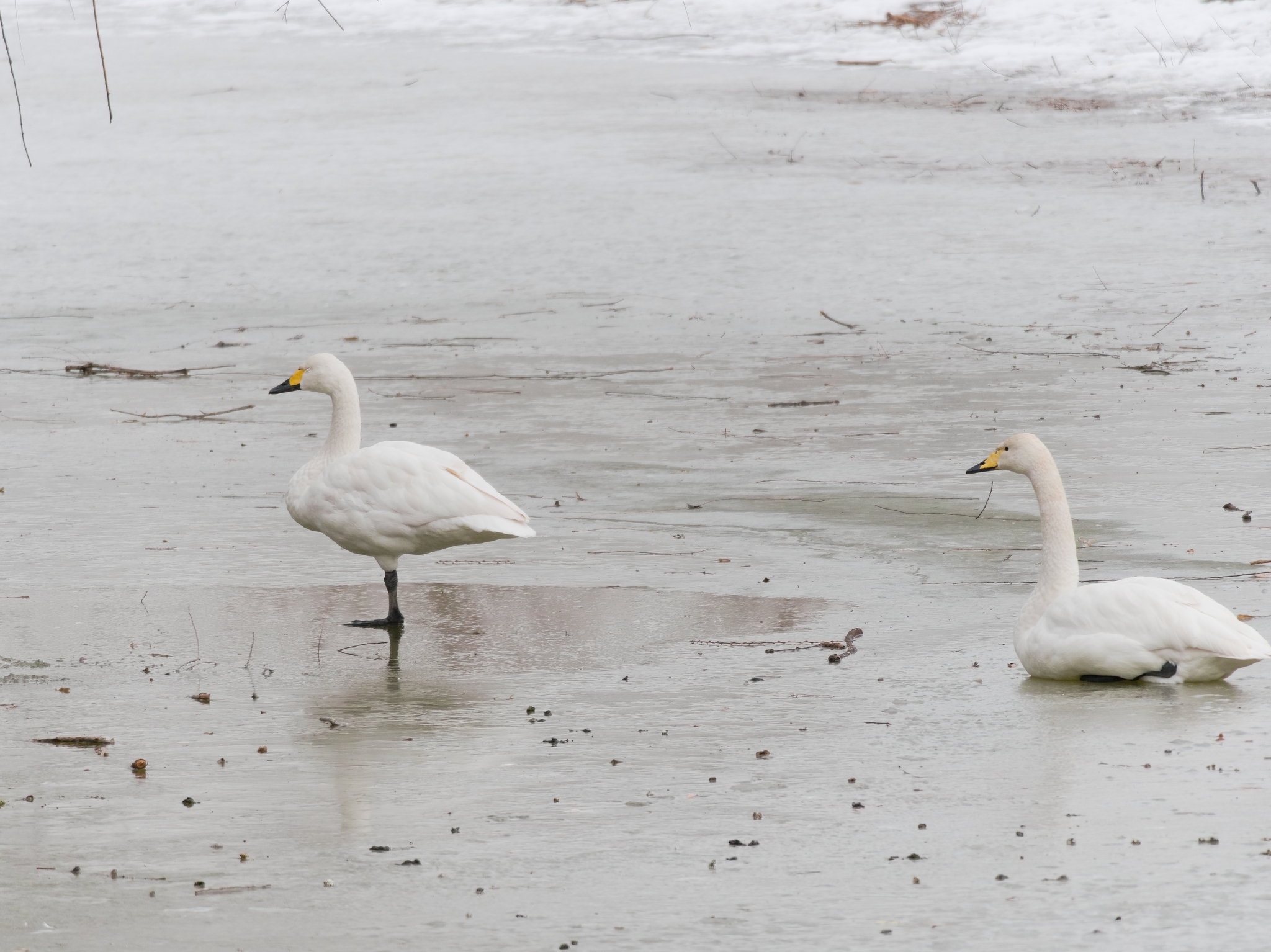
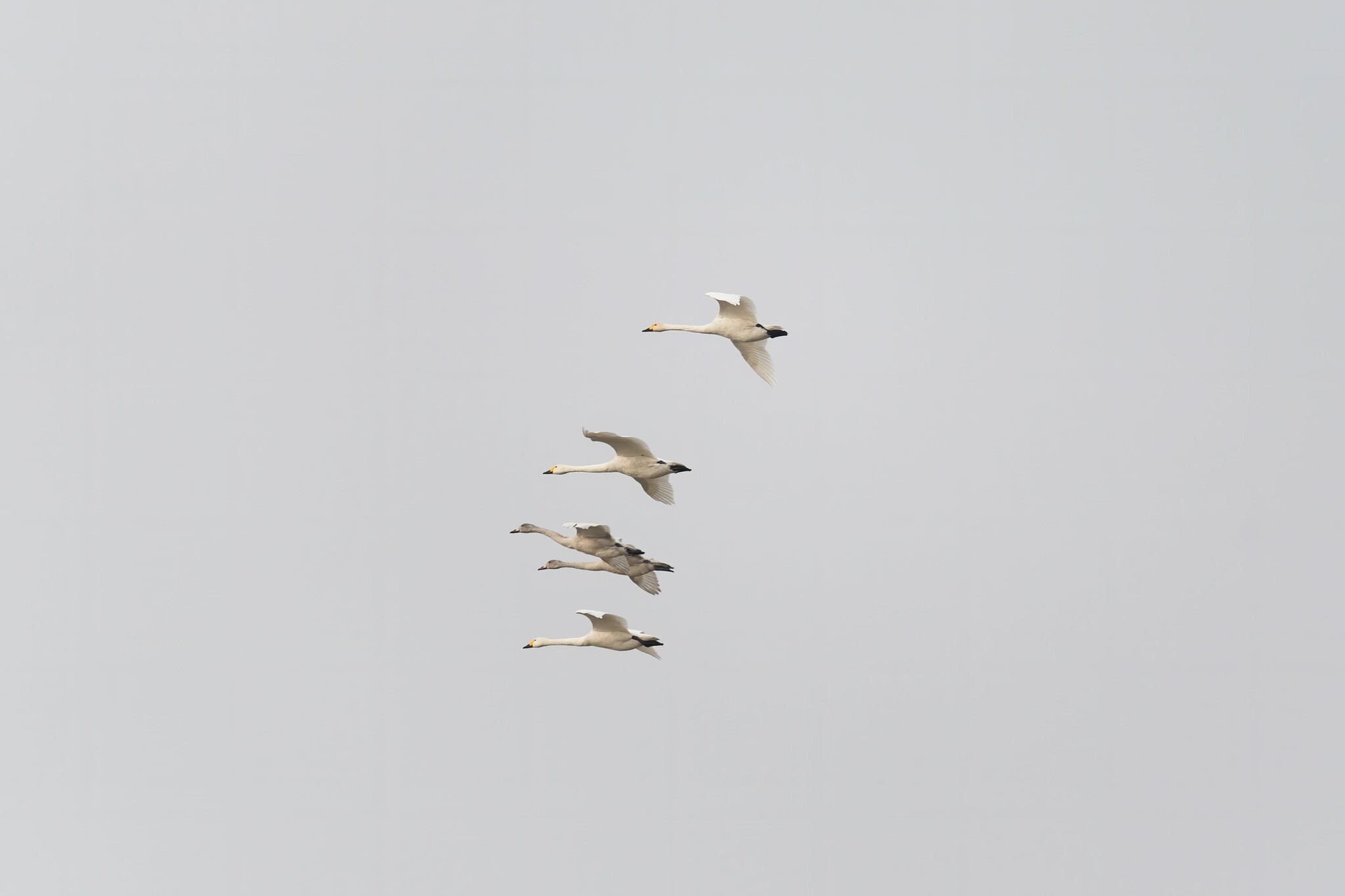
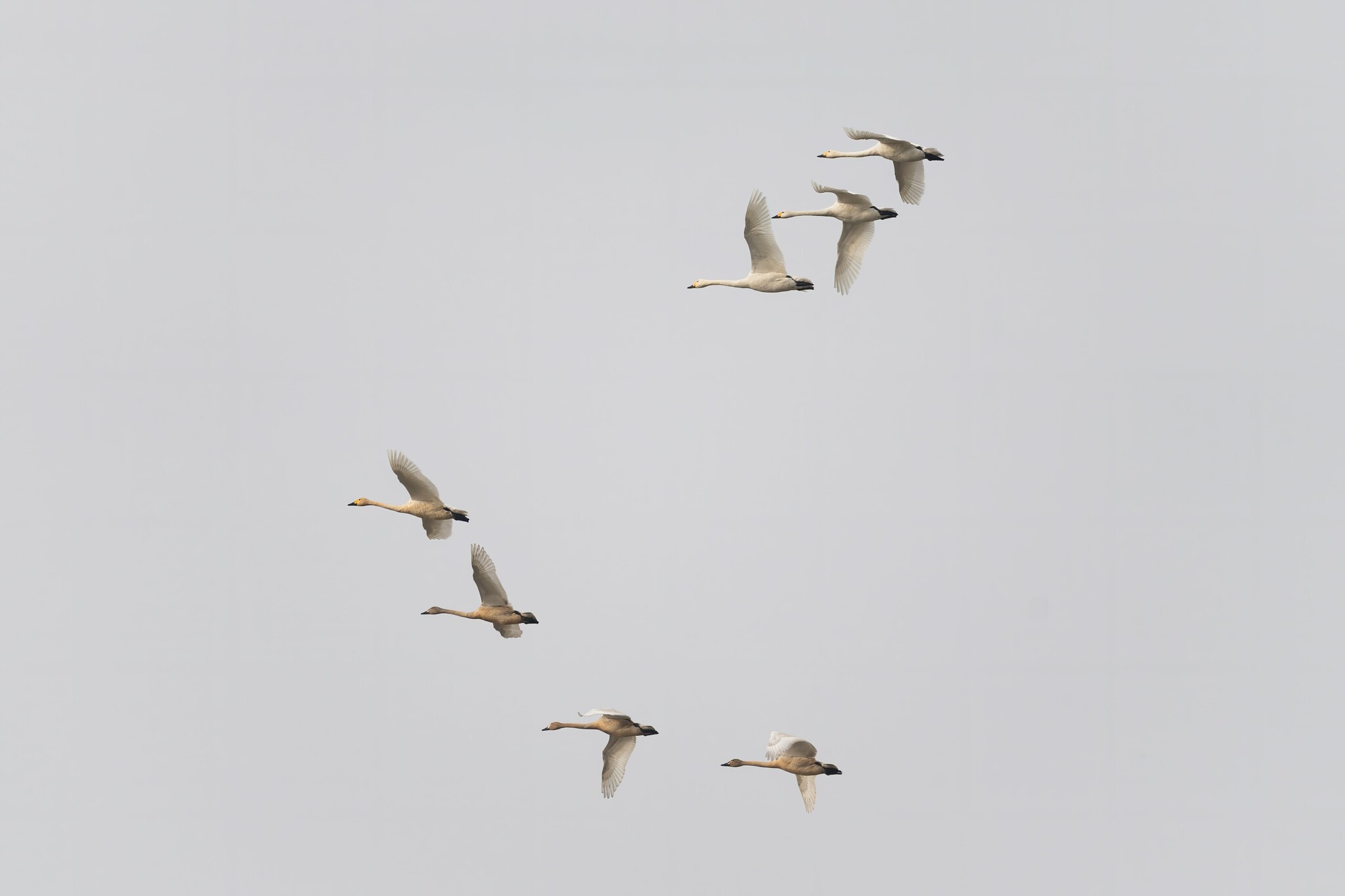
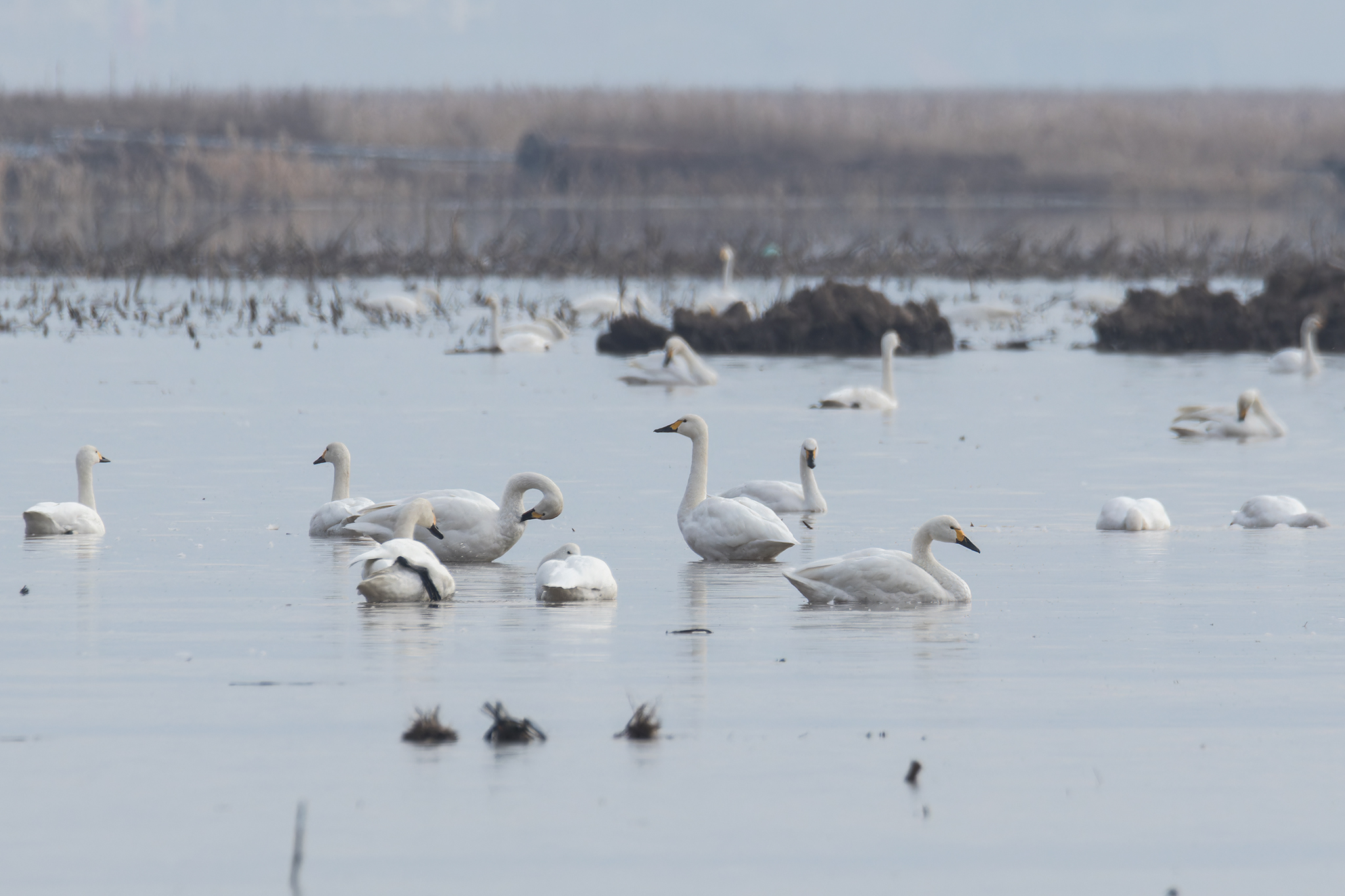
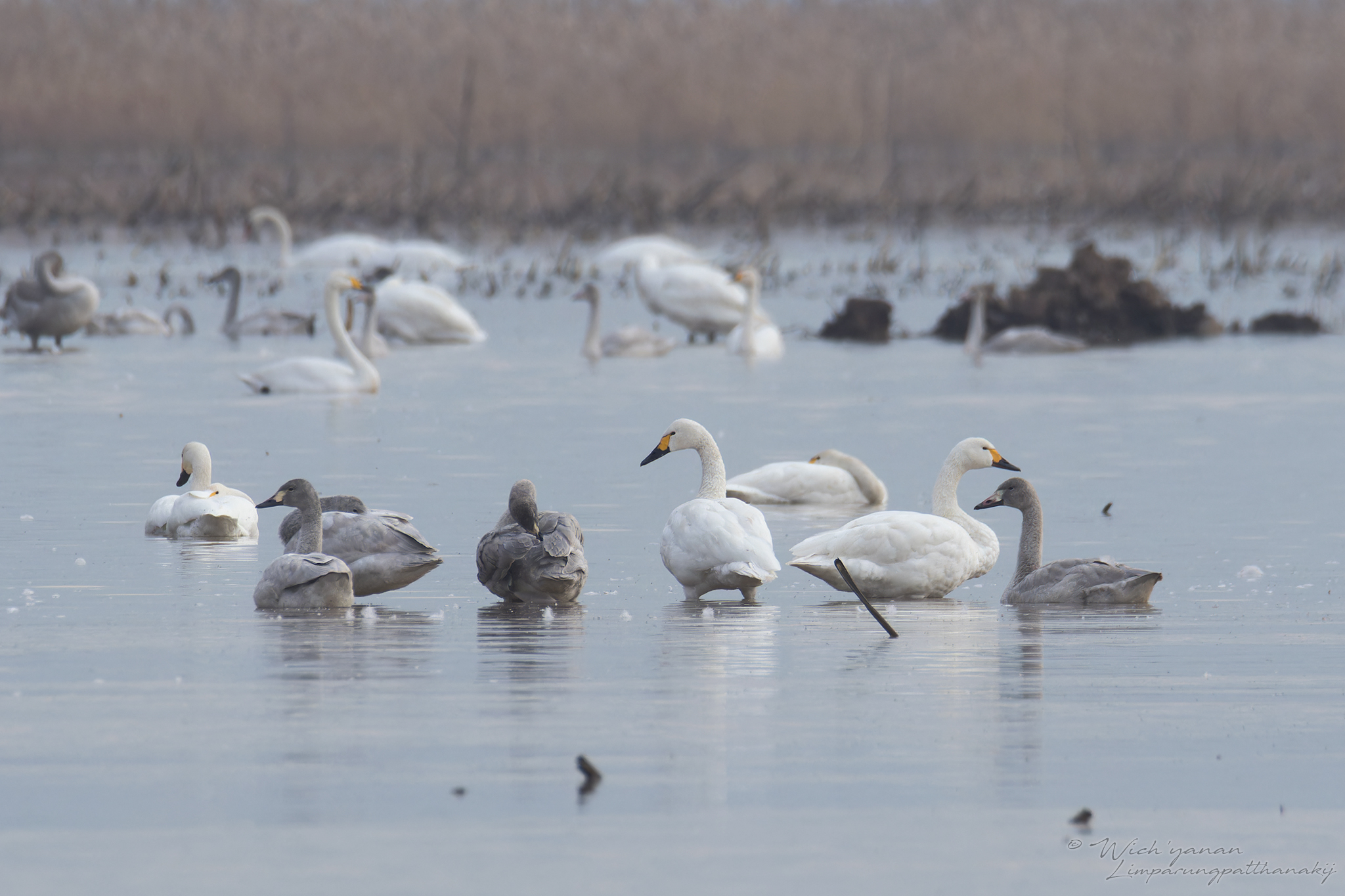
This is the smallest swan species found across the Holarctic region. Adults measure 115 to 150 centimeters in length with a wingspan of 168 to 211 centimeters, and weigh between 3.4 and 9.6 kilograms. The plumage is entirely white, with black feet and a predominantly black bill featuring a thin salmon-pink streak along the mouthline. The amount of yellow on the bill varies between subspecies. The iris is dark brown. In waters containing high iron concentrations, the head and neck plumage can develop a golden or rusty tinge. Females are slightly smaller than males but otherwise identical in appearance. Immature birds show white plumage mixed with dull gray feathering, particularly on the head and upper neck. Their bills are black with a large dirty-pink patch covering most of the base half. Downy cygnets are silvery gray above and white below.
Identification
The tundra swan's small size and relatively short neck give it the appearance of a large white goose, which serves as a key field mark. The bill pattern is diagnostic: Bewick's swans show more black than yellow on the bill with a blunt forward edge to the yellow patch, while whistling swans have a mostly black bill with just a small yellow spot at the base. The whooper swan, which overlaps in range with Bewick's, is larger, longer-necked, and has more yellow than black on the bill with a pointed forward edge to the yellow patch. The whistling swan is smaller than the allopatric trumpeter swan, which has an entirely black bill and notably longer proportions. Individual tundra swans have unique bill patterns, allowing researchers to identify specific birds. Calls are the most reliable way to distinguish the subspecies in flight: Bewick's gives a low, soft ringing bark while the whistling swan produces a high-pitched trisyllabic bark.
Distribution & Habitat
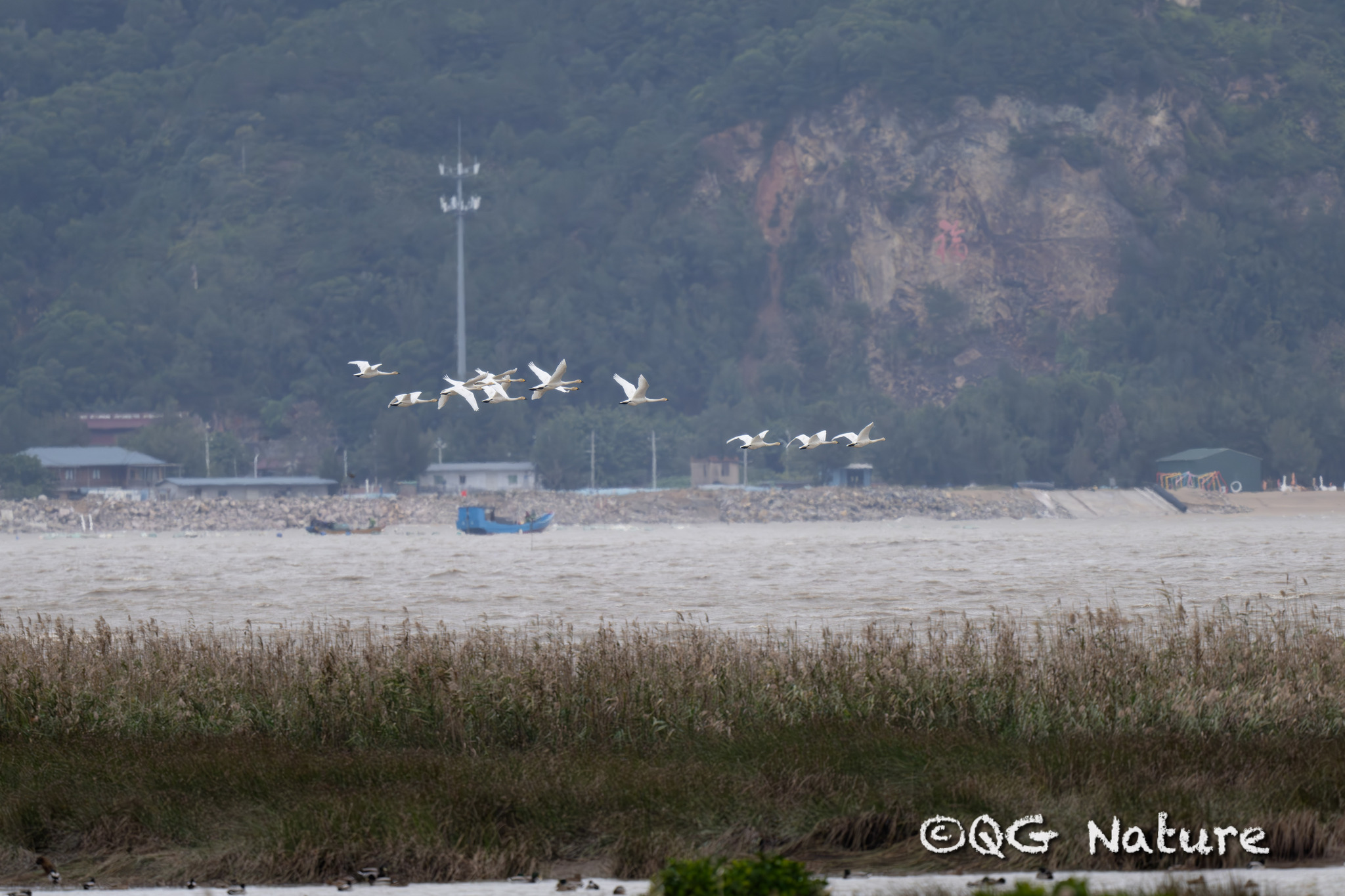
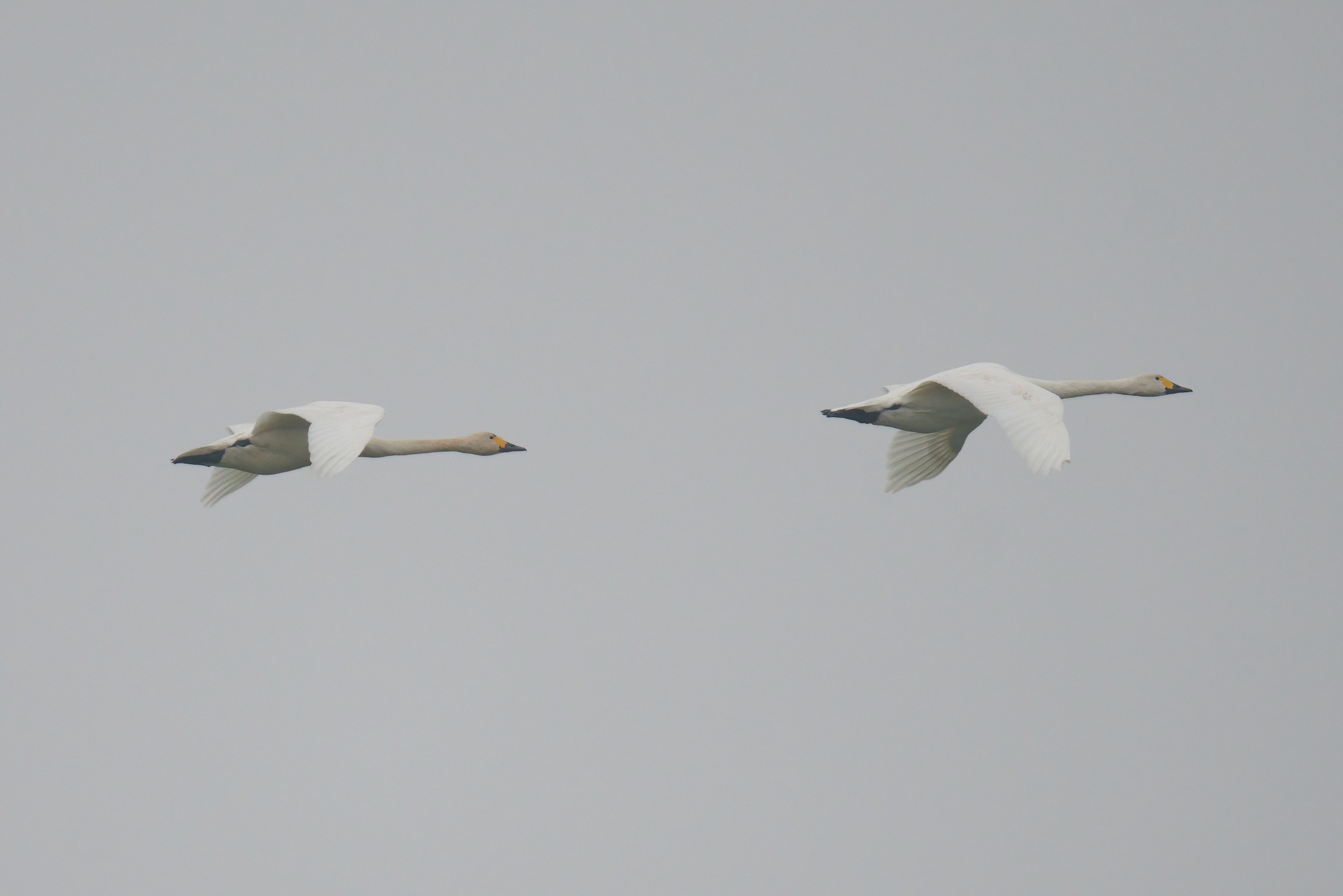
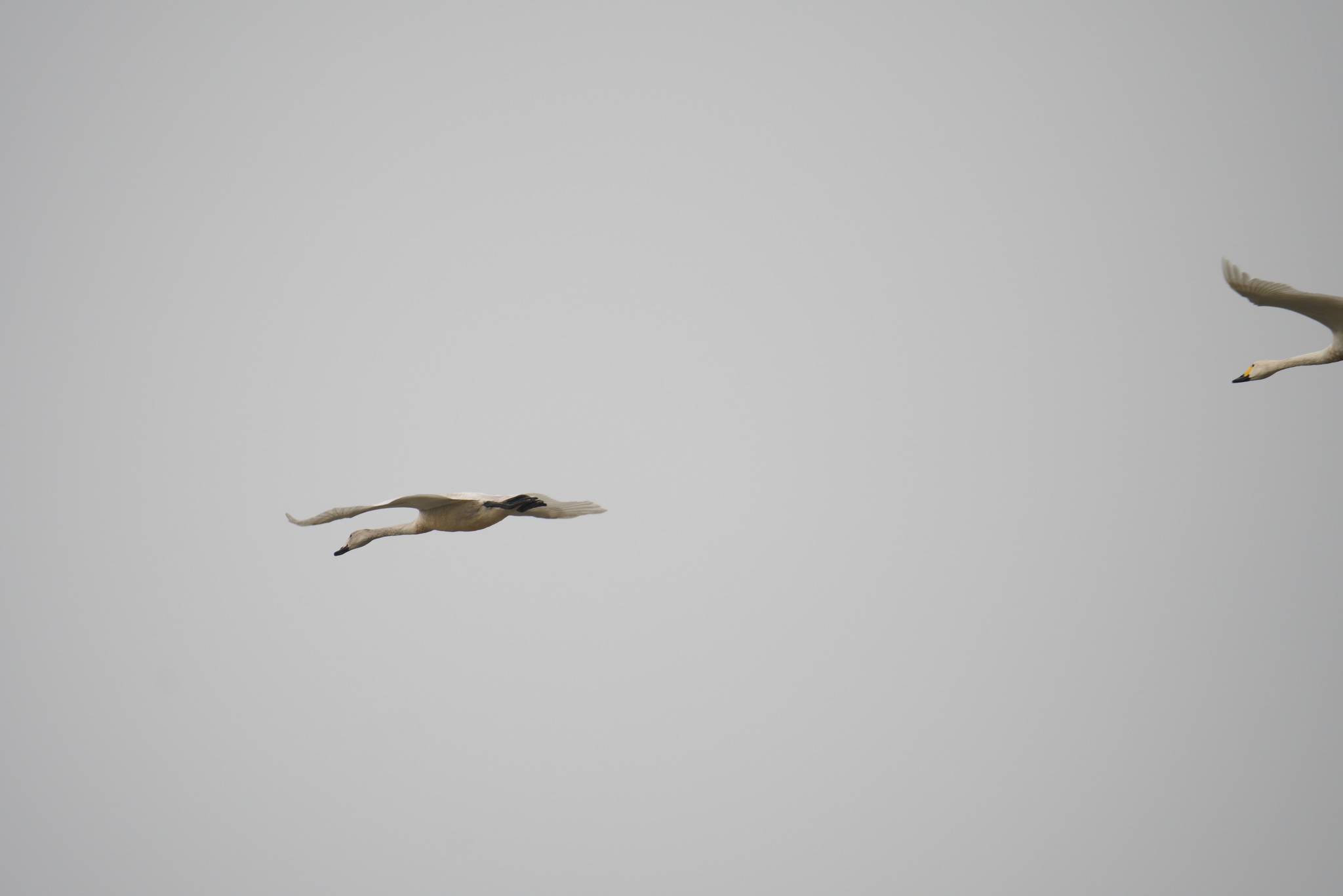
As their name suggests, these swans breed in the tundra regions of the Arctic and subarctic, inhabiting shallow pools, lakes, and river margins. The Bewick's swan subspecies breeds across Siberian coastal lowlands from the Kola Peninsula east to the Pacific, migrating via the White Sea and Baltic to winter in Denmark, the Netherlands, and the British Isles, with eastern populations wintering in Korea, Japan, and southern China. The whistling swan breeds in coastal Alaska and Canada, with western breeders wintering from southern Alaska to California and eastern breeders wintering along the Atlantic coast from Maryland to Florida. Migration occurs in V formation at altitudes up to 8 kilometers. Winter habitat consists of grasslands, marshland, and agricultural fields, often near coasts.
Behavior & Ecology
These swans feed mainly by day on aquatic vegetation such as pondweeds and eelgrass, obtained by upending or submerging head underwater. Outside breeding season, they consume waste grains and crops in agricultural fields. They are territorial during breeding season, becoming aggressive toward intruders, but form gregarious flocks at other times. Mating occurs monogamously in late spring after return to breeding grounds, with pairs remaining together until one partner dies. Nests are large mounds built from plant material near open water. Females lay and incubate 2 to 7 eggs for 29 to 32 days while males guard the territory. Cygnets grow rapidly, fledging in 40 to 75 days depending on subspecies. Families stay together through the first winter migration. Lifespan averages about 10 years, with the oldest recorded individual exceeding 24 years. Calls are high-pitched and honking, with distinctive flight calls differing between subspecies.
Conservation
The whistling swan remains North America's most common swan species, with populations estimated at nearly 170,000 individuals around 1990, showing slight overall increases despite regional declines in the west. European wintering populations of Bewick's swan were estimated at 16,000 to 17,000 birds around 1990, with concerns about declining numbers in northwestern Europe. The species is not considered threatened by IUCN due to its large range and population. Primary threats include hunting, with approximately 4,000 whistling swans taken annually through official harvest and 6,000 to 10,000 more by poachers and subsistence hunters. Lead poisoning from ingested shot is a significant mortality factor. Habitat destruction and water pollution reduce available aquatic vegetation for winter feeding. The species is protected under the Agreement on the Conservation of African-Eurasian Migratory Waterbirds.
Culture
The whistling swan's common name derives from its high-pitched flight calls, though the name is somewhat misleading as the calls are not whistles. Bewick's swan was named in 1830 after Thomas Bewick, the renowned engraver who specialized in animal and bird illustrations. Scientific names reference the Latin word for swan and the Columbia River, which serves as the type locality for the species. These birds are a prominent feature at wildlife reserves across their wintering range, particularly in the wetlands managed by conservation organizations in Europe and North America.
Source: Wikipedia · CC BY-SA 3.0
Taxonomy
- Order
- Anseriformes
- Family
- Anatidae
- Genus
- Cygnus
- eBird Code
- tunswa
Subspecies (2)
-
Cygnus columbianus bewickii
breeds Kola Peninsula to arctic northern Siberia; winters western Europe to southern Asia
-
Cygnus columbianus columbianus
breeds tundra of arctic North America; winters to western and coastal eastern USA
Data Sources
Species description from Wikipedia, licensed under CC BY-SA 3.0.
Bird images and sounds sourced from GBIF, contributed by citizen scientists worldwide under Creative Commons licenses.
Taxonomy data from AviList 2025.