Anseriformes / Anatidae / Cygnus
Black Swan
Cygnus atratus · 黑天鹅
Introduction
A large waterbird species of swan breeding mainly in the southeast and southwest regions of Australia. It is nomadic with erratic migration patterns dependent on climatic conditions. Distinctive traits include black plumage, a red bill, and monogamous breeding with shared incubation and rearing duties. The global population is estimated at up to 500,000 individuals, and it is evaluated as Least Concern on the IUCN Red List.
Description
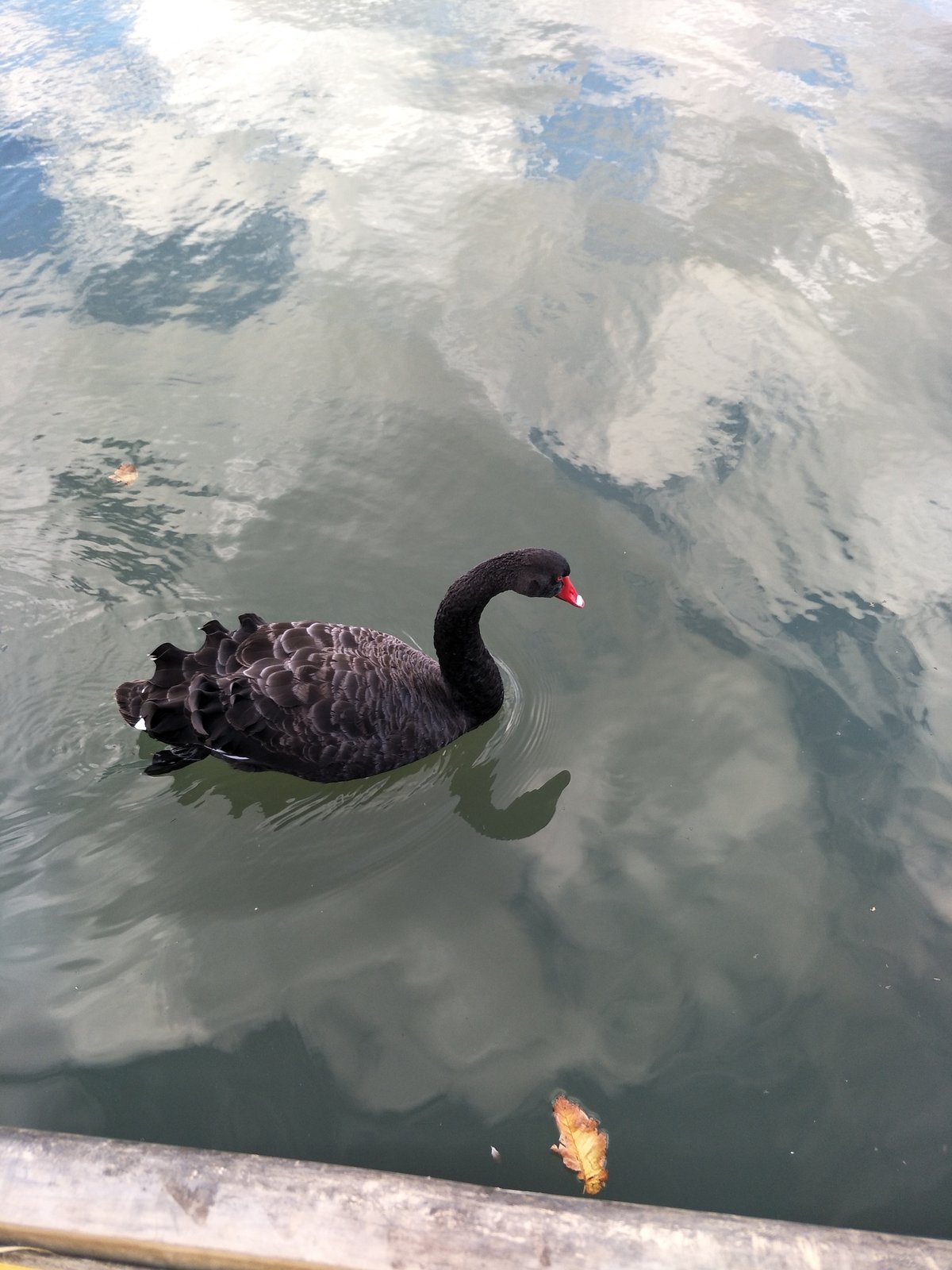
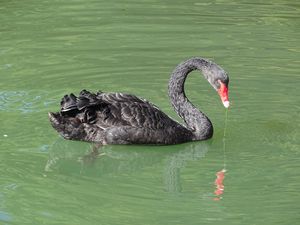
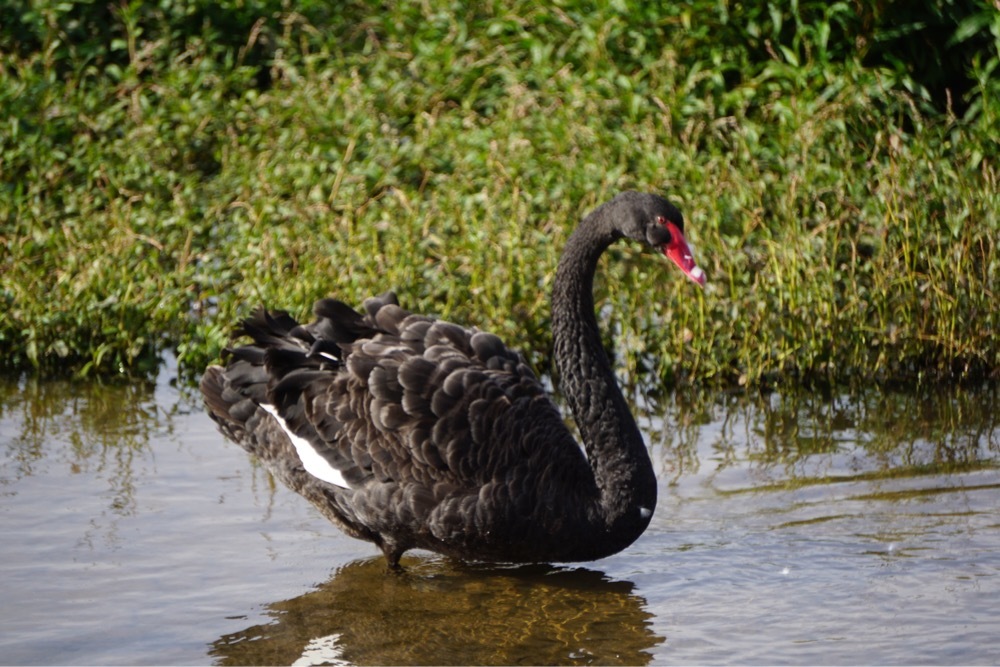
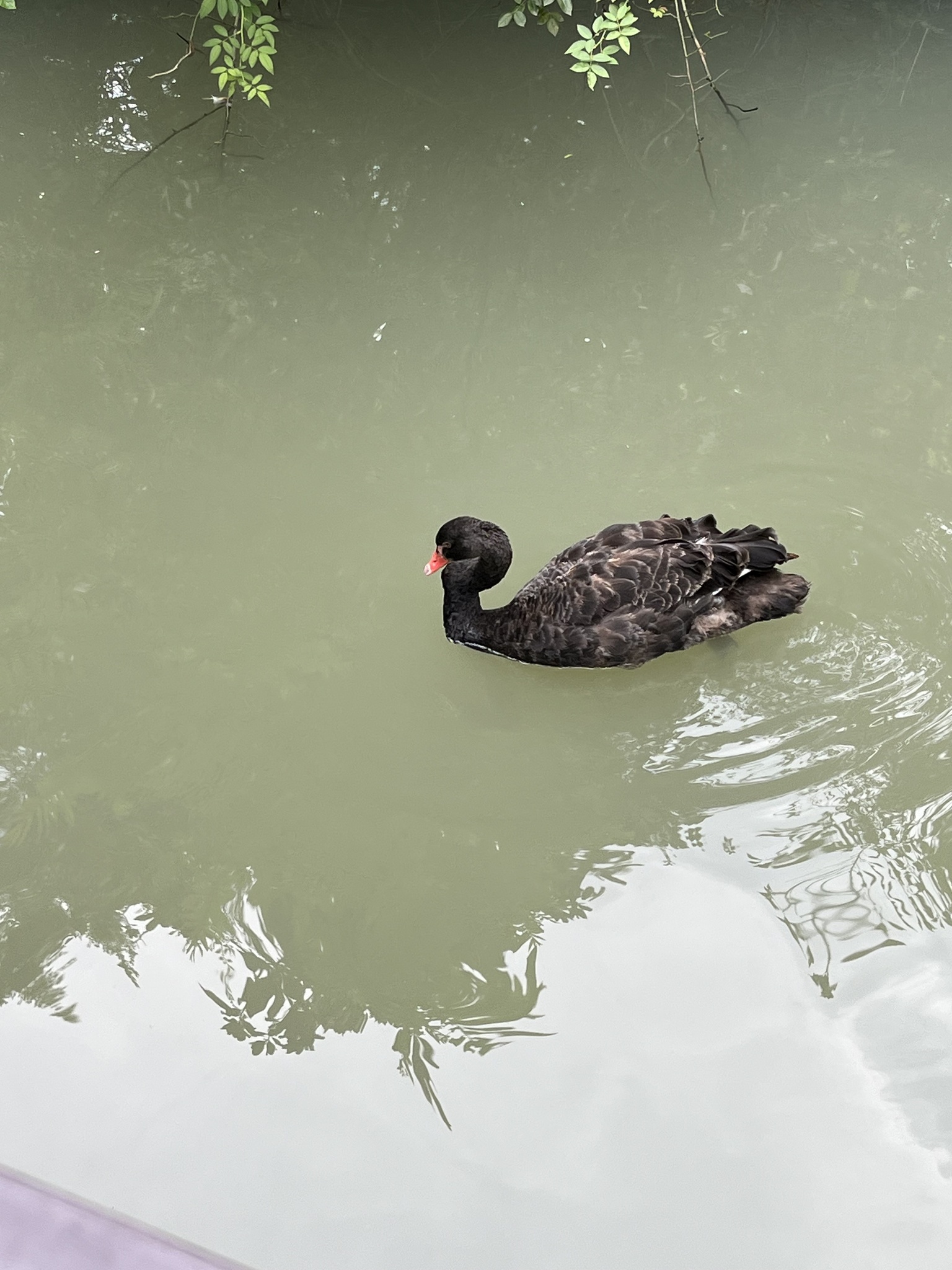
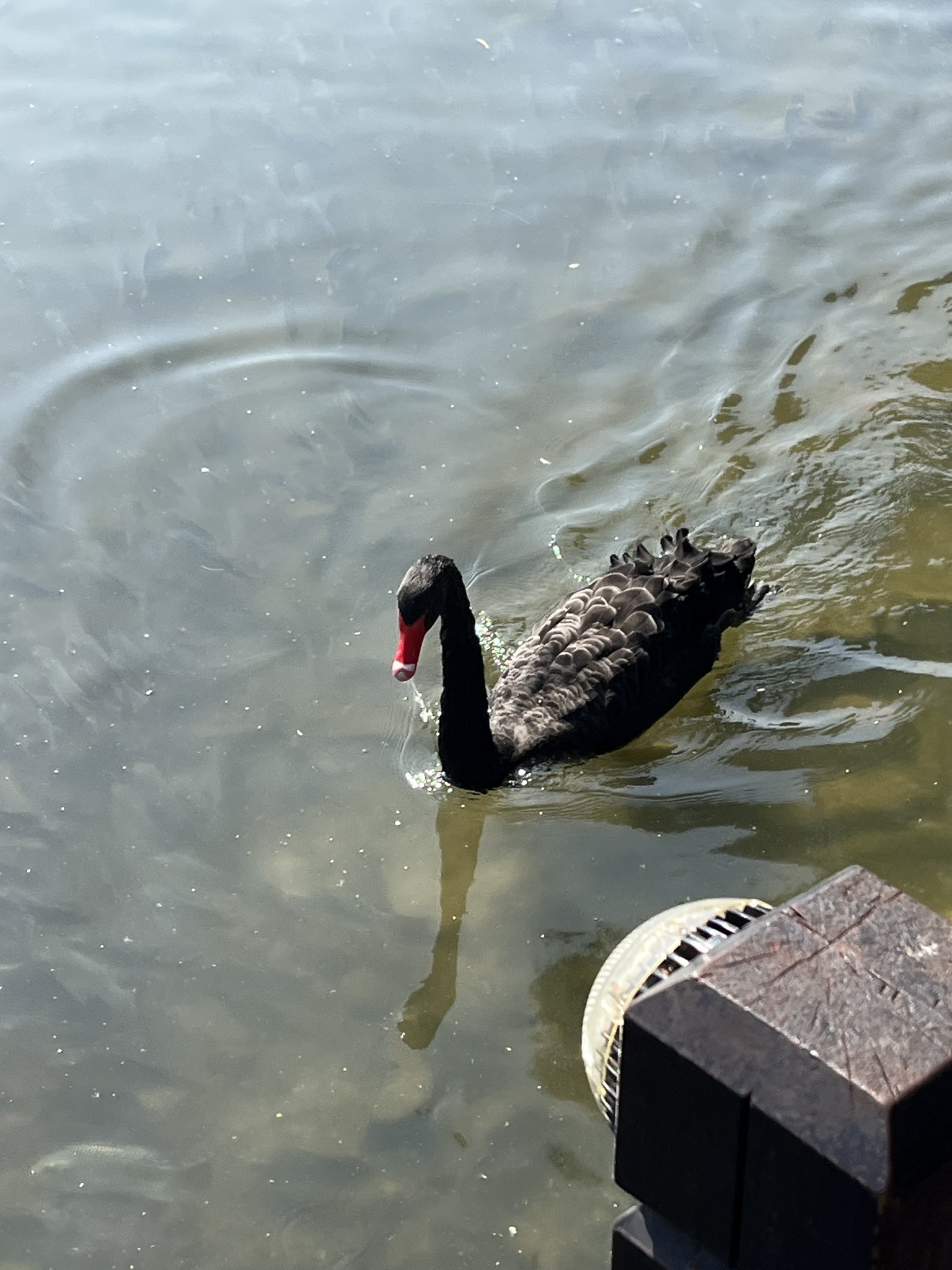
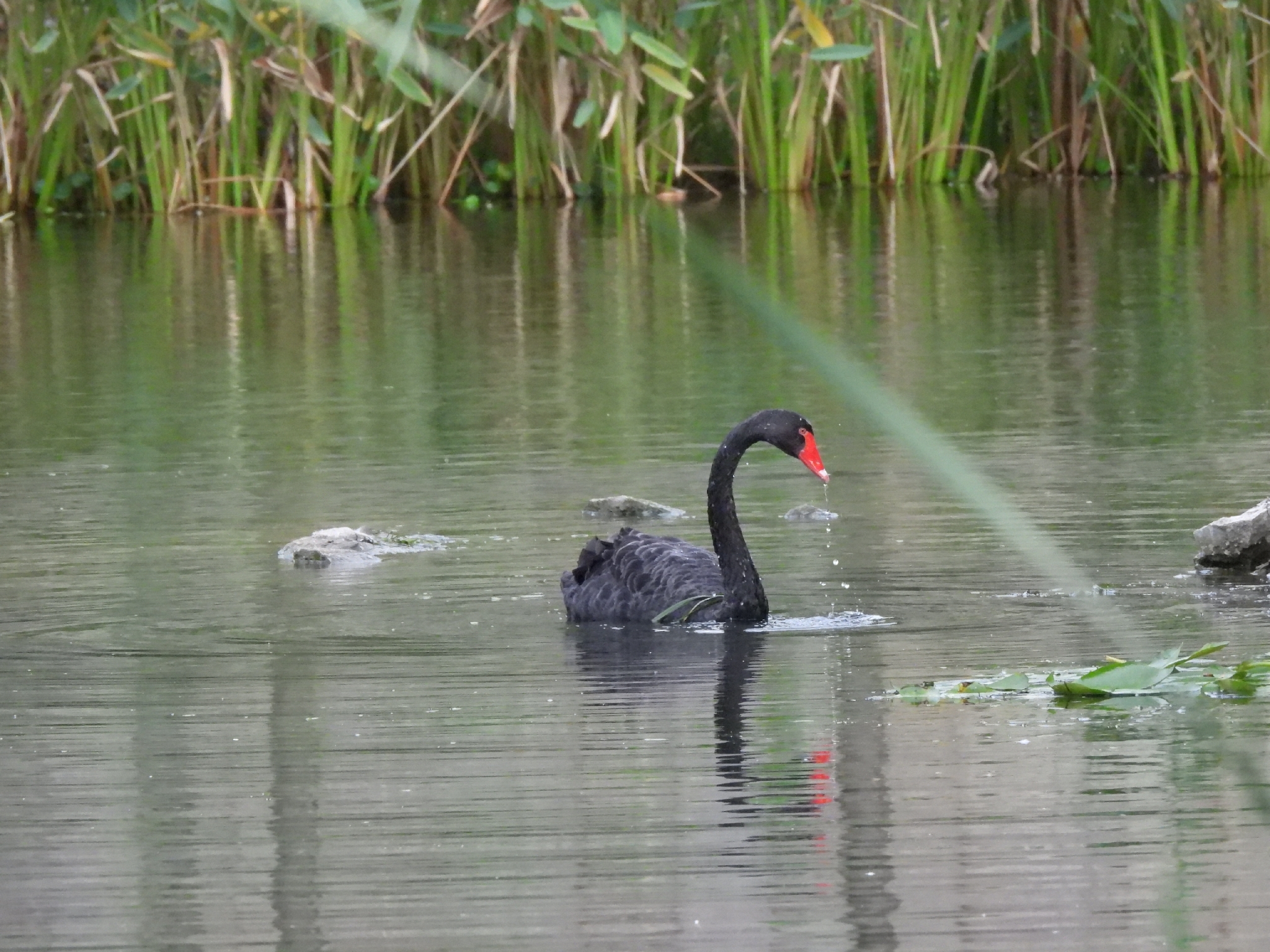
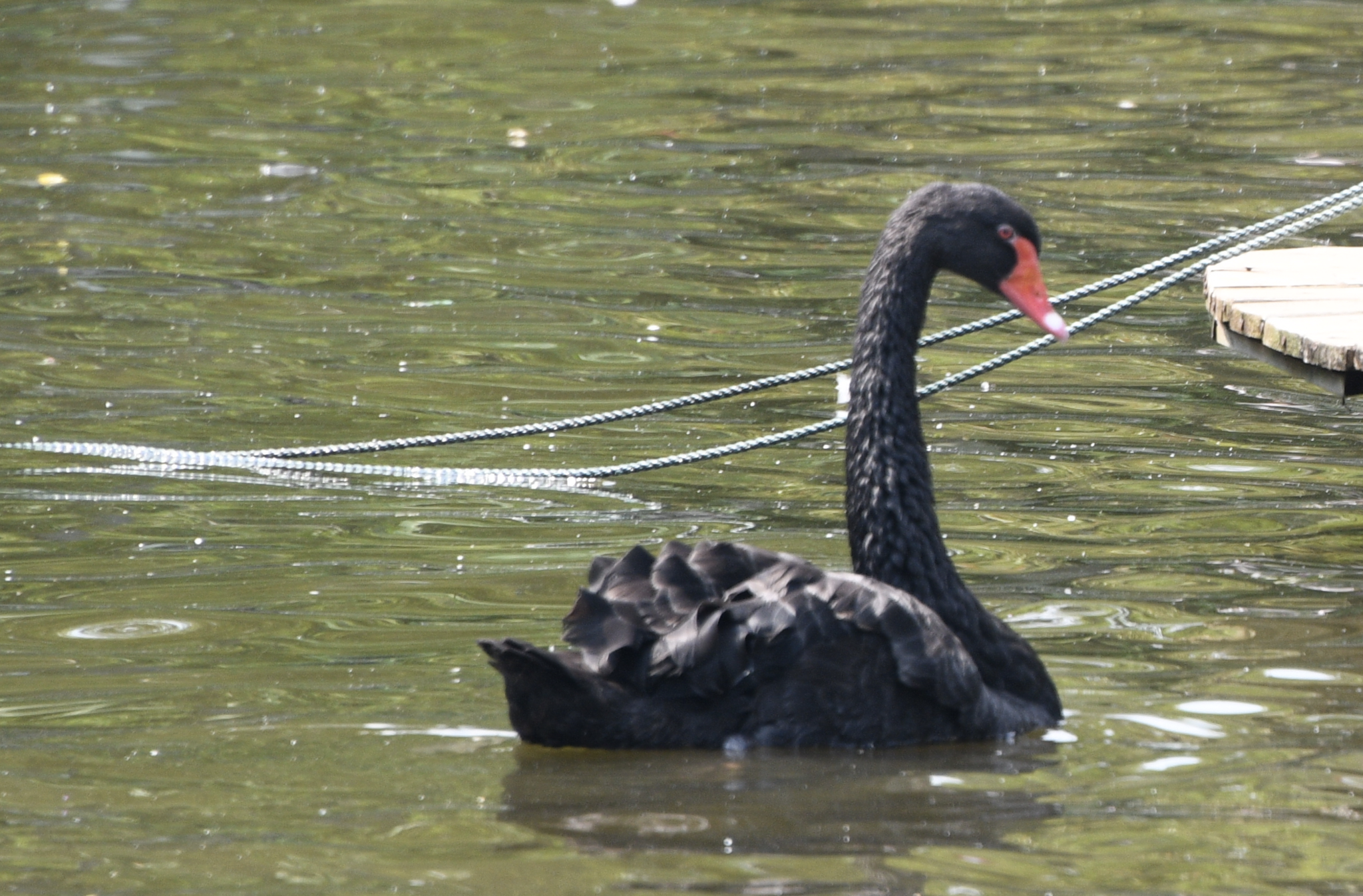
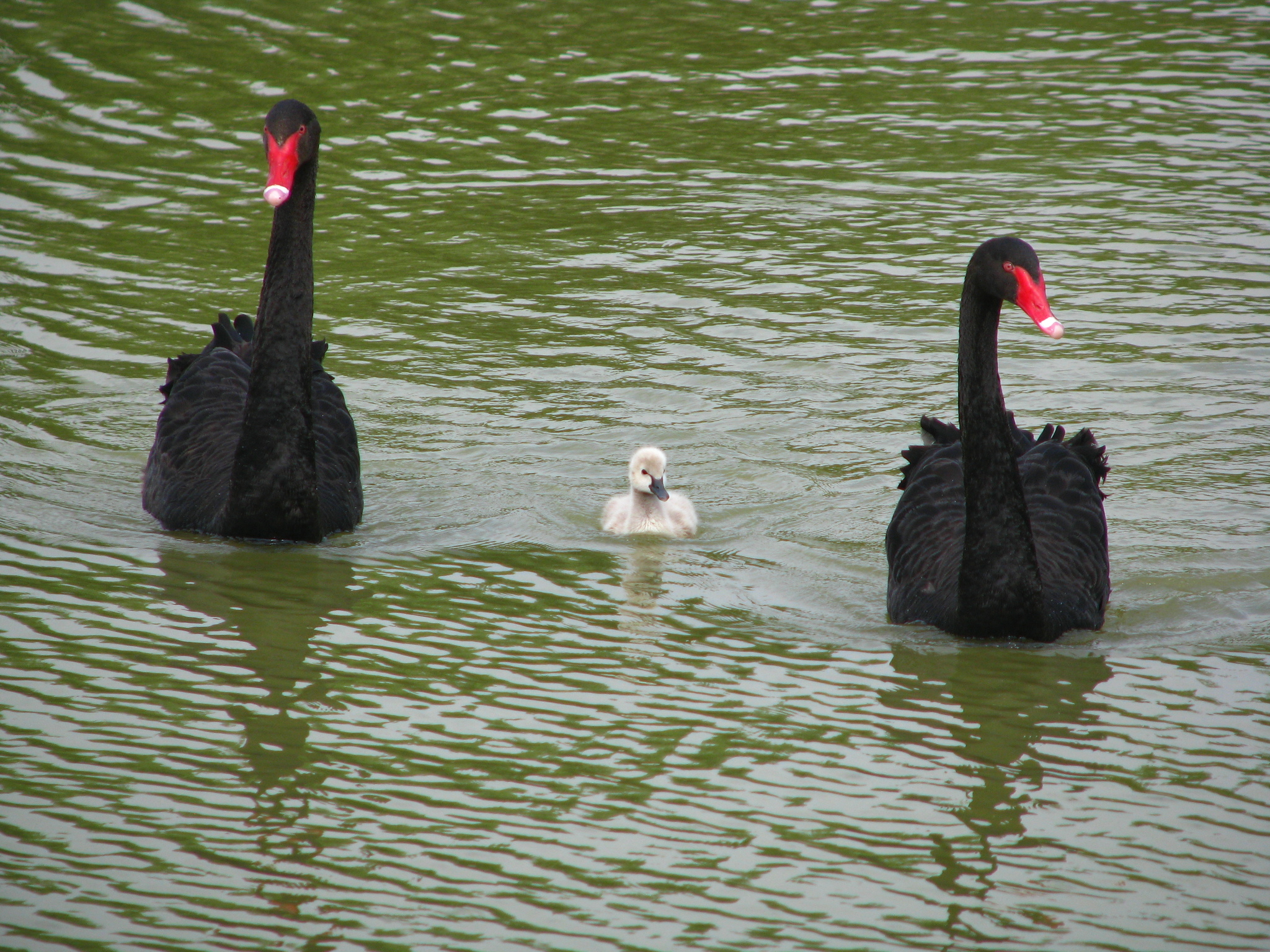
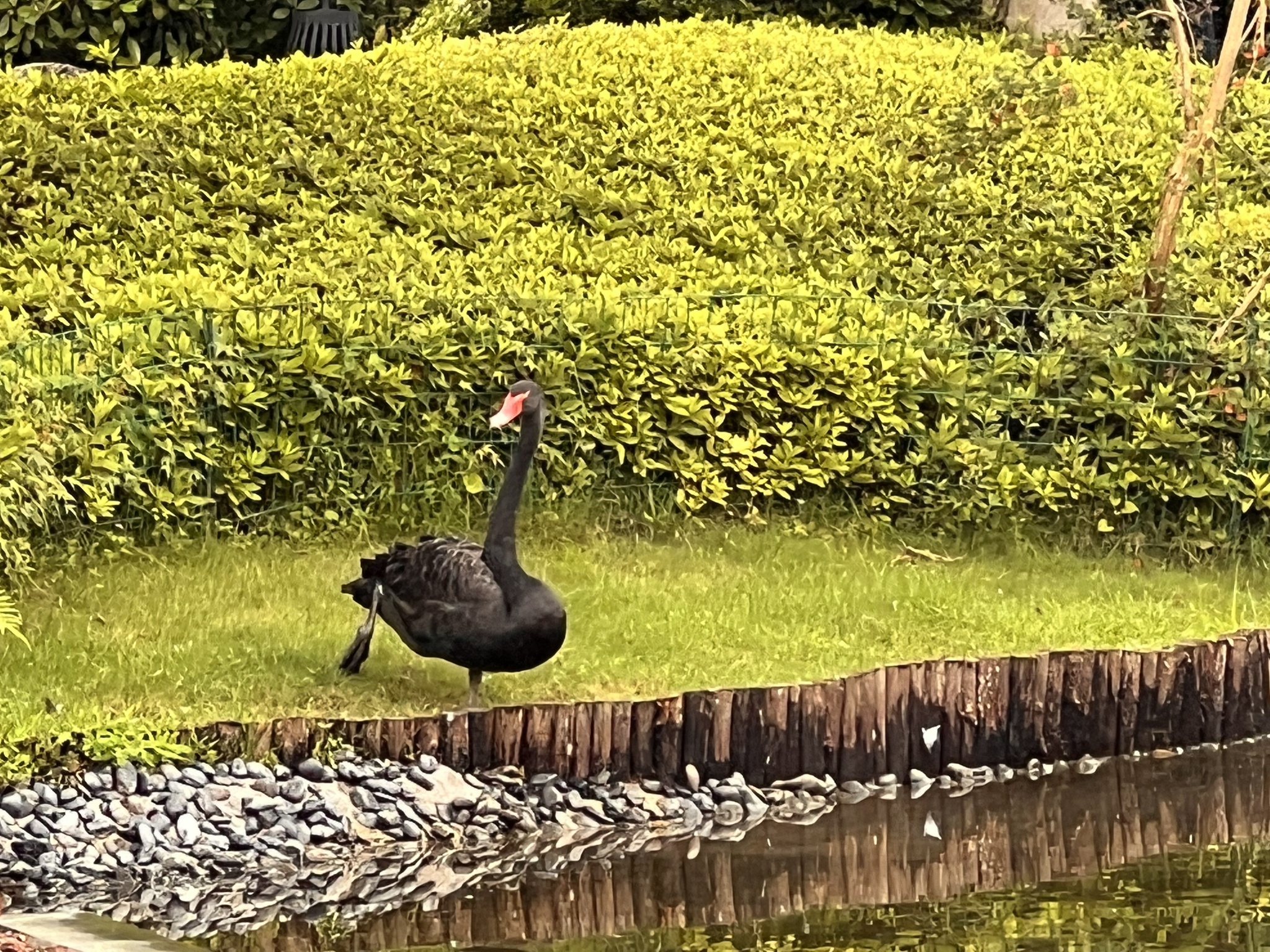
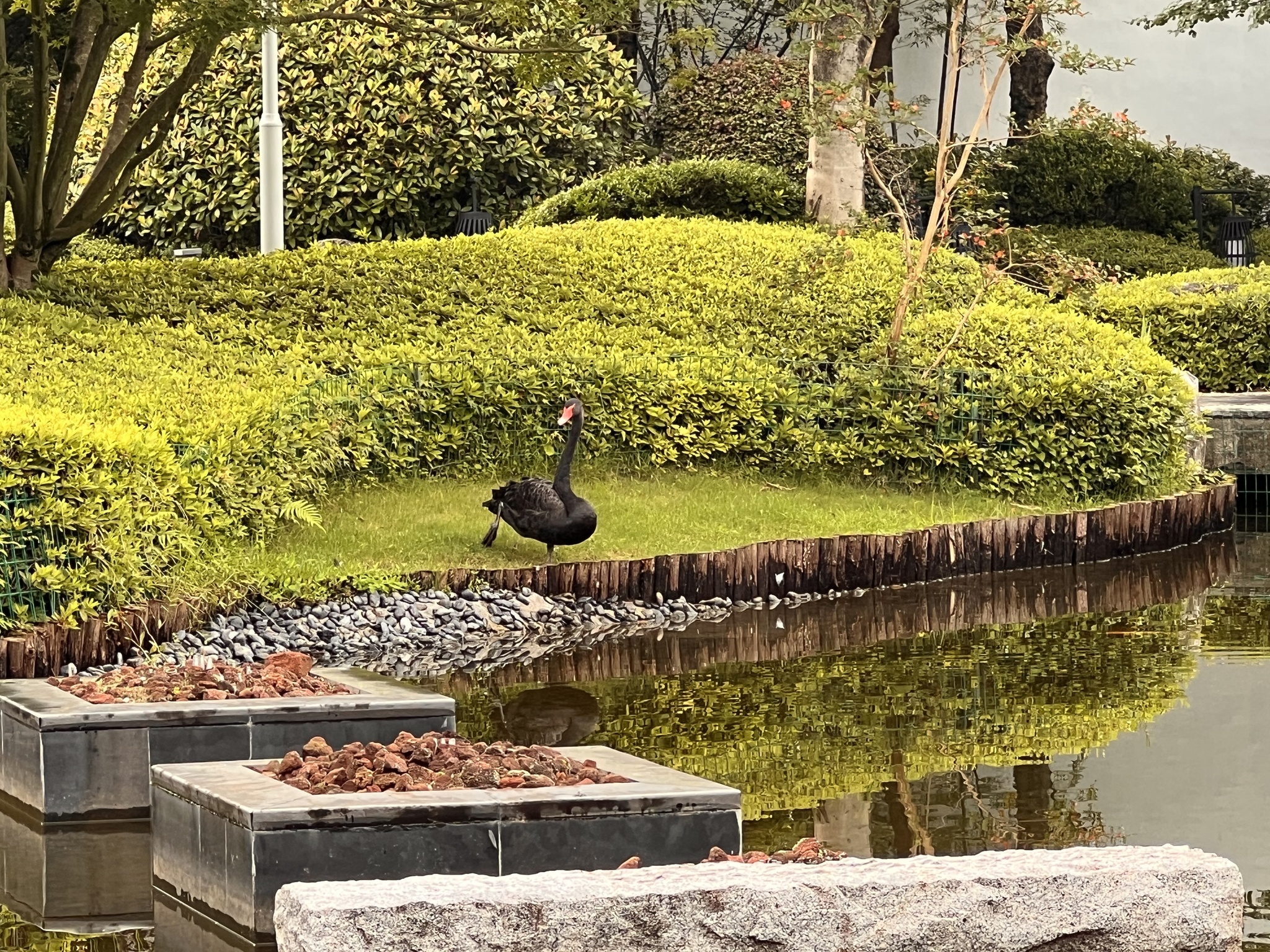
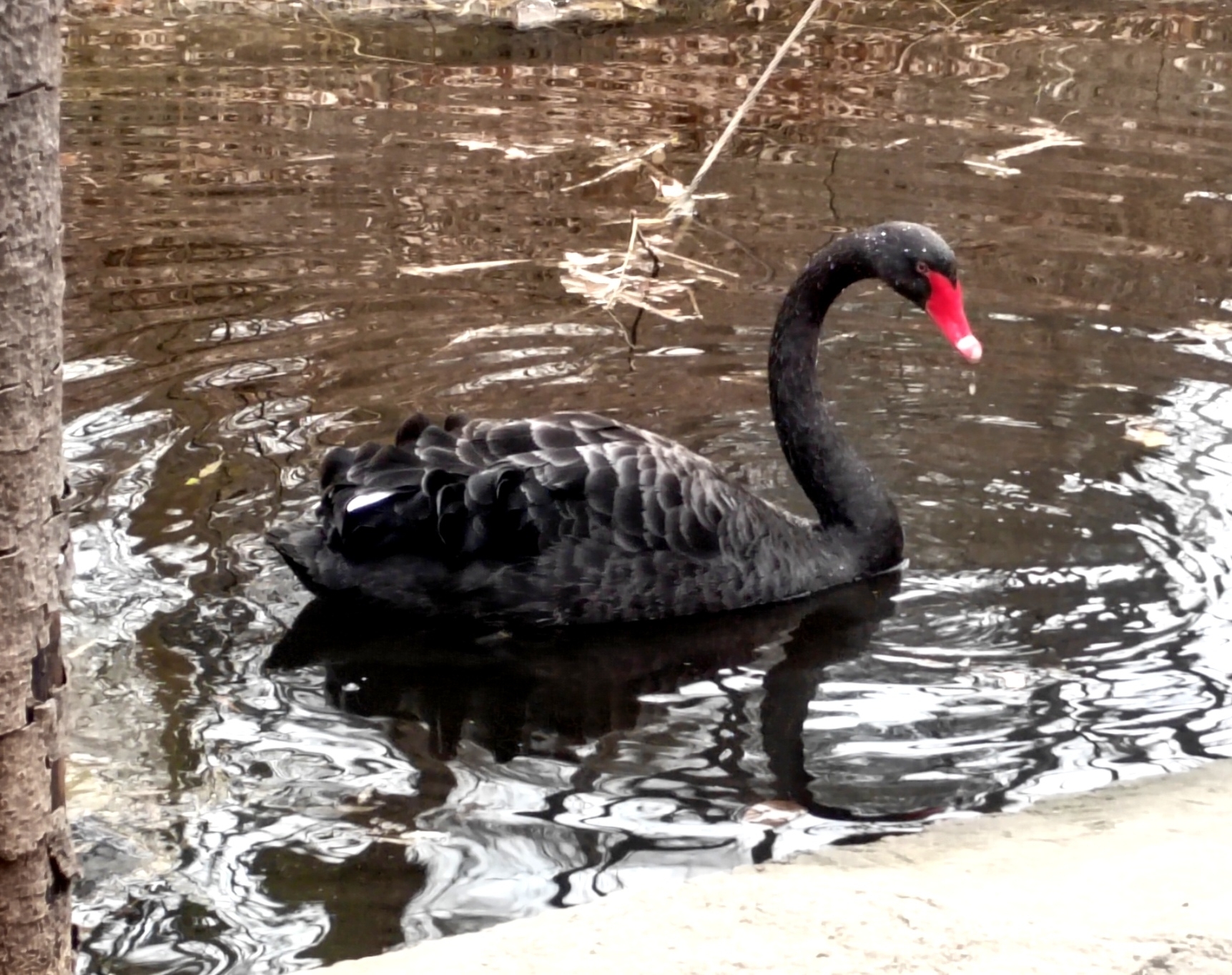
Mature birds measure 110–142 cm (43–56 in) in length, weigh 3.7–9 kg (8.2–19.8 lb), and have a wingspan of 1.6–2 m (5.2–6.6 ft). Plumage is black with white flight feathers. The bill is bright red with a pale bar and tip; legs and feet are greyish-black. The neck is long, curved in an 'S'-shape, and relatively the longest among swans. Males are slightly larger than females with a longer, straighter bill. Immature birds are greyish-brown with pale-edged feathers. Rare leucistic individuals appear white, and some captive populations exhibit light mottled grey coloration.
Identification
Distinguished by black plumage, white flight feathers visible in flight, and a bright red bill. In poor light or at long range, it may be confused with a magpie goose but is distinguished by a much longer neck and slower wing beat. Flight formation is a wedge, line, or V with strong undulating neck movements. Vocalizations include a musical, far-reaching bugle-like sound, softer crooning notes, and whistling when disturbed. Wing whistling sounds occur during flight.
Distribution & Habitat
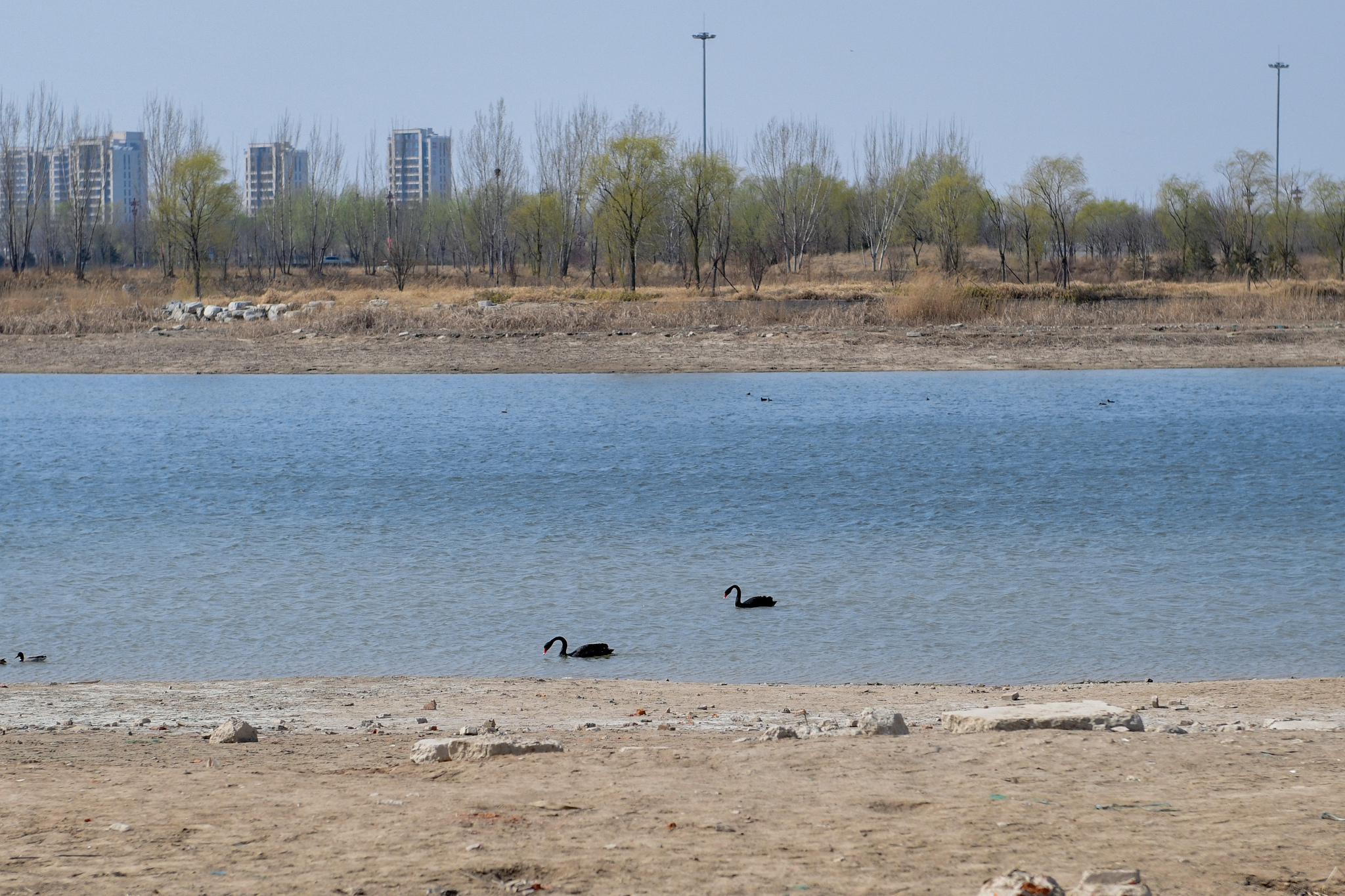
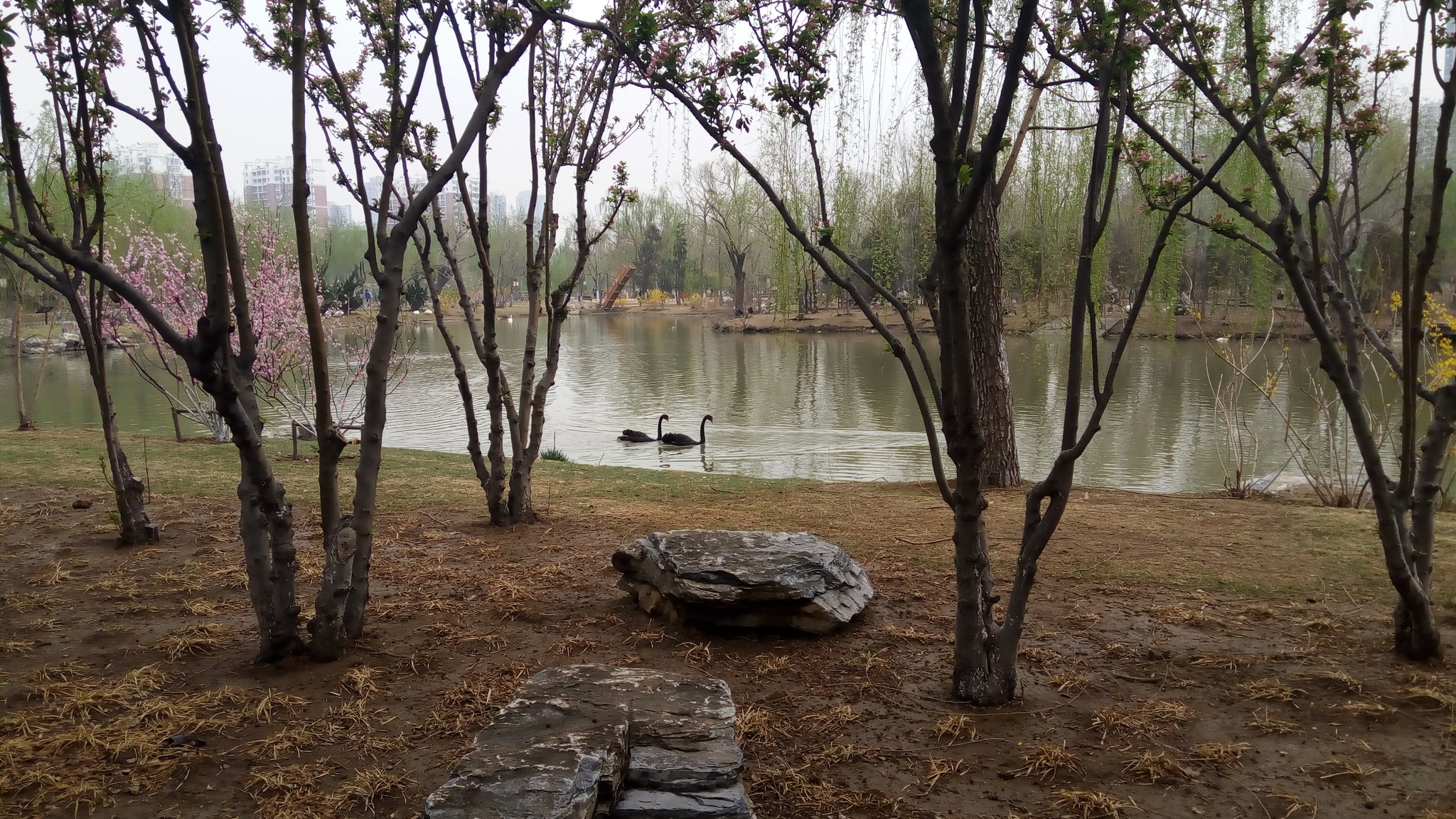
Native to wetlands of southwestern and eastern Australia and adjacent coastal islands. Range in the southwest extends between North West Cape, Cape Leeuwin, and Eucla; in the east, it covers the Atherton Tableland, Eyre Peninsula, and Tasmania, with large populations in the Murray–Darling basin. Uncommon in central and northern Australia. Habitat includes fresh, brackish, and salt water lakes, swamps, rivers, flooded pastures, tidal mudflats, and occasionally open sea near islands. Highly nomadic with no set migratory pattern, moving opportunistically in response to rainfall or drought. Introduced populations exist in New Zealand, Japan, mainland China, and feral groups in the United Kingdom, United States, and other countries.
Behavior & Ecology
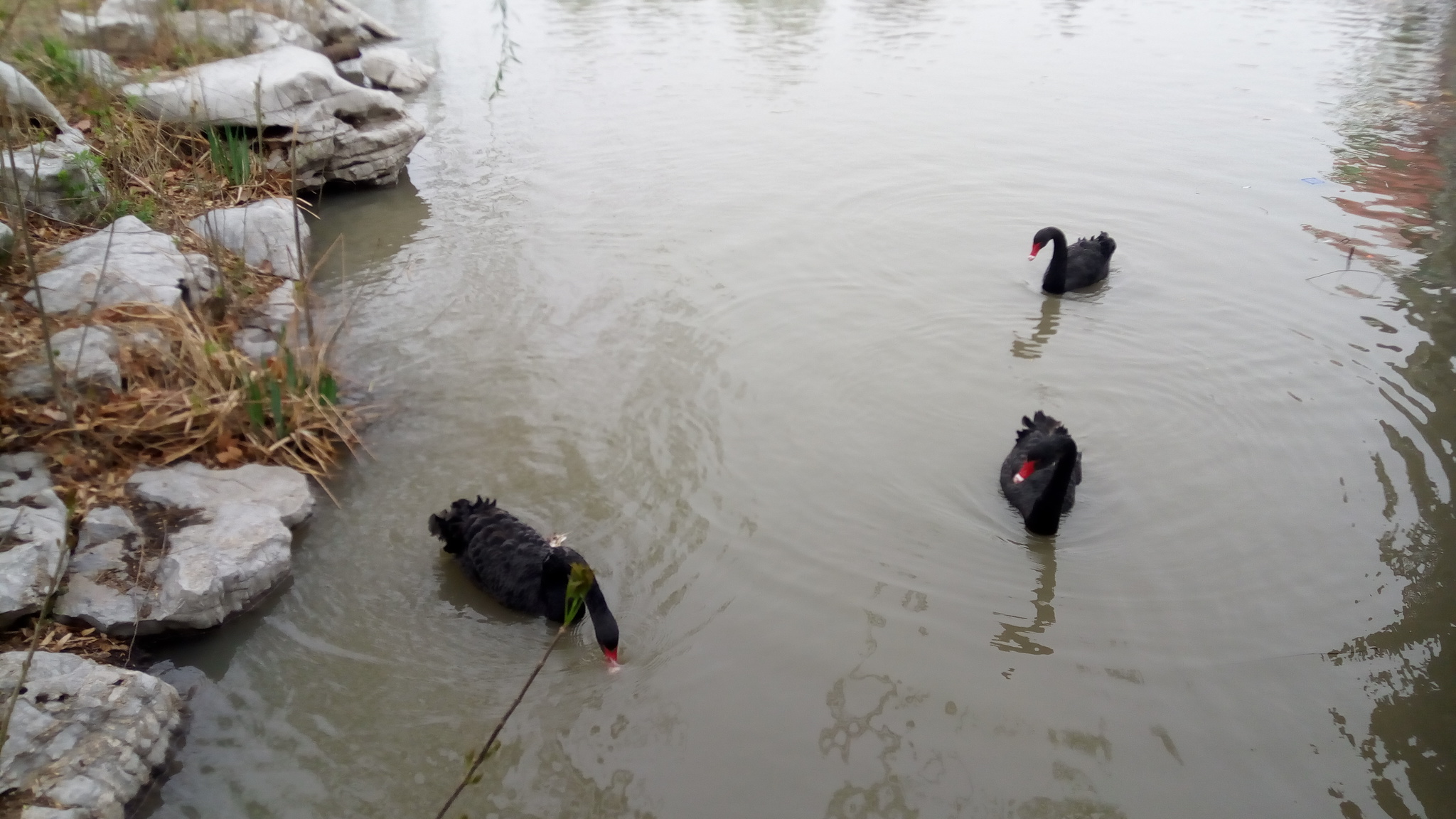
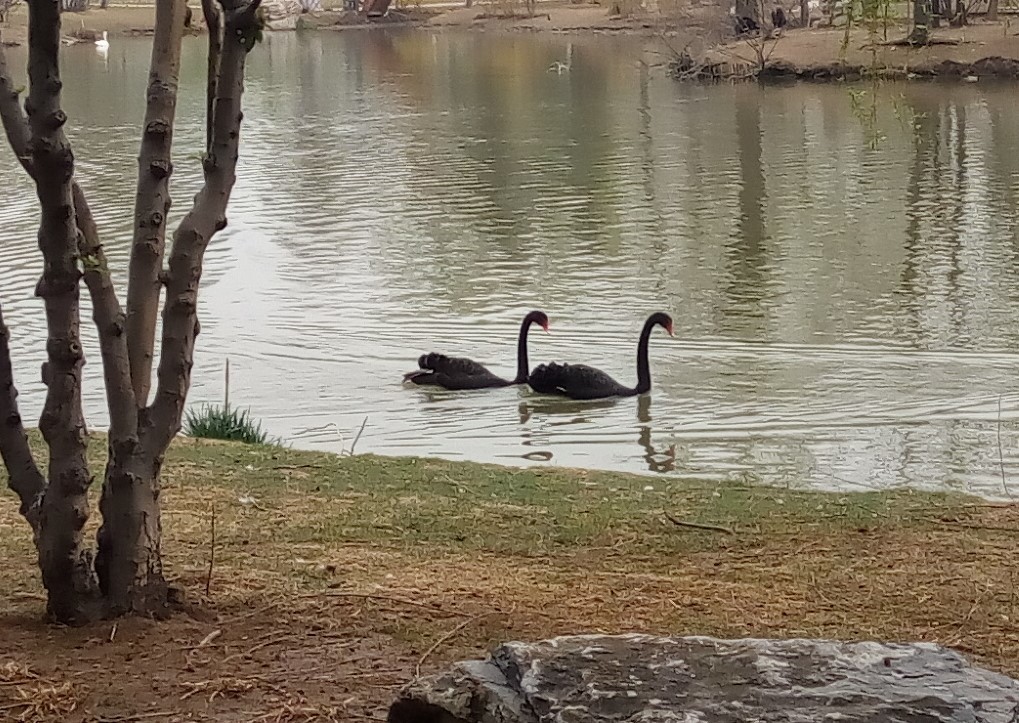
Almost exclusively herbivorous, feeding on aquatic and marshland plants such as reedmace, Vallisneria, Potamogeton, stoneworts, and algae. Feeds by dipping head and neck in shallow water, up-ending in deeper water, or filter-feeding at the surface. Largely monogamous with a ~6% divorce rate, though ~33% of broods show extra-pair paternity and ~25% of pairings are homosexual (mostly male-male). Nests are large mounds of reeds and grasses (1–1.5 m diameter, up to 1 m high) in shallow water or on islands, reused annually. Clutch size is 4–8 greenish-white eggs, incubated for 35–40 days by both sexes. Both parents retrieve eggs using their necks and defend nests aggressively. Cygnets are tended for about nine months until fledging and may ride on parents' backs.
Conservation
Evaluated as Least Concern on the IUCN Red List. The global population is estimated at up to 500,000 individuals with no identified threat of extinction or significant decline. Protected in all Australian states and territories under various laws, including the National Parks and Wildlife Act 1974 in New South Wales, where shooting is prohibited.
Culture
Regional symbol of Western Australia, appearing on the state flag, coat of arms, and as the state bird and emblem. It was the sole postage stamp design of Western Australia from 1854 to 1902. Symbolizes 'Australianness' and antipodean identity. Also the emblem of Dawlish, England. Indigenous names include Kooldjak/Gooldjak (Noongar People) and Pickerdar (Teen Toomele Menennye people of Tasmania).
Source: Wikipedia · CC BY-SA 3.0
Taxonomy
- Order
- Anseriformes
- Family
- Anatidae
- Genus
- Cygnus
Distribution
Australia including Tasmania but not tropical north; New Zealand, where formerly occurred but was eradicated, later was reintroduced and also self-colonized
Vocalizations
Data Sources
Species description from Wikipedia, licensed under CC BY-SA 3.0.
Bird images and sounds sourced from GBIF, contributed by citizen scientists worldwide under Creative Commons licenses.
Taxonomy data from AviList 2025.