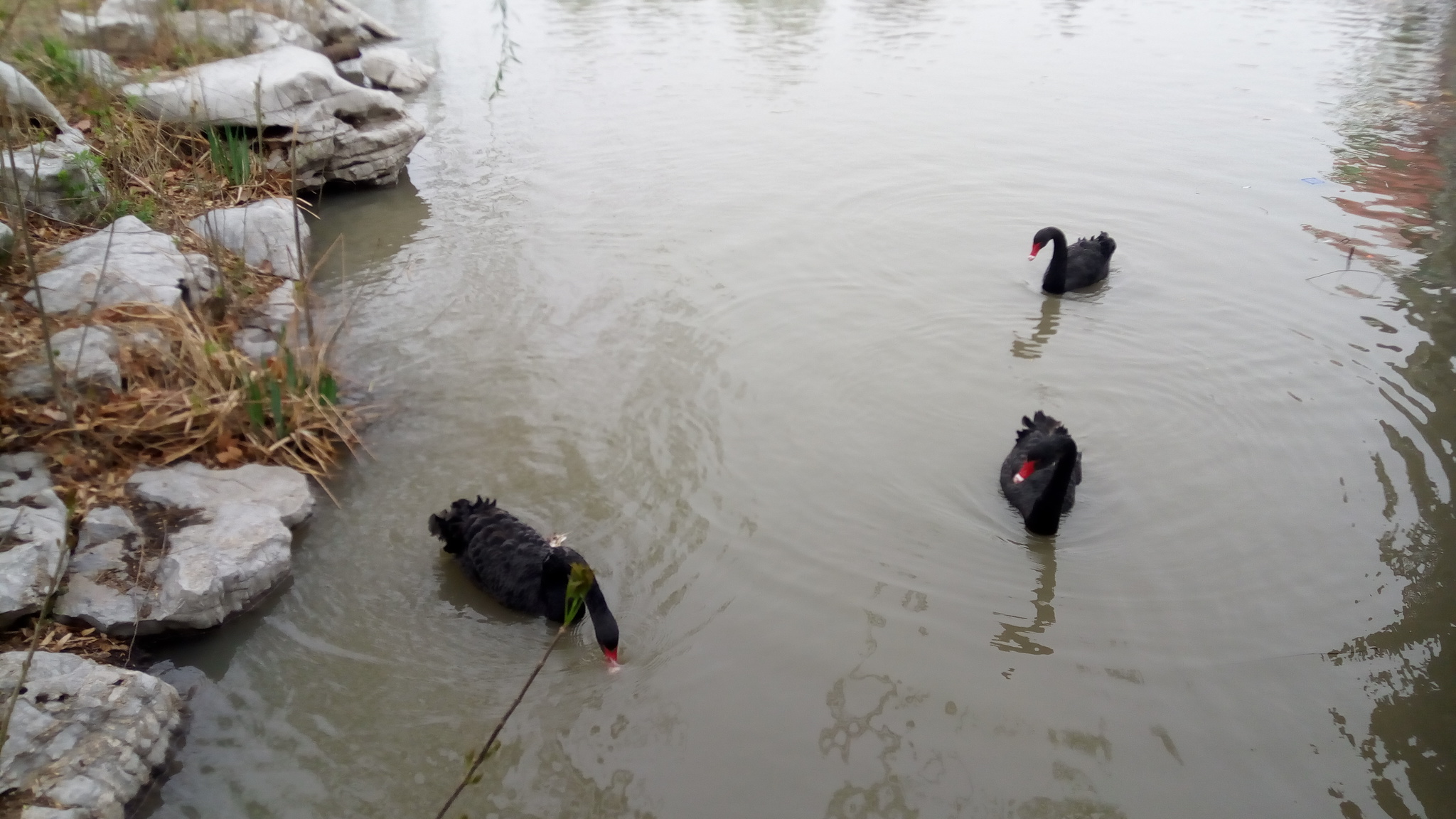
Black Swan
Cygnus atratus
黑天鹅
Introduction
Large waterbird of the family Anatidae. Native to Australia, with core populations in the southeast and southwest regions and adjacent coastal islands. Highly nomadic with erratic migration patterns tied to rainfall and drought cycles rather than fixed seasonal movements. Inhabits fresh, brackish, and salt water wetlands including lakes, swamps, rivers, and occasionally tidal mudflats. Monogamous, pairing for life with both parents sharing incubation and cygnet-rearing duties. Evaluated as Least Concern on the IUCN Red List with a global population estimated at up to 500,000 individuals and an extent of occurrence between 1 and 10 million km². No significant population decline identified.
Description
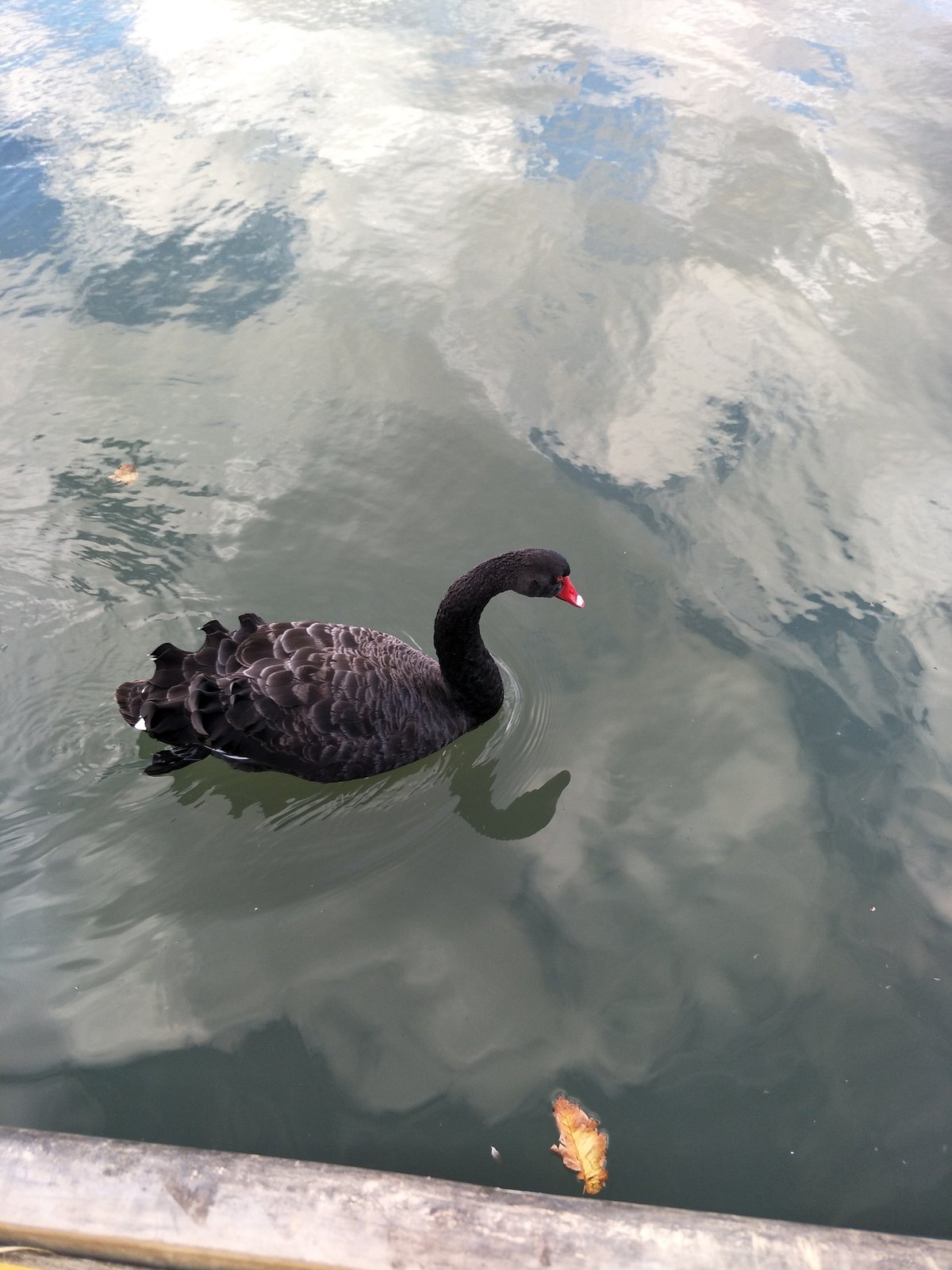
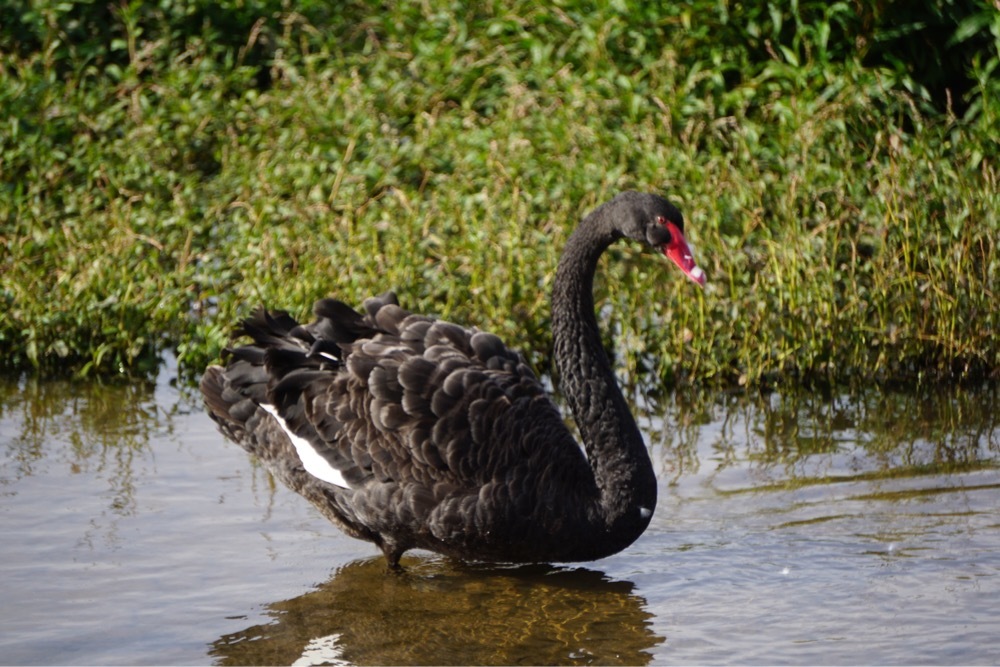
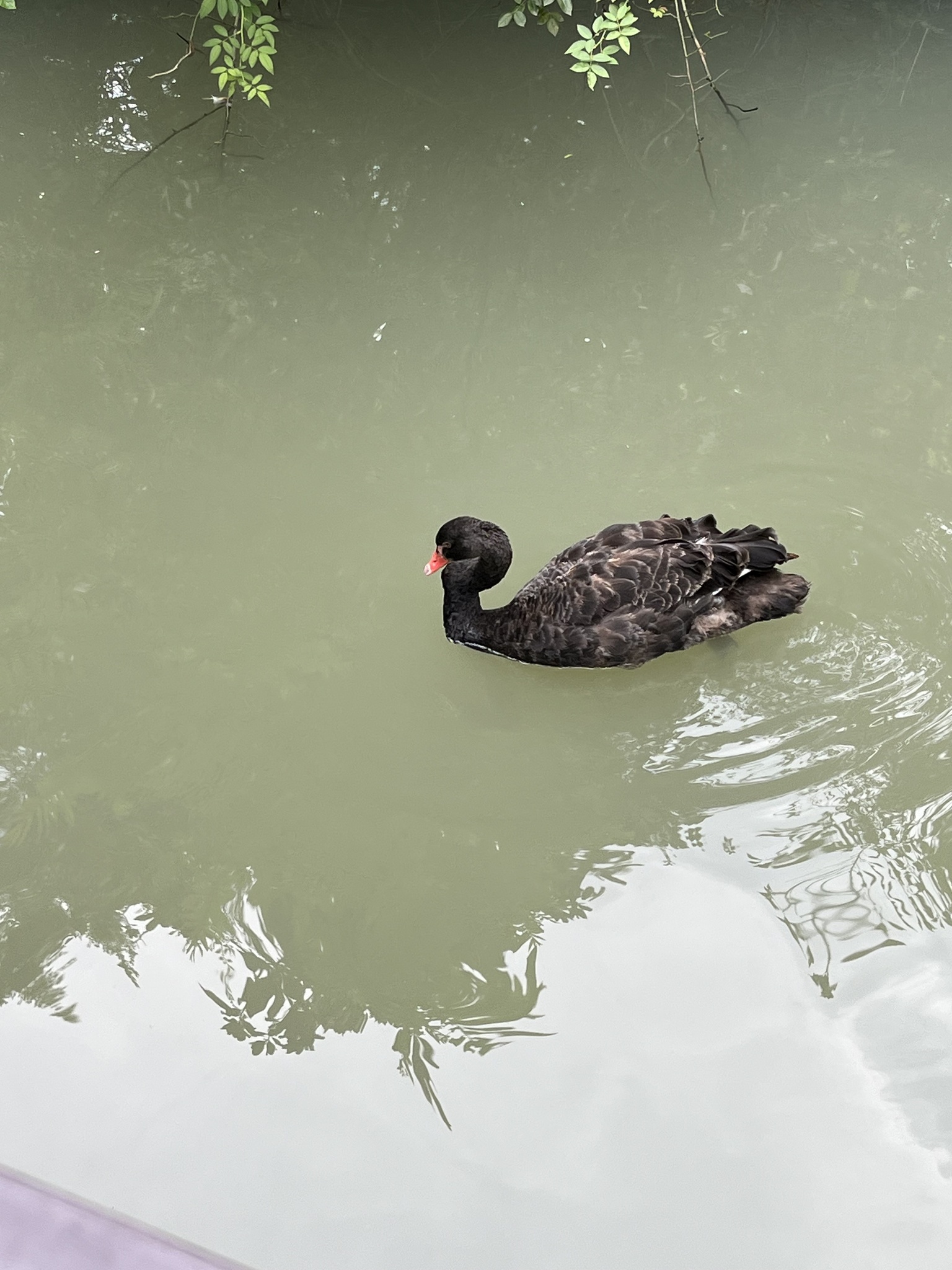
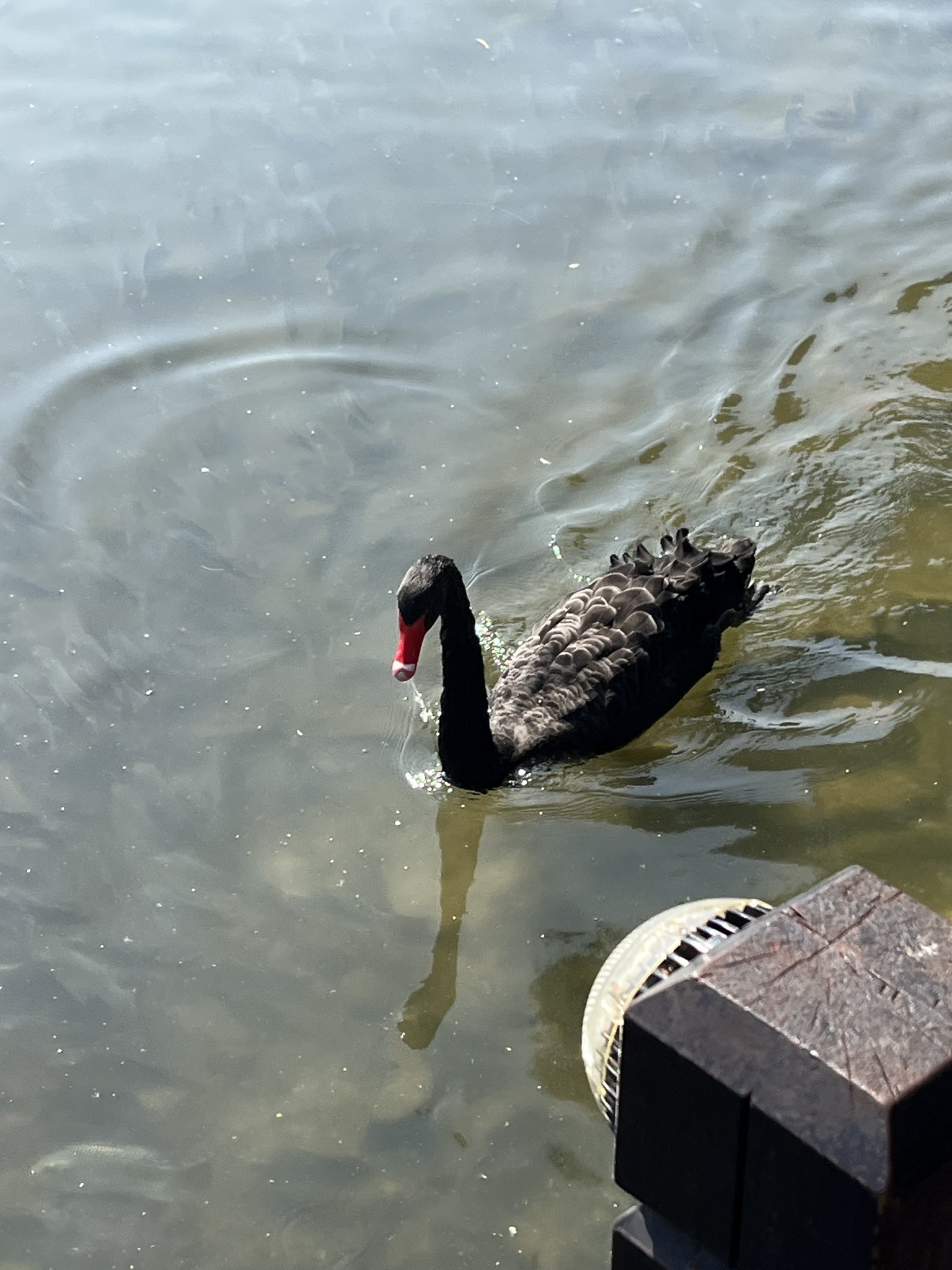
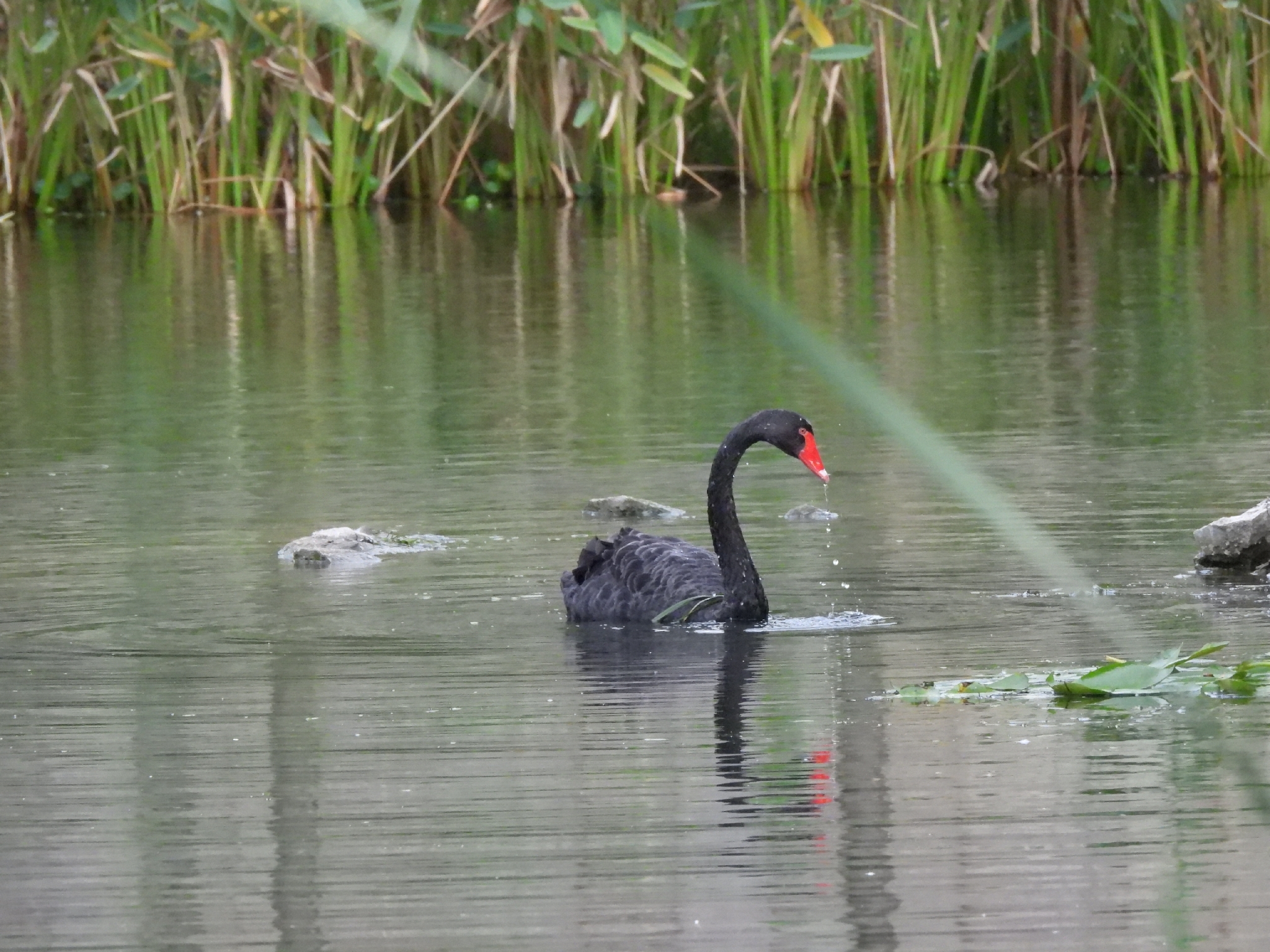
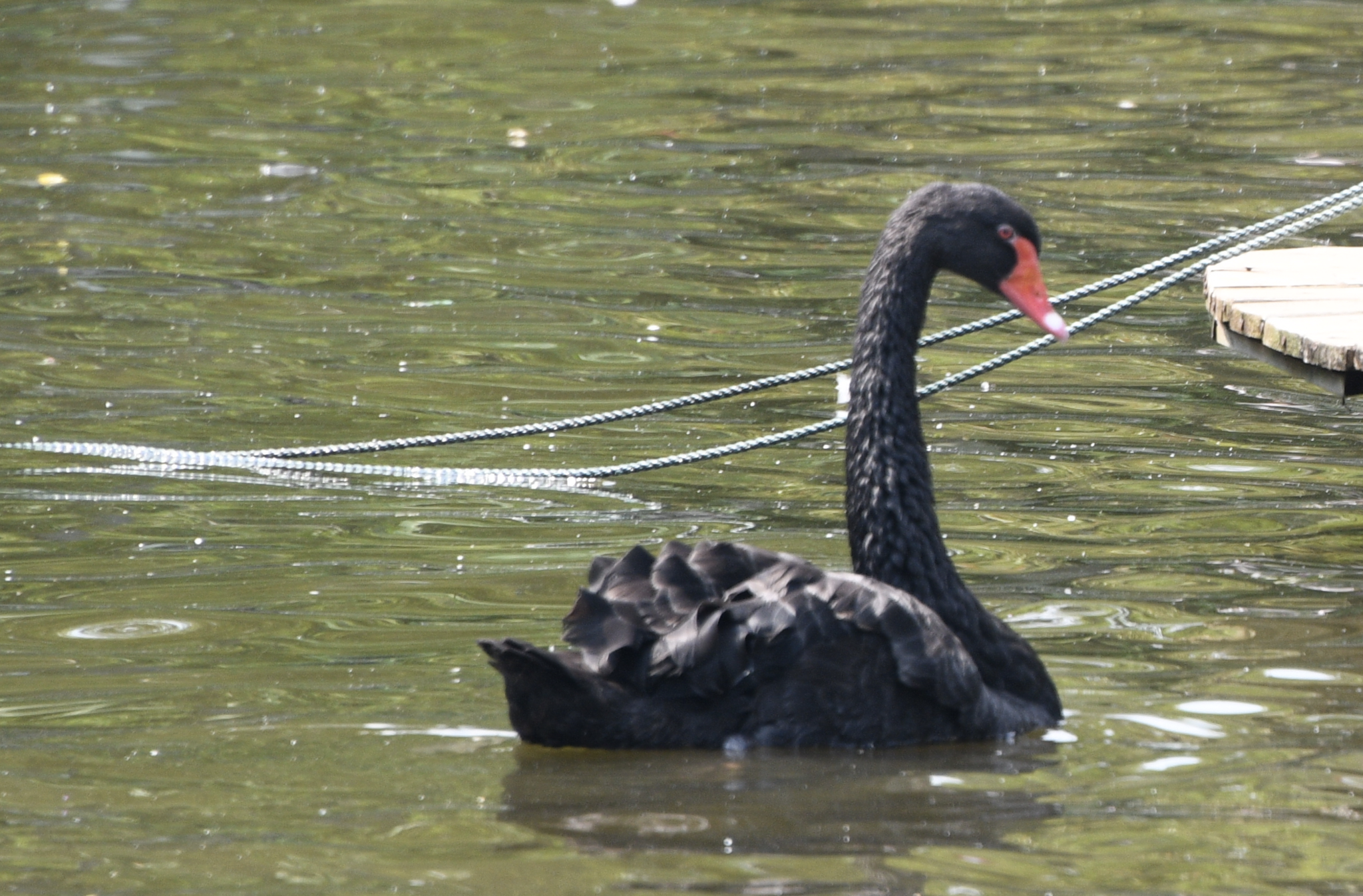
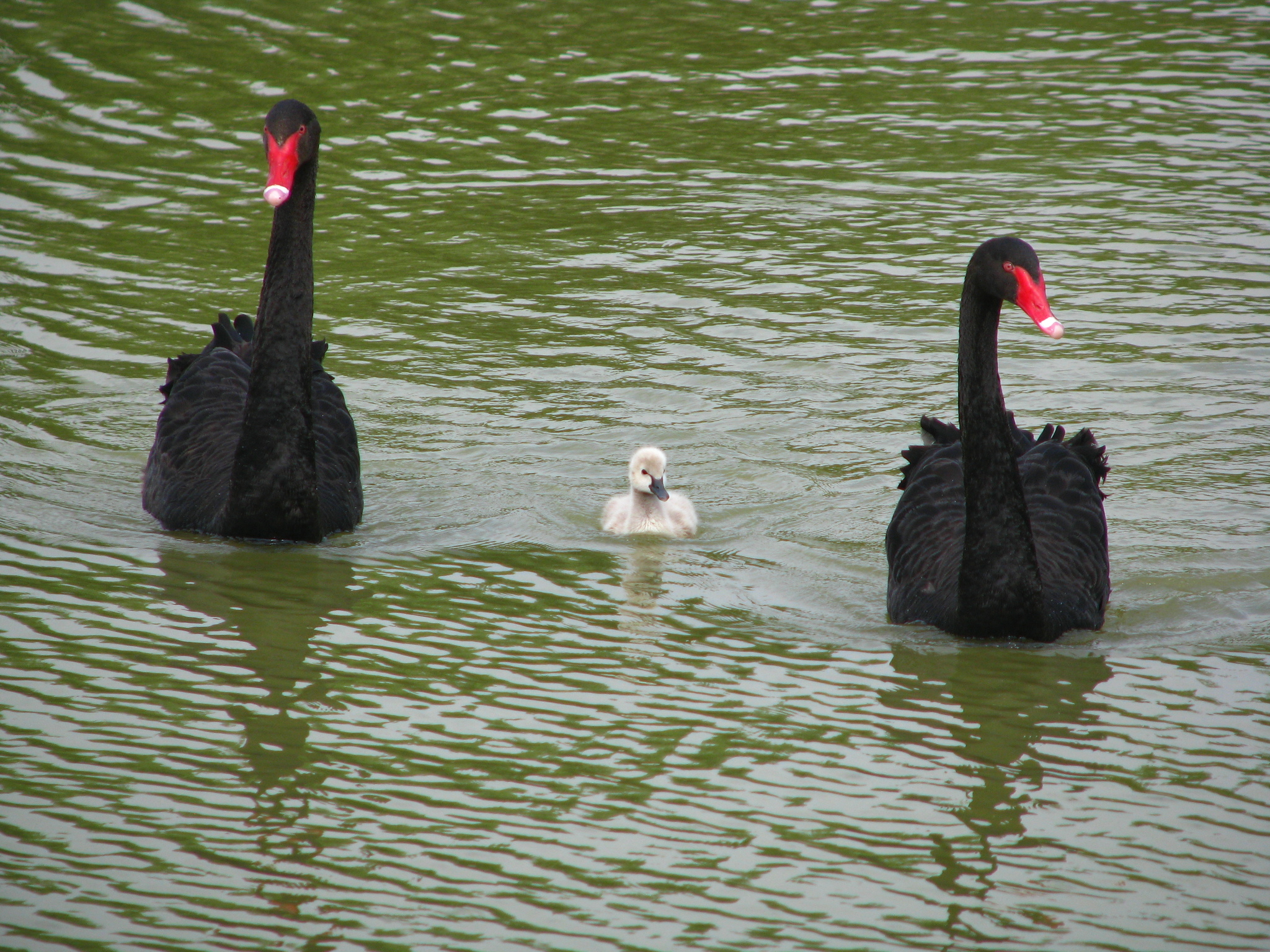
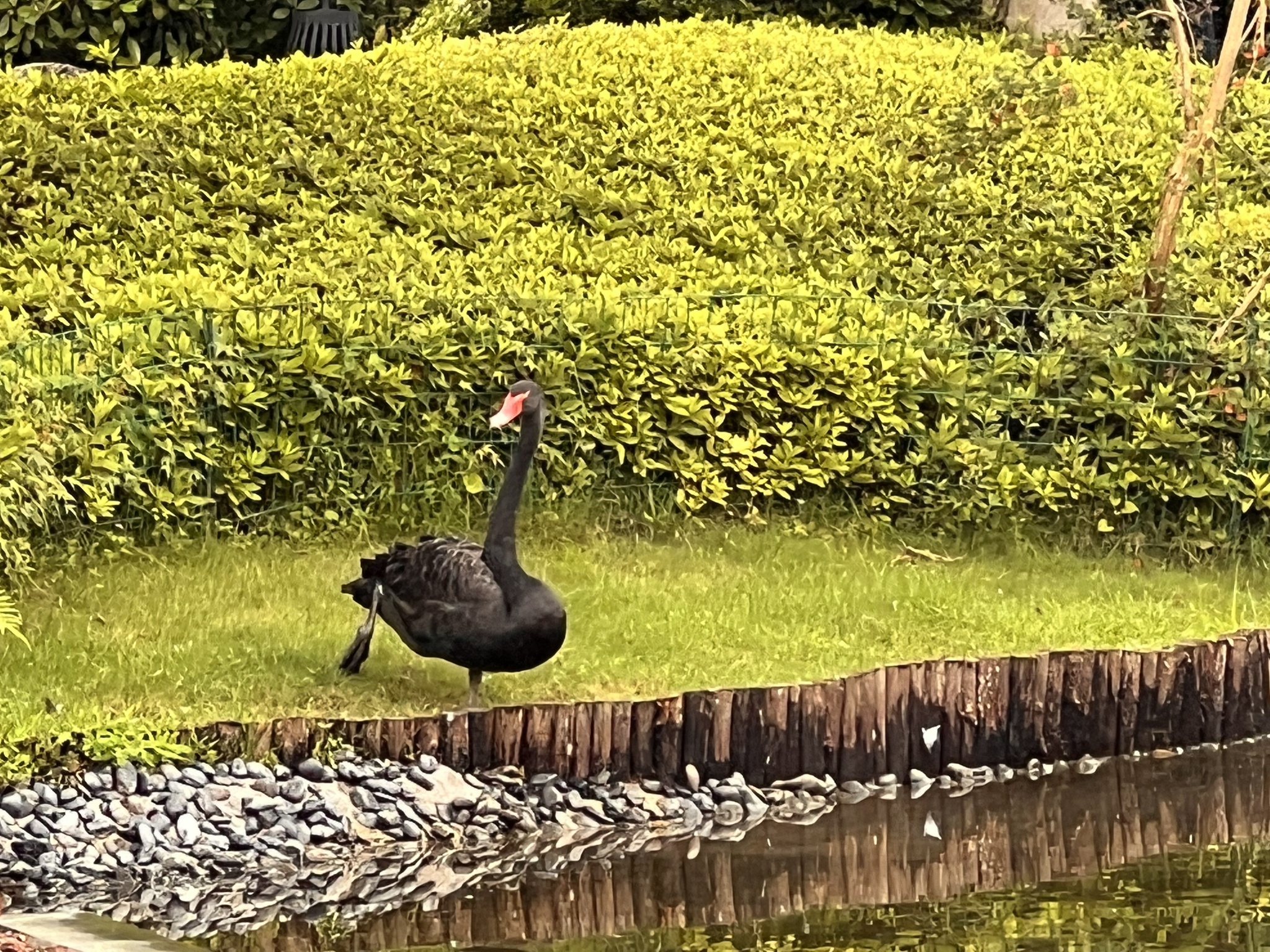
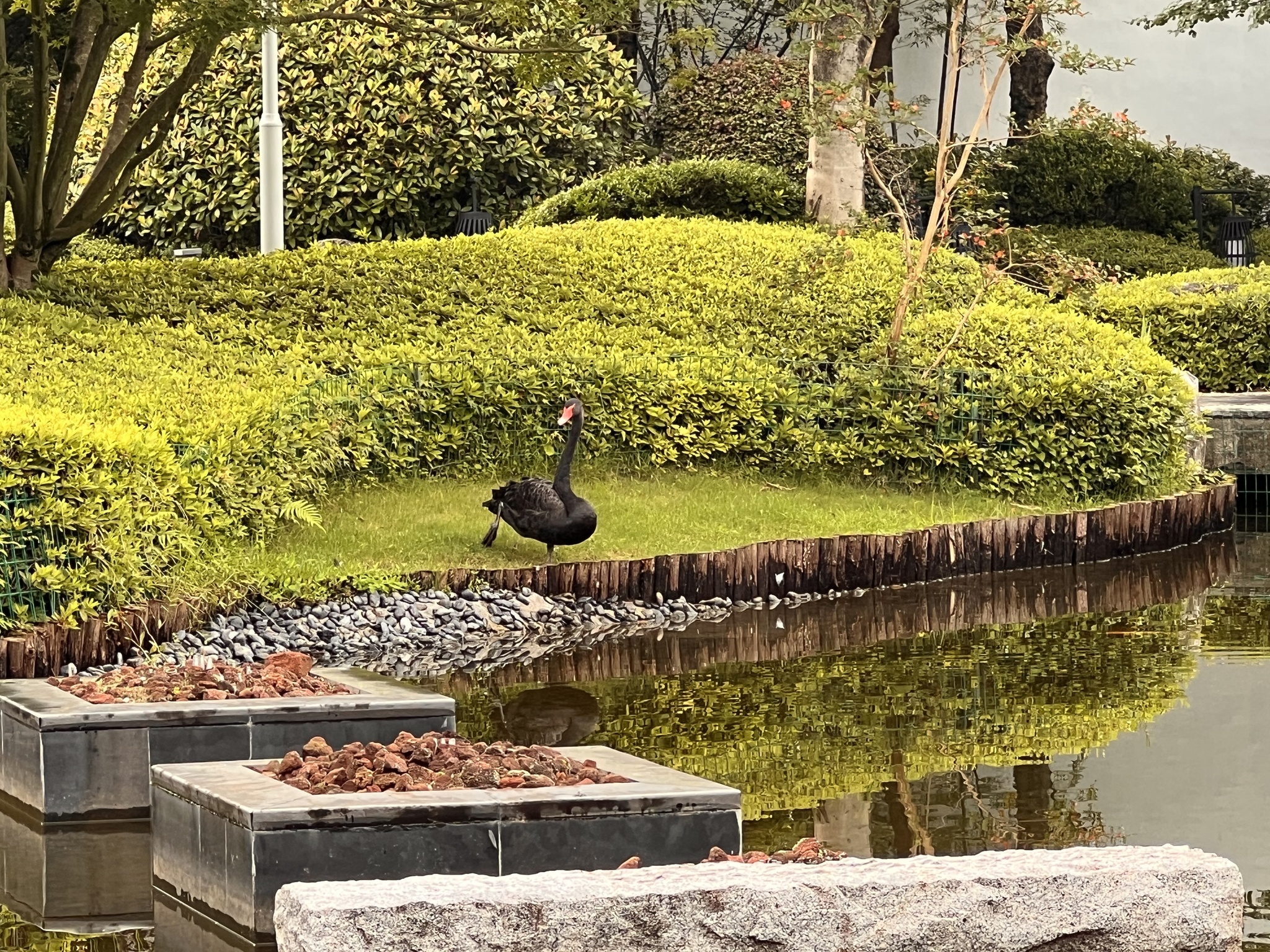
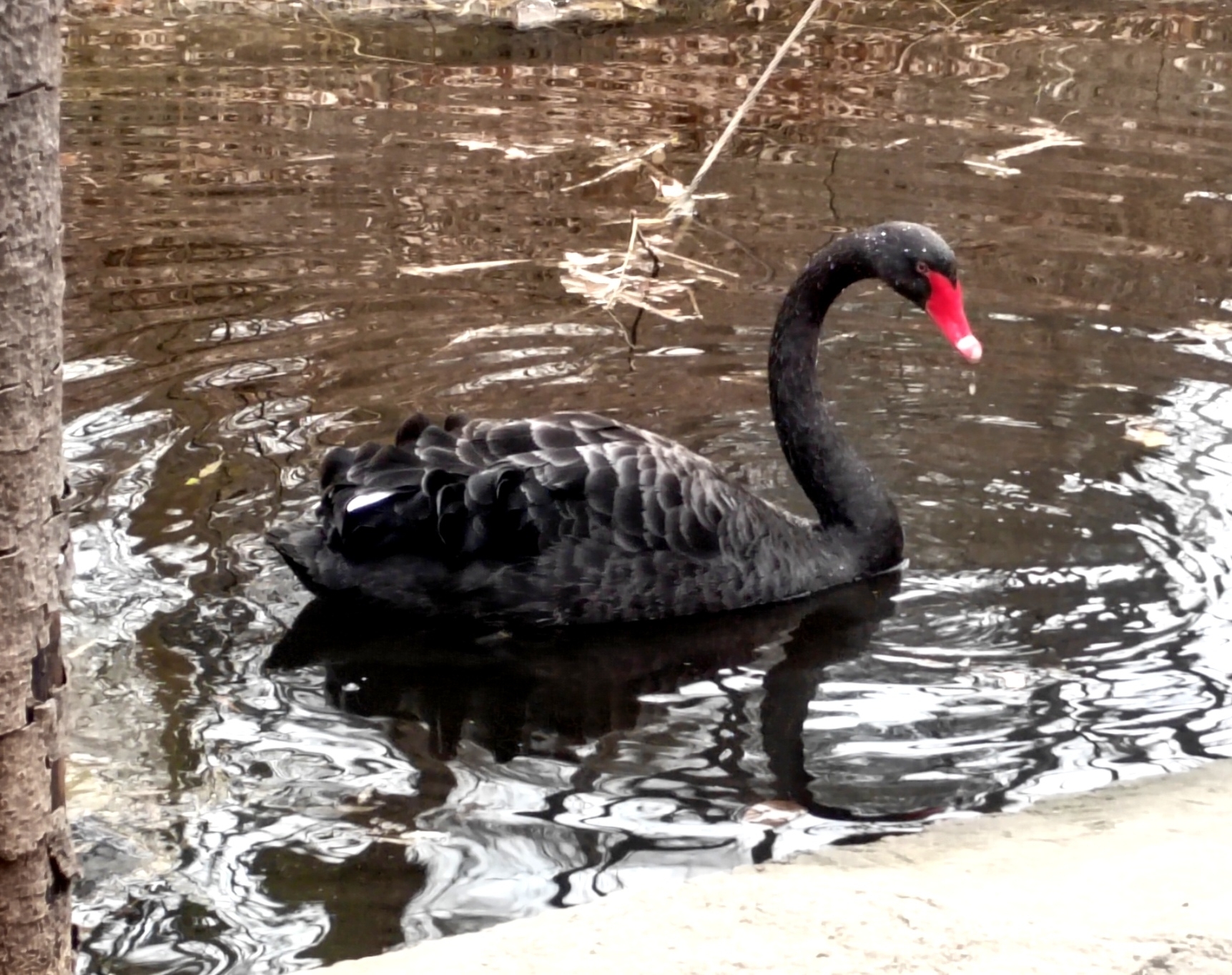
Adults are almost entirely black-featured with white flight feathers visible in flight. The bright red bill has a distinctive pale bar and tip, while legs and feet are greyish-black. Males are slightly larger than females with proportionally longer, straighter bills. Immature birds are greyish-brown with pale-edged plumage. Body length ranges from 110 to 142 centimetres, weight from 3.7 to 9 kilograms, and wingspan from 1.6 to 2 metres. The neck is proportionally the longest among swan species, curved in an S-shape.
Identification
Unmistakable when seen well due to all-black plumage contrasting with white wing panels and bright red bill. The exceptionally long neck distinguishes it from similar-sized waterbirds. In poor light or at long range, may be confused with magpie goose, but the much longer neck and slower wing beat are reliable differentiating features. Occasional leucistic individuals with pale mottled grey or white plumage occur, particularly in captive populations.
Distribution & Habitat
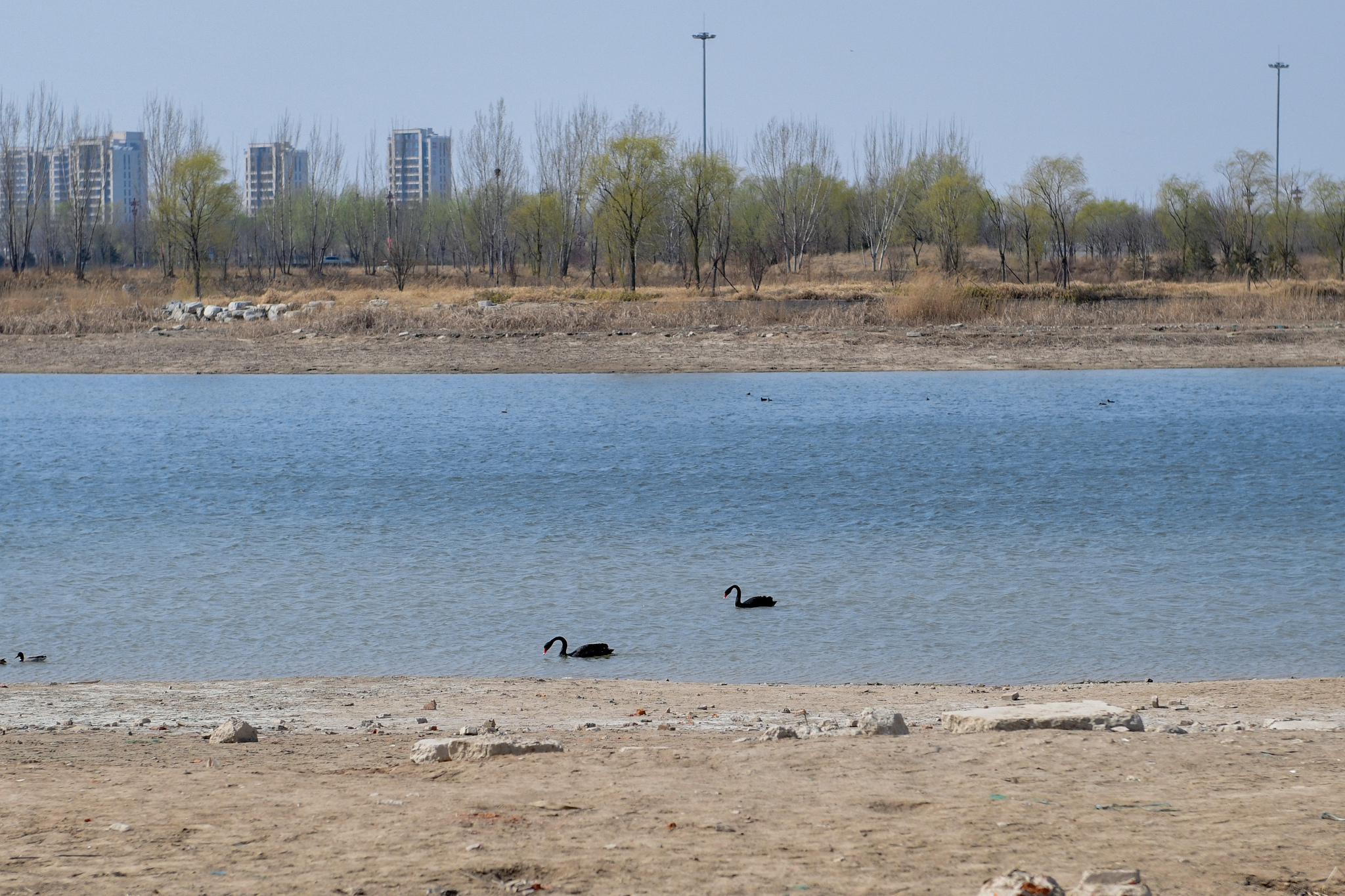
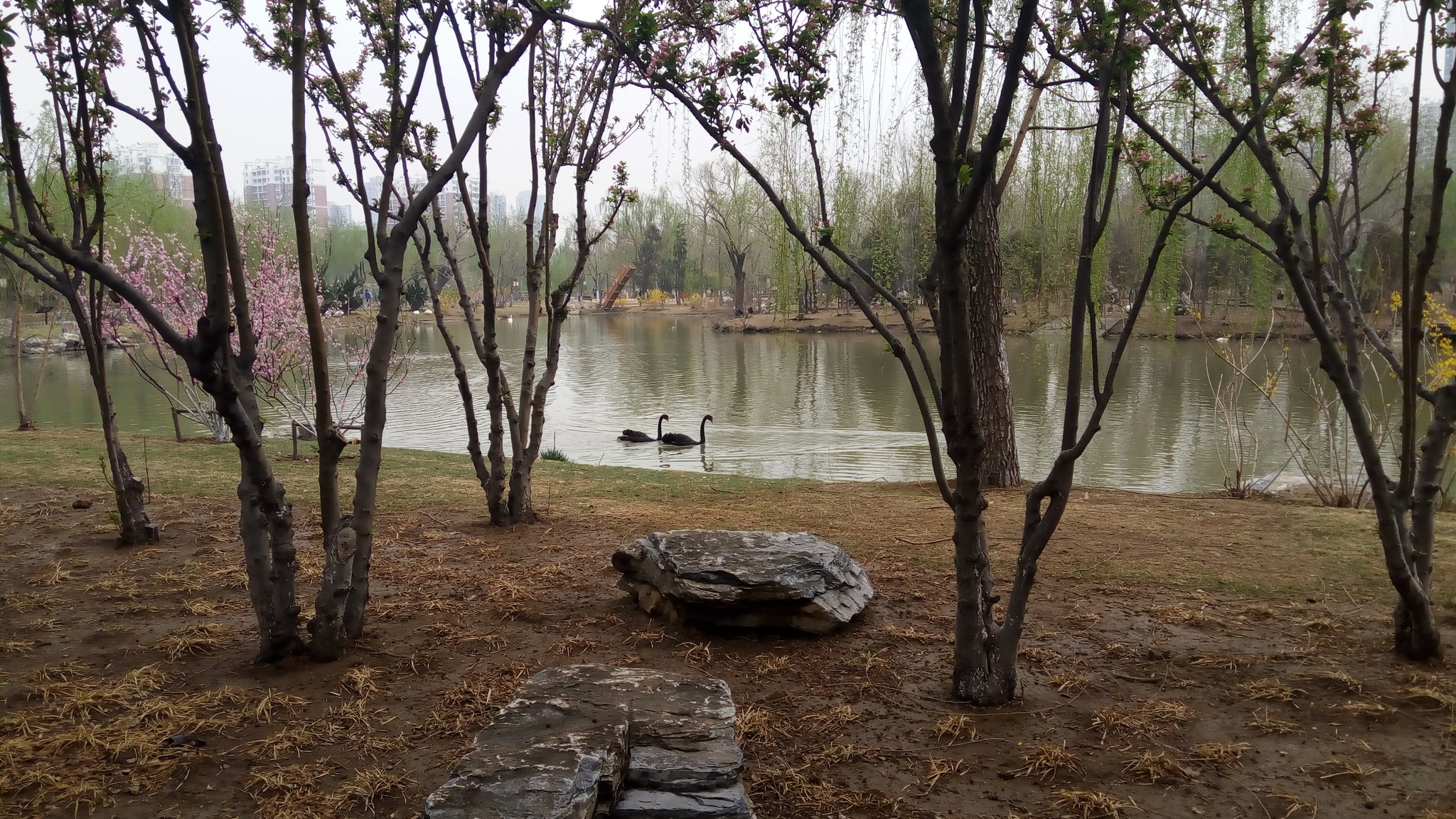
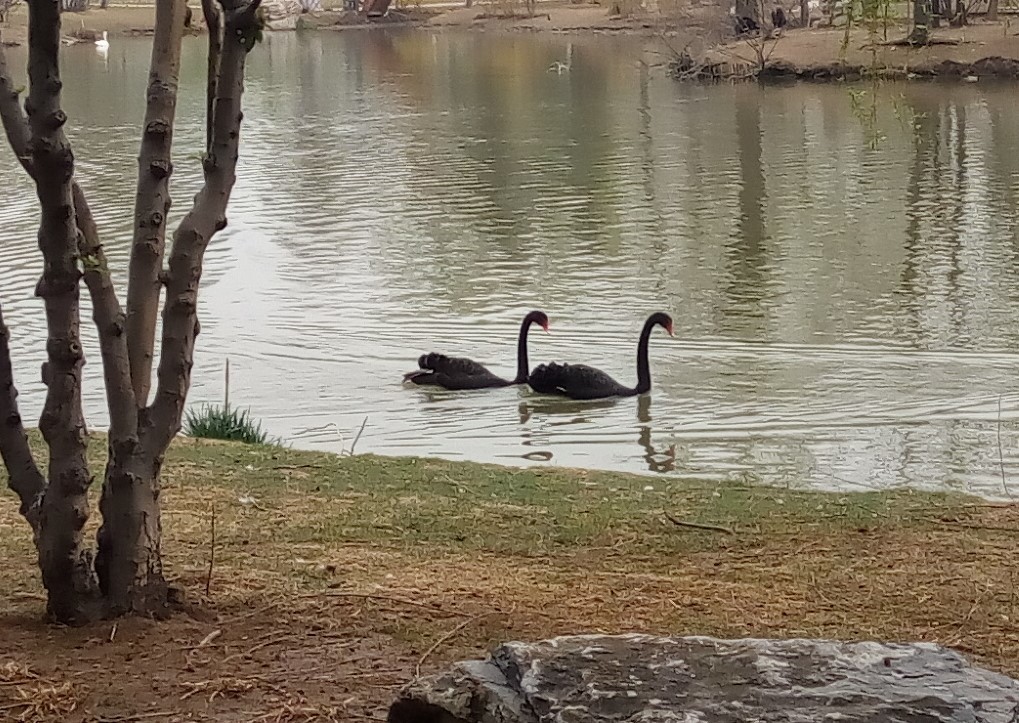
Native range encompasses southwestern and eastern Australia, from North West Cape to Eucla in the west, and from the Atherton Tableland through the Murray-Darling basin to Tasmania in the east. Uncommon in central and northern Australia. Prefers permanent wetlands with aquatic vegetation but uses flooded pastures, tidal mudflats, and occasionally marine areas near shores or islands. Migration is opportunistic rather than regular; birds move into interior regions during high rainfall years and return to coastal wetlands during drought. Flightless for approximately one month during post-breeding molt. Introduced populations established in New Zealand, Japan, the United Kingdom, United States, and China.
Behavior & Ecology
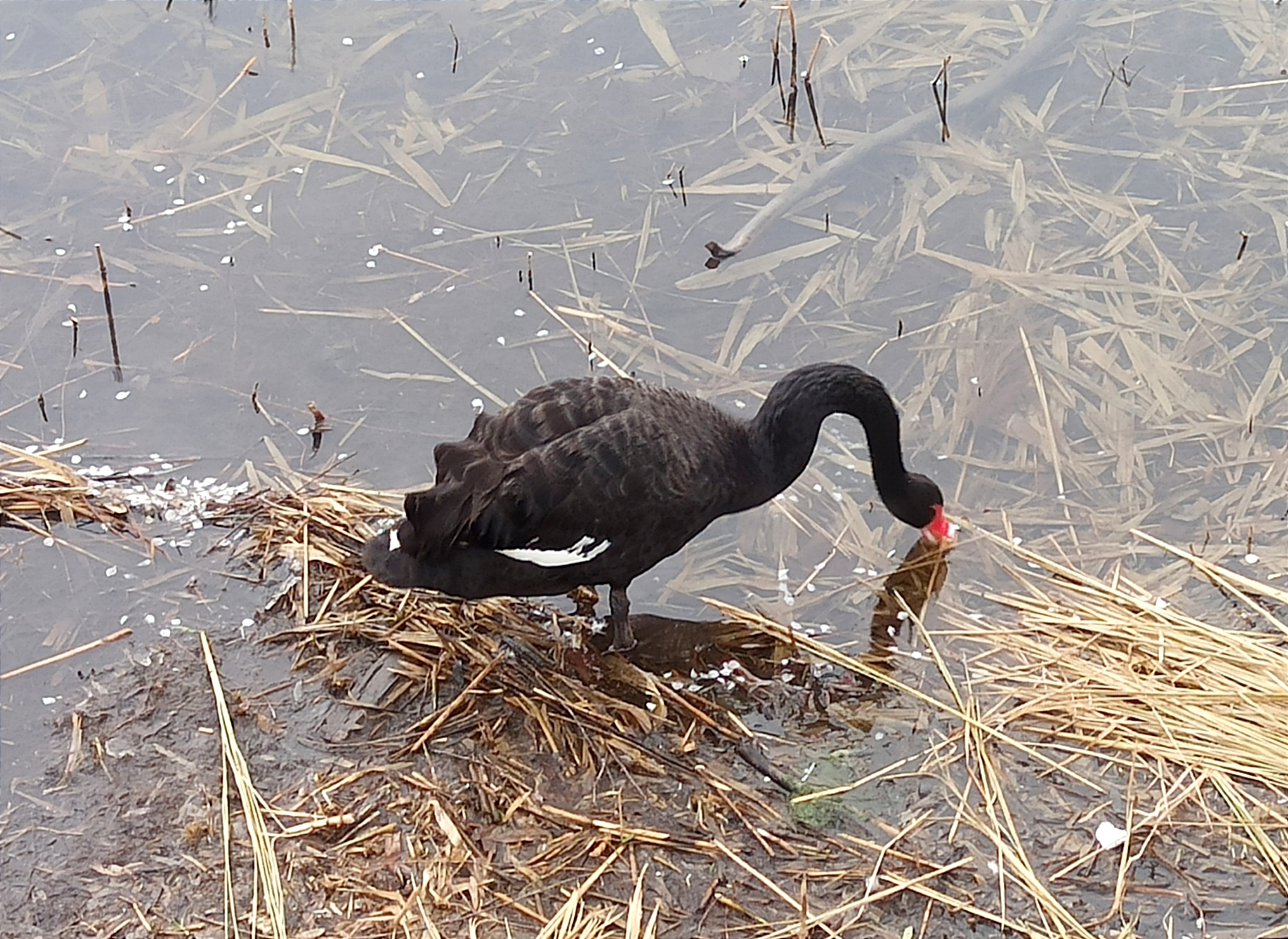
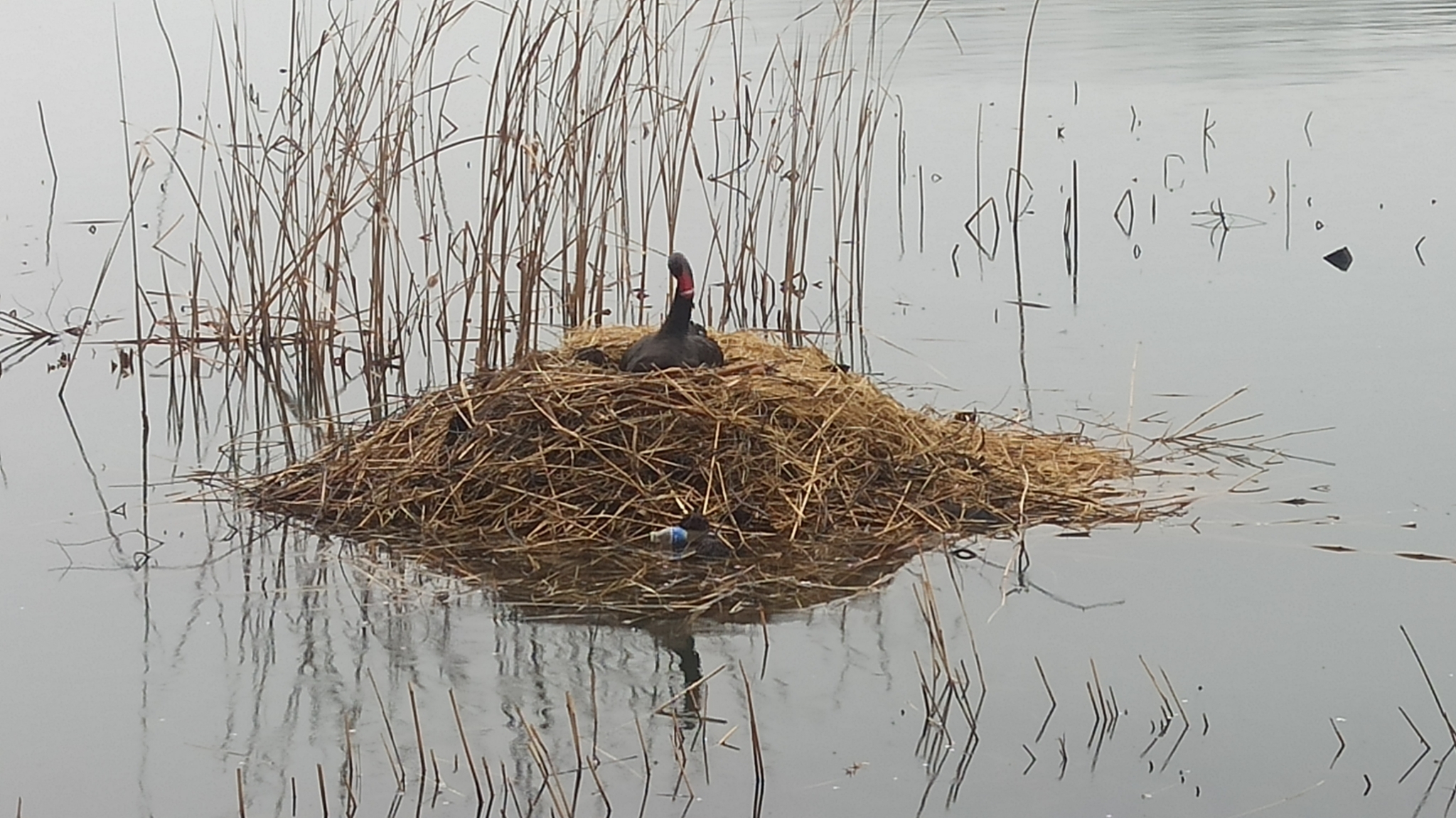
Almost exclusively herbivorous, feeding on aquatic plants, reedmace leaves, submerged algae, and aquatic vegetation. Forages by dipping head and neck in shallow water or up-ending in deeper areas; also filter-feeds at the surface. Breeding occurs February through September in the Southern hemisphere. Nests are large mounds of vegetation 1-1.5 metres in diameter in shallow water or on islands, reused annually. Clutches contain four to eight greenish-white eggs incubated for 35-40 days by both parents. Cygnets remain with parents for nine months. Vocalizations include musical bugle-like calls audible over long distances, softer crooning notes, and whistling sounds during flight. Aggressively defends nest using wings and beak. Flies in wedge or V formations. Gregarious, occurring singly or in flocks numbering hundreds or thousands.
Conservation
IUCN Red List status: Least Concern. Fully protected throughout Australia under state and territory legislation, making it illegal to hunt. Population estimated at up to 500,000 individuals across a large range exceeding 1 million km². No identified threats causing significant population decline. Protected under New South Wales National Parks and Wildlife Act 1974.
Culture
Regional symbol of Western Australia, appearing on the state flag, coat of arms, and serving as the state bird and emblem. Featured on Western Australian postage stamps from 1854 to 1902. Symbolizes Australian identity through contrast with the white swan of the Northern Hemisphere. In the United Kingdom, a small population at Dawlish has made the bird the town's emblem for forty years. Indigenous significance: known as Kooldjak among Noongar peoples of southwest Australia, Gooldjak in the southeast, and Pickerdar among the Teen Toomele Menennye people of Tasmania.
Source: Wikipedia · CC BY-SA 3.0
Taxonomy
- Order
- Anseriformes
- Family
- Anatidae
- Genus
- Cygnus
- eBird Code
- blkswa
Distribution
Australia including Tasmania but not tropical north; New Zealand, where formerly occurred but was eradicated, later was reintroduced and also self-colonized
Vocalizations
Data Sources
Species description from Wikipedia, licensed under CC BY-SA 3.0.
Bird images and sounds sourced from GBIF, contributed by citizen scientists worldwide under Creative Commons licenses.
Taxonomy data from AviList 2025.