Cuculiformes / Cuculidae / Cuculus
Himalayan Cuckoo
Cuculus saturatus · 中杜鹃
Introduction
A brood-parasitic bird in the family Cuculidae. Breeds from the Himalayas eastward to southern China and Taiwan, migrating to Southeast Asia and the Greater Sunda Islands for winter. Inhabits mixed coniferous and deciduous forests, thickets, and mountain forests during breeding season, and tropical forests and savannas in winter. Classified as Least Concern.
Description
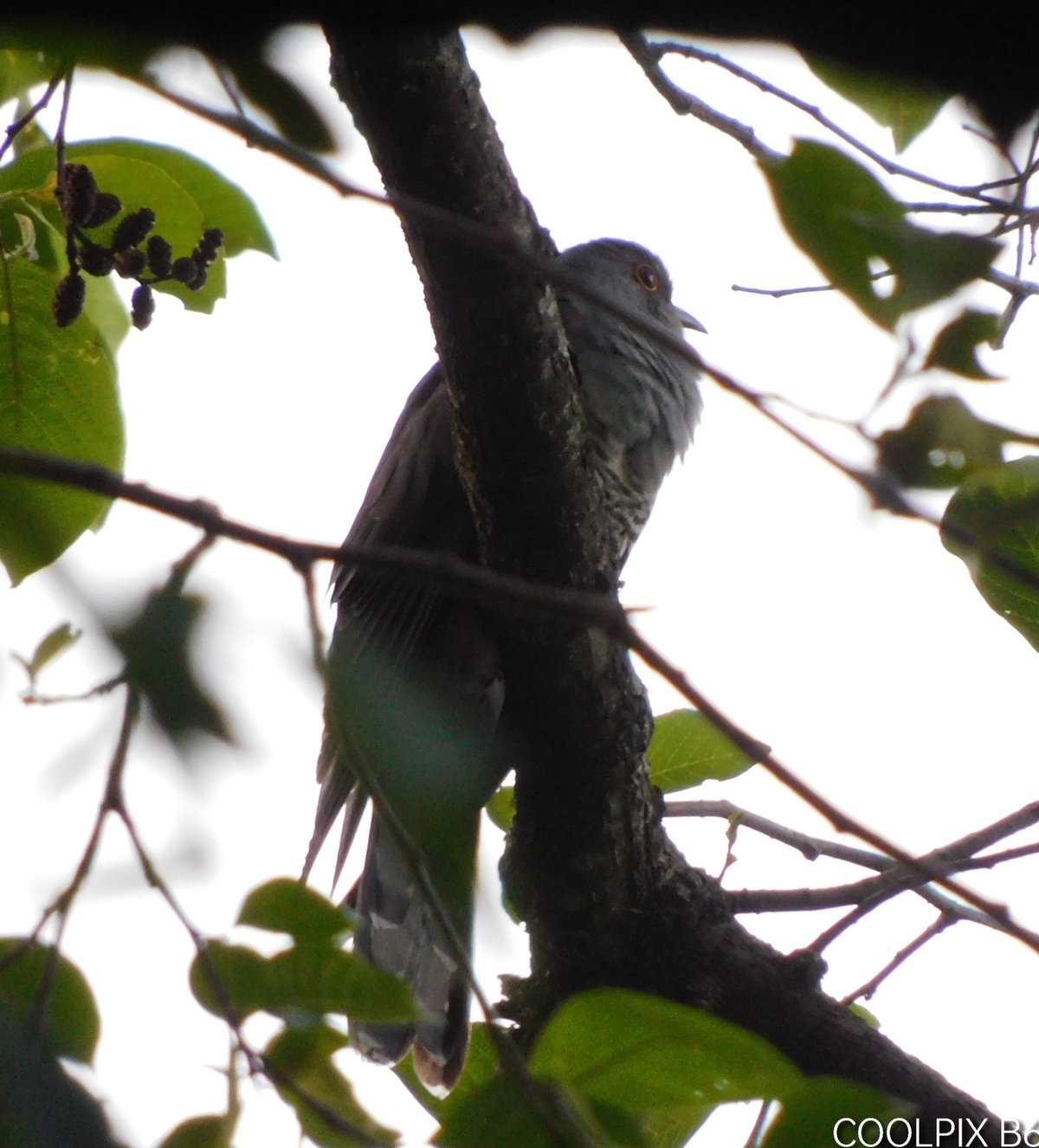
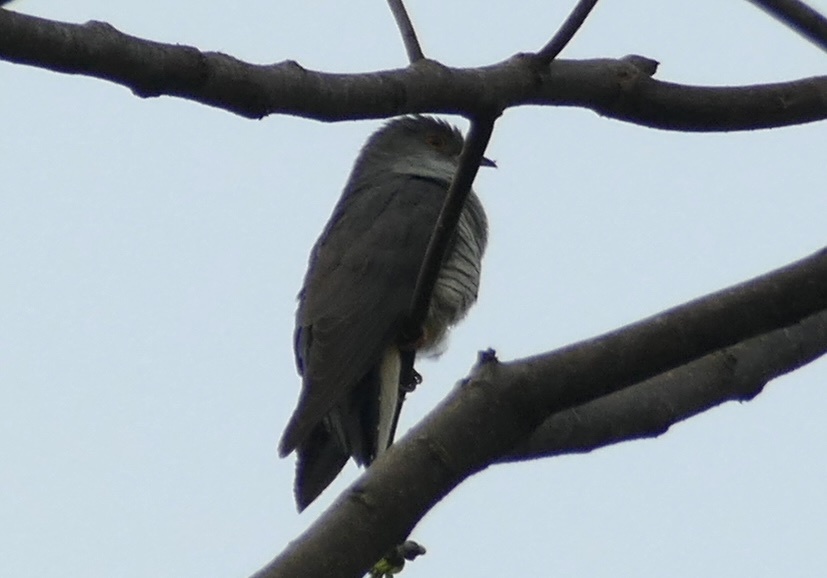
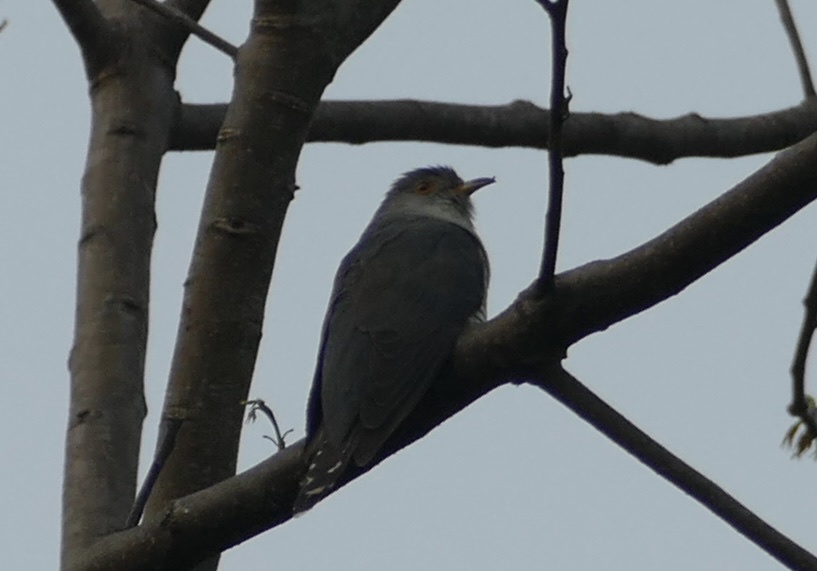
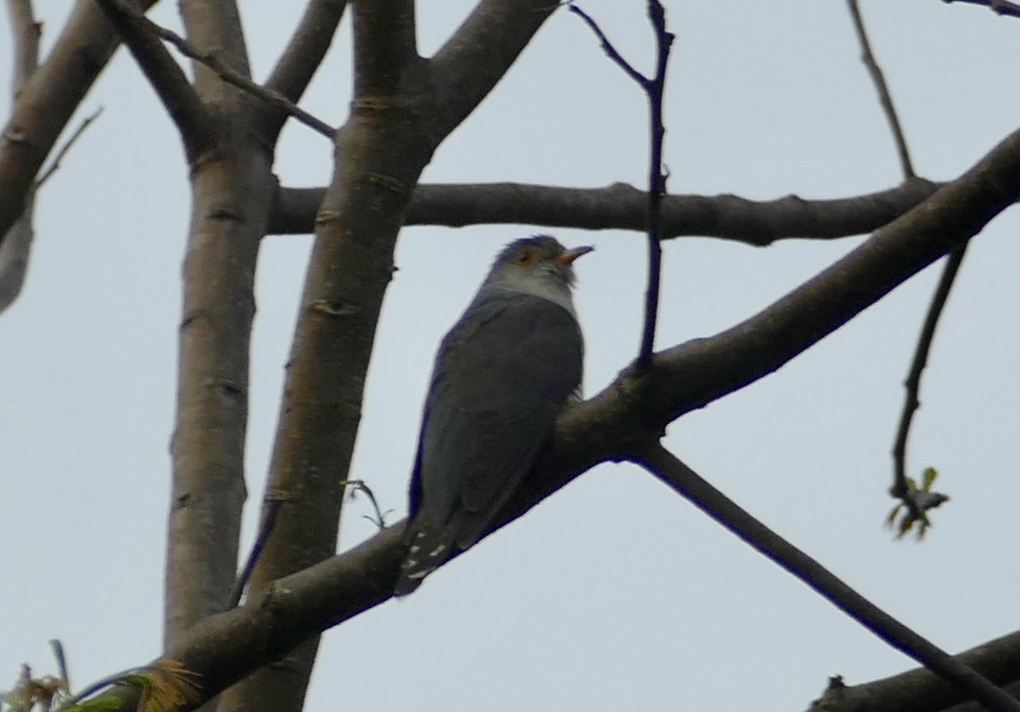
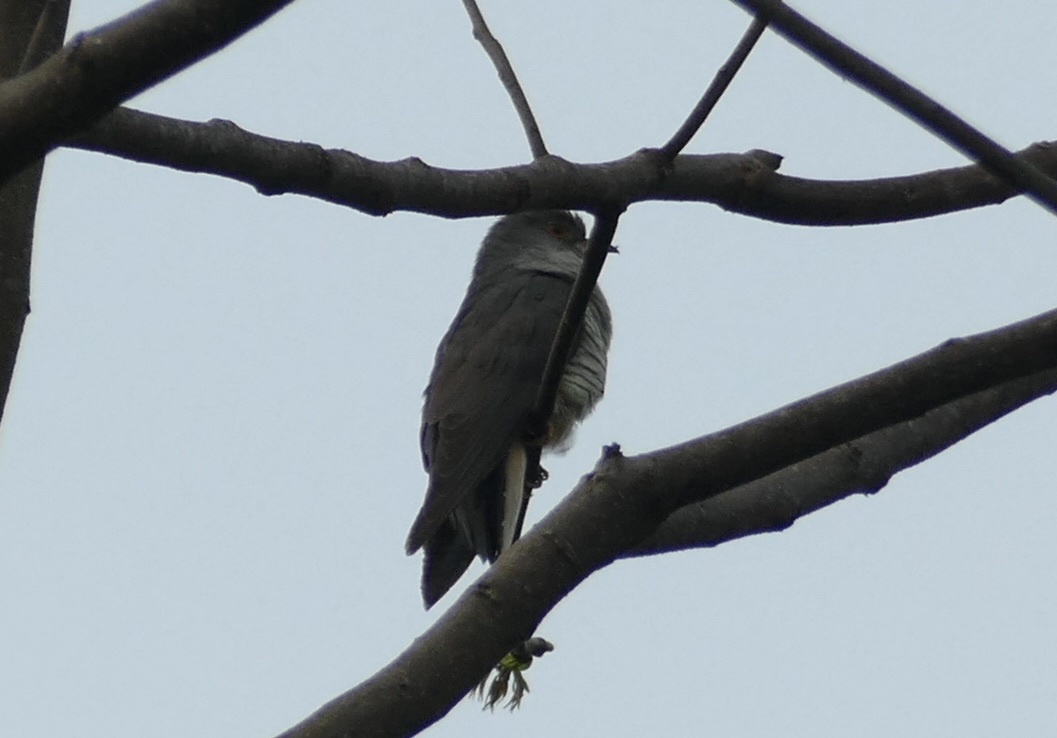
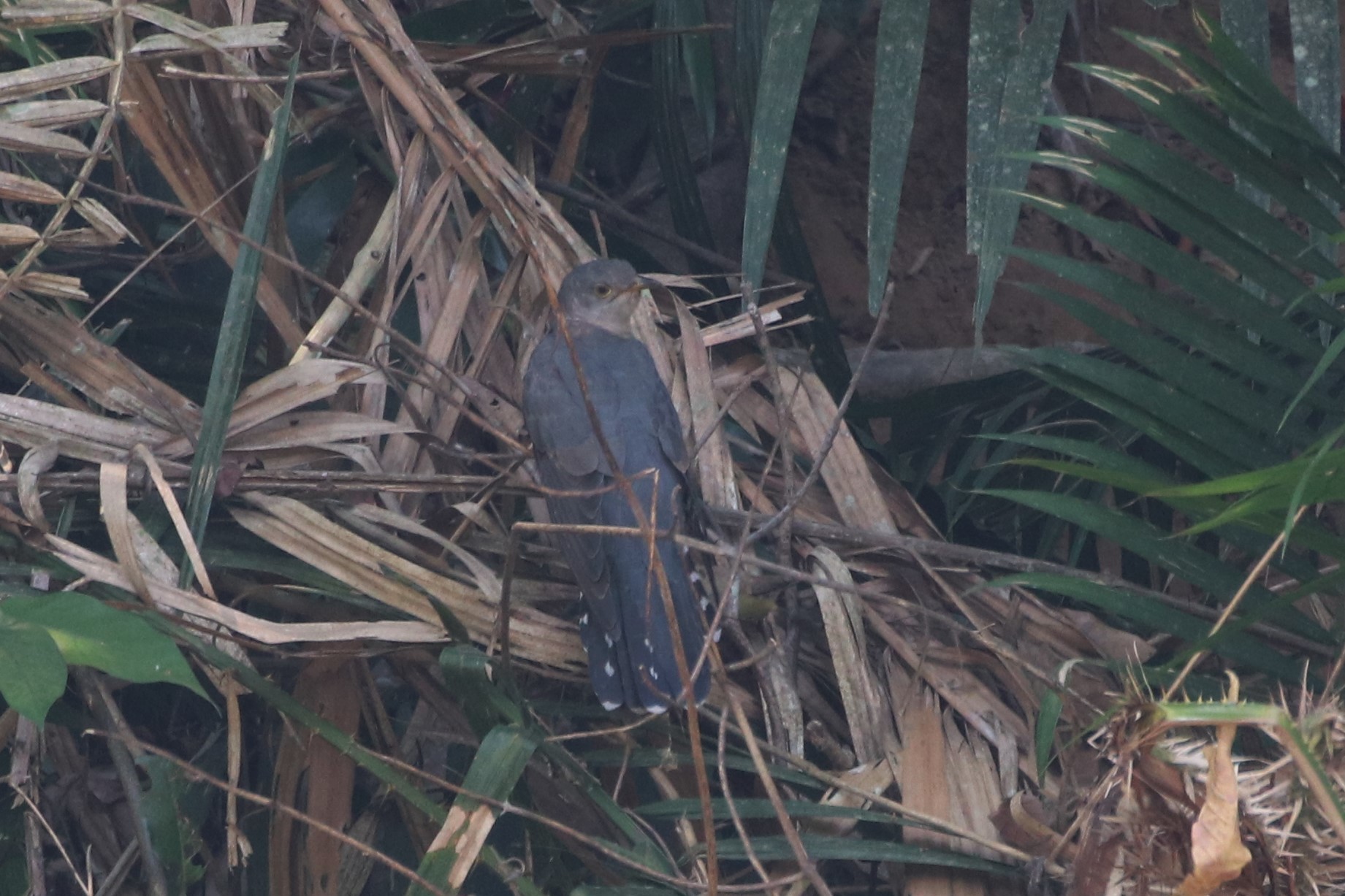
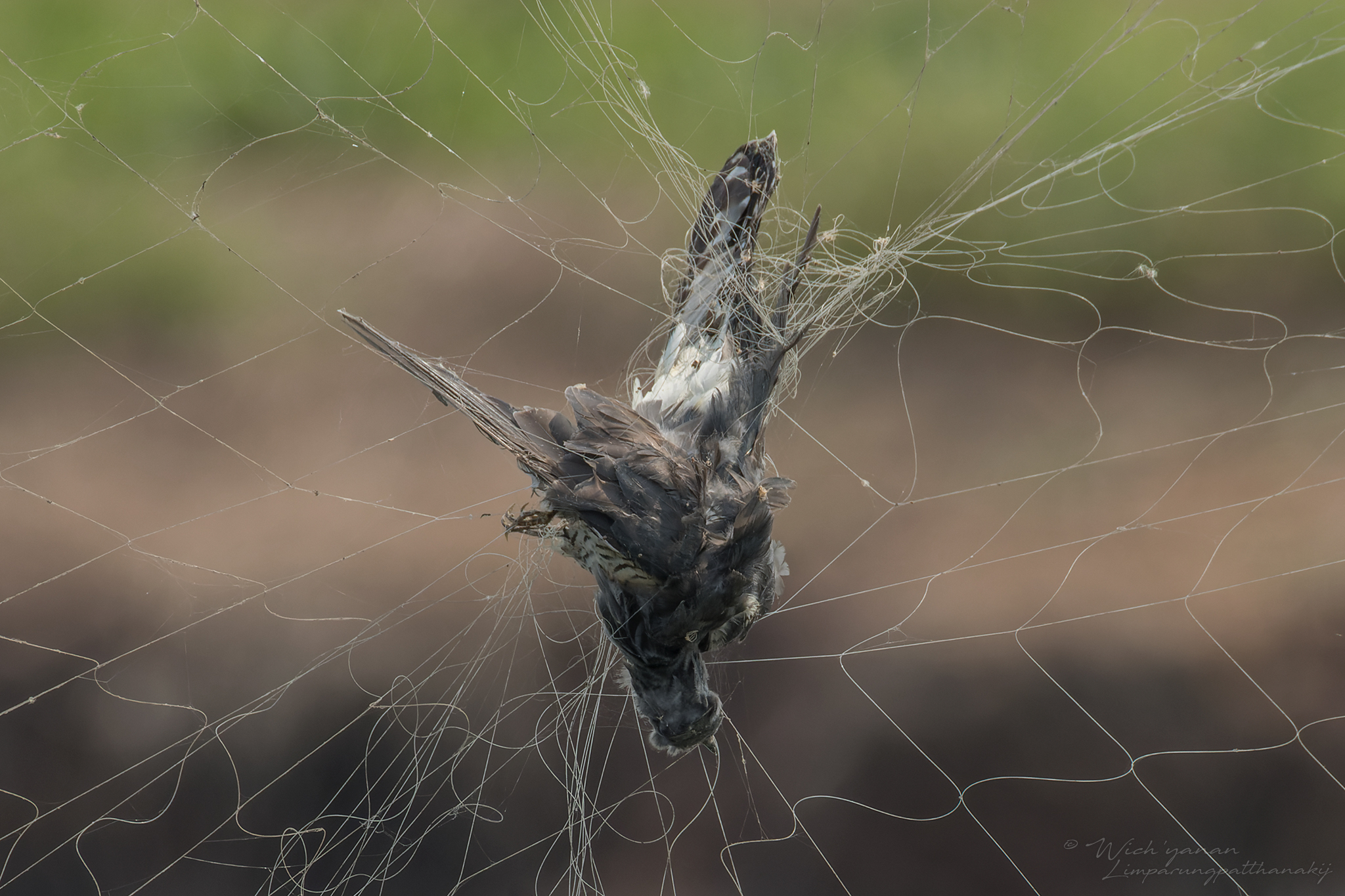
Adult males are dark ashy-grey above with a brown, almost black tail that is whitely spotted and tipped. The chin to breast is ash-grey; lower breast and abdomen are white with black bars. Vent is white to milky orange with varying bars. Eye-ring is yellow; irises range from yellow to brown or darker orange. Bill is black with an orange-yellow or green-yellow base. Legs and feet are yellow to orange. Size is approximately 30–35 cm in length and weighs 70–140 g. Females are similar but often have a rufous tinge to the breast, rump, and upper tail-coverts, which may be barred. Juveniles are slate grey above with white edges, barred white and black below, with a black throat featuring white bars. Two plumage morphs exist: grey and hepatic.
Identification
Essentially identical to the Oriental cuckoo but distinguished by wings with much broader and widely spaced black bars. Unlike the Common cuckoo, which has brown and white bars below the wing bend, this species is unbarred at the bend. The rufous morph features dark bars on undertail coverts. Male call is a high note followed by three lower flat notes ('hoop, hoop-hoop' or 'tun-tadun'), lower-pitched and more muffled than the Common Hoopoe. Males also produce hoarse croaks and harsh 'gaak-gaak-gak-ak-ak-ak' sounds. Female call is a bubbling 'quick-quick-quick'.
Distribution & Habitat
Breeds in northeast Pakistan, northern Indian subcontinent, southern China, and Taiwan. Specific breeding areas include Kashmir (late April to August) and Nepal (March to September). Rarely found above 1000m during breeding, though occurs at 1500–3300m in Kashmir, Myanmar, and Nepal, and up to 4500m in southwest China. Migrates to Southeast Asia, Greater Sundas, Philippines, Indonesia, New Guinea, and northern Australia from October to May. Winter habitats include primary and secondary tropical forests, savannas, gardens, teak plantations, and monsoon rainforests.
Behavior & Ecology
Diet consists mainly of insects, especially caterpillars (Arctiidae, Lasiocampidae, Sphingidae, Saturnidae, Noctuidae), from which gut content is removed before consumption. Also eats grasshoppers, beetles, spiders, stick-insects, crickets, mantids, flies, ants, fruits, pine shoots, and occasionally eggs or chicks of other birds like the Asian Stubtail. Forages arboreally, on ground, or via short aerial sallies; usually solitary but forms groups when food is abundant. Brood parasite laying eggs in nests of flycatchers, shrikes, white-eyes, and warblers (e.g., Phylloscopus, Locustella, Anthus, Prunella, Phoenicurus, Terpsiphone, Horornis, Urosphena, Ficedula, Enicurus, Spizixos, Emberiza, Prinia). Female lays about fifteen eggs in separate locations. Chick may push host eggs or chicks out of the nest. Eggs are pale blue or white with fine black, brown, or red stippling, measuring 19–25 mm by 12–16 mm.
Conservation
Assessed as Least Concern; not globally threatened. Population depends on forest habitat maintenance. Common and dispersed in the Himalayas and mountains of Borneo. Estimated European population is 5,000 to 10,000 breeding pairs.
Source: Wikipedia · CC BY-SA 3.0
Taxonomy
- Order
- Cuculiformes
- Family
- Cuculidae
- Genus
- Cuculus
Distribution
breeds southern Himalayas to southern China and Taiwan; winters to Indonesia
Vocalizations
Data Sources
Species description from Wikipedia, licensed under CC BY-SA 3.0.
Bird images and sounds sourced from GBIF, contributed by citizen scientists worldwide under Creative Commons licenses.
Taxonomy data from AviList 2025.