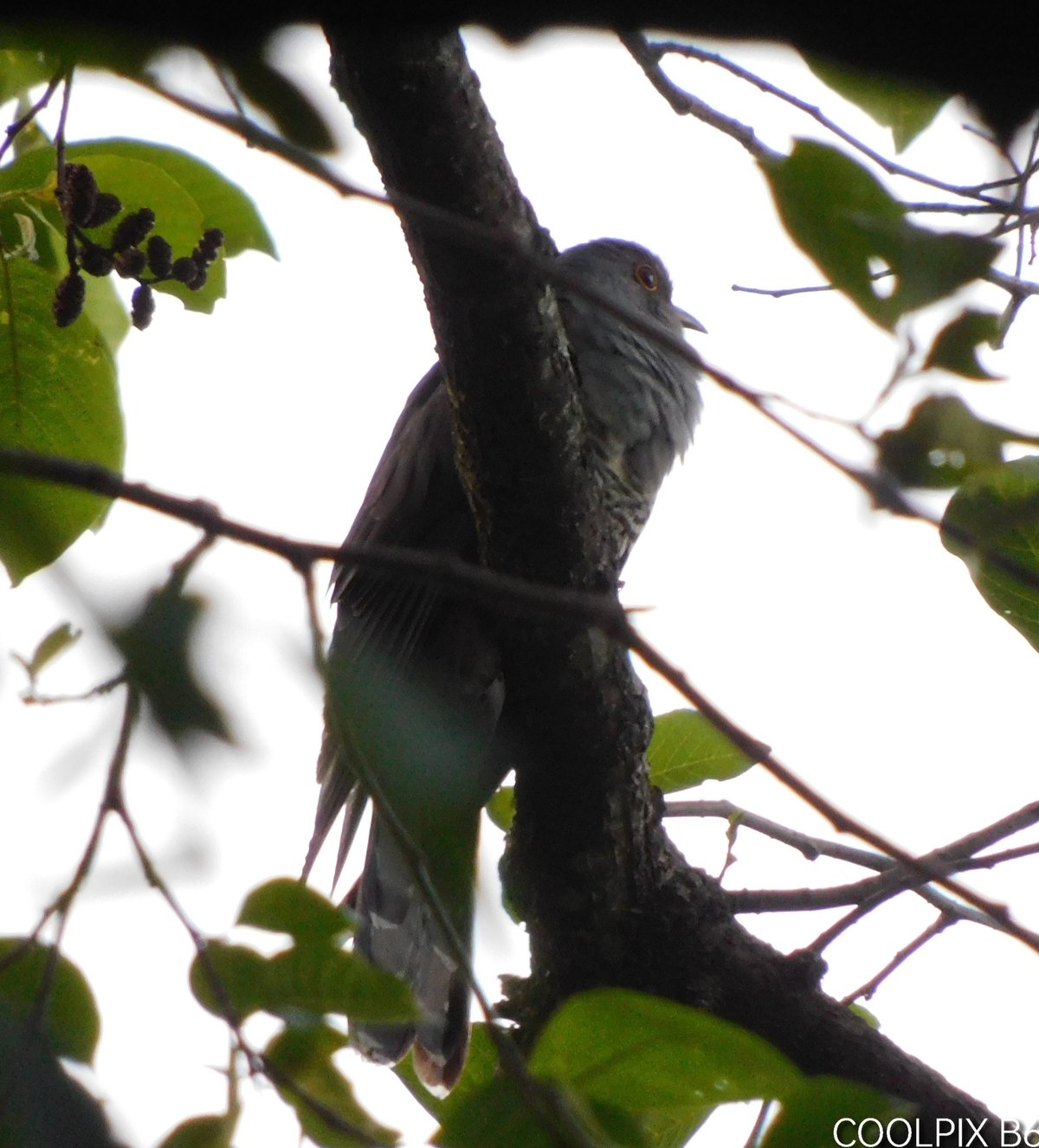
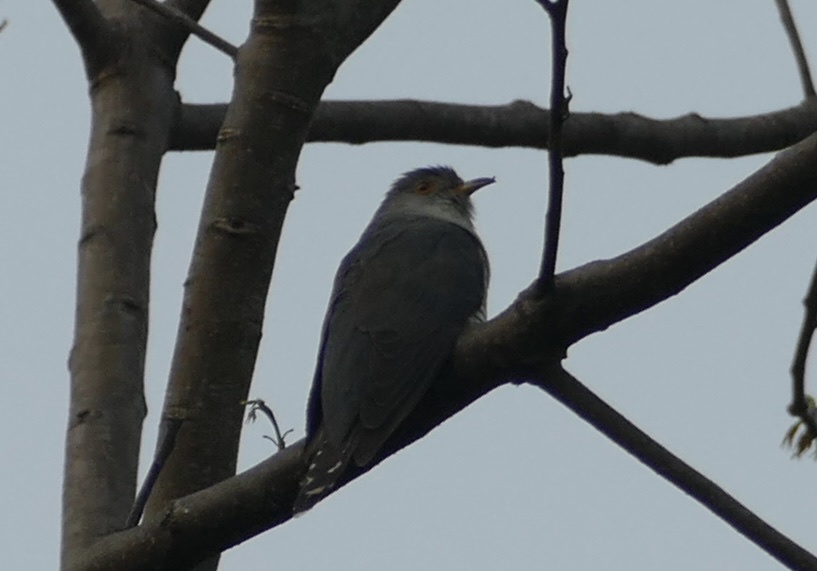
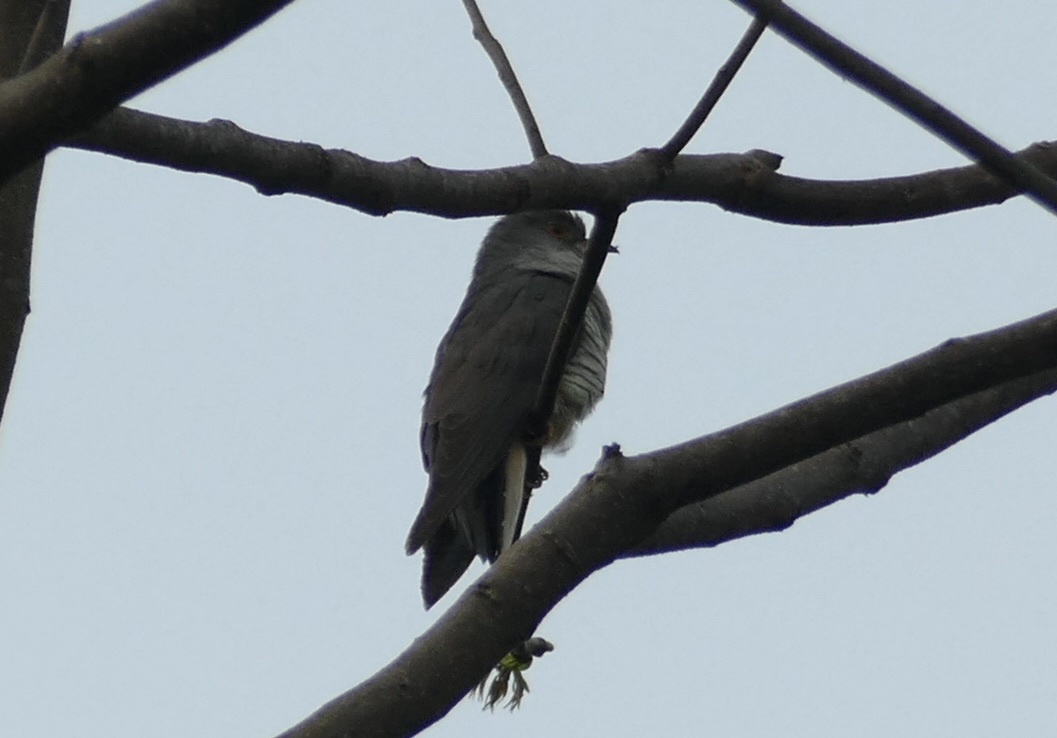



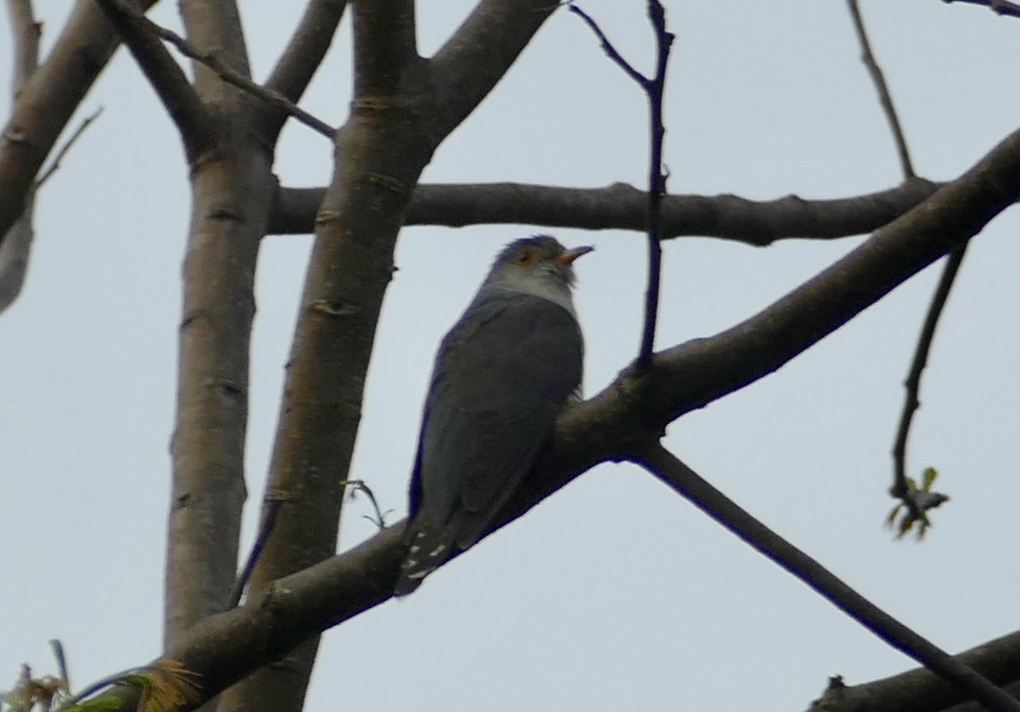
Himalayan Cuckoo
Cuculus saturatus
中杜鹃
Introduction
The Himalayan cuckoo (Cuculus saturatus) is a brood-parasitic species that was formerly classified within the broader 'Oriental cuckoo' complex until taxonomic revisions in 2005 split this group into three distinct species. It breeds from the Himalayas eastward through southern China to Taiwan, and migrates during the non-breeding season to Southeast Asia, the Greater Sunda Islands, and northern Australia. Genetic analysis indicates it is most closely related to the Common Cuckoo, forming a sister-clade with two other species. As a brood parasite, it lays eggs in the nests of other bird species, primarily small warblers, flycatchers, and other passerines, whose nesting period coincides with the cuckoo's breeding season. The species occurs in forested mountain habitats and is fairly common throughout its range.
Description
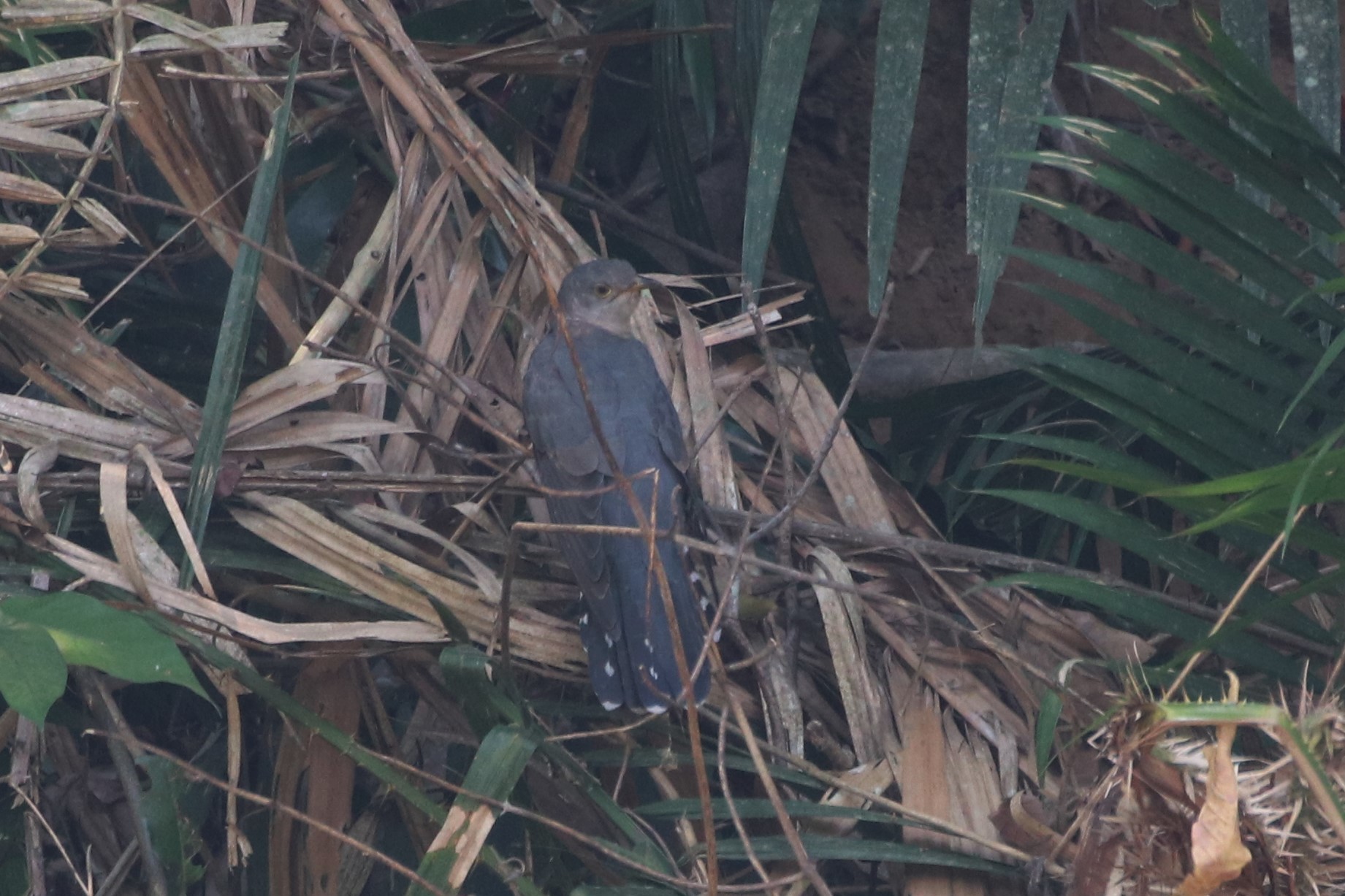
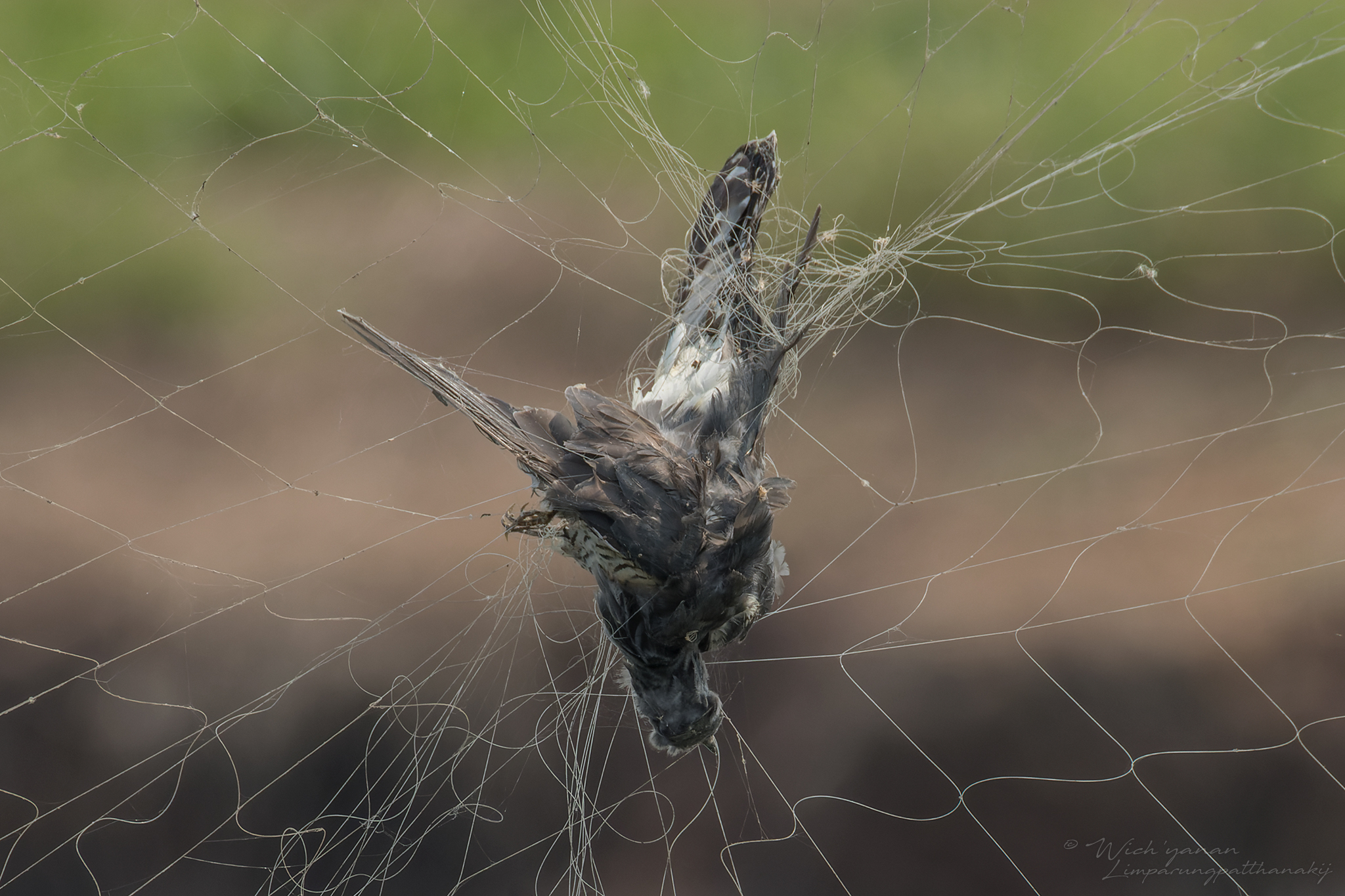
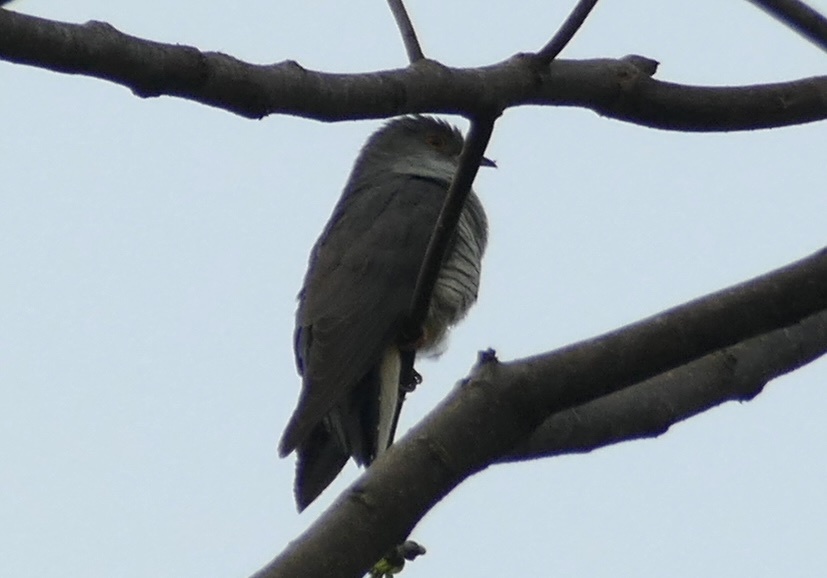
This medium-sized cuckoo measures 30-35 cm in length and weighs 70-140 g. Adult males have dark ashy-grey upperparts with a brown to almost black tail featuring white spots and a pale tip. The underparts from chin to breast are ash-grey, transitioning to white with black bars on the lower breast and abdomen. The yellow eye-ring contrasts with yellow to brown irises, while the bill is black with an orange-yellow or green-yellow base. Legs and feet range from yellow to orange. Females are similar but often show a rufous tinge on the breast, and occasionally on the rump and upper tail-coverts with dark bars. Two plumage morphs exist in both sexes: grey and hepatic. Juveniles have slate-grey upperparts with white edges, brown irises, black throat with white bars, and white and black barring below.
Identification
This species is nearly identical to the Oriental cuckoo (C. optatus), making field separation challenging where their ranges overlap. Compared to the Common cuckoo (C. canorus), it shows broader and more widely spaced black bars on the wings. The Common cuckoo displays brown and white bars below the wing bend with plain rufous coloring, whereas this species has an unbarred wing bend with a rufous morph of dark bars and undertail coverts. The vocalizations provide the most reliable identification clue, with the male's distinctive 'hoop, hoop-hoop' or 'tun-tadun' call differing from the Common cuckoo's famous 'cuckoo' vocalization.
Distribution & Habitat
The breeding range extends from northeast Pakistan across the northern Indian subcontinent to southern China and Taiwan, including Nepal, Kashmir, Assam, Burma, and Thailand. It breeds at elevations from 1000m to 4500m in suitable forested habitats. The winter migration takes it to Southeast Asia, the Greater Sunda Islands, the Philippines, Indonesia, New Guinea, and northern Australia, occurring from October to May. During breeding, it inhabits mixed coniferous and deciduous forests, thickets, birch forests, and mountain steppes with bushes. In winter, it occupies primary and secondary tropical forests, savannas, gardens, and teak plantations.
Behavior & Ecology
This species feeds primarily on insects, especially caterpillars from several families including Arctiidae, Lasiocampidae, Sphingidae, Saturnidae, and Noctuidae. It also consumes grasshoppers, beetles, spiders, stick-insects, crickets, mantids, flies, and ants, occasionally taking fruits and pine shoots. Foraging occurs arboreally but also on forest floors and open grassy areas. It typically forages alone but forms small groups at abundant food sources. Breeding follows the typical brood-parasitic strategy, with females laying approximately 15 eggs across separate host nests. Host species include flycatchers, shrikes, white-eyes, and particularly warblers of the genus Phylloscopus. Males call from high lookouts at dawn and dusk with a series of descending notes, while females produce a bubbling 'quick-quick-quick' call.
Conservation
The species is classified as Least Concern and is not considered globally threatened. Population numbers depend on the maintenance of forest habitats throughout its range. It is a common and dispersed species in the Himalayan region, with an estimated European population of 5,000 to 10,000 breeding pairs. In Borneo, it occurs in equal numbers with the Sunda cuckoo. It is considered a rare winter visitor to Malaysia's lowlands and a suspected passage migrant through Thailand, Indochina, the Philippines, and the Solomon Islands. No significant population declines have been documented, though habitat loss could affect local populations.
Culture
No specific cultural significance or folklore was documented for this species in available sources.
Source: Wikipedia · CC BY-SA 3.0
Taxonomy
- Order
- Cuculiformes
- Family
- Cuculidae
- Genus
- Cuculus
- eBird Code
- himcuc1
Distribution
breeds southern Himalayas to southern China and Taiwan; winters to Indonesia
Vocalizations
Data Sources
Species description from Wikipedia, licensed under CC BY-SA 3.0.
Bird images and sounds sourced from GBIF, contributed by citizen scientists worldwide under Creative Commons licenses.
Taxonomy data from AviList 2025.