Cuculiformes / Cuculidae / Cuculus
Oriental Cuckoo
Cuculus optatus · 东方中杜鹃
Introduction
A member of the genus Cuculus in the family Cuculidae, formerly classified as a subspecies of the Himalayan cuckoo. It inhabits forests across northern Eurasia and migrates to Southeast Asia and Australasia. The species is a brood parasite, laying eggs in the nests of warblers and other small birds.
Description
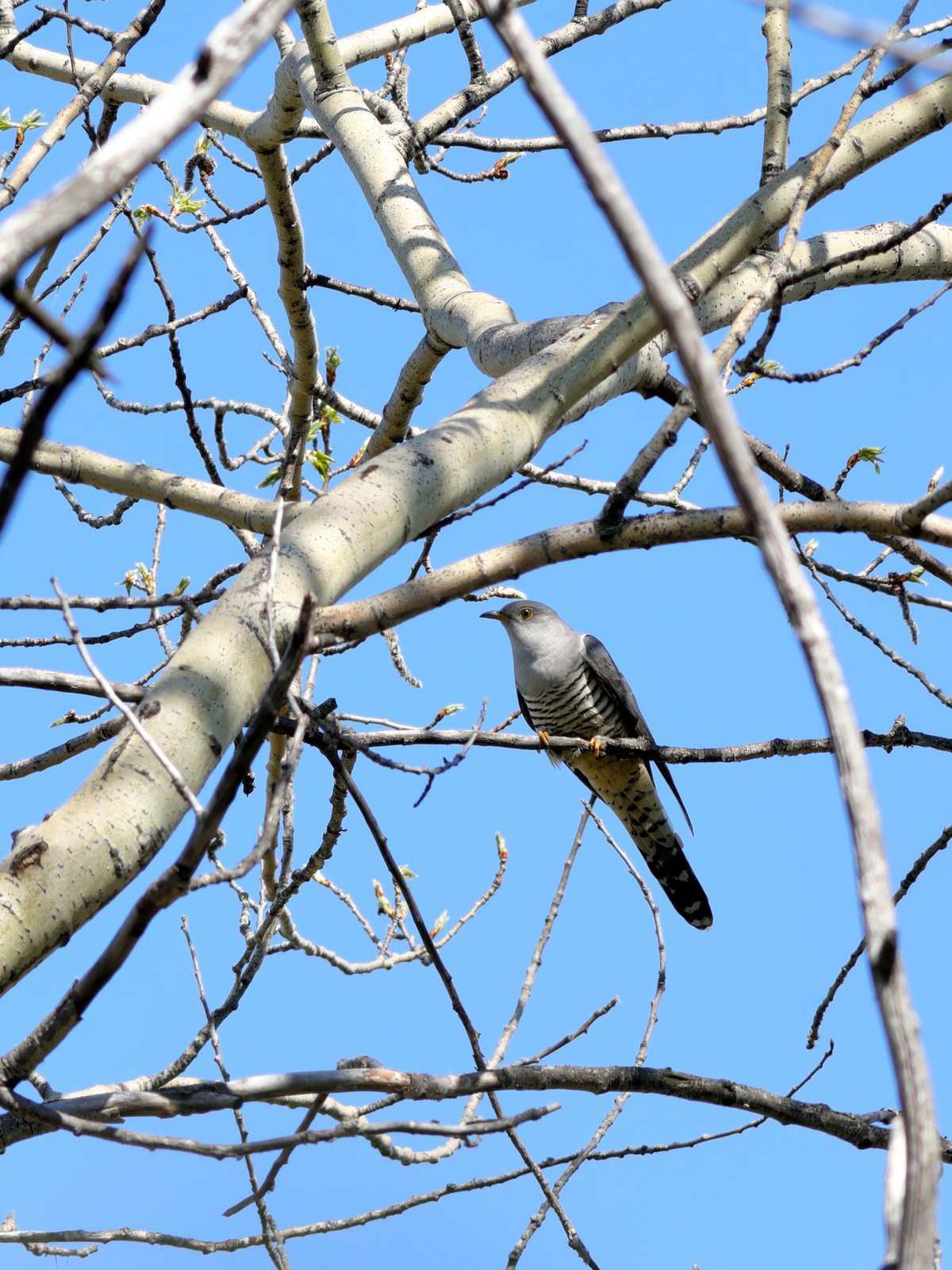
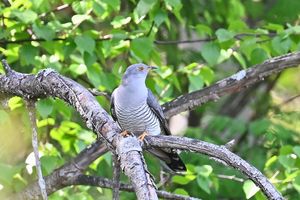
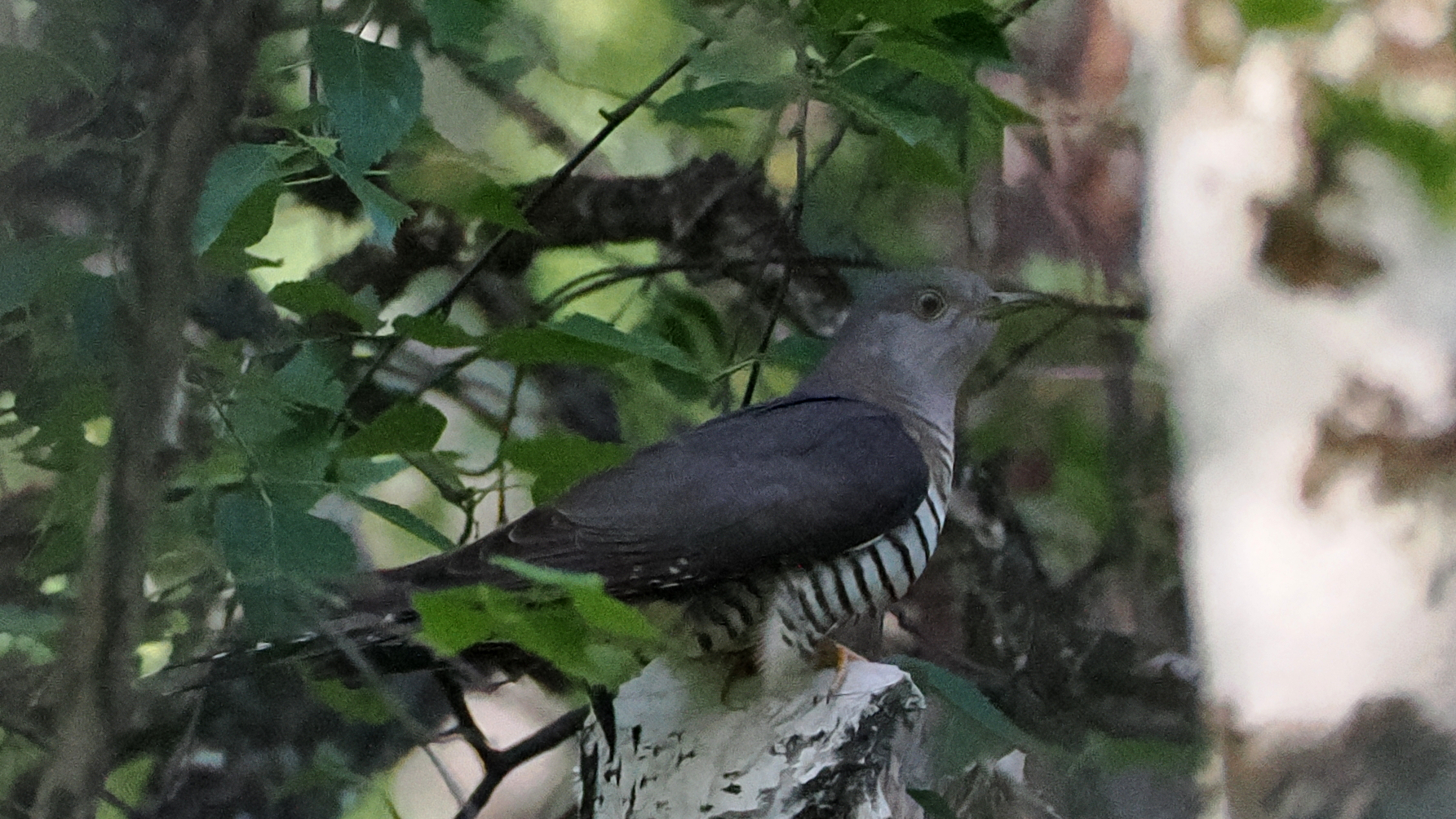
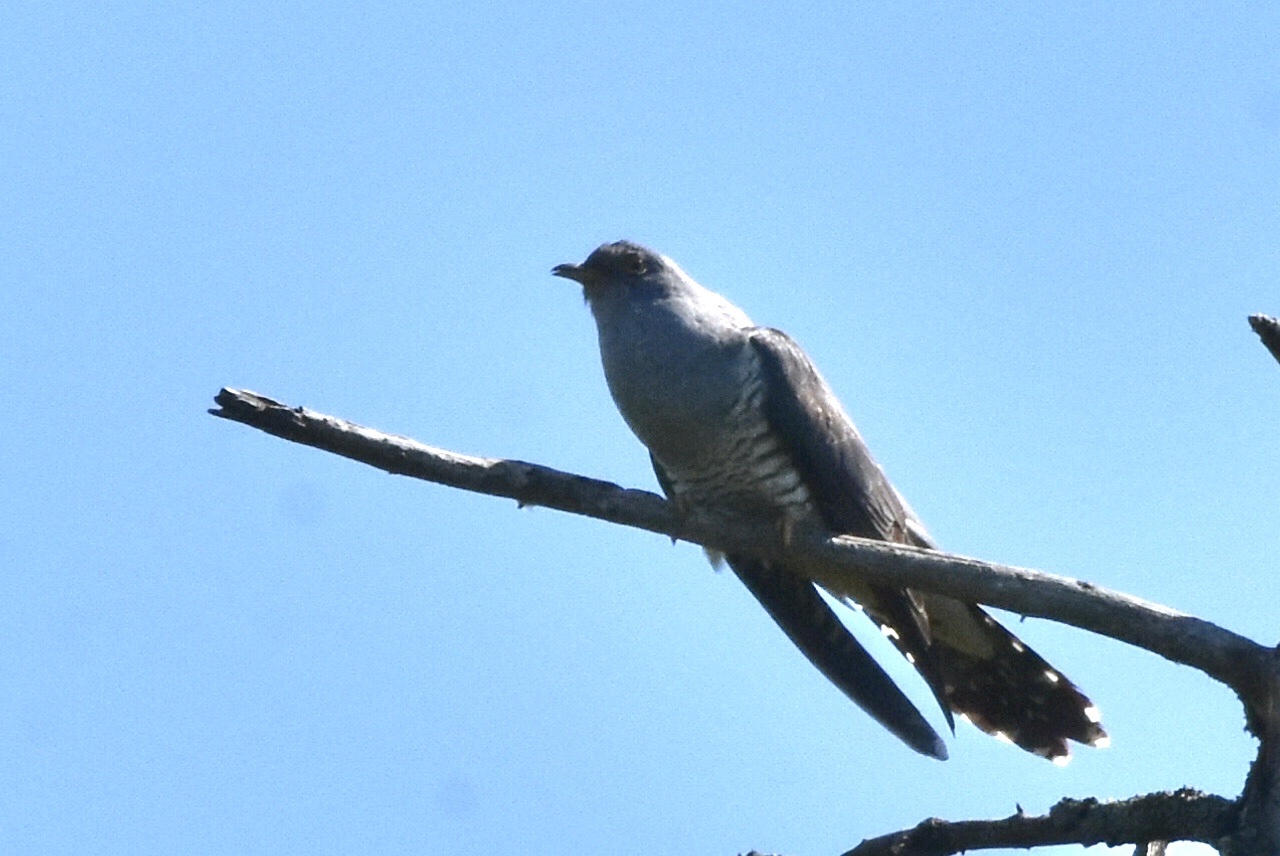
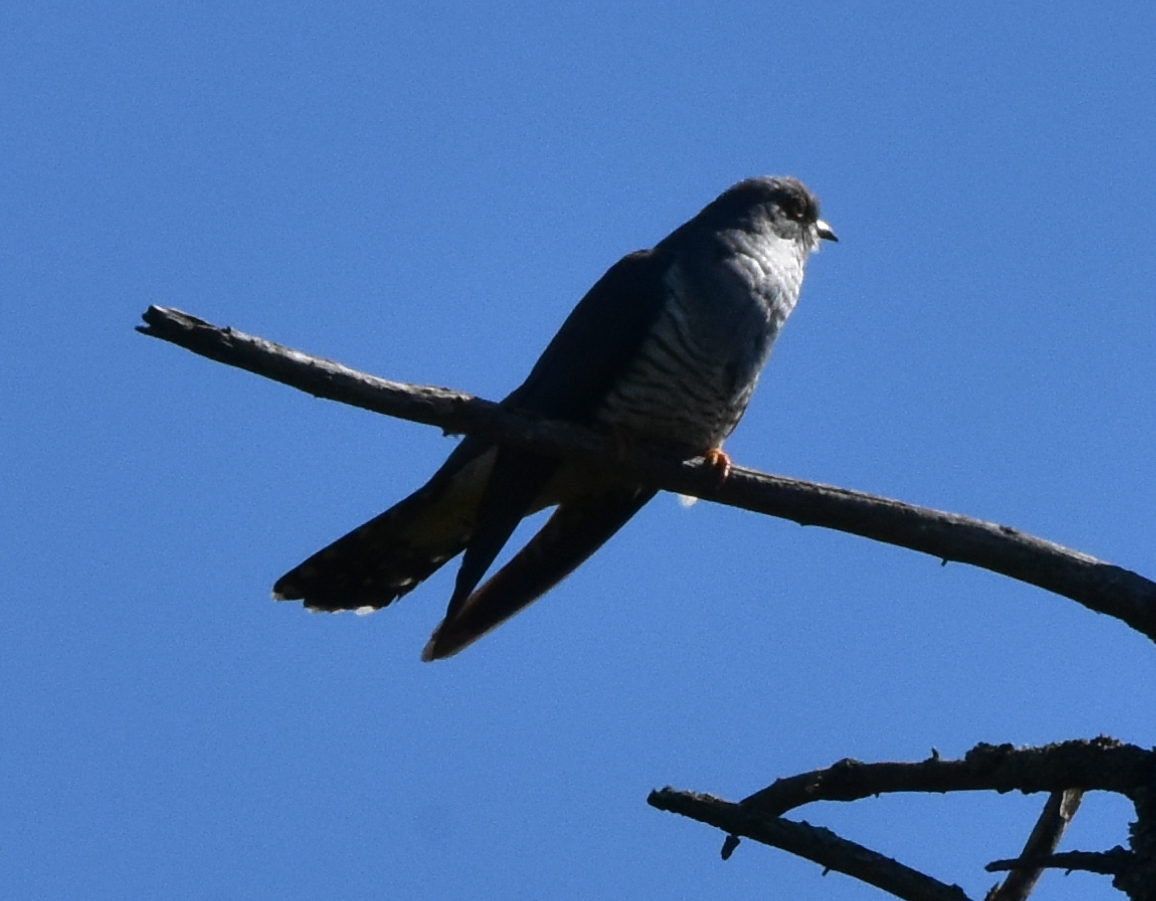
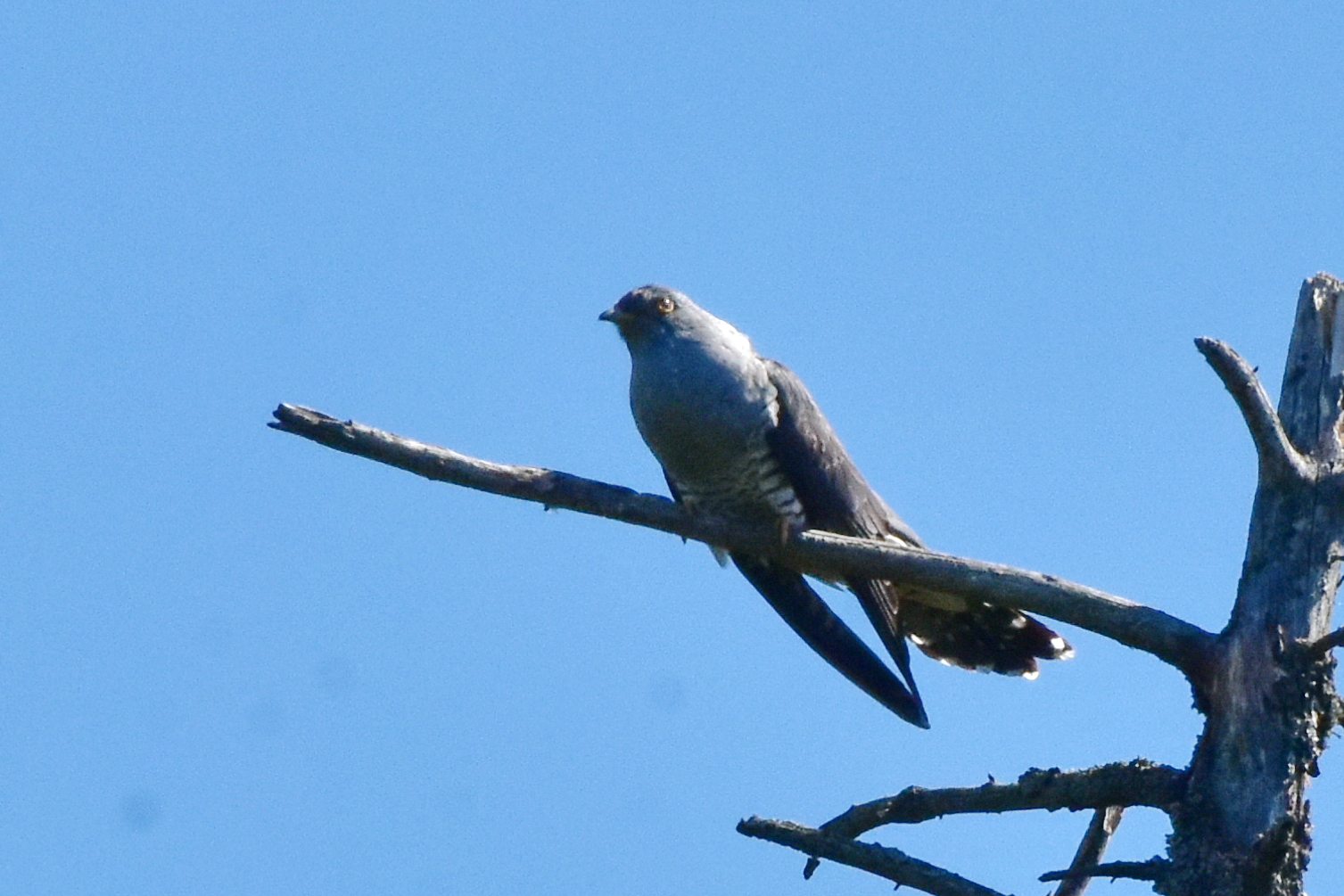
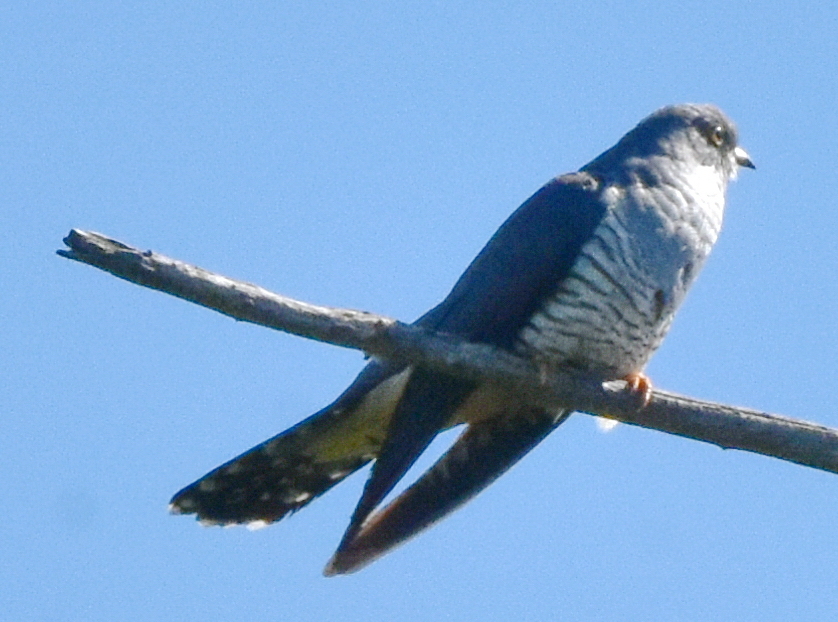
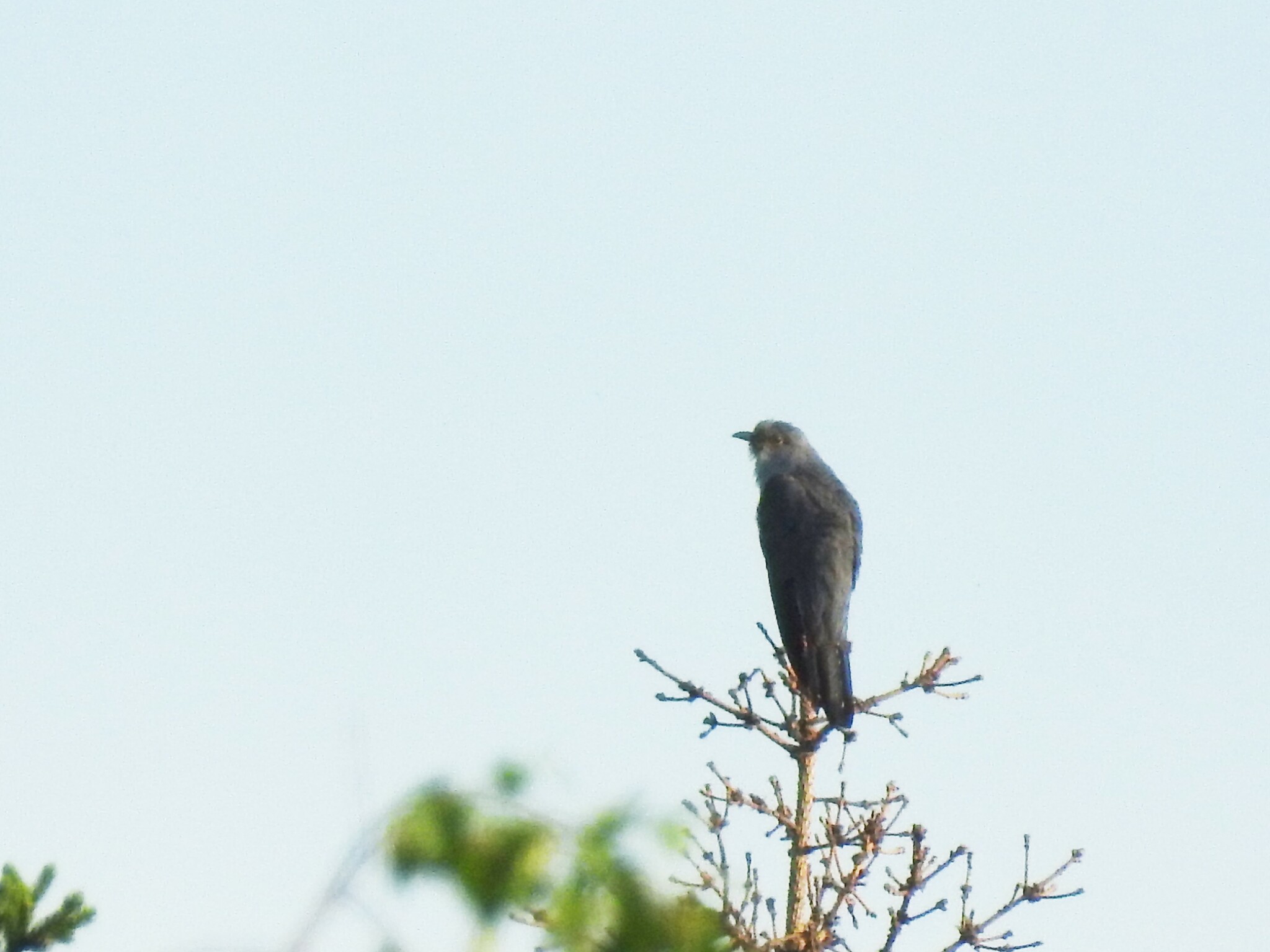
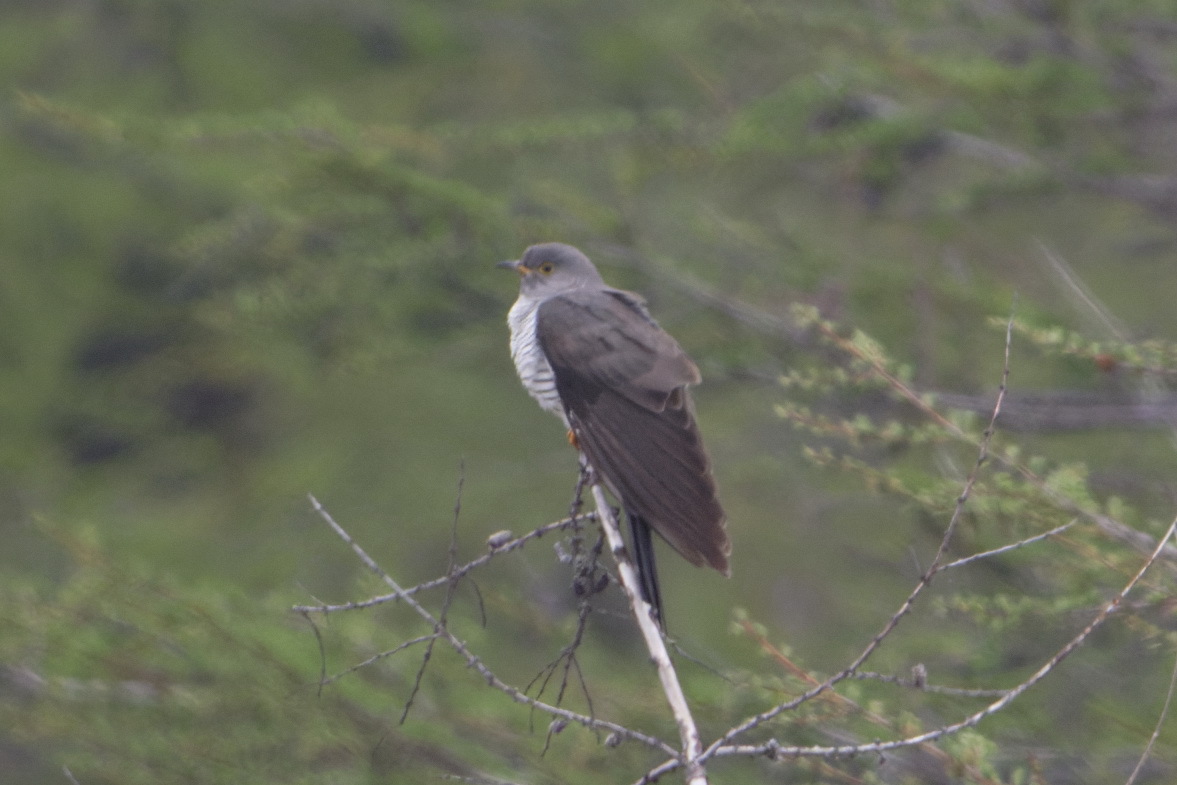
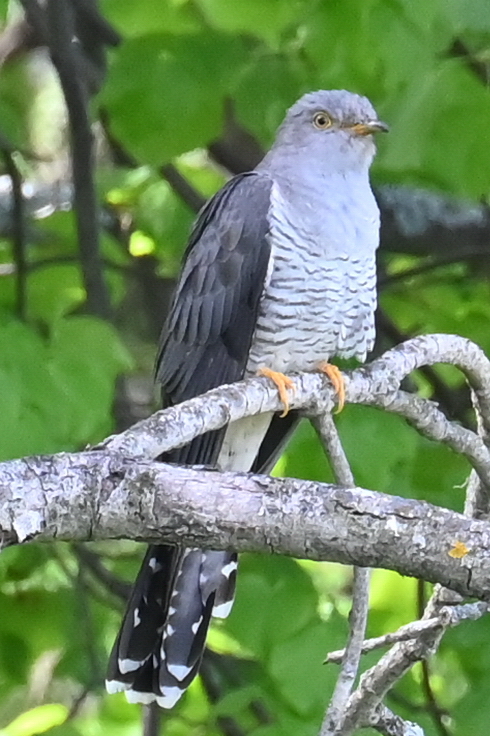
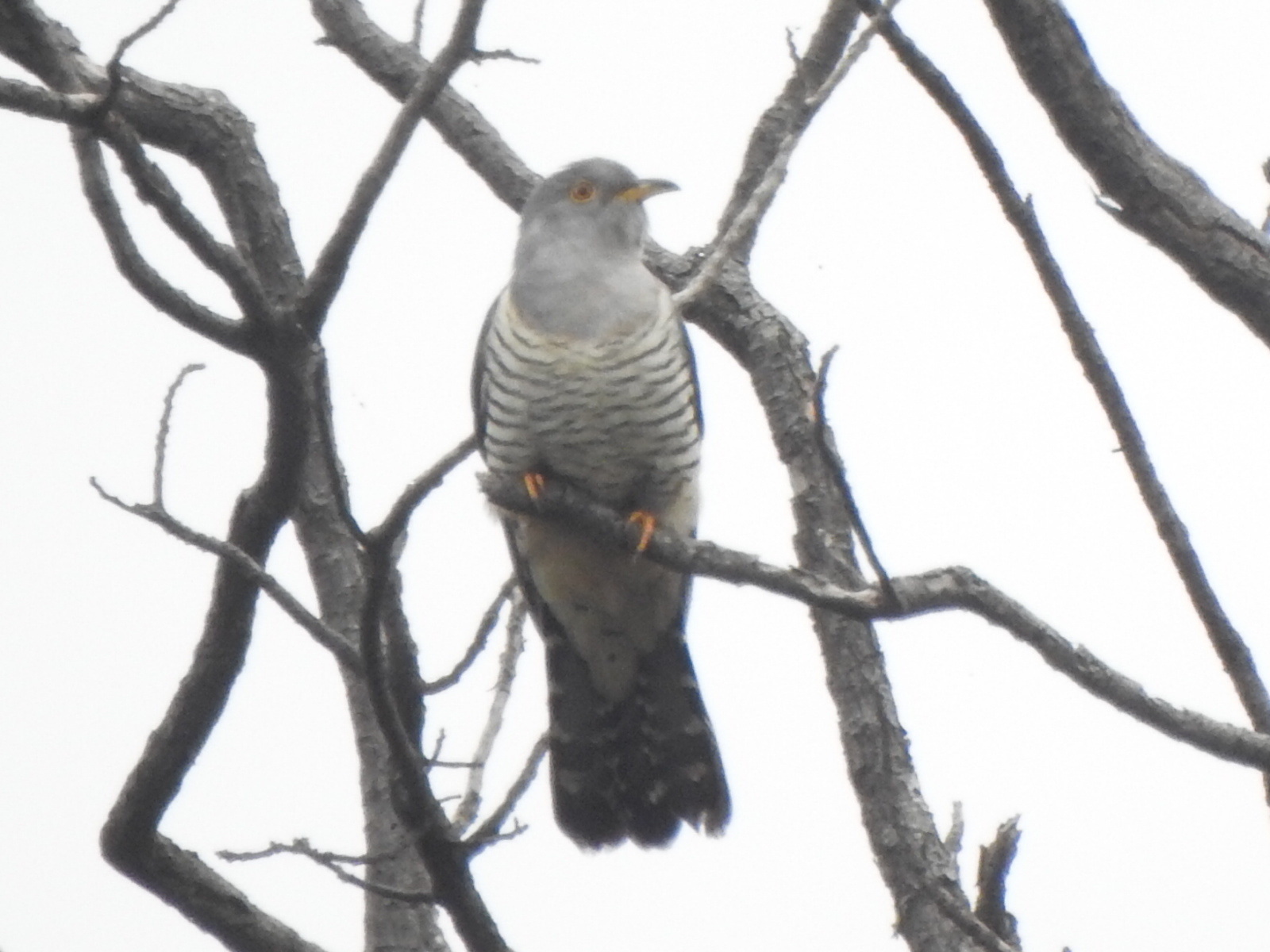
Length 30–32 cm, wingspan 51–57 cm, weight 73–156 g. Adult males have a grey head, breast, and upperparts, with a creamy-white belly featuring dark bars. The vent is frequently buff with few markings. Legs and feet are orange-yellow, with a bare yellow eye ring. Adult females and juveniles occur in two morphs: a grey morph similar to the male but with a brownish breast wash, and a rufous morph that is reddish-brown above with strong dark bands on the underparts and rump.
Identification
Distinguished from the common cuckoo by being less bulky, with shorter wings and tail, and a slightly larger head and bill. The vent is often buff rather than white. Rufous morphs have dark bars on the rump, unlike the plain-rumped rufous common cuckoo. Smaller and longer-winged than the extremely similar Himalayan cuckoo. Male call is a series of low, equally stressed paired notes (poo-poo), sometimes introduced by a 4–8 note phrase. Female call is a deep bubbling trill.
Distribution & Habitat
Breeds across northern Eurasia, including much of Russia (west to Komi Republic, occasionally Saint Petersburg), northern Kazakhstan, Mongolia, northern China, Korea, and Japan. Winters in the Malay Peninsula, Indonesia, Philippines, New Guinea, western Micronesia, Solomon Islands, and northern and eastern Australia, with occasional records in New Zealand. Vagrants recorded in Ukraine, Israel, and Alaska.
Behavior & Ecology
Inhabits coniferous, deciduous, and mixed forests. Feeds mainly on insects and larvae, foraging in trees, bushes, and on the ground. Secretive and hard to see. Arrives at southern Russian breeding grounds later (end of April) than the sympatric common cuckoo. A brood parasite targeting Phylloscopus warblers (Arctic, eastern crowned, willow, chiffchaff), olive-backed pipit, and Asian stubtail. Eggs mimic host coloration and incubate for about 12 days. Chicks push host eggs or young out of the nest and fledge after 17–19 days.
Source: Wikipedia · CC BY-SA 3.0
Taxonomy
- Order
- Cuculiformes
- Family
- Cuculidae
- Genus
- Cuculus
Distribution
breeds western Russia and Kazakhstan through northeastern Russia to Japan; winters southeastern Asia, Indonesian Archipelago, and Philippines to northern and eastern Australia (Kimberley region of Western Australia to southern New South Wales), New Guinea and satellite islands, Bismarck Archipelago, and Solomon Islands
Vocalizations
Data Sources
CBR Notes: 中文名由北方中杜鹃改为东方中杜鹃,IUCN红色名录等级改为LC
Species description from Wikipedia, licensed under CC BY-SA 3.0.
Bird images and sounds sourced from GBIF, contributed by citizen scientists worldwide under Creative Commons licenses.
Taxonomy data from AviList 2025.