Oriental Cuckoo
Cuculus optatus
东方中杜鹃
Introduction
This migratory cuckoo (family Cuculidae) breeds across northern Eurasia from Russia through Kazakhstan, Mongolia, northern China, Korea, and Japan. It inhabits forested habitats. The species was recently separated taxonomically from the Himalayan cuckoo based on differences in voice and morphology. As a brood parasite, it lays eggs in the nests of small warblers and pipits. Its wintering range includes Southeast Asia, Indonesia, the Philippines, New Guinea, and Australia, though specific distribution in this region remains incompletely documented due to identification difficulties with related species. Males are vocal during the breeding season.
Description
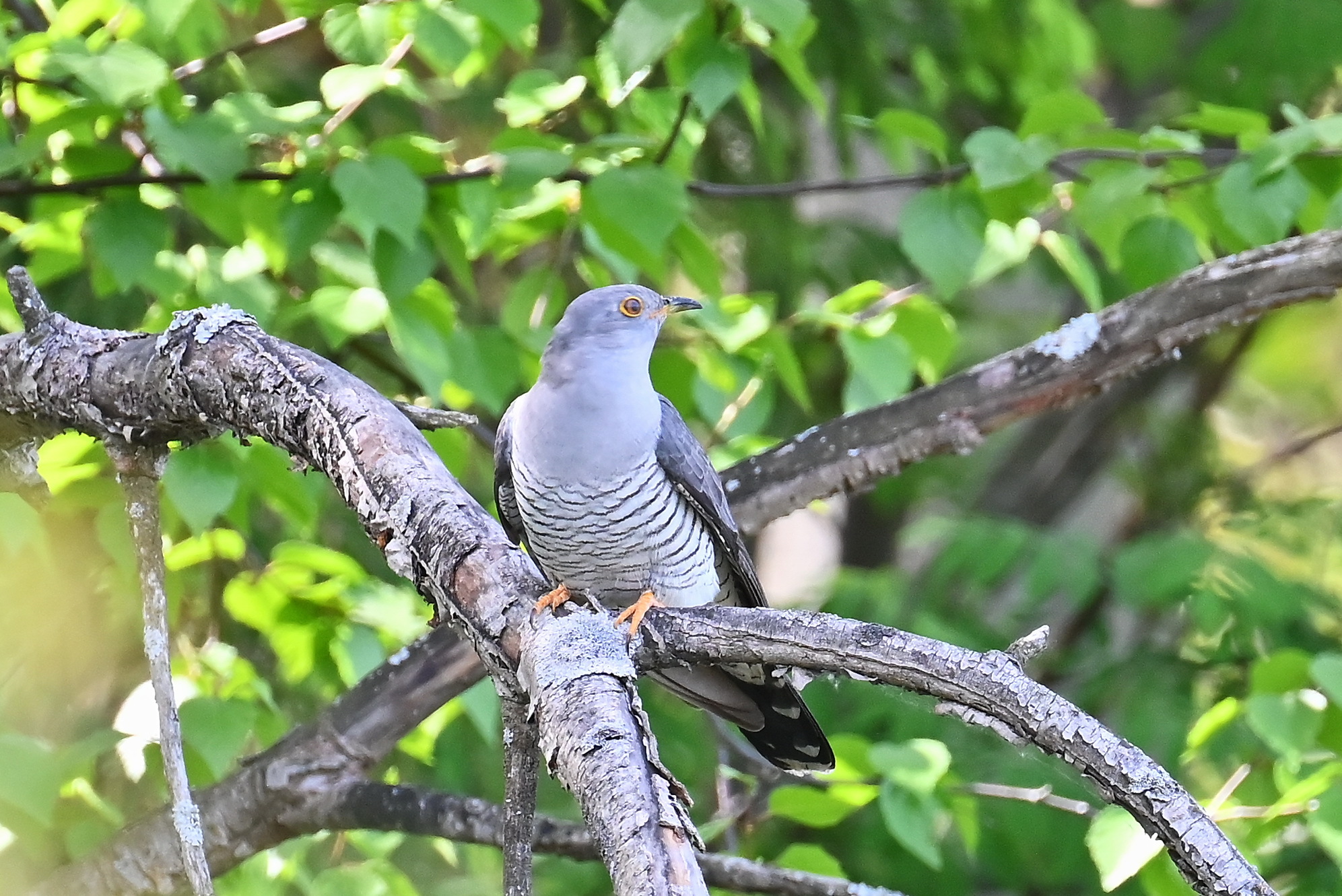
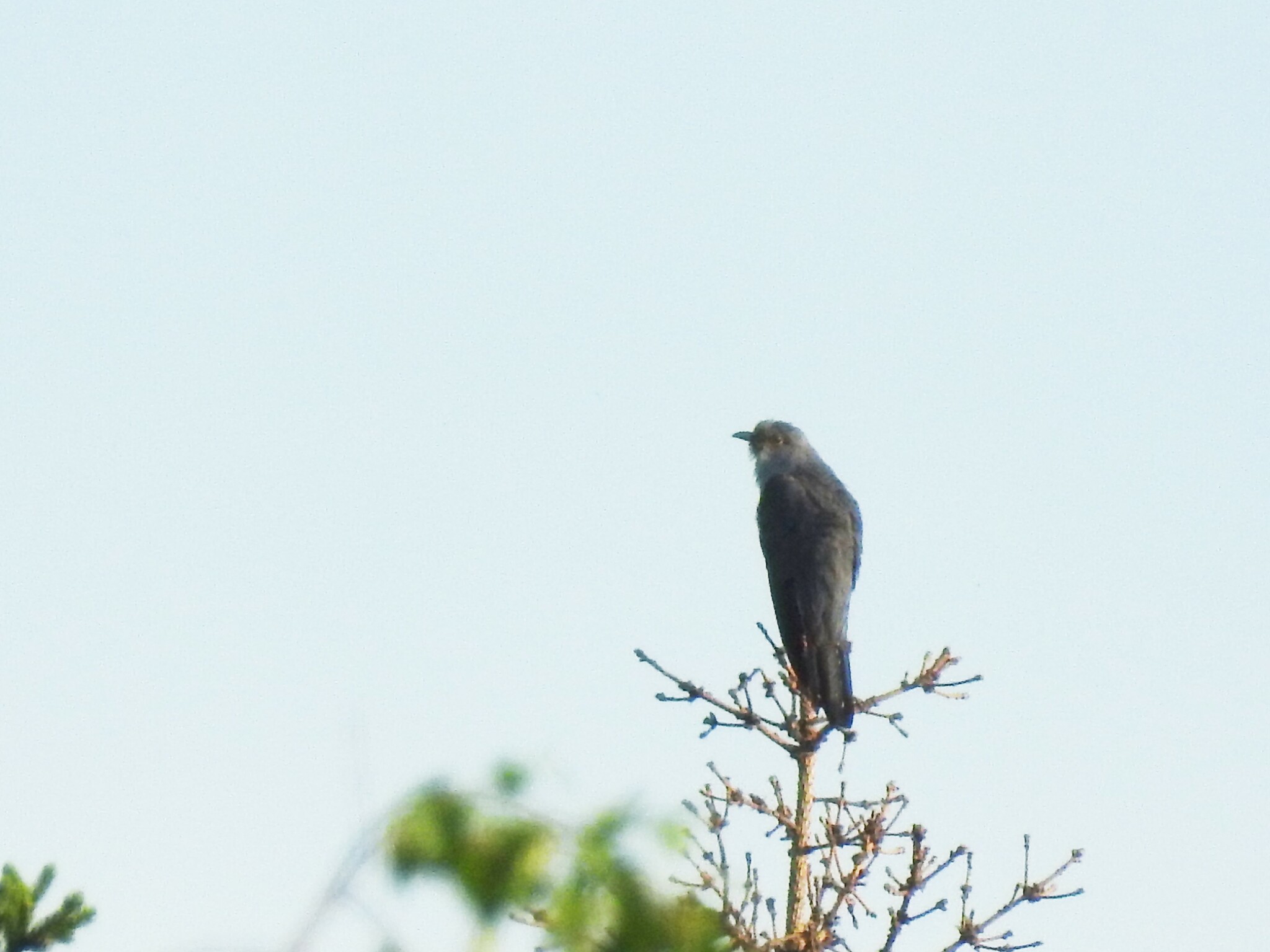
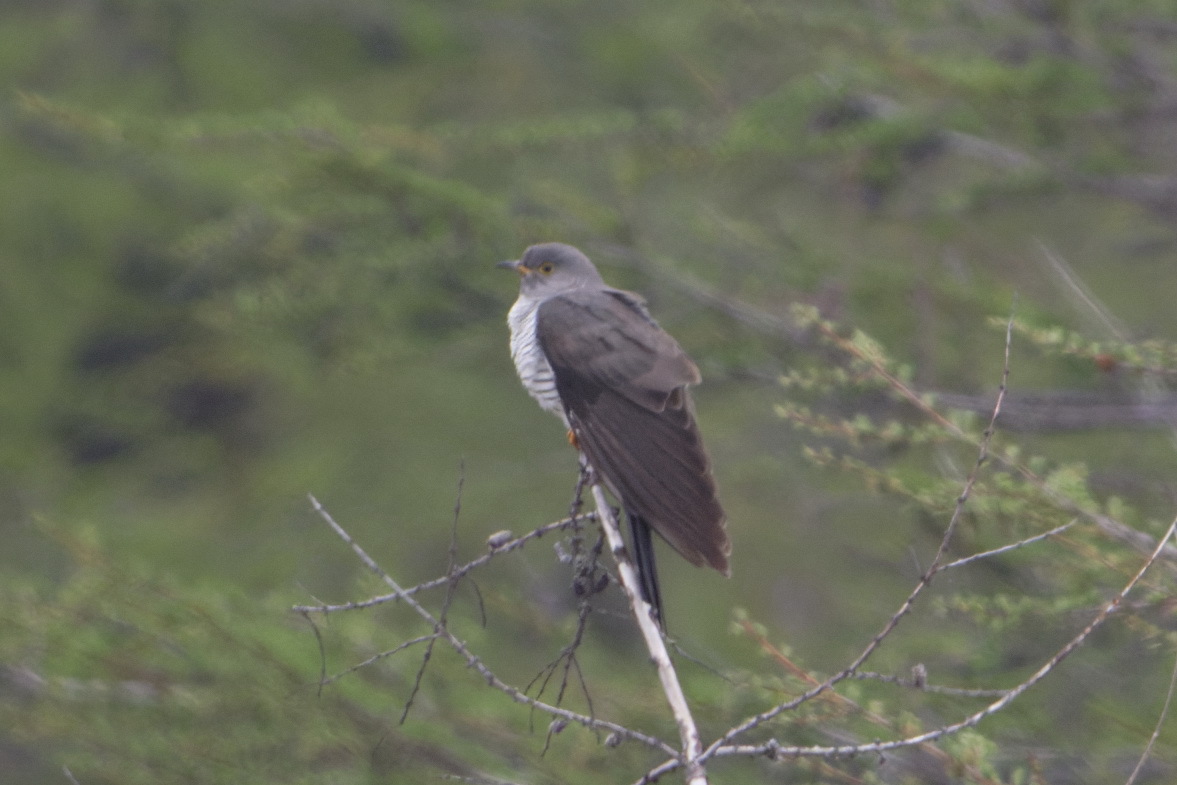
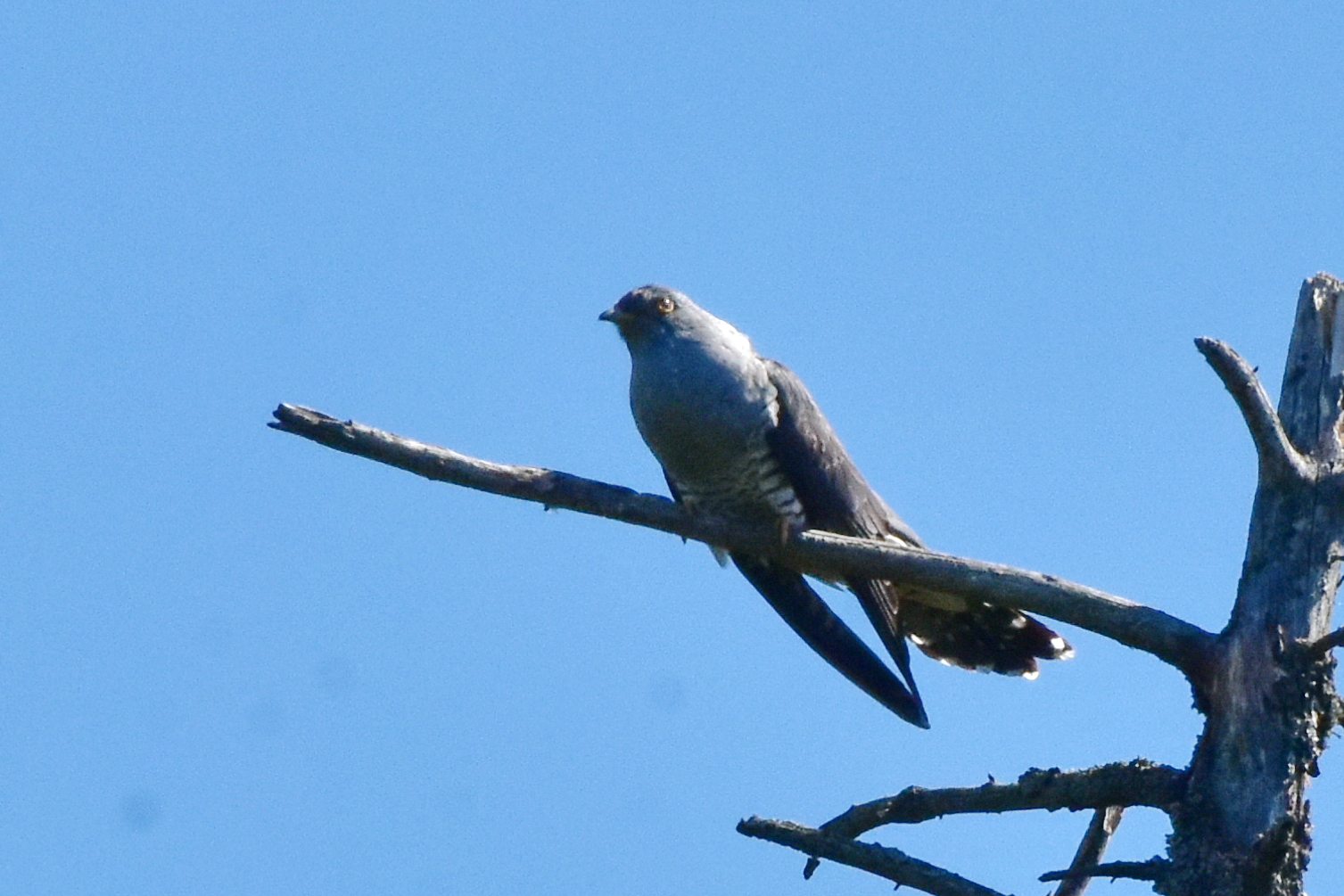
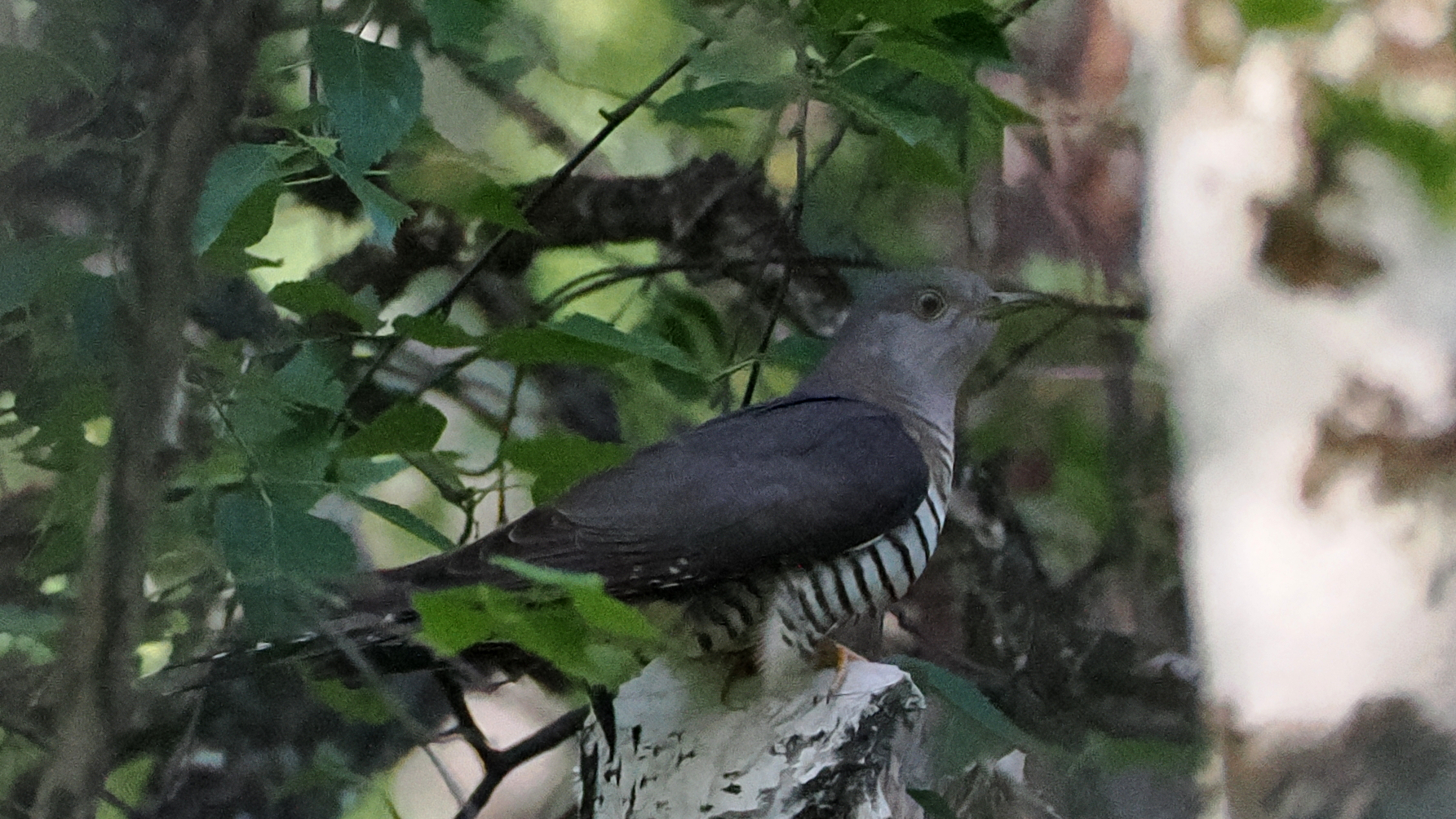
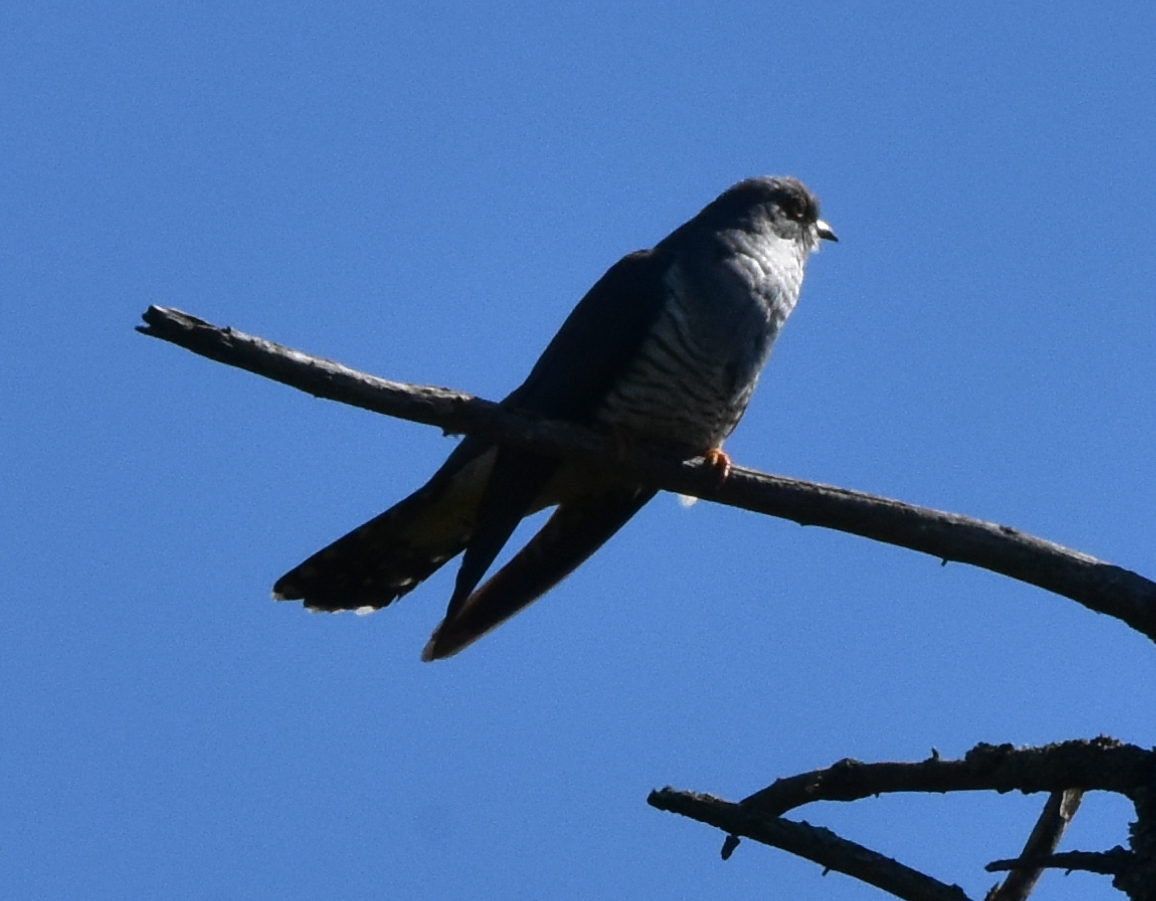
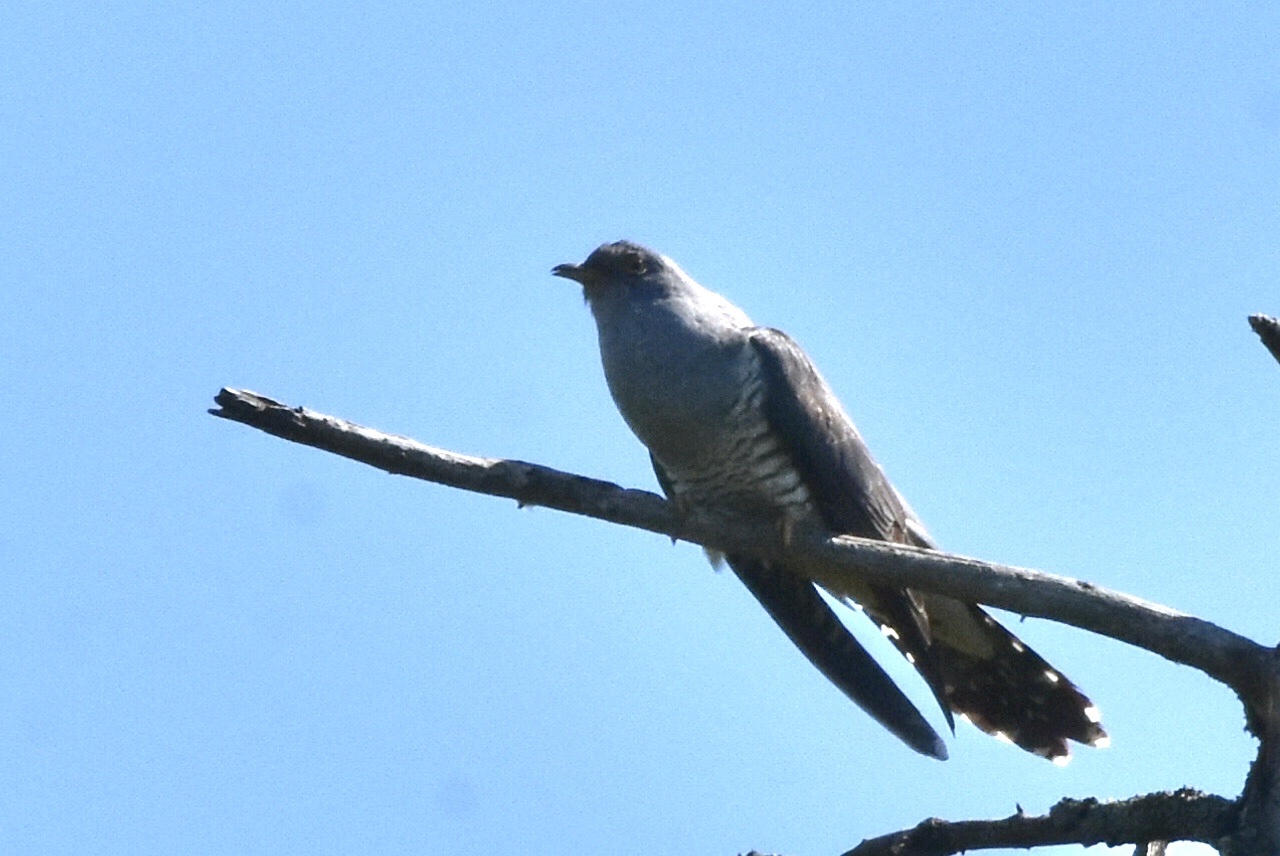
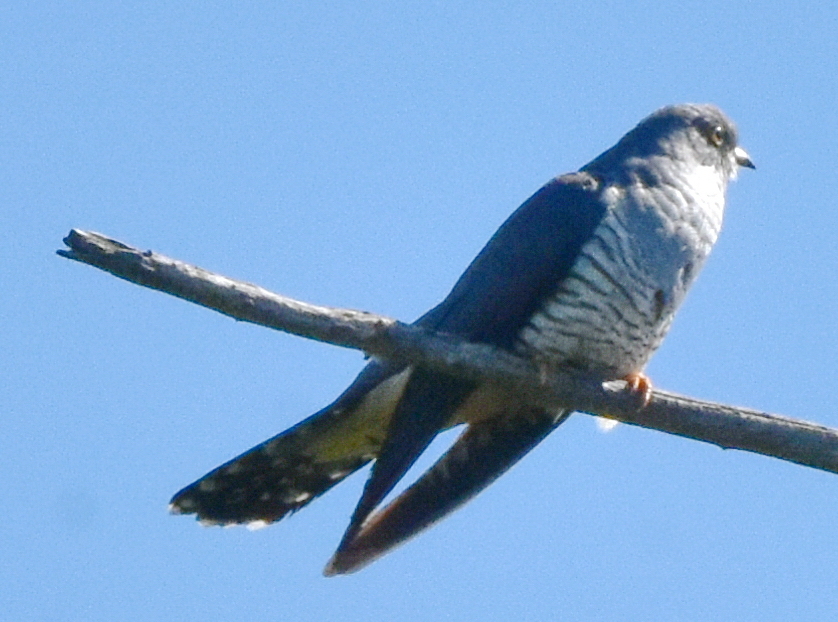
This is a medium-sized cuckoo measuring 30-32 centimeters in length with a wingspan of 51-57 centimeters and weighing 73-156 grams. The adult male displays grey head, breast, and upperparts, contrasting with a creamy-white belly featuring dark barring. The vent area is typically buff with minimal markings. distinctive features include orange-yellow legs and feet and a bare yellow eye ring. Adult females and juveniles occur in two color morphs. The grey morph resembles the male but shows a brownish wash on the breast, while the rufous morph is reddish-brown above with pale underparts and strong dark bands extending to the rump.
Identification
The common cuckoo is the most similar species but appears slightly bulkier with longer wings and tail, a smaller head and bill, and paler grey plumage with narrower underpart barring. Vent coloration usually helps distinguish them—white with dark bars in common cuckoos versus buff with few markings in this species. The Himalayan cuckoo is extremely similar but averages smaller and shorter-winged. Male calls provide the most reliable identification: a series of low paired notes 'poo-poo' with equal stress, compared to the Himalayan cuckoo's three or four-note phrases with a high-pitched introductory note. The female gives a deep bubbling trill. Rufous morphs show a plain, unbarred rump unlike the barred rump of common cuckoo rufous morphs.
Distribution & Habitat
This species breeds widely across northern Eurasia, occurring through most of Russia east to the Pacific coast, extending west to the Komi Republic with occasional records from Saint Petersburg. Breeding also occurs in northern Kazakhstan, Mongolia, northern China, Korea, and Japan. Wintering grounds are poorly defined but believed to include the Malay Peninsula, Indonesia, the Philippines, New Guinea, western Micronesia, the Solomon Islands, and northern and eastern Australia, with rare individuals reaching New Zealand. It has occurred as a vagrant in Ukraine, Israel, and Alaska. The species inhabits coniferous, deciduous, and mixed forests throughout its range.
Behavior & Ecology
This species is typically secretive and difficult to observe, foraging for insects and larvae in trees, bushes, and on the ground. It arrives relatively late on breeding grounds, appearing in southern Russia by late April. As a brood parasite, it lays eggs in the nests of Phylloscopus warblers including Arctic warbler, eastern crowned warbler, willow warbler, and chiffchaff. Other hosts include olive-backed pipit and Asian stubtail. Eggs are smooth and slightly glossy, varying in color and sometimes mimicking host eggs. Incubation lasts about 12 days. Newly hatched young are naked with orange gapes featuring black patches, and within days they eject host eggs and young from the nest. Fledging occurs after 17-19 days. The male's characteristic call is a low series of equally stressed 'poo-poo' notes, sometimes introduced with a four to eight note phrase. Females give a deep bubbling trill. Birds are usually silent outside the breeding season.
Source: Wikipedia · CC BY-SA 3.0
Taxonomy
- Order
- Cuculiformes
- Family
- Cuculidae
- Genus
- Cuculus
- eBird Code
- oricuc2
Distribution
breeds western Russia and Kazakhstan through northeastern Russia to Japan; winters southeastern Asia, Indonesian Archipelago, and Philippines to northern and eastern Australia (Kimberley region of Western Australia to southern New South Wales), New Guinea and satellite islands, Bismarck Archipelago, and Solomon Islands
Vocalizations
Data Sources
CBR Notes: 中文名由北方中杜鹃改为东方中杜鹃,IUCN红色名录等级改为LC
Species description from Wikipedia, licensed under CC BY-SA 3.0.
Bird images and sounds sourced from GBIF, contributed by citizen scientists worldwide under Creative Commons licenses.
Taxonomy data from AviList 2025.