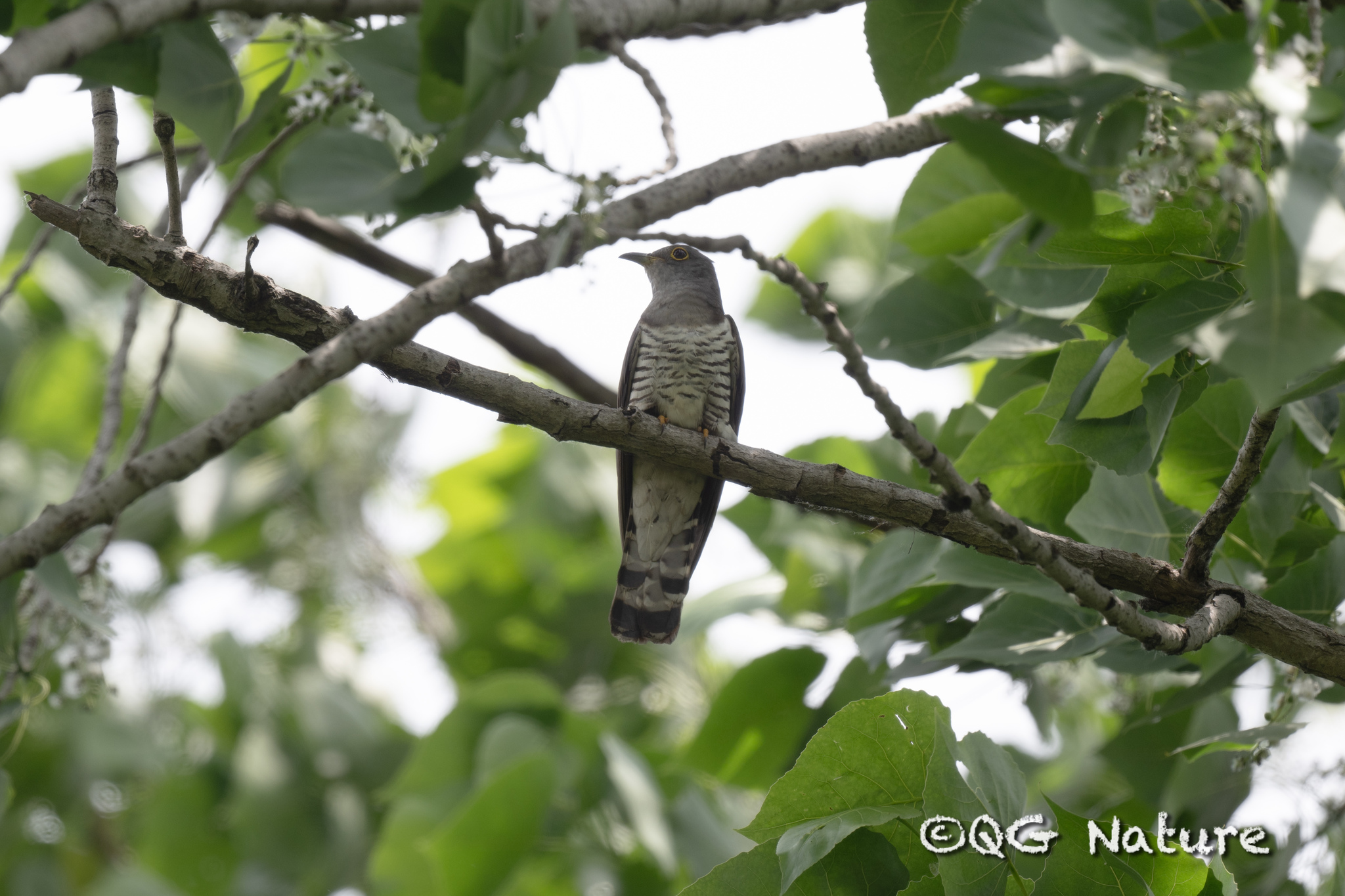
Cuculiformes / Cuculidae / Cuculus
Indian Cuckoo
Cuculus micropterus · 四声杜鹃
Introduction
A member of the Cuculiformes order found in the Indian subcontinent and Southeast Asia. It is a solitary, shy bird inhabiting forests and open woodland up to 3,600 m (11,800 ft).
Description
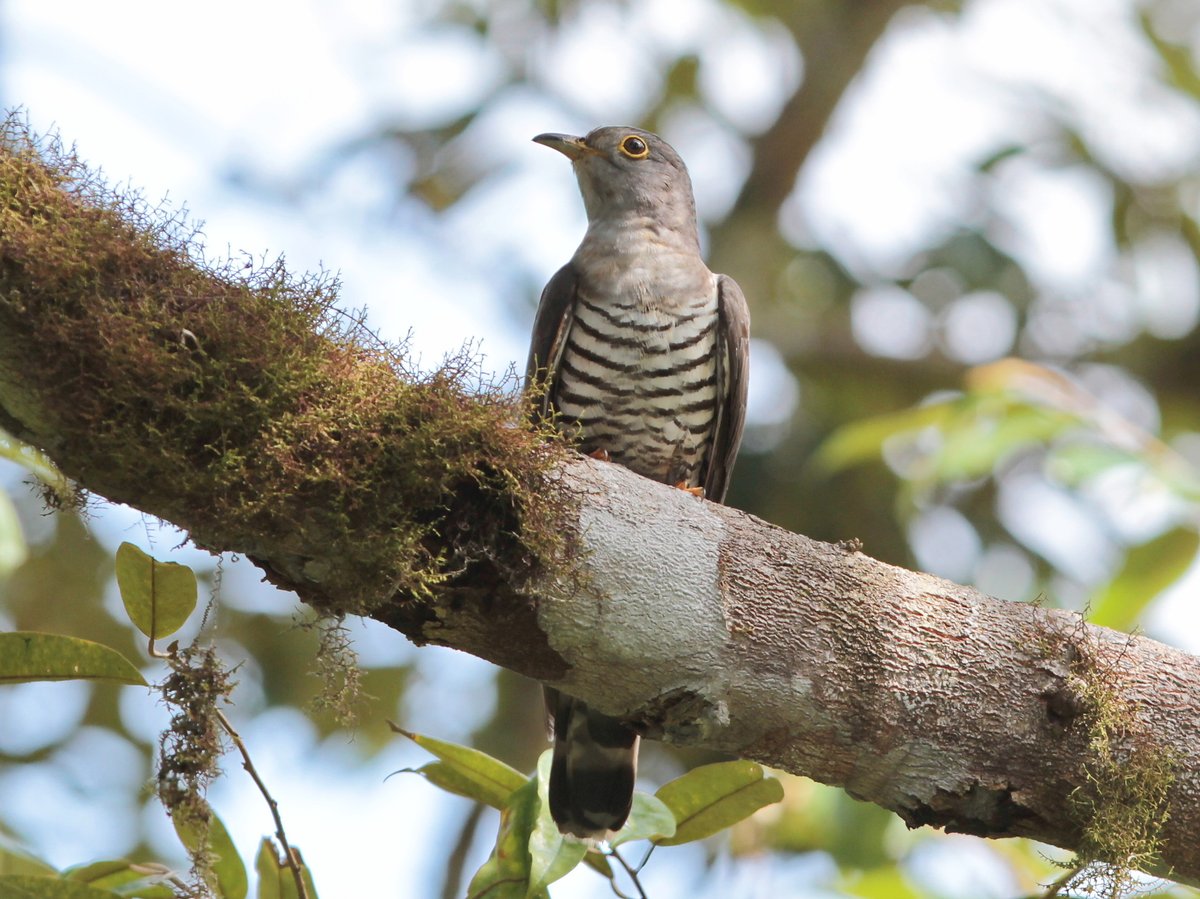
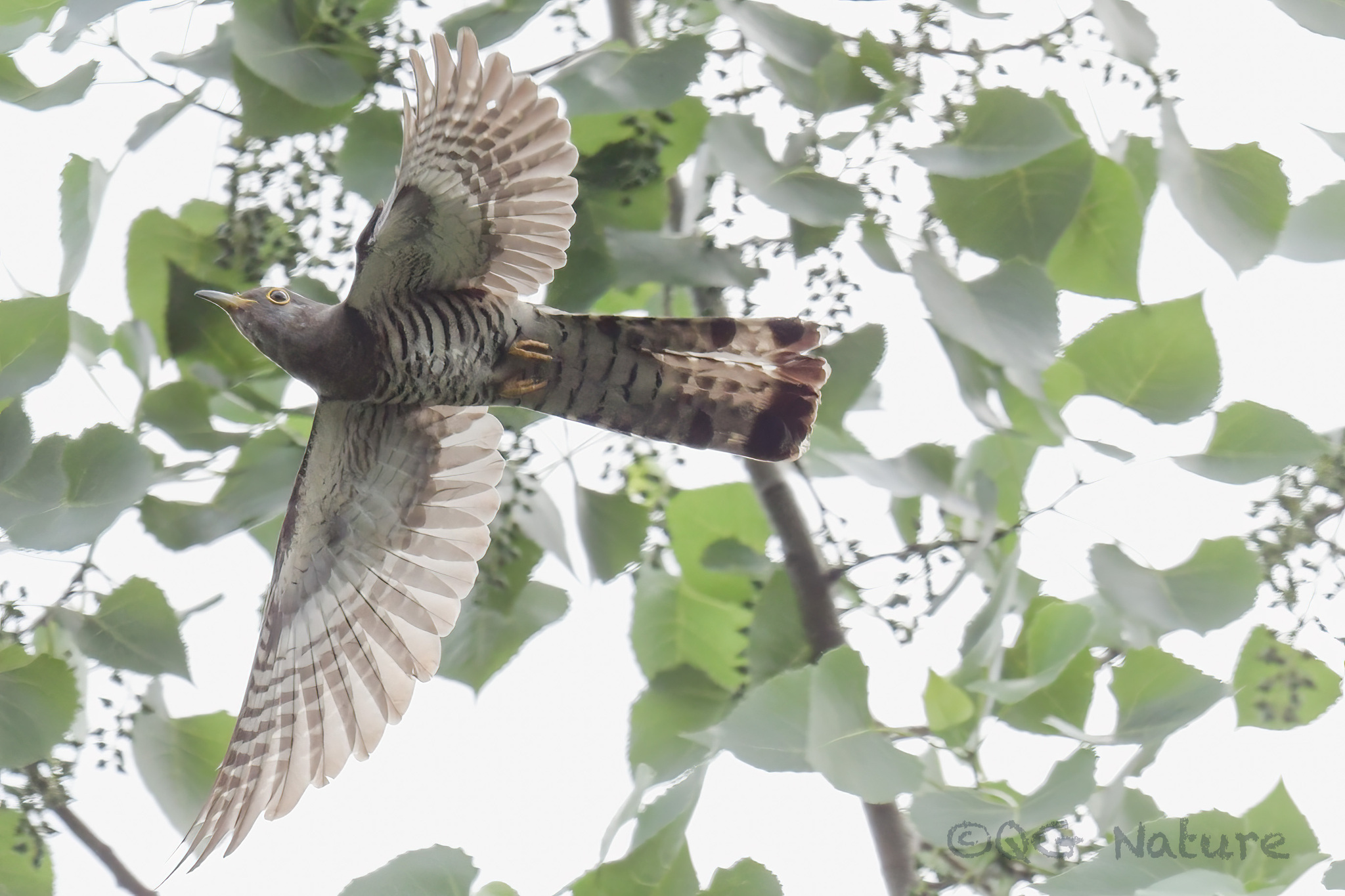
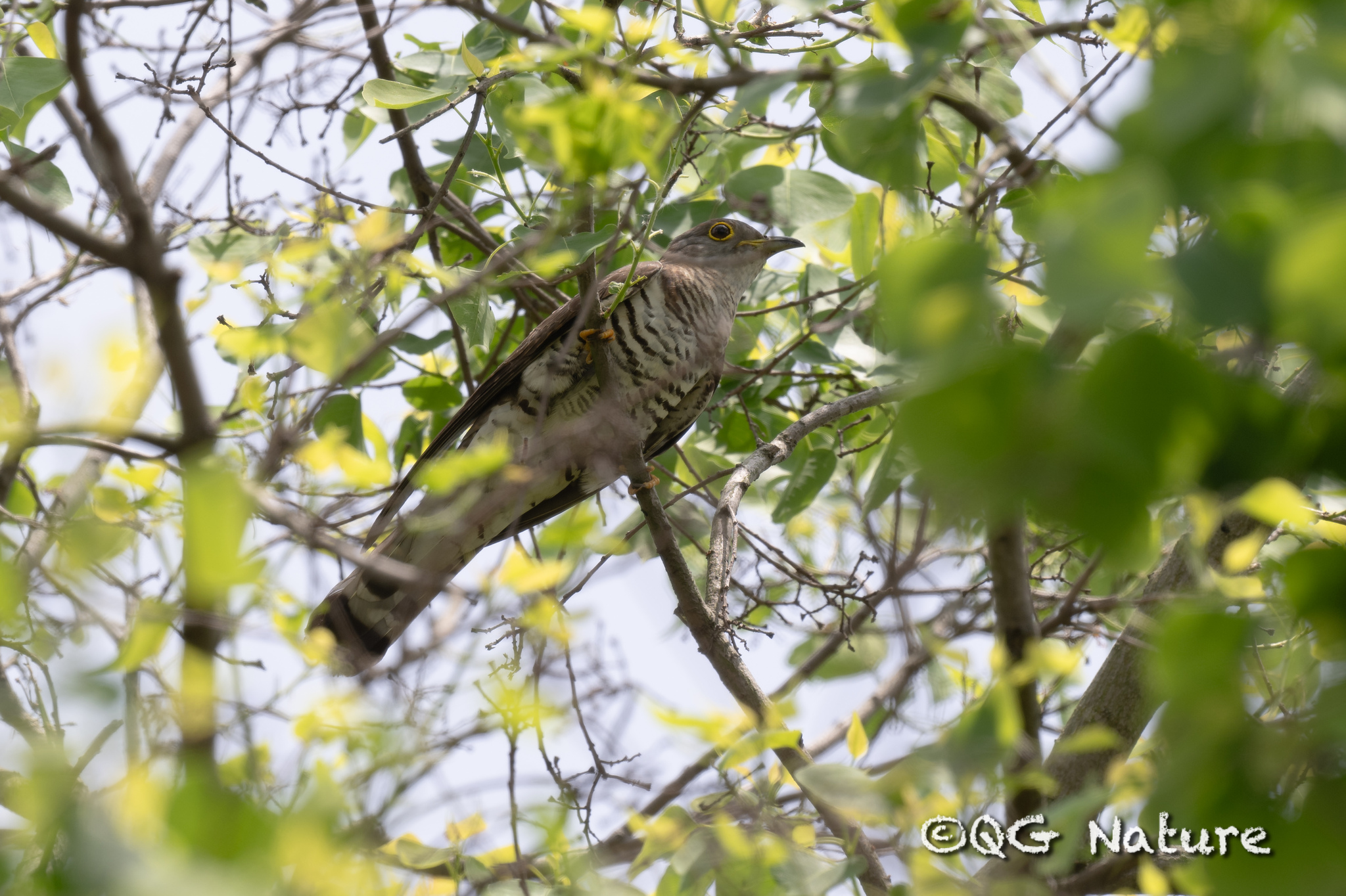
Medium-sized with sexes alike. Grey upperparts; underside has broad black barring. Tail barred with a broad subterminal dark band and white tip. Young birds have white crown markings and white chin/throat contrasting with a dark face. Juveniles are browner with broad white tips to head and wing feathers. Eye-ring gray to yellow; iris light brown to reddish. Female slightly paler grey on throat, more brown on breast and tail, with narrower belly barring than male. Nestlings have orange-red mouth and yellow gape flanges.
Identification
Key marks include grey upperparts, barred underparts, and a tail with a broad subterminal dark band and white tip. The eye-ring is gray to yellow. The call is loud with four notes, transcribed as 'orange-pekoe', 'bo-ko-ta-ko', 'crossword puzzle', or 'one more bottle'.
Distribution & Habitat
Ranges from India, Bangladesh, Bhutan, Nepal, and Sri Lanka east to Indonesia and north to China and Russia. Two subspecies recognized: nominate form in continental Asia; concretus (smaller, darker) in Malay Peninsula, Java, Sumatra, and Borneo. Birds in Amur region are larger. Habitat includes deciduous and evergreen forests, garden lands, and thick scrub. Some Indian populations migrate south in winter; Amurland population is migratory.
Behavior & Ecology
Feeds on hairy caterpillars, other insects, and sometimes fruits, usually in the upper canopy by gleaning or making aerial sallies. A brood parasite; females pair with specific males in Russia. Male diverts host attention while female lays single egg, after removing and eating one host egg. Hosts include drongos, crows, brown shrikes (Russia), black-headed oriole, streaked spiderhunter, and others. Breeding season varies: May–July in northern China, March–August in India, January–June in Burma, January–August in Malay Peninsula. Eggs hatch in 12 days; young eject other eggs or nestlings by day 3–4.
Culture
Call interpreted variously across regions: 'Bride, please speak' (Bengali); 'kafal fruit is ripe' (Uttarakhand/Nepal); 'thief stole jackfruit' (Malayalam); 'where is my sheep' (Kangra Valley). In China: 'why not go home', 'go to cut wheat', among others. Vietnamese interpretation: 'take a woman and tie her to a post'. Soliga people interpret as 'Ketha died, his sons cried'.
Source: Wikipedia · CC BY-SA 3.0
Taxonomy
- Order
- Cuculiformes
- Family
- Cuculidae
- Genus
- Cuculus
Vocalizations
Subspecies (2)
-
Cuculus micropterus concretus
Vietnam to southern Thailand, Malay Peninsula, Sumatra, Java, and Borneo
Data Sources
Species description from Wikipedia, licensed under CC BY-SA 3.0.
Bird images and sounds sourced from GBIF, contributed by citizen scientists worldwide under Creative Commons licenses.
Taxonomy data from AviList 2025.