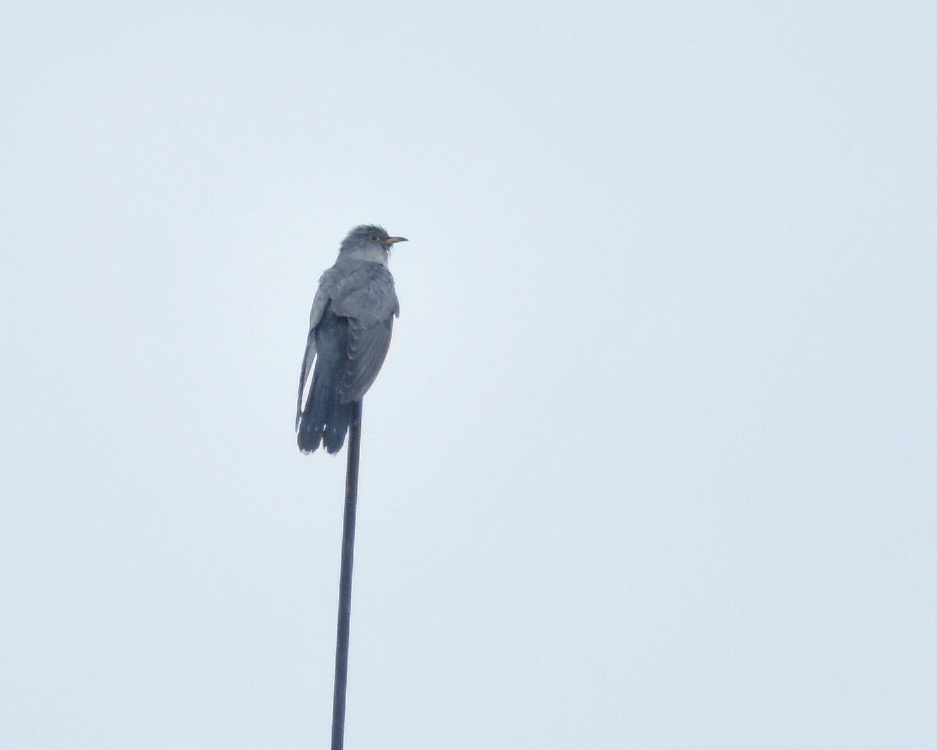
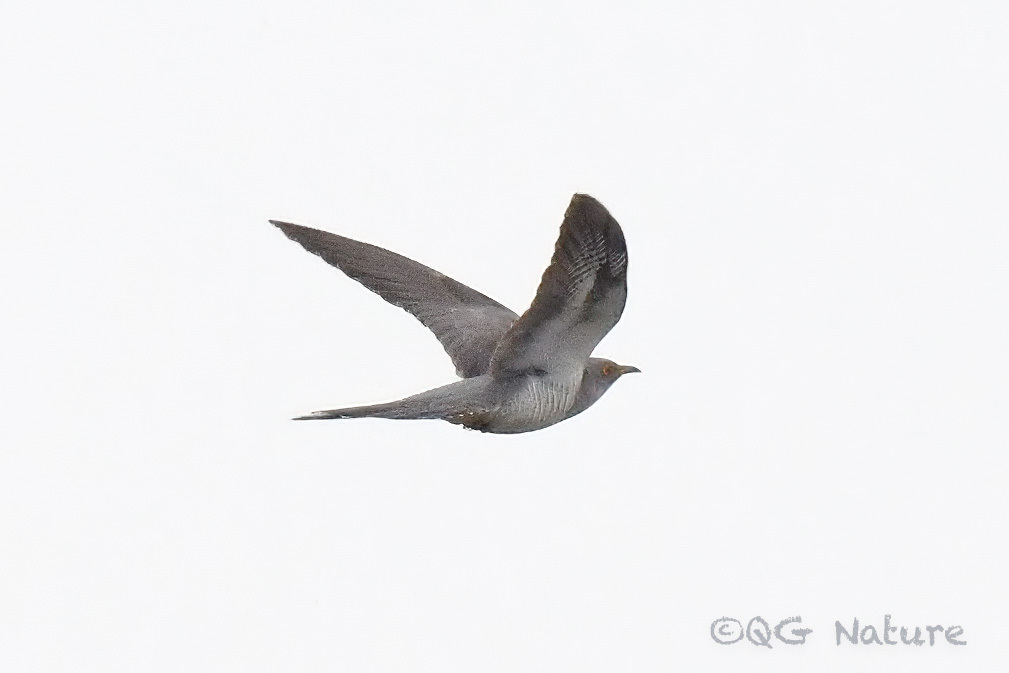
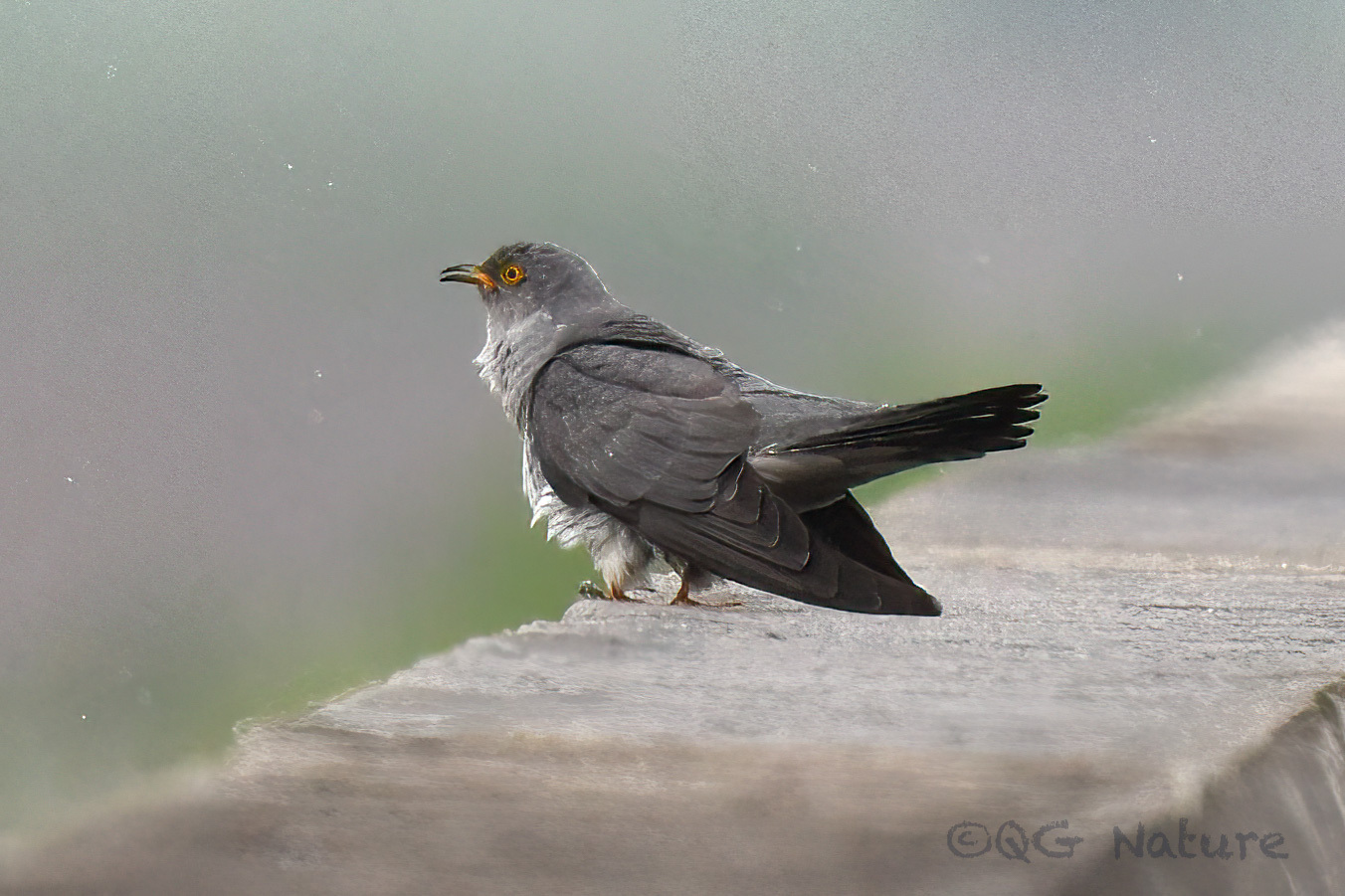
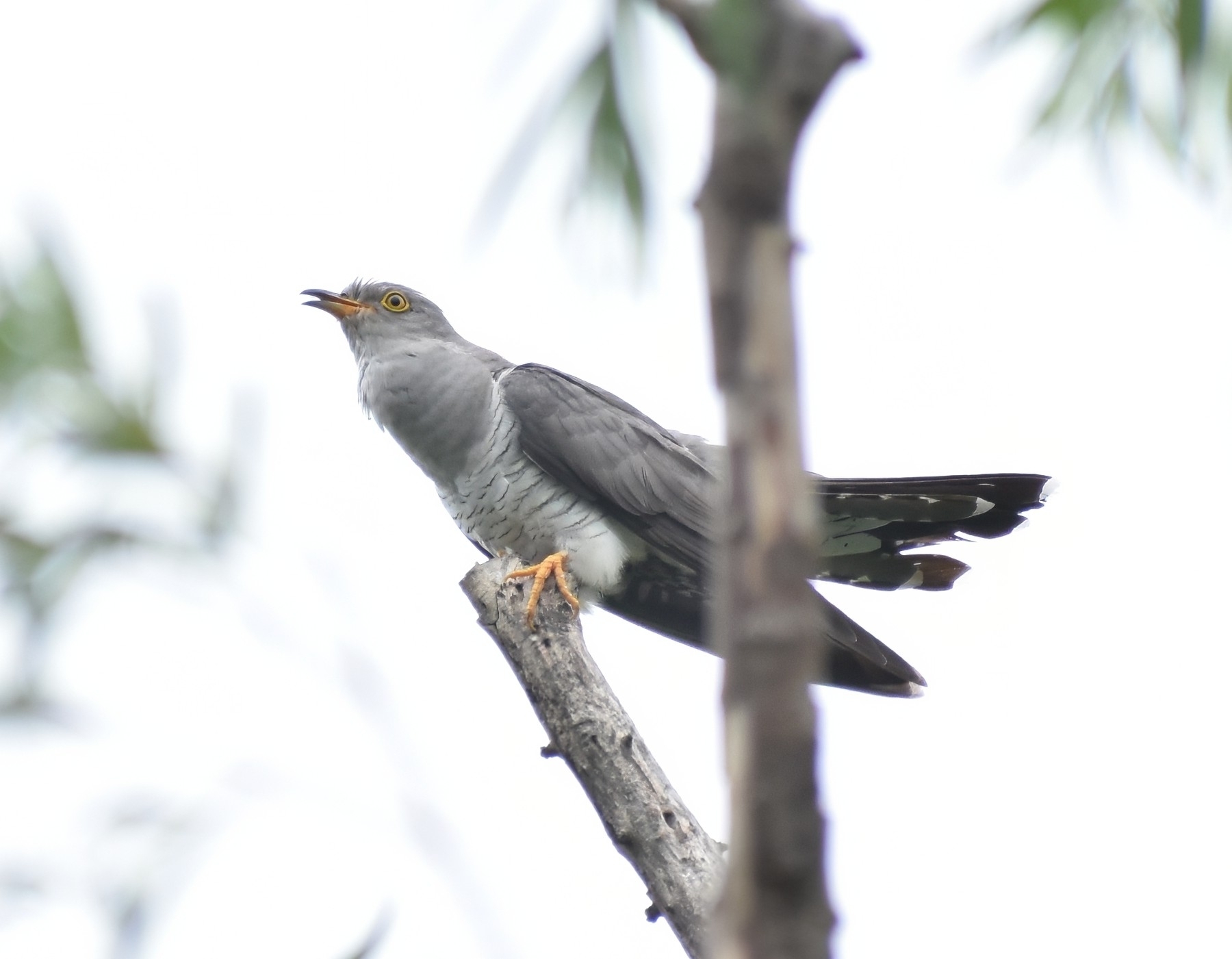
Cuculiformes / Cuculidae / Cuculus
Common Cuckoo
Cuculus canorus · 大杜鹃
Introduction
Member of the order Cuculiformes. Widespread summer migrant to Europe and Asia, wintering in Africa. Obligate brood parasite laying eggs in nests of other species, particularly dunnocks, meadow pipits, and reed warblers. Adults exhibit mimicry of the sparrowhawk to facilitate egg-laying. Classified as Least Concern by the IUCN.
Description
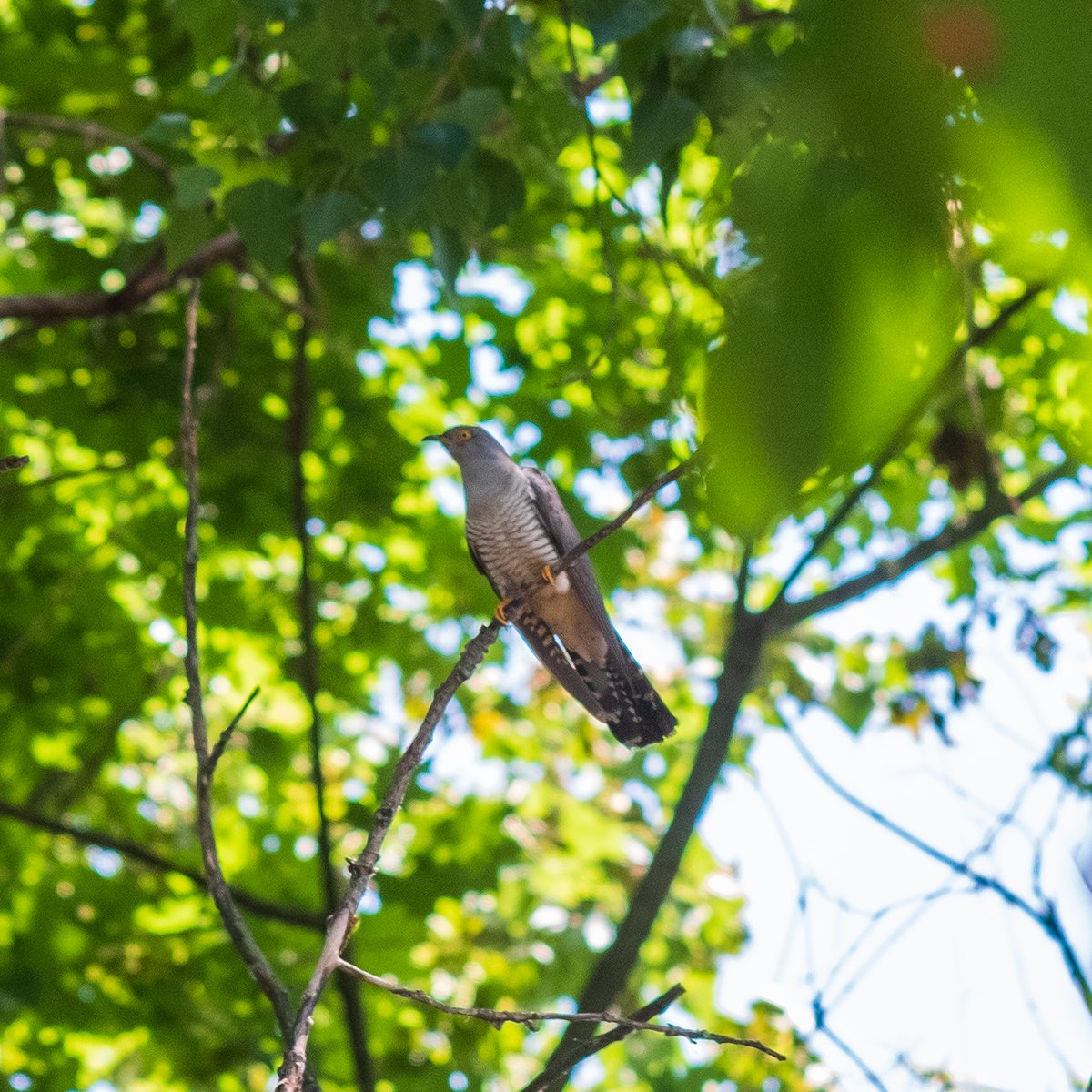
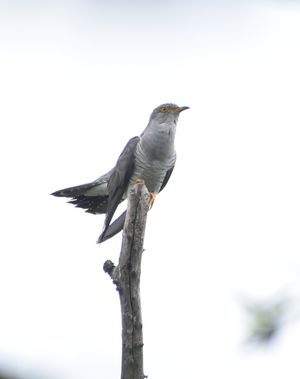
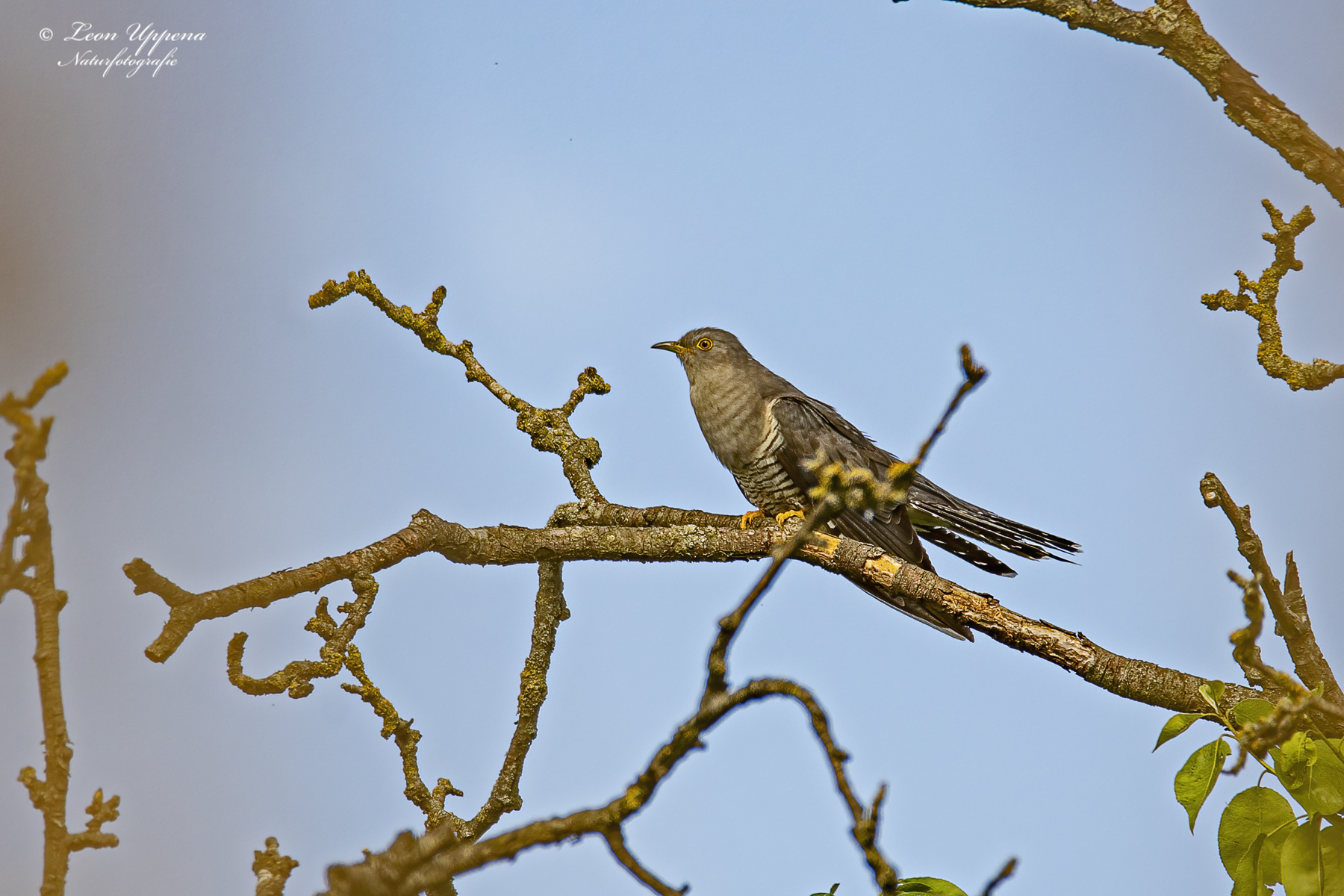
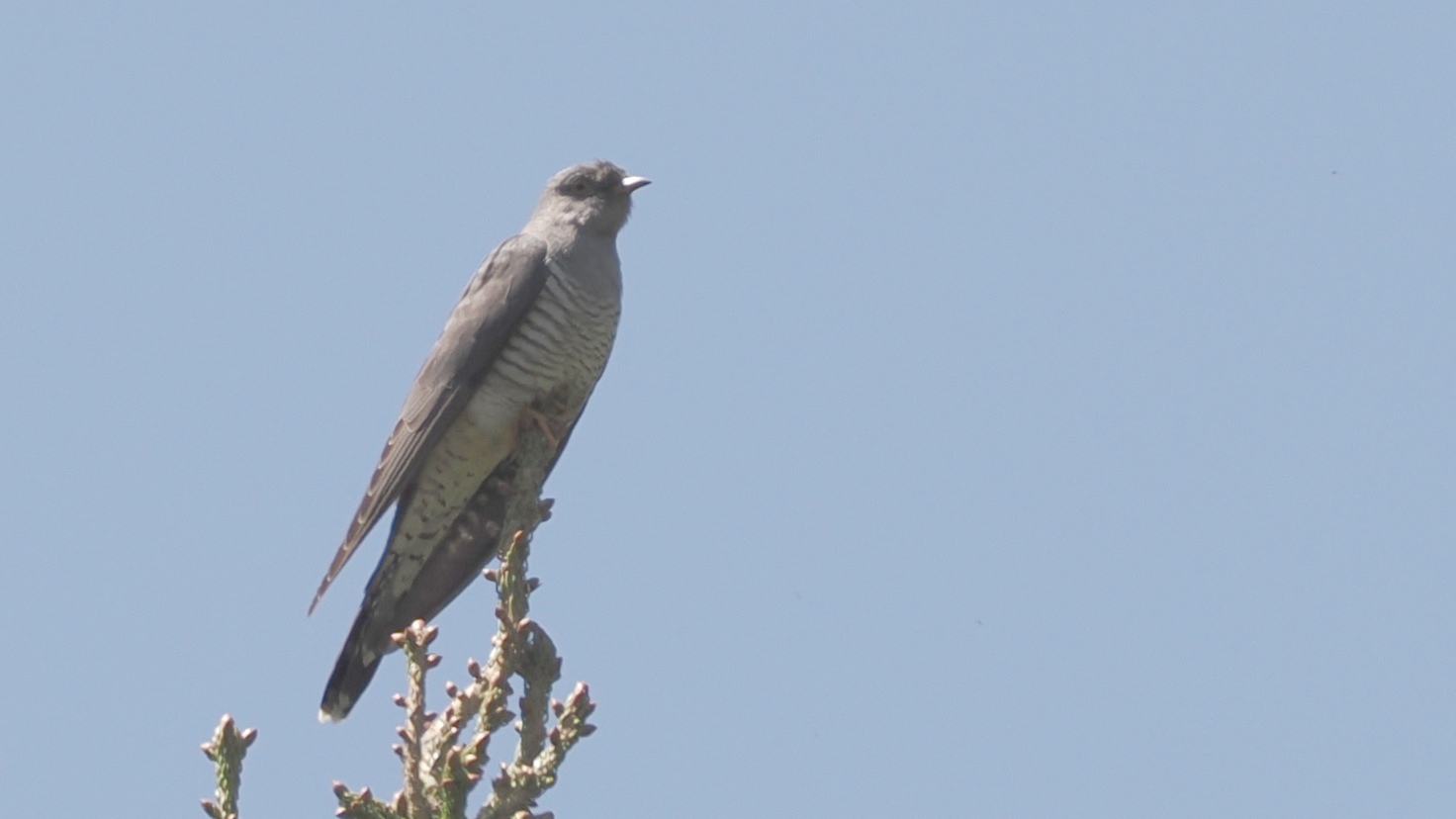
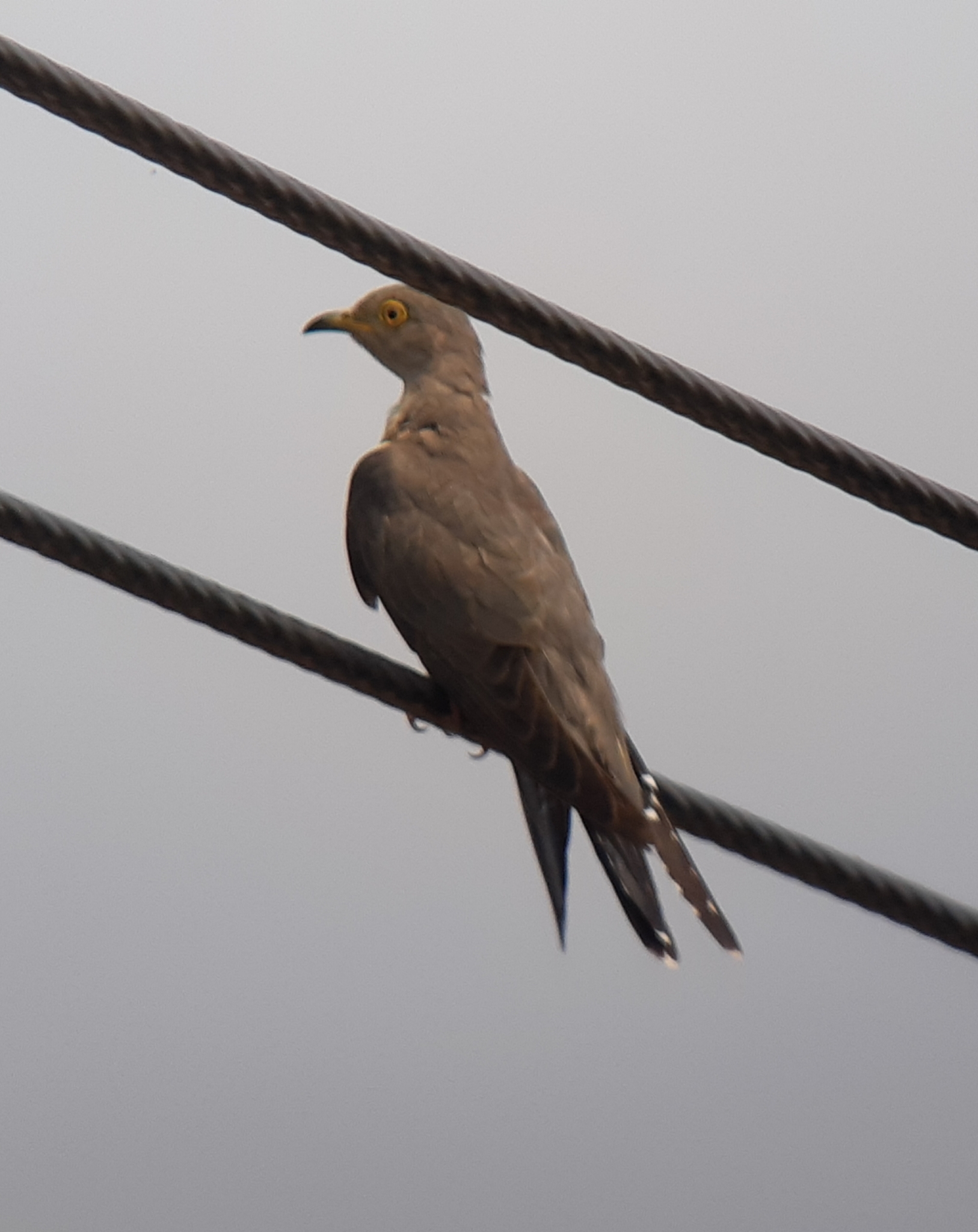
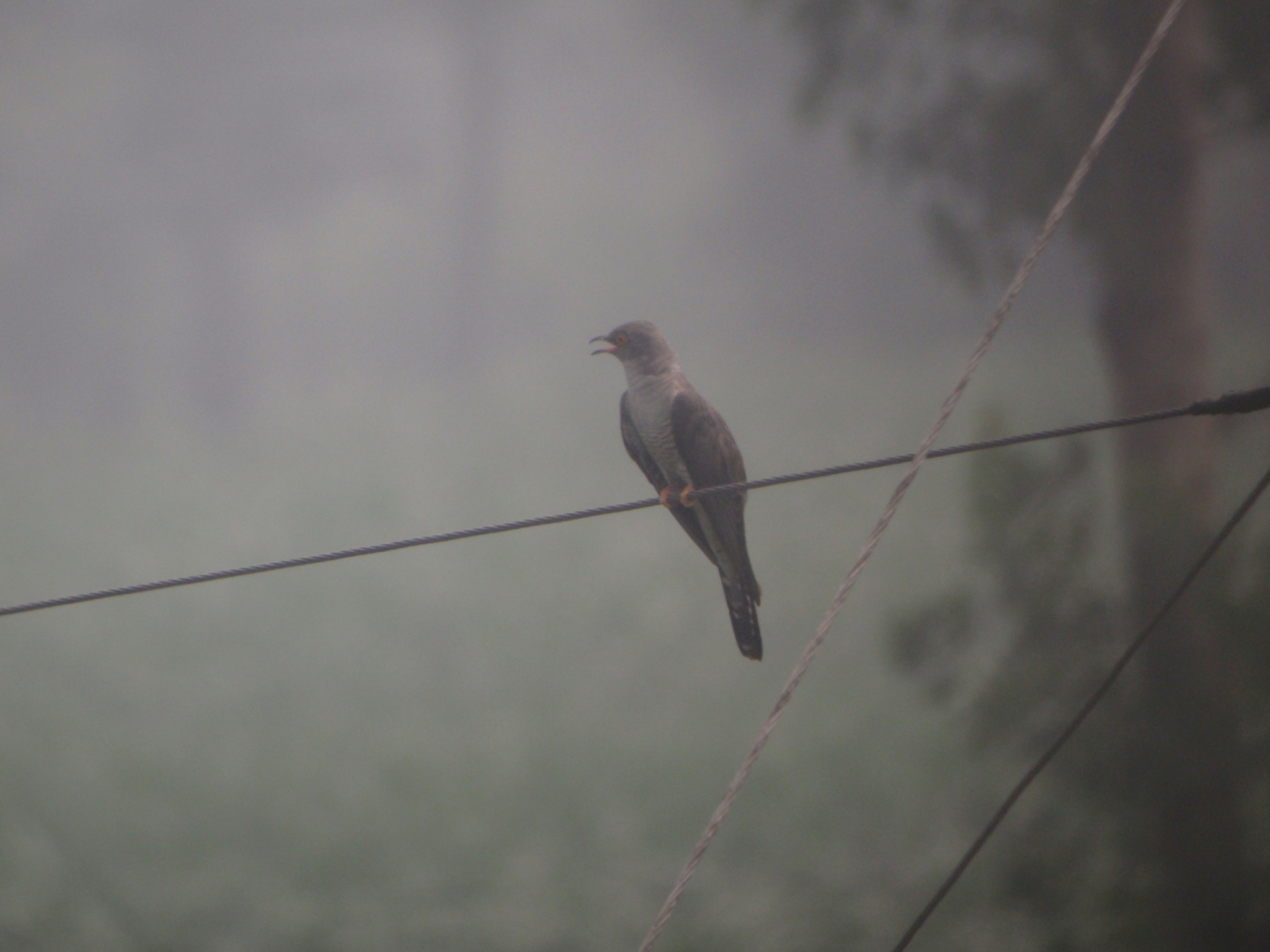
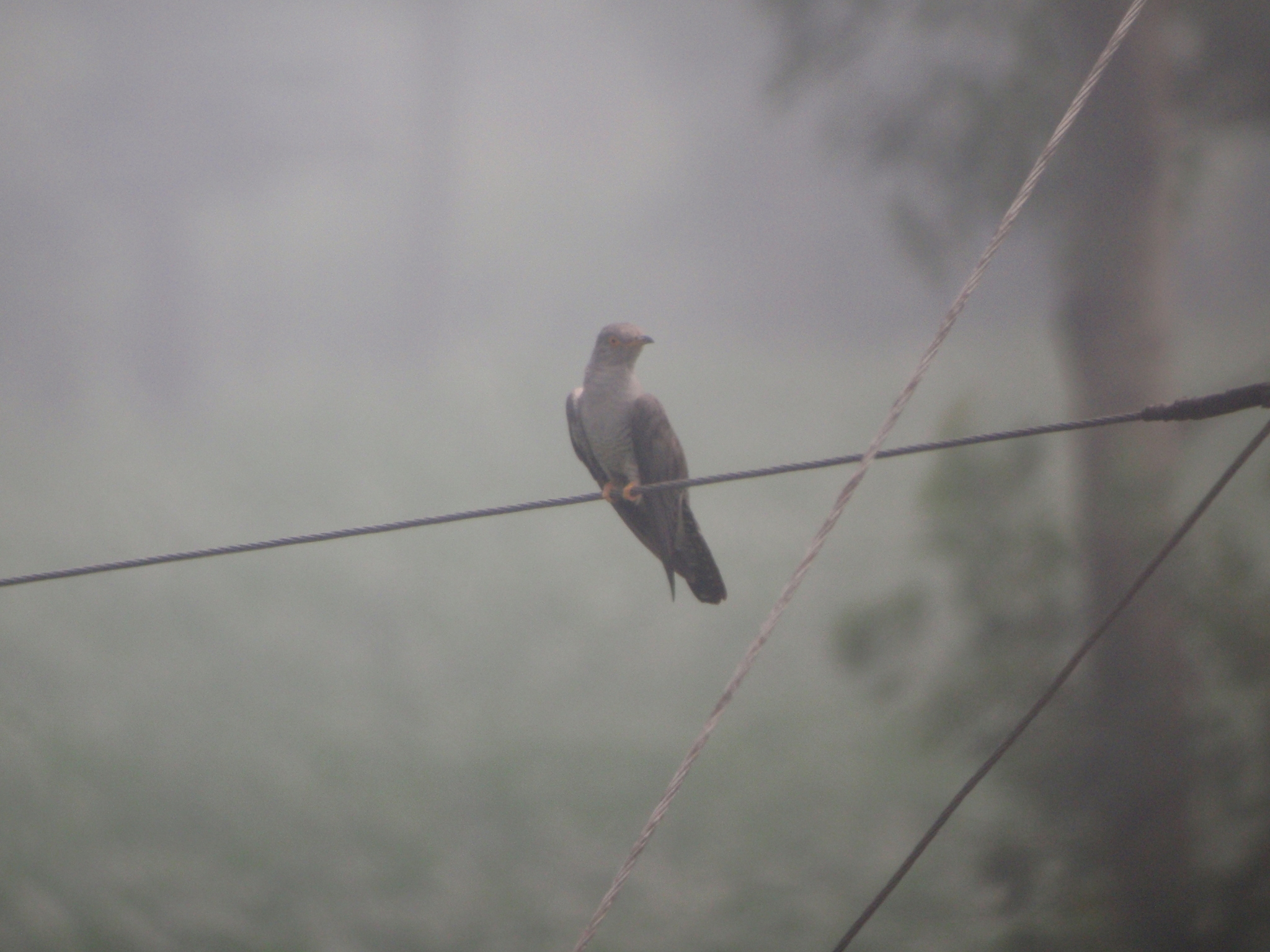
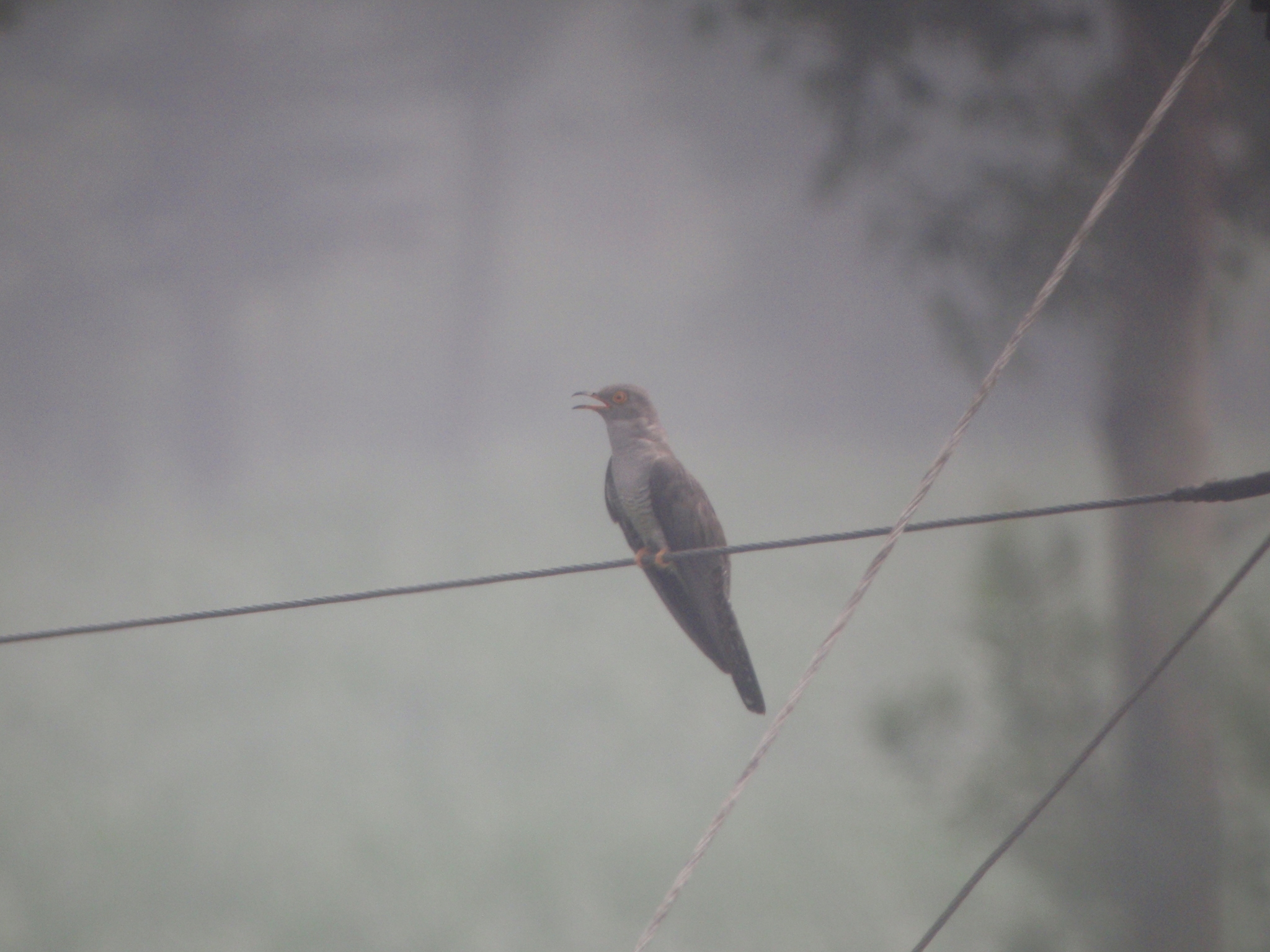
Length 32–34 cm, wingspan 55–60 cm, tail 13–15 cm. Males weigh around 130 g, females 110 g. Slender greyish body with long tail. Adult males are slate-grey with a sharp demarcation between the grey throat and barred underparts. Iris, orbital ring, bill base, and feet are yellow. Grey adult females have a pinkish-buff or buff background to barring. Rufous morph occurs occasionally in adult females and more often in juveniles; these have reddish-brown upperparts with dark bars. Juveniles show variable plumage, often with white nape patches and white feather fringes.
Identification
Resembles a sparrowhawk in flight with regular wingbeats. Barred underparts mimic the Eurasian sparrowhawk. Distinct from the similar Oriental cuckoo, which is slightly shorter-winged on average. Key juvenile features include a white nape patch and white feather fringes. Male song is a descending minor third 'goo-ko' given from an open perch; female has a loud bubbling call.
Distribution & Habitat
Breeds across Europe and Asia, from Ireland and Scandinavia through Siberia to Japan, and south through Turkey, Kazakhstan, Mongolia, northern China, and Korea. Subspecies C. c. bakeri breeds in western China to the Himalayas; C. c. bangsi in Iberia and North Africa; C. c. subtelephonus in Central Asia. Winters in Africa and South Asia. Vagrant records include Barbados, United States, Greenland, and Iceland. In the UK, distribution shifted north between 1995 and 2015.
Behavior & Ecology
Diet consists mainly of insects, specializing in hairy caterpillars distasteful to other birds; occasionally eats eggs and chicks. Obligate brood parasite; females may visit up to 50 nests per season. Eggs mimic host eggs in color and pattern. Chicks hatch after 11–13 days and evict host eggs or chicks by pushing them out with their backs. Fledge at 17–21 days. Chick begging call mimics a whole brood of host young. First breeds at two years of age.
Conservation
Classified as Least Concern by the IUCN. Global population estimated between 25 million and 100 million individuals, with 12.6 million to 25.8 million breeding in Europe. Population appears to be declining globally. In England, numbers declined by 69% between 1995 and 2015, while increasing by 33% in Scotland.
Culture
Associated with spring in European folklore and literature, including Shakespeare's Love's Labours Lost and the 13th-century song Sumer Is Icumen In. Basis for the mechanical cuckoo clock. Featured in English folk songs and traditional rhymes regarding its seasonal arrival and departure. Aristotle noted early tales of cuckoos transforming into hawks.
Source: Wikipedia · CC BY-SA 3.0
Taxonomy
- Order
- Cuculiformes
- Family
- Cuculidae
- Genus
- Cuculus
Subspecies (4)
-
Cuculus canorus bakeri
western China to northern India, Nepal, Myanmar, northwestern Thailand, and southern China
Data Sources
Species description from Wikipedia, licensed under CC BY-SA 3.0.
Bird images and sounds sourced from GBIF, contributed by citizen scientists worldwide under Creative Commons licenses.
Taxonomy data from AviList 2025.