Common Cuckoo
Cuculus canorus
大杜鹃
Introduction
The Common Cuckoo (Cuculus canorus) is a summer visitor to European and Asian woodlands, farmland, and wetlands. It arrives in April. The species is an obligate brood parasite that lays eggs in the nests of over 100 different bird species. Common hosts include dunnocks, meadow pipits, and reed warblers. The female produces eggs that match host appearance and has sleek grey plumage that mimics sparrowhawks, allowing approach to host nests without mobbing. The species has a two-note call. Global population is estimated between 25 and 100 million individuals. In Britain, there has been a 69% decline in England between 1995 and 2015, with increases in Scotland.
Description
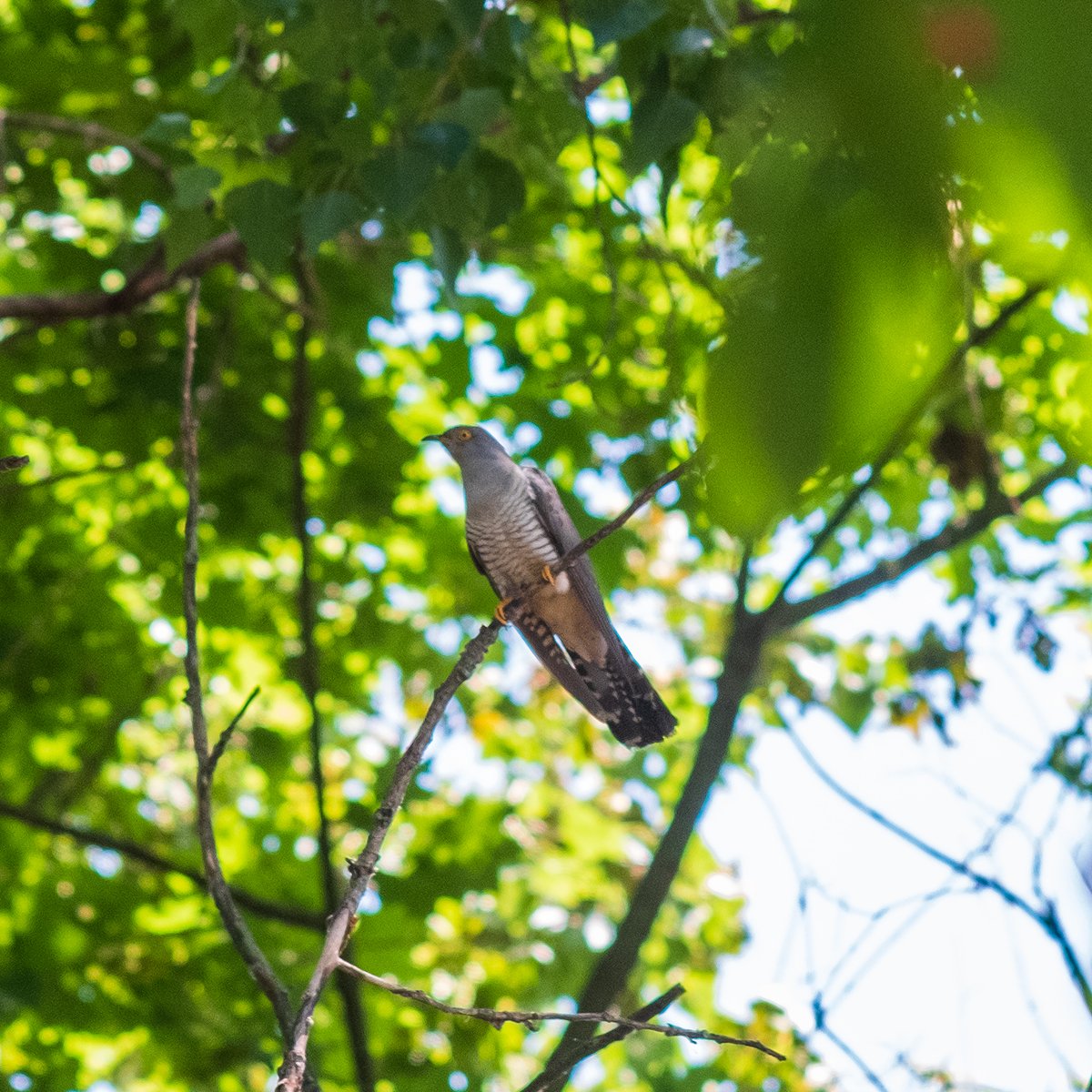
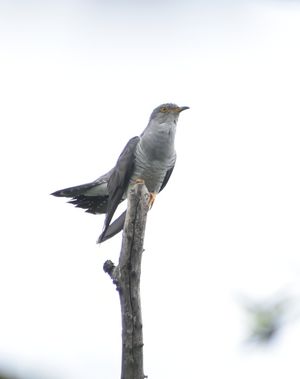
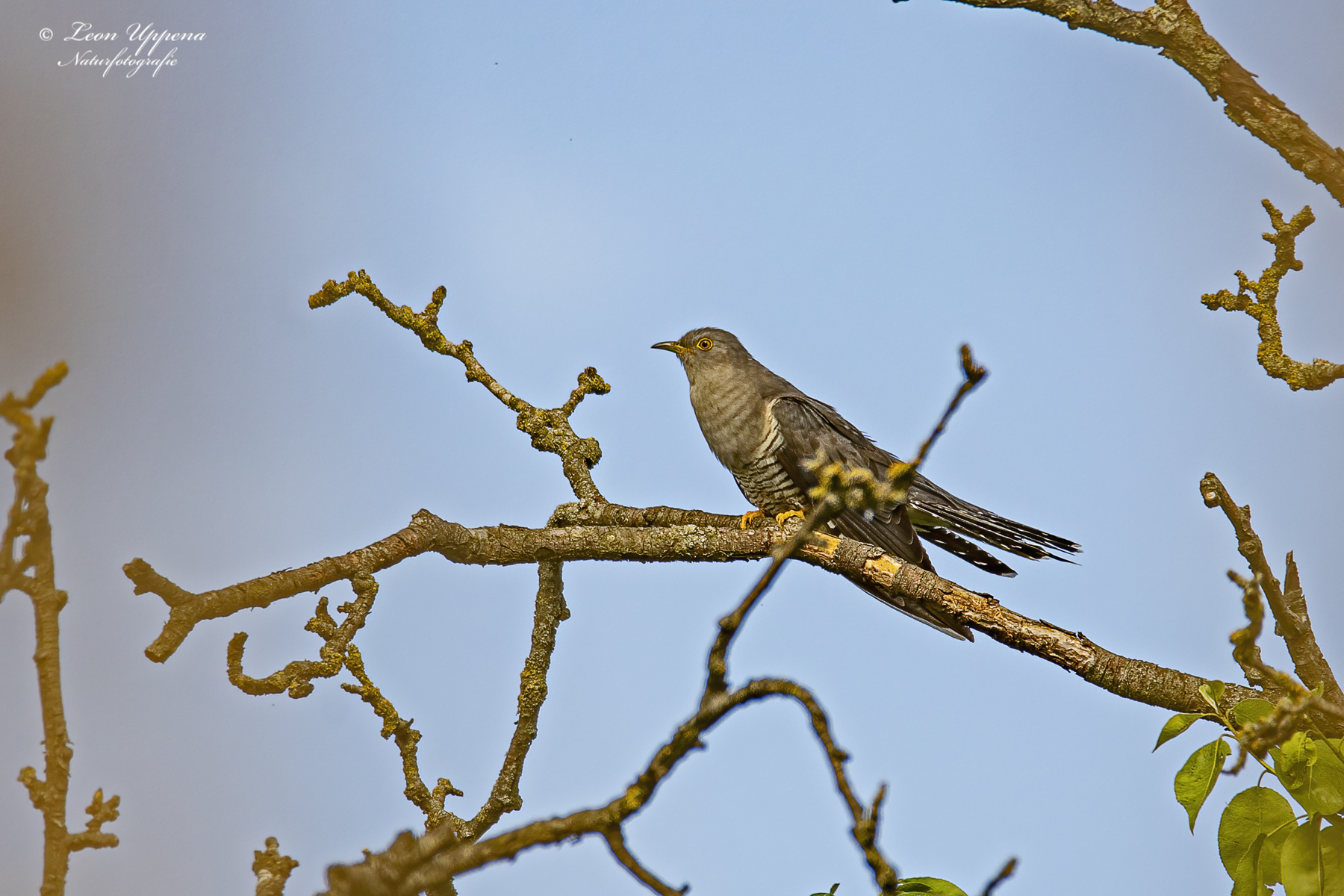
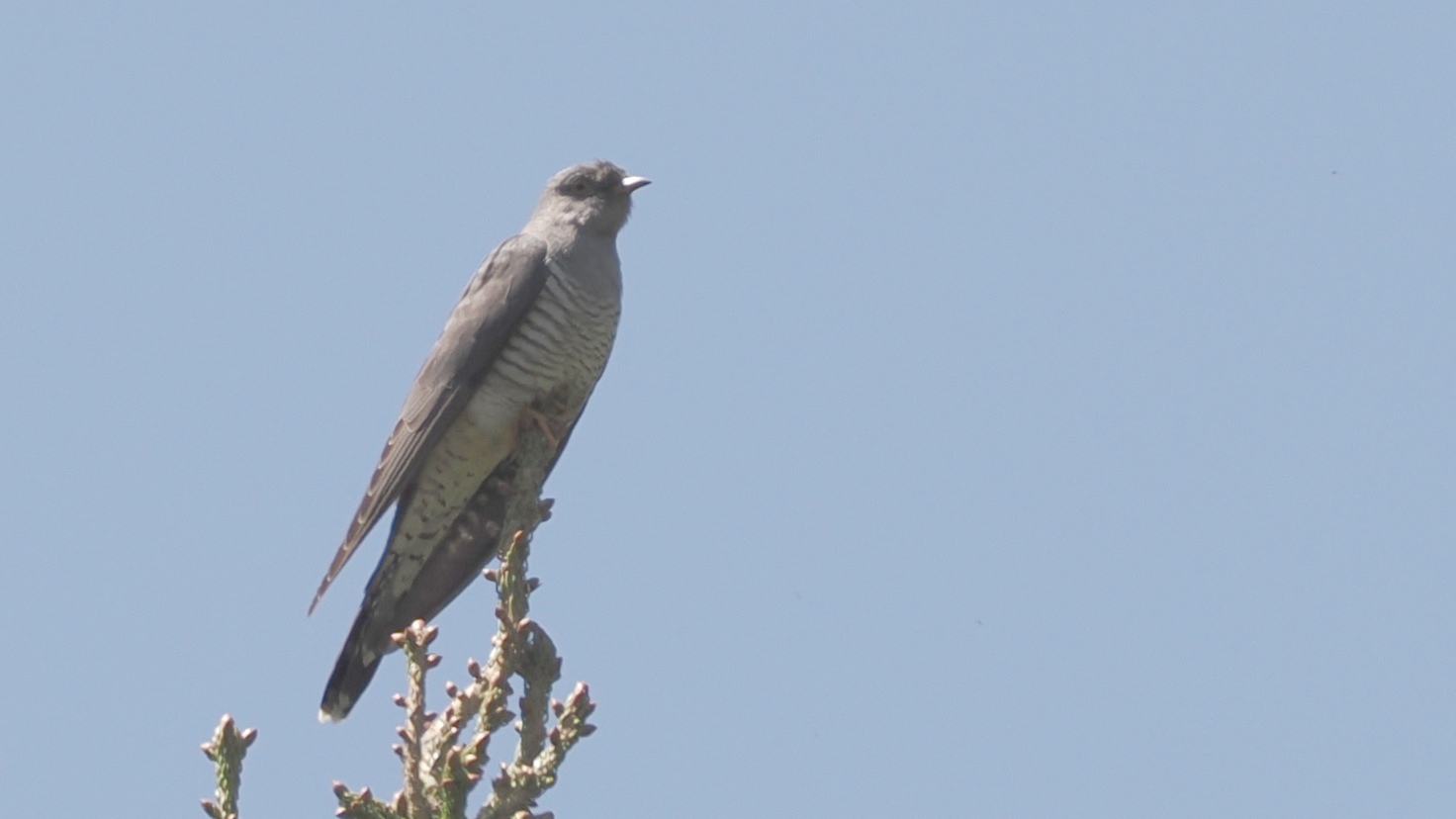
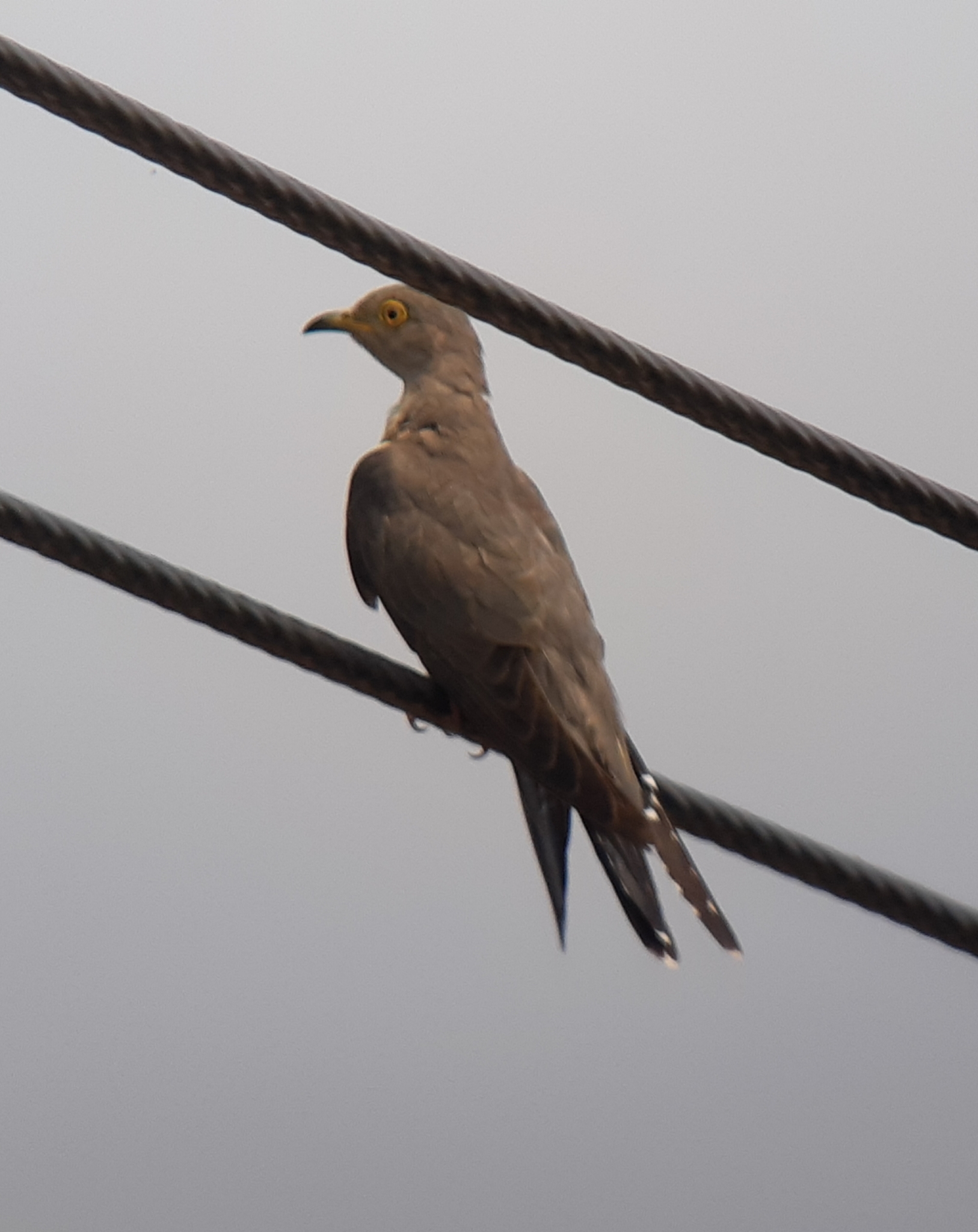
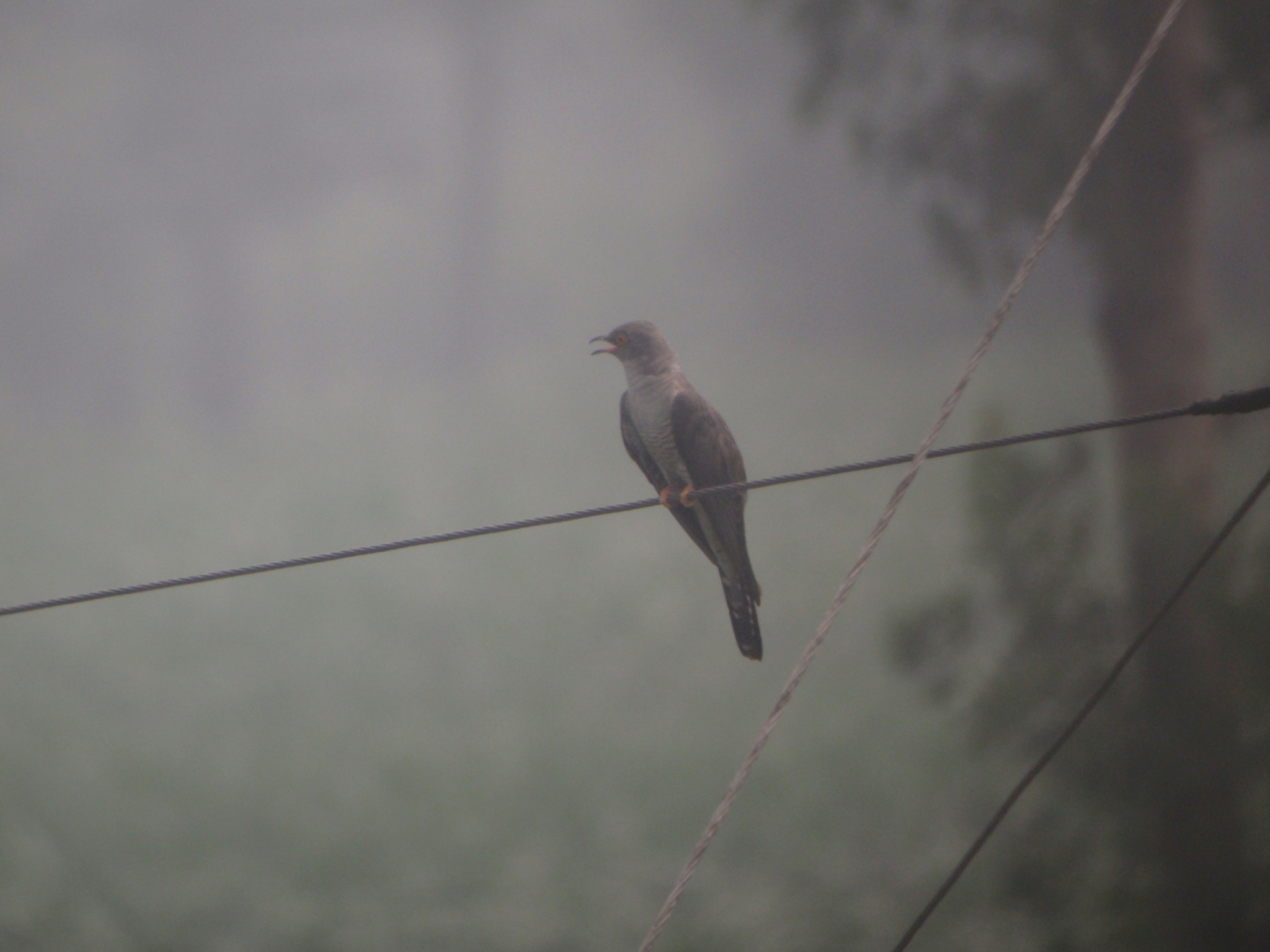
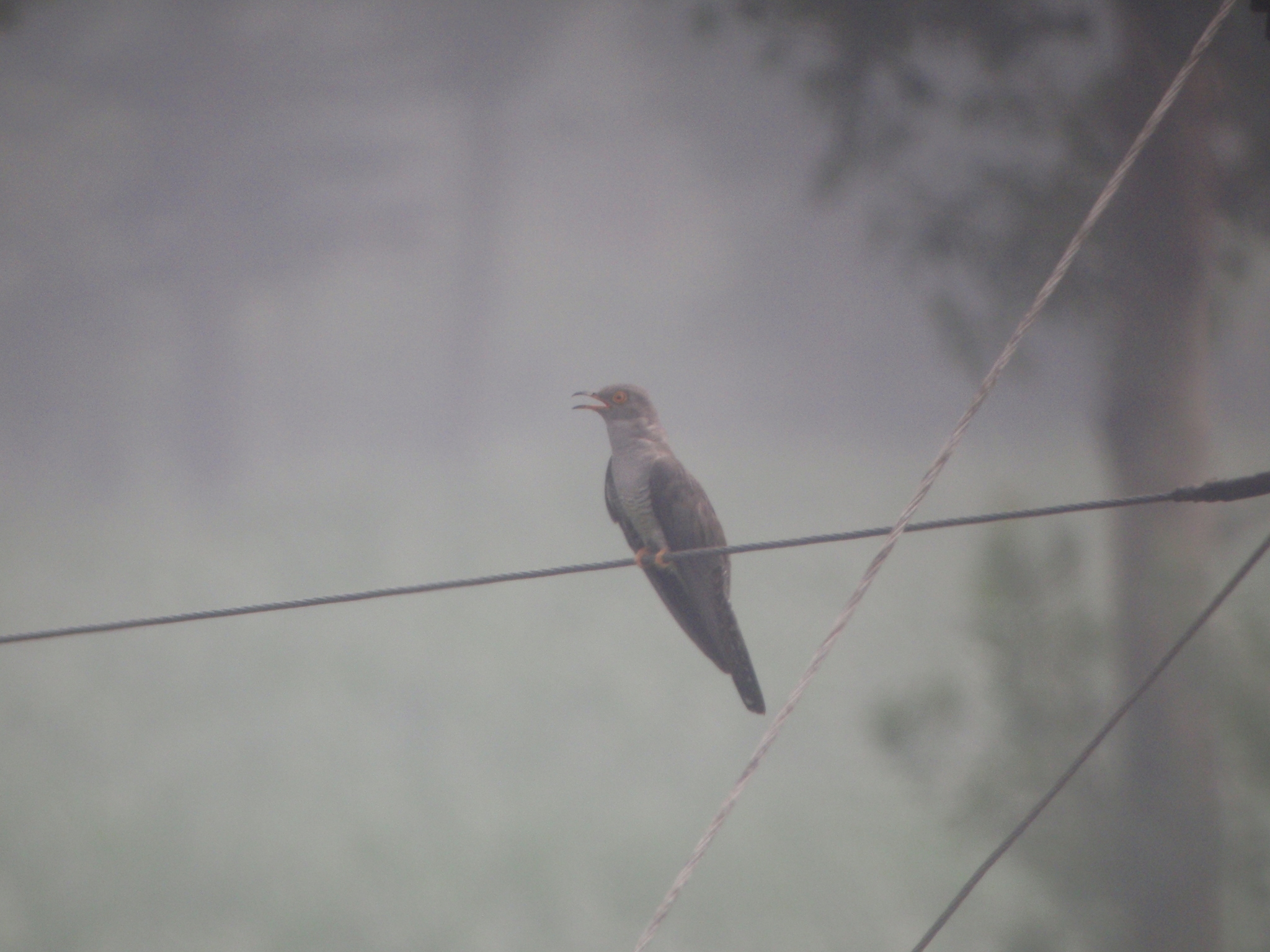
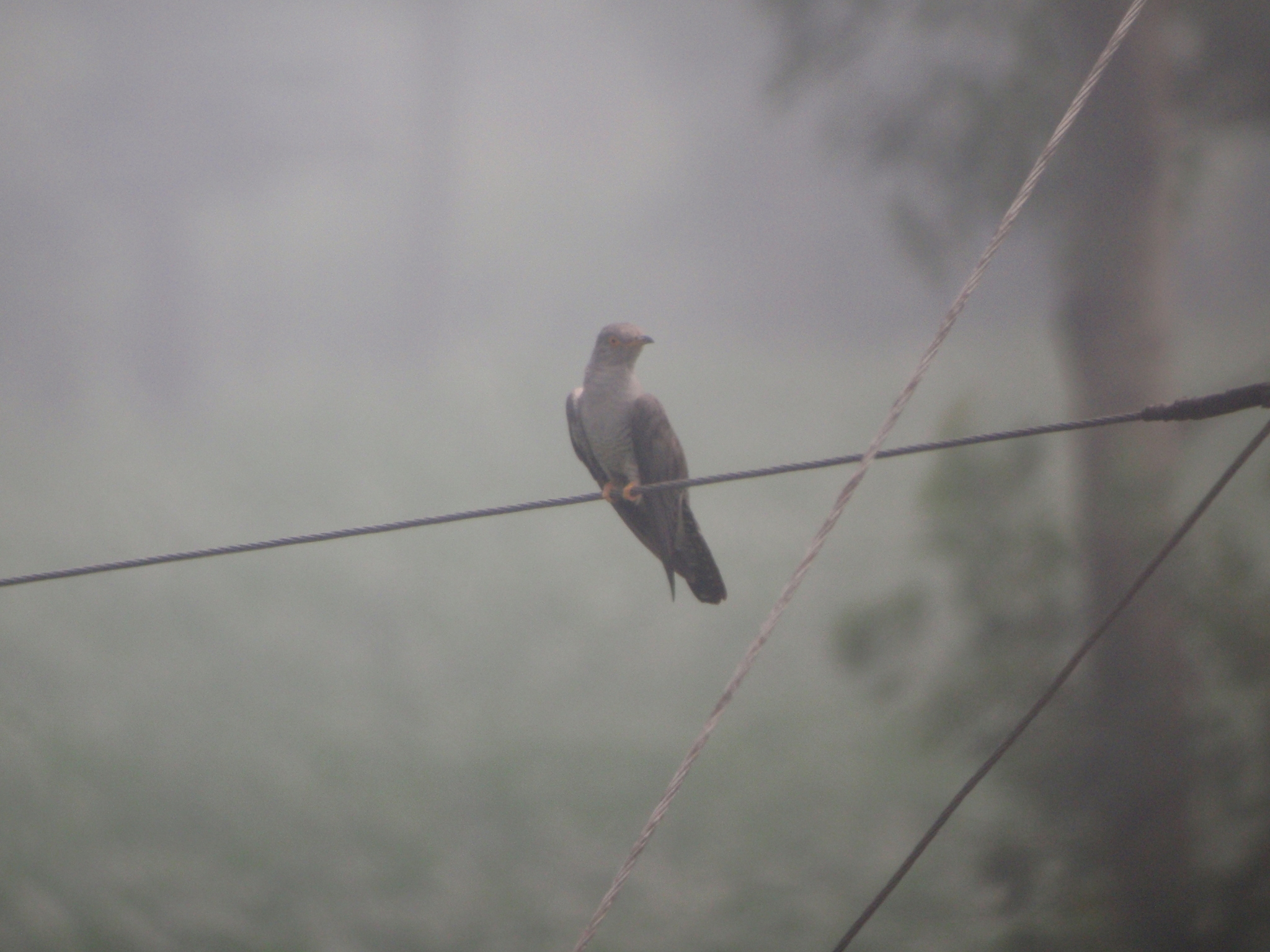
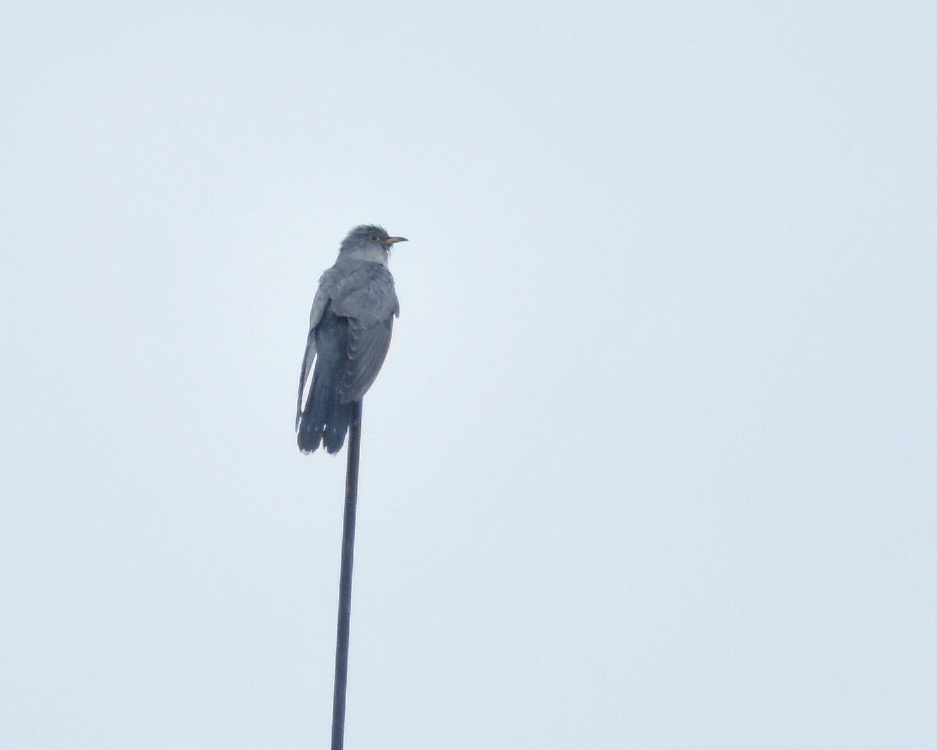
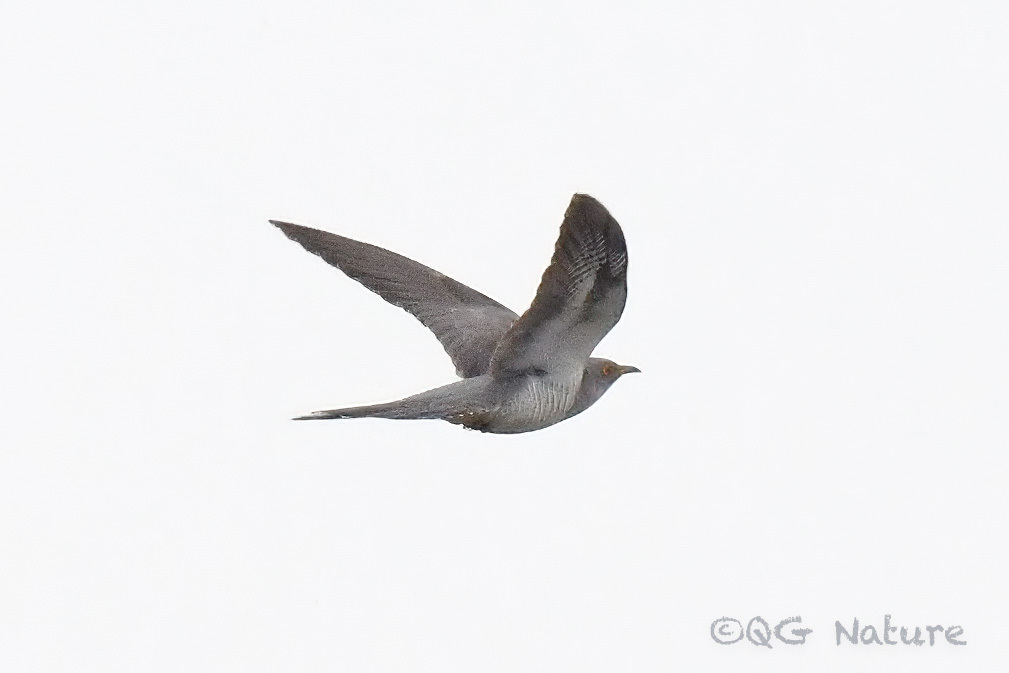
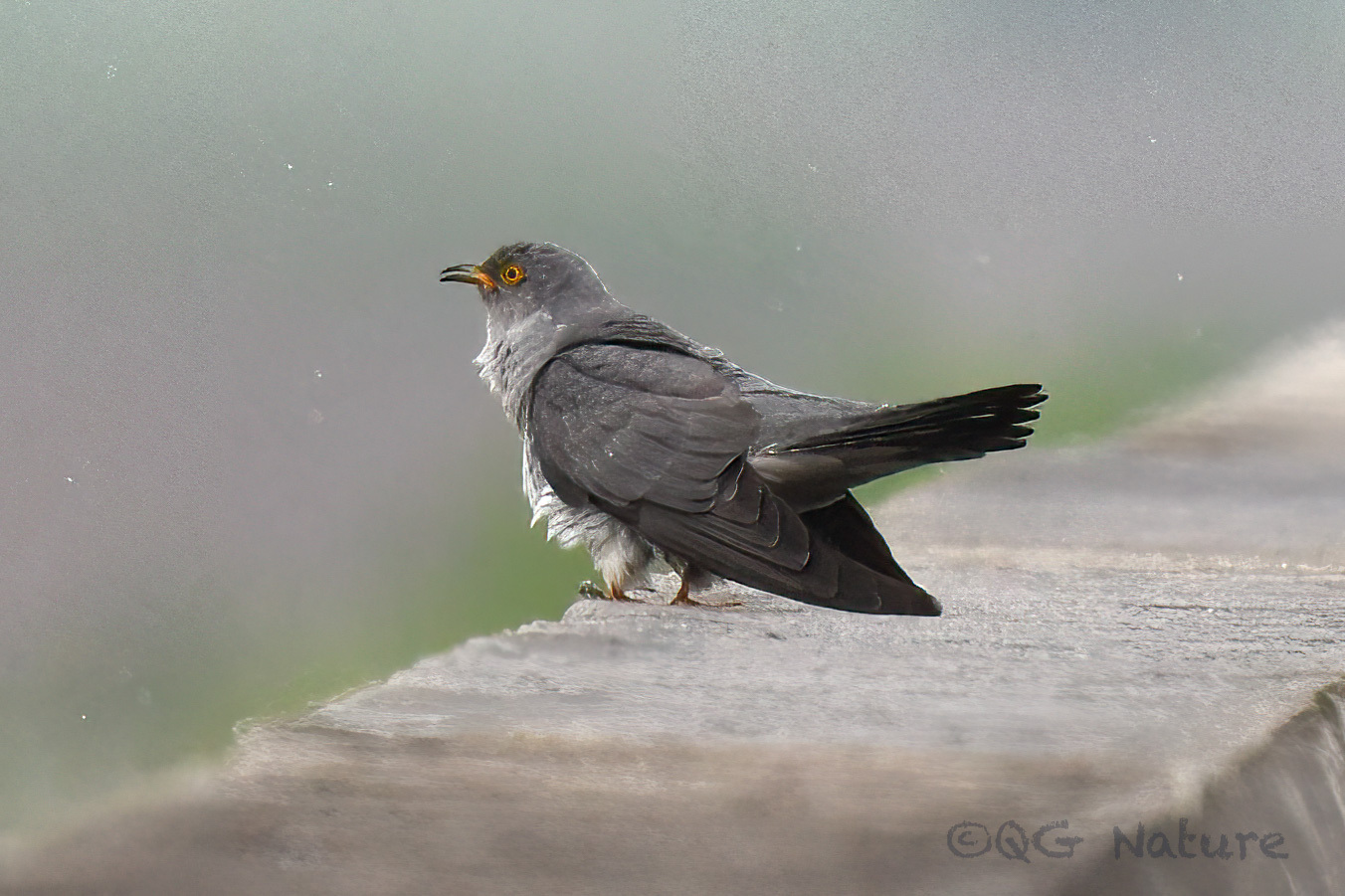
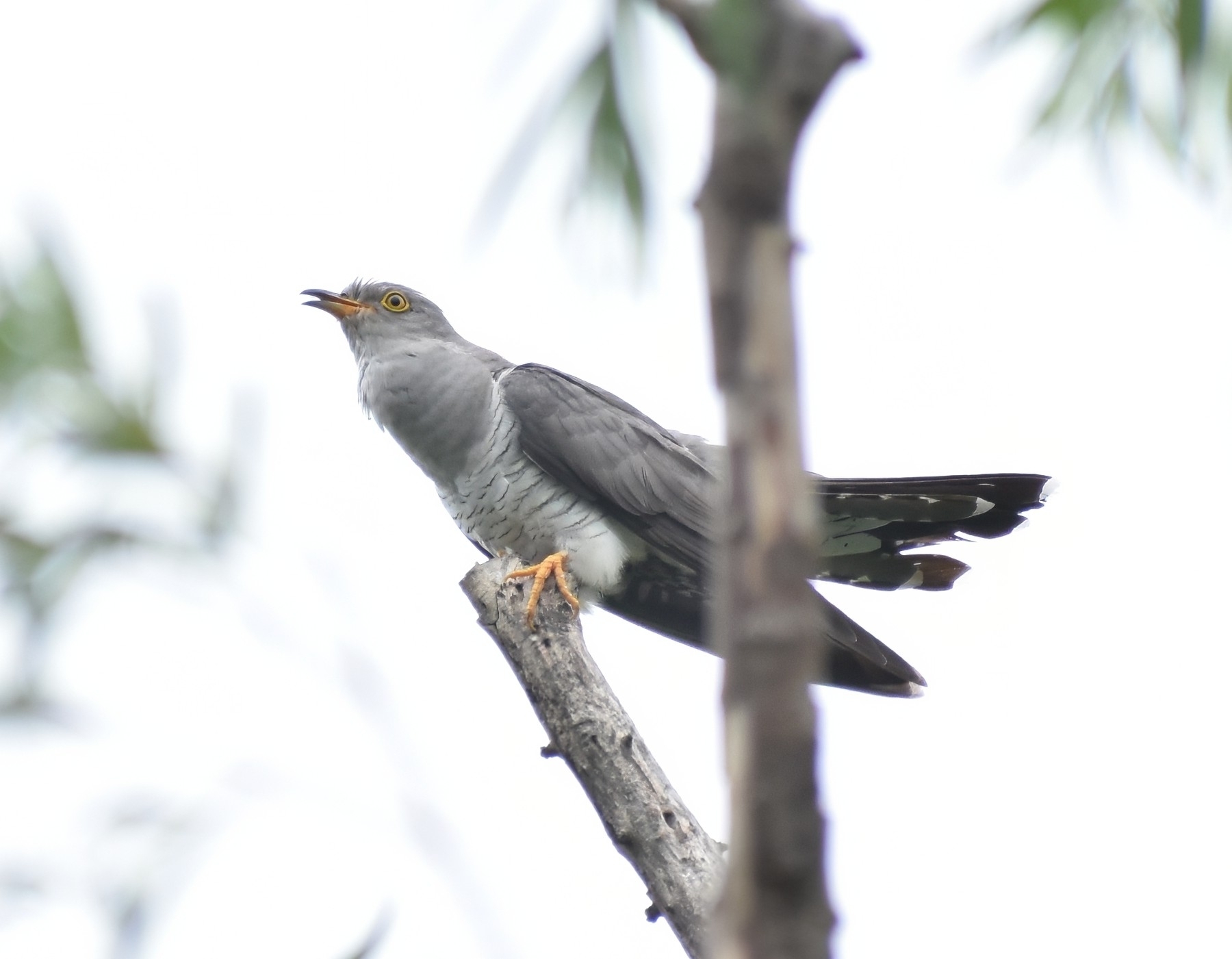
This slim, hawk-like bird measures 32-34 cm in length with a wingspan of 55-60 cm. The body is slender and greyish with a notably long tail measuring 13-15 cm, and the legs are relatively short. Adult males are entirely slate-grey above, with the grey throat extending well down onto the breast where it meets sharply demarcated, barred underparts. The iris, orbital ring, base of the bill, and feet are all yellow. Adult females occur in two colour morphs: the grey morph shows pinkish-buff or buff tones on the barring and neck sides, while the rufous morph has reddish-brown upperparts with dark grey or black bars. Juveniles are highly variable, but the most distinctive feature is the white nape patch and white feather fringes on the wings and primaries. The species undergoes two complete moults annually - a partial moult in summer and a complete moult in winter. Males weigh approximately 130g while females are slightly smaller at 110g.
Identification
The combination of slim grey body, long tail, and distinctive flight silhouette resembling a sparrowhawk with regular wingbeats is the primary field identification feature. The two-note call of the male is diagnostic during the breeding season. It closely resembles the Oriental cuckoo, which is slightly shorter-winged on average and shares the rufous morph plumage found in females. The barred underparts distinguish it from other cuckoos. Juvenile birds are best identified by the conspicuous white nape patch and white feather edgings on the upper wing-coverts and primaries. When calling, males droop their wings and often wag their tails from side to side from an exposed perch.
Distribution & Habitat
This species is essentially a bird of open countryside, woodlands edges, and wetlands throughout Europe and Asia as a widespread summer migrant. It arrives in Europe in April and departs in September, wintering in Africa and South Asia. The nominate subspecies occurs from Ireland through Scandinavia and Russia to Japan, with other subspecies breeding in the Iberian Peninsula and North Africa, Central Asia, and the Himalayan foothills. Vagrant occurrences have been recorded in Barbados, the United States, Greenland, Iceland, and throughout Southeast Asia. Within the UK, the distribution has shifted significantly northward between 1995 and 2015, with populations declining by 69% in England while increasing by 33% in Scotland.
Behavior & Ecology
The diet consists primarily of insects, with hairy caterpillars being a particular specialty despite being distasteful to many other birds. The species also occasionally consumes eggs and chicks. Breeding is exclusively through brood parasitism - females may visit up to 50 nests during a season, laying eggs that match those of their target host species. Hatched chicks systematically evict all host eggs and chicks from the nest to monopolize parental food provision. The species first breeds at two years of age. Males give the characteristic two-note 'goo-ko' call from open perches during the breeding season, with females producing a loud bubbling call. During courtship, males wag their tails and may pivot their bodies from side to side.
Conservation
The species is classified as Least Concern by the IUCN despite indications of global population decline. The worldwide population is estimated at 25-100 million individuals, with 12.6-25.8 million birds breeding in Europe. The longest recorded lifespan in the UK is 6 years, 11 months, and 2 days. Primary threats include habitat loss affecting both the species itself and its host species, agricultural intensification reducing host populations, and climate change potentially disrupting the timing between arrival and host breeding cycles. The northward shift in UK distribution may reflect responses to changing climate conditions.
Culture
The species holds significant cultural importance across Europe as the classic herald of spring. William Shakespeare referenced its association with spring and cuckoldry in Love's Labour's Lost, and the 13th-century Middle English round 'Sumer Is Icumen In' celebrates its arrival. The distinctive call has inspired Frederick Delius's symphonic poem 'On Hearing the First Cuckoo in Spring' and the 'Dance of the Cuckoos' theme for Laurel and Hardy. Traditional rhymes across Europe mark the timing of its seasonal arrival and departure. In Scotland, 'gowk stones' were sometimes associated with the first cuckoo of spring. The cuckoo clock, a traditional Black Forest souvenir, mechanically mimics the species' call. Two English folk songs, 'The Cuckoo' and 'The Cuckoo's Nest', feature the bird, with the latter using the nest as a metaphor in courtship themes.
Source: Wikipedia · CC BY-SA 3.0
Taxonomy
- Order
- Cuculiformes
- Family
- Cuculidae
- Genus
- Cuculus
- eBird Code
- comcuc
Subspecies (4)
-
Cuculus canorus bakeri
western China to northern India, Nepal, Myanmar, northwestern Thailand, and southern China
-
Cuculus canorus bangsi
breeds Iberian Peninsula, Balearic Islands, and northwestern Africa; winters in Africa
-
Cuculus canorus canorus
breeds Europe, Siberia to Kamchatka and Japan; winters to southern Africa
-
Cuculus canorus subtelephonus
breeds central Asia from Turkmenistan eastward to southern Mongolia (western Ala Shan); winters in southern Asia and Africa
Data Sources
Species description from Wikipedia, licensed under CC BY-SA 3.0.
Bird images and sounds sourced from GBIF, contributed by citizen scientists worldwide under Creative Commons licenses.
Taxonomy data from AviList 2025.