Galliformes / Phasianidae / Crossoptilon
White Eared Pheasant
Crossoptilon crossoptilon · 白马鸡
Introduction
A species of eared pheasant native to China, inhabiting mixed forests and alpine meadows in Qinghai, Sichuan, Yunnan, and Tibet. It is a gregarious bird that lives in large flocks and forages close to or above the snowline throughout the year. The Szechuan subspecies is classified as Near Threatened.
Description
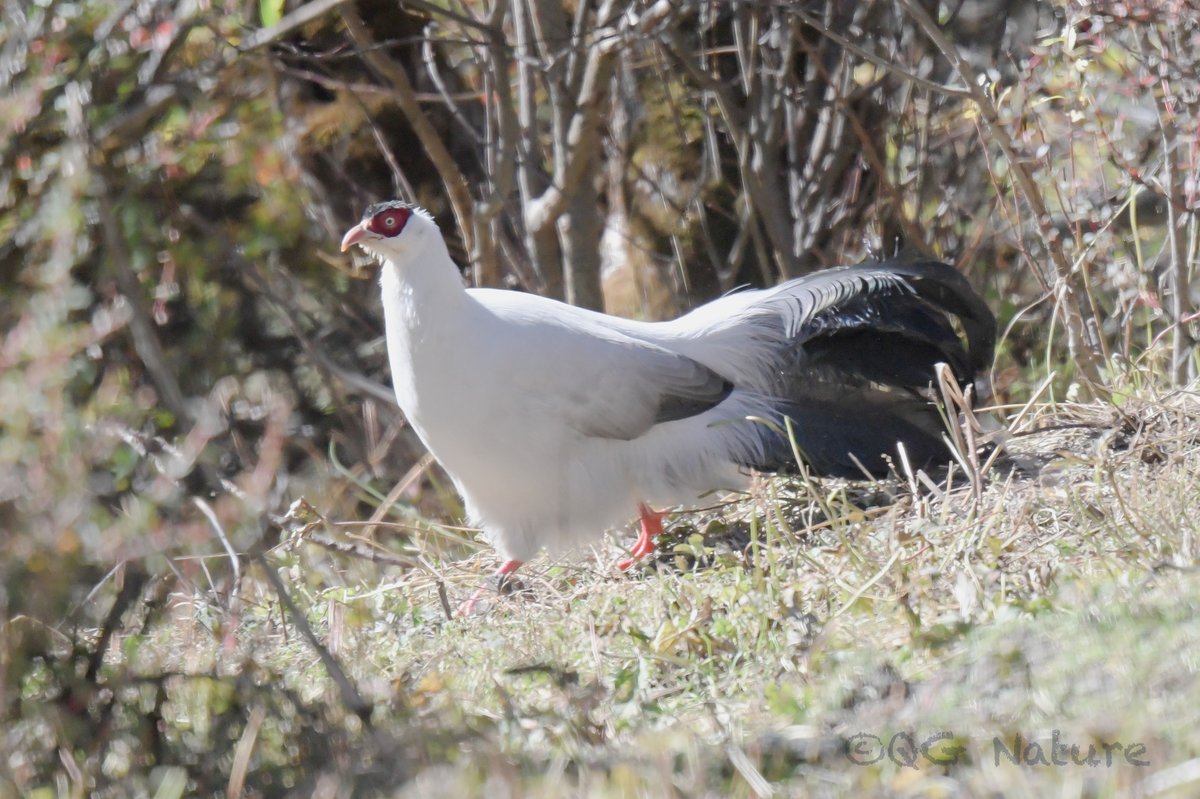
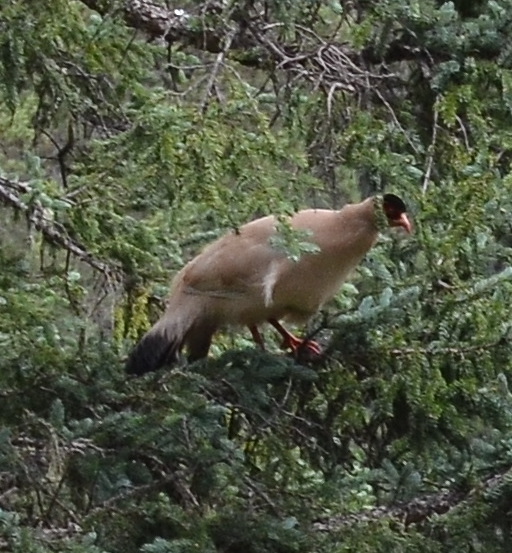
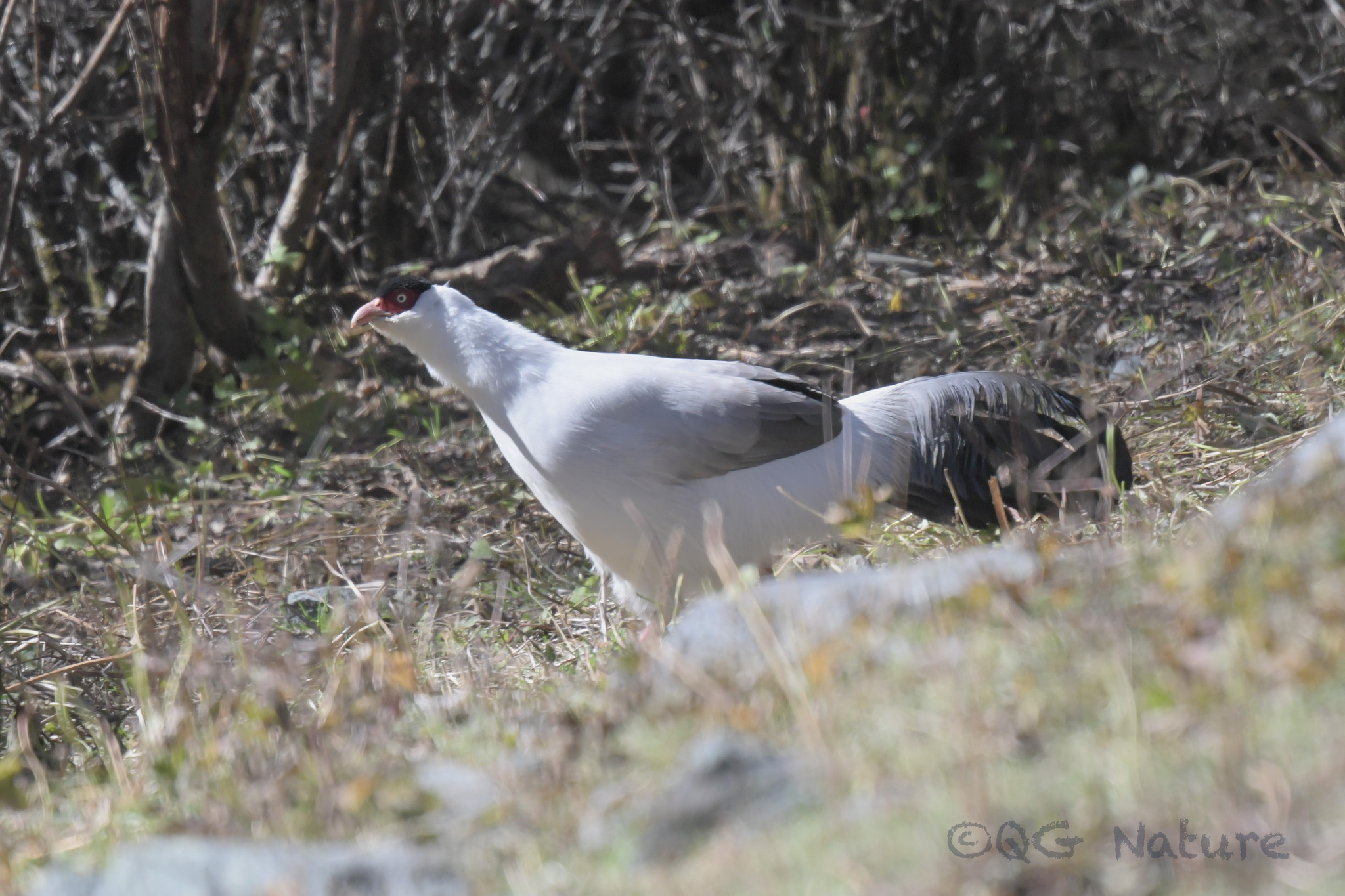
Predominantly white with prominent white ear tufts, black tail feathers, black wingtips, and a black patch on the top of the head. Primary feathers range from dark grey to brown, while wings may appear dark-grey or violet. The bare facial skin is red. Cocks are considerably larger than hens, with males weighing 2350–2750 g and females 1400–2050 g. Total length ranges from 86–96 cm.
Identification
Distinguished by white plumage, white ear tufts, and black tail and wing markings. Lacks a prominent tailing wing notch. Flies more frequently than related eared pheasant species, capable of hovering or volplaning over deep snow using wide tails for support.
Distribution & Habitat
Found in China (Qinghai, Sichuan, Yunnan, and Tibet). Inhabits mixed forests, high-altitude exposed rockscapes, and alpine meadows. May descend to old-growth forests in winter. Three subspecies are noted: C. c. crossoptilon (Sichuan), C. c. drouyni (Tibetan), and C. c. lichiangnse (Yunnan).
Behavior & Ecology
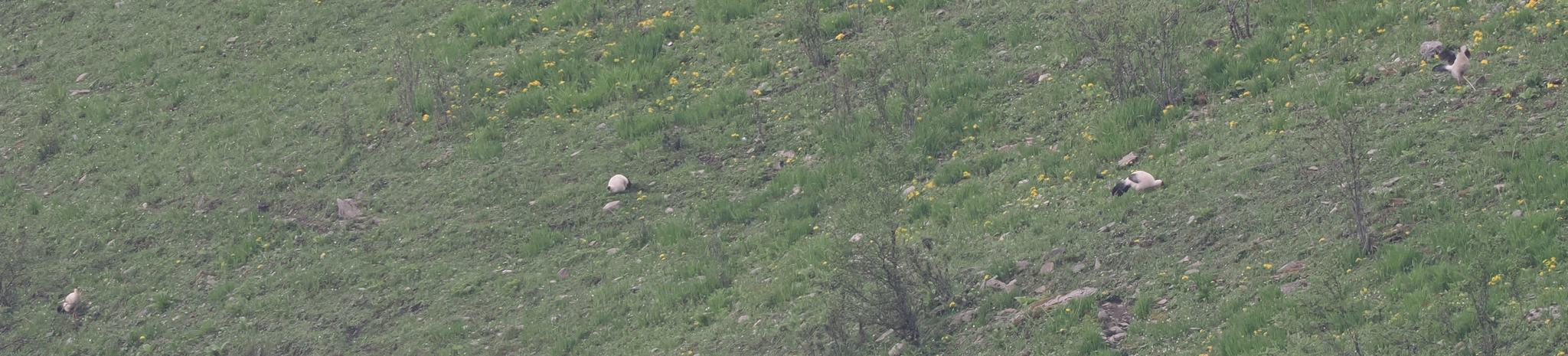
Gregarious, forming large flocks often in the company of yaks or other hoofed stock. Forages for tubers and roots in alpine meadows. Winter diet includes pine needles, juniper berries, wolf berries, and desiccated seed pods of iris, lily, and allium; may consume pine pitch and dung during severe storms. Reaches sexual maturity at two years. Breeding occurs from late April to June, producing clutches of four to seven eggs with an incubation period of 24–25 days.
Conservation
The Szechuan subspecies is Near Threatened. Population estimates range from 6,700 to 33,000 individuals in the wild. Threats include habitat loss due to human development and agricultural encroachment, as well as hunting for food.
Source: Wikipedia · CC BY-SA 3.0
Taxonomy
- Order
- Galliformes
- Family
- Phasianidae
- Genus
- Crossoptilon
Subspecies (4)
-
Crossoptilon crossoptilon crossoptilon
southwestern China (western Sichuan) to southeastern Tibet and far northeastern India
Data Sources
CBR Notes: IUCN红色名录等级由NT降为LC
Species description from Wikipedia, licensed under CC BY-SA 3.0.
Bird images and sounds sourced from GBIF, contributed by citizen scientists worldwide under Creative Commons licenses.
Taxonomy data from AviList 2025.