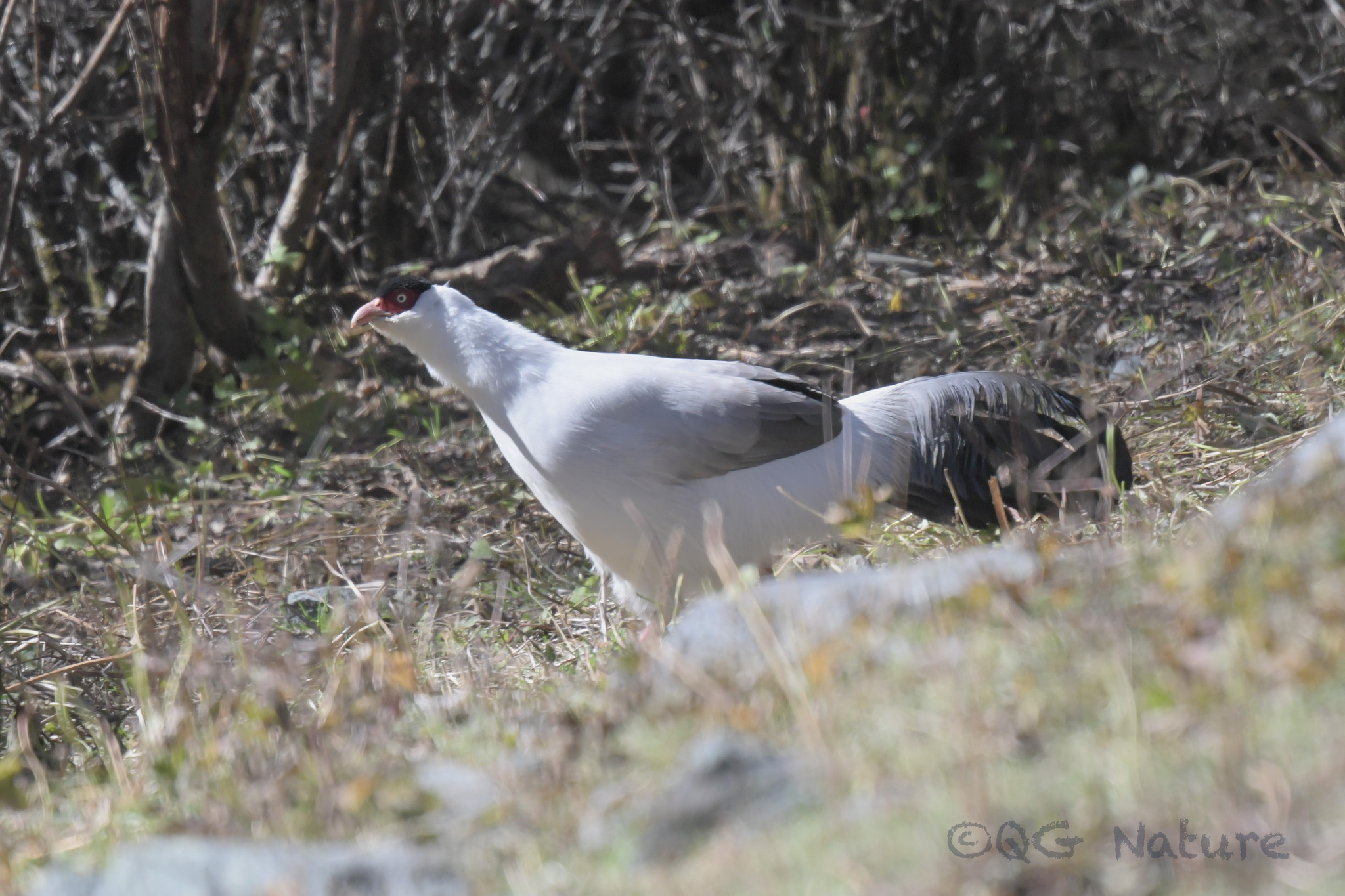
White Eared Pheasant
Crossoptilon crossoptilon
白马鸡
Introduction
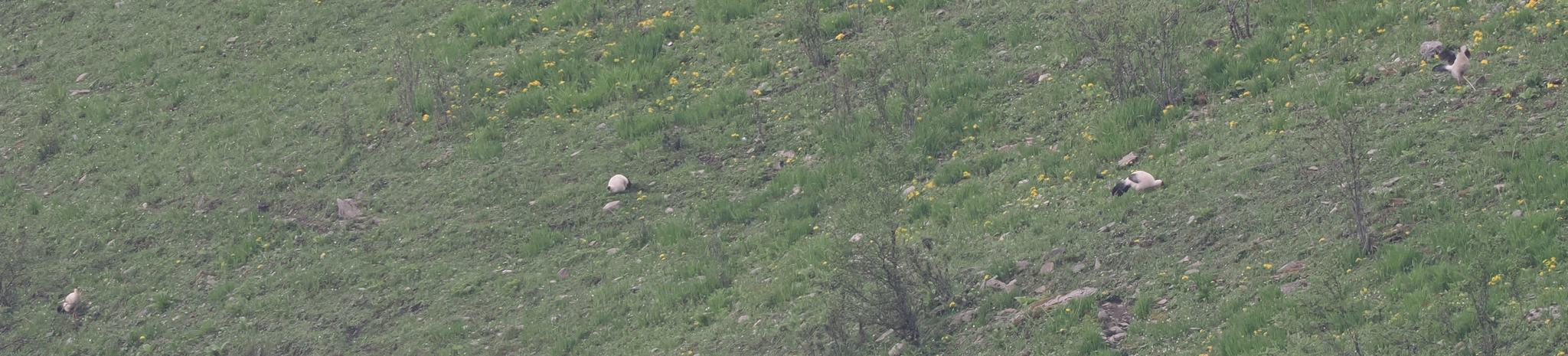
High-altitude pheasant of China's western provinces and the Himalaya, inhabiting alpine meadows and mixed forests near or above the snowline. Occurs in large, gregarious flocks year-round. Feeds on alpine meadows, often associated with yaks and other hoofed stock. More aerial than typical pheasants; capable of sustained flight over deep snow. Moves across snow-covered terrain by wing-whirring and low fluttering, using broad tails for support. Local name 'shagga' (snow fowl). Frequently found near Buddhist monasteries where habituated to human presence.
Description
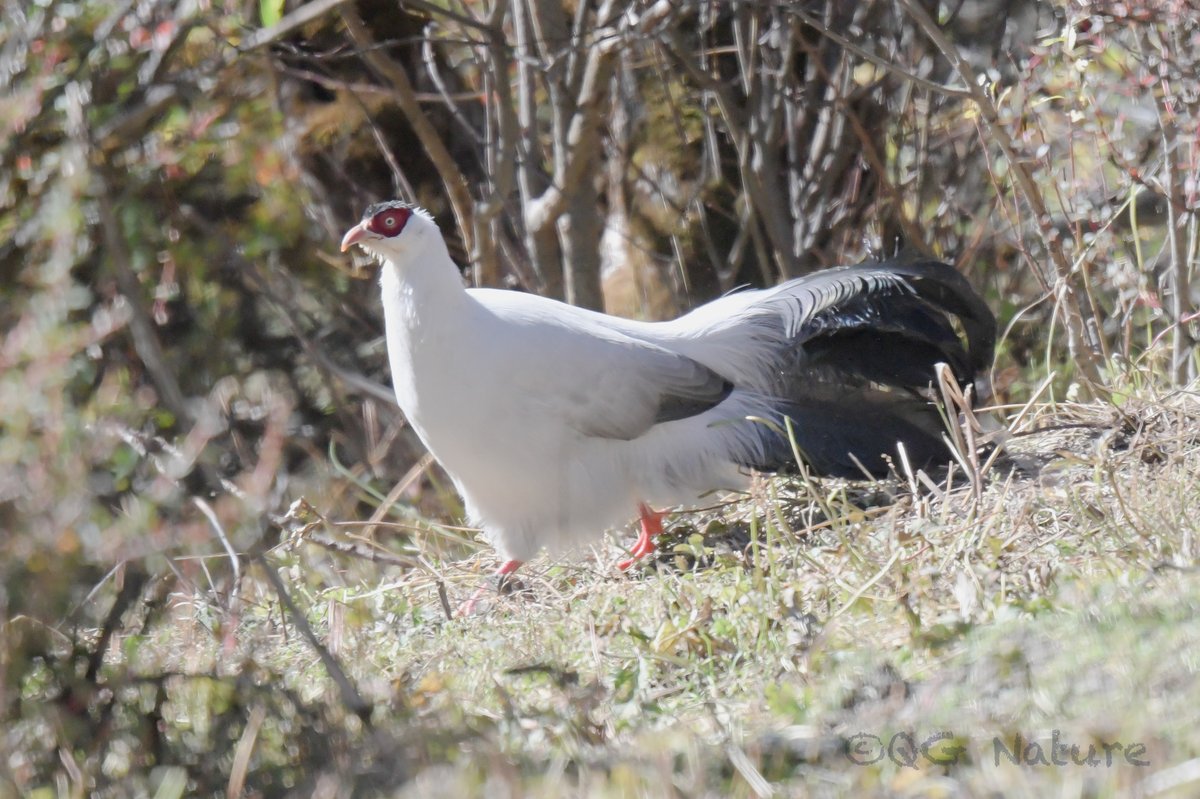
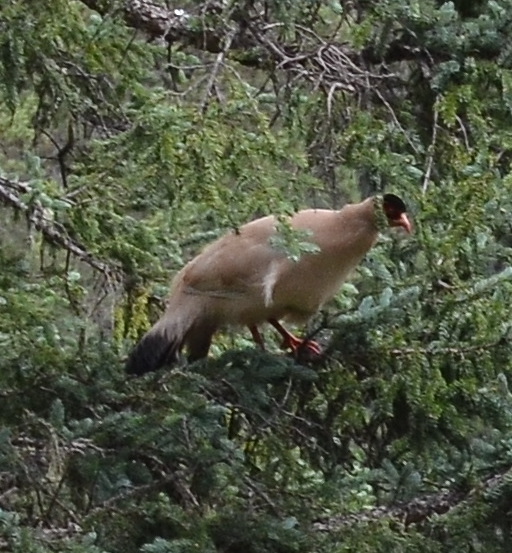
This is a predominantly white pheasant with the characteristic ear tufts of its genus, though these tufts are white rather than indicating white ears. The face has bare red skin, and the head features a distinctive black patch at the crown. The tail and wingtips are black, while the primary feathers range from dark grey to brown. Sexual dimorphism is pronounced, with males considerably larger than females. Males reach 86-96 cm in length and weigh 2350-2750 g, while females are smaller at 1400-2050 g. The Szechuan subspecies has dark-grey to violet wings and is slightly less white overall than related subspecies.
Identification
This species can be distinguished from its close relatives, the brown eared pheasant and blue eared pheasant, by its more aerial behavior—it flies considerably more than either relative. All three species share the ability to hover or volplane over deep snow using their broad tails, but this species shows greater aptitude for sustained flight movements covering hundreds of yards. Unlike many pheasants, it lacks a prominent tailing wing notch. In the field, watch for the combination of predominantly white plumage, prominent white ear tufts, red facial skin, and black tail and wingtips against the white body. The Szechuan subspecies shows darker grey to violet wing coloration.
Distribution & Habitat
This species is endemic to western China, occurring in Qinghai, Sichuan, Yunnan, and Tibet provinces. It inhabits mixed forests at high altitudes and alpine meadows near or above the snowline throughout the year. Populations are commonly found around Buddhist monasteries, where informal protection has helped maintain local numbers. While primarily resident, some seasonal movement to lower elevations may occur during severe winter storms, with individuals descending to old-growth forests in winter. The species shows a preference for rocky, exposed landscapes at high elevations during summer months.
Behavior & Ecology
These highly social birds live in large flocks year-round, foraging together on alpine meadows. Their diet varies seasonally: in warmer months they consume tubers and roots, often alongside grazing yaks, while winter sustenance consists of pine needles, juniper berries, wolf berries, and desiccated seed pods of iris, lily, and allium. During severe winter storms, they may resort to eating pine pitch and even deer, rabbit, and yak dung. Breeding begins at two years of age, with the mating season starting late April and continuing through June. Clutches contain four to seven eggs with an incubation period of 24-25 days. They are capable of sustained flight over snow, moving hundreds of yards at a time—behavior reminiscent of ptarmigans that aids winter feeding.
Conservation
This species is classified as Near-Threatened, with an estimated wild population of 6,700 to 33,000 individuals. Habitat destruction from agricultural expansion and human development has significantly reduced its range throughout China. Hunting for food has further pressured populations, though the species benefits from informal protection conferred by Tibetan Buddhist culture in areas surrounding monasteries. Conservation efforts focus on habitat protection in remaining strongholds, though the remote nature of their alpine habitat provides some natural buffer against the most severe threats.
Culture
Known locally as 'shagga' meaning 'snow fowl' to indigenous Himalayan peoples, this bird holds cultural significance in Tibetan Buddhist communities where it occurs around monasteries. The species is informally protected by local religious beliefs and practices, which have helped maintain viable populations near sacred sites. While not featuring prominently in broader folklore or mythology, its presence in monastery grounds has made it a familiar part of the cultural landscape in its range.
Source: Wikipedia · CC BY-SA 3.0
Taxonomy
- Order
- Galliformes
- Family
- Phasianidae
- Genus
- Crossoptilon
- eBird Code
- whieap1
Subspecies (4)
-
Crossoptilon crossoptilon crossoptilon
southwestern China (western Sichuan) to southeastern Tibet and far northeastern India
-
Crossoptilon crossoptilon dolani
west-central China (southern Qinghai)
-
Crossoptilon crossoptilon drouynii
montane forest of eastern Tibet
-
Crossoptilon crossoptilon lichiangense
south-central China (northwestern Yunnan)
Data Sources
CBR Notes: IUCN红色名录等级由NT降为LC
Species description from Wikipedia, licensed under CC BY-SA 3.0.
Bird images and sounds sourced from GBIF, contributed by citizen scientists worldwide under Creative Commons licenses.
Taxonomy data from AviList 2025.