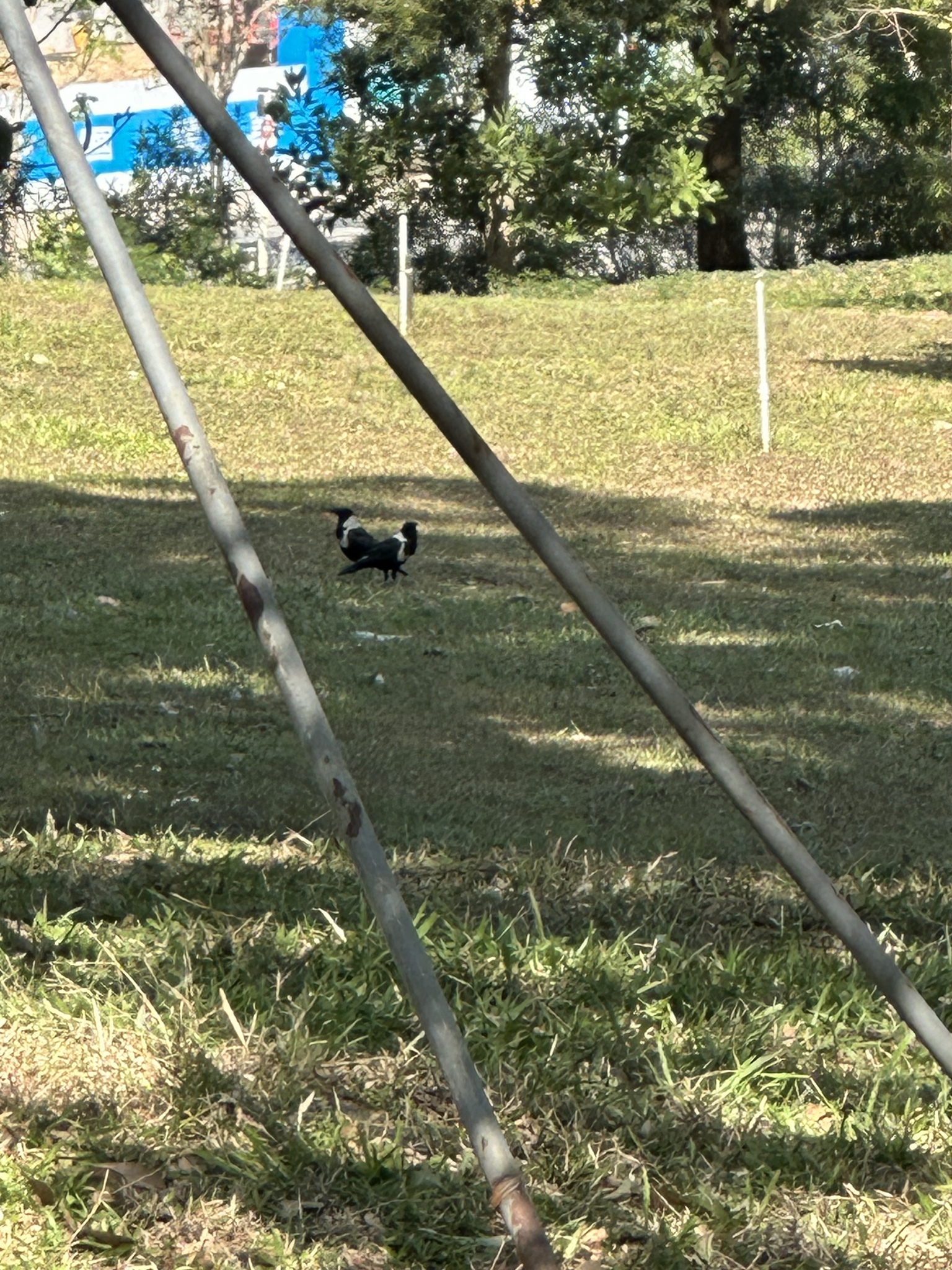
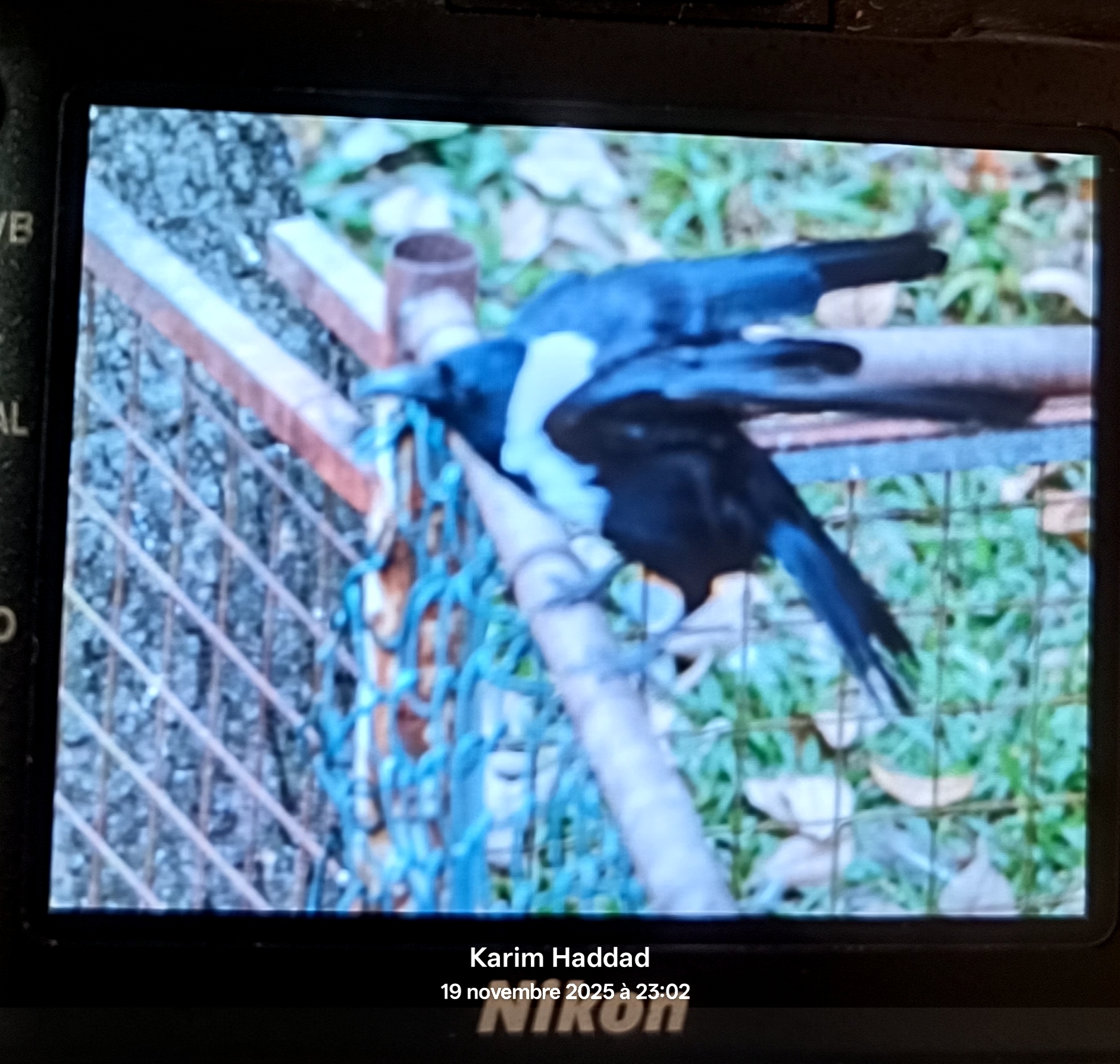
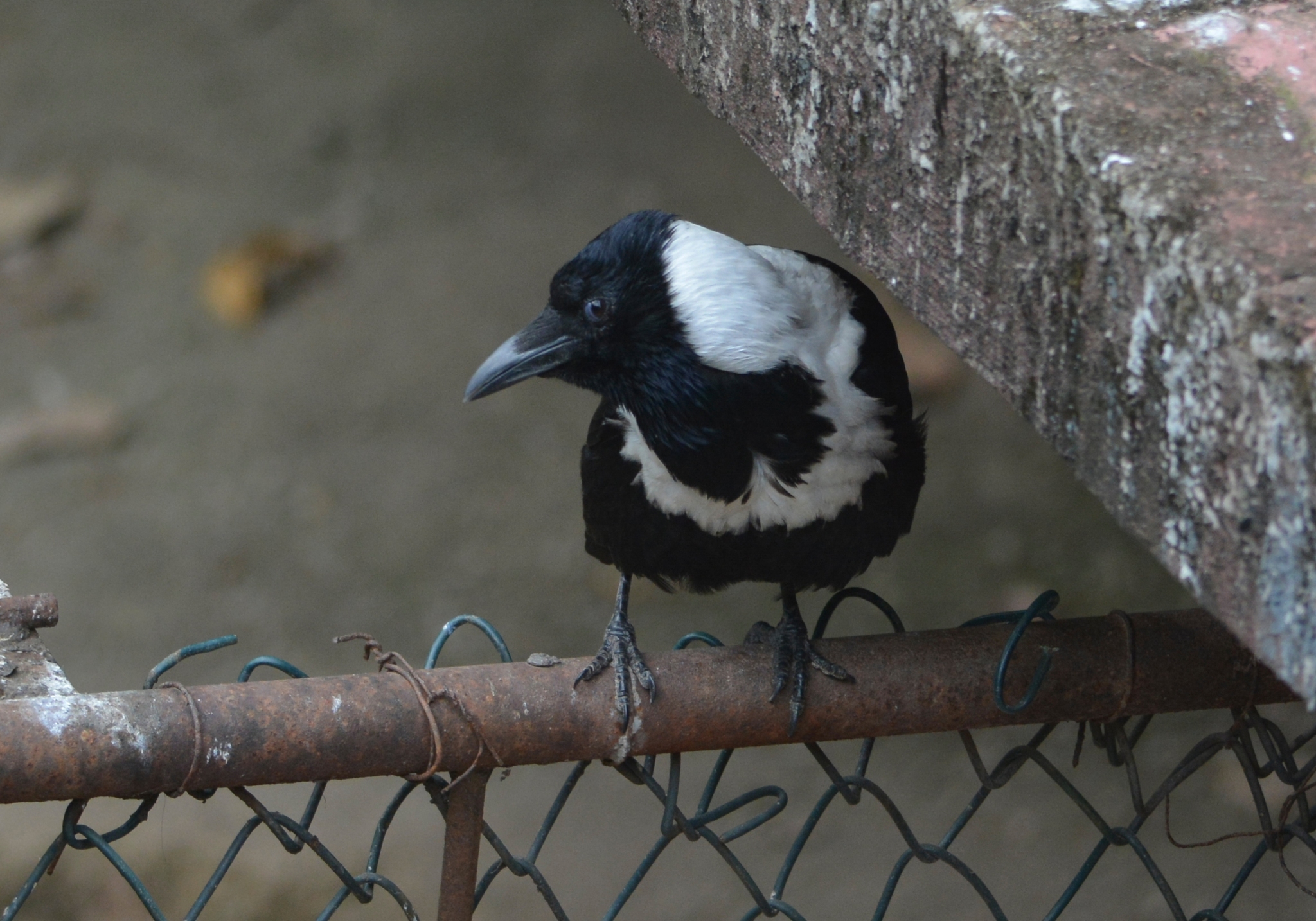
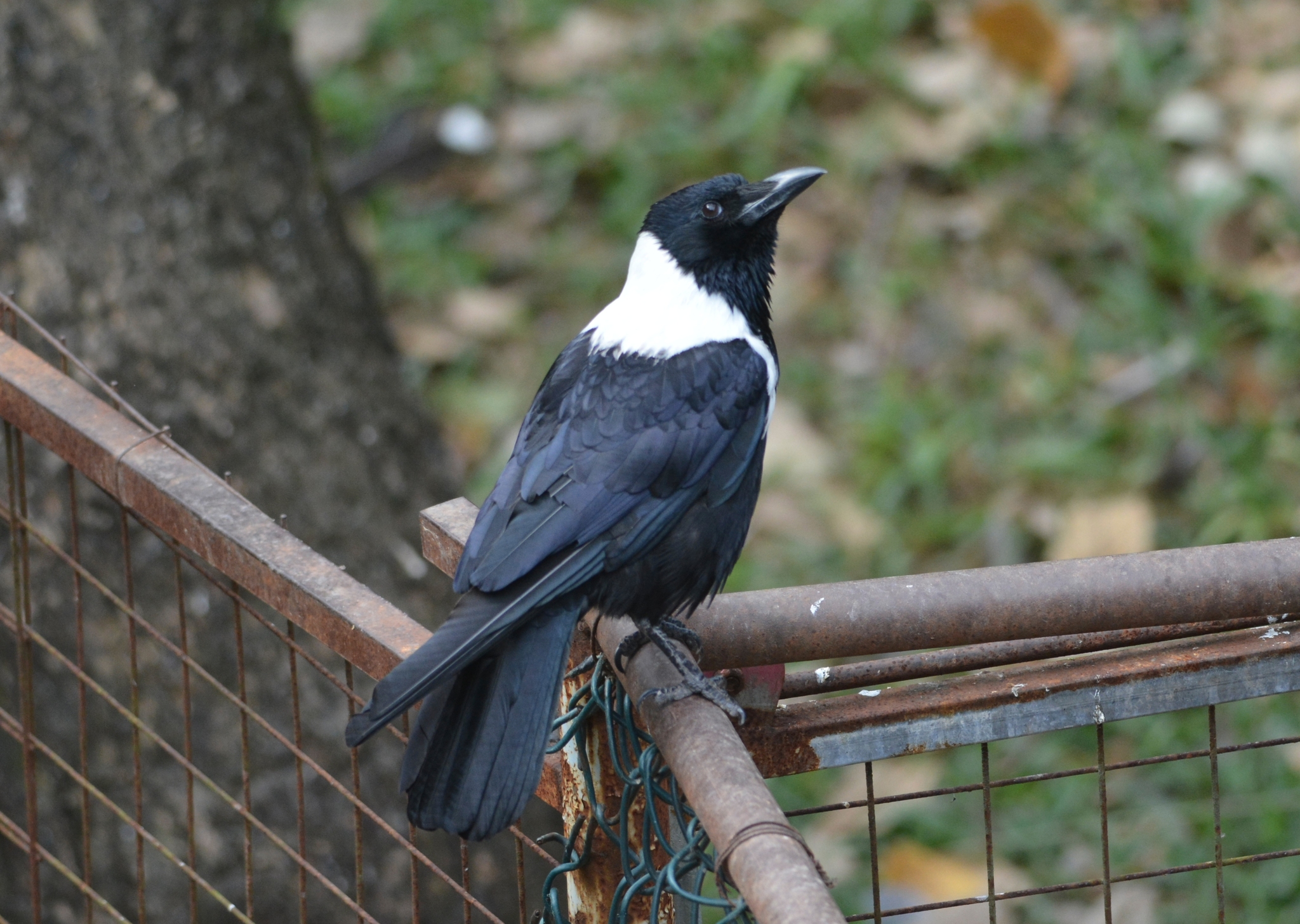


Collared Crow
Corvus torquatus
白颈鸦
Introduction
This crow species, a member of the Corvidae family, occurs in central and southern China with a small presence in northern Vietnam. It inhabits open countryside and cultivated landscapes, particularly rice paddy fields. The species forages during the day and typically appears in pairs or small family groups, though larger congregations may form at abundant food sources.
Description
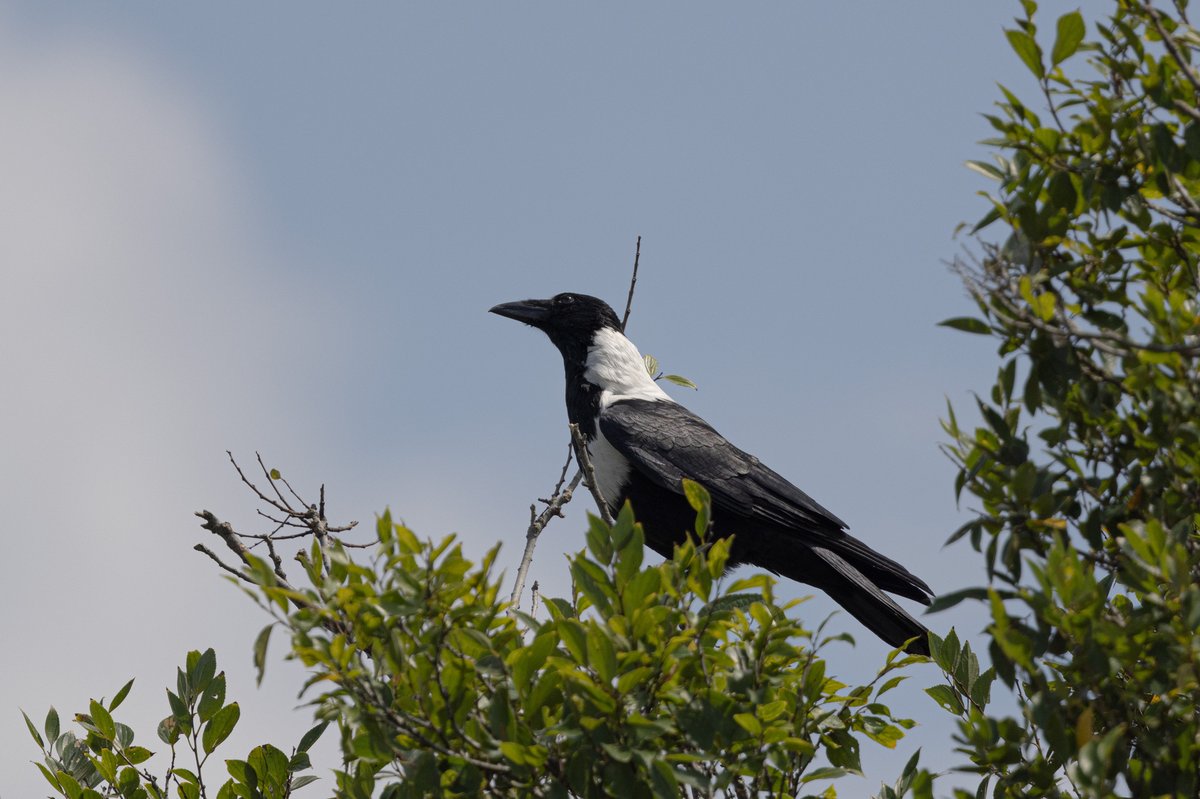
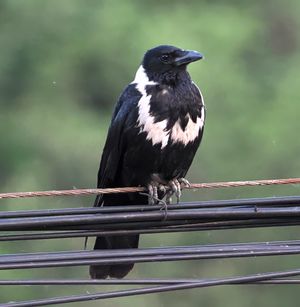
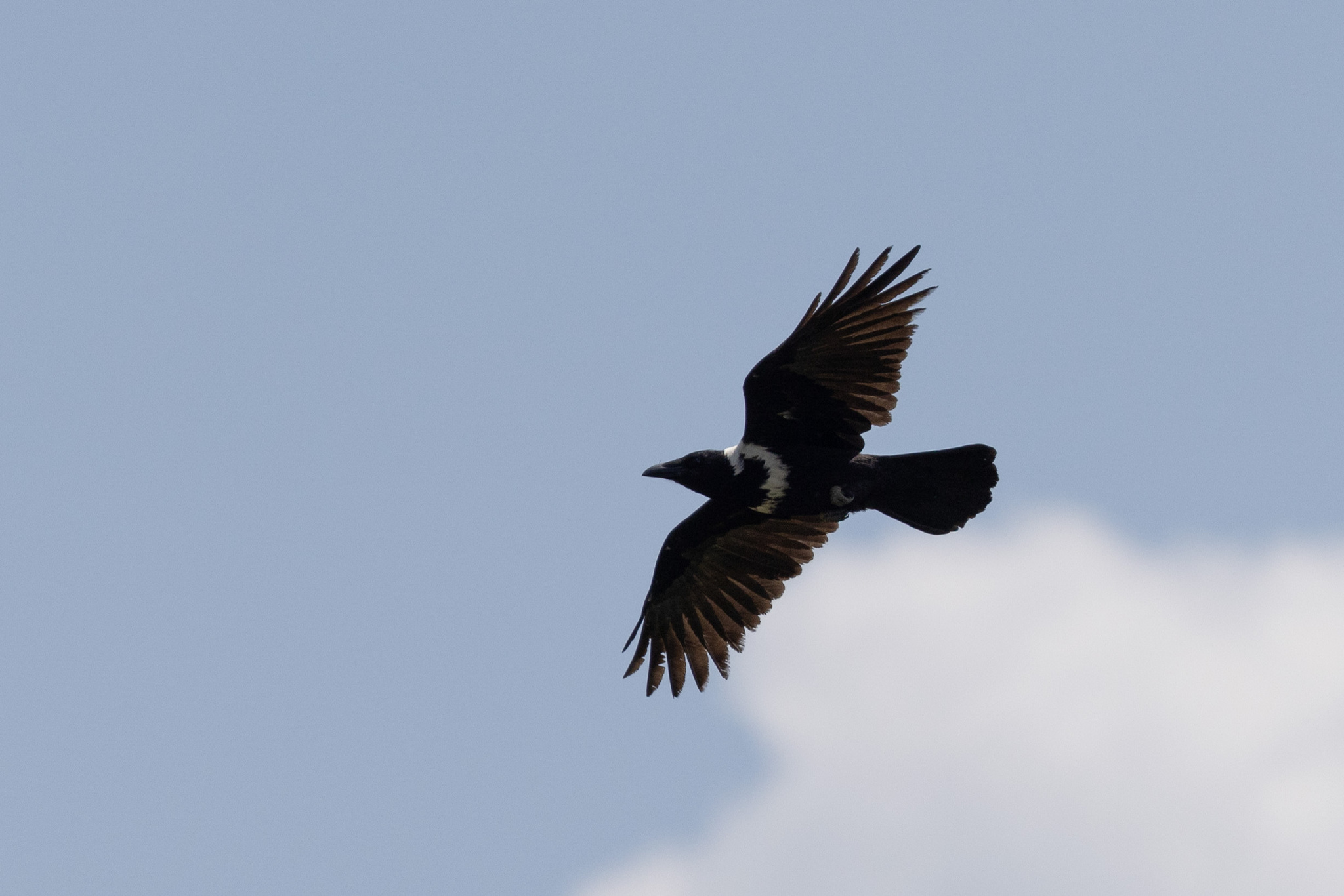
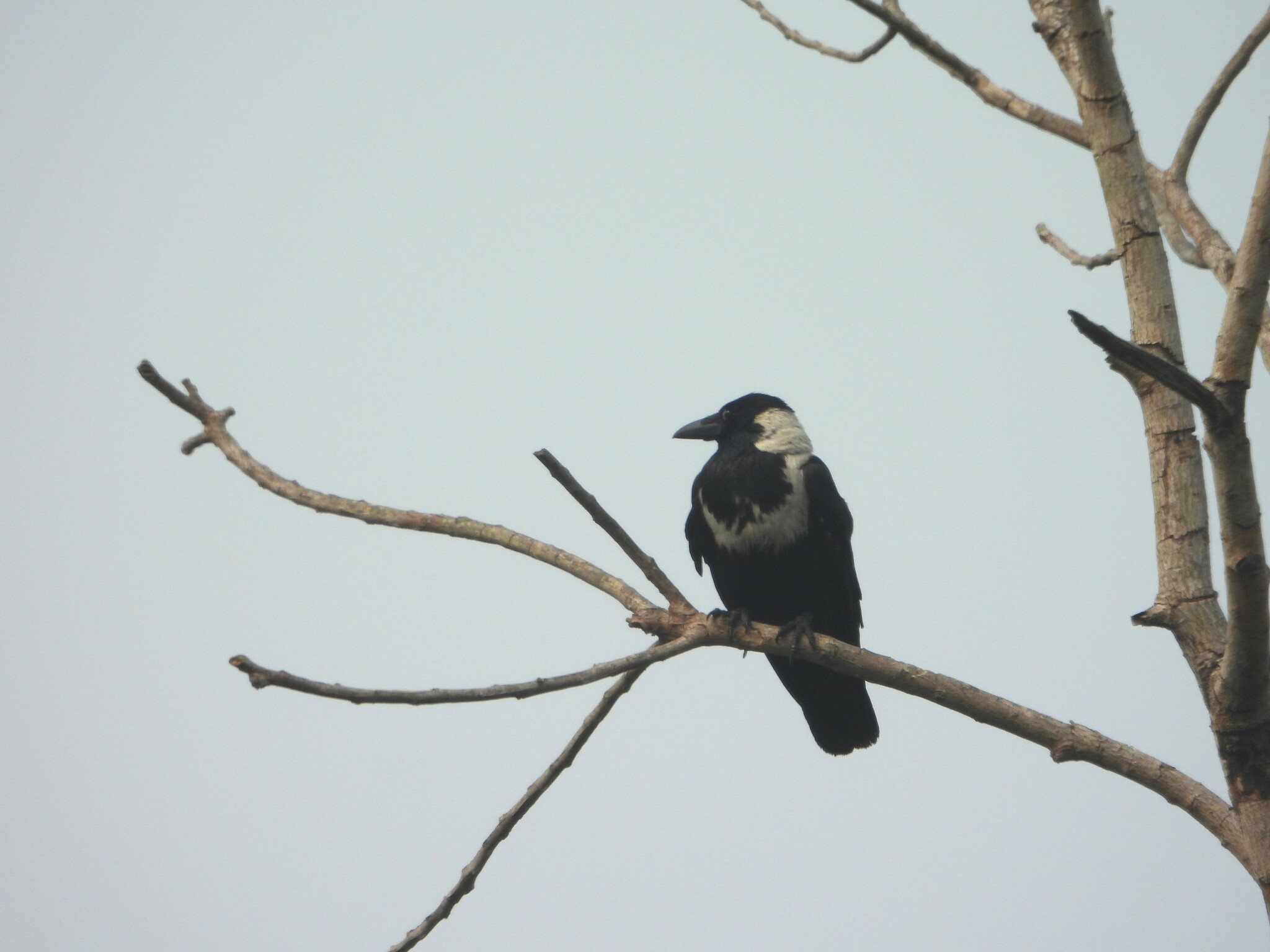
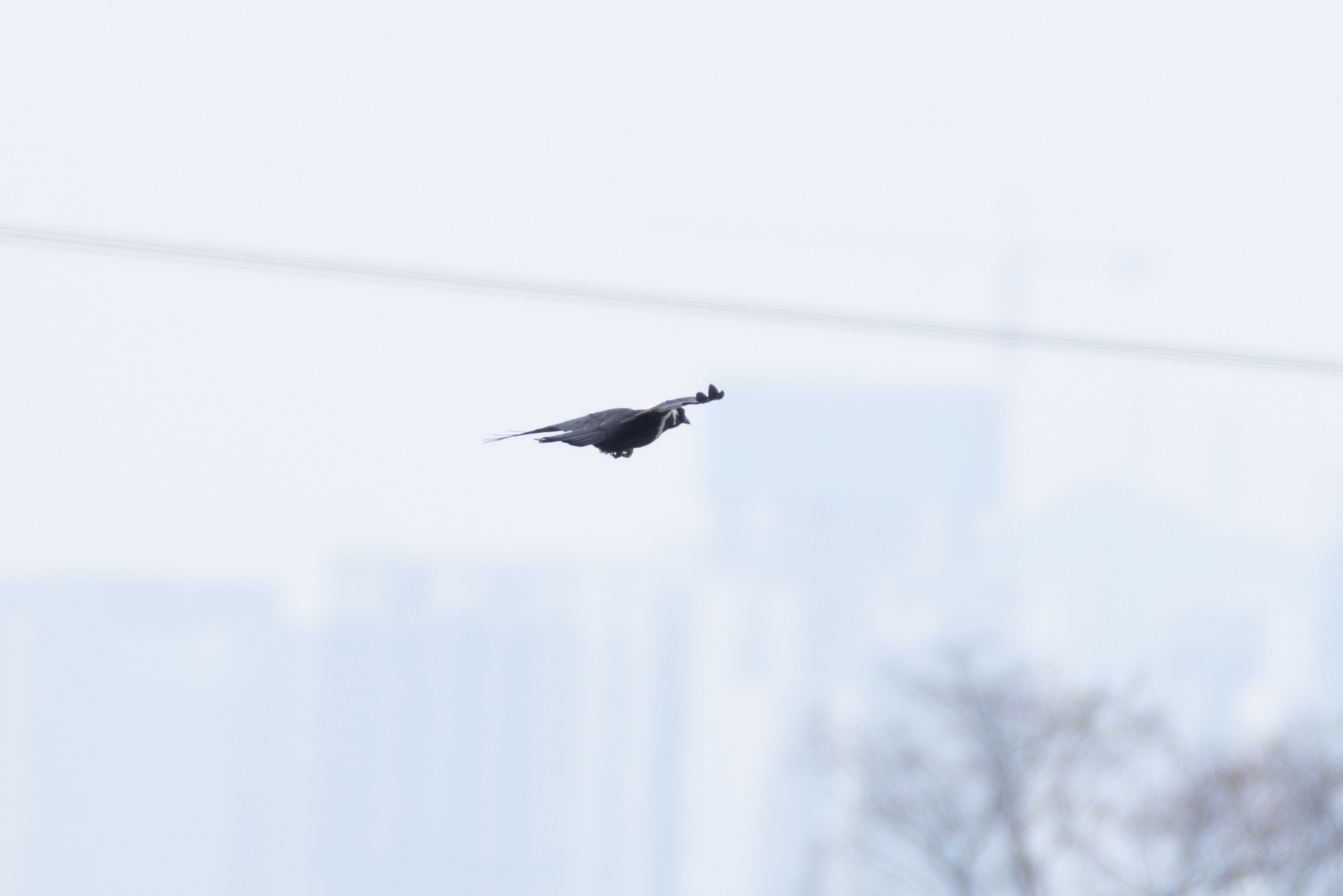
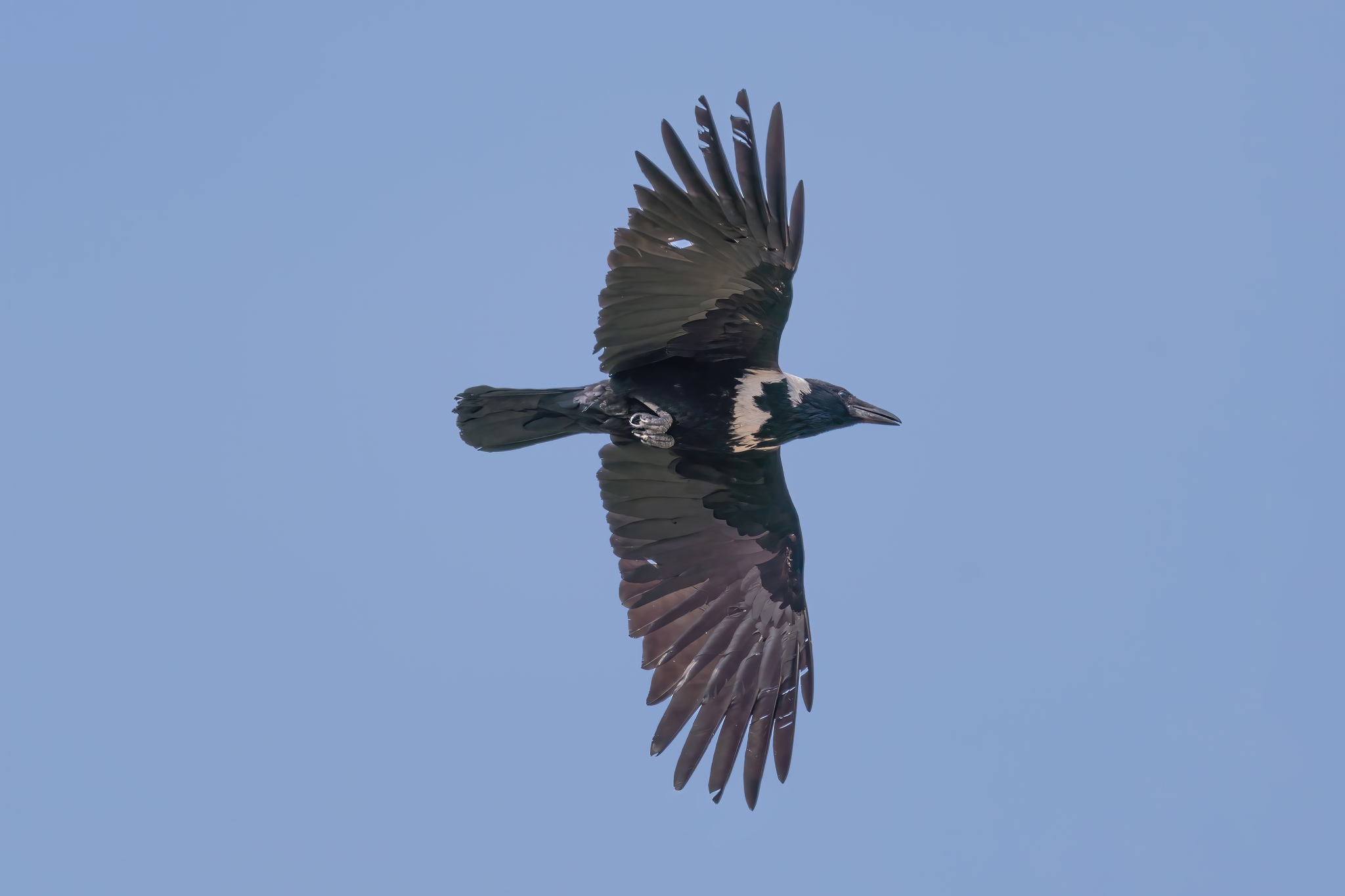
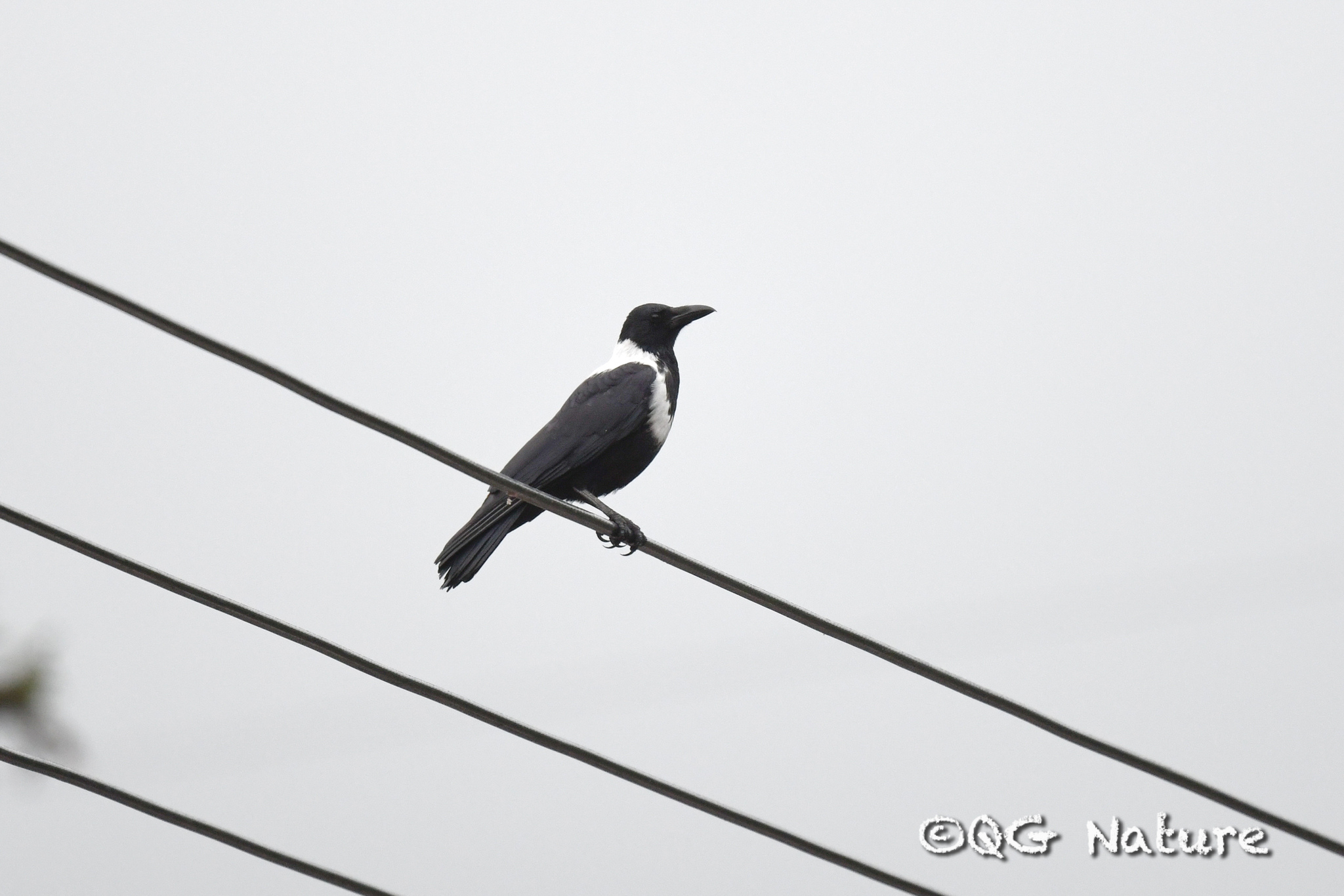
This crow measures approximately 52-55 cm in length, matching or slightly exceeding the size of the carrion crow. It possesses proportionately longer wings, tail, and bill compared to similar species. The plumage is predominantly glossy black, creating a sleek and elegant appearance. The species' most distinctive feature is its white coloration, which adorns the back of the neck, the upper back (mantle), and forms a broad band around the lower breast. The bill, legs, and feet are entirely black. A characteristic flight style involves the feet hanging down below the body, giving a somewhat languid impression.
Identification
The bold white collar and breast band provide the primary identification features, setting this species apart from other crows in its range. It can be distinguished from the carrion crow by its larger size, longer appendages, and the distinctive white markings. The lazy flight style with dangling feet also serves as a helpful field mark. In silhouette, the longer bill and tail may be noticeable compared to more common crow species in the same habitats.
Distribution & Habitat
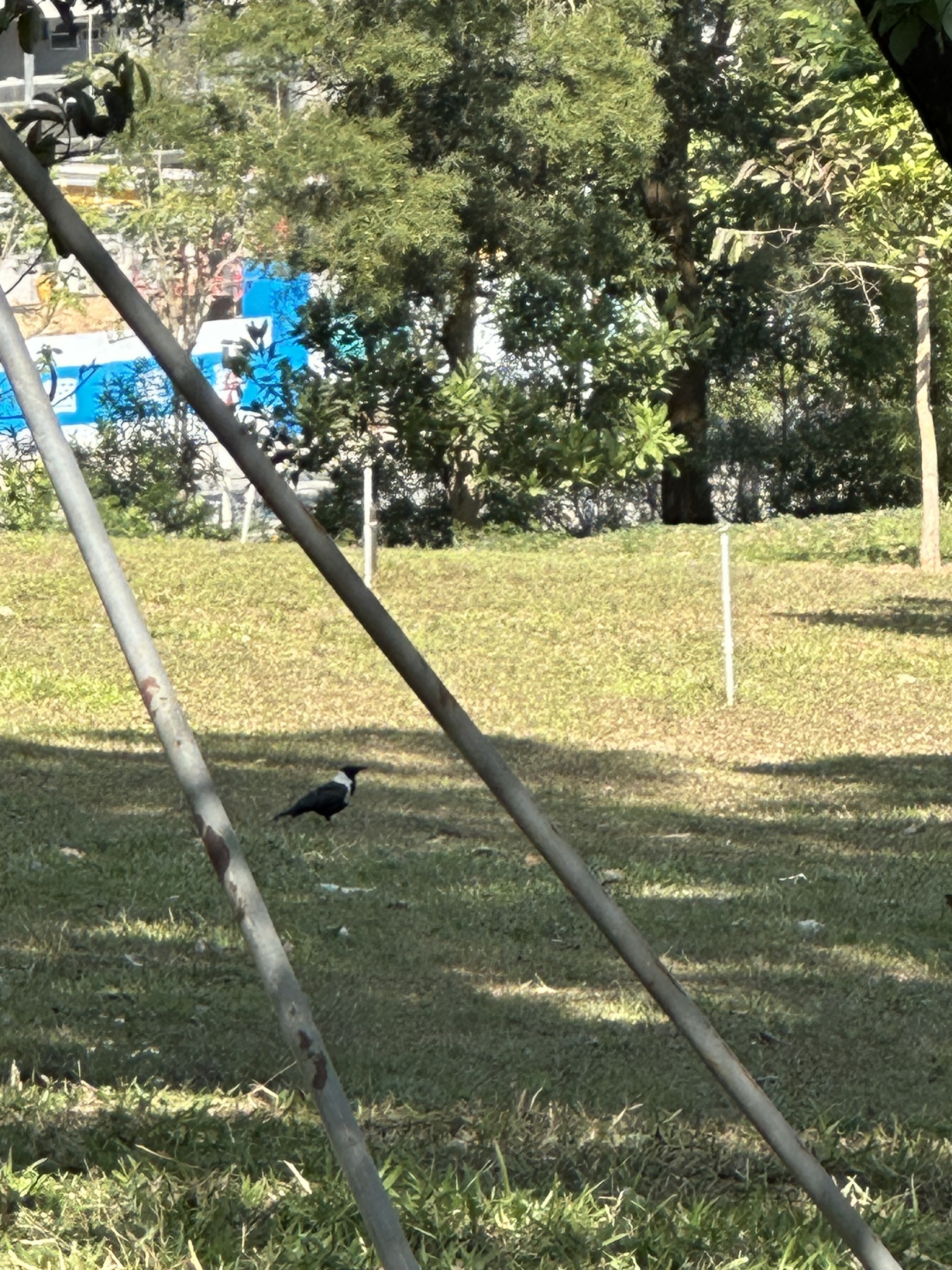
This species is essentially confined to China, with its range covering large areas of the country but extending no further north than Beijing. It inhabits plains and low-lying river valleys in open country and cultivated regions, with rice paddy fields being particularly favored. The species demonstrates a strong preference for rural landscapes and typically avoids large towns and cities. No significant migratory movements are documented, though some local dispersal may occur.
Behavior & Ecology
Foraging occurs primarily on the ground, where the diet encompasses a wide range of items including insects, molluscs, and other invertebrates. Grains form an important food source, particularly rice, and the species readily searches among human refuse for suitable items. Carrion appears to be taken less frequently than by other crow species, though eggs and nestlings are also consumed when opportunities arise. The nest is constructed in trees and plastered with mud, with a typical clutch size of three or four eggs. Vocalizations consist of a loud, repeated 'kaaar' along with various clipping and clicking sounds produced during head-bowing displays between birds.
Conservation
The species was classified as Least Concern by the International Union for Conservation of Nature in 2004 but was upgraded to Near Threatened status in 2008. By 2018, it was categorized as a Vulnerable species, indicating increasing concerns about its population status and long-term viability in the wild.
Source: Wikipedia · CC BY-SA 3.0
Taxonomy
- Order
- Passeriformes
- Family
- Corvidae
- Genus
- Corvus
- eBird Code
- colcro1
Distribution
central and eastern China to northern Vietnam; Hainan and Taiwan
Data Sources
Species description from Wikipedia, licensed under CC BY-SA 3.0.
Bird images and sounds sourced from GBIF, contributed by citizen scientists worldwide under Creative Commons licenses.
Taxonomy data from AviList 2025.