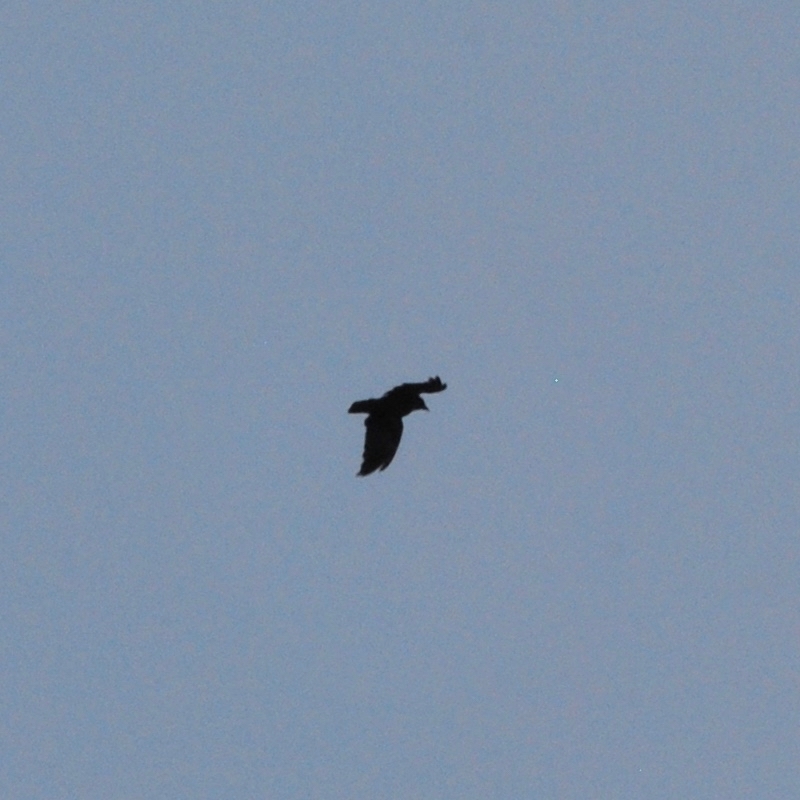
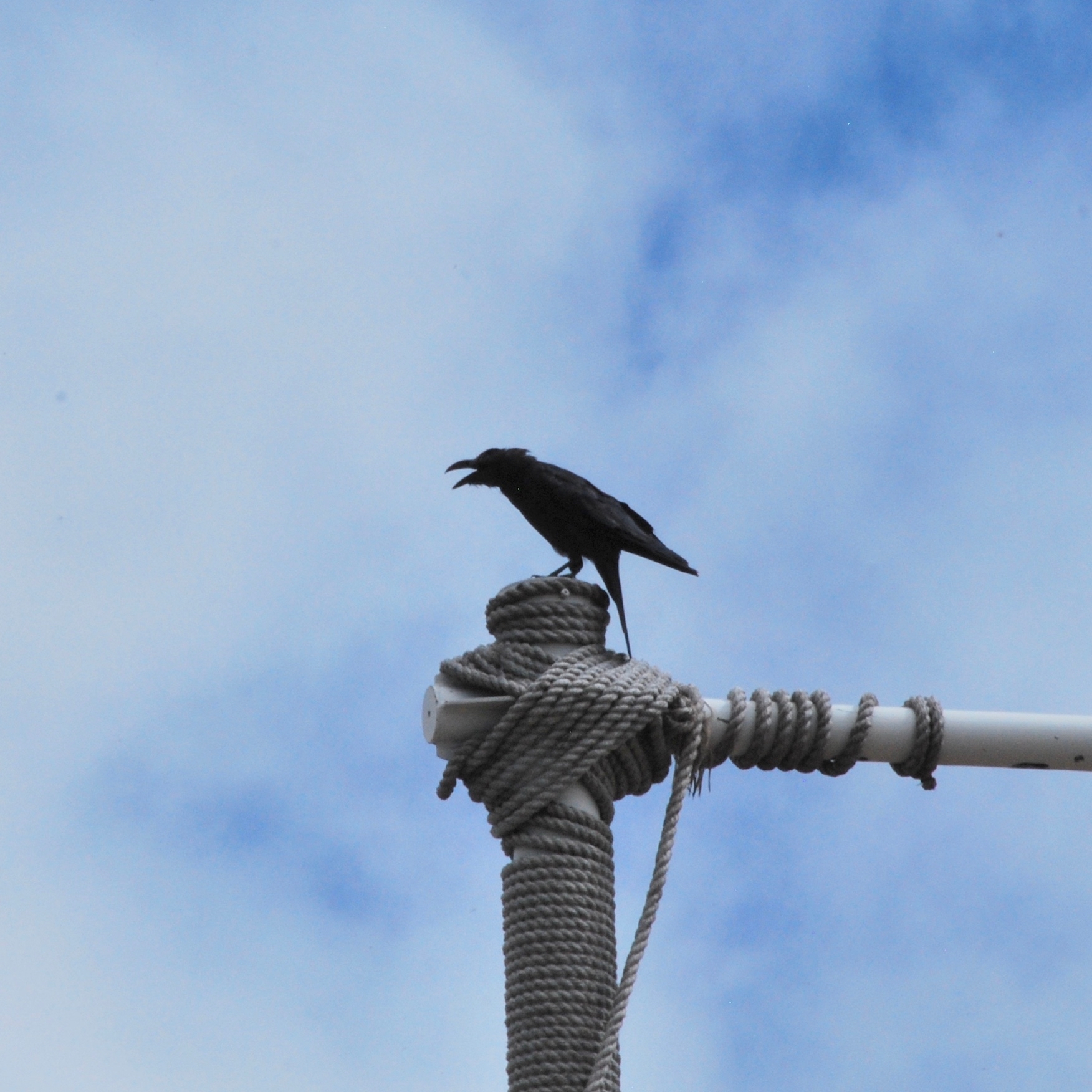
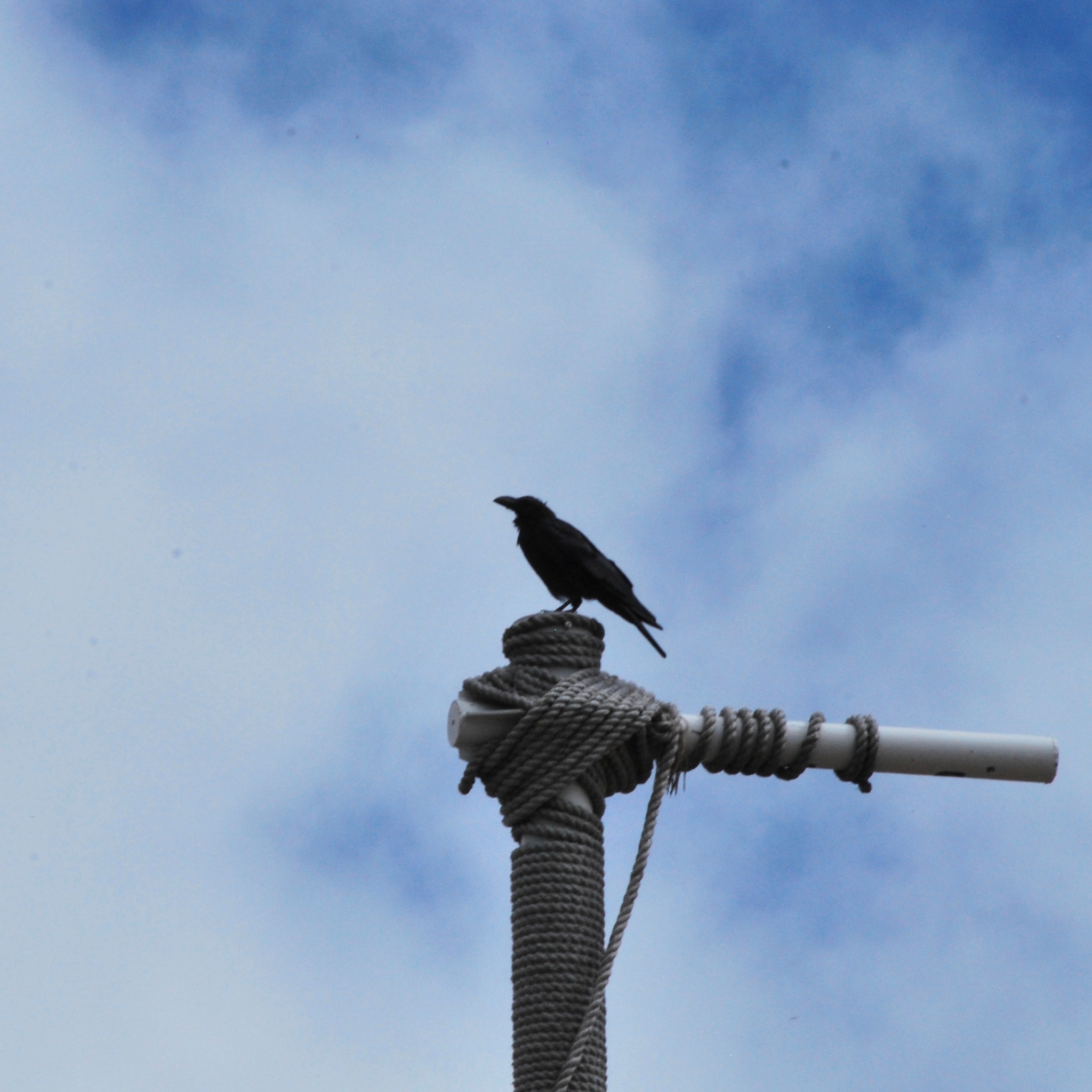
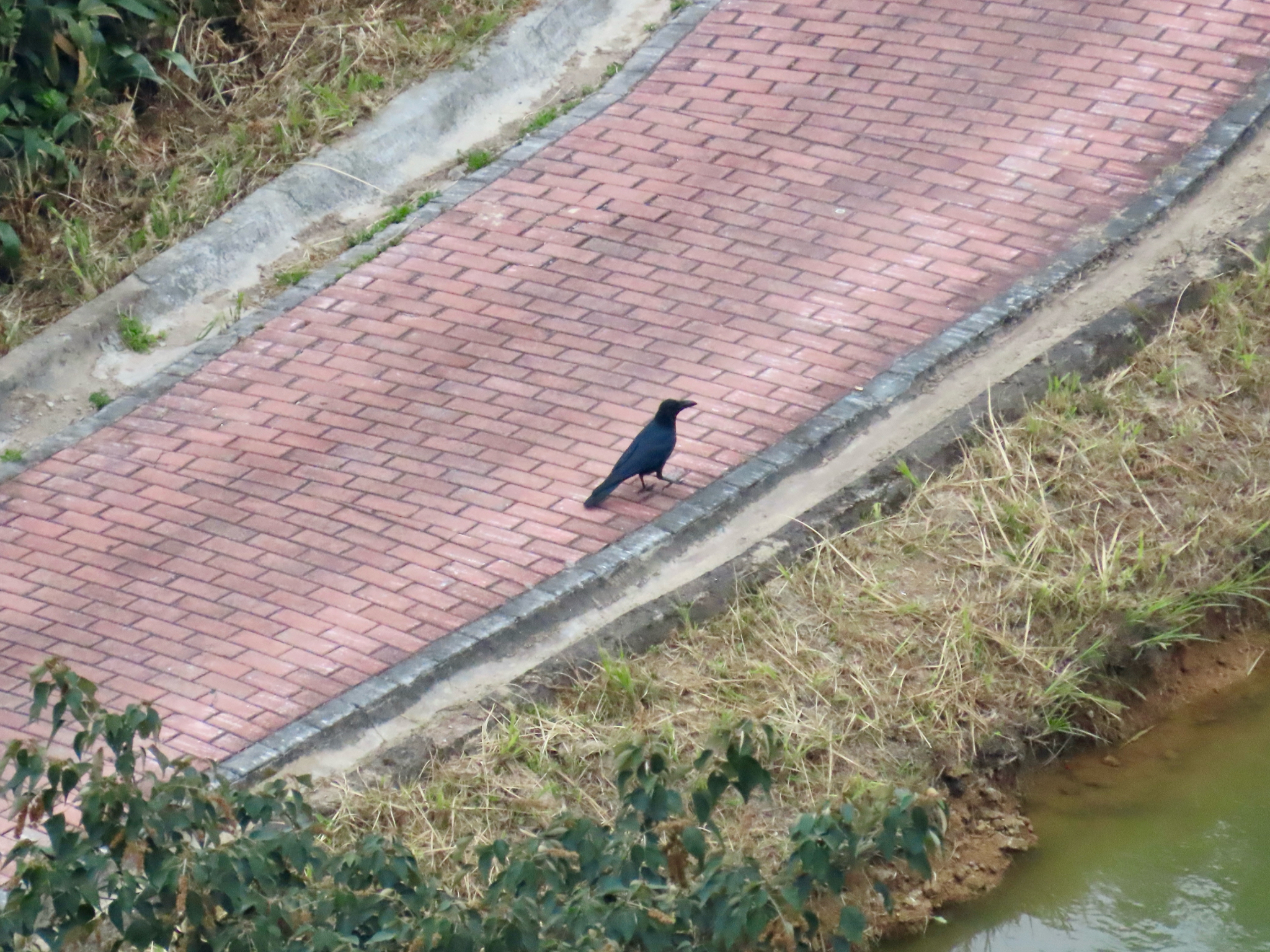

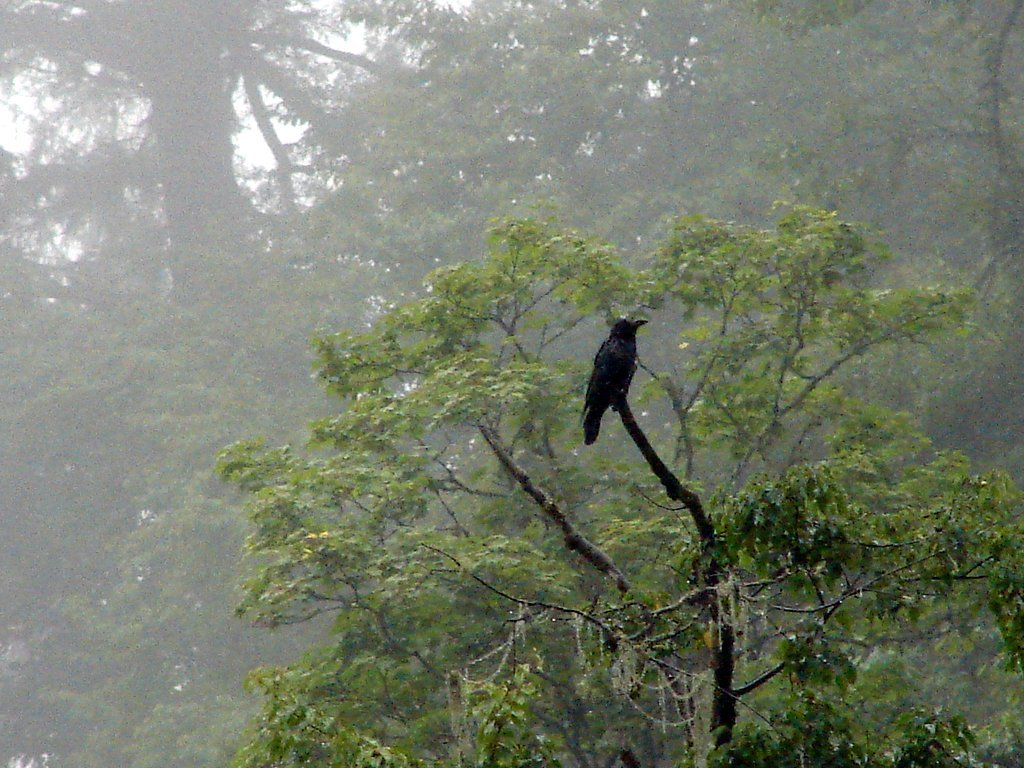
Large-billed Crow
Corvus macrorhynchos
大嘴乌鸦
Introduction
This Asian corvid occurs across much of the continent from lowlands to mountains. It occupies diverse habitats including forests, agricultural areas, and urban environments. The species exploits a broad diet including refuse, agricultural crops, and small vertebrates. It is known for bold behavior near human settlements, particularly in Japan where individuals regularly open garbage containers and may attack humans near nests. The species competes with native wildlife on islands where it has colonized. Taxonomic relationships with other Asian crow populations remain complex, with regional variations in size, voice, and plumage across subspecies.
Description
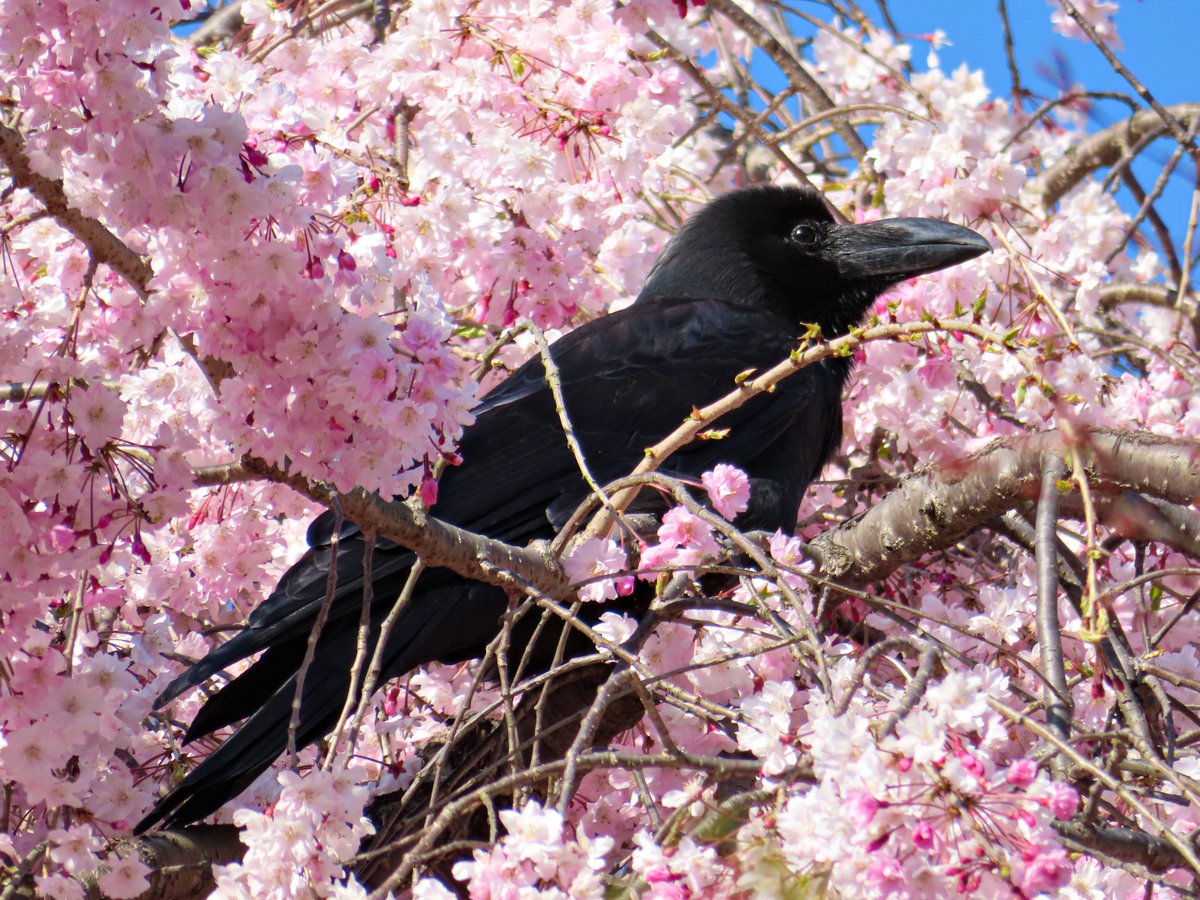
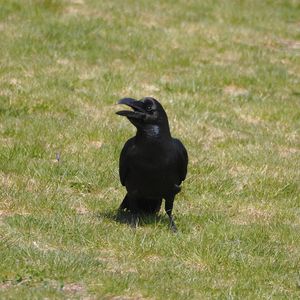
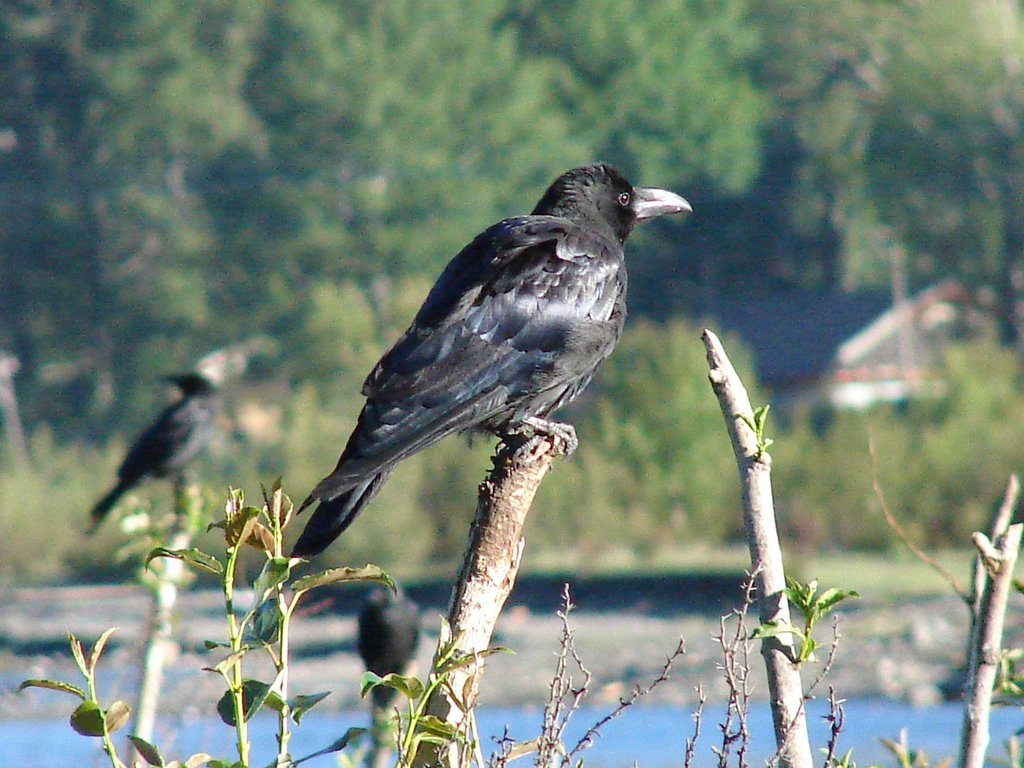
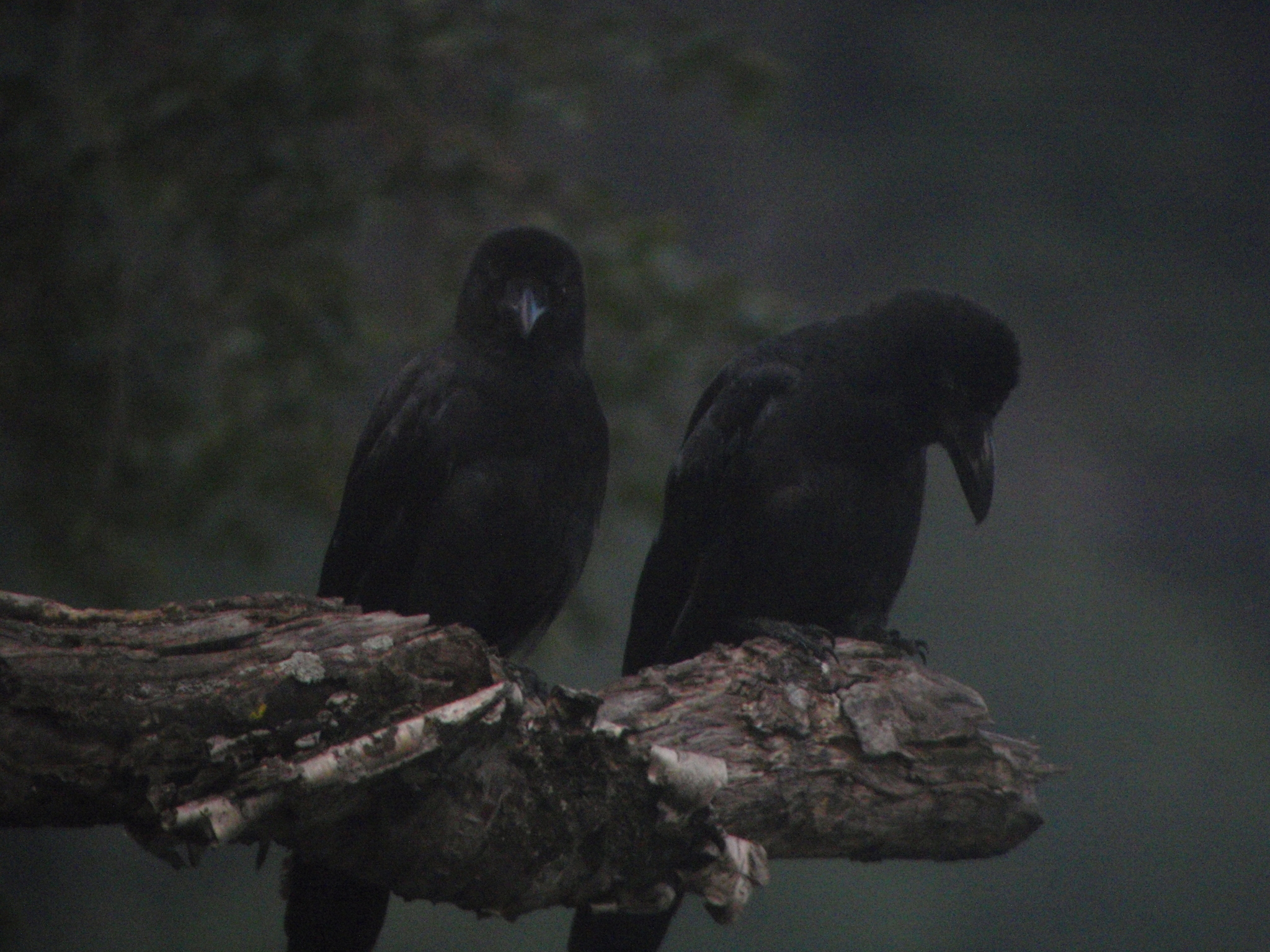
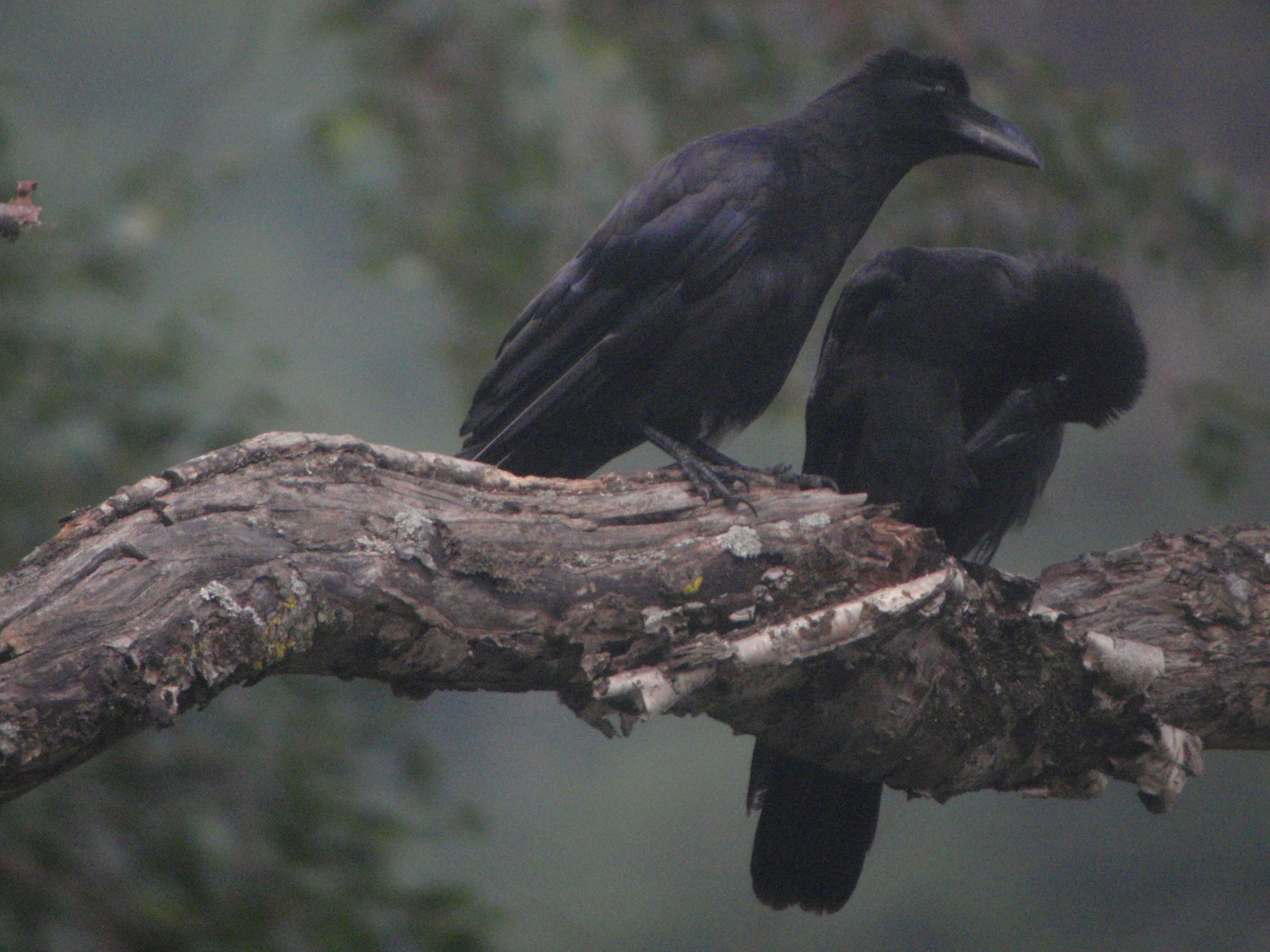
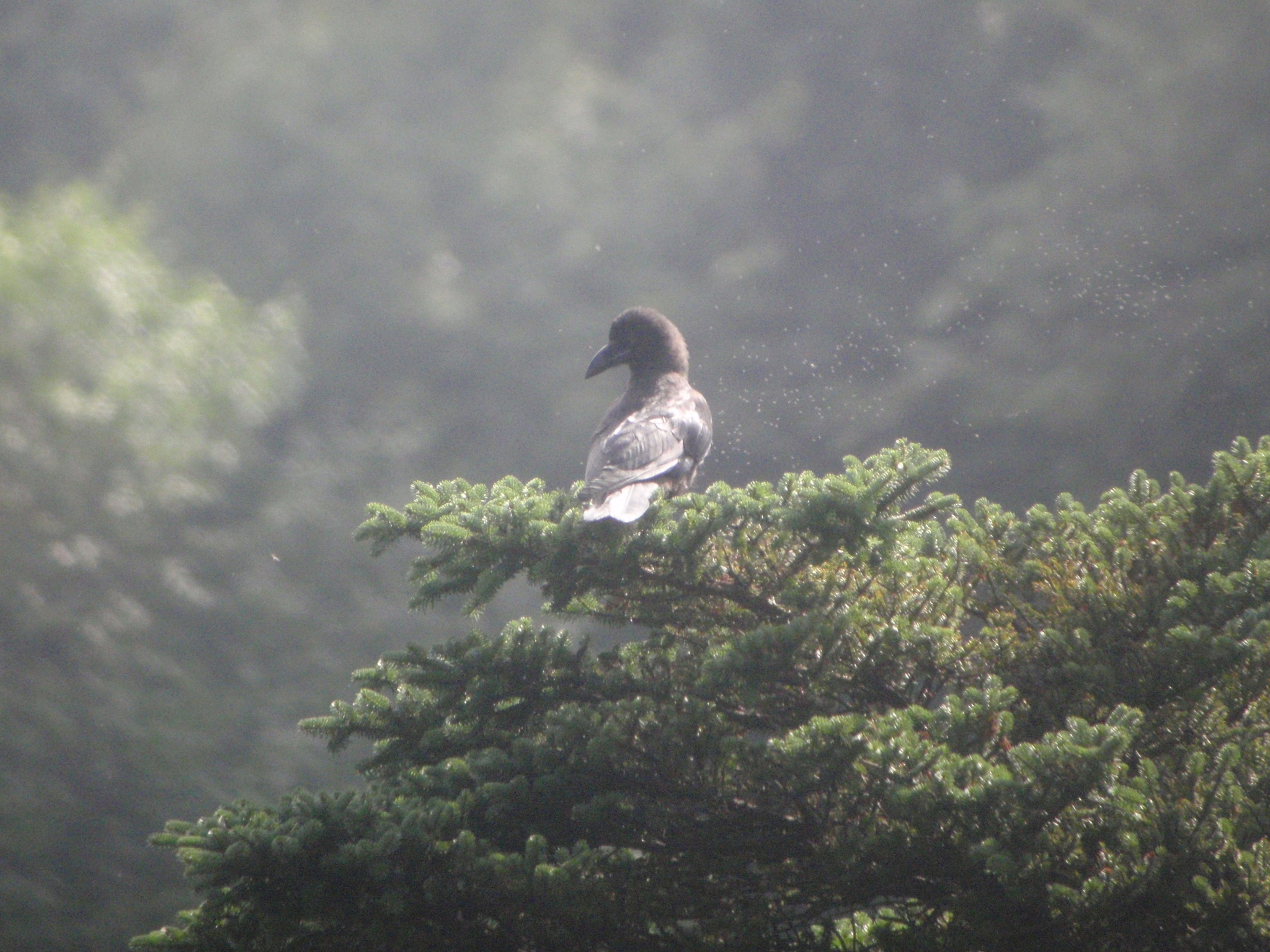
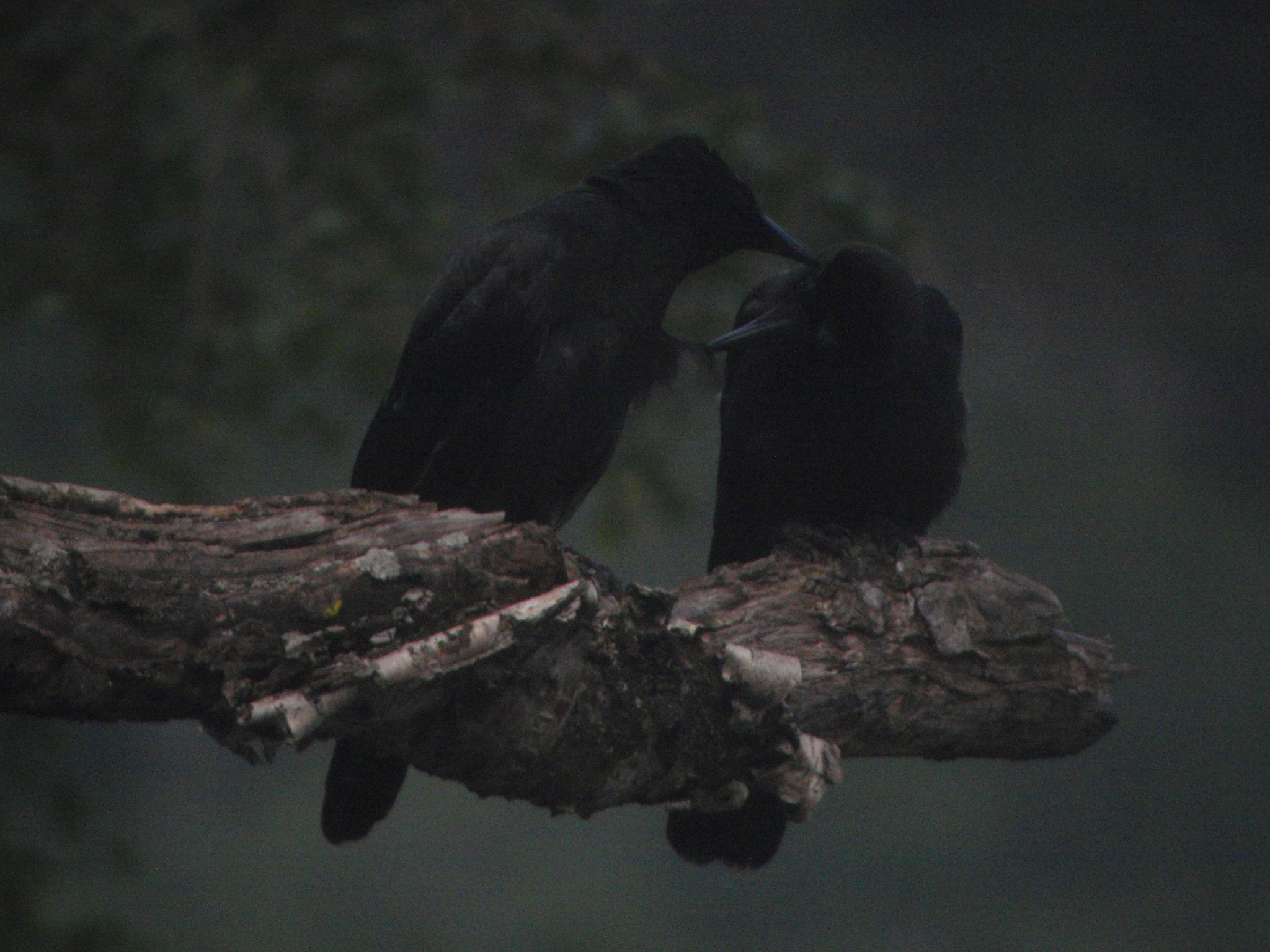
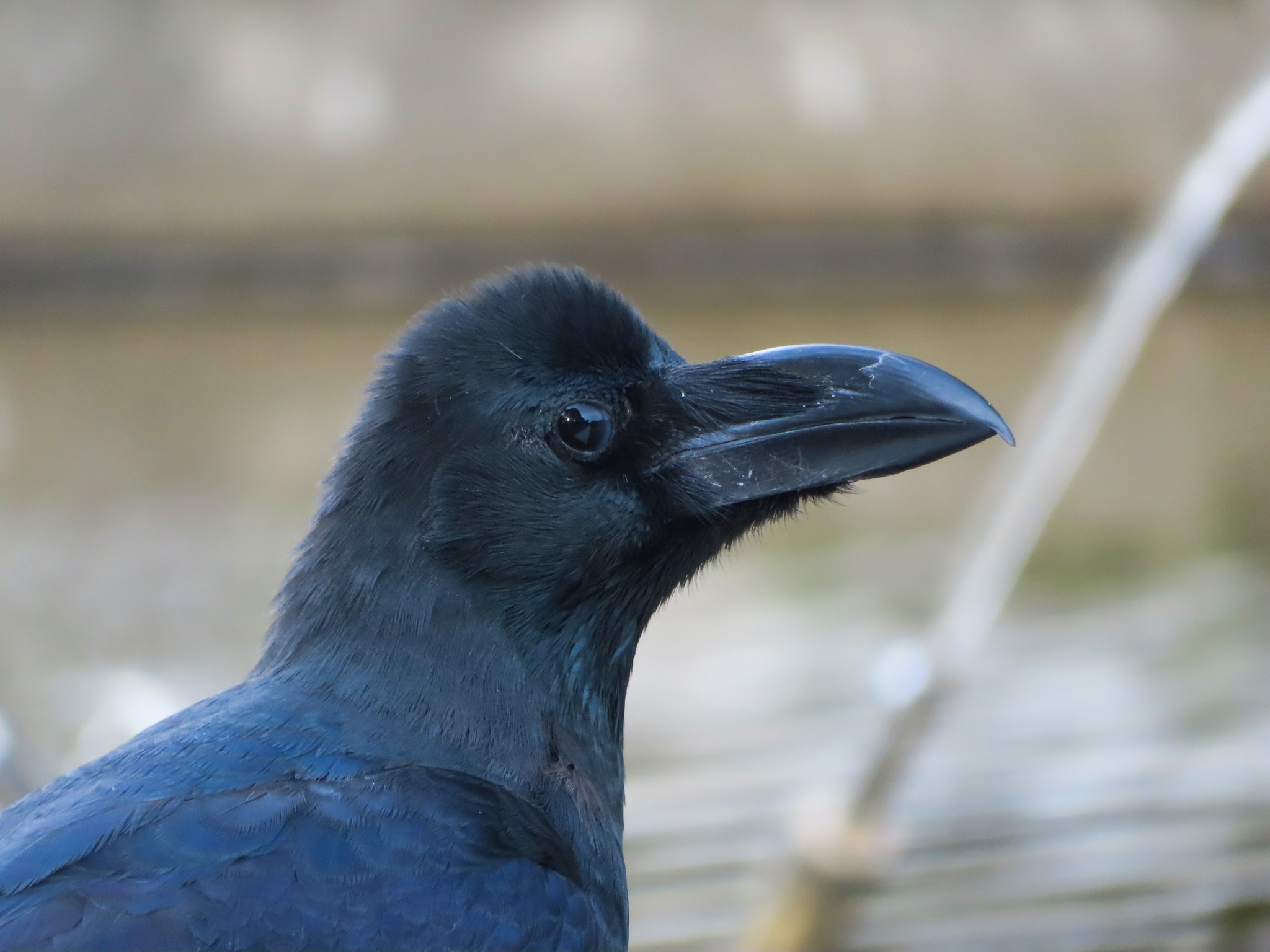
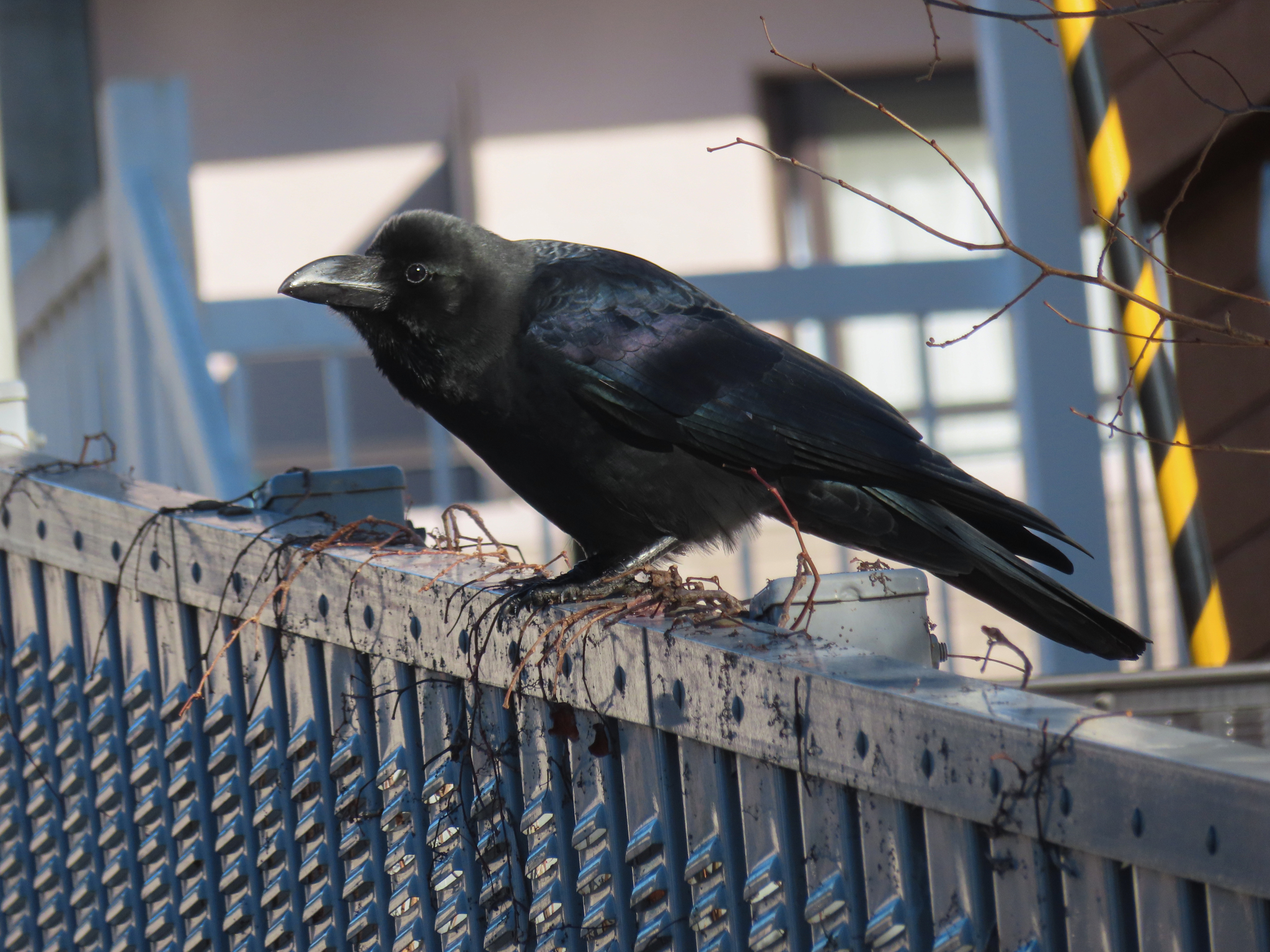
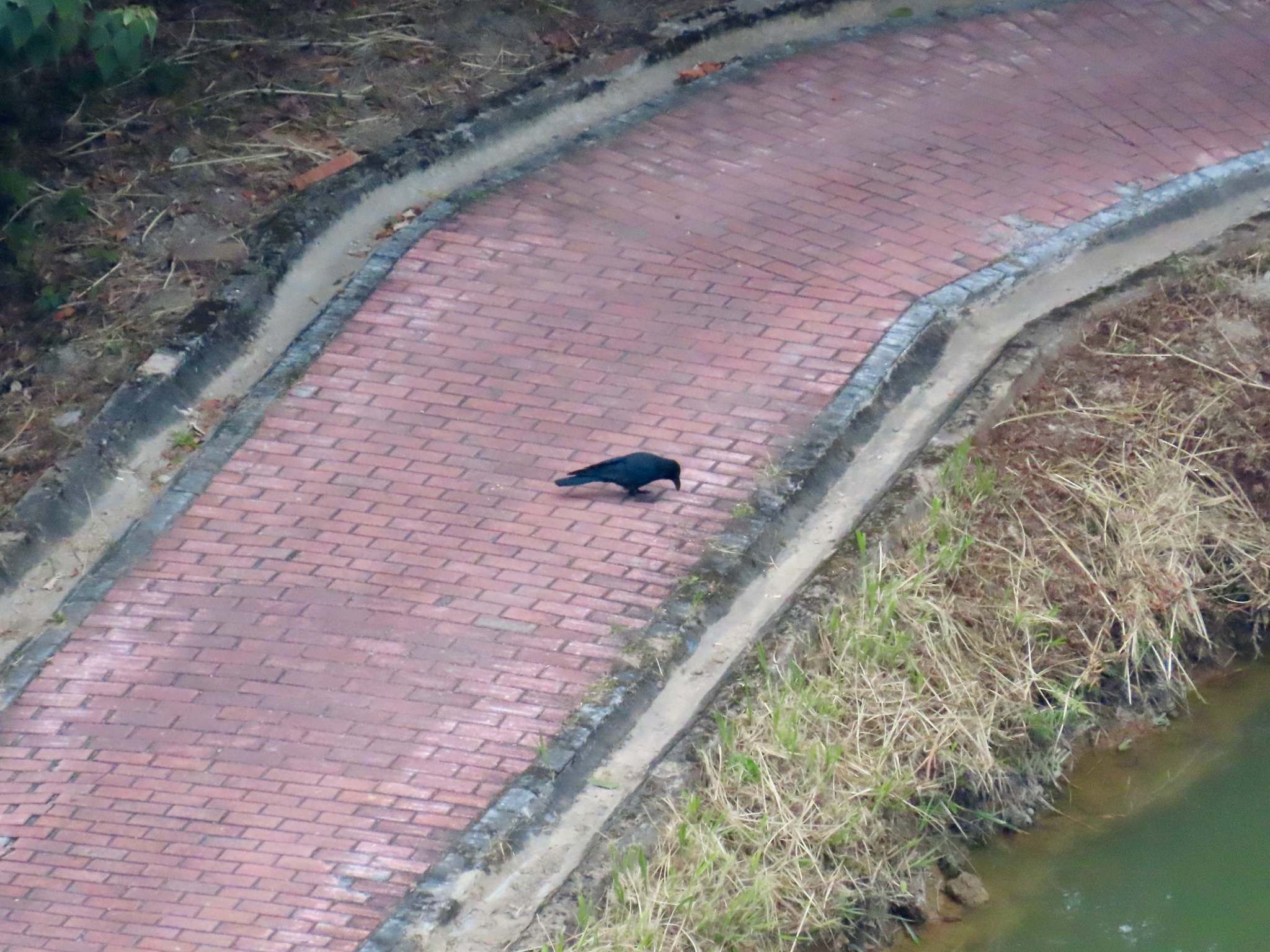
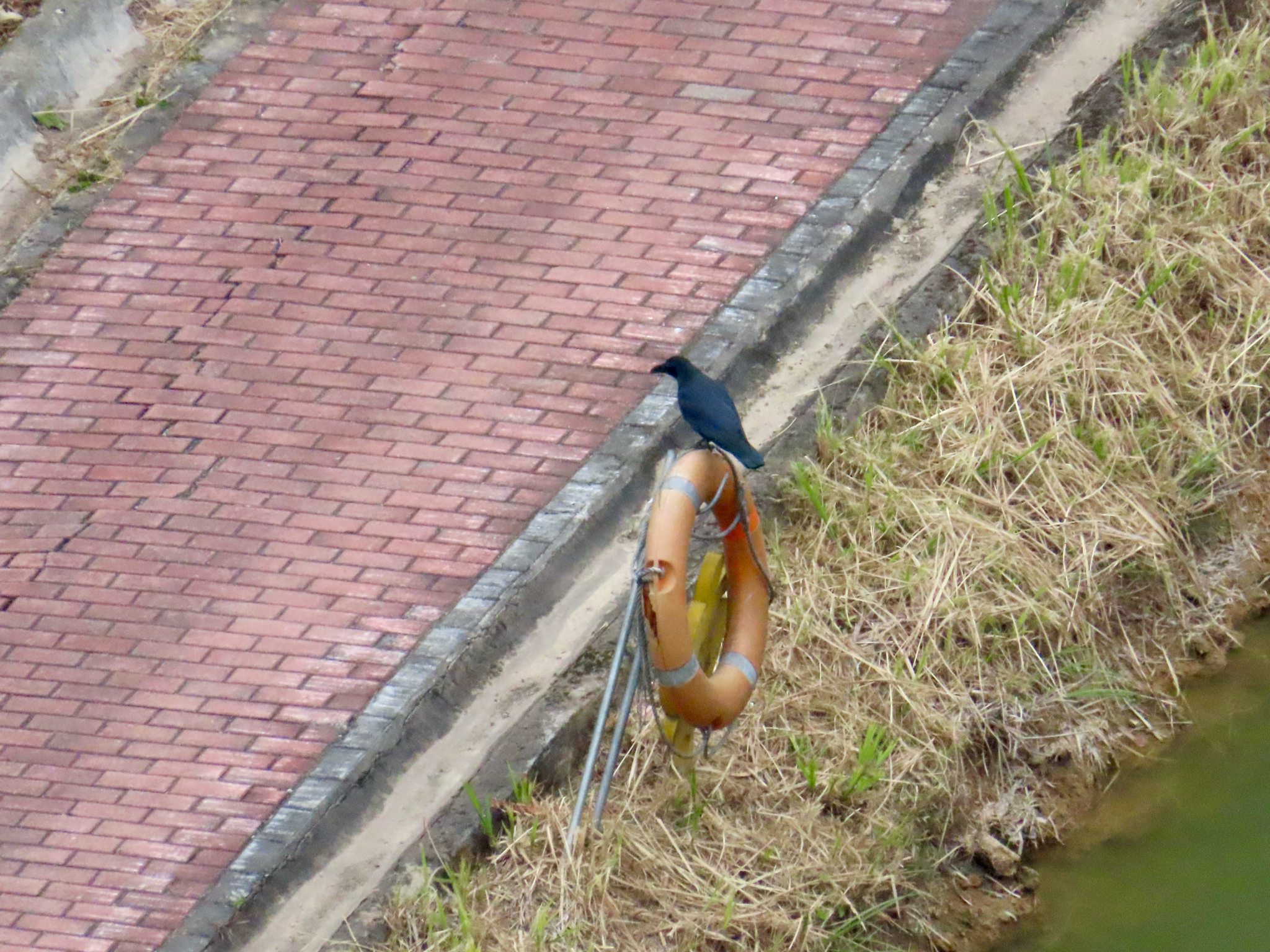
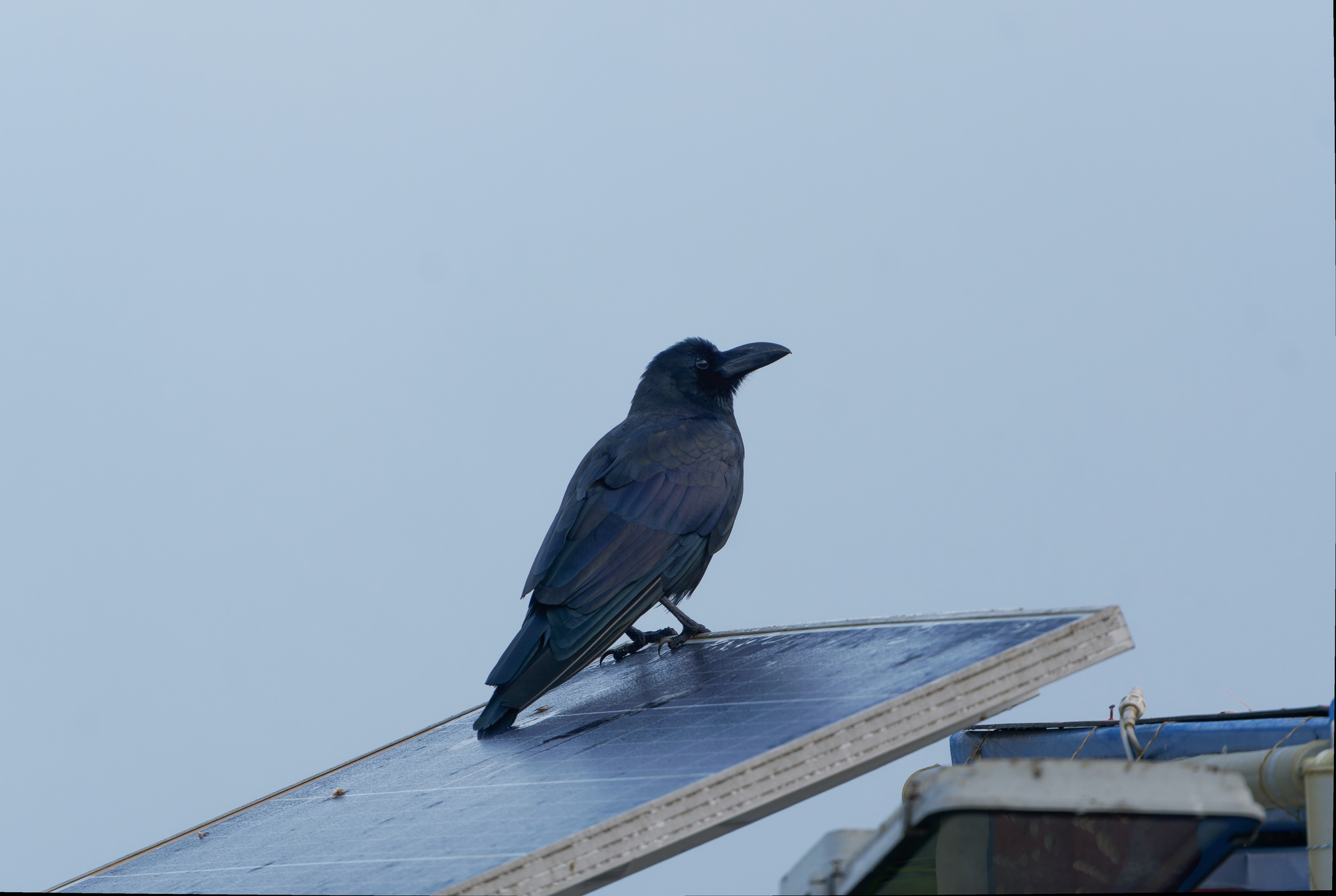
This is a relatively large, entirely black crow measuring 46–59 cm in length and weighing 450–1,000 g. The most striking feature is its large, robust black bill with a distinctly arched culmen, hidden at the base by overlapping black rictal bristles. The glossy plumage displays a beautiful purple sheen, while the bases of the neck feathers are pale grey. Elongated hackle feathers adorn the throat. The species has dark brown irises and entirely black legs. Females resemble males in plumage but are noticeably smaller with a less arched culmen. Juveniles have duller, less glossy plumage with smoky blue irises instead of brown. Subspecies vary considerably in overall size and bill dimensions, with the northern C. m. japonensis being the largest with a bill measuring 70–80 mm, while the southern C. m. culminatus is smallest with a 52–67 mm bill.
Identification
Birdwatchers may confuse this species with the common raven, though the raven is significantly larger with a heavier build and different vocalizations. It should also be distinguished from the long-billed crow, which has a more slender bill. Regional subspecies present identification challenges: in Nepal, the smaller C. m. culminatus has a higher-pitched voice compared to the larger C. m. intermedius. Overall size, bill proportions, and plumage gloss vary across the range, requiring attention to geographic context. The species is generally larger and heavier than the house crow, with a deeper, more resonant voice.
Distribution & Habitat
This species occupies an extensive range stretching from the northeastern Asian seaboard westward to Afghanistan and eastern Iran, then across South and Southeast Asia to the Lesser Sundas and Cambodia. It demonstrates strong adaptability to various habitats including woodland, parks, gardens, and cultivated areas with trees. In the northern parts of its range, it tends to favor more wooded areas where it avoids competition with the common raven and carrion crow. However, in the southern regions, it occupies more open country and is less restricted to forest habitats.
Behavior & Ecology
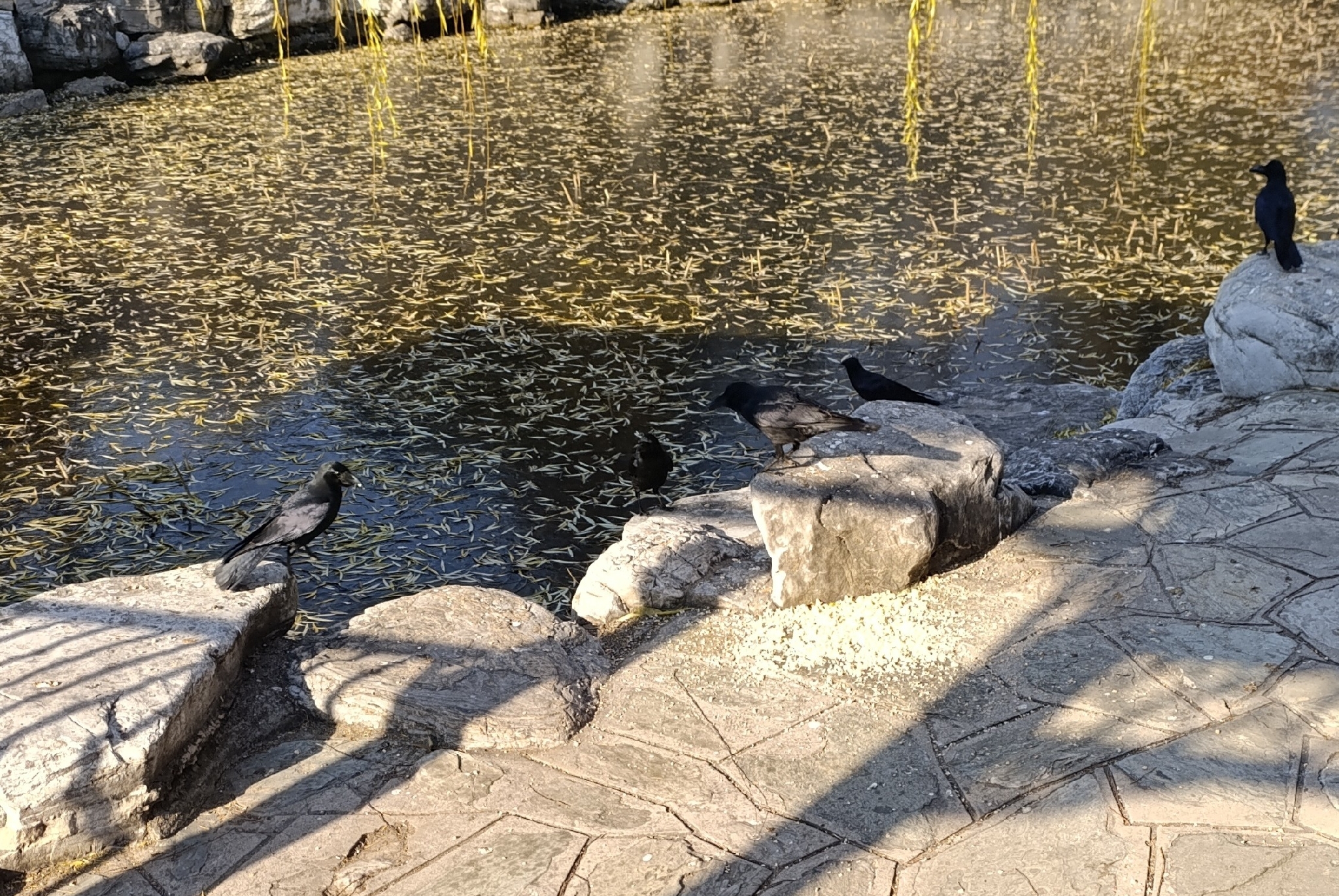
Extremely versatile in its feeding habits, this crow takes food from both ground and trees, consuming an enormous variety of items including carrion, insects, small vertebrates, fruits, and garbage. In urban Japan, it has become a significant pest, ripping open garbage bags and using wire coat hangers for nest construction. The species is notably bold and persistent, with Japanese subspecies known for unprovoked attacks on humans near nesting areas. In Sri Lanka, it serves as an important predator of small animals including lizards. Some populations exhibit caching behavior. Breeding occurs from March to May in India, with nests built high in tall conifers using twigs and lined with various materials including wire. Clutch size is typically 4–5 eggs, incubated for 17–19 days with fledging at around 35 days. The species is highly gregarious at roosts, with thousands gathering at major sites. It maintains linear dominance hierarchies based on individual recognition. Vocalizations are complex and resonant, typically described as a loud 'caa-haa-caa' but also including various other calls.
Conservation
This species is currently assessed as Least Concern by the IUCN and remains common across its extensive range. Its adaptability to human-modified landscapes has allowed populations to thrive in many areas. However, significant threats include the Asian koel serving as a brood parasite in some regions. Disease poses occasional threats, with H5N1 virus causing mortality in Japan, while bacterial infections including Clostridium and enteritis have caused large-scale deaths. Filarial parasites have also been reported. Despite these localized threats, the species' versatility and wide distribution suggest stable global populations.
Culture
In Japan, this crow has become deeply embedded in urban culture, though often in a negative context due to its impact on garbage management and aggressive behavior near nests. The species appears in various cultural contexts across its range, reflecting its prominent presence in human-dominated landscapes throughout Asia.
Source: Wikipedia · CC BY-SA 3.0
Taxonomy
- Order
- Passeriformes
- Family
- Corvidae
- Genus
- Corvus
Vocalizations
Subspecies (10)
-
Corvus macrorhynchos colonorum
central and southern China including Hainan, Taiwan, and northern Indochina
-
Corvus macrorhynchos connectens
southern Ryukyu Islands (Amami Ōshima, Okinawa, and Miyako-Jima, southern Japan)
-
Corvus macrorhynchos culminatus
peninsular India and Sri Lanka
-
Corvus macrorhynchos intermedius
far eastern Iran to northwestern India and western Himalayas
-
Corvus macrorhynchos japonensis
Sakhalin, Kuril Islands, and northern Japan
-
Corvus macrorhynchos levaillantii
northeastern India (west to West Bengal) and eastern Nepal eastward to western Thailand, and Andaman Islands
-
Corvus macrorhynchos macrorhynchos
southern Indochina, the Thai-Malay Peninsula, Sumatra, Java, and the Lesser Sundas
-
Corvus macrorhynchos mandshuricus
northeastern Asia
-
Corvus macrorhynchos osai
Yaeyama Islands of southern Ryukyu Islands (Ishigaki, Iriomote, Kohama, Kuru, and Aragusuku, southern Japan)
-
Corvus macrorhynchos tibetosinensis
eastern Himalayas to southeastern Tibet, northern Myanmar, and western China
Data Sources
Species description from Wikipedia, licensed under CC BY-SA 3.0.
Bird images and sounds sourced from GBIF, contributed by citizen scientists worldwide under Creative Commons licenses.
Taxonomy data from AviList 2025.