Carrion Crow
Corvus corone
小嘴乌鸦
Introduction
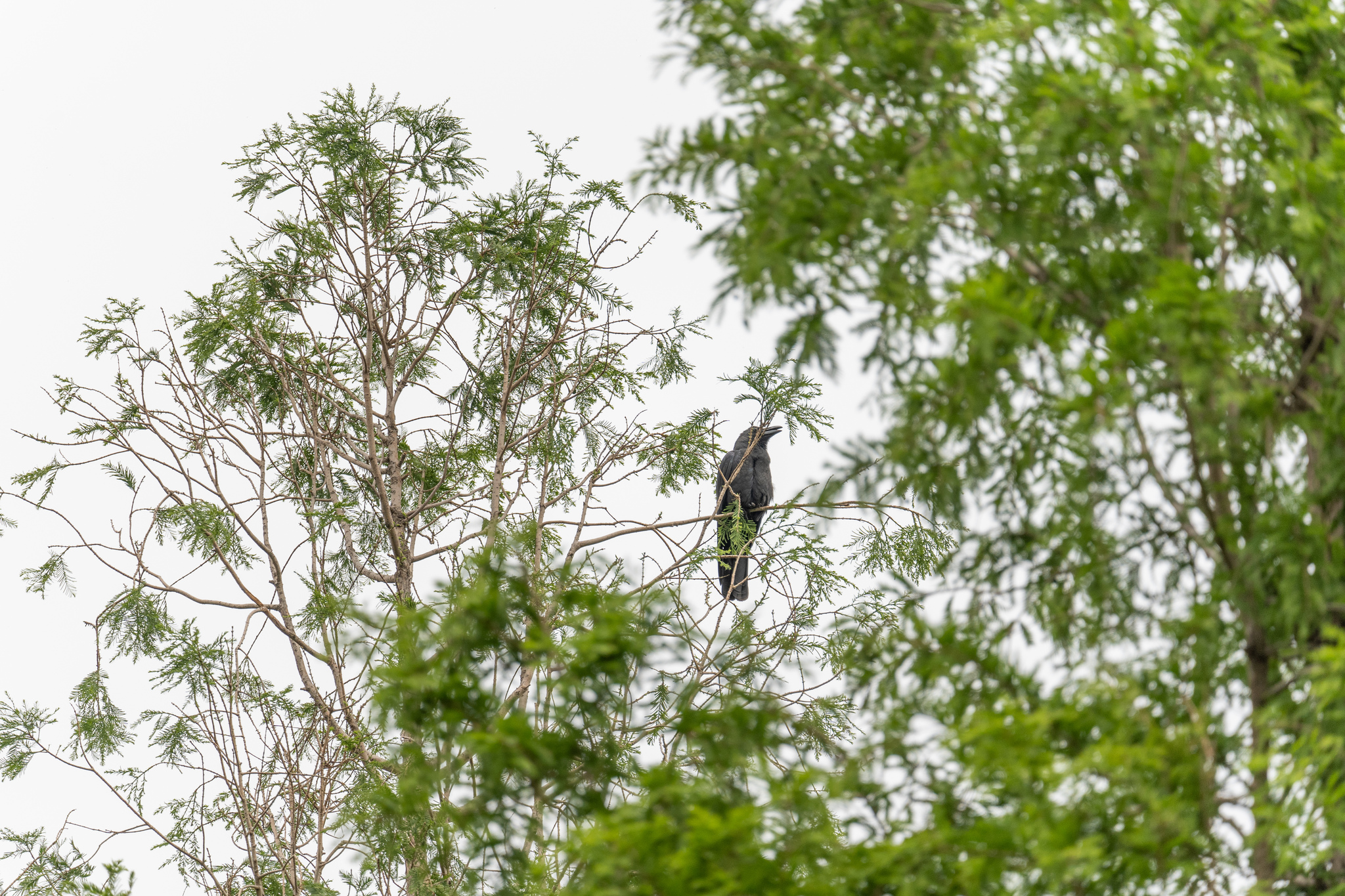
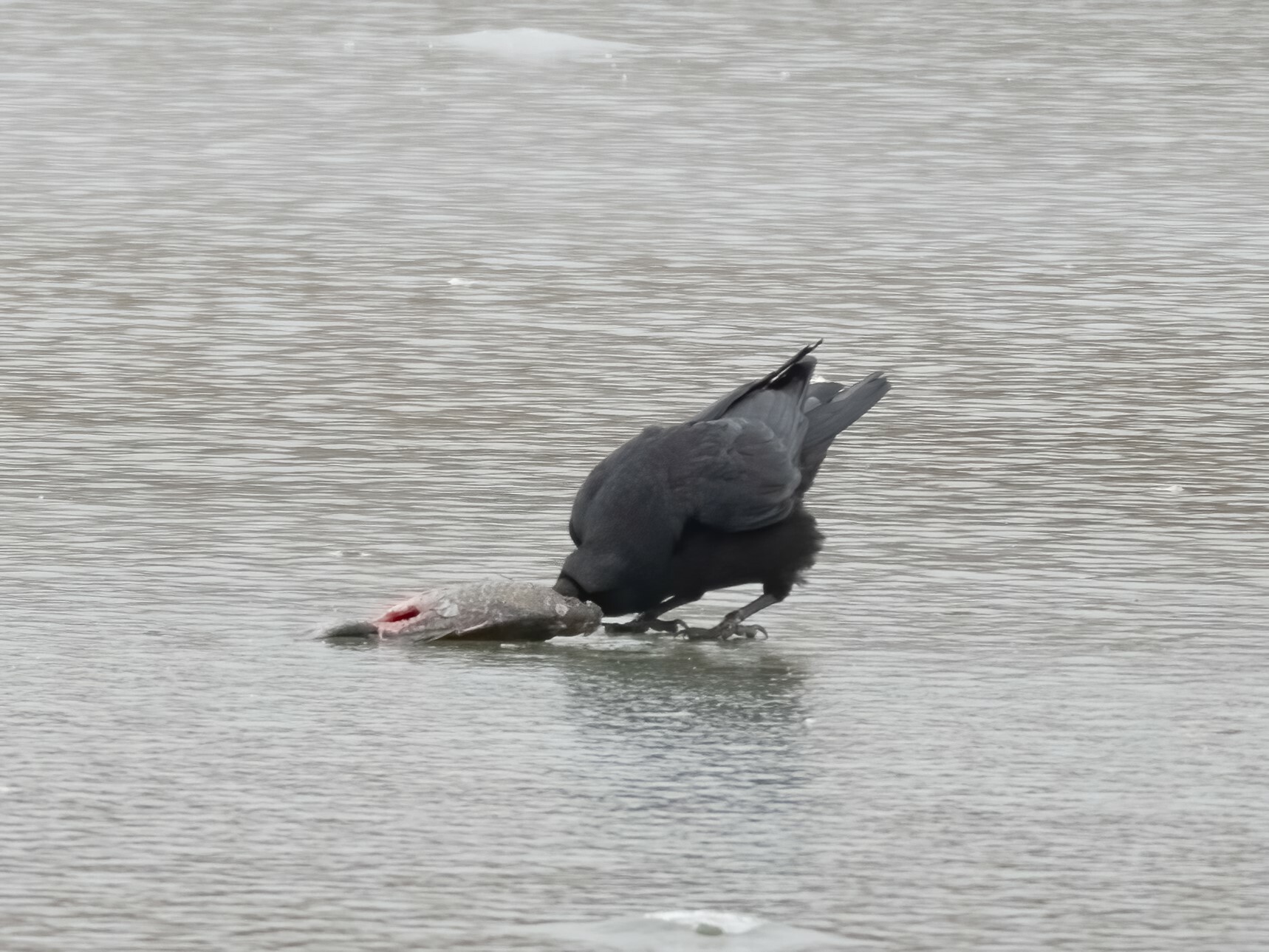
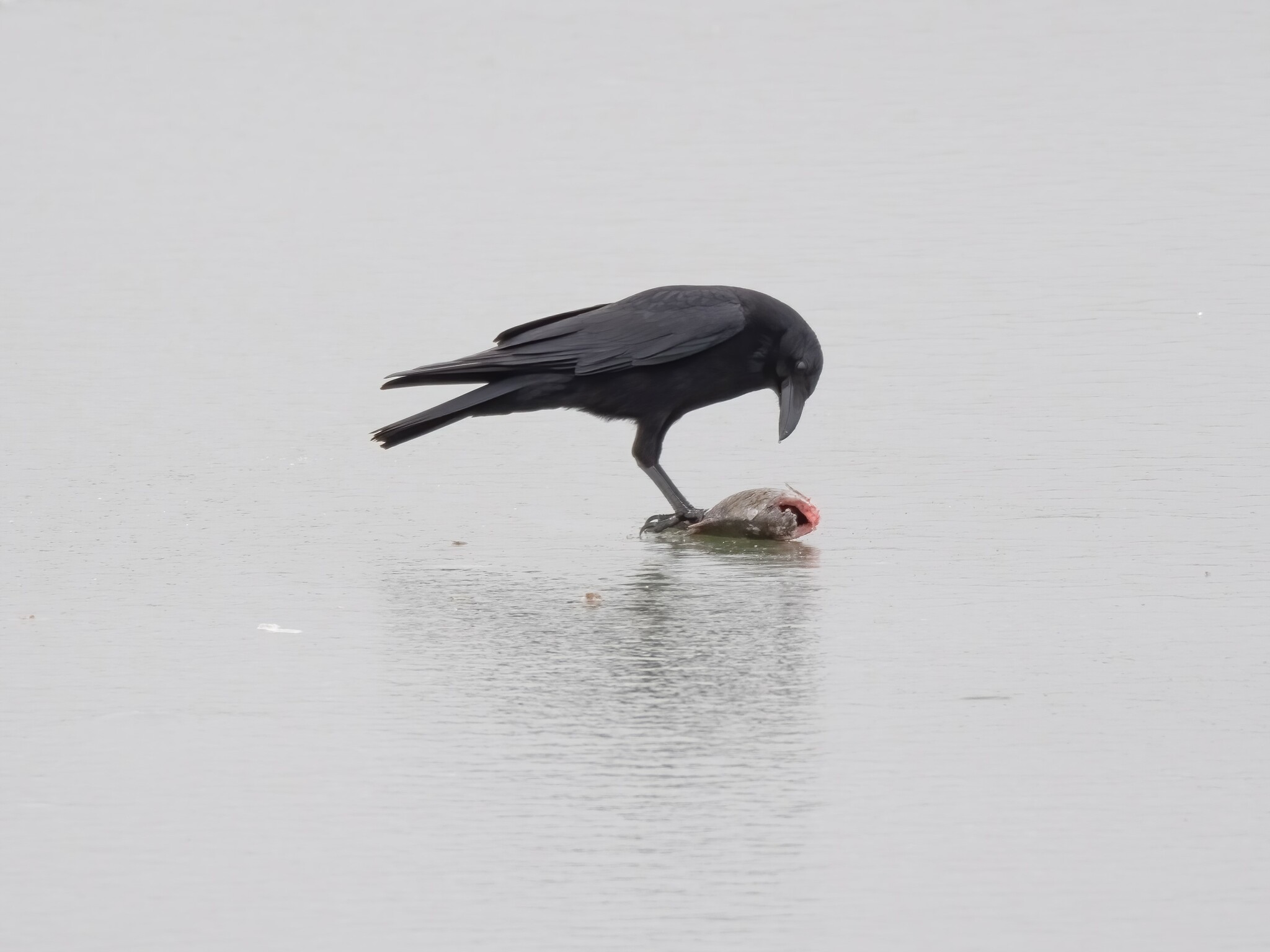
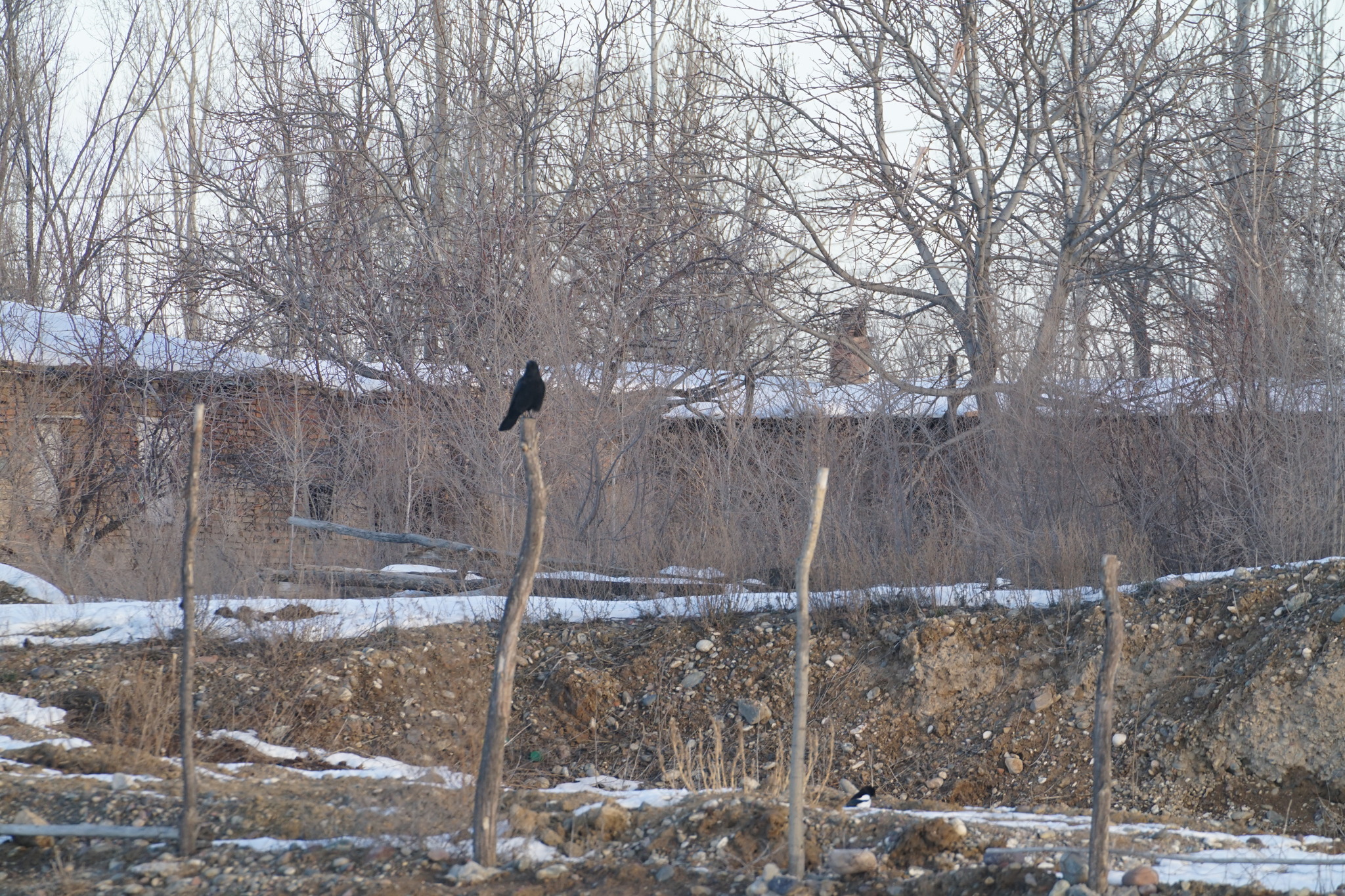
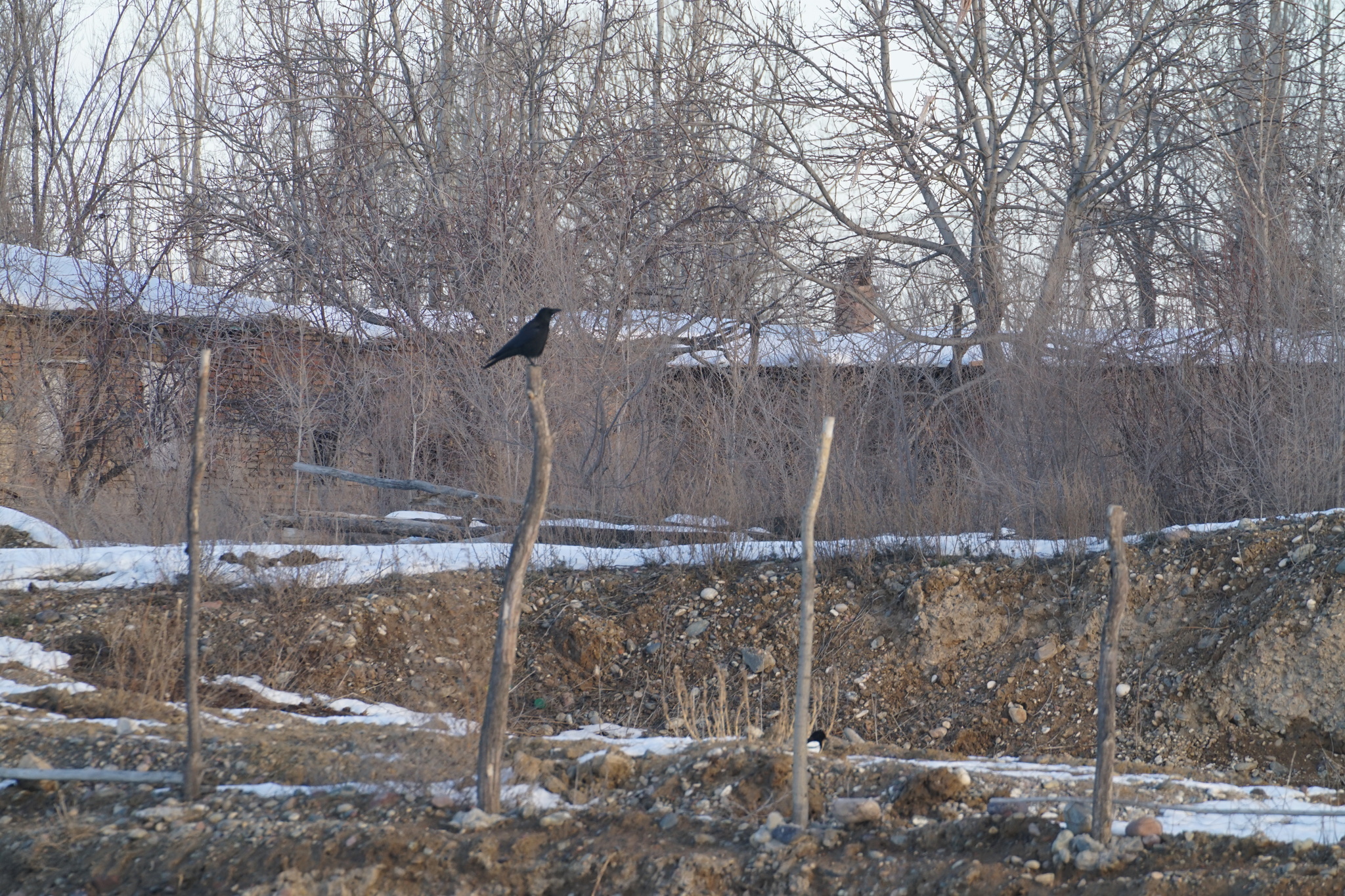
The carrion crow (Corvus corone) is a medium-sized corvid with a distribution across western Europe and eastern Asia. It inhabits environments ranging from urban areas to remote mountain ranges, and frequently occurs near human settlements. This species is largely resident throughout its range. As an opportunistic omnivore and scavenger, it occupies a similar ecological niche in Eurasia to that of the American crow in North America. It is typically observed perching on elevated vantage points, producing a guttural series of croaks, and foraging in open areas, often in association with other corvid species. Diet includes food scraps, invertebrates, small vertebrates, and carrion. Conservation status: Least Concern.
Description
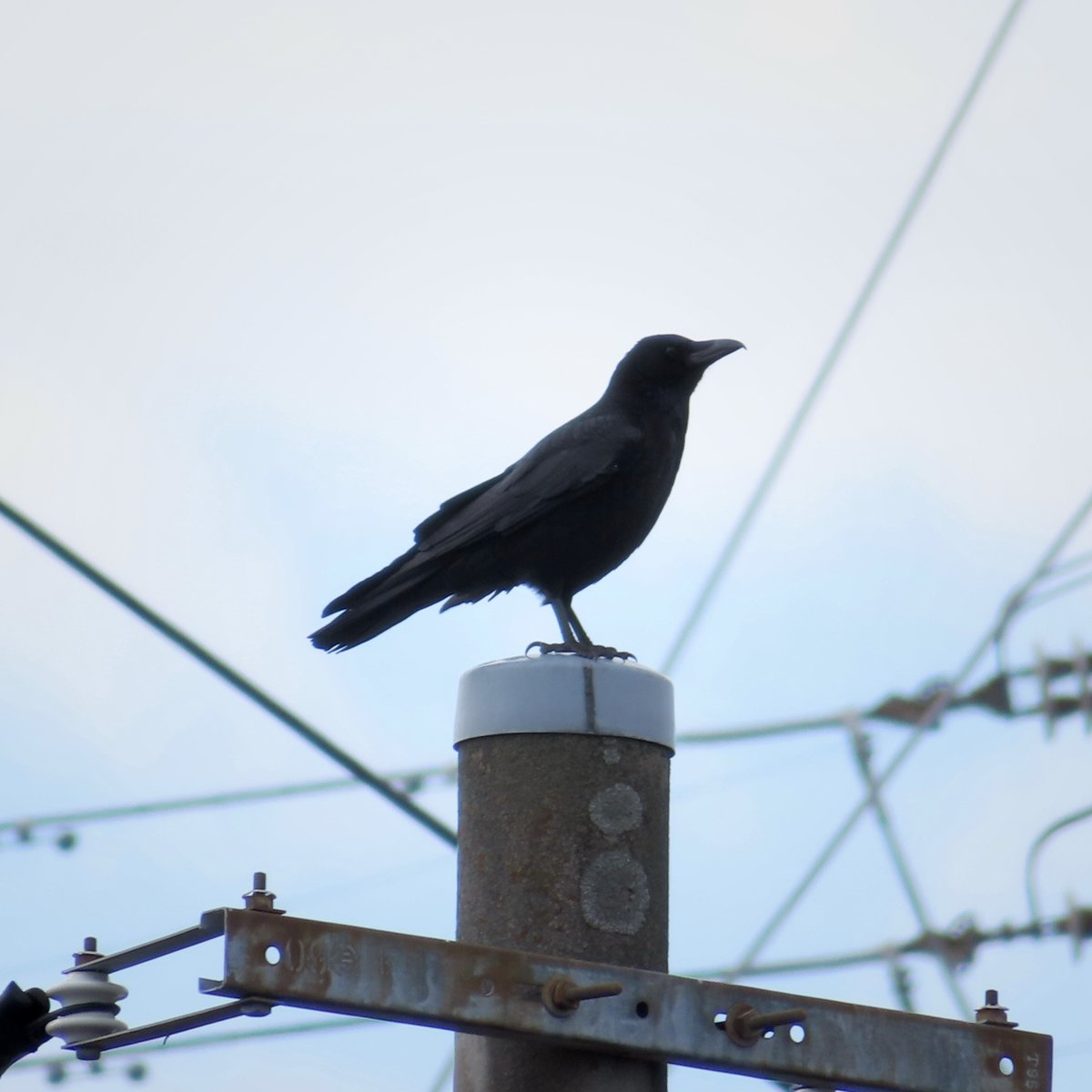
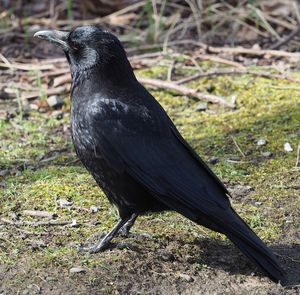
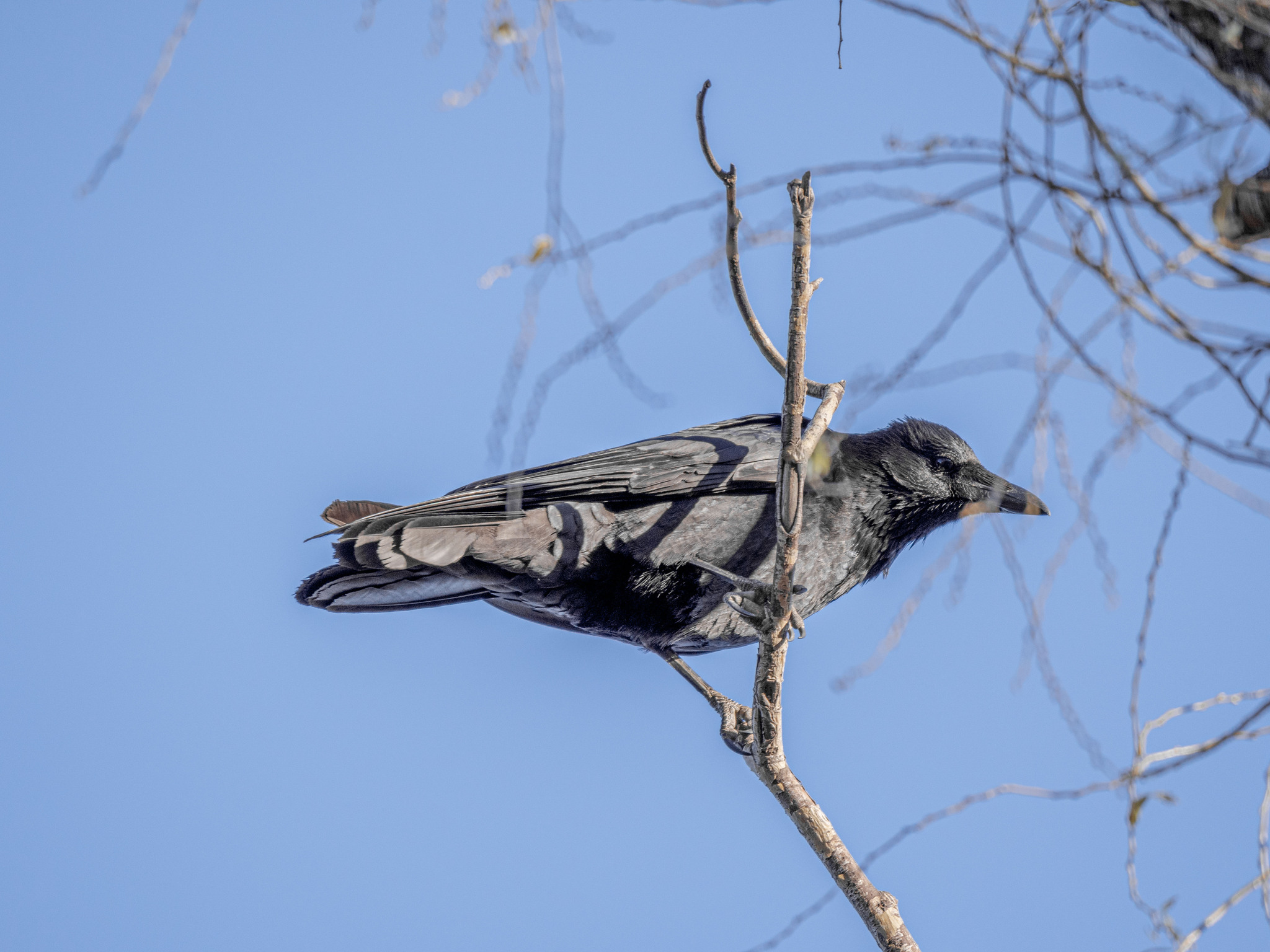
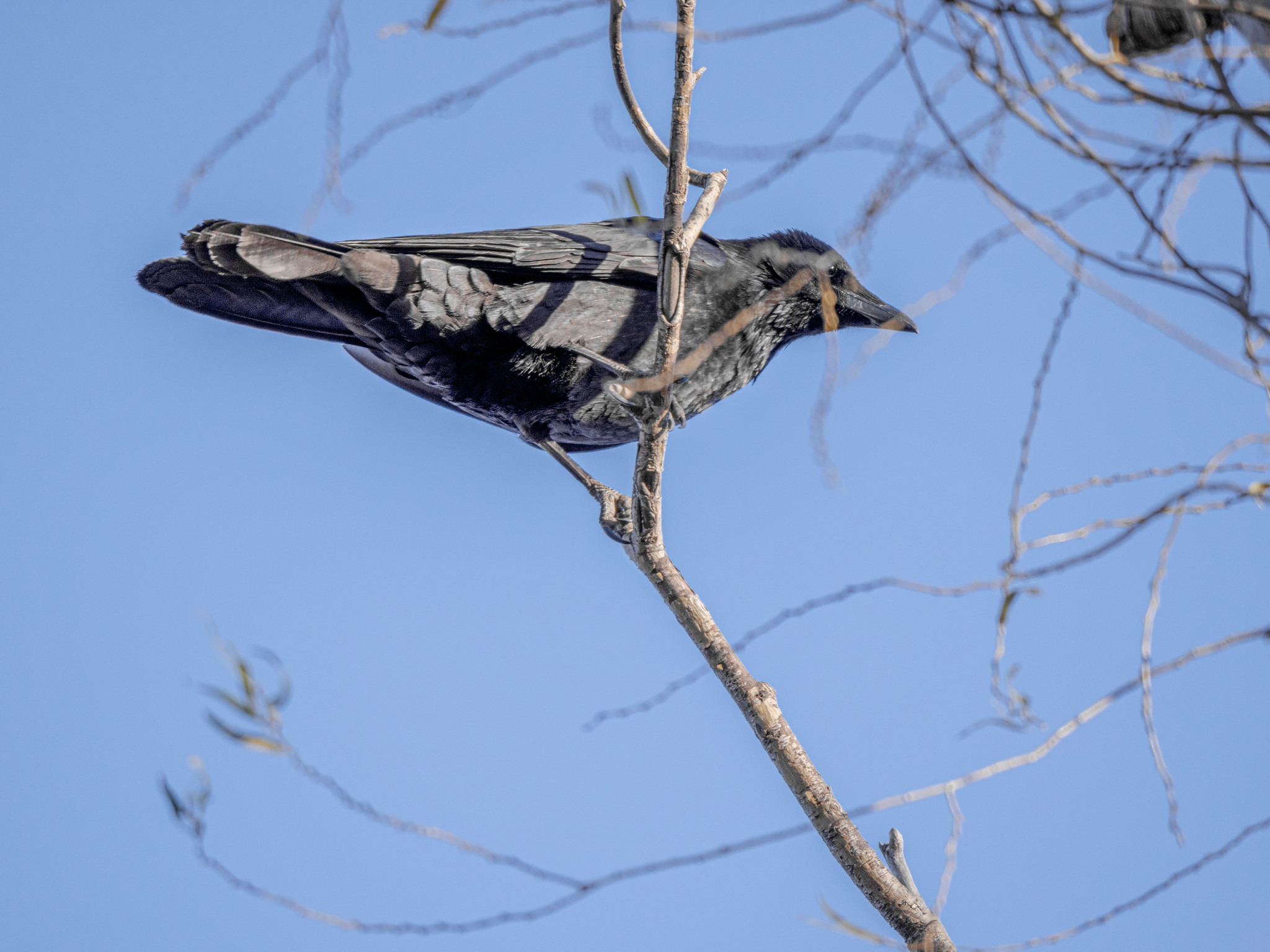
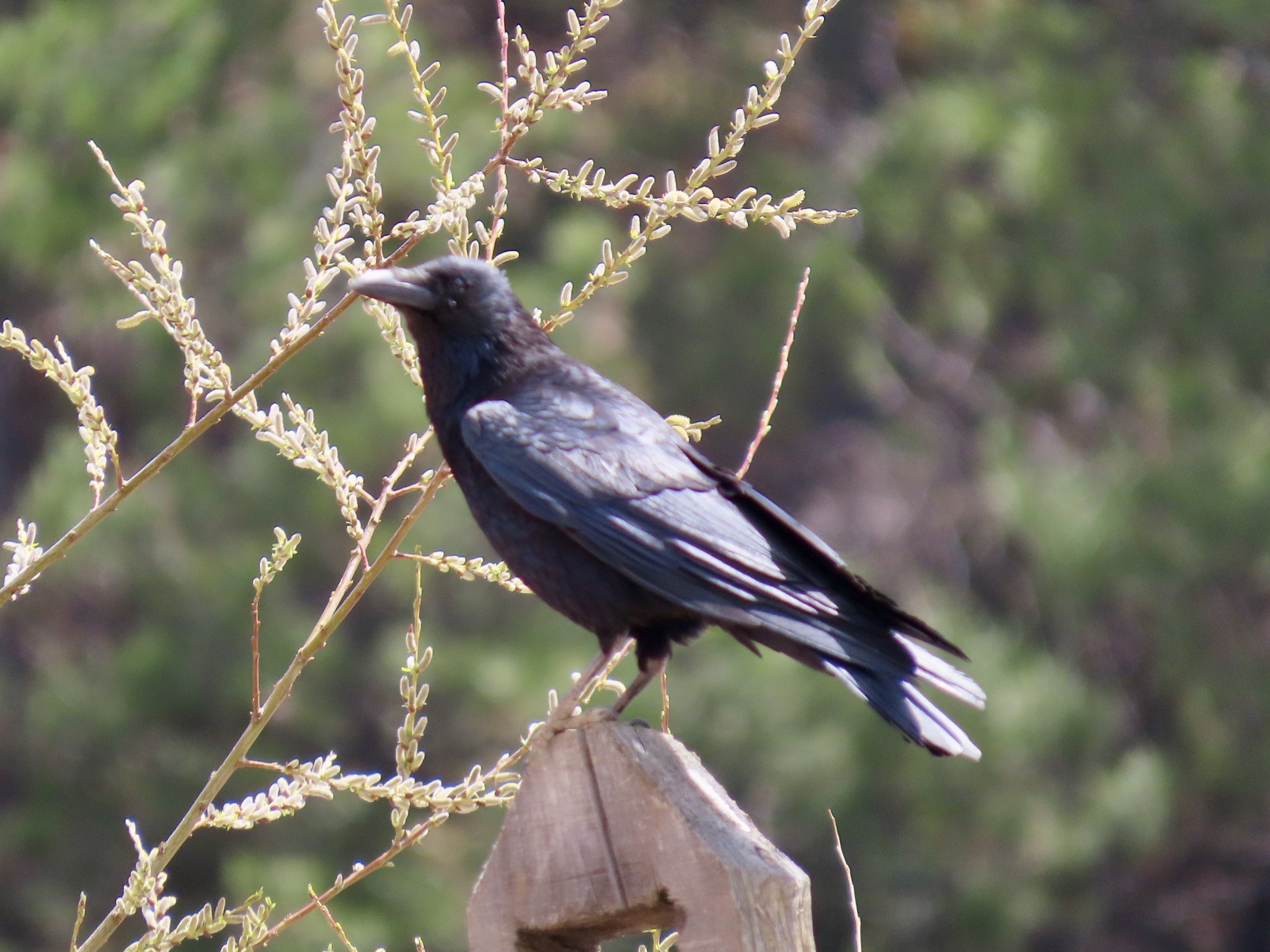
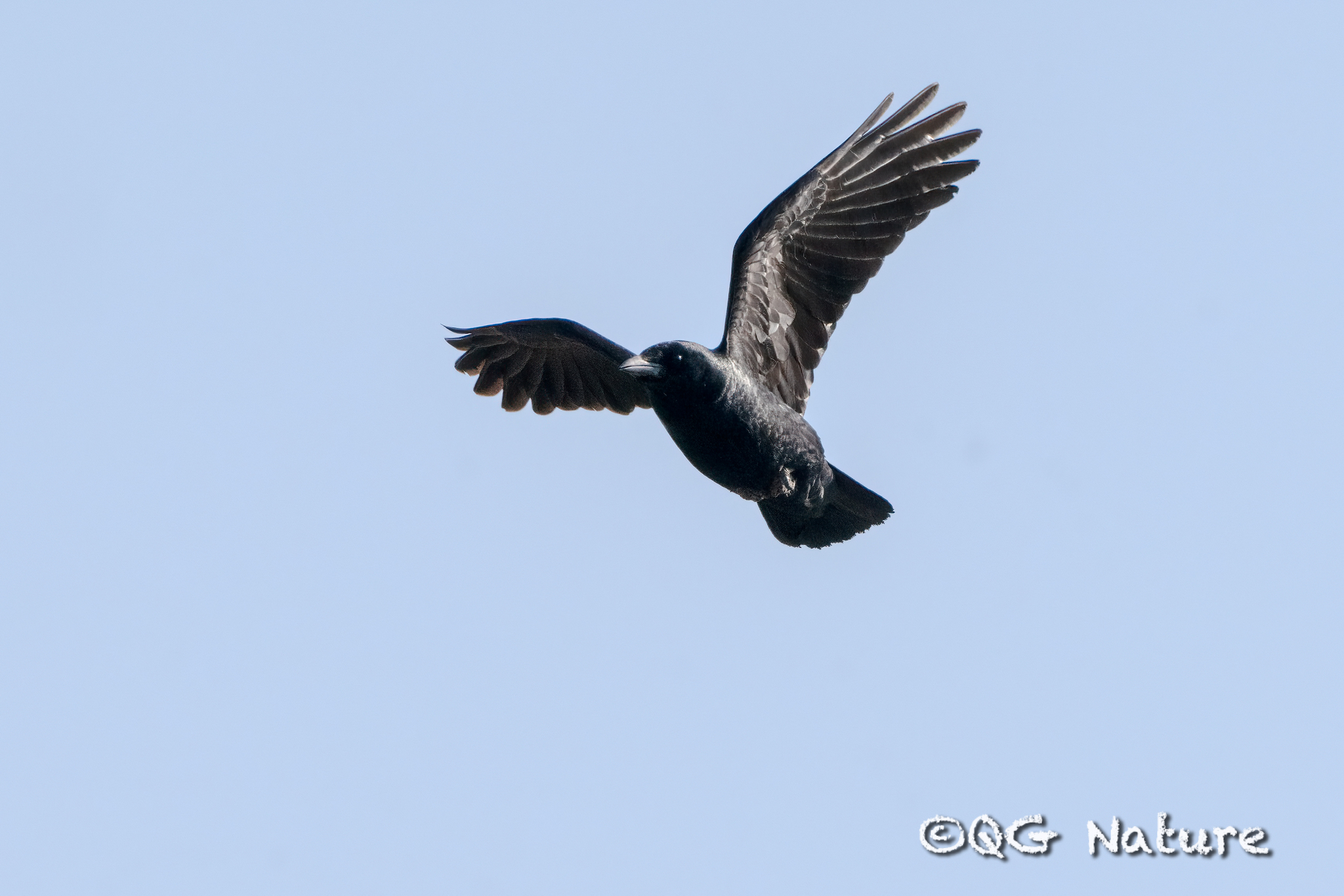
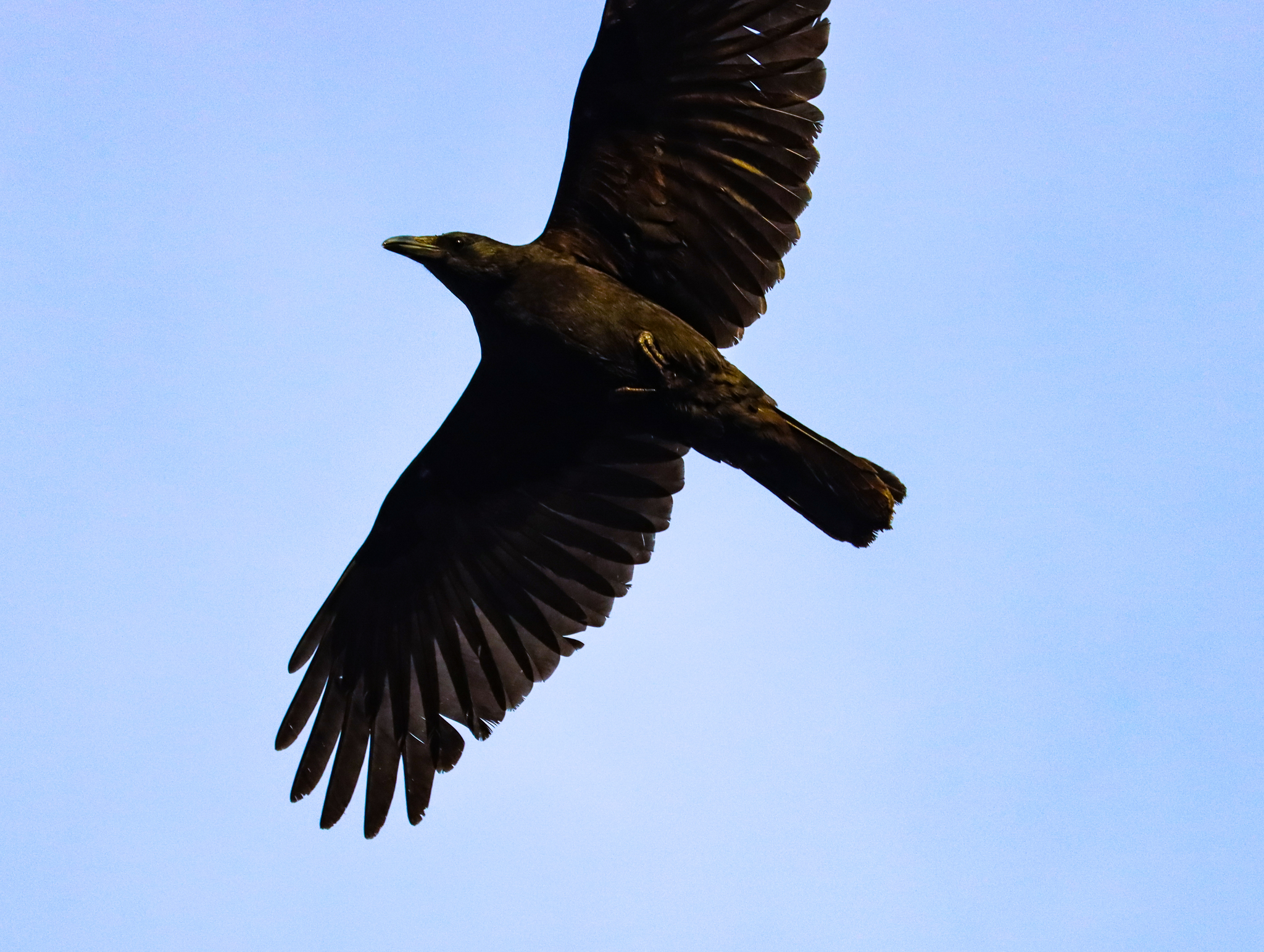
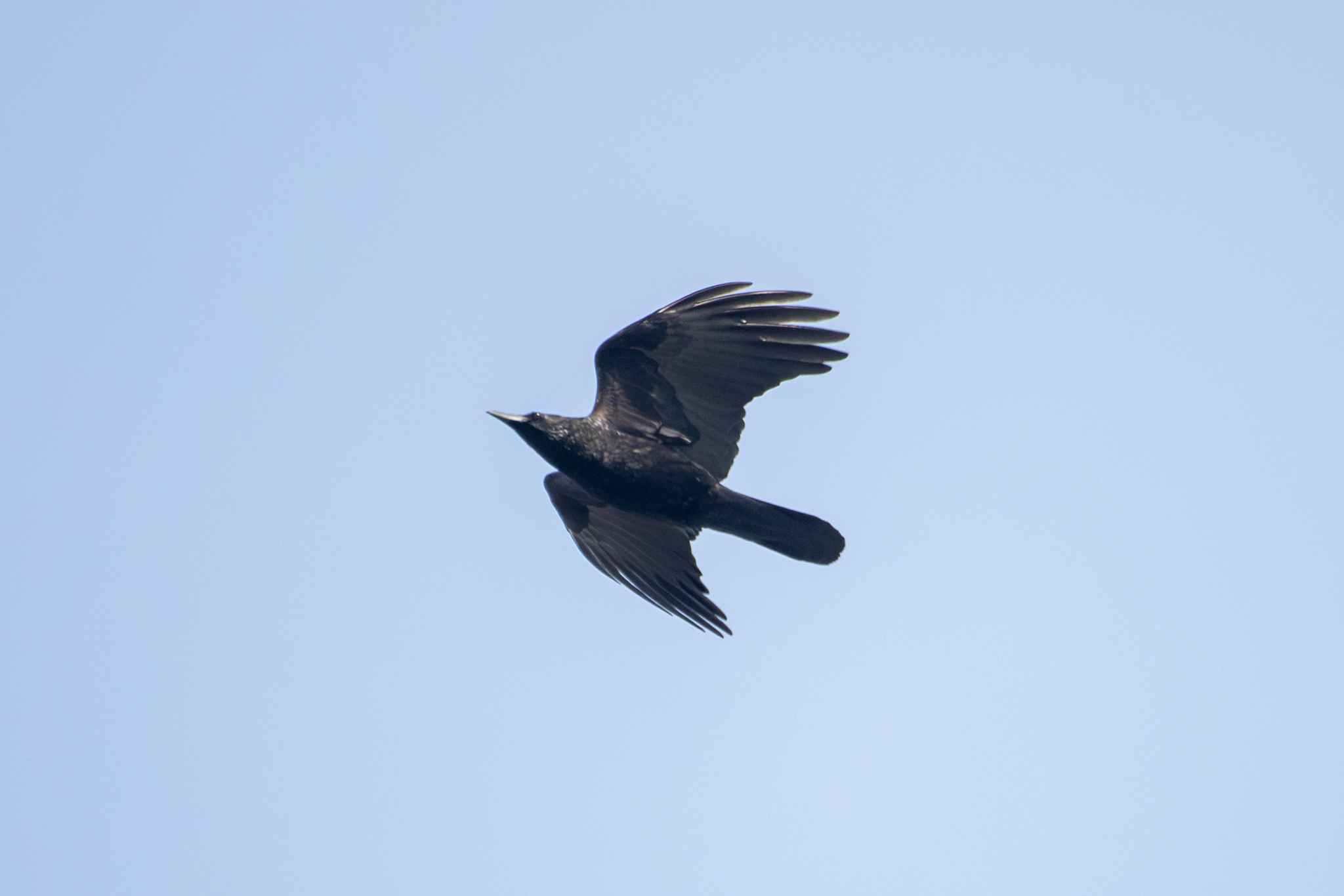
This medium-sized corvid displays entirely black plumage with a distinctive green or purple sheen, noticeably greener than that of the closely related rook. The bill, legs, and feet are also black, adding to its uniformly dark appearance. Adults measure 48–52 centimeters in length with a wingspan of 84–100 centimeters and weigh between 400–600 grams, giving it a stockier build than many other crow species. Juveniles can be identified by their brownish-tinged plumage and striking blue eyes, both of which gradually darken to black and brown as the bird matures. The carrion crow's robust physique and entirely black plumage distinguish it from the hooded crow, which displays lighter coloration on its torso.
Identification
The most reliable identification feature is the entirely black plumage, which immediately separates this species from the hooded crow, the only other Eurasian corvid it closely resembles. Size provides another key distinction—carrion crows are significantly smaller than common ravens, which average 63 centimeters in length. The voice offers the most distinctive field mark: a guttural, deeper croaked 'kraa' that differs markedly from the rook's high-pitched call. Unlike the highly gregarious rook, carrion crows tend to be more solitary, though they may join rooks at feeding sites. The wingbeats are slower and more deliberate than those of rooks, providing an additional visual clue when the two species are observed together.
Distribution & Habitat
The carrion crow occupies a broad range across western Europe and the eastern Palearctic, extending eastward through continental Europe and into Russia. Populations also inhabit the mountains, forests, and cities of Japan. The species demonstrates particular adaptability to varied landscapes, including urban environments, farmland, moorland, woodland, and coastal cliffs. A well-documented contact zone exists with the hooded crow, where the two species occasionally hybridize despite genetic similarity. This distributional pattern likely resulted from Pleistocene glaciation cycles that fragmented the ancestral population, creating isolated groups that later came back into contact as climates warmed.
Behavior & Ecology
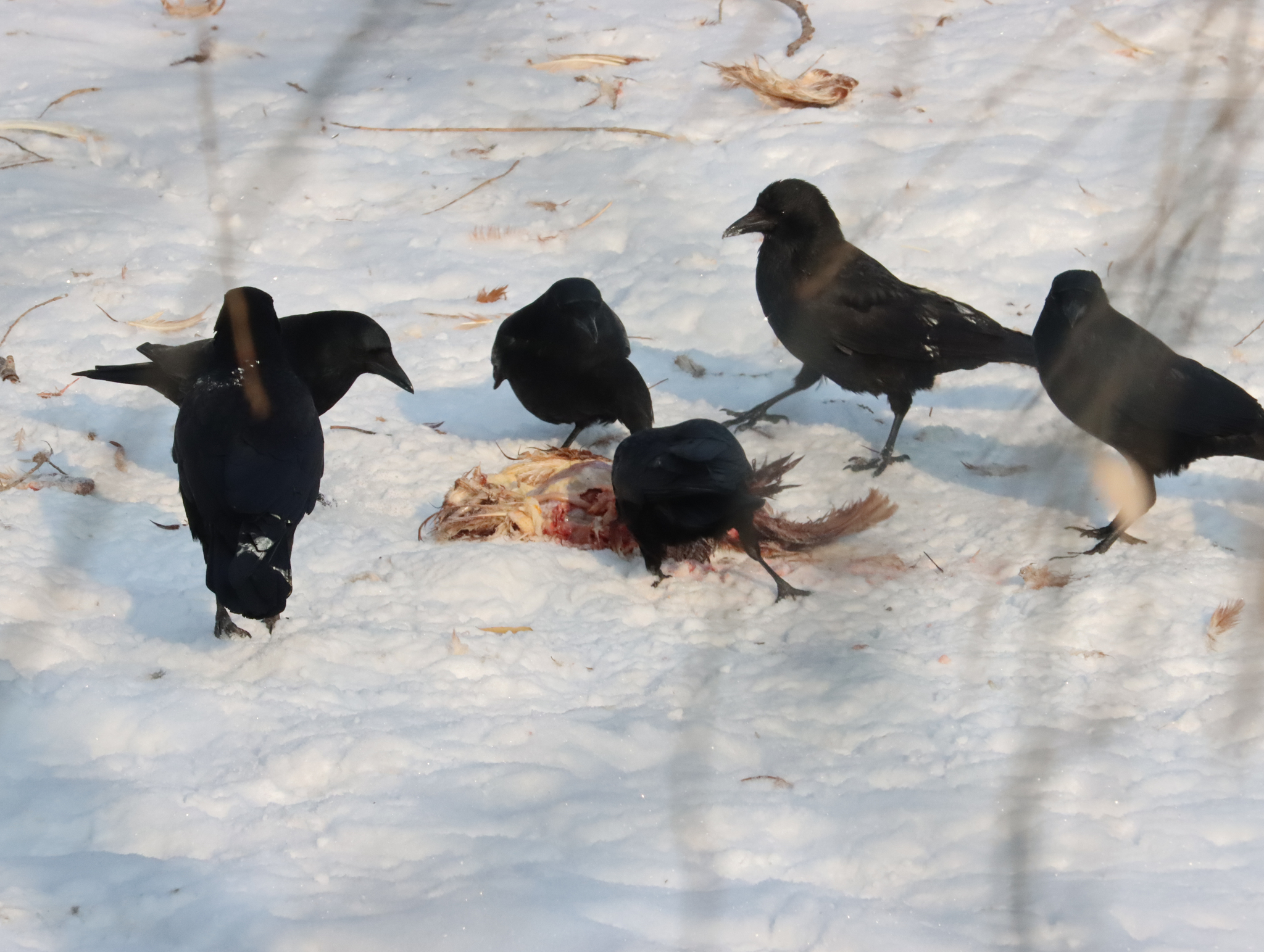
Carrion crows are highly intelligent omnivores with a remarkably diverse diet that includes carrion, insects, earthworms, grains, fruits, seeds, nuts, small mammals, amphibians, fish, eggs, and human food scraps. They frequently exploit areas of human activity, particularly parkland and gardens where they compete with gulls, other corvids, and ducks. Breeding begins in spring, with bulky stick nests constructed in tall trees, though cliff ledges, old buildings, and pylons serve as alternatives. The female alone incubates a clutch of three or four brown-speckled blue or greenish eggs for 18–20 days, while the male provides food. Young fledge at approximately 29–30 days, and offspring from previous broods sometimes assist in rearing the new generation. The species is vocal and conspicuous, producing a guttural 'kraa' call from elevated perch sites while performing characteristic bowing gestures. Like other corvids, they actively mob predators and engage in cooperative defense behaviors.
Conservation
The carrion crow is assessed as Least Concern by the IUCN, reflecting its extensive range and stable population numbers across much of Europe and Asia. Its remarkable adaptability to diverse habitats, including urban environments, has supported consistently healthy populations throughout its range. While powerful raptors including the Eurasian goshawk, peregrine falcon, Eurasian eagle-owl, and golden eagle do prey on carrion crows, this predation pressure does not appear to significantly impact overall population stability. The species benefits from its versatile diet and intelligent behavior patterns, which allow it to exploit various food sources and respond flexibly to environmental changes.
Culture
As a widespread and conspicuous bird throughout European and Asian landscapes, the carrion crow has embedded itself in regional cultures and folklore across its range. Like many corvid species, it has been associated with both positive and negative symbolism in various traditions. Its black plumage and tendency to feed on carrion have contributed to associations with death and ill-omen in some cultural contexts, while its remarkable intelligence has earned admiration in others. The carrion crow's presence in urban and rural areas alike has made it a familiar figure in everyday life, contributing to its representation in local folklore, proverbs, and traditional stories across the regions it inhabits.
Source: Wikipedia · CC BY-SA 3.0
Taxonomy
- Order
- Passeriformes
- Family
- Corvidae
- Genus
- Corvus
- eBird Code
- y00743
Subspecies (6)
-
Corvus corone capellanus
southern Iraq and adjacent southwestern Iran
-
Corvus corone cornix
northern Europe to Yenisey Valley, Ukraine, Corsica, and southern Italy
-
Corvus corone corone
western Europe
-
Corvus corone orientalis
Iran to northern China, Korea, and Japan
-
Corvus corone pallescens
coastal southern Türkiye to Levant, northern Iraq, and Egypt
-
Corvus corone sharpii
mainland Italy to the Balkans, Türkiye, northern Iran, and Kazakhstan
Data Sources
Species description from Wikipedia, licensed under CC BY-SA 3.0.
Bird images and sounds sourced from GBIF, contributed by citizen scientists worldwide under Creative Commons licenses.
Taxonomy data from AviList 2025.