
Passeriformes / Corvidae / Corvus
Northern Raven
Corvus corax · 渡鸦
Introduction
A large all-black passerine bird and the most widely distributed corvid, found across the Northern Hemisphere. It is the heaviest passerine, averaging 63 cm in length and 1.47 kg in weight, with individuals reaching up to 2 kg. The species is omnivorous and opportunistic, exhibiting high intelligence and problem-solving abilities. There are 11 accepted subspecies with significant genetic differences between populations.
Description
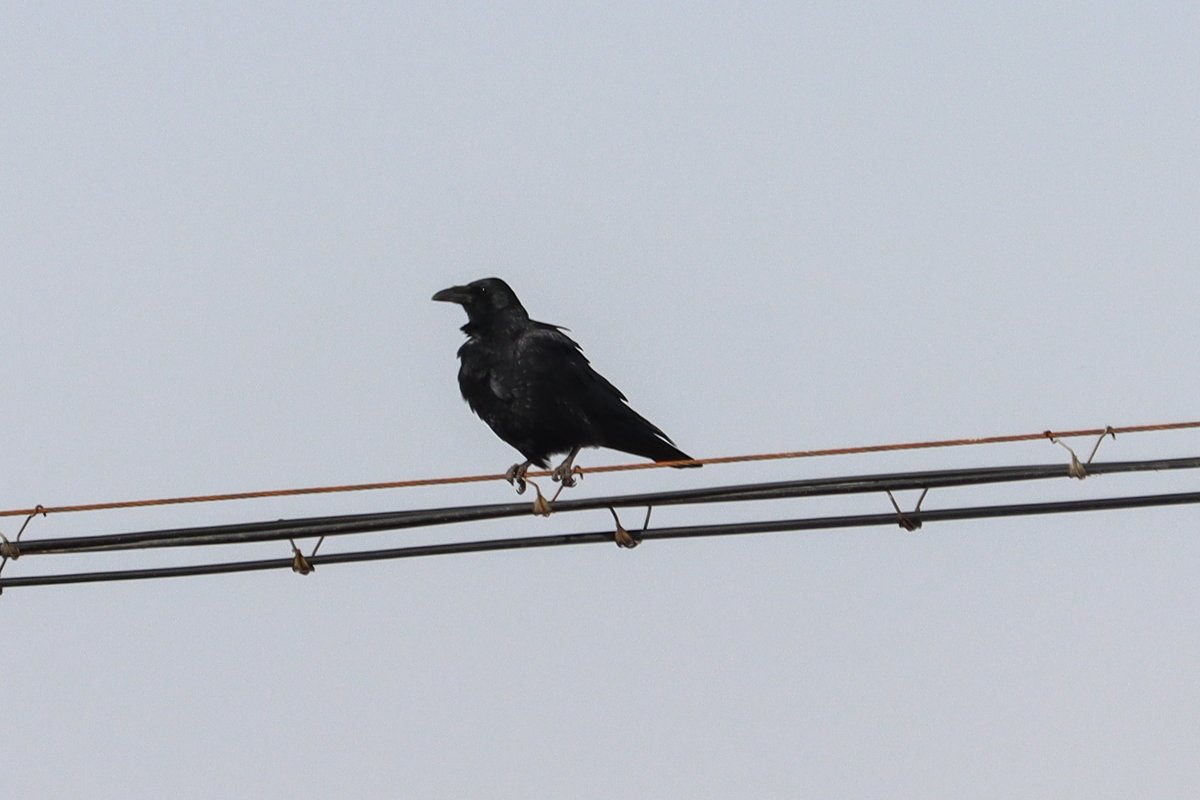
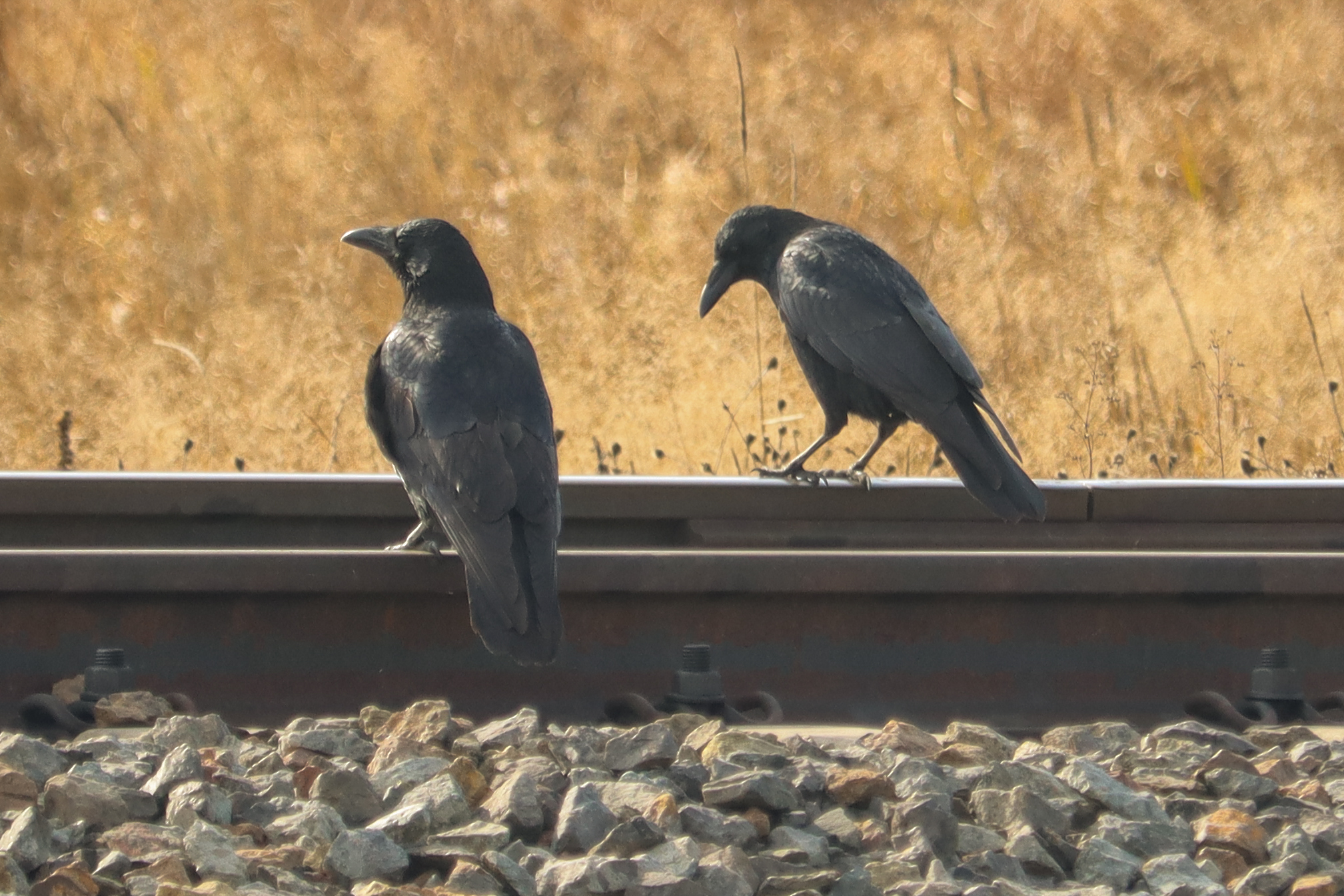
Mature birds range from 54 to 71 cm in length with a wingspan of 116 to 153 cm. Recorded weights vary from 0.69 to 2.25 kg. Plumage is mostly iridescent black with a dark brown iris. The bill is large, slightly curved, and black, with a culmen length of 5.7 to 8.5 cm. Throat feathers are elongated and pointed, with pale brownish-grey bases on neck feathers. Legs and feet are stout, with a tarsus length of 6 to 7.2 cm. The tail is longish, strongly graduated, and wedge-shaped, measuring 20 to 26.3 cm. Juveniles have duller plumage, a blue-grey iris, and a pinkish gape.
Identification
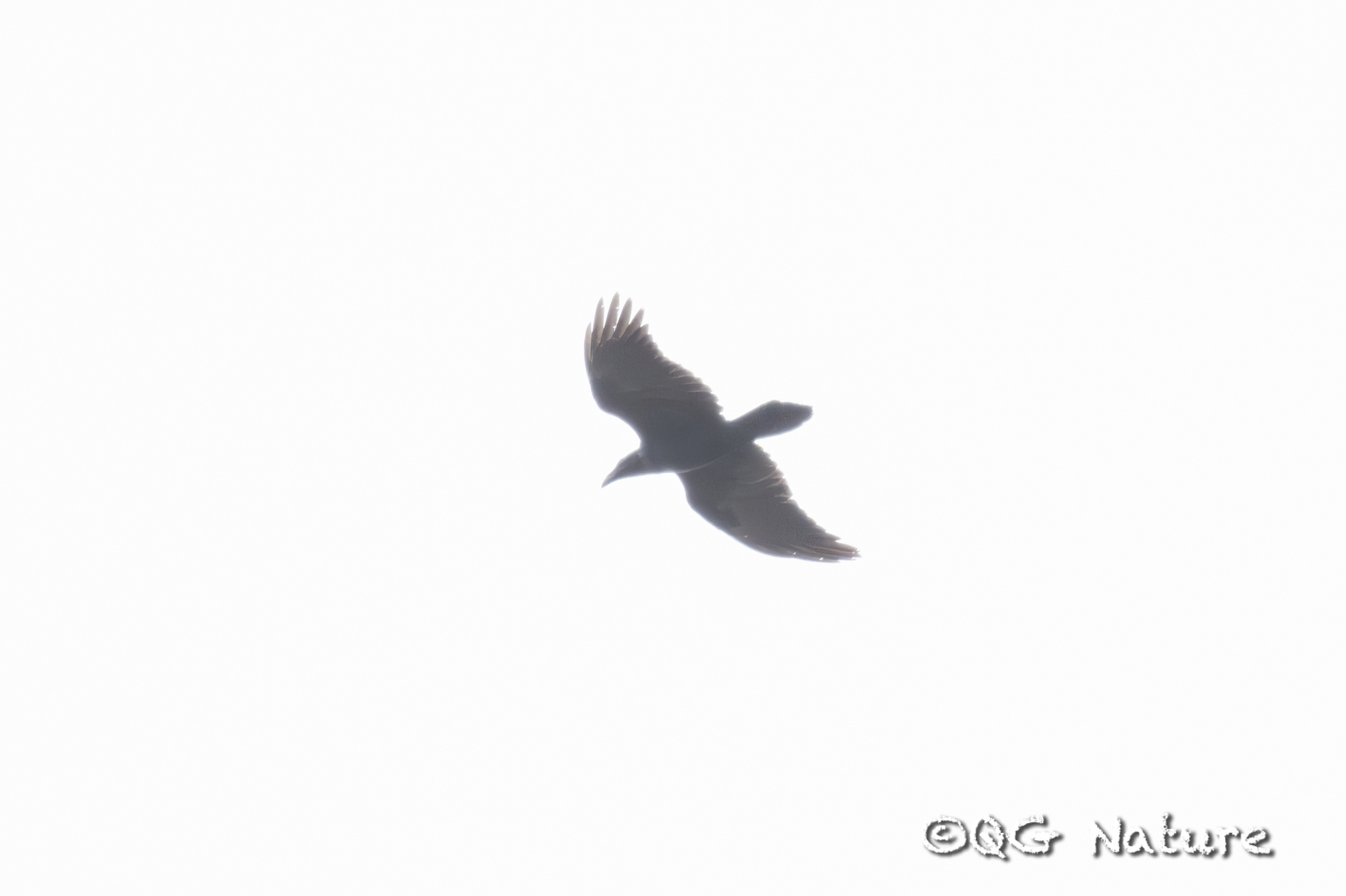
Distinguished from crows by larger size, heavier black beak, shaggy throat feathers, longer bristles above the beak, and a longer, wedge-shaped tail. In flight, it displays a larger wing area, more stable soaring with less wing flapping, and produces a creaking sound from feathers. The usual call is a deep, sonorous croak, distinct from crow calls, though similar to some other raven species. Vocalizations include a deep prruk-prruk-prruk, high knocking toc-toc-toc, dry grating kraa, and low guttural rattle. Can mimic environmental sounds and human speech.
Distribution & Habitat
Found throughout the Holarctic, ranging from Arctic and temperate habitats in North America and Eurasia to deserts in North Africa and Pacific islands. Recorded at altitudes up to 6,350 m on Mount Everest. Generally resident year-round, though young birds may disperse locally. Prefers mountainous or coastal terrain, wooded areas with open land, and sea cliffs. Populations are dense in northern and western regions of the British Isles and have surged in areas with human food sources like California.
Behavior & Ecology
Omnivorous diet includes carrion, insects, cereal grains, berries, small animals, and food waste. Often scavenges wolf-kills and cooperates with wolves by leading them to prey. Stores surplus food and raids caches of other species. Breeding pairs mate for life, defending territories aggressively. Nests are deep bowls of sticks, roots, mud, and bark, lined with fur, placed in trees or on cliffs. Females lay 4-6 eggs; incubation lasts 18-21 days. Young fledge at 35-49 days. Displays high intelligence, including tool use, deception, and social learning. Juveniles engage in play, such as sliding down snowbanks.
Conservation
Population increasing in the United Kingdom due to legal protection, though illegal persecution persists. In the western Mojave Desert, human development has caused a 16-fold population increase over 25 years, raising concerns for the threatened desert tortoise due to predation on juveniles. Control measures include shooting, trapping, and reducing exposed garbage. Culling occurs in Alaska to protect the vulnerable Steller's eider. Definitive host of West Nile Virus, though California populations showed low positivity rates in 2010.
Culture
National bird of Bhutan, where kings wear the Raven Crown. Official bird of the Yukon territory and featured on the coat of arms of the Isle of Man. Revered as a spiritual figure or godlike creature in indigenous cultures of Scandinavia, ancient Ireland, Wales, Bhutan, northwest North America, Siberia, and northeast Asia. In Norse mythology, Huginn and Muninn serve Odin. Associated with the Tower of London legend that England will not fall while ravens reside there. Symbolizes death or ill omen in some Western traditions, and appears in Biblical and Quranic narratives.
Source: Wikipedia · CC BY-SA 3.0
Taxonomy
- Order
- Passeriformes
- Family
- Corvidae
- Genus
- Corvus
Subspecies (11)
-
Corvus corax canariensis
Canary Islands
Data Sources
Species description from Wikipedia, licensed under CC BY-SA 3.0.
Bird images and sounds sourced from GBIF, contributed by citizen scientists worldwide under Creative Commons licenses.
Taxonomy data from AviList 2025.