
Northern Raven
Corvus corax
渡鸦
Introduction
A large all-black passerine bird and the most widely distributed of all corvids, found across the Northern Hemisphere. Eleven accepted subspecies show little variation in appearance. It is one of two largest corvids alongside the thick-billed raven and is the heaviest passerine bird. At maturity, it averages 63 cm in length and 1.47 kg in weight, with heaviest individuals reaching 2 kg. Wild individuals can live more than 23 years. Young birds travel in flocks but later mate for life, with each pair defending a territory. An extremely versatile and opportunistic omnivore.
Description
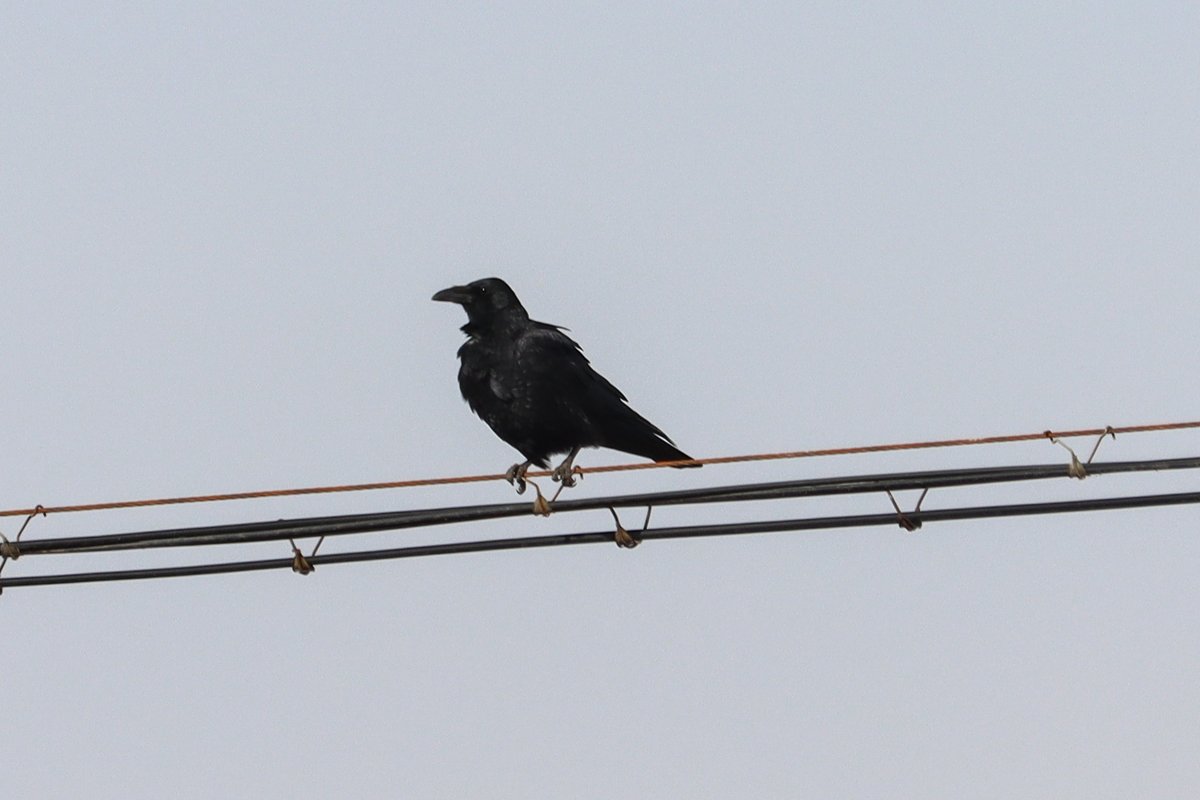
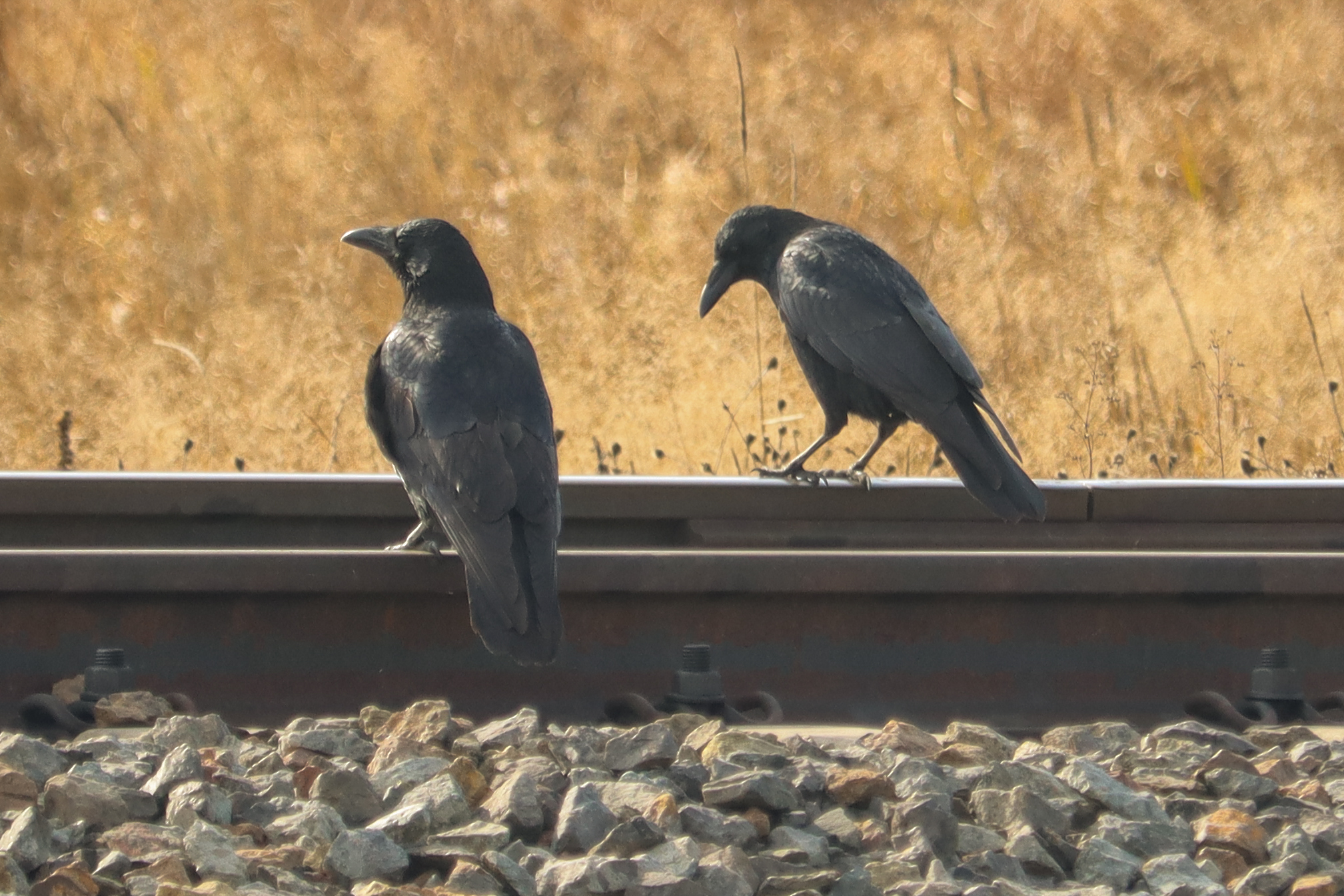
Adults measure 54 to 71 cm in length with a wingspan of 116 to 153 cm. Recorded weights range from 0.69 to 2.25 kg. The large, slightly curved bill has a culmen length of 5.7 to 8.5 cm. The tail is longish and strongly graduated at 20 to 26.3 cm. Plumage is mostly iridescent black with a dark brown iris. Throat feathers are elongated and pointed; bases of neck feathers are pale brownish-grey. Legs and feet are stout with tarsus length of 6 to 7.2 cm. Juveniles have similar but duller plumage with a blue-grey iris and pinkish gape.
Identification
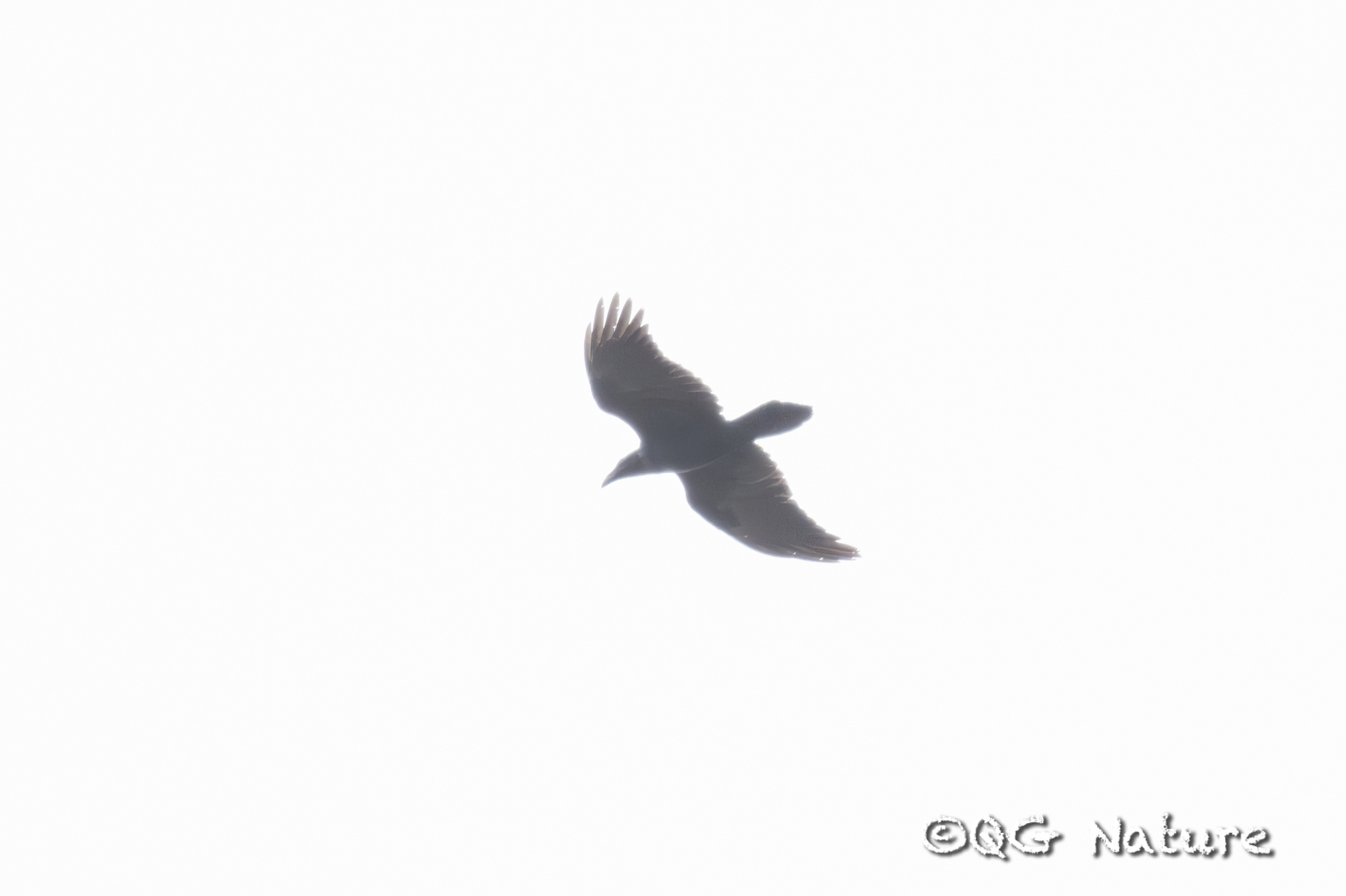
Larger and heavier than related crows with a larger, heavier black beak. Distinguished by shaggy feathers around the throat, longer bristles above the beak, and a longer wedge-shaped tail. In flight, tail shape, larger wing area, and more stable soaring style with less wing flapping distinguish it from crows. Flight produces a creaking sound likened to rustling silk. The usual call is a deep croak, more sonorous than a crow's call. The Chihuahuan raven is similar in the American southwest but has a relatively smaller bill, beard, and body with a longer tail.
Distribution & Habitat
Found throughout the Holarctic from Arctic and temperate habitats in North America and Eurasia to the deserts of North Africa and Pacific islands. In the British Isles, more common in Scotland, Wales, western England and Ireland. Recorded at altitudes up to 5,000 m in Tibet and 6,350 m on Mount Everest. Generally resident year-round within their range; young birds may disperse locally. Favors mountainous or coastal terrain with large trees or cliff ledges for nesting, often near open land or coastal regions for feeding.
Behavior & Ecology
Omnivorous and highly opportunistic diet varies with location, season and opportunity. Feeds on carrion, insects, cereal grains, berries, fruit, small animals, nesting birds, and food waste. Stores surplus food, especially fatty items, and steals from caches of other species. Often associates with wolves, following them to scavenge kills and sometimes leading hunting packs to prey. Displays remarkable intelligence including problem-solving, mimicry, social learning, and the ability to communicate about distant events (displacement). Uses a wide vocabulary of calls including a distinctive deep resonant prruk-prruk-prruk. Breeding pairs nest together for life, building large stick nests in trees, cliffs, or structures. Females lay four to six bluish-green, brown-blotched eggs; both parents feed young.
Conservation
Widespread and abundant across its extensive range. Not considered threatened globally. In some areas, populations have increased dramatically near human development. Localized concerns include illegal persecution by gamekeepers in the UK and predation on endangered species such as the California condor and desert tortoise. The Mojave Desert population increased approximately 16-fold over 25 years due to human settlement providing food and nesting sites. Control measures have included shooting, trapping, and landfill management to reduce available garbage.
Culture
Throughout human history has been a powerful symbol in mythology and folklore. In Western traditions, often considered a bird of ill omen, death and evil due to black plumage and carrion-eating. In Tlingit and Haida cultures, Raven was both a trickster and creator god. Norse mythology features Huginn (thought) and Muninn (memory) as ravens that brought information to Odin. Referenced 12 times in the Bible, including as the first animal released from Noah's ark. Associated with the Morrígan in Irish mythology and Brân the Blessed in Welsh mythology. National bird of Bhutan and official bird of Yukon territory; appears on the Isle of Man coat of arms.
Source: Wikipedia · CC BY-SA 3.0
Taxonomy
- Order
- Passeriformes
- Family
- Corvidae
- Genus
- Corvus
- eBird Code
- comrav
Subspecies (11)
-
Corvus corax canariensis
Canary Islands
-
Corvus corax clarionensis
southwestern USA and northwestern Mexico
-
Corvus corax corax
northwestern Europe eastward to central Siberia
-
Corvus corax hispanus
Iberian Peninsula, Italy, and Mediterranean islands
-
Corvus corax kamtschaticus
Siberia to Sea of Okhotsk, Sakhalin, Kuril Islands, and northern Japan
-
Corvus corax laurencei
southeastern Europe and Türkiye to Pakistan
-
Corvus corax principalis
islands in Bering Sea, Alaska, Canada, and northern USA
-
Corvus corax sinuatus
southwestern Canada through west-central USA southward to Nicaragua
-
Corvus corax tibetanus
mountains of central Asia and the Himalayas
-
Corvus corax tingitanus
northern Africa
-
Corvus corax varius
Iceland and Faroe Islands
Data Sources
Species description from Wikipedia, licensed under CC BY-SA 3.0.
Bird images and sounds sourced from GBIF, contributed by citizen scientists worldwide under Creative Commons licenses.
Taxonomy data from AviList 2025.