Coraciiformes / Coraciidae / Coracias
European Roller
Coracias garrulus · 蓝胸佛法僧
Introduction
The only member of the roller family breeding in Europe, this species also ranges into the Maghreb, West Asia, and Central Asia. It is a long-distance migrant wintering in southern Africa, primarily in dry wooded savanna and bushy plains. It inhabits warm, dry, open country with scattered trees, avoiding treeless plains, and typically nests in tree holes. The global population is estimated at 277,000 to 660,000 individuals, and it is classified as Least Concern.
Description
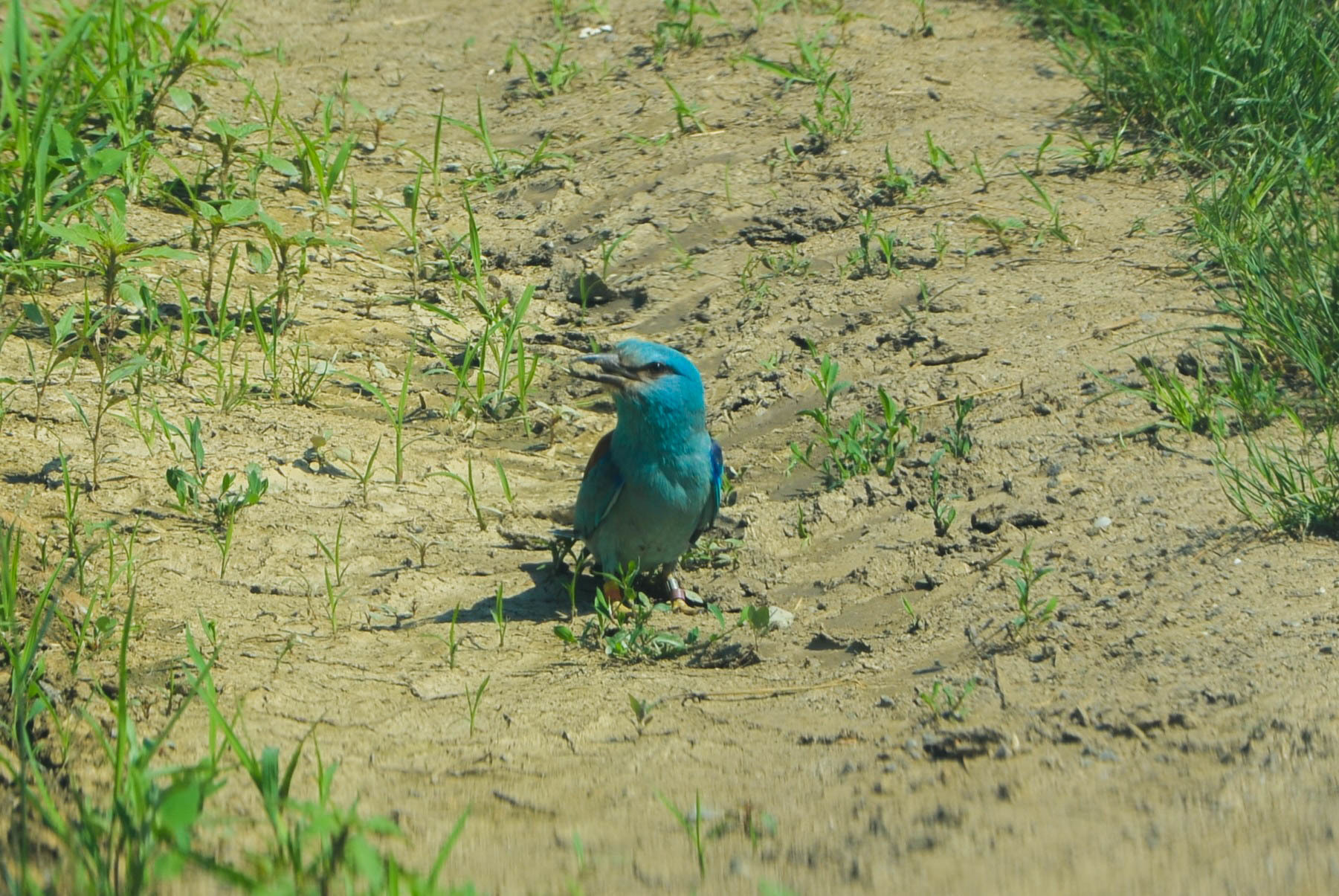
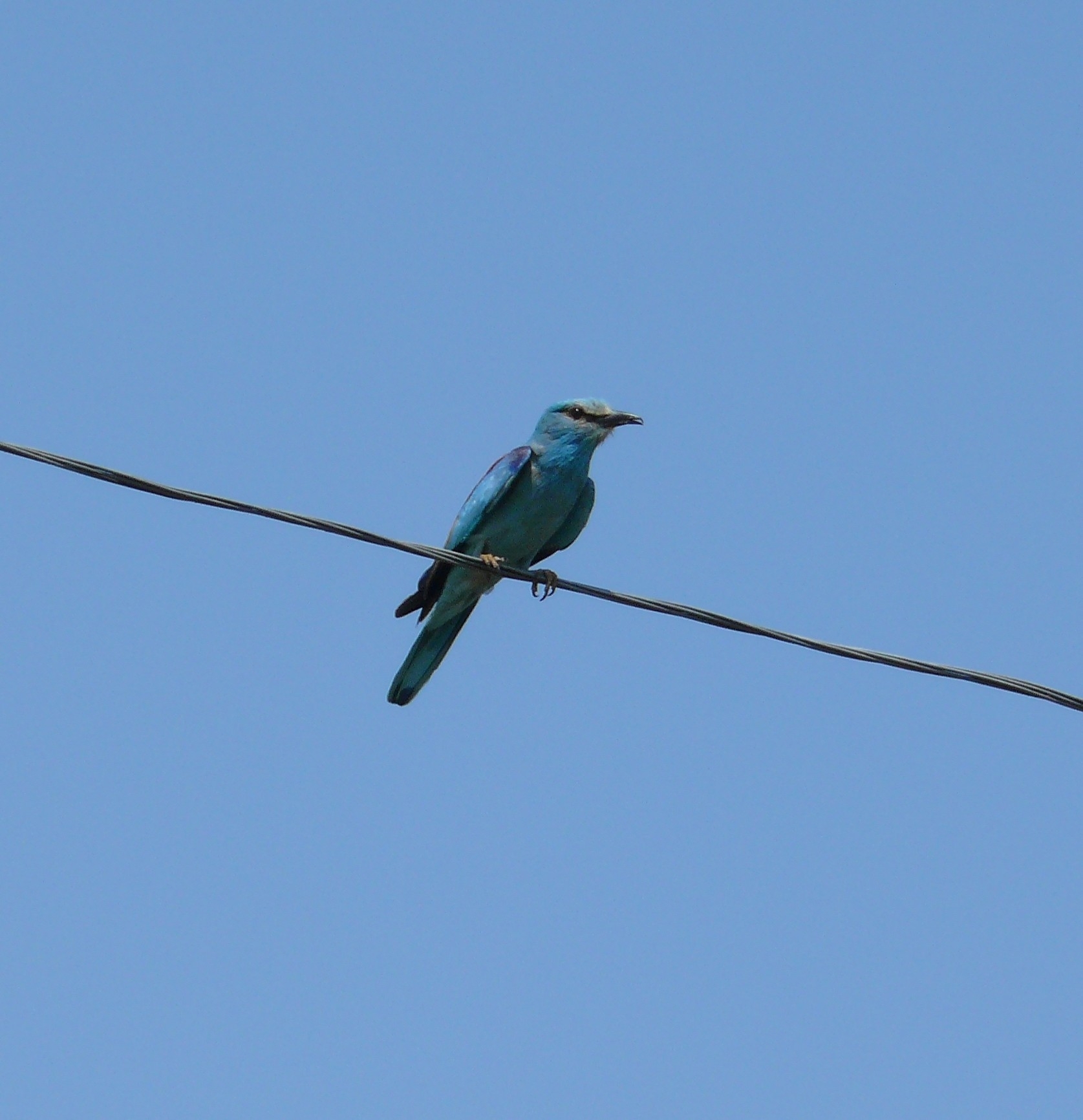
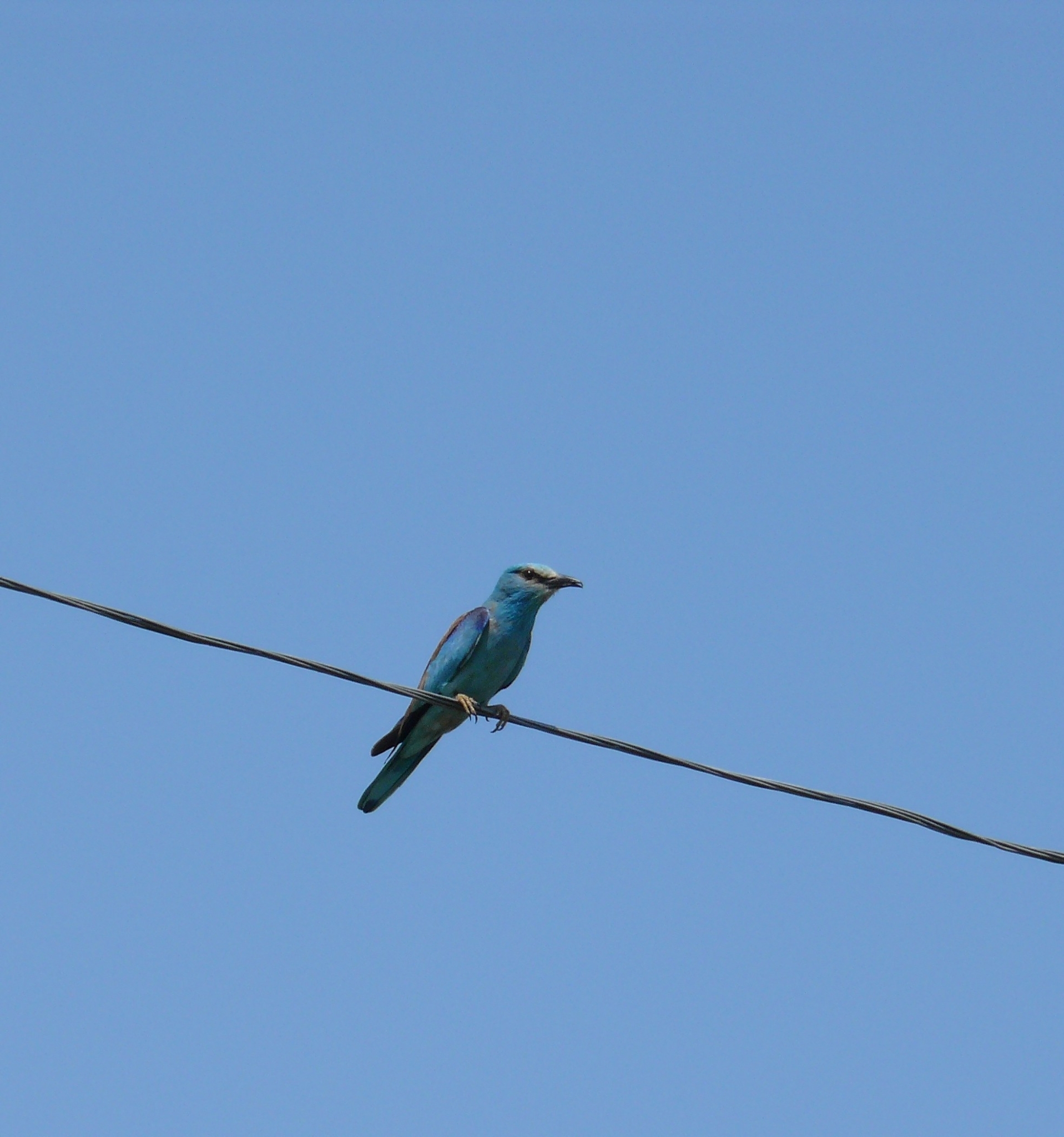
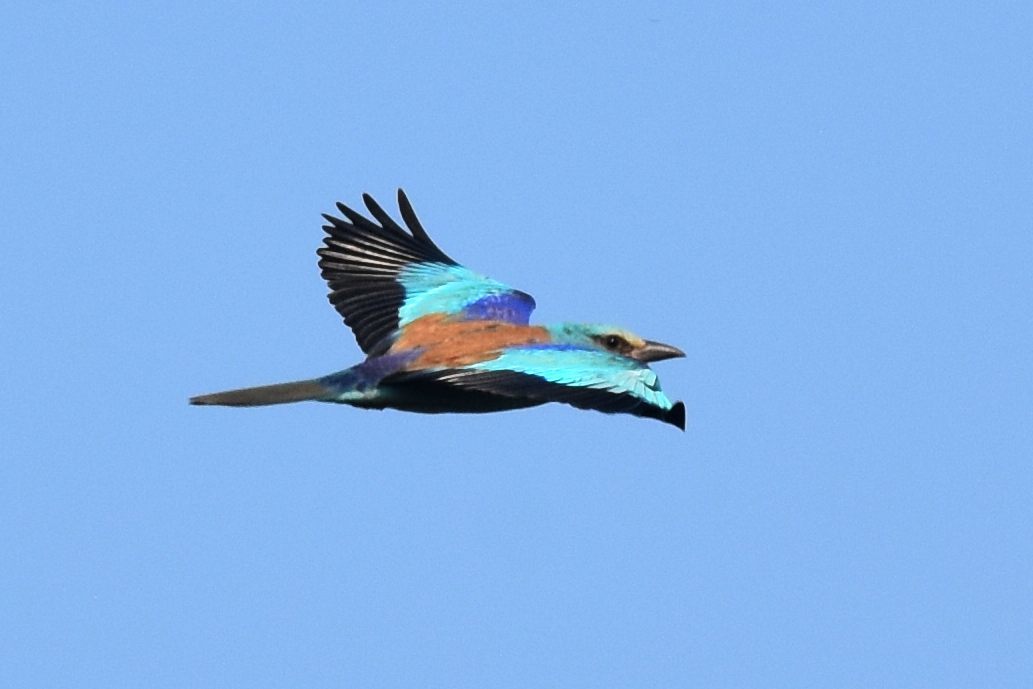
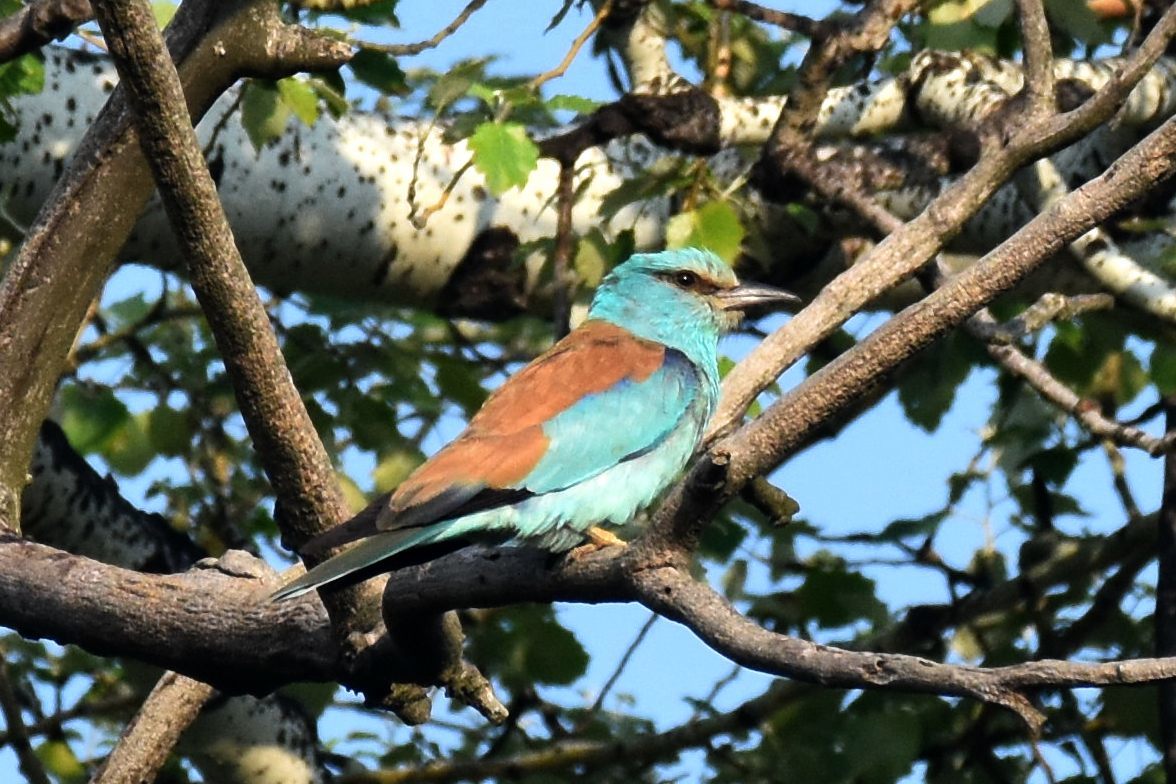
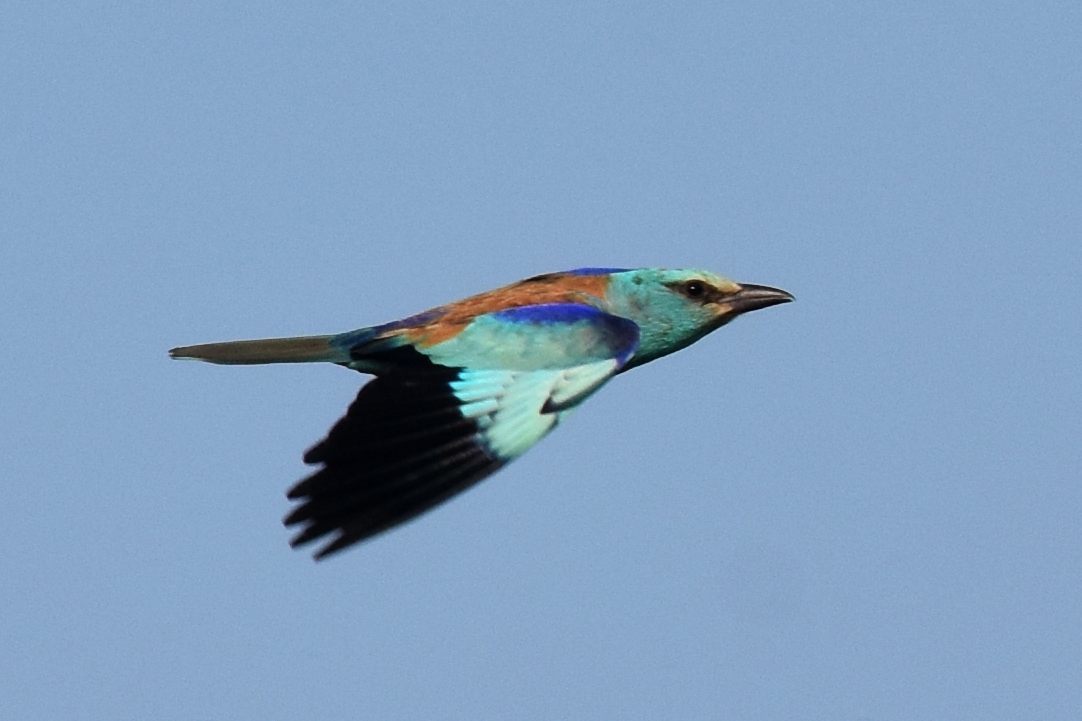
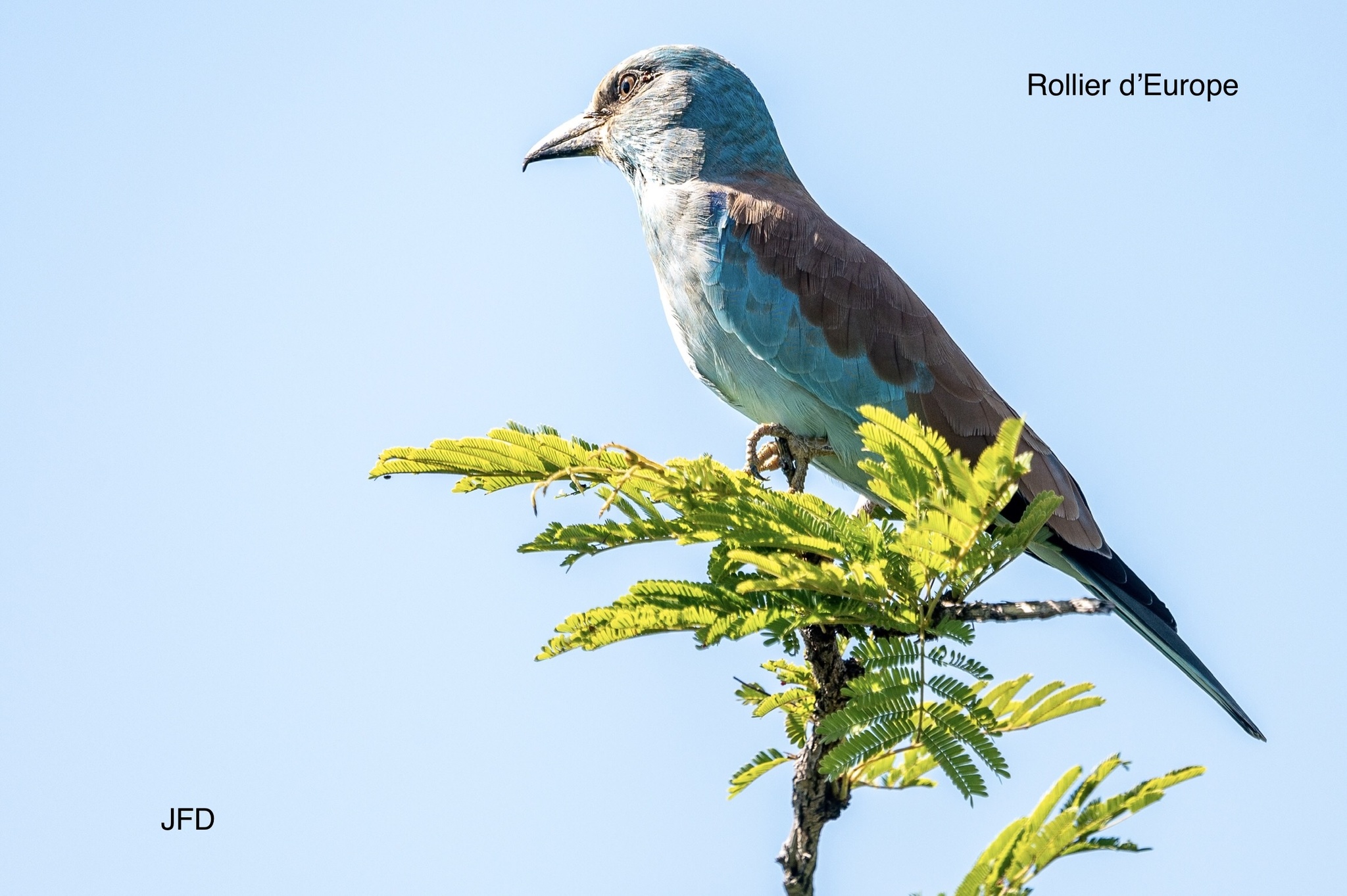
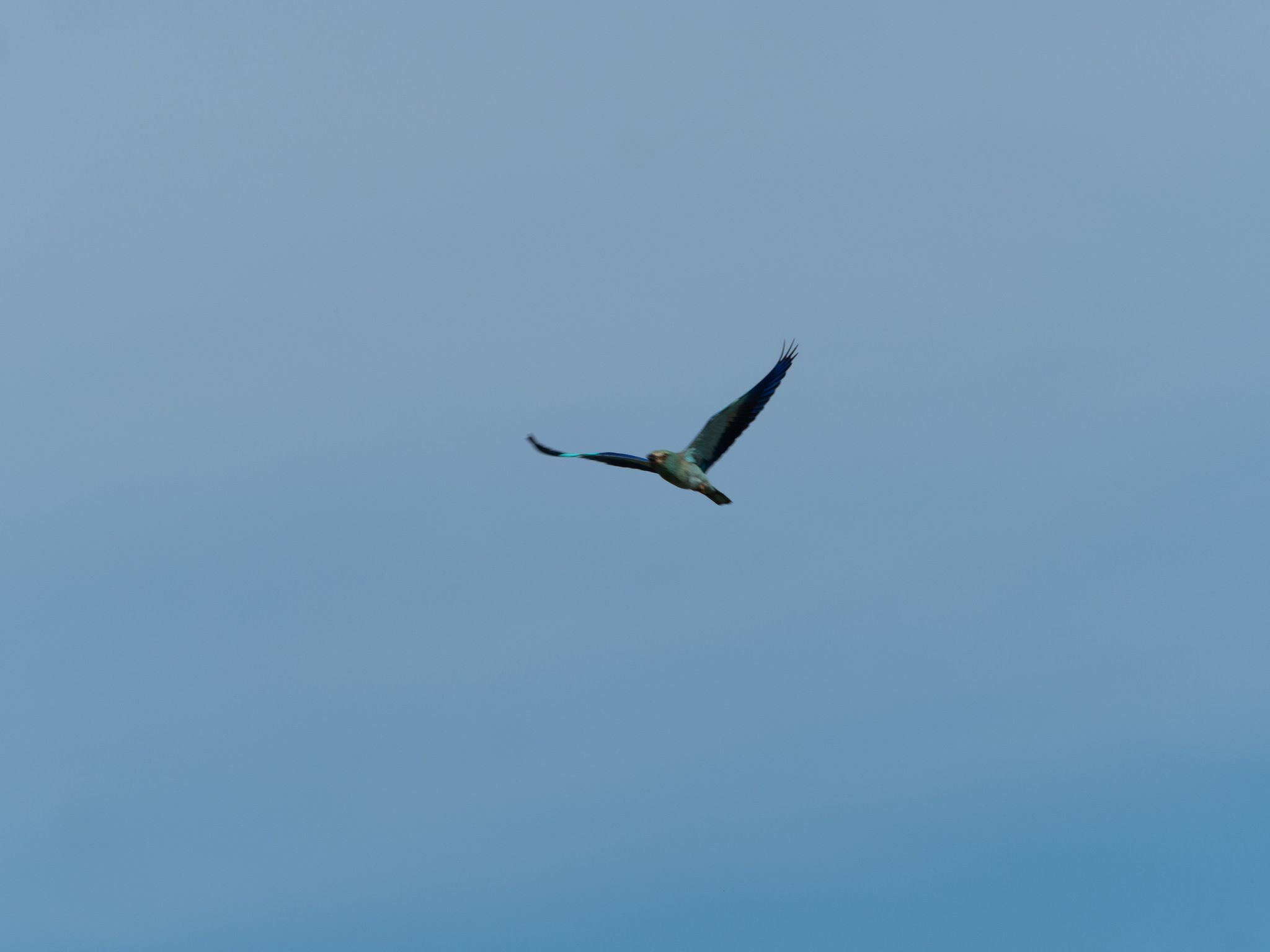
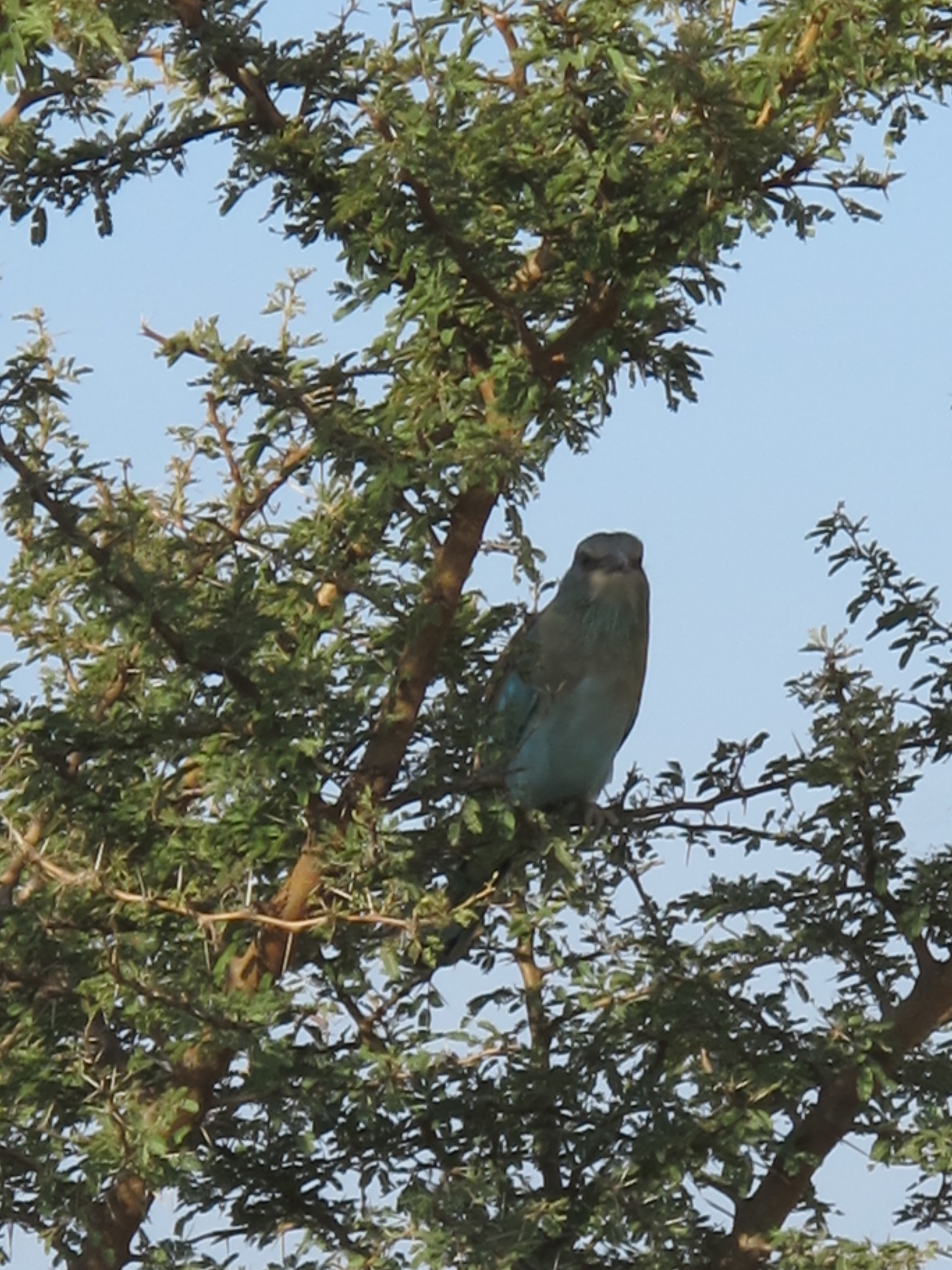
A stocky bird, 29–32 cm (11–13 in) in length with a 52–58 cm (20–23 in) wingspan, similar in size to a Eurasian jay. Plumage is mainly blue with an orange-brown back. Flight feathers are black, creating a brilliant blue contrast during flight. Sexes are similar, while juveniles are a drabber version of adults.
Identification
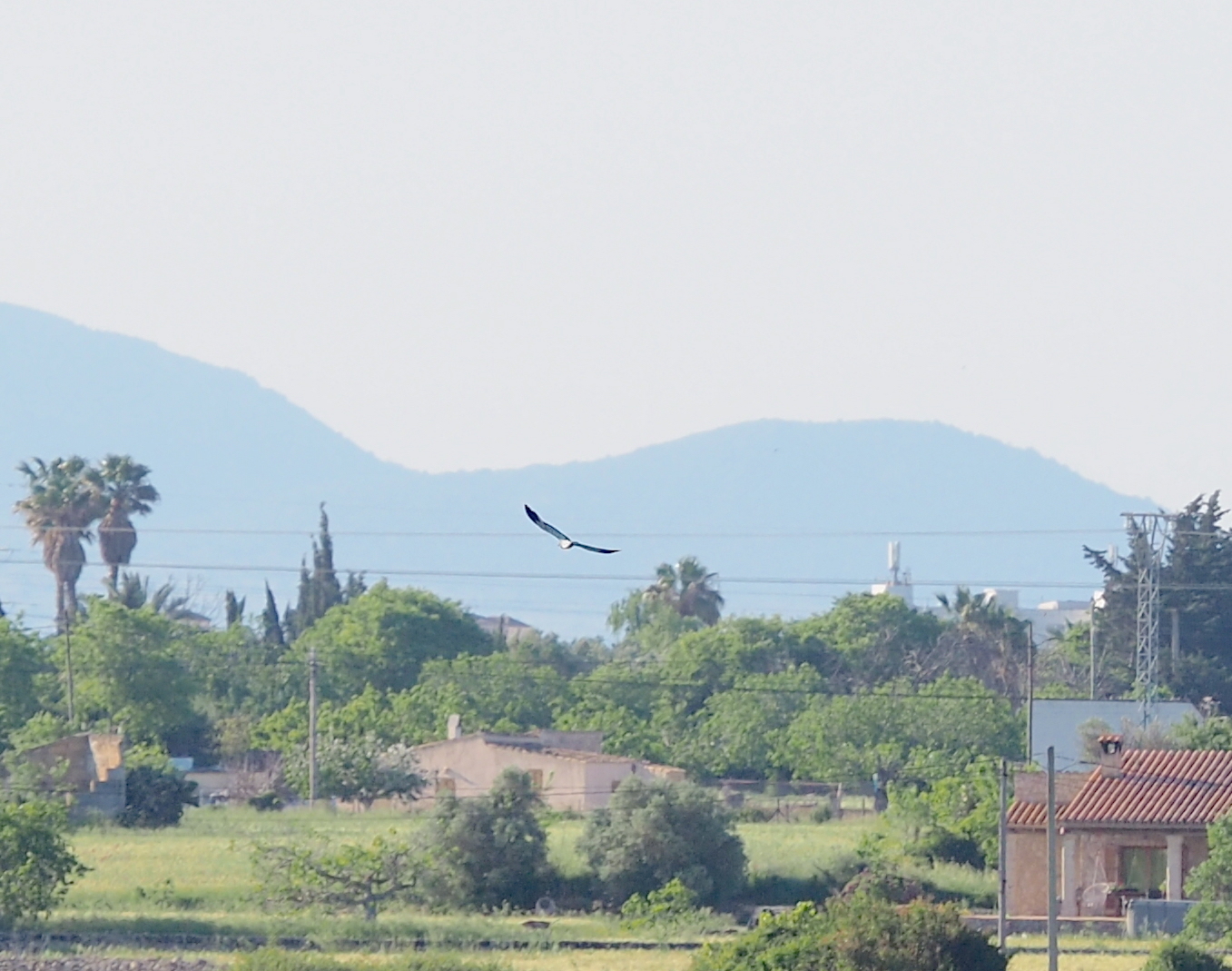
Striking strong direct flight with brilliant blue contrasting against black flight feathers. Display involves twists and turns similar to a lapwing. Vocalizations include a harsh crow-like call and a raucous series of calls when nervous.
Distribution & Habitat
Breeds in northern Africa (Morocco to Tunisia), southern and east-central Europe, and east through northwestern Iran to southwestern Siberia (subspecies C. g. garrulus). Subspecies C. g. semenowi breeds from Iraq and southern Iran east through Kashmir and southern Kazakhstan to Xinjiang. Formerly more extensive in Europe, now extinct as a nester in Sweden and Germany. Winters in Africa south of the Sahara, from Senegal to Cameroon and Ethiopia to South Africa. Prefers lowlands up to 1,000 m in Europe and 2,000 m in Morocco, utilizing oak and pine woodlands, farms, and orchards.
Behavior & Ecology
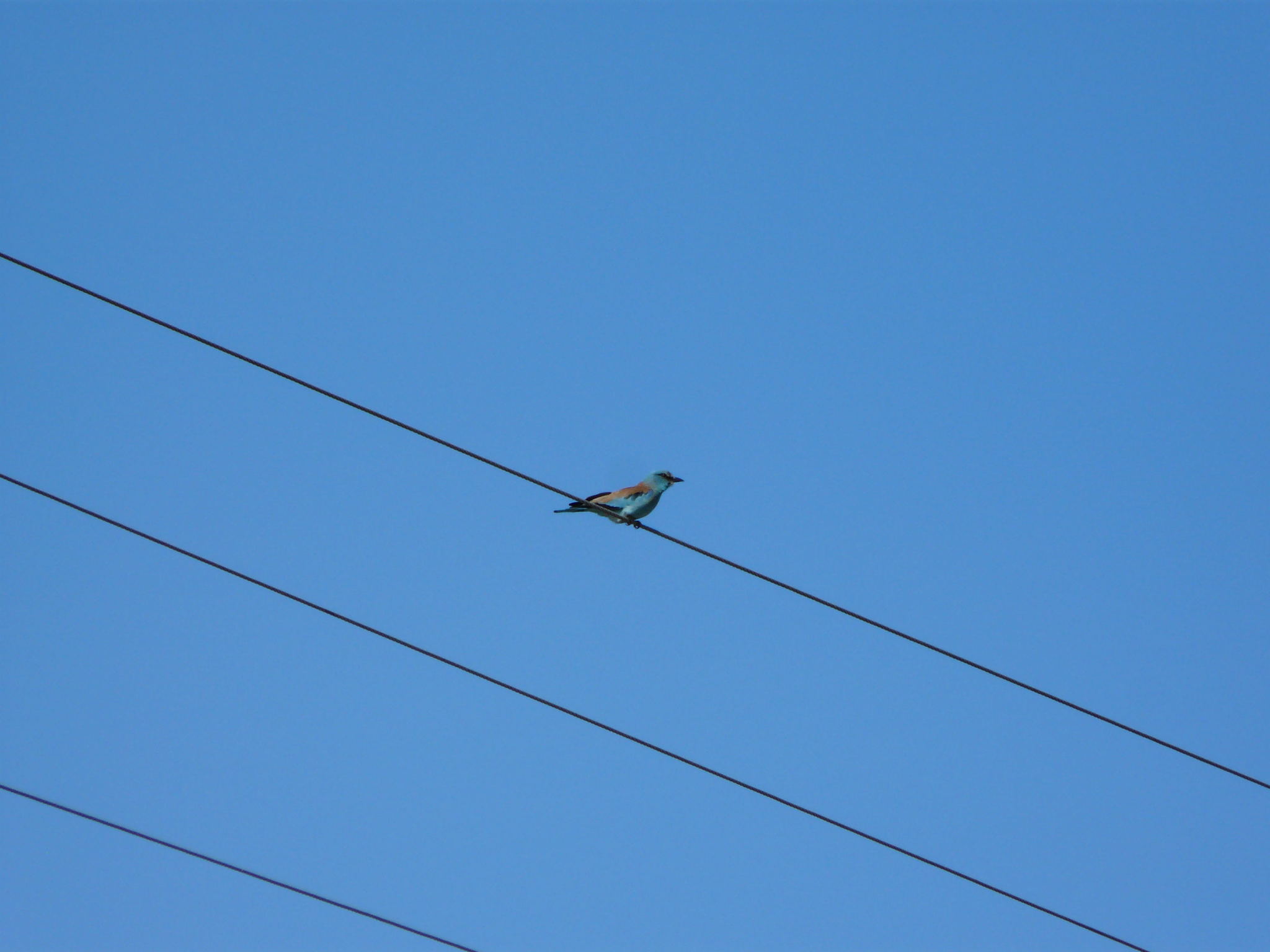
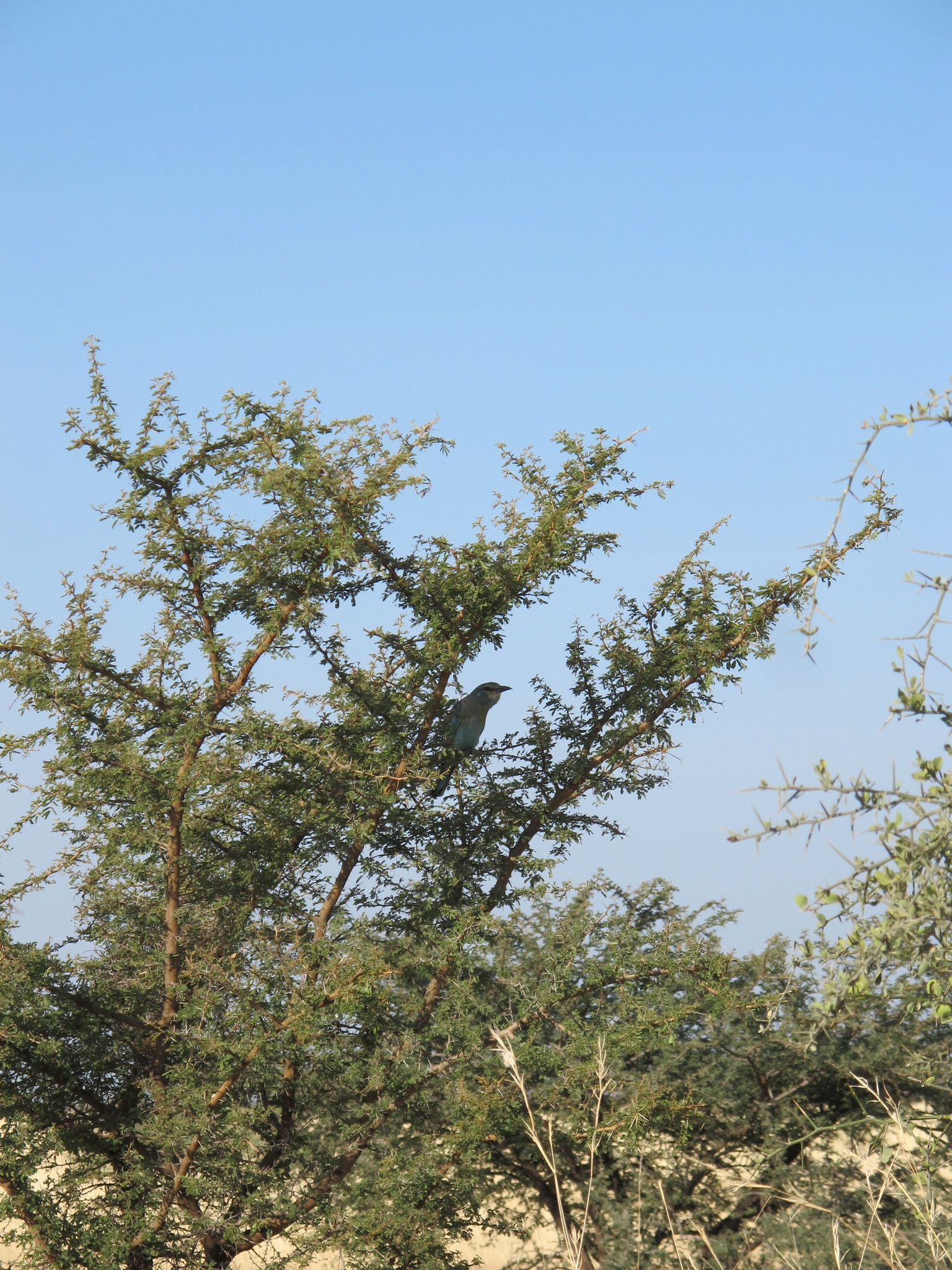
Sit-and-wait hunter perching on trees, posts, or wires. Diet consists of large insects (adults eat mostly beetles; nestlings eat Orthoptera like grasshoppers), small reptiles, rodents, and frogs. Nests in natural tree cavities, woodpecker holes, rock crevices, or buildings, typically 5–10 m above ground. Clutch of 2–6 white glossy eggs (35 mm × 28 mm) laid at 2–3 day intervals. Incubation lasts 17–19 days, mainly by the female. Nestlings fledge after 26–27 days. Chicks vomit foul-smelling orange liquid to deter predators. Maximum recorded age is 9 years and 2 months.
Conservation
Global population estimated at 277,000 to 660,000 individuals. Classified as Least Concern by the IUCN since 2015, downlisted from Near Threatened. European population declined by 25% between 1990 and 2000, with collapses in Baltic states and northern Russia. Threats include hunting during migration (particularly in Oman), loss of nesting trees and hedges due to agricultural practices, and pesticide use reducing insect prey. Conservation measures include providing nest boxes and restoring foraging habitat.
Culture
Featured in the 'Agada Chaya' musical project by the Steinhardt Museum of Natural History. The Israel Police Airbus Helicopters H125 helicopter is named 'Kahal,' the Hebrew name for this species.
Source: Wikipedia · CC BY-SA 3.0
Taxonomy
- Order
- Coraciiformes
- Family
- Coraciidae
- Genus
- Coracias
Subspecies (2)
-
Coracias garrulus garrulus
breeds northern Africa, Europe to Iran and southwestern Siberia; winters to southern Africa
Data Sources
Species description from Wikipedia, licensed under CC BY-SA 3.0.
Bird images and sounds sourced from GBIF, contributed by citizen scientists worldwide under Creative Commons licenses.
Taxonomy data from AviList 2025.