European Roller
Coracias garrulus
蓝胸佛法僧
Introduction
The European Roller (Coracias garrulus) is the only roller species breeding across Europe. It breeds in warmer temperate regions from the Mediterranean basin through western Asia to southwestern Siberia. This species migrates long distances, crossing the Sahara Desert to winter in southern Africa's dry savannas and bushy plains. It occupies a variety of open woodland habitats, particularly oak and pine woodlands with clearings, and deliberately avoids treeless areas. Nesting occurs in natural tree cavities in both forested and human-modified landscapes. Its behavioral traits include perching on elevated vantage points and performing characteristic powerful flights.
Description
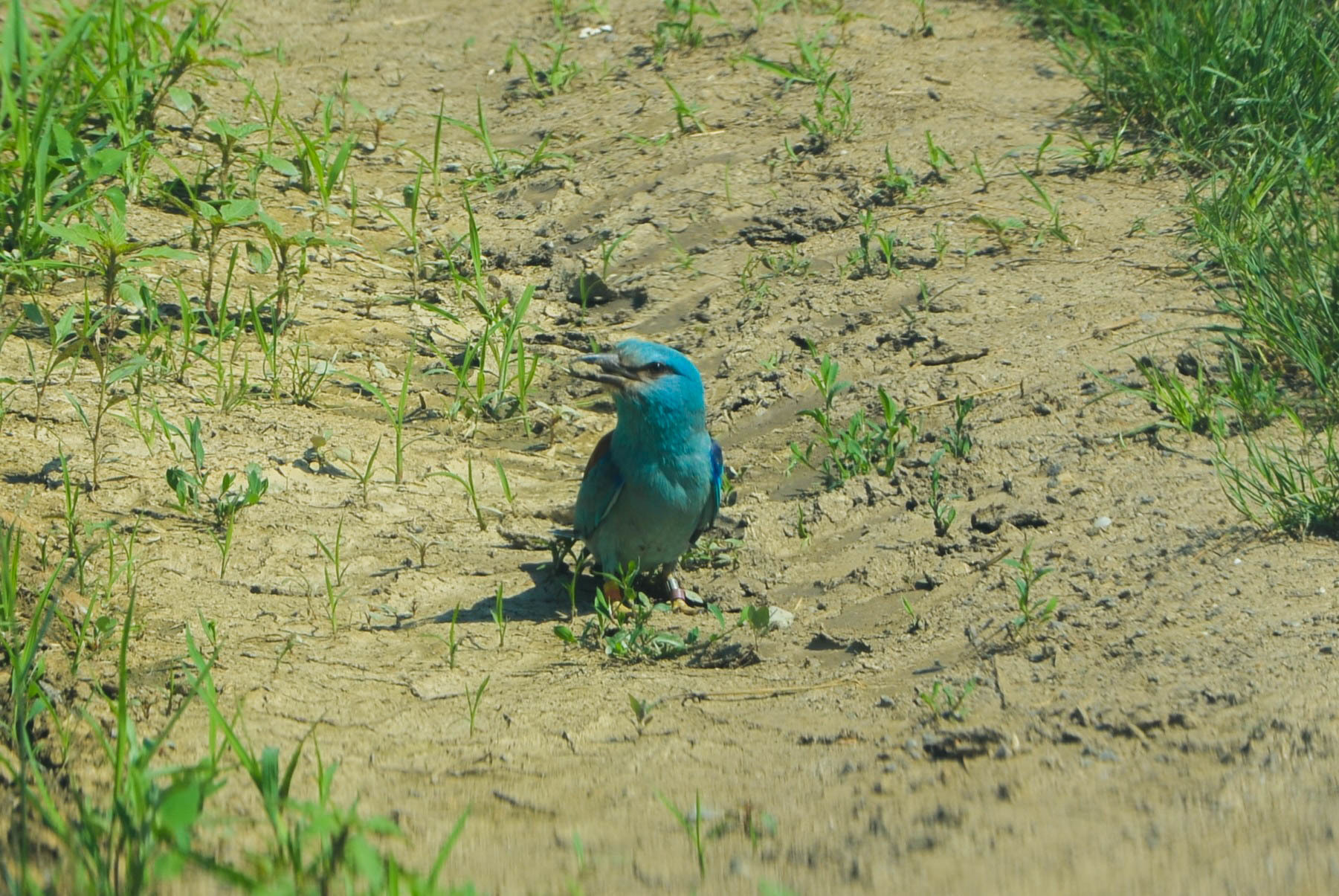
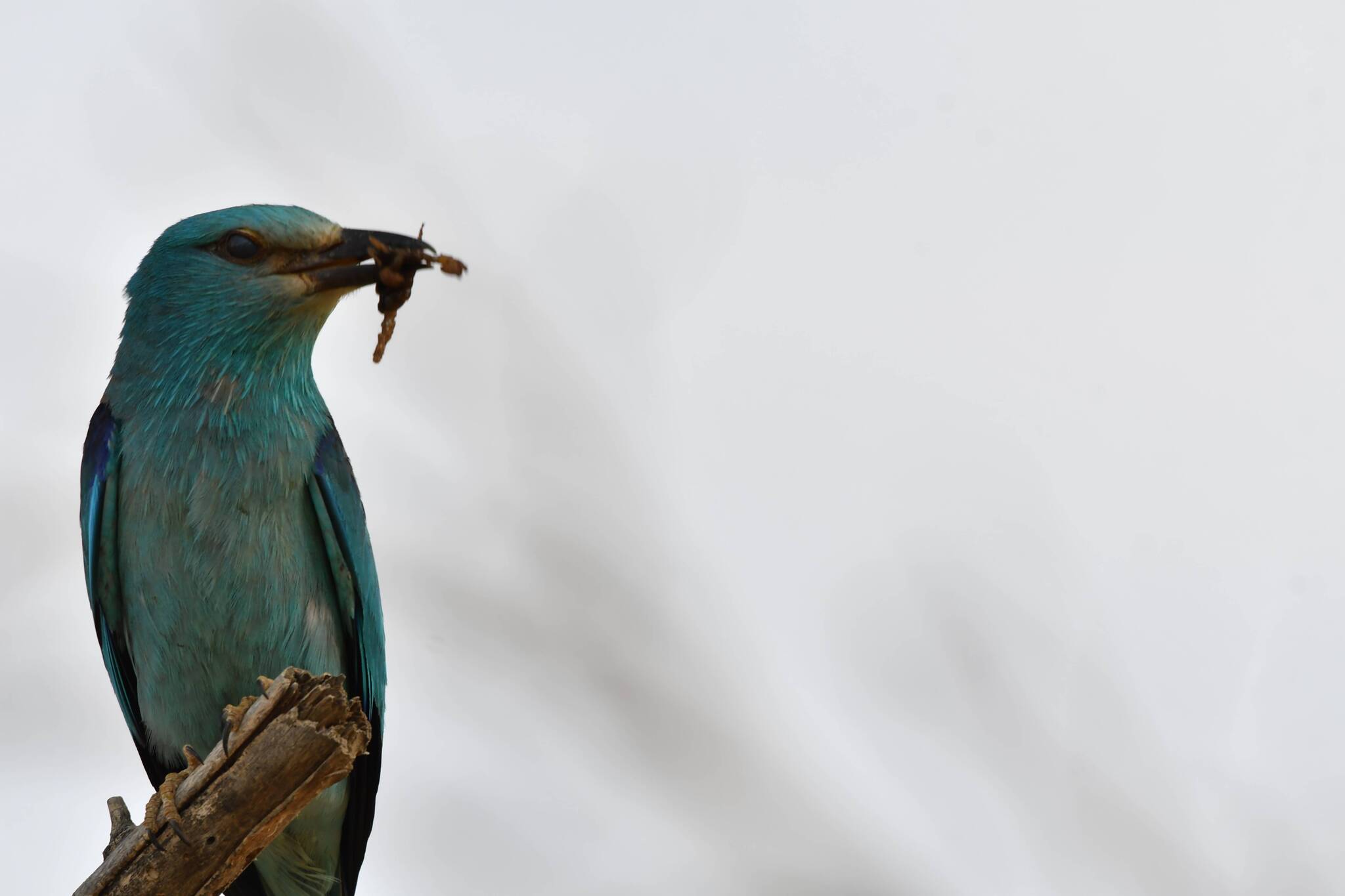
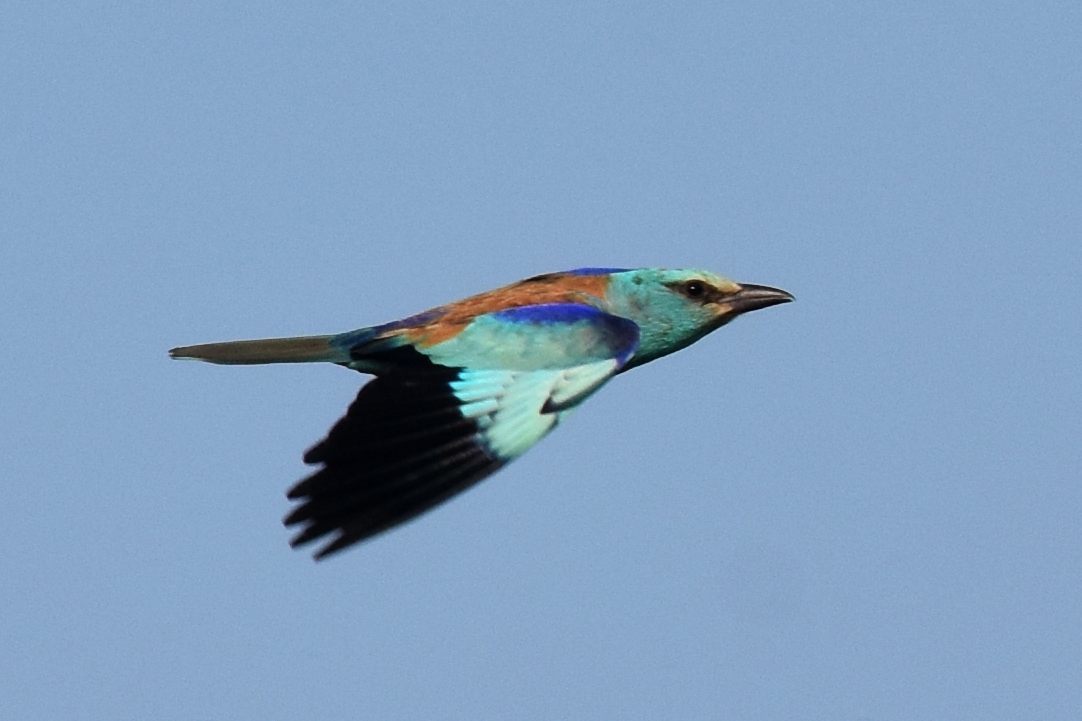
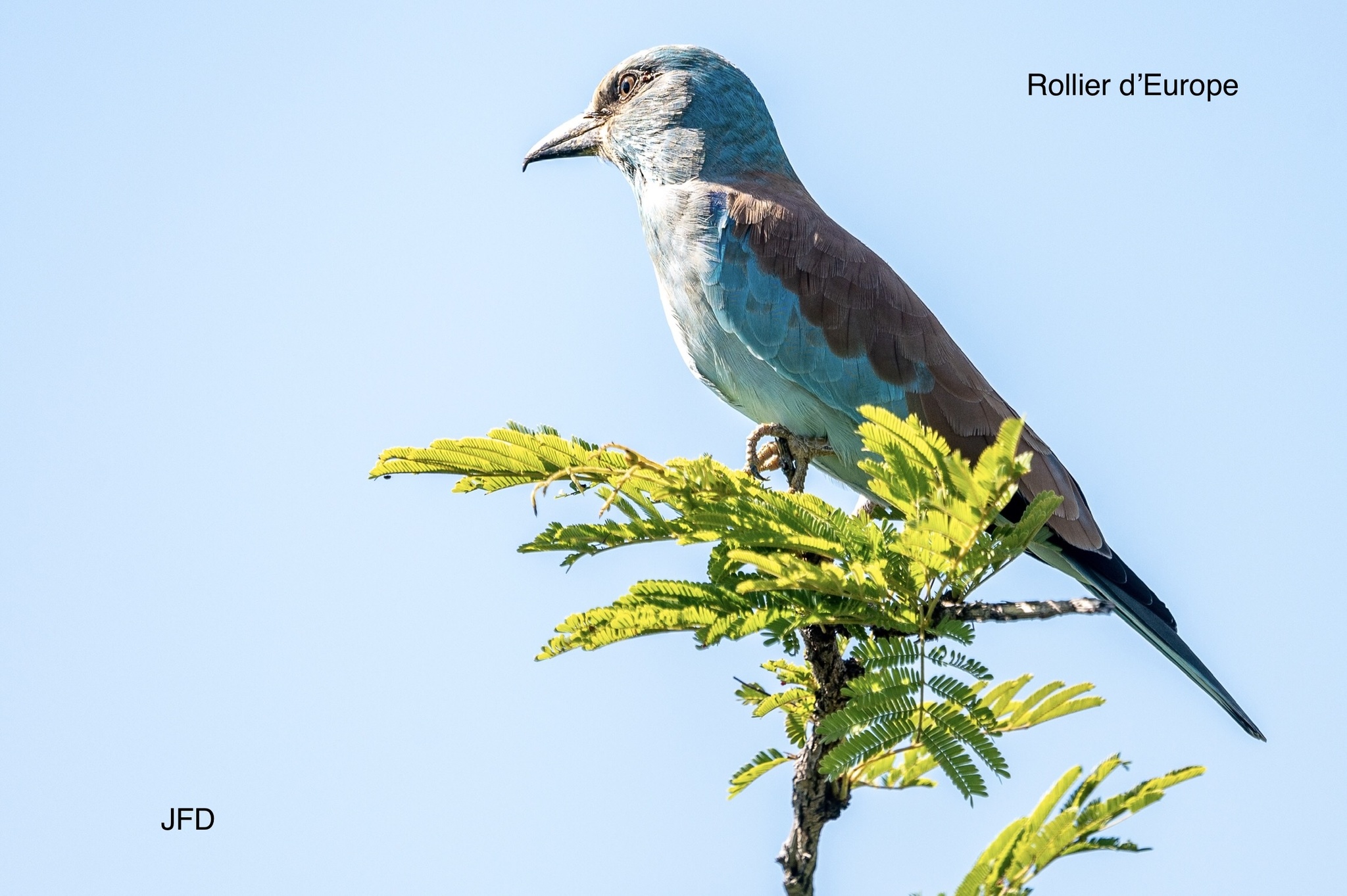
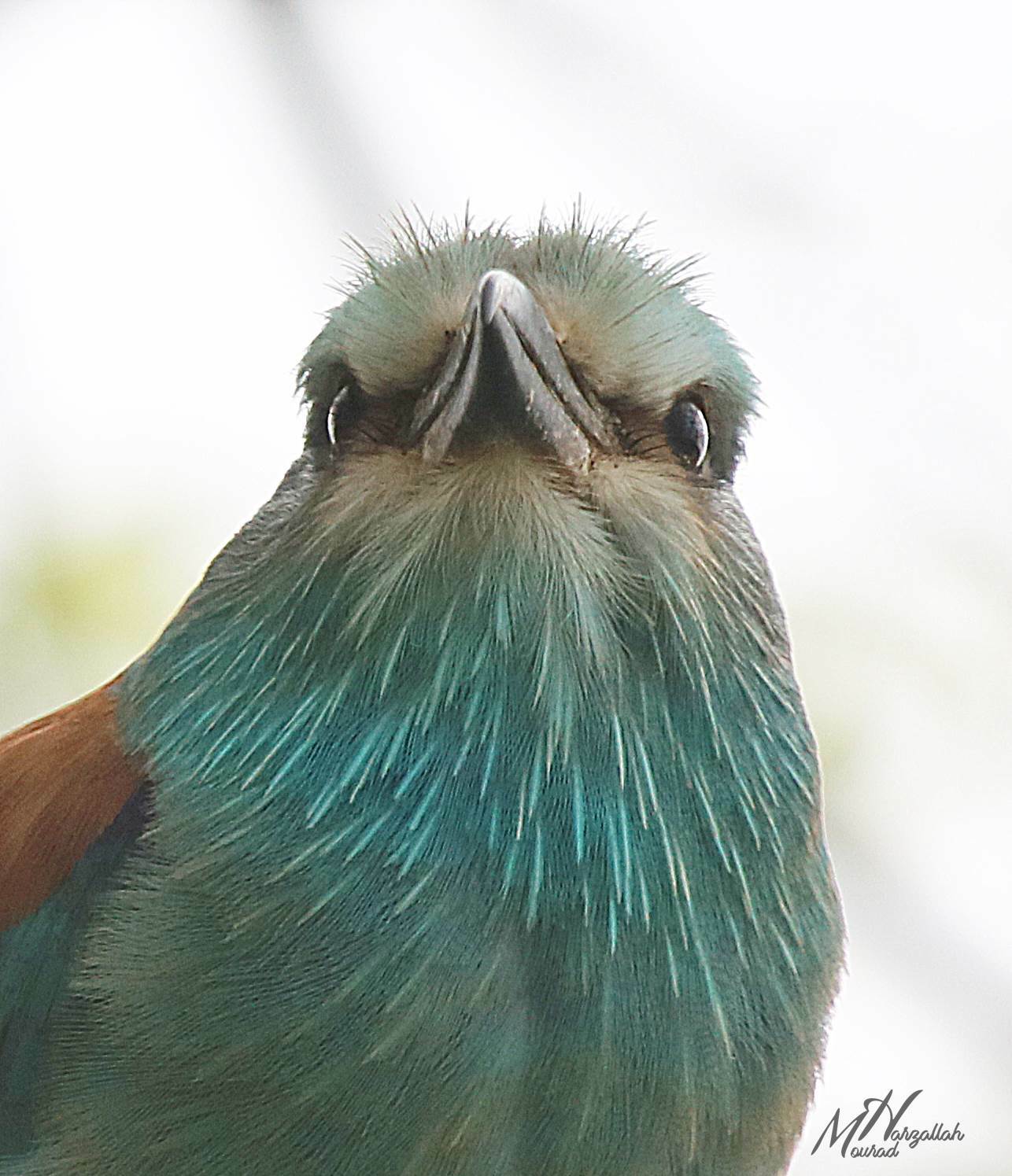
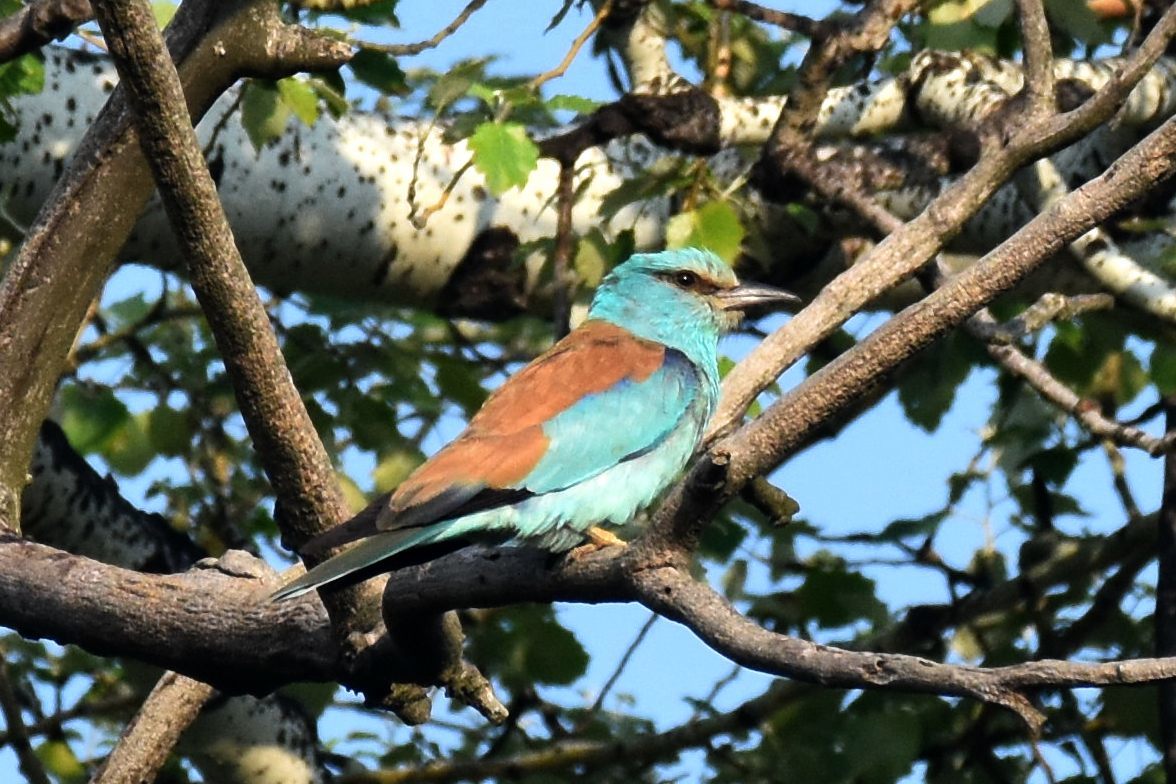
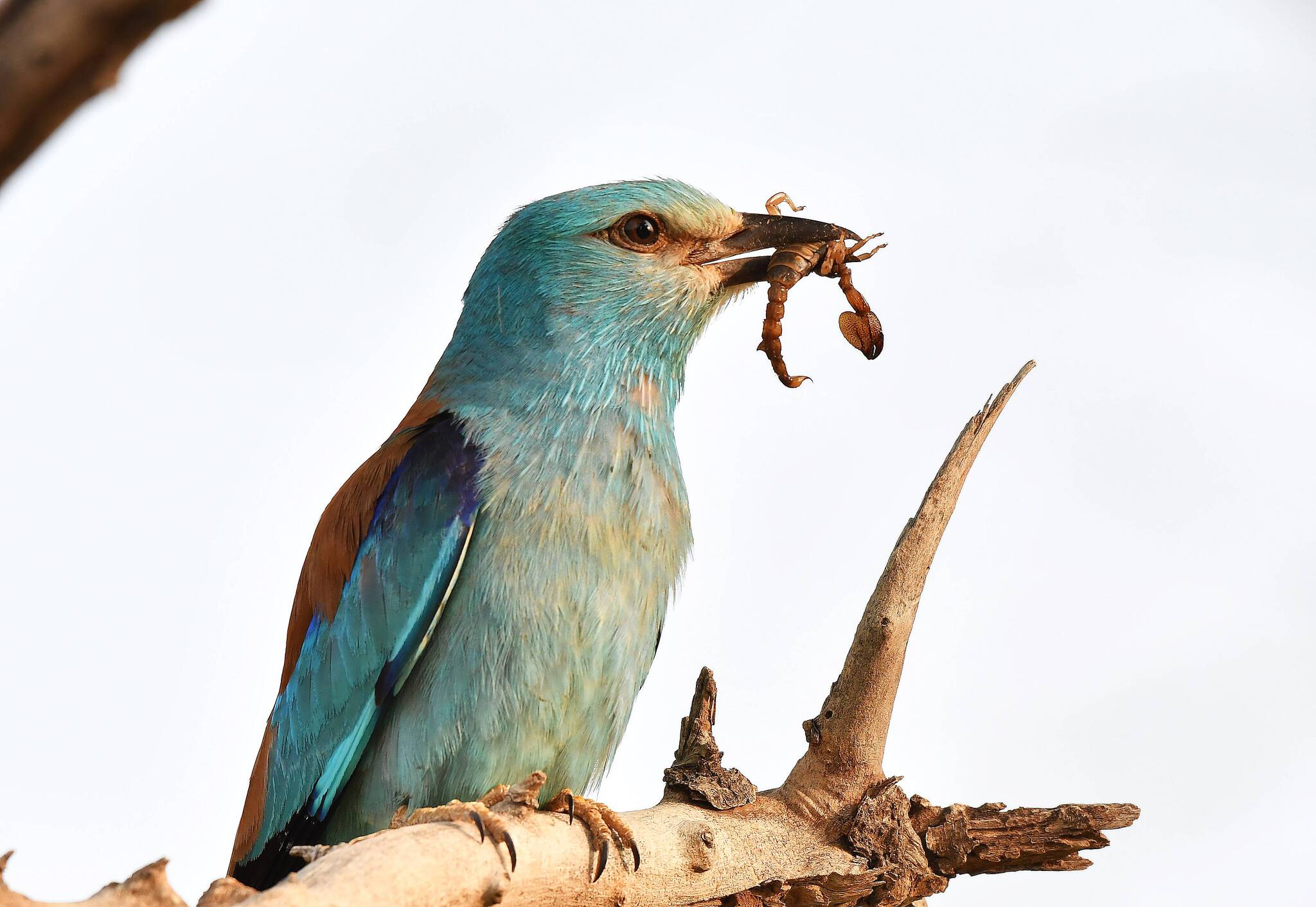
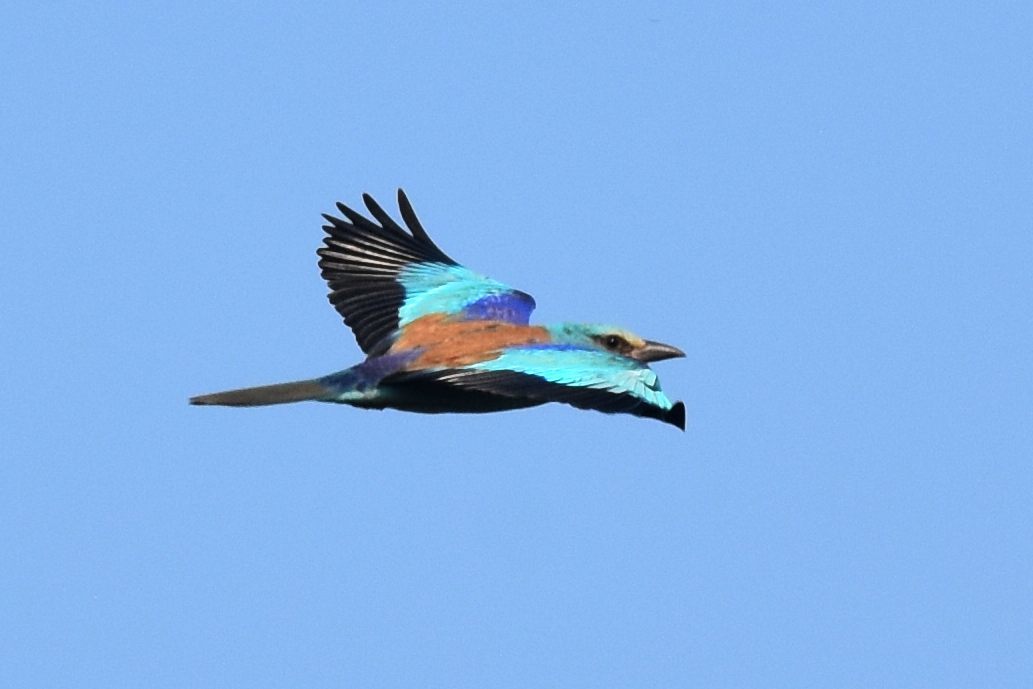
This stocky, compact bird matches the size of a Eurasian jay, measuring 29-32 centimetres in length with a wingspan of 52-58 centimetres. The predominantly blue body contrasts sharply with an orange-brown back, while black flight feathers create dramatic wing patterns visible during flight. Both sexes appear similar in plumage, though juveniles display considerably duller colouring. The strong, direct flight pattern immediately catches the observer's eye, with the brilliant blue upperparts flashing as the bird moves. The rolled appearance of the wings during certain display flights contributes to the species' descriptive name. When perched, the bird presents a compact silhouette with a hooked bill typical of its family.
Identification
The combination of blue body plumage with an orange-brown back distinguishes this species from most European birds. Its powerful, direct flight with contrasting blue and black wings provides the most reliable identification feature in the field. The display flight, performed in breeding territories, resembles that of lapwings with characteristic twists and turns that give the bird its English name. The species closely resembles the Abyssinian roller, though their ranges overlap only marginally. Unlike the lilac-breasted roller of more southern latitudes, this species lacks the extensive lilac and turquoise underparts. The harsh, crow-like calls given when nervous help distinguish it from similarly coloured species.
Distribution & Habitat
Two subspecies occupy distinct breeding ranges across the Palearctic region. The nominate western population breeds from northwestern Africa and southern Europe eastward through northwestern Iran to southwestern Siberia. The eastern subspecies breeds from Iraq and southern Iran east through Kashmir and southern Kazakhstan to Xinjiang in western China. The species has disappeared from parts of its historic northern European range, including Sweden and Germany. As a long-distance migrant, it winters in two distinct African regions, from Senegal east to Cameroon and from Ethiopia through Congo to South Africa. Some populations migrate via western India. The species inhabits warm, dry, open country with scattered trees, reaching elevations of 1,000 metres in Europe and 2,000 metres in Morocco.
Behavior & Ecology
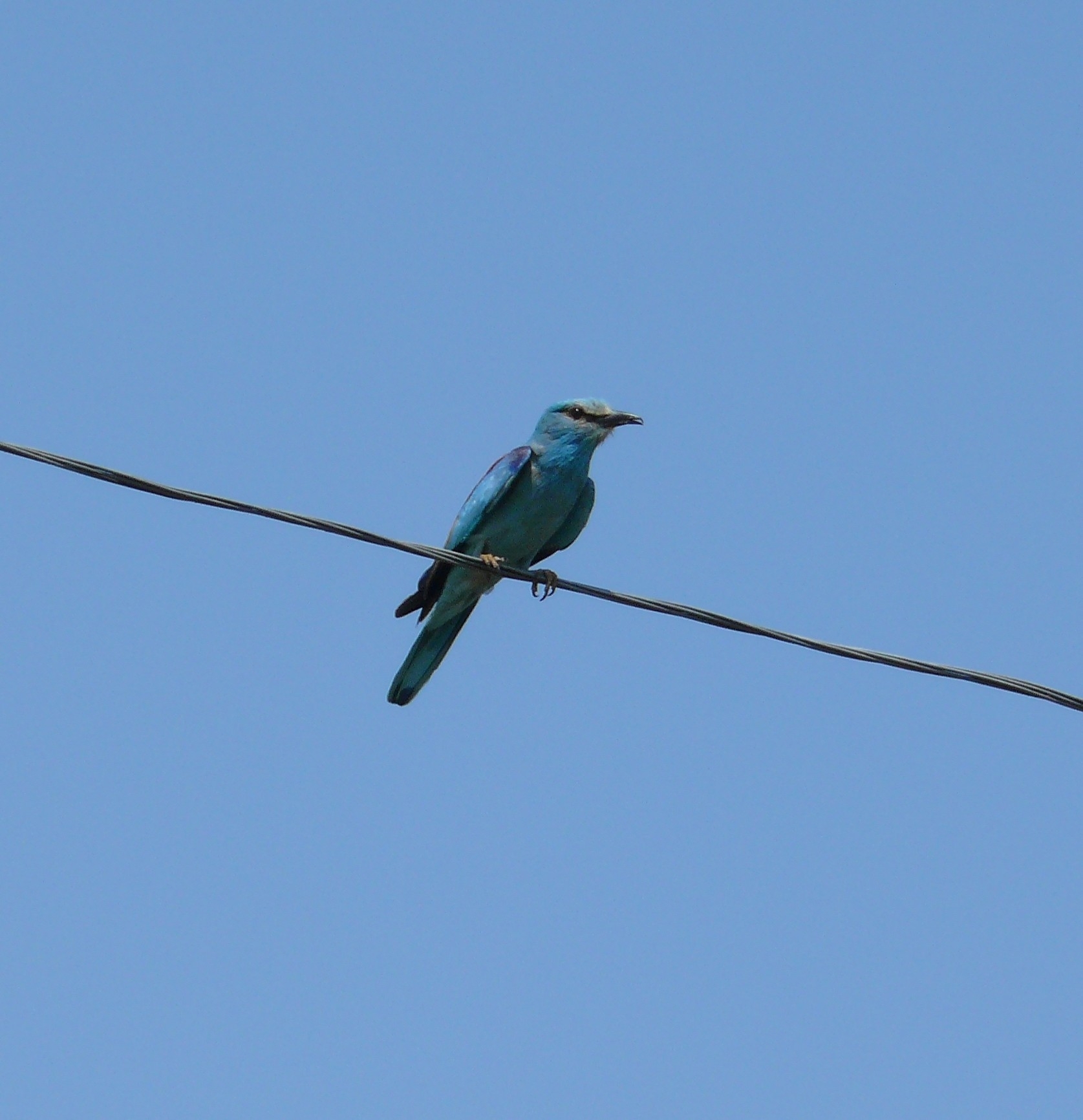
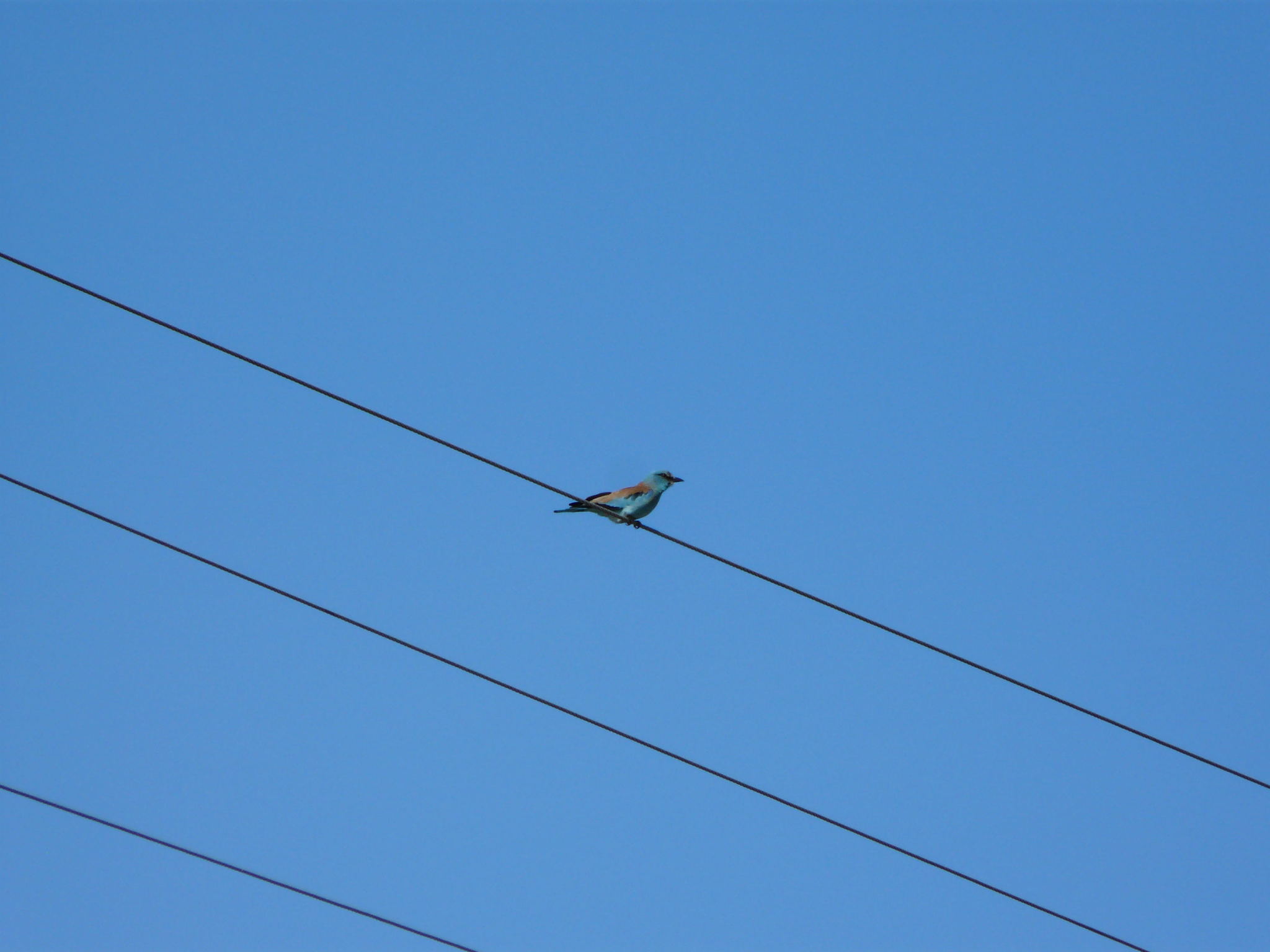
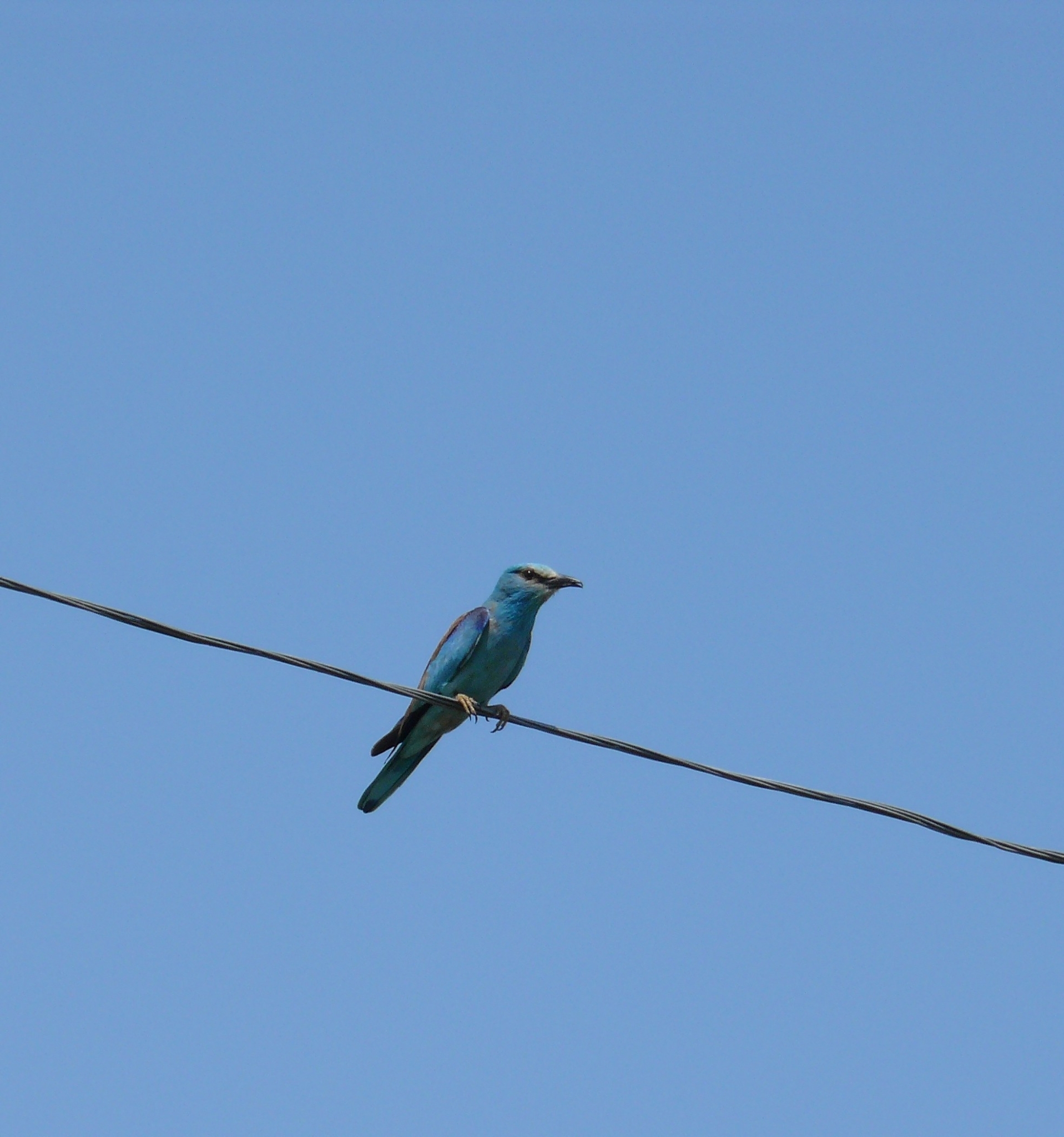
These birds employ a sit-and-wait hunting strategy, perching prominently on trees, posts, or wires while scanning for prey below. Adults feed primarily on beetles, while nestlings receive Orthoptera including grasshoppers and bush crickets. The diet also encompasses small reptiles, rodents, and frogs. Breeding pairs select natural tree cavities or abandoned woodpecker holes, typically 5-10 metres above ground, though occasionally using rock crevices or buildings. The clutch consists of 2-6 white eggs, incubated mainly by the female over 17-19 days. Both parents feed the young, which fledge after 26-27 days. A remarkable defence mechanism sees chicks vomiting a foul-smelling orange liquid onto themselves when threatened. The species typically first breeds at two years, with the oldest recorded individual reaching 9 years and 2 months. Vocalisations include harsh, crow-like calls.
Conservation
The global population estimates range from 277,000 to 660,000 individuals, with the European breeding population between 159,000 and 330,000 birds. Following fairly rapid declines across much of its range, the species was formerly classified as Near Threatened in 2005 but was downlisted to Least Concern in 2015 when population trends no longer met higher threat criteria. European populations declined by approximately 25% between 1990 and 2000, with northern and eastern range edges experiencing the most severe losses. The Baltic states and northern Russia have seen dramatic collapses, and the species no longer breeds in Estonia. Significant threats include hunting during migration around the Mediterranean and targeted hunting for food in Oman, where thousands are reportedly killed annually. Agricultural intensification has reduced trees and hedges that provide nesting sites and hunting perches, while pesticide use has diminished insect prey availability. Nest box provision at sites with abundant foraging resources offers short-term conservation benefits, though habitat restoration remains crucial elsewhere.
Culture
This species features in the educational musical project 'Agada Chaya' (Living Legend), commissioned by the Steinhardt Museum of Natural History in Israel. The Hebrew name 'Kahal' has become so culturally significant that the Israel Police named one of their Airbus H125 helicopters after the species, reflecting the bird's prominence in local consciousness. The species continues to captivate birdwatchers and nature enthusiasts across its range, maintaining its cultural presence in regions where it breeds and migrates.
Source: Wikipedia · CC BY-SA 3.0
Taxonomy
- Order
- Coraciiformes
- Family
- Coraciidae
- Genus
- Coracias
- eBird Code
- eurrol1
Subspecies (2)
-
Coracias garrulus garrulus
breeds northern Africa, Europe to Iran and southwestern Siberia; winters to southern Africa
-
Coracias garrulus semenowi
breeds Iraq to western Xinjiang and southern Kazakhstan; winters to southern Africa
Data Sources
Species description from Wikipedia, licensed under CC BY-SA 3.0.
Bird images and sounds sourced from GBIF, contributed by citizen scientists worldwide under Creative Commons licenses.
Taxonomy data from AviList 2025.