Passeriformes / Muscicapidae / Copsychus
Oriental Magpie-Robin
Copsychus saularis · 鹊鸲
Introduction
A small passerine bird formerly classified in the thrush family Turdidae, now considered an Old World flycatcher. It occurs across most of the Indian subcontinent and parts of Southeast Asia, inhabiting urban gardens and forests. Distinctive traits include a long tail held upright while foraging on the ground and well-known songs. The global conservation status is Least Concern.
Description
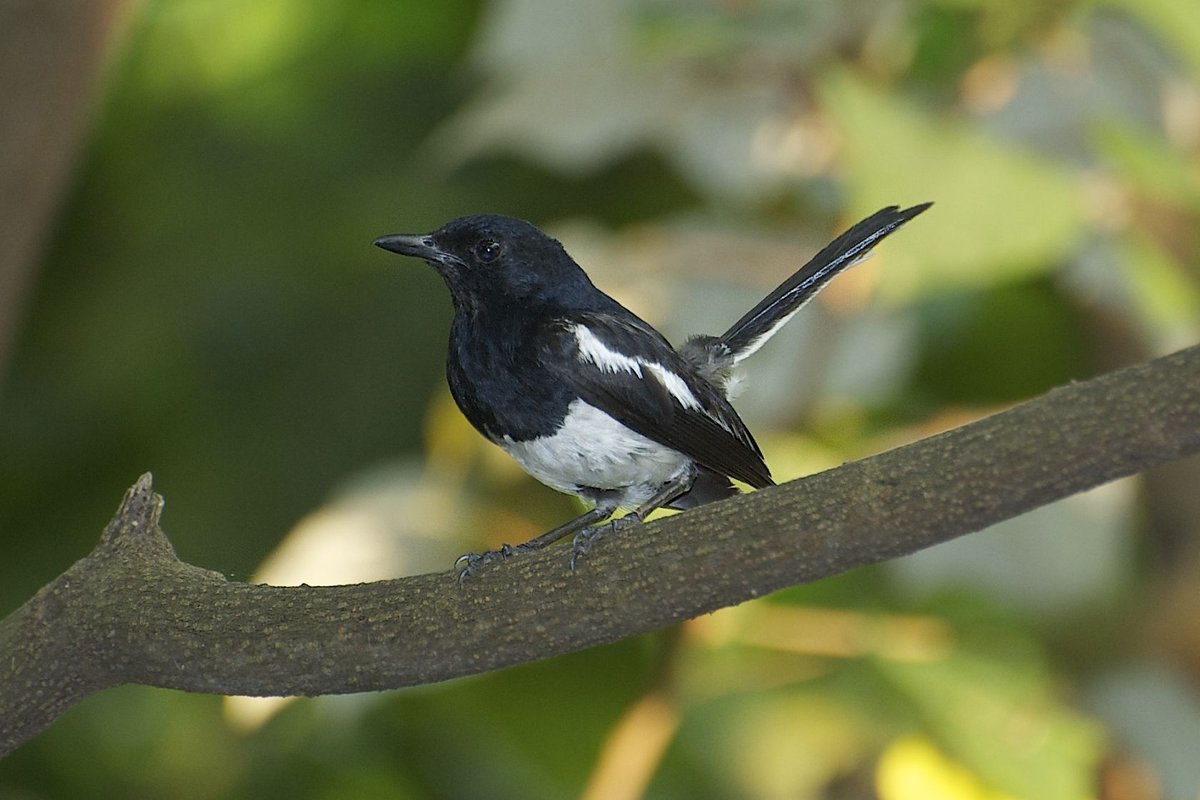
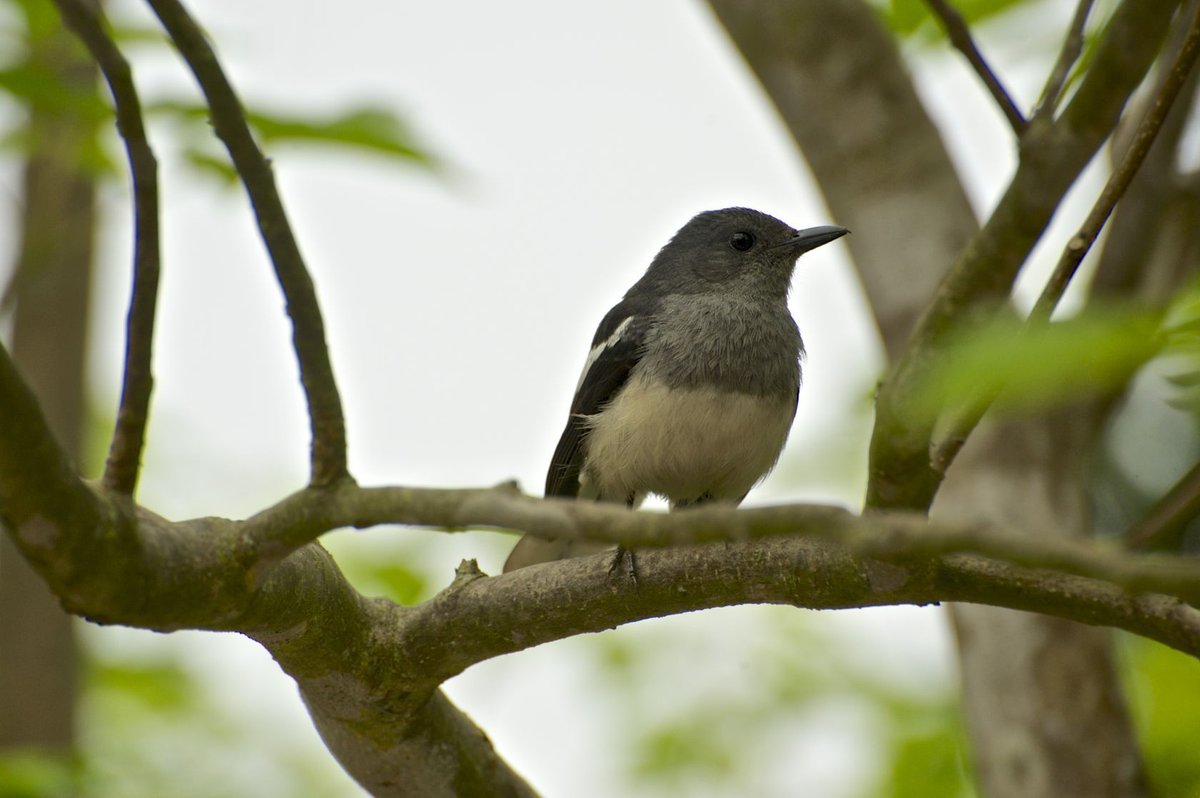
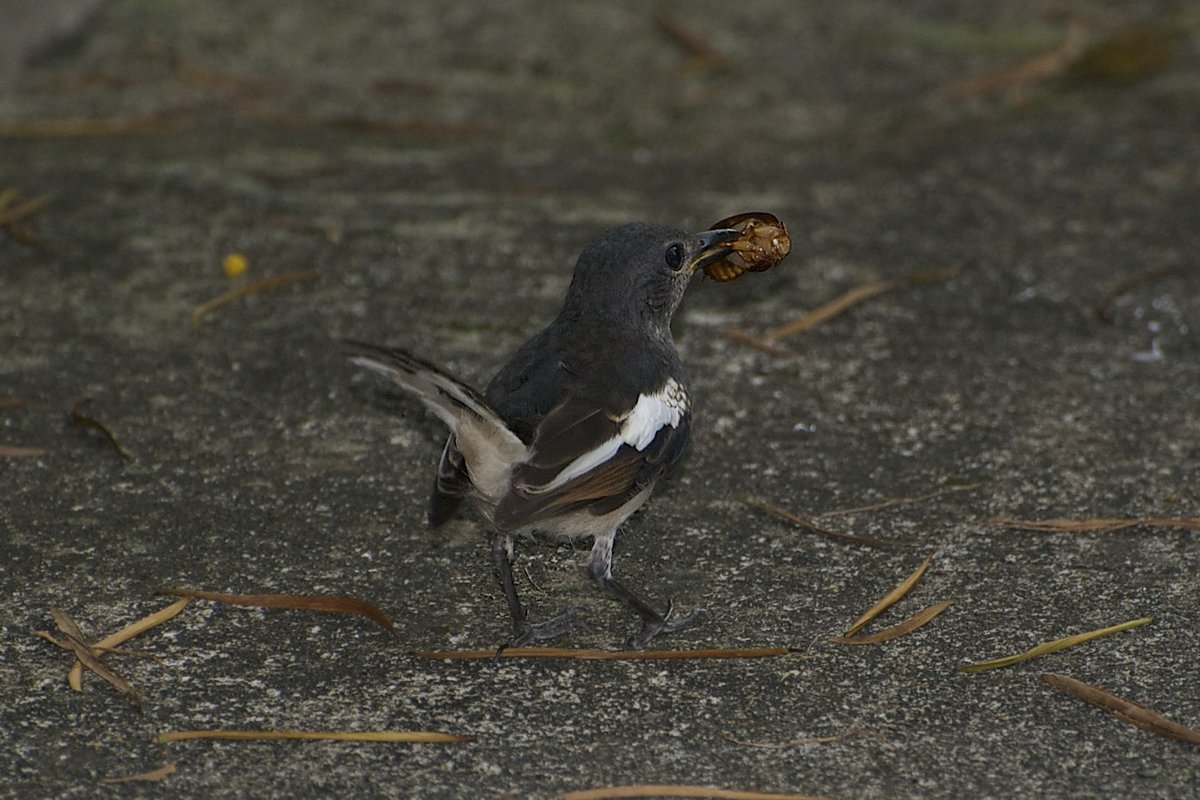
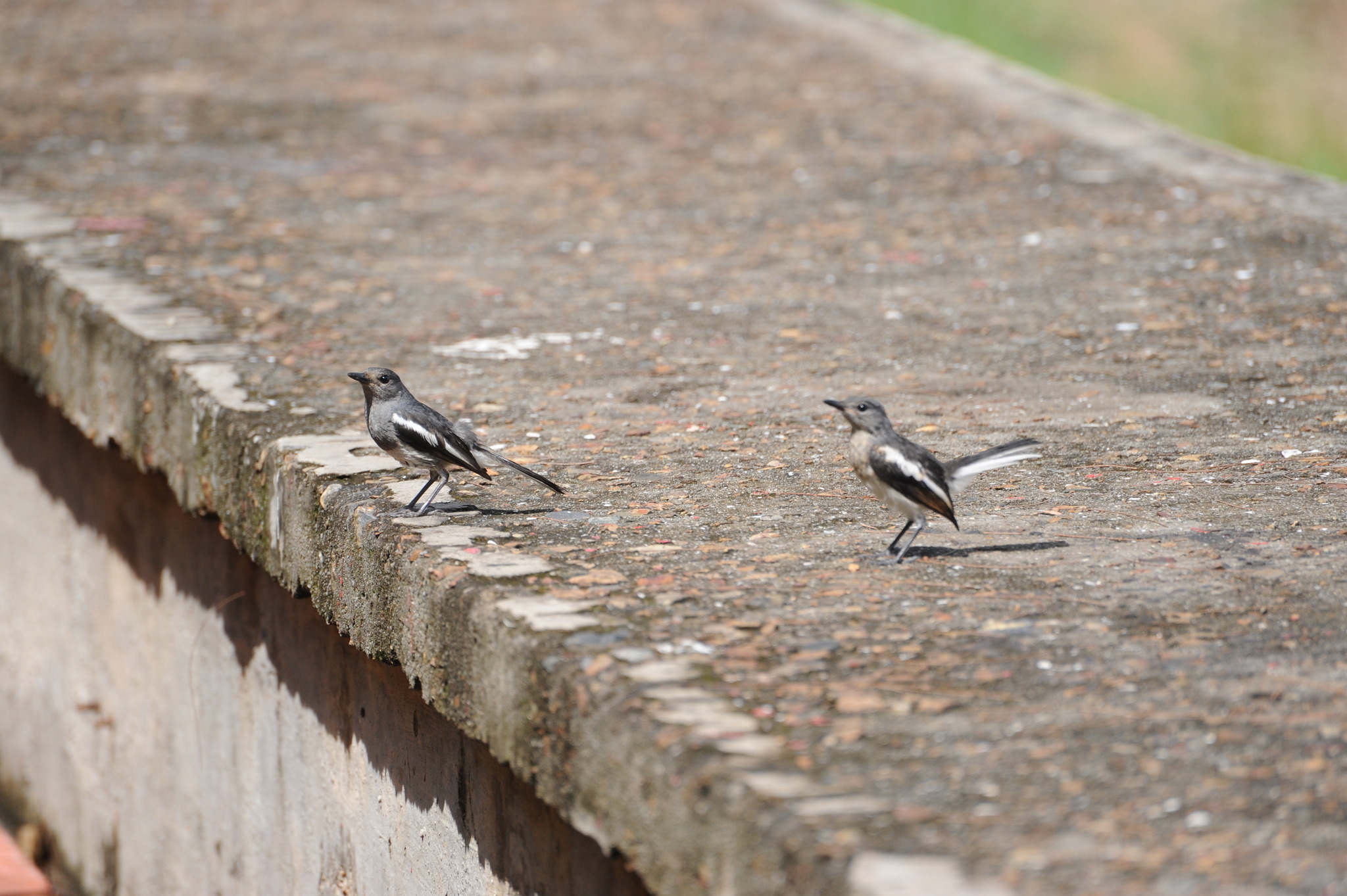
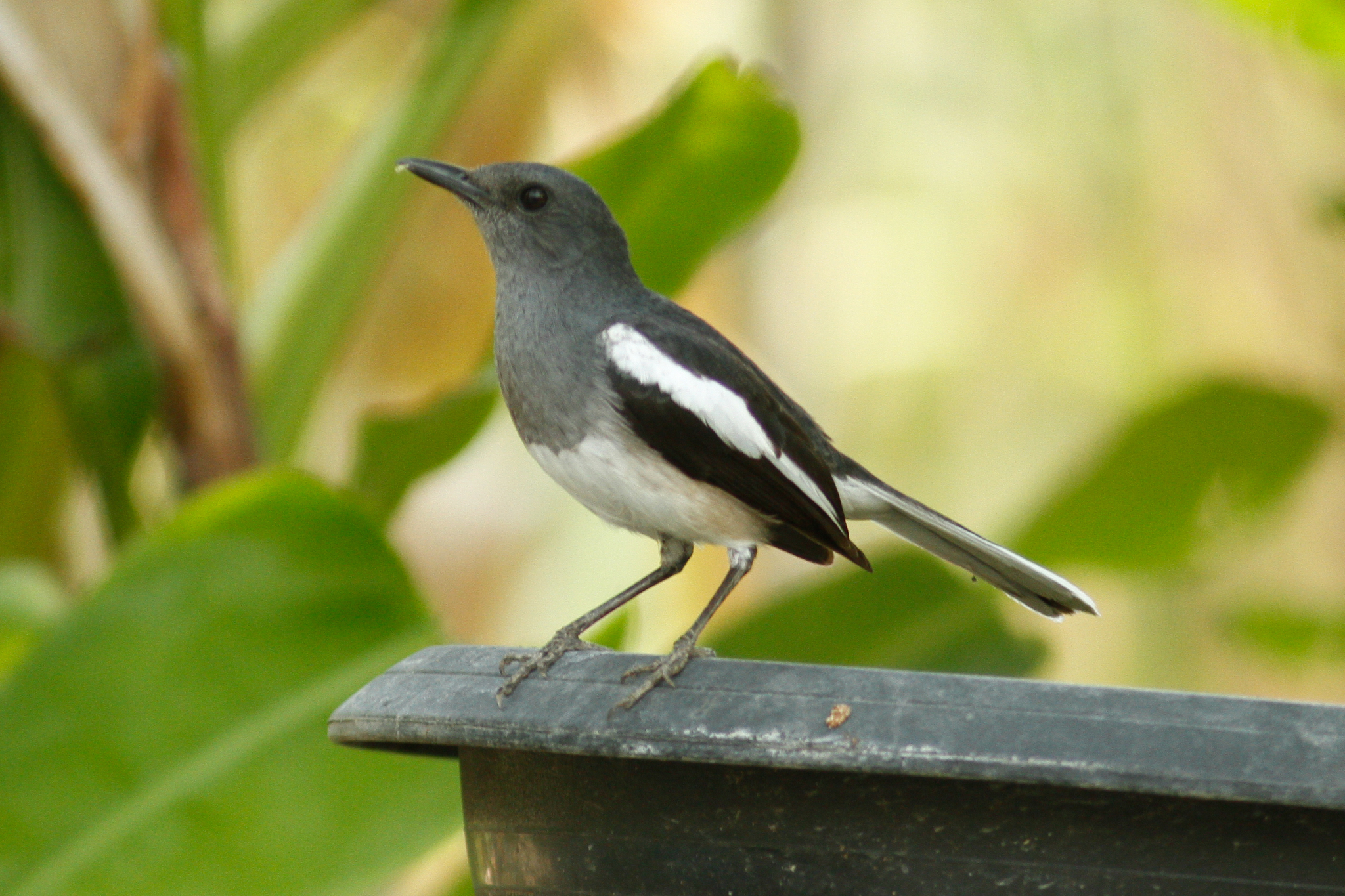
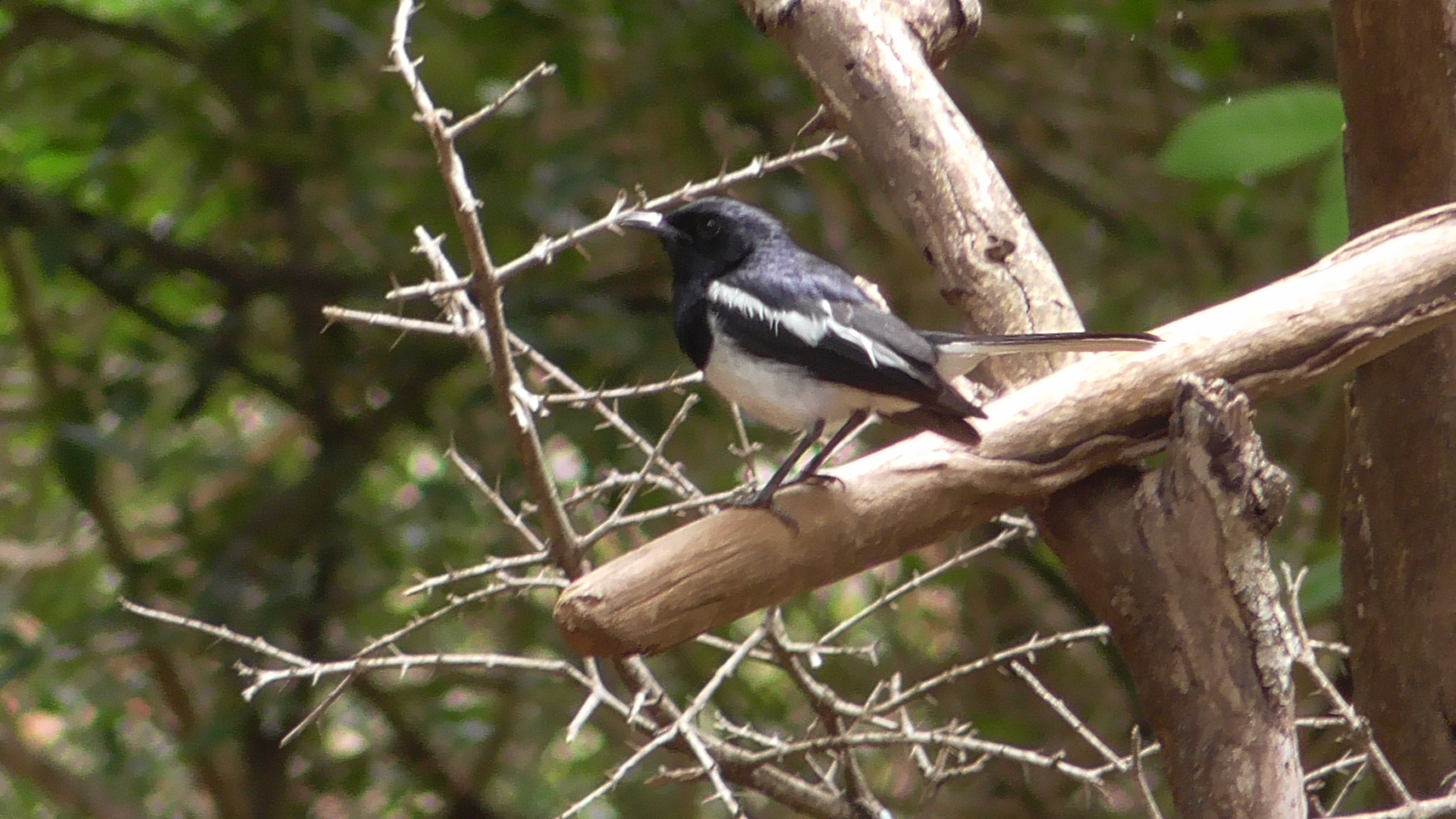
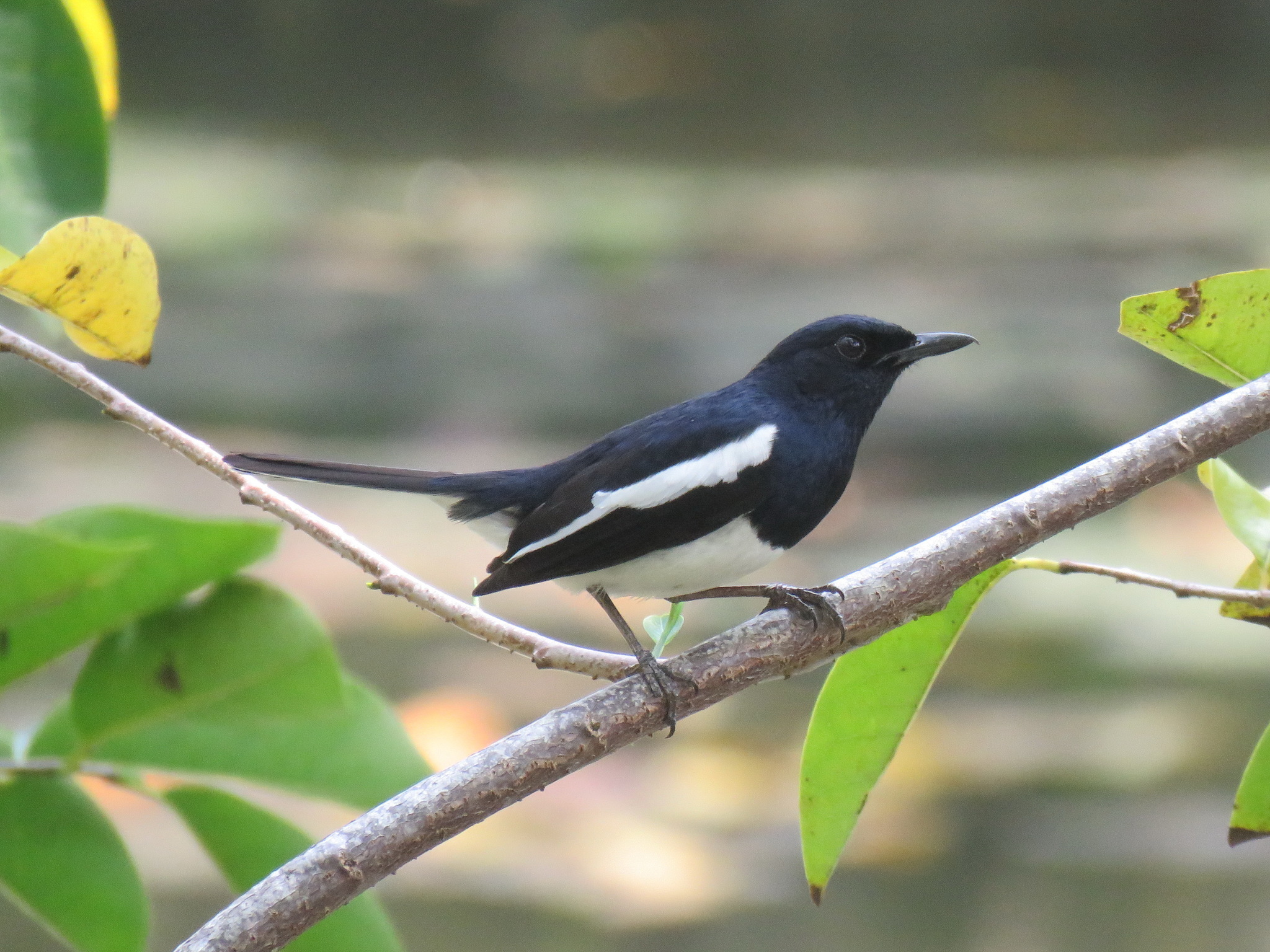
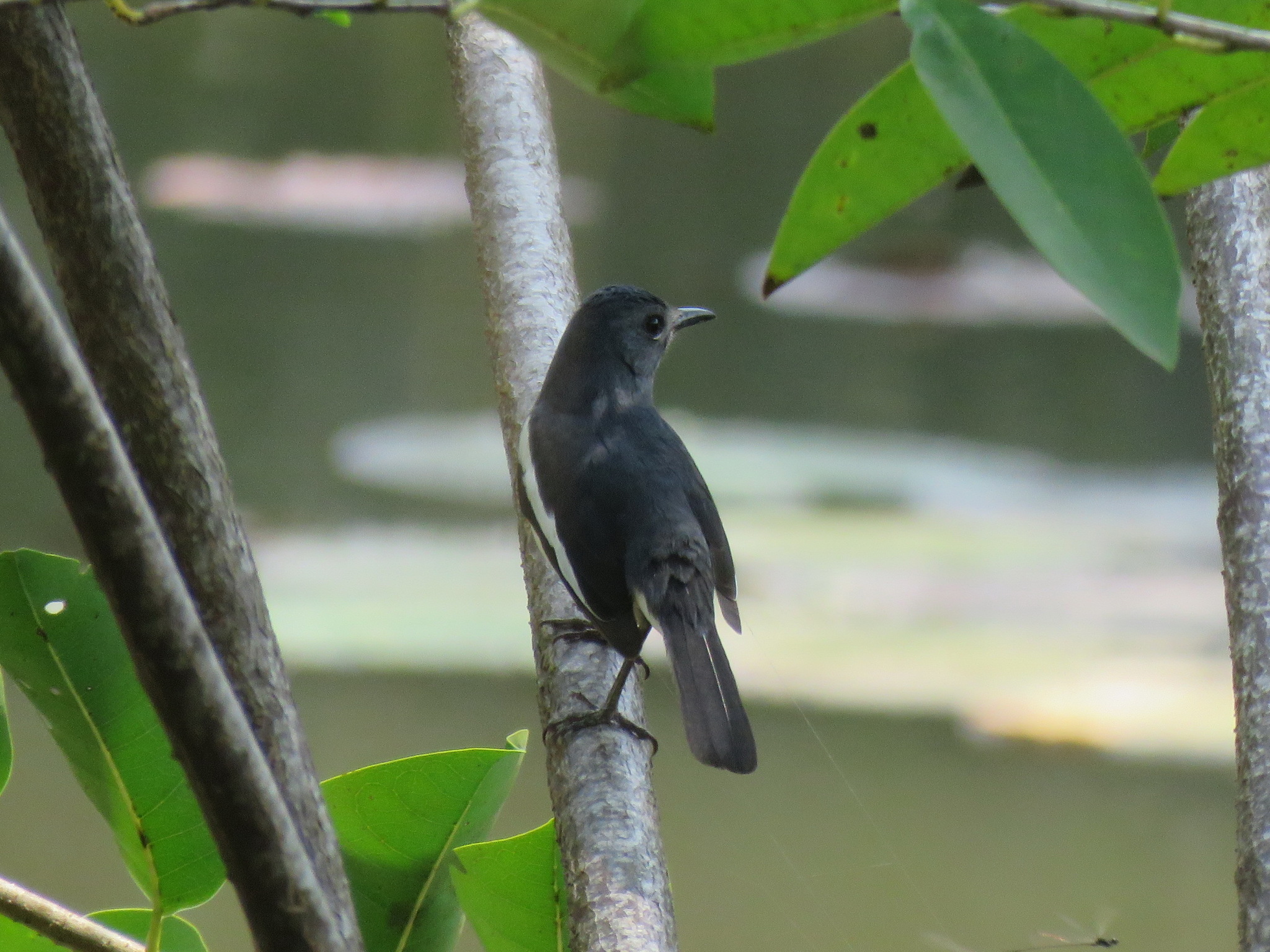
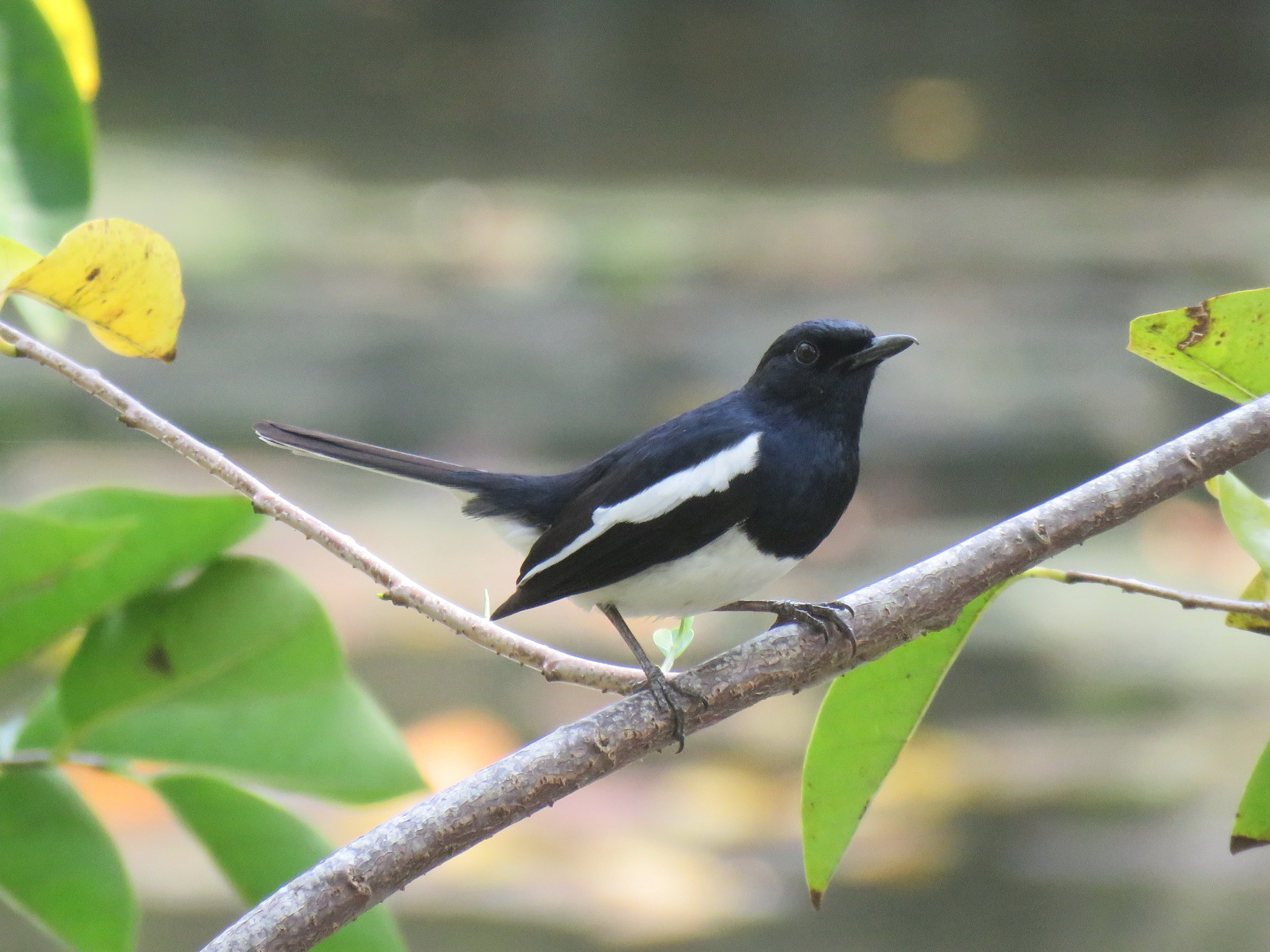
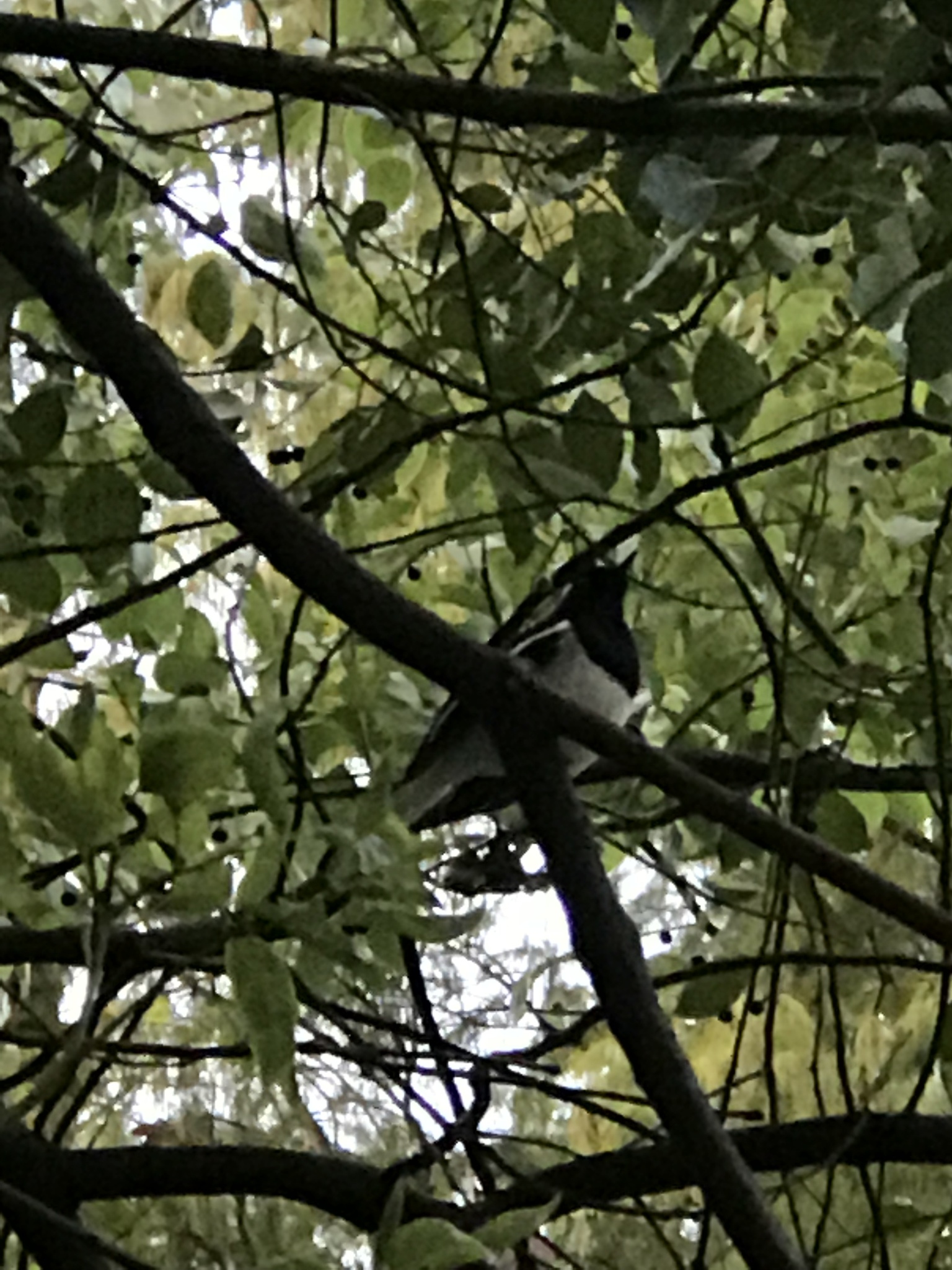
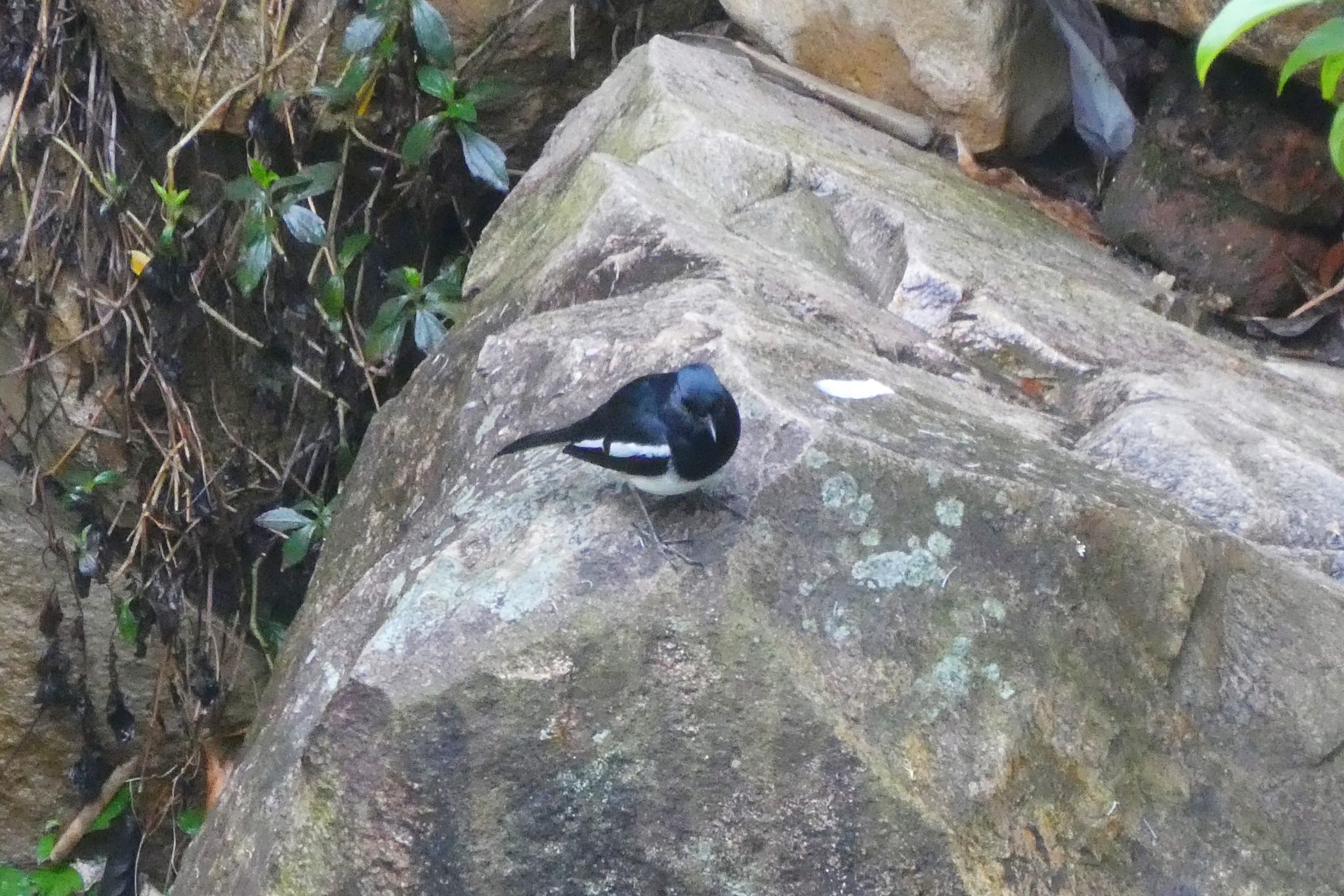
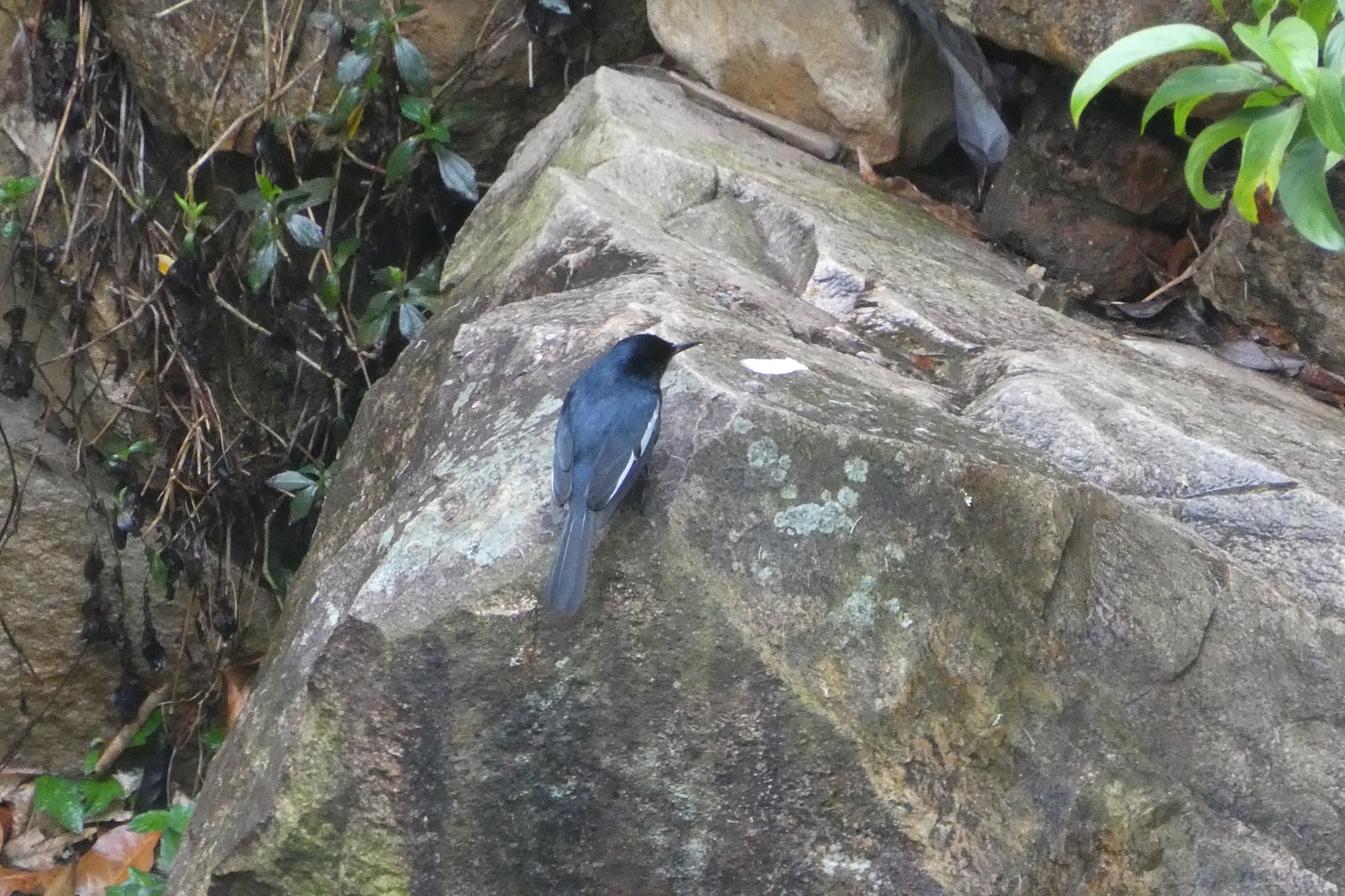
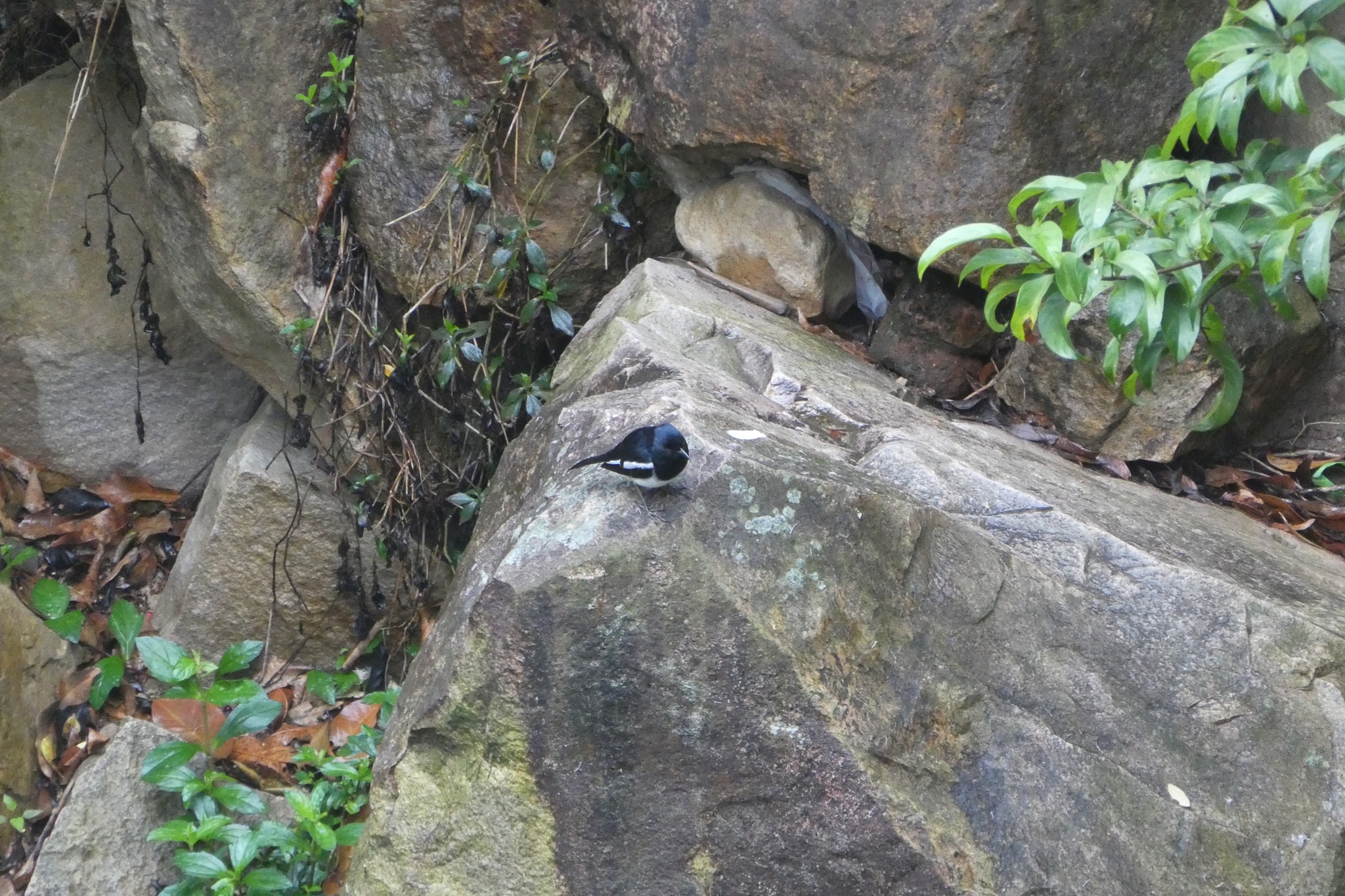
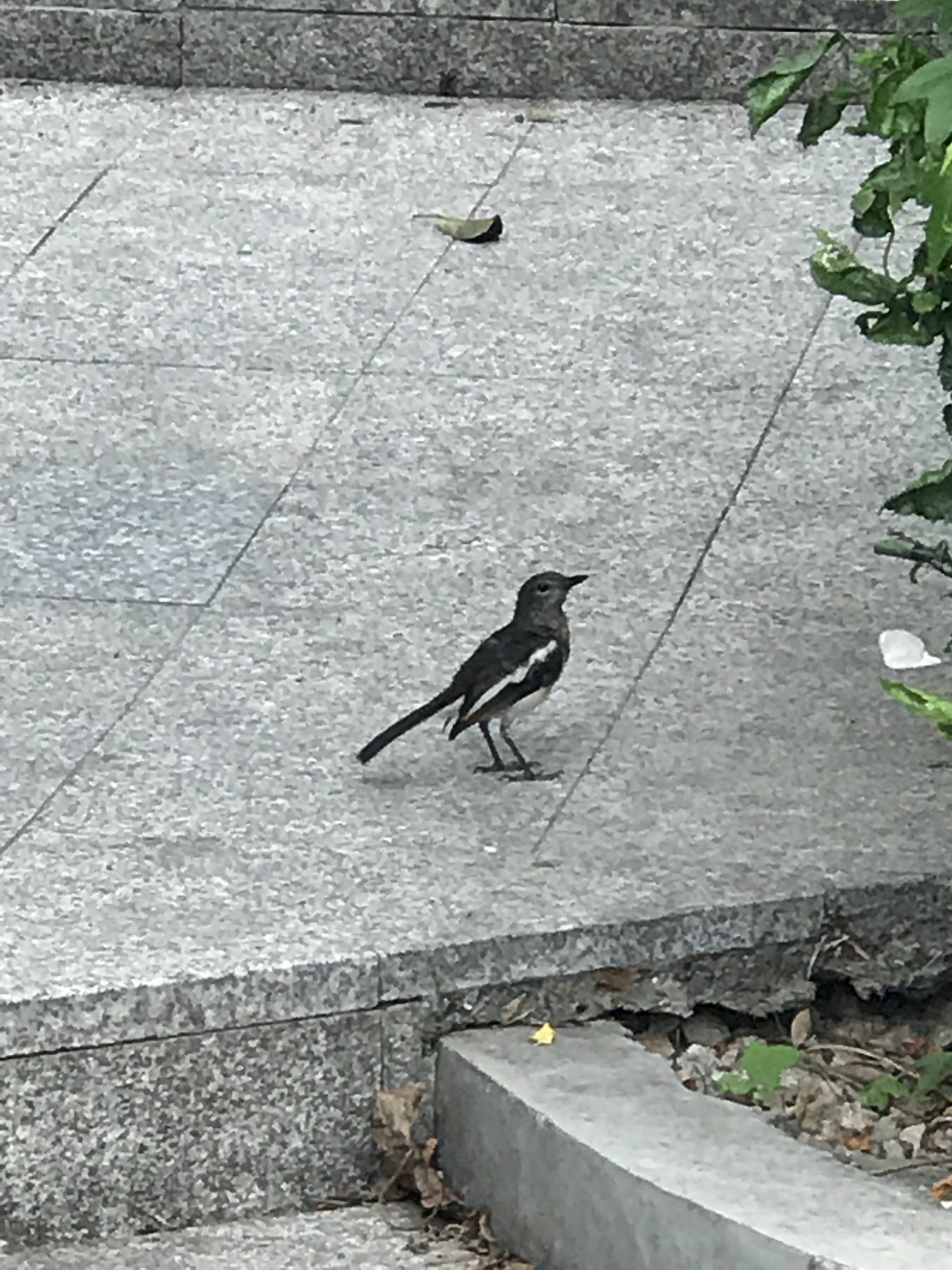
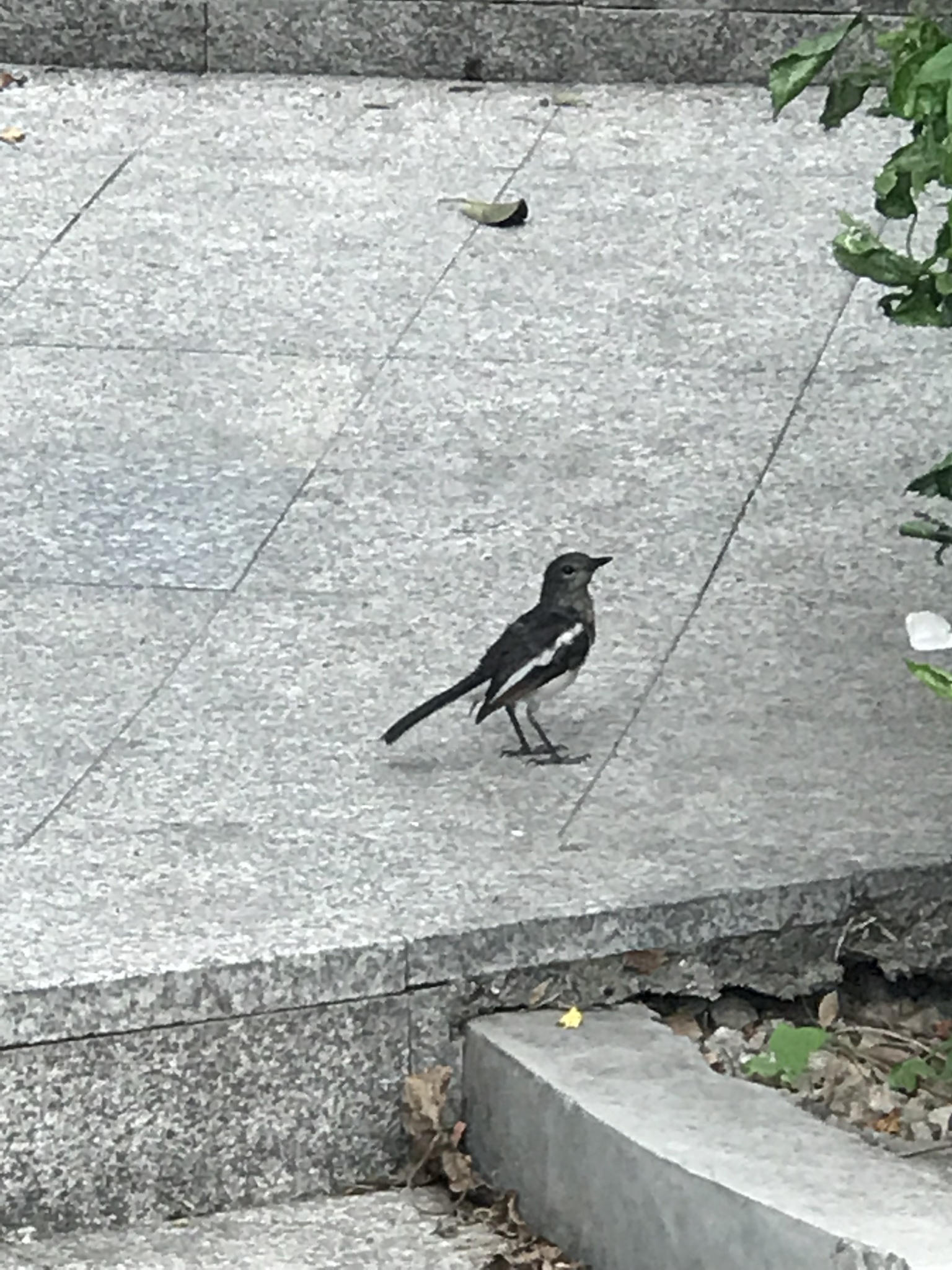
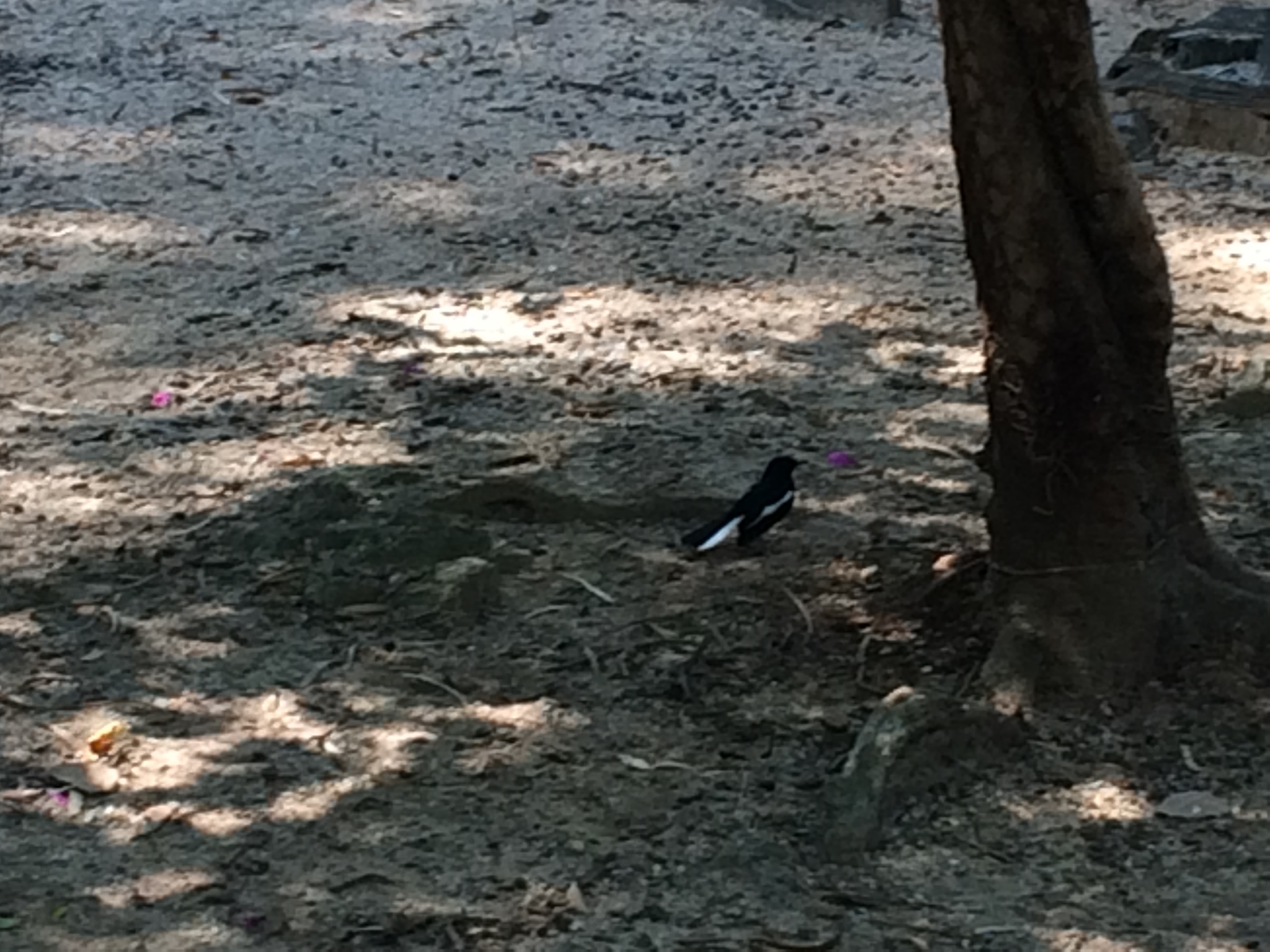
This species is 19 centimetres (7.5 in) long, including a long tail usually held cocked upright when hopping. Males have black upperparts, head, and throat, with a white shoulder patch; underparts and sides of the tail are white. Females are greyish black above and greyish white under. Young birds have scaly brown upperparts and head. Geographic variation exists: females of the Andaman Islands race are darker, heavier-billed, and shorter-tailed, while Sri Lankan and southern nominate females are nearly identical to males in shade. Eastern populations have more black on the tail.
Identification
Similar in shape to the smaller European robin but longer-tailed. Key field marks include the male's black and white plumage with a white shoulder patch and the characteristic upright tail posture while foraging. Females are greyish rather than black and white. Distinguished from similar species by its size, tail length, and specific plumage patterns which vary geographically, particularly in female coloration.
Distribution & Habitat
Resident breeder in tropical southern Asia, ranging from Nepal, Bangladesh, India, Sri Lanka, and eastern Pakistan to eastern Indonesia, Thailand, south China, Malaysia, and Singapore. Found in open woodland and cultivated areas, often close to human habitations. Subspecies include the nominate race on the Indian subcontinent, andamanensis in the Andaman Islands, ceylonensis in Sri Lanka, and musicus in Myanmar and further south.
Behavior & Ecology
Breeds mainly from March to July in India and January to June in Southeast Asia. Males sing from high perches during courtship, displaying by puffing feathers, raising the bill, fanning the tail, and strutting. Nests are built in tree hollows, wall niches, or nest boxes, lined with grass. The female lays four or five pale blue-green eggs with brownish speckles, incubating them alone for 8 to 14 days. Diet consists mainly of insects and invertebrates, occasionally taking nectar, geckos, leeches, centipedes, and fish. They imitate calls of other species and have dialectal variations in song.
Conservation
Globally assessed as Least Concern, though declining in some areas. In Singapore, populations declined in the 1970s, presumably due to competition from introduced common mynas. Threats include poaching for the pet bird trade and habitat changes. The species is locally protected by law in some regions. Pathogens reported include avian malaria parasites, H4N3 and H5N1 influenza viruses, and parasitic nematodes of the eye.
Culture
Recognized as the national bird of Bangladesh, where it is known as doyel or doel. It appears on Bangladeshi currency notes, and Doel Chattar (Doel Square) is a landmark in Dhaka. Historically widely kept as cage birds in India for singing and fighting. Continues to be sold in the pet trade in parts of Southeast Asia. Known as Polkichcha in Sri Lanka and Binlha in southern Thailand, frequently mentioned in contemporary songs.
Source: Wikipedia · CC BY-SA 3.0
Taxonomy
- Order
- Passeriformes
- Family
- Muscicapidae
- Genus
- Copsychus
Vocalizations
Subspecies (7)
-
Copsychus saularis adamsi
northern Borneo, including Banggi and adjacent islands (off northeastern Borneo)
Data Sources
Species description from Wikipedia, licensed under CC BY-SA 3.0.
Bird images and sounds sourced from GBIF, contributed by citizen scientists worldwide under Creative Commons licenses.
Taxonomy data from AviList 2025.