Oriental Magpie-Robin
Copsychus saularis
鹊鸲
Introduction
This species is an Old World flycatcher found across tropical Asia, ranging from Bangladesh through South and Southeast Asia. It inhabits open woodland, forest edges, gardens, parks, and village areas. Males are black-and-white with long tails typically held upright. The species is known for its varied song. It was designated the national bird of Bangladesh. Populations remain stable across most of its extensive range, though local declines have occurred in some regions.
Description
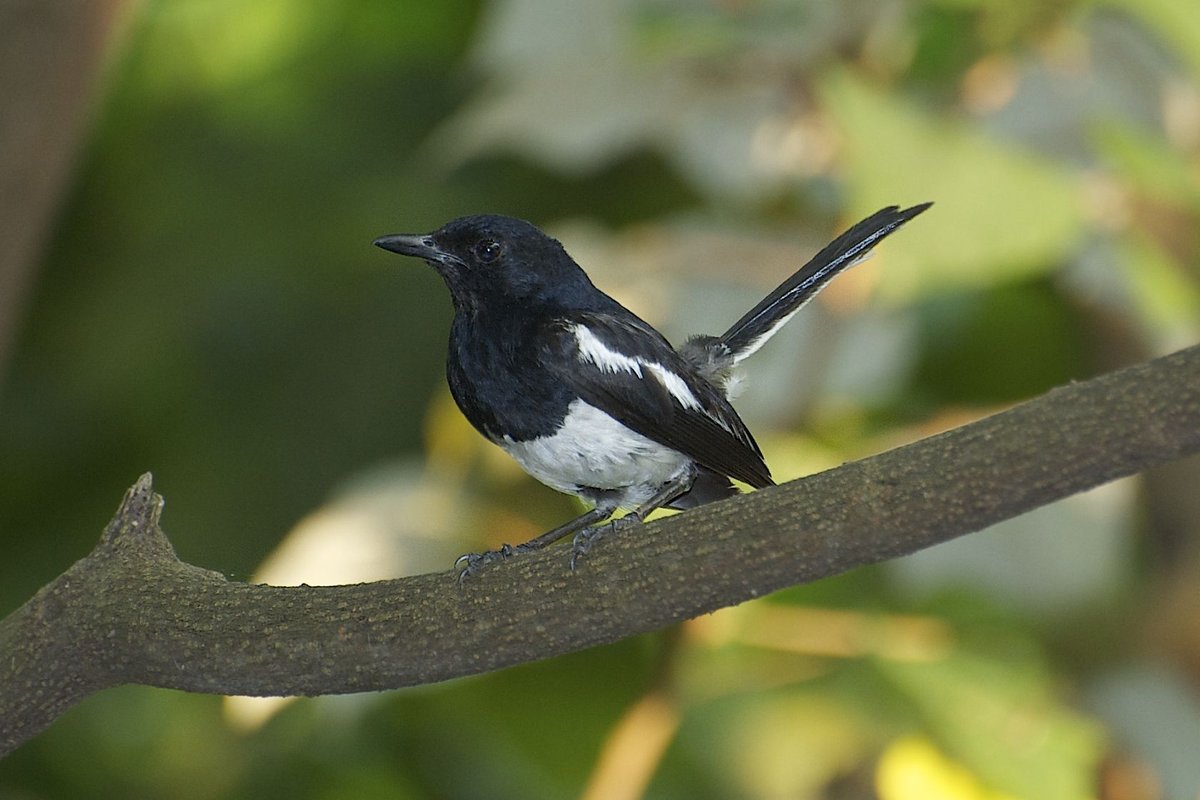
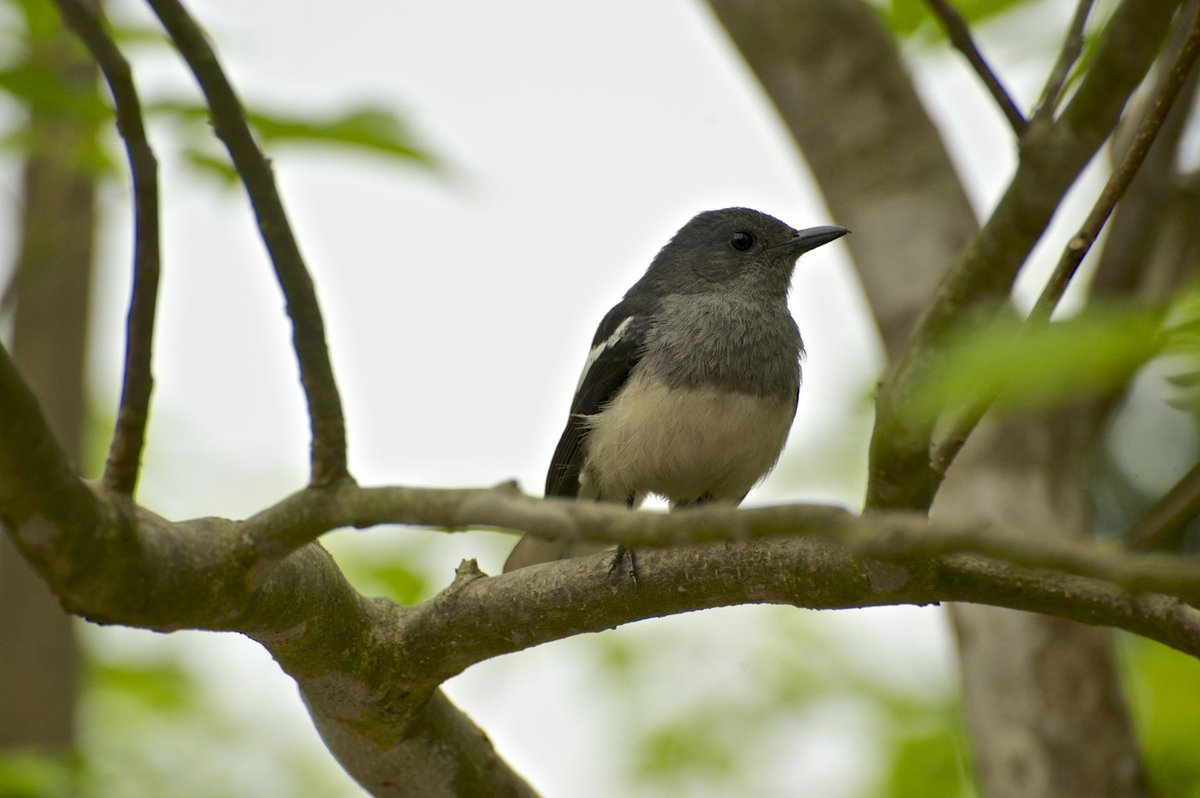
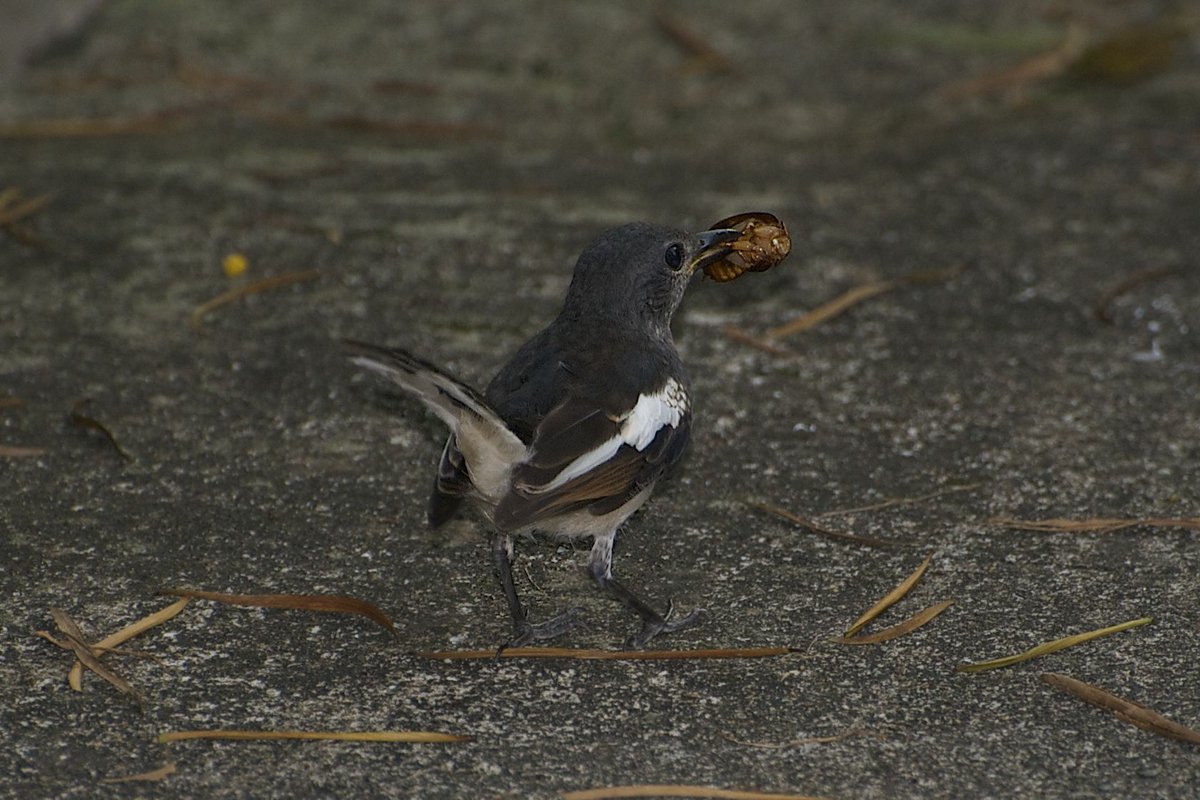
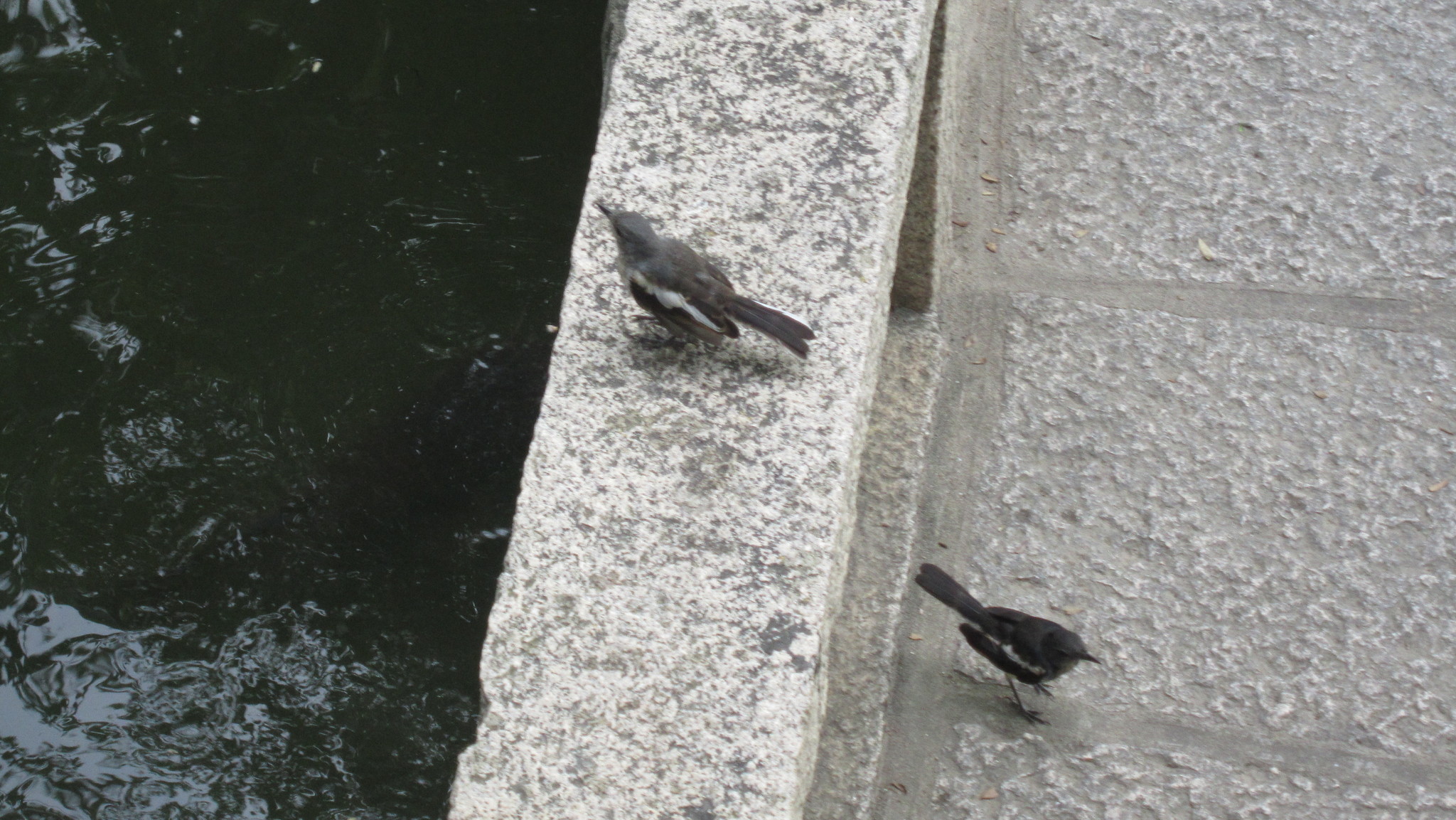
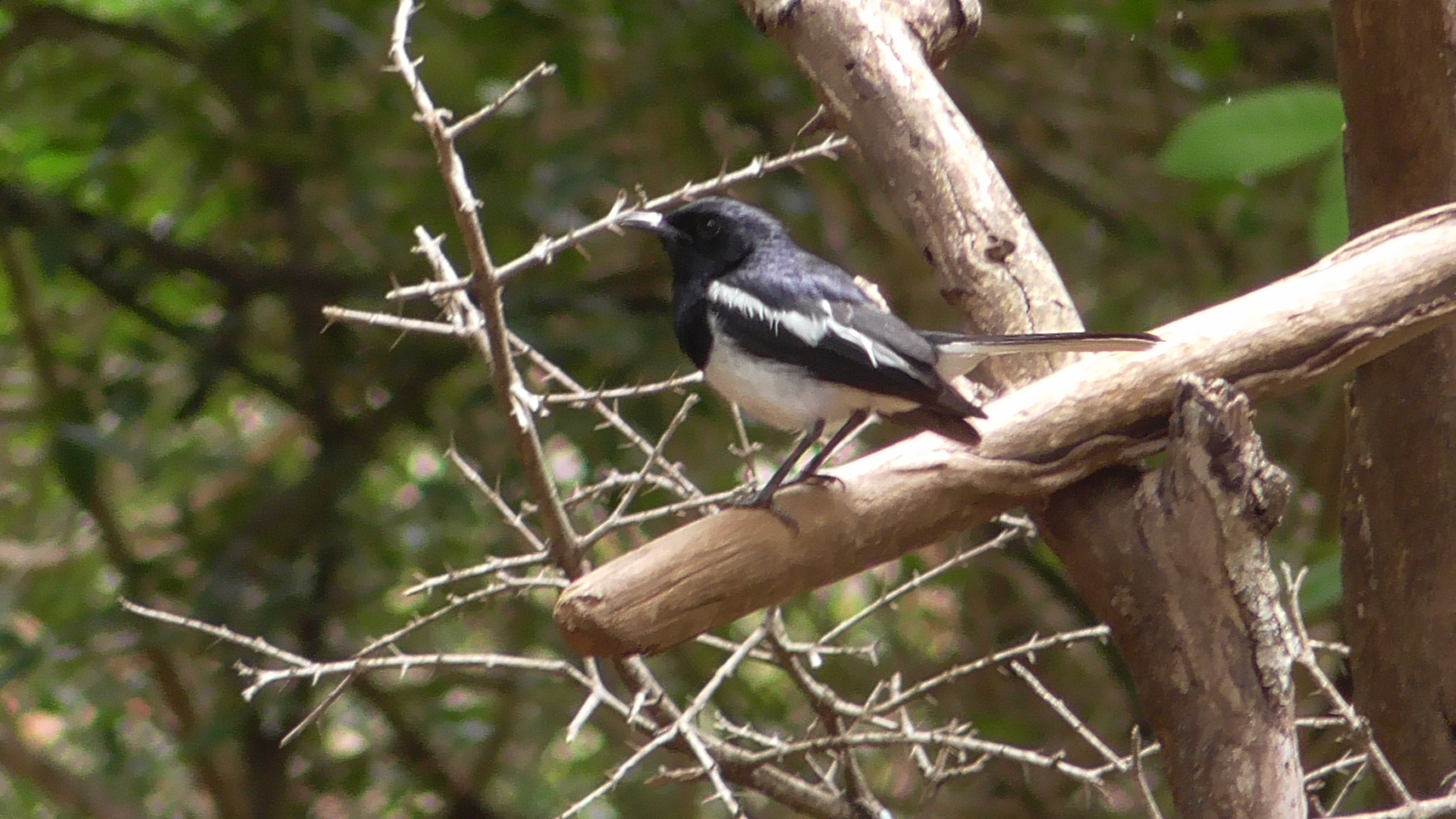
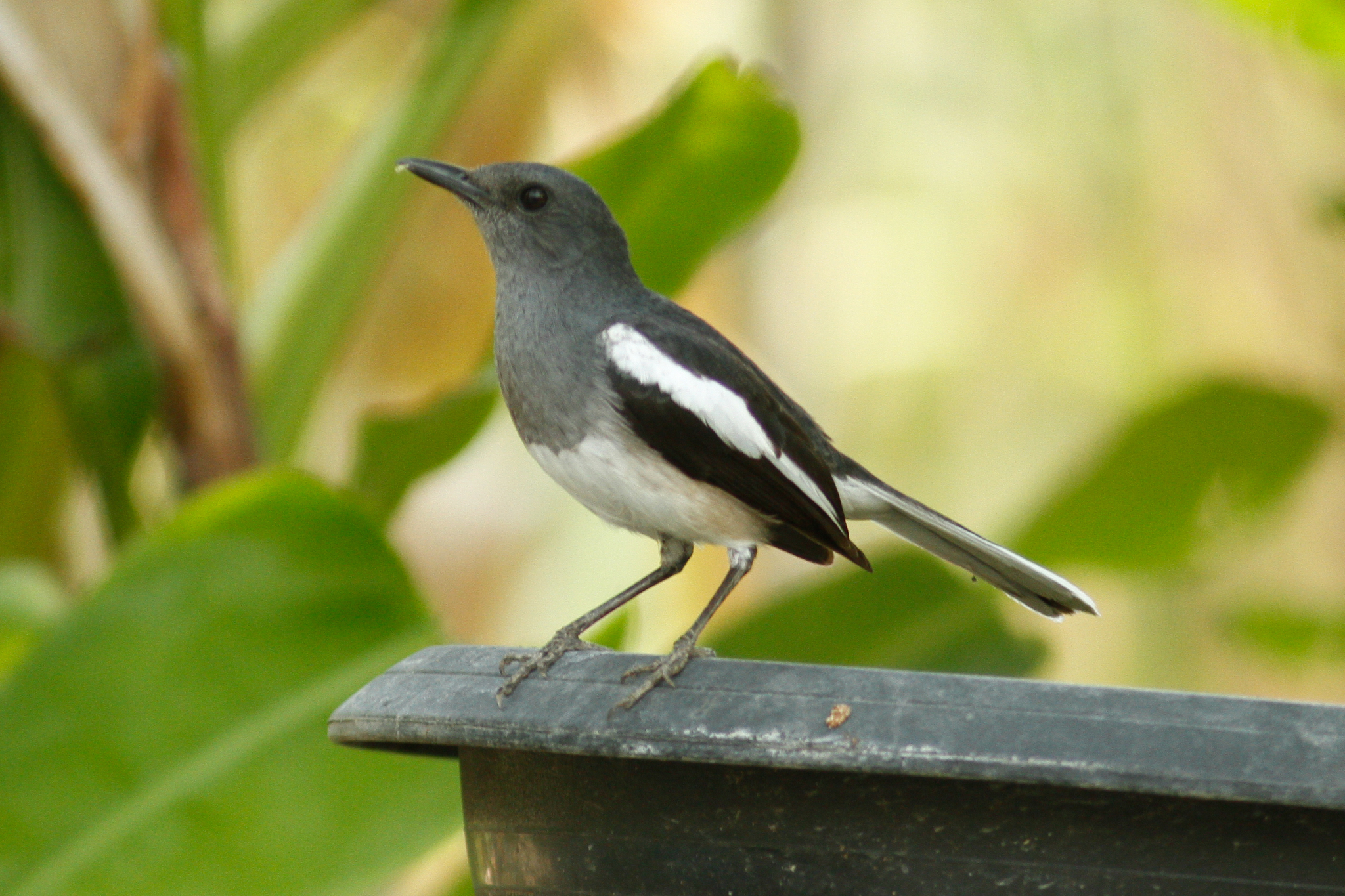
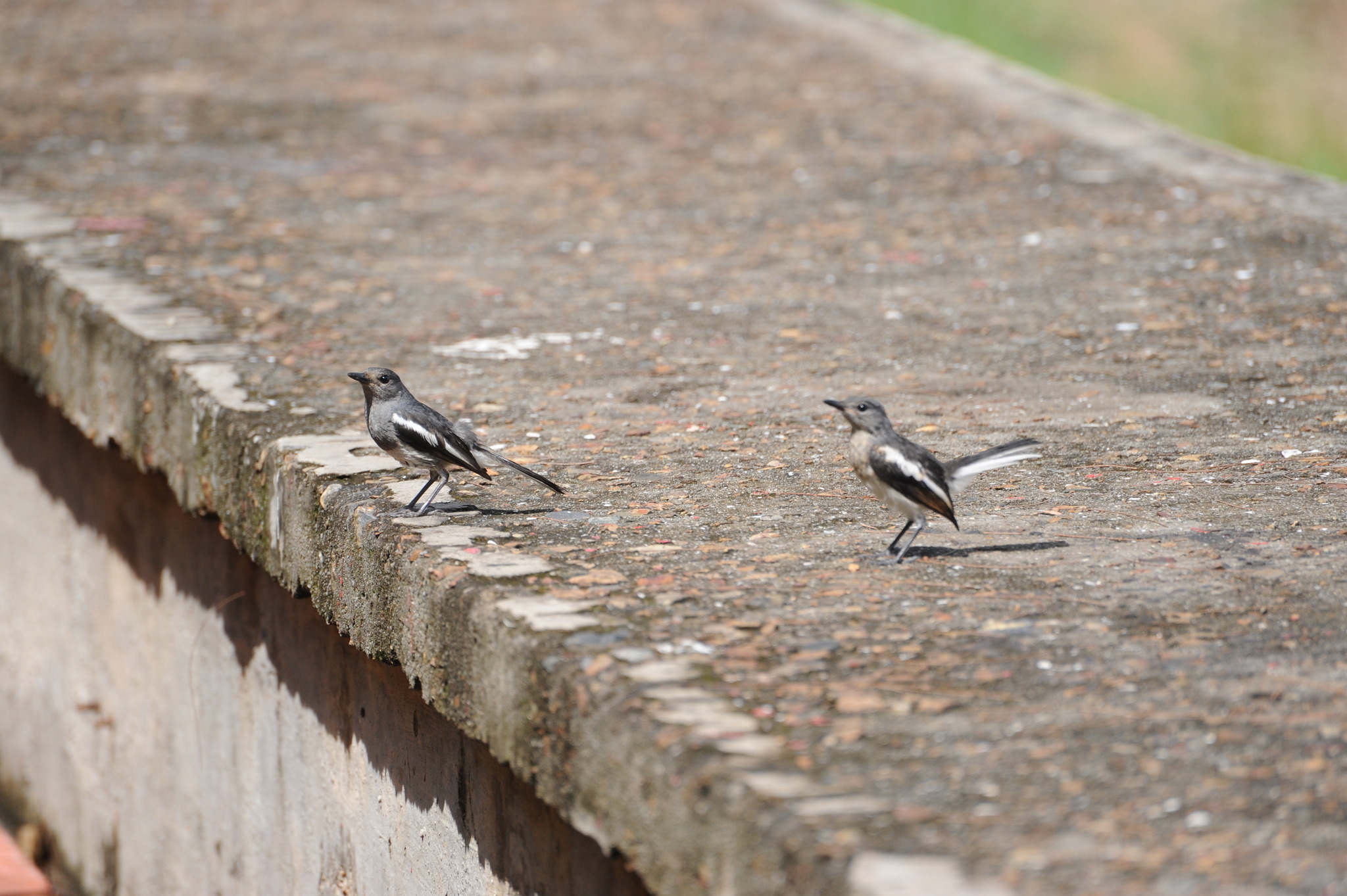
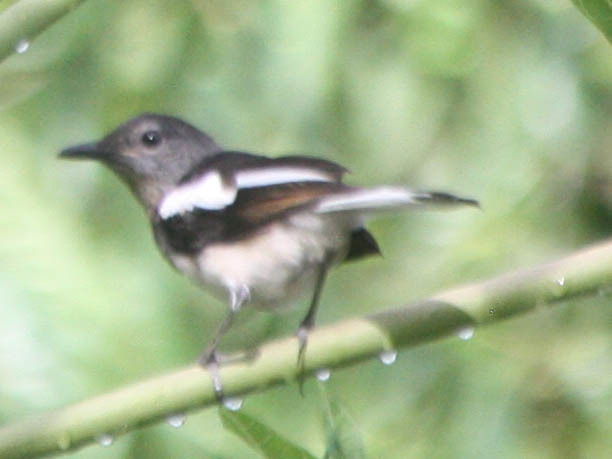
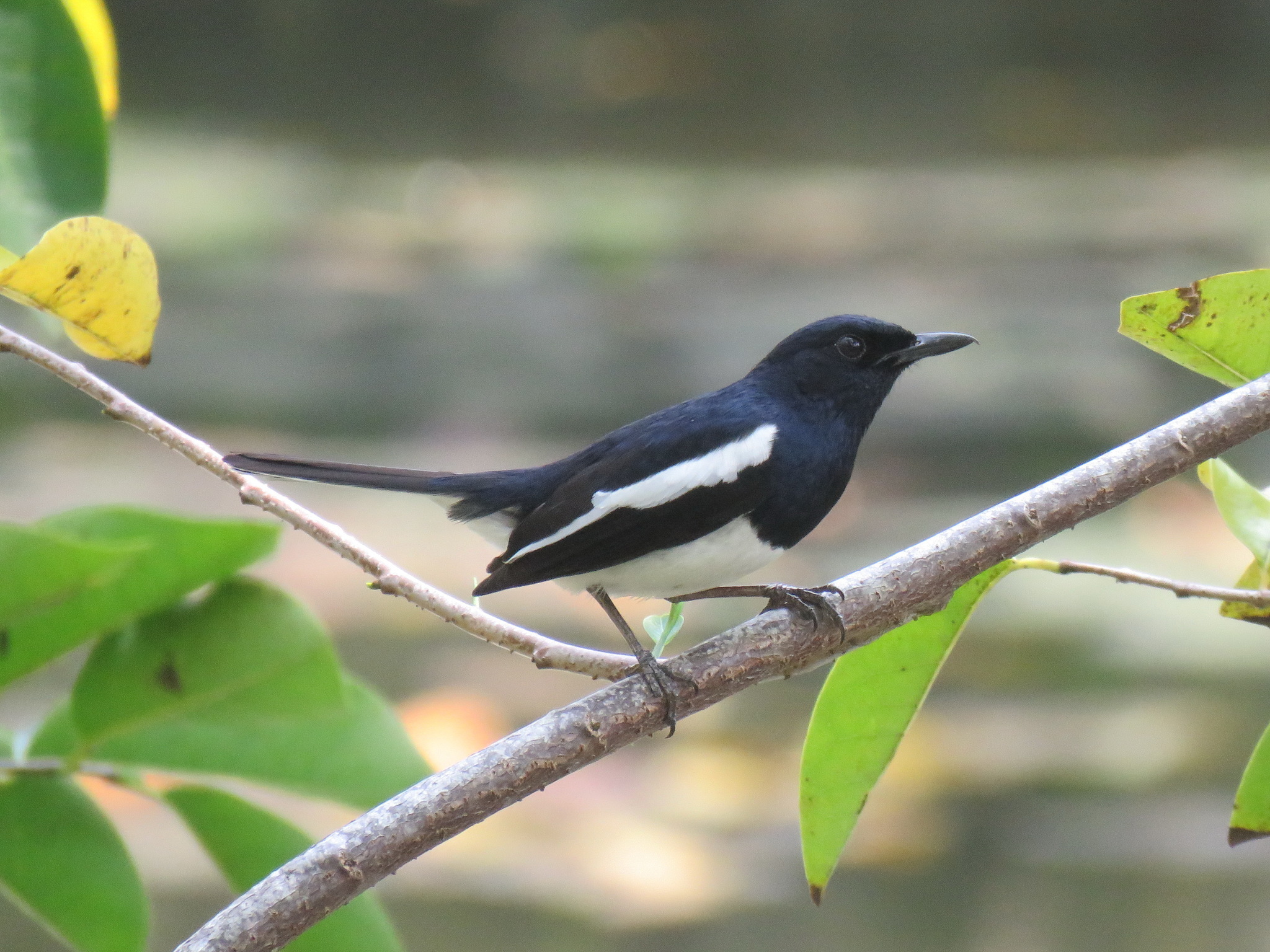
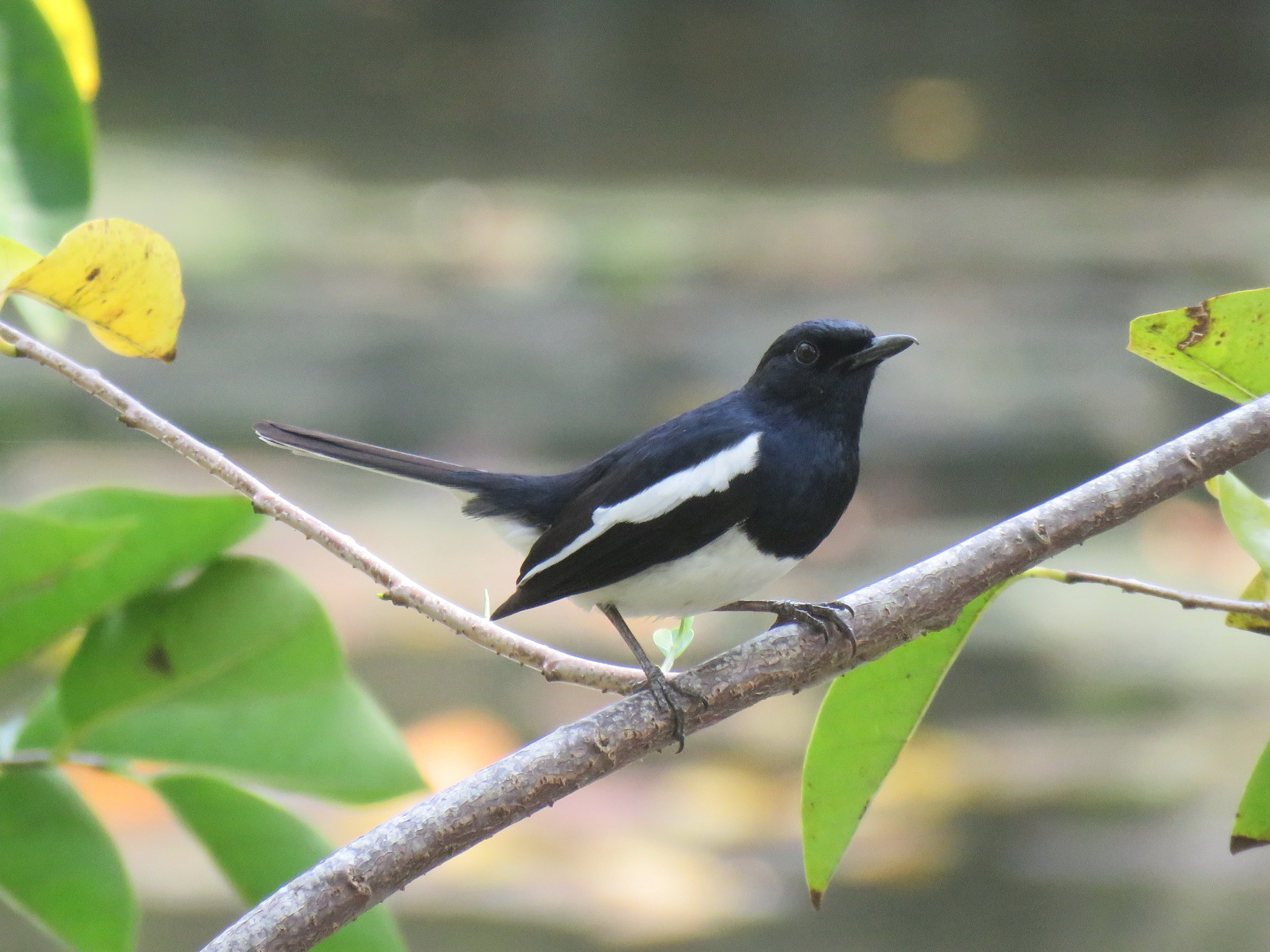
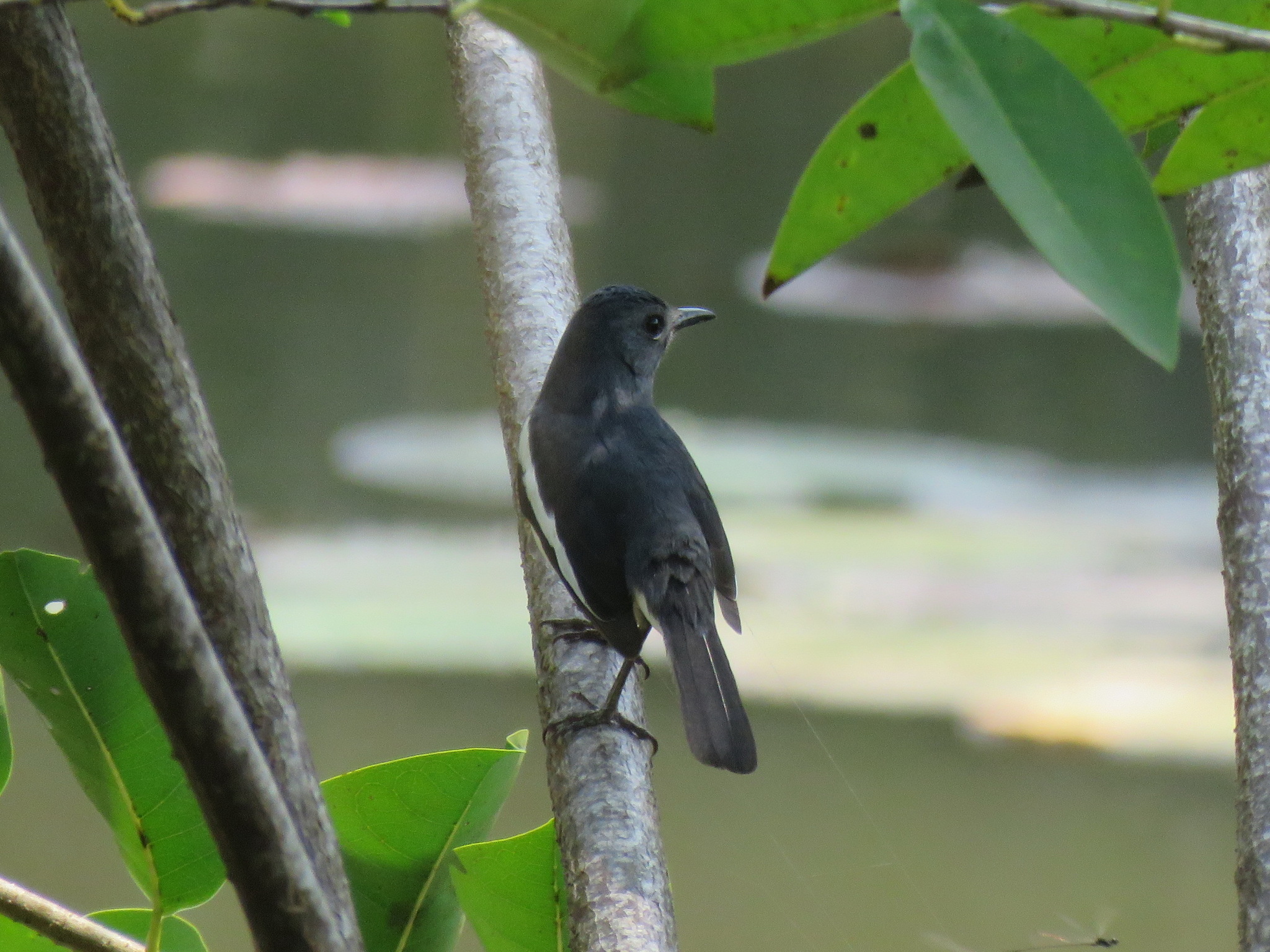
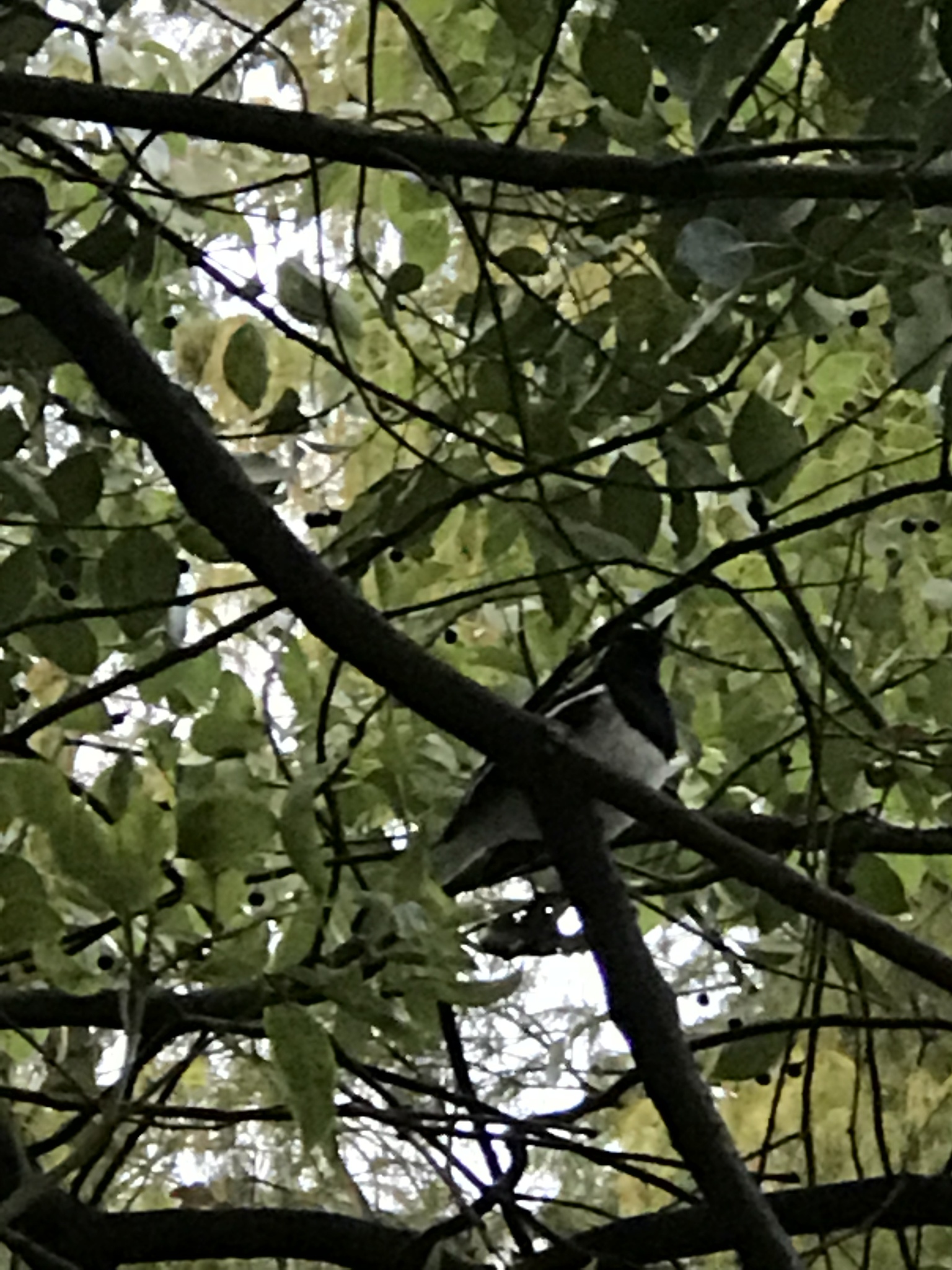
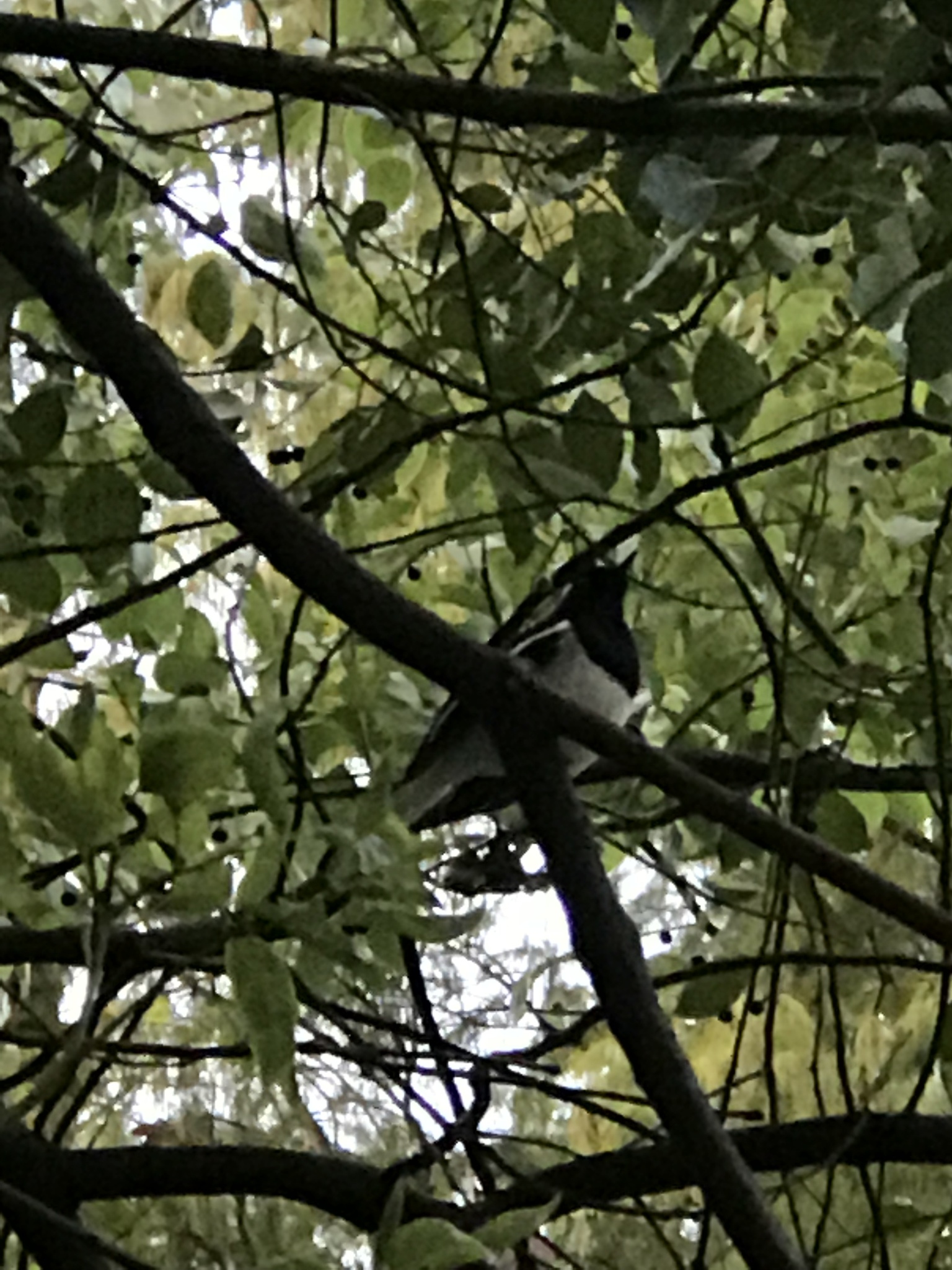
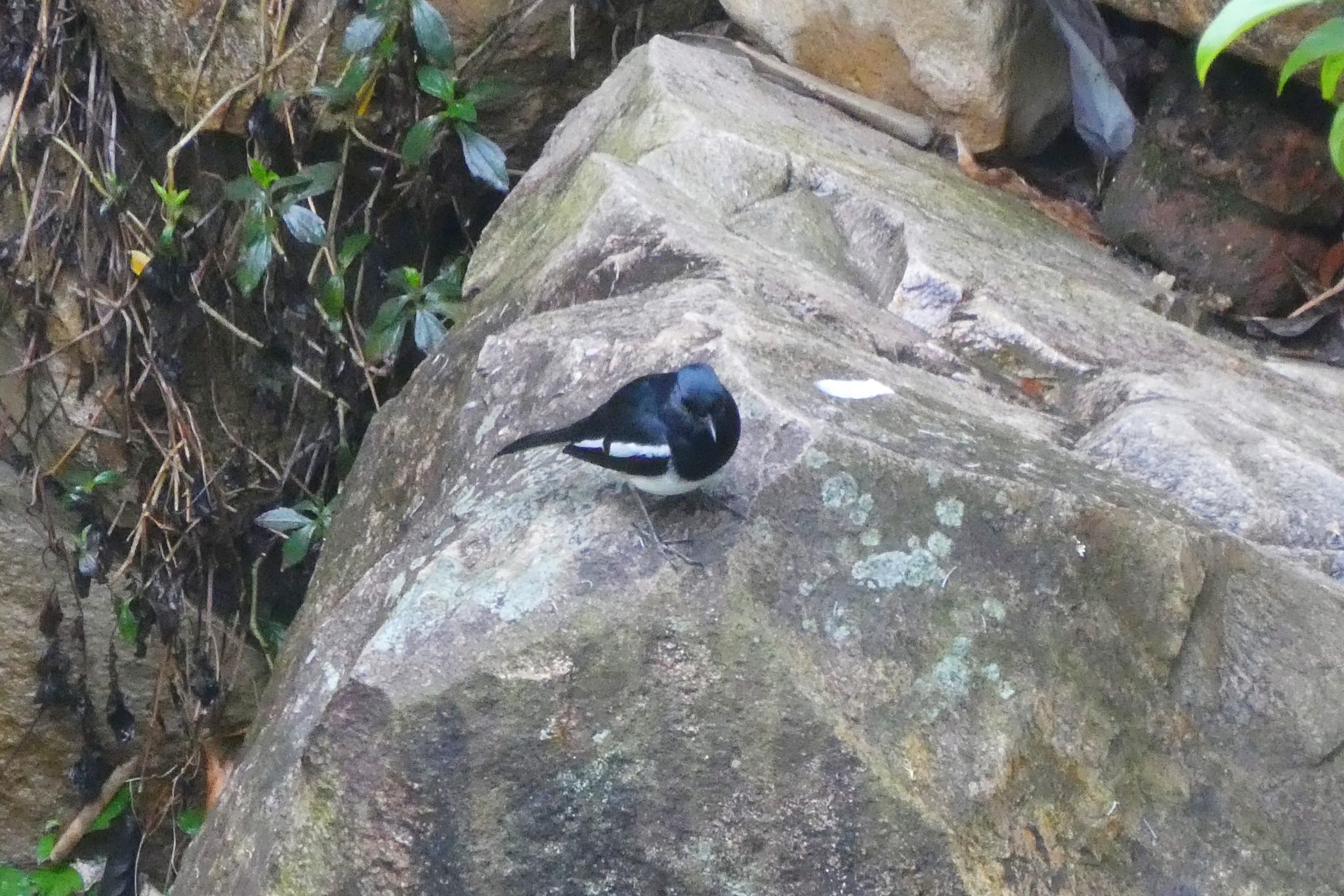
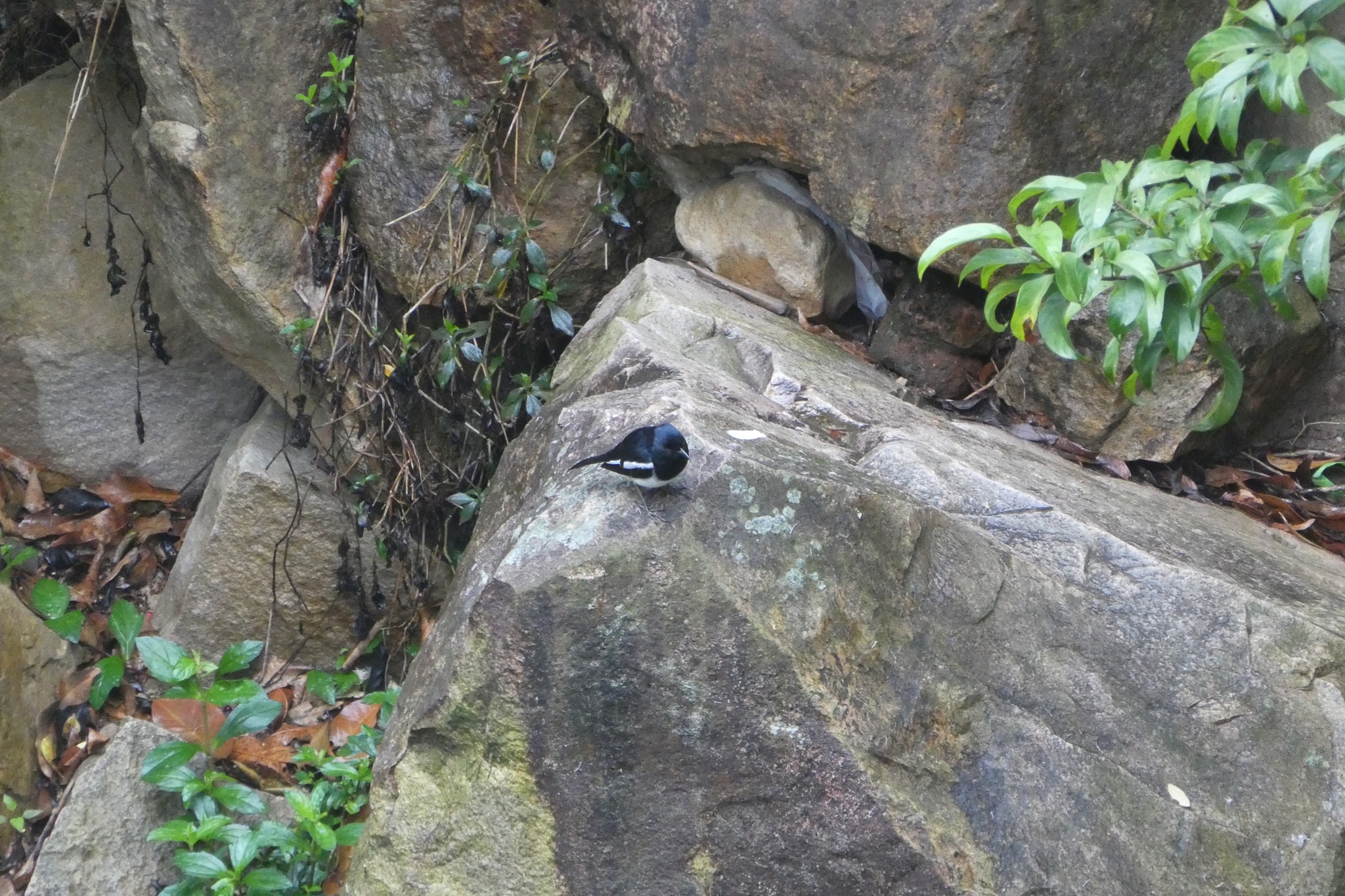
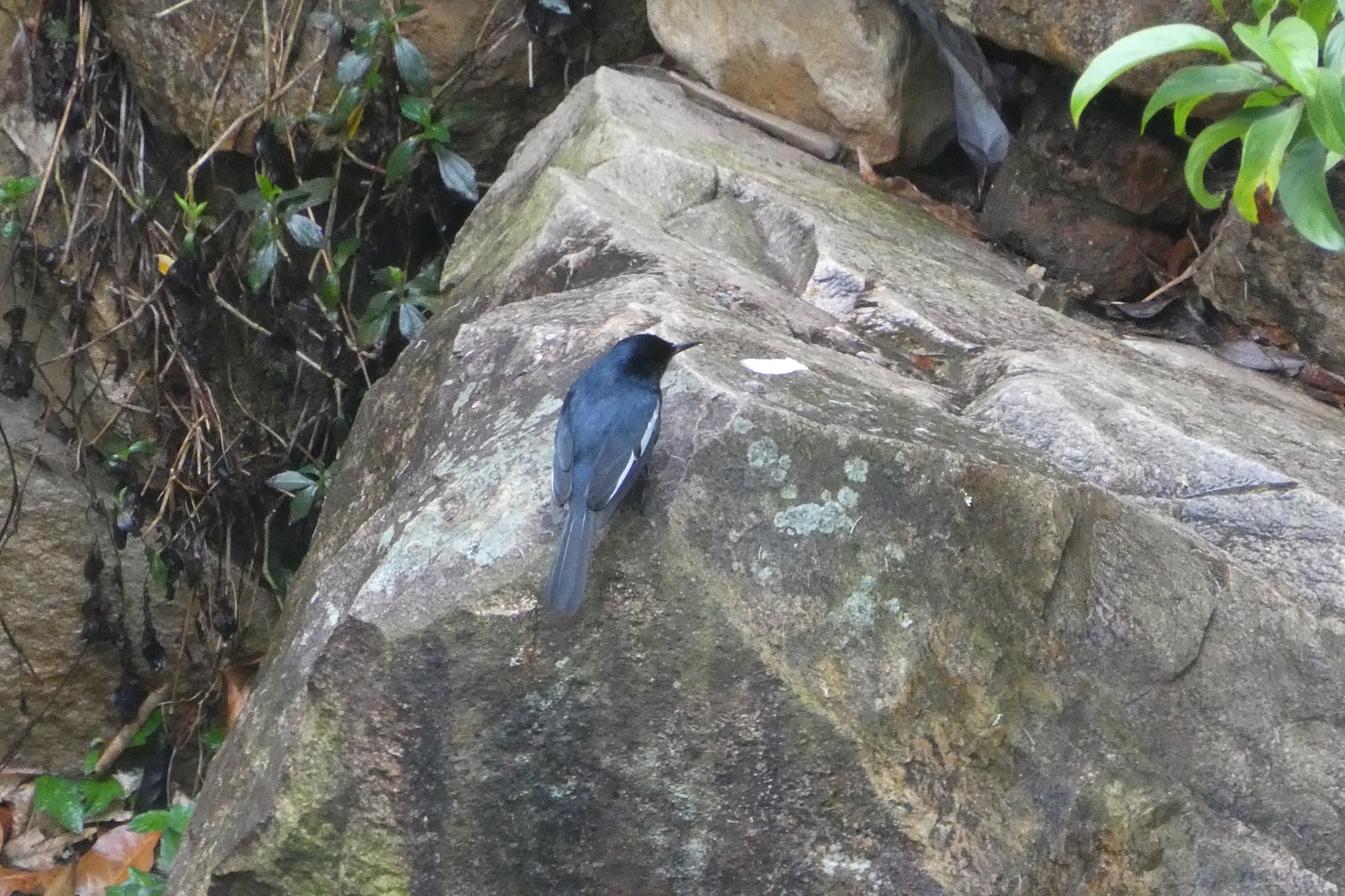
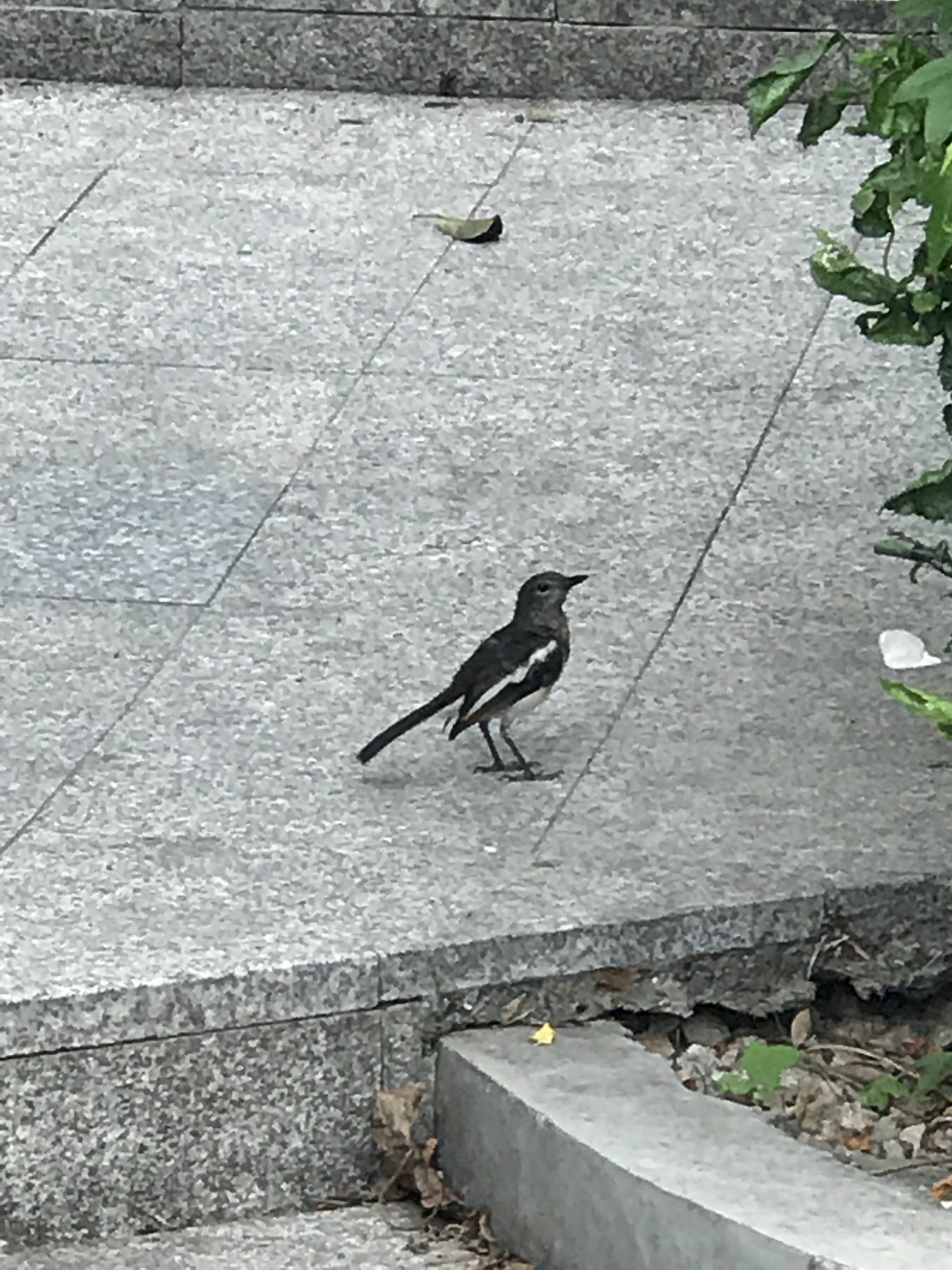
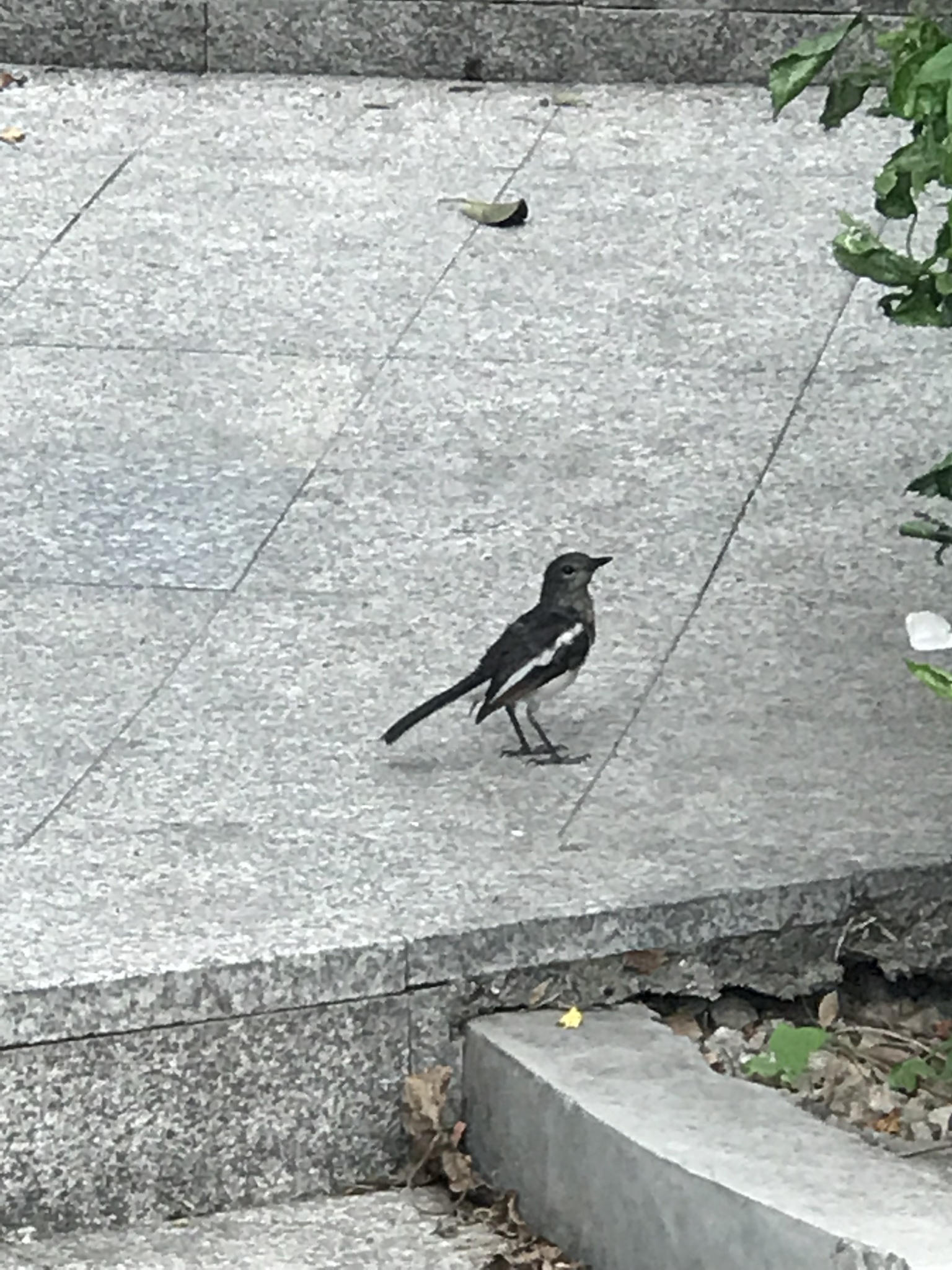
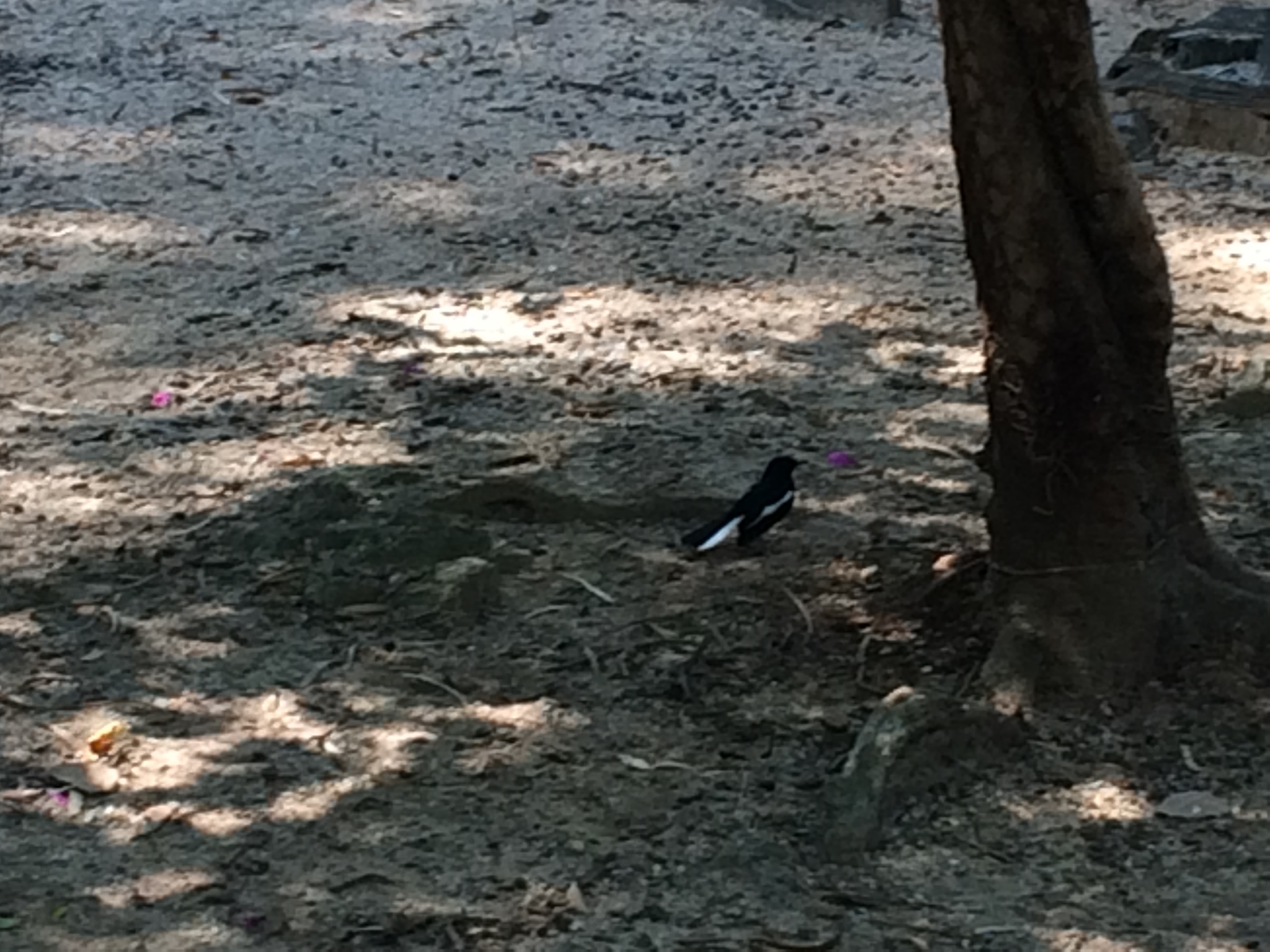
This compact bird measures 19 centimeters in length, with a notably long tail that constitutes a significant portion of its total size. The tail is characteristically held at a sharp upward angle when the bird is on the ground or hopping through vegetation. Males display a bold black-and-white pattern: the upperparts, head, and throat are black, offset by a distinct white shoulder patch, while the underparts and the outer feathers of the tail are white. Females are more subdued, appearing greyish-black above and greyish-white below. Juveniles differ markedly, showing scaly brown plumage on the upperparts and head. Geographic variation exists, particularly in female coloration—nominate race females are the palest, while those from the Andaman Islands are darker with heavier bills and shorter tails.
Identification
The upright tail posture while foraging is a key identification feature, distinguishing it from similarly sized birds. The bold male plumage makes it unmistakable within its range, though care should be taken not to confuse it with the unrelated Oriental magpie. The combination of black-and-white coloration, long tail, and ground-feeding habits with an upright posture is diagnostic. Females can be identified by their greyish tones and the characteristic tail posture. When singing, males choose prominent perches high in trees, making them conspicuous during the breeding season.
Distribution & Habitat
This resident species breeds across tropical southern Asia, from Nepal and eastern Pakistan through Bangladesh and India to Sri Lanka, extending eastward through Thailand, Malaysia, Singapore, eastern Indonesia, and south China. It is not migratory but may make local movements in response to seasonal conditions. The species shows a strong association with human settlements in many areas, frequently occurring in gardens, parks, and cultivated land adjacent to villages, while also inhabiting natural open woodland and forest edges throughout its range.
Behavior & Ecology
The diet consists primarily of insects and other invertebrates, though individuals have been recorded taking flower nectar, small reptiles, leeches, centipedes, and even fish. They forage mainly on the ground, hopping with their tail raised while searching through leaf litter, and are often active until late dusk. Breeding occurs from March to July in India and January to June in Southeast Asia. Males sing from high perches and perform courtship displays involving plumage-puffing, tail-fanning, and strutting. Nests are constructed in tree hollows or building crevices, with four to five speckled eggs incubated by the female alone for 8-14 days. The species maintains territories and responds aggressively to intruders, including their own reflections. Song dialects vary geographically, and birds may mimic other species.
Conservation
The species is classified as Least Concern globally due to its extensive range and large population. However, local declines have been documented in several areas. In Singapore, populations crashed from common status in the 1920s to near disappearance by the 1970s, likely due to competition from invasive common mynas. Throughout its range, poaching for the pet trade and habitat degradation pose ongoing threats. Legal protection exists in various countries, though enforcement varies. Disease has also been recorded, including avian malaria and H5N1 infections. Conservation efforts focus on habitat protection and combating illegal trade.
Culture
The bird holds special significance in Bangladesh, where it was declared the national bird after Professor Kazi Zakir Hossain proposed it based on the species' widespread presence across the country. Known locally as doyel or doel, it features prominently in Bangladeshi culture, appearing on currency notes and inspiring landmarks such as Doel Chattar (Doel Square) in Dhaka. In India, the species was historically prized as a cagebird for its singing abilities and was even used in organized fighting contests. It remains traded in the pet bird trade throughout parts of Southeast Asia. In Sri Lanka, it is called Polkichcha, while in southern Thailand, it is known as Binlha and frequently appears in contemporary songs. The bird's cultural importance spans multiple nations and continues to feature in local traditions.
Source: Wikipedia · CC BY-SA 3.0
Taxonomy
- Order
- Passeriformes
- Family
- Muscicapidae
- Genus
- Copsychus
- eBird Code
- magrob
Vocalizations
Subspecies (7)
-
Copsychus saularis adamsi
northern Borneo, including Banggi and adjacent islands (off northeastern Borneo)
-
Copsychus saularis amoenus
eastern Java and Bali
-
Copsychus saularis andamanensis
Andaman Islands
-
Copsychus saularis ceylonensis
southeastern India and Sri Lanka
-
Copsychus saularis musicus
Thai-Malay Peninsula (perhaps an area of introgression between saularis and musicus?), Sumatra and associated islands (Simeulue, the Batu Islands, Nias, Mentawai Islands, Riau Archipelago, Belitung, and Bangka), and western Java; intergrades with amoenus in central Java
-
Copsychus saularis pluto
eastern Borneo and Maratua Island
-
Copsychus saularis saularis
northeastern Pakistan, Nepal, and northern India to eastern and southern China, Hainan, Thailand, and Indochina
Data Sources
Species description from Wikipedia, licensed under CC BY-SA 3.0.
Bird images and sounds sourced from GBIF, contributed by citizen scientists worldwide under Creative Commons licenses.
Taxonomy data from AviList 2025.