White-rumped Shama
Copsychus malabaricus
白腰鹊鸲
Introduction
This species inhabits densely vegetated areas across South and Southeast Asia, including thick undergrowth, bamboo forests, and secondary woodland. It has been introduced to Hawaii and Taiwan, where feral populations are established. The species is territorial and maintains stable populations across its extensive range, though it is most abundant in undisturbed forested areas with dense vegetation cover.
Description
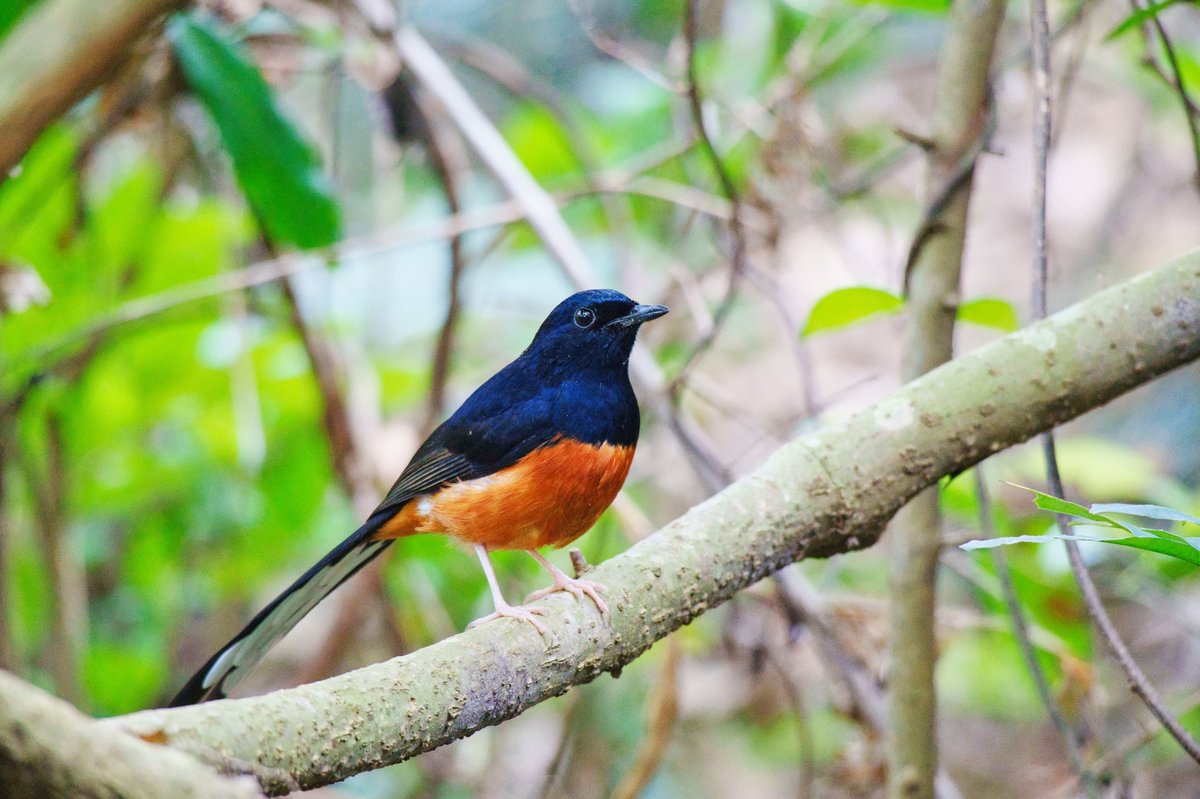
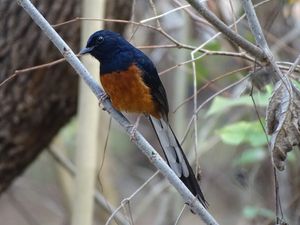
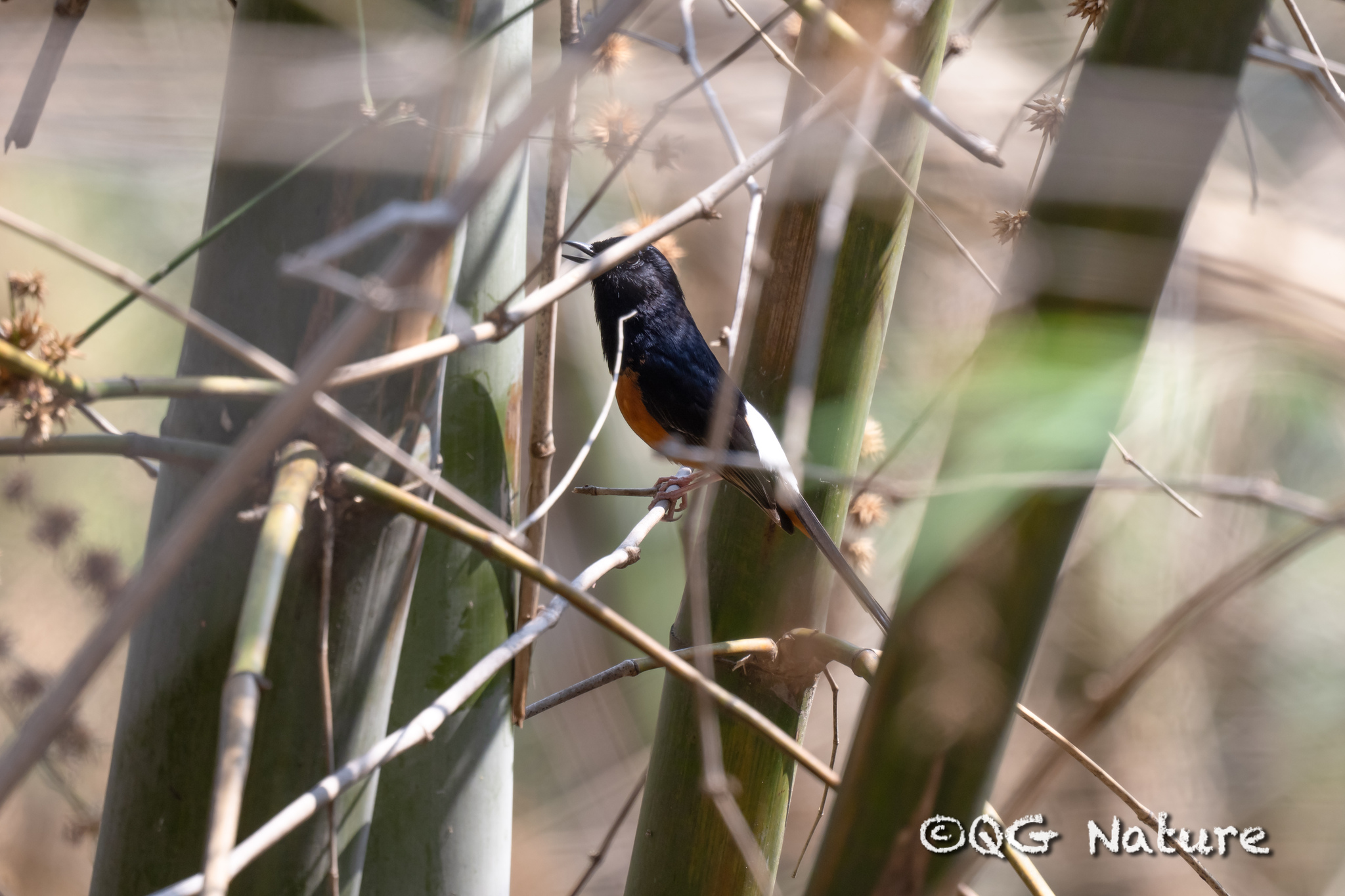
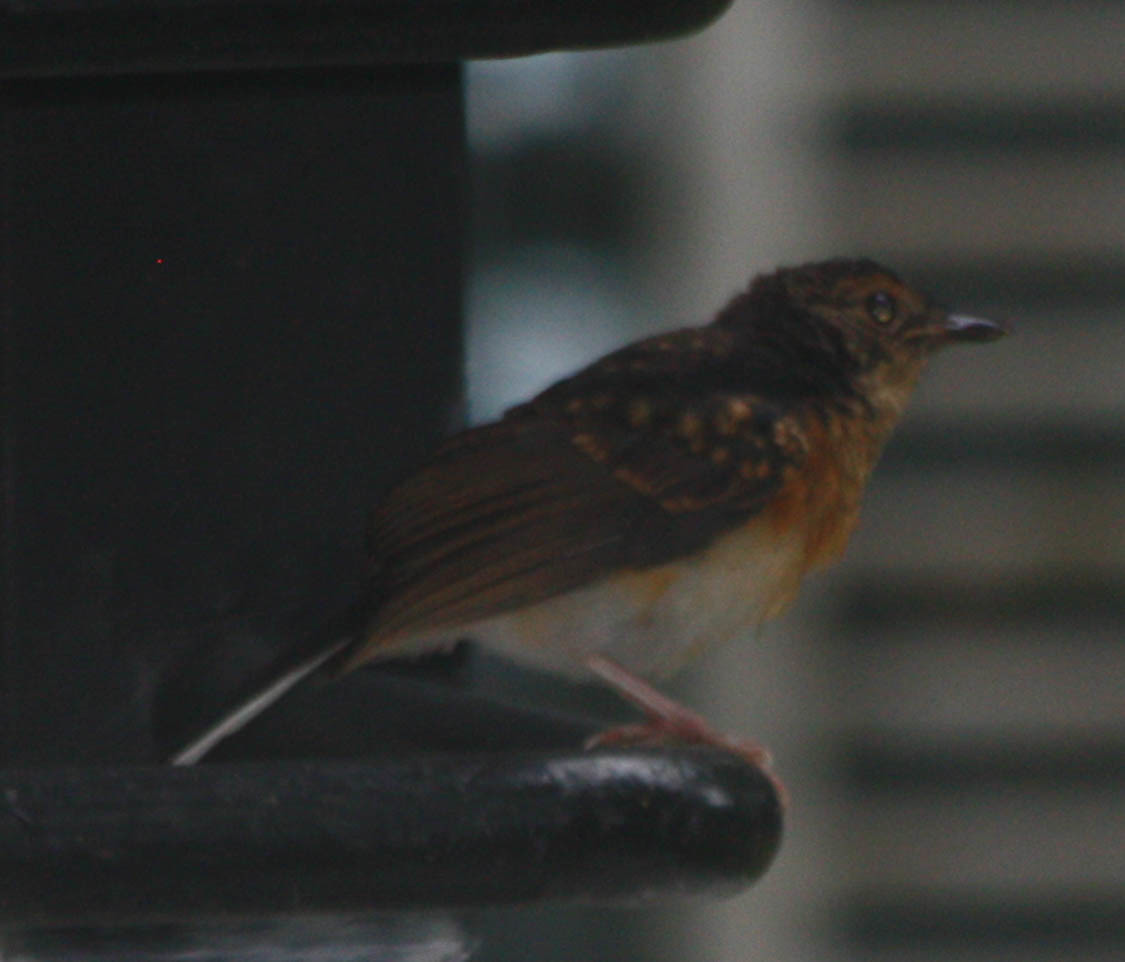
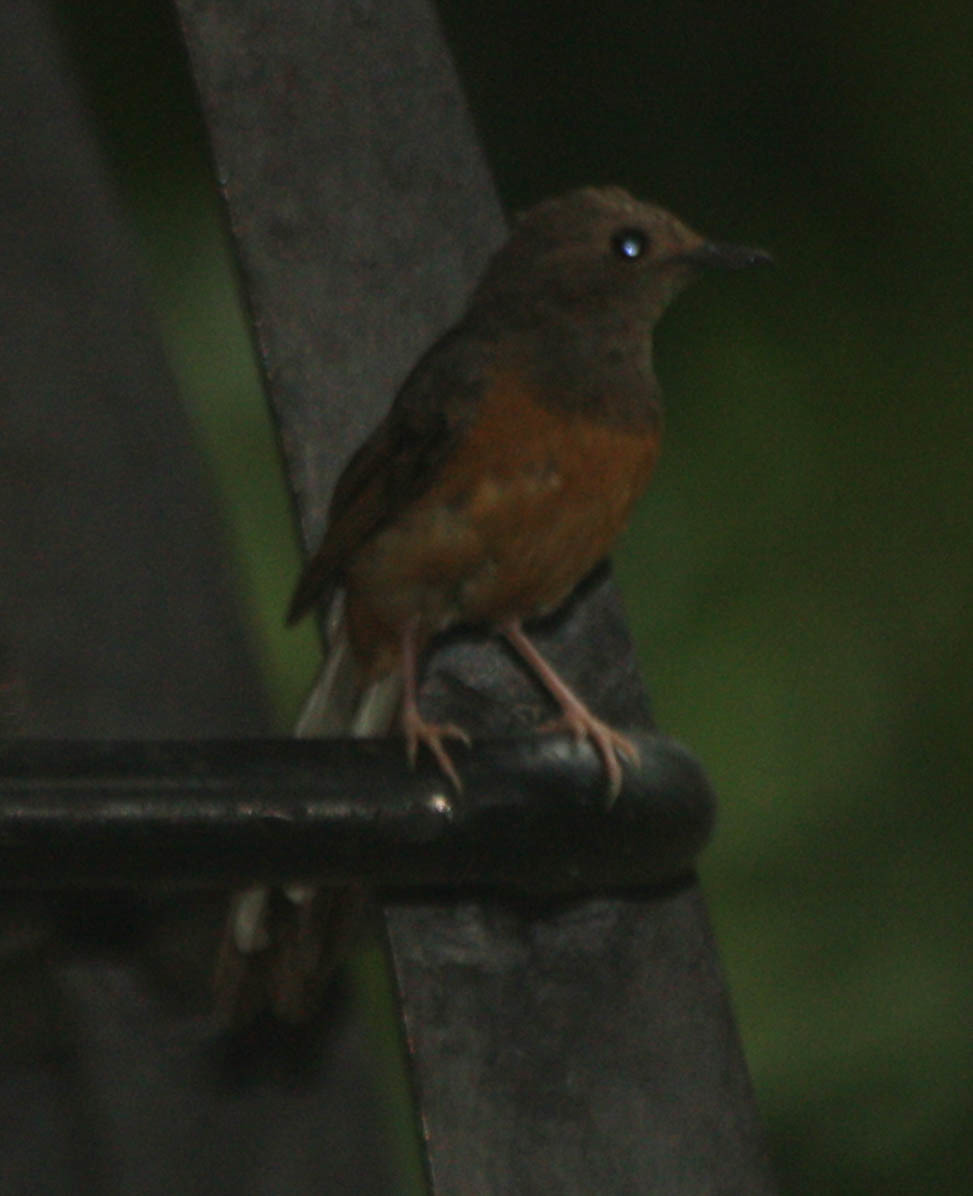
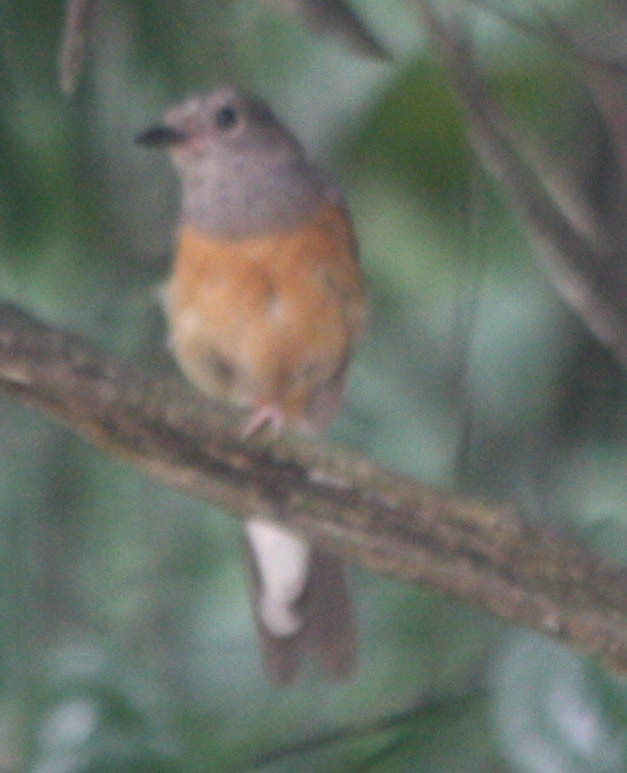
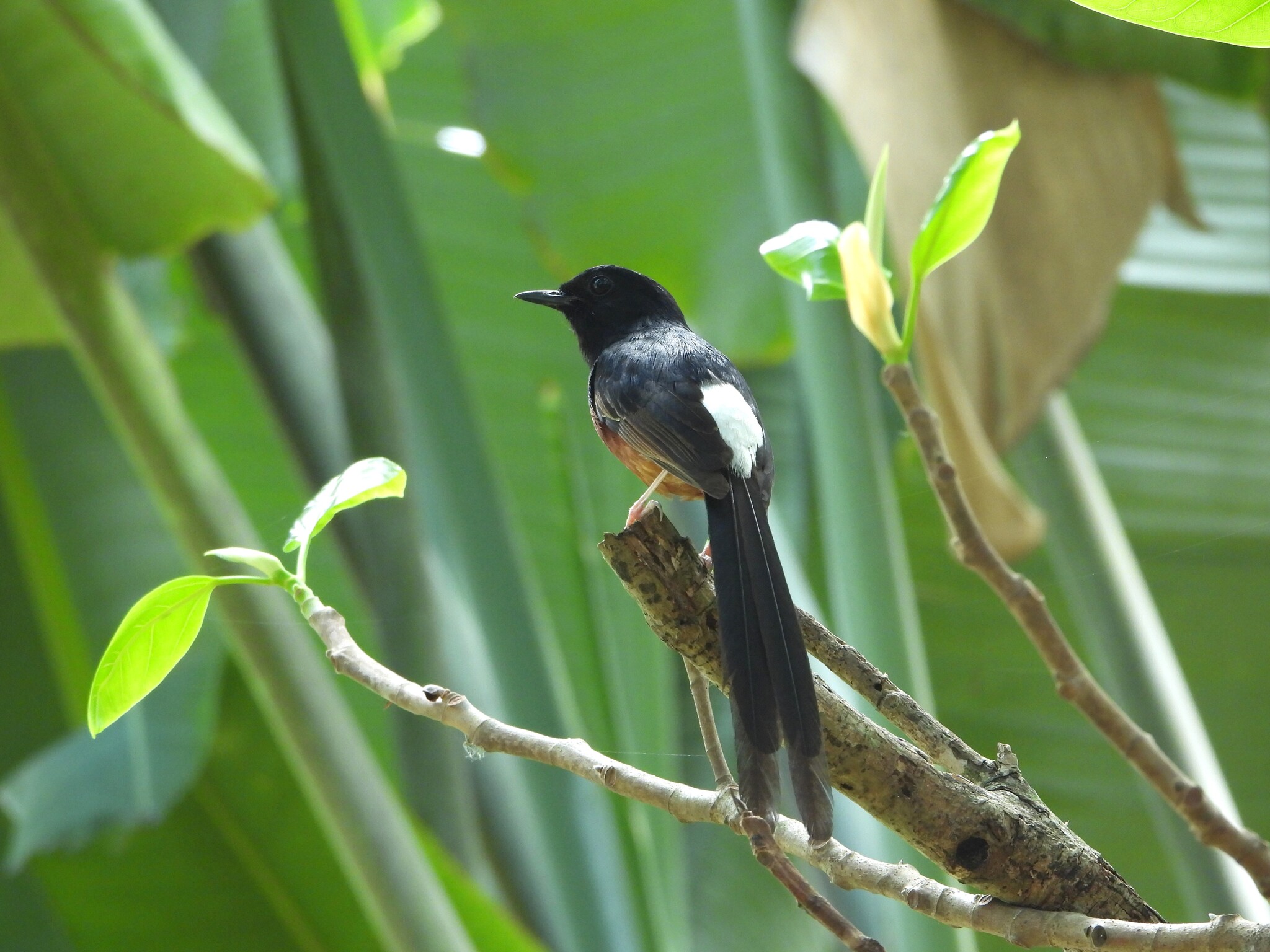
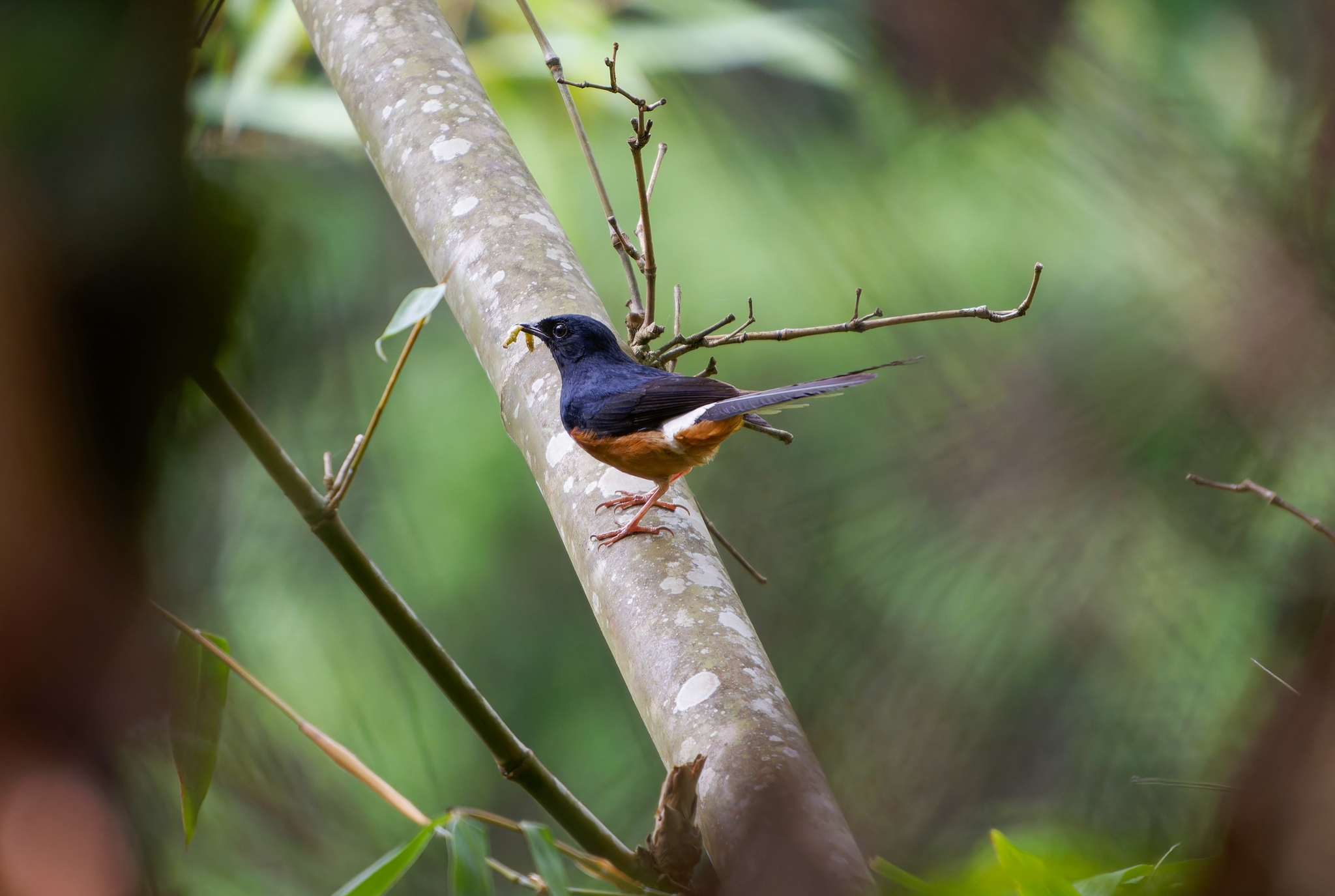
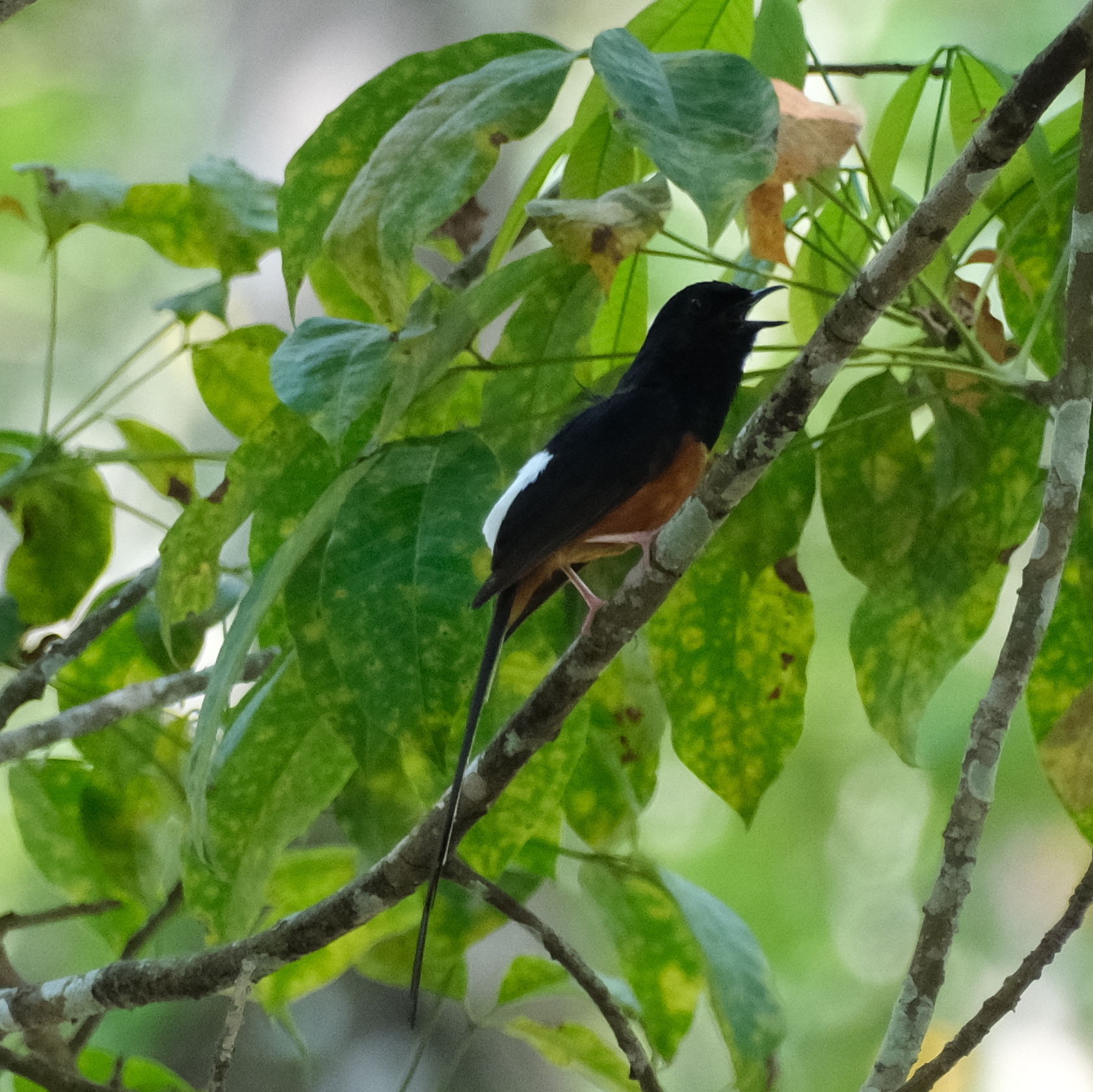
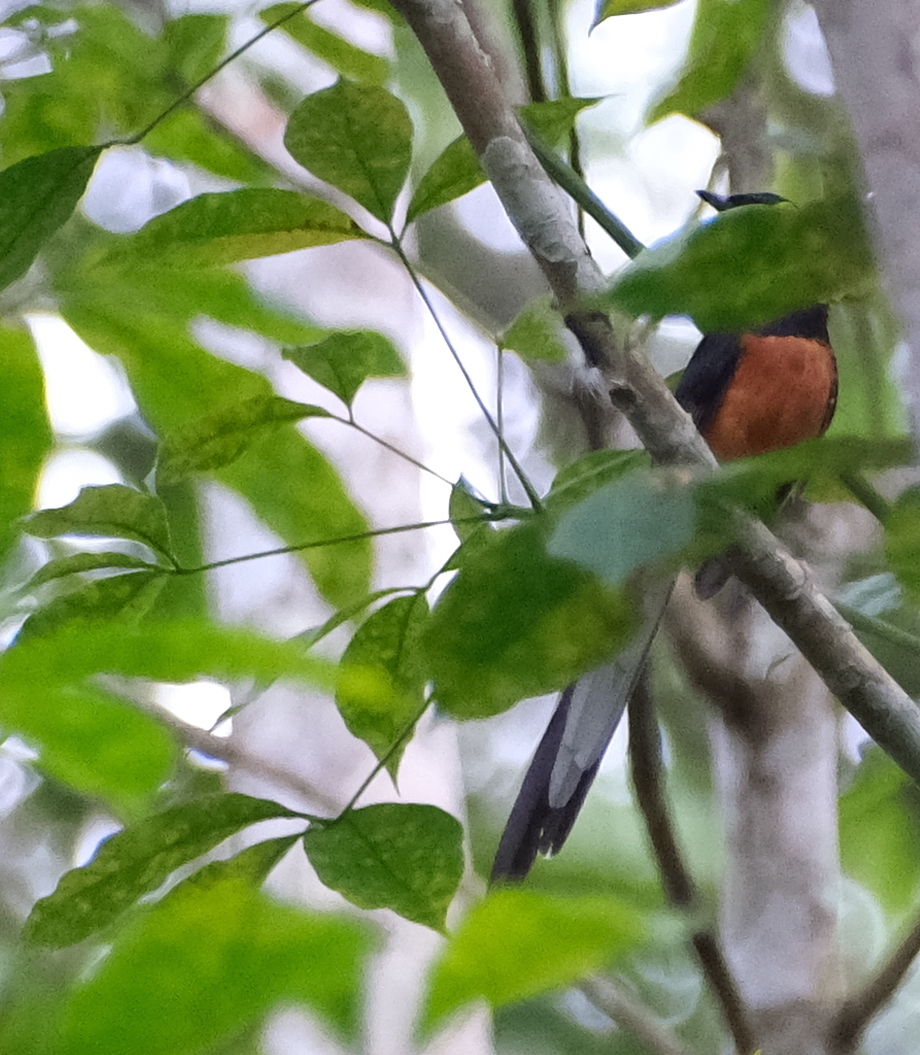
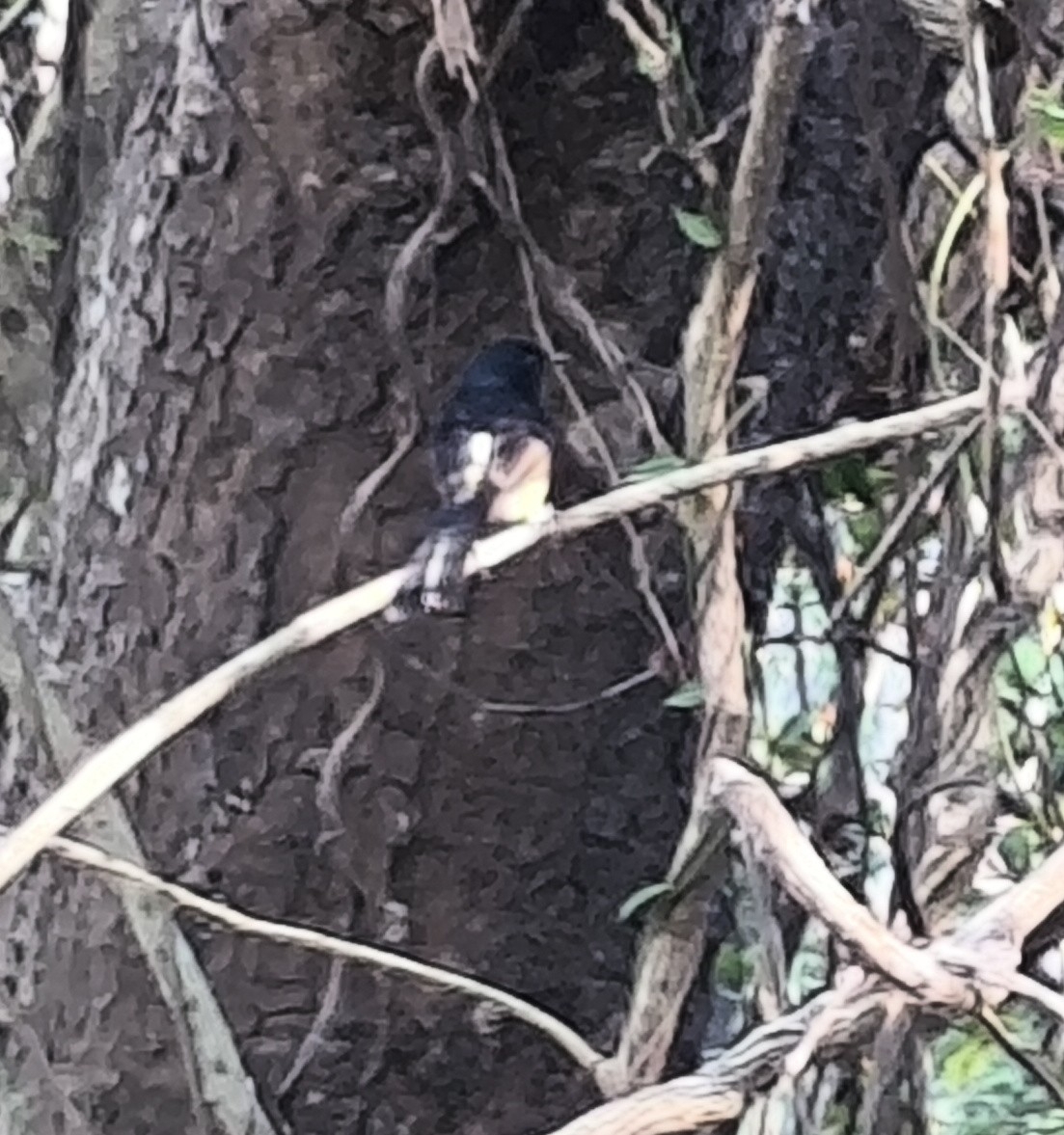
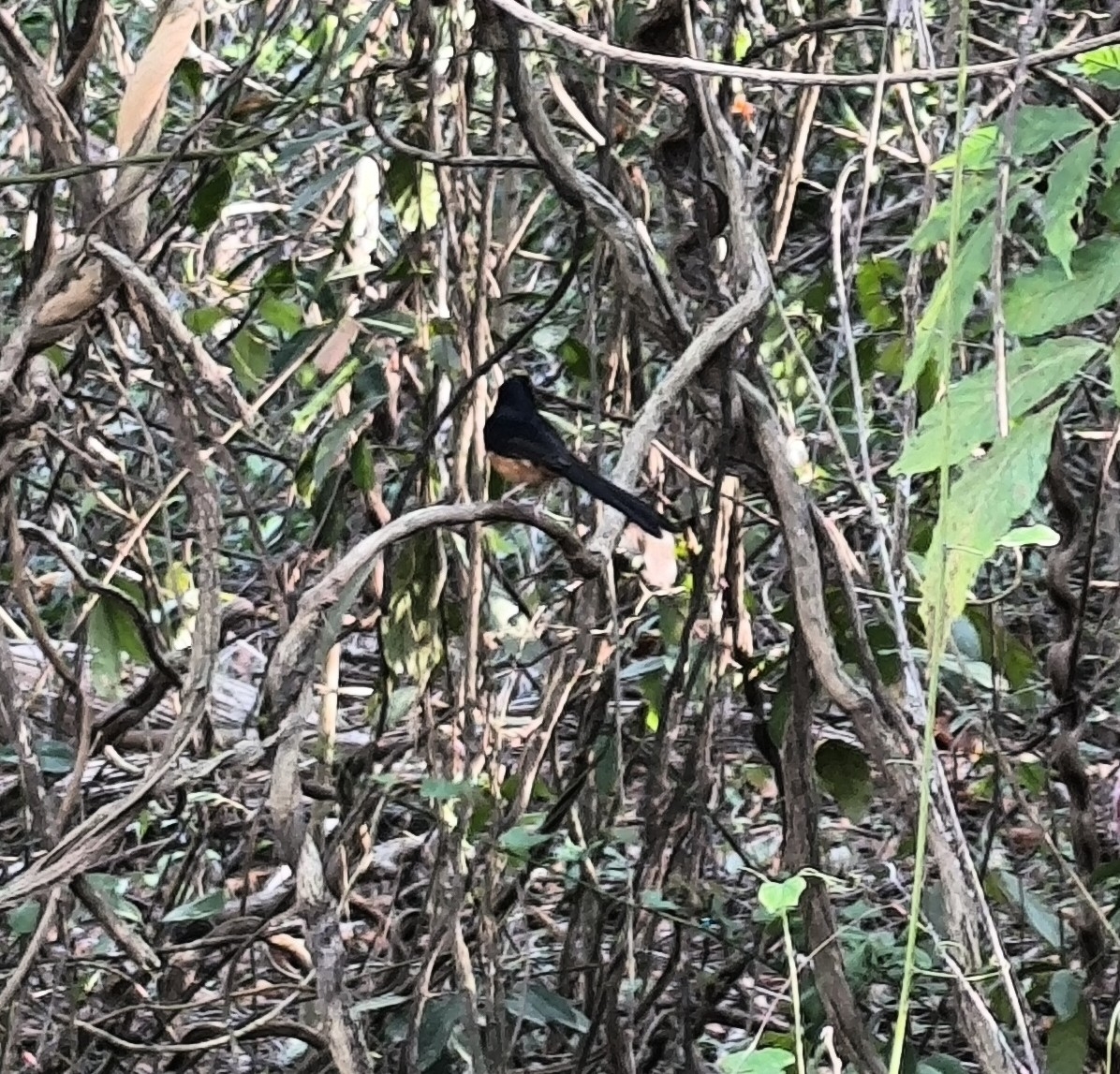
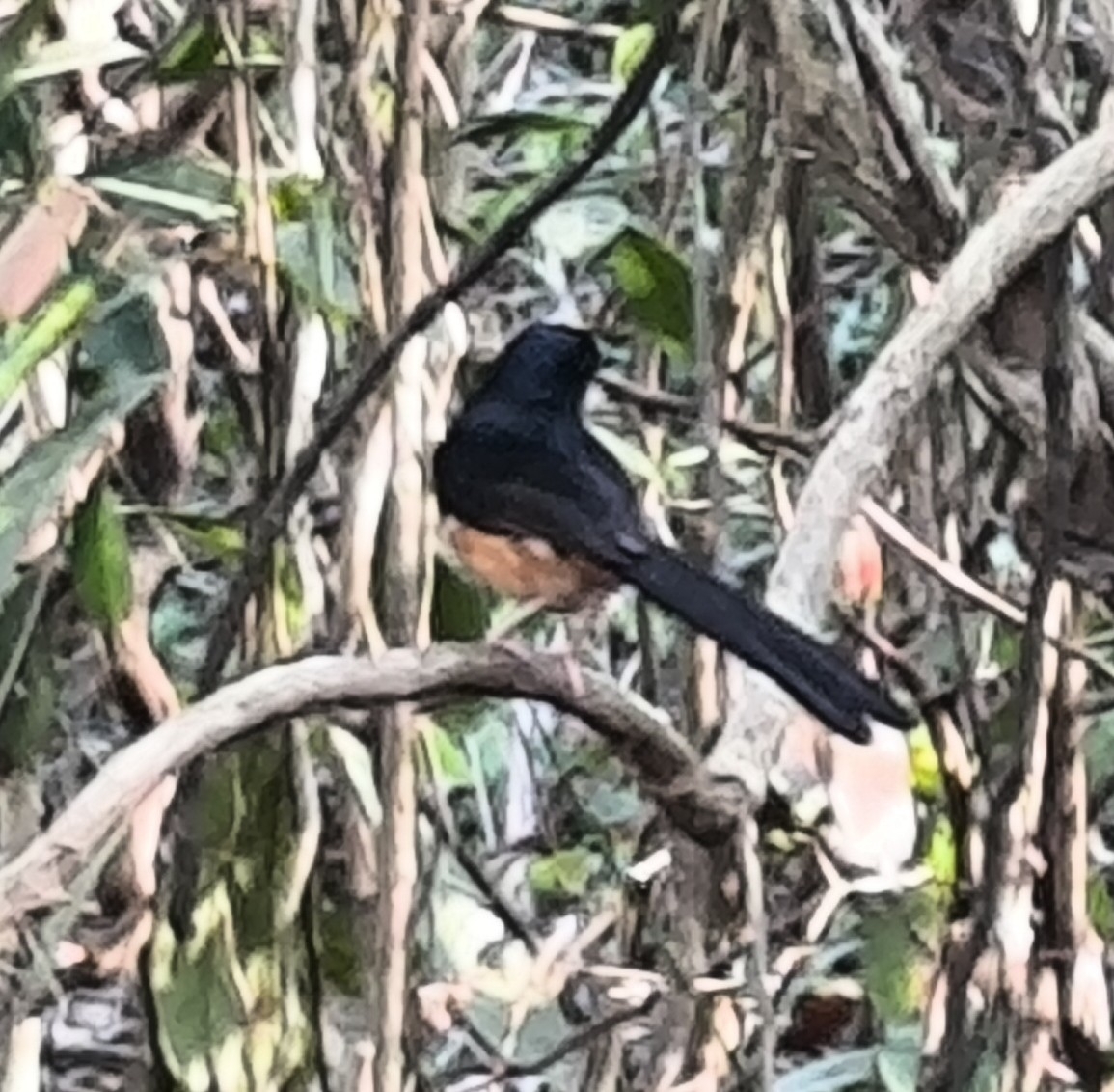
A small, elegant passerine measuring 23-28 centimeters in length and weighing 28-34 grams. Males are striking with glossy black upperparts and head, a rich chestnut belly, and distinctive white feathers on the rump and outer tail feathers. Females are more subdued, wearing greyish-brown plumage overall and typically being shorter than males. Both sexes share a black bill and pink feet. Juveniles resemble adult females but display a blotchy or spotted pattern on the chest. The contrasting black and chestnut plumage of males makes them unmistakable in good light, while their long tail feathers are particularly prominent during courtship displays.
Identification
Males can be identified by their combination of glossy black upperparts, chestnut underparts, and prominent white rump patch visible in flight. The long black tail with white outer feathers is diagnostic. Females are best identified by their greyish-brown coloration, smaller size, and the white rump that persists even in the duller plumage. The species' habit of holding the tail slightly raised helps distinguish it from similar-sized thrushes and other flycatchers. In Southeast Asia, potential confusion with other Copsychus species is resolved by noting the distinctive white rump and the extent of chestnut coloring on the underparts.
Distribution & Habitat
Native throughout South and Southeast Asia, including the Indian subcontinent and regions from Nepal and northern India through Southeast Asia to Malaysia and the Indonesian archipelago. The species occupies scrub and secondary forest habitats with dense undergrowth, showing particular preference for bamboo forests in its Asian range. Introduced populations have established on Kauai (1931) and Oahu (1940) in Hawaii, where they inhabit valley forests and the ridges of the southern Koolau Mountains, typically nesting in lowland broadleaf forest understorey. In Taiwan, introduced populations are now considered invasive due to their impact on native insect species and aggressive behavior toward indigenous birds.
Behavior & Ecology
Shy and somewhat crepuscular, this species is highly territorial throughout the year. During breeding season, males defend territories averaging 0.09 hectares, while non-breeding birds may hold separate territories. Courtship involves males pursuing females, calling shrilly while perched above them, and performing elaborate displays that include fanning the white outer tail feathers. The female alone constructs the nest from roots, leaves, ferns, and stems, typically placing it in a tree hollow. A clutch consists of four to five white to light aqua eggs with brown blotching, measuring 18-23 mm. Incubation lasts 12-15 days, with nestlings fledging after approximately 12.4 days. Both parents feed the young, though only the female incubates and broods. The diet consists primarily of insects in the wild. The species is renowned for its rich, melodious song that carries clearly through the habitat, and individuals frequently incorporate imitations of other bird species into their repertoire. A sharp 'Tck' call serves as an alarm note.
Conservation
The species as a whole remains widespread and common across much of its extensive range, though two island subspecies (C. m. hypolizus from Simeulue and C. m. opisthochrus from the Lasia and Babi Islands) are classified as extinct in the wild. A third subspecies from islands off the Thai-Malay Peninsula (C. m. ngae) is possibly extinct in the wild. Introduced populations in Taiwan are now considered invasive, threatening native ecosystems through competition and predation on indigenous insect species.
Culture
This species holds a special place in ornithological history as the subject of the earliest known recording of bird song. In 1889, Ludwig Koch, then a child, recorded his pet shama singing using an Edison wax cylinder, creating a pioneering document in the history of natural sound recording. Throughout South and Southeast Asia, the species has long been valued as a cage bird, with enthusiasts maintaining traditions of keeping and training these birds for their exceptional vocal abilities. The practice continues today in parts of their introduced and native ranges.
Source: Wikipedia · CC BY-SA 3.0
Taxonomy
- Order
- Passeriformes
- Family
- Muscicapidae
- Genus
- Copsychus
Subspecies (9)
-
Copsychus malabaricus hypolizus
formerly Simeulue Island (off western Sumatra); on the brink of becoming extinct in the wild
-
Copsychus malabaricus macrourus
Nepal to northeastern India, southwestern China and Hainan, Myanmar, Thailand, Indochina (including Con Son Island, southern Vietnam), and the northern Thai-Malay Peninsula; the species also is introduced on Taiwan (subspecies not confirmed, possibly macrourus) and the Hawaiian Islands (probably macrourus)
-
Copsychus malabaricus malabaricus
southern peninsular India
-
Copsychus malabaricus melanurus
Nias and Mentawai Islands (off western Sumatra)
-
Copsychus malabaricus mirabilis
formerly Panaitan Island (Sunda Strait); likely extinct
-
Copsychus malabaricus ngae
islands on the west side of the Thai-Malay Peninsula (from the Thai/Myanmar border southward to the Langkawi Archipelago at the Thai/Malayasian border)
-
Copsychus malabaricus opisthochrus
formerly Lasia and Babi islands (off western Sumatra); on verge of extinction
-
Copsychus malabaricus suavis
Borneo (except northern part)
-
Copsychus malabaricus tricolor
southern Thai-Malay Peninsula, Sumatra, Riau and Lingga Archipelagos, Bangka, Belitung, Anambas, and Natuna islands, and western Java
Data Sources
Species description from Wikipedia, licensed under CC BY-SA 3.0.
Bird images and sounds sourced from GBIF, contributed by citizen scientists worldwide under Creative Commons licenses.
Taxonomy data from AviList 2025.