Hill Pigeon
Columba rupestris
岩鸽
Introduction
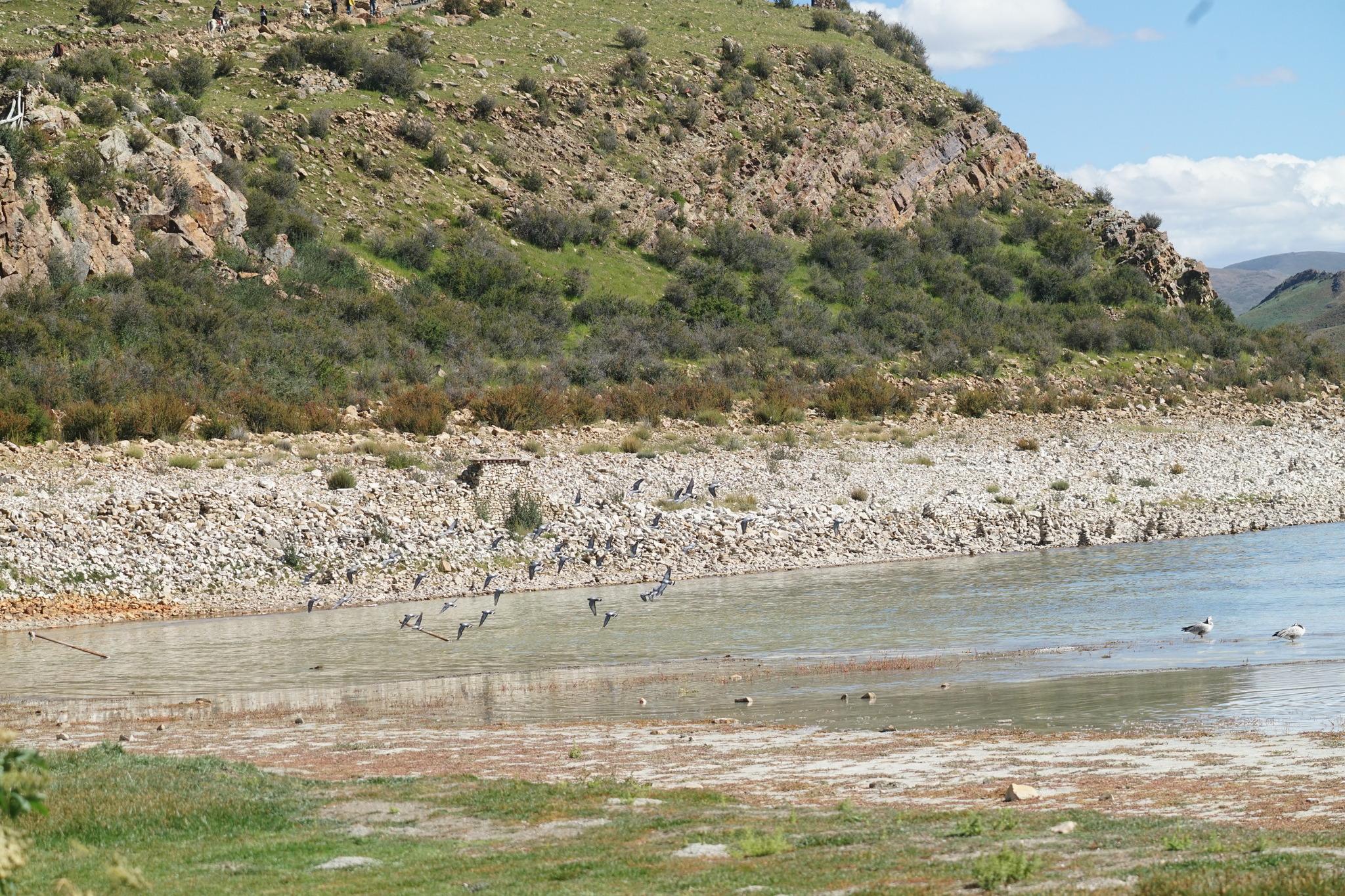
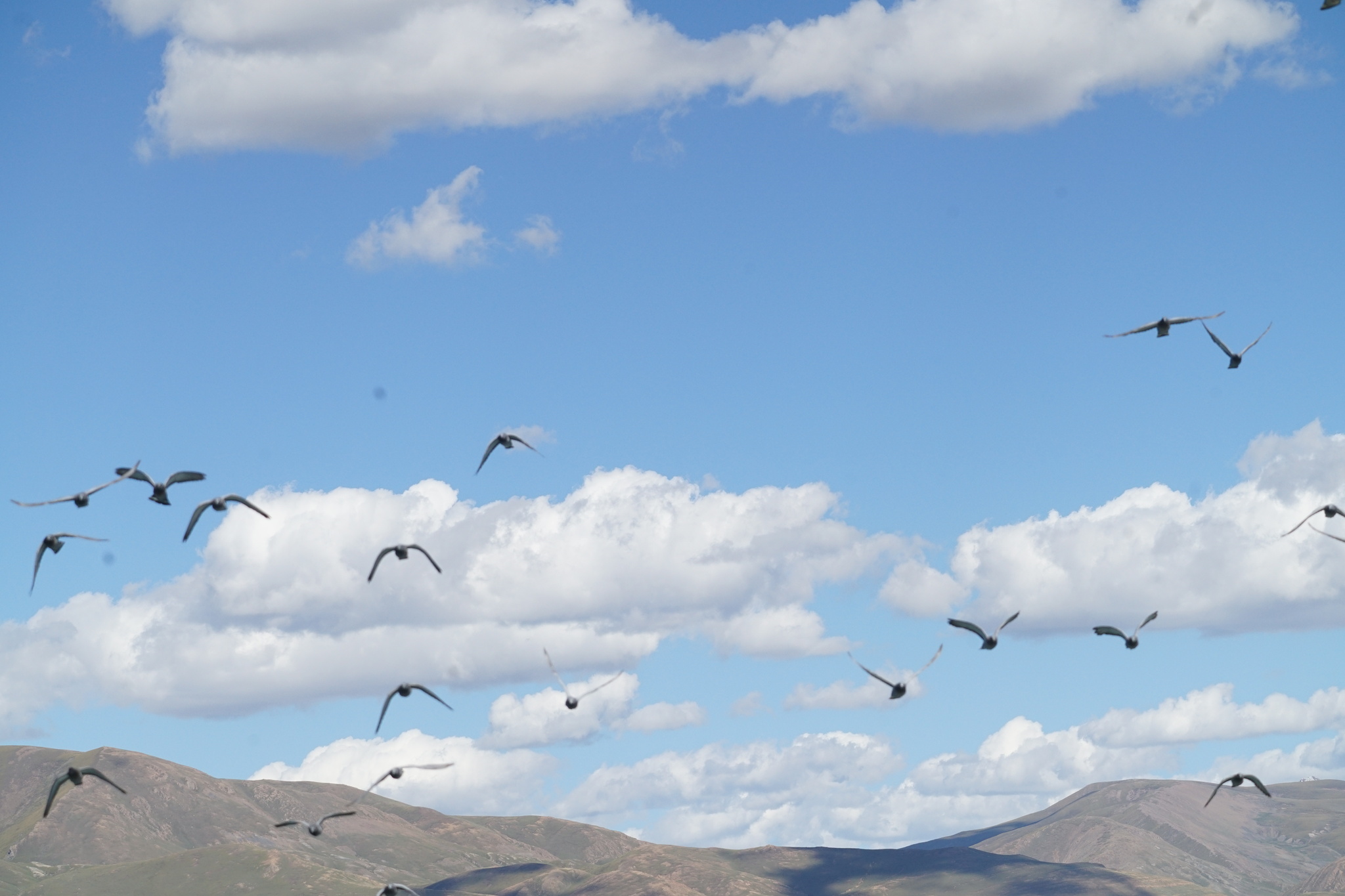
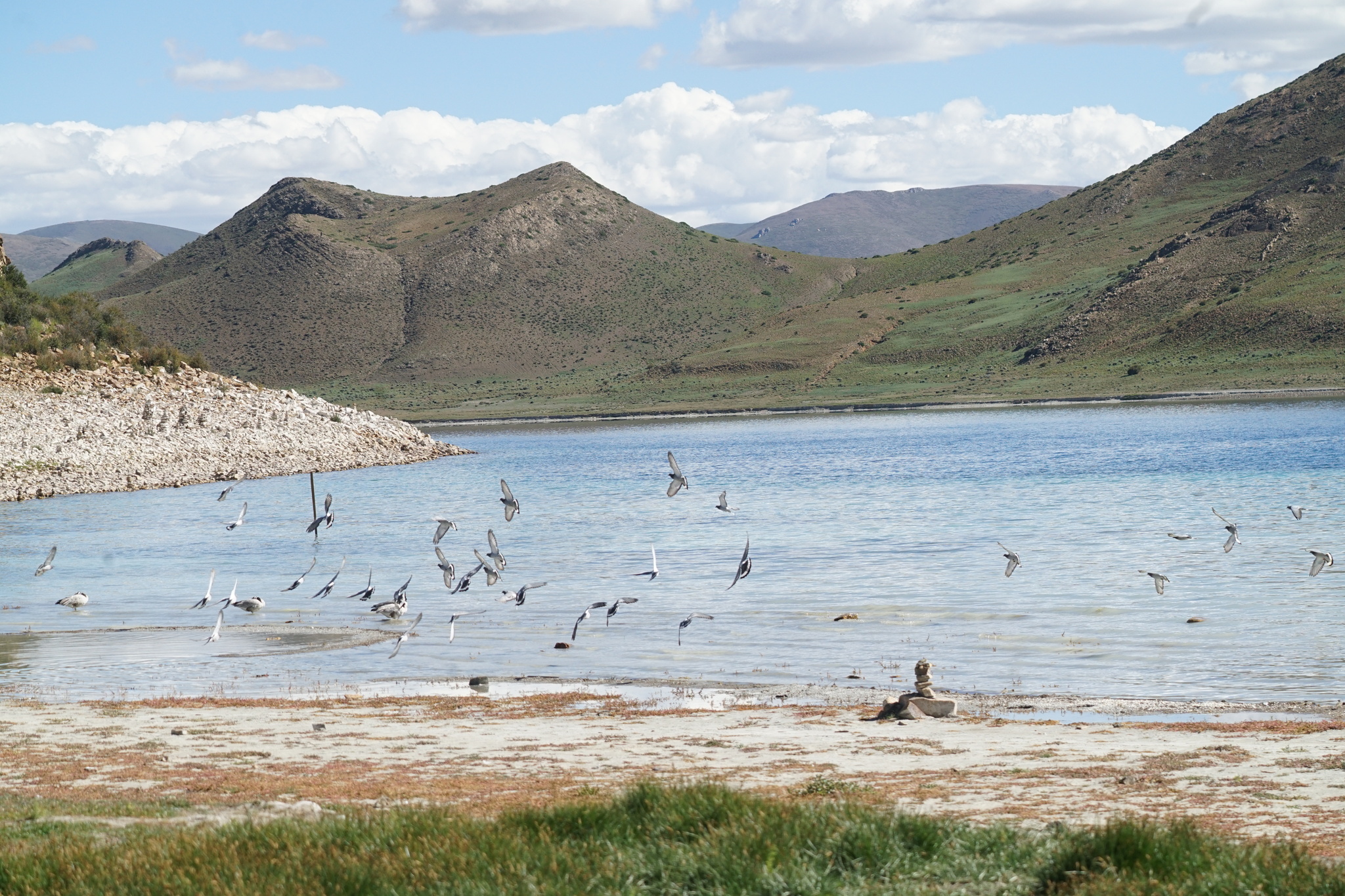
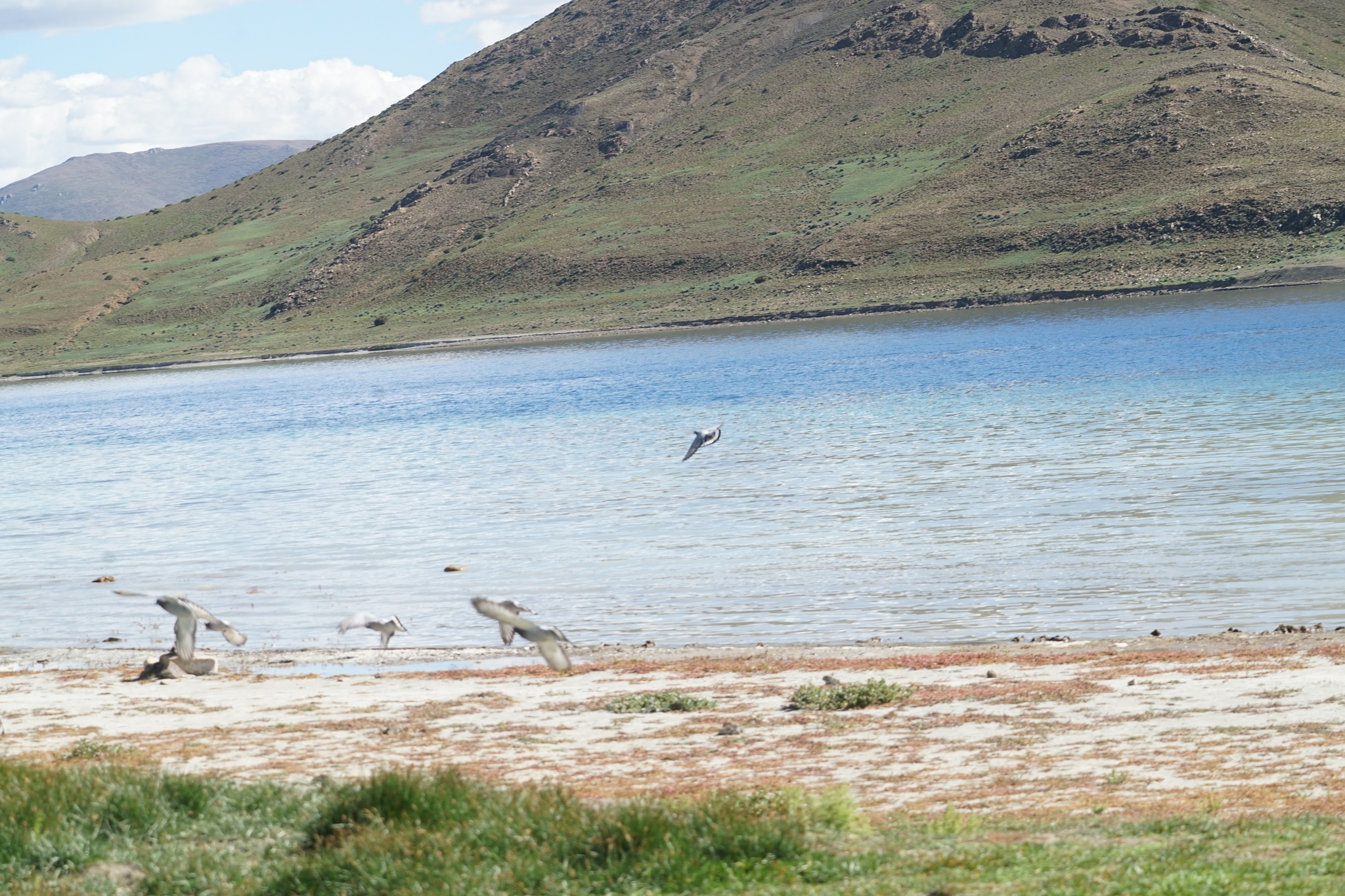
This species occurs across Central and East Asia, from the Tibetan plateau through the Karakoram and Himalaya mountain ranges. It inhabits cliff formations, gorges, and rocky outcrops, with an elevational range from 2000 metres in winter to above 5500 metres during the summer breeding season. Birds form large flocks that frequently associate with rock doves in agricultural fields and mountain valleys. They are often found near human settlements, camps, and pilgrimage routes. The species nests in dense colonies.
Description
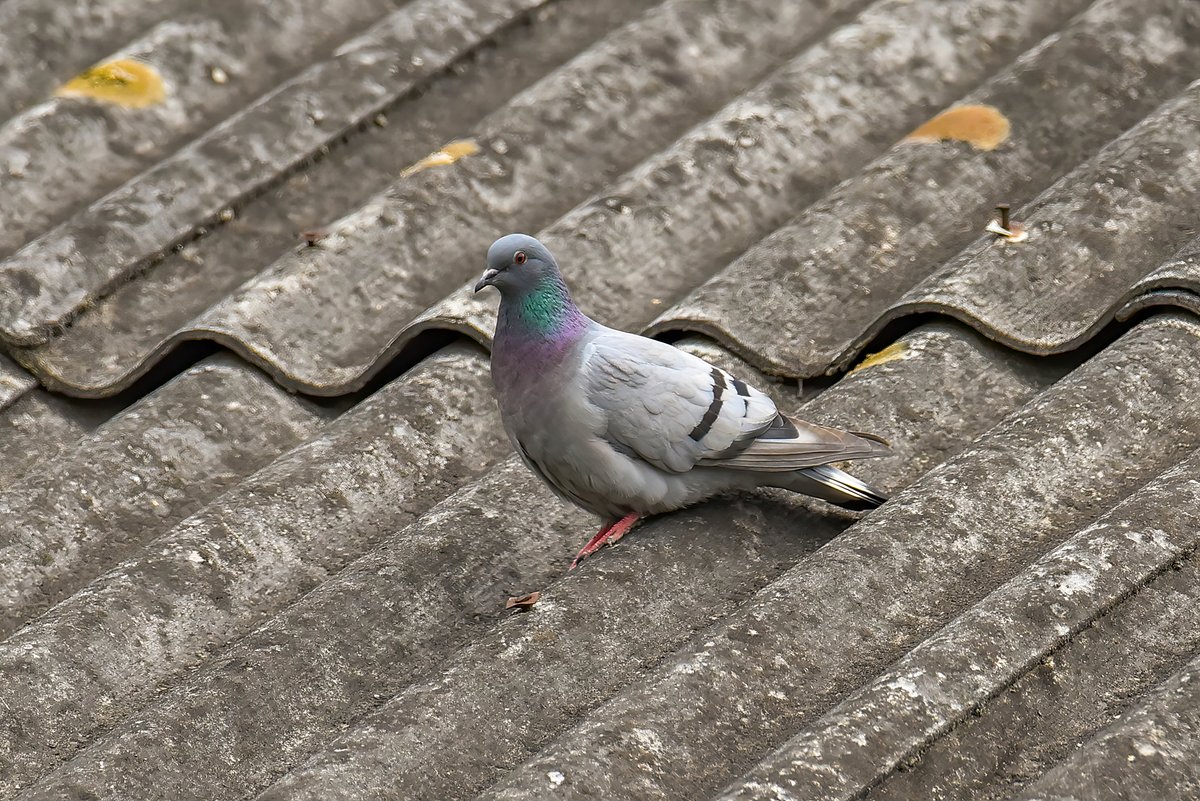
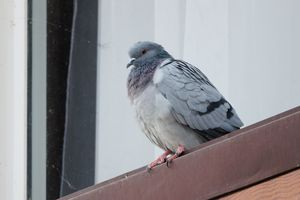
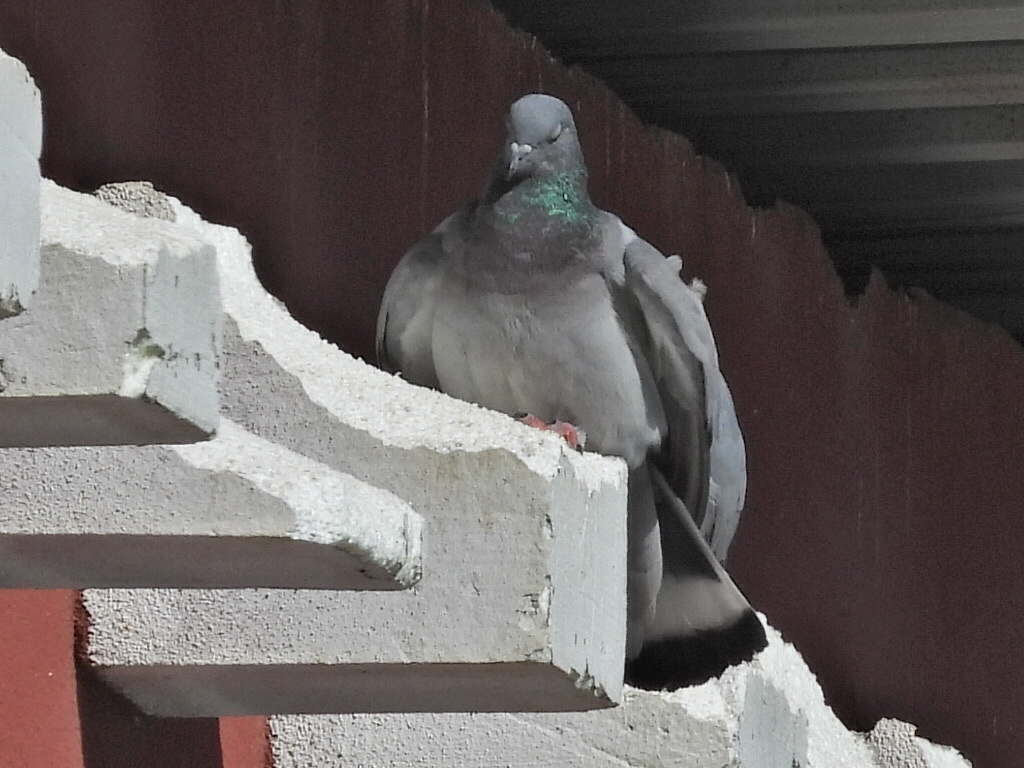
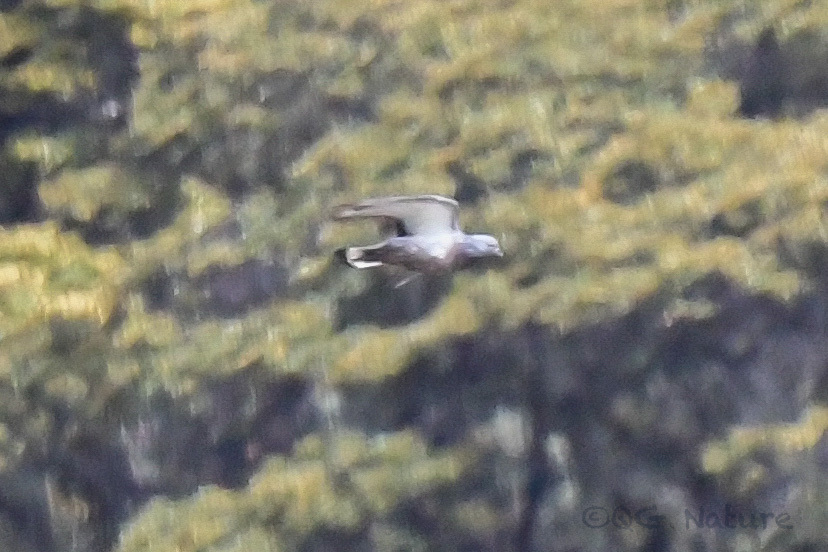
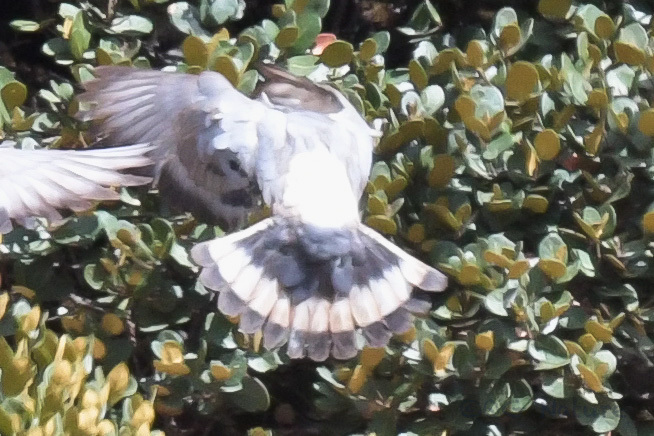
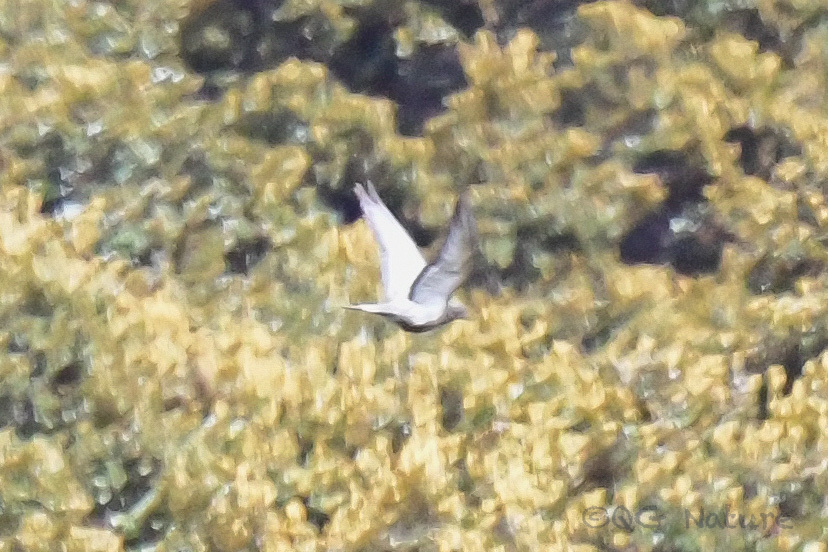
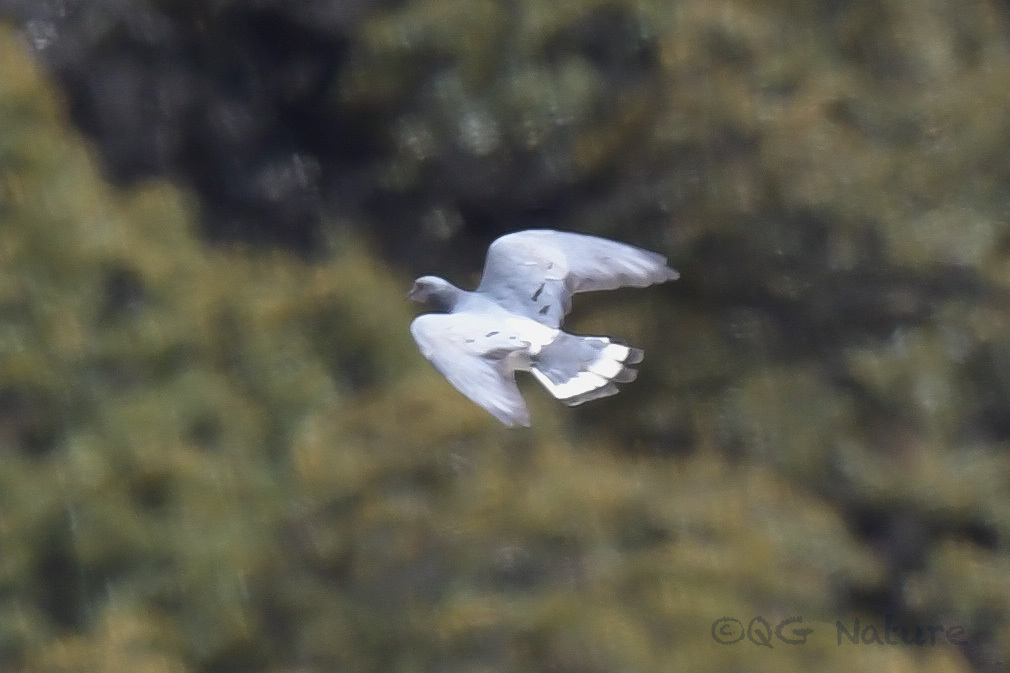
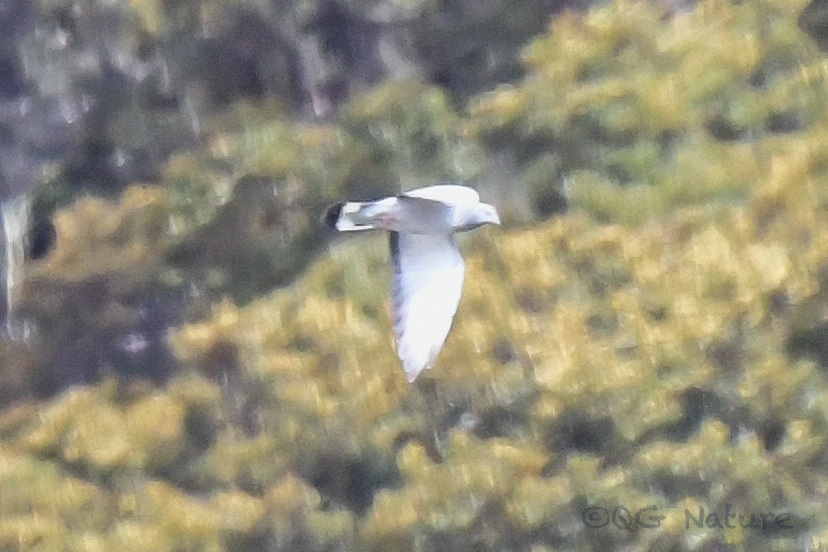
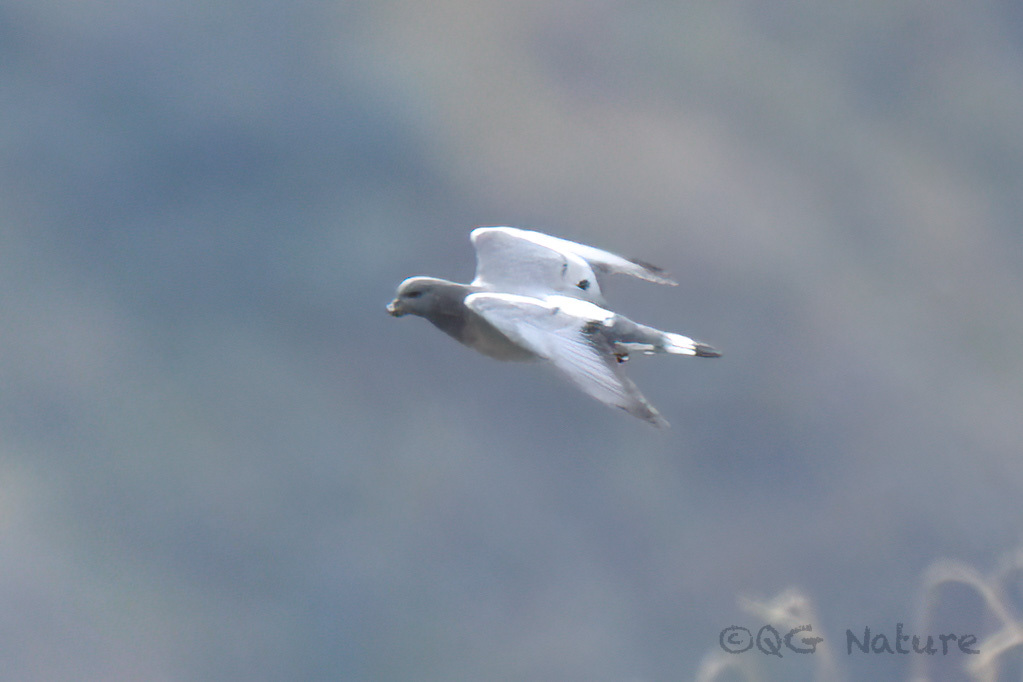
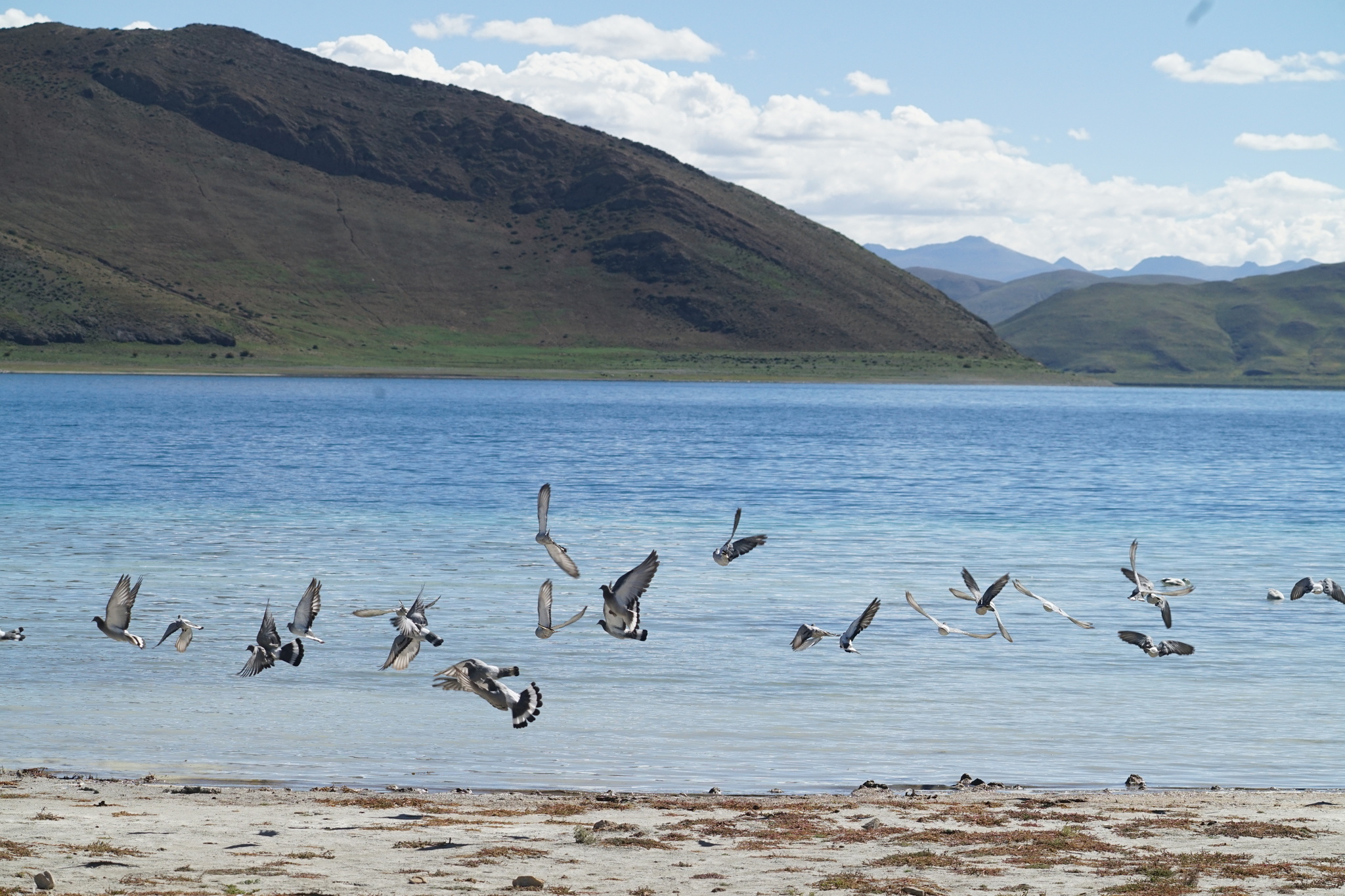
This medium-sized pigeon displays a robust, compact body similar in proportions to the familiar rock dove. The plumage shows a paler mantle and upper wings compared to its rock dove relatives, with a distinctive white patch visible on the back. The most diagnostic feature is the broad white band crossing the black tail, creating a striking contrast in flight. The overall coloration remains muted grey-brown on the body with darker flight feathers. While the tail pattern closely resembles that of the snow pigeon, this species lacks the pronounced contrast between head and neck coloration that characterizes the snow pigeon.
Identification
The broad white tail-band provides the most reliable field mark, distinguishing this species from the rock dove, which shows an all-dark tail. In flight, the white tail-band resembles that of the snow pigeon, but the head and neck lack the strong contrast typical of that species. Size and structure closely match the rock dove, making silhouette alone insufficient for identification. Observers in the field should focus on tail pattern and the pale mantle. Two subspecies are recognized: the northeastern C.r.rupestris and the southwestern C.r.turkestanica, with the divide occurring somewhere in the species' central Asian range.
Distribution & Habitat
This species ranges across the mountainous regions of Central and East Asia, including China, Pakistan, India, Nepal, Kazakhstan, North and South Korea, Mongolia, Russia, Tajikistan, Afghanistan, and Turkmenistan. In Pakistan specifically, the population is restricted to the northernmost valleys of the Karakoram, Hindu Kush, and Pamir ranges, including areas in northern Chitral near the Afghanistan border, and the Gilgit region including Yasin and Hunza valleys, as well as the Baltistan portion of the Karakoram. The species occupies elevations from 1500 to 6100 metres above sea level, with seasonal movements to lower altitudes in winter.
Behavior & Ecology
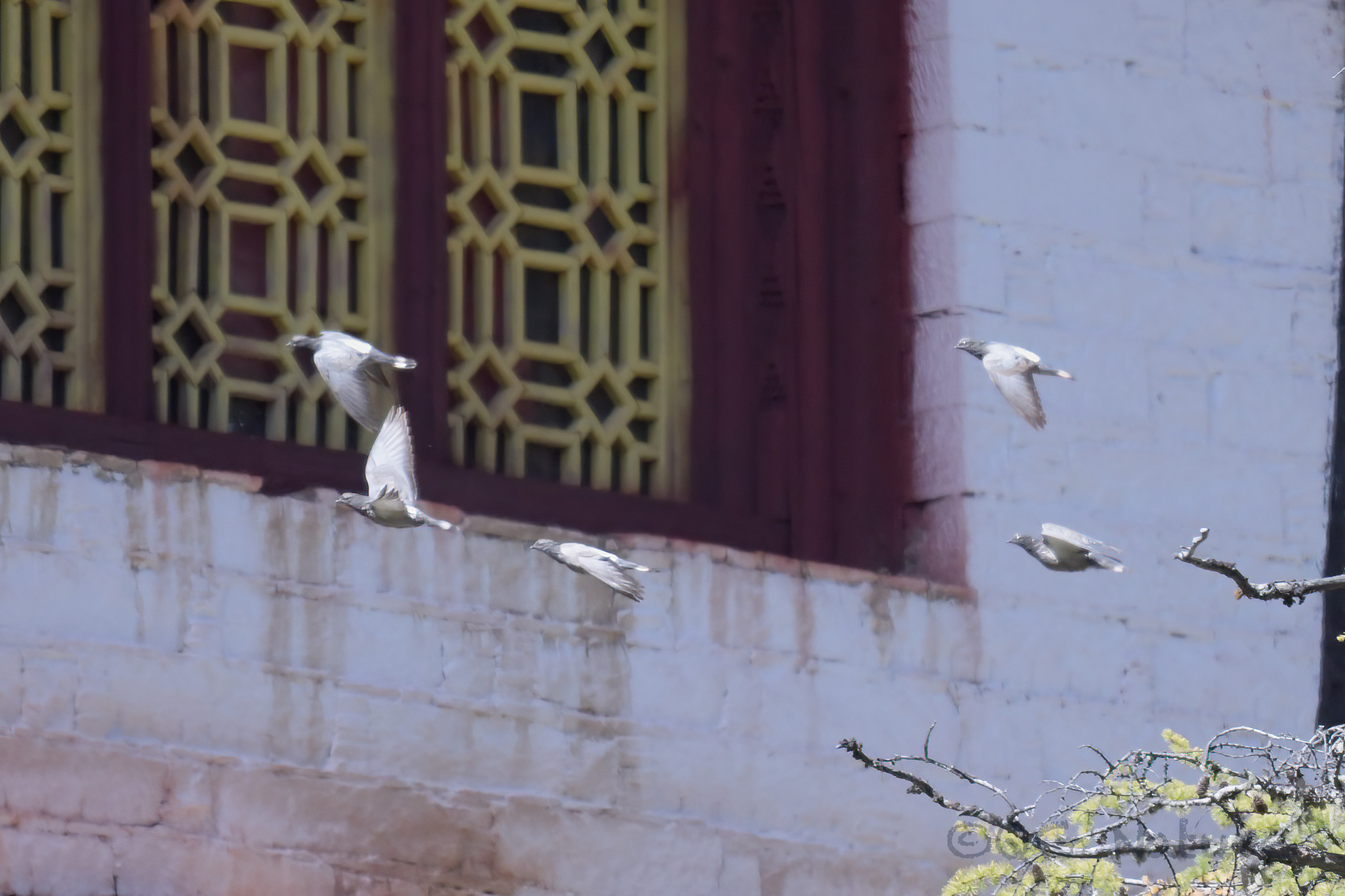
Gregarious throughout the year, these pigeons feed in flocks in terraced agricultural fields and often associate with rock dove flocks. They exhibit remarkable tameness around human settlements, camps, and pilgrimage routes. The courtship display, performed by males, features a bowing display similar to that of rock doves. Breeding begins as early as February in Tajikistan, with fledglings recorded as late as September in northeastern Tibet. The species nests in dense colonies on cliffs, gorges, and rocky outcrops; in Tibet, they readily use buildings including both inhabited and abandoned houses, as well as wall cavities. Nests consist of platform structures built from twigs and plant stems, typically containing two eggs, with two broods raised annually. The diet is primarily granivorous, supplemented by green shoots and leaves, with occasional snails. They demonstrate opportunistic feeding behavior, consuming leftover human food, partially digested material from kiang dung, and even ripped-open kiang carcasses.
Conservation
The species holds a Least Concern classification from the IUCN, reflecting its relatively secure global status. While the overall population is decreasing, the rate of decline is not considered alarming. The bird remains widely distributed across its range and exists in substantial numbers. Habitat degradation and human disturbance may pose localized threats, but no immediate major conservation concerns exist at the species level.
Culture
No specific cultural or folklore information is documented for this species in available sources.
Source: Wikipedia · CC BY-SA 3.0
Taxonomy
- Order
- Columbiformes
- Family
- Columbidae
- Genus
- Columba
- eBird Code
- hilpig1
Subspecies (2)
-
Columba rupestris rupestris
western Mongolia to eastern Tibet, southern China, and Korea
-
Columba rupestris turkestanica
Semiretschensk, Zaissen, and Russian Altai southward through central Asia to Baltistan (Gilgit, Yasin, Hunza, and Karakoram), and eastward to western Tibet and northern Himalayan slopes
Data Sources
Species description from Wikipedia, licensed under CC BY-SA 3.0.
Bird images and sounds sourced from GBIF, contributed by citizen scientists worldwide under Creative Commons licenses.
Taxonomy data from AviList 2025.